English
 Español
 عربى
عربىContent
- 1 Product Overview
- 2 Key Specifications
- 3 Why the Lid Matters in Disposable Food Packaging
- 4 Advantages Over Common Competing Lid Options
- 5 Leak-Proof Design and Secure Closure
- 6 Thickened PP Material for Durability
- 7 Food-Grade Safety and Consumer Confidence
- 8 Injection Molding as a Manufacturing Advantage
- 9 Advanced Production Environment
- 10 Quality Certifications and Their Practical Meaning
- 11 Stackability and Storage Efficiency
- 12 Applications Across Food and Beverage Scenarios
- 13 Customization and Brand Differentiation
- 14 Environmental and Health-Oriented Packaging Considerations
- 15 Company Manufacturing Strength
- 16 How This Lid Supports Foodservice Business Performance
- 17 Practical Buying Considerations
- 18 Frequently Asked Questions
- 18.1 What is the semi-circular PP injection molded ball lid made of?
- 18.2 What is the main size of this lid?
- 18.3 Why is injection molding important for this product?
- 18.4 Is the lid leak-proof?
- 18.5 Can the lid be used for drinks and desserts?
- 18.6 Is the lid easy to store?
- 18.7 What makes this lid different from ordinary disposable lids?
- 18.8 Does the manufacturer support customization?
- 18.9 What quality strengths support the product?
- 18.10 Who should consider purchasing this lid?
- 19 Conclusion
- 20 References
- 21 Product: Semi-circular PP injection molded ball lid
In modern takeaway, beverage, dessert, and ready-to-eat food packaging, the lid is far more than a simple accessory. It is the component that determines whether a cup or bowl can travel safely, whether the customer receives the product in good condition, and whether the foodservice brand is trusted for cleanliness, consistency, and convenience. The semi-circular PP injection molded ball lid is designed for this exact purpose: to provide a reliable, food-safe, durable, and visually clean covering solution for compatible disposable food packaging containers.
This product belongs to the category of PP injection molded cup lids and is engineered with a semi-circular ball-shaped profile. Its 90 mm caliber, transparent appearance, and 5.5 g gram weight make it suitable for a wide range of beverage and food container applications. It is especially valuable where leak resistance, container fit, stacking efficiency, and food-contact safety are critical. For restaurants, beverage shops, dessert chains, convenience stores, event caterers, and packaging distributors, this lid offers a practical combination of performance and presentation.
The semi-circular PP injection molded ball lid stands out because it combines a precise sealing structure with thickened polypropylene material. While many disposable lids on the market focus only on low cost or basic coverage, this product emphasizes a more balanced value: leak-proof design, strong impact resistance, non-toxic and odorless food-grade material, efficient stacking, and customization support. These qualities make it a competitive option for businesses that need packaging components capable of supporting both daily operations and brand reputation.
Yuqian Packaging Technology (Jiangsu) Co., Ltd. manufactures this product with a strong foundation in food packaging research, production, and quality management. Established in 2010 and located in Taizhou City, Jiangsu Province, China, the company operates a large production base and has built its capabilities around new food packaging materials and products. Its strengths include a class 100,000 dust-free workshop, advanced air purification technology, precise temperature and humidity control, and recognized certifications such as QS national industrial product production license, ISO9001 quality management system certification, BRC certification, German DIN safety certification, and EU ROHS+ testing.
Semi-circular PP injection molded ball lid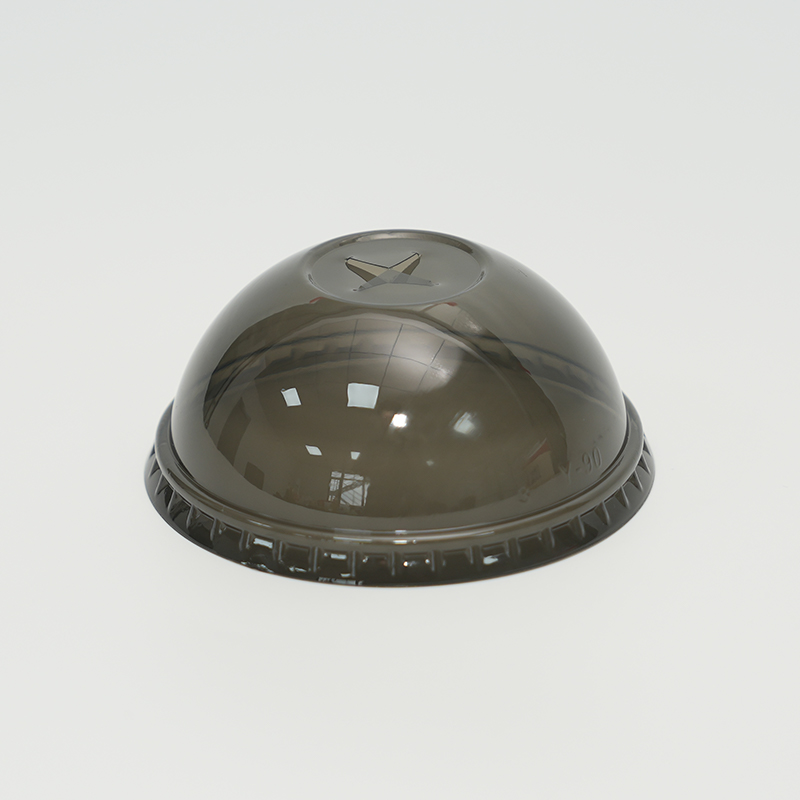
Product Overview
The semi-circular PP injection molded ball lid is a transparent plastic lid made from food-grade polypropylene. It is manufactured through an injection molding process, which allows the lid to achieve a more precise shape, stronger structure, and more consistent sealing performance than many conventional thin thermoformed lids. The semi-circular ball-like profile gives the lid a raised dome form, making it suitable for packaging products that require additional top space or a distinctive visual effect.
Its main specification is a 90 mm caliber with a gram weight of 5.5 g. This balance of size and weight is important because it indicates that the product is not overly fragile or excessively heavy. A lid that is too thin may deform easily during transport, stacking, or handling. A lid that is too heavy may increase packaging costs unnecessarily. The 5.5 g design reflects a practical approach: enough thickness to improve durability and fit, while still maintaining the convenience expected from disposable food packaging.
The lid is transparent, which is a strong advantage in retail and takeaway scenarios. Transparency allows customers and staff to see the contents of the cup or bowl more easily. For drinks, desserts, fruit cups, snacks, layered foods, and specialty beverages, visual display can directly influence customer confidence and purchase appeal. A clear lid gives the product a clean and professional appearance while maintaining protection against splashes, dust, and external contact.
As an injection molded PP product, the lid benefits from the properties of polypropylene. PP is widely used in food packaging because it is lightweight, resistant to many common food-related substances, durable under normal handling, and suitable for direct food-contact applications when made from approved raw materials. The product described here uses food-grade PP raw materials that are non-toxic and odorless, helping ensure that the lid does not negatively affect the taste, smell, or safety of packaged food and beverages.
Key Specifications
| Product Type | Specification | Practical Meaning |
| Lid Type | Semi-circular injection molded ball lid | Raised dome-style shape for secure covering and attractive presentation |
| Material | Food-grade PP | Non-toxic, odorless, and suitable for food-contact packaging |
| Caliber | 90 mm | Designed for compatible cups, bowls, and containers requiring a 90 mm lid |
| Gram Weight | 5.5 g | Thickened structure for durability while remaining lightweight |
| Color | Transparent | Allows product visibility and supports clean visual presentation |
| Manufacturing Process | Injection molding | Improves dimensional accuracy, sealing consistency, and structural strength |
| Functional Features | Leak-resistant, stackable, durable | Supports takeaway, storage, transport, and commercial use |
| Customization | Available according to customer requirements | Supports packaging differentiation and brand-specific needs |
Why the Lid Matters in Disposable Food Packaging
Disposable food packaging is often judged by the container, but the lid is frequently the component that decides whether the full packaging system succeeds. A high-quality cup or bowl can still fail if the lid does not seal correctly. Leakage, looseness, cracking, odor transfer, and poor stacking can all lead to customer complaints. In takeaway and delivery environments, these problems are amplified because packaged products may be moved, tilted, stacked, and handled by multiple people before reaching the consumer.
The semi-circular PP injection molded ball lid addresses these challenges by focusing on fit, stability, material quality, and practical handling. Its unique sealing structure is designed to help the lid fit tightly when closed, thereby reducing the risk of liquid leakage. This is especially important for beverages, sauces, soups, chilled desserts, and other moist food items. Even small leaks can damage bags, labels, receipts, vehicle interiors, counters, or other products in the same order.
For foodservice operators, preventing leakage is not only a matter of cleanliness. It also protects product value. A spilled beverage or dessert does not simply create a mess; it reduces the quantity received by the customer, undermines presentation, and may cause a refund request. A lid with a more dependable seal can therefore contribute directly to better customer satisfaction, lower waste, and smoother business operations.
In addition, lids play an important role in hygiene. A properly fitting lid reduces the chance of dust, droplets, insects, or accidental touch reaching the food or drink. In busy takeaway counters, catering events, and delivery preparation areas, this protective function is essential. The semi-circular PP injection molded ball lid is made in a controlled production environment and uses food-grade PP, helping businesses align their packaging choices with consumer expectations for cleanliness and safety.
Advantages Over Common Competing Lid Options
Many competing disposable lids in the market are made with a focus on minimal material use and low initial cost. While such lids may appear economical, they often create hidden costs through deformation, poor fit, leakage, breakage, customer complaints, and inefficient storage. The semi-circular PP injection molded ball lid differentiates itself by providing a stronger structure and a more precise shape through injection molding.
Compared with very thin lids, this product offers improved resistance to deformation. Thin lids may bend or lose shape when pressed during stacking or transport. Once a lid deforms, it may no longer sit correctly on the container rim. The thickened PP material used in this semi-circular lid provides better durability and impact resistance, making it less likely to crack or fail under ordinary handling conditions.
Compared with lids that rely only on loose placement, the leak-proof design of this product is a major advantage. The lid uses a dedicated sealing structure intended to fit the matching container tightly when closed. This tighter closure supports safer takeaway and storage. For businesses selling products with liquid or semi-liquid content, this feature is much more important than appearance alone.
Compared with lower-grade plastic lids, this product also provides improved food-contact assurance. It uses food-grade PP raw materials that are non-toxic and odorless. Poor-quality plastic lids can sometimes create unwanted odor or raise concerns about material safety. A clean, odorless PP lid helps preserve the original sensory quality of beverages and foods. It also supports compliance-oriented purchasing for businesses that must meet food packaging standards.
Compared with opaque lids, the transparent appearance of this product gives a stronger presentation advantage. Consumers increasingly expect to see the product they purchase, especially when it involves fresh ingredients, colorful toppings, layered desserts, milk tea, fruit beverages, salads, or specialty snacks. Transparency can make packaged products look more appealing while also allowing staff to confirm contents quickly during order preparation.
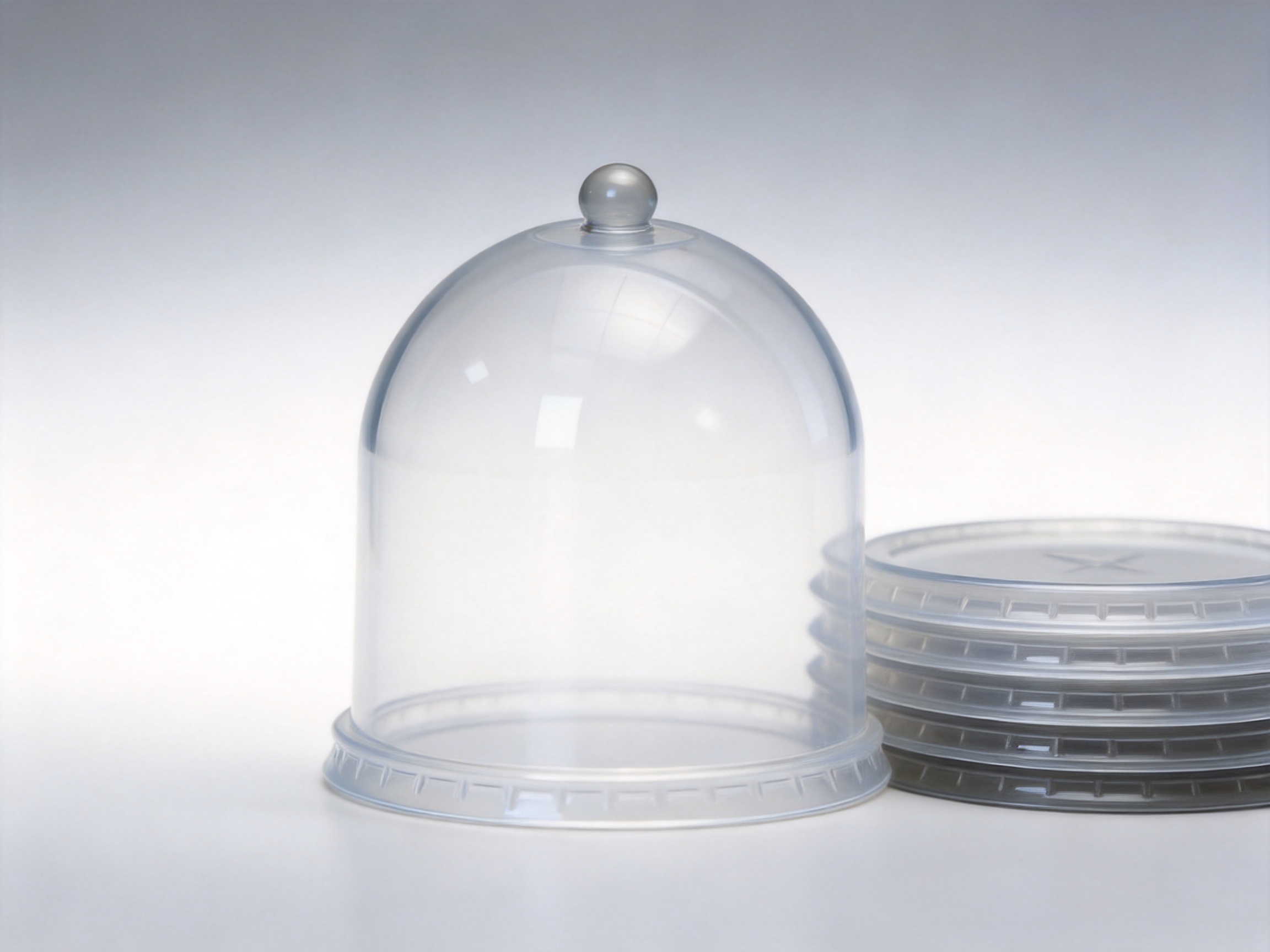
Compared with lids that are difficult to store, the stackable design of this product provides practical benefits. Stackability is essential in high-volume foodservice environments. A lid that stacks neatly saves shelf space, improves inventory organization, and makes staff access more efficient. It also reduces the risk of lids being scattered, contaminated, or damaged before use.
In short, the product is not designed only to cover a container. It is designed to solve the operational problems that many ordinary lids leave unresolved: leakage, deformation, poor hygiene confidence, inefficient storage, and weak presentation. This gives it an advantage in competitive food packaging markets where performance and reliability matter as much as unit price.
Leak-Proof Design and Secure Closure
One of the most important features of the semi-circular PP injection molded ball lid is its leak-proof design. The lid uses a unique sealing structure to support a tight fit when closed. This detail is especially significant because leakage is one of the most common failure points in disposable packaging. The difference between an average lid and a high-performance lid can often be seen during movement, delivery, or storage rather than when the product is first assembled.
A good seal depends on several factors. The rim of the lid must match the container accurately. The material must have enough rigidity to hold its shape while still allowing proper attachment. The production process must maintain dimensional consistency from batch to batch. Injection molding supports these requirements because it can produce detailed structures with high repeatability. This helps ensure that each lid performs consistently rather than varying widely due to unstable forming conditions.
The semi-circular shape can also contribute to practical performance. A raised lid provides additional space and reduces direct contact between the lid and the food surface in certain applications. For beverages with toppings, desserts with cream, or foods with decorative surfaces, extra headroom can help preserve appearance. At the same time, the lid must still seal around the rim. This balance between dome space and rim security is central to its design value.
Leak resistance is also essential during transportation. Takeaway packaging may be placed in bags, carried by hand, transported by scooter, moved in vehicles, or stored temporarily on counters. Tilting and vibration are common. A secure lid helps protect the product under these ordinary but demanding conditions. While no disposable lid should be treated as a substitute for careful handling, a well-designed sealing structure greatly reduces the probability of failure.
For commercial users, better sealing has measurable benefits. It can reduce product loss, lower cleaning time, minimize replacement orders, and improve customer satisfaction. It also helps protect other items in the same delivery bag. For example, if one drink leaks, it may damage paper packaging, napkins, receipts, or other food containers. By choosing a leak-resistant lid, businesses protect the entire order experience.
Thickened PP Material for Durability
The lid is made from thickened PP material that has undergone strict quality control and testing. This thickness contributes to durability, impact resistance, and shape stability. In a busy foodservice environment, lids are frequently handled quickly. They may be pulled from stacks, pressed onto containers, packed into bags, and transported in bulk. A weak lid may crack at the rim, split under pressure, or deform before use.
Polypropylene is a practical material for disposable food packaging because it offers a useful balance of weight, strength, and food-contact suitability. When the material is sufficiently thickened and processed correctly, it can better resist impact and long-term deformation. This makes the lid suitable for both home and commercial occasions. Whether used in a small beverage shop or a large chain operation, durability supports smoother packaging workflow.
Impact resistance is particularly important for injection molded lids because users often expect a firm snap or secure attachment. If the rim is too brittle, it may crack when pressed onto a container. If it is too soft, it may not hold properly. The thickened PP structure helps achieve a more reliable balance. It gives the lid enough strength to remain intact during normal use while maintaining the functional fit required for sealing.
Durability also affects storage quality. Packaging components may be stored for days, weeks, or longer before use. During this period, lids may be stacked, boxed, moved, or exposed to changes in ordinary warehouse conditions. A more stable PP lid is less likely to become unusable due to warping or edge damage. This reduces inventory waste and improves purchasing efficiency.
In comparison with lids that prioritize low weight above all else, a 5.5 g lid at 90 mm caliber provides a more confidence-inspiring feel. The lid does not need to be heavy to be strong, but it must have enough material integrity to perform. This product’s thickened design shows that it is intended for practical reliability rather than purely minimal material consumption.
Food-Grade Safety and Consumer Confidence
Food packaging materials must be safe because they come into direct or close contact with consumable products. The semi-circular PP injection molded ball lid uses food-grade PP raw materials. These materials are non-toxic and odorless and are selected to avoid the release of harmful substances under appropriate food packaging use conditions. This is a central advantage for businesses that care about both compliance and customer trust.
Odorless material is especially important for beverages and desserts. Many food products are sensitive to smell. A lid with a plastic odor can negatively affect customer perception even if the food itself is fresh. By using odorless food-grade PP, the lid helps preserve the original aroma and taste experience of the packaged product. This is particularly valuable for milk tea, fruit tea, coffee beverages, yogurt desserts, puddings, and fresh fruit cups.
Non-toxic material selection also supports the health-focused expectations of modern consumers. Customers are more aware than ever of packaging safety, food-contact materials, and environmental responsibility. When a business chooses packaging made from suitable raw materials and produced under controlled conditions, it demonstrates professionalism and care.
The manufacturer’s certifications and quality systems further support confidence. The company has passed QS national industrial product production licensing, ISO9001 quality management system certification, BRC certification, German DIN safety certification, and EU ROHS+ testing. These qualifications indicate that the production and quality control framework is built around recognized standards. For distributors and foodservice brands, this can simplify supplier evaluation and provide stronger assurance.
Food safety is not achieved by material alone. It also depends on manufacturing environment, process control, staff training, equipment maintenance, and inspection. The company’s class 100,000 dust-free workshop and advanced air purification system help reduce contamination risks during production. Precise temperature and humidity control also contributes to stable processing, which supports consistent product quality.
Injection Molding as a Manufacturing Advantage
The semi-circular PP lid is produced by injection molding, a manufacturing process well suited for plastic components requiring accuracy, repeatability, and structural detail. In injection molding, melted plastic material is injected into a precision mold and cooled into the desired shape. This process can produce defined sealing edges, stable dimensions, and consistent wall thickness when managed properly.
For cup and bowl lids, dimensional accuracy is crucial. Even a small mismatch between lid and container can cause looseness or difficulty closing. Injection molding provides a strong advantage because the mold can be designed to achieve the required fit with high precision. Once the mold and process parameters are optimized, production can maintain consistent geometry across large quantities.
The process also supports a stronger rim and functional sealing structure. Unlike some simple forming methods that may produce variable thickness or weaker edges, injection molding can create reinforced areas where the lid needs extra strength. This is especially valuable for the rim area, which must withstand pressure during attachment and maintain contact with the container.
Injection molding also gives manufacturers the ability to customize product details. Depending on customer requirements, molds can be developed or adjusted to support specific fit, appearance, branding, or functional needs. The provided product information states that customized generation is available according to customer requirements. This ability is important for food brands that want packaging to match their container systems, product lines, or visual identity.
Compared with generic lids that are mass-produced without careful matching, injection molded lids can deliver better compatibility when designed as part of a packaging system. This is one reason why the product is suitable for various containers and occasions. With the right specifications, it can support a wide range of use cases while maintaining consistent performance.
Advanced Production Environment
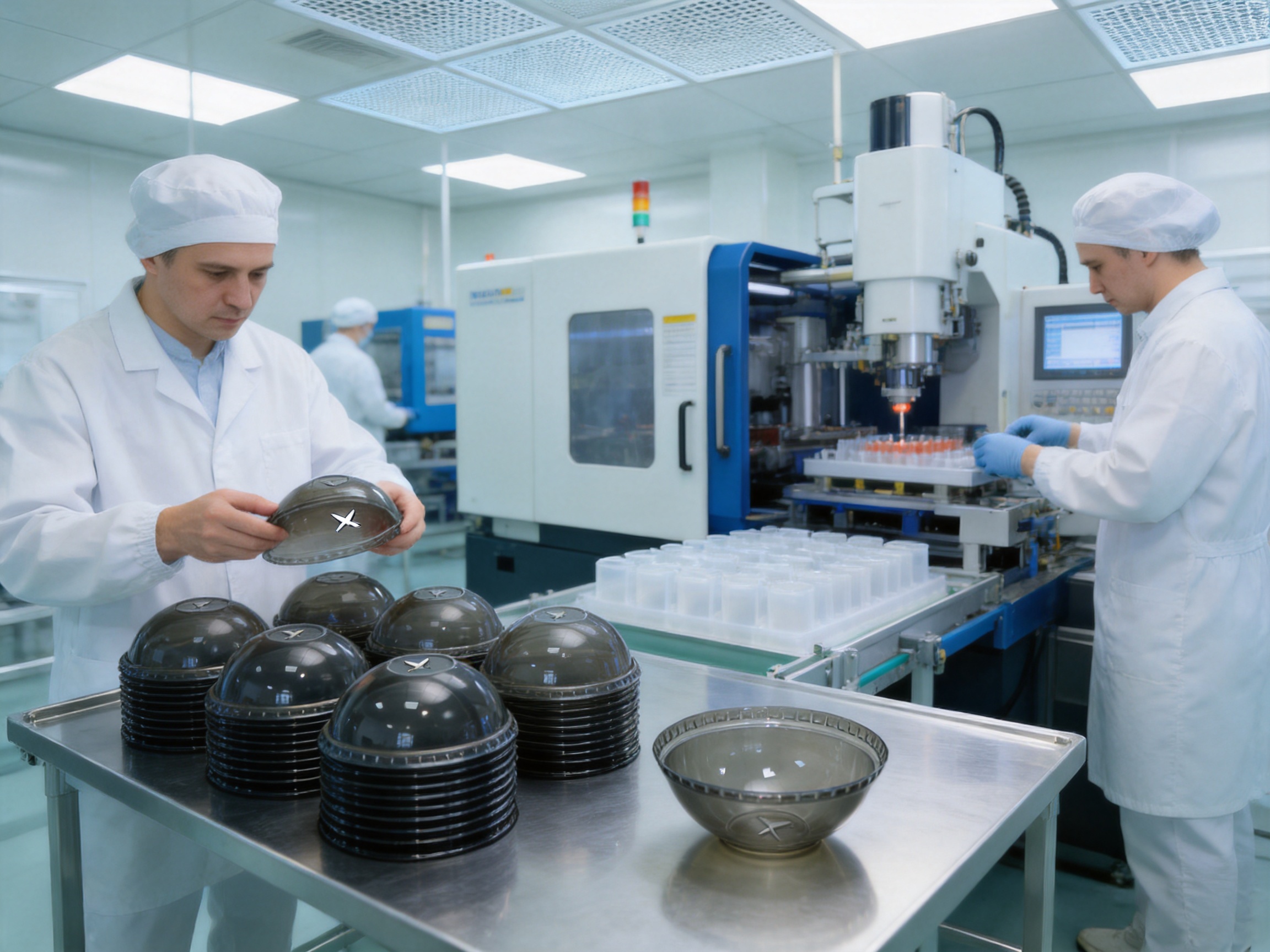
A major strength behind this product is the production environment. Yuqian Packaging Technology (Jiangsu) Co., Ltd. has created a class 100,000 dust-free workshop and uses internationally advanced air purification technology to ensure that workshop air cleanliness meets relevant standards. For food packaging manufacturing, this matters because the cleanliness of the environment can influence the hygiene and consistency of the finished product.
A dust-free workshop helps control airborne particles and reduces the likelihood of unwanted contamination during production. While plastic lids are not food themselves, they are food-contact or food-adjacent packaging items. Therefore, production cleanliness is an important part of responsible manufacturing. The class 100,000 level indicates a controlled environment designed to maintain cleaner air than ordinary industrial spaces.
The workshop also uses precise temperature and humidity control. This is significant for plastic injection molding because processing stability can be affected by environmental conditions. Stable temperature and humidity help maintain consistent material behavior, mold performance, and finished product dimensions. For a lid that depends on precise fit, such consistency is essential.
Advanced production conditions also support better batch-to-batch reliability. Food packaging buyers often need large volumes and repeat orders. They require assurance that the product received this month will match the product received in previous months. Environmental control, quality management, and standardized production procedures all contribute to this reliability.
In addition, a controlled workshop can improve employee workflow and quality inspection effectiveness. When production areas are organized, clean, and stable, defects can be detected more easily, and processes can be managed more accurately. This manufacturing discipline becomes part of the product’s competitive value. Buyers are not only purchasing a lid; they are purchasing the confidence that comes from systematic production control.
Quality Certifications and Their Practical Meaning
The manufacturer has obtained several certifications and testing recognitions that support its position in the food packaging industry. These include the QS national industrial product production license, ISO9001 quality management system certification, BRC certification, German authoritative safety DIN certification, and EU ROHS+ testing. Each of these strengthens buyer confidence in a different way.
The QS production license indicates that the company has met relevant requirements for industrial product production within its jurisdiction. For food packaging products, such licensing supports the legitimacy and compliance of manufacturing operations. It reassures buyers that the company is not operating casually but within a recognized regulatory framework.
ISO9001 certification demonstrates that the company has established a quality management system. This matters because consistent product quality depends on documented processes, continuous improvement, corrective actions, supplier control, production monitoring, and customer feedback handling. ISO9001 does not simply apply to one product; it reflects a management structure that supports repeatable quality across operations.
BRC certification is highly relevant in packaging supply chains connected to food and consumer goods. It supports the manufacturer’s credibility among customers who require strict hygiene, product safety, and operational control. For international buyers or large foodservice clients, BRC-related assurance can be an important supplier selection factor.
German DIN safety certification and EU ROHS+ testing further strengthen the company’s quality profile. DIN-related safety standards are known for technical rigor, while ROHS-related testing focuses on restrictions of certain hazardous substances. For customers concerned about material safety and international market requirements, these certifications can be valuable evidence of responsible production.
Together, these certifications show that the company’s strengths are not limited to equipment or production capacity. They also include system-based quality assurance. This is important because a lid’s performance depends on every step from raw material selection to final inspection. Certification-backed production helps reduce uncertainty for buyers.
Stackability and Storage Efficiency
The semi-circular PP injection molded ball lid is stackable, making it easy to store and space-saving. This may appear to be a simple feature, but it has real operational value. Foodservice businesses often operate in limited spaces. Beverage counters, dessert stations, takeaway kitchens, catering preparation areas, and storage rooms must handle many types of cups, bowls, lids, straws, bags, and accessories. Packaging that stacks neatly helps maintain order.
Stackability improves staff efficiency. When lids are arranged in stable stacks, employees can quickly pick up one lid at a time and continue serving customers. Poorly stacked lids may fall, become contaminated, or slow down the assembly process. In high-traffic periods, even small delays can affect service speed and customer satisfaction.
Stacked packaging also reduces shipping and warehousing volume. Although the individual lid is lightweight, large quantities occupy space. Efficient nesting and stacking allow more units to be packed and stored in a smaller area. This can reduce handling complexity and help distributors manage inventory more effectively.
Another benefit is product protection. When lids are designed to stack correctly, they are less likely to rub irregularly, bend at random angles, or become damaged during storage. A stable stack protects rim geometry, which is important for sealing performance. Therefore, stackability is directly connected to functional quality, not merely convenience.
Applications Across Food and Beverage Scenarios
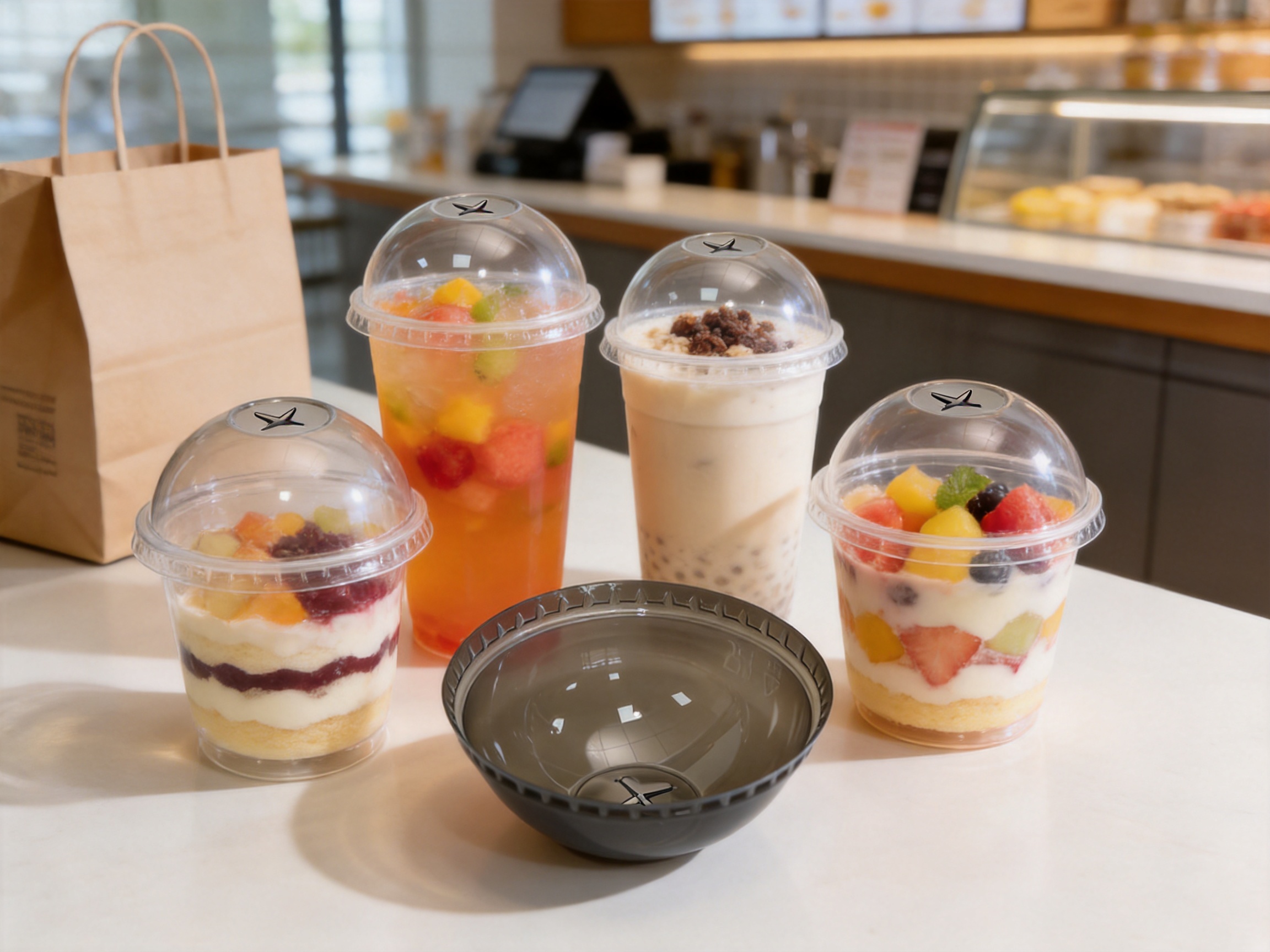
The lid is suitable for use in various containers and occasions. Its transparent semi-circular design and secure sealing function make it relevant to many foodservice applications. Beverage shops can use it for drinks that require visual presentation or extra headroom. Dessert brands can use it for pudding cups, cream-topped desserts, fruit cups, and layered snacks. Takeaway restaurants can use it where a reliable closure is needed for compatible bowls or cups.
For cold drinks, the transparent dome can improve product display. Colorful beverages with fruit slices, toppings, foam, or decorative layers can remain visible. This helps create a premium feeling even in disposable packaging. For dessert applications, the raised lid can protect toppings and preserve appearance during delivery or display.
For convenience stores and pre-packed food counters, the lid provides hygiene protection and visibility. Customers can inspect the product visually without opening the container. This reduces unnecessary handling and supports a cleaner retail environment. Transparent packaging components are particularly helpful for grab-and-go products, where visual appeal drives purchasing decisions.
For events and catering, the lid supports easier transport and distribution. Food and drinks may need to be prepared in advance, arranged in batches, and moved between locations. A durable, stackable, leak-resistant lid helps simplify this process. It also reduces the risk of spills during serving.
For home use, the lid offers convenience for storage and handling. Consumers can use compatible containers for snacks, drinks, desserts, or leftovers. The durable PP material helps the lid remain functional under normal repeated handling conditions, although it is primarily designed as disposable food packaging.
Customization and Brand Differentiation
Customization is an important advantage in today’s packaging market. Businesses increasingly use packaging not only to protect food but also to communicate brand identity. The product information indicates that customized generation is available according to customer requirements. This makes the semi-circular PP injection molded ball lid more flexible for commercial clients who need packaging aligned with their market positioning.
Customization may include adjustments related to fit, structure, appearance, packaging quantity, or compatibility with broader container systems. For large beverage chains or food brands, a customized lid can help ensure that the packaging experience feels consistent across different stores and product lines. It can also reduce compatibility issues that may occur when generic lids are paired with containers from different sources.
A well-designed custom lid can contribute to brand recognition. Even without printing, lid shape, transparency, fit, and user experience all influence how customers perceive a food brand. Packaging that feels secure and clean communicates professionalism. Packaging that leaks or cracks communicates carelessness. Therefore, customization is not only aesthetic; it is functional brand protection.
Yuqian Packaging Technology (Jiangsu) Co., Ltd. has research, development, production, and sales capabilities, which support customized packaging solutions. The company’s experience in food packaging materials and products allows it to respond to customer requirements beyond a single standard product. This is particularly useful for distributors, private-label packaging companies, and foodservice chains seeking long-term supply partnerships.
Environmental and Health-Oriented Packaging Considerations
The product is described as environmentally friendly and healthy. In the disposable food packaging industry, environmental responsibility is a complex topic. Customers want convenience, but they also expect safer materials, responsible production, and reduced unnecessary waste. The semi-circular PP injection molded ball lid contributes to this direction by using food-grade PP raw materials, maintaining strong durability, and supporting reliable performance that helps reduce waste caused by packaging failure.
When a lid leaks or breaks, the result is often more waste. The food or drink may be discarded, packaging may need to be replaced, and additional cleaning materials may be used. A stronger, better-fitting lid can reduce this form of operational waste. Although disposable packaging must be managed responsibly after use, improving product reliability is still an important part of sustainability-minded packaging selection.
Polypropylene is also widely recognized as a recyclable plastic in many regions, depending on local recycling systems and contamination conditions. A transparent PP lid can fit into packaging strategies where material identification and responsible disposal are considered. Businesses should still follow local waste management regulations and educate staff and customers on proper disposal practices.
Health-oriented packaging is equally important. Food-grade, non-toxic, odorless materials help protect consumers and preserve food quality. Modern consumers increasingly judge brands by the safety and cleanliness of their packaging. By choosing lids manufactured under controlled conditions and supported by certifications, foodservice companies can better align with these expectations.
Company Manufacturing Strength
Yuqian Packaging Technology (Jiangsu) Co., Ltd. was established in 2010 and is located at No. 8 Tongyang Road, Suchen Town, Taizhou City, Jiangsu Province, China. The company operates a plant area of approximately 30,000 square meters and is positioned as a high-tech enterprise integrating research and development, production, and sales of new food packaging materials and products. This foundation gives the company the capacity to serve both standard and customized packaging requirements.
The company’s product categories include plastic cups, plastic cup lids, takeaway bowls, disposable straws, recycle bags, peripheral products, and injection film lining cups and bowl boxes. This broad product range matters because many buyers prefer integrated packaging supply. A business that purchases lids may also need cups, bowls, bags, or related accessories. A manufacturer with wider product capabilities can help simplify sourcing and improve compatibility across packaging components.
The company has also expanded its service network by establishing a Shanghai branch in January 2019. This reflects a strategy to improve service quality and expand business channels. For customers, improved service channels can support faster communication, better project coordination, and more responsive after-sales support.
The manufacturing strength behind the semi-circular PP injection molded ball lid is not limited to one machine or one mold. It is supported by an overall system: food-grade material selection, controlled workshop conditions, precision molding, strict quality inspection, certification-backed management, and customization ability. These elements combine to create a product that can compete effectively in the disposable food packaging container market.
How This Lid Supports Foodservice Business Performance
Foodservice packaging is directly connected to business performance. A lid may seem like a minor cost item, but its effect can be seen in customer satisfaction, staff efficiency, product protection, delivery quality, and brand perception. The semi-circular PP injection molded ball lid helps businesses improve performance in several practical ways.
First, it reduces the risk of leakage. This helps protect the customer experience and reduces the likelihood of complaints. For delivery platforms and takeaway orders, packaging failure can lead to negative reviews. A more secure lid is a simple but effective way to protect brand reputation.
Second, it supports faster operations. A lid that fits well and stacks neatly can be used more quickly by staff. Employees do not need to struggle with lids that are warped, stuck, or unreliable. This is especially important during busy lunch, dinner, or beverage rush periods.
Third, it improves product presentation. The transparent dome allows the contents to remain visible and appealing. In competitive markets, customers often choose products based on visual appeal. Packaging that supports attractive display can contribute to higher perceived value.
Fourth, it strengthens hygiene confidence. A secure lid protects the product from external contact and demonstrates professional handling. In an environment where consumers pay close attention to food safety, this is a meaningful advantage.
Fifth, it supports inventory management. Stackable packaging saves space and keeps storage areas organized. For chains and distributors, efficient storage can reduce handling costs and improve warehouse flow.
Practical Buying Considerations
When selecting the semi-circular PP injection molded ball lid, buyers should confirm compatibility with their containers. The lid has a 90 mm caliber, so it should be matched with cups or bowls designed for that lid size and rim structure. Even lids with the same nominal diameter may vary in fit depending on container design, so sample testing is recommended before large-scale purchasing.
Buyers should also consider the type of product being packaged. For beverages, sauces, or liquid-containing foods, sealing performance should be tested under realistic conditions such as tilting, carrying, and short-distance transport. For desserts or display products, visual clarity and dome space should be evaluated. For high-volume operations, stackability and ease of lid separation should be tested by actual staff.
Packaging buyers should also review quality documents, food-contact suitability, and certification needs. Because the manufacturer has multiple certifications, businesses can request relevant documentation for procurement review. This is especially important for distributors serving regulated markets or chain customers.
Customization requirements should be discussed early. If a buyer needs a specific fit, packaging arrangement, or product adaptation, early technical communication helps reduce development time. Injection molded products may require mold design or adjustment, so accurate specifications and sample containers are helpful.
Finally, buyers should consider total value rather than only unit price. A cheaper lid that leaks, cracks, or causes complaints may become more expensive in practice. The semi-circular PP injection molded ball lid offers value through reliability, durability, food safety, presentation, and manufacturing assurance.
Frequently Asked Questions
What is the semi-circular PP injection molded ball lid made of?
It is made from food-grade polypropylene, commonly known as PP. The material is selected to be non-toxic and odorless, making it suitable for food-contact packaging applications when used appropriately.
What is the main size of this lid?
The lid has a 90 mm caliber and a gram weight of 5.5 g. It is intended for compatible cups, bowls, or containers designed to match this lid size and rim structure.
Why is injection molding important for this product?
Injection molding allows the lid to achieve accurate dimensions, stable structure, and a detailed sealing design. This helps improve fit, leak resistance, durability, and batch-to-batch consistency compared with many lower-precision lid options.
Is the lid leak-proof?
The lid is designed with a leak-resistant sealing structure intended to fit tightly when closed. It helps reduce liquid leakage during normal takeaway, storage, and transport conditions. Compatibility with the container should always be tested for best performance.
Can the lid be used for drinks and desserts?
Yes. The transparent semi-circular dome design is suitable for beverages, desserts, fruit cups, snacks, and other compatible food packaging applications. It is especially useful when visibility, hygiene, and secure covering are important.
Is the lid easy to store?
Yes. The lid is stackable, which makes storage more efficient and helps save space in restaurants, beverage shops, warehouses, and catering preparation areas.
What makes this lid different from ordinary disposable lids?
Its advantages include thickened PP material, injection molded precision, a unique leak-resistant sealing structure, food-grade safety, transparent presentation, stackable storage, and the ability to support customization. These features provide stronger practical performance than many basic low-cost lids.
Does the manufacturer support customization?
Yes. The product can be customized according to customer requirements. Customization may support specific container compatibility, functional details, or packaging system needs.
What quality strengths support the product?
The product is supported by a class 100,000 dust-free workshop, advanced air purification technology, precise temperature and humidity control, strict quality control, and certifications including QS, ISO9001, BRC, German DIN safety certification, and EU ROHS+ testing.
Who should consider purchasing this lid?
Restaurants, beverage shops, dessert brands, convenience stores, catering companies, packaging distributors, and food packaging buyers who need a secure, transparent, durable, and food-safe lid for compatible 90 mm containers should consider this product.
Conclusion
The semi-circular PP injection molded ball lid is a practical and high-performance packaging component for the modern disposable food packaging market. With its 90 mm caliber, 5.5 g thickened PP structure, transparent appearance, and injection molded precision, it provides a strong balance of durability, safety, presentation, and operational convenience.
Its leak-resistant design helps protect takeaway and delivery orders from spills. Its food-grade PP material supports consumer health and preserves product taste and odor neutrality. Its stackable design improves storage efficiency, while its transparent dome shape enhances product visibility. Compared with many ordinary disposable lids, it offers stronger structural reliability, better fit potential, and a more professional user experience.
The product’s value is further strengthened by the manufacturing capabilities of Yuqian Packaging Technology (Jiangsu) Co., Ltd. The company’s controlled workshop environment, advanced air purification system, temperature and humidity control, quality certifications, and customization capability all contribute to consistent product quality. For foodservice brands and packaging buyers, this means the lid is not only a single-use accessory but a dependable part of a complete packaging solution.
As consumer expectations continue to rise, packaging must do more than contain food. It must protect hygiene, support delivery, display products attractively, reduce operational problems, and reflect brand responsibility. The semi-circular PP injection molded ball lid meets these needs through thoughtful design and disciplined manufacturing, making it a strong choice for businesses seeking reliable disposable food packaging container solutions.
References
Food Packaging Materials: Principles, Selection, and Applications. Industry Packaging Handbook.
Polypropylene in Food Contact Applications. Plastics Materials Technical Review.
Injection Molding Process Control for Precision Plastic Components. Manufacturing Engineering Reference Series.
ISO9001 Quality Management Systems: Fundamentals and Practical Implementation. Quality Management Institute.
BRC Global Standard for Packaging Materials: Food Safety and Quality Guidance. Packaging Compliance Review.
Cleanroom Manufacturing for Food Packaging Components. Controlled Environment Production Journal.
Disposable Food Packaging Market Trends and Safety Requirements. Foodservice Packaging Industry Report.