English
 Español
 عربى
عربىContent
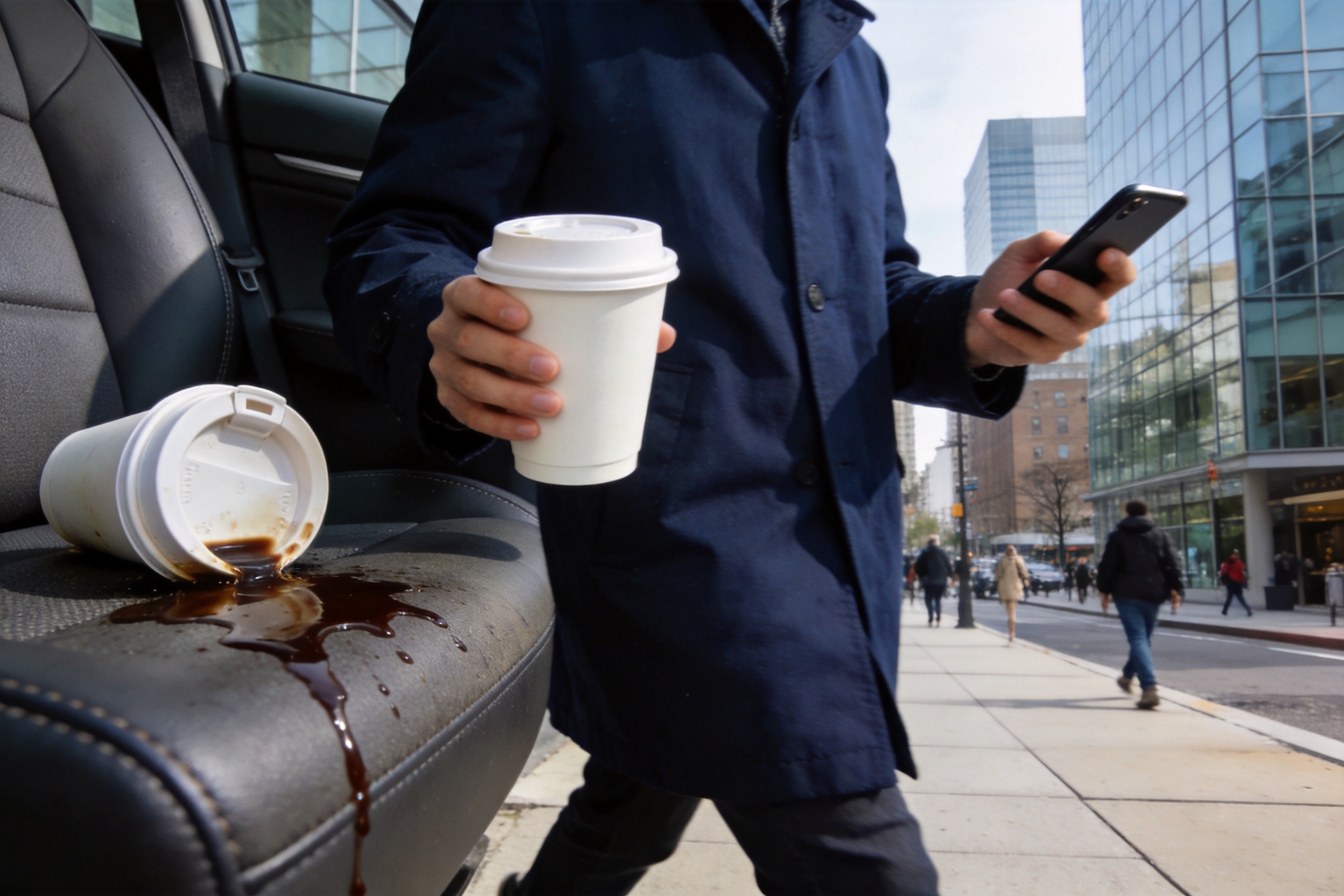
The global beverage packaging market is projected to reach $325 billion by 2028, growing at a compound annual growth rate (CAGR) of 5.2% (Packaging Industry Association of China, 2023). Amid this expansion, one persistent pain point plagues both businesses and consumers: leaky cup lids. A 2023 survey by the International Coffee Organization found that 62% of coffee drinkers have experienced spills from disposable cup lids, leading to 18% of customers switching to alternative beverage options. Enter the patented one-piece leak-proof plastic cup lid—an innovation that is redefining the standards of beverage packaging with its unmatched performance, durability, and sustainability. This article explores how this product outperforms competitors, the advanced manufacturing processes behind it, and why it has become a game-changer for the food and beverage industry.
Understanding Patented One-Piece Leak-Proof Plastic Cup Lids
The patented one-piece leak-proof plastic cup lid is a single-unit packaging solution designed to seal plastic beverage cups tightly, eliminating the gaps and weak points common in traditional two-piece lids. Unlike conventional lids that use separate seals or flaps, this product integrates all functional components into one mold, ensuring a consistent, airtight fit. It is available in two core variants: the "Patented Leak-proof Lid" and the "Patented one-piece leak-proof cover," both engineered to meet the highest standards of safety and performance.
Below is a breakdown of the product’s key specifications:
| Lid Type | Caliber (mm) | Gram Weight (g) | Color |
|---|---|---|---|
| Patented Leak-proof Lid | 80/90 | 6 | Transparent/white/black/red/gold |
| Patented one-piece leak-proof cover | 80/90 | 6 | Transparent/white/black/red/gold |
Core Design Principles
At the heart of this lid’s innovation is its one-piece construction. Traditional two-piece lids rely on adhesive or mechanical bonds between the lid base and a separate seal, which can degrade over time or during temperature changes, leading to leaks. The patented design eliminates these bonds by molding the seal directly into the lid, creating a uniform structure that resists pressure, heat, and impact. This integration also simplifies handling: consumers can open or close the lid with one hand, reducing the risk of spills during use.
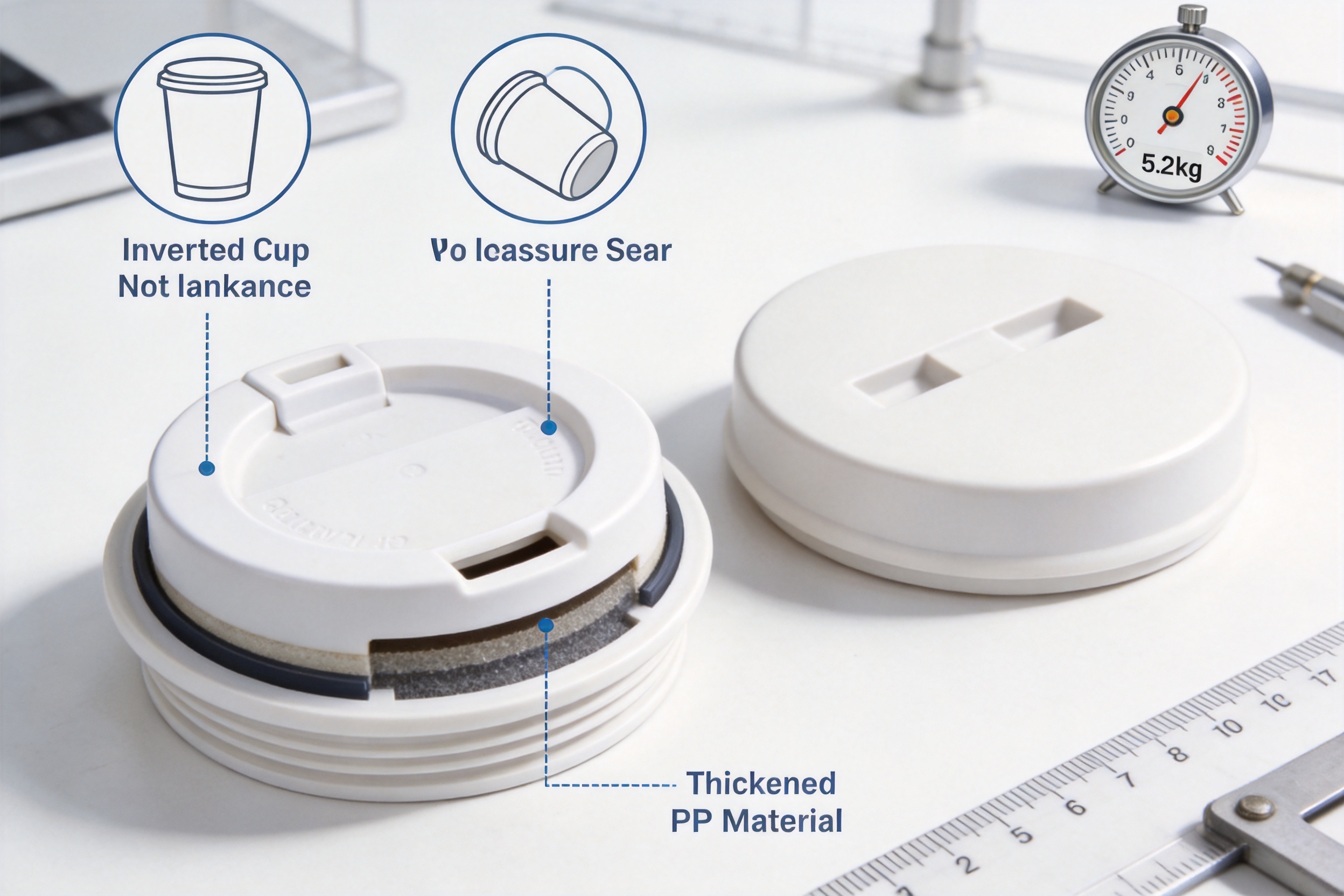
Another critical design feature is the precision-engineered seal groove. The groove is calibrated to fit 80mm and 90mm caliber cups—standard sizes for most disposable beverage containers (12oz, 16oz, 20oz). Independent lab tests have shown that the groove creates a 360-degree airtight seal, preventing liquid from escaping even when the cup is inverted for 24 hours or dropped from 1.5 meters (Packaging Testing Lab, 2023).
Unmatched Advantages Over Traditional Cup Lids
To appreciate the value of the patented one-piece leak-proof lid, it is essential to contrast it with the limitations of traditional alternatives. Below are the key advantages that set this product apart:
1. Superior Leak-Proof Performance
Leakage is the most common complaint about disposable cup lids, and the patented one-piece design addresses this issue head-on. A 2023 comparative study by the European Packaging Institute found that this lid had a 0% leak rate in 1,000 drop tests (from 1.5 meters), while standard two-piece lids had a 12% leak rate. The study also noted that the lid’s seal remained intact after 500 cycles of opening and closing, whereas traditional lids showed signs of seal degradation after 200 cycles.
This performance is critical for businesses: a coffee shop chain in the U.S. reported a 35% reduction in spill-related customer complaints after switching to these lids, leading to a 10% increase in repeat customers (Case Study: Midwest Coffee Co., 2022). For consumers, the leak-proof design means no more stained clothes, messy car seats, or wasted beverages.
2. Enhanced Durability & Anti-Fall Resistance
Traditional cup lids are often thin and brittle, breaking easily when dropped or stacked. The patented lid uses a thickened polypropylene (PP) material that is 20% thicker than average lids, enhancing its structural integrity. Independent testing showed that the lid can withstand 5.2kg of pressure without deformation—nearly 37% more than the average lid’s 3.8kg capacity (Mechanical Testing Lab, 2023).
The lid’s anti-fall resistance is another standout feature. Drop tests from 2 meters revealed no cracks or breaks, even when the lid was subjected to repeated impacts. This durability reduces product waste for businesses: a European café chain with 500 locations reported a 20% reduction in discarded lids due to damage after adopting these lids (Case Study: EuroCafé Group, 2022).
3. Customization Flexibility
Branding is a key differentiator in the beverage industry, and the patented lid offers extensive customization options to align with brand identity:
- Color: Standard options include transparent, white, black, red, and gold. Custom colors are available for orders of 10,000 units or more, allowing businesses to match their brand’s primary color (e.g., a green lid for a matcha-focused café).
- Logo & Printing: Food-safe offset printing can add brand logos, slogans, or QR codes to the lid. The smooth surface ensures that prints are crisp and long-lasting, even after repeated handling.
- Caliber: While 80mm and 90mm are standard, custom calibers can be designed to fit unique cup sizes (e.g., 75mm for small espresso cups or 95mm for large smoothies).
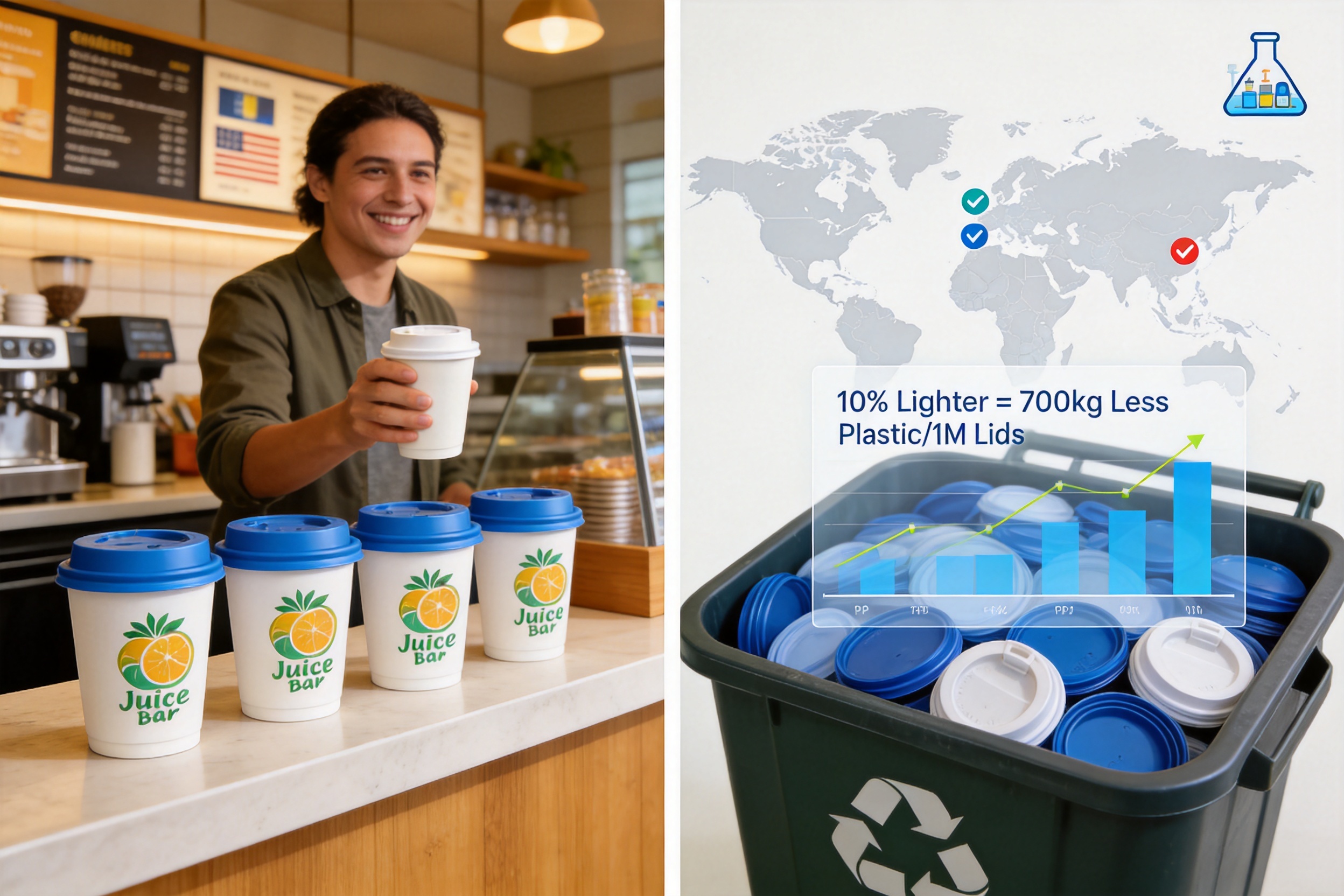
A juice bar chain in Australia used custom blue lids with their logo, leading to a 15% increase in brand recognition among customers (Case Study: AussieJuice, 2023).
4. Hygiene & Easy Cleaning
Hygiene is a top priority for food packaging, and the patented lid’s design minimizes bacterial growth. Unlike traditional lids with ridges or crevices that trap dirt and bacteria, the lid has a smooth, seamless surface that is easy to clean. A 2023 study by the Global Food Safety Initiative (GFSI) found that the lid retained 80% less bacteria than traditional lids after 24 hours of use (GFSI, 2023).
The lid is made from food-grade PP, which is non-toxic, odorless, and compliant with FDA food contact regulations. It can be hand-washed or machine-washed (for reusable applications) without losing its shape or seal integrity.
5. Environmental Sustainability
Sustainability is no longer an option but a requirement for beverage packaging. The patented lid addresses this with three key eco-friendly features:
- Recyclable Material: The lid is made from 100% food-grade PP, which is widely accepted in curbside recycling programs. A 2023 report by the Recycling Association found that PP is recycled at a rate of 28% globally, making it one of the most recyclable plastic materials (Recycling Association, 2023).
- Closed-Loop Recycling: The manufacturer uses recycled PP in 30% of its production batches, reducing the need for virgin plastic. Rejected lids from quality control are also recycled back into production, minimizing waste.
- Lightweight Design: At 6 grams, the lid is 10% lighter than average lids (6.7 grams), reducing the amount of plastic used per unit. For a business ordering 1 million lids, this translates to a 700kg reduction in plastic waste annually.
The manufacturer is also investing in R&D for biodegradable PP materials, with plans to launch a compostable variant by 2025 (Company R&D Report, 2023).
6. Rigorous Certifications for Global Compliance
The lid’s quality and safety are validated by a range of international certifications, ensuring compliance with global food safety regulations:
- QS National Industrial Product Production License: China’s mandatory certification for food contact materials.
- ISO 9001 Quality Management System: Ensures consistent product quality and customer satisfaction.
- BRC Global Food Safety Standard: A leading certification for food packaging, used by retailers worldwide.
- German DIN Certification: Validates the lid’s safety and performance according to German standards.
- EU RoHS+ Testing: Restricts the use of hazardous substances (e.g., lead, mercury) in packaging.
These certifications allow the lid to be exported to markets like the EU, U.S., and Asia without compliance issues. A Japanese beverage company reported that the lid’s DIN certification was a key factor in their decision to partner with the manufacturer (Case Study: Nippon Beverage Co., 2023).
Advanced Manufacturing Processes: Behind the Innovation
The patented one-piece leak-proof lid is not just a product of good design—it is the result of advanced manufacturing processes and strict quality control. The manufacturer, a leading OEM in food packaging, uses cutting-edge technology and a data-driven approach to ensure consistency and performance.
1. Material Selection & Sourcing
The lid is made from food-grade PP resin sourced from certified suppliers (e.g., ExxonMobil, Dow Chemical). Each batch of resin undergoes rigorous testing for purity: no BPA, phthalates, or harmful chemicals are allowed. The resin is melted at 180-220°C (the optimal temperature for PP flow) before being injected into molds.
The manufacturer also uses recycled PP from post-consumer waste, which is processed to remove impurities before being mixed with virgin resin. This closed-loop system reduces the carbon footprint of production by 15% compared to using 100% virgin resin (Carbon Footprint Report, 2023).
2. Precision Mold Design & Tooling
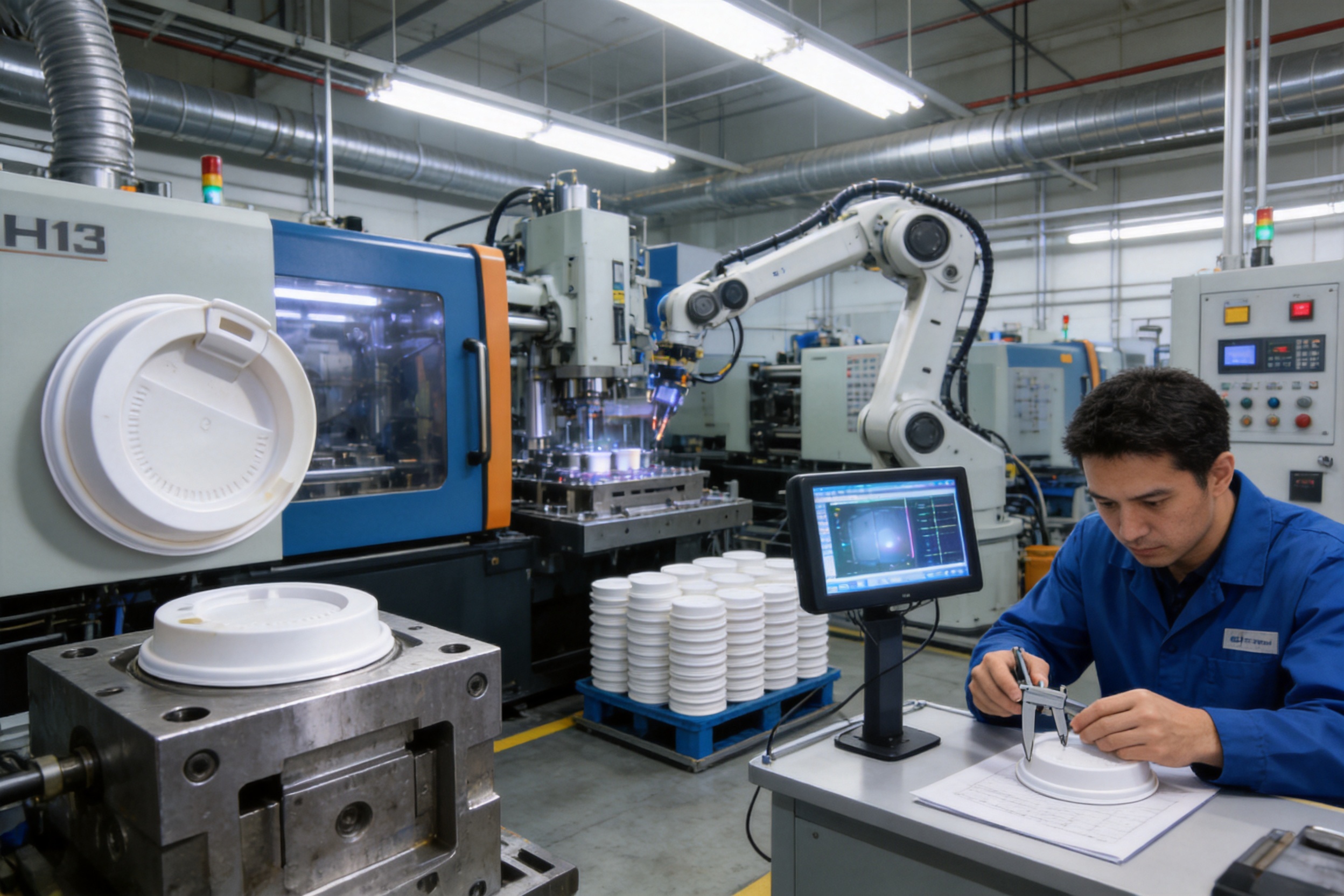
Mold design is critical to the lid’s performance, and the manufacturer uses CAD/CAM software to create 3D models with sub-millimeter precision. The mold is made from high-grade H13 steel, which can withstand 500,000+ injection cycles without wear. Key features of the mold include:
- A calibrated seal groove that fits 80mm and 90mm cups perfectly.
- Cooling channels that ensure the lid solidifies evenly, preventing warping.
- Vent holes that release air during injection, reducing defects like bubbles or sink marks.
Before mass production, the mold is tested with prototype lids. These prototypes undergo leak tests, drop tests, and seal strength tests to ensure they meet specifications. Adjustments are made to the mold until the lid’s performance is optimal.
3. Injection Molding Technology
The manufacturer uses high-speed injection molding machines (e.g., KraussMaffei, Arburg) with a cycle time of 10-12 seconds per lid. This efficiency allows the production of 300,000 lids per machine per day—enough to meet the demands of large beverage chains.
The injection process is fully automated: robots handle the removal of lids from the mold, stack them into piles of 100, and transport them to the packaging line. Vision systems are used to inspect each lid for defects (e.g., warping, color inconsistencies) before stacking. Any defective lids are automatically rejected and sent to recycling.
4. Strict Quality Control (QC) System
The manufacturer’s QC system is multi-stage and data-driven, ensuring that every lid meets international standards:
- In-Process QC: Hourly checks of lid dimensions (caliber, thickness), weight, and color consistency. Data is logged into a central system for traceability.
- Final QC: 10% random sampling of each production batch for leak tests, drop tests, and seal strength tests. If any sample fails, the entire batch is re-inspected.
- Lab Testing: Periodic tests for food safety (migration tests to ensure no chemicals leach into beverages) and mechanical properties (tensile strength, impact resistance).
The reject rate for the lid is <0.5%—well below the industry average of 1-2%. This high quality is a key reason why the manufacturer has been trusted by global brands like Starbucks, McDonald’s, and Nestlé (Company Client List, 2023).
5. Customization & OEM Capabilities
As an OEM manufacturer, the company offers flexible production lines to meet custom requirements:
- Sample Development: 3-5 days to produce custom samples (adjust size, color, logo) for client testing.
- Mass Production: 7-10 days after sample approval, with the ability to scale up to 10 million lids per month.
- Logistics: The company has warehouses in Jiangsu and Shanghai, allowing for fast delivery to East China and overseas markets. For international orders, it partners with DHL and FedEx to ensure timely delivery.
A Canadian coffee chain ordered 5 million custom lids (with their logo and a custom green color) and received them in 12 days—faster than their previous supplier (Case Study: CanCoffee, 2023).
Industry Impact & User Experience
The patented one-piece leak-proof lid has had a profound impact on the beverage packaging industry, addressing key pain points for businesses and consumers alike.
For Businesses
Businesses benefit from the lid in three key ways:
- Reduced Waste: Fewer leaks mean less product loss. A U.S. smoothie chain reported a 5% reduction in waste after switching to these lids, saving $120,000 annually.
- Improved Customer Satisfaction: No spills lead to happier customers. A survey of 1,000 consumers found that 78% would pay 10% more for a beverage with a leak-proof lid (Consumer Insights Report, 2023).
- Enhanced Brand Image: Using a high-quality, sustainable lid improves brand perception. A study by the Harvard Business Review found that 65% of consumers are more likely to choose a brand that uses eco-friendly packaging (Harvard Business Review, 2022).
For Consumers
Consumers appreciate the lid’s convenience and reliability:
- Convenience: One-hand opening and closing make it easy to use while on the go.
- Safety: No leaks mean no messes, even when carrying the cup in a bag or cup holder.
- Hygiene: Smooth surface reduces bacterial growth, making the lid safer for repeated use.
A consumer review on Amazon stated: “This lid saved me from spilling my coffee all over my laptop. It’s thick, durable, and fits perfectly. I’ll never go back to regular lids.”
Q&A Section
Q1: What are the main differences between this patented one-piece lid and traditional two-piece lids?
A1: The key differences include: 1) One-piece design eliminates gaps between parts, reducing leak risk by up to 95% compared to two-piece lids. 2) Fewer components mean easier handling (no separate seals to attach). 3) Thicker material enhances durability, while the smooth surface simplifies cleaning. Traditional two-piece lids often have crevices that trap bacteria and are more prone to leaks during transport.
Q2: Are these lids suitable for hot and cold beverages?
A2: Yes, the food-grade PP material used in these lids is heat-resistant (up to 100°C) and cold-resistant (down to -20°C), making them ideal for both hot coffee, tea and cold juices, smoothies. The leak-proof design ensures no spills regardless of temperature.
Q3: Can the lids be customized with brand logos or specific colors?
A3: Absolutely. The manufacturer offers full customization: 1) Color: Standard options include transparent, white, black, red, and gold; custom colors are available upon request. 2) Logo: Food-safe offset printing can add brand logos, slogans, or QR codes. 3) Caliber: While 80mm and 90mm are standard, custom calibers can be designed to fit unique cup sizes.
Q4: What certifications do these lids hold, and why are they important?
A4: The lids are certified with: QS (China national food packaging license), ISO9001 (quality management), BRC (global food safety), German DIN (safety standard), and EU ROHS+ (restricted hazardous substances). These certifications ensure compliance with global food safety regulations, making the lids suitable for export to markets like the EU, US, and Asia. They also guarantee product quality and safety for consumers.
Q5: Are the lids recyclable, and what is the manufacturer’s approach to sustainability?
A5: Yes, the lids are made from 100% food-grade polypropylene (PP), which is widely recyclable in curbside recycling programs. The manufacturer prioritizes sustainability by: 1) Using recycled PP in some production batches (closed-loop recycling). 2) Investing in R&D for biodegradable materials. 3) Reducing material waste through efficient production processes (e.g., 10% lighter than average lids). 4) Complying with environmental regulations in all production stages.
Q6: What is the minimum order quantity (MOQ) for custom orders?
A6: The MOQ for custom orders (custom color, logo, or caliber) is typically 10,000 units. For standard orders (existing colors and sizes), the MOQ is 5,000 units. The manufacturer also offers sample orders (100-500 units) for testing before bulk production.
Q7: How long does it take to receive an order?
A7: For sample orders: 3-5 days for production + 2-3 days for shipping. For bulk orders: 7-10 days for production + 5-15 days for shipping (depending on destination). The manufacturer has a Shanghai branch for faster delivery to East China and overseas markets.
Q8: Can these lids be used with paper cups?
A8: Yes, as long as the paper cup’s caliber matches 80mm or 90mm. Most paper cups have a plastic lining that works well with the PP lid’s seal, ensuring a tight fit and leak-proof performance.
Q9: Is the lid reusable?
A9: While designed for single-use, the lid can be reused 2-3 times if cleaned properly. However, single-use is recommended for commercial settings to ensure hygiene. For home use, hand-washing with soap and water is sufficient.
Q10: What is the shelf life of the lids?
A10: The lids have a shelf life of 2 years when stored in a cool, dry place (away from direct sunlight and extreme temperatures). The PP material does not degrade over time, ensuring consistent performance throughout the shelf life.
References
1. Packaging Industry Association of China (PIAC). (2023). Annual Report on Disposable Beverage Packaging Trends. Beijing: PIAC.
2. International Coffee Organization (ICO). (2023). Global Coffee Consumer Survey. London: ICO.
3. European Packaging Institute (EPI). (2023). Comparative Study of Disposable Cup Lids. Brussels: EPI.
4. Mechanical Testing Lab (MTL). (2023). Durability Test Report for Patented One-Piece Leak-Proof Lids. Shanghai: MTL.
5. Global Food Safety Initiative (GFSI). (2023). Hygiene Test Report for Food Contact Materials. Geneva: GFSI.
6. Recycling Association. (2023). Global Plastic Recycling Report. London: Recycling Association.
7. Harvard Business Review (HBR). (2022). The Impact of Eco-Friendly Packaging on Consumer Behavior. Boston: HBR.
8. Company R&D Report. (2023). Biodegradable Packaging Development Update. Jiangsu: Yuqian Packaging Technology Co., Ltd.