English
 Español
 عربى
عربىContent
- 1 Introduction to PP Thermoforming Cups
- 2 What Is a PP Thermoforming Cup?
- 3 Key Product Advantages
- 4 Available Specifications
- 5 Manufacturing Process and Technical Strengths
- 6 Customization and Design Services
- 7 Applications Across Foodservice and Retail
- 8 Why PP Can Be Preferable to Other Disposable Cup Materials
- 9 Company Manufacturing Strengths
- 10 Quality, Safety, and Compliance Considerations
- 11 Ordering and Custom Development Process
- 12 Operational and Environmental Benefits
- 13 How to Choose the Right Specification
- 14 Q&A About PP Thermoforming Cups
- 14.1 Q1: What material are these thermoforming cups made from?
- 14.2 Q2: What temperature range are the cups designed to handle?
- 14.3 Q3: Are PP thermoforming cups transparent?
- 14.4 Q4: Can the cup design be customized?
- 14.5 Q5: What volume options are available?
- 14.6 Q6: Can the cups be used with lids and straws?
- 14.7 Q7: Are the cups stackable?
- 14.8 Q8: Are PP cups recyclable?
- 14.9 Q9: What certifications and testing does the company report?
- 14.10 Q10: Can the manufacturer support large orders?
- 14.11 Q11: What information should be provided when requesting a quotation?
- 14.12 Q12: How can customers verify whether a cup is suitable for their product?
- 15 Conclusion
- 16 References
- 17 Product: PP thermoforming cup
Introduction to PP Thermoforming Cups
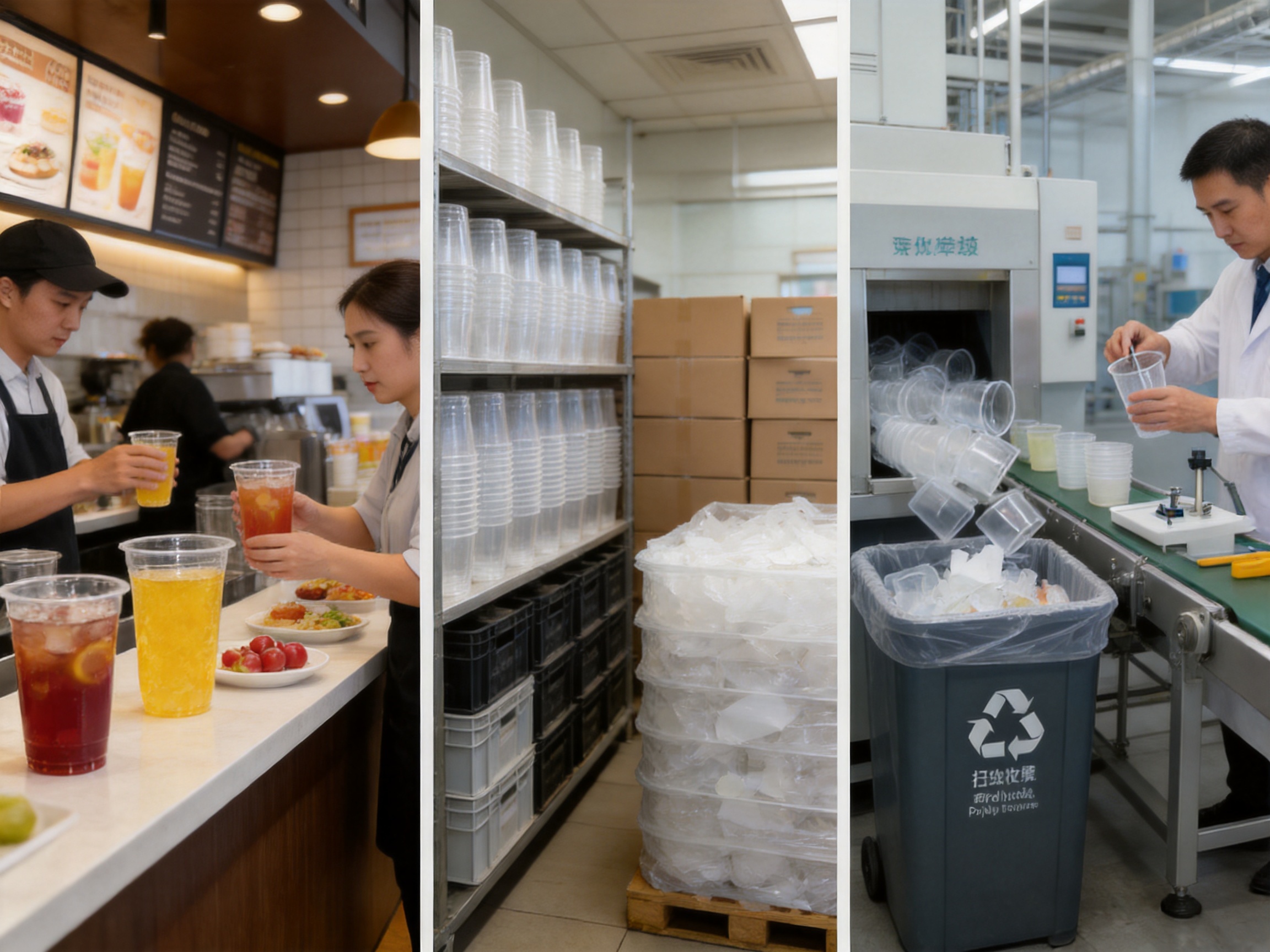
Modern foodservice businesses need packaging that is safe, attractive, efficient, and dependable across a wide range of applications. Beverage retailers, restaurants, cafés, institutional caterers, convenience stores, food manufacturers, and takeaway operators all require containers that can protect products while also presenting them clearly to consumers. PP thermoforming cups, also known as PP blister cups, provide a practical answer to these demands by combining transparency, toughness, temperature adaptability, recyclability, and flexible customization.
Manufactured from polypropylene, these disposable cups are designed for both chilled beverages and selected hot food applications. Their transparent appearance allows consumers to see the color, texture, and quantity of the contents, while their smooth inner walls support convenient filling, drinking, and cleaning. The rounded cup mouth improves user comfort and helps create a neat, finished appearance for food and beverage presentation.
Yuqian Packaging Technology (Jiangsu) Co., Ltd. develops and manufactures PP thermoforming cups for customers seeking reliable disposable food packaging and personalized product solutions. The company combines German-imported production equipment, carefully selected PP raw materials, quality management systems, and large-scale production capability. This combination enables it to supply standard products while also supporting customization in color, pattern, size, and in-mold labeling.
Compared with many ordinary disposable plastic cups, PP thermoforming cups offer a more balanced combination of temperature resistance, mechanical strength, visual clarity, and environmental performance. They are suitable for refrigerated drinks, desserts, snacks, sauces, prepared foods, and other catering applications where packaging must be practical without compromising product presentation.
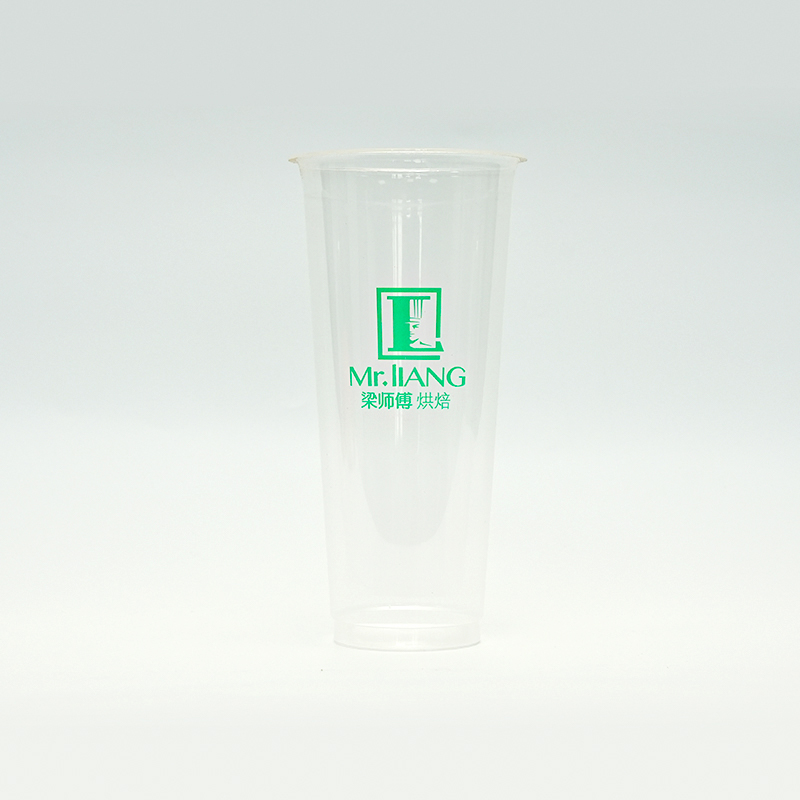
PP thermoforming cup
What Is a PP Thermoforming Cup?
PP thermoforming cups are containers formed from polypropylene sheets or films using a thermoforming process. During manufacturing, the PP material is heated to a controlled temperature, shaped over a mold, cooled, and trimmed to create a cup with precise dimensions. This process allows manufacturers to produce consistent shapes, uniform walls, and repeatable product quality at commercial scale.
Polypropylene is a thermoplastic material valued for its relatively low density, good chemical resistance, toughness, and ability to tolerate a broad operating temperature range. For the PP blister cups described in this article, the recommended temperature adaptability is approximately -10°C to 120°C. This makes the cups suitable for refrigerated beverages and many hot-food applications, provided that the specific product, filling temperature, storage condition, and customer requirements are properly evaluated.
The term “blister cup” refers to the formed shape and manufacturing method rather than a limitation on use. The cup can be supplied in rolled or flat styles according to packaging, transportation, and application requirements. The product can also be designed with different mouth diameters, heights, base dimensions, and grammage options to meet the needs of different beverage or food formats.
A thermoformed PP cup normally includes a smooth rim, a formed sidewall, and a stable base. The rim can be designed for convenient sealing or use with a compatible lid. The base supports upright placement during filling, transportation, display, and consumption. Because the cup is formed using controlled tooling, the design can be adapted to improve stackability, appearance, handling, and storage efficiency.
Key Product Advantages
1. Broad Temperature Adaptability
One of the main benefits of PP thermoforming cups is their suitability for a broad temperature range. The specified operating range of approximately -10°C to 120°C allows the cups to be used with refrigerated beverages, chilled desserts, and many hot-food products. This versatility helps foodservice companies reduce the number of different packaging materials they need to purchase and manage.
For cold applications, the cups can be used for iced beverages, refrigerated drinks, fruit portions, cold desserts, and other products stored at low temperatures. The material remains practical for everyday handling without becoming unnecessarily brittle under normal refrigerated conditions. For warm applications, polypropylene offers a higher temperature tolerance than many common disposable plastics, making it useful for selected hot foods and warm serving formats.
Temperature performance should always be matched to the actual application. Factors such as filling temperature, heating method, contact time, food composition, storage duration, and lid compatibility can affect packaging performance. Customers can discuss their exact conditions with the manufacturer before placing a large order so that the appropriate cup structure and specification can be selected.
2. High Transparency and Attractive Presentation
PP thermoforming cups are highly transparent and have a smooth appearance. This clarity is important for businesses that use packaging as part of their product presentation. Consumers can immediately view the color, layers, texture, and portion of the beverage or food inside the cup. Transparent packaging is especially useful for colorful drinks, fruit-based products, desserts, toppings, yogurt, jelly, and prepared foods.
Compared with opaque packaging, a clear cup can help products communicate freshness and quality at the point of sale. It also allows staff and consumers to check the contents without opening the package. For retail and takeaway businesses, this visibility may simplify product identification and improve display consistency.
The smooth surface also provides a clean foundation for branding, labeling, and decorative treatment. Depending on the order requirements, customers may request customized colors, printed patterns, or in-mold labeling. These options allow the cup to support a broader marketing strategy while preserving the practical benefits of a formed PP container.
3. Good Toughness and Shape Stability
A disposable cup must be light enough for efficient transportation and economical use, yet strong enough to withstand filling, stacking, movement, and everyday handling. PP thermoforming cups are designed to provide good toughness and resistance to ordinary deformation. Their formed structure gives the container useful rigidity while maintaining a relatively lightweight profile.
Good toughness is valuable throughout the supply chain. Cups may be handled during production, packed into cartons, transported to a distribution center, placed in storage, filled at a restaurant, and carried by a customer. A container that maintains its shape during these steps helps reduce spills, presentation problems, and packaging waste.
The final strength of a cup depends on its dimensions, wall distribution, grammage, mold design, and intended use. Yuqian Packaging Technology can provide different specifications and grammage options so that the product can be matched to the required level of performance. Heavier constructions may be appropriate for demanding applications, while lighter constructions can support material efficiency where the product requirements permit.
4. Food-Contact-Oriented Material Selection
The product is manufactured using PP raw materials selected for disposable food packaging applications. Polypropylene is non-toxic and odorless when suitable grades and controlled manufacturing practices are used. These characteristics help prevent unwanted odor transfer and support a clean consumer experience.
Material selection is only one part of packaging safety. Manufacturing hygiene, production controls, storage conditions, testing, and quality management are also essential. The company reports that its operations have passed QS national industrial product production license requirements, ISO9001 quality management system certification, BRC certification, German DIN safety certification, and EU RoHS+ testing. These certifications and testing activities provide an important framework for consistent production and responsible quality control.
Customers should select the appropriate material specification according to the intended food, temperature, filling process, and market regulations. Where required, additional documentation and application-specific testing can be discussed as part of the ordering process.
5. Recyclability and Environmental Considerations
PP is a recyclable plastic material. After the useful service life of a PP thermoforming cup, the material may be collected and directed into an appropriate recycling system where local infrastructure, sorting capability, and regulations allow. Recycling can help reduce the demand for virgin resources and support more efficient material use.
The environmental value of a recyclable package depends on the entire system surrounding it. Collection, sorting, cleaning, reprocessing, consumer participation, and regional recycling capacity all influence the result. Nevertheless, selecting a recyclable material is a meaningful design consideration for companies working to improve their packaging strategy.
PP thermoforming cups can also contribute to material efficiency through their lightweight structure and stackable design. Efficient use of material, compact storage, and optimized transportation may reduce unnecessary resource consumption. The appropriate balance between lightness and product performance should be established through technical evaluation rather than simply selecting the thinnest possible cup.
6. Stackability and Storage Efficiency
Storage space is an important cost for restaurants, caterers, distributors, and food manufacturers. PP thermoforming cups are designed to be stackable, allowing multiple empty cups to be stored in a compact vertical arrangement. This can help businesses organize shelves, reduce warehouse volume, and improve the use of space in kitchens or service areas.
Stackability also supports more efficient packaging and transportation. When empty cups occupy less space, more units may be loaded into a carton or shipment, subject to packaging design and logistics requirements. This may help reduce handling frequency and improve inventory management.
Different customers may have different priorities. A high-volume beverage chain may focus on pallet density and automated filling, while a small restaurant may value easy access and tidy back-of-house storage. The manufacturer can help select dimensions and stacking characteristics that fit the customer’s operating environment.
Available Specifications
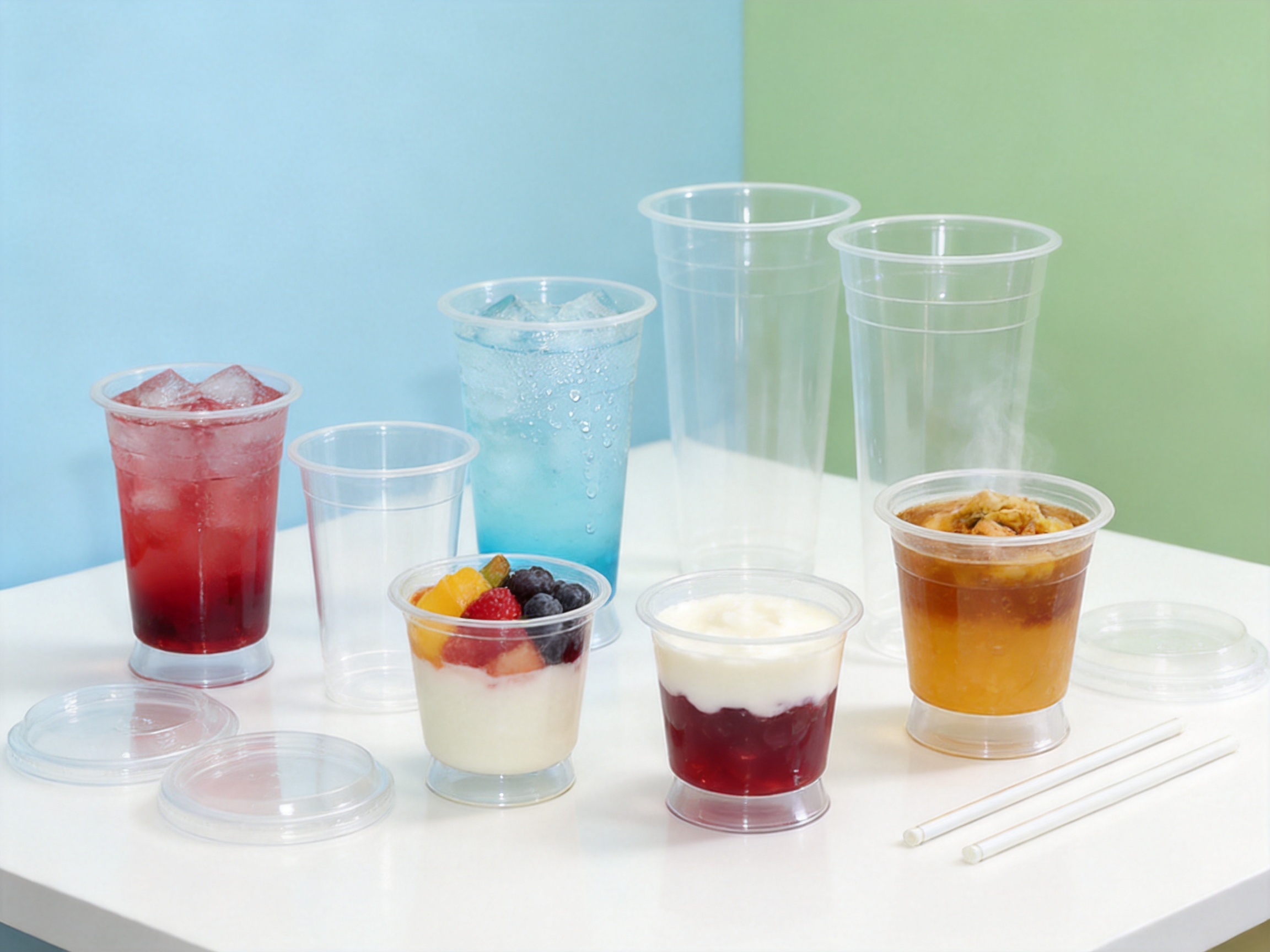
The product range includes several volume and dimensional options. The specifications below represent available configurations and may be subject to production tolerances, mold selection, material requirements, and customer confirmation. Mouth diameter, height, bottom diameter, and grammage all influence the appearance, capacity, stability, and handling characteristics of the finished cup.
| Nominal Volume | Mouth Diameter | Height | Bottom Diameter | Grammage |
|---|---|---|---|---|
| 360 ml | 95 mm | 105 mm | 55 mm | 6–7 g |
| 520 ml | 90 mm | 133 mm | 59 mm | 10–12 g |
| 700 ml | 90 mm | 180 mm | 55 mm | 11–13 g |
| 1,000 ml | 120 mm | 153 mm | 80 mm | 16–18 g |
The 360 ml option is suitable for moderate beverage portions, desserts, fruit servings, and snack products. Its relatively broad mouth can provide convenient access for drinking or spoon use. The 520 ml and 700 ml sizes are appropriate for larger beverages, takeaway formats, and products requiring additional internal capacity. The 1,000 ml option provides a larger container for family-size portions, substantial food servings, or high-volume beverage applications.
Dimensions should be considered together rather than individually. A wider mouth may improve filling, topping, drinking, or sealing, while a taller design may increase visual impact and volume. A broader base may improve stability for larger portions. Grammage affects rigidity and material consumption. By coordinating these factors, customers can select a cup that balances performance, cost, appearance, and sustainability objectives.
Manufacturing Process and Technical Strengths
German-Imported Production Equipment
Yuqian Packaging Technology uses production equipment imported from Germany. Advanced equipment can support precise forming, stable temperature control, consistent pressure management, accurate trimming, and repeatable production cycles. These factors are particularly important for thermoformed packaging because small variations in heating or forming can influence wall thickness, transparency, rim quality, base stability, and overall dimensions.
Equipment quality also affects production efficiency. Modern thermoforming systems can support higher output while maintaining consistent process control. For customers placing large orders, production capacity and repeatability are essential. A capable manufacturing system helps reduce interruptions, maintain delivery schedules, and supply uniform products across multiple production batches.
Controlled Thermoforming
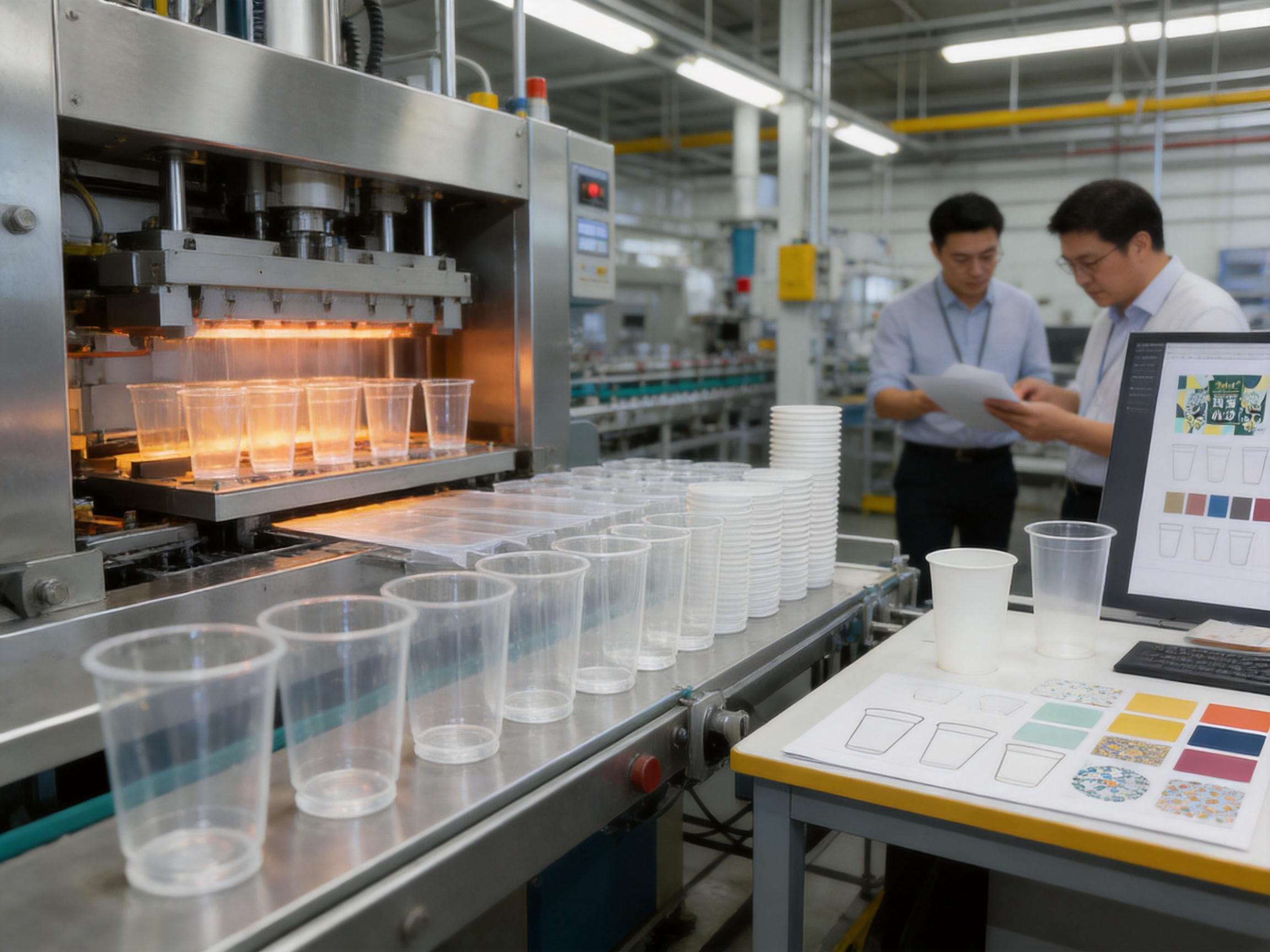
Thermoforming requires the PP sheet or film to be heated within a suitable processing window. If the material is insufficiently heated, it may not form accurately. If it is overheated, transparency, dimensional stability, or surface quality may be affected. Controlled heating allows the material to soften appropriately before it is shaped by the mold.
During forming, the softened material is drawn over or into the mold cavity. Pressure, vacuum, or a combination of forming methods may be used depending on the equipment and product design. The process must distribute the material consistently across the cup wall, rim, corners, and base. Uniform distribution helps achieve a reliable balance of weight, rigidity, and appearance.
After forming, the cup is cooled to stabilize its shape. The formed sheet is then trimmed to create the final rim and separate individual containers. Accurate trimming is important because the rim affects drinking comfort, sealing performance, lid fit, appearance, and safe handling. The finished units can then be inspected, counted, packed, and prepared for shipment.
Uniform Material Distribution
Uniform material distribution is a significant advantage in high-quality thermoformed packaging. Uneven walls can create weak points, inconsistent appearance, or variations in cup weight. A well-controlled process helps maintain a consistent structure from the upper rim to the base.
Uniformity is also valuable for automated operations. Beverage filling, sealing, labeling, and packing equipment typically performs best when containers have predictable dimensions. Consistent cup geometry can reduce equipment adjustments and help maintain stable production speeds at the customer’s facility.
Quality Inspection and Management
Quality control should cover raw materials, production parameters, formed products, packaging, and shipment preparation. Typical inspection considerations include appearance, transparency, color consistency, rim integrity, dimensional accuracy, weight, deformation resistance, stacking behavior, and compatibility with the customer’s intended lid or sealing system.
The company’s ISO9001 quality management system certification reflects a structured approach to process management and continuous improvement. BRC certification and other reported certifications provide additional support for customers seeking suppliers with formal quality and safety systems. Certification does not eliminate the need for application-specific verification, but it demonstrates the importance placed on controlled production and documented management practices.
Large-Scale Production Capacity
Large-volume orders require more than a suitable product design. They require dependable raw-material supply, organized production planning, efficient mold scheduling, trained operators, quality inspection, and appropriate packaging and logistics coordination. Yuqian Packaging Technology states that it has strong production capacity to meet large-volume orders and support delivery requirements.
Production scale can benefit customers in several ways. It may improve supply continuity, reduce the risk of sudden shortages, support consistent product quality, and make long-term packaging programs easier to manage. Businesses can also discuss forecast planning, repeat orders, customized designs, and production scheduling with the supplier to create a more reliable supply arrangement.
Customization and Design Services
Customized Calibers and Dimensions
Different foods and beverages require different container formats. A smoothie may need a wide mouth for toppings and a compatible straw opening. A dessert may need more internal height. A prepared food product may require a broad base for stability. A condiment or sample product may benefit from a compact volume.
Yuqian Packaging Technology provides a variety of caliber options and can develop products according to customer requirements. Customized dimensions can help businesses optimize filling lines, portion sizes, lid compatibility, display appearance, and shipping efficiency. Customers should provide detailed information about the product, filling conditions, preferred lid, expected storage temperature, and target market when requesting a design.
Color and Pattern Customization
Although transparent PP is valuable for product visibility, some applications may require color or decorative effects. Customized colors can support brand identity, product differentiation, seasonal campaigns, or product-category organization. Patterns may be used to create a distinctive visual style or communicate a particular market position.
Color selection should be evaluated in relation to the packaging material, filling product, printing method, and production volume. The manufacturer can discuss feasible color effects and production conditions before final approval. Samples or pre-production confirmations may be used to verify the expected appearance.
In-Mold Labeling
In-mold labeling is another customization option available for selected designs. In this process, a label or decorative film is integrated into the container during forming. This can create a clean, durable appearance and reduce the need for separate post-production labeling steps.
In-mold labeling may help provide consistent positioning and strong visual impact across a large batch. It can be useful for logos, product information, decorative patterns, and promotional designs. The suitability of in-mold labeling depends on the cup geometry, label material, design complexity, and production requirements.
Rolled and Flat Styles
The company can customize PP thermoforming cups in rolled and flat styles. These terms generally refer to different rim or edge treatments and may be selected according to the intended drinking experience, lid design, appearance, and application requirements. A rolled edge can provide a distinct rim profile, while a flat edge may be suitable for certain sealing or stacking configurations.
Customers should confirm the required edge style together with the compatible lid, sealing film, filling equipment, and end-use scenario. Proper coordination between cup and lid design is essential for preventing leakage and ensuring a smooth user experience.
Applications Across Foodservice and Retail
Cold Beverages
PP thermoforming cups are suitable for many refrigerated beverages, including iced tea, fruit drinks, flavored water, juice-based drinks, milk beverages, and other chilled refreshments. High transparency allows the color and layers of the beverage to remain visible. The cup’s toughness supports takeaway handling, while its stackability helps cafés and restaurants store empty units efficiently.
For beverage businesses, the cup can be paired with an appropriate lid and straw. The exact lid format should be selected according to the mouth diameter, sealing method, drink texture, topping requirements, and transportation conditions. A well-matched system can reduce leakage risk and improve customer convenience.
Hot Food and Warm Serving Applications
The specified temperature adaptability of -10°C to 120°C makes the cups suitable for selected hot-food applications. They may be considered for warm desserts, prepared foods, sauces, and other products where the container’s geometry and material specification are appropriate.
Before using a cup for hot products, customers should confirm the actual filling temperature and contact duration. They should also evaluate whether the product will be reheated, transported, stacked, or handled immediately after filling. Application testing is recommended for any new hot-food use, particularly where the container will be exposed to high heat for an extended period.
Desserts and Snacks
Clear PP cups are well suited to desserts and snacks because they showcase the contents. Layered desserts, fruit pieces, jelly, pudding, yogurt, cereal combinations, nuts, and confectionery products can be presented in a visually appealing format. The smooth inner surface supports efficient filling and helps minimize residue.
Different capacities can support individual portions, large servings, or sharing formats. A wide mouth can make spoon access easier, while a taller cup can emphasize layered products. Custom patterns or in-mold labeling may further improve shelf presentation.
Restaurants and Takeaway Operations
Restaurants and takeaway businesses require packaging that is easy to store, fill, close, carry, and dispose of responsibly. PP thermoforming cups can be used for beverages, side dishes, sauces, desserts, and other takeaway products. Their lightweight construction may support efficient service, while their stable base helps reduce tipping during ordinary handling.
Because the cups are available in multiple sizes, businesses can create a coordinated packaging range. A restaurant may use smaller cups for sauces and desserts, medium cups for standard beverages, and larger cups for family-size or promotional products. Coordinated sizing can simplify purchasing and improve the visual consistency of the brand’s takeaway service.
Canteens and Institutional Catering
Canteens, schools, hospitals, offices, and other institutional foodservice settings often serve large numbers of people within a limited time. Packaging must be economical, stackable, and easy for staff to handle. PP thermoforming cups can support fast service for chilled drinks, snacks, desserts, and selected warm foods.
The ability to purchase large quantities from a manufacturer with substantial production capacity can help institutional customers plan their supply requirements. Standardized specifications may also simplify staff training, storage organization, and inventory control.
Retail and Food Manufacturing
Retailers and food manufacturers may use PP cups for pre-portioned products, grab-and-go foods, samples, and promotional formats. Transparency provides an immediate view of the product, while customized decoration can help communicate brand identity and product information.
For food manufacturers, dimensional consistency is particularly important because cups may be integrated into automatic filling, sealing, labeling, and packing lines. The manufacturer can work with customers to confirm dimensions and production tolerances before tooling or mass production begins.
Why PP Can Be Preferable to Other Disposable Cup Materials
Packaging selection should be based on the actual application rather than a single material characteristic. PP thermoforming cups are attractive because they provide a combination of properties that may be difficult to achieve with one alternative material alone.
Compared with some conventional thin plastic cups, PP offers good toughness and a higher temperature tolerance. This can make it more suitable for applications involving both chilled and warm products. Compared with opaque packaging, transparent PP allows stronger product visibility. Compared with materials that are difficult to recycle in a particular region, PP may offer a clearer recycling pathway where appropriate collection and processing systems exist.
PP also provides design flexibility. Thermoforming allows manufacturers to produce different volumes, mouth diameters, heights, base designs, rim structures, colors, and decorative effects. This flexibility can be particularly valuable for businesses that need packaging tailored to their products rather than a generic container.
Competitor comparison should consider more than the unit price. Important factors include raw-material quality, dimensional consistency, transparency, stacking efficiency, temperature performance, lid compatibility, customization capability, production capacity, quality certification, and delivery reliability. A low-cost cup may create additional expenses if it deforms, leaks, fits poorly on filling equipment, or fails to provide a satisfactory consumer experience.
Company Manufacturing Strengths
Yuqian Packaging Technology (Jiangsu) Co., Ltd. was established in 2010 and is located in Taizhou City, Jiangsu Province, China. The company operates a plant area of approximately 30,000 square meters and focuses on the research and development, production, and sales of new food packaging materials and products.
The company’s manufacturing strengths include German-imported equipment, high-quality PP raw materials, established production processes, customization capability, and experience serving food packaging requirements. Its reported certifications and testing activities include the QS national industrial product production license, ISO9001 quality management system certification, BRC certification, German DIN safety certification, and EU RoHS+ testing.
The company also established a Shanghai branch in January 2019 to improve service quality and expand business channels. This organizational development supports communication with customers and contributes to the company’s broader packaging service network.
As an OEM manufacturer, the company can support customers that require products made to specific dimensions, styles, colors, patterns, or labeling requirements. OEM capability is important for brand owners, distributors, food producers, and catering groups that want packaging aligned with their own product portfolio rather than a standard catalog format.
Manufacturing strength is ultimately measured by the ability to deliver consistent products at the required scale. This includes maintaining stable raw-material inputs, controlling forming parameters, inspecting finished cups, organizing customized production, and coordinating delivery. These capabilities can help customers establish a dependable long-term packaging supply chain.
Quality, Safety, and Compliance Considerations
Food packaging should be evaluated according to the regulations and technical requirements of the destination market. A supplier’s certifications can provide evidence of structured management and production control, but buyers should still confirm that the selected cup meets their own legal, food-contact, labeling, and testing requirements.
Important technical questions may include the food-contact status of the selected PP grade, temperature exposure, migration testing, odor performance, dimensional tolerances, lid compatibility, sealing behavior, and storage conditions. Customers may also request samples for filling trials and transportation tests.
Quality consistency is particularly important for transparent products because defects are easy to see. Customers may inspect cups for clarity, black spots, bubbles, scratches, incomplete forming, uneven rims, deformation, and inconsistent color. A structured inspection process helps identify and control these issues before shipment.
Proper storage after production is also important. Cups should generally be kept in clean, dry conditions and protected from excessive heat, direct sunlight, dust, chemicals, and crushing forces. Good warehouse practices help preserve appearance and performance before the product reaches the customer.
Ordering and Custom Development Process
Step 1: Define the Application
The first step is to identify what the cup will contain and how it will be used. Customers should describe the product type, portion size, temperature, storage conditions, filling method, sealing method, expected shelf life, and transportation environment. This information helps the manufacturer recommend an appropriate specification.
Step 2: Select the Basic Size
The customer can select from existing volume options or request a customized design. Key dimensions include nominal volume, mouth diameter, height, bottom diameter, wall structure, rim style, and grammage. Existing specifications may shorten development time, while a new mold can provide a more specialized solution.
Step 3: Confirm the Lid and Filling System
A cup should be evaluated together with its lid or sealing film. The mouth diameter, rim profile, lid material, sealing temperature, and closing pressure must be compatible. If the cup will be filled automatically, customers should provide information about their equipment and line speed so that dimensional requirements can be reviewed.
Step 4: Approve Appearance and Decoration
For customized orders, the customer can confirm color, pattern, logo, label design, and in-mold labeling requirements. Artwork should be reviewed carefully for dimensions, color expectations, text accuracy, and placement. Samples or pre-production approvals can help ensure that the finished product matches the intended design.
Step 5: Conduct Testing
Testing may include filling trials, stacking tests, temperature exposure, lid-fit testing, sealing tests, drop or transport evaluation, and visual inspection. Testing is especially important for new shapes, hot-food applications, automated filling lines, or products that will travel long distances.
Step 6: Arrange Mass Production
After specifications and samples are approved, the production schedule can be arranged. Large-volume orders should be planned in advance to support raw-material preparation, tooling arrangements, manufacturing capacity, inspection, packing, and shipment. Repeat customers may benefit from established specifications and documented approval records.
Operational and Environmental Benefits
Businesses increasingly evaluate packaging according to its full operational impact. A cup that is easy to stack, fill, seal, transport, and store can reduce handling complexity. A cup that remains visually attractive can improve product presentation. A recyclable material can support a more responsible packaging policy where recycling infrastructure is available.
The lightweight design of thermoformed packaging can help reduce the amount of material used per unit compared with heavier container formats. However, the correct weight must be determined by performance requirements. Excessive material reduction may lead to deformation, leakage, or poor customer experience. The best solution is one that provides sufficient strength while avoiding unnecessary material consumption.
Stackability can also reduce storage and transportation demands. Empty cups take up less space when nested correctly, allowing customers to organize inventories efficiently. Better storage efficiency may reduce warehouse pressure and simplify stock rotation in restaurants, factories, and distribution centers.
Recyclability is most effective when supported by clear disposal practices. Businesses can educate staff and consumers about appropriate sorting, while local waste-management systems can determine the available recycling pathway. PP cups should be handled according to local regulations and the actual recycling capabilities of the destination market.
How to Choose the Right Specification
Selecting a PP thermoforming cup should begin with the required capacity. The nominal volume should be large enough for the intended portion while leaving sufficient headspace for filling, movement, toppings, carbonation, or expansion. A cup that is too small may spill, while an unnecessarily large cup may increase material use and affect transportation efficiency.
The mouth diameter should be selected based on drinking comfort, spoon access, topping placement, filling equipment, sealing requirements, and lid availability. The cup height and base diameter affect stability and visual appearance. Tall cups may offer a premium presentation but may require careful transport. Wider bases may improve stability for heavier contents.
Grammage should be considered in relation to product weight, handling conditions, temperature, stacking, and shipping distance. A lightweight cup may be suitable for a controlled indoor service environment, while a more robust specification may be preferable for delivery, catering, or demanding logistics.
Transparency, decoration, and labeling should be evaluated according to the product’s marketing objectives. A completely clear cup may be ideal for showcasing colorful contents, while a partially colored or labeled version may provide stronger brand recognition. In-mold labeling can create a clean integrated appearance for suitable designs.
Finally, customers should consider the complete packaging system. The cup, lid, straw, sealing film, secondary packaging, carton, and transport method should work together. A technically excellent cup may not perform well if paired with an incompatible lid or unsuitable filling process.
Q&A About PP Thermoforming Cups
Q1: What material are these thermoforming cups made from?
They are made from polypropylene, commonly abbreviated as PP. The material is selected for its transparency, toughness, odorless characteristics, temperature adaptability, and recyclability. The appropriate material grade should be confirmed according to the intended food, temperature, and destination-market requirements.
Q2: What temperature range are the cups designed to handle?
The stated temperature adaptability is approximately -10°C to 120°C. This range supports refrigerated beverages and many selected hot-food applications. Actual use should be verified through application testing because filling temperature, contact duration, reheating, and transportation conditions can affect performance.
Q3: Are PP thermoforming cups transparent?
Yes. The cups are designed to provide high transparency and a smooth appearance. This allows consumers to see the beverage or food inside and helps improve product presentation in catering, retail, takeaway, and institutional foodservice environments.
Q4: Can the cup design be customized?
Yes. Customers can discuss customized calibers, dimensions, colors, patterns, rim styles, and in-mold labeling. The available customization depends on the product design, tooling, order quantity, artwork, material specification, and production requirements.
Q5: What volume options are available?
Available configurations include approximately 360 ml, 520 ml, 700 ml, and 1,000 ml. The corresponding dimensions and grammage vary by model. Customized sizes may also be discussed for customers with special portion, filling, or display requirements.
Q6: Can the cups be used with lids and straws?
They can be designed for use with compatible lids and straws, but the specific lid and straw system must match the cup mouth diameter, rim structure, sealing method, and application. Customers should confirm compatibility before mass production.
Q7: Are the cups stackable?
Yes. The cups are designed to be stackable, helping reduce storage space and improve handling efficiency. The exact nesting performance depends on the cup geometry, dimensions, packaging method, and stacking conditions.
Q8: Are PP cups recyclable?
PP is a recyclable material. The cups can potentially be collected and processed after use where suitable recycling systems exist. Actual recycling depends on local collection, sorting, cleaning, reprocessing, and regulatory conditions.
Q9: What certifications and testing does the company report?
The company reports passing the QS national industrial product production license, ISO9001 quality management system certification, BRC certification, German DIN safety certification, and EU RoHS+ testing. Customers should request current documentation and confirm the requirements applicable to their target market.
Q10: Can the manufacturer support large orders?
Yes. Yuqian Packaging Technology states that it has strong production capacity for mass production and large-volume orders. Customers should provide forecasts and delivery expectations early so that production planning, customization, inspection, and shipment can be coordinated efficiently.
Q11: What information should be provided when requesting a quotation?
Useful information includes the desired capacity, dimensions, quantity, material requirements, temperature application, beverage or food type, lid requirements, decoration, printing or in-mold labeling, packaging method, delivery destination, and expected schedule. Samples or drawings can further improve quotation accuracy.
Q12: How can customers verify whether a cup is suitable for their product?
Customers should request samples and perform practical trials using the actual food or beverage. Testing may include filling, sealing, stacking, temperature exposure, transport simulation, lid fitting, and consumer handling. The manufacturer can provide technical support during specification confirmation.
Conclusion
PP thermoforming cups provide a versatile solution for modern disposable food packaging. Their high transparency, smooth round mouth, good toughness, temperature adaptability, stackability, and recyclable PP material make them suitable for a broad range of foodservice, retail, catering, and household applications.
The product range includes several useful volume configurations, while customized calibers, dimensions, colors, patterns, rolled or flat styles, and in-mold labeling allow businesses to create packaging aligned with their products and brand identity. This flexibility gives PP thermoforming cups an advantage over basic disposable containers that offer limited design or application options.
Yuqian Packaging Technology (Jiangsu) Co., Ltd. strengthens this product offering through German-imported production equipment, high-quality raw materials, controlled thermoforming processes, quality management systems, reported international certifications, and mass-production capability. These strengths support customers that need consistent packaging for both standard orders and customized OEM projects.
For companies searching for a disposable food packaging container manufacturer, the most effective approach is to evaluate the complete solution: material, performance, dimensions, lid compatibility, decoration, quality control, certifications, production capacity, delivery reliability, and environmental considerations. With the correct specification and application testing, PP thermoforming cups can provide a practical balance of safety, presentation, convenience, efficiency, and responsible material use.
References
1. Polypropylene Material Characteristics and Applications in Food Packaging, technical reference material.
2. Thermoforming Process Principles for Food Container Manufacturing, packaging engineering reference.
3. ISO 9001 Quality Management Systems, quality management standard reference.
4. BRC Global Standard for Packaging Materials, food packaging safety reference.
5. DIN Safety Standards for Plastic Products, German industrial safety reference.
6. EU RoHS Requirements and Restricted Substances Testing, regulatory reference.
7. Sustainable Plastics Management and Mechanical Recycling of Polypropylene, environmental packaging reference.
8. Product specifications and manufacturing information supplied by Yuqian Packaging Technology (Jiangsu) Co., Ltd.
For product inquiries, customization discussions, samples, and technical specifications, customers may contact Yuqian Packaging Technology (Jiangsu) Co., Ltd. by telephone at 0086 15252423007 or by email at [email protected].