English
 Español
 عربى
عربىContent
- 1 Product Overview
- 2 Key Product Specifications
- 3 Why a Non-Perforated Flat Lid Matters
- 4 Material Advantage: Food-Grade PP
- 5 Leak-Resistant Performance
- 6 Thickened Design and Durability
- 7 Heat Resistance and Shape Stability
- 8 Stackability and Operational Efficiency
- 9 Transparent Appearance and Food Visibility
- 10 Safety, Hygiene, and Certification Strength
- 11 Manufacturing Strength and Production Capability
- 12 Advanced Process Control Behind a Reliable Lid
- 13 Advantages Over Competing Lid Products
- 14 Applications in Foodservice and Retail
- 15 Customization and OEM Service Value
- 16 Environmental and Practical Responsibility
- 17 Quality Assurance from Raw Material to Shipment
- 18 How the Lid Improves Customer Experience
- 19 Procurement Considerations for Buyers
- 20 Why Manufacturing Experience Matters
- 21 Q&A Section
- 21.1 What is the PP plastic flat lid with no hole used for?
- 21.2 What material is the lid made from?
- 21.3 What is the available specification mentioned for this product?
- 21.4 Why is a no-hole lid better for some foods?
- 21.5 Is the lid suitable for hot food?
- 21.6 Can the lid be customized?
- 21.7 What certifications support the manufacturer’s quality strength?
- 21.8 How does the lid compare with cheaper competing lids?
- 21.9 Why is stackability important?
- 21.10 Who can benefit from using this lid?
- 22 Conclusion
- 23 References
In the fast-moving world of takeaway meals, prepared foods, snacks, chilled products, and foodservice packaging, a lid is not simply an accessory. It is a critical component that determines whether a package can protect food, preserve presentation, reduce leakage, support transport efficiency, and deliver a clean customer experience. The PP plastic flat lid with no hole is designed for these exact demands. Made from food-grade polypropylene, formed with a flat non-perforated structure, and engineered for reliable sealing, it serves as a practical and dependable closure for compatible takeaway bowls, cups, and food containers.
This article focuses on the advantages, specifications, manufacturing strengths, application value, quality controls, and market relevance of the PP plastic flat lid with no hole supplied by Yuqian Packaging Technology (Jiangsu) Co., Ltd. The product is positioned for professional disposable food packaging users who require leak resistance, safety, durability, heat resistance, stacking efficiency, and customization flexibility. With a 120 mm caliber option, a transparent appearance, and a gram weight of 3.6 g, the lid provides a balance between lightweight handling and dependable structural performance.
As disposable food packaging continues to evolve, buyers increasingly demand more than low-cost packaging. They expect verified food-contact safety, stable production quality, efficient OEM support, material consistency, convenient storage, brand adaptability, and responsible manufacturing. A flat lid with no hole may look simple, but its value is built through careful material selection, mold accuracy, forming stability, sealing geometry, thickness control, and quality inspection. The PP plastic flat lid with no hole is an example of how a small packaging part can play a major role in the entire food delivery and retail chain.
Product Overview
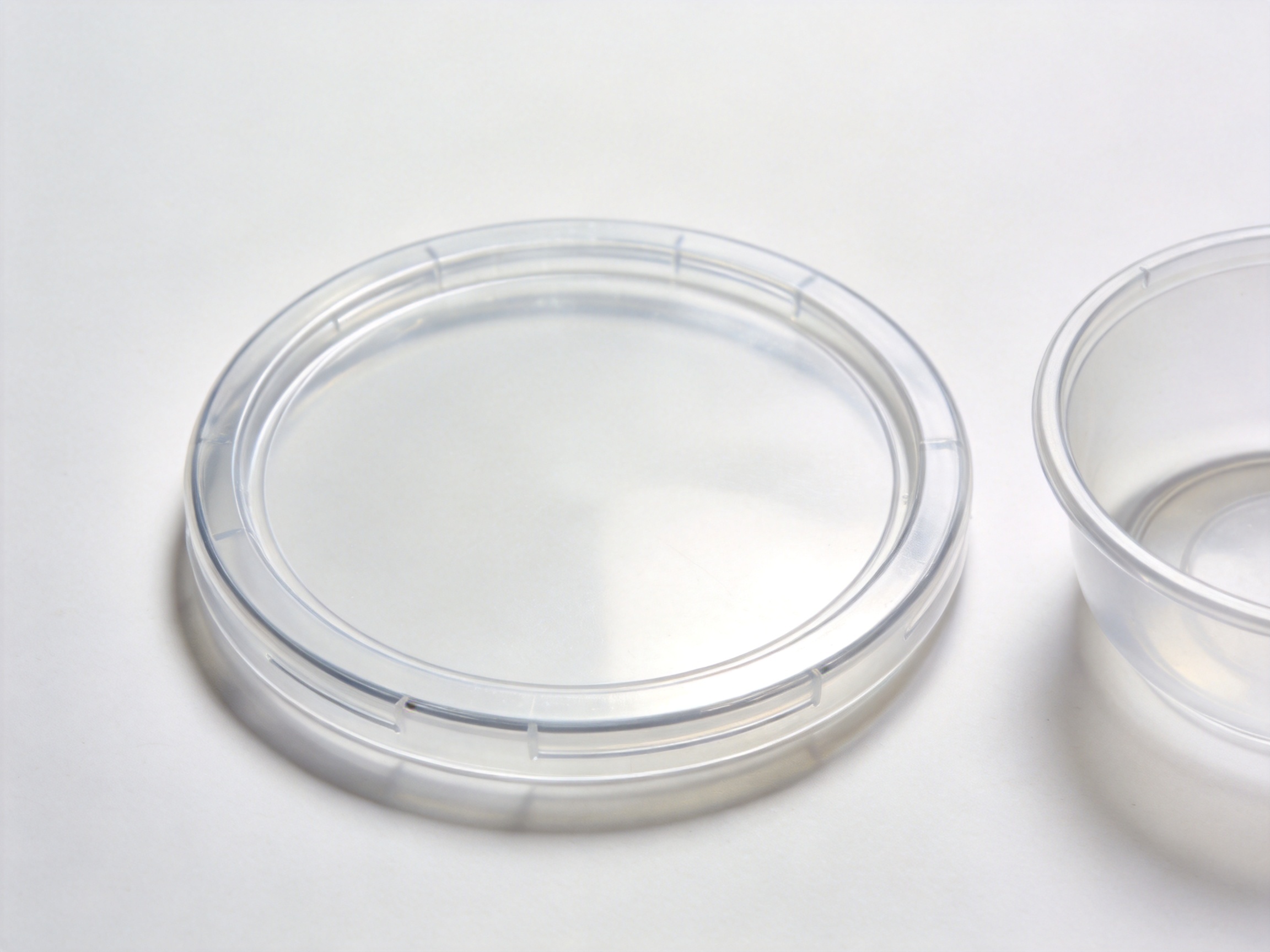
The PP plastic flat lid with no hole is a disposable food packaging lid designed to fit compatible PP takeaway containers, liners, cups, and bowls. Its non-perforated structure means that there is no drinking hole, vent hole, or straw slot. This design makes it especially useful for foods and contents that need complete surface coverage and improved protection against spills, dust, splashes, and external contamination. It is suitable for many foodservice and retail scenarios where a closed, neat, and stackable lid is required.
The core material is PP, also known as polypropylene. Polypropylene is widely used in food packaging because it is lightweight, tough, heat resistant, and compatible with many food-contact applications. Compared with some other common plastics, PP can better tolerate warm foods and hot-fill conditions when properly engineered. It also provides good resistance to many oils and moisture conditions typically found in foodservice environments.
This flat lid is transparent, enabling staff and customers to see the contents beneath it when used with suitable transparent or semi-transparent containers. Transparency improves convenience in busy kitchens, takeaway counters, supermarkets, and catering operations because employees can identify product types more quickly without repeatedly opening packages. At the same time, the flat structure supports stacking, which helps reduce storage volume and makes packaging preparation more efficient.
The product is described as leak-proof, thickened, durable, non-toxic, odorless, environmentally conscious, and healthy for food packaging use. These features reflect both product design and manufacturing control. A lid that is too thin may deform easily or lose sealing strength. A lid that is poorly molded may fit unevenly or pop off during transport. A lid made from inconsistent material may release unpleasant odors or fail in warm conditions. The PP plastic flat lid with no hole is developed to address these common pain points.
Key Product Specifications
The following table summarizes the available specification provided for this product. Additional customized sizes may be developed according to customer requirements, container compatibility, mold feasibility, and order needs.
| Lid Type | Caliber | Gram Weight | Color | Material | Primary Feature |
| Non-perforated flat lid | 120 mm | 3.6 g | Transparent | Food-grade PP | Leak-resistant sealing without hole |
The 120 mm caliber is suitable for matching with compatible food bowls, cups, and container systems. The 3.6 g weight indicates a lightweight yet reinforced structure, supporting practical use while helping control material consumption and transport cost. The transparent color is useful for product visibility and universal compatibility with different food brands and menu types.
Why a Non-Perforated Flat Lid Matters
A lid with no hole is not the same as a vented lid or a drinking lid. Its value is based on complete coverage. In takeaway packaging, holes are useful for some hot beverages or steam-release applications, but they can be problematic when the priority is spill resistance, hygiene, and transport stability. A non-perforated lid prevents liquids, sauces, grains, crumbs, dressings, and fine food particles from escaping through an opening. This makes it suitable for products such as salads, noodles, rice bowls, desserts, cold foods, snacks, sauces, deli items, soups with appropriate container compatibility, and mixed meals that need secure closure.
The flat design also helps foodservice operators use space more efficiently. Dome lids are useful for tall toppings or decorative foods, but they occupy more storage space and may be less stable during stacking. A flat lid creates a simpler profile, making it easier to stack empty lids in storage, pack containers in delivery bags, and organize finished orders on counters or shelves. For businesses handling hundreds or thousands of packages each day, even small improvements in stacking and handling can improve operational speed.
Another important advantage is presentation. A clean, transparent, flat lid gives the package a neat, modern, and professional appearance. It does not distract from the food, and it avoids unnecessary design complexity. For many disposable food packaging applications, simple and functional packaging is preferred because it supports multiple product lines without requiring different lids for every menu item.
Material Advantage: Food-Grade PP
Polypropylene is one of the most practical materials for disposable food packaging components. It is valued for its toughness, low density, resistance to moisture, and heat tolerance. In food packaging, material selection directly affects safety, appearance, sealing reliability, and performance during storage and transportation. The PP plastic flat lid with no hole uses food-grade PP raw materials to ensure that the product is non-toxic and odorless for intended use.
Food-grade PP helps reduce concerns about smell transfer. Packaging that has a plastic odor can damage the customer experience, especially for foods with delicate aromas such as rice, desserts, fruit, or salads. An odorless lid helps preserve the natural sensory quality of the food. Non-toxic performance is equally essential because the lid may come into contact with food surfaces, steam, condensation, oils, and sauces.
Heat resistance is another key advantage. Many takeaway operations package warm or hot foods immediately after preparation. A lower-performance lid may warp, soften, or lose fit when exposed to elevated temperature. PP has a stronger heat-resistance profile than some alternative packaging plastics, making it a better choice for many warm food applications. While actual use must always match the container system and temperature guidelines, PP provides a strong material foundation for reliable disposable food packaging.
PP is also lightweight, which supports economical transportation and handling. Lightweight packaging can reduce shipping cost and make carton handling easier for distributors and restaurants. At the same time, the thickened design of this lid helps overcome the weakness often associated with overly light lids. The result is a practical balance: light enough for disposable use, strong enough for demanding foodservice conditions.
Leak-Resistant Performance
Leak resistance is one of the main reasons customers choose a non-perforated flat lid. Leakage is more than an inconvenience; it can create food waste, customer complaints, delivery platform disputes, hygiene risks, and brand damage. A lid that seals consistently helps protect the value of the meal from the kitchen to the consumer.
The non-perforated structure eliminates a common leakage path. If there is no hole in the lid surface, liquids and fine particles cannot escape through the top. When combined with a precise rim fit, the lid provides reliable coverage for compatible containers. The leak-proof design is especially valuable for foods with sauces, dressings, gravies, oils, or small grains. It is also useful for powdered or granular foods that may spill through small openings.
Competitor products sometimes compromise sealing strength in order to reduce material weight or cost. Thin lids may bend during closure, resulting in uneven contact with the container rim. Inconsistent molding may create small dimensional deviations that weaken the fit. Poor material quality may lead to brittleness or deformation during transport. In contrast, the PP plastic flat lid with no hole emphasizes thickened construction, durable PP material, and stable manufacturing quality, helping users reduce package failure.
However, it is important to understand that leak resistance depends on the complete packaging system. The lid must be matched with a compatible container rim, correct caliber, and appropriate food type. A high-quality lid performs best when paired with correctly designed bowls or cups. For this reason, OEM and customization support are highly valuable. Customers can work with the manufacturer to adjust caliber, rim structure, thickness, and fit according to real packaging needs.
Thickened Design and Durability
The thickened design is one of the most important competitive strengths of this product. In disposable packaging, thinness may reduce raw material consumption, but excessive thinness can create performance problems. A thin lid may flex too much during application, become loose after repeated opening and closing, deform under heat, or crack under pressure. The PP plastic flat lid with no hole is designed with enhanced strength to support practical durability in demanding use environments.
A durable lid improves user confidence. Restaurant staff can close containers quickly without worrying that the lid will split. Delivery workers can carry multiple orders with less risk of accidental opening. Consumers can open and close the container more comfortably when saving leftovers or transporting food. A stronger lid also supports better stacking behavior, especially when multiple packaged items are placed in bags, boxes, or display cases.
Long-term or frequent opening and closing can challenge lid performance. Some lids lose their grip after the first closure, especially if the rim structure is weak or the plastic lacks resilience. A properly thickened PP lid can maintain better sealing performance through normal handling. This advantage is valuable for supermarkets, meal-prep providers, and foodservice counters where products may be inspected, rearranged, or transported multiple times before final consumption.
Durability also reduces hidden costs. A cheaper lid that fails frequently may result in re-packing labor, wasted food, customer refunds, or negative reviews. A stronger lid may provide a lower total cost of use even if the unit price is not the absolute lowest. Professional packaging buyers increasingly evaluate products by total performance rather than price alone.
Heat Resistance and Shape Stability
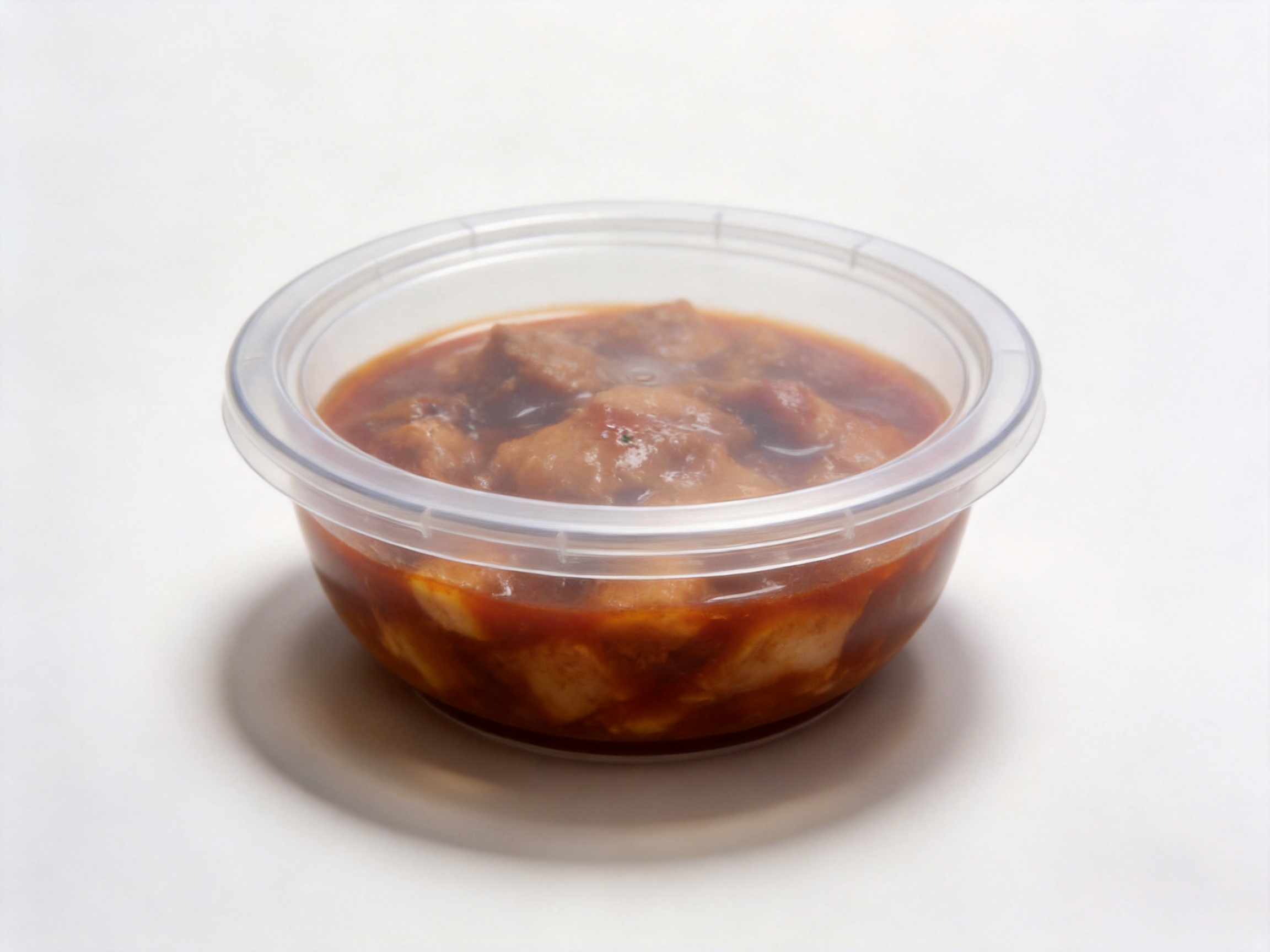
Food packaging often faces temperature changes. Containers may be filled with warm food, moved through air-conditioned rooms, placed under warming lamps, transported outdoors, or stored in chilled environments. The lid must maintain its shape and sealing ability through normal temperature variation. PP is recognized for good heat resistance among common food packaging plastics, and this product is designed to maintain stable performance under high-temperature exposure within suitable use conditions.
Heat resistance matters because deformation can quickly destroy package function. If the lid warps, the rim may lift away from the container. If the center collapses or softens excessively, food may touch the lid and create mess. If the lid becomes brittle after temperature cycling, it may crack during transport. Stable PP material and controlled forming conditions help reduce these risks.
For takeaway restaurants serving hot rice bowls, noodles, dumplings, soups with compatible containers, or sauced dishes, lid stability can be a key purchasing factor. Customers expect the package to arrive clean and intact. When the packaging fails, they often blame the restaurant or food brand rather than the packaging supplier. Using a heat-resistant PP lid helps protect the reputation of the food business.
The product’s flat surface also supports predictable heat behavior. Complex lid shapes may have more weak points if not properly engineered. A flat lid can distribute material more consistently and reduce unnecessary structural stress. When combined with thickened PP design, it provides a stable closure for many food packaging needs.
Stackability and Operational Efficiency
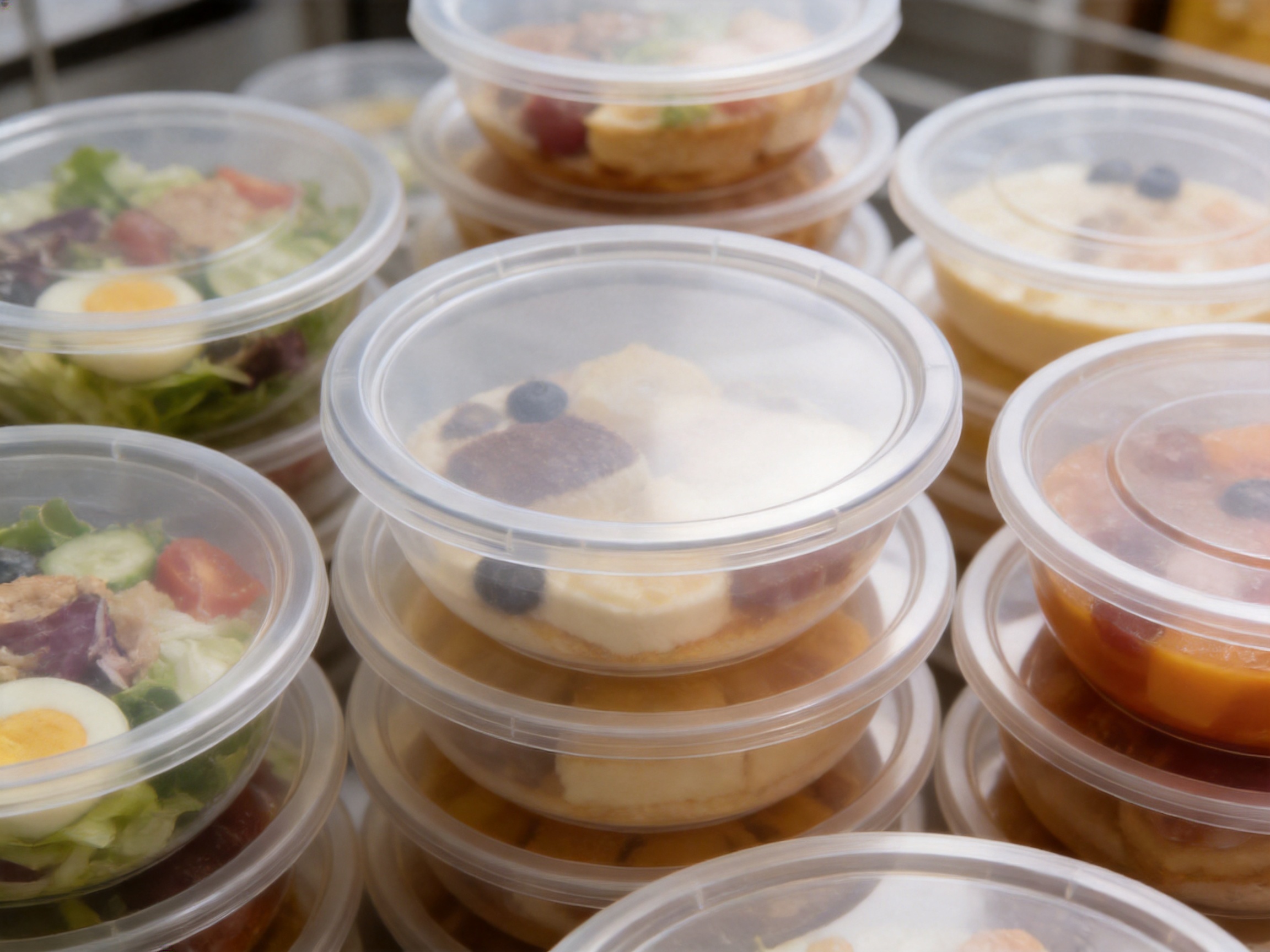
Stackability is a practical advantage that affects warehouses, distributors, restaurant kitchens, production lines, and delivery stations. Packaging that stacks neatly takes less space, is easier to count, and can be loaded more efficiently into cartons. The PP plastic flat lid with no hole is designed to be stackable, helping users save space and streamline operations.
In a busy foodservice environment, staff need packaging that can be accessed quickly. If lids stick together too tightly, separate poorly, or scatter easily, they slow down service. If lids are bulky, they occupy valuable counter and storage space. A stackable flat lid helps maintain an organized workflow. Workers can place a stack near the packing station and apply lids rapidly during peak meal periods.
Stackability also contributes to transportation efficiency. More lids can fit into a carton or storage area compared with less compact shapes. This can reduce warehousing pressure and improve inventory turnover. For large buyers, logistics efficiency is part of overall packaging value. A well-designed lightweight stackable lid can reduce the cost per functional package by improving space utilization throughout the supply chain.
From a sustainability perspective, efficient stacking may also reduce the number of shipments or cartons needed for a given quantity. Although disposable packaging must always be managed responsibly after use, better transport efficiency can help reduce resource waste during distribution.
Transparent Appearance and Food Visibility
Transparency is a valuable feature in disposable food packaging. A transparent lid allows operators and customers to see the packaged food without opening the container. This reduces handling, supports hygiene, and improves product identification. In retail displays, a transparent lid can help make food more appealing by showing freshness, color, portion size, and arrangement.
For takeaway businesses, transparency reduces order mistakes. Staff can verify whether a container holds rice, noodles, salad, dessert, or another menu item. Delivery workers can distinguish packages more easily when organizing multiple orders. Customers can identify their food quickly when sharing a group order. These small conveniences improve the overall experience.
Compared with colored or opaque lids, transparent PP lids are more versatile. They match many container designs and branding styles. Restaurants and food producers can use labels, sleeves, printed containers, or stickers while keeping the lid simple and universal. This flexibility is useful for businesses that frequently update menus or package different food categories.
High clarity also reflects production quality. A transparent lid with visible defects, cloudiness, black spots, or uneven thickness can look cheap and unreliable. Stable raw material management, clean production conditions, and controlled forming processes help produce a more professional appearance.
Safety, Hygiene, and Certification Strength
Food packaging safety is non-negotiable. The PP plastic flat lid with no hole is produced from food-grade PP material and is designed to meet the hygiene expectations of disposable food packaging applications. The product is described as non-toxic and odorless, supporting safe use for intended food-contact conditions.
Yuqian Packaging Technology (Jiangsu) Co., Ltd. has passed multiple certifications and quality systems relevant to food packaging manufacturing. These include the QS national industrial product production license, ISO9001 Quality Management System certification, BRC certification, German authoritative safety DIN certification, and EU ROHS+ testing. These certifications demonstrate commitment to regulated production, quality consistency, product safety, and process discipline.
ISO9001 certification is important because it indicates that the company operates under a structured quality management system. This includes process documentation, corrective actions, performance monitoring, and continuous improvement. For OEM customers, ISO9001 helps reduce supplier risk because it shows that production is not managed randomly but through organized systems.
BRC certification is widely respected in packaging and food supply chains. It indicates attention to hygiene, hazard control, traceability, and manufacturing practices. For foodservice brands, supermarkets, and exporters, BRC certification can be a key requirement when selecting packaging suppliers.
ROHS+ testing and DIN safety recognition also strengthen confidence for customers concerned with restricted substances and product safety. In a global market where packaging regulations vary across regions, having multiple certifications helps the company serve more demanding buyers and support export-oriented supply chains.
Manufacturing Strength and Production Capability
Yuqian Packaging Technology (Jiangsu) Co., Ltd. was established in 2010 and is located in Taizhou City, Jiangsu Province, China. The company operates a plant area of approximately 30,000 square meters and focuses on research, development, production, and sales of new food packaging materials and products. This production foundation supports stable supply, large-scale manufacturing, and continuous product improvement.
Advanced manufacturing is essential for a product such as a PP plastic flat lid with no hole. The final lid may appear simple, but consistent performance requires accurate molds, controlled temperature, stable material feeding, uniform forming, reliable trimming, and strict inspection. Even small variations in diameter, rim shape, or thickness can affect sealing performance. Therefore, strong process control is a major advantage over less experienced competitors.
The company’s experience in plastic cups, plastic cup lids, takeaway bowls, disposable straws, recycle bags, peripheral products, and injection film lining cup and bowl box solutions gives it a broad understanding of disposable food packaging systems. This is important because lids must work with containers, not alone. A manufacturer that understands both lids and containers can provide better compatibility guidance and customized solutions.
The company also established a Shanghai branch in January 2019 to improve service quality and expand business channels. This supports communication, customer response, and business development. For international and domestic customers, service capability can be as important as production capability. Buyers need fast quotation, sample coordination, specification confirmation, packaging design support, and after-sales follow-up.
Manufacturing strength also includes raw material management. Food-grade PP materials must be selected carefully and stored properly to avoid contamination or inconsistency. Material quality affects odor, transparency, heat resistance, flexibility, and surface finish. A professional factory controls material sourcing, batch tracking, and production conditions to ensure that every lid meets expected standards.
Advanced Process Control Behind a Reliable Lid
The performance of a PP plastic flat lid with no hole depends on several manufacturing details. First, the raw material must be suitable for food packaging. It should have stable melt characteristics, proper clarity, and appropriate mechanical strength. If raw material quality varies, the finished lids may show inconsistent thickness, reduced transparency, or weak sealing rims.
Second, the forming process must maintain uniform temperature and pressure. If the plastic is overheated, it may discolor, create odor, or lose mechanical properties. If it is underheated, it may not form accurately. The lid rim, in particular, requires precise forming because it determines how the lid locks onto the container. A professional production line monitors these parameters to achieve repeatability.
Third, mold accuracy is critical. The caliber, rim depth, flatness, and edge finish are all controlled by mold design and maintenance. A poorly maintained mold may produce burrs, uneven edges, or dimensional drift. These defects can affect user comfort and sealing performance. Experienced manufacturers invest in mold maintenance and tooling precision to protect product quality.
Fourth, trimming and finishing must be clean. Disposable food packaging should not have sharp edges, loose fragments, or rough surfaces. A clean edge improves safety and appearance. It also helps lids stack smoothly and separate easily during use.
Fifth, quality inspection must be systematic. Inspection may include appearance checks, dimension measurement, fit testing, weight verification, stacking evaluation, and packaging cleanliness review. The product’s stated gram weight of 3.6 g should remain consistent within production tolerance. Significant variation could indicate process instability or material imbalance.
These manufacturing controls explain why experienced factories can outperform low-cost suppliers. A low price is not useful if lids fail during sealing, deform during delivery, or create customer complaints. The value of a reliable lid is built through disciplined production from raw material to final packing.

Advantages Over Competing Lid Products
The PP plastic flat lid with no hole provides several advantages over many competing disposable lids. The first advantage is its non-perforated leak-resistant design. Lids with holes may be useful for drinking or ventilation, but they are not ideal for all takeaway foods. A no-hole structure offers better protection against spills and contamination, especially for sauced or fine-particle contents.
The second advantage is thickened durability. Some competing products are made with aggressive material reduction to achieve very low cost. While this may lower the initial purchase price, it often weakens lid stiffness and sealing strength. A thickened PP lid is more reliable during closure, stacking, transport, and consumer handling.
The third advantage is food-grade PP safety. Lower-grade materials or recycled-content materials unsuitable for direct food contact may create odor, uncertainty, or inconsistent performance. Food-grade PP helps ensure that the lid is appropriate for intended food packaging use, non-toxic, and odorless.
The fourth advantage is heat resistance. Some disposable lid materials are more likely to deform under warm food conditions. PP offers better high-temperature stability than many alternatives used in low-cost packaging. This makes the lid more suitable for a broader range of takeaway food applications.
The fifth advantage is customization flexibility. Many buyers need a specific caliber, container fit, rim structure, color, or packaging format. A professional OEM manufacturer can adjust specifications based on actual needs. This is especially important for food brands that use customized bowls or packaging systems.
The sixth advantage is certification support. Quality certifications such as ISO9001, BRC, DIN safety recognition, ROHS+ testing, and QS licensing help differentiate the product from suppliers that cannot provide comparable quality assurance. In professional procurement, certification reduces risk and supports compliance review.
The seventh advantage is manufacturing scale and experience. A 30,000-square-meter plant, long-term industry operation since 2010, and broad product categories allow the company to support stable supply and integrated packaging solutions. Competitors with limited capacity may struggle with urgent orders, customization projects, or consistent quality across large batches.
Applications in Foodservice and Retail
The PP plastic flat lid with no hole can be used in many food packaging contexts when matched with compatible containers. It is suitable for takeaway restaurants, quick-service food chains, cafeterias, supermarkets, convenience stores, catering companies, meal-prep brands, dessert shops, and food processing businesses. Its transparent, flat, and secure design allows it to function across different product categories.
For takeaway restaurants, the lid helps package meals quickly and cleanly. It is useful for rice bowls, noodles, cooked dishes, snacks, side dishes, and sauces when the matching container is appropriate. The leak-resistant structure helps reduce mess during delivery and takeout.
For supermarkets and convenience stores, transparency supports display value. Customers can see the food inside without opening the package. This is useful for ready-to-eat meals, salads, cut fruit, desserts, deli foods, and prepared snacks. A clean flat lid also provides a professional retail appearance.
For catering companies, stackability and durability are important. Large events require packaging that can be prepared in volume, transported safely, and distributed quickly. A thickened flat PP lid supports these needs by improving handling strength and reducing storage space.
For meal-prep businesses, consistency matters. Customers often receive multiple containers at once and expect them to stack neatly in bags or refrigerators. A flat transparent lid supports organization, product visibility, and repeatable presentation. The no-hole design helps preserve cleanliness during delivery.
For food producers and OEM packaging buyers, customization can help align the lid with specific container dimensions, branding strategies, or market requirements. A professional manufacturer can support tailored packaging systems rather than only offering generic stock lids.
Customization and OEM Service Value
Customization is a major advantage for packaging buyers who need more than standard products. The PP plastic flat lid with no hole is available in calibers such as 120 mm, and customized services can adjust caliber size according to actual packaging needs. This flexibility is essential because containers from different suppliers may have small but important differences in rim diameter, wall thickness, and locking structure.
OEM service can include size adjustment, mold development, thickness optimization, color selection, packaging method, carton labeling, and product matching. For food brands, customized packaging can improve user experience and strengthen brand identity. Even when the lid itself remains transparent and unprinted, correct fit and consistent quality become part of the brand’s perceived professionalism.
Customization also helps solve operational problems. For example, if a restaurant finds that a standard lid is difficult to apply during peak hours, the rim structure may be adjusted for easier closure. If a meal-prep company needs stronger stacking performance, thickness or reinforcement features may be optimized. If an exporter needs packaging suitable for regional compliance expectations, documentation and testing support may be coordinated.
A strong OEM partner does not merely produce parts; it helps customers improve the complete packaging system. Yuqian Packaging Technology (Jiangsu) Co., Ltd. has experience across multiple food packaging categories, which supports practical design advice and container-lid compatibility development. This ability can reduce trial-and-error costs for buyers.
Environmental and Practical Responsibility
The product is described as environmentally friendly and healthy. In the context of disposable packaging, environmental responsibility involves several practical considerations: safe material selection, efficient production, lightweight design, reduced waste from product failure, stackable logistics, and appropriate post-use handling. PP is a widely used plastic that can be recyclable in systems where local infrastructure accepts and processes it. Actual recyclability depends on regional collection, sorting, contamination level, and recycling capability.
A durable lid can support sustainability by reducing failures. If a weak lid causes food leakage, the result may be wasted food, additional packaging, and extra cleaning. Food waste often has a significant environmental impact. Therefore, reliable packaging can contribute to resource efficiency by protecting the product it contains.
Lightweight design is another factor. At 3.6 g for the 120 mm specification, the lid is designed to use material efficiently while maintaining functional strength. This balance is important. Excessive material use increases resource consumption, while insufficient material use can lead to failure. Responsible packaging design seeks the correct balance between performance and material efficiency.
Stackable design also supports transport efficiency. Compact packaging reduces storage space and may improve shipment density. Over large order volumes, this can reduce logistics burden. Manufacturers and buyers should also encourage proper disposal and recycling practices according to local waste management rules.
Quality Assurance from Raw Material to Shipment
Professional packaging quality is achieved through a complete control chain. The process begins with raw material selection. Food-grade PP material must be verified for suitability, stability, and cleanliness. The material should be stored under controlled conditions to prevent contamination and moisture-related issues.
During production, operators and quality teams monitor processing parameters. Temperature, pressure, forming speed, and mold condition influence the final lid. Consistent parameters help achieve uniform thickness, smooth surface finish, accurate dimensions, and reliable sealing geometry. Production records also support traceability and problem analysis if needed.
Finished lids are checked for visual defects such as black spots, deformation, uneven edges, cracks, or contamination. Dimensional inspection confirms that the caliber and fit remain within expected tolerance. Weight checks help verify material consistency. Fit tests with matching containers can confirm closure performance and leak-resistance expectations.
Packing is also part of quality assurance. Clean and organized packing protects lids during storage and transportation. Carton strength, bag cleanliness, labeling accuracy, and batch identification are important for wholesale buyers and distributors. A reliable manufacturer treats packaging of the packaging product as a quality step, not an afterthought.
With certifications such as ISO9001 and BRC, the company demonstrates a structured approach to quality and hygiene management. This is particularly valuable for food packaging buyers who need documentation, supplier audits, and consistent shipment quality.
How the Lid Improves Customer Experience
The end consumer may not think deeply about a plastic lid unless something goes wrong. If the lid leaks, cracks, smells, or is difficult to open, the consumer notices immediately. If the lid performs well, it quietly supports a positive meal experience. The PP plastic flat lid with no hole is designed to provide this reliable, low-friction experience.
A leak-resistant lid keeps the outside of the package clean. Customers do not want sauce on their hands, delivery bags, car seats, office desks, or refrigerators. Clean packaging makes the food feel more professional and trustworthy. This directly affects repeat purchase behavior.
A transparent lid improves confidence. Customers can see the food before opening it, confirm the order, and appreciate presentation. In retail environments, visible food can increase purchase appeal. For takeaway, it can reduce confusion when multiple people order together.
An odorless lid preserves food enjoyment. Packaging smell can reduce appetite and create doubt about safety. Food-grade PP helps avoid unwanted odor transfer. This matters especially for premium food brands that care about sensory quality.
A durable lid improves handling convenience. Consumers may carry the meal home, place it in a refrigerator, or reopen it later. A lid that maintains its shape and fit improves the usefulness of the package beyond the first moment of purchase.
Procurement Considerations for Buyers
When selecting a PP plastic flat lid with no hole, buyers should evaluate more than the basic diameter and price. The first consideration is container compatibility. A 120 mm lid must match the specific container rim design. Small dimensional differences can affect sealing. Requesting samples and conducting fit tests is recommended before bulk purchasing.
The second consideration is food type. Liquids, oily foods, hot foods, cold foods, dry foods, and granular foods each create different packaging challenges. A non-perforated flat lid is excellent for preventing top leakage, but complete performance depends on the container and use conditions. Buyers should test with real products and transport scenarios.
The third consideration is temperature. PP offers good heat resistance, but every packaging system has practical limits. Buyers should confirm suitable temperature ranges, hot-fill procedures, storage conditions, and reheating limitations if applicable. Disposable lids should be used according to manufacturer guidance and food safety standards.
The fourth consideration is supplier certification. Certifications provide evidence of quality management and food packaging discipline. Buyers serving supermarkets, export markets, or large restaurant chains may require supplier documents. Yuqian Packaging Technology (Jiangsu) Co., Ltd. provides a strong certification background that can support professional procurement review.
The fifth consideration is customization capability. If standard lids do not fully meet requirements, OEM service can improve fit, strength, appearance, and packaging format. Working directly with an experienced factory can reduce sourcing complexity and improve long-term supply stability.
Why Manufacturing Experience Matters
Disposable food packaging requires consistency at scale. A restaurant may use thousands of lids per week, while a distributor may purchase millions over time. Inconsistent quality can create serious operational disruption. Manufacturing experience helps prevent this by combining technical knowledge, process control, equipment capability, and quality discipline.
Yuqian Packaging Technology (Jiangsu) Co., Ltd. has operated since 2010, giving it years of practical experience in food packaging production and market service. Its broad product category coverage means it understands how lids interact with cups, bowls, takeaway containers, straws, recycle bags, and related packaging products. This integrated understanding is a competitive strength.
The 30,000-square-meter plant provides physical capacity for production organization, warehousing, quality control, and order fulfillment. Large facility scale does not guarantee quality by itself, but when combined with certifications and experienced management, it supports stable supply for growing customers.
Advanced manufacturing also supports innovation. Packaging markets change quickly due to food delivery trends, sustainability expectations, regional regulations, and consumer preferences. A manufacturer with research and development capability can adapt product designs, test new materials, and support customer-specific solutions.
Q&A Section
What is the PP plastic flat lid with no hole used for?
It is used as a disposable food packaging lid for compatible takeaway bowls, cups, liners, and containers. Its no-hole design provides full coverage and helps prevent leakage of liquids, sauces, crumbs, or fine particles through the lid surface.
What material is the lid made from?
The lid is made from food-grade PP, also known as polypropylene. This material is valued for being lightweight, durable, odorless, non-toxic for intended food-contact use, and heat resistant compared with many common disposable packaging plastics.
What is the available specification mentioned for this product?
The available specification described is a 120 mm non-perforated flat lid with a gram weight of 3.6 g and a transparent color. Customized caliber sizes may also be provided according to customer needs.
Why is a no-hole lid better for some foods?
A no-hole lid prevents liquid, sauce, powder, grains, and fine food particles from escaping through the top. It is better for foods that need secure coverage, cleaner transport, improved hygiene, and reduced spill risk.
Is the lid suitable for hot food?
The PP material provides good heat resistance and helps the lid maintain shape stability under suitable high-temperature food packaging conditions. However, users should test the lid with their specific container, food type, filling temperature, and transport process.
Can the lid be customized?
Yes. The manufacturer can provide customized services such as caliber adjustment and product matching according to actual packaging requirements. OEM support is valuable for customers who need specific container compatibility or packaging performance.
What certifications support the manufacturer’s quality strength?
The company has passed the QS national industrial product production license, ISO9001 Quality Management System certification, BRC certification, German authoritative safety DIN certification, and EU ROHS+ testing. These certifications support quality control, safety management, and professional manufacturing standards.
How does the lid compare with cheaper competing lids?
Compared with many low-cost alternatives, this lid emphasizes thickened durability, leak-resistant non-perforated structure, food-grade PP material, heat resistance, transparency, stackability, and certified manufacturing. These advantages can reduce failure risk and improve total packaging value.
Why is stackability important?
Stackability saves storage space, improves warehouse and kitchen organization, supports faster packaging operations, and can improve transport efficiency. For high-volume foodservice users, stackable lids help reduce operational friction.
Who can benefit from using this lid?
Takeaway restaurants, supermarkets, convenience stores, catering companies, meal-prep brands, dessert shops, food processors, packaging distributors, and OEM buyers can benefit from this lid when it is matched with compatible containers.
Conclusion
The PP plastic flat lid with no hole is a practical and high-value component in disposable food packaging. Its main strengths include leak-resistant non-perforated coverage, thickened durability, food-grade PP safety, odorless performance, heat resistance, transparent appearance, stackability, and customization flexibility. These features help solve common packaging problems such as spills, deformation, poor fit, storage inefficiency, and inconsistent customer experience.
For professional buyers, the product’s value is strengthened by the manufacturing background of Yuqian Packaging Technology (Jiangsu) Co., Ltd. Established in 2010, operating a 30,000-square-meter plant, and supported by certifications including QS, ISO9001, BRC, DIN, and EU ROHS+ testing, the company offers more than a simple disposable lid. It provides a controlled production system, OEM service capability, broad food packaging experience, and a commitment to quality.
In a market where food delivery, takeaway dining, and ready-to-eat retail continue to expand, reliable packaging is essential. A lid that seals well, handles heat, stacks efficiently, and protects food can directly improve operational efficiency and customer satisfaction. The PP plastic flat lid with no hole is designed for businesses that understand the importance of dependable packaging and want a supplier capable of supporting both standard production and customized packaging solutions.
References
1. International Organization for Standardization. ISO 9001 Quality Management Systems: Requirements.
2. BRCGS. Global Standard for Packaging Materials.
3. European Commission. Guidance on Food Contact Materials and Plastic Food Packaging Compliance.
4. Plastics Industry Association. Polypropylene Material Properties and Food Packaging Applications.
5. ASTM International. Standard Practices for Testing Plastic Packaging Performance and Dimensional Stability.
6. China National Food Packaging Safety and Industrial Product Licensing Guidance Materials.