English
 Español
 عربى
عربىContent
- 1 Understanding the PET Ball Plastic Cup Lid
- 2 Core Product Specifications
- 3 Material Advantages of Food-Grade PET
- 4 Functional Benefits for Beverage Businesses
- 5 Advantages Over Common Competing Lid Types
- 6 Manufacturing Strength and Process Control
- 7 Certification and Quality Management
- 8 Customization for Different Business Models
- 9 Applications in Modern Beverage and Dessert Markets
- 10 How the Lid Supports Brand Presentation
- 11 Operational Efficiency in High-Volume Service
- 12 Environmental and Responsible Production Considerations
- 13 Why Manufacturing Experience Matters
- 14 Purchasing Considerations for Buyers
- 15 Quality Details That Distinguish a Better PET Ball Lid
- 16 Q&A: PET Ball Plastic Cup Lid
- 16.1 What is a PET ball plastic cup lid?
- 16.2 What sizes are available?
- 16.3 What is the typical weight of the lid?
- 16.4 Why is PET a good material for this product?
- 16.5 Is the lid suitable for drinks with toppings?
- 16.6 Can the lid be customized?
- 16.7 How does this lid compare with a flat lid?
- 16.8 How does the product support brand value?
- 16.9 What certifications support the manufacturer’s reliability?
- 16.10 What should buyers confirm before ordering?
- 17 Conclusion
- 18 References
- 19 Product: PET ball plastic cup lid
In beverage packaging, the cup lid is more than a simple accessory. It is the barrier that protects the drink, the component that completes the consumer experience, and the visible finishing detail that influences how a beverage looks in a display case, takeaway bag, or customer’s hand. A PET ball plastic cup lid is designed to meet these needs with clarity, light weight, practical strength, and a distinctive raised spherical form that gives drinks an attractive presentation. For cafés, juice bars, milk tea chains, dessert shops, convenience retailers, and foodservice distributors, this type of lid provides a versatile solution for modern takeaway beverage packaging.
The PET ball plastic cup lid described in this article is made from food-grade PET material and is available in standard calibers of 90 mm, 93 mm, and 98 mm, with a typical gram weight of 4 g and a transparent finish. These specifications cover many mainstream plastic cup sizes used in cold drinks, specialty beverages, layered desserts, fruit teas, smoothies, iced coffee, and other packaged refreshments. Beyond standard specifications, customized design options are also available, allowing businesses to adapt the lid to different cup bodies, presentation styles, brand requirements, and functional preferences.
Yuqian Packaging Technology (Jiangsu) Co., Ltd. manufactures this PET ball plastic cup lid with an emphasis on stable quality, precision processing, hygienic production, and flexible OEM service. Established in 2010 and located in Taizhou City, Jiangsu Province, the company operates as a high-tech enterprise engaged in research, development, production, and sales of new food packaging materials and products. With a plant area of approximately 30,000 square meters, advanced manufacturing equipment, and certifications including QS national industrial product production license, ISO9001 quality management system certification, BRC certification, German DIN safety certification, and EU RoHS+ testing, the company provides customers with a reliable supply foundation for disposable food packaging container solutions.
The following article explores the product’s structure, materials, performance advantages, manufacturing processes, customization potential, market applications, and competitive value. It also explains why a transparent PET ball lid can help food and beverage businesses improve product presentation, operational efficiency, and consumer satisfaction.
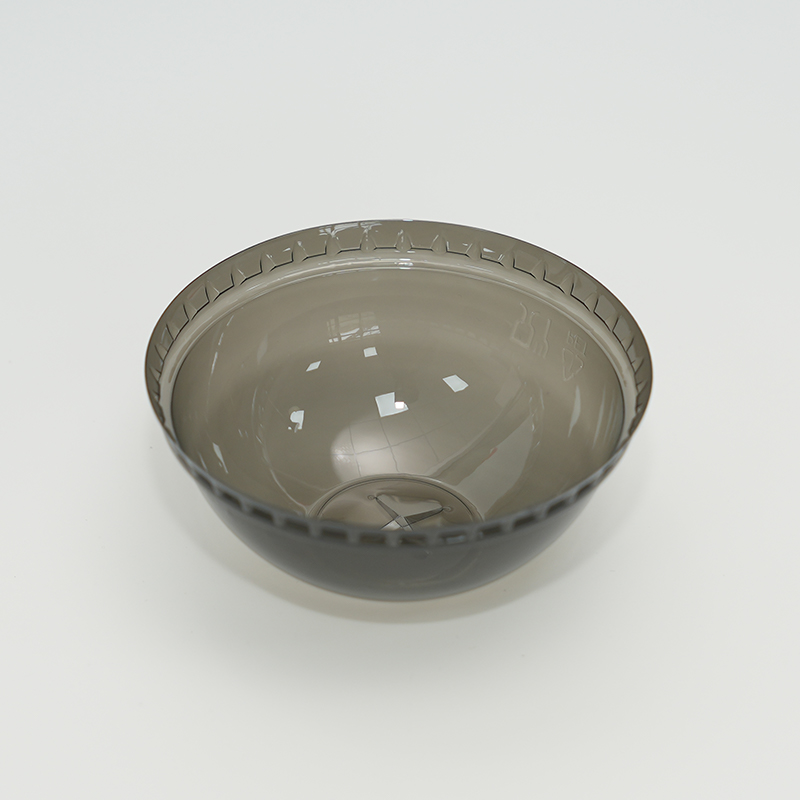
PET ball plastic cup lid
Understanding the PET Ball Plastic Cup Lid
A PET ball plastic cup lid is a transparent disposable cup lid with a raised dome-like or spherical profile. Unlike a flat lid, the ball-shaped structure creates extra vertical space above the cup rim. This space is valuable for beverages that include whipped cream, foam, fruit toppings, ice cream, jelly, popping boba, layered ingredients, or decorative garnishes. The lid protects these ingredients without compressing them, while still allowing consumers to see the complete beverage presentation.
PET, or polyethylene terephthalate, is widely used in food packaging because it offers excellent transparency, good toughness, low weight, and stable performance under ordinary foodservice conditions. In a cup lid application, PET provides a clean and glossy appearance, helping the beverage look fresh and premium. It also supports efficient mass production through forming and molding processes, making it suitable for businesses that need consistent supply, accurate dimensions, and cost-effective packaging.
The ball lid design serves both functional and visual purposes. Functionally, it helps prevent splashing and contamination during takeaway and transport. Visually, it transforms a beverage into a display item, especially when used with colorful fruit tea, iced coffee, yogurt drinks, smoothies, and layered desserts. In competitive retail environments, transparent packaging often influences purchasing decisions because customers can immediately see the drink quality, portion size, and ingredient freshness.
For restaurants and beverage shops, the lid’s fit is critical. A lid must match the cup rim securely, resist accidental detachment, stack efficiently, and be easy for staff to apply during busy service periods. The available 90 mm, 93 mm, and 98 mm calibers are designed to cover common cup formats in the market. When a customer has special requirements, customized sizing or functional adjustments can be developed to improve compatibility with specific cup bodies.
Core Product Specifications
The main product parameters are simple but important. They define how the lid fits, how it looks, how it performs, and how it integrates into foodservice operations.
| Lid Type | Caliber | Typical Gram Weight | Color | Main Material | Common Use |
| PET ball plastic cup lid | 90 mm | 4 g | Transparent | Food-grade PET | Cold drinks, fruit tea, desserts, specialty beverages |
| PET ball plastic cup lid | 93 mm | 4 g | Transparent | Food-grade PET | Takeaway beverages, milk tea, iced coffee, smoothie cups |
| PET ball plastic cup lid | 98 mm | 4 g | Transparent | Food-grade PET | Large beverage cups, topping drinks, layered dessert cups |
The transparent color is one of the product’s strongest commercial advantages. It allows the beverage to remain visible from all angles, which is especially important for products with bright colors, fresh ingredients, or decorative toppings. Transparency supports impulse purchasing and helps beverage brands communicate freshness without additional explanation.
The 4 g gram weight indicates a lightweight lid suitable for takeaway and high-volume foodservice. Lower weight can help reduce material consumption and make transport more efficient, while proper design and material selection help maintain practical strength. For distributors and chain stores, lightweight packaging can also contribute to storage efficiency and logistics convenience.
The three standard calibers offer flexibility for different cup systems. The 90 mm size is common for medium drink cups, the 93 mm size provides another compatibility option, and the 98 mm size is suitable for larger beverage presentations. When choosing a lid, businesses should confirm rim diameter, rim shape, cup material, stacking height, filling style, and transport conditions to ensure the best match.
Material Advantages of Food-Grade PET
Food-grade PET is a key reason why this lid performs well in beverage packaging. It offers a combination of transparency, strength, lightness, and clean appearance that many competing materials struggle to match in the same way. When used for a ball cup lid, PET gives the product a crystal-clear look that enhances the beverage underneath.
Transparency is especially valuable in modern foodservice. Customers increasingly want to see what they are buying. A clear PET ball lid allows them to view foam texture, fruit pieces, cream topping, ice cubes, chocolate drizzle, jelly layers, and other ingredients. This visibility can increase perceived value and make a beverage more suitable for social sharing, display photography, and promotional presentation.
PET also has good toughness. A lid must resist cracking during stacking, packing, transportation, and application onto cups. If a lid breaks easily, it causes waste, delays service, and reduces customer confidence. A tough PET lid helps maintain integrity during ordinary handling, allowing beverage shops to work efficiently during peak periods.
Light weight is another advantage. Disposable beverage packaging must be convenient for both operators and consumers. A lightweight lid is easy to store, carry, apply, and dispose of after use. It also helps reduce the total weight of packaged goods during shipment. For high-volume businesses, even small weight differences can affect logistics costs and warehouse handling efficiency.
PET’s surface quality supports a smooth, glossy, and hygienic appearance. The lid looks clean and professional, which helps improve the overall packaging image. A clear, well-formed lid can make a simple drink appear more refined, and it can help a premium beverage maintain its intended visual appeal until it reaches the customer.
The material also offers practical chemical stability for many beverage applications. It can be used with common drink ingredients such as tea, coffee, juice, milk-based beverages, syrups, fruit preparations, and dessert toppings when applied under appropriate foodservice conditions. As with all packaging materials, proper compatibility should be confirmed for unusual ingredients, elevated temperatures, or special filling processes.
Functional Benefits for Beverage Businesses
The first functional benefit is protection. A lid covers the cup opening and helps reduce contamination from dust, handling, and environmental exposure. For takeaway drinks, this is essential. Customers expect their beverages to be protected from the moment they leave the counter until they are consumed.
The second benefit is spill resistance. A well-matched lid can help reduce splashing during transport, especially when the beverage contains ice or foam. While no disposable lid should be treated as a completely sealed container unless specifically designed and tested for that purpose, a secure-fitting lid provides practical containment for ordinary takeaway handling.
The third benefit is presentation space. The ball shape creates extra room above the liquid surface. This is important for whipped cream, cheese foam, fruit toppings, ice cream, pudding, cereal, and other decorations that need vertical clearance. A flat lid may press down toppings and damage the appearance of the drink, while a ball lid preserves the intended shape.
The fourth benefit is staff efficiency. In a busy shop, employees need lids that are easy to pick up, separate, stack, and press onto cups. A consistent lid design reduces service interruptions and helps maintain speed during rush hours. When lids fit reliably, staff do not need to waste time adjusting, replacing, or checking every package.
The fifth benefit is customer convenience. Consumers want lids that are light, comfortable, and easy to handle. A transparent PET lid with a stable profile can improve the feeling of quality. The non-slip surface design also helps reduce sliding during handling and stacking, contributing to a more reliable user experience.
The sixth benefit is space saving. Stackable lids are easier to store in beverage shops, warehouses, and distribution centers. Efficient stacking reduces storage volume and makes inventory handling more practical. For chains with multiple stores, compact packaging can improve replenishment efficiency and simplify internal logistics.
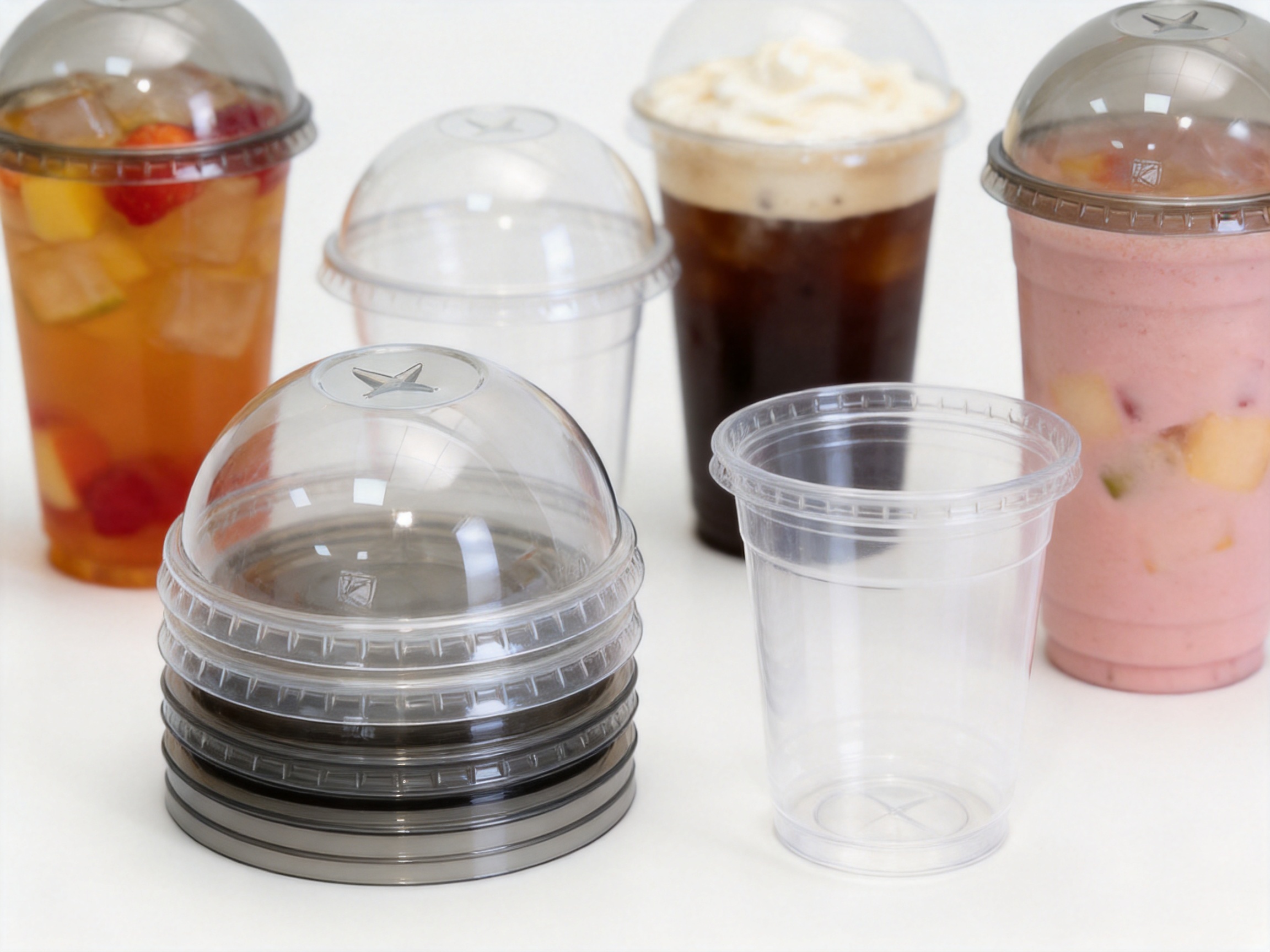
Advantages Over Common Competing Lid Types
In the disposable cup lid market, businesses may compare PET ball lids with flat PET lids, PS lids, PP lids, paper lids, and lower-quality generic dome lids. Each alternative has its own applications, but the PET ball plastic cup lid offers a balanced set of advantages that make it especially suitable for visual beverage packaging.
Compared with flat lids, the PET ball lid provides more vertical space. Flat lids are suitable for simple drinks with limited topping height, but they can restrict beverage creativity. Modern beverages often rely on foam, fruit, cream, layered ingredients, and decorative design. The ball lid protects these features while making them visible.
Compared with opaque lids, a transparent PET lid provides better product display. Opaque lids may be acceptable for basic takeaway drinks, but they hide the product. For premium drinks, visibility is a marketing tool. A clear dome lets customers see freshness and craftsmanship, which can justify higher pricing and strengthen brand identity.
Compared with brittle low-grade plastic lids, a well-manufactured PET lid offers better toughness and handling performance. Low-quality lids may crack during shipment or deform during application. Cracked lids create waste and may damage the customer experience. Consistent material selection and precision processing reduce these risks.
Compared with some paper-based alternatives, PET provides superior transparency and moisture resistance. Paper lids can be useful in some sustainability-oriented applications, but they do not show the drink and may be less suitable for wet toppings, condensation, or long display periods. For beverages where visual impact is central, clear PET remains a strong choice.
Compared with ordinary dome lids that lack design refinement, a properly engineered PET ball lid can provide better rim fit, smoother edges, more stable stacking, and cleaner appearance. These details may appear small, but they directly affect foodservice efficiency and consumer perception. In high-volume beverage operations, small improvements in packaging consistency can produce meaningful operational value.
Another competitive advantage is customization. Many generic lids are available only in standard formats. Yuqian Packaging Technology supports personalized customization, including size adaptation, appearance options, pattern or functional design, and OEM development. This allows customers to build packaging systems that match their cup bodies and brand strategy rather than forcing their beverage design to fit a generic lid.
Manufacturing Strength and Process Control
Reliable packaging begins with manufacturing capability. Yuqian Packaging Technology (Jiangsu) Co., Ltd. has developed its manufacturing system around food packaging safety, product consistency, and flexible production. The company’s production base in Jiangsu provides a solid foundation for large-scale output, while its research and development orientation supports ongoing improvement in product structure and material application.
The PET ball plastic cup lid is produced with attention to dimensional accuracy. The cup rim interface must be controlled carefully because even a small deviation may affect fit. If the lid is too loose, it may detach during handling. If it is too tight, staff may struggle to apply it quickly, or the cup may deform. Precision mold design and process control help maintain a stable balance between secure fit and easy application.
Advanced molding and forming technologies are used to achieve high-precision, burr-free results. A smooth edge is essential for user safety and product quality. Burrs, rough rims, or uneven trimming can cause discomfort, poor sealing, and visual defects. By controlling mold quality, processing temperature, forming pressure, trimming precision, and inspection standards, the manufacturer can improve the finished product’s consistency.
Material selection is another critical step. Food-grade PET must meet the relevant hygiene and safety requirements for food contact use. Incoming material inspection, supplier management, storage control, and batch traceability help ensure that production begins with suitable raw materials. Consistent material quality also supports transparency, toughness, and forming stability.
During production, process parameters must be maintained within controlled ranges. PET processing requires careful attention to temperature and forming conditions. Improper settings can lead to haze, deformation, uneven thickness, brittleness, or poor stacking. A mature production team understands how to adjust and monitor these variables to maintain stable results across different batches.
Quality inspection is applied throughout production. Visual inspection checks clarity, surface cleanliness, edge finish, shape accuracy, and color consistency. Dimensional inspection confirms caliber, rim geometry, lid height, and stacking performance. Functional inspection may include fit testing with compatible cups, stacking tests, packaging checks, and handling simulation. These controls help reduce customer complaints and improve supply reliability.
Hygienic production is also important. Disposable food packaging must be produced in an environment that reduces contamination risk. Clean handling, organized workshops, controlled storage, and trained personnel all contribute to safer food contact packaging. Certifications such as BRC and ISO9001 reflect the company’s structured approach to quality and management.
Certification and Quality Management
Certifications are not merely labels; they are evidence of a company’s commitment to systematic production and safety management. Yuqian Packaging Technology has passed several recognized certifications and tests, including the QS national industrial product production license, ISO9001 quality management system certification, BRC certification, German DIN safety certification, and EU RoHS+ testing.
The QS production license demonstrates compliance with national industrial product production requirements. For food packaging customers, this indicates that the manufacturer has met important regulatory conditions for production qualification.
ISO9001 certification shows that the company has implemented a quality management system focused on process control, continuous improvement, customer satisfaction, and documented procedures. For buyers, ISO9001 can reduce sourcing risk because it suggests that the supplier manages quality through a structured system rather than relying only on final inspection.
BRC certification is especially meaningful in food packaging because it is associated with safety, hygiene, and operational control. Customers serving international markets often value suppliers who understand the expectations of global food supply chains.
German DIN safety certification and EU RoHS+ testing further support confidence in product safety and material compliance. Although RoHS is often associated with restrictions on hazardous substances, its presence in a packaging supplier’s qualification profile reflects attention to material control and international testing standards.
For beverage chains, distributors, and importers, these certifications can simplify supplier evaluation. They help demonstrate that the manufacturer is not only capable of producing lids, but also capable of maintaining quality, documentation, and compliance standards over time.
Customization for Different Business Models
Standard products are useful, but customized packaging can create a stronger competitive edge. A beverage brand may need a specific lid size, a special rim fit, a unique structural detail, a different transparency requirement, or a design that supports a particular cup series. Yuqian Packaging Technology provides personalized customization services to meet these needs.
Customization may begin with size. Although 90 mm, 93 mm, and 98 mm are common calibers, not every cup body has the same rim structure. Two cups with the same nominal diameter may differ in rim curl, wall thickness, material flexibility, or manufacturing tolerance. Custom fit development helps ensure that the lid and cup work together as a complete packaging system.
Customization can also involve appearance. While transparent PET is the main option, certain customers may request color-tinted effects, branded visual elements, or special surface textures. The goal is to create packaging that complements the beverage concept and strengthens shelf or counter appeal.
Functional customization is another important area. Depending on the beverage type, customers may need a straw hole, venting structure, raised clearance, reinforced rim, improved stacking geometry, or compatibility with sealing film systems. These adjustments require engineering knowledge and mold development experience.
OEM service is particularly valuable for distributors and chain stores. An OEM manufacturer can produce packaging according to customer specifications, supporting private-label supply, regional market adaptation, and consistent quality across multiple locations. With advanced equipment and industry experience, Yuqian Packaging Technology can support both standardized procurement and individualized product development.
Customization also helps foodservice businesses differentiate their products. In a market where many beverages have similar ingredients, packaging becomes a visible brand asset. A well-designed lid can make a drink look more premium, more hygienic, and more memorable. It can also improve the unboxing and takeaway experience, which increasingly influences customer reviews and repeat purchases.

Applications in Modern Beverage and Dessert Markets
The PET ball plastic cup lid is suitable for a wide range of food and beverage applications. Its most common use is with cold drinks that benefit from visibility and topping space. Fruit tea, iced coffee, milk tea, smoothies, yogurt drinks, lemonade, sparkling beverages, and flavored iced beverages can all be presented effectively under a clear ball lid.
Milk tea shops often use drinks with pearls, jelly, pudding, cream foam, or cheese foam. These components create height and texture. A ball lid gives enough space to protect the topping and preserve the drink’s layered appearance. It also allows customers to see the ingredients, which can increase confidence in product freshness.
Fruit beverage shops can use the lid to highlight colorful fruit slices, pulp, and ice. A transparent raised lid makes the drink look fresh and abundant. This is valuable in display refrigerators, takeaway counters, and social media photos.
Coffee shops can use PET ball lids for iced coffee beverages with cream, foam, chocolate, caramel, or decorative toppings. Many iced coffee products are now designed as premium takeaway beverages, not merely functional drinks. Clear dome packaging helps communicate that premium quality.
Dessert businesses can use ball lids for parfait cups, pudding cups, mousse cups, ice cream cups, fruit desserts, and layered sweet products. The raised lid protects delicate toppings and provides a clean display window. For desserts that rely on visual appeal, the lid becomes part of the product design.
Convenience stores and supermarkets can use these lids for ready-to-drink beverages or prepared dessert cups. Transparent packaging allows customers to evaluate the product before purchase, which is important in self-service retail environments. A reliable lid also supports transport from production facility to retail shelf.
Catering services and event suppliers can benefit from stackable, lightweight, transparent lids. Whether serving beverages at festivals, corporate events, school activities, or outdoor markets, packaging needs to be efficient, safe, and visually appealing. PET ball lids help meet these requirements while supporting fast service.
How the Lid Supports Brand Presentation
Packaging communicates before the customer tastes the beverage. A clear PET ball lid communicates cleanliness, freshness, and attention to detail. It frames the drink and allows the colors and textures inside the cup to become part of the visual message. This is especially important for brands that rely on attractive product photography, counter display, and social media sharing.
A raised transparent lid can make a beverage look larger and more luxurious. The additional headspace visually expands the product, especially when toppings are used. Customers often associate generous toppings and neat presentation with higher value. Therefore, the lid can indirectly support premium pricing.
The lid also helps maintain consistency across store locations. For chain brands, consistent presentation is essential. A drink should look the same whether it is purchased in one city or another. Stable lid dimensions, clear material, and reliable fit help standardize the customer experience.
Brand presentation also includes hygiene perception. A clean transparent lid allows customers to feel that the beverage is protected while still visible. In takeaway and delivery environments, this matters greatly. Customers may not see how the drink was prepared, so packaging becomes a major trust signal.
For new beverage launches, packaging can influence trial purchases. A visually attractive product is more likely to capture attention at the counter or in promotional images. The PET ball plastic cup lid provides a simple but effective way to make drinks look more photogenic and commercially appealing.
Operational Efficiency in High-Volume Service
Foodservice operators care not only about appearance but also about speed and cost. A lid that looks good but slows staff down will not be practical. The PET ball plastic cup lid is designed to be lightweight, stackable, and easy to handle, supporting efficient daily operations.
Stackability is important because beverage shops often have limited counter and storage space. Lids that stack neatly reduce clutter and help staff access them quickly. Stable stacking also reduces the risk of lids falling, scattering, or becoming contaminated.
Easy application helps reduce service time. During peak hours, staff may prepare hundreds of drinks. If lids are difficult to separate or press onto cups, the delay accumulates quickly. Consistent manufacturing reduces such problems and supports smoother workflow.
Lightweight design improves handling and transport. Staff can move larger quantities of lids with less effort, and warehouses can manage inventory more conveniently. For distributors, compact and lightweight packaging can improve shipping efficiency.
Reduced breakage is another operational advantage. Tough PET material and controlled production help prevent cracking and deformation during ordinary use. Fewer damaged lids mean less waste, fewer interruptions, and better cost control.
Consistent fit can also reduce customer complaints. A lid that detaches or leaks during normal handling can damage the customer experience and the brand’s reputation. A reliable PET ball lid helps maintain product quality from counter to consumer.
Environmental and Responsible Production Considerations
Disposable packaging must be evaluated not only for function and cost, but also for responsible production and resource use. PET is a recyclable plastic in many collection systems, although actual recycling depends on local infrastructure, sorting practices, contamination levels, and regional regulations. Businesses using PET packaging should encourage proper disposal and cooperate with local recycling guidance where available.
Lightweight design can contribute to material efficiency. A 4 g lid uses a controlled amount of material while maintaining practical function. Reducing unnecessary weight can help lower transportation burden and material consumption across large volumes.
Yuqian Packaging Technology actively advocates green production and works to reduce energy consumption and emissions during manufacturing. Responsible production includes efficient equipment operation, process optimization, waste reduction, and attention to environmental management. These actions help align packaging supply with the sustainability expectations of modern foodservice customers.
At the same time, environmental responsibility must be practical. Food packaging must first protect product safety and hygiene. If packaging fails and causes beverage waste, replacement packaging, or customer complaints, the overall environmental impact may increase. Therefore, a durable and reliable lid can be part of a responsible packaging strategy by reducing functional failure and product waste.
Customers interested in sustainability can discuss material options, packaging reduction strategies, carton optimization, and recycling compatibility with the manufacturer. An experienced supplier can help balance performance, cost, appearance, and environmental considerations.
Why Manufacturing Experience Matters
Many suppliers can offer disposable lids, but not all suppliers can maintain long-term consistency, customization capability, and documentation support. Manufacturing experience matters because food packaging must perform reliably across millions of units, not only in a small sample batch.
Yuqian Packaging Technology was established in 2010 and has accumulated years of experience in food packaging materials and products. This experience supports better understanding of customer needs, market changes, cup-lid compatibility, export expectations, and quality control requirements.
The company’s 30,000-square-meter production base provides capacity for stable supply. For customers with seasonal demand, promotional campaigns, or chain expansion plans, supplier capacity is essential. A packaging shortage can interrupt beverage sales, so dependable production planning is a major advantage.
The company’s Shanghai branch, established to improve service quality and expand business channels, also supports customer communication and market responsiveness. Strong service capability helps customers manage product development, sample confirmation, order scheduling, and after-sales support more efficiently.
Research and development capability is important for ongoing innovation. Beverage trends change quickly. New cup shapes, new ingredients, and new presentation styles require packaging adaptation. A manufacturer with R&D strength can respond to these changes with improved designs and customized solutions.
Advanced production equipment helps improve precision and output efficiency. However, equipment alone is not enough. Skilled technicians, process standards, quality inspection, and management systems are also required. The combination of equipment, experience, certification, and service capability creates a stronger supplier foundation.
Purchasing Considerations for Buyers
When selecting a PET ball plastic cup lid, buyers should begin by confirming cup compatibility. The nominal caliber is important, but the actual rim structure must also be tested. Samples should be applied to the intended cups and evaluated for tightness, ease of application, stability, and removal resistance.
Buyers should also consider the beverage type. Drinks with toppings need sufficient internal height. Drinks served with straws may require a compatible opening. Delivery drinks may require stronger fit or additional sealing methods. Display products may require maximum clarity and scratch resistance.
Storage and transportation conditions should be reviewed. Lids should be stored in a clean, dry environment away from excessive pressure, direct sunlight, or unsuitable heat exposure. Proper storage helps maintain shape and hygiene before use.
Order volume and lead time should be discussed early. Standard calibers may be available more quickly, while customized products may require design confirmation, mold development, sample testing, and production scheduling. Clear communication helps prevent delays.
Certification documents and material information should be requested when needed, especially for importers, chain brands, or regulated foodservice operations. A qualified manufacturer should be able to provide relevant documentation according to customer requirements.
Packaging format is also important. Buyers may need specific carton quantities, inner bag packaging, labeling, palletization, or shipping marks. These details affect warehouse handling and distribution efficiency.
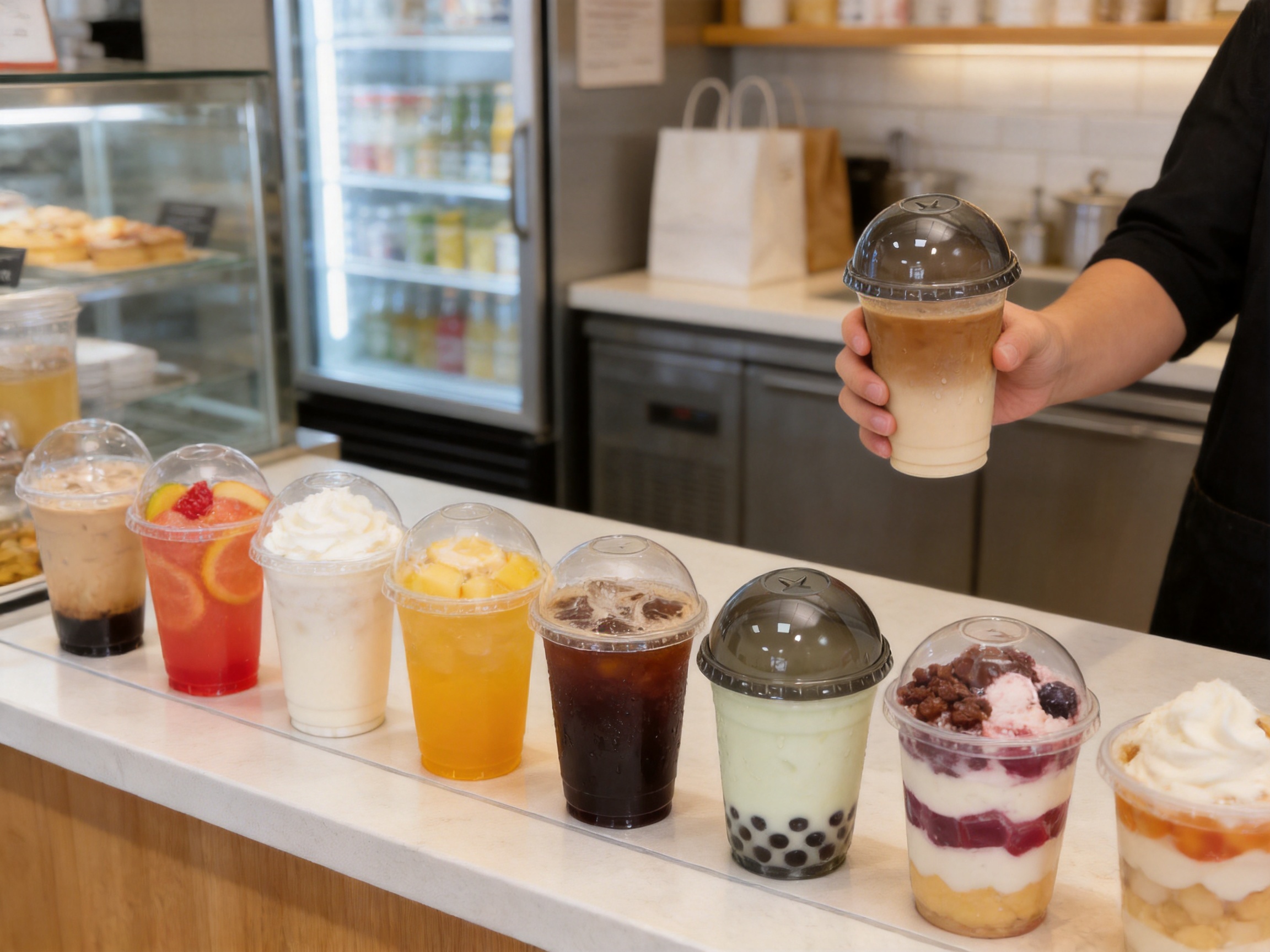
Quality Details That Distinguish a Better PET Ball Lid
A high-quality PET ball plastic cup lid can be recognized through several details. The first is clarity. The lid should be transparent, glossy, and free from obvious haze, dark spots, or uneven material distribution. High clarity improves beverage presentation and indicates stable material processing.
The second detail is edge smoothness. The rim should be clean and comfortable to handle, without sharp burrs or rough trimming. Smooth edges improve safety and help the lid fit properly on the cup.
The third detail is structural uniformity. The ball shape should be symmetrical and stable, with no visible deformation or collapse. Uniform structure supports stacking, appearance, and protective function.
The fourth detail is consistent caliber. The lid should fit the cup rim evenly around the full circumference. Inconsistent dimensions may cause loose areas, difficult application, or leakage risk.
The fifth detail is stacking performance. Lids should separate easily when used by staff but remain stable during storage. If lids stick together too tightly, service speed slows down. If they stack poorly, storage becomes inefficient.
The sixth detail is material toughness. The lid should resist cracking under normal handling. Brittle lids can break during transport or when pressed onto cups. Toughness supports both operational efficiency and customer satisfaction.
The seventh detail is cleanliness. Since the lid contacts the drinking area, hygiene is essential. Proper production, packaging, and storage practices help maintain cleanliness until the product reaches the customer.
Q&A: PET Ball Plastic Cup Lid
What is a PET ball plastic cup lid?
It is a transparent disposable cup lid made from food-grade PET material with a raised spherical profile. The ball shape creates extra space for toppings, foam, cream, fruit, ice, or dessert decorations while protecting the beverage during takeaway handling.
What sizes are available?
The standard calibers are 90 mm, 93 mm, and 98 mm. These sizes cover many common beverage cup formats. Custom sizes or design adjustments can also be discussed according to specific cup body requirements.
What is the typical weight of the lid?
The listed gram weight is approximately 4 g. This lightweight design supports convenient storage, handling, transportation, and takeaway use while maintaining practical strength.
Why is PET a good material for this product?
PET offers high transparency, good toughness, light weight, and a clean glossy appearance. It is suitable for food packaging applications and helps beverages look fresh, colorful, and attractive.
Is the lid suitable for drinks with toppings?
Yes. The raised ball profile is especially useful for drinks with whipped cream, cheese foam, fruit toppings, jelly, pudding, ice cream, or other decorative ingredients. It provides vertical clearance and protects the presentation.
Can the lid be customized?
Yes. Customization may include size adaptation, functional design, appearance adjustment, cup compatibility development, and OEM production. Customization helps beverage brands create packaging that matches their cups and market positioning.
How does this lid compare with a flat lid?
A flat lid is suitable for simple beverages, but it provides limited space above the cup. A PET ball lid offers more vertical room, better topping protection, and stronger visual presentation for premium drinks and desserts.
How does the product support brand value?
The transparent ball lid allows customers to see the drink clearly, making colors, toppings, and layers more attractive. This improves presentation, supports premium positioning, and helps products perform better in display and social media photography.
What certifications support the manufacturer’s reliability?
Yuqian Packaging Technology has passed the QS national industrial product production license, ISO9001 quality management system certification, BRC certification, German DIN safety certification, and EU RoHS+ testing. These qualifications support quality management, safety control, and international supply confidence.
What should buyers confirm before ordering?
Buyers should confirm cup rim compatibility, beverage type, required lid height, straw or venting needs, storage conditions, packaging format, certification requirements, order quantity, and delivery schedule. Sample testing is recommended before bulk purchasing.
Conclusion
The PET ball plastic cup lid is a practical and visually powerful packaging solution for modern beverage and dessert businesses. Its food-grade PET material provides high transparency, light weight, toughness, and a clean appearance. Its raised spherical form creates space for toppings and enhances product display, making it especially suitable for fruit tea, milk tea, iced coffee, smoothies, desserts, and other takeaway products that rely on attractive presentation.
Compared with many competing lid types, the PET ball lid offers a strong balance of clarity, protection, stackability, customization potential, and operational convenience. It helps businesses protect beverages, speed up service, reduce packaging problems, and present drinks in a more premium way.
Yuqian Packaging Technology (Jiangsu) Co., Ltd. strengthens the value of this product through advanced manufacturing processes, precision mold control, hygienic production, quality inspection, certification support, OEM service, and years of experience in food packaging. With standard calibers of 90 mm, 93 mm, and 98 mm, as well as personalized customization options, the company can support both regular procurement and specialized packaging development.
For beverage brands, distributors, cafés, dessert shops, and foodservice operators seeking a clear, reliable, and presentation-enhancing cup lid, the PET ball plastic cup lid offers a competitive solution that combines function, appearance, and manufacturing dependability.
References
Bibliography Entry 1: International Organization for Standardization. ISO 9001 Quality Management Systems: Requirements.
Bibliography Entry 2: BRCGS. Global Standard for Packaging Materials.
Bibliography Entry 3: Robertson, G. L. Food Packaging: Principles and Practice. CRC Press.
Bibliography Entry 4: Coles, R., McDowell, D., and Kirwan, M. Food Packaging Technology. Blackwell Publishing.
Bibliography Entry 5: European Commission. Guidance on Materials and Articles Intended to Come into Contact with Food.
Bibliography Entry 6: Marsh, K., and Bugusu, B. Food Packaging: Roles, Materials, and Environmental Issues. Journal of Food Science.