English
 Español
 عربى
عربىContent
- 1 Introduction
- 2 Product Overview
- 3 Material Advantages of PET
- 4 Design Features That Support Beverage Applications
- 5 Advantages Over Common Alternative Lid Designs
- 6 Manufacturing Process and Production Strengths
- 7 OEM and Customization Capabilities
- 8 Applications Across Foodservice and Beverage Channels
- 9 Operational Benefits for Commercial Buyers
- 10 Quality and Performance Evaluation
- 11 Environmental and Compliance Considerations
- 12 Why Choose an Experienced OEM Manufacturer
- 13 Purchasing and Custom Project Guidance
- 14 Careful Use and Storage Recommendations
- 15 Frequently Asked Questions
- 15.1 What is a PET ball plastic cup lid?
- 15.2 What calibers are available?
- 15.3 What is the approximate weight of each lid?
- 15.4 Is the lid transparent?
- 15.5 Why is a domed lid useful for specialty drinks?
- 15.6 Can the product be customized?
- 15.7 Is the product suitable for hot beverages?
- 15.8 What manufacturing process is used?
- 15.9 How can buyers confirm the correct size?
- 15.10 What certifications and testing are associated with the manufacturer?
- 15.11 How should the lids be stored?
- 15.12 Can the lids be used with automated equipment?
- 16 Conclusion
- 17 References
- 18 Product: PET ball plastic cup lid
Introduction
The lid is one of the most important components in a takeaway beverage package. It protects the drink during transport, helps prevent spills, supports a clean and professional presentation, and contributes to the customer’s overall impression of a beverage brand. For cafés, juice bars, milk tea shops, restaurants, catering companies, foodservice distributors, and packaging wholesalers, selecting the right lid is therefore more than a matter of matching diameter. The lid must also provide reliable fit, sufficient strength, visual appeal, production consistency, storage efficiency, and compatibility with different service environments.
The PET ball plastic cup lid is designed to answer these practical and commercial requirements. Produced from transparent PET material, this spherical lid combines a clear appearance with low weight, convenient handling, stackability, and a choice of three standard calibers: 90 mm, 93 mm, and 98 mm. Its rounded profile provides additional headspace for beverages with toppings, foam, fruit pieces, whipped cream, ice, or decorative presentations, while its transparent structure allows customers to see the drink clearly.
Yuqian Packaging Technology (Jiangsu) Co., Ltd. manufactures this product as part of its broader disposable food packaging portfolio. The company focuses on the research, development, production, and sales of food packaging materials and products. With a plant area of approximately 30,000 square meters, advanced injection molding capabilities, quality management systems, and experience in OEM production, the company can provide both standard cup lid sizes and customized solutions for customers with specific requirements.
This article examines the construction, performance, applications, manufacturing process, quality advantages, customization possibilities, and purchasing considerations associated with the PET ball plastic cup lid. It also explains why the product can be a competitive choice for businesses seeking dependable disposable beverage packaging with a clean, modern appearance.
Product Overview
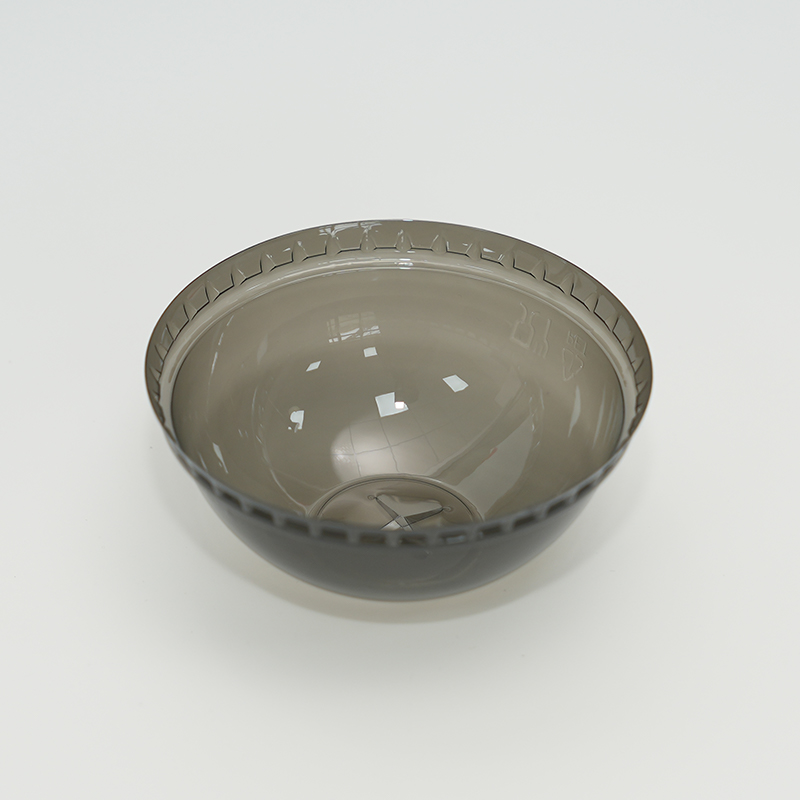
The PET ball plastic cup lid is a transparent, dome-shaped cover designed for use with compatible beverage cups. It is manufactured from PET, a material widely used in food and beverage packaging because of its clarity, relatively low weight, dimensional stability, and practical resistance to ordinary handling conditions.
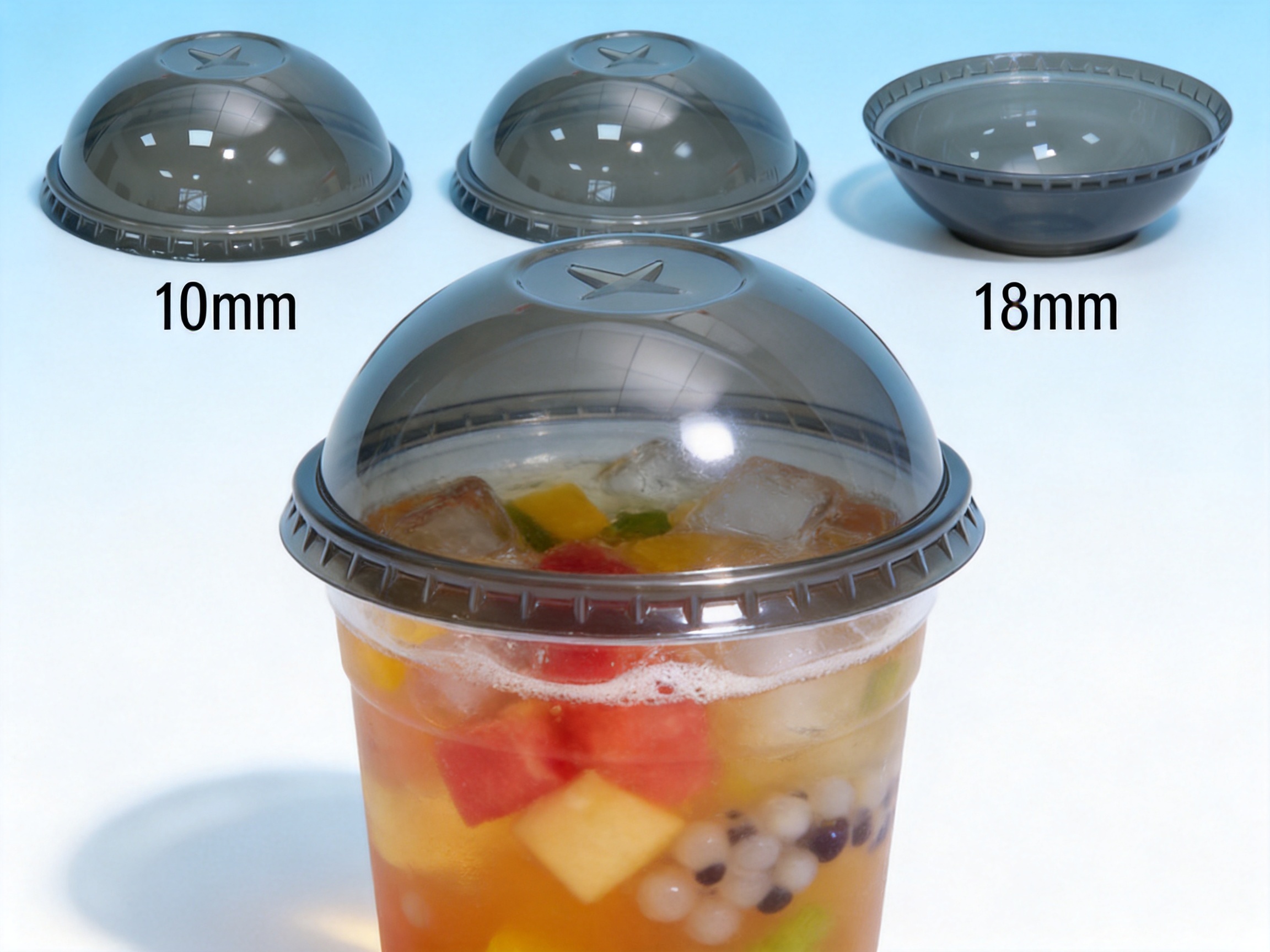
The spherical profile is one of the most recognizable features of the lid. Unlike a flat lid, a ball-shaped or domed lid creates additional interior space above the rim of the cup. This feature is particularly useful for beverages that require extra clearance. Smoothies, fruit teas, milk teas, iced coffees, flavored drinks, dessert beverages, and specialty drinks may contain ice, fruit, pearls, jellies, cream, foam, or other toppings. A domed structure helps accommodate these components without forcing them against a flat surface.
The lid is available in three standard calibers: 90 mm, 93 mm, and 98 mm. These dimensions cover several common cup specifications and allow beverage operators to select a suitable lid according to the outer diameter and rim design of the cup body. Each listed version has a gram weight of approximately 4 grams and is supplied in a transparent color.
| Product Attribute | Specification | Practical Benefit |
|---|---|---|
| Product type | PET ball plastic cup lid | Provides a domed cover for compatible beverage cups |
| Material | PET | Supports clarity, light weight, and practical durability |
| Available calibers | 90 mm, 93 mm, and 98 mm | Supports multiple cup sizes and customer requirements |
| Approximate gram weight | 4 grams per lid | Helps reduce package weight and storage burden |
| Color | Transparent | Improves product visibility and presentation |
| Shape | Spherical or domed | Creates additional headspace for toppings and foam |
| Production capability | Standard and customized OEM production | Supports brand-specific packaging programs |
Material Advantages of PET
High Transparency
One of the most visible advantages of PET is its high transparency. For beverage packaging, visibility is commercially valuable because customers often want to see the color, texture, ingredients, and presentation of the drink before purchase. A clear lid allows the beverage to remain the visual focus instead of hiding it behind an opaque cover.
Transparency also helps foodservice operators display decorative beverages more effectively. A colorful fruit tea, layered drink, iced coffee, smoothie, or milk tea with toppings can be presented as part of the product experience. When the lid remains clear and relatively bright in appearance, the drink can be photographed, displayed in a refrigerator, or handed directly to a customer without losing much of its visual impact.
For beverage brands, a transparent lid can also support more consistent presentation across different stores or distribution points. The lid provides a neutral surface that does not interfere with printed cup graphics, drink color, or toppings. This makes it suitable for businesses that want packaging to communicate freshness and quality while retaining a simple, professional appearance.
Low Weight and Easy Handling
The product profile specifies an approximate gram weight of 4 grams per lid. This low weight can be beneficial throughout the supply chain. Lightweight lids are easier for employees to handle during drink preparation, easier to transport in bulk, and less demanding in terms of storage space and package weight.
In a busy beverage shop, employees may place hundreds or thousands of lids during a single working day. A lightweight lid can be picked up quickly and positioned with minimal effort. This contributes to a more efficient service workflow, particularly when the lids are organized in dispensers, cartons, or stacked packaging trays.
Reduced individual weight may also help distributors and foodservice operators manage freight costs, although the final transportation result depends on carton design, order quantity, shipping method, and regional freight conditions. In addition, lighter packaging can support a broader effort to reduce material consumption while still retaining the basic functional requirements of a beverage cover.
Practical Toughness
Although PET is lightweight, it is also selected for its useful combination of toughness and structural stability. The lid is intended to withstand ordinary handling during production, packing, transportation, cup filling, and customer use. A practical disposable lid should not be excessively brittle, because cracking or breakage can interrupt service and create an unpleasant customer experience.
The spherical design can also contribute to efficient load distribution. A curved surface generally avoids the broad unsupported span found in some completely flat covers. When the lid is correctly matched to a compatible cup rim and manufactured with controlled dimensions, the domed profile can help maintain its shape during normal handling.
Performance always depends on correct use. Cup diameter, rim geometry, sealing pressure, beverage temperature, transportation conditions, and filling level should be evaluated together. For specialized applications, buyers can request samples and conduct fit, leak, stacking, impact, and temperature tests before placing a large order.
Food Packaging Suitability
The product is described as being made from food-grade PET and intended for beverage packaging. Food-contact packaging must be manufactured and handled under appropriate hygiene controls. Material selection is only one part of this process; storage conditions, production cleanliness, packaging methods, and transportation practices also influence the final suitability of the product.
Yuqian Packaging Technology identifies food packaging as one of its principal business areas and has established quality-related certifications and testing credentials, including QS national industrial product production licensing, ISO9001 quality management system certification, BRC certification, German DIN safety certification, and EU ROHS+ testing. Customers should confirm the specific documentation required for their market, application, and regulatory region before commercial use.
Design Features That Support Beverage Applications
Domed Headspace
The defining design advantage of a ball-shaped lid is its raised internal volume. Many contemporary beverages are not simply liquids in a cup. They may include tapioca pearls, aloe pieces, fruit cubes, jelly, popping pearls, ice cream, whipped cream, cheese foam, crushed ice, or other additions. A flat cover may provide insufficient clearance for these products, while a domed lid gives the drink more room.
Additional headspace can also reduce direct contact between toppings and the lid. This can help preserve the intended appearance of a beverage during short-distance transport and customer handling. It may also make it easier to insert a straw through the intended opening, depending on the lid design and compatible cup system.
The rounded profile has a strong visual association with specialty beverages. It can make a simple takeaway drink appear more generous and premium, particularly when the contents rise toward the upper part of the cup. For businesses selling visually distinctive drinks, the lid becomes part of the product presentation rather than merely a protective accessory.
Three Standard Calibers
Different cup manufacturers use different rim diameters and sealing structures. Offering 90 mm, 93 mm, and 98 mm versions gives buyers several practical choices. These three options can support a range of cup volumes and formats, including selected small, medium, and large beverage cups, subject to the exact cup design.
Choosing the correct caliber is essential. A lid that is too small may fail to engage the cup rim, while a lid that is too large may sit loosely and increase the risk of leakage or detachment. Buyers should compare the nominal diameter with the actual rim dimensions and should assess the interface between the lid and cup rather than relying only on the cup’s stated capacity.
For high-volume operations, standard calibers can simplify purchasing and inventory planning. A distributor can maintain a defined selection of commonly requested sizes, while a beverage chain can standardize lid and cup combinations across multiple locations. This reduces confusion during daily operations and can improve ordering accuracy.
Transparent Appearance
Transparent packaging has practical and marketing value. It allows staff to identify the lid size quickly, helps customers view the beverage, and supports a clean appearance when the cup is displayed in a takeaway bag or delivery carrier. It also works with a wide range of cup colors and printed designs.
For brands that prefer customized packaging, the transparent base provides flexibility. The company can discuss potential customization involving color, pattern, surface treatment, structural details, or other product requirements, subject to tooling, material, order quantity, and technical feasibility. A customized lid may help a brand create a distinctive package while maintaining the visual advantages of a clear product.
Stackable Structure
Stackability is important in commercial foodservice environments. Lids are frequently stored in large quantities near filling stations, packaging counters, or warehouse shelves. A product that can be stacked in an orderly manner occupies less space and is easier to count, transport, and replenish.
The PET ball plastic cup lid is described as stackable. This feature can help reduce storage volume compared with irregularly shaped packaging components. Neatly stacked lids are also less likely to fall, become contaminated through unnecessary handling, or create clutter around the workstation.
Efficient stacking benefits more than the store. It can improve carton utilization during distribution and support more organized loading during production and shipment. Actual stacking efficiency depends on the lid geometry, nesting depth, carton dimensions, and protective packaging configuration, so commercial buyers should verify the packing details with the supplier.
Advantages Over Common Alternative Lid Designs
Compared with Flat Lids
Flat lids can be useful for certain beverages, but they normally provide less vertical clearance. When a drink contains substantial toppings or foam, a flat cover may compress the upper layer or require the operator to reduce the filling level. The domed PET lid addresses this limitation by creating a larger upper space.
The ball shape can also make the drink look more substantial. A customer may perceive a domed package as better suited to a specialty beverage because the design visually accommodates toppings and decorative layers. This is particularly relevant to milk tea, smoothies, dessert drinks, and fruit-based products.
Flat lids may be more suitable where compact stacking, low profile transport, or simple drinking access is the priority. The best choice depends on the beverage format. The PET ball lid is especially competitive where product visibility and headspace are important purchasing criteria.
Compared with Opaque Lids
Opaque lids hide the upper portion of the beverage and may limit product visibility. This can be a disadvantage for businesses that rely on color, texture, foam, fruit pieces, or toppings to attract customers. A transparent PET lid allows the product to remain visible and can support a more appetizing presentation.
Clear packaging can also make order identification easier. Staff members may be able to distinguish beverages more quickly by viewing the contents, especially when the cup is paired with a printed label or order sticker. This does not eliminate the need for proper labeling, but it can provide an additional visual reference.
Compared with Heavier Packaging Materials
Some alternative materials may provide different performance characteristics but add more weight or require different production and storage arrangements. The lightweight PET structure offers a practical balance between clarity, handling convenience, and structural function. For businesses that use large volumes of lids, weight and storage efficiency can influence overall operating costs.
Material selection should always reflect the application. Buyers should consider beverage temperature, contact time, recycling infrastructure, local regulations, sealing equipment, and end-user expectations. PET is a strong option for clear disposable beverage packaging, but each project should be assessed according to its complete technical and environmental requirements.
Manufacturing Process and Production Strengths
Material Preparation
A consistent manufacturing process begins with controlled material preparation. PET resin must be selected, stored, and processed according to appropriate production conditions. Moisture control is particularly important for PET processing because excessive moisture can affect melt quality and finished-product performance. A professional factory therefore needs procedures for material storage, drying, batching, and traceability.
Material control also supports consistency between production batches. Customers purchasing disposable packaging in large quantities expect the lid color, transparency, weight, dimensions, and fit to remain stable. Variations in resin quality, drying conditions, or processing parameters may create differences that are visible in the final product. A disciplined material preparation system helps reduce those risks.
Injection Molding Technology
Yuqian Packaging Technology uses advanced injection molding technology in the production of its PET ball plastic cup lids. Injection molding is suitable for producing high volumes of repeatable plastic components. In this process, prepared material is melted, injected into a precision mold, cooled, and ejected as a finished lid.
For a domed lid, mold accuracy is critical. The mold must control the outer diameter, inner profile, rim engagement area, opening details, wall distribution, and nesting features. Proper mold design helps ensure that the lid maintains the intended spherical form while avoiding unnecessary material use.
Process parameters such as injection speed, pressure, temperature, cooling time, and mold temperature influence the final product. If these conditions are not properly controlled, the lid may develop warping, uneven thickness, haze, short shots, flow marks, flash, or dimensional instability. Advanced equipment combined with experienced operators can help maintain repeatable production quality.
Precision and Burr Control
The company states that its production technology is designed to achieve high-precision, burr-free quality standards. Burrs and sharp residual edges are undesirable in food packaging because they can affect handling, interfere with cup fitting, and reduce the perceived quality of the product.
Precision is especially important around the lid rim. The rim is the interface between the lid and cup, and even a small dimensional variation can influence the tightness and reliability of the connection. A controlled molding process, properly maintained tooling, and appropriate inspection procedures can help ensure that the lid is cleanly formed and compatible with the target cup.
Visual inspection can identify obvious defects such as scratches, black spots, deformation, incomplete molding, excessive flash, or cloudiness. Dimensional inspection can verify caliber and key structural measurements. For customers with automated filling or sealing equipment, additional testing may be required to confirm machine compatibility.
Cooling, Ejection, and Handling
The cooling stage affects dimensional stability. A plastic part that is removed too early may deform, while excessive cooling can reduce production efficiency. The manufacturer must balance cycle time with product quality and ensure that the lid retains its intended shape after ejection.
Automated or carefully managed ejection reduces the risk of damage during removal from the mold. After ejection, lids should be collected, counted, inspected, and packed in a hygienic environment. Contact with dust, moisture, oils, or unnecessary manual handling should be minimized.
Packaging is also part of the manufacturing process. Correct nesting and carton arrangement help protect the lids from compression and deformation during transport. Carton labeling should identify the product, caliber, quantity, production information, and any customer-specific requirements needed for warehouse management.
Quality Management
Yuqian Packaging Technology reports certification and testing credentials that support its quality management approach. ISO9001 certification is associated with documented quality management procedures, process control, corrective action, and continual improvement. BRC certification is relevant to food-related production and emphasizes product safety, hygiene, risk management, and operational controls.
The company also identifies QS licensing, German DIN safety certification, and EU ROHS+ testing among its qualifications. These credentials can be useful to buyers evaluating suppliers, although documentation should be reviewed for validity, scope, product coverage, and market applicability. A responsible purchasing process should request current certificates and relevant test reports rather than relying only on general marketing statements.
OEM and Customization Capabilities
Standard products are useful for businesses that need immediate access to common sizes, but many established beverage brands require packaging with specific technical or visual characteristics. As an OEM manufacturer, Yuqian Packaging Technology can discuss customized cup lid solutions according to a customer’s product concept and order requirements.
Size Customization
Although 90 mm, 93 mm, and 98 mm are standard calibers, a customer may need a different diameter because of a proprietary cup design or a regional packaging format. Customized tooling may be considered when the required volume justifies development and production costs. The feasibility of a new size depends on the cup rim, lid opening, wall thickness, mold structure, production equipment, and expected order quantity.
Functional Customization
Functional requirements may include a different straw opening, an altered dome height, improved nesting behavior, a specific cup engagement structure, or compatibility with an automated filling line. Each change requires technical evaluation because modifying one area of the lid can affect strength, sealing, mold release, stacking, and material distribution.
Customers should provide drawings, samples, dimensional specifications, intended beverage type, target temperature, filling method, transportation conditions, and expected annual volume. This information allows the manufacturer to evaluate the project more accurately and recommend a practical design.
Visual Customization
Color, pattern, and surface appearance may be customized for selected projects. Transparent lids are often preferred because they display the beverage, but some brands may request a lightly tinted appearance or a coordinated color element. A custom design should maintain sufficient clarity, food packaging suitability, and production stability.
Customization may also involve packaging labels, carton printing, quantity per carton, or private-label arrangements. These details should be confirmed during quotation and sample approval. A clear approval process reduces the risk of differences between the customer’s expectations and mass production.
Applications Across Foodservice and Beverage Channels
Milk Tea and Bubble Tea
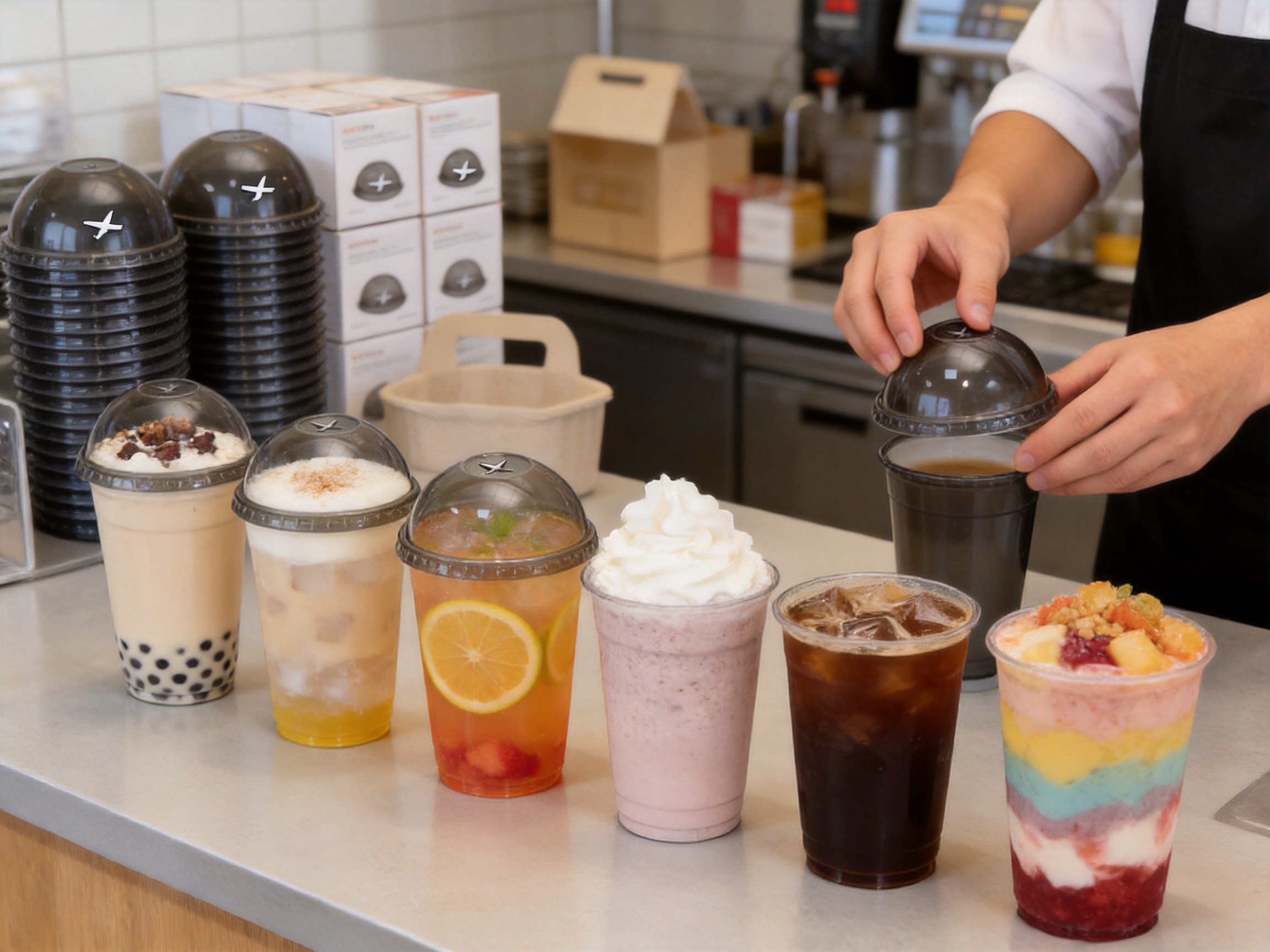
Milk tea and bubble tea are natural applications for a domed lid. These drinks often contain tapioca pearls, fruit jellies, popping pearls, cream, or foam. The raised profile provides space for toppings, while transparency allows customers to see the color and texture of the beverage.
In high-volume milk tea shops, the combination of standard calibers and lightweight construction can simplify daily operations. Staff can prepare drinks quickly, match the correct lid size, and arrange spare lids in compact stacks near the service counter.
Fruit Tea and Juice Drinks
Fruit tea and juice beverages often depend on fresh visual presentation. Slices of citrus, berries, herbs, pulp, and colorful layers can contribute to the product’s appeal. A clear domed cover helps preserve visibility while providing additional space above the beverage surface.
For delivery and takeaway orders, the lid should be matched with a suitable cup and tested under realistic conditions. The business should examine how the package performs when filled, carried in a bag, exposed to movement, and stored for the intended service period.
Smoothies and Specialty Cold Drinks
Smoothies, frappes, iced coffees, dessert beverages, and blended drinks may contain whipped cream, syrup, crushed cookies, fruit toppings, or decorative ingredients. The ball lid can provide the clearance required for these products and can help the finished drink maintain a more attractive shape.
For thick beverages, the opening and straw compatibility should receive special attention. The straw size must match the beverage texture and the lid opening. If the drink requires a wide straw, the lid design should be selected or customized accordingly.
Catering and Event Service
Catering companies and event organizers often require packaging that is easy to transport, distribute, and identify. Transparent lids help staff view beverages, while stackable construction supports efficient storage before service. The lightweight structure can be useful when large quantities of drinks are prepared for conferences, outdoor events, parties, or institutional functions.
Restaurants and Takeaway Counters
Restaurants that offer cold drinks for takeaway can use a standardized lid system to improve packaging consistency. A professionally presented cup can reinforce the restaurant’s wider brand image, especially when the lid is combined with a printed cup, sleeve, sticker, or carrier.
Operational Benefits for Commercial Buyers
Packaging decisions affect more than the appearance of an individual drink. They also influence staff productivity, inventory control, customer satisfaction, and purchasing efficiency. The PET ball plastic cup lid offers several features that can support commercial operations when correctly integrated with the cup and service process.
First, the selection of three standard calibers helps businesses avoid using one oversized lid for every cup. Matching the lid more closely to the cup can improve appearance and reduce the risk of loose or poorly fitted packaging. Second, the approximate 4-gram weight supports convenient handling and may help reduce the overall weight of bulk shipments. Third, stackability makes it easier to organize inventory in stores, warehouses, and distribution centers.
The transparent appearance can also help reduce preparation errors. Staff may quickly recognize whether a lid has been correctly positioned and whether the beverage has been overfilled. In a busy environment, simple visual feedback can support smoother workflows, although written procedures and staff training remain necessary.
For wholesalers, a standard product range can simplify catalog management. The 90 mm, 93 mm, and 98 mm options can be listed as separate stock-keeping units, each with clear compatibility information. This helps customers select the proper size and reduces the likelihood of incorrect orders.
Quality and Performance Evaluation
Before placing a large order, buyers should establish a practical evaluation procedure. The first test should be dimensional compatibility. Measure the cup rim, compare it with the lid’s actual caliber, and confirm that the lid engages evenly around the entire circumference.
The second test should examine fit security. Fill the cup with the intended beverage, apply the lid using the same method used in daily operations, and gently invert or move the cup under controlled conditions. The test should consider the expected service environment without creating unrealistic or unsafe conditions.
The third test should evaluate appearance. Check transparency, surface uniformity, molding marks, scratches, haze, color consistency, and the visual relationship between the lid and the beverage. For premium beverages, even small cosmetic differences may influence customer perception.
The fourth test should examine stacking and storage. Confirm that lids nest smoothly, separate without excessive force, and remain free from deformation after the planned storage period. Carton compression, temperature changes, and warehouse humidity should be considered where relevant.
The fifth test should address the intended beverage temperature. The product description identifies the lid as high-temperature resistant and suitable for a variety of hot drinks, but PET packaging performance varies according to resin grade, design, temperature, contact time, and application conditions. Customers should request technical guidance and conduct application-specific testing before using the lid with hot beverages.
Finally, buyers should review documentation. A supplier evaluation may include material declarations, food-contact information, quality certificates, test reports, production photographs, inspection records, and sample approval documents. This process is particularly important for importers, chain restaurants, and distributors serving regulated markets.
Environmental and Compliance Considerations
Modern food packaging decisions increasingly include environmental criteria. PET is a commonly recognized packaging material with established recycling streams in many regions, but recyclability depends on local collection, sorting, washing, reprocessing, and end-market infrastructure. A transparent PET lid may be recyclable in some systems, but businesses should communicate disposal guidance according to local regulations.
Material reduction is another consideration. The approximate 4-gram weight indicates that the lid is designed as a lightweight component. Lightweight packaging can reduce material consumption and transportation weight, provided that the product continues to meet the required performance standard. Reducing weight should not compromise fit, safety, or resistance to ordinary handling.
Yuqian Packaging Technology states that it actively promotes green production and seeks to reduce energy consumption and emissions during manufacturing. Customers interested in sustainability should ask for specific information about production energy use, material sourcing, scrap recovery, recycled content, waste management, and packaging optimization.
Environmental claims should be matched with verifiable information. Terms such as recyclable, eco-friendly, or sustainable can have different meanings in different markets. Buyers should evaluate the complete product life cycle, including raw material production, manufacturing, shipping, use, collection, and disposal.
Why Choose an Experienced OEM Manufacturer
An experienced OEM supplier can provide more than a catalog item. It can help customers match a lid to a cup, review a custom drawing, select a suitable production method, develop tooling, manage samples, and maintain consistency during mass production. This integrated capability is valuable when a beverage brand is expanding into new formats or markets.
Yuqian Packaging Technology was established in 2010 and operates in Taizhou City, Jiangsu Province. Its stated business scope includes research and development, production, and sales of new food packaging materials and products. The company’s plant area, equipment investment, certification background, and experience in disposable packaging provide a foundation for serving domestic and international customers.
The company also established a Shanghai branch in January 2019 to improve service quality and expand business channels. A broader service structure can support communication, order coordination, export arrangements, and customer follow-up. For overseas buyers, clear communication is especially important when discussing specifications, inspection standards, packaging details, shipping marks, and documentation.
A professional manufacturing partner should be able to explain how product dimensions are controlled, how quality issues are handled, how custom molds are managed, and how production batches are identified. These capabilities reduce supply risk and help customers build a more dependable packaging program.
Purchasing and Custom Project Guidance
When requesting a quotation for PET ball plastic cup lids, buyers should provide the desired caliber, estimated quantity, target application, cup sample or drawing, color requirement, packaging method, destination market, and delivery schedule. If the buyer needs a customized product, additional information about dome height, straw opening, sealing method, logo treatment, or surface design should be included.
Sample approval should take place before mass production. The approved sample should be identified by size, material, appearance, weight, and any other critical characteristics. If the project involves a custom mold, the customer should confirm who owns the tooling, how modifications are handled, and whether the mold can be used for future orders.
Order quantity can influence the commercial feasibility of customization. Standard products generally offer a simpler path to production, while customized items may require mold investment, engineering time, trial production, and a minimum order quantity. A detailed quotation should separate product pricing, tooling charges, sample costs, packaging, freight, and any testing fees.
Delivery planning should include production lead time, inspection time, export documentation, transportation, and possible customs delays. Buyers should maintain sufficient safety stock if the lids are essential to daily operations. A packaging shortage can interrupt beverage sales even when cups, ingredients, and labor are available.
Careful Use and Storage Recommendations
PET ball plastic cup lids should be stored in a clean, dry environment away from direct sunlight, excessive heat, chemicals, and sources of contamination. Cartons should remain closed until the lids are needed. Products should not be stored under heavy loads that could deform the spherical structure or compromise nesting.
During use, employees should handle lids with clean hands or appropriate foodservice procedures. The correct lid caliber should be selected for each cup. Operators should avoid forcing an incompatible lid onto a cup because excessive pressure may damage the lid, deform the cup rim, or create an unreliable seal.
For beverages served at elevated temperatures, users should follow supplier guidance and verify performance through testing. The terms high-temperature resistant and suitable for hot drinks should not replace application-specific validation. Temperature, beverage composition, filling level, holding time, and transport conditions can all influence performance.
At the end of use, disposal should follow local waste-management requirements. Where PET recycling is available, users may be encouraged to empty and separate the packaging according to local instructions. Actual recycling outcomes depend on regional infrastructure and accepted material categories.
Frequently Asked Questions
What is a PET ball plastic cup lid?
A PET ball plastic cup lid is a transparent, domed beverage cover made from PET material. Its spherical shape provides additional headspace above the cup and is suitable for drinks containing foam, toppings, fruit pieces, ice, or decorative ingredients.
What calibers are available?
The standard versions listed for this product are 90 mm, 93 mm, and 98 mm. Buyers should verify the exact compatibility between the selected lid and the cup rim before ordering large quantities.
What is the approximate weight of each lid?
The listed gram weight is approximately 4 grams per lid for the 90 mm, 93 mm, and 98 mm versions. Actual production tolerance should be confirmed in the supplier’s technical specification or approved sample.
Is the lid transparent?
Yes. The standard product is transparent. This allows the beverage, toppings, and decorative presentation to remain visible to customers and staff.
Why is a domed lid useful for specialty drinks?
A domed lid provides more vertical clearance than a flat lid. This makes it suitable for beverages with whipped cream, foam, fruit, pearls, jelly, crushed ice, or other toppings that require additional space.
Can the product be customized?
Customization can be discussed for selected projects. Potential areas may include size, color, pattern, functional design, or other packaging requirements. Feasibility depends on the technical design, tooling, order quantity, material, and intended application.
Is the product suitable for hot beverages?
The product information describes the lid as high-temperature resistant and suitable for a variety of hot drinks. However, users should request application-specific guidance and perform testing based on the actual beverage temperature, contact time, cup, and service conditions before commercial use.
What manufacturing process is used?
The lid is produced using injection molding technology. The process involves preparing PET material, melting and injecting it into a precision mold, cooling the formed part, ejecting it, inspecting it, and packing it for shipment.
How can buyers confirm the correct size?
Buyers should measure the outside diameter and rim structure of the compatible cup, compare those measurements with the lid specification, and conduct a sample fit test. A sample should also be checked for stability, leakage, straw compatibility, and appearance.
What certifications and testing are associated with the manufacturer?
The company identifies QS national industrial product production licensing, ISO9001 quality management system certification, BRC certification, German DIN safety certification, and EU ROHS+ testing among its qualifications. Buyers should request current documents and confirm their scope and relevance to the intended market.
How should the lids be stored?
The lids should be kept in clean, dry, protected cartons away from direct sunlight, excessive heat, chemicals, dust, and heavy compression. Cartons should remain closed until the lids are required for production or service.
Can the lids be used with automated equipment?
They may be suitable for automated or semi-automated operations when the lid, cup, and machinery are properly matched. Buyers should provide machine details and conduct line trials to confirm feeding, positioning, fitting, and output performance.
Conclusion
The PET ball plastic cup lid is a practical solution for beverage businesses that need transparency, light weight, headspace, stackability, and flexible sizing. Its domed profile supports drinks with toppings and foam, while the clear PET material helps preserve product visibility and presentation. The availability of 90 mm, 93 mm, and 98 mm calibers gives buyers several standard choices for different cup formats.
Compared with flat or opaque alternatives, the product offers a strong combination of visual appeal and functional clearance. Its approximate 4-gram weight supports convenient handling and efficient bulk storage, while its stackable design can help organize inventory in shops, warehouses, and distribution centers.
The manufacturing strength behind the product is equally important. Yuqian Packaging Technology uses injection molding technology, emphasizes precision and burr control, and supports OEM development for customers requiring customized packaging. Its stated quality credentials, production experience, research and development focus, and food packaging specialization provide a foundation for long-term cooperation.
For the best results, buyers should confirm cup compatibility, request samples, evaluate beverage temperature and transportation conditions, review quality documentation, and define customization requirements before mass production. When correctly specified and responsibly used, the PET ball plastic cup lid can help beverage brands deliver a cleaner, more attractive, and more reliable takeaway experience.
References
1. Product specification information for PET ball plastic cup lids, including material, caliber, weight, color, and product features.
2. Yuqian Packaging Technology (Jiangsu) Co., Ltd. company information and manufacturing capability statement.
3. ISO9001 quality management system principles for manufacturing organizations.
4. BRC-related food safety and packaging quality management principles.
5. General technical guidance for PET materials used in food and beverage packaging.
6. General injection molding process principles for transparent plastic packaging components.
7. General packaging evaluation practices covering dimensional fit, leakage resistance, stacking, storage, and transport performance.
PET ball plastic cup lid