English
 Español
 عربى
Content
- 1 Introduction
- 2 Why Cup Lid Performance Matters in Modern Beverage Packaging
- 3 Product Overview
- 4 One-Piece Leak-Proof Design
- 5 Material Quality and Product Safety
- 6 Advantages Over Ordinary Cup Lids
- 7 Advanced Manufacturing Process
- 8 Manufacturing Strengths of Yuqian Packaging Technology
- 9 Customization and OEM Services
- 10 Environmental Considerations
- 11 Applications Across the Foodservice Industry
- 12 How to Select the Correct Lid for a Project
- 13 Quality and Commercial Value for Buyers
- 14 Q&A
- 14.1 What is the main feature of the patented one-piece leak-proof plastic cup lid?
- 14.2 What calibers are available?
- 14.3 What colors can customers choose?
- 14.4 Is the lid suitable for takeaway beverages?
- 14.5 Is the product recyclable?
- 14.6 Can the manufacturer provide OEM customization?
- 14.7 How does the one-piece lid compare with a standard loose-fitting lid?
- 14.8 Is the lid stackable?
- 14.9 What quality certifications and testing are associated with the manufacturer?
- 14.10 What should be confirmed before placing an order?
- 15 Conclusion
- 16 References
- 17 Product: Patented one-piece leak-proof plastic cup lid
Introduction
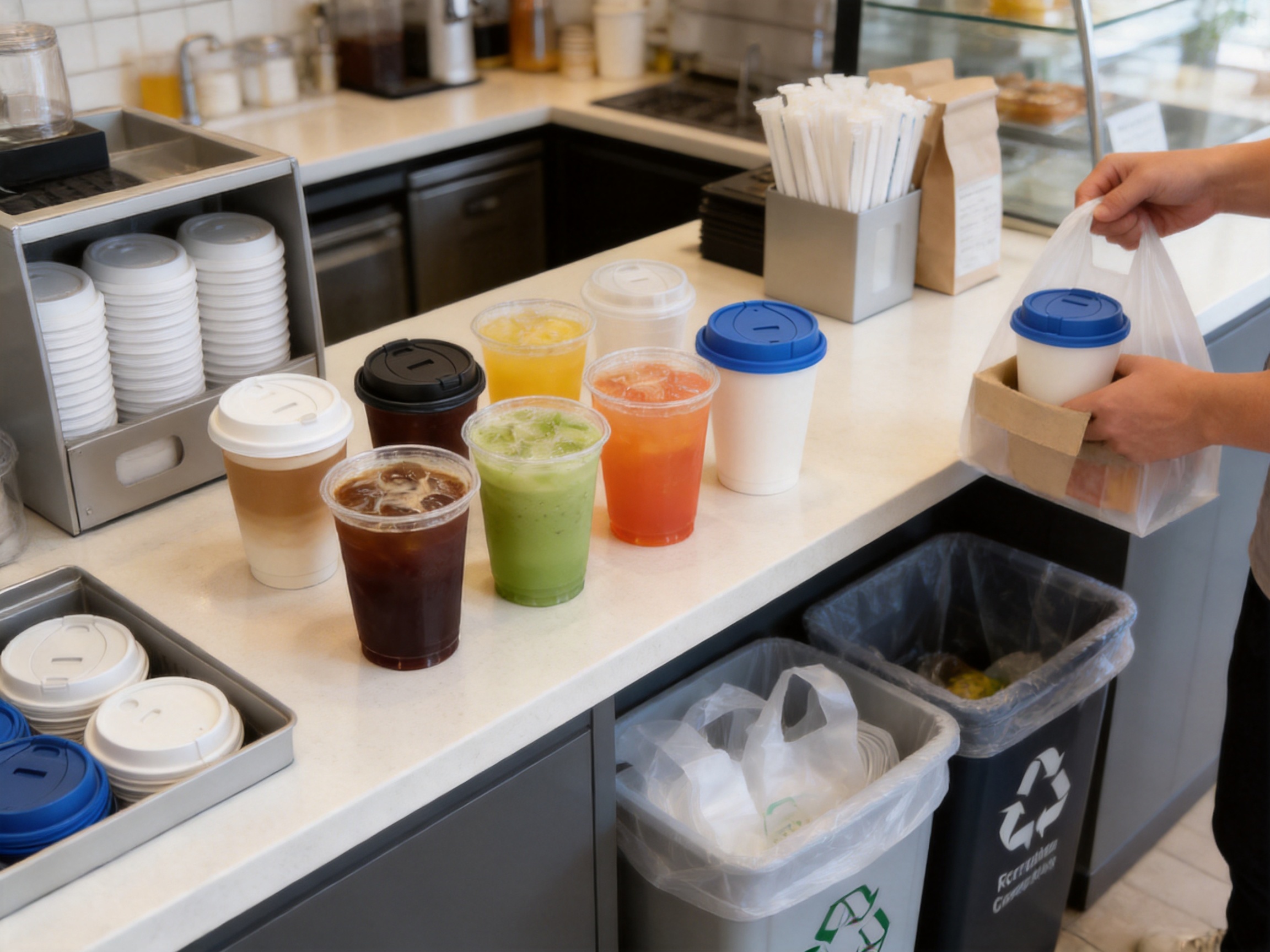
In the beverage and takeaway food industries, a cup lid is much more than a simple accessory. It is a critical packaging component that protects the product, supports convenient consumption, reduces the risk of spills, and influences the customer’s overall impression of a beverage brand. A poorly designed lid can leak during transportation, fit loosely on the cup, crack under pressure, or create an inconvenient drinking experience. By contrast, a well-engineered lid can provide dependable sealing, efficient handling, attractive presentation, and improved operational efficiency for foodservice businesses.
The patented one-piece leak-proof plastic cup lid has been developed to meet these practical and commercial requirements. Combining a one-piece construction with a reinforced body, smooth surfaces, multiple color options, and compatibility with different cup calibers, the lid is designed for beverage retailers, takeaway restaurants, cafés, catering companies, distributors, and packaging wholesalers. Its main purpose is to help protect beverages from leakage while delivering a convenient and hygienic solution for everyday use.
Manufactured by Yuqian Packaging Technology (Jiangsu) Co., Ltd., the product reflects the company’s experience in research, development, injection molding, food packaging production, and OEM customization. The manufacturer operates a large production facility in Taizhou City, Jiangsu Province, and has established quality management and product certification systems to support domestic and international customers.
This article examines the design principles, product advantages, production strengths, customization options, quality control procedures, sustainability considerations, and application value of the patented one-piece leak-proof plastic cup lid. It also explains why this lid can offer practical advantages over ordinary multi-part or less precisely manufactured alternatives.
Patented one-piece leak-proof plastic cup lid
Why Cup Lid Performance Matters in Modern Beverage Packaging
Takeaway beverages are exposed to movement at almost every stage of distribution and consumption. A drink may be filled at a café, placed on a counter, carried by a customer, transported by vehicle, delivered by a courier, or stored in a refrigerator. During these activities, the lid may experience vibration, tilting, pressure from other items, temperature changes, and repeated handling. If the lid does not remain securely attached, liquid can escape and damage packaging, vehicles, furniture, clothing, or electronic devices.
Leakage also affects brand reputation. Customers generally judge a beverage packaging system as a complete product rather than separating the cup, lid, straw opening, and sealing structure in their minds. A leaking lid can therefore create the impression that the entire beverage brand is unreliable, even when the beverage itself is high quality. For high-volume foodservice operators, leakage may also lead to product waste, refunds, customer complaints, and increased cleaning costs.
The lid must also balance several competing requirements. It needs to be firm enough to resist accidental separation, yet practical for staff to apply quickly. It should be durable without becoming unnecessarily heavy. It should create a secure fit while remaining comfortable for customers to open, carry, and drink from. Its surface should be hygienic and easy to clean during production and storage. In addition, the product should be available in sizes and colors that support different cup designs and brand identities.
The patented one-piece leak-proof plastic cup lid addresses these needs through an integrated structure and controlled manufacturing process. The design reduces unnecessary joints and supports a close connection between the lid and the cup. The result is a packaging component intended to improve liquid containment and user convenience in a wide range of beverage applications.
Product Overview
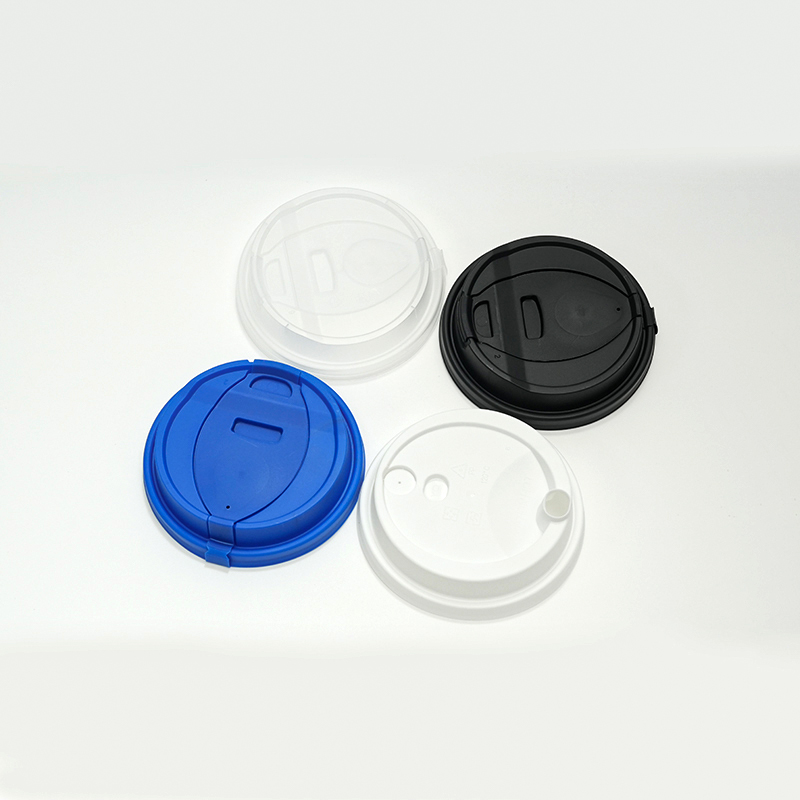
The product is available in two closely related forms: the patented leak-proof lid and the patented one-piece leak-proof cover. Both are designed for cup applications requiring dependable closure and convenient beverage access. The standard calibers are 80 mm and 90 mm, with a gram weight of approximately 6 g. These specifications make the lid suitable for a variety of common takeaway beverage cups, subject to matching cup dimensions and application requirements.
| Lid Type | Available Caliber | Approximate Gram Weight | Available Colors |
|---|---|---|---|
| Patented Leak-Proof Lid | 80 mm / 90 mm | 6 g | Transparent, white, black, red, gold |
| Patented One-Piece Leak-Proof Cover | 80 mm / 90 mm | 6 g | Transparent, white, black, red, gold |
The product is manufactured from plastic materials selected for food packaging applications. According to the supplied product information, the materials are non-toxic, odorless, recyclable, and designed to support healthy use. Material selection remains subject to the specific production plan, customer requirements, applicable regulations, and final product testing.
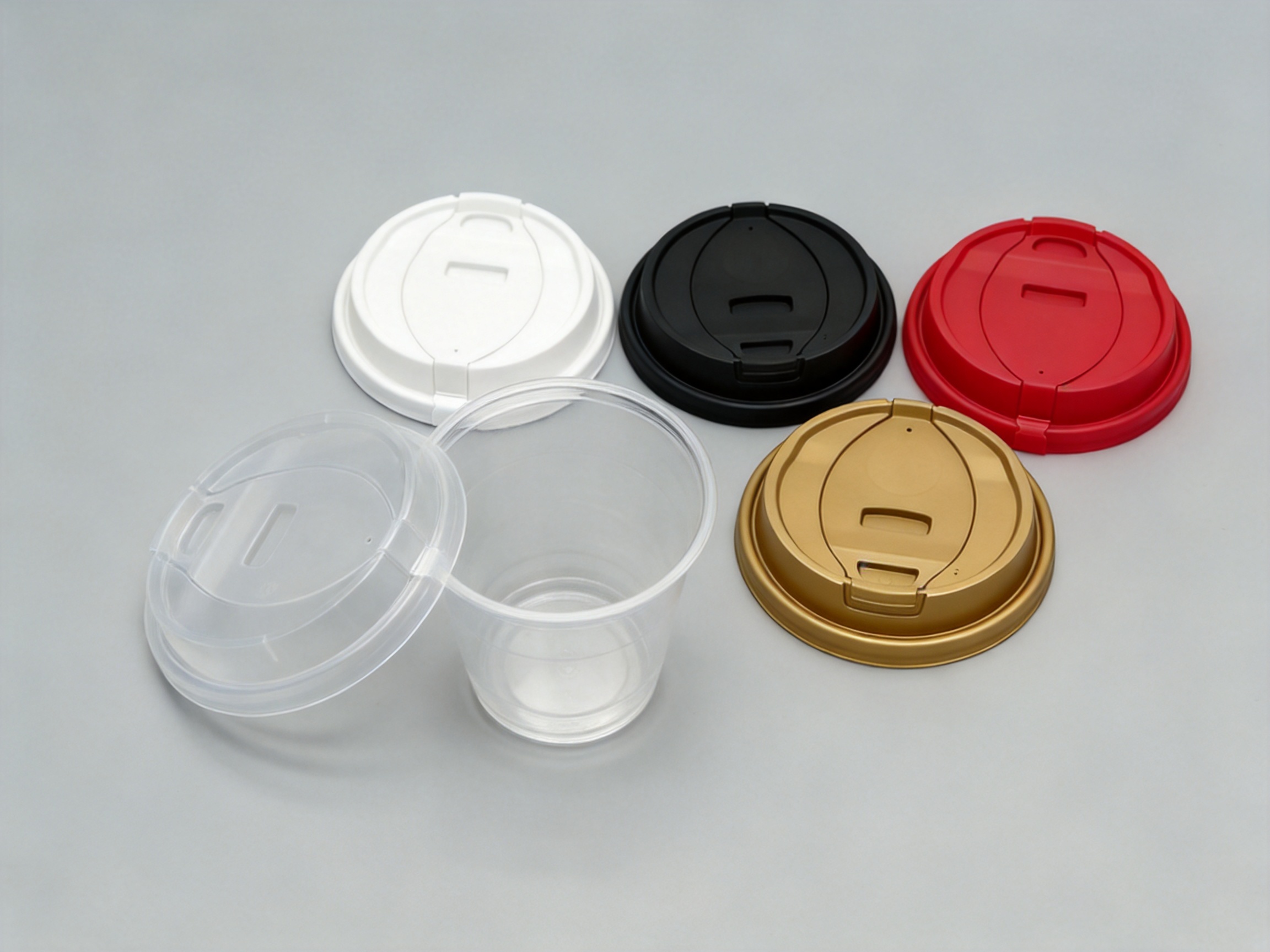
Transparent lids provide a clean and neutral appearance and allow customers to see the beverage surface. White lids can support a simple and fresh visual identity, while black lids may create a premium or modern appearance. Red and gold options can be used for promotional products, seasonal beverages, special events, and brands seeking stronger visual impact. Custom color development may also be discussed for customers with specific branding requirements.
One-Piece Leak-Proof Design
Integrated Construction
The defining feature of the product is its patented one-piece leak-proof structure. Unlike designs that depend on multiple separate parts, detachable components, or complicated assembly procedures, the one-piece structure is formed as an integrated lid. This construction helps reduce potential leakage points and simplifies the handling process for both manufacturers and beverage operators.
A one-piece design can provide more consistent performance because the lid is produced as a unified component rather than assembled from several parts after molding. Fewer separate parts may reduce the possibility of incorrect assembly, missing components, uneven placement, or incompatibility between different pieces. For high-volume foodservice operations, this can support more efficient lid application and reduce handling complexity.
The sealing performance of any cup lid depends on the compatibility between the lid geometry and the cup rim. The patented structure is developed through mold design and injection molding technology to create a close fit. When properly matched with the intended cup, the lid is designed to remain securely positioned during normal carrying and transportation.
Reduced Leakage Risk
The lid’s leak-proof design is intended to contain beverages more effectively than ordinary loose-fitting lids. The thickened construction and integrated form contribute to structural stability, while the precision of the molded geometry supports a consistent connection with the cup. This is particularly useful for cold drinks, milk tea, fruit beverages, coffee, juice, and other takeaway products that may be carried outside the store.
No packaging lid can eliminate every possible leakage situation under improper use, severe impact, incompatible cup dimensions, or excessive pressure. However, a carefully engineered one-piece lid can reduce common failure risks associated with poor fit, weak material, distorted edges, and loosely connected components. This makes the product a practical choice for businesses that want a stronger level of protection than basic disposable lids.
Convenient Drinking Experience
Leak prevention should not come at the expense of usability. A lid that is extremely difficult to open or uncomfortable to drink from may create frustration even if it provides strong sealing. The product incorporates user-oriented design considerations, including a smooth surface and a drinking access structure intended to support convenient consumption. Depending on the specific model and customization plan, the drinking area can be adapted to the customer’s application.
The lid can also be used in beverage systems that include straws or direct-drinking openings, provided that the selected design is compatible with the intended service method. This flexibility allows beverage businesses to choose a suitable consumption experience for different product categories, including iced drinks, hot drinks, smoothies, tea beverages, and convenience-store refreshments.
Material Quality and Product Safety
Food packaging materials must be selected with careful attention to safety, stability, cleanliness, and regulatory requirements. The supplied product information describes the lid as non-toxic, odorless, environmentally friendly, and healthy for intended packaging use. These characteristics are important because the lid may be used near beverages and may come into contact with condensation, splashes, or the drinking area.
Material quality begins with the selection and inspection of incoming raw materials. Suitable plastic resin should offer reliable molding performance, appropriate mechanical strength, dimensional stability, and a clean appearance. The material should also be compatible with the required color, transparency, thickness, and surface finish. Consistency in resin quality helps manufacturers maintain stable production and reduce defects such as warping, brittle edges, discoloration, incomplete filling, or surface marks.
Yuqian Packaging Technology follows a quality management approach covering raw material selection, production processing, and finished product inspection. This process-oriented method is important for disposable food packaging because quality problems can originate at any stage. A product may have an attractive appearance but still fail in practical use if its dimensions are inconsistent or its sealing performance is inadequate.
The manufacturer’s supplied information also refers to QS national industrial product production licensing, ISO9001 quality management system certification, BRC certification, German authoritative safety DIN certification, and EU RoHS+ testing. These certifications and testing references demonstrate the company’s focus on standardized production, product safety, quality control, and environmental compliance. Specific certification applicability should be confirmed according to the product model, production batch, destination market, and customer documentation requirements.
Advantages Over Ordinary Cup Lids
Improved Structural Strength
One important advantage of the product is its thickened construction. Thin, weak lids may deform when stacked, handled, or pressed. They may also crack during application or become detached when the cup is carried. A reinforced lid structure can improve resistance to everyday impact and support a more dependable user experience.
The thickened design is not intended simply to add material. The objective is to create a better balance between strength, weight, cost, and functionality. Through appropriate mold design and injection molding control, the manufacturer can shape the lid so that important areas receive sufficient support while maintaining a practical overall weight. With an approximate gram weight of 6 g, the product is designed to remain lightweight for disposable packaging use.
More Consistent Sealing
Ordinary lids may rely on a basic snap fit that is sensitive to dimensional variation. If the cup rim or lid edge is not manufactured within a suitable tolerance, the lid may fit too tightly, too loosely, or unevenly. The patented one-piece lid is produced through precise tooling intended to support a consistent fit with the matching cup size.
Consistent sealing is valuable for both manual and automated operations. Staff members can apply lids more quickly when the lid behaves predictably. A consistent structure may also help reduce the need for repeated adjustments, manual pressing, or inspection of every cup. For larger production lines, predictable lid application can contribute to improved throughput and fewer packaging interruptions.
Fewer Components
A one-piece lid avoids the need to manage multiple separate lid parts. This reduces inventory complexity and makes storage more straightforward. Operators do not need to sort several components before use, and the risk of losing small parts is reduced. A simpler component structure may also support more efficient packaging, shipping, and warehouse management.
Fewer components can also help reduce the number of potential failure points. Every joint, connection, or separate insert may create an additional area where leakage, detachment, or assembly variation could occur. An integrated lid does not remove the need for quality control, but it can simplify the overall product architecture.
Better Hygiene and Cleaning Convenience
The smooth surface design is intended to make the lid easier to keep clean and hygienic. Smooth plastic surfaces generally have fewer exposed irregularities than heavily textured or poorly finished surfaces. This is useful during manufacturing, packing, storage, and customer use. A clean and uniform surface also improves the visual presentation of the beverage.
For foodservice operators, hygiene is closely connected with workflow efficiency. Packaging products should be easy to store in clean conditions, easy for staff to handle with appropriate hygiene practices, and easy for customers to use without unnecessary contact with complicated structures. The lid’s simple integrated form supports these requirements.
Stackable Storage
The lids are designed to be stackable, helping save space during storage and transportation. Stackability can provide practical benefits for cafés, restaurants, warehouses, distributors, and beverage production facilities. Efficient stacking allows more units to be organized within a defined storage area and may simplify counting, replenishment, and delivery preparation.
Space efficiency is especially important for businesses that use multiple cup and lid sizes. A lid that stacks neatly can help reduce clutter and improve the organization of packaging materials. For distributors, compact storage can also support more efficient pallet or carton planning, although final packing quantities depend on the specific model and shipping configuration.
Advanced Manufacturing Process
Product Development and Mold Engineering
The performance of a one-piece leak-proof lid begins before production starts. Product development includes evaluating the cup rim, lid diameter, sealing interface, drinking opening, thickness distribution, stacking features, and visual requirements. These factors must work together to produce a lid that is stable, practical, and suitable for mass manufacturing.
Precise mold design is essential. The mold determines the shape, dimensions, surface finish, and repeatability of each lid. A well-designed mold supports accurate formation of the sealing edge and other functional areas. It can also help maintain consistent wall thickness, reduce material waste, and improve cycle stability during injection molding.
Yuqian Packaging Technology has research and development capabilities related to patented one-piece leak-proof plastic cup lids. The company continues to explore new materials and processes to respond to market demand for higher-performance and more environmentally responsible packaging. Patent protection is also used to support the uniqueness and market competitiveness of the company’s design achievements.
Injection Molding
Injection molding is a suitable process for producing large quantities of plastic packaging components with repeatable dimensions. In this process, plastic material is heated and injected into a precision mold. After the material cools and solidifies, the molded lid is removed, inspected, and prepared for subsequent packing.
Successful injection molding requires control of many variables. These include material drying or preparation where applicable, melt temperature, injection pressure, injection speed, mold temperature, cooling time, holding pressure, and cycle time. If these factors are not balanced, the finished lids may show defects such as short shots, flash, warping, sink marks, flow lines, uneven color, or dimensional variation.
For a leak-proof lid, dimensional stability is especially important. The sealing edge must maintain a suitable shape, and the overall diameter must remain within the required tolerance. Process control therefore supports not only appearance but also practical sealing performance. Stable injection molding can help ensure that the lid fits the intended cup consistently across production batches.
Color and Surface Control
Color is an important part of disposable beverage packaging because it contributes to brand recognition and product differentiation. Transparent, white, black, red, and gold are available options for the lid. Color masterbatch selection, mixing uniformity, processing temperature, and material compatibility all influence the final appearance.
A professional production process should control color consistency from batch to batch. This is particularly important for customers operating chain stores or distributing packaging to multiple locations. Inconsistent colors can make different production lots appear mismatched. Production samples, reference standards, and customer-approved color targets can help support more reliable results.
The surface finish also affects how customers perceive quality. A smooth, clean surface with consistent gloss or transparency can give the packaging a more professional appearance. The mold surface, cooling conditions, material quality, and handling procedures all contribute to this result.
Inspection and Quality Assurance
Quality assurance should cover the complete production process rather than rely only on final inspection. Incoming material checks help confirm that the raw materials match the approved requirements. During production, operators can monitor molding conditions, product appearance, dimensions, weight, and other process indicators. Finished product inspection can then verify that the packaged goods meet the agreed specifications.
Typical inspection considerations for a cup lid may include outer diameter, inner diameter, height, weight, thickness, color, transparency, edge condition, surface cleanliness, stacking behavior, and fit with the corresponding cup. Leak testing or practical sealing evaluation may also be performed according to customer requirements and internal procedures.
Quality control records are valuable for traceability and continuous improvement. If a customer reports a concern, production records can help identify the relevant batch, material, mold, machine, operator, and process conditions. This supports corrective action and helps prevent repeated issues.
Manufacturing Strengths of Yuqian Packaging Technology
Yuqian Packaging Technology (Jiangsu) Co., Ltd. was established in 2010 and is located in Taizhou City, Jiangsu Province, China. The company has a plant area of approximately 30,000 square meters and operates as a high-tech enterprise engaged in the research and development, production, and sales of new food packaging materials and products.
The company’s background combines product development with manufacturing capability. This combination is important for customers seeking more than a standard catalog item. A supplier with in-house technical knowledge can better understand the relationship between product design, tooling, material behavior, production efficiency, and end-use performance.
The company has developed experience in food packaging products including plastic cups, plastic cup lids, takeaway bowls, disposable straws, recycle bags, peripheral packaging products, and injection film lining cup and bowl boxes. This broader product range can help customers coordinate multiple elements of a takeaway packaging system through one supplier.
Yuqian Packaging Technology also established a Shanghai branch in January 2019 to improve service quality and expand business channels. A broader service network can support communication with customers, sample development, order coordination, and supply chain management. For overseas customers, responsive communication is especially important when confirming drawings, dimensions, packaging requirements, certifications, and shipping arrangements.
The company identifies quality as a central element of its business operations. Its quality management approach extends from raw material selection to production processing and finished product inspection. This systematic structure is intended to ensure that products meet international standards and customer requirements as closely as possible.
Flexible Production Capability
Customers in the foodservice sector often require different diameters, colors, packaging quantities, and branding features. A flexible production system allows a manufacturer to respond to these differences without treating every order as a completely new project. Yuqian Packaging Technology provides OEM services and can adjust product specifications according to actual customer needs.
Customization may involve size, shape, color, material selection, packaging method, or other production details. The practical scope of customization depends on tooling, minimum order quantities, technical feasibility, food-contact requirements, and the customer’s target market. A professional project process normally begins with product drawings, samples, or reference products before moving to mold confirmation and mass production.
The ability to support both standard and customized products can benefit distributors and brand owners. Standard specifications may be suitable for regular inventory, while customized versions can help a beverage chain create a distinctive packaging identity. A supplier that can handle both options gives customers more flexibility as their product portfolio develops.

Customization and OEM Services
Size and Caliber Selection
The standard product is available in 80 mm and 90 mm calibers. Selecting the correct caliber is essential because the lid must correspond precisely with the cup rim. Customers should confirm cup dimensions, rim design, wall thickness, and sealing requirements before placing an order.
Yuqian Packaging Technology can evaluate customer requirements and recommend a suitable lid configuration. If a project requires a non-standard diameter or a specialized fit, technical evaluation and new tooling may be necessary. The manufacturer’s OEM capabilities allow the product to be adapted within the limits of available equipment, materials, molds, and production economics.
Color Customization
The available standard colors include transparent, white, black, red, and gold. These options cover a broad range of visual applications. Transparent lids are commonly selected when beverage visibility is important, while dark or vibrant colors may be used for strong branding and promotional campaigns.
Customized colors can be considered when a customer needs a closer match to a corporate identity, seasonal theme, or product line. Color approval should be based on physical samples or agreed color references rather than screen images alone, since display settings and material characteristics can affect visual perception.
Brand and Packaging Coordination
A cup lid is one part of a complete disposable packaging system. Its appearance should coordinate with the cup body, printed graphics, straw, sleeve, takeaway bag, and outer carton. A consistent packaging system can make the beverage easier for customers to recognize and can help improve shelf and delivery presentation.
Because the manufacturer also produces other food packaging items, customers may be able to coordinate multiple products through a related supply chain. This may simplify communication about materials, colors, packing specifications, and delivery schedules. Consolidated purchasing can also help businesses improve internal packaging management, although commercial benefits depend on order volume and project details.
Sampling and Mass Production
A reliable OEM process should include a sampling stage. Samples allow customers to assess the fit, appearance, color, drinking experience, stacking performance, and compatibility with their beverage cups. If necessary, design adjustments can be made before mass production begins.
After sample approval, the manufacturer can prepare production tooling, confirm raw materials, establish process parameters, and schedule manufacturing. Clear communication at this stage helps prevent misunderstandings about dimensions, tolerances, packaging, inspection standards, and delivery requirements.
Environmental Considerations
Environmental responsibility has become an important consideration in food packaging procurement. Businesses increasingly evaluate not only price and performance but also material use, recyclability, production efficiency, packaging waste, and end-of-life handling. The patented one-piece lid is described as using recyclable materials that can be recycled and reused in appropriate systems.
Recyclability depends on several factors, including the material type, local recycling infrastructure, contamination level, collection systems, and applicable regulations. Customers should confirm the precise resin composition and recycling guidance for their target market. Clear material identification and responsible waste sorting can improve the possibility of effective recycling.
The one-piece design may also support a simpler packaging structure because it does not require multiple separate components. A simpler component system can reduce assembly requirements and may help streamline packing and logistics. The product’s lightweight structure also supports material efficiency, provided that the lid continues to meet functional performance requirements.
Environmental improvement does not mean sacrificing safety or durability. A lid that fails easily may create more waste through product spills, replacement packaging, and discarded beverages. Durable performance, proper material selection, efficient production, and responsible disposal should therefore be considered together.
Yuqian Packaging Technology states that it continues to explore new materials and processes to meet demand for more environmentally friendly cup lids. Customers with specific sustainability goals can discuss material options, recycled content requirements where appropriate, documentation, and destination-market regulations with the manufacturer before finalizing a project.
Applications Across the Foodservice Industry
Cafés and Coffee Shops
Cafés require lids that can be applied quickly and remain secure while customers carry hot or cold beverages. The one-piece leak-proof lid can support takeaway coffee, iced coffee, tea, flavored drinks, and other café products when the selected lid is matched with the appropriate cup.
The smooth surface and available colors can also contribute to a clean and coordinated presentation. A transparent version may highlight the beverage, while a black or white version may complement a modern café identity.
Milk Tea and Specialty Beverage Stores
Milk tea shops and specialty beverage brands often serve drinks that contain ice, fruit pieces, toppings, or foam. These beverages may be carried over longer distances and can be particularly sensitive to tilting and movement. A close-fitting leak-proof lid helps reduce the risk of spills during customer transport.
Color customization is also valuable for beverage brands that rely heavily on visual identity. A distinctive lid color can coordinate with printed cups and bags and may make the product more recognizable in social media photographs and delivery orders.
Restaurants and Takeaway Services
Restaurants increasingly offer drinks with takeaway meals and delivery orders. Packaging must withstand movement from the kitchen to the customer’s location. The lid’s reinforced design and integrated structure can support this requirement when used with compatible cups and suitable packing practices.
For restaurants, operational simplicity is another benefit. Stackable lids can be stored near the beverage preparation area, and a one-piece design can reduce the need for staff to manage multiple lid components during busy service periods.
Catering and Events
Catering companies and event organizers often need large quantities of uniform packaging. The availability of standard sizes and multiple colors allows organizers to select a practical option for different menus and event themes. The lightweight and stackable nature of the lids can help simplify transportation and setup.
Distributors and Packaging Wholesalers
Distributors generally require stable supply, consistent product quality, flexible order quantities, and clear specifications. A manufacturer with its own production system and OEM capabilities can offer a stronger basis for long-term cooperation than a supplier that only resells products from unknown sources.
Distributors can also benefit from a broad product portfolio. In addition to the patented one-piece leak-proof lid, Yuqian Packaging Technology supplies other food packaging products, enabling distributors to develop a more complete product offering for cafés, restaurants, beverage chains, and food manufacturers.
How to Select the Correct Lid for a Project
Before ordering, customers should identify the cup material, rim diameter, cup wall design, beverage type, intended temperature range, drinking method, and delivery conditions. The lid should be tested with the actual cup rather than evaluated only by nominal diameter.
Customers should also clarify whether the lid will be used for direct drinking, straw insertion, or another consumption method. The required opening design may vary according to beverage thickness, topping size, straw diameter, and customer preferences.
Color requirements should be confirmed early, especially when customized colors are needed. Customers should provide visual references or physical samples and should understand that transparency, gloss, and surface finish may influence the final appearance.
Packaging and shipping requirements should also be discussed. Important details may include the number of lids per bag, cartons per pallet, carton dimensions, protective measures, labeling, production batch identification, and delivery destination. Early confirmation reduces the risk of delays and helps the manufacturer plan production efficiently.
Finally, customers should request relevant technical documents and certification information for their market. Requirements can differ between countries and applications. The manufacturer can provide available documentation and discuss whether additional testing is needed for a specific order.
Quality and Commercial Value for Buyers
For buyers, the value of a cup lid is determined by more than the unit price. Total cost can be affected by leakage, damaged beverages, customer complaints, storage space, labor efficiency, packaging waste, and supply interruptions. A lid with reliable performance may provide stronger overall value even if its purchase price is not the lowest available.
The patented one-piece structure can support lower handling complexity. The thickened design can help reduce damage during ordinary use and storage. Stackability can contribute to space efficiency. Consistent molding can help reduce the number of rejected or poorly fitting lids. These factors can improve the practical economics of a packaging operation.
Supply reliability is equally important. Foodservice businesses often operate according to fixed menus, promotional calendars, and delivery commitments. A manufacturing partner with production capacity, quality systems, technical staff, and supply chain management can help reduce the risk of sudden packaging shortages.
Yuqian Packaging Technology’s experience since 2010, production facility, certification background, product development capabilities, and OEM service structure provide a foundation for cooperation with customers seeking both standard and customized packaging solutions.
Q&A
What is the main feature of the patented one-piece leak-proof plastic cup lid?
The main feature is its integrated one-piece construction, which is designed to create a close fit with the matching cup and reduce potential leakage points. The structure is supported by a thickened design and precision injection molding.
What calibers are available?
The standard calibers listed for the product are 80 mm and 90 mm. Customers should confirm the exact cup rim dimensions before selecting a lid.
What colors can customers choose?
The listed colors are transparent, white, black, red, and gold. Customized colors may be discussed according to project requirements, material compatibility, minimum order quantities, and sample approval.
Is the lid suitable for takeaway beverages?
Yes. The lid is designed for takeaway beverage applications, including cafés, milk tea shops, restaurants, catering services, and beverage delivery. Performance depends on using the lid with a compatible cup and following appropriate filling, closing, and transportation practices.
Is the product recyclable?
The product information states that the materials can be recycled and reused in appropriate systems. Actual recycling depends on the material specification, local collection infrastructure, contamination control, and destination-market regulations. Buyers should confirm the exact material and recycling guidance for their application.
Can the manufacturer provide OEM customization?
Yes. Yuqian Packaging Technology provides OEM services and can discuss customization involving size, shape, color, material selection, and other production requirements. Technical feasibility, tooling, samples, minimum order quantities, and regulatory requirements should be confirmed for each project.
How does the one-piece lid compare with a standard loose-fitting lid?
The one-piece lid is designed to provide a more integrated structure, improved sealing consistency, greater structural stability, and simpler handling. Its actual performance should be evaluated with the intended cup through fit and leakage testing.
Is the lid stackable?
Yes. Stackability is one of the listed product advantages. It can help save storage space and simplify packaging organization for beverage shops, warehouses, distributors, and catering operations.
What quality certifications and testing are associated with the manufacturer?
The supplied company information refers to QS national industrial product production licensing, ISO9001 quality management system certification, BRC certification, German authoritative safety DIN certification, and EU RoHS+ testing. Certification applicability should be verified for the specific product, production batch, and destination market.
What should be confirmed before placing an order?
Buyers should confirm the cup rim diameter, lid type, color, material, drinking opening, packaging method, order quantity, sample requirements, quality standards, certification documents, delivery schedule, and destination-market regulations.
Conclusion
The patented one-piece leak-proof plastic cup lid is designed to address the practical challenges of modern beverage packaging. Its integrated structure, reinforced construction, smooth surface, stackable form, color options, and available 80 mm and 90 mm calibers make it suitable for a broad range of takeaway beverage applications.
Compared with ordinary lids, the product offers potential advantages in sealing consistency, structural strength, hygiene, storage efficiency, and operational simplicity. Its performance is supported by precision mold development, injection molding technology, material control, production inspection, and a quality management system covering the complete manufacturing process.
Yuqian Packaging Technology (Jiangsu) Co., Ltd. brings more than a decade of experience in food packaging research, production, and sales. With a 30,000-square-meter plant area, OEM capabilities, product development resources, certification experience, and a wider packaging product portfolio, the company can support customers requiring both standardized supply and customized solutions.
For beverage brands, cafés, restaurants, distributors, and foodservice operators, the right lid can improve more than leakage protection. It can contribute to a better customer experience, more efficient staff operations, stronger packaging presentation, reduced product waste, and more reliable brand performance. By combining patented design with advanced manufacturing and responsive customization, the one-piece leak-proof plastic cup lid provides a practical packaging option for the evolving food and beverage market.
References
1. Product specification and technical information for the patented one-piece leak-proof plastic cup lid, supplied for preparation of this article.
2. Company profile and manufacturing information for Yuqian Packaging Technology (Jiangsu) Co., Ltd., including production capabilities, certifications, and OEM services.
3. General principles of injection molding process control for food packaging components.
4. General quality management principles related to raw material inspection, process control, finished product inspection, and batch traceability.
5. General food packaging considerations concerning product safety, material selection, hygienic handling, recyclability, and destination-market compliance.