English
 Español
 عربى
عربىContent
- 1 Why Low-Temperature Performance Matters in Disposable Cups
- 2 Material Characteristics of Food-Grade PET
- 3 Key Product Advantages
- 4 Available Specifications and Size Options
- 5 Applications Across the Beverage and Food-Service Industry
- 6 Customization for Brand Differentiation
- 7 Advanced Manufacturing Capabilities
- 8 Quality Management and Certification Strengths
- 9 Advantages Compared with Ordinary Disposable Cups
- 10 Operational Benefits for Buyers
- 11 How to Select the Correct Cup Model
- 12 Recommended Testing Before Mass Production
- 13 Environmental Considerations and Responsible Use
- 14 Company Manufacturing and Service Strengths
- 15 Packaging, Storage, and Handling Recommendations
- 16 Quality Assurance from Inquiry to Delivery
- 17 Q&A: Low-Temperature Resistant PET Plastic Cups
- 17.1 What temperature range is this PET cup designed to handle?
- 17.2 Can the cup be used for frozen beverages?
- 17.3 Is the PET material food safe?
- 17.4 Is the cup suitable for hot drinks?
- 17.5 What capacities are available?
- 17.6 What mouth diameters are available?
- 17.7 Can the cups be customized?
- 17.8 Can the cup be used with a sealing machine?
- 17.9 Is PET recyclable?
- 17.10 How can buyers reduce the risk of leakage?
- 17.11 Does the company support large-volume orders?
- 17.12 What information should be included in an inquiry?
- 18 Conclusion
- 19 References
- 20 Product: Low-Temperature Resistant PET plastic cup
Low-temperature resistant PET plastic cups are designed for beverage businesses that need dependable performance across chilled storage, refrigerated distribution, outdoor service, and everyday use. Unlike ordinary disposable cups that may become brittle or lose their shape in cold conditions, this product is formulated to maintain toughness and dimensional stability from -20°C to 55°C. That broad working range makes it suitable for cold drinks, iced beverages, fruit juices, smoothies, milk tea, desserts, ready-to-drink products, and many other food-service applications.
The cup combines the clarity and lightweight convenience expected from PET packaging with improved resistance to cracking and deformation. Its transparent appearance helps showcase beverage color, ice, fruit pieces, toppings, and layered ingredients, while its smooth interior and rounded rim support comfortable use and easier cleaning. For brands, cafés, restaurants, beverage chains, supermarkets, catering providers, and distributors, it offers a practical balance between product safety, visual presentation, customization, and large-scale supply capability.
Yuqian Packaging Technology (Jiangsu) Co., Ltd. manufactures this low-temperature resistant PET plastic cup as part of its broader disposable food packaging portfolio. The company integrates product development, material selection, mold design, injection and forming technology, quality control, customization, and order fulfillment. Its manufacturing experience and certified management systems support consistent production for both standard specifications and customized packaging programs.
Why Low-Temperature Performance Matters in Disposable Cups
Cold-chain beverages and refrigerated food products place special demands on disposable packaging. A cup may be filled at room temperature, stored in a refrigerator, transported in a chilled vehicle, placed in an ice-filled display, or used outdoors during winter. Each step can expose the packaging to temperature changes, mechanical impact, condensation, and pressure from stacking.
Conventional plastic cups may perform adequately under normal indoor conditions but can become less flexible when exposed to low temperatures. When a brittle cup is squeezed, dropped, stacked under pressure, or subjected to sudden temperature change, it may crack, split, or develop visible stress marks. A deformed cup can also affect lid fit, create leakage risks, and reduce the customer’s perception of product quality.
The low-temperature resistant PET plastic cup is developed to address these concerns. Within the stated temperature range of -20°C to 55°C, the material maintains useful toughness and shape stability. This does not mean that every beverage or application is automatically suitable for every temperature condition; operators should always confirm the compatibility of the cup with the specific filling, storage, and transport process. However, the formulation provides a stronger performance foundation than ordinary PET cups intended only for moderate ambient conditions.
For beverage producers, this reliability can reduce packaging-related waste and customer complaints. For retailers, it supports attractive refrigerated displays without requiring special handling for every cup. For food-service operators, it helps maintain a stable presentation from preparation to final consumption. The result is packaging that performs as a functional part of the supply chain rather than simply acting as a temporary container.
Material Characteristics of Food-Grade PET
PET, or polyethylene terephthalate, is widely used in food and beverage packaging because it combines transparency, strength, light weight, and relatively good barrier performance. Food-grade PET is suitable for many disposable cup applications when it is manufactured, processed, and used according to applicable food-contact requirements.
This product uses food-grade PET material selected for its non-toxic and odorless characteristics. The material does not add unwanted odor to the beverage, helping preserve the original drinking experience. Its smooth surface also supports a clean appearance and makes the cup suitable for beverages where visual presentation is important.
Good toughness is another important advantage. A cup with adequate toughness can better withstand normal squeezing, handling, stacking, and transportation. It is less likely to collapse when held by the consumer and can maintain a more stable shape when filled. The material also supports a lightweight design, allowing brands to control packaging weight while still providing a practical level of rigidity.
PET offers excellent transparency compared with many opaque packaging materials. This clarity allows customers to see the beverage before purchase. A clear cup can display color gradients, ice cubes, tea leaves, fruit pieces, pearls, jelly, cream, and other ingredients. For brands with visually distinctive products, the cup becomes an extension of the product presentation and can support impulse purchasing.
At the end of its useful life, PET can be collected and recycled through suitable recycling systems. Recyclability does not replace responsible waste management, and local recycling availability differs by region. Nevertheless, the material’s established recycling value and identification make it a practical choice for companies working to improve packaging resource efficiency.
Key Product Advantages
Reliable Performance from -20°C to 55°C
The defining feature of this cup is its stated adaptability to temperatures from -20°C to 55°C. This range provides greater flexibility than standard cups designed primarily for ambient or chilled service. The cup can retain useful toughness in cold environments, helping reduce the chance of cracking during refrigeration, cold storage, or winter transport.
The upper end of the range also provides flexibility for common food-service conditions, although the product should not be treated as a high-temperature or hot-drink cup unless a separate application test confirms suitability. The cup is particularly appropriate for chilled beverages, iced products, cold desserts, refrigerated ingredients, and other applications that do not require hot filling.
Resistance to Cracking and Deformation
A disposable cup must remain stable when it is filled, moved, stacked, displayed, and held. The low-temperature resistant PET formulation helps preserve the cup’s shape in cold conditions. This can protect the appearance of the beverage and help maintain proper compatibility with a matching lid.
Improved resistance to deformation is especially valuable in delivery and takeaway operations. Cups are frequently placed inside bags, carried with other food items, loaded into delivery vehicles, and handled by customers. A cup that retains its structure is less likely to spill or create an untidy presentation during these ordinary movements.
Clear and Attractive Appearance
High transparency gives the cup a clean, modern, and premium appearance. It allows a beverage brand to use the product itself as a visual marketing tool. Clear packaging is especially effective for colorful juices, fruit teas, iced coffees, sparkling drinks, smoothies, milk teas, and layered desserts.
The smooth exterior provides a consistent surface for printing, labeling, or other branding treatments. Depending on the selected customization method, businesses can apply logos, seasonal graphics, promotional messages, product information, or full-brand visual systems. A well-designed cup can improve recognition when customers carry drinks in public or share photographs on social media.
Rounded Rim and Smooth Inner Wall
The cup mouth is designed with a rounded rim to support a more comfortable drinking experience. A well-formed rim also contributes to a neat appearance and may support stable lid engagement when the correct lid is selected. Because mouth dimensions differ among cup models, buyers should confirm the appropriate lid specification before placing a production order.
The smooth inner wall is easy to clean and supports hygienic handling. In disposable applications, cups are generally used once rather than washed for reuse, but a smooth internal surface still helps reduce the retention of beverage residue during filling and use. It also supports a consistent appearance when the cup contains milk, syrup, fruit pulp, or other ingredients.
Food Safety and Odor Control
Food-contact packaging must not compromise the product inside it. Food-grade PET is selected for its suitability for beverage and food packaging applications. The cup is described as non-toxic and odorless, helping ensure that customers experience the intended taste and aroma of the beverage.
Yuqian Packaging Technology (Jiangsu) Co., Ltd. has passed or obtained a range of quality and safety-related qualifications, including the QS national industrial product production license, ISO 9001 quality management system certification, BRC certification, German DIN safety certification, and EU RoHS+ testing. Certification scope and validity should be confirmed for each purchasing program, but these credentials demonstrate the company’s focus on controlled production and documented quality management.
Lightweight Yet Durable Construction
The listed grammage range demonstrates that the cups are designed to provide practical strength without unnecessary material use. Depending on capacity and mouth diameter, the listed cup weights range from approximately 11 grams to 21 grams. A lightweight cup can reduce transport weight, warehouse load, and material consumption while remaining suitable for high-volume beverage service.
Lightweight packaging must still be engineered correctly. Wall thickness, bottom structure, rim geometry, material distribution, forming temperature, and mold accuracy all influence the final performance. The manufacturer’s production controls are therefore important because the same nominal material can produce very different results when processing conditions are inconsistent.
Available Specifications and Size Options
The product range includes multiple capacities, mouth diameters, heights, bottom diameters, and grammage options. This allows buyers to select a format suited to their beverage volume, lid system, filling line, storage method, and retail presentation.
| Specification | Volume (ml) | Mouth (mm) | Height (mm) | Bottom (mm) | Grammage (g) |
| 12 oz listed model | 400 | 90 | 108 | 56 | 11 |
| 16 oz listed model | 500 | 90 | 135 | 56 | 13.5 |
| 20 oz listed model | 600 | 90 | 158 | 54 | 14.3 |
| 12 oz listed model | 400 | 93 | 106 | 57 | 12 |
| 12 oz listed model | 400 | 98 | 109 | 55 | 11.6 |
| 14 oz-A listed model | 420 | 98 | 105 | 56 | 11 |
| 14 oz-B listed model | 420 | 98 | 106 | 62 | 14 |
| 16 oz-Y listed model | 500 | 98 | 120 | 62 | 14.3 |
| 16 oz-B listed model | 540 | 98 | 120 | 65 | 13.5 |
| 20 oz listed model | 600 | 98 | 143 | 62 | 15.5 |
| 24 oz listed model | 700 | 98 | 155 | 60 | 16.5 |
| 16 oz listed model | 600 | 117 | 82 | 90 | 16 |
| 24 oz listed model | 1000 | 117 | 107 | 90 | 21 |
The original specification information uses entries such as “120z,” “160z,” and “200z.” These have been presented above as 12 oz, 16 oz, and 20 oz listed models for readability, while buyers should confirm the exact model code, nominal capacity, and filling volume with the manufacturer before ordering. Actual usable volume may vary according to fill line, foam, ice, toppings, and lid clearance.
The 90 mm, 93 mm, 98 mm, and 117 mm mouth options serve different beverage and lid requirements. A wider mouth may be useful for drinks containing fruit pieces, ice, toppings, or larger straws. A narrower mouth may support a more compact profile or a specific existing lid system. The 117 mm models, including the listed 600 ml and 1,000 ml options, are suitable for larger beverages and food-service applications where a wider opening is preferred.
Capacity selection should be based on more than nominal milliliters. Buyers should evaluate the beverage recipe, ice ratio, foam level, filling equipment, lid type, straw diameter, stacking arrangement, carton dimensions, and consumer handling. Yuqian Packaging Technology can help customers compare available models and identify a suitable combination for the intended application.
Applications Across the Beverage and Food-Service Industry
Milk Tea and Bubble Tea
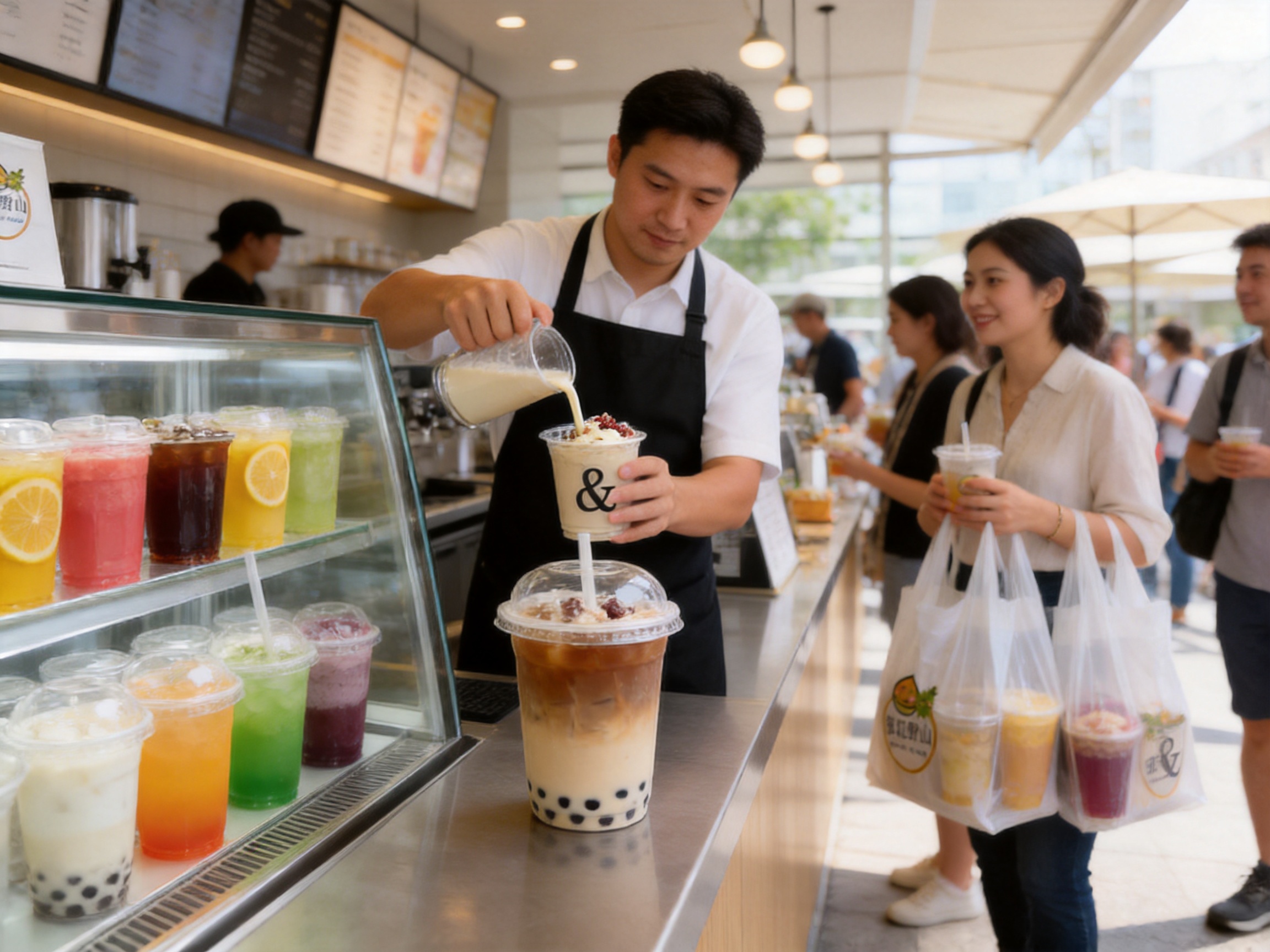
Milk tea and bubble tea require cups that can accommodate ice, tapioca pearls, fruit jelly, popping pearls, cream, and wide straws. Transparent PET allows these ingredients to remain visible, helping the drink look fresh and distinctive. The range of mouth diameters supports different lid styles and straw sizes, while the cup’s toughness helps it handle the weight of ice and toppings.
For takeaway stores, cup appearance and consistency are important parts of the customer experience. A clear cup with a printed logo, color pattern, or customized in-mold label can help a beverage chain maintain brand consistency across multiple locations. Cold-temperature resistance is also useful when drinks are prepared in advance and stored briefly before collection or delivery.
Fruit Tea, Juice, and Smoothies
Fruit-based beverages benefit from transparent packaging because the color and ingredients are central to product appeal. The cup can display citrus slices, berries, herbs, pulp, and layered colors. Its smooth walls help create a clean presentation, and the available larger capacities support generous serving sizes.
Juice bars and smoothie businesses may use refrigerated ingredients and ice during preparation. The cup’s low-temperature performance can help reduce the risk of cold-related cracking during normal service. For smoothies containing thick ingredients, operators should select a suitable mouth size and lid design to ensure a comfortable drinking experience.
Iced Coffee and Cold Brew
Iced coffee, cold brew, frappes, and other chilled coffee products are commonly served in clear disposable cups. PET transparency helps show coffee color, milk layers, whipped cream, caramel, chocolate, and decorative toppings. The cup can be paired with flat, domed, or specialty lids depending on the beverage design.
For coffee chains and independent cafés, the cup is an opportunity to reinforce brand identity. Custom graphics can communicate the brand’s color palette and seasonal campaigns while preserving product visibility. The combination of clear material, stable shape, and customizable surface supports both operational function and marketing value.
Cold Desserts and Ready-to-Eat Foods
In addition to beverages, suitable cup models may be used for chilled desserts, fruit cups, jelly products, yogurt-style foods, and other ready-to-eat items. The wider 117 mm designs may provide a convenient opening for spoon use or products containing larger pieces.
Application testing remains important because different foods have different requirements for acidity, fat content, storage duration, sealing, and temperature. Buyers should conduct trials using their actual recipe and supply-chain conditions before commercial launch.
Catering, Events, and Promotional Campaigns
Disposable PET cups are convenient for festivals, conferences, sporting events, outdoor markets, company functions, and promotional activities. Their light weight simplifies transport and distribution, while transparent walls make beverages easy to identify. Custom printing or labeling can turn a standard serving cup into a practical event marketing item.
The manufacturer’s customization capability is useful for short-term campaigns as well as long-running brand programs. Customers can discuss colors, patterns, logos, artwork, and in-mold labeling requirements according to order volume and production feasibility.
Customization for Brand Differentiation
Competition in the beverage market is not limited to taste and price. Packaging influences first impressions, recognition, perceived quality, and customer loyalty. A standardized blank cup may be functional, but a customized cup can help a brand look more professional and memorable.
Yuqian Packaging Technology provides customization options that may include color selection, printed patterns, logo presentation, and in-mold labeling. The best method depends on the design complexity, order quantity, desired durability, color requirements, budget, and production schedule.
Color and Visual Identity
Custom colors can align the cup with a company’s existing brand system. Consistent use of signature colors helps customers recognize a beverage at a distance. Seasonal color changes can also support limited-time products, holiday promotions, sports events, or regional campaigns.
Before mass production, buyers should approve color samples under suitable lighting conditions. Transparent PET can affect how a printed or molded color is perceived, especially when the cup contains a dark, bright, cloudy, or layered beverage. Sample testing helps avoid differences between digital artwork and the final physical product.
Patterns, Logos, and Promotional Graphics
Patterns can create visual interest across the entire cup, while logos and concise messages can focus attention on the brand. Promotional graphics may include new-product announcements, loyalty messages, event information, sustainability statements, or social media prompts.
Artwork should be prepared according to the manufacturer’s technical requirements. Important factors include printable area, minimum line width, color separation, text size, barcode clarity, and the position of the design relative to the cup seam, rim, and bottom. Early technical review can reduce revisions and improve production efficiency.
In-Mold Labeling
In-mold labeling integrates a pre-printed label into the forming process so that the decoration becomes closely associated with the cup structure. It can provide a high-quality appearance and a consistent finish across large production runs. This approach is useful for brands seeking detailed graphics or a distinctive surface treatment.
In-mold labeling requires careful coordination of artwork, label material, mold design, registration, and production conditions. Customers should provide final artwork early enough for engineering review, sampling, and approval. The manufacturer can advise whether in-mold labeling is appropriate for a specific cup shape and order quantity.
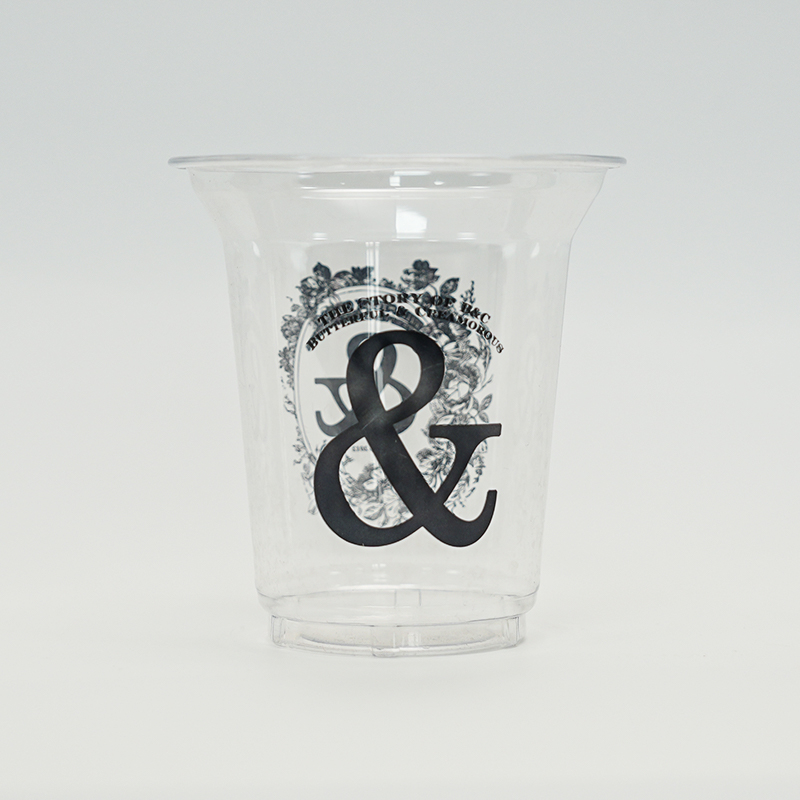
Low-Temperature Resistant PET plastic cup
Advanced Manufacturing Capabilities
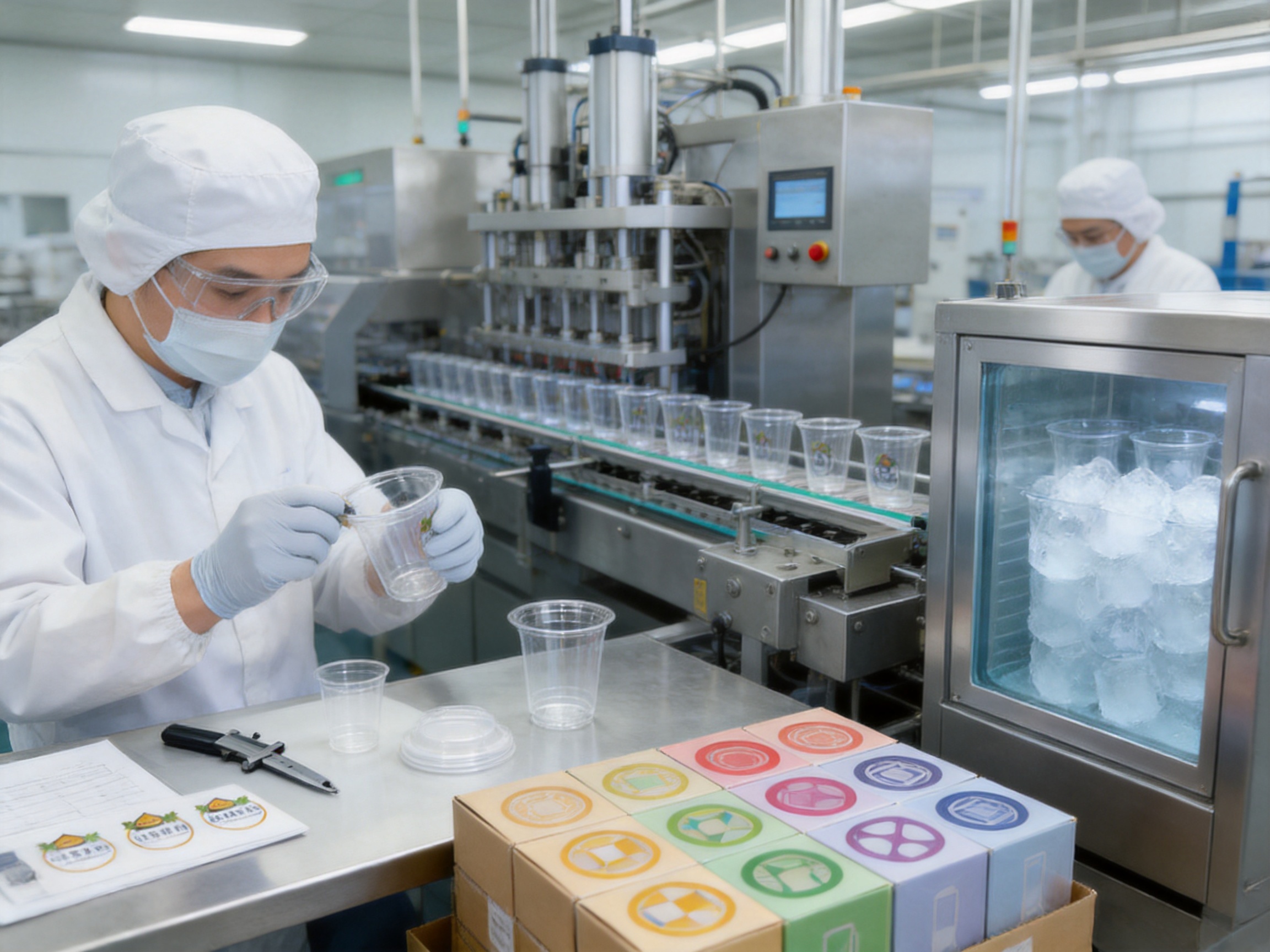
Product performance depends on the entire manufacturing process, not only on the selected resin. Consistent PET cups require controlled raw-material handling, accurate heating, stable forming, precise molds, clean production areas, and systematic inspection. Yuqian Packaging Technology operates as a research, development, production, and sales enterprise focused on food packaging materials and products.
The company was established in 2010 and is located in Taizhou City, Jiangsu Province. Its plant area is stated as approximately 30,000 square meters. This industrial foundation supports coordinated production planning, equipment management, technical development, quality control, warehousing, and dispatch. The company also established a Shanghai branch in January 2019 to improve service quality and expand business channels.
Material Preparation and Process Control
Material preparation is the first step in producing consistent packaging. PET resin must be handled in a way that supports stable processing and suitable appearance. Moisture control is particularly important because excessive moisture can affect processing behavior and finished-product quality. A disciplined material-management system helps maintain consistency between production batches.
For low-temperature resistant cups, the material formulation and processing window require additional attention. The resin, additives, temperature profile, cooling conditions, and forming parameters work together to influence toughness, clarity, wall distribution, and dimensional stability. Production technicians must balance these factors rather than optimizing only one property.
Precision Tooling and Mold Design
Mold design determines much of the cup’s final geometry. Rim roundness, side-wall shape, bottom diameter, stacking profile, and surface details all depend on accurate tooling. A properly designed mold supports uniform forming and helps the cup meet the specified mouth diameter, height, and base dimensions.
Tooling precision is particularly important for lid compatibility. Even a small variation in the rim can affect sealing, snap fit, or transportation performance. The manufacturer’s ability to manage multiple cup diameters and model configurations demonstrates the importance of coordinated mold and production engineering.
Controlled Forming and Shape Stability
During production, PET material is heated and formed into the required cup geometry. Heating must be distributed evenly so that the material stretches consistently. If one region becomes too thin or another becomes excessively thick, the cup may show uneven strength, poor appearance, or inconsistent stacking.
Cooling and demolding also influence shape stability. The cup must be cooled sufficiently to retain its dimensions without creating unnecessary internal stress. Controlled forming conditions support the product’s ability to maintain its shape during later exposure to cold temperatures and routine handling.
Automated and Organized Production
Large-volume packaging orders require more than machine capacity. They require production scheduling, material planning, mold coordination, inspection routines, packaging standards, and delivery management. An organized production system helps reduce avoidable variation and supports dependable lead-time planning.
Yuqian Packaging Technology states that it has strong production capacity for mass production and customization. This is valuable for beverage chains, wholesalers, importers, and food-service distributors that need repeated deliveries or large quantities within a defined launch schedule. Customers should provide forecast volumes and required delivery dates as early as possible so that capacity can be planned appropriately.
Quality Management and Certification Strengths
Quality assurance is essential for food packaging because defects can affect safety, appearance, filling efficiency, and customer satisfaction. The company reports compliance with several recognized quality, safety, and management credentials.
The QS national industrial product production license reflects participation in a regulated industrial production framework. ISO 9001 certification indicates the use of a quality management system based on documented processes, responsibilities, monitoring, corrective action, and continual improvement. BRC certification is associated with food-safety and product-quality requirements relevant to manufacturers serving food-related supply chains.
The company also identifies German DIN safety certification and EU RoHS+ testing among its qualifications and testing achievements. These credentials can be useful for customers with specific market-entry, procurement, or internal compliance requirements. Certification details may differ by product, facility, and validity period, so buyers should request current documents that correspond to the intended cup model and destination market.
A strong quality system should cover incoming material inspection, production parameter control, appearance checks, dimensional verification, weight control, packaging inspection, and traceability. Typical cup inspections may include mouth diameter, height, bottom diameter, wall appearance, rim integrity, transparency, contamination control, and resistance to ordinary handling. For customized products, artwork registration and color consistency should also be reviewed.
Advantages Compared with Ordinary Disposable Cups
Ordinary disposable cups may compete primarily on low purchase price, but the lowest initial unit cost does not always produce the lowest overall packaging cost. Cracking, leakage, poor lid fit, inconsistent appearance, customer complaints, and rejected deliveries can create hidden expenses.
The low-temperature resistant PET cup offers a more application-focused value proposition. Its cold-performance range helps address a common weakness of standard cups. Its transparency improves beverage presentation. Its toughness supports handling. Its multiple specifications simplify product matching. Its customization options support brand building. Its recyclable PET material aligns with resource-efficiency objectives. These features can provide value beyond the basic function of holding a beverage.
Compared with cups made from less transparent materials, PET gives the customer a clearer view of the product. Compared with very thin or brittle plastic cups, the selected material and controlled construction can provide better confidence during handling. Compared with suppliers offering only one or two standard sizes, the broad range of mouth diameters and volumes gives buyers more freedom in developing a complete packaging system.
Compared with suppliers that rely only on trading or outsourced manufacturing, a manufacturer with its own production and technical capabilities can provide closer coordination between design, sampling, production, inspection, and delivery. This can simplify communication when a buyer needs a special color, pattern, label, capacity, or dimensional adjustment.
Operational Benefits for Buyers
Lower Risk During Refrigerated Distribution
When cups are transported or stored at low temperatures, packaging reliability becomes part of logistics performance. A cup that remains tough and stable is less vulnerable to damage from handling and stacking. This can help protect filled products and reduce the frequency of packaging-related incidents.
Better Shelf and Display Presentation
Transparent, uniform cups create a cleaner appearance in refrigerated cases and takeaway counters. Consistent dimensions make cups easier to stack and organize. A clear view of the beverage can also improve product recognition and support premium presentation.
Flexible Inventory Planning
Multiple models allow businesses to use different cup sizes for different menu categories while maintaining a common PET packaging concept. A retailer may choose smaller models for fruit tea, medium models for milk tea, and larger models for smoothies or sharing beverages. The ability to coordinate several specifications with one manufacturing partner may simplify procurement.
Efficient Large-Order Supply
For a growing beverage brand, packaging demand can increase quickly. A supplier capable of mass production and customization can support new store openings, regional promotions, and recurring distribution. Clear communication about order quantity, model selection, artwork, packaging configuration, and delivery schedule is essential for reliable execution.
How to Select the Correct Cup Model
Buyers should begin by identifying the exact beverage or food application. Consider whether the product is still, carbonated, thick, pulpy, layered, hot, cold, or frozen. The product described here is primarily suited to cold and moderate-temperature applications, with a stated range of -20°C to 55°C. Hot filling, microwave use, oven use, and prolonged exposure to high heat should not be assumed without specific technical confirmation.
Next, determine the required serving volume. A nominal 400 ml cup may not hold 400 ml when ice, foam, toppings, or headspace are included. Beverage operators should conduct a fill-line trial using the actual recipe. The trial should include the selected lid and straw so that the complete package can be evaluated.
Mouth diameter is equally important. The selected diameter must match the lid, sealing equipment, straw, sealing film, and intended drinking method. A wide-mouth cup may be preferred for toppings and large straws, while a narrower opening may be sufficient for standard cold drinks.
Height and bottom diameter affect storage, display, carrier compatibility, and delivery bags. A tall cup may create a strong visual effect but require taller carriers or cartons. A wider base may improve stability while increasing the amount of shelf or transport space required. Buyers should compare the cup with the existing operational system rather than selecting by volume alone.
Finally, evaluate customization and supply requirements. Confirm whether the design will use printing, labels, or in-mold labeling. Establish artwork deadlines, sampling procedures, packaging quantities, quality tolerances, minimum order quantities, and delivery terms before production begins.
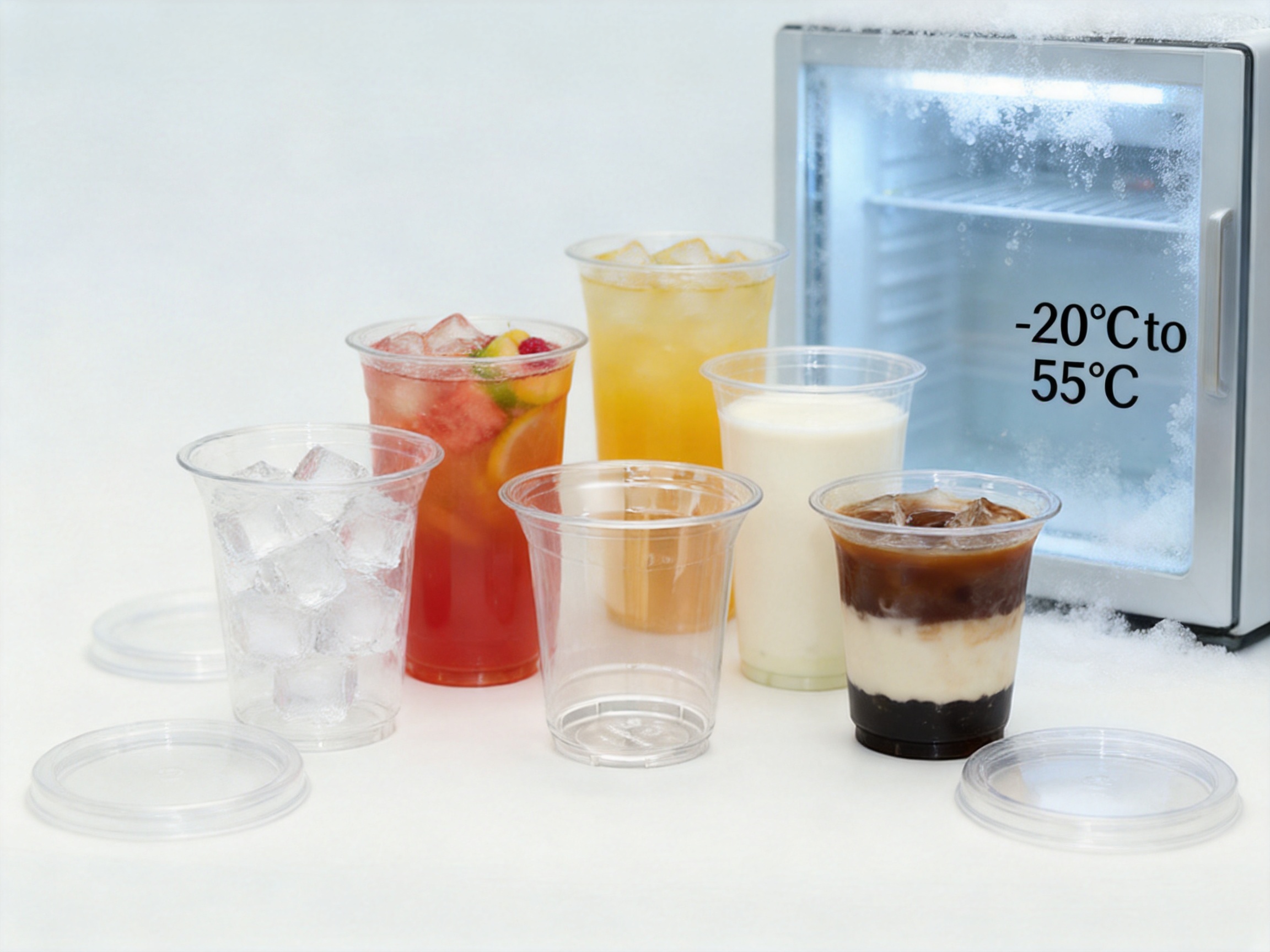
Recommended Testing Before Mass Production
Although the product is designed for dependable cold-temperature performance, every commercial application should be validated with representative testing. A packaging trial should use the actual beverage formula, filling process, lid, straw, storage temperature, transportation method, and handling conditions.
Cold-condition testing can include placing filled cups in a refrigerator or controlled environment at the intended storage temperature. The cups should be inspected for cracking, whitening, deformation, leakage, lid loosening, and changes in appearance. If the product is exposed to freezing conditions, the buyer should confirm whether the beverage itself expands and whether sufficient headspace is provided.
Transportation testing should simulate stacking, vibration, compression, and manual handling. Filled cups may be placed in the intended carton or delivery bag and moved under realistic conditions. This helps identify problems that may not appear during a simple static test.
Lid and seal testing should be carried out with the selected cup model. Check whether the lid fits evenly around the entire rim, whether it remains secure during carrying, and whether the package resists leakage when tilted. For sealed cups, evaluate seal strength, film compatibility, and opening behavior.
Visual testing is also important for customized products. Review color, logo position, pattern alignment, text clarity, barcode readability, transparency, and surface uniformity. A signed sample or approved master sample can provide a reference for later production batches.
Environmental Considerations and Responsible Use
PET is a recyclable plastic material, and the product is described as recyclable. Recycling can conserve resources and reduce the amount of waste sent to disposal when suitable collection and processing systems are available. Businesses can support better outcomes by using clear disposal instructions, separating packaging where practical, and cooperating with local recycling programs.
Environmental performance should be evaluated across the entire product life cycle. Lightweight packaging can reduce material use and transportation weight, while durable packaging can help prevent product loss caused by breakage or leakage. A recyclable material can be valuable when it is collected and processed effectively.
Responsible use also means selecting the correct cup for the application. Avoid using the cup outside its confirmed temperature range or with incompatible chemicals, food products, or equipment. Do not assume that a disposable cup is suitable for repeated washing or reuse. Follow local food-contact, recycling, labeling, and waste-management requirements in the destination market.
Brands can reinforce responsible packaging practices through clear customer communication. Short messages on the cup, sleeve, menu, or delivery packaging can explain disposal expectations without overwhelming the design. When combined with efficient material use and controlled production, recyclable PET can form part of a practical packaging-improvement strategy.
Company Manufacturing and Service Strengths
Yuqian Packaging Technology (Jiangsu) Co., Ltd. was established in 2010 and focuses on new food packaging materials and products. Its activities cover research and development, production, and sales, allowing the company to connect technical development with commercial packaging needs.
The company’s approximately 30,000-square-meter plant area provides a substantial base for manufacturing operations. A larger production site can support dedicated equipment, raw-material storage, production scheduling, quality inspection, finished-product warehousing, and order dispatch. These capabilities are important for customers that require stable supply rather than occasional spot purchasing.
The company’s product portfolio includes plastic cups, plastic cup lids, takeaway bowls, disposable straws, recycle bags, peripheral products, and injection film lining cup and bowl boxes. This broader packaging range may allow customers to coordinate several components of a takeaway or beverage program with one supplier.
Customization is presented as a core service strength. The company can provide various caliber options and discuss customized colors, patterns, and in-mold labeling. This flexibility is valuable for brands that need packaging adapted to their product positioning instead of selecting only from generic stock designs.
Large-volume production is another stated strength. The company aims to meet the needs of high-volume orders while supporting delivery-time requirements. For an international buyer, order planning should include production lead time, sample approval, artwork confirmation, inspection, export documentation, and shipping. Early coordination helps turn manufacturing capacity into a predictable supply program.
The company’s certifications and quality-management experience further support its role as an OEM supplier. Customers can request technical data, current certification documents, material information, product samples, and packaging specifications during the qualification process.
Packaging, Storage, and Handling Recommendations
Finished cups should be packed in clean, dry, and protective cartons or bags that prevent dust, moisture, deformation, and unnecessary compression. Carton design should be matched to the cup shape and stacking profile. Excessive pressure during storage may deform even a well-designed cup, particularly if cartons are stacked beyond their recommended limit.
Store cups in a dry, ventilated environment away from direct sunlight, strong odors, chemicals, and heat sources. Temperature and humidity conditions should be managed according to the manufacturer’s packaging recommendations and the buyer’s local warehouse requirements. The product should remain in its original protective packaging until it is ready for use.
During transportation, avoid throwing cartons, dragging them across rough surfaces, or placing heavy items on top of them. Receiving teams should inspect cartons for crushing, water damage, contamination, or visible deformation. Any unusual condition should be documented promptly and communicated to the supplier with relevant batch and shipping information.
At the point of use, operators should keep cups covered or enclosed until filling. Staff should follow suitable hygiene procedures and avoid touching the inside surface or rim unnecessarily. A clean handling system supports the food-safety benefits of food-grade PET packaging.
Quality Assurance from Inquiry to Delivery
A successful customized packaging project begins with a clear technical brief. The buyer should provide the desired capacity, mouth diameter, height preference, beverage type, temperature conditions, lid requirement, artwork, estimated annual volume, initial order quantity, destination market, and target delivery date.
The manufacturer can then recommend a suitable existing model or evaluate whether a new design is required. Using an existing mold may reduce development time and tooling cost, while a new mold may be justified when a brand requires a distinctive profile or special dimensions.
Samples should be evaluated before mass production. The sample review should cover appearance, dimensions, weight, transparency, rim quality, lid fit, filling performance, stacking, transportation, and cold-temperature behavior. For customized samples, the artwork should be reviewed at actual production scale rather than only on a computer screen.
Before manufacturing begins, both parties should confirm the approved sample, specifications, tolerances, carton details, labeling, inspection requirements, and delivery terms. A documented approval process reduces ambiguity and provides a clear reference for production quality.
During production, quality checks should identify dimensional variation, contamination, scratches, uneven walls, poor forming, rim defects, color variation, and printing or labeling errors. Finished goods should be packed in a way that protects them through internal handling and international transportation.
After delivery, customer feedback can help improve future orders. If a buyer changes the beverage formula, lid, filling line, or storage temperature, a new compatibility test may be appropriate. Packaging performance is most reliable when the cup is evaluated as part of the complete product system.
Q&A: Low-Temperature Resistant PET Plastic Cups
What temperature range is this PET cup designed to handle?
The stated adaptable temperature range is -20°C to 55°C. The product is designed to maintain useful toughness and shape stability within this range. Buyers should validate their exact filling, storage, transport, and usage conditions before commercial production, especially when the product approaches either temperature limit.
Can the cup be used for frozen beverages?
It may be suitable for certain cold or frozen beverage applications, but the complete product system must be tested. Beverage expansion during freezing, headspace, lid security, storage duration, and handling can affect performance. Confirm the intended frozen application with the manufacturer before ordering.
Is the PET material food safe?
The cup is made from food-grade PET and is described as non-toxic and odorless. The manufacturer reports QS, ISO 9001, BRC, DIN, and EU RoHS+ credentials or testing. Buyers should request current documentation relevant to their product and destination market.
Is the cup suitable for hot drinks?
The product is primarily presented as a low-temperature resistant cup for cold and moderate-temperature applications. The stated range reaches 55°C, but this should not be interpreted as approval for hot filling or boiling beverages. Hot-drink compatibility must be confirmed through technical evaluation and application testing.
What capacities are available?
Listed options include approximately 400 ml, 420 ml, 500 ml, 540 ml, 600 ml, 700 ml, and 1,000 ml models. Exact model codes and capacities should be confirmed because the source specification uses abbreviated entries such as 12 oz, 14 oz, 16 oz, 20 oz, and 24 oz.
What mouth diameters are available?
The listed mouth diameters are 90 mm, 93 mm, 98 mm, and 117 mm. The correct choice depends on the matching lid, straw, filling equipment, beverage ingredients, and desired appearance.
Can the cups be customized?
Yes. The manufacturer states that it can customize colors, patterns, and in-mold labeling, subject to design review, minimum order requirements, tooling considerations, and production feasibility. Customers should submit artwork and technical requirements for evaluation.
Can the cup be used with a sealing machine?
Compatibility depends on the cup rim, sealing film, machine type, and sealing parameters. A trial should be completed with the exact cup, film, and equipment before mass production. Do not assume that all cups with the same nominal mouth diameter will perform identically on every machine.
Is PET recyclable?
PET is a recyclable material, and these cups are described as recyclable. Actual recycling depends on local collection infrastructure, sorting practices, contamination levels, and regional regulations. Businesses should follow the waste-management rules applicable in their market.
How can buyers reduce the risk of leakage?
Use the correct matching lid or sealing film, confirm rim dimensions, avoid overfilling, and conduct tilt and transport testing. The beverage’s viscosity, ice content, toppings, and temperature should be included in the trial. Proper storage and handling of empty cups also help maintain rim integrity.
Does the company support large-volume orders?
The company states that it has strong production capacity for mass production and can support large-volume orders while working to ensure delivery schedules. Buyers should provide forecasts and required delivery dates early so production and logistics can be coordinated.
What information should be included in an inquiry?
An inquiry should include the desired capacity, mouth diameter, quantity, beverage application, temperature range, lid type, customization requirements, destination country, preferred packaging method, and requested delivery date. Samples, technical drawings, and current certification documents can then be discussed as needed.
Conclusion
Low-temperature resistant PET plastic cups provide a practical solution for beverage and food-service brands that require more than basic disposable containment. Their ability to maintain toughness and shape stability from -20°C to 55°C helps address the demands of refrigerated storage, chilled distribution, winter handling, and cold beverage service. Food-grade PET offers transparency, light weight, durability, odor control, and recyclability, while the rounded rim and smooth inner wall support comfortable and hygienic use.
The range of capacities and mouth diameters gives buyers flexibility when developing different menu products. Custom colors, patterns, and in-mold labeling help brands create a recognizable packaging identity. At the manufacturing level, Yuqian Packaging Technology (Jiangsu) Co., Ltd. combines product development, production capacity, quality management, certification experience, and OEM customization to serve both standard and specialized packaging programs.
For the best result, buyers should select the cup according to the actual beverage, lid, filling line, temperature, storage, and transportation conditions. A complete sample and application test should be completed before mass production. With proper model selection and controlled manufacturing, this PET cup can support reliable operations, attractive product presentation, and scalable growth across cafés, beverage chains, restaurants, retailers, caterers, and takeaway businesses.
References
1. Product specification and technical information for low-temperature resistant PET plastic cups, provided by the manufacturer.
2. Company information concerning Yuqian Packaging Technology (Jiangsu) Co., Ltd., its production facilities, services, and certification portfolio.
3. General technical principles for polyethylene terephthalate use in food and beverage packaging.
4. Quality management principles associated with ISO 9001-certified manufacturing systems.
5. General food-safety and packaging-control principles associated with BRC certification requirements.
6. General guidance on plastic packaging recyclability, collection, sorting, and responsible disposal.
7. Application-testing principles for disposable beverage cups, lids, sealing systems, refrigerated storage, and transportation handling.
For product inquiries, customization discussions, samples, and current technical documentation, contact Yuqian Packaging Technology (Jiangsu) Co., Ltd., No. 8 Tongyang Road, Suchen Town, Taizhou City, Jiangsu Province, China. Telephone: 0086 15252423007. Fax: +0523 8608 3698. Email: [email protected].