English
 Español
 عربى
عربىContent
- 1 Product Overview: A Cold-Condition PET Cup Built for Stability
- 2 Key Specifications and Size Options
- 3 Why Low-Temperature Resistance Matters
- 4 Advantages Over Ordinary Disposable Cups
- 5 Material Safety and Food Contact Confidence
- 6 Design Features That Improve User Experience
- 7 Applications in Beverage and Foodservice Markets
- 8 Customization and Brand Differentiation
- 9 Advanced Manufacturing Processes Behind Reliable PET Cups
- 10 Company Manufacturing Strengths and Production Capacity
- 11 Quality Control as a Competitive Advantage
- 12 Sustainability and Recyclability Considerations
- 13 Comparison With Alternative Packaging Materials
- 14 Operational Benefits for Beverage Chains and Distributors
- 15 OEM Service and Project Development
- 16 How the Cup Supports Brand Value
- 17 Purchasing Considerations for Professional Buyers
- 18 Q&A: Common Questions About Low-Temperature Resistant PET Plastic Cups
- 18.1 Q1: What makes this PET cup different from ordinary plastic cups?
- 18.2 Q2: Can the cup be used for hot drinks?
- 18.3 Q3: Is the cup safe for direct food and beverage contact?
- 18.4 Q4: What products are best suited for this cup?
- 18.5 Q5: Can the cup be customized with a logo or special design?
- 18.6 Q6: Why is transparency important for cold beverage packaging?
- 18.7 Q7: Is PET recyclable?
- 18.8 Q8: How should buyers choose the correct cup size?
- 18.9 Q9: What quality issues should buyers check before placing a large order?
- 18.10 Q10: Why choose a manufacturer with advanced production capacity?
- 19 Conclusion: A Practical and Premium Solution for Cold Packaging
- 20 References
- 21 Product: Low-Temperature Resistant PET plastic cup
In the modern beverage and foodservice market, packaging is no longer a simple container. It is a functional product that must protect the beverage, present the brand, support efficient operations, meet food safety expectations, and respond to growing environmental concerns. Among disposable cold drink packaging options, low-temperature resistant PET plastic cups have become an important solution for cafés, tea shops, juice bars, dessert stores, supermarkets, convenience stores, catering chains, event suppliers, and food packaging distributors. Designed for reliable performance in cold and refrigerated conditions, these cups combine clarity, toughness, safety, and customization flexibility.
The low-temperature resistant PET plastic cup discussed in this article is engineered for use within a temperature range of approximately -20°C to 55°C. This makes it suitable for chilled beverages, iced coffee, smoothies, fruit tea, milk tea, yogurt drinks, cold desserts, refrigerated food displays, and many other applications where ordinary cups may become brittle, cloudy, deformed, or difficult to handle. Its food-grade PET material offers high transparency, a smooth surface, good impact resistance, and stable shape retention. For beverage sellers and packaging buyers, these qualities directly affect customer experience, brand image, product safety, and operational efficiency.
Compared with many conventional disposable plastic cups, this PET cup is designed with a stronger balance of visual appeal and practical durability. It has a round cup mouth, smooth inner wall, multiple caliber options, rich style choices, and a lightweight but tough body structure. The cup is non-toxic, odorless, recyclable, and suitable for mass production as well as customized brand projects. For businesses that require consistent supply, attractive presentation, and dependable cold-chain performance, this product provides a highly competitive packaging option.
Low-Temperature Resistant PET plastic cup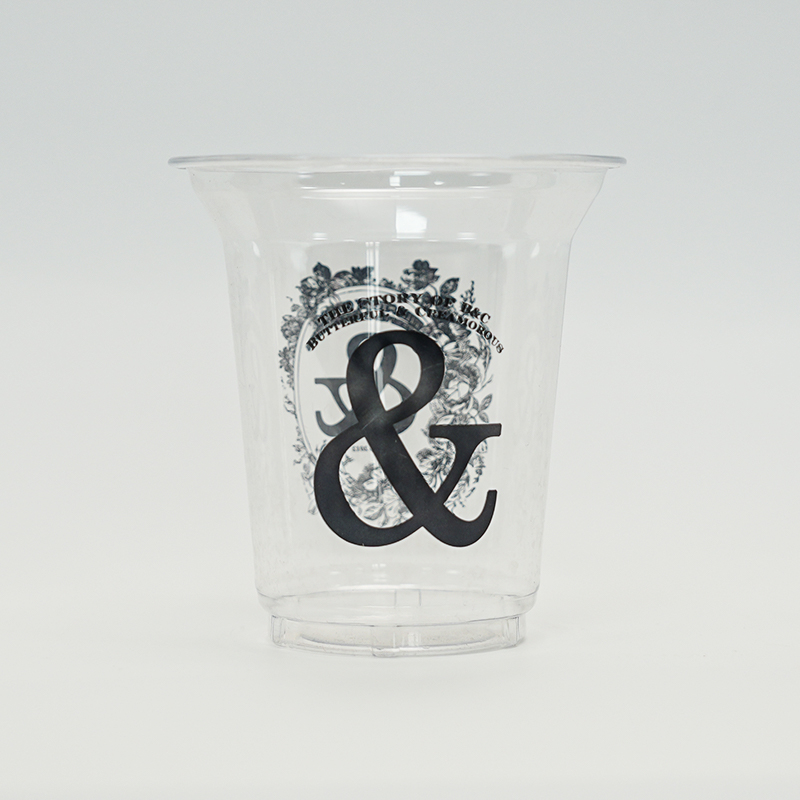
Product Overview: A Cold-Condition PET Cup Built for Stability
The core value of a low-temperature resistant PET plastic cup lies in its ability to maintain shape stability and toughness under cold conditions. Many beverage packaging scenarios involve ice, refrigeration, transportation in chilled environments, or temporary exposure to low outdoor temperatures. A cup that becomes brittle or cracks can cause leakage, product loss, customer complaints, and damage to a brand’s professional image. This cup is formulated to reduce these risks by maintaining dependable physical performance from approximately -20°C to 55°C.
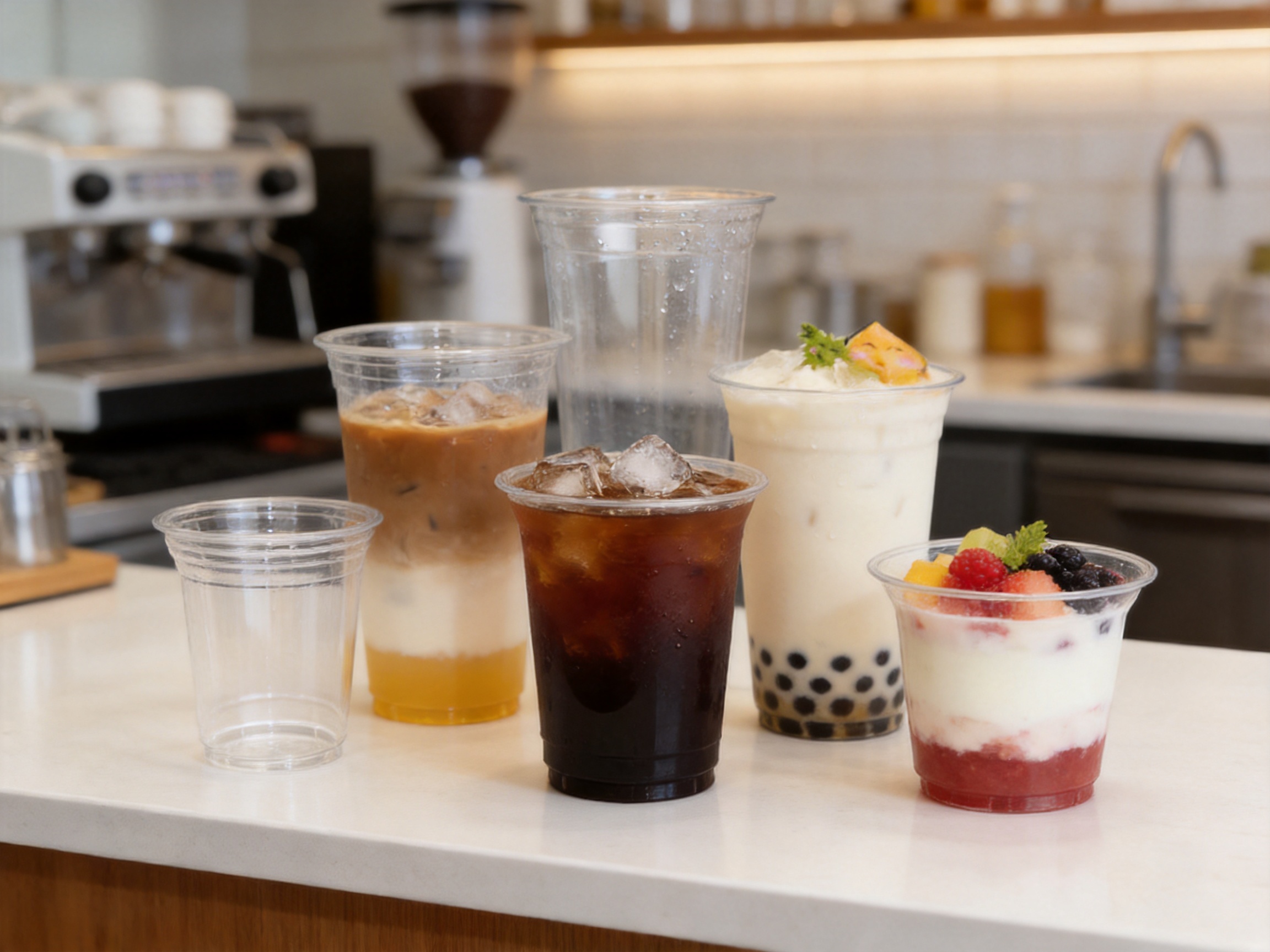
PET, or polyethylene terephthalate, is widely used in food packaging because it offers an excellent combination of transparency, strength, lightweight handling, and recyclability. In cold beverage packaging, these advantages are especially valuable. A transparent cup allows customers to clearly see beverage color, texture, layers, fruit pieces, cream toppings, bubbles, or ice. For visually driven beverage categories such as fruit tea, milk tea, cold brew coffee, sparkling drinks, and smoothies, transparency is part of the product experience. The cup becomes a display window that helps the beverage sell itself.
The cup mouth is round and smooth, supporting comfortable drinking, secure lid matching, and easier filling during beverage preparation. The smooth inner wall also reduces residue attachment and supports a clean appearance. While disposable cups are usually not cleaned for reuse in commercial service, a smooth inner surface is still important because it prevents ingredients from clinging excessively to the wall, maintains visual neatness, and helps beverages slide or pour smoothly. For drinks with pulp, pearls, jelly, cream, or crushed ice, inner-wall smoothness supports a better presentation.
The product range includes different capacities, mouth diameters, heights, bottom diameters, and grammage options. This allows brands to choose cups based on menu structure, portion size, lid compatibility, stacking requirements, cost planning, and customer preference. From compact 400 ml cups to larger 1000 ml options, the range supports single-serving beverages, premium large drinks, dessert cups, and foodservice applications. Multiple mouth sizes, including 90 mm, 93 mm, 98 mm, and 117 mm, give buyers greater flexibility when pairing cups with lids or designing product lines.
Key Specifications and Size Options
The following table summarizes representative specifications available for low-temperature resistant PET plastic cups. These size options help beverage brands and distributors match packaging to different menu categories, serving volumes, lid systems, and market expectations.
| Specification | Volume | Mouth Diameter | Height | Bottom Diameter | Grammage |
| 12 oz | 400 ml | 90 mm | 108 mm | 56 mm | 11 g |
| 16 oz | 500 ml | 90 mm | 135 mm | 56 mm | 13.5 g |
| 20 oz | 600 ml | 90 mm | 158 mm | 54 mm | 14.3 g |
| 12 oz | 400 ml | 93 mm | 106 mm | 57 mm | 12 g |
| 12 oz | 400 ml | 98 mm | 109 mm | 55 mm | 11.6 g |
| 14 oz-A | 420 ml | 98 mm | 105 mm | 56 mm | 11 g |
| 14 oz-B | 420 ml | 98 mm | 106 mm | 62 mm | 14 g |
| 16 oz-Y | 500 ml | 98 mm | 120 mm | 62 mm | 14.3 g |
| 16 oz-B | 540 ml | 98 mm | 120 mm | 65 mm | 13.5 g |
| 20 oz | 600 ml | 98 mm | 143 mm | 62 mm | 15.5 g |
| 24 oz | 700 ml | 98 mm | 155 mm | 60 mm | 16.5 g |
| 16 oz | 600 ml | 117 mm | 82 mm | 90 mm | 16 g |
| 24 oz | 1000 ml | 117 mm | 107 mm | 90 mm | 21 g |
These specifications show that the product line is not limited to one standard cup design. Instead, it supports different packaging strategies. A 90 mm cup may be suitable for standard beverage programs with matching flat or dome lids. A 98 mm mouth diameter can accommodate larger toppings and create a more generous opening for premium drinks. A 117 mm wide-mouth cup is especially useful for desserts, yogurt bowls, fruit cups, parfaits, salads, and other foodservice products where spoon access, visual display, and topping volume are important.
Grammage is also a meaningful detail. A carefully designed cup must use enough material to deliver reliable strength without unnecessary weight. Excessive weight increases material consumption and transportation cost, while insufficient weight can cause deformation, instability, and poor customer experience. The listed grammage options demonstrate an effort to balance strength, economy, and usability. This balance is one reason the cups are attractive for both large-volume chain operations and customized brand packaging projects.
Why Low-Temperature Resistance Matters
Cold beverage packaging faces unique mechanical and environmental challenges. When a cup is filled with iced drinks, its wall is exposed to rapid temperature changes, condensation, handling pressure, and sometimes transportation vibration. In refrigerated storage, packaging may remain cold for long periods before being removed to warmer service environments. If the material is not properly selected or formed, it can become brittle, lose elasticity, deform under stacking pressure, or crack near the rim and bottom.
Low-temperature resistant PET material helps prevent these problems. Its toughness allows the cup body to absorb normal pressure during filling, sealing, capping, stacking, and hand carrying. Shape stability helps the cup maintain its intended form, which is important for lid fit and leak prevention. A stable rim is especially critical because lids rely on consistent cup geometry. If the mouth becomes distorted, even a high-quality lid may not seal correctly. Therefore, the cup’s low-temperature performance is directly connected to beverage safety and service reliability.
This feature also supports broader seasonal use. In winter markets, outdoor beverage delivery, refrigerated logistics, and cold storage can expose cups to low temperatures before consumption. A cup that performs only at room temperature may be acceptable in limited conditions, but it may become unreliable in real commercial environments. A temperature range of -20°C to 55°C gives distributors and beverage operators confidence that the packaging can handle common cold beverage scenarios without compromising integrity.
For products such as smoothies, frozen fruit drinks, iced coffee, cold milk tea, layered yogurt beverages, and chilled desserts, the cup must perform while also maintaining high transparency. Some materials become cloudy or visually dull in cold conditions. The clarity of PET helps preserve premium presentation. Customers can see the freshness of ingredients, the color gradient of drinks, and the abundance of toppings. This visual impact is particularly important for social media-driven beverage brands, where packaging appearance can influence sharing, recommendations, and repeat purchases.
Advantages Over Ordinary Disposable Cups
The low-temperature resistant PET cup offers several competitive advantages compared with ordinary disposable cups made from lower-grade plastic or less suitable materials. First, it provides superior transparency. In beverage retail, presentation strongly affects perceived value. A clear PET cup can make a drink look fresher, cleaner, and more attractive. When compared with opaque or semi-transparent packaging, PET offers a stronger display effect and can support premium pricing strategies.
Second, the cup has better toughness and deformation resistance. Some lightweight cups may collapse when squeezed, especially after being filled with ice or heavy beverages. A cup that feels weak in the hand can reduce consumer confidence. By contrast, a well-formed PET cup gives users a stable grip and reduces the chance of accidental spills. This is important in takeaway scenarios, where consumers may carry drinks while walking, driving, or using public transportation.
Third, the low-temperature capability gives the product a functional advantage. Ordinary plastic cups may perform adequately at room temperature but become unreliable in refrigeration or freezing-adjacent environments. The ability to maintain shape and toughness at approximately -20°C supports more demanding cold applications. This makes the product particularly suitable for brands that sell iced beverages year-round or operate in regions with seasonal low temperatures.
Fourth, the product is food-grade, non-toxic, and odorless. Odor control is often underestimated in packaging selection. Cups with undesirable material smell can interfere with beverage aroma, especially for coffee, tea, dairy drinks, and fruit beverages. Food-grade PET helps protect the intended sensory experience. Consumers expect the drink to taste and smell like the ingredients, not the packaging.
Fifth, PET is recyclable. While all packaging choices involve environmental responsibility, recyclable PET supports material recovery systems and can reduce environmental burden when properly collected and processed. For brands seeking to communicate a more responsible packaging image, PET’s recyclability is an important advantage. It also aligns with growing market demand for packaging that balances performance, safety, and environmental consideration.
Sixth, the cup supports customization. Competing generic cups may only provide standard shapes and no brand identity. In contrast, customized colors, patterns, and in-mold labeling options can turn the cup into a brand communication tool. For chain beverage stores, event campaigns, co-branded promotions, and seasonal product launches, customized packaging creates a stronger connection with customers.
Material Safety and Food Contact Confidence
Food packaging must be safe before it is attractive. The use of food-grade PET is central to the cup’s value. PET is widely accepted in the food and beverage packaging industry because it has strong barrier properties, good clarity, relatively low weight, and reliable processing behavior. When produced under controlled conditions, food-grade PET packaging can safely contact beverages and ready-to-eat food products without releasing objectionable odors or harmful contaminants under intended use conditions.
The cup is described as non-toxic and odorless, which is essential for cold drinks and desserts. Many cold beverages have delicate flavors. Green tea, fruit tea, coffee, yogurt, milk foam, and herbal drinks can easily be affected by packaging odor. A neutral cup helps preserve the original aroma and taste. This supports customer satisfaction and reduces quality complaints related to packaging smell.
Safety is not only a matter of raw material. It also depends on manufacturing control, hygiene management, and quality inspection. Yuqian Packaging Technology (Jiangsu) Co., Ltd. has obtained multiple certifications and qualifications, including QS national industrial product production license, ISO9001 Quality Management System certification, BRC certification, German authoritative safety DIN certification, and EU ROHS+ testing. These certifications reflect a systematic approach to quality, safety, and process management. For international buyers and foodservice brands, such credentials help reduce supplier risk and support procurement confidence.
The combination of certified production systems and food-grade material is especially valuable for large-volume customers. When a beverage chain uses millions of cups each year, even small quality inconsistencies can cause major operational problems. Consistent material sourcing, production control, and inspection procedures help ensure that every batch meets expectations. This is one reason advanced manufacturing capability matters as much as product design.
Design Features That Improve User Experience
A disposable cup may appear simple, but every part of its geometry affects performance. The round cup mouth improves drinking comfort and lid compatibility. A smooth rim reduces unpleasant contact when consumers drink directly from the cup. When used with lids, a consistent rim helps create a tight fit, reducing the chance of leakage during takeaway delivery.
The smooth inner wall improves the appearance of layered or ingredient-rich drinks. In premium beverage retail, customers often judge product quality visually before tasting. If cream, fruit pulp, syrup, or powder residue clings unevenly to the cup wall, the drink may appear messy. A smooth inner wall helps maintain a clean presentation. It can also make the cup more suitable for dessert and snack items where visibility matters.
The clear body enhances product display. Bright fruit colors, coffee layers, milk foam, pearls, jelly, ice cubes, and toppings are all visible through PET. This can increase impulse purchase behavior in refrigerated display cases and counter service areas. A visually appealing cup can also encourage customers to photograph and share the drink, indirectly supporting brand promotion.
The cup’s lightweight structure improves convenience. Foodservice operations handle large numbers of cups every day, so stackability, easy separation, and comfortable handling are important. A well-designed PET cup can be stacked efficiently to save storage space, distributed quickly during busy hours, and used with automated or semi-automated filling processes. For high-volume beverage stores, small improvements in handling speed can accumulate into meaningful labor savings.
Shape stability also contributes to the customer experience. A cup that retains its form after filling and carrying feels more premium. It sits more securely in cup holders, delivery trays, and takeaway bags. It also reduces the likelihood of lid popping or beverage spilling due to wall deformation. These practical details help protect both the drink and the brand reputation.
Applications in Beverage and Foodservice Markets
The low-temperature resistant PET plastic cup is suitable for a wide range of cold beverage applications. In coffee shops, it can be used for iced Americano, cold brew, iced latte, flavored coffee, milk-based beverages, and coffee desserts. The clear cup helps display milk separation, foam, syrup layers, and ice clarity, enhancing the premium feel of the beverage.
In tea beverage stores, the cup is suitable for fruit tea, milk tea, cheese tea, bubble tea, sparkling tea, and seasonal drinks. Toppings such as pearls, coconut jelly, fruit cubes, pudding, and popping boba require packaging with good strength and visual clarity. A strong PET cup supports these heavier beverage combinations while letting customers see the richness of ingredients.
In juice bars and smoothie shops, low-temperature resistance is highly relevant. Smoothies and blended ice drinks are often served at very low temperatures and may contain crushed ice or frozen fruit. The cup must resist brittleness and deformation. PET clarity also highlights the natural color of juices, smoothies, and fruit blends, helping communicate freshness.
In dessert shops, wide-mouth PET cups can be used for parfaits, yogurt cups, pudding, fruit cups, mousse, tiramisu portions, jelly desserts, and chilled snacks. The 117 mm mouth diameter options provide convenient spoon access and excellent top display space. This makes them suitable for refrigerated display cabinets where customers select products visually.
In supermarkets and convenience stores, these cups can serve pre-packed cold beverages, fruit salads, ready-to-eat desserts, and chilled meal components. Stability during refrigeration and transportation is important in retail supply chains. A cup that retains shape and appearance supports shelf appeal and reduces product loss.
In events, catering, and outdoor service, low-temperature resistant PET cups can be used for cold drinks distributed in large quantities. Their lightweight nature makes them easy to transport and store, while customization can support event branding, sponsorship logos, festival themes, or promotional campaigns.
Customization and Brand Differentiation
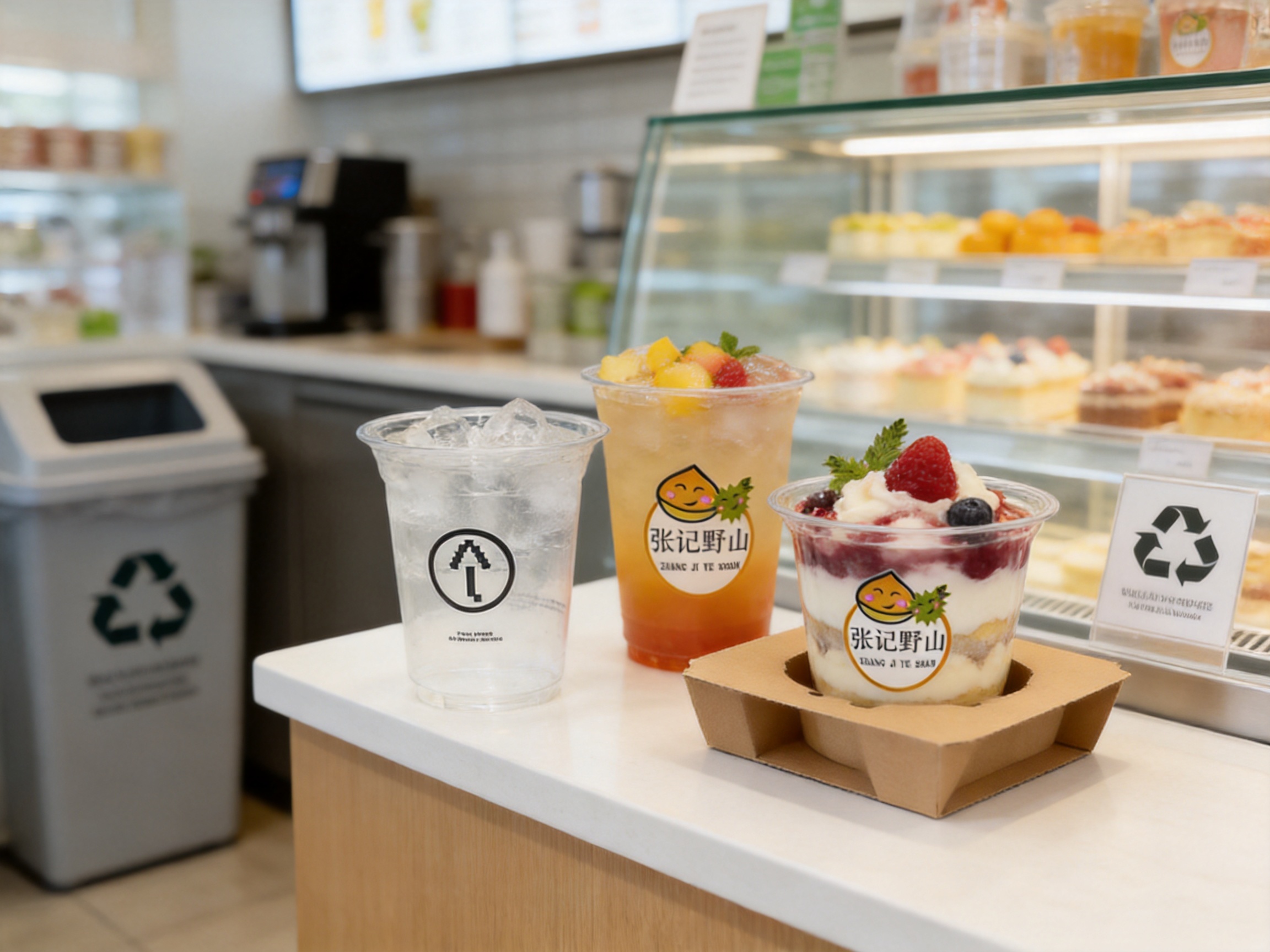
Packaging is one of the most visible parts of a beverage brand. A consumer may hold the cup for twenty minutes, carry it through public spaces, place it on a desk, and photograph it for social media. This makes the cup a mobile advertising surface. Customization options such as colors, patterns, logos, and in-mold labeling help transform disposable packaging into a brand asset.
Yuqian Packaging Technology (Jiangsu) Co., Ltd. provides OEM production and customization support for low-temperature resistant PET plastic cups. Customers can select from different calibers and styles, then adjust visual elements according to brand needs. A café chain may prefer minimalist transparent cups with a clean logo. A fruit tea brand may choose colorful graphics that emphasize freshness and energy. A dessert brand may use elegant patterns to create a premium impression. A seasonal campaign may require limited-edition designs for holidays, festivals, or product launches.
Customization also supports operational clarity. Different cup sizes can use different print designs or markings, helping staff identify portions quickly. Printed measurement marks can support consistent beverage preparation. Special patterns can distinguish dine-in, takeaway, promotional, or subscription products. These details can improve workflow and reduce service errors.
In-mold labeling offers a particularly durable and integrated decoration method. Instead of applying a label after production, the label is incorporated during molding, creating a smooth and unified appearance. This can improve visual quality and reduce the risk of peeling or misalignment. For brands seeking premium presentation, in-mold labeling can provide a strong competitive advantage.
OEM capability is especially important for distributors and private-label packaging companies. They may need stable supply, flexible specifications, and customized packaging for multiple customers. A manufacturer with strong production capacity can support different order volumes, product variations, and delivery schedules. This makes the cup not only a product but also a scalable packaging platform.
Advanced Manufacturing Processes Behind Reliable PET Cups
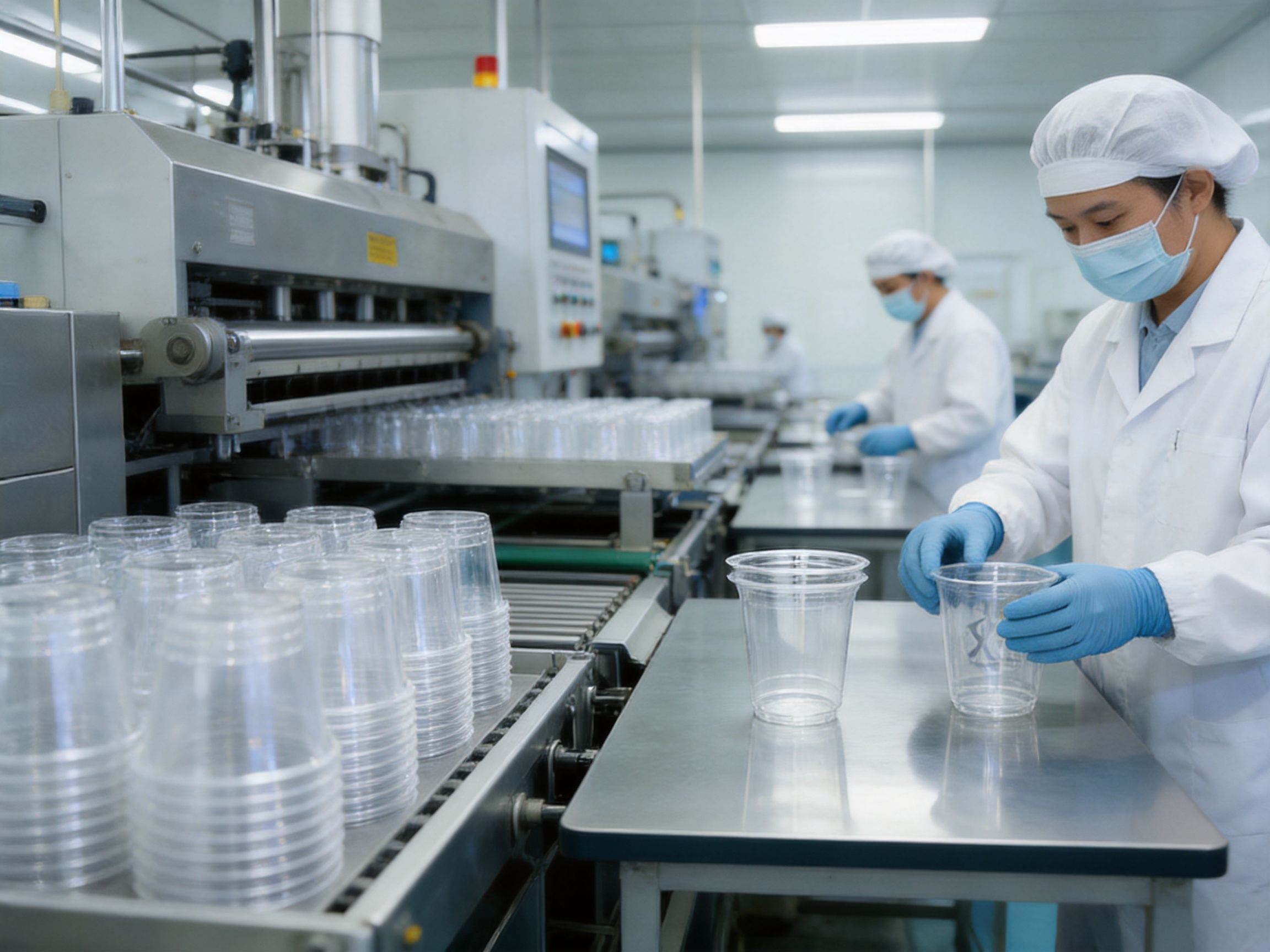
High-quality PET cup manufacturing requires careful control from raw material selection to finished product inspection. The process begins with food-grade PET material selection. Raw material quality affects transparency, toughness, odor, processing stability, and final cup strength. Reliable suppliers and incoming material inspection help ensure consistency before production begins.
The next important stage is sheet production or material preparation. PET material must be processed into a consistent sheet with controlled thickness and clarity. Thickness variation can lead to weak spots, inconsistent cup weight, poor forming behavior, and uneven appearance. Advanced extrusion and temperature control help create stable PET sheets suitable for thermoforming.
Thermoforming is a key process for producing PET cups. In this process, the PET sheet is heated to an appropriate forming temperature, then shaped by molds into cup forms. The heating must be carefully controlled. If the sheet is underheated, forming may be incomplete and stress may remain in the cup. If overheated, clarity and strength may be affected. Precision temperature management helps produce cups with smooth walls, stable rims, and consistent dimensions.
Mold design is another critical factor. A well-designed mold determines the cup’s geometry, wall distribution, rim quality, bottom stability, and stacking behavior. Multiple caliber options and styles require accurate tooling. For large-volume production, mold precision directly affects product consistency. Advanced mold maintenance and inspection also help extend mold life and prevent defects.
After forming, cups must be trimmed accurately. A clean rim is essential for both drinking comfort and lid sealing. Poor trimming can create rough edges, inconsistent mouth diameter, or small burrs that affect user experience. Precision trimming equipment helps ensure that each cup has a smooth, round mouth and reliable lid compatibility.
Stacking and collection systems must also be controlled. If cups are stacked too tightly, they may be difficult for staff to separate during service. If stacked too loosely, they may occupy too much space or become unstable in packaging. Proper stack design and equipment settings contribute to efficient downstream handling.
Quality inspection occurs throughout production. Dimensional checks confirm mouth diameter, height, bottom diameter, weight, and wall consistency. Visual inspection identifies bubbles, black spots, scratches, cloudiness, deformation, or trimming defects. Functional testing may include compression resistance, low-temperature performance, lid-fit checks, and leakage-related evaluation. These inspection steps help ensure that the finished cup performs reliably in real foodservice environments.
Packaging of finished cups is also important. Cups must be protected from dust, deformation, and contamination during storage and transportation. Hygienic packaging practices help preserve food-contact cleanliness. Efficient carton design supports logistics, warehouse stacking, and customer inventory management. For export and large-volume orders, packaging strength and clear labeling are important for smooth delivery.
Company Manufacturing Strengths and Production Capacity
Yuqian Packaging Technology (Jiangsu) Co., Ltd. was established in 2010 and is located in Taizhou City, Jiangsu Province, China. With a plant area of approximately 30,000 square meters, the company integrates research and development, production, and sales of new food packaging materials and products. This integrated model allows the company to respond to market needs, develop customized solutions, control production quality, and support large-scale order fulfillment.
The company’s production strength is reflected in its ability to handle mass production and customization simultaneously. Many packaging buyers face a trade-off: standard suppliers may offer low cost but limited flexibility, while small custom suppliers may offer design support but lack stable large-volume output. A manufacturer with advanced equipment, production lines, and quality systems can bridge this gap by providing customized products at industrial scale.
Strong production capacity is especially valuable for chain beverage brands and large distributors. These customers require stable delivery schedules, consistent quality, and rapid response to demand fluctuations. Seasonal product launches, promotional campaigns, and sudden increases in order volume can place pressure on packaging supply. A capable manufacturer can coordinate production planning, material preparation, and shipment schedules to reduce supply risk.
The company’s certifications also demonstrate a commitment to standardized management. ISO9001 supports quality management consistency. BRC certification is widely recognized in food-related industries and reflects attention to safety and operational control. QS certification supports domestic industrial product production qualification. DIN safety certification and EU ROHS+ testing demonstrate attention to safety requirements and restricted substance control. Together, these qualifications help customers evaluate the manufacturer’s reliability beyond price alone.
In 2019, the company established a Shanghai branch to improve service quality and expand business channels. This indicates a broader market service strategy, allowing better communication, customer support, and business development. For OEM and customized packaging projects, communication efficiency is essential. Design confirmation, sample approval, production scheduling, and logistics coordination all benefit from responsive service.
Quality Control as a Competitive Advantage
In disposable packaging, customers often compare products primarily by price. However, quality inconsistency can create hidden costs that exceed small price differences. Defective cups may cause leaks, delays, product waste, customer refunds, staff frustration, and brand damage. Therefore, consistent quality is one of the strongest competitive advantages of a professional PET cup manufacturer.
Quality control begins with raw materials. Food-grade PET must be verified for clarity, cleanliness, and performance. Material that appears acceptable at first glance may still create problems during forming or use. By controlling incoming materials, the manufacturer reduces risk at the earliest stage.
During production, process parameters such as heating temperature, forming pressure, cooling time, mold condition, trimming precision, and stacking settings must remain stable. Even minor variations can affect cup wall thickness, rim shape, or transparency. Advanced manufacturing systems and experienced technicians help maintain process consistency.
Finished product inspection ensures that cups meet specification before shipment. Weight checks confirm material distribution and cost-control accuracy. Dimensional checks ensure compatibility with lids and packaging systems. Appearance checks protect brand presentation. Functional tests support reliable use under cold conditions. Together, these controls create a quality assurance chain from material to delivery.
For customers, this means fewer operational interruptions. Beverage stores can open a carton and expect the cups to separate properly, fit lids correctly, hold cold drinks safely, and look good in customers’ hands. Distributors can supply clients with confidence. Brand owners can maintain consistent packaging identity across locations. These practical outcomes are the true value of quality control.
Sustainability and Recyclability Considerations
Environmental responsibility is a major topic in disposable food packaging. While reusable systems are important in some contexts, disposable packaging remains necessary in many takeaway, delivery, catering, hygiene-sensitive, and high-volume service scenarios. The key is to select materials and manufacturing strategies that improve performance while reducing unnecessary environmental burden.
PET is recyclable, and this is a significant advantage. When PET cups are collected and processed properly, the material can be reused in new applications, reducing demand for virgin resources. Recyclability also helps brands align with consumer expectations for more responsible packaging. Clear communication about proper disposal and recycling can further support environmental goals.
Lightweight design also contributes to resource efficiency. A cup must be strong enough to perform, but excessive material use increases environmental impact and cost. The grammage options in the product line show attention to balancing strength with material efficiency. This is important because sustainable packaging is not only about material type; it is also about optimized design.
Durability under intended use conditions can also reduce waste. If a low-quality cup cracks, leaks, or deforms, the drink may need to be remade and repackaged, causing additional waste of beverage ingredients, lids, straws, napkins, bags, and labor. A reliable cup helps prevent this chain of waste. Therefore, performance and sustainability are connected.
For brands seeking a more environmentally responsible image, recyclable PET cups can be combined with recycling education, collection programs, lightweight packaging design, and responsible sourcing policies. While no disposable package is impact-free, a well-designed PET cup can support a practical balance between consumer convenience, food safety, product protection, and material recovery.
Comparison With Alternative Packaging Materials
When selecting cold beverage packaging, buyers may compare PET cups with PP cups, PS cups, paper cups, PLA cups, and other materials. Each option has strengths and limitations. Understanding these differences helps explain why low-temperature resistant PET cups are an effective choice for many applications.
Compared with PP, PET often provides higher clarity and a more glass-like appearance. PP can be useful in applications requiring higher heat resistance, but for cold drinks where visual display is important, PET frequently provides stronger presentation. A clear PET cup can make beverages look more premium and fresh, which is a major advantage in competitive retail settings.
Compared with PS, PET generally offers better toughness and impact resistance. PS can be clear, but it may be more brittle, especially under certain cold or impact conditions. For takeaway drinks and chilled products, toughness is essential. A cup that cracks easily can create serious service problems.
Compared with paper cups, PET cups provide full transparency. Paper cups can be useful for hot drinks or opaque branding surfaces, but they cannot display beverage layers and ingredients. For fruit tea, milk tea, smoothies, and desserts, visibility is often part of the product appeal. PET also avoids the internal coating concerns often associated with paper liquid containers.
Compared with PLA, PET currently has broader recycling infrastructure in many markets and strong mechanical performance. PLA may appeal to some compostability-oriented programs, but industrial composting access varies significantly by region. PET’s established use in beverage packaging and its recyclability make it a practical choice for many commercial systems.
The advantage of this particular PET cup is not only the material category but also its low-temperature resistant formulation, multiple size options, smooth structure, and manufacturing consistency. These combined features allow it to compete effectively against both standard PET cups and alternative material cups.
Operational Benefits for Beverage Chains and Distributors
For beverage chains, packaging decisions affect more than appearance. They influence staff speed, inventory control, supply stability, customer satisfaction, delivery performance, and brand consistency. Low-temperature resistant PET cups provide several operational benefits that can improve daily business efficiency.
First, standardized sizes and multiple mouth options allow menu planning. A chain can assign specific sizes to small, medium, large, and premium products. Matching lids across several cup sizes can reduce inventory complexity. For example, several 98 mm mouth cups may use compatible lids, simplifying procurement and store-level storage.
Second, good stackability saves space. Beverage stores often operate in limited kitchen or counter areas. Efficient cup stacking reduces clutter, improves staff access, and supports faster service during peak hours. Packaging that separates smoothly also reduces frustration and prevents delays.
Third, strong cup bodies reduce service accidents. During rush periods, employees must fill, cap, and hand over drinks quickly. A weak cup may collapse when squeezed or deform when capped. A tough PET cup supports faster operations because staff can handle it confidently.
Fourth, visual consistency supports brand standards. Chain brands need the same customer experience across multiple locations. Cups with consistent clarity, shape, and print quality help create a unified image. Customers recognize the brand not only by logo but also by packaging feel and presentation.
For distributors, the product’s broad specification range helps serve multiple customer segments. A distributor can supply coffee shops, tea brands, dessert stores, supermarkets, and caterers using one manufacturer’s product family. This simplifies supplier management and creates opportunities for bundled sales with lids, straws, bowls, bags, and peripheral packaging products.
OEM Service and Project Development
OEM packaging projects require close cooperation between buyer and manufacturer. The process often begins with product selection, specification confirmation, and application analysis. The manufacturer must understand what the cup will hold, how it will be filled, what lid will be used, whether it will be refrigerated, how it will be transported, and what visual identity the brand wants to present.
After requirements are confirmed, samples may be prepared for evaluation. Customers can test cup strength, lid fit, transparency, stacking behavior, print appearance, and performance with actual beverages. This sample stage is essential because packaging must be tested in real operating conditions, not only judged by catalog specifications.
For customized graphics or in-mold labeling, artwork confirmation is required. The manufacturer must consider color accuracy, logo placement, label size, production feasibility, and final appearance after forming. Professional design and technical communication help avoid errors that could affect brand image.
Once the design and specifications are approved, production planning begins. Large-volume orders require raw material preparation, machine scheduling, mold arrangement, quality control planning, and packaging logistics. A manufacturer with strong production capacity can coordinate these steps efficiently and maintain delivery punctuality.
After production, finished goods are inspected, packed, and shipped. For export customers, documentation, carton labeling, and shipment coordination are important. For domestic chain customers, delivery timing may need to align with store distribution schedules. Reliable service throughout the project lifecycle is a major advantage of working with an experienced manufacturer.
How the Cup Supports Brand Value
A beverage brand’s value is built through product taste, service, environment, pricing, and packaging. The cup is often the final contact point before consumption. If the cup looks attractive, feels reliable, and functions properly, it reinforces the customer’s belief that the brand is professional. If it leaks, cracks, smells unpleasant, or looks cheap, it can weaken the entire product experience.
Low-temperature resistant PET cups support brand value in several ways. Transparency showcases beverage quality. Toughness creates a reliable hand feel. Customization communicates identity. Recyclability supports responsible messaging. Food-grade safety protects consumer confidence. Consistent manufacturing ensures that these benefits repeat across batches and locations.
For premium beverage brands, packaging can help justify price. Customers are more willing to pay for a drink that looks carefully presented. A clear, smooth, well-shaped cup with attractive branding gives the impression that the product is fresh, clean, and thoughtfully prepared. This perception can be especially important in crowded markets where many brands offer similar flavors.
For emerging brands, customized PET cups can increase recognition. A distinctive logo or design on a transparent cup can help customers remember the brand and share it with others. For established brands, consistent packaging protects brand equity and supports expansion into new regions or channels.
Purchasing Considerations for Professional Buyers
When purchasing low-temperature resistant PET cups, buyers should consider several factors beyond price. The first is application temperature. If the cups will be used for iced, refrigerated, or frozen-adjacent products, low-temperature toughness is essential. Buyers should confirm that the cup can handle intended conditions without cracking or deformation.
The second factor is size and lid compatibility. Mouth diameter, rim shape, and lid design must match. Even a small mismatch can cause leakage or poor fit. Buyers should test cups with the exact lids they plan to use. If a manufacturer supplies both cups and compatible lids, procurement may become easier.
The third factor is cup strength and grammage. A lower-cost cup may use less material, but if it collapses or leaks, it can create greater losses. Buyers should evaluate cup performance with actual beverages, ice levels, toppings, and delivery conditions.
The fourth factor is clarity and appearance. For visually appealing beverages, transparency is a selling point. Buyers should compare cup clarity under normal store lighting and refrigerated display conditions. They should also inspect for scratches, black spots, haze, or uneven forming.
The fifth factor is customization capability. Brands that require printed logos, colors, special patterns, or in-mold labels should confirm minimum order quantities, artwork requirements, sample timelines, and production lead times. Early communication helps avoid delays.
The sixth factor is supplier reliability. Certifications, production capacity, quality control systems, and customer service responsiveness all matter. A supplier with advanced manufacturing processes and proven quality management can reduce procurement risk and support long-term growth.
Q&A: Common Questions About Low-Temperature Resistant PET Plastic Cups
Q1: What makes this PET cup different from ordinary plastic cups?
This cup is designed to maintain toughness and shape stability in a temperature range of approximately -20°C to 55°C. It also offers high transparency, a smooth inner wall, a round mouth, food-grade safety, recyclability, and customization options. These features make it more suitable for cold beverages and refrigerated applications than many ordinary disposable cups.
Q2: Can the cup be used for hot drinks?
The cup is intended mainly for cold and room-temperature applications within its stated temperature range. Since the upper range is approximately 55°C, it is not recommended for very hot drinks such as freshly brewed tea or coffee. For hot beverages, buyers should select packaging specifically designed for higher temperatures.
Q3: Is the cup safe for direct food and beverage contact?
Yes. The cup is made from food-grade PET material that is non-toxic and odorless under intended use conditions. The manufacturer also operates with quality and safety certifications such as QS, ISO9001, BRC, DIN safety certification, and EU ROHS+ testing, supporting food-contact confidence.
Q4: What products are best suited for this cup?
It is suitable for iced coffee, cold brew, fruit tea, milk tea, smoothies, juice, yogurt drinks, chilled desserts, fruit cups, parfaits, puddings, jelly desserts, and refrigerated ready-to-eat items. Wide-mouth options are especially useful for desserts and products with toppings.
Q5: Can the cup be customized with a logo or special design?
Yes. Customization options include different calibers, colors, patterns, and in-mold labeling. This allows beverage brands, event organizers, distributors, and private-label customers to create packaging that reflects their brand identity.
Q6: Why is transparency important for cold beverage packaging?
Transparency allows customers to see the beverage’s color, layers, ingredients, ice, toppings, and freshness. This improves visual appeal and can increase perceived value. For drinks designed for social media sharing, a clear PET cup can strengthen product presentation.
Q7: Is PET recyclable?
Yes. PET is a recyclable plastic material. When collected and processed through appropriate recycling systems, it can be reused in other applications. This helps reduce environmental burden compared with materials that have limited recovery options.
Q8: How should buyers choose the correct cup size?
Buyers should consider beverage volume, ice content, toppings, lid compatibility, menu pricing, customer preference, and storage space. For standard drinks, 400 ml to 700 ml options may be suitable. For larger desserts or food items, 117 mm wide-mouth cups with capacities up to 1000 ml may be more appropriate.
Q9: What quality issues should buyers check before placing a large order?
Buyers should check cup clarity, rim smoothness, lid fit, stacking and separation, wall strength, low-temperature performance, odor, print quality, and carton packaging. Testing samples with actual products is recommended before mass purchasing.
Q10: Why choose a manufacturer with advanced production capacity?
Advanced production capacity supports consistent quality, stable delivery, customization, large-volume order fulfillment, and better quality control. For chain brands and distributors, these factors reduce supply risk and improve long-term cooperation.
Conclusion: A Practical and Premium Solution for Cold Packaging
Low-temperature resistant PET plastic cups provide a strong packaging solution for modern cold beverage and foodservice markets. Their temperature adaptability, high transparency, toughness, smooth structure, food-grade safety, recyclability, and customization potential make them highly suitable for iced drinks, chilled desserts, takeaway service, retail display, and OEM brand packaging.
Compared with ordinary disposable cups, these PET cups offer better cold-condition performance, stronger presentation, and greater reliability. Their ability to maintain shape stability from approximately -20°C to 55°C helps prevent cracking and deformation in demanding cold-use scenarios. Their clear appearance enhances beverage appeal, while their round mouth and smooth inner wall improve handling, lid compatibility, and customer experience.
The manufacturing strength behind the product is equally important. With advanced production equipment, quality management systems, multiple certifications, large-scale production capacity, and customization services, Yuqian Packaging Technology (Jiangsu) Co., Ltd. is positioned to support both standard product supply and specialized OEM projects. For beverage chains, distributors, supermarkets, dessert brands, and catering suppliers, this combination of product performance and manufacturing reliability creates a dependable packaging partnership.
As consumer expectations continue to rise, packaging must do more than hold a drink. It must protect quality, express brand identity, support operational efficiency, and align with responsible material use. Low-temperature resistant PET plastic cups meet these demands with a practical balance of clarity, strength, safety, and flexibility. For businesses seeking a competitive edge in cold beverage and disposable food packaging, this cup offers a strong foundation for both daily service and long-term brand growth.
References
1. Robertson, G. L. Food Packaging: Principles and Practice. CRC Press.
2. Soroka, W. Fundamentals of Packaging Technology. Institute of Packaging Professionals.
3. Coles, R., McDowell, D., and Kirwan, M. J. Food Packaging Technology. Blackwell Publishing.
4. ISO 9001 Quality Management Systems: Requirements. International Organization for Standardization.
5. BRCGS Packaging Materials Standard. Brand Reputation Compliance Global Standards.
6. PlasticsEurope. Polyethylene Terephthalate Packaging Material Overview.
7. European Food Safety Authority. Guidance on Food Contact Materials and Plastic Packaging Safety.
8. Hopewell, J., Dvorak, R., and Kosior, E. Plastics Recycling: Challenges and Opportunities. Philosophical Transactions of the Royal Society B.