English
 Español
 عربى
عربىContent
- 1 Product Overview: What Is a PET Ball Plastic Cup Lid?
- 2 Material Advantage: Why PET Matters
- 3 Design Advantage: The Value of a Spherical Dome Structure
- 4 Competitive Advantages Over Ordinary Cup Lids
- 5 Manufacturing Strength: Precision Injection Molding
- 6 Company Capabilities Supporting Reliable Supply
- 7 Customization and OEM Service
- 8 Application Scenarios in Beverage and Food Service Markets
- 9 Hygiene, Safety, and Food Packaging Responsibility
- 10 Environmental Considerations and Green Production Concepts
- 11 Quality Control From Raw Material to Finished Lid
- 12 How the PET Ball Lid Supports Beverage Brand Growth
- 13 Procurement Considerations for Buyers
- 14 Q&A Section
- 14.1 Q1: What material is the PET ball plastic cup lid made from?
- 14.2 Q2: What sizes are available?
- 14.3 Q3: What is the weight of each lid?
- 14.4 Q4: Why choose a dome-shaped ball lid instead of a flat lid?
- 14.5 Q5: Is the lid transparent?
- 14.6 Q6: Can the lid be customized?
- 14.7 Q7: What certifications support the product and manufacturing quality?
- 14.8 Q8: Is the PET ball plastic cup lid suitable for hot drinks?
- 14.9 Q9: What types of businesses can use this lid?
- 14.10 Q10: What makes this lid better than many ordinary disposable lids?
- 15 Conclusion
- 16 References
- 17 Product: PET ball plastic cup lid
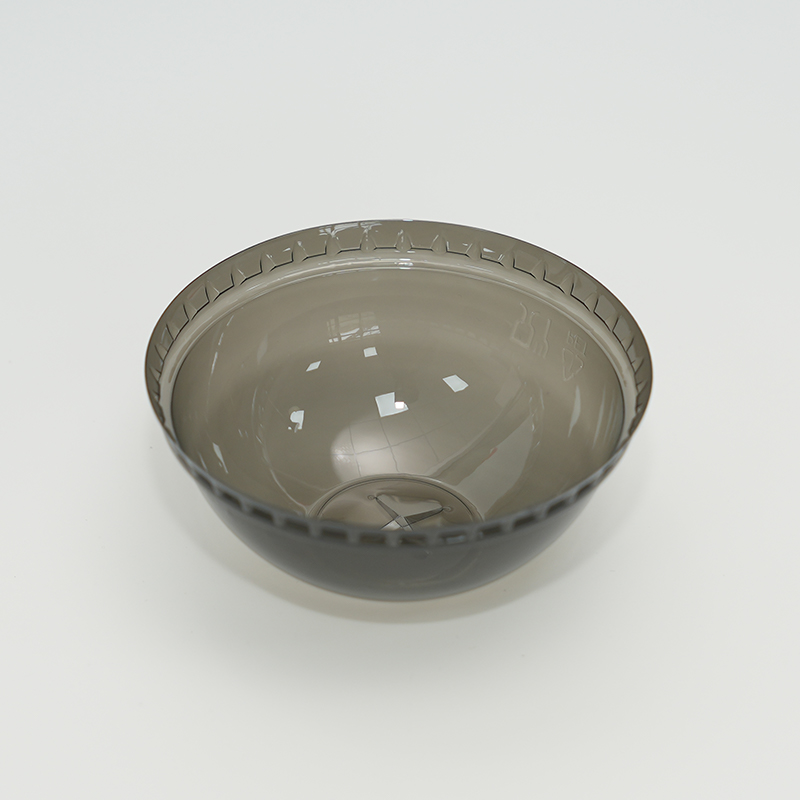
In the rapidly changing beverage packaging market, a cup lid is no longer a simple accessory. It is a functional component that affects hygiene, product presentation, transportation safety, brand perception, and customer satisfaction. The PET ball plastic cup lid is designed for beverage operators, distributors, packaging buyers, and food service brands that need a clear, lightweight, durable, and visually attractive lid for disposable beverage cups. With its spherical dome profile, transparent PET material, and standard calibers of 90 mm, 93 mm, and 98 mm, this product provides a practical solution for milk tea, fruit tea, iced coffee, smoothies, dessert drinks, layered beverages, and other takeaway beverage applications.
Unlike ordinary flat lids or low-grade disposable lids that may crack, deform, or reduce the visual appeal of the drink, a PET ball plastic cup lid enhances both function and presentation. Its high transparency allows consumers to see cream toppings, fruit pieces, foam, ice, jelly, chocolate chips, and colorful drink layers clearly. Its light texture improves portability, while its toughness helps resist breakage during daily handling. For modern beverage brands, especially those competing in takeaway, delivery, and retail-ready drink channels, this balance of clarity, strength, hygiene, and customization can create a more refined and reliable packaging experience.
Yuqian Packaging Technology (Jiangsu) Co., Ltd. manufactures this PET ball plastic cup lid as part of its disposable food packaging container portfolio. Established in 2010 and located in Taizhou City, Jiangsu Province, China, the company operates as a research, development, production, and sales enterprise specializing in new food packaging materials and products. With a plant area of approximately 30,000 square meters, advanced injection molding capabilities, multiple certifications, and OEM customization experience, the company is positioned to serve customers who require consistent quality, scalable supply, and personalized packaging design.
Product Overview: What Is a PET Ball Plastic Cup Lid?
The PET ball plastic cup lid is a transparent dome-shaped lid made from food-grade PET material. The term “ball” refers to its rounded, spherical appearance, which provides more vertical space than a flat lid. This additional space is useful for drinks with whipped cream, foam, cheese cream, fruit toppings, crushed ice, layered decorations, or dessert-style ingredients. The lid helps protect the beverage while also allowing the product’s appearance to remain visible and appealing.
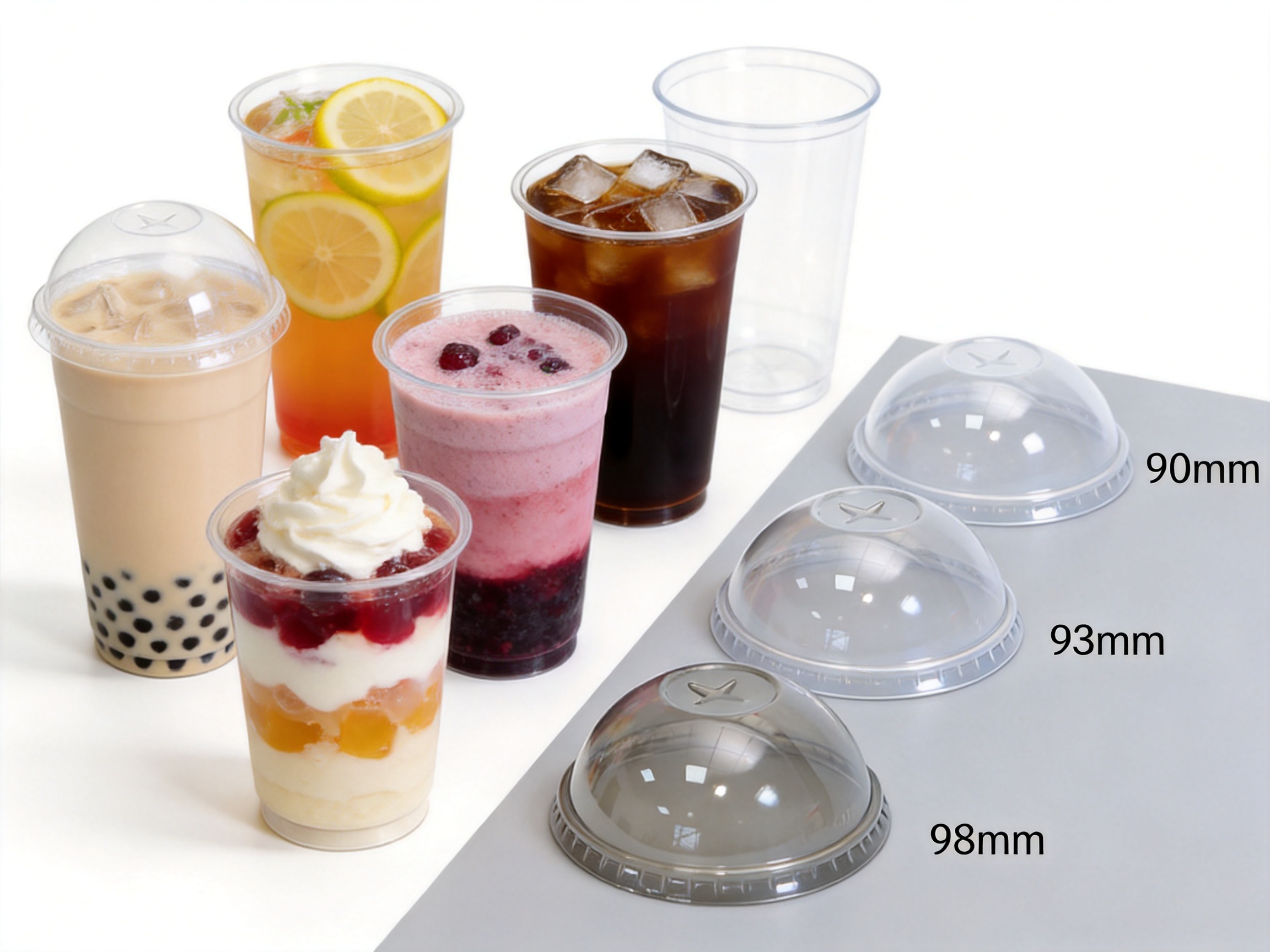
The product is available in three common calibers: 90 mm, 93 mm, and 98 mm. These sizes cover many mainstream disposable cup specifications used in beverage shops and food service markets. Each standard lid has a gram weight of approximately 4 g and is supplied in a transparent color. The lightweight structure reduces material burden and transportation weight, while the PET composition provides clarity and toughness suitable for disposable beverage packaging.
As a disposable food packaging container component, the lid is designed to fit compatible cup bodies securely when the correct caliber is selected. Its surface includes non-slip characteristics that help reduce accidental sliding during handling. The stackable structure is also important for commercial operators because beverage shops, restaurants, convenience stores, and distributors often need to store large quantities of packaging in limited space. A stackable lid design improves warehouse efficiency, counter organization, and packing convenience.
| Lid Type | Caliber | Gram Weight | Color | Material |
| PET ball cap | 90 mm | 4 g | Transparent | Food-grade PET |
| PET ball cap | 93 mm | 4 g | Transparent | Food-grade PET |
| PET ball cap | 98 mm | 4 g | Transparent | Food-grade PET |
Material Advantage: Why PET Matters
PET, or polyethylene terephthalate, is widely used in food and beverage packaging because it combines transparency, strength, light weight, and good processing performance. For a cup lid, these characteristics are especially valuable. Consumers want to see the beverage clearly, operators want a lid that is easy to use and stack, and brands want packaging that looks clean and professional. PET addresses these needs better than many lower-grade plastic alternatives.
The high transparency of PET is one of the core advantages of this cup lid. Beverage presentation has become a key part of modern consumption. Customers often choose drinks not only for taste but also for appearance. A clear spherical lid helps display attractive toppings and colorful layers, making the drink more photogenic and more suitable for social sharing. Compared with cloudy or poorly processed lids, a high-clarity PET lid can improve the perceived value of the drink and strengthen brand image.
PET also has good toughness. In busy beverage shops, lids are handled quickly by staff, stacked in large quantities, pressed onto cups, packed into takeaway bags, and transported by customers or delivery riders. A brittle lid may crack during application or transport, causing leakage, contamination risk, or customer complaints. A well-manufactured PET lid offers better resistance to normal handling stress and is less likely to break under ordinary use conditions.
Another advantage is its light weight. At approximately 4 g per lid, the product is easy to carry, store, and distribute. For high-volume operators, even small weight differences matter because they affect carton weight, freight cost, shelf handling, and counter efficiency. Lightweight PET lids help reduce operational burden while maintaining a premium transparent appearance.
PET also offers chemical stability suitable for many beverage environments. Many modern drinks contain acids from fruit, sugar syrups, dairy-based toppings, tea extracts, coffee, and flavored concentrates. A stable lid material helps maintain packaging integrity during normal service conditions. While every application should be matched with suitable temperature and beverage requirements, PET remains a trusted material for disposable food and beverage packaging due to its clean appearance and reliable performance.
Design Advantage: The Value of a Spherical Dome Structure
The rounded dome design differentiates the PET ball plastic cup lid from ordinary flat lids. A flat lid can be useful for simple drinks, but it limits the available headspace above the cup rim. When beverages include toppings or decorations, insufficient headspace can crush the product, smear cream, or create an untidy appearance. The spherical dome structure helps preserve the shape of toppings and gives the beverage a more premium presentation.
This design is especially suitable for milk tea shops, juice bars, dessert beverage stores, coffee chains, convenience beverage counters, catering outlets, and takeaway brands that sell visually rich drinks. A dome lid allows space for whipped cream, fruit slices, mousse, ice cream-style toppings, popping boba, jelly, cereal, or chocolate decoration. By protecting these toppings without hiding them, the lid supports both functional packaging and visual marketing.
The smooth curved surface also contributes to a modern and attractive look. Disposable packaging is often the first physical contact between the customer and the brand. A transparent dome lid can make the product look fresher, cleaner, and more carefully prepared. Compared with competitors that use opaque, dull, or unstable lids, beverage brands using high-quality PET ball lids can create a stronger impression of professionalism.
Stackability is another design advantage. The lid is designed to be stacked, allowing efficient storage before use. In a commercial environment, packaging space can be limited, and disorganized lids can slow service speed. Stackable lids make it easier for staff to prepare quickly during peak hours, reducing clutter and improving workflow. For distributors and wholesalers, stackability also helps optimize carton packing and storage capacity.
The non-slip surface characteristic further improves usability. During service, lids may be handled by staff with wet hands or placed on busy counters. A surface that is not easy to slide can reduce inconvenience and improve operational safety. Although this may seem like a small detail, small details accumulate into a better user experience in fast-paced food service environments.
Competitive Advantages Over Ordinary Cup Lids
The disposable packaging market includes many low-cost lids, but not all lids deliver the same level of performance. Some products may look acceptable at first glance but fail in practical use due to poor transparency, weak material toughness, inaccurate sizing, rough edges, unstable stacking, or inconsistent production. The PET ball plastic cup lid described here is designed to outperform such ordinary alternatives through material selection, structural design, manufacturing precision, and quality management.
Higher Transparency for Better Product Display
Many competing lids are made with materials or processing methods that reduce clarity. A cloudy lid can make a drink look less fresh and less attractive. The PET ball plastic cup lid uses transparent PET material to create a crystal-clear appearance, helping beverage colors and toppings remain visible. This is especially valuable for brands selling premium drinks, layered beverages, and dessert-style products.
Better Toughness and Resistance to Breakage
Low-quality lids may crack when pressed onto the cup or during delivery. This can lead to leakage, hygiene issues, and customer dissatisfaction. Food-grade PET provides toughness and durability, helping the lid resist breakage in normal commercial use. For beverage shops with high daily output, this reliability can reduce waste and improve service consistency.
More Practical Dome Space
Flat lids are limited when drinks require topping space. The spherical dome design gives the cup additional headroom, protecting decorative ingredients and improving presentation. This makes the lid more versatile than many standard lids and more suitable for high-value beverage menus.
Standard Sizes for Market Compatibility
The product offers 90 mm, 93 mm, and 98 mm calibers, covering many mainstream cup specifications. This allows buyers to select a suitable lid for existing cup systems without needing to redesign their entire packaging line. Competitors that provide fewer size options may limit customer flexibility.
Customization Capability for Brand Differentiation
Beyond standard transparent lids, the manufacturer supports personalized customization. Color, pattern, and functional design can be adjusted according to customer requirements. This is important because beverage brands increasingly use packaging to express identity. A customized lid can support seasonal promotions, private label programs, chain store branding, or special product launches.
Certified Manufacturing and Quality Assurance
The company has passed several certifications and tests, including QS national industrial product production license, ISO9001 quality management system certification, BRC certification, German authoritative safety DIN certification, and EU RoHS+ testing. These certifications support confidence in manufacturing discipline, product safety awareness, and quality control. In a competitive market, documented quality systems help distinguish reliable suppliers from informal low-standard producers.
Manufacturing Strength: Precision Injection Molding
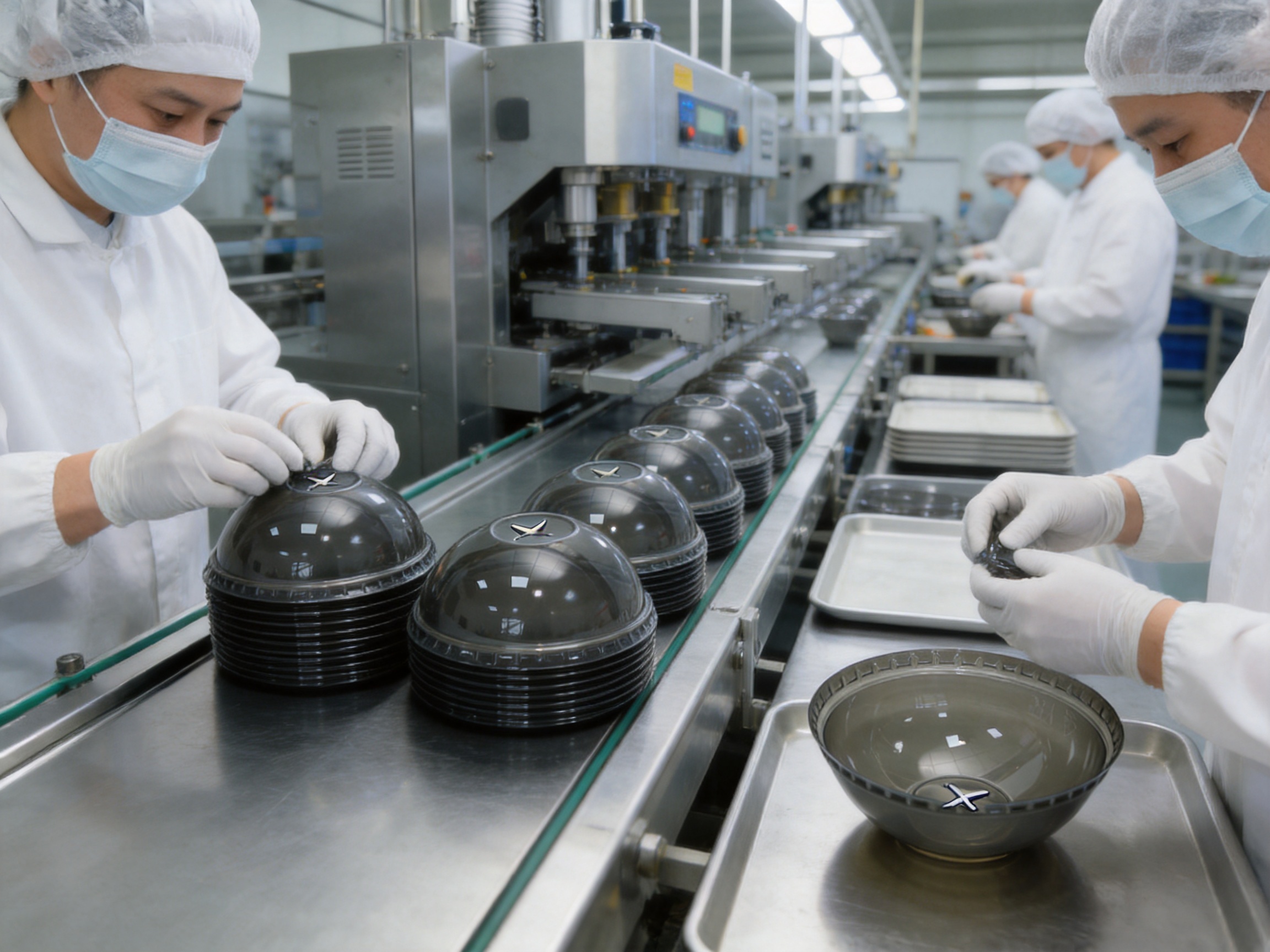
Advanced injection molding technology is central to the production of this PET ball plastic cup lid. Injection molding allows molten plastic material to be formed into precise shapes using engineered molds. For a cup lid, accuracy is essential because the lid must match the cup rim, maintain stable shape, stack smoothly, and avoid burrs or rough edges. Even small dimensional errors can affect sealing performance, fit, and user experience.
The manufacturer uses advanced production equipment and accumulated industry experience to produce lids that meet high-precision and burr-free quality expectations. A burr-free edge is important because rough edges may affect comfort, hygiene perception, and fit. Precise molding also helps ensure consistent caliber control across production batches. When customers order large quantities, they need every carton to perform similarly. Stable processing reduces variation and supports dependable supply.
The injection molding process begins with suitable material preparation. Food-grade PET material must be handled properly to maintain clarity and performance. The material is processed under controlled conditions and formed through molds designed for the required lid structure. The mold design influences the lid’s dome shape, rim geometry, stacking behavior, surface finish, and structural strength. A well-designed mold helps reduce defects and improves production efficiency.
During production, process parameters such as temperature, pressure, cooling time, and cycle speed must be managed carefully. Poor control can cause warpage, cloudiness, weak spots, flow marks, incomplete forming, or dimensional instability. Advanced manufacturing management helps maintain the balance between productivity and product quality. This is especially important for OEM and large-volume orders where consistency matters as much as initial sample quality.
After molding, quality checks are performed to evaluate appearance, dimensions, structure, stacking performance, and general usability. Transparent lids require visual inspection because clarity is a major selling point. Any visible contamination, deformation, or surface defect can reduce product value. Caliber accuracy must also be monitored to ensure compatibility with cup bodies. A reliable factory does not rely only on final inspection; it builds quality into the process through equipment, molds, trained operators, and standardized procedures.
Company Capabilities Supporting Reliable Supply
Yuqian Packaging Technology (Jiangsu) Co., Ltd. was established in 2010 and has developed into a high-tech enterprise engaged in research, development, production, and sales of new food packaging materials and products. The company’s location in Taizhou City, Jiangsu Province, China, provides access to manufacturing resources, logistics channels, and industrial supply chains. Its plant area of approximately 30,000 square meters supports production capacity for disposable food packaging products.
The company’s experience in the packaging industry is important for customers who need more than a simple product. Beverage packaging buyers often require stable lead times, batch consistency, communication support, sample adjustment, design coordination, and after-sales assistance. An experienced manufacturer can understand these requirements and provide more practical solutions than a supplier focused only on short-term trading.
In January 2019, the company established a Shanghai branch to improve service quality and expand business channels. This reflects a market-oriented approach and an intention to support customers with broader service coverage. For international and domestic buyers, improved communication and business support can be a major advantage when developing customized packaging programs.
The company’s certification background also strengthens its manufacturing profile. Passing the QS national industrial product production license indicates compliance with relevant production requirements. ISO9001 quality management system certification demonstrates structured quality management. BRC certification is widely recognized in food-related supply chains. German authoritative DIN safety certification and EU RoHS+ testing further support the company’s attention to safety and regulatory expectations. Together, these credentials help customers evaluate supplier reliability.
Customization and OEM Service
Customization is one of the most important trends in disposable food packaging. Beverage brands no longer want only generic lids; they want packaging that supports brand identity, product positioning, and customer experience. The PET ball plastic cup lid can be supplied in standard transparent form, and the manufacturer also supports personalized customization services according to customer needs.
Customization may include color adjustment, pattern concepts, functional design changes, or compatibility development for different cup bodies. For example, a chain beverage brand may want a lid that matches its cup style and visual identity. A seasonal drink promotion may require a distinctive look. A distributor may need a product that fits a local market’s preferred cup sizes. OEM manufacturing support allows these needs to be addressed through coordinated design and production planning.
Personalized packaging can also improve brand recognition. When customers carry drinks outside the store, the cup and lid become mobile advertisements. A high-clarity dome lid with a clean appearance can strengthen the overall packaging impression. If customized elements are added, the packaging becomes more distinctive and easier to remember. In competitive beverage markets, small visual differences can influence customer perception and repeat purchase behavior.
For new product development, manufacturing experience is especially valuable. A concept must be translated into a moldable, stable, cost-effective lid. The manufacturer needs to consider material behavior, mold structure, production efficiency, stacking, carton packing, and cup compatibility. A design that looks attractive on paper may not work well in mass production unless it is optimized by experienced engineers. This is where a professional OEM manufacturer can provide practical value.
Application Scenarios in Beverage and Food Service Markets
The PET ball plastic cup lid is suitable for a wide range of takeaway beverage applications. Its transparent dome structure makes it especially suitable for drinks where appearance matters. Milk tea shops can use it for cream-topped tea, fruit tea, boba drinks, and dessert beverages. Coffee shops can use it for iced coffee with cream, frappé-style drinks, and specialty cold beverages. Juice bars can use it for fresh fruit cups, smoothies, and layered juice products.
In addition to beverage shops, the lid can also be used in convenience stores, supermarkets, catering services, event beverage stations, dessert counters, and delivery-focused food service operations. The standard calibers help support compatibility with many disposable cup bodies, while the lightweight and stackable format improves storage and service efficiency.
For takeaway and delivery, lid reliability is especially important. A visually attractive drink loses value if the lid cracks, slips, or fits poorly. Customers expect their drinks to arrive clean, intact, and presentable. A tough PET lid with accurate sizing helps reduce packaging-related failures. While packaging performance always depends on correct lid-cup matching and proper handling, a well-manufactured lid provides a stronger foundation for reliable service.
The lid is also useful for brands that want to highlight freshness. Because the material is highly transparent, customers can see the beverage directly. This can build confidence in the product and make the drink feel more appealing. For fruit-based drinks, transparency communicates color and freshness. For dessert beverages, it shows texture and richness. For layered drinks, it preserves the intended visual effect.
Hygiene, Safety, and Food Packaging Responsibility
Food packaging must support hygiene from production to consumption. The PET ball plastic cup lid is made from food-grade PET material that is non-toxic and odorless under intended use conditions. This is essential because lids come into close contact with beverage containers and may be near the drinking area. A neutral, clean material helps protect the beverage experience without adding unwanted odor or taste.
The product is also easy to clean and keep hygienic in the sense that its smooth PET surface is simple to handle and maintain before use when stored correctly. In commercial operations, lids should be kept in clean packaging, protected from dust, and handled according to food service hygiene practices. The smooth structure supports clean handling and reduces unnecessary surface complexity.
Certifications and quality systems further reinforce safety management. QS, ISO9001, BRC, DIN, and RoHS-related testing indicate that the manufacturer pays attention to regulated production, quality control, safety principles, and compliance expectations. For customers purchasing disposable food packaging containers, supplier qualification is a critical factor because packaging directly affects brand reputation and consumer trust.
Temperature suitability should be considered according to actual application requirements. PET can perform well in many beverage packaging uses, and the product is described as suitable for various hot drink scenarios. However, beverage operators should always confirm the specific temperature range, cup compatibility, filling conditions, and local regulatory expectations before using any disposable plastic lid with hot liquids. Responsible packaging selection helps ensure safe and satisfactory consumer use.
Environmental Considerations and Green Production Concepts
Modern packaging buyers increasingly evaluate environmental responsibility as part of supplier selection. The manufacturer actively advocates green production and is committed to reducing energy consumption and emissions in the production process. This approach reflects the broader direction of the packaging industry, where quality, efficiency, and environmental awareness must develop together.
PET is a widely recognized plastic material with established recycling streams in many markets, although actual recyclability depends on local collection systems, product condition, and regional recycling policies. For disposable beverage packaging, responsible material use, lightweight design, production efficiency, and waste reduction are all meaningful. At approximately 4 g per lid, the PET ball plastic cup lid uses a lightweight structure while maintaining functional performance.
Efficient injection molding can also support resource management. High-precision molds and stable process control reduce defective products and material waste. Better stacking design improves transportation and storage efficiency. Durable lids reduce loss caused by cracking or unusable products. These practical improvements contribute to a more efficient packaging supply chain.
Environmental responsibility is not only about the material itself; it is also about manufacturing discipline, product design, logistics efficiency, and correct end-of-life handling. Packaging suppliers and beverage brands can work together to choose suitable materials, educate users, and comply with local waste management expectations. A professional manufacturer with green production awareness can help customers move toward more responsible packaging choices.
Quality Control From Raw Material to Finished Lid
Consistent quality is one of the most important factors in disposable packaging procurement. A lid that performs well in one batch but poorly in the next creates operational risk. The PET ball plastic cup lid benefits from structured quality control across material selection, production, inspection, packing, and delivery.
Raw material control is the first step. Food-grade PET material must meet relevant safety and performance expectations. Material quality influences transparency, toughness, odor, processing stability, and final product appearance. If the input material is inconsistent, the final lid cannot be reliably consistent. Professional production therefore begins with qualified material sourcing and management.
Process control is the second step. Injection molding requires careful monitoring of operating conditions. Temperature, pressure, mold condition, cooling, and cycle time all affect product quality. Experienced technicians and standardized procedures help maintain stable output. Preventive equipment maintenance and mold care also reduce defects and downtime.
Dimensional control is essential because the lid must fit compatible cups. Caliber accuracy affects sealing and usability. A lid that is too tight may be difficult to apply or may crack under pressure. A lid that is too loose may fall off or leak. By using precise molds and inspection procedures, the manufacturer can keep lid dimensions within practical tolerances.
Appearance inspection is especially important for transparent lids. Customers expect clarity and cleanliness. Defects such as black spots, cloudiness, scratches, uneven forming, deformation, or visible burrs can reduce product acceptance. A professional factory pays attention to both functional and visual quality because packaging appearance directly affects consumer perception.
Packing control is also important. Even well-made lids can be damaged if packed poorly. Proper stacking, carton arrangement, and protection help preserve lid shape during transportation and storage. For export or long-distance distribution, packing strength and organization become even more important.

How the PET Ball Lid Supports Beverage Brand Growth
Beverage brands compete in a market where taste, speed, appearance, hygiene, and packaging all influence customer choice. A PET ball plastic cup lid supports brand growth by improving product presentation, reducing packaging failure, enabling customization, and supporting efficient service. It is a small component, but it affects many parts of the customer journey.
First, it improves visual appeal. Customers often judge drinks before tasting them. A clear dome lid helps showcase toppings and colors, making the product look more premium. This can support higher perceived value and encourage photo sharing, especially for trendy drinks.
Second, it supports operational reliability. Staff can stack, access, and apply lids during busy hours. A tough and accurately molded lid reduces cracking and handling problems. Reliable packaging helps service teams work faster and reduces waste caused by damaged lids.
Third, it supports product diversification. With extra dome space, beverage shops can develop new menu items featuring cream, fruit, foam, or other toppings. Packaging should not limit creativity. A spherical dome lid gives brands more freedom to design attractive drinks.
Fourth, it supports brand identity through customization. As markets become crowded, customized packaging can help a brand stand out. OEM services make it possible to adapt lid design to specific market or brand requirements.
Finally, it supports supply chain confidence. Working with a certified and experienced manufacturer reduces procurement uncertainty. Buyers can focus on market development while relying on a supplier with production capacity, quality systems, and industry experience.
Procurement Considerations for Buyers
When selecting a PET ball plastic cup lid, buyers should consider several practical factors. The first is cup compatibility. The lid caliber must match the cup rim design, not only the nominal diameter. A 90 mm, 93 mm, or 98 mm lid should be tested with the intended cup body before mass purchase. Sample testing helps confirm fit, sealing, application force, and customer usability.
The second factor is beverage type. Drinks with high toppings, foam, or fruit pieces benefit most from the dome structure. For simple drinks, a dome lid may still improve appearance, but buyers should evaluate cost and menu requirements. For hot drink applications, temperature requirements should be confirmed carefully.
The third factor is order volume and storage. Since lids are stackable and lightweight, they are suitable for high-volume operations. Buyers should confirm carton quantity, storage conditions, warehouse turnover, and shipping requirements. Proper storage helps maintain product cleanliness and shape.
The fourth factor is customization. If the buyer wants color, pattern, or functional design adjustments, development time should be planned in advance. Custom molds or design changes may require sample review, testing, and production scheduling. A professional manufacturer can guide the buyer through this process.
The fifth factor is supplier qualification. Certifications, production experience, equipment capability, and communication quality all matter. A low unit price may not be beneficial if quality instability causes waste, complaints, or delivery delays. Buyers should evaluate total value rather than price alone.
Q&A Section
Q1: What material is the PET ball plastic cup lid made from?
It is made from food-grade PET material. PET provides high transparency, light weight, good toughness, and suitable stability for many disposable beverage packaging applications.
Q2: What sizes are available?
The standard calibers are 90 mm, 93 mm, and 98 mm. These sizes match many mainstream disposable cup specifications, but buyers should test compatibility with their specific cup bodies before bulk ordering.
Q3: What is the weight of each lid?
Each standard PET ball cap has an approximate gram weight of 4 g, making it lightweight and convenient for storage, shipping, and daily use.
Q4: Why choose a dome-shaped ball lid instead of a flat lid?
The dome-shaped structure provides extra space for toppings such as whipped cream, fruit, foam, jelly, or dessert ingredients. It also improves visual presentation by allowing customers to see the beverage clearly.
Q5: Is the lid transparent?
Yes. The standard color is transparent, and the PET material provides high clarity, helping beverage brands display drink colors, layers, and toppings.
Q6: Can the lid be customized?
Yes. Personalized customization can be supported according to customer needs, including possible adjustments in color, pattern, or functional design. Specific customization options should be discussed with the manufacturer based on order requirements.
Q7: What certifications support the product and manufacturing quality?
The manufacturer has passed certifications and tests including QS national industrial product production license, ISO9001 quality management system certification, BRC certification, German authoritative safety DIN certification, and EU RoHS+ testing.
Q8: Is the PET ball plastic cup lid suitable for hot drinks?
The product is described as suitable for a variety of hot drink uses, but buyers should confirm the actual temperature range, beverage conditions, cup compatibility, and local regulatory requirements before use with hot liquids.
Q9: What types of businesses can use this lid?
It is suitable for milk tea shops, coffee shops, juice bars, dessert beverage stores, convenience stores, catering services, takeaway brands, distributors, and other food service operators using compatible disposable cups.
Q10: What makes this lid better than many ordinary disposable lids?
Its advantages include high transparency, food-grade PET material, light weight, toughness, dome space for toppings, stackable structure, standard size options, customization support, precision injection molding, and certified manufacturing management.
Conclusion
The PET ball plastic cup lid is a practical and attractive packaging solution for modern beverage businesses. Made from food-grade PET material, it offers high transparency, light weight, toughness, and a clean appearance. Its spherical dome structure creates additional space for toppings and enhances the visual appeal of drinks, making it especially suitable for milk tea, fruit tea, iced coffee, smoothies, dessert beverages, and other takeaway drinks where presentation matters.
With standard calibers of 90 mm, 93 mm, and 98 mm, the lid provides compatibility with many mainstream cup systems. Its approximately 4 g weight, transparent color, non-slip surface characteristics, and stackable design make it convenient for commercial use. Compared with ordinary lids, it delivers stronger product display value, better topping protection, greater brand potential, and more reliable daily performance.
Behind the product is the manufacturing strength of Yuqian Packaging Technology (Jiangsu) Co., Ltd., a company established in 2010 with a 30,000-square-meter plant, advanced injection molding technology, OEM customization capability, and recognized certifications. Through precise molding, quality control, green production awareness, and customer-oriented service, the company provides a dependable solution for buyers seeking high-quality disposable food packaging container products.
For beverage brands and packaging distributors, choosing the right cup lid can improve customer experience, reduce operational problems, and strengthen product presentation. The PET ball plastic cup lid demonstrates how a small packaging component can contribute to a more professional, attractive, and reliable beverage service system.
References
1. Soroka, W. Fundamentals of Packaging Technology. Institute of Packaging Professionals.
2. Robertson, G. L. Food Packaging: Principles and Practice. CRC Press.
3. Coles, R., McDowell, D., and Kirwan, M. J. Food Packaging Technology. Blackwell Publishing.
4. International Organization for Standardization. ISO 9001 Quality Management Systems: Requirements.
5. British Retail Consortium. Global Standard for Packaging Materials.
6. Plastics Industry Association. General Guidance on PET Packaging Applications and Processing.