English
 Español
 عربى
Content
- 1 1. Why Environmentally Friendly Paper Straws Matter
- 2 2. Product Overview
- 3 3. Main Product Advantages
- 4 4. Advantages Over Competing Disposable Straw Options
- 5 5. Advanced Manufacturing and Quality Strengths
- 6 6. Customization Options for Food and Beverage Brands
- 7 7. Applications in Different Beverage and Service Scenarios
- 8 8. The Manufacturer’s Integrated Service Model
- 9 9. Sustainability Considerations Beyond the Straw
- 10 10. How to Select the Right Paper Straw
- 11 11. Ordering and Cooperation Process
- 12 12. Frequently Asked Questions
- 12.1 Q1: What are disposable environmentally friendly paper straws made from?
- 12.2 Q2: Are these paper straws compostable and recyclable?
- 12.3 Q3: How long can a paper straw remain in a beverage?
- 12.4 Q4: What standard sizes are available?
- 12.5 Q5: Which diameter is suitable for smoothies?
- 12.6 Q6: Can the straws be printed with a logo?
- 12.7 Q7: Are individually wrapped options available?
- 12.8 Q8: Can white and kraft paper be supplied?
- 12.9 Q9: Can the manufacturer produce private label orders?
- 12.10 Q10: Does the manufacturer provide samples?
- 12.11 Q11: What quality systems support production?
- 12.12 Q12: Where is the manufacturer located?
- 13 13. Conclusion
- 14 References
- 15 Product: Disposable Environmentally Paper straw

Disposable paper straws have become an important alternative to conventional plastic drinking straws. As restaurants, cafés, beverage brands, catering companies, hotels, schools, event organizers, and retailers respond to growing environmental awareness, the demand for practical, safe, and customizable paper drinking straws continues to increase. A high-quality paper straw must do more than replace plastic. It must provide a comfortable drinking experience, maintain its structure during use, support attractive branding, and meet the operational requirements of different beverage applications.
Disposable environmentally friendly paper straws are designed to address these needs. Manufactured from paper materials, they offer a renewable and recyclable-oriented alternative to traditional single-use plastic products. Their compostable characteristics, customizable specifications, independent packaging options, and multi-color printing capabilities make them suitable for both everyday food service and branded beverage programs.
Yuqian Packaging Technology (Jiangsu) Co., Ltd. develops and manufactures disposable food packaging products, including paper straws and other packaging solutions. With research and development capabilities, quality management systems, flexible production lines, and experience serving domestic and international customers, the company provides an integrated service covering product design, sampling, production, customization, quality inspection, packaging, and logistics.
This article explains the main features of environmentally friendly paper straws, their advantages over competing disposable straw options, available specifications, manufacturing considerations, customization services, quality controls, and suitable application scenarios. It also provides practical answers to common purchasing questions for distributors, food service operators, and brand owners.
1. Why Environmentally Friendly Paper Straws Matter
Plastic pollution has encouraged governments, businesses, and consumers to reconsider the materials used in disposable food service products. Drinking straws are small items, but they are used in very large quantities and are often discarded immediately after consumption. Their short service life and widespread use make them an important target for packaging improvement.
Paper straws provide a more responsible solution by replacing conventional plastic with paper-based materials. After use, paper products can generally break down more readily in suitable natural or industrial treatment environments than ordinary plastic products. This can help reduce the persistence of discarded packaging and support broader sustainability objectives.
The environmental value of a paper straw also depends on responsible sourcing, suitable adhesives and inks, efficient manufacturing, appropriate packaging, and correct disposal. For this reason, product quality and manufacturing discipline are just as important as the choice of paper itself. A poorly manufactured straw may soften too quickly, separate at the seams, or fail to provide a satisfactory customer experience. A professionally produced paper straw must balance environmental considerations with strength, hygiene, appearance, and usability.
Modern consumers increasingly expect packaging to reflect the values of the brands they purchase from. A paper straw placed in a cold drink, coffee, juice, smoothie, milk tea, or takeaway beverage communicates a visible commitment to reducing unnecessary plastic. For food and beverage brands, the straw therefore serves both a practical function and a sustainability communication function.
2. Product Overview
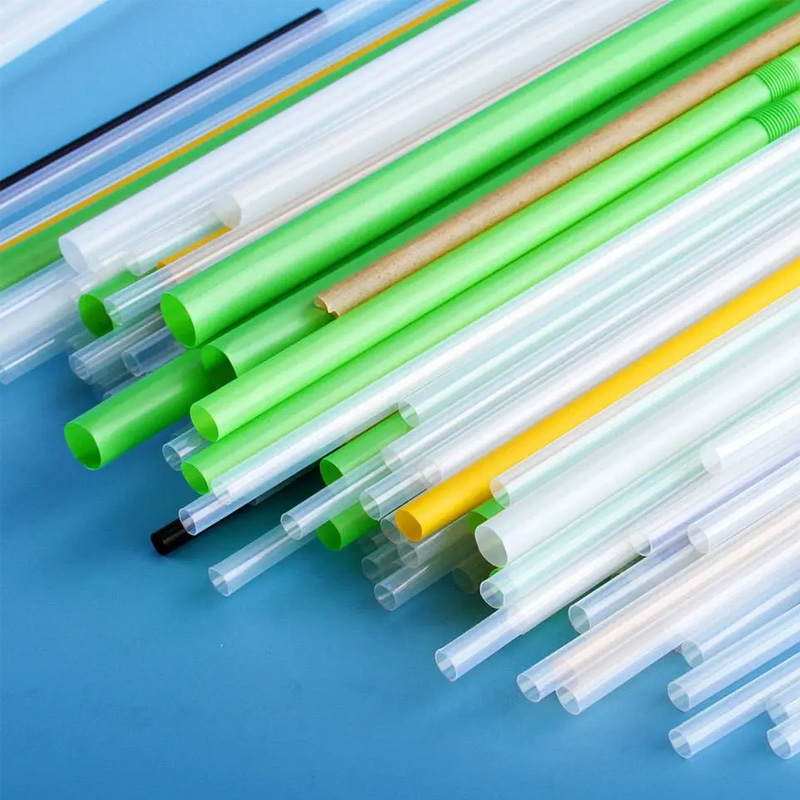
The disposable environmentally friendly paper straw is made from high-quality paper materials and is designed for single-use beverage service. It is available in white or kraft paper appearances and can be produced in different diameters and lengths to suit a variety of drinks.
The standard specifications include diameters of 6 mm, 8 mm, and 12 mm, with lengths of 210 mm and 230 mm. These sizes cover many common beverage requirements. The 6 mm and 8 mm options are suitable for standard soft drinks, water, tea, coffee, juice, and other beverages with relatively low viscosity. The 12 mm options offer a wider passage for thicker drinks, including selected smoothies, milk-based beverages, fruit drinks, and other products containing larger liquid particles.
| Specification | Diameter | Length | Available Color | Typical Application |
| 6 × 210 mm | 6 mm | 210 mm | White or kraft paper | Standard beverages and takeaway cups |
| 8 × 210 mm | 8 mm | 210 mm | White or kraft paper | Juice, soft drinks, tea, and general beverage service |
| 6 × 230 mm | 6 mm | 230 mm | White or kraft paper | Taller cups and extended-reach applications |
| 8 × 230 mm | 8 mm | 230 mm | White or kraft paper | Taller beverage cups and branded takeaway drinks |
| 12 × 210 mm | 12 mm | 210 mm | White or kraft paper | Thicker beverages and selected smoothie applications |
| 12 × 230 mm | 12 mm | 230 mm | White or kraft paper | Thick beverages in taller cups |
In addition to the standard formats, product specifications can be customized according to the buyer’s requirements. Customization may include straw diameter, length, color, surface printing, packaging quantity, individual wrapping, and artwork. This flexibility helps beverage brands match their straw program to different cup sizes, menu categories, sales channels, and regional packaging requirements.
Disposable Environmentally Paper straw
3. Main Product Advantages
3.1 Paper-Based and More Environmentally Responsible
The primary advantage of these straws is their paper-based construction. Compared with conventional single-use plastic straws, paper straws are designed to reduce reliance on persistent plastic materials. They can be compostable and recyclable under appropriate conditions, helping customers pursue more responsible packaging choices.
For businesses that are working to reduce plastic consumption, changing from plastic straws to paper straws is a visible and relatively straightforward improvement. Restaurants can use them with dine-in or takeaway beverages. Beverage brands can include them in packaged drink sets. Event operators can provide them at conferences, festivals, sports venues, and public functions. Retailers can sell them as part of household or party supplies.
The paper appearance also reinforces the sustainability message. White paper creates a clean and modern presentation, while kraft paper gives the product a natural and environmentally conscious appearance. Both choices can be combined with printed designs to create a consistent visual identity.
3.2 Stiff Material and Improved Structural Stability
A paper straw must maintain its form while the customer drinks. The product is therefore manufactured with attention to paper selection, winding, bonding, shaping, and finishing. The stated product features include a stiff material and resistance to deformation, allowing the straw to remain functional during normal use.
Structural stiffness is important for customer satisfaction. A straw that bends too easily can be inconvenient, particularly when inserted through a sealed film lid. A stable straw is easier to handle, more comfortable to use, and better suited to takeaway beverage service. It also contributes to a more professional impression of the food service brand.
The precise performance of a paper straw can vary according to beverage temperature, soaking duration, liquid composition, straw diameter, and use conditions. For this reason, customers should select the appropriate specification for their application and conduct sample testing before finalizing a large order. The manufacturer can support this process by providing samples and adjusting the product structure where required.
3.3 Extended Soaking Performance
One of the most important differences between basic paper straws and professionally manufactured paper straws is their ability to remain usable in liquid for a practical period. The product is designed to offer a long soaking time in water while maintaining an acceptable level of stiffness and functionality.
Extended soaking performance benefits customers who consume beverages slowly or who purchase takeaway drinks for travel. It is also useful in cafés, restaurants, and food delivery operations where beverages may be prepared before they are consumed. A straw that retains its structure for a reasonable duration improves the overall experience and reduces the likelihood of premature replacement.
Performance depends on the characteristics of the beverage. Cold water, carbonated soft drinks, hot coffee, acidic juice, milk tea, smoothies, and drinks containing pulp may interact with paper materials differently. Buyers should therefore define their key application when requesting samples. This allows the supplier to recommend a suitable diameter, paper structure, and production configuration.
3.4 Safe and Suitable for Food Service Applications
Paper straws are intended for direct contact with beverages, so material safety and production hygiene are essential. Yuqian Packaging Technology (Jiangsu) Co., Ltd. emphasizes quality control from raw material procurement through production, processing, and finished-product inspection. This systematic approach is intended to ensure that the finished products meet customer expectations and applicable quality requirements.
Independent paper packaging provides an additional hygienic barrier between the straw and the external environment. Individually wrapped straws are particularly suitable for restaurants, cafés, takeaway counters, schools, hospitals, offices, hotels, and other locations where clean handling is important.
Packaging formats can be adjusted according to the customer’s operating model. A buyer may require individual paper wrapping for food service distribution, bulk packing for factory or warehouse use, or customized quantities for retail sales. Packaging design can also be coordinated with the customer’s brand artwork and product labeling system.
3.5 Customizable Sizes and Printing
Different drinks require different straw formats. A narrow straw may be ideal for water or standard soft drinks, while a wider straw is more appropriate for smoothies, milkshakes, or drinks containing fruit pieces. Taller cups may require a 230 mm straw rather than a 210 mm version.
Custom specifications help businesses avoid using a one-size-fits-all solution. They can select a format that provides the right balance of comfort, appearance, beverage flow, and cup compatibility. Customization can also support different product lines within the same brand.
Multi-color printing allows the straw to become a branded communication tool. Logos, patterns, slogans, seasonal graphics, product names, and campaign messages can be printed according to approved artwork. Printed straws may strengthen brand recognition at the point of consumption because the customer holds the product directly while drinking.
For businesses operating several beverage concepts, printed paper straws can be coordinated with cup designs, lids, sleeves, napkins, takeaway bags, and other packaging products. This creates a unified presentation across the entire customer experience.
4. Advantages Over Competing Disposable Straw Options
4.1 Compared with Conventional Plastic Straws
The most direct comparison is with conventional plastic straws. Plastic straws are lightweight, inexpensive, and resistant to water, but they are made from materials that can persist in the environment for a long period after disposal. Their widespread use has contributed to public concern about plastic waste and marine pollution.
Paper straws offer a more environmentally responsible alternative while still providing the basic function of beverage consumption. They are made from paper materials, can be compostable and recyclable under suitable conditions, and can help businesses reduce the use of traditional plastic. The natural appearance of kraft paper or the clean appearance of white paper can also communicate a stronger sustainability message.
Plastic straws may remain rigid for longer periods in liquid, but they do not automatically provide a better overall solution for brands that have environmental commitments or must respond to plastic-reduction policies. Paper straws address the environmental expectations of many current markets while offering sufficient usability when properly designed and manufactured.
4.2 Compared with Low-Quality Paper Straws
Not all paper straws offer the same performance. Low-quality products may use unsuitable paper, insufficient bonding, poor forming precision, or weak packaging protection. Such products may soften quickly, delaminate, lose their shape, or create an unpleasant drinking experience.
The product described in this article is positioned around stiff material, extended soaking time, consistent manufacturing, customizable dimensions, and quality inspection. The manufacturer’s research and development capabilities are used to improve structure, durability, comfort, and production stability. A dedicated quality management system provides process control beyond simple visual inspection.
For importers and distributors, supplier reliability is as important as the physical product. A manufacturer with flexible production lines and supply chain management can respond more effectively to sampling, customization, repeat orders, and delivery requirements. This reduces the risks associated with inconsistent batches or limited production capacity.
4.3 Compared with Some Alternative Materials
Other disposable straw materials may include plant-based plastics, reusable metals, glass, silicone, or other specialty materials. Each option has its own strengths and limitations. Reusable straws can reduce single-use waste but require cleaning, collection, and management systems. Metal and glass straws may not be suitable for all public environments because of weight or breakage considerations. Plant-based plastics may require specific industrial composting conditions and may not be accepted in every local waste system.
Paper straws are especially practical where single-use hygiene, cost control, lightweight transportation, and straightforward disposal are important. They can be individually wrapped, produced in high quantities, printed with branding, and distributed through standard food service channels. Their balance of convenience and environmental positioning makes them suitable for a wide range of commercial applications.
5. Advanced Manufacturing and Quality Strengths
5.1 Research and Development Capability
Yuqian Packaging Technology (Jiangsu) Co., Ltd. has a research and development team composed of industry professionals. The team explores new paper materials, structural designs, and production processes for environmentally friendly packaging products.
For paper straws, research and development can involve several factors: paper density, layer configuration, adhesive performance, winding tension, surface smoothness, end finishing, print quality, and resistance to liquid penetration. Each factor affects the final user experience. A suitable design must combine stiffness and comfort without making the straw unnecessarily heavy or difficult to produce.
Structural optimization is particularly important. The straw must be cylindrical, stable, and comfortable to hold. Its internal passage should remain open, and its layers should stay bonded during use. Manufacturing improvements can also reduce material waste, increase production consistency, and support more efficient large-scale output.
5.2 Controlled Raw Material Procurement
Finished product quality begins with raw materials. Paper, inks, adhesives, packaging materials, and other inputs must be selected according to the intended food service application and production requirements. Controlled procurement helps reduce variation between batches and supports stable product performance.
Material selection also influences appearance. White paper can support bright multi-color printing and a clean visual identity. Kraft paper provides a natural brown appearance and may be selected by brands that want to emphasize an organic or environmentally conscious image. The appropriate choice depends on the customer’s design, market, and product positioning.
5.3 Process Control from Forming to Finishing
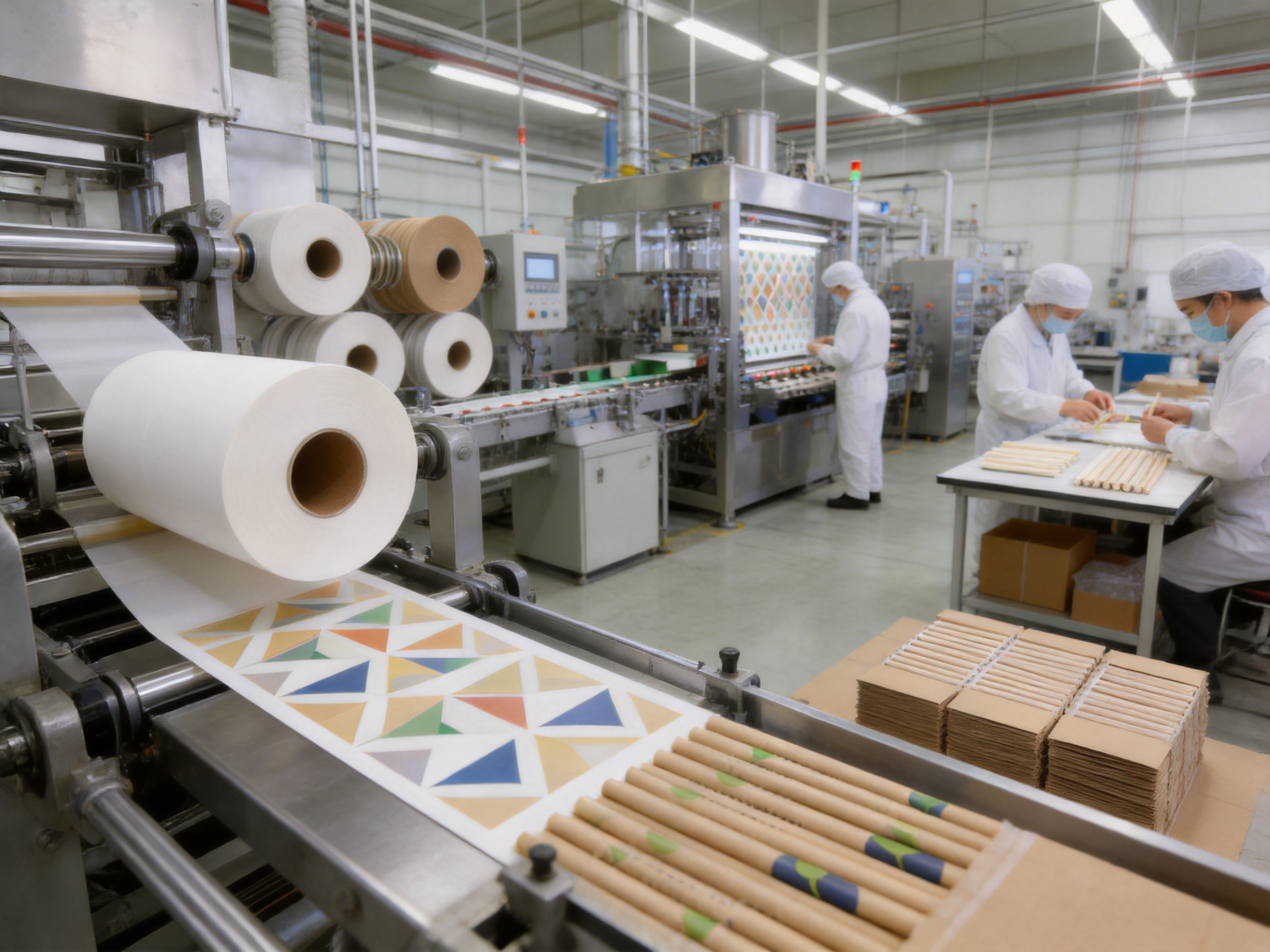
The paper straw manufacturing process includes several important stages. Paper materials are prepared and printed where required. The paper is then formed and wound into a cylindrical structure, with bonding applied to maintain the shape. The straw is cut to the required length, and its appearance and dimensions are checked before packaging.
Each stage can affect the final product. Uneven winding may influence the internal passage. Inconsistent bonding may cause separation. Incorrect cutting may create length variation or rough edges. Printing errors may affect brand presentation. Proper equipment adjustment and process monitoring help reduce these risks.
Flexible production lines enable the manufacturer to produce standard products as well as customized orders. This is valuable for customers who need several sizes, different print designs, or varied packaging configurations. The supplier can provide samples before mass production, allowing the customer to confirm appearance, dimensions, packaging, and practical performance.
5.4 Quality Management and Inspection
Yuqian Packaging Technology (Jiangsu) Co., Ltd. states that it has established a complete quality management system covering raw materials, production processing, and finished-product inspection. The company has also obtained or participated in quality and compliance certifications and testing systems identified in its corporate information, including QS, ISO9001, BRC, German DIN safety certification, and EU RoHS-related testing.
Certification and testing should always be reviewed against the specific product, market, and current regulatory requirements. Nevertheless, the existence of structured quality systems demonstrates the importance the manufacturer places on controlled production and documented procedures.
Quality checks for paper straws may include dimensional verification, visual inspection, print registration, surface condition, bonding integrity, packaging accuracy, and functional sampling. Depending on the customer’s requirements, additional tests may be specified for soaking time, temperature exposure, or compatibility with particular beverages.
Consistent inspection is important for international customers. A buyer may order large quantities for several locations, and product variation can create operational problems. Stable production and documented controls help support repeatability from one order to the next.
6. Customization Options for Food and Beverage Brands
6.1 Specification Customization
Customers can request different diameters and lengths to match their cups and beverages. The standard range includes 6 mm, 8 mm, and 12 mm diameters, along with 210 mm and 230 mm lengths. Other specifications may be discussed according to production feasibility and application requirements.
Specification selection should consider the cup height, lid opening, beverage viscosity, presence of pulp or particles, expected drinking time, and storage conditions. A food service operator should test the straw in the actual cup and lid combination rather than relying only on nominal dimensions.
6.2 Color and Surface Appearance
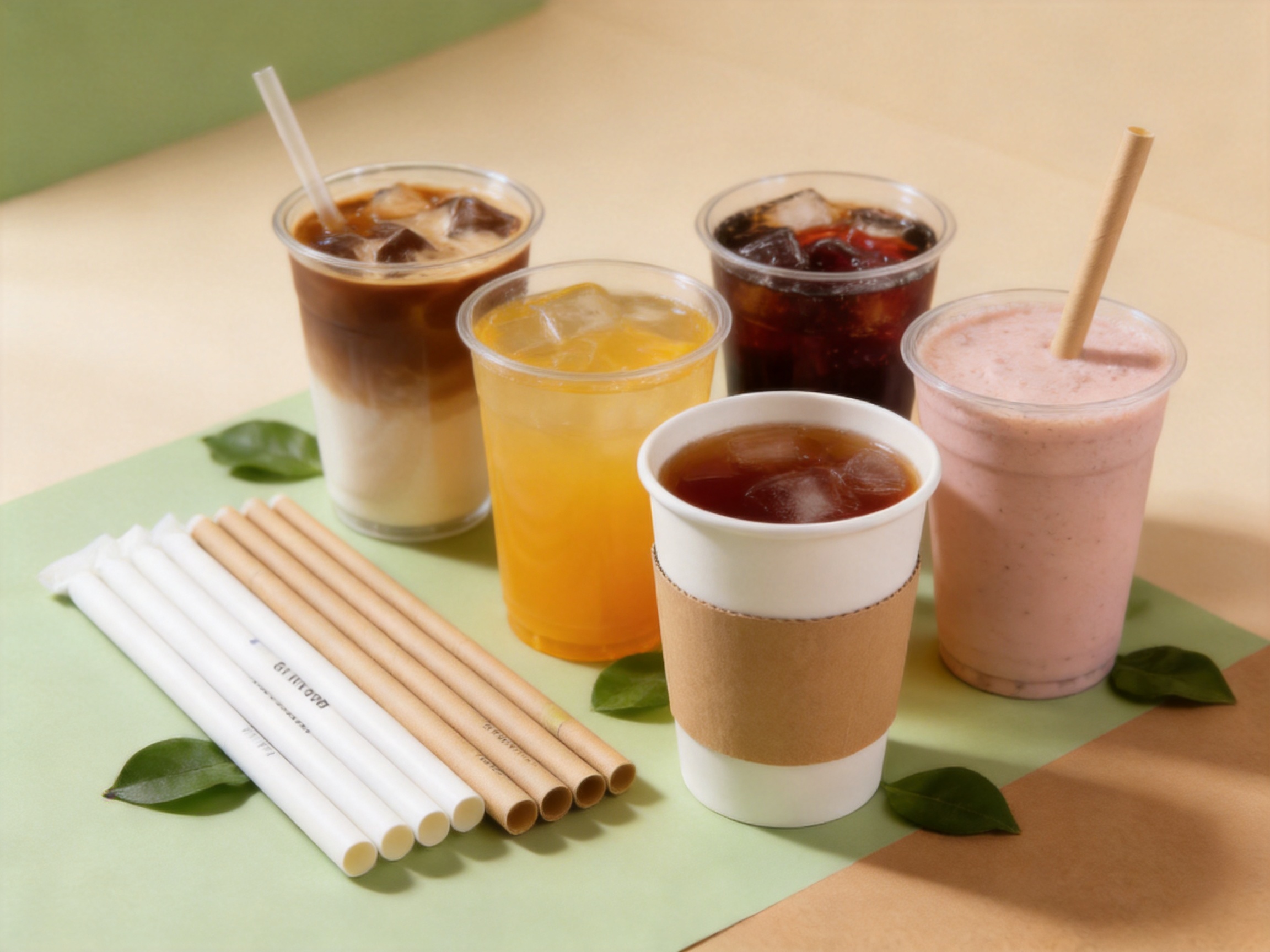
White and kraft paper are available as principal color choices. White paper is suitable for clean, bright, colorful branding. Kraft paper supports a natural and understated appearance. A company may choose one appearance for all products or use different colors for different beverage categories.
The surface can also be designed around brand guidelines. For example, a minimalist logo may be repeated along the straw, while a seasonal campaign may use a full pattern or multiple colors. Design decisions should account for print clarity, visual scale, and the cylindrical shape of the product.
6.3 Printing and Artwork
Multi-color printing supports customized designs and can be used to display logos, slogans, product names, promotional messages, or decorative patterns. Before production, the customer should provide high-resolution artwork and confirm the print area, colors, repeat pattern, and orientation.
Artwork approval is a critical part of the pre-production process. A digital design may appear different when applied to a narrow cylindrical surface. Sampling helps confirm how the design wraps around the straw and whether small text or fine lines remain clear at the final size.
6.4 Individual Wrapping and Packing Quantity
Independent paper packaging improves hygiene and supports organized distribution. It is useful for food service businesses that place straws at counters, include them with takeaway orders, or distribute them through vending and delivery channels.
Customers can also request customized packing quantities. Bulk packaging may be suitable for central kitchens, large catering operations, and distributors. Smaller retail-ready quantities may be more appropriate for supermarkets, convenience stores, online sales, party supply channels, or household use.
Packaging design can incorporate product information, barcode space, handling instructions, and brand graphics. The final format should be selected according to the sales channel, transportation requirements, warehouse conditions, and local labeling regulations.
7. Applications in Different Beverage and Service Scenarios
7.1 Cafés and Coffee Shops
Cafés can use paper straws for iced coffee, cold brew, fruit drinks, tea, and other takeaway beverages. A printed straw can complement the cup and sleeve design, helping create a consistent brand experience. Individual wrapping is suitable for self-service areas and delivery orders.
7.2 Juice Bars and Smoothie Shops
Juice and smoothie businesses often need wider straws. The 12 mm options can provide a more suitable passage for thicker beverages, although actual compatibility should be confirmed by sample testing. A wider straw can improve customer comfort and reduce difficulty when drinking products with higher viscosity.
7.3 Restaurants and Takeaway Food Service
Restaurants may require several straw sizes for different menu items. Standard options can be used for soft drinks and water, while longer or wider versions can be supplied for specialty beverages. Paper straws can be packed with takeaway cups, lids, bowls, or meal orders.
7.4 Hotels, Events, and Catering
Hotels and event organizers often need hygienically packaged disposable products that can be distributed quickly. Individually wrapped paper straws are suitable for meeting rooms, conferences, receptions, buffets, outdoor events, and catered functions. Customized printing can identify the event, sponsor, venue, or hospitality brand.
7.5 Schools, Offices, and Institutional Dining
Schools, offices, hospitals, and institutional dining facilities may use paper straws as part of broader plastic-reduction programs. Their lightweight design makes them easy to store and distribute, while individual wrapping supports controlled handling.
7.6 Retail and Private Label Products
Distributors and retailers can develop private label paper straw products using customized colors, printing, and packaging. This approach allows a supplier or retail chain to create its own product identity rather than reselling generic items. Flexible production is particularly helpful when several package sizes or designs are required.
8. The Manufacturer’s Integrated Service Model
A reliable packaging supplier should provide more than a product catalog. Customers often need assistance with specification selection, artwork preparation, prototype approval, packaging decisions, quality documentation, order scheduling, and delivery coordination. An integrated service model reduces communication gaps and makes the purchasing process more efficient.
Yuqian Packaging Technology (Jiangsu) Co., Ltd. provides services from product design and sample production to mass manufacturing and logistics. This one-stop approach is useful for international brands that may not have technical packaging staff in the manufacturing region.
The company was established in 2010 and is located in Taizhou City, Jiangsu Province, China. Its reported plant area is approximately 30,000 square meters, and its business covers research and development, production, and sales of new food packaging materials and products. The company also established a Shanghai branch in January 2019 to improve service quality and expand business channels.
Production capacity is supported by flexible lines and supply chain management. This can help the company respond to sample requests, new product development, repeat orders, and customized production schedules. For buyers, the ability to communicate with one supplier across several stages can simplify project management.
After-sales service is another important part of the supplier relationship. If a customer encounters questions about packaging, product handling, printing, or application performance, timely communication can help identify the cause and determine an appropriate solution. A long-term supplier should be prepared to support continuous improvement rather than only complete a single transaction.
9. Sustainability Considerations Beyond the Straw
Choosing a paper straw is one part of a broader packaging strategy. Businesses can increase the environmental value of the change by reviewing the entire beverage service system. This may include reducing unnecessary packaging, optimizing cup and lid materials, selecting responsible paper sources, improving transport efficiency, and communicating correct disposal practices to customers.
Yuqian Packaging Technology (Jiangsu) Co., Ltd. states that it follows green production principles and works to reduce energy consumption and waste emissions during manufacturing. The company also promotes the concept of circular economy and encourages customers to consider recycling and reuse of paper straw packaging where appropriate.
Environmental claims should be communicated accurately. Terms such as “compostable” and “recyclable” may depend on local collection systems, material composition, certification requirements, and processing conditions. Businesses should verify the relevant rules in each target market and provide disposal information that customers can understand.
Paper straws should also be stored properly before use. Excessive moisture, heat, compression, or damaged outer packaging can affect product condition. Warehouses should maintain clean, dry, and protected storage areas, and older stock should generally be used according to a suitable inventory rotation system.
10. How to Select the Right Paper Straw
10.1 Define the Beverage Type
Begin by identifying the beverages with which the straw will be used. Water and soft drinks typically require different specifications from smoothies or milkshakes. The beverage’s thickness, temperature, acidity, pulp content, and expected consumption time should all be considered.
10.2 Confirm Cup and Lid Compatibility
The straw must fit the lid opening and reach an appropriate depth inside the cup. A straw that is too short may be inconvenient, while one that is too long may be awkward or unstable. Buyers should test the selected diameter with the actual lid design, especially when using film-sealed cups or specialty lids.
10.3 Select Packaging According to Distribution
Individual wrapping is recommended where hygiene and controlled distribution are priorities. Bulk packing may be more efficient for high-volume professional users. Retail products may require smaller packs, printed information, and barcode-ready packaging.
10.4 Approve Printing Before Mass Production
Customers should carefully review artwork, color expectations, logo size, repeat spacing, and print position. A physical sample is recommended before approval because the final appearance may differ from a flat digital image.
10.5 Conduct Application Testing
Sample testing should simulate actual use. Place the straw in the intended cup and lid, fill it with the target beverage, and observe stiffness, soaking performance, drinking comfort, print condition, and packaging usability. Testing should cover the longest expected consumption period and relevant storage or transport conditions.
11. Ordering and Cooperation Process
The first stage is requirement communication. The buyer should provide information about the target market, beverage types, desired dimensions, quantity, printing needs, packaging format, certifications, and delivery destination.
The supplier can then recommend standard specifications or develop a customized option. Samples are prepared for evaluation. At this stage, the buyer checks physical dimensions, color, print quality, packaging, and practical performance.
After sample approval, the customer confirms artwork, order quantity, packaging details, and production schedule. The manufacturer arranges mass production according to the approved specifications. Quality inspection is conducted during and after production, followed by packing and shipment.
Clear communication at every stage helps avoid misunderstandings. Written confirmation should cover dimensions, tolerance requirements, material expectations, print colors, packing quantities, carton information, and any market-specific compliance documents.
12. Frequently Asked Questions
Q1: What are disposable environmentally friendly paper straws made from?
They are made primarily from paper materials selected and processed for disposable beverage use. The exact paper construction, bonding materials, inks, and packaging configuration should be confirmed according to the customer’s application and target-market requirements.
Q2: Are these paper straws compostable and recyclable?
The product is described as compostable and recyclable under suitable conditions. Actual disposal outcomes depend on the complete product composition and local waste treatment facilities. Buyers should verify specific certification and disposal requirements for each market.
Q3: How long can a paper straw remain in a beverage?
The product is designed for a long soaking time and improved resistance to deformation. Actual performance varies according to beverage temperature, acidity, viscosity, ingredients, and consumption time. Sample testing with the intended beverage is recommended.
Q4: What standard sizes are available?
The listed standard sizes include 6 × 210 mm, 8 × 210 mm, 6 × 230 mm, 8 × 230 mm, 12 × 210 mm, and 12 × 230 mm. Custom dimensions may be discussed based on application and production feasibility.
Q5: Which diameter is suitable for smoothies?
A 12 mm diameter is generally more suitable for thicker beverages than a 6 mm or 8 mm straw. However, the best choice depends on the smoothie formulation, fruit particles, cup lid opening, and desired drinking experience. Testing is recommended before mass ordering.
Q6: Can the straws be printed with a logo?
Yes. Multi-color printing and customized designs are available. Customers should submit suitable artwork and approve a physical or digital production sample before mass manufacturing.
Q7: Are individually wrapped options available?
Yes. The product can be supplied with independent paper packaging, and the packing quantity can be customized according to the customer’s distribution, hygiene, and retail requirements.
Q8: Can white and kraft paper be supplied?
Yes. White paper and kraft paper are listed as available color or appearance options. The preferred choice depends on the brand image, printing design, and target market.
Q9: Can the manufacturer produce private label orders?
The manufacturer provides OEM-oriented services, including customized specifications, printing, packaging, and production. Private label requirements should be discussed in detail, including artwork, order quantity, packaging format, and labeling information.
Q10: Does the manufacturer provide samples?
The company provides services from sample production to mass production. Samples are strongly recommended for confirming dimensions, print appearance, beverage performance, packaging, and compatibility with the customer’s cups and lids.
Q11: What quality systems support production?
The company reports a quality management system covering raw materials, processing, and finished-product inspection. Its corporate information also identifies QS, ISO9001, BRC, German DIN safety certification, and EU RoHS-related testing. The buyer should request current documentation relevant to the exact product and destination market.
Q12: Where is the manufacturer located?
Yuqian Packaging Technology (Jiangsu) Co., Ltd. is located at No. 8 Tongyang Road, Suchen Town, Taizhou City, Jiangsu Province, China.
13. Conclusion
Disposable environmentally friendly paper straws provide a practical way for businesses to reduce reliance on conventional plastic while maintaining the convenience of single-use beverage service. Their main advantages include a paper-based construction, compostable and recyclable characteristics under suitable conditions, stiff material, improved soaking performance, customizable dimensions, multi-color printing, and individual packaging options.
The product range of 6 mm, 8 mm, and 12 mm diameters combined with 210 mm and 230 mm lengths supports a variety of beverages and cup formats. White and kraft paper appearances allow businesses to select a visual style that matches their brand. Custom printing and packaging help transform an ordinary straw into an integrated part of a company’s food and beverage presentation.
Product performance depends heavily on manufacturing quality. Research and development, controlled raw materials, accurate forming, reliable bonding, careful printing, process inspection, and finished-product testing all contribute to a consistent result. Yuqian Packaging Technology (Jiangsu) Co., Ltd. combines these capabilities with flexible production, OEM services, supply chain coordination, and after-sales support.
For buyers, the best approach is to define the beverage application clearly, select the correct diameter and length, request samples, test the product in the actual cup and lid, approve the artwork carefully, and confirm packaging and compliance requirements before mass production. With appropriate specification selection and responsible disposal practices, paper straws can support both a positive customer experience and a more sustainable food packaging strategy.
References
1. Product specification and application materials supplied for disposable environmentally friendly paper straws.
2. Corporate information and manufacturing profile of Yuqian Packaging Technology (Jiangsu) Co., Ltd.
3. ISO 9001, Quality Management Systems—Requirements.
4. BRC Global Standard for Packaging Materials and related food packaging quality principles.
5. General guidance on paper-based food contact packaging, material safety, and hygienic manufacturing practices.
6. General guidance on compostable, recyclable, and environmentally responsible packaging claims.