Non-woven bags have become an increasingly important packaging choice for retailers, food-service businesses, promotional campaigns, supermarkets, manufacturers, and event organizers. They combine the convenience of a lightweight carrier bag with the visual appeal, reusability, and customization potential required by modern brands. Unlike traditional woven fabric, non-woven material is produced by bonding fibers together through mechanical, thermal, or chemical processes rather than by weaving yarns. This structure creates a versatile material that can be shaped into shopping bags, takeaway carriers, promotional totes, gift bags, storage pouches, and many other practical products.
A well-designed non-woven bag is more than a simple replacement for a disposable plastic carrier. It is a reusable communication tool, a functional package, and an opportunity for a business to demonstrate attention to quality and environmental responsibility. The right bag can support a product after purchase, improve customer convenience, increase brand visibility, and provide a more positive experience at the point of sale. For companies seeking dependable packaging production, customization, and consistent quality, professional manufacturing capability is essential.
Yuqian Packaging Technology (Jiangsu) Co., Ltd. develops and produces packaging materials and products for food-service, retail, and related applications. With a production base in Taizhou, Jiangsu Province, a large manufacturing area, research and development experience, and multiple quality and safety certifications, the company is positioned to support customized packaging programs. Its non-woven bag product belongs to the recycle bag category and can be adapted for different applications, sizes, colors, printing requirements, handle styles, and order specifications.
What Is a Non-Woven Bag?
A non-woven bag is a flexible carrier manufactured from sheets of non-woven fabric. The material is normally made from fibers that are arranged into a web and bonded together. Because the fibers are not formed into conventional woven threads, the finished sheet can be produced efficiently and engineered for different levels of thickness, softness, strength, and appearance.
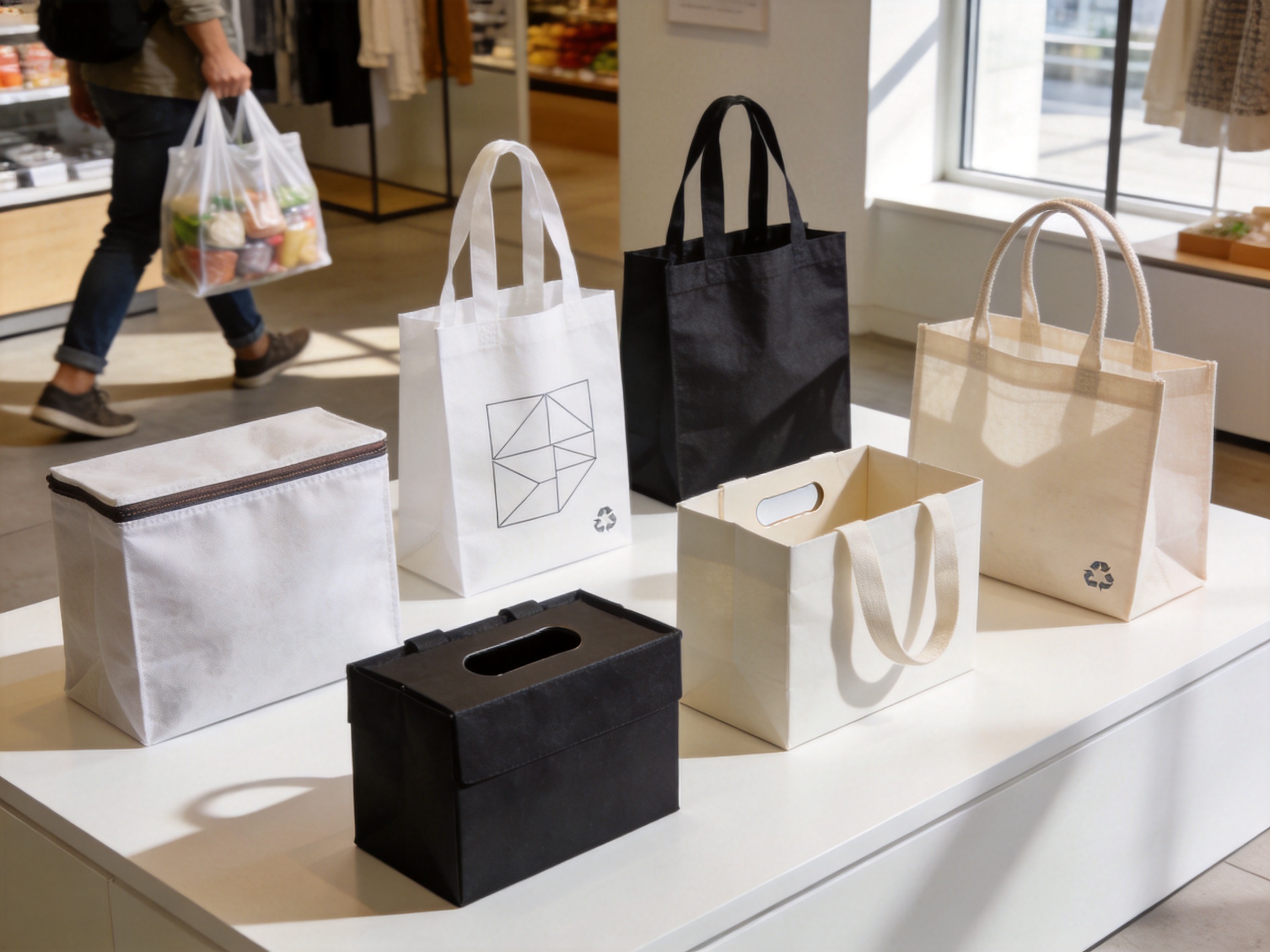
Non-woven bags can be manufactured in many forms. Common structures include flat bags, box-bottom bags, drawstring bags, gusseted shopping bags, loop-handle bags, die-cut handle bags, and laminated bags. Some models are designed for short-term promotional use, while others are produced with stronger material and reinforced construction for repeated shopping or storage use.
The surface of a non-woven bag is also suitable for printing. Text, logos, illustrations, product information, campaign messages, and color patterns can be applied using appropriate printing methods. This makes the bag particularly attractive to businesses that want their packaging to perform a marketing function after the customer leaves the store or event.
Non-woven bags are often selected because they sit between thin single-use plastic bags and more expensive textile or paper alternatives. They offer a combination of low weight, practical strength, printable surface area, flexible design, and comparatively efficient production. Their performance depends on the selected material, bag structure, handle design, stitching or heat-sealing method, printing system, and intended load.
Why Non-Woven Bags Are Valuable for Modern Packaging
Packaging is now expected to do several jobs at the same time. It must protect or carry a product, remain convenient for users, communicate a brand message, support efficient logistics, and respond to increasing environmental awareness. Non-woven bags address these requirements through a balanced design approach.
Reusable Convenience
One of the primary advantages of a non-woven bag is its potential for repeated use. A customer may use the bag for shopping, carrying lunch containers, transporting books, organizing household goods, or storing personal items. Each additional use can reduce the need for a new carrier bag and extend the functional life of the packaging.
Reusable performance depends on responsible design. A suitable bag should have an appropriate material weight, handle length, seam structure, and bottom construction for its intended contents. A bag designed for lightweight promotional items does not necessarily have the same requirements as a bag intended to carry bottles or packaged food. Professional product development helps ensure that the construction matches the application.
Lightweight Construction
Non-woven material is lightweight compared with many rigid or heavy textile packaging options. This helps reduce the amount of material used per unit and can simplify storage and transportation. Flat-packed bags occupy relatively little warehouse space before distribution, making them practical for retailers, wholesalers, trade shows, and promotional campaigns.
Lower weight may also help businesses manage shipping costs and inventory handling. However, lightweight construction should not be confused with weak construction. Through material selection and structural design, a non-woven bag can provide useful carrying performance while remaining easy to handle.
Large Printing Area
The broad, relatively smooth surface of a non-woven bag provides space for visible graphics. A company logo can be printed on one or both sides, while additional elements such as slogans, contact information, product categories, seasonal artwork, or sustainability messages can be incorporated into the design.
Because customers often carry reusable bags in public places, a well-printed bag may generate repeated brand exposure. It can function as a mobile advertisement without the recurring media cost associated with many traditional advertising formats. The bag therefore combines packaging utility with brand communication.
Flexible Application
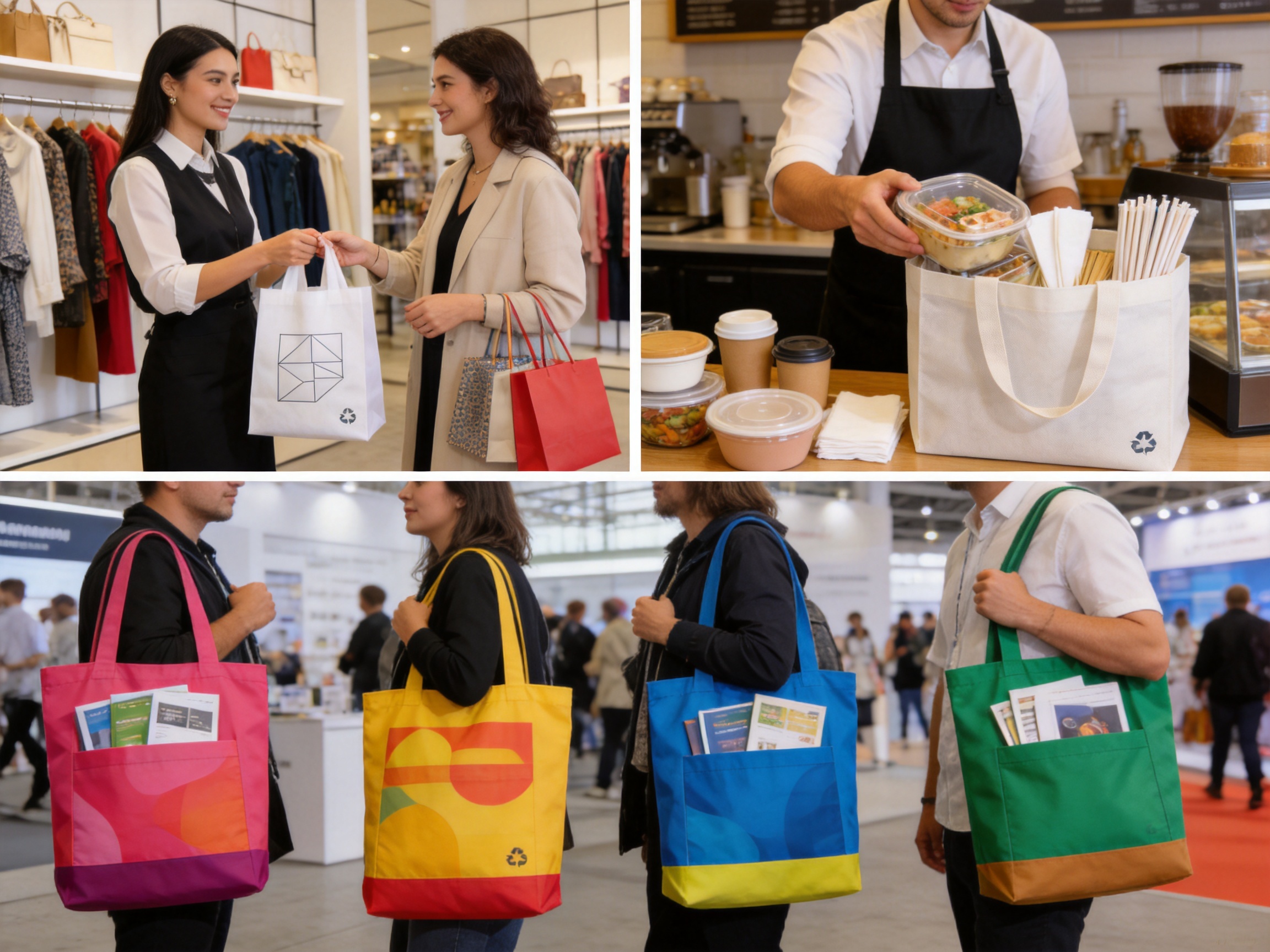
Non-woven bags can be used in many commercial environments. Retail stores may use them for clothing, groceries, household goods, or gifts. Food-service operators may use them for takeaway orders, catering packages, or delivery accessories when the bag is designed for the weight and conditions involved. Companies can also use them for conferences, exhibitions, internal employee programs, charity events, and customer appreciation campaigns.
The same basic material category can support different visual identities and functional structures. A minimalist bag in a neutral color may suit a premium retailer, while a brightly printed bag may support a festival or promotional event. This flexibility allows buyers to develop packaging that is consistent with their product positioning.
Advantages Over Conventional Single-Use Plastic Carriers
Thin single-use plastic bags are often chosen for their low initial cost, but they generally provide limited opportunities for reuse and branding. Their thin structure may also make them vulnerable to tearing or stretching when carrying irregular or heavier items. A non-woven bag can offer a more substantial appearance and a more durable user experience.
Compared with a very thin plastic carrier, a non-woven bag usually feels more stable in the hand and has greater perceived value. It can be used repeatedly, stored easily, and printed with a more fabric-like appearance. The customer may be more willing to retain it instead of disposing of it immediately.
Compared with some paper bags, non-woven bags can provide better resistance to bending and repeated handling. Paper remains an important packaging material, especially for businesses seeking a paper-based appearance, but it can become weakened by moisture or repeated folding. Non-woven fabric may be more suitable where reusability and flexible storage are priorities.
Compared with conventional woven fabric bags, non-woven bags can often be manufactured with simpler construction and efficient material usage. Their smooth sheet structure supports high-volume production and consistent printing. This can make them a practical option for businesses that need customized bags in commercial quantities.
These comparisons should always be evaluated according to the specific application. No bag is suitable for every product, climate, load, or disposal system. Responsible packaging selection considers the bag’s expected service life, material composition, production requirements, transportation, customer behavior, and end-of-life pathway.
Material and Construction Options
The performance of a non-woven bag begins with material selection. Buyers may request different fabric weights and finishes according to the desired balance between cost, appearance, flexibility, and strength. A lighter material may be appropriate for a short promotional campaign, while a heavier material may be preferred for frequent reuse.
Fabric Weight
Fabric weight affects the body, feel, and carrying performance of the bag. Lightweight fabric can support economical production and easy distribution. Medium-weight fabric provides a balance between flexibility and durability. Heavier fabric can create a more substantial premium impression and may support higher load requirements when combined with suitable handles and seams.
The correct weight should be determined by the intended contents rather than selected solely on the basis of price. A professional manufacturer can help match fabric specifications with product dimensions, loading expectations, printing coverage, and target use frequency.
Bag Shape and Gussets
Flat bags are simple, economical, and suitable for documents, clothing, or lightweight retail purchases. Gusseted bags provide additional depth and can stand more easily when placed on a counter or floor. Box-bottom structures may improve capacity and stability for certain products.
Side gussets can also provide larger printing surfaces and a more spacious interior. However, they may require additional material and more complicated manufacturing steps. Product dimensions should therefore be developed together with the intended capacity and visual design.
Handle Styles
Handle selection influences both appearance and comfort. Die-cut handles are integrated into the bag body and can create a clean, simple appearance. Loop handles may be made from matching or contrasting non-woven material and can offer a soft carrying experience. Longer handles may allow the customer to carry the bag over the shoulder, while shorter handles are often suitable for hand carrying.
Handle attachment is a critical area because it receives concentrated stress. Reinforcement, stitching, heat bonding, or other suitable methods may be used depending on the bag design and material. A reliable manufacturing process pays close attention to the connection between the handle and the main body.
Lamination and Surface Finish
Lamination can add a protective layer and alter the appearance or tactile quality of the bag. A laminated surface may improve resistance to light moisture and create a smoother finish for certain graphics. Matte or glossy effects can also support different brand styles.
Any additional layer should be selected carefully because it can affect recyclability, cost, flexibility, and production requirements. The best choice depends on whether the priority is visual impact, moisture resistance, premium appearance, or simplified material recovery.
Customization for Retail and Food-Service Brands
Customization is one of the strongest reasons to choose non-woven bags. A standardized plain bag may perform a basic carrying function, but a customized bag can become an integrated part of the customer experience. Design decisions can reflect the company’s colors, product category, service style, and market position.
Size Development
Bag dimensions should be based on the products that customers will place inside. A bag that is too small may be inconvenient and difficult to close. A bag that is too large may use unnecessary material and become uncomfortable when partially filled. Buyers should provide representative products or accurate measurements during the development stage whenever possible.
Size planning may include length, width, depth, handle drop, opening size, and internal capacity. For takeaway and food-service applications, the design may also need to accommodate cups, bowls, lids, containers, napkins, cutlery, and other accessories without excessive movement.
Color Selection
Color contributes to immediate recognition. Bags can be produced in colors that match an existing visual identity or in seasonal colors for special campaigns. Dark colors may provide a strong background for light printing, while pale colors can create a clean and understated appearance.
Color consistency is important for multi-batch orders. An established manufacturing system should control material preparation and printing conditions to reduce unnecessary variation. Buyers should confirm color requirements through approved samples or reference standards before mass production.
Logo and Graphic Printing
Printing artwork should be prepared at an appropriate resolution and supplied in a suitable format. Designers should consider the physical shape of the bag, seam locations, handle placement, gussets, and folding areas. Text should remain legible at the final print size, and important information should not be placed too close to edges or handles.
Businesses may choose a single-color logo for a restrained corporate style or a multi-color design for stronger visual impact. The printing approach should be selected according to the number of colors, required coverage, material surface, order volume, and desired appearance.
Functional Branding
Branding does not have to be limited to a logo. A bag may include a short message, a customer-care statement, a product-use reminder, a campaign theme, or a QR code area where appropriate. It may also display product categories or a store location. The most effective artwork balances visibility with readability and avoids overcrowding the available surface.
For food-service businesses, customized bags can coordinate with takeaway bowls, plastic cups, cup lids, disposable straws, and other packaging accessories. A consistent packaging family can make an order appear more professional and recognizable. This is especially valuable for businesses that rely on repeat customers and visual differentiation.
Manufacturing Strengths and Quality Management
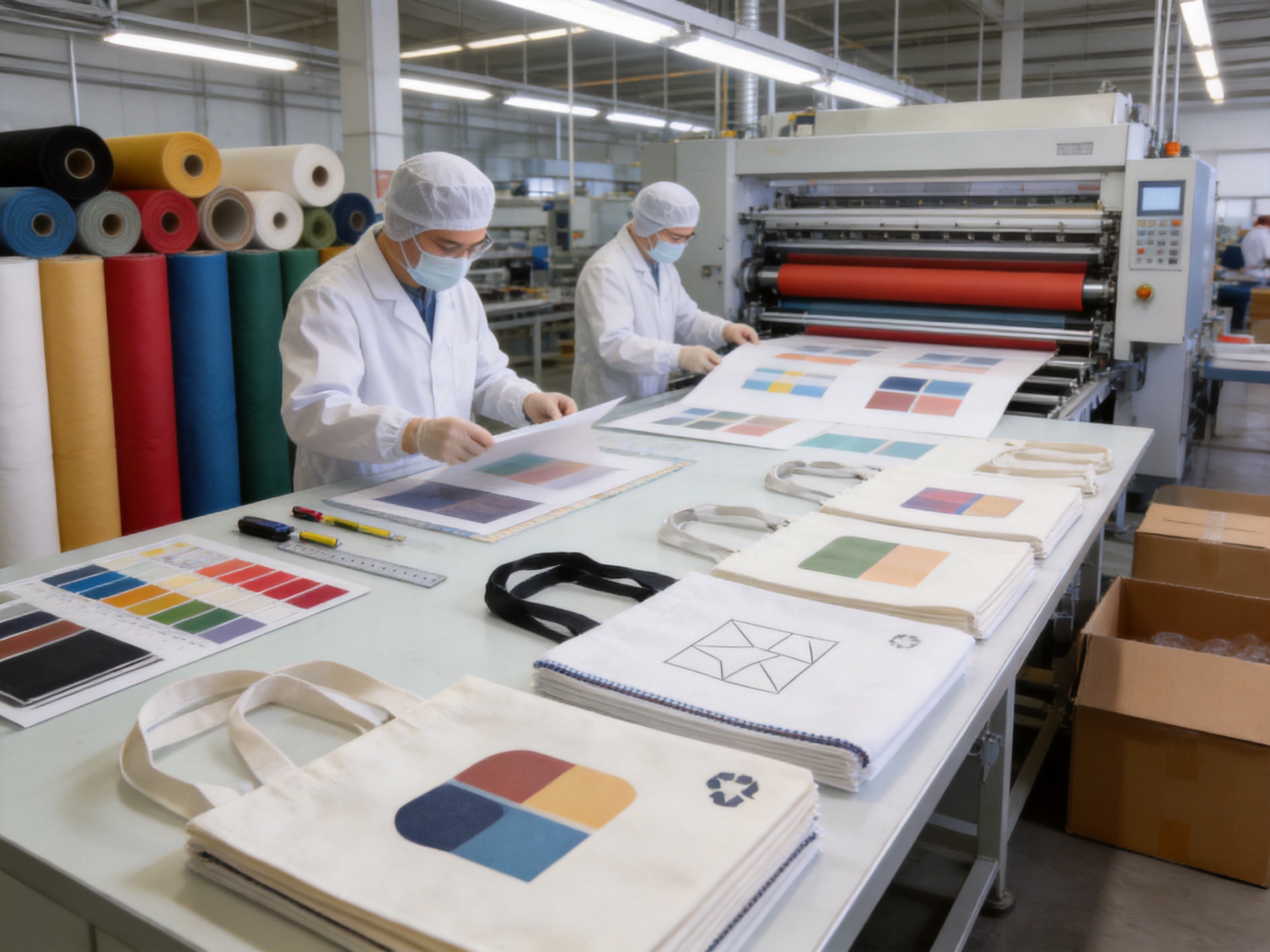
Product quality depends not only on the material but also on the reliability of the manufacturing system. A capable supplier should be able to manage product development, raw material preparation, printing, cutting, forming, handle attachment, inspection, packing, and shipment as connected stages rather than isolated tasks.
Yuqian Packaging Technology (Jiangsu) Co., Ltd. was established in 2010 and operates in Taizhou City, Jiangsu Province. The company has a plant area of approximately 30,000 square meters and focuses on the research, development, production, and sales of new food packaging materials and products. This experience supports a structured approach to packaging projects that require both technical development and commercial consistency.
The company reports having obtained the QS national industrial product production license, ISO9001 quality management system certification, BRC certification, German DIN safety certification, and EU RoHS-related testing. These certifications and testing references indicate an emphasis on controlled production, product safety, quality management, and compliance considerations. Buyers should confirm the scope, validity, and applicability of specific certifications for the exact product and market before placing an order.
Research and Development Capability
Research and development is important when a product must satisfy several requirements at once. A non-woven bag may need to be lightweight, attractive, printable, comfortable, strong enough for its load, and economical at the target order quantity. Adjusting one characteristic can influence another, so development work should evaluate the whole product rather than a single material feature.
Experienced technical teams can help assess fabric weight, handle structure, bag dimensions, printing, lamination, packaging method, and quality standards. They can also identify potential manufacturing risks before mass production, reducing the possibility of costly corrections later.
Controlled Production Processes
A professional production workflow normally begins with order review and technical confirmation. Artwork, dimensions, materials, colors, handle design, packing details, and inspection requirements are checked before production begins. This stage helps ensure that the purchasing specification and factory instructions are aligned.
Material preparation follows the approved specification. The non-woven fabric is inspected for appearance, color, surface condition, and other relevant characteristics. Printing is then performed according to the confirmed artwork and production parameters. After printing, the material may be cut into panels or blanks according to the bag design.
Forming and assembly may include folding, heat sealing, stitching, handle attachment, reinforcement, gusset creation, and bottom forming. The exact process depends on the selected product structure. Inspection can take place during production and after completion to identify printing defects, dimensional variation, loose handles, incomplete seals, stains, or other issues.
Finished bags are normally counted, folded, packed, and prepared for shipment according to the agreed packaging method. Clear labeling and organized packing help protect the products during transportation and make them easier for the buyer to receive and distribute.
Quality Factors Buyers Should Evaluate
When comparing suppliers, buyers should look beyond the unit price. A lower price may not represent better value if it results in inconsistent dimensions, weak handles, poor printing, excessive defects, or delivery problems. Total value includes product performance, manufacturing consistency, communication, inspection support, and service reliability.
Material Consistency
Fabric should have a consistent appearance and suitable body for the intended product. Differences in thickness, color, surface texture, or stiffness can affect both the visual result and carrying performance. Material specifications should be documented and checked against approved samples.
Seam and Handle Strength
Handles and seams should be appropriate for the expected load. A bag may look attractive but fail if the handle connection is poorly reinforced or if the bottom is not suitable for the product weight. Sampling and practical load testing can provide useful information before a large order is approved.
Printing Accuracy
Printing should be checked for color, position, sharpness, coverage, adhesion, and consistency. Small movement may be acceptable in some promotional products, but premium retail packaging may require tighter registration and cleaner edges. The buyer and manufacturer should agree on acceptable tolerances before production.
Dimensions and Appearance
Finished dimensions should correspond to the approved specification. The bag should open correctly, stand or fold as intended, and have clean edges and stable construction. Visual inspection should also consider wrinkles, stains, holes, loose threads, incomplete bonding, and other defects.
Packaging and Delivery
Completed products should be packed in a way that prevents unnecessary crushing, moisture exposure, contamination, or mixing of different versions. Outer-carton marks and internal counts should support efficient receiving. For international orders, the buyer and supplier should discuss shipping terms, documentation, production lead time, and any destination-market requirements.
Environmental Considerations
Non-woven bags are often marketed as reusable or recyclable packaging, but environmental performance should be considered carefully. Reuse is influenced by product durability, customer behavior, design quality, and the number of times the bag is actually used. A bag that is reused repeatedly may provide greater practical value than a bag that is used only once, regardless of its material category.
Material composition also matters. Different non-woven fabrics may have different recycling pathways, and laminated or mixed-material structures can complicate recovery. Buyers should request clear information about the selected material and should avoid making environmental claims that cannot be supported by the product’s actual composition and local waste-management infrastructure.
Responsible design can reduce unnecessary material use while maintaining adequate performance. Appropriate sizing, efficient nesting during cutting, optimized fabric weight, and durable construction can all contribute to better resource use. Packaging artwork may also encourage customers to reuse the bag or dispose of it through an appropriate local system.
The company’s focus on new food packaging materials and products, together with its stated testing and certification activities, provides a foundation for discussing material and compliance requirements during product development. Nevertheless, environmental claims should be reviewed for the specific bag structure, destination market, and applicable regulations.
Applications Across Different Industries
Retail Shopping
Retail stores can use customized non-woven bags for clothing, shoes, accessories, gifts, household products, and packaged goods. A well-designed bag can protect the purchase during transport and extend brand exposure after the sale. Different sizes can be created for small, medium, and large shopping orders.
Food-Service and Takeaway
Restaurants, cafés, bakeries, and catering businesses may use non-woven bags for takeaway packages when the design is matched to the load and handling conditions. The bag can hold food containers, cups, lids, napkins, and utensils in an organized way. It may be used alongside plastic cups, plastic cup lids, takeaway bowls, disposable straws, and other food-packaging products.
Food-service buyers should consider cleanliness, ventilation, spill risk, container stability, and the distance between the point of sale and the customer’s destination. The bag should not be treated as a substitute for suitable primary food-contact packaging unless it has been specifically designed and approved for that purpose.
Promotional Events
Trade shows, conferences, exhibitions, product launches, and public events frequently require bags for brochures, samples, catalogs, and promotional gifts. Non-woven bags are practical because they are light, easy to print, and simple to distribute in large quantities. The event name, date, sponsor information, and campaign message can be included in the artwork.
Corporate and Institutional Programs
Businesses, schools, hospitals, community organizations, and public institutions can use non-woven bags for internal distribution, educational campaigns, employee programs, or public outreach. A durable bag may continue to be useful long after the original event, extending the visibility of the organization.
Gift and Seasonal Packaging
Gift shops and seasonal retailers can create special-edition bags for holidays, festivals, anniversaries, and limited campaigns. Color, illustration, handles, and printing can be adjusted to suit the occasion. A reusable bag may increase the perceived value of the gift while reducing the need for additional outer packaging.
From Concept to Finished Product
A successful customized order benefits from a clear development process. The first step is to define the application. Buyers should identify what the bag will carry, how often it will be reused, where it will be distributed, and what appearance is expected.
The second step is to determine the technical specification. This may include material type, fabric weight, dimensions, gusset size, handle style, printing colors, lamination, packaging quantity, and inspection requirements. Clear specifications reduce misunderstandings and provide a basis for quotation and production.
The third step is artwork preparation and sample review. A sample allows the buyer to assess the size, material feel, handle comfort, printing position, color, and overall appearance. If changes are needed, they should be completed before mass production.
The fourth step is production control. The manufacturer should follow the approved specification and maintain communication regarding material availability, production scheduling, inspection, and packing. For larger or more complex orders, pre-production approval and in-process checks can be especially valuable.
The final step is delivery evaluation. Buyers should inspect the received goods, compare them with the approved sample, verify quantities, and record any issues. Feedback from actual users can help improve future orders, including adjustments to handle length, fabric weight, size, or graphics.
How the Product Supports Brand Value
A non-woven bag is physically simple, but its commercial value can be significant. It accompanies the customer beyond the original transaction and can become part of daily life. When the design is attractive and the construction is dependable, the customer may continue using the bag for shopping or storage.
This extended use can strengthen familiarity with the brand. It can also communicate a company’s preference for practical and reusable packaging. The bag’s appearance should therefore be consistent with the quality of the product or service it represents. Careful design, clean printing, comfortable handles, and stable construction all contribute to this impression.
For businesses with multiple packaging products, consistent visual design can create a recognizable packaging system. Cups, lids, takeaway bowls, straws, bags, and other accessories can share colors, typography, and graphic elements. This coordinated approach can help a brand appear more organized at the store counter and in customer photographs.
Why Choose an Experienced Manufacturing Partner?
Choosing an experienced manufacturer can simplify the transition from a packaging idea to a production-ready product. A supplier with research, production, and sales capabilities can discuss technical details in one coordinated process. This is particularly useful when the customer requires a custom size, special printing, multiple bag structures, or packaging products that need to work together.
Yuqian Packaging Technology (Jiangsu) Co., Ltd. combines packaging development with manufacturing experience in food-related materials and products. Its Taizhou production base and Shanghai branch support efforts to serve customers and expand business channels. The company’s stated quality and safety certifications provide an additional basis for supplier evaluation, while direct communication with the technical and commercial teams can help clarify project requirements.
A manufacturing partner should also be evaluated by responsiveness. Timely replies, accurate quotations, clear sample procedures, realistic lead times, and effective problem solving are essential for a successful packaging project. Product quality and service quality should be considered together.
Frequently Asked Questions
What is the main benefit of a non-woven bag?
The main benefit is the balance of lightweight construction, reusability, printable surface area, flexible design, and practical carrying performance. It can serve as both a carrier and a long-lasting promotional item.
Can non-woven bags be customized?
Yes. Customization can include bag size, fabric weight, color, handle style, gusset structure, printing, lamination, packaging method, and other specifications. The available options depend on the product design, order quantity, and manufacturing process.
Are non-woven bags suitable for food-service businesses?
They can be suitable for carrying takeaway containers, cups, bowls, and related accessories when the bag is designed for the expected load and handling conditions. The bag itself should not automatically be considered a food-contact material. Primary food packaging should be selected and assessed separately according to the application and market requirements.
How strong is a non-woven bag?
Strength depends on fabric weight, bag dimensions, handle design, seam construction, reinforcement, and the type of load. A manufacturer can recommend an appropriate construction and perform sample or load evaluations for the intended application.
Can a non-woven bag be used more than once?
Many non-woven bags are designed for repeated use. Actual service life depends on material quality, construction, load, storage, cleaning conditions, and customer handling. A bag should be used within the performance limits established for its design.
Can non-woven bags be printed in multiple colors?
Yes. Printing options depend on the selected fabric, artwork, print coverage, required color accuracy, and production method. Buyers should approve artwork and samples before mass production.
What information should be provided when requesting a quotation?
Useful information includes the intended application, bag dimensions, quantity, material preference, fabric weight, color, handle type, printing details, lamination requirement, packing method, delivery location, and target schedule. Product samples or photographs can also help the manufacturer understand the requirement.
Does certification apply to every non-woven bag automatically?
No. Certification scope depends on the specific facility, material, product, production process, and market requirement. Buyers should confirm which certifications, tests, and documents apply to the exact product being ordered.
How should environmental claims be made?
Environmental claims should be specific and supported by verifiable information. Buyers should consider reusability, material composition, recycled content if applicable, local recycling systems, and end-of-life conditions. General claims should not replace product-specific evidence.
Why is sampling important?
Sampling allows the buyer to evaluate the actual material feel, dimensions, printing quality, handle comfort, structure, and overall appearance before committing to mass production. It also helps identify design problems at an early stage.
Conclusion
Customized non-woven bags offer a practical packaging solution for companies that need portability, reusable value, brand visibility, and flexible design. Their lightweight structure, printable surface, range of shapes, and adaptable handle options make them suitable for retail, food-service, promotional, corporate, and institutional applications.
The strongest results come from matching the bag’s construction to its intended use. Fabric weight, size, gussets, handles, printing, reinforcement, and packing should be selected as parts of one integrated product. Quality management, sample approval, material control, and production inspection are equally important for achieving consistent results.
With its experience in packaging materials and products, research and development resources, production base in Jiangsu, and stated quality and safety certifications, Yuqian Packaging Technology (Jiangsu) Co., Ltd. can support businesses seeking customized packaging development and manufacturing. A carefully specified non-woven bag can carry products reliably, communicate a brand effectively, and encourage more responsible reuse in everyday commerce.
References
1. International Organization for Standardization. ISO 9001 Quality Management Systems: Requirements.
2. British Retail Consortium. Global Standard for Packaging and Packaging Materials.
3. International Organization for Standardization. General principles and guidance for environmental claims related to packaging and product communication.
4. European Union. Guidance and regulatory principles concerning packaging materials, waste reduction, and product compliance.
5. International Organization for Standardization. Principles for environmental labels and declarations.
6. Company-provided corporate information concerning manufacturing history, production facilities, research and development, certifications, and packaging product capabilities.



 English
 Español
 عربى