English
 Español
 عربى
عربىContent
- 1 1. Product Overview
- 2 2. Why Polypropylene Is Suitable for Takeaway Lids
- 3 3. Main Product Advantages
- 4 4. Comparison with Basic Disposable Lids
- 5 5. Manufacturing Process and Quality Control
- 6 6. Company Manufacturing Strengths
- 7 7. Quality Management and Certifications
- 8 8. Applications in Food Service
- 9 9. Sustainability Considerations
- 10 10. OEM Customization Process
- 11 11. Practical Selection Guide for Buyers
- 12 12. Operational Recommendations
- 13 13. Frequently Asked Questions
- 13.1 Q1: What material is used for the lid?
- 13.2 Q2: Is the lid completely sealed?
- 13.3 Q3: What is the standard size?
- 13.4 Q4: Can the lid be customized?
- 13.5 Q5: Is the lid transparent?
- 13.6 Q6: What types of food can use this lid?
- 13.7 Q7: Does the lid prevent all leakage?
- 13.8 Q8: Can the lid be stacked?
- 13.9 Q9: What certifications or quality systems does the manufacturer have?
- 13.10 Q10: How can a customer begin a customized project?
- 13.11 Q11: How should the lids be stored?
- 13.12 Q12: Why choose an OEM manufacturer instead of a general distributor?
- 14 14. Conclusion
- 15 References
- 16 Product: Clear PP plastic ordinary vented lid
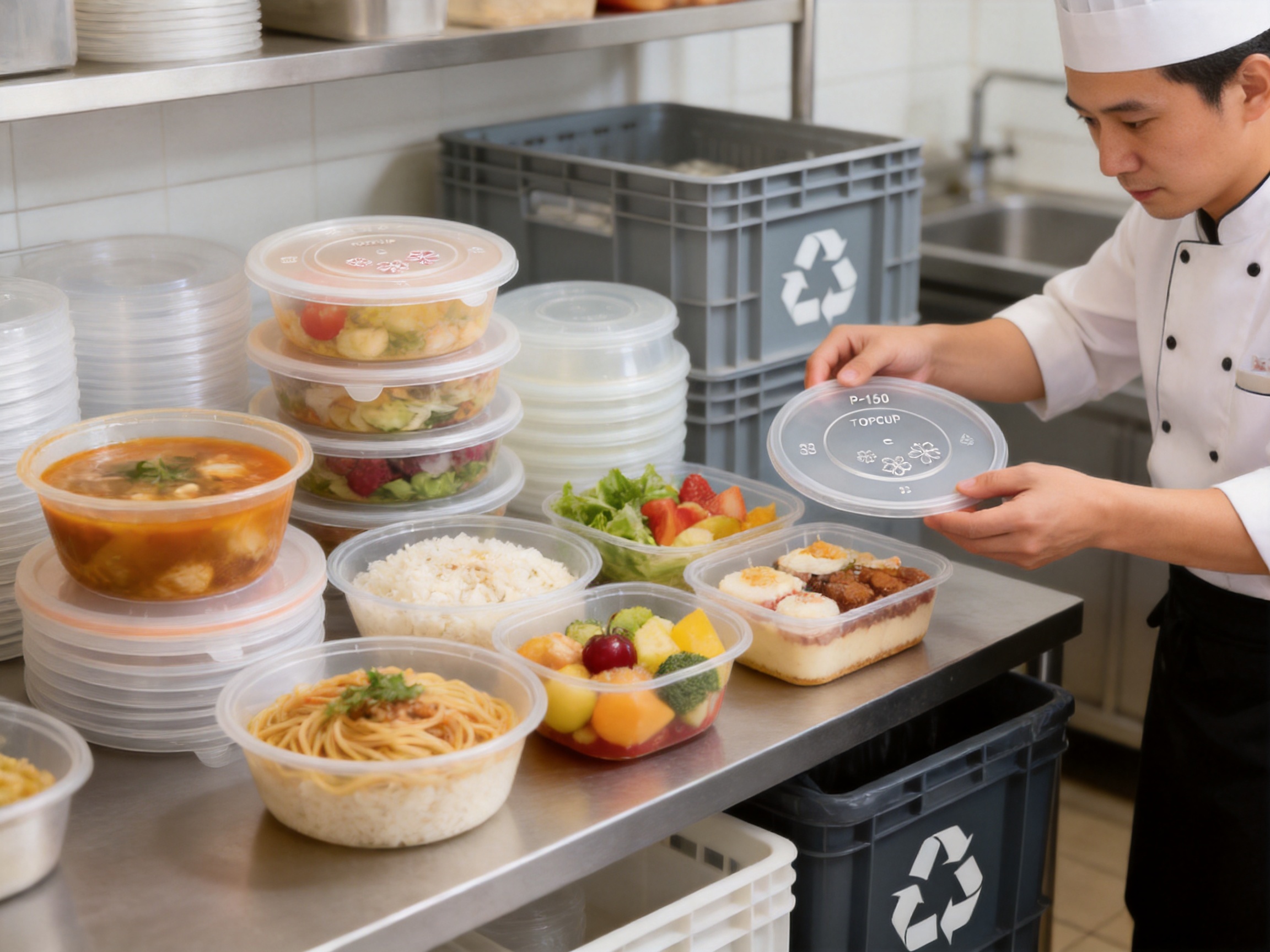
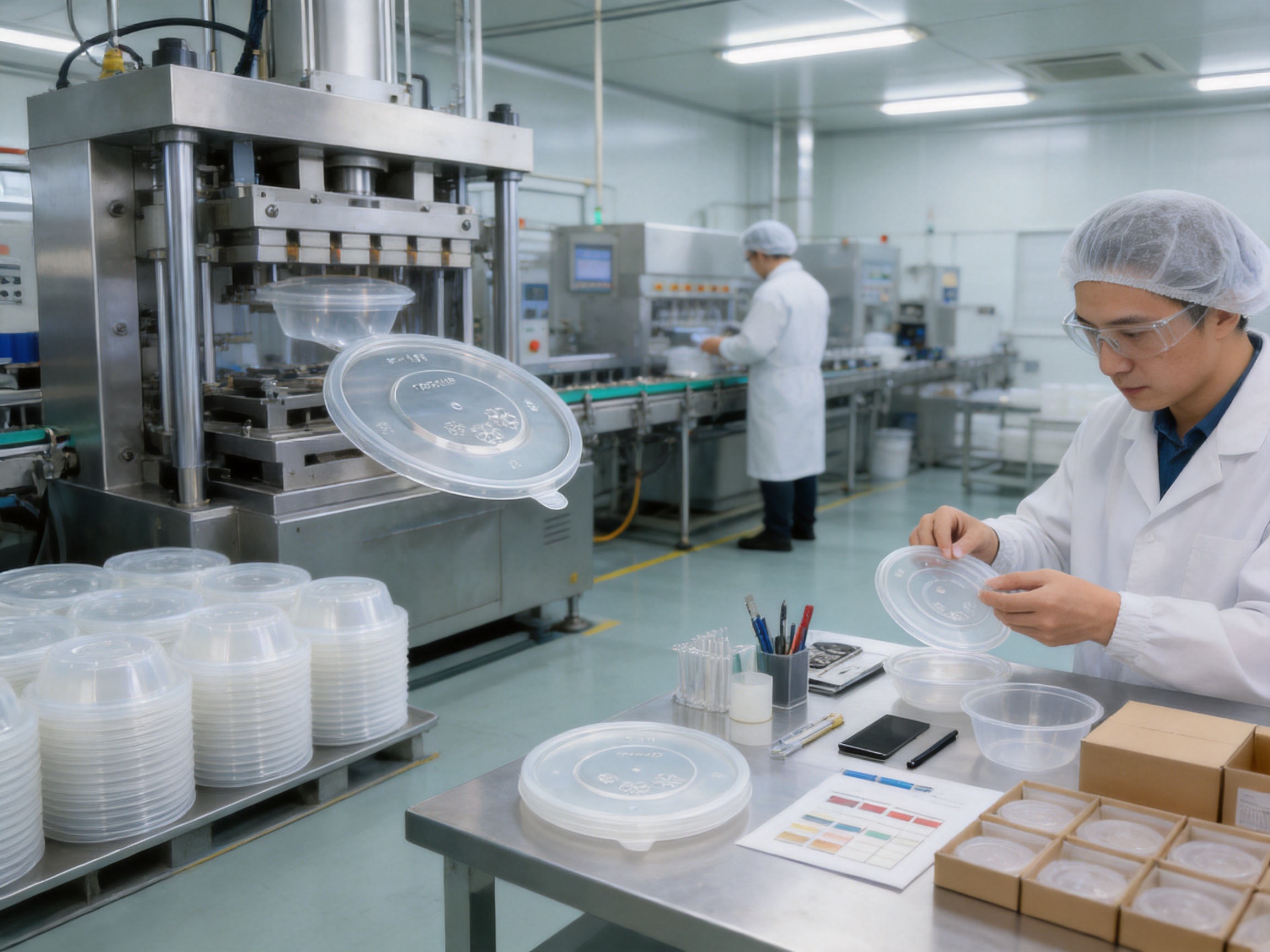
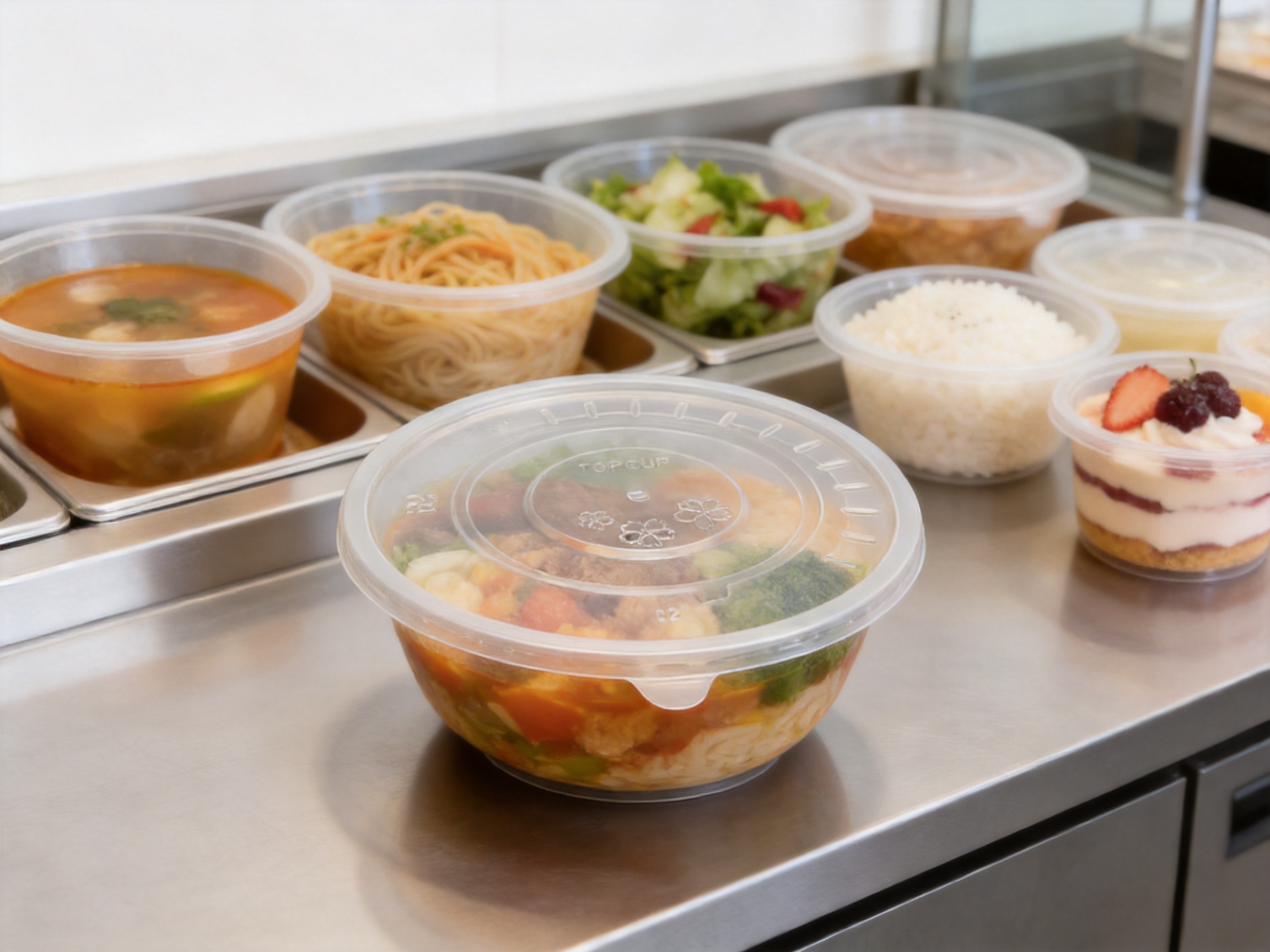
In takeaway food service, the lid is more than a simple cover. It is a critical component that protects food, supports safe transportation, preserves presentation, and influences the customer’s overall impression of a catering brand. A well-designed lid must seal securely, fit consistently, withstand handling, and provide an appropriate balance between protection and ventilation. The clear PP plastic ordinary vented lid is designed to meet these practical requirements for takeaway bowls, food containers, and related disposable packaging applications.
Manufactured from food-grade polypropylene, this transparent lid combines a clean appearance with useful physical performance. Its thickened structure supports durability, while its ordinary vented design allows a certain degree of air circulation without compromising the basic sealing function. The result is a versatile packaging accessory suitable for restaurants, takeaway kitchens, catering businesses, food delivery companies, institutional food service providers, and packaging distributors.
Yuqian Packaging Technology (Jiangsu) Co., Ltd. develops and manufactures disposable food packaging products, including plastic cups, cup lids, takeaway bowls, disposable straws, recycle bags, peripheral packaging products, and injection film lining cup and bowl boxes. With experience in research and development, production, quality management, and OEM service, the company provides clear PP plastic ordinary vented lids for customers requiring dependable packaging and flexible customization.
1. Product Overview
The clear PP plastic ordinary vented lid is a transparent polypropylene lid designed for use with compatible takeaway containers. Its primary functions are to cover the container, reduce the risk of leakage and contamination, support convenient handling, and help maintain the condition of the packaged food during storage or transportation.
The lid is described as an ordinary vented model because it includes a ventilation function while retaining a conventional sealing structure. This configuration is particularly useful for products that may release heat or steam after filling. Without any ventilation, steam can accumulate inside a sealed container and create pressure, condensation, softening, or deformation. A controlled venting design can help relieve part of this pressure and maintain better stability during delivery.
The transparent appearance allows the contents of the container to remain visible. This can improve product presentation, make order identification easier, and help customers inspect the food before opening the package. Transparency is especially valuable for salads, noodles, soups, prepared meals, desserts, fresh fruit, snacks, and other foods where visual appeal contributes to purchasing decisions.
| Product Item | Specification |
| Product name | Clear PP plastic ordinary vented lid |
| Product category | PP takeaway lid and liner |
| Lid type | 179 Regular |
| Caliber | 179 mm |
| Approximate gram weight | 8 g |
| Standard color | Transparent |
| Material | Food-grade polypropylene |
| Application | Takeaway bowls, food containers, catering packaging, and disposable food service applications |
| Customization | Color, caliber, dimensions, and other requirements may be discussed according to customer needs |
The listed 179 Regular model has a 179 mm caliber and an approximate gram weight of 8 g. Actual compatibility should be confirmed by matching the lid with the selected container, because container rim profiles, wall thicknesses, flange dimensions, and sealing structures can vary between manufacturers.
2. Why Polypropylene Is Suitable for Takeaway Lids
Polypropylene, commonly abbreviated as PP, is widely used in food packaging because it offers a practical combination of low weight, chemical stability, processing efficiency, and impact resistance. For disposable lids, these properties are important because the product must remain functional throughout filling, stacking, transportation, and final consumption.
One important benefit of PP is its relatively favorable strength-to-weight balance. A lid made from properly selected and processed polypropylene can provide useful rigidity without adding unnecessary packaging weight. This allows manufacturers to develop a lid that is lightweight enough for efficient distribution while still offering sufficient structural support for ordinary food service handling.
Polypropylene also offers good resistance to many substances commonly found in food packaging applications. Sauces, oils, dressings, and other food ingredients can come into contact with the lid during filling or transportation. A suitable food-grade PP formulation helps the lid maintain its basic physical properties in these circumstances.
The material’s processing performance also supports high-volume manufacturing. PP can be formed into precise shapes through industrial plastic processing equipment. When the material, mold, temperature, pressure, cooling, and cycle time are properly controlled, manufacturers can produce large quantities of lids with consistent dimensions and repeatable quality.
For transparent packaging, the visual properties of the material are also significant. Clear PP allows customers and food operators to see the contents while preserving a clean and professional appearance. The transparent surface can be used with a broad range of container colors and food presentations, making it a flexible option for different catering brands.
Material selection must always be combined with appropriate processing and quality control. A good material alone cannot guarantee a reliable lid. Consistent production depends on correct resin selection, effective mold design, stable forming conditions, careful trimming, appropriate inspection, and suitable storage. These manufacturing factors are central to the performance of the final product.
3. Main Product Advantages
3.1 Thickened and Durable Construction
The lid uses a thickened design to provide greater resistance to ordinary impact and handling compared with extremely thin, fragile alternatives. During takeaway operations, lids may be pressed onto containers by hand or by semi-automatic equipment. They may then be stacked, placed in bags, moved through delivery vehicles, and handled by customers. A durable structure helps reduce the likelihood of cracking, bending, or premature failure during these steps.
Thickness must be balanced carefully. Excessive thickness can increase material consumption, weight, and cost, while insufficient thickness may reduce rigidity and sealing performance. The objective is to create a structure that provides a suitable combination of strength, flexibility, and economic efficiency for the intended application.
The thickened construction also supports a more stable rim. Since the rim is responsible for engaging with the container, its shape must remain sufficiently consistent during application. A stable rim can contribute to better fitting and improved resistance to accidental opening.
3.2 Leak-Resistant Sealing Performance
Takeaway packaging must control the movement of food and liquids during transportation. The clear PP plastic ordinary vented lid is designed with a sealing structure intended to reduce leakage when properly matched with a compatible container. This is especially important for soups, sauces, prepared meals, noodles, rice dishes, and other products that may shift during delivery.
A leak-resistant lid can help protect delivery bags, vehicle interiors, work surfaces, and customer belongings. It can also reduce food waste and prevent the negative customer experience associated with spilled meals. For food service operators, improved sealing may contribute to fewer complaints, lower replacement costs, and greater confidence in delivery operations.
It is important to understand that lid performance depends on the complete packaging system. Correct container compatibility, proper filling level, suitable food temperature, accurate application, and careful transportation all influence leakage. A lid should not be overfilled, forced onto an incompatible rim, or used outside its intended conditions. Yuqian Packaging Technology can discuss the matching requirements with customers during product selection and customization.
3.3 Ordinary Ventilation Function
The ventilation feature distinguishes this product from a completely closed lid. Hot food may generate steam after filling, and steam can create condensation or internal pressure. A suitable venting arrangement permits a certain amount of air movement, helping to reduce pressure accumulation and supporting the stability of the container.
Ventilation is particularly useful when packaging freshly cooked food for short-distance delivery. It may help manage steam while preserving the principal purpose of the lid: covering and protecting the food. The exact performance depends on the vent structure, food temperature, filling conditions, and transportation time.
The ordinary vented design is intended as a practical general-purpose solution rather than a specialized high-pressure closure. Food operators should evaluate the product with their actual recipes, temperature ranges, container shapes, and delivery conditions before large-scale adoption.
3.4 Food-Grade Material Selection
The lid is manufactured from food-grade PP raw materials. Food packaging materials must be selected with attention to cleanliness, material stability, production conditions, and regulatory expectations. The use of suitable food-grade polypropylene supports applications in which the lid may come into contact with food or food vapor.
The product is described as non-toxic and odorless under its intended manufacturing and application conditions. A neutral appearance and low-odor packaging component can help preserve the customer’s perception of food quality. This is particularly relevant for delicate foods, beverages, desserts, and products with distinctive aromas.
Material compliance should be evaluated according to the destination market and the customer’s application. Yuqian Packaging Technology has experience with quality systems and product testing requirements, allowing customers to discuss documentation and compliance needs before production.
3.5 Clear and Professional Appearance
Transparency is one of the most visible advantages of the lid. Customers can see the food without removing the cover, while restaurant staff can identify orders more easily. A clear lid also allows the color, arrangement, and texture of the food to remain part of the presentation.
For food brands, packaging appearance can support a consistent identity even when the lid itself is not printed. A transparent lid can be combined with branded bowls, labels, sleeves, stickers, or printed bags. It is suitable for both simple and premium packaging systems.
The clear surface can also make it easier for staff to check whether the lid has been applied correctly and whether food has shifted during packing. This can support faster quality checks in busy kitchens.
3.6 Stackable and Space-Saving Design
Disposable packaging is commonly stored in warehouses, restaurant kitchens, distribution centers, and delivery stations. A stackable lid design helps reduce the space required for storage and transportation. More efficient stacking can improve shelf organization and reduce unnecessary handling.
For distributors, better stacking efficiency may allow more units to be stored in a given area. For restaurants, it can free valuable kitchen space and make packing materials easier to access. Stackability also supports more orderly inventory management, especially when different lid sizes and container formats are used.
3.7 Customization Flexibility
Although the standard product is transparent and available in the 179 Regular format, customers may require different dimensions, colors, calibers, or design details. Food packaging applications vary considerably, so a single standard size cannot meet every need.
As an OEM manufacturer, Yuqian Packaging Technology can discuss customized requirements from sample development through mass production. Depending on the project, customization may include lid diameter, rim profile, ventilation arrangement, color, weight, structural details, and packaging method.
Customization is particularly valuable for brands that use unique bowls or containers. A lid that is developed specifically for a container can improve fit, appearance, sealing, and operational efficiency. Customers should provide container samples, drawings, technical specifications, target quantities, and application information to support accurate development.
4. Comparison with Basic Disposable Lids
Many low-cost disposable lids focus primarily on providing a simple cover. While a basic cover may be sufficient for limited applications, it may not offer the same balance of sealing, ventilation, durability, and presentation required by modern takeaway operations.
Compared with very thin lids, a thickened PP lid can provide greater resistance to deformation during ordinary handling. This may be especially beneficial when food containers are stacked or placed in delivery bags. A lid that retains its shape is more likely to engage properly with the container rim.
Compared with opaque lids, a clear lid improves product visibility. This can make food identification easier for staff and customers. Transparent packaging can also strengthen the visual appeal of prepared meals and reduce the need to open the package for inspection.
Compared with completely sealed designs, an ordinary vented lid provides an option for managing steam and air movement. This can be helpful for hot food and certain prepared meals. At the same time, the lid maintains a conventional covering and sealing function for everyday takeaway use.
Compared with products available only in fixed specifications, an OEM-supported lid gives customers greater opportunities to adapt the product to their own containers and service processes. The ability to adjust size, color, caliber, and other features can reduce the compromises associated with one-size-fits-all packaging.
Price is also an important consideration, but purchasing decisions should evaluate total packaging performance rather than unit price alone. Leakage, breakage, poor fitting, inefficient storage, and inconsistent quality can create hidden costs. A more reliable lid may provide better value over the full operating cycle.
5. Manufacturing Process and Quality Control
The performance of a disposable lid is closely related to the manufacturing process. Producing a high-quality clear PP lid requires coordinated control of raw materials, tooling, forming, cooling, trimming, inspection, packaging, and storage.
5.1 Raw Material Preparation
Production begins with the selection and preparation of appropriate polypropylene raw materials. The material must be suitable for the intended food packaging application and compatible with the required transparency, strength, processing conditions, and color requirements.
Material handling procedures are important because contamination can affect appearance, odor, and safety. Raw materials should be managed in a controlled environment and handled according to established production procedures. For customized colors or specific performance requirements, the material formulation and color control process must be assessed in advance.
5.2 Mold and Tooling Design
The mold determines many of the lid’s final characteristics, including diameter, rim profile, vent geometry, thickness distribution, stacking structure, and surface appearance. Precision tooling is therefore essential for producing lids that fit consistently with their intended containers.
Tooling design must account for material flow, cooling behavior, shrinkage, ejection, and production cycle requirements. The vent structure must be formed accurately so that it performs its intended function without creating unnecessary weakness in the lid. The sealing edge must also be carefully shaped to support stable engagement with the container.
For customized orders, mold development may include drawing confirmation, sample production, fit testing, functional testing, and customer approval. This development stage helps identify potential problems before mass production begins.
5.3 Injection and Forming Operations
PP lids can be produced through controlled industrial plastic forming processes. During production, parameters such as material temperature, mold temperature, injection pressure, holding pressure, cooling time, and cycle speed must be managed appropriately.
Stable processing conditions help maintain consistent dimensions and reduce visible defects. If temperature or pressure is not properly controlled, the lid may show uneven thickness, warping, incomplete filling, flow marks, stress, or other quality issues. Experienced production teams monitor these factors and adjust the process according to product structure and material characteristics.
For transparent products, visual control is particularly important. Clarity, surface smoothness, color consistency, and freedom from excessive marks contribute to the finished product’s appearance. The production process must therefore combine functional inspection with visual inspection.
5.4 Cooling and Dimensional Stability
Cooling is a key stage because the lid must retain its intended shape after forming. Uneven cooling can cause distortion or changes in the rim geometry. Such changes may affect compatibility with the container and reduce sealing performance.
Appropriate cooling conditions help the lid achieve better dimensional stability. The production team must consider the material, mold design, wall thickness, cycle time, and ambient conditions. Consistent cooling contributes to repeatable production and supports reliable large-volume orders.
5.5 Trimming and Finishing
After forming, the lid may require trimming or finishing to remove excess material and create a clean edge. The rim should be smooth and properly formed so that it can be handled safely and applied effectively to the container.
Finishing operations must be controlled carefully. Excessive trimming can reduce the effective sealing area, while incomplete trimming may leave undesirable edges or affect stacking. Proper finishing supports both appearance and function.
5.6 Inspection and Sampling
Quality control may include inspections of dimensions, weight, transparency, rim condition, vent structure, surface quality, and compatibility with the intended container. Sampling procedures can help verify that production remains within the agreed requirements.
Functional testing may include fitting tests, stacking tests, handling tests, and leakage evaluations using representative containers and food or liquid conditions. Where hot food is involved, customers should conduct application testing under realistic temperatures and delivery times.
Inspection records support production traceability and help identify trends. If a deviation is discovered, corrective action can be taken before it affects a larger quantity of finished goods.
5.7 Packaging and Warehouse Management
Finished lids must be packed in a way that protects them from dust, deformation, moisture, and unnecessary handling. Packaging should support orderly counting, transportation, and storage. Since the product is stackable, the packing configuration can be designed to make efficient use of available space.
Warehouse conditions also matter. Disposable food packaging should be stored in a clean, dry area away from strong odors, chemicals, excessive heat, and sources of contamination. Proper stock rotation can help maintain product condition before use.
6. Company Manufacturing Strengths
Yuqian Packaging Technology (Jiangsu) Co., Ltd. was established in 2010 and is located in Taizhou City, Jiangsu Province, China. The company has a plant area of approximately 30,000 square meters and focuses on the research, development, production, and sales of new food packaging materials and products.
The company’s broad product range provides an integrated foundation for disposable food packaging projects. In addition to PP takeaway lids and liners, its product categories include plastic cups, plastic cup lids, takeaway bowls, disposable straws, recycle bags, peripheral products, and injection film lining cup and bowl boxes. This product coverage can simplify sourcing for customers that require several packaging components from one supplier.
As an OEM manufacturer, the company is structured to support projects that go beyond standard catalog products. Customers can discuss design requirements, container matching, material selection, sample development, production quantities, packaging details, and delivery schedules with one manufacturing partner.
Flexible production lines are valuable in the food packaging industry because customer requirements can differ by market, container type, food category, and brand positioning. The ability to adjust production according to project requirements can support both standard replenishment orders and customized packaging programs.
Efficient supply chain management also contributes to customer service. Reliable sourcing, production planning, inventory coordination, quality checks, and shipment preparation are all necessary for stable delivery. A supplier’s value is determined not only by the product itself but also by its ability to organize the complete order process.
The company has established a Shanghai branch to improve service quality and expand business channels. This additional business presence supports communication with customers and contributes to the company’s broader market development.
7. Quality Management and Certifications
Yuqian Packaging Technology reports that it has passed the QS national industrial product production license, ISO9001 Quality Management System certification, BRC certification, German authoritative safety DIN certification, and EU ROHS+ testing, among other requirements and evaluations.
These certifications and testing references demonstrate the company’s emphasis on structured production and quality management. ISO9001, for example, is associated with documented quality processes, process control, customer requirements, corrective action, and continual improvement. A quality management system provides a framework for controlling production rather than relying only on final inspection.
BRC-related certification or compliance is relevant to organizations that require structured product safety and supplier management procedures. DIN-related testing and EU RoHS+ testing may also be relevant depending on the market, product requirements, and customer documentation needs.
Certification requirements can vary by country, product category, food-contact application, and customer specification. Buyers should confirm which documents are applicable to their intended market and request current documentation during the qualification process. Yuqian Packaging Technology can discuss relevant certification and testing needs with customers.
8. Applications in Food Service
The clear PP plastic ordinary vented lid can be used in a wide range of disposable food packaging systems. Its primary application is with compatible takeaway bowls and food containers, but the specific use should be confirmed through fit and performance testing.
8.1 Hot Prepared Meals
Prepared meals often need to be packed shortly after cooking. The lid helps cover the food during transport while the venting function provides a means of managing some steam and air movement. Examples include rice meals, meat dishes, vegetables, pasta, noodles, and combination meals.
For hot foods, packaging operators should evaluate condensation, temperature retention, container stability, and leakage under actual operating conditions. Food should be filled at a suitable level, and the lid should be applied evenly around the entire rim.
8.2 Soups and Sauced Foods
Soups, stews, curries, sauces, and other liquid or semi-liquid foods require reliable container and lid compatibility. The leak-resistant design can help reduce spills when the packaging system is correctly matched and handled.
Because liquid foods can move significantly during transportation, customers should conduct testing that reflects real delivery routes. The effect of filling temperature, container orientation, stacking pressure, and vehicle movement should be considered.
8.3 Salads and Cold Foods
Transparent lids are useful for salads, fruit, chilled meals, desserts, and cold prepared foods because they preserve visibility. Customers can see the food’s color and arrangement without opening the package.
For cold foods, the lid’s ventilation feature may have a different practical role than it does with hot food. It may support general air movement, but the packaging design should still be evaluated according to moisture, condensation, freshness, and storage requirements.
8.4 Catering and Institutional Food Service
Catering companies, schools, hospitals, offices, event organizers, and other institutional food service providers often need large quantities of consistent packaging. A stackable and lightweight lid can support efficient preparation and distribution.
For high-volume operations, consistent fit is particularly important. A lid that applies quickly and reliably can reduce packing time and simplify staff training. Standardized packaging can also make inventory control more efficient.
9. Sustainability Considerations
Environmental awareness is increasingly influencing packaging design and purchasing decisions. PP is a recyclable plastic material in many recycling systems, although actual recycling availability depends on local infrastructure, collection practices, contamination levels, and regional regulations.
The company states that it responds to environmental protection policies by adopting environmentally friendly transparent PP materials, reducing energy consumption and waste emissions during production, and developing recyclable and degradable vented lid products.
Responsible packaging design should consider the complete product life cycle. This includes material selection, production efficiency, product weight, transportation volume, use performance, waste management, and recycling or disposal conditions. A lid that prevents food leakage can also help reduce food waste, which is an important part of overall sustainability.
Lightweight packaging can reduce material consumption and transportation weight when it still provides suitable performance. However, lightweighting should not compromise the lid’s ability to seal, stack, or withstand normal handling. The appropriate design is one that balances resource efficiency with reliable function.
Customers seeking environmentally focused packaging should communicate their requirements clearly. These may include recycled content, recyclable material, degradable material, reduced weight, specific certification, or packaging reduction targets. Technical feasibility and local regulatory requirements should be reviewed before finalizing the design.
10. OEM Customization Process
A structured OEM process helps ensure that a customized lid meets both technical and commercial requirements. The process generally begins with customer consultation and continues through design confirmation, sample development, testing, production, inspection, and delivery.
10.1 Requirement Collection
The customer should provide information about the intended container, food type, filling temperature, expected storage period, delivery conditions, target quantity, preferred material, color, and applicable market requirements. Container samples or technical drawings are highly useful for accurate development.
10.2 Design Evaluation
The manufacturer evaluates the required caliber, rim structure, ventilation position, lid height, stacking arrangement, thickness, and production method. The design should be assessed for manufacturability as well as end-use performance.
10.3 Sampling
Samples allow the customer to examine appearance, fit, handling, sealing, stacking, and compatibility with actual food containers. Sample testing can identify adjustments that may be difficult or expensive to make after mass production begins.
10.4 Testing and Approval
The customer and manufacturer can agree on inspection criteria and performance tests. These may include dimensional tolerances, weight range, visual requirements, fit, leakage resistance, and packaging specifications. Approval should be based on representative samples and clearly documented requirements.
10.5 Mass Production
After approval, production is organized according to the confirmed specification and order quantity. Process monitoring and quality inspections help maintain consistency across the production run. The manufacturing team coordinates material preparation, forming, finishing, inspection, packing, and shipment.
10.6 After-Sales Support
Yuqian Packaging Technology states that it has established an after-sales service system to address problems encountered during use. Effective after-sales support may include technical communication, product investigation, replacement discussions, corrective action, and assistance with future orders.
11. Practical Selection Guide for Buyers
Before ordering clear PP plastic ordinary vented lids, buyers should confirm several technical and commercial points.
First, verify the container caliber and rim profile. A nominal diameter alone may not be enough because two containers with the same stated diameter may have different rim dimensions or locking structures.
Second, determine whether ventilation is appropriate for the food. Hot foods, liquid foods, chilled foods, and dry products may have different packaging needs. The ordinary vented lid should be tested with the actual food category and delivery method.
Third, confirm the required appearance. Standard transparent lids may be sufficient for many applications, while some brands may prefer a specific color or a combination of clear and colored components.
Fourth, assess the required order volume and delivery schedule. Large-scale production can support competitive unit economics, but production planning should account for tooling, raw material preparation, sampling, inspection, and shipment time.
Fifth, request applicable quality and compliance documents. The required documents depend on the destination market and customer application. Confirming these requirements early can prevent delays later.
Sixth, evaluate storage and distribution conditions. Lids should remain protected from dust, deformation, heat, and strong odors. Buyers should also plan inventory according to expected consumption and storage capacity.
12. Operational Recommendations
For best results, restaurant and packaging operators should store the lids in a clean and dry environment. Packages should remain closed until the products are needed. Direct exposure to excessive heat, sunlight, chemicals, and contamination should be avoided.
Before use, staff should check that the lid is clean, undamaged, and compatible with the selected container. The container rim should also be free from excessive food residue, oil, or deformation, because these factors may reduce sealing performance.
When applying the lid, operators should press evenly around the rim rather than applying force to only one side. An uneven application may cause partial engagement and increase the possibility of leakage or accidental opening.
Food containers should not be overfilled. Adequate headspace may be needed for hot food, liquid movement, and ventilation. The recommended fill level should be established through practical testing.
For delivery, containers should be placed upright whenever possible and supported to prevent excessive movement. Even a well-designed lid cannot eliminate all risks caused by overturned containers, excessive pressure, unsuitable temperatures, or severe transportation conditions.
13. Frequently Asked Questions
Q1: What material is used for the lid?
The lid is made from food-grade polypropylene, commonly known as PP. PP is widely used in disposable food packaging because of its light weight, durability, chemical stability, and suitable processing performance.
Q2: Is the lid completely sealed?
The product is an ordinary vented lid. It is designed to provide a covering and leak-resistant sealing function while also allowing a certain degree of ventilation. It should not be treated as a pressure-proof closure or as a completely airtight seal.
Q3: What is the standard size?
The listed model is the 179 Regular type, with a 179 mm caliber and an approximate gram weight of 8 g. Compatibility should be confirmed with the actual container because rim designs can differ.
Q4: Can the lid be customized?
Customization can be discussed according to the customer’s requirements. Potential customization areas include caliber, dimensions, color, structural details, and other packaging specifications. Sample development is recommended for non-standard applications.
Q5: Is the lid transparent?
Yes. The standard product is transparent. Its clear appearance allows the packaged food to remain visible and supports a clean, professional presentation.
Q6: What types of food can use this lid?
The lid can be used with compatible takeaway bowls and food containers for prepared meals, soups, noodles, rice dishes, salads, desserts, fruit, and other disposable food service applications. Actual performance should be verified with the specific food and container combination.
Q7: Does the lid prevent all leakage?
The lid is designed to provide leak-resistant performance, but results depend on container compatibility, filling level, temperature, application method, and transportation conditions. The complete packaging system should be tested before commercial use.
Q8: Can the lid be stacked?
Yes. The product is designed to be stackable, which can help save storage space and improve handling efficiency in restaurants, warehouses, and distribution operations.
Q9: What certifications or quality systems does the manufacturer have?
The company reports QS national industrial product production license, ISO9001 Quality Management System certification, BRC certification, German authoritative safety DIN certification, EU ROHS+ testing, and other certifications or evaluations. Customers should request current documents relevant to their market and application.
Q10: How can a customer begin a customized project?
The customer can provide container samples or drawings, required dimensions, food application details, expected order quantity, preferred material and color, and destination market requirements. The manufacturer can then evaluate the design, prepare samples, conduct testing, and organize mass production after approval.
Q11: How should the lids be stored?
The lids should be stored in a clean, dry environment and protected from excessive heat, direct sunlight, strong odors, chemicals, dust, and deformation. Original packaging should remain closed until the lids are ready for use.
Q12: Why choose an OEM manufacturer instead of a general distributor?
An OEM manufacturer can provide direct support for product development, tooling, production control, customization, quality inspection, and technical communication. This may be advantageous for customers that require a special size, a dedicated container fit, large quantities, or long-term supply cooperation.
14. Conclusion
The clear PP plastic ordinary vented lid is a practical solution for modern disposable food packaging. Its transparent appearance improves product visibility, while its thickened PP construction supports durability and handling stability. The leak-resistant design helps protect food during transportation, and the ordinary ventilation function provides a useful way to manage air and steam movement in suitable applications.
Additional advantages include food-grade material selection, stackable construction, space-saving storage, flexible customization, and suitability for mass production. These features make the lid appropriate for restaurants, takeaway businesses, caterers, food delivery companies, distributors, and other professional food service operators.
Yuqian Packaging Technology (Jiangsu) Co., Ltd. combines product development, manufacturing experience, quality management, supply chain coordination, and OEM customization capability. Its product range covers multiple disposable food packaging categories, allowing customers to coordinate different packaging needs through one experienced supplier.
For the best result, customers should evaluate the lid as part of a complete packaging system. Container compatibility, food type, filling temperature, sealing method, delivery conditions, storage environment, and regulatory requirements should all be considered. Through sample testing and clear technical communication, the clear PP plastic ordinary vented lid can provide a dependable, professional, and adaptable packaging option for a wide range of takeaway applications.
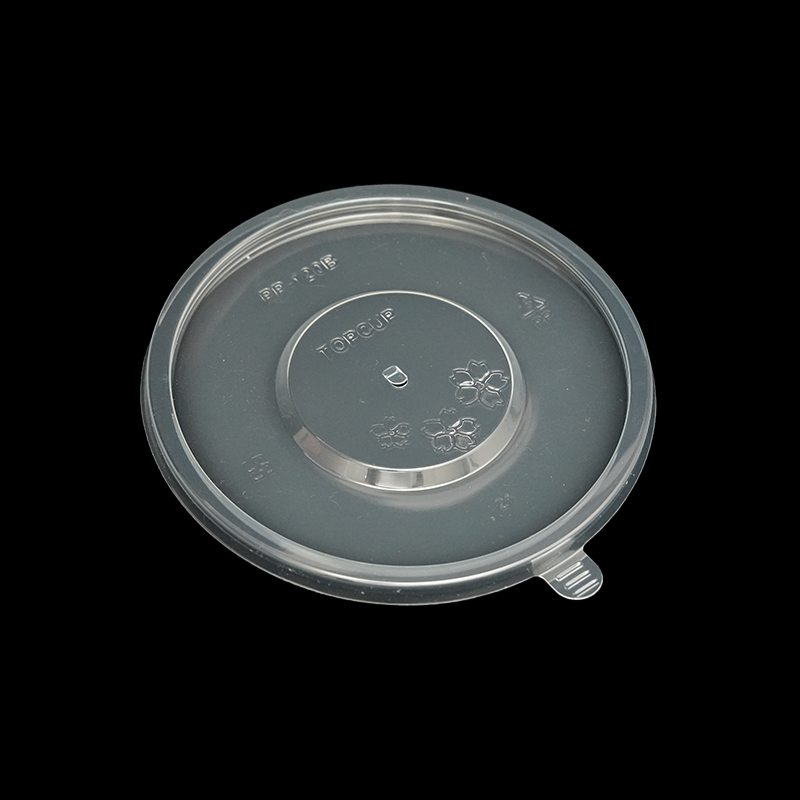
Clear PP plastic ordinary vented lid
References
1. Product specification information for the Clear PP Plastic Ordinary Vented Lid, including the 179 Regular model, 179 mm caliber, approximate 8 g gram weight, and transparent color.
2. Internal product description and application information supplied for disposable PP takeaway lids and food packaging products.
3. General technical information concerning polypropylene materials used in food packaging and disposable container applications.
4. ISO 9001 Quality Management Systems — Requirements.
5. BRC Global Standard principles concerning product safety, quality management, and supplier control.
6. General guidance on plastic packaging design, recycling considerations, material efficiency, and food service packaging performance.
7. Company information supplied by Yuqian Packaging Technology (Jiangsu) Co., Ltd., including manufacturing history, product categories, facility information, OEM capability, and reported certifications.