English
 Español
 عربى
عربىContent
- 1 Why PLA Packaging Bags Matter in Modern Takeaway Packaging
- 2 Product Overview: Customizable Biodegradable PLA Packaging Bags
- 3 Material Advantage: PLA from Renewable Resources
- 4 Functional Designs for Beverage and Food-Service Scenarios
- 5 Advantages Over Conventional Plastic Bags
- 6 Advantages Over Many Competing Biodegradable Bag Suppliers
- 7 Manufacturing Strength Built on Food Packaging Expertise
- 8 Advanced Manufacturing Process for PLA Packaging Bags
- 9 Customization and OEM Design Capabilities
- 10 Food Safety, Non-Toxic Performance, and Consumer Confidence
- 11 Contribution to Circular Economy and Plastic Pollution Reduction
- 12 Brand Differentiation in a Competitive Food-Service Market
- 13 Quality Control from Raw Material to Finished Bag
- 14 How Buyers Can Select the Right PLA Packaging Bag
- 15 Applications Across Food and Beverage Industries
- 16 Storage, Handling, and Use Recommendations
- 17 Why Integrated Manufacturing Strength Matters
- 18 Frequently Asked Questions
- 18.1 What is a biodegradable PLA packaging bag?
- 18.2 What types of PLA packaging bags are available?
- 18.3 Are PLA packaging bags safe for food and beverage applications?
- 18.4 How are PLA bags different from ordinary plastic bags?
- 18.5 Can the size of the bag be customized?
- 18.6 What businesses are best suited for biodegradable PLA packaging bags?
- 18.7 Do PLA bags compost in any environment?
- 18.8 Why choose an experienced food packaging manufacturer?
- 19 Conclusion: A Practical Step Toward Greener Takeaway Packaging
- 20 References
Biodegradable PLA packaging bags are increasingly becoming an essential choice for beverage shops, takeaway brands, dessert chains, catering suppliers, and environmentally conscious distributors that want practical packaging without relying on conventional petroleum-based plastic bags. Designed for carrying single cups, double cups, and multi-cup beverage orders, these bags combine food-contact safety, reliable usability, customizable sizing, and improved environmental performance. As consumers and regulators place more emphasis on reducing plastic pollution, PLA packaging offers a responsible alternative that supports modern food-service operations while helping brands demonstrate sustainability in a visible and practical way.
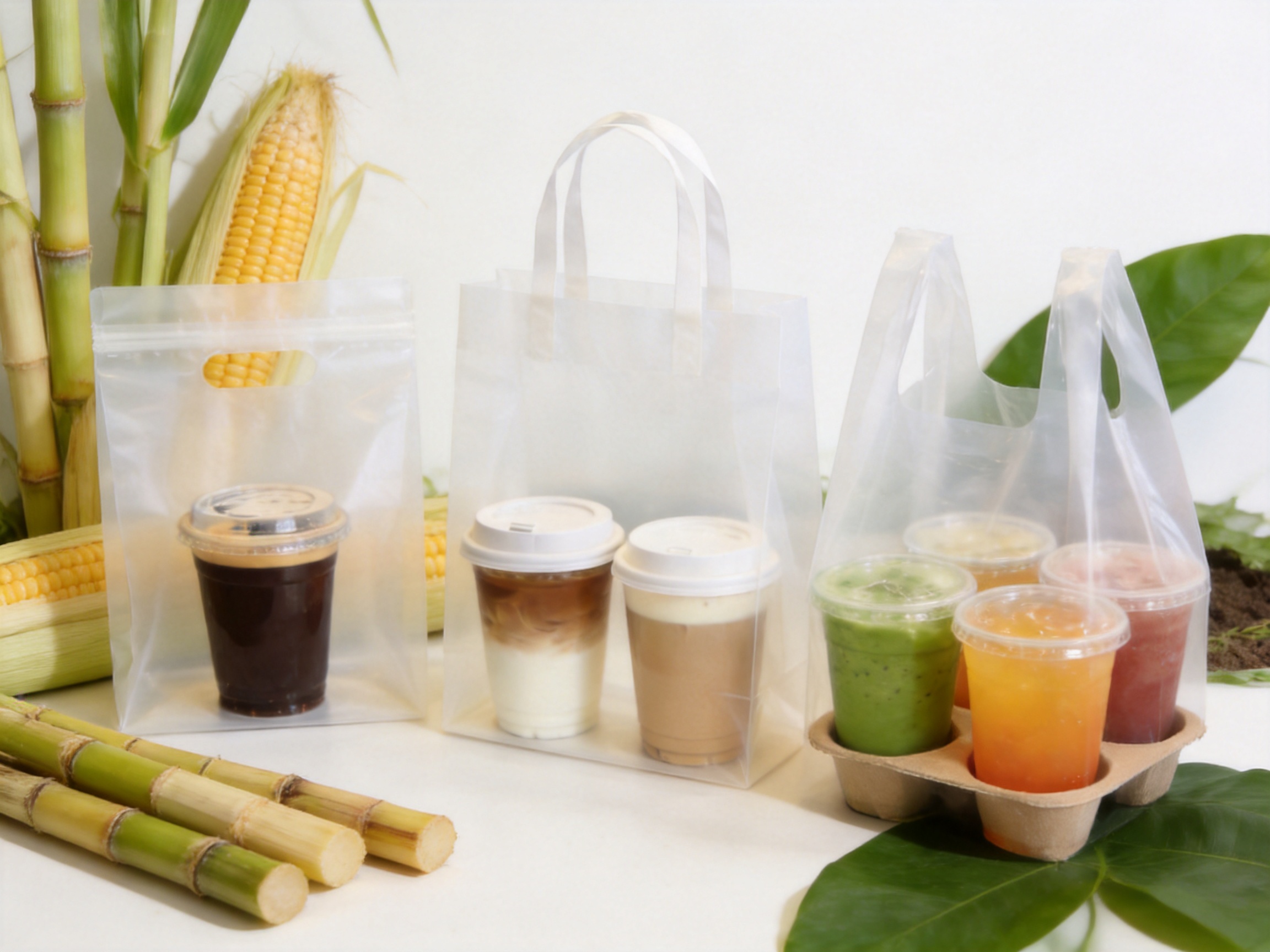
PLA, or polylactic acid, is a bio-based polymer commonly derived from renewable resources such as corn starch and sugarcane. Unlike traditional plastics made mainly from fossil resources, PLA is associated with renewable feedstocks and can biodegrade under suitable industrial composting conditions. For food and beverage packaging, this gives PLA a strong market position: it can provide the familiar convenience of flexible packaging while aligning with circular economy principles and carbon reduction goals. For businesses that sell coffee, milk tea, fruit tea, smoothies, bottled drinks, desserts, and takeaway meals, biodegradable PLA packaging bags provide an effective balance between convenience, cleanliness, safety, and environmental responsibility.
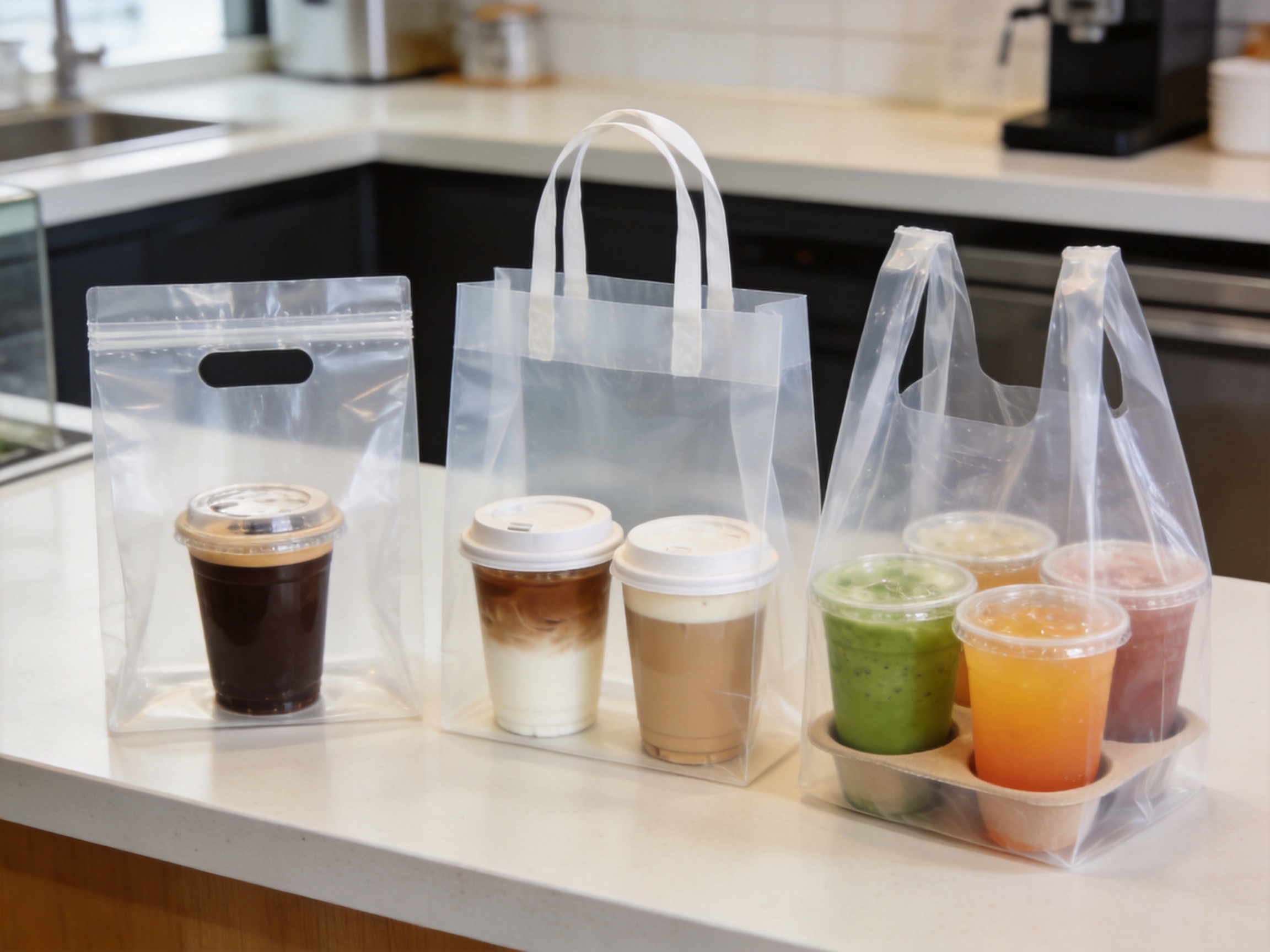
The biodegradable PLA packaging bag discussed in this article is designed for customized food and beverage takeaway applications. Available styles include single-cup flat bags, double-cup flat bags, single-cup tote bags, double-cup tote bags, four-cup tote bags, and other customized formats. The material is non-toxic and harmless, does not contain harmful chemicals, and is suitable for food-related packaging applications when manufactured and tested according to relevant food-contact standards. The size, structure, thickness, handle design, and functional details can be adjusted according to customer needs, allowing packaging buyers to match the bag to specific cup sizes, cup quantities, service scenarios, and brand presentation requirements.
Why PLA Packaging Bags Matter in Modern Takeaway Packaging
The global food-service industry has undergone a rapid transformation. Consumers now expect takeaway packaging to be convenient, safe, visually appealing, and environmentally responsible. Beverage chains, restaurants, bakeries, convenience stores, and event caterers need packaging that supports high-volume service while minimizing leakage, contamination, and handling inconvenience. At the same time, many markets are tightening restrictions on single-use petroleum-based plastic products. This creates a strong demand for packaging materials that can satisfy operational needs and sustainability expectations at the same time.
Biodegradable PLA packaging bags answer this demand by offering a renewable-material alternative for beverage and food carrying. They are particularly useful in beverage takeaway environments where cups need to be carried securely and cleanly. A single cup flat bag can simplify takeaway for one beverage; a double cup flat bag can support two drinks in one order; tote-style bags with handles can improve carrying convenience; four-cup tote bags are suitable for group orders, office deliveries, and high-volume beverage shops. These structures reduce the need for oversized generic plastic bags and allow businesses to choose a packaging format that is better matched to real order patterns.
The value of PLA bags is not limited to environmental messaging. In daily use, they help improve customer experience. A properly sized beverage bag can reduce tipping, make hand-carrying easier, protect cups from contact with outdoor surfaces, and keep multiple drinks organized. For takeaway platforms and delivery services, the right bag design also supports order identification, cleaner handling, and better presentation upon arrival. When combined with compatible cups, lids, bowls, straws, and other disposable food packaging products, PLA packaging bags can become part of a more integrated and professional packaging system.
Product Overview: Customizable Biodegradable PLA Packaging Bags
The core product is a biodegradable PLA packaging bag manufactured from degradable PLA material and designed for food and beverage packaging. It is suitable for packaging and carrying cups, beverage containers, and related takeaway items. The product can be customized based on customer requirements, including size, structure, capacity, shape, handle form, sealing style, and optional design details. This flexibility is important because beverage businesses often use cups with different diameters, heights, lid profiles, and serving volumes. A bag that fits one cup format perfectly may not be suitable for another, so customization becomes a major competitive advantage.
Standard product types include single-cup flat bags, double-cup flat bags, single-cup tote bags, double-cup tote bags, and four-cup tote bags. Flat bags are simple, efficient, and suitable for direct cup insertion and short-distance takeaway. Tote bags provide improved carrying convenience with handles, making them ideal for customers walking, cycling, or carrying multiple items. Four-cup tote bags are especially useful for beverage shops and delivery orders where multiple drinks must be carried together. In addition to these listed formats, custom bag structures can be developed for special cup shapes, combined food-and-drink packages, promotional sets, and seasonal product launches.
Key product features include biodegradable material, safe and environmentally friendly composition, non-toxic and harmless performance, and customizable dimensions. These features are especially important for food-service buyers who need packaging that meets practical handling requirements while supporting their sustainability commitments. For distributors and OEM customers, the ability to customize bag specifications also helps create differentiated packaging solutions for different market segments, from budget takeaway operations to premium beverage chains.
| Feature | Practical Value | Typical Application |
|---|---|---|
| Biodegradable PLA material | Supports reduced reliance on petroleum-based plastics and aligns with sustainability goals | Eco-conscious takeaway food and beverage packaging |
| Customizable size | Matches different cup diameters, heights, and order capacities | Milk tea shops, coffee chains, juice bars, dessert stores |
| Single-cup and double-cup formats | Improves convenience for individual and paired beverage orders | Daily takeaway and delivery orders |
| Tote bag handle options | Enhances carrying comfort and reduces handling inconvenience | Walk-in takeaway, office delivery, event catering |
| Non-toxic and harmless material design | Supports food-related packaging safety expectations | Food-contact-adjacent packaging and beverage carrying |
| OEM customization support | Helps buyers develop packaging suited to brand and market needs | Private-label packaging, chain stores, distributors |
Material Advantage: PLA from Renewable Resources
One of the most important advantages of PLA packaging bags is the material foundation. PLA is produced from renewable biomass resources rather than directly from petroleum. Common feedstocks include corn starch, sugarcane, and other plant-derived carbohydrate sources. Through fermentation and polymerization processes, these resources can be converted into polylactic acid, a polymer suitable for many packaging applications. This renewable origin gives PLA a clear sustainability advantage over conventional plastic materials that depend on finite fossil resources.
In the packaging industry, the shift from petroleum-based plastic to bio-based polymers is not only a material substitution; it is part of a broader movement toward lower-carbon, resource-conscious manufacturing. PLA can help reduce the lifecycle carbon footprint of packaging when compared with many traditional plastics, depending on production conditions, energy sources, transportation, and end-of-life management. For food-service brands, using PLA packaging bags can become part of a larger sustainability strategy that may also include biodegradable cups, paper-based packaging, compostable straws, recyclable materials, and waste sorting initiatives.
Another key point is that PLA has good physical properties for flexible packaging when processed properly. It can be made into films and bags with suitable clarity, strength, and stiffness for many takeaway packaging needs. Compared with some alternative biodegradable materials that may feel weak, rough, or inconsistent, well-produced PLA film can deliver a clean, professional appearance. This matters in beverage packaging because visual presentation strongly affects customer perception. A transparent or neatly finished PLA bag can make the product look cleaner and more premium than a low-quality generic bag.
PLA is also valued for its non-toxic and harmless characteristics. For packaging used near food and beverages, material safety is essential. Customers do not only want a bag that carries drinks; they want packaging that does not introduce unnecessary safety concerns. When produced under strict quality control, using suitable raw materials and tested processes, PLA packaging bags can support food-service safety expectations while still providing environmental benefits.
Functional Designs for Beverage and Food-Service Scenarios
Takeaway beverage packaging requires more than a simple plastic-like pouch. The bag must be practical for specific service conditions: fast packing at the counter, secure carrying by customers, stability during delivery, compatibility with cup lids, and efficient storage before use. The biodegradable PLA packaging bag can be designed around these actual needs. Single-cup formats are useful for individual coffee, tea, or juice orders. Double-cup formats help customers carry two drinks without using two separate bags. Four-cup tote bags support group purchases and delivery orders where multiple beverages must remain organized.
Flat bags are often selected for operational simplicity. They are easy to store, quick to open, and efficient for service counters with limited space. Tote bags, by contrast, offer a higher level of carrying comfort. Handle design can be adapted to improve user experience, especially when customers are holding keys, phones, umbrellas, or other purchases. In busy city environments, comfortable handles can make a noticeable difference. When a packaging bag is easy to carry, customers are more likely to associate the brand with thoughtful service.
Customization also allows the bag to be matched to cup geometry. Beverage cups may vary in width, lid height, and center of gravity. A tall cup with a dome lid may need more vertical clearance. A short wide cup may need a different base proportion. A double-cup bag may require spacing that prevents two cups from pressing too tightly against each other. A four-cup tote may need reinforced handle areas or carefully designed side dimensions to support practical use. By adjusting dimensions and structure, packaging manufacturers can help buyers avoid common problems such as poor fit, difficult insertion, cup tilting, or excessive material waste.
For food applications, the same principles apply. Bags can be used as outer packaging for selected takeaway bowls, dessert cups, light snack containers, or combined beverage-and-food sets. As long as the bag design is matched to the packaged items, PLA packaging bags can support a wide range of food-service packaging systems. This makes them attractive for businesses seeking one supplier capable of supporting multiple packaging categories, including plastic cups, cup lids, takeaway bowls, disposable straws, recyclable bags, peripheral products, and specialized cup-and-bowl packaging solutions.
Advantages Over Conventional Plastic Bags
Compared with conventional petroleum-based plastic bags, biodegradable PLA packaging bags provide several important advantages. The most obvious is their renewable material background. Traditional plastic bags are usually made from fossil-based polymers, which contribute to dependence on non-renewable resources. PLA offers a bio-based alternative and can support lower-carbon packaging strategies when incorporated into a well-managed supply chain. For companies facing pressure from regulators, consumers, and corporate sustainability goals, this material difference is highly valuable.
Another advantage is environmental positioning. A beverage brand using biodegradable PLA packaging bags can communicate a clear commitment to reducing plastic pollution. Packaging is one of the most visible parts of the customer experience. Even when customers do not see back-end sustainability investments, they directly interact with bags, cups, lids, and straws. Replacing conventional plastic bags with PLA bags gives a brand a tangible sustainability touchpoint. This can support brand differentiation in competitive food-service markets where many products are similar in taste and price.
PLA packaging bags also offer a cleaner safety message. The product is designed to be non-toxic and harmless, without harmful chemicals. For food and beverage businesses, this is a powerful advantage over low-cost, low-transparency suppliers whose materials may not be well documented. Buyers increasingly want packaging suppliers with verifiable quality systems, certification experience, and material control. A biodegradable bag is not automatically better if it is poorly manufactured; the real advantage comes from combining PLA material with strict manufacturing and quality assurance.
In addition, customized PLA bags can reduce overpackaging. Many conventional plastic bags are generic and oversized because they are used for multiple purposes. When businesses select custom single-cup, double-cup, or four-cup PLA bags, they can use packaging that fits the actual item more closely. This improves carrying performance and may reduce unnecessary material consumption. A right-sized bag is both more professional and more resource-efficient.
Advantages Over Many Competing Biodegradable Bag Suppliers
Not all biodegradable packaging bags are equal. Some competing products may use mixed materials, inconsistent film quality, limited customization options, or insufficient quality control. The biodegradable PLA packaging bag described here offers a stronger value proposition because it combines material selection, product design flexibility, manufacturing capability, and food packaging expertise. This is particularly important for OEM buyers, distributors, and chain-store customers who require repeatable quality across multiple orders.
One competitive advantage is the availability of multiple cup-focused structures. Many suppliers provide general-purpose biodegradable bags but do not specialize in beverage takeaway formats. Cup carrying requires more precise sizing and practical design knowledge. A single-cup flat bag, double-cup flat bag, single-cup tote bag, double-cup tote bag, and four-cup tote bag each serves a different ordering scenario. A manufacturer with experience in cups, lids, bowls, straws, and related packaging products can better understand how these bags should fit into the complete food-service packaging ecosystem.
Another advantage is customization support. For buyers with unique cup sizes or brand requirements, standard packaging may not be enough. Custom dimensions can help improve function, reduce waste, and strengthen brand consistency. Although many suppliers claim to offer customization, true customization requires technical review, sample development, production planning, and quality inspection. A professional OEM manufacturer with established production systems is better positioned to deliver customized results reliably.
Quality assurance is also a major differentiator. Packaging buyers do not want bags that vary from batch to batch. Inconsistent thickness, weak sealing, irregular cutting, unpleasant odor, or poor handle strength can damage customer trust. A manufacturer with strict internal controls, certified systems, and long-term food packaging experience can provide better consistency. Certifications and testing experience, such as quality management certification, food packaging production qualifications, recognized safety certifications, and restricted-substance testing, help show that the manufacturer understands compliance-oriented production.
Manufacturing Strength Built on Food Packaging Expertise
Yuqian Packaging Technology (Jiangsu) Co., Ltd. was established in 2010 and is located in Taizhou City, Jiangsu Province, China. With a plant area of approximately 30,000 square meters, the company is positioned as a high-tech enterprise integrating research and development, production, and sales of new food packaging materials and products. Its product categories include plastic cups, plastic cup lids, takeaway bowls, disposable straws, recyclable bags, peripheral products, and specialized cup-and-bowl packaging solutions. This broad product base gives the company a strong understanding of how different packaging components interact in real takeaway environments.
The company’s strength lies not only in producing a single bag product, but also in its ability to develop packaging systems. A beverage shop may need cups, lids, straws, bags, and peripheral items that work together. A food-service distributor may need bowl packaging, cup packaging, and carry bags that meet different client needs. A chain brand may require consistent packaging specifications across multiple stores. Because the company works across multiple food packaging categories, it can provide practical recommendations based on real use, not only material theory.
The company has taken a certification-oriented approach to manufacturing. It has passed the QS national industrial product production license, ISO 9001 quality management system certification, BRC certification, German authoritative safety DIN certification, and EU RoHS testing. These qualifications reflect a commitment to standardized production, quality management, safety, and restricted-substance control. For international customers, such certifications and testing experience can reduce procurement uncertainty and support smoother supplier evaluation.
In January 2019, the company established a Shanghai branch to improve service quality and expand business channels. This shows an ongoing commitment to market development and customer support. For OEM and customized packaging buyers, communication and service responsiveness are important. The ability to coordinate product design, sampling, production, inspection, and delivery can significantly affect the success of a packaging project.
Advanced Manufacturing Process for PLA Packaging Bags
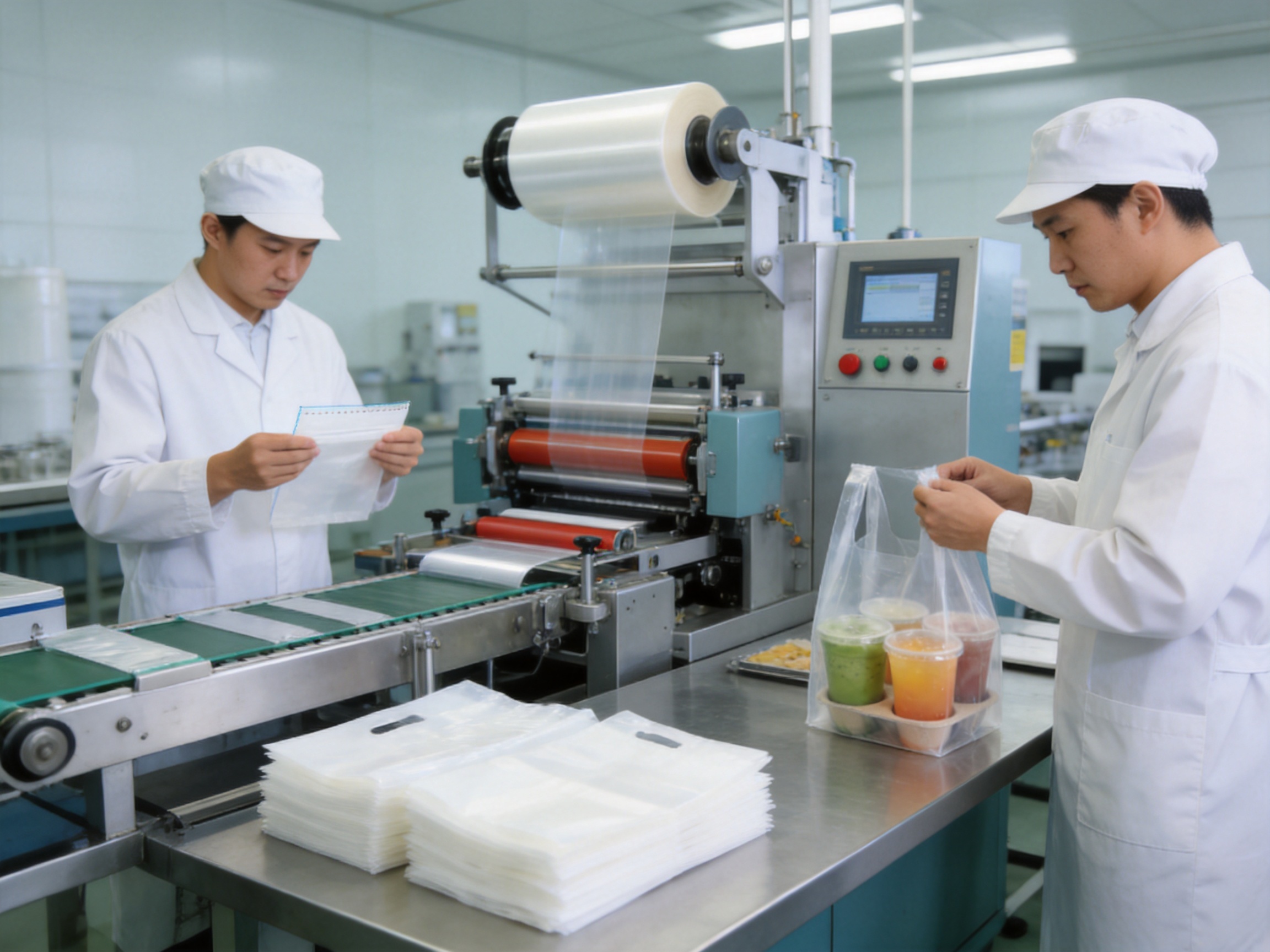
Producing high-quality biodegradable PLA packaging bags requires a controlled manufacturing process. The process begins with material selection. PLA raw materials must be selected according to product performance requirements, safety expectations, and processing suitability. Material consistency affects film clarity, tensile strength, sealing performance, and final bag feel. A responsible manufacturer evaluates raw materials before production rather than relying only on low-cost sourcing.
The next stage is formulation and film production. PLA materials require proper temperature control and processing parameters. Because PLA behaves differently from conventional polyethylene or polypropylene, manufacturers must understand its thermal characteristics and processing window. Poor process control can lead to brittle film, uneven thickness, weak sealing, or unstable appearance. Advanced manufacturing depends on trained technicians, suitable equipment, and documented process standards.
After film preparation, the material may undergo printing or surface treatment depending on customer requirements. For customized OEM packaging, printing quality is important because the bag may carry brand messages, environmental claims, handling instructions, or product identification. Even when the bag is plain, clean film appearance and consistent surface quality are important indicators of professional manufacturing. Printing and converting processes must be controlled to avoid contamination, excessive odor, or poor ink adhesion.
Bag making includes cutting, heat sealing, shaping, handle formation, and structural finishing. Each bag type requires its own process settings. A flat bag must have clean edges and reliable sealing. A tote bag must have functional handle strength. A multi-cup bag must be dimensionally accurate so that cups fit as intended. During production, quality inspection should monitor size tolerance, sealing strength, visual defects, film thickness, and packaging cleanliness. Finished bags should be packed in a way that protects them from dust, deformation, and moisture during storage and transportation.
The company’s manufacturing advantage comes from combining production scale with quality management. With a large production facility and long-term food packaging experience, it can support both regular supply and customized production projects. For customers, this means greater confidence in order stability, batch consistency, and the ability to scale from samples to commercial quantities.
Customization and OEM Design Capabilities
Customization is one of the most important reasons buyers choose biodegradable PLA packaging bags from a professional OEM manufacturer. Standard bags may work for basic applications, but modern food-service brands often need packaging that fits their own cups, order combinations, brand image, and sustainability message. Customization can include bag length, width, bottom structure, handle type, thickness, cup capacity, printing design, and packaging quantity per carton.
For example, a coffee chain may need a single-cup tote bag that fits tall hot drink cups with secure lids. A milk tea brand may need double-cup bags with enough height for dome lids and straws. A juice bar may prefer transparent flat bags for colorful drinks. A dessert shop may require a bag that can carry both a drink and a dessert cup. A delivery-focused store may need four-cup tote bags for office orders. Each scenario requires a different design logic, and customization allows the final packaging to better support actual service needs.
OEM design support can also improve brand value. A biodegradable bag is not only a container; it is a mobile brand carrier. When customers carry a bag through streets, offices, campuses, and shopping areas, the packaging becomes part of brand visibility. With appropriate printing and design, companies can highlight eco-friendly positioning, product identity, and premium service. The combination of PLA material and custom design helps brands communicate responsibility and professionalism at the same time.
Another benefit of customization is material efficiency. Instead of using one oversized bag for all orders, a business can select size-specific formats. This may reduce material waste and improve presentation. Right-sized packaging also improves storage efficiency in stores because staff can organize bags by usage type. In high-volume beverage operations, small improvements in packing speed and convenience can create meaningful operational advantages over time.
Food Safety, Non-Toxic Performance, and Consumer Confidence
Food packaging safety is a foundation of trust. Even though a carry bag may not always directly contact the food or beverage itself, it is still part of the food-service environment. Customers expect packaging to be clean, safe, and free from harmful substances. The biodegradable PLA packaging bag is designed with non-toxic and harmless characteristics and does not contain harmful chemicals. This makes it suitable for responsible food and beverage packaging applications when used according to proper guidelines.
The company’s experience in food packaging manufacturing strengthens this safety position. Producing food packaging materials requires attention to hygiene, raw material traceability, production environment, equipment cleanliness, and packaging storage. Certifications such as ISO 9001 and BRC demonstrate a structured approach to quality and safety management. RoHS testing experience also supports the control of restricted substances. These systems are important because sustainability should never come at the expense of safety.
For consumers, safe and sustainable packaging creates reassurance. A customer who orders a drink in an eco-friendly PLA bag can feel that the brand is paying attention not only to convenience but also to health and environmental responsibility. This is especially important for younger consumers and families, who often pay close attention to packaging choices. As consumer education improves, packaging material transparency will become more influential in purchasing decisions.
Contribution to Circular Economy and Plastic Pollution Reduction
The circular economy aims to reduce waste, keep materials in productive use, and minimize the environmental burden of consumption. Biodegradable PLA packaging bags contribute to this direction by reducing reliance on conventional plastics and supporting the use of renewable materials. Although no packaging product is a complete environmental solution by itself, PLA bags can be an important component of a broader sustainable packaging strategy.
Plastic pollution is a global challenge. Lightweight bags are often used briefly but can persist in the environment for long periods if not properly managed. By introducing biodegradable materials, businesses can reduce the environmental risks associated with traditional plastic waste. PLA is designed to break down under appropriate composting conditions, especially industrial composting environments with controlled temperature, moisture, and microbial activity. Therefore, the best environmental outcomes depend on proper waste collection and composting infrastructure.
It is important for brands to communicate responsibly. PLA packaging should not be presented as a reason to litter or ignore waste sorting. Instead, it should be positioned as a better material choice within a responsible disposal system. Packaging users should be encouraged to follow local waste management rules. Businesses can also add disposal guidance to custom printed bags, helping consumers understand how to handle used packaging appropriately.
When combined with other sustainable practices, PLA packaging bags can support meaningful progress. These practices may include right-sized packaging, reduced unnecessary accessories, use of recyclable or compostable materials where appropriate, supplier audits, carbon-conscious logistics, and customer education. For food-service brands, this integrated approach can create stronger long-term environmental value than a single product change.
Brand Differentiation in a Competitive Food-Service Market
In competitive takeaway markets, packaging can influence customer perception almost as much as the product itself. A beverage may taste excellent, but if the packaging is inconvenient, messy, or environmentally outdated, the customer experience suffers. Conversely, a well-designed biodegradable PLA packaging bag can improve both practical use and brand image. It tells customers that the business cares about details, safety, and environmental responsibility.
Environmental packaging also helps brands respond to social expectations. Many consumers prefer businesses that reduce plastic use and adopt greener materials. Corporate buyers, schools, event organizers, and commercial catering clients may also require suppliers to provide sustainable packaging options. By using biodegradable PLA bags, a food-service brand can strengthen its position when bidding for institutional orders, corporate events, or sustainability-focused partnerships.
For emerging beverage brands, eco-friendly packaging can become part of the brand story. A new tea or coffee brand may not yet have the market recognition of a large chain, but it can create differentiation through thoughtful packaging choices. Custom PLA bags with clean design, convenient structure, and responsible material messaging can help the brand look more professional from the beginning.
For established chains, PLA packaging can support sustainability upgrades across many stores. Consistent customized bag designs can improve operational standardization and customer recognition. A chain that replaces generic conventional bags with custom biodegradable PLA bags demonstrates visible progress and may improve customer loyalty among environmentally conscious consumers.
Quality Control from Raw Material to Finished Bag
Quality control is critical for biodegradable packaging because material performance can vary if production is not carefully managed. A professional manufacturing system should control every stage: raw material inspection, production parameter management, film thickness monitoring, cutting accuracy, sealing strength, handle durability, visual inspection, packing, and shipment verification. Each stage helps ensure that the finished PLA packaging bag performs reliably in customer use.
Raw material inspection helps confirm that the selected PLA material is suitable for the intended product. Film production control ensures consistent thickness and mechanical properties. During bag conversion, cutting and sealing accuracy determine whether the bag is easy to use and strong enough for carrying. Handle areas require special attention because they bear the load during use. Finished goods inspection helps identify defects before shipment, reducing risk for buyers.
Dimensional control is especially important for cup-specific bags. A bag that is too narrow may be difficult for staff to use quickly. A bag that is too wide may allow cups to move excessively. A bag that is too short may interfere with lids, while a bag that is too tall may waste material and look untidy. Professional customization requires accurate technical communication and production control so that the final bag matches the approved sample.
Packaging cleanliness is also essential. Bags should be packed and stored properly to prevent dust, moisture, and contamination. For export and long-distance distribution, carton strength, inner packaging, labeling, and storage instructions can affect final product condition. A supplier with food packaging experience understands that product quality includes not only the bag itself but also how it is packed, transported, and presented to the customer.
How Buyers Can Select the Right PLA Packaging Bag
When selecting biodegradable PLA packaging bags, buyers should begin by identifying the intended use. The first question is what the bag will carry: one cup, two cups, four cups, bowls, dessert cups, or mixed items. Next, buyers should measure the cup diameter, height, lid type, and required clearance. For beverage bags, cup stability and ease of insertion are essential. A sample test with actual cups is recommended before mass production.
Buyers should also consider customer behavior. If most customers carry drinks only a short distance, flat bags may be sufficient. If customers often walk farther or carry multiple items, tote bags with handles may be better. For delivery platforms, four-cup bags or reinforced multi-cup formats may improve order handling. If the packaging is intended for premium products, visual clarity, print quality, and brand design may be more important.
Environmental claims should be reviewed carefully. Buyers should confirm what biodegradable or compostable performance means in the target market and whether any local certification or labeling requirements apply. They should also ensure that disposal instructions are accurate. Responsible communication protects brand credibility and prevents greenwashing concerns.
Supplier evaluation is equally important. Buyers should look for manufacturing experience, certification background, customization capability, sample development support, consistent quality control, and communication efficiency. A low price may be attractive, but poor packaging quality can lead to customer complaints, product damage, and brand harm. For long-term success, buyers should choose a supplier that can provide stable quality and technical support.
Applications Across Food and Beverage Industries
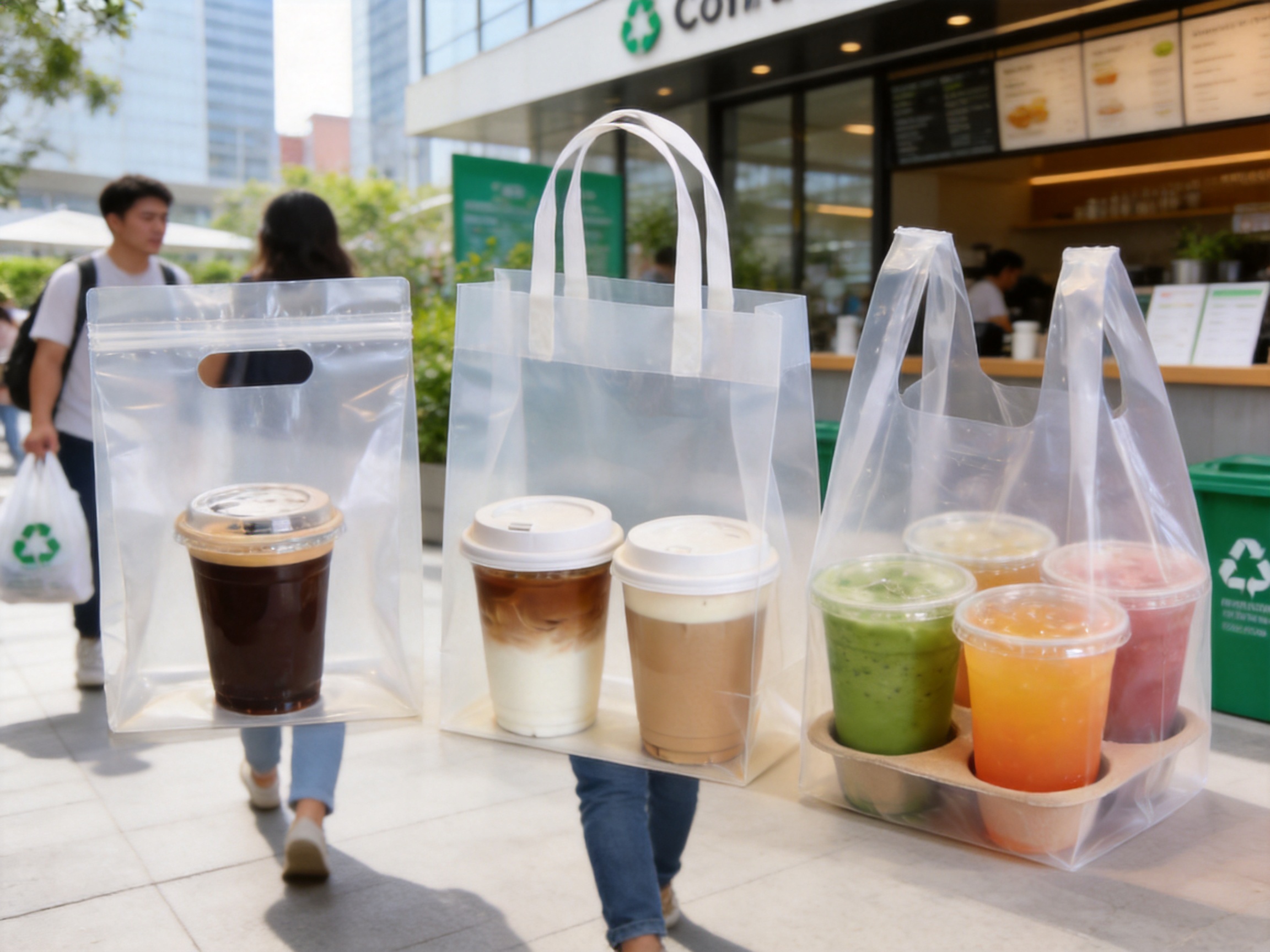
Biodegradable PLA packaging bags are highly suitable for beverage shops, including coffee shops, milk tea stores, juice bars, smoothie shops, dessert drink counters, and convenience beverage retailers. These businesses frequently sell single and multiple drink orders, making cup-specific bags especially useful. The bags help customers carry drinks more comfortably while reinforcing an environmentally responsible brand image.
Restaurants and takeaway food stores can also use PLA bags as part of their packaging systems. For light meals, snack cups, side dishes, or dessert bowls, customized PLA bags can provide a clean outer packaging solution. Event caterers may use multi-cup tote bags for beverage distribution at meetings, exhibitions, festivals, and sports events. Corporate catering providers can use customized designs to improve presentation for office beverage deliveries.
Distributors and wholesalers can benefit by offering multiple PLA bag formats to downstream customers. Instead of selling only generic plastic bags, distributors can provide eco-friendly single-cup, double-cup, and four-cup options. This allows them to serve modern food-service clients who are actively seeking sustainable packaging upgrades. OEM packaging buyers can also develop private-label PLA bag lines for regional markets.
Because the manufacturer also works with cups, lids, bowls, straws, recyclable bags, and peripheral packaging products, customers can explore more complete packaging solutions. Coordinated packaging can improve fit, reduce compatibility problems, and simplify procurement. For example, a beverage brand may source cups, lids, and PLA bags that are designed to work together, reducing the risk that a cup does not fit the selected bag.
Storage, Handling, and Use Recommendations
Like many bio-based materials, PLA packaging bags should be stored properly to maintain performance. Buyers should keep the bags in a cool, dry, clean environment away from direct sunlight, high temperatures, and excessive humidity. Proper storage helps preserve film quality, dimensional stability, and usability. Cartons should be kept sealed until use when possible, especially in food-service environments where dust and moisture may be present.
During use, staff should select the correct bag size for the order. A single cup should be placed in a single-cup bag, while double or four-cup orders should use the appropriate multi-cup format. Overloading a bag beyond its intended capacity should be avoided. Although PLA packaging bags can be designed with suitable strength, every packaging structure has practical limits. Proper training at the service counter helps ensure consistent customer experience.
If printed disposal instructions are included, staff can also guide customers when asked. Clear communication supports responsible end-of-life management. If the local area has composting facilities that accept PLA, customers may be directed to the appropriate waste stream. If not, customers should follow local waste management rules. The goal is to combine better material choice with responsible disposal behavior.
Why Integrated Manufacturing Strength Matters
For packaging buyers, the supplier’s manufacturing strength directly affects product reliability. A biodegradable PLA bag may seem simple, but consistent production requires material knowledge, equipment capability, process control, quality inspection, and service coordination. Yuqian Packaging Technology (Jiangsu) Co., Ltd. brings more than a decade of experience in new food packaging materials and products. Its 30,000-square-meter facility, high-tech enterprise positioning, and multi-category packaging expertise provide a strong production foundation.
The company’s advanced manufacturing approach supports both standard and customized product development. It can work with customers to define bag specifications, produce samples, confirm design details, and proceed to batch manufacturing. This is particularly valuable for international buyers and chain brands that require stable supply and repeatable quality. The company’s certification background further supports customer confidence in its management systems and safety awareness.
Another strength is industry focus. Because the company specializes in food packaging, it understands the real needs of takeaway operations. The best packaging is not only environmentally friendly; it must also be easy for staff to use, acceptable to customers, compatible with food containers, and efficient for logistics. This practical knowledge helps the manufacturer design PLA bags that work in real commercial environments, not only in product descriptions.
Frequently Asked Questions
What is a biodegradable PLA packaging bag?
A biodegradable PLA packaging bag is a flexible packaging bag made primarily from polylactic acid, a bio-based polymer derived from renewable resources such as corn starch or sugarcane. It is designed as an alternative to conventional petroleum-based plastic bags and can be used for food and beverage takeaway packaging, especially cup-carrying applications.
What types of PLA packaging bags are available?
Available types include single-cup flat bags, double-cup flat bags, single-cup tote bags, double-cup tote bags, four-cup tote bags, and customized structures. The bag size and design can be adjusted according to customer needs, cup dimensions, order capacity, and usage scenario.
Are PLA packaging bags safe for food and beverage applications?
The product is designed to be non-toxic and harmless and does not contain harmful chemicals. When manufactured under proper food packaging quality systems and used correctly, it is suitable for food-service packaging applications such as carrying beverage cups and related takeaway items.
How are PLA bags different from ordinary plastic bags?
Ordinary plastic bags are usually made from petroleum-based materials, while PLA bags are made from renewable bio-based resources. PLA bags support sustainability goals, reduce dependence on fossil resources, and can biodegrade under appropriate industrial composting conditions. They also provide a more environmentally responsible image for food-service brands.
Can the size of the bag be customized?
Yes. The size, structure, handle design, thickness, and capacity can be customized according to customer requirements. Customization is especially useful for beverage businesses that use cups with specific diameters, heights, and lid types.
What businesses are best suited for biodegradable PLA packaging bags?
These bags are suitable for coffee shops, milk tea stores, juice bars, dessert shops, takeaway restaurants, event caterers, convenience stores, distributors, and OEM packaging buyers. They are especially useful for brands seeking sustainable cup-carrying solutions.
Do PLA bags compost in any environment?
PLA is designed to biodegrade under suitable composting conditions, especially industrial composting environments with controlled temperature, moisture, and microbial activity. Disposal should follow local waste management rules. Brands should communicate disposal guidance responsibly to avoid misunderstanding.
Why choose an experienced food packaging manufacturer?
An experienced manufacturer can provide better material control, stable production quality, customized design support, food packaging safety awareness, and reliable batch consistency. Certification experience and advanced production systems help reduce procurement risk for buyers.
Conclusion: A Practical Step Toward Greener Takeaway Packaging
Biodegradable PLA packaging bags offer a strong combination of environmental responsibility, food-service practicality, customization flexibility, and brand value. As a bio-based material derived from renewable resources, PLA helps reduce reliance on conventional petroleum-based plastics and supports the movement toward more sustainable packaging systems. For beverage and takeaway businesses, cup-focused bag formats such as single-cup, double-cup, and four-cup designs provide practical convenience while improving customer experience.
The product’s advantages are especially clear when supported by professional manufacturing. Custom sizing, non-toxic and harmless material design, strict quality control, and advanced food packaging expertise all contribute to reliable performance. Yuqian Packaging Technology (Jiangsu) Co., Ltd. combines long-term industry experience, a large production facility, multi-category packaging knowledge, and recognized certification systems to provide OEM biodegradable PLA packaging bag solutions for customers seeking both quality and sustainability.
For brands that want to reduce plastic pollution, strengthen environmental positioning, and provide better takeaway packaging, biodegradable PLA packaging bags are a practical and forward-looking choice. They help connect daily food-service operations with broader goals such as circular economy development, resource efficiency, consumer safety, and sustainable brand growth.
References
European Bioplastics. Bioplastics: Materials, Market Development and Environmental Benefits.
ASTM International. Standards Related to Compostable Plastics and Biodegradable Materials.
International Organization for Standardization. ISO 9001 Quality Management Systems Requirements.
British Retail Consortium. Global Standard for Packaging Materials.
NatureWorks LLC. Technical Literature on Polylactic Acid Materials and Applications.
United Nations Environment Programme. Reports on Single-Use Plastics, Plastic Pollution, and Sustainable Packaging Strategies.
DIN Standards Committee. Safety and Material Testing References for Packaging Applications.