English
 Español
 عربى
عربىContent
- 1 Product Overview: A Precision PP Injection Molded Cup Lid
- 2 Why PP Material Is a Strong Choice for Cup Lids
- 3 Leak-Resistant Design for Takeaway and Delivery
- 4 Thickened and Durable Structure
- 5 Glossy and Frosted Surface Options
- 6 Advantages Over Common Competing Lids
- 7 Manufacturing Process: From Material Selection to Finished Lid
- 8 Advanced Production Strengths of the Manufacturer
- 9 Precision Mold Engineering and Product Consistency
- 10 Food Safety, Hygiene, and Customer Trust
- 11 Environmental and Practical Sustainability Considerations
- 12 Customization and Design Opportunities
- 13 Applications in Beverage and Foodservice Markets
- 14 Operational Benefits for Foodservice Businesses
- 15 Quality Control and Testing Priorities
- 16 How This Lid Supports Brand Image
- 17 Supply Capability and Customer Support
- 18 Purchasing Considerations for Buyers
- 19 Q&A: Common Questions About PP Frosted and Glossy Injection Molded Cup Lids
- 19.1 What is the main material of this cup lid?
- 19.2 What size is the lid?
- 19.3 What is the gram weight of the lid?
- 19.4 What is the difference between glossy and frosted versions?
- 19.5 What colors are available?
- 19.6 Is the lid leak-proof?
- 19.7 Why choose an injection molded lid instead of a thinner ordinary lid?
- 19.8 Is the lid odorless?
- 19.9 Can this lid be customized?
- 19.10 What certifications support the manufacturer’s quality capability?
- 19.11 Who is this product suitable for?
- 20 Conclusion
- 21 References
- 22 Product: PP plastic frosted/glossy injection cup lid
Modern takeaway beverage service depends on packaging that looks clean, fits consistently, protects the drink, and supports fast service from counter to customer. The PP plastic frosted and glossy injection molded cup lid is designed for exactly this environment: a high-precision disposable cup lid for foodservice operators, beverage chains, coffee shops, dessert stores, catering companies, and packaging distributors that need a stable, attractive, and dependable lid solution.
Made from polypropylene, commonly known as PP, this injection molded cup lid combines practical performance with a refined appearance. It is available in both glossy and frosted surface options, with a 90 mm caliber, a gram weight of approximately 4.5 g, and color choices including transparent, white, and black. These specifications make it suitable for a wide range of cold and warm beverage applications where secure sealing, easy handling, and professional presentation are important.
Unlike ordinary thin cup covers that may deform, loosen, or feel unstable during transportation, this injection molded PP lid is engineered with a thickened and durable structure. Its leak-resistant design supports a firm cup fit, reducing the likelihood of spills during takeaway delivery, commuting, dine-out service, or in-store handoff. The product is non-toxic, odorless, and developed for food packaging use, helping foodservice brands maintain a clean consumer experience from the first impression to the last sip.
Yuqian Packaging Technology (Jiangsu) Co., Ltd. manufactures this product as part of a broader disposable food packaging container portfolio that includes plastic cups, plastic cup lids, takeaway bowls, disposable straws, recycle bags, peripheral products, and injection film lining cups, bowls, and boxes. Established in 2010 and located in Taizhou City, Jiangsu Province, China, the company operates a plant area of about 30,000 square meters and focuses on research, development, production, and sales of new food packaging materials and products.
Product Overview: A Precision PP Injection Molded Cup Lid
The PP plastic frosted and glossy injection cup lid is categorized as a PP injection molded cup lid. Its main purpose is to provide a stable closing solution for compatible disposable beverage cups. The 90 mm caliber makes it suitable for cup systems designed around this common opening size, while the 4.5 g weight reflects a balance between durability and material efficiency.
Injection molding gives this product an important advantage over many lower-grade forming methods. Instead of relying only on thin sheet shaping, injection molding allows molten PP material to enter a precisely designed mold cavity, forming a lid with controlled thickness, defined edges, consistent locking structures, and a smooth surface. This process helps the lid achieve a stronger rim, better dimensional stability, and more consistent sealing performance.
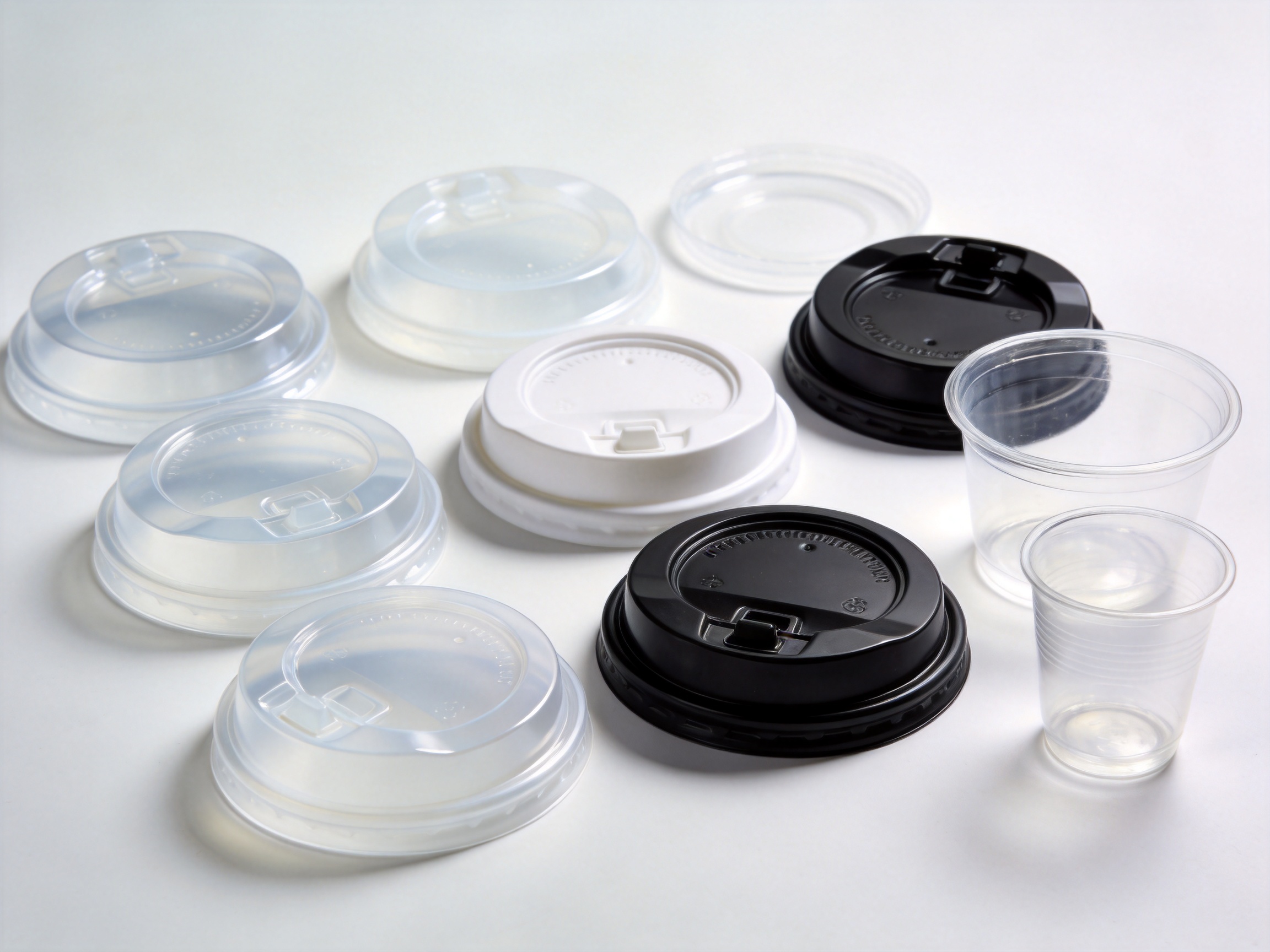
The product is available in two lid types: glossy injection molded cover and frosted injection molded cover. The glossy option offers a bright, clean, and transparent appearance that helps show the beverage and creates a polished look. The frosted option provides a softer, more premium visual effect, reducing glare and giving the package a subtle matte texture. Both versions can be supplied in transparent, white, or black, allowing customers to align packaging appearance with their menu, shop style, seasonal campaigns, or private-label packaging design.
| Product Item | Specification | Value for Foodservice Use |
| Lid Type | Glossy injection molded cover | Clean, smooth, bright appearance suitable for modern beverage presentation |
| Lid Type | Frosted injection molded cover | Matte visual texture suitable for premium and minimalist packaging styles |
| Caliber | 90 mm | Compatible with many cup systems designed for this rim size |
| Gram Weight | About 4.5 g | Balanced between firmness, durability, and material efficiency |
| Color Options | Transparent, white, black | Supports different beverage categories, store concepts, and customized packaging programs |
| Material | PP plastic | Durable, lightweight, odorless, and suitable for disposable food packaging applications |
Why PP Material Is a Strong Choice for Cup Lids
Polypropylene is widely used in food packaging because it is lightweight, durable, chemically stable, and resistant to many common foodservice conditions. For a cup lid, these qualities are especially valuable. A lid must be easy to place on the cup, strong enough to resist cracking, and stable enough to maintain its shape when stacked, transported, or handled by busy staff.
PP also provides a practical balance between flexibility and rigidity. If a lid is too brittle, it may crack when pressed onto a cup. If it is too soft, it may loosen during movement. The PP injection molded cup lid is designed to deliver controlled flexibility at the rim while maintaining structural strength across the top surface. This helps the lid lock onto the cup more reliably and improves the customer’s confidence when carrying the beverage.
Another benefit of PP is its low odor profile. For beverage packaging, odor control matters because customers expect the aroma of coffee, tea, fruit drinks, milk tea, smoothies, or other beverages to remain clean and unaffected. A non-toxic and odorless lid supports a better sensory experience, especially for premium beverages where smell and taste are part of the brand value.
PP is also valued for its suitability in high-volume production. It flows well during injection molding, allowing detailed mold structures to be reproduced accurately. This is essential for cup lid features such as sealing rings, rim grooves, sipping openings, stacking ribs, and smooth edges. When combined with advanced mold engineering and process control, PP can be formed into lids that look consistent and perform reliably across large production batches.
Leak-Resistant Design for Takeaway and Delivery
Leak resistance is one of the most important performance indicators for a disposable cup lid. A single leaking beverage can damage the customer experience, stain clothing, wet delivery bags, or create cleaning problems in vehicles and public spaces. For beverage brands and takeaway operators, leakage also damages trust. Customers may remember the inconvenience more strongly than the drink itself.
This PP injection molded cup lid is designed with a secure rim structure that supports tight contact with the cup mouth. The thickened design increases the stability of the lid during placement and helps reduce deformation when pressure is applied. Compared with many lighter or thinner alternatives, the lid feels more dependable in the hand and provides improved resistance against accidental squeezing during transportation.
The injection molding process plays a key role in leak resistance. Because the mold cavity defines the final shape with high accuracy, the lid’s sealing geometry can remain consistent from piece to piece. Consistency is essential for operators using thousands of lids per day. If some lids fit tightly and others fit loosely, staff cannot rely on the packaging system. A stable injection molded lid helps standardize the user experience and reduces the chance of mismatch caused by dimensional variation.
A well-designed cup lid must also support fast application. Foodservice staff often work under time pressure, especially during breakfast rushes, lunchtime peaks, delivery order waves, or event catering. The lid should be easy to pick up, align, press down, and confirm by touch. A lid that seals with a clear, stable feel can reduce handling time and improve workflow efficiency.
Thickened and Durable Structure
Durability is not only about material strength; it is also about intelligent structural design. The 4.5 g weight of this lid gives it enough body to resist flimsiness while still remaining lightweight for disposable use. The thickened design helps the lid maintain its shape during stacking, packaging, storage, and transportation.
Thin lids may warp in cartons or become difficult to separate when stacked. They may also buckle when pressed onto a cup, creating weak points around the rim. The PP frosted and glossy injection molded cup lid is designed to overcome these problems by combining rigid structural zones with functional flexibility. The result is a lid that can withstand routine foodservice handling without feeling heavy or wasteful.
Durability also supports visual quality. A lid that collapses, bends, scratches easily, or shows irregular edges can make an otherwise premium beverage look cheap. A stronger molded lid helps the entire cup package appear more professional. For drink brands competing on presentation, the lid is not a minor accessory; it is part of the total customer-facing product.
During delivery, lids face additional pressure from movement, bag contact, stacking with other items, and changing angles. A stronger injection molded lid helps reduce risk in these conditions. Although any disposable lid must be matched properly with the correct cup and used according to practical handling guidelines, a durable lid gives operators a better foundation for safe takeaway service.
Glossy and Frosted Surface Options
The availability of both glossy and frosted lid options gives packaging buyers greater control over visual identity. Many beverage brands now treat disposable packaging as an extension of store design. A cup and lid combination may appear in customer photos, delivery platforms, social media posts, and office meetings. The surface finish can influence perceived product value.
The glossy injection molded cover provides a smooth, bright, and clean appearance. In transparent form, it can help display the beverage color, toppings, foam, or layered drink structure. For fruit tea, iced coffee, milk tea, smoothies, and specialty drinks, this visibility can be a selling point. Glossy transparent lids often communicate freshness and clarity, making them suitable for brands that want a clean and energetic look.
The frosted injection molded cover offers a different effect. Its matte-like surface softens reflections and creates a calm, refined impression. Frosted lids can be attractive for specialty coffee, premium tea, dessert beverages, and minimalist packaging themes. The frosted texture may also help reduce the visual impact of fingerprints or minor handling marks, which can be useful in high-volume service environments.
White and black options further expand packaging design possibilities. White lids often create a fresh, hygienic, and universal appearance, matching many cup designs and menu categories. Black lids can create a bold, premium, or modern look, especially when paired with transparent cups, kraft-inspired cup designs, or strong brand colors. Transparent lids are versatile and practical, especially where beverage visibility is important.
Advantages Over Common Competing Lids
In a competitive disposable food packaging market, cup lids may appear similar at first glance. However, differences in material, molding accuracy, edge finish, sealing strength, and production quality can significantly affect real performance. The PP plastic frosted and glossy injection molded cup lid is positioned to provide a stronger and more reliable solution than many low-cost alternatives.
One major advantage is dimensional consistency. Lower-quality lids may suffer from uneven shrinkage, rough edges, inconsistent rim depth, or variable thickness. These problems can cause loose fits, difficult application, or occasional leakage. Injection molding with controlled process parameters helps maintain more accurate geometry, improving the stability of the lid-to-cup connection.
Another advantage is tactile quality. A well-molded PP lid feels firm, smooth, and professionally finished. Customers notice when a lid is too thin, sharp, or unstable. They may not consciously analyze the material, but they feel the difference when carrying the cup. A durable lid can make the whole beverage package feel more trustworthy.
The product also offers appearance flexibility. Many competing lids are available only in one finish or one basic color. By offering glossy and frosted surfaces in transparent, white, and black, this lid gives buyers more choices for differentiated packaging. This is especially important for beverage chains and distributors serving multiple customer segments.
Food packaging safety is another important differentiator. The product is described as non-toxic and odorless, while the manufacturing company has built its quality system around recognized certifications and testing. Yuqian Packaging Technology has passed the QS national industrial product production license, ISO9001 Quality Management System certification, BRC certification, German authoritative safety DIN certification, and EU ROHS+ testing. These qualifications support customer confidence, especially for buyers who need stable export-oriented or chain-store packaging supply.
Finally, the company’s manufacturing scale and R&D capabilities strengthen the product’s competitiveness. With a 30,000-square-meter plant area and a focus on new food packaging materials and products, the manufacturer is positioned to support stable supply, product optimization, and custom packaging needs. In disposable food packaging, the ability to deliver consistent quality over time is often as important as the initial product design.
Manufacturing Process: From Material Selection to Finished Lid
The production of a high-quality PP injection molded cup lid begins with material selection. Food packaging applications require raw materials that are suitable for contact with food and beverages. PP resin must be selected for stable flow performance, mechanical strength, clarity or color compatibility, and sensory neutrality. The quality of resin directly influences the final lid’s appearance, odor, strength, and molding behavior.
After material selection, the resin may be combined with approved color masterbatch for transparent, white, or black versions, depending on the customer’s order. The mixing process must be controlled to ensure uniform color distribution. Uneven mixing can create color streaks, inconsistent opacity, or visual defects. For transparent lids, material cleanliness is especially important because impurities are more visible.
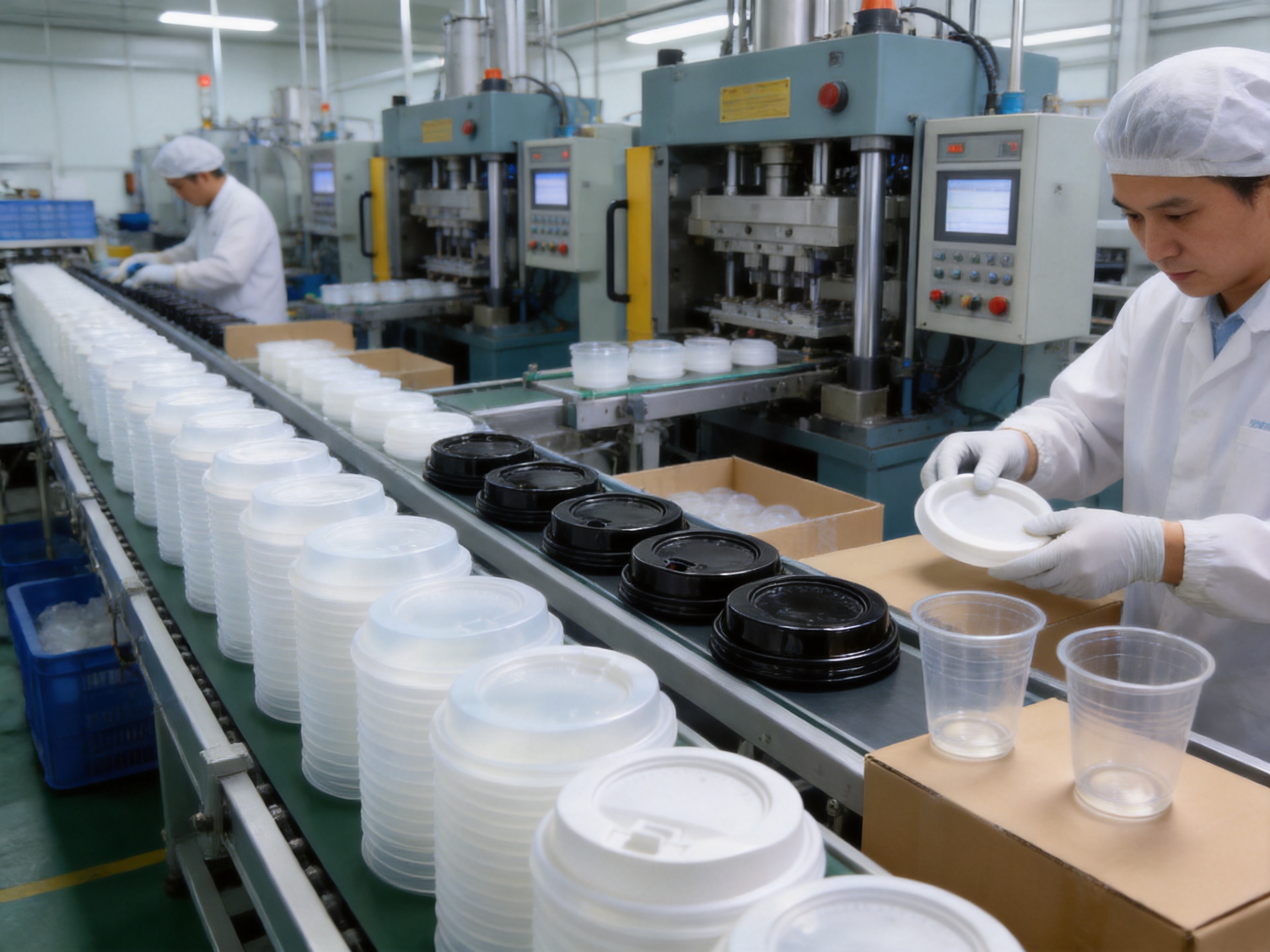
The injection molding stage is the core of the process. PP material is heated until it reaches a molten state, then injected under pressure into a precision mold. The mold defines the lid’s final geometry, including the rim profile, top surface, structural ribs, and any functional details. Proper injection speed, temperature, pressure, and cooling time are critical. If the process is not controlled, the lid may develop warpage, sink marks, flash, short shots, or inconsistent dimensions.
Cooling is equally important. As the molten PP solidifies in the mold, it shrinks. Engineers must account for this shrinkage when designing the mold and setting process parameters. Balanced cooling helps preserve the lid’s roundness and sealing performance. Poor cooling control can lead to warped lids that do not stack or seal properly.
After molding, the lids are removed from the mold and transferred for inspection and packing. Automated or semi-automated handling can improve hygiene and reduce unnecessary manual contact. Visual inspection checks for defects such as cracks, deformation, foreign particles, color inconsistency, rough edges, or incomplete molding. Dimensional checks may be used to confirm that the lid matches the required caliber and fit expectations.
Packaging is also part of manufacturing quality. Lids must be packed to protect them from dust, deformation, and contamination during storage and shipment. Good stacking design helps reduce carton volume while preventing lids from locking too tightly together. For foodservice operators, lids should be easy to remove from packaging and convenient to load into service areas.
Advanced Production Strengths of the Manufacturer
Yuqian Packaging Technology (Jiangsu) Co., Ltd. was established in 2010 and has developed into a high-tech enterprise integrating research and development, production, and sales of new food packaging materials and products. Its location in Taizhou City, Jiangsu Province, supports access to manufacturing resources, logistics routes, and industrial supply chains. The company’s 30,000-square-meter plant area provides a foundation for organized production, warehousing, and product development.
The company’s certification profile is an important strength. Passing the QS national industrial product production license indicates compliance with relevant production requirements for industrial products. ISO9001 certification demonstrates that the company has established a quality management system focused on process control, documentation, continuous improvement, and customer satisfaction. BRC certification is particularly meaningful in packaging and food-related supply chains because it reflects attention to safety, hygiene, and standardized manufacturing practices.
German authoritative safety DIN certification and EU ROHS+ testing further support the company’s ability to serve customers who care about safety and regulatory alignment. For packaging distributors, chain restaurant groups, and international buyers, certifications can simplify supplier evaluation and reduce procurement risk. A lid is a small product, but when it is used in large quantities and contacts food or beverages, supplier credibility matters.
The manufacturer’s product portfolio also creates practical advantages. Because it produces plastic cups, cup lids, takeaway bowls, disposable straws, recycle bags, peripheral products, and injection film lining cup and bowl boxes, it understands how different packaging components work together. A cup lid is not an isolated item; it must match cups, fit service workflows, and support the overall disposable packaging system. A supplier with broad packaging experience can better assist customers in selecting compatible products and developing customized solutions.
In January 2019, the company set up a Shanghai branch to improve service quality and expand business channels. This indicates a commitment not only to manufacturing but also to customer support and market responsiveness. For customers requiring personalized design, packaging coordination, and ongoing supply communication, service infrastructure can be a decisive factor.
Precision Mold Engineering and Product Consistency
For injection molded cup lids, mold quality directly determines product quality. A precision mold must be designed to produce a lid that is round, smooth, accurate, and repeatable. Even small deviations around the rim can affect sealing performance. A difference of fractions of a millimeter may determine whether a lid snaps securely onto a cup or feels loose.
The mold must also support efficient production. Gate placement, flow channel design, cooling channel layout, and ejection design all influence cycle time and defect rate. A well-designed mold allows PP to flow evenly into the lid cavity, reducing weak lines or incomplete filling. Proper cooling channels help the lid solidify uniformly, reducing warpage. Smooth ejection systems help remove the lid without damaging edges or surfaces.
Surface finish is another mold-related factor. Glossy lids require polished mold surfaces that create a clean, reflective appearance. Frosted lids require surface texturing that is controlled and consistent. Poor mold finish can cause uneven gloss, rough patches, or visible defects. The ability to offer both frosted and glossy options suggests that the manufacturer pays attention to surface engineering as well as basic shape formation.
Consistency is especially important for customers ordering large quantities. A beverage chain cannot afford packaging that changes from one batch to another. Staff training, cup compatibility, storage systems, and customer expectations all depend on repeatable lid performance. Advanced mold management and process control help ensure that each batch meets the intended specifications.
Food Safety, Hygiene, and Customer Trust
Disposable food packaging must protect both the product and the consumer experience. A lid touches the rim area of the cup and may come close to the beverage opening, so safety and hygiene cannot be secondary concerns. The PP injection molded cup lid is described as non-toxic and odorless, supporting its use in food and beverage packaging.
Food safety begins with raw material control. Suitable PP resin and approved additives help ensure that the lid performs as intended without introducing unwanted odors or unsafe substances. Supplier qualification, incoming material inspection, and batch traceability are important practices in responsible packaging production.
Clean production conditions also matter. Dust, foreign particles, and uncontrolled handling can compromise packaging quality. A manufacturer with established quality systems is better positioned to manage hygiene risks through procedures, training, production area controls, inspection, and corrective action processes. Certifications such as BRC and ISO9001 indicate that the company has invested in systematic management rather than relying only on final inspection.
For foodservice brands, using a reliable lid helps communicate care. Customers may not know the technical details of PP injection molding, but they quickly judge packaging by smell, touch, cleanliness, and whether it leaks. A lid that looks clean, has no unpleasant odor, and fits securely supports brand trust at the point of consumption.
Environmental and Practical Sustainability Considerations
Food packaging sustainability is a complex topic. Disposable products must balance hygiene, convenience, cost, safety, and environmental responsibility. PP is a lightweight plastic material, which means less material is required compared with many heavier alternatives. Its durability also helps reduce failures that could cause product waste, beverage spills, and replacement packaging use.
The 4.5 g weight of the 90 mm lid reflects an effort to provide adequate strength without unnecessary overuse of material. In packaging design, reducing material while maintaining performance is one of the most practical approaches to improving resource efficiency. If a lid is too thin and fails, the apparent material saving may be lost through leakage, remakes, and customer dissatisfaction. A balanced structure is more responsible than simply making the lightest possible lid.
PP is also recyclable in many systems where appropriate collection and recycling infrastructure exists. Actual recyclability depends on local regulations, sorting systems, contamination levels, and end-market demand. For customers and foodservice operators, clear waste management practices and responsible disposal education can improve outcomes. The company’s broader engagement in new food packaging materials and biodegradable material directions suggests awareness of changing market expectations and environmental requirements.
Environmentally conscious packaging should also consider production efficiency. Advanced injection molding processes can reduce defect rates, improve cycle control, and minimize scrap. Quality management systems help identify recurring problems and support continuous improvement. A well-run factory can contribute to sustainability by making more usable products with fewer rejected pieces.
Customization and Design Opportunities
Packaging customization is increasingly important in the foodservice market. A disposable cup lid may seem simple, but it can be customized in ways that improve brand recognition, product usability, and visual consistency. Color selection is the most immediate option. Transparent, white, and black versions already provide useful design flexibility, and customized production discussions may support broader customer needs depending on order requirements and technical feasibility.
The choice between glossy and frosted surfaces can also function as a design decision. A brand selling colorful fruit tea may prefer transparent glossy lids to show toppings and layers. A specialty coffee shop may choose black or frosted lids to create a more premium and understated appearance. A dessert beverage chain may use white lids to emphasize cleanliness and match printed cups.
Beyond color and finish, cup and lid compatibility is essential for customized packaging programs. Customers need to confirm rim size, cup material, cup wall thickness, and sealing requirements. A professional manufacturer can provide guidance to help reduce mismatch risks. This is especially important when customers source cups and lids from different suppliers or when they are developing a new cup series.
The company’s SEO positioning as a customization and design disposable food packaging container manufacturer aligns with this market demand. Personalized design helps catering brands develop unique charm and strengthen recognition in competitive beverage and takeaway markets. A cup lid that matches the cup body, straw system, takeaway bag, and overall visual identity can make a simple drink package feel complete and intentional.
Applications in Beverage and Foodservice Markets
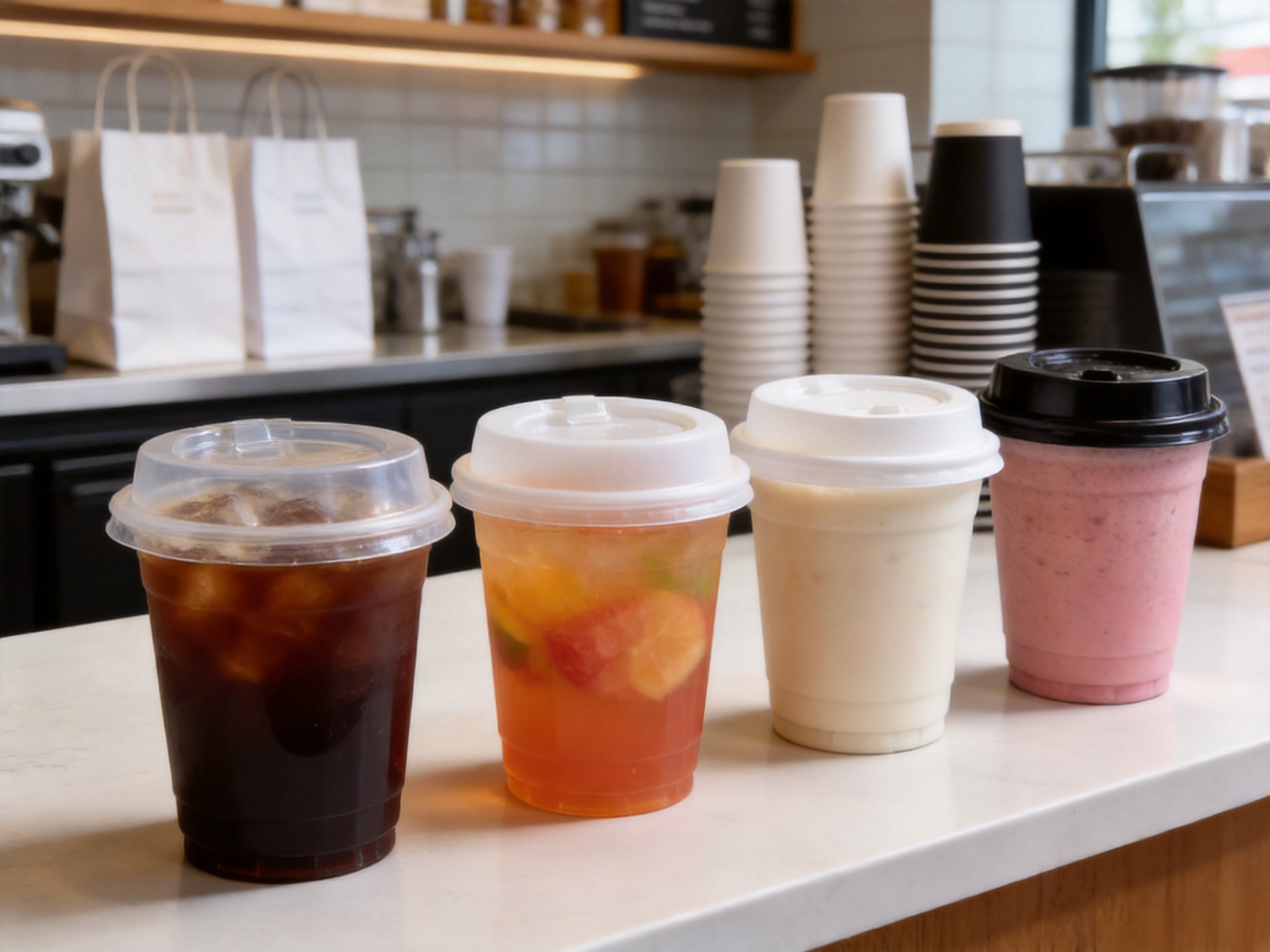
The PP frosted and glossy injection molded cup lid is suitable for a broad range of beverage service scenarios. Coffee shops can use it for iced coffee, cold brew, milk coffee, and selected warm drinks depending on cup compatibility and service conditions. Tea shops can apply it to fruit tea, iced tea, cheese tea, and milk tea packaging. Juice and smoothie vendors can use transparent lids to showcase drink color and freshness.
Takeaway restaurants and catering providers may use the lid as part of a standardized disposable packaging system for events, office meal programs, outdoor activities, and delivery services. In these settings, practical features such as leak resistance, stackability, and durability are often more important than decorative details. A dependable lid reduces staff concerns and helps customers carry beverages more comfortably.
Convenience stores and grab-and-go beverage counters also benefit from consistent cup lid performance. When customers serve themselves or staff work quickly, packaging must be intuitive. A lid that fits securely and feels strong can help reduce mistakes and complaints. Transparent options can support visual merchandising in chilled display cases.
For distributors, the product’s specification clarity is valuable. A 90 mm caliber, 4.5 g PP injection molded lid in multiple finishes and colors can be positioned for customers who want a higher-quality alternative to generic lids. Distributors can serve different buyer preferences without needing a completely different product platform for every segment.
Operational Benefits for Foodservice Businesses
Reliable lids improve more than customer satisfaction; they also improve operations. In a busy beverage shop, employees repeat the same packaging steps hundreds or thousands of times. If lids are difficult to separate, hard to align, or inconsistent in fit, small delays accumulate into major inefficiency. A well-made injection molded lid supports faster service because staff can apply it with confidence.
Reduced leakage also reduces hidden costs. Spills may require remaking drinks, replacing bags, cleaning counters, handling complaints, or refunding customers. Delivery spills can be especially expensive because the customer may not discover the problem until the order has arrived. Preventing these problems through better packaging can protect profit margins and brand ratings.
Inventory management is another benefit. A durable lid with stable stacking and packaging quality is easier to store and handle. Cartons can be moved through warehouses and service areas with lower risk of deformation. Because the lid is available in several color and finish options while maintaining the same core size, buyers may simplify procurement across different product lines.
For chain operations, standardization is critical. A central purchasing team needs packaging that works across many stores and many staff skill levels. The PP injection molded cup lid’s consistency makes it suitable for standardized operating procedures. Staff can be trained once and then apply the same handling method across locations.
Quality Control and Testing Priorities
Quality control for cup lids should cover appearance, dimensions, fit, strength, hygiene, and packaging. Appearance inspection checks whether the lid surface is clean, uniform, and free from visible defects. For glossy lids, clarity and smoothness are important. For frosted lids, texture consistency matters. Color versions should be checked for uniformity and absence of streaking.
Dimensional inspection confirms that the lid meets the required 90 mm caliber and related structural tolerances. Because the lid must fit a cup, the rim design is especially important. A lid that is slightly too small may be difficult to apply or may crack under pressure. A lid that is too large may not seal securely. Quality systems help keep these dimensions within controlled limits.
Fit testing should be conducted with compatible cups. Practical testing may include lid application force, removal resistance, tilt behavior, and leakage evaluation under normal use conditions. Although no disposable lid can guarantee zero leakage under every possible misuse scenario, controlled testing can confirm whether the lid meets realistic foodservice expectations.
Strength testing may include compression resistance, rim flexibility, and stacking performance. These checks help ensure that lids do not deform too easily during handling or storage. Hygiene checks focus on cleanliness, foreign matter prevention, and proper packing. For food packaging, prevention is always better than detection after the fact.
Yuqian Packaging Technology’s management systems and certifications support these quality control priorities. A systematic factory environment helps ensure that inspection is not occasional or random, but integrated into the production process from raw material to shipment.
How This Lid Supports Brand Image
Packaging is often the first physical touchpoint between a customer and a takeaway beverage. The cup body may carry printed design, but the lid is what the customer touches most directly. It is also what protects the drinking area. A lid that looks refined and feels secure contributes to a positive perception of the entire product.
The glossy option can create a bright, modern feeling. It works well for brands that want transparency, energy, and visual freshness. The frosted option can create a more elegant and controlled impression. It works well for brands that value subtle design and premium positioning. White, black, and transparent color choices allow the lid to match many visual identities.
For a beverage company investing in store decoration, menu design, staff uniforms, and online marketing, poor packaging can weaken the overall message. A high-quality PP injection molded lid helps maintain consistency between brand promise and product delivery. When the customer receives a drink that is clean, well-sealed, and attractive, the packaging reinforces trust.
In social media environments, packaging appearance matters even more. Customers often photograph drinks, especially visually layered beverages. A neat lid can make the product look more complete in photos. Transparent lids may show toppings, while black or frosted lids can create contrast and style. Packaging that photographs well can indirectly support organic promotion.
Supply Capability and Customer Support
Choosing a packaging product is not only about the item itself. Buyers also evaluate whether the supplier can provide stable supply, technical communication, and responsive service. Yuqian Packaging Technology’s factory scale, product range, and Shanghai branch support its ability to serve different customer types, from local foodservice operators to distributors and customized packaging buyers.
The company’s location at No. 8 Tongyang Road, Suchen Town, Taizhou City, Jiangsu Province, China, places it within a developed manufacturing region. Its contact channels, including phone, fax, and email, support direct communication for product inquiries, customization discussions, and supply coordination. For international buyers, clear communication is important when confirming specifications, sample requirements, carton packing, lead time, and shipping details.
Because the company works across multiple disposable food packaging categories, it can support integrated purchasing. A customer may need cups, lids, takeaway bowls, straws, bags, and peripheral products. Sourcing compatible packaging from an experienced manufacturer can reduce communication complexity and improve consistency across the packaging system.
Customer support is also important for product matching. The 90 mm lid must be paired with compatible cups. Before large orders, buyers should verify fit with their specific cup models. A professional supplier can help arrange samples, confirm specifications, and provide practical recommendations based on the intended application.
Purchasing Considerations for Buyers
When selecting the PP plastic frosted or glossy injection molded cup lid, buyers should first confirm the cup rim size. The lid is designed around a 90 mm caliber, but cup dimensions and rim structures can vary between manufacturers. Testing with the actual cup is the best way to confirm fit and leakage performance.
Second, buyers should select the desired surface finish. Glossy lids are suitable when clarity, brightness, and product visibility are priorities. Frosted lids are suitable when a softer, more premium look is preferred. The choice should match the beverage type, customer expectations, and overall packaging style.
Third, buyers should choose color based on branding and practical use. Transparent lids are versatile and allow beverage visibility. White lids are clean and neutral. Black lids are bold and premium. Some operators may use different lid colors to distinguish product lines, seasonal menus, or service categories.
Fourth, buyers should consider storage and handling conditions. Lids should be stored in clean, dry areas away from excessive heat, dust, and direct contamination. Cartons should be handled carefully to prevent deformation. Staff should be trained to apply lids evenly and confirm secure fit before handing drinks to customers.
Finally, buyers should evaluate supplier reliability. Certifications, factory scale, production experience, and communication ability all matter. A low unit price may not be a true saving if lids leak, deform, smell unpleasant, or arrive inconsistently. A stable, certified manufacturer can provide better long-term value.
Q&A: Common Questions About PP Frosted and Glossy Injection Molded Cup Lids
What is the main material of this cup lid?
The lid is made from PP plastic, also known as polypropylene. PP is widely used in disposable food packaging because it is lightweight, durable, and suitable for forming stable cup lid structures through injection molding.
What size is the lid?
The lid has a 90 mm caliber. Buyers should test it with their actual cup models before large-scale purchasing because cup rim designs can vary even when the nominal diameter is similar.
What is the gram weight of the lid?
The lid weighs approximately 4.5 g. This weight provides a practical balance between structural strength, secure handling, and material efficiency.
What is the difference between glossy and frosted versions?
The glossy version has a smoother and brighter surface, making it suitable for clean and transparent beverage presentation. The frosted version has a softer matte-like appearance, which can create a more premium or understated packaging style.
What colors are available?
The available color options are transparent, white, and black. These choices support different brand styles, beverage categories, and packaging design concepts.
Is the lid leak-proof?
The lid is designed with leak-resistant performance in mind, using a secure rim structure and thickened injection molded design. Actual leakage performance depends on correct cup matching, proper lid application, beverage conditions, and handling during transport.
Why choose an injection molded lid instead of a thinner ordinary lid?
Injection molded lids generally provide better dimensional consistency, stronger structure, smoother finish, and more reliable fit. They are often preferred when beverage brands want improved presentation and more dependable takeaway performance.
Is the lid odorless?
Yes, the product is described as non-toxic and odorless, which is important for beverage packaging because the lid should not interfere with the drink’s aroma or customer experience.
Can this lid be customized?
The product already offers finish and color choices, and the manufacturer focuses on disposable food packaging customization and design. Buyers can contact the manufacturer to discuss specific customization requirements, order quantities, compatibility, and technical feasibility.
What certifications support the manufacturer’s quality capability?
The manufacturer has passed certifications and testing including QS national industrial product production license, ISO9001 Quality Management System certification, BRC certification, German authoritative safety DIN certification, and EU ROHS+ testing.
Who is this product suitable for?
It is suitable for beverage shops, coffee shops, tea chains, takeaway restaurants, catering companies, convenience stores, packaging distributors, and foodservice brands that need a stable 90 mm PP cup lid with professional appearance and reliable performance.
Conclusion
The PP plastic frosted and glossy injection molded cup lid is a practical and refined solution for modern disposable beverage packaging. With a 90 mm caliber, approximately 4.5 g weight, PP material construction, and transparent, white, or black color options, it offers the flexibility needed by foodservice businesses and packaging buyers. Its leak-resistant structure, thickened durability, non-toxic and odorless characteristics, and attractive surface choices make it stronger than many ordinary cup lid alternatives.
The product’s value is reinforced by the manufacturing strength behind it. Yuqian Packaging Technology (Jiangsu) Co., Ltd. combines a large production base, R&D orientation, broad disposable food packaging experience, and recognized certifications. Its advanced injection molding capabilities support consistent dimensions, stable sealing performance, and professional visual quality. For buyers seeking dependable disposable food packaging containers and customized packaging support, this lid represents a strong choice for takeaway beverage service.
In an industry where small packaging details can influence customer trust, operational efficiency, and brand image, the cup lid deserves serious attention. A secure, attractive, and well-manufactured lid helps protect the beverage, support staff workflow, reduce leakage risk, and present the brand with confidence. The PP frosted and glossy injection molded cup lid brings these advantages together in a compact but essential packaging component.
References
Yuqian Packaging Technology (Jiangsu) Co., Ltd. Product Information Sheet: PP Plastic Frosted and Glossy Injection Cup Lid.
Yuqian Packaging Technology (Jiangsu) Co., Ltd. Company Profile and Manufacturing Capability Overview.
International Organization for Standardization. ISO9001 Quality Management Systems: Principles and General Requirements.
BRCGS. Global Standard for Packaging Materials: Food Safety and Quality Management Guidance.
Polypropylene Food Packaging Materials Handbook: Processing, Performance, and Application Considerations.
DIN Standards Overview for Safety and Technical Compliance in Manufactured Products.
European Union RoHS Testing Guidance for Restricted Substances in Applicable Product Categories.