English
 Español
 عربى
Content
- 1 1. Product Overview
- 2 2. Why Polypropylene Is Suitable for Disposable Lids
- 3 3. Thickened Construction and Structural Reliability
- 4 4. Leak-Resistant Design
- 5 5. Transparency and Product Presentation
- 6 6. Temperature and Chemical Resistance
- 7 7. Comparison with Ordinary Thin Lids
- 8 8. Standard Sizes and Customization
- 9 9. Stackability and Storage Efficiency
- 10 10. Manufacturing Expertise and Production Capability
- 11 11. Raw Material Management
- 12 12. Injection Molding and Process Control
- 13 13. Quality Inspection and Certification Background
- 14 14. Environmental Considerations
- 15 15. Applications Across Food and Packaging Industries
- 16 16. Advantages for Distributors and Wholesale Buyers
- 17 17. Advantages for Brand Owners
- 18 18. Recommended Customer Development Process
- 19 19. Proper Storage and Use
- 20 20. How the Product Supports Better Packaging Economics
- 21 21. Why Choose an Experienced OEM Manufacturer
- 22 22. Frequently Asked Questions
- 22.1 22.1 What material is used for the transparent round thickened lid?
- 22.2 22.2 Which standard sizes are available?
- 22.3 22.3 Can the lid be customized?
- 22.4 22.4 Is the lid suitable for hot food?
- 22.5 22.5 Is the lid leak-proof?
- 22.6 22.6 Are transparent and blue colors available?
- 22.7 22.7 Can the lid be stacked?
- 22.8 22.8 Is PP recyclable?
- 22.9 22.9 What certifications are associated with the manufacturer?
- 22.10 22.10 How should buyers test the lid before ordering in bulk?
- 22.11 22.11 Can the manufacturer support private-label packaging?
- 22.12 22.12 What information should be supplied for a quotation?
- 23 23. Conclusion
- 24 References
- 25 Product: Transparent Round PP plastic thickened lid
In modern foodservice, packaging is more than a container for carrying products from one location to another. It is part of the customer experience, an important food-safety barrier, a visible representation of a catering brand, and a practical tool for improving transport efficiency. A well-designed lid must protect food and beverages, resist leakage, remain stable during handling, fit securely, and support efficient storage. It must also meet the growing demand for safe, recyclable, and environmentally responsible materials.
The transparent round PP plastic thickened lid is designed to meet these requirements. Manufactured from food-grade polypropylene, this lid combines a clear appearance with enhanced strength, practical sealing performance, and compatibility with a variety of takeaway packaging formats. It is available in several calibers, including 120 mm, 150 mm, and 179 mm, with customization available for customers requiring special dimensions, colors, or packaging solutions.
Yuqian Packaging Technology (Jiangsu) Co., Ltd. develops and manufactures disposable food packaging products, including PP takeaway lids and liners. With experience in research, production, quality management, and customized packaging services, the company supplies solutions for restaurants, beverage shops, catering businesses, food manufacturers, distributors, and private-label packaging programs.
This article examines the structure, material, advantages, applications, manufacturing process, quality controls, customization options, and sustainability value of transparent round PP plastic thickened lids. It also explains why a thickened lid can provide practical advantages over ordinary thin lids and how an experienced manufacturer can help customers achieve more consistent packaging performance.
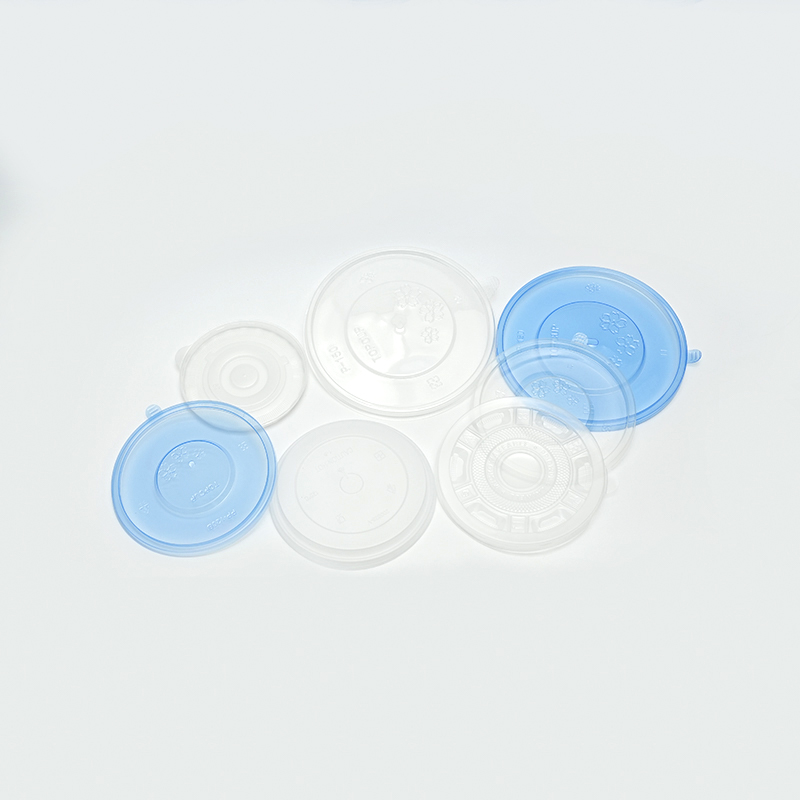
Transparent Round PP plastic thickened lid
1. Product Overview
The transparent round PP plastic thickened lid is a circular food packaging closure manufactured from polypropylene, commonly abbreviated as PP. It is designed to be placed over compatible cups, bowls, or other round takeaway containers. The lid’s transparent body allows users to view the packaged contents while its strengthened structure helps improve durability during filling, stacking, transportation, and serving.
Unlike a basic thin plastic cover, a thickened lid is engineered with additional material in critical areas. This can improve rigidity, reduce unwanted flexing, and help the lid maintain its shape when subjected to normal handling forces. A more stable structure also supports better alignment with the container rim, which is important for sealing performance.
The product is suitable for a wide range of food and beverage packaging scenarios. Depending on the matching container, it can be used for takeaway drinks, desserts, prepared foods, cold dishes, sauces, snacks, fruit portions, soup-related packaging, and other foodservice products. The exact application depends on the lid diameter, container design, temperature conditions, and the type of seal required.
The primary standard options include the following:
| Lid Type | Caliber | Approximate Gram Weight | Standard Color Options |
|---|---|---|---|
| 120 mm Thickened Lid | 120 mm | 5 g | Transparent or blue |
| 150 mm Thickened Lid | 150 mm | 9 g | Transparent or blue |
| 179 mm Thickened Lid | 179 mm | 13 g | Transparent or blue |
The listed specifications provide a starting point for product selection. Customers can discuss the required diameter, lid profile, rim structure, color, packaging method, and compatibility requirements with the manufacturer. Customized solutions are especially useful when a food brand uses a proprietary cup or bowl design and needs a lid that fits a particular rim geometry.
2. Why Polypropylene Is Suitable for Disposable Lids
Polypropylene is widely used in food packaging because it offers a balanced combination of light weight, strength, chemical resistance, processability, and cost efficiency. Its material characteristics make it suitable for molded packaging components that need to remain stable during daily use without adding unnecessary weight.
For takeaway lids, material selection affects more than appearance. It influences the lid’s ability to withstand pressure, maintain dimensional stability, resist contact with food ingredients, and perform consistently during production. PP can be processed into practical shapes with defined rims, reinforcing structures, stacking features, and sealing areas.
Food-grade PP is also suitable for applications where the packaging comes into direct contact with food, provided that the material formulation, production controls, and intended use meet relevant requirements. The use of food-grade raw materials helps support a safer packaging solution and reduces the risk of unwanted odor or material contamination.
Polypropylene is naturally suitable for transparent or colored packaging components. A transparent version provides visual access to the packaged product, while blue or other customized colors can support product differentiation, inventory management, or brand coordination. The selected color and clarity level can be adjusted according to the customer’s application and design requirements.
Another advantage of PP is its recyclability. Recycling outcomes depend on local collection systems, sorting capabilities, contamination levels, and applicable regulations, but PP is recognized as a recyclable thermoplastic in many waste-management systems. The manufacturer is also working toward more environmentally conscious product development, including research related to recyclable and degradable packaging options.
3. Thickened Construction and Structural Reliability
The defining characteristic of this product is its thickened construction. A thicker lid is not simply a heavier version of a standard lid. Its performance depends on how the material is distributed, how the rim is formed, how the sealing area is designed, and how the finished product maintains its shape after molding.
A well-designed thickened lid can offer several practical benefits:
Improved resistance to bending during routine handling.
Better stability when placed on a filled cup or bowl.
Greater durability during stacking and transportation.
Reduced risk of deformation caused by moderate external pressure.
A more substantial feel that can support customer perceptions of quality.
Improved support for a secure fit when matched with the correct container.
For foodservice operators, packaging failures can create direct operational and reputational costs. A lid that becomes distorted, separates from the container, or allows liquid to escape may lead to product waste, customer complaints, cleaning work, and reduced confidence in the brand. The thickened structure is intended to reduce these risks under normal conditions when the correct lid and container combination is used.
It is important to recognize that sealing performance depends on the complete packaging system rather than the lid alone. The container rim, lid tolerance, filling level, food temperature, closing method, transportation conditions, and handling practices all influence the result. This is why a professional manufacturer should evaluate lid and container compatibility before confirming a large customized order.
4. Leak-Resistant Design
Leak prevention is one of the most important functions of a takeaway lid. The transparent round PP plastic thickened lid is designed with a sealing structure intended to create close contact with the matching container rim. When the lid is correctly fitted, the rim and sealing area help reduce the possibility of liquid escaping during ordinary movement.
A leak-resistant design is particularly valuable for takeaway beverages, sauces, prepared foods, desserts, and other products that may be moved in delivery bags or carried by consumers. The lid should remain securely positioned when a container is lifted, placed into a carrier, stacked with other items, or transported over short distances.
The product’s round shape can support consistent sealing around the circumference when the lid is properly matched to the container. The reinforced rim also helps the lid maintain its geometry. Compared with a very thin cover that may flex easily, a thickened structure can provide a more stable contact surface.
However, proper use remains essential. Foodservice operators should select the correct caliber, avoid overfilling, inspect the container rim before closing, and press the lid evenly into position. Hot products should be packaged only when the container and lid specification are suitable for the relevant temperature range. In commercial use, sample testing under real transportation conditions is recommended before finalizing a packaging system.
5. Transparency and Product Presentation
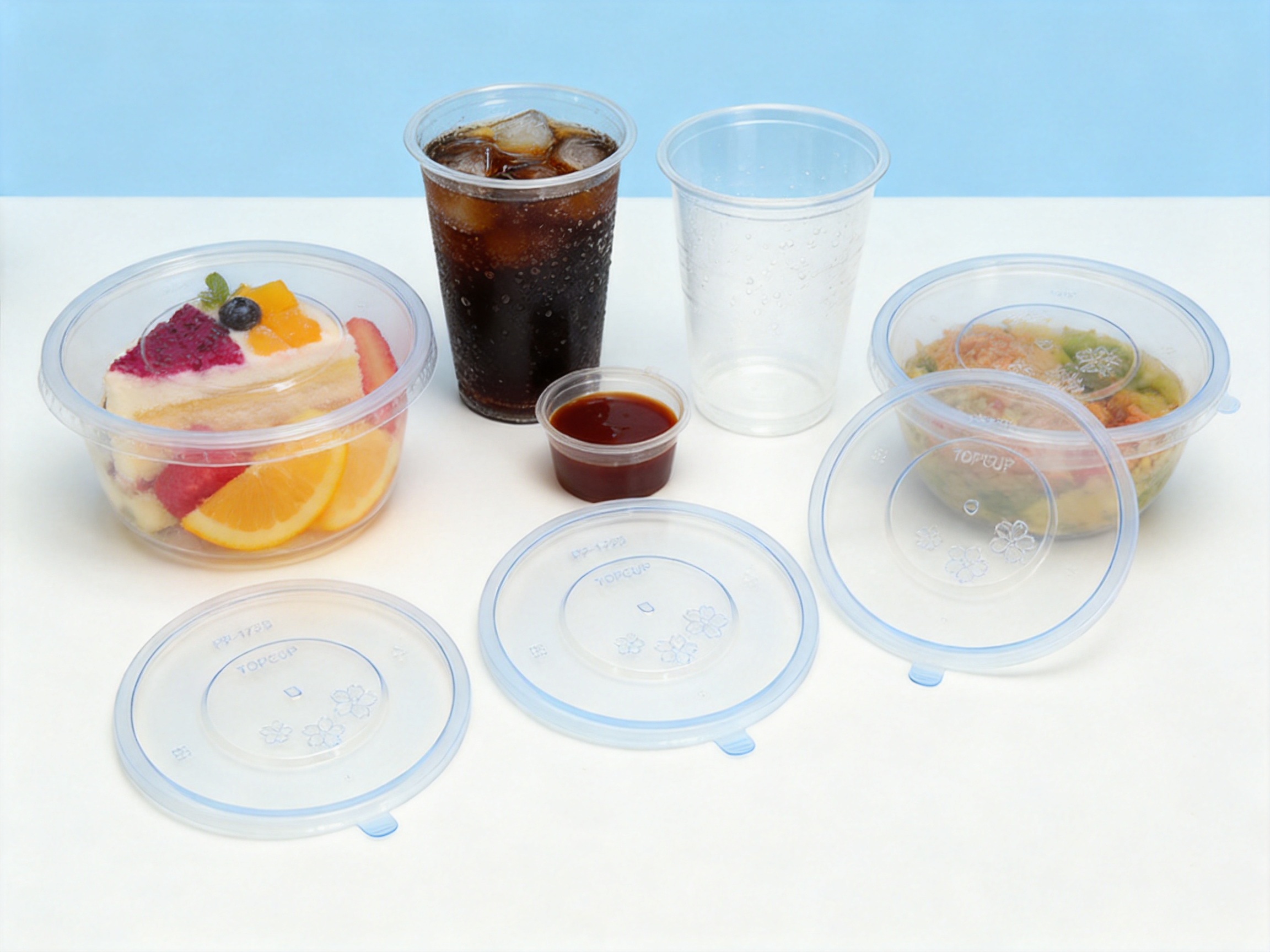
Transparent packaging provides an immediate visual connection between the customer and the packaged product. Consumers can see the color, texture, quantity, and arrangement of food without opening the package. This can be especially useful for desserts, fresh fruit, salads, snacks, toppings, prepared foods, and visually attractive beverages.
Visibility can support purchasing decisions because customers are able to assess the product before consumption. A clear lid can also help staff identify contents quickly during order preparation, reducing the need to remove the lid or rely solely on labels. In busy foodservice environments, this can improve order organization and speed.
For food brands, a transparent lid can serve as part of a broader presentation strategy. It allows printed labels, sleeves, cup graphics, or container colors to remain visible while protecting the contents. When used with an attractive package design, transparency can help communicate freshness, cleanliness, and product quality.
The transparent appearance is produced with material and processing controls that aim to maintain a consistent visual result. Clarity requirements may vary by application. Some customers may prefer highly transparent material for premium presentation, while others may accept a slightly different appearance to prioritize cost, color, or special material characteristics. These requirements should be discussed during product development.
6. Temperature and Chemical Resistance
Polypropylene is known for useful resistance to many common food ingredients and chemicals. This makes it suitable for packaging applications involving oils, sauces, dressings, beverages, and other products, provided that the specific formulation and conditions are within the intended application range.
The lid is designed to provide good resistance to moderate high-temperature environments without immediate deformation or melting under suitable conditions. This feature can be valuable for foodservice packaging where the product may be filled while warm or exposed to elevated temperatures for a limited period.
Temperature performance must always be evaluated according to the complete packaging system and the actual operating conditions. The relevant factors include filling temperature, exposure time, steam, pressure, food composition, transportation duration, and whether the package is used in a microwave, hot holding unit, freezer, or other equipment. Not every PP lid is suitable for every high-temperature application.
Customers should request application-specific guidance and carry out testing when the product will be used with hot foods, acidic ingredients, oily sauces, frozen products, or other demanding contents. The manufacturer can support the selection process by discussing material grade, thickness, structure, and matching container specifications.
7. Comparison with Ordinary Thin Lids
Disposable packaging buyers often compare products primarily by unit price. While cost is important, the lowest initial purchase price does not always provide the lowest total operating cost. A lid that is difficult to fit, easily damaged, or prone to leakage may create hidden costs throughout the supply chain.
Compared with ordinary thin lids, a thickened PP lid may offer the following advantages:
| Evaluation Area | Ordinary Thin Lid | Transparent Round PP Thickened Lid |
|---|---|---|
| Rigidity | May flex more easily under pressure | Enhanced structural stability |
| Handling | May require greater care during fitting and transport | Designed for more dependable routine handling |
| Sealing Support | Performance can be affected by deformation | Thickened rim and structure support a stable fit |
| Appearance | May appear less substantial | Clear, stronger, and more premium in presentation |
| Stacking | May be more prone to distortion when stacked | Designed to support orderly stacking and space saving |
| Customization | Often limited to standard sizes | Caliber, color, and selected design features can be discussed |
| Application Flexibility | Suitable mainly for light-duty uses | Suitable for a broader range of takeaway applications |
The actual difference depends on the design and quality of each competing product. A thickened lid should not be evaluated only by weight. Buyers should also assess fit, rim accuracy, transparency, odor, surface quality, sealing performance, stacking behavior, packaging efficiency, and consistency between production batches.
The product’s value is particularly clear for businesses that prioritize dependable delivery packaging. A more durable lid can help reduce leakage-related waste and support a more consistent customer experience. For premium food products, the stronger appearance may also contribute to a better perception of quality.
8. Standard Sizes and Customization
The 120 mm, 150 mm, and 179 mm options provide practical starting points for different takeaway packaging formats. The correct caliber should be selected according to the external diameter and rim design of the matching cup or bowl. Caliber alone may not determine compatibility because the lid profile, locking points, flange, and sealing structure also matter.
Yuqian Packaging Technology provides customized services for customers with special packaging requirements. Customization may include:
Special lid diameters or calibers.
Customized rim and sealing structures.
Adjustments for a proprietary cup or bowl design.
Transparent, blue, or other agreed color options.
Changes to thickness or reinforcing features.
Customized packaging and packing quantities.
Private-label or coordinated product development.
Support for new product sampling and fit testing.
A structured customization process normally begins with drawings, samples, or physical containers supplied by the customer. The manufacturer analyzes the rim dimensions and intended use, recommends a suitable structure, produces trial samples, and evaluates fit and sealing performance. Changes can then be made before tooling or mass production is finalized.
Customization is useful for companies that want to create a distinctive packaging system rather than rely on a universal standard size. A well-fitted custom lid can improve the overall appearance of the package, simplify operational use, and help create a consistent presentation across multiple product categories.
9. Stackability and Storage Efficiency
Disposable packaging products are handled in large quantities. Restaurants, distributors, and food manufacturers must store lids in warehouses, preparation areas, transport cartons, and delivery facilities. A product that stacks efficiently can help reduce the space required for inventory.
The transparent round PP plastic thickened lid is designed to be stackable. Proper stacking helps maintain an orderly inventory and can make it easier for employees to count, retrieve, and replenish lids during production or service. Efficient stacking may also reduce unnecessary carton volume, although final shipping efficiency depends on the packing method and order quantity.
Stackability must be balanced with easy separation. Lids that nest too tightly may be difficult to remove one at a time, while lids that stack too loosely may occupy unnecessary space. Product geometry, surface finish, rim design, and packing orientation all influence the handling experience.
For large-volume customers, the manufacturer can discuss carton dimensions, bag quantities, palletization, and loading arrangements. These details are important for controlling storage costs and improving warehouse organization. They can also support more efficient shipping calculations for domestic and international orders.
10. Manufacturing Expertise and Production Capability
Yuqian Packaging Technology (Jiangsu) Co., Ltd. was established in 2010 and is located in Taizhou City, Jiangsu Province. The company operates a plant area of approximately 30,000 square meters and focuses on research, development, production, and sales of food packaging materials and products.
The company’s manufacturing strength is based on the integration of product development, mold and process coordination, production management, quality control, and customer service. This integrated approach is important for plastic lids because performance is influenced by the relationship between material selection, tooling precision, molding conditions, trimming, inspection, and packing.
An experienced manufacturer can identify potential problems earlier in the development process. For example, a lid may appear suitable on a drawing but fail to seal consistently if the rim tolerance is too broad. A transparent part may also show flow marks, uneven thickness, or visible defects if the molding parameters are not properly controlled. Process experience helps reduce these risks.
The company’s research and development team includes experienced technical personnel who focus on product innovation and process optimization. Through ongoing development, the company has introduced thickened lid products emphasizing transparency, strength, sealing performance, and compatibility with different customer requirements.
Manufacturing capability is also reflected in the ability to support both standard and customized products. Standard items can help customers begin purchasing quickly, while customized development allows businesses to address special application requirements. The combination of ready-made specifications and engineering support gives buyers greater flexibility when planning their packaging programs.
11. Raw Material Management
Raw material quality is a fundamental part of finished lid performance. The use of food-grade PP helps support the requirements of packaging applications involving direct or indirect contact with food, depending on the applicable regulations and intended use.
Material management includes supplier selection, incoming inspection, storage conditions, batch identification, and production traceability. These controls help reduce variation and make it easier to investigate quality issues if they occur. A stable raw material supply also supports more consistent color, transparency, thickness, and mechanical performance.
For transparent products, raw material cleanliness is especially important because foreign particles, discoloration, and processing contamination may be visible to the customer. Proper storage and controlled feeding procedures can help protect material quality before it enters production.
The manufacturer’s quality system begins with material procurement and continues through production and finished-product inspection. This end-to-end approach is more reliable than inspecting only a small number of finished pieces after production. Preventive control at each stage helps build consistency into the process.
12. Injection Molding and Process Control
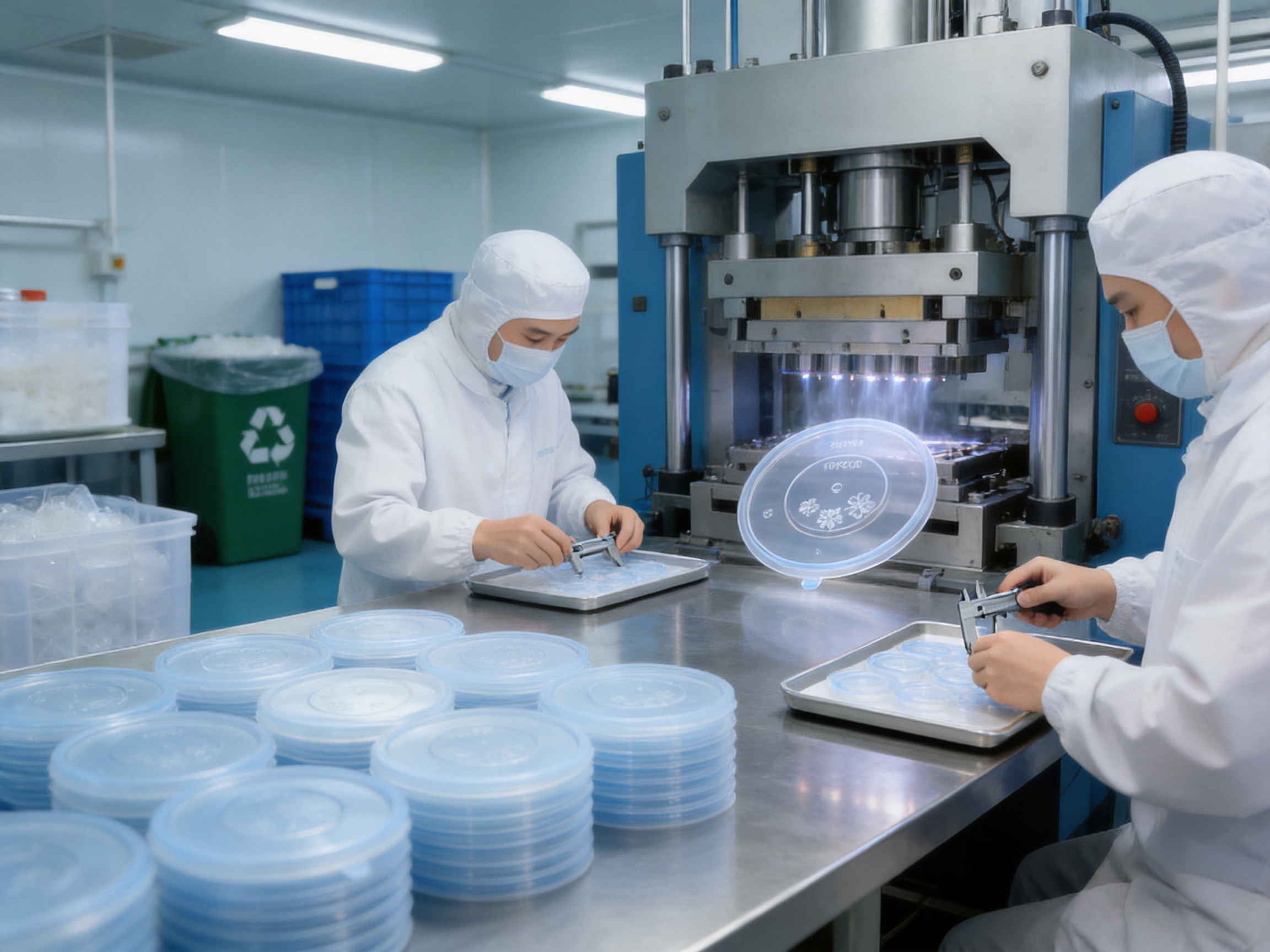
Plastic lids are commonly produced through injection molding, a process in which prepared polymer material is heated, injected into a mold cavity, cooled, and ejected as a shaped component. The process is suitable for producing repeatable circular parts with defined rims, reinforcing features, and stacking geometry.
For a thickened PP lid, process control is important because the product must balance material distribution, cooling behavior, cycle time, clarity, dimensional accuracy, and surface quality. Excessive variation can affect how the lid fits the container or how it performs under pressure.
Key manufacturing considerations may include:
Correct material drying or preparation according to the selected PP grade.
Stable injection temperature and pressure.
Consistent mold temperature and cooling conditions.
Controlled filling speed to reduce visible molding defects.
Accurate control of holding pressure and cooling time.
Proper ejection to avoid deformation or stress marks.
Regular inspection of mold surfaces and sealing features.
Process parameters should be established according to the mold, machine, material, and product design. A qualified production team monitors the process and makes adjustments when necessary. This helps ensure that each production run remains within the agreed specifications.
For customized lids, process development may include trial molding, sample measurement, fit testing, and visual inspection. These steps help confirm that the design can be produced consistently before mass production begins.
13. Quality Inspection and Certification Background
Quality assurance is essential for food packaging because the product is used in a supply chain that includes manufacturers, foodservice operators, distributors, transport providers, and consumers. A professional quality system should address raw materials, production conditions, dimensional accuracy, appearance, functionality, packing, and traceability.
Yuqian Packaging Technology reports that its operations have passed or obtained several quality, safety, and compliance-related certifications and evaluations, including the QS national industrial product production license, ISO 9001 quality management system certification, BRC certification, German DIN safety certification, and EU RoHS+ testing. Customers should confirm the current scope, validity, and applicability of each certification for the specific product and market.
ISO 9001 provides a framework for quality management processes, documentation, corrective action, customer focus, and continual improvement. A quality management system can help coordinate responsibilities across procurement, production, inspection, warehousing, and customer service.
BRC-related certification or compliance can be relevant to organizations involved in food packaging and supply-chain risk management. DIN-related safety certification and EU RoHS+ testing may support specific customer or market requirements, although the relevance of each requirement depends on the destination market and product application.
Typical inspection points for a transparent round PP plastic thickened lid may include:
Caliber and key dimensional measurements.
Weight and thickness consistency.
Color and transparency.
Surface cleanliness and appearance.
Presence of flashes, cracks, warping, or visible contamination.
Fit with the specified cup or bowl.
Leak resistance under agreed test conditions.
Stacking behavior and packing condition.
Quality criteria should be agreed before production, especially for customized products. Clear specifications help ensure that both the buyer and manufacturer evaluate the product according to the same expectations.
14. Environmental Considerations
Environmental performance is increasingly important in food packaging procurement. Customers are looking for ways to reduce unnecessary material use, improve recyclability, limit production waste, and select packaging that aligns with broader sustainability objectives.
PP can contribute to a practical sustainability strategy when it is designed efficiently, used responsibly, and supported by suitable recycling systems. The thickened design should be optimized for the required application rather than made unnecessarily heavy. The goal is to provide adequate strength and performance while maintaining reasonable material efficiency.
The company states that it uses environmentally friendly PP materials and works to reduce energy consumption and waste emissions during production. Process optimization can support resource efficiency by improving production yields, reducing defective products, and lowering unnecessary material loss.
Yuqian Packaging Technology is also committed to developing recyclable and degradable thickened lid products. These development efforts reflect the changing needs of food packaging markets. However, biodegradability and recyclability are not identical concepts, and the actual environmental outcome depends on the material composition, local infrastructure, disposal conditions, and applicable standards.
Buyers should evaluate environmental claims carefully and request relevant technical documents when sustainability performance is a key purchasing requirement. Questions may include the percentage of recycled content, material identification, recyclability in the destination market, applicable test methods, and end-of-life guidance.
Environmental improvement can also come from operational efficiency. A secure lid that reduces food leakage may help prevent product waste. Stackable packaging may reduce storage volume. Consistent production can reduce rejected units. Lightweight but sufficiently strong designs may reduce material consumption and transportation weight. These benefits should be considered together rather than judged by a single environmental factor.
15. Applications Across Food and Packaging Industries
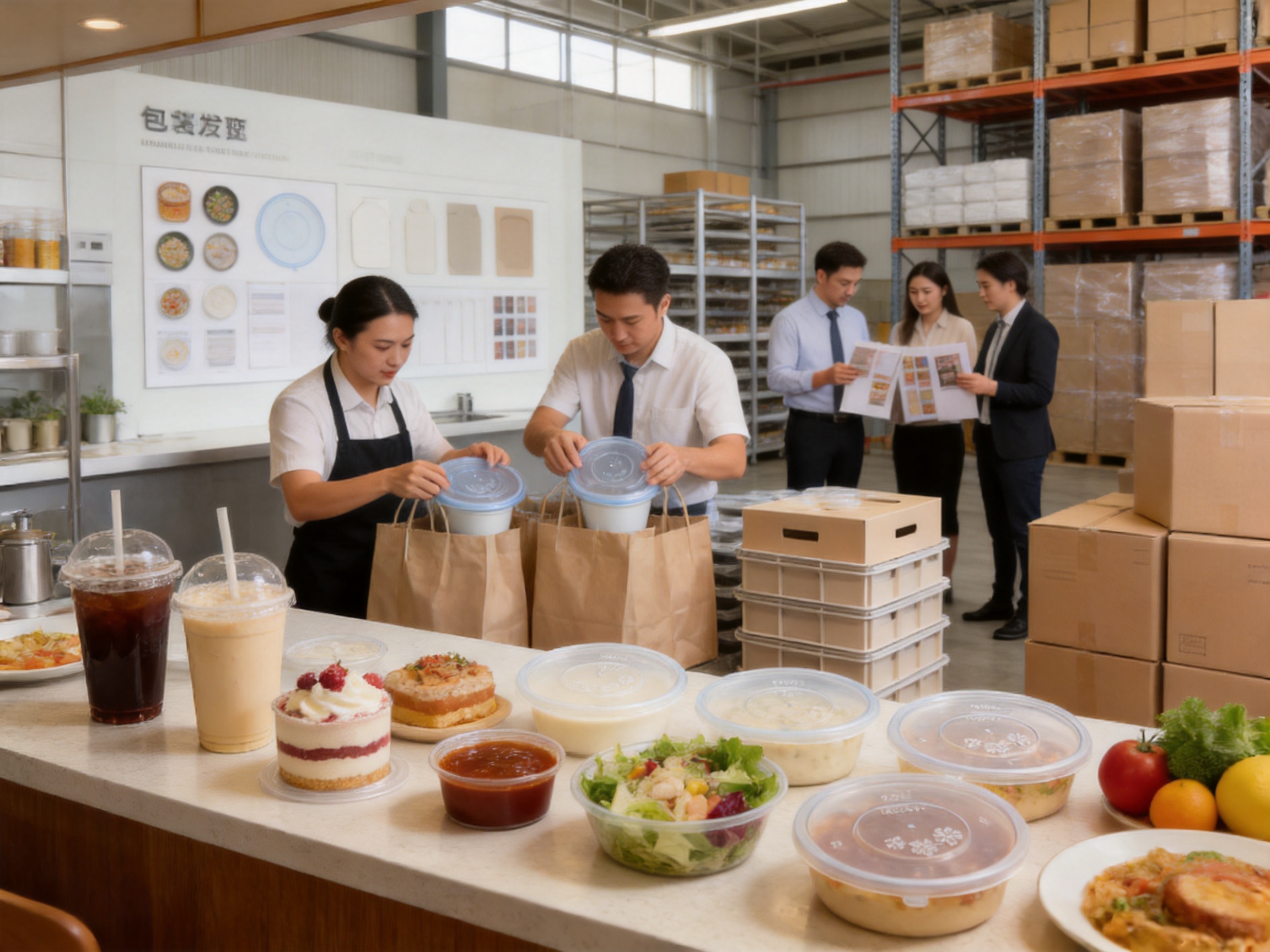
The transparent round PP plastic thickened lid can serve multiple market segments because its core benefits—visibility, strength, sealing support, and customization—are useful across different product categories.
15.1 Takeaway Beverage Shops
Beverage shops require lids that are quick to apply, visually clean, and secure during customer transport. A transparent lid can display the beverage while allowing staff to identify orders. The correct lid diameter and opening design can be selected according to the matching cup format.
15.2 Restaurants and Catering Businesses
Restaurants may use round lids for sauces, side dishes, desserts, salads, cold dishes, and other takeaway items. A stronger lid can improve confidence during delivery and help protect food from external contamination during transport.
15.3 Dessert and Bakery Packaging
Transparent lids are useful for desserts because customers often value visual presentation. Cakes, fruit portions, puddings, chilled snacks, and similar products can be displayed without opening the package. The lid’s clarity can complement printed branding on the container or label.
15.4 Food Processing and Prepared Meals
Prepared-food producers may require standardized packaging for portion control, storage, display, and distribution. A manufacturer with customization capability can help develop lids for specific bowls, trays, or round containers used in production lines.
15.5 Pharmaceutical and Daily Necessities Packaging
The product information identifies pharmaceutical packaging and daily necessities manufacturing as potential application fields for transparent PP thickened covers. Any use outside food packaging should be evaluated separately to confirm material suitability, regulatory requirements, hygiene controls, and compatibility with the packaged contents.
16. Advantages for Distributors and Wholesale Buyers
Distributors need products that are stable, recognizable, easy to store, and suitable for multiple customer groups. A range of standard calibers allows distributors to offer packaging solutions for different cups and bowls without developing every item from the beginning.
The 120 mm, 150 mm, and 179 mm sizes create a practical product range. Transparent and blue color options can address different market preferences, while customization expands the potential for private-label or special-purpose orders.
Reliable quality is particularly important for distributors because their reputation depends on the performance of products supplied to downstream customers. Consistent dimensions and packing help simplify inventory management and reduce the risk of receiving complaints caused by mixed specifications.
An experienced manufacturer can also support distributors with product data, samples, technical communication, packaging details, and production scheduling. These services help distributors present the product accurately and make better purchasing decisions.
17. Advantages for Brand Owners
Food and beverage brands increasingly use packaging to reinforce identity. A transparent lid can preserve the visibility of the product, while customized color, container matching, labeling, and overall package geometry can create a recognizable presentation.
Brand owners may benefit from a custom lid when standard products do not provide a sufficiently secure fit or a distinctive appearance. A properly matched lid can reduce visual gaps, improve package proportions, and support more consistent presentation across retail and delivery channels.
The availability of OEM manufacturing is also valuable for brands that want to develop packaging under their own specifications. The manufacturer can work from drawings, samples, or design concepts and help turn those requirements into a repeatable production item.
Before approving a custom product, brand owners should assess the complete user experience. The lid should be easy for staff to apply, sufficiently secure for customers to carry, compatible with labels and seals, and appropriate for the product’s temperature and storage conditions.
18. Recommended Customer Development Process
A clear development process can reduce delays and help ensure that the final lid meets practical expectations. The following steps are suitable for standard and customized projects:
Application review: Define the food or beverage type, container material, filling temperature, storage conditions, and transportation requirements.
Dimension confirmation: Confirm the container rim diameter, external profile, sealing area, and available stacking space.
Product selection: Compare the 120 mm, 150 mm, 179 mm, or customized options according to the application.
Sample evaluation: Test the lid on the actual container and check fit, appearance, opening, stacking, and handling.
Performance testing: Carry out leak, temperature, transport, and load tests under realistic conditions.
Specification approval: Confirm material, color, weight, dimensions, tolerances, packing, and quality criteria.
Production planning: Establish tooling, production schedule, inspection requirements, and delivery arrangements.
Batch verification: Inspect the first production batch and maintain records for future orders.
This process is useful because packaging performance cannot always be determined from photographs or a simple dimensional list. Physical testing provides more reliable information about the actual interaction between lid and container.
19. Proper Storage and Use
Even a high-quality plastic lid requires appropriate storage and handling. Lids should be kept in clean, dry conditions and protected from excessive heat, direct sunlight, dust, chemicals, and crushing forces. Cartons should not be stacked beyond the recommended limit because excessive pressure may distort the products.
During use, staff should handle lids with clean hands or appropriate foodservice procedures. The container rim should be free of food residue or damage before the lid is applied. The lid should be pressed evenly around the circumference rather than forced from one side only.
Operators should not mix lids from different specifications unless compatibility has been confirmed. A small difference in caliber or rim profile may produce an unreliable seal. It is also advisable to conduct routine checks when changing suppliers, container batches, filling temperatures, or delivery methods.
For hot food, users should follow the confirmed temperature limits and avoid applications that exceed the tested conditions. Steam pressure, rapid temperature changes, and hot oily foods can influence packaging performance. If the lid is intended for refrigerated, frozen, or heated use, the specific application should be discussed with the manufacturer.
20. How the Product Supports Better Packaging Economics
Packaging economics involve more than the price of one lid. Buyers should consider the total cost of ownership, including product waste, staff time, storage space, delivery complaints, inventory complexity, and brand reputation.
A lid that fits consistently can reduce the time employees spend correcting or replacing improperly closed packages. A stronger structure may reduce damage during routine handling. Stackability can help improve warehouse organization. Transparent presentation may support product sales by making food more attractive and easier to identify.
For large-volume buyers, the manufacturer can help analyze the relationship between lid weight, performance, packing quantity, and transport cost. A suitable design should deliver the required strength without adding unnecessary material. The best solution is not always the thickest possible lid, but the lid that provides the right balance for the intended application.
Customization can also improve economic performance when it eliminates the need for additional adapters, secondary packaging, or manual modifications. A properly developed lid may simplify the packaging line and improve the consistency of finished orders.
21. Why Choose an Experienced OEM Manufacturer
Working with an experienced OEM manufacturer gives customers access to more than a finished plastic part. It provides technical support throughout product development, production, quality control, and delivery.
Yuqian Packaging Technology combines manufacturing experience with research and development capabilities. The company’s history since 2010, plant area of approximately 30,000 square meters, certification background, and focus on food packaging provide a foundation for serving both standard and customized requirements.
The company’s strengths include:
Experience in disposable food packaging materials and products.
Research and development support for new packaging solutions.
Production of standard thickened PP lids in multiple calibers.
Customization of size, color, and selected structural details.
Food-grade PP material options.
Quality management from raw material procurement through finished-product inspection.
Support for OEM and customer-specific packaging programs.
Attention to recyclable and environmentally responsible product development.
Experience serving domestic and international customers.
For buyers, the benefit of this combination is improved communication. Product requirements can be discussed with a team that understands both manufacturing limitations and practical packaging needs. This can reduce the chance of selecting an unsuitable lid and help accelerate the path from concept to production.
22. Frequently Asked Questions
22.1 What material is used for the transparent round thickened lid?
The lid is made from food-grade polypropylene, commonly known as PP. PP is valued for its light weight, durability, chemical resistance, processability, and suitability for many food packaging applications. The exact suitability depends on the product formulation, intended use, and applicable market requirements.
22.2 Which standard sizes are available?
The listed standard sizes are 120 mm, 150 mm, and 179 mm. The approximate weights are 5 g, 9 g, and 13 g respectively. Customers should confirm the exact fit using the matching cup or bowl because container rim design is also important.
22.3 Can the lid be customized?
Yes. Customized services are available for special calibers, colors, structural requirements, and container compatibility. Customers can provide drawings, samples, or detailed measurements for evaluation and development.
22.4 Is the lid suitable for hot food?
The product has good resistance to elevated temperatures within a suitable range, but the exact application must be evaluated according to filling temperature, exposure time, food composition, and container design. Customers should confirm the required conditions and conduct application testing before mass use.
22.5 Is the lid leak-proof?
The lid is designed to provide leak-resistant sealing when correctly matched with the appropriate container and properly applied. Actual performance depends on the lid and container tolerances, filling level, temperature, handling, and transportation conditions.
22.6 Are transparent and blue colors available?
Yes. Transparent and blue are listed as standard color options. Other colors may be discussed according to order quantity, material requirements, and customization conditions.
22.7 Can the lid be stacked?
Yes. The design is intended to support stacking and space-saving storage. Customers should verify stacking performance under their planned packing, warehouse, and transportation conditions.
22.8 Is PP recyclable?
PP is a recyclable thermoplastic in many recycling systems. Actual recycling depends on local collection, sorting, processing infrastructure, contamination, and regulations. Buyers should obtain destination-market guidance when environmental compliance is important.
22.9 What certifications are associated with the manufacturer?
The company reports a QS national industrial product production license, ISO 9001 quality management system certification, BRC certification, German DIN safety certification, and EU RoHS+ testing. Customers should request current documentation and confirm the scope applicable to the specific product and market.
22.10 How should buyers test the lid before ordering in bulk?
Buyers should test the lid with the actual cup or bowl and the intended food or beverage. Recommended checks include fit, sealing, leakage, temperature exposure, stacking, transport vibration, opening convenience, appearance, and storage behavior. Sample testing is especially important for customized products.
22.11 Can the manufacturer support private-label packaging?
As an OEM manufacturer, the company can discuss customer-specific product development and packaging programs. The available options depend on the design, order volume, artwork, tooling, and technical requirements.
22.12 What information should be supplied for a quotation?
Useful information includes the required caliber, matching container dimensions, intended contents, temperature range, color, estimated order quantity, packaging requirements, delivery destination, and whether customization is needed. Drawings or physical samples can make the quotation and development process more accurate.
23. Conclusion
The transparent round PP plastic thickened lid is a practical packaging solution for businesses that need a combination of visibility, strength, sealing support, stackability, and customization. Available in 120 mm, 150 mm, and 179 mm options, it can serve a broad range of takeaway cups, bowls, and round food containers.
Its thickened structure provides advantages over many basic thin lids by improving rigidity, handling stability, and resistance to deformation. Transparent PP supports attractive product presentation, while food-grade material, controlled manufacturing, and quality management contribute to dependable packaging performance.
The product is supported by Yuqian Packaging Technology’s experience in research, development, production, OEM service, and food packaging quality control. The company’s manufacturing resources, certification background, customized development capability, and focus on environmentally responsible packaging make it suitable for customers seeking both standard products and specialized solutions.
For the best result, buyers should evaluate the lid as part of a complete packaging system. Correct caliber selection, container compatibility, temperature testing, leak testing, storage planning, and clear quality specifications are essential. With these factors properly controlled, the transparent round PP plastic thickened lid can help foodservice and packaging companies improve operational reliability, product presentation, and customer satisfaction.
References
1. Product specification information for transparent round PP plastic thickened lids, including standard calibers, approximate weights, colors, and application features.
2. Polypropylene material principles for food packaging, including characteristics related to durability, processability, chemical resistance, and recyclability.
3. ISO 9001 quality management system principles, including process control, documentation, corrective action, and continual improvement.
4. BRC packaging and food-safety-related quality management principles for packaging supply chains.
5. General injection molding process principles for polypropylene packaging components, including material preparation, mold filling, cooling, ejection, and inspection.
6. General packaging design principles concerning sealing performance, dimensional tolerances, stacking, transportation, and user handling.
7. Environmental packaging considerations related to recyclable thermoplastics, material efficiency, production waste reduction, and end-of-life management.
8. Company information provided for Yuqian Packaging Technology (Jiangsu) Co., Ltd., including manufacturing background, product development capabilities, certifications, and food packaging operations.