English
 Español
 عربى
عربىContent
- 1 1. Product Overview: What Is a Transparent Round PP Plastic Thickened Lid?
- 2 2. Core Specifications
- 3 3. Why Food Packaging Buyers Choose Thickened PP Lids
- 4 4. Advantages Over Ordinary Disposable Lids
- 5 5. Food-Grade PP Material: Safety, Stability, and Practical Sustainability
- 6 6. Advanced Manufacturing Processes Behind Reliable Lids
- 7 7. Company Strengths Supporting Product Competitiveness
- 8 8. Product Applications Across Foodservice and Retail
- 9 9. Competitive Comparison: Why This Product Stands Out
- 10 10. Design Details That Improve User Experience
- 11 11. Customization and Personalized Packaging Solutions
- 12 12. Quality Certifications and Compliance Confidence
- 13 13. Sustainability: Recyclability, Efficiency, and Responsible Innovation
- 14 14. Practical Purchasing Considerations
- 15 15. Storage and Handling Recommendations
- 16 16. How Advanced OEM Manufacturing Creates Value for Food Brands
- 17 17. Market Trends Driving Demand for Thickened PP Lids
- 18 18. Frequently Asked Questions
- 18.1 Q1: What material is used for transparent round PP plastic thickened lids?
- 18.2 Q2: What sizes are commonly available?
- 18.3 Q3: Are the lids leak-proof?
- 18.4 Q4: Can these lids be used for hot food?
- 18.5 Q5: Why choose thickened lids instead of thinner lids?
- 18.6 Q6: Are transparent PP lids recyclable?
- 18.7 Q7: Can the color be customized?
- 18.8 Q8: What certifications support product quality?
- 18.9 Q9: What information should buyers provide for customization?
- 18.10 Q10: What industries use these lids most often?
- 19 19. Conclusion
- 20 References
Transparent round PP plastic thickened lids have become an essential component in contemporary disposable food packaging, especially for takeaway bowls, food containers, soup cups, deli containers, and customized catering packaging systems. As food delivery, quick-service restaurants, cloud kitchens, supermarkets, and prepared-meal brands continue to expand, packaging is no longer judged only by appearance or low cost. Buyers now expect safer materials, better sealing performance, stronger structure, stable production quality, and flexible customization. A thickened polypropylene lid answers these expectations by combining food-grade safety, reliable leak resistance, high clarity, impact resistance, stackability, and practical compatibility with a wide range of container calibers.
This article focuses on transparent round PP plastic thickened lids, including common specifications such as 120 mm, 150 mm, and 179 mm diameters, as well as customizable sizes and colors. It explains the product’s advantages, why thickened PP lids often outperform ordinary disposable lids, how advanced manufacturing processes support stable quality, and how a professional OEM packaging manufacturer can help food brands improve safety, presentation, logistics efficiency, and customer experience. The article also includes a product specification table, a detailed Q&A section, and reference entries for further reading.
1. Product Overview: What Is a Transparent Round PP Plastic Thickened Lid?
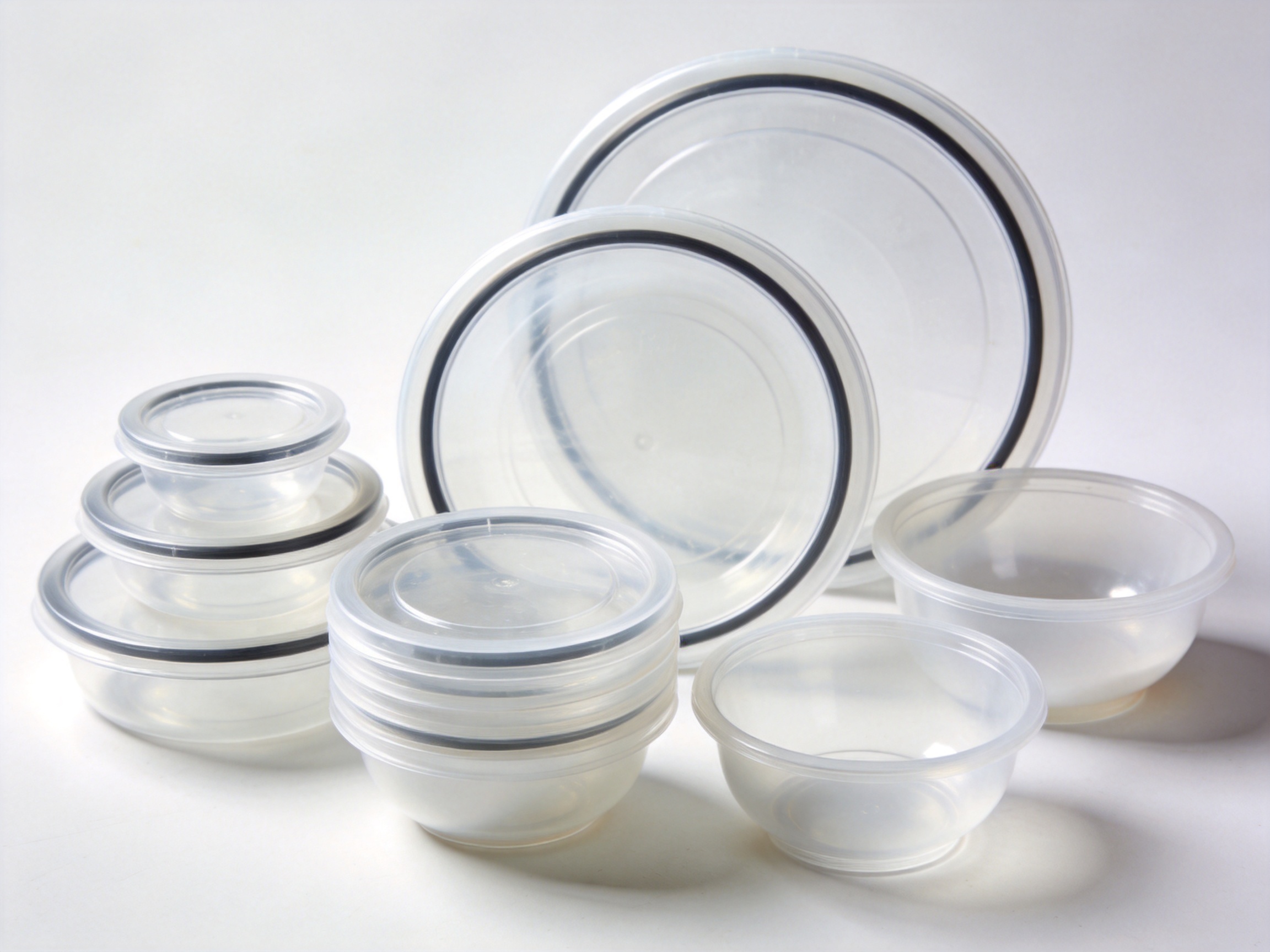
A transparent round PP plastic thickened lid is a disposable or recyclable lid made primarily from polypropylene, a widely used food-contact plastic known for its chemical stability, heat resistance, toughness, and relatively low weight. The lid is designed to fit round food containers or bowls, creating a secure closure that helps prevent spills, protects food from contamination, and supports transportation in takeaway and delivery scenarios. Compared with thin standard lids, the thickened design uses a stronger wall structure and optimized rim geometry to improve rigidity, sealing consistency, and handling comfort.
The term “transparent” refers to the lid’s clear or semi-clear visual effect. While PP is not always as glass-clear as PET, high-quality PP processing and mold design can produce lids with excellent visibility, allowing customers to see the food inside without opening the package. This transparency is especially valuable for salads, rice bowls, noodle bowls, fruit cups, desserts, prepared meals, and premium takeaway products where visual presentation influences purchasing decisions. A lid that reveals product freshness can strengthen consumer trust and reduce unnecessary opening, helping maintain hygiene.
The term “round” describes the lid shape, which is compatible with circular bowls and containers. Round containers are popular in foodservice because they distribute pressure evenly, are comfortable to hold, and are suitable for soups, noodles, rice dishes, sauces, grains, curries, stews, side dishes, and deli foods. A round thickened lid with a stable snap-fit or sealing rim can improve packaging performance during stacking, bagging, and transport.
The product is commonly available in 120 mm, 150 mm, and 179 mm calibers, with gram weights such as 5 g, 9 g, and 13 g depending on size and structure. Transparent and blue color options are common, and additional colors or functional designs can be customized according to customer requirements. The key product features include leak-proof design, thickened durability, non-toxic and odorless material, environmentally responsible PP selection, high temperature resistance within an appropriate range, and stackable storage efficiency.
2. Core Specifications
The following table summarizes typical specification options for transparent round PP plastic thickened lids. Actual specifications can be adjusted according to container compatibility, customer branding needs, regional regulatory requirements, and production mold design.
| Lid Type | Caliber | Approximate Gram Weight | Common Colors | Key Application |
| 120 mm Thickened Lid | 120 mm | 5 g | Transparent or Blue | Small bowls, side dishes, sauces, desserts, snacks |
| 150 mm Thickened Lid | 150 mm | 9 g | Transparent or Blue | Medium takeaway bowls, rice bowls, salads, noodles |
| 179 mm Thickened Lid | 179 mm | 13 g | Transparent or Blue | Large bowls, family portions, prepared meals, catering packs |
| Customized Thickened Lid | Customer-defined | Customer-defined | Custom colors available | Brand-specific packaging systems and OEM projects |
These specification ranges are practical for many food packaging needs because they cover small, medium, and large container formats. The 120 mm lid is useful for compact takeaway items and portion-controlled servings. The 150 mm lid is often preferred for mainstream takeaway bowls because it balances capacity, convenience, and transportability. The 179 mm lid is suited for larger meals, shared portions, and premium packaging systems where rigidity and sealing stability are particularly important.
3. Why Food Packaging Buyers Choose Thickened PP Lids
Food packaging buyers often compare disposable lids based on price, appearance, weight, sealing ability, heat resistance, safety certification, production consistency, and supplier reliability. At first glance, a thin lid may seem economical because it uses less material. However, in actual foodservice operation, lid failure can create hidden costs: leakage damages meals and delivery bags, weak lids collapse under stacking pressure, poor fit causes customer complaints, and inconsistent dimensions disrupt packing speed. A thickened PP lid is designed to reduce these problems by improving mechanical strength and sealing reliability.
The thickened structure gives the lid better resistance to bending, cracking, and deformation. This matters in busy restaurants and delivery kitchens, where staff must package many orders quickly. When a lid feels too soft, employees may need extra time to align it or press it several times. A more rigid lid provides a more confident closing experience and reduces operational friction. For delivery platforms and catering chains, even a small improvement in packing reliability can reduce remakes, refunds, and negative reviews.
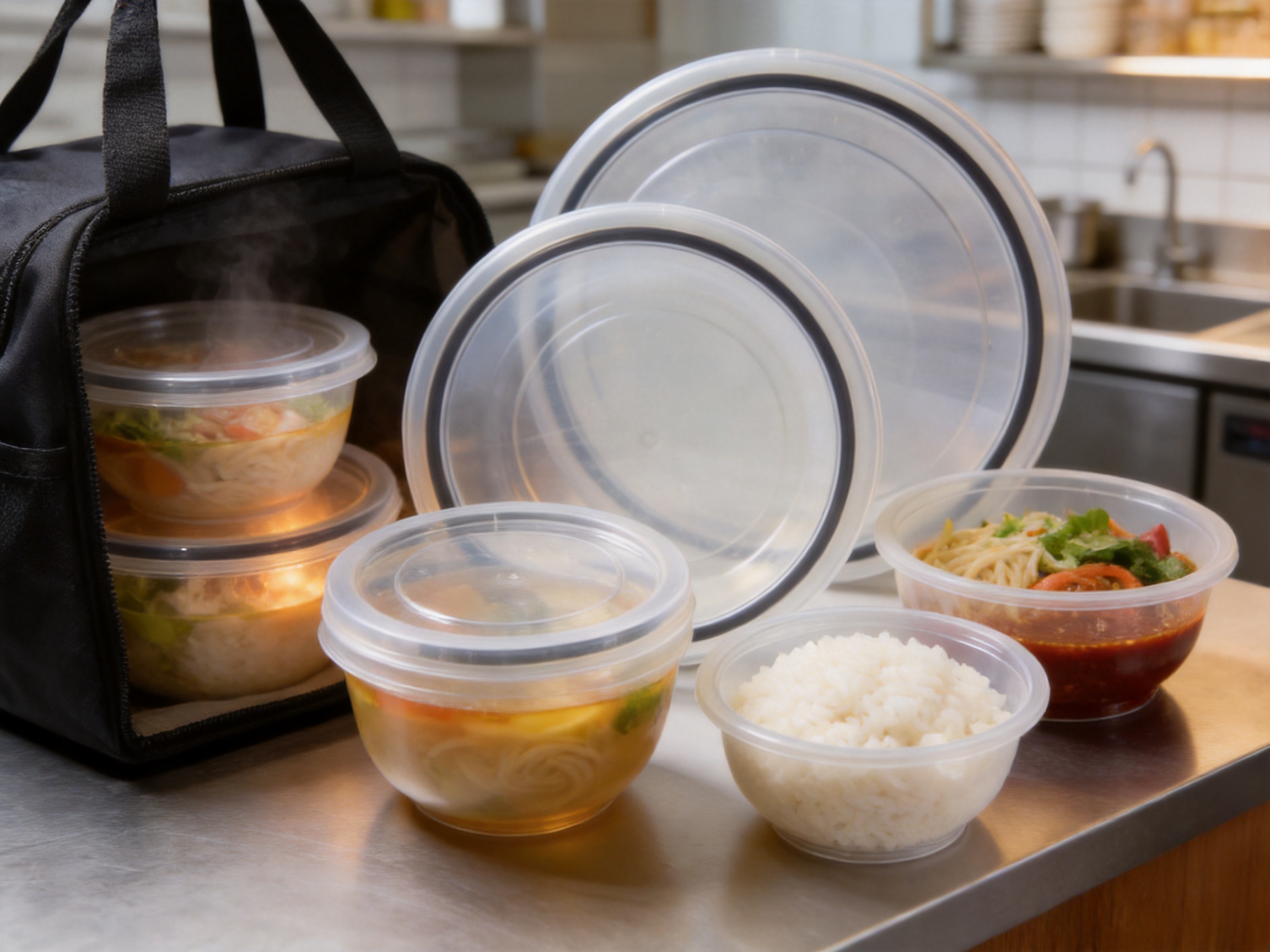
PP also offers excellent compatibility with warm and hot foods. While every plastic product has specific temperature limits that must be respected, high-quality PP is generally known for better heat resistance than many low-cost disposable materials. This makes it suitable for hot soups, steamed foods, rice bowls, noodle dishes, and reheatable food packaging systems when designed for the intended use. A well-manufactured PP thickened lid can resist deformation within a reasonable high-temperature range and maintain its shape during typical takeaway handling.
Another reason buyers choose thickened PP lids is food safety. Food-grade PP is non-toxic, odorless, and chemically stable under appropriate use conditions. It does not easily react with common foods, oils, sauces, or mild acids. For businesses serving customers daily, material safety is not optional. Packaging must comply with relevant food-contact expectations and should come from suppliers with documented quality controls, traceability, and certifications.
4. Advantages Over Ordinary Disposable Lids
4.1 Stronger Leak-Proof Performance
Leakage is one of the most visible failures in disposable food packaging. A lid may look acceptable in a product catalog, but if it cannot seal tightly against the container rim, the entire packaging system becomes unreliable. Transparent round PP plastic thickened lids are engineered with improved rim engagement, better dimensional stability, and a more robust sealing structure. The leak-proof design helps reduce liquid seepage from soups, sauces, dressings, curries, and oily foods during movement.
Compared with many thin lids, a thickened lid resists distortion when pressed onto a container. Thin lids may flex excessively, creating uneven contact around the rim. Once a small gap appears, liquid can escape under pressure. A thickened lid provides more uniform pressure distribution and a stronger lock around the bowl. This advantage is especially important for delivery packaging, where containers may tilt, vibrate, or experience sudden movement during transport.
4.2 Better Durability and Handling
Durability is not only about surviving a drop; it is also about daily handling. Restaurant staff open cartons, pull lids from stacks, snap lids onto bowls, place packages into bags, and sometimes stack multiple orders together. A lid that cracks, wrinkles, or deforms under hand pressure slows down the workflow. Thickened PP lids provide a better tactile feel and are easier to handle consistently. Their reinforced structure reduces the chance of accidental damage before the product reaches the customer.
For consumers, durability also influences perceived value. A firm transparent lid gives the impression of higher quality packaging and better food protection. In competitive takeaway markets, packaging quality can become part of brand identity. A meal served in a strong, clean, transparent-lidded container can look more professional than the same meal sealed with a flimsy lid.
4.3 Improved Heat Resistance Within Suitable Conditions
Many food packaging applications involve warm or hot products. Ordinary low-grade lids may warp when exposed to heat, especially if the material is too thin or if the molding process creates internal stress. PP is valued for its relatively high heat resistance compared with some other disposable plastics. When processed correctly, a thickened PP lid can maintain shape and sealing performance in hot-food service conditions within the recommended range.
The thickened design further helps resist thermal deformation because the structure is less likely to collapse under heat and pressure. This does not mean that every PP lid is suitable for every microwave or high-temperature environment; usage must follow product specifications and local regulations. However, for many takeaway and prepared-food applications, a high-quality PP lid provides a practical balance of safety, strength, and thermal performance.
4.4 Clear Presentation and Customer Confidence
Transparency has commercial value. Customers often prefer to see what they are buying, especially when ordering ready-to-eat meals, salads, desserts, fruit portions, and delicatessen products. A transparent lid allows visual inspection without opening the package. This helps preserve hygiene while also supporting merchandising. In supermarkets, convenience stores, and display counters, clear lids can improve product appeal and encourage impulse purchases.
Compared with opaque or low-clarity alternatives, a well-made transparent PP lid helps communicate freshness, cleanliness, and portion accuracy. It also allows staff to verify the order quickly before sealing or dispatching it. For restaurants with many similar menu items, visibility can reduce packaging mistakes and improve order accuracy.
4.5 Stackability and Space Efficiency
Foodservice operations often have limited storage space. Lids must be stored in cartons, placed near packing stations, and accessed quickly during peak hours. Stackable thickened lids help save space and support efficient inventory management. A properly nested lid stack reduces clutter and allows staff to remove individual lids smoothly.
Stackability also matters during transport from factory to distributor and from distributor to restaurant. Efficient stacking reduces carton volume, improves pallet utilization, and can lower logistics costs. A thickened lid must therefore be strong but also designed to nest effectively. This balance requires careful mold design and production control.
4.6 Customization for Brand and Container Compatibility
Many competitors offer standard lids only, forcing customers to adapt their containers or menu packaging around fixed dimensions. A stronger OEM supplier can provide customized services, including caliber adjustment, color selection, material optimization, structural changes, and compatibility testing with specific bowls or containers. For food brands, customization can create a more integrated packaging system and reduce mismatch problems.
Customization is especially useful for growing restaurant chains, meal-prep brands, airline catering suppliers, institutional foodservice providers, and retail food manufacturers. These businesses may require stable packaging across multiple sites and large order volumes. A customized transparent round PP thickened lid can be designed to fit existing bowls, support special sealing requirements, or align with brand color preferences.
5. Food-Grade PP Material: Safety, Stability, and Practical Sustainability
Polypropylene is one of the most widely used plastics in food packaging because it offers a strong combination of safety, performance, processability, and recyclability. Food-grade PP raw materials are selected to meet food-contact requirements and to avoid unwanted odor or contamination. A quality manufacturer controls raw material procurement carefully, checking supplier qualifications, batch documentation, and material consistency before production.
PP has good resistance to many common food ingredients, including water-based foods, oils, mild acids, and sauces. It is also relatively tough, which helps prevent cracking during handling. Its low density makes it lightweight, reducing transportation burden compared with heavier packaging materials. When properly sorted and collected, PP can be recycled in many recycling systems, making it a practical option for brands seeking improved environmental responsibility.
Environmental performance in food packaging should be discussed realistically. A disposable lid must first protect food effectively; otherwise, food waste may increase, and food waste itself has a major environmental impact. A thickened PP lid contributes to sustainability by reducing leakage, protecting food quality, supporting portion control, and improving transport reliability. At the same time, manufacturers can reduce environmental impact through efficient production, reduced scrap, recycling of qualified process waste, energy-saving equipment, and development of recyclable or degradable material solutions.
Yuqian Packaging Technology (Jiangsu) Co., Ltd. emphasizes environmentally friendly PP materials, resource utilization, and production process optimization. The company’s approach reflects an important trend in packaging: sustainability is not achieved by a single claim, but by the combined effort of responsible material selection, efficient manufacturing, stable quality, reduced defect rates, and continuous product innovation.
6. Advanced Manufacturing Processes Behind Reliable Lids
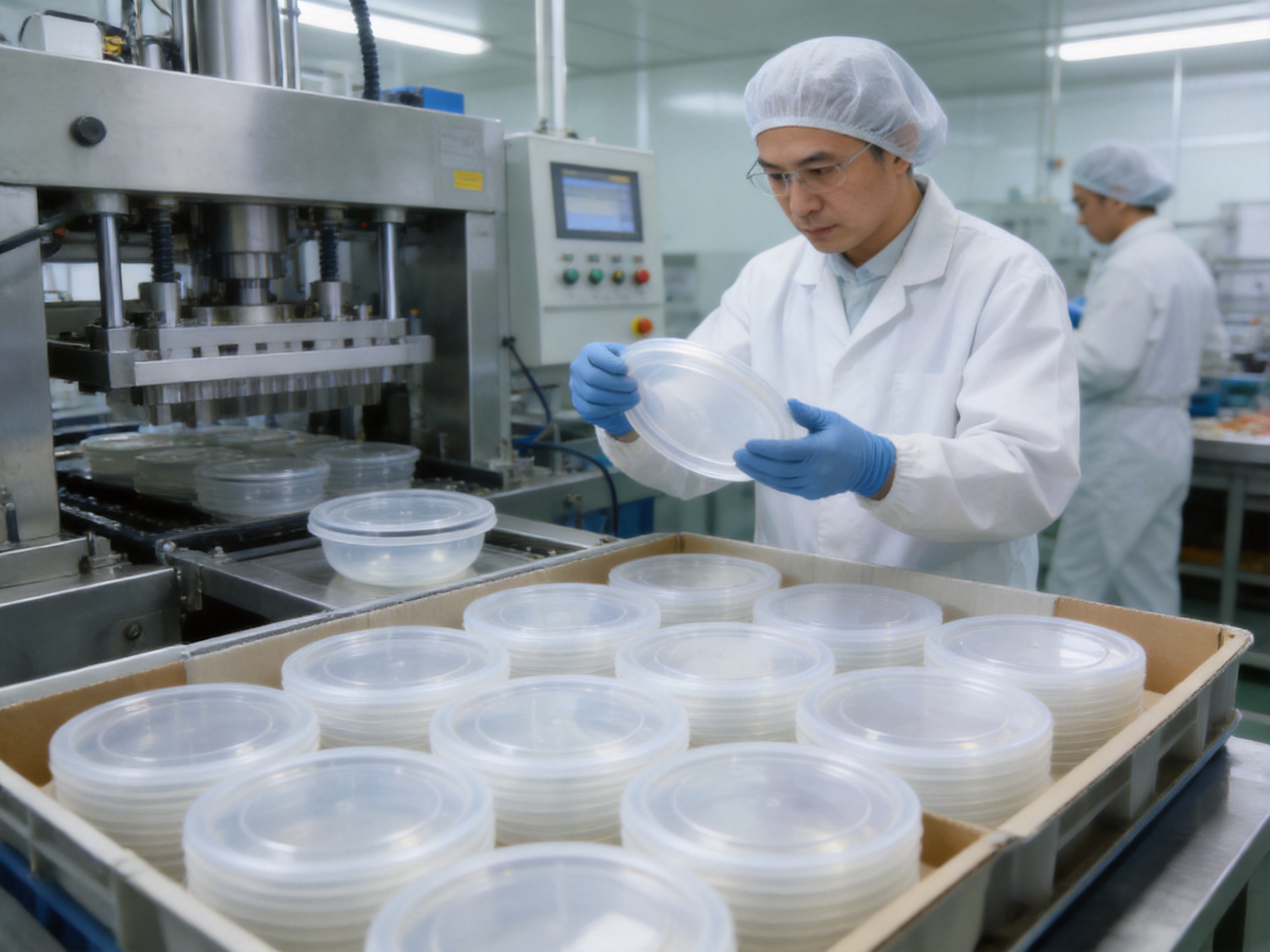
The performance of a transparent round PP plastic thickened lid depends not only on material selection but also on manufacturing technology. A lid may be made from the same basic polymer as a competing product, yet perform very differently because of mold precision, processing temperature, cooling control, forming pressure, trimming accuracy, inspection standards, and packaging hygiene. Advanced manufacturing transforms raw PP into a reliable food-contact product with repeatable dimensions and stable mechanical performance.
6.1 Raw Material Control
Production begins with qualified food-grade PP resin. The manufacturer must verify that the material meets required safety and performance specifications. Incoming materials are inspected for appearance, batch consistency, contamination risk, and supplier documentation. Proper storage conditions are also important because dust, moisture, or foreign matter can affect product clarity and safety. Strong raw material control is the first barrier against quality problems.
6.2 Precision Forming and Mold Engineering
Thickened lids require accurate mold design. The rim must fit securely to the matching bowl, the top surface must resist deformation, and the nesting structure must allow efficient stacking. Mold dimensions must account for PP shrinkage, cooling behavior, wall thickness distribution, and the intended snap-fit feel. If the mold is poorly designed, the lid may be too tight, too loose, uneven, or difficult to stack.
Advanced mold engineering allows the lid to achieve a balance between strength and material efficiency. A lid should not simply use excessive material; it should place material strategically where performance is needed most. Reinforced rims, optimized edges, and controlled wall thickness can improve sealing and durability without unnecessary waste. This is one of the key differences between professional packaging manufacturing and low-end commodity production.
6.3 Process Temperature and Cooling Control
PP processing requires careful temperature management. If the temperature is too low, forming may be incomplete, surface quality may suffer, and internal stress may increase. If the temperature is too high, material degradation or excessive shrinkage can occur. Cooling must also be controlled to maintain dimensional stability and avoid warping. For transparent or high-clarity lids, surface quality and cooling uniformity are especially important.
A manufacturer with advanced equipment can maintain stable production parameters across long production runs. This stability is critical for large buyers because they need every carton of lids to perform the same way. Inconsistent production creates problems at the restaurant or packing facility, where workers may notice that one batch fits well while another batch leaks or cracks.
6.4 Trimming, Finishing, and Edge Quality
After forming, lids must have clean edges and accurate dimensions. Rough trimming can create burrs, sharp edges, poor appearance, and sealing defects. A high-quality thickened lid should feel smooth to the touch and fit the container without damaging the bowl rim. Edge quality is also related to consumer safety and brand image. Clean finishing shows that the manufacturer controls details rather than only producing volume.
6.5 Inspection and Quality Assurance
Quality assurance includes dimensional inspection, appearance inspection, fit testing, sealing evaluation, weight verification, stacking performance checks, and packaging inspection. For food packaging, hygiene control and traceability are also important. Each production lot should be managed so that materials, processing conditions, inspection results, and shipment information can be reviewed when needed.
Yuqian Packaging Technology (Jiangsu) Co., Ltd. has established a quality management system covering raw material procurement, production processing, finished product inspection, and customer delivery. The company has obtained certifications and qualifications such as QS national industrial product production license, ISO9001 Quality Management System certification, BRC certification, German DIN safety certification, and EU RoHS testing. These certifications support customer confidence by showing that the manufacturer operates under recognized management and safety frameworks.
7. Company Strengths Supporting Product Competitiveness
A strong product is inseparable from a strong manufacturer. Food packaging buyers need more than a catalog item; they need stable supply, engineering support, customization capability, quality documentation, and responsive service. Yuqian Packaging Technology (Jiangsu) Co., Ltd. was established in 2010 and is located in Taizhou City, Jiangsu Province, China. With a plant area of approximately 30,000 square meters, the company integrates research and development, production, and sales of new food packaging materials and products.
The company’s manufacturing experience is a major advantage in the transparent round PP thickened lid market. Years of technical accumulation allow the team to understand container-lid compatibility, foodservice usage scenarios, material behavior, mold design, and production efficiency. This knowledge is difficult for new or low-end suppliers to replicate quickly. For customers, experience translates into fewer design errors, faster project development, and more reliable mass production.
The company also operates with a research and development mindset. Its R&D team includes experienced professionals dedicated to improving transparent round PP plastic thickened covers and related food packaging products. Through technological breakthroughs and process optimization, the company has launched products with high transparency, high strength, excellent sealing performance, and stable quality. This focus on innovation helps customers keep pace with changing market demand.
Another strength is OEM manufacturing capability. Many food brands and packaging distributors need products tailored to their markets. A capable OEM manufacturer can support custom lid diameters, colors, structural designs, weight adjustments, packaging methods, and compatibility testing. This flexibility helps customers differentiate themselves from competitors that rely only on generic lids. It also makes it easier to build a complete disposable food packaging container system, including cups, cup lids, takeaway bowls, straws, recycle bags, peripheral products, and injection film lining cups and bowls.
Efficient service is also important. Packaging projects often involve deadlines related to restaurant openings, seasonal promotions, distributor inventory cycles, or retail product launches. A manufacturer with organized production planning and customer communication can reduce delays and improve purchasing confidence. Yuqian Packaging Technology has expanded its business channels and service capacity, including the establishment of a Shanghai branch in 2019, supporting broader market engagement and customer service.
8. Product Applications Across Foodservice and Retail
Transparent round PP plastic thickened lids are widely applicable because round bowls and containers are common in many food categories. In restaurants, they are used for noodles, rice bowls, soups, stews, porridge, salads, pasta, grain bowls, curries, and side dishes. The lid helps protect food temperature, reduce spillage, and support safe transport from kitchen to customer.
In delivery and takeaway operations, lid reliability directly affects the customer experience. A leaking soup bowl can damage other items in the bag, create hygiene concerns, and result in negative feedback. A thickened lid with good sealing performance helps the meal arrive as intended. This is especially important for platforms where customers judge the restaurant not only by taste but also by packaging condition.
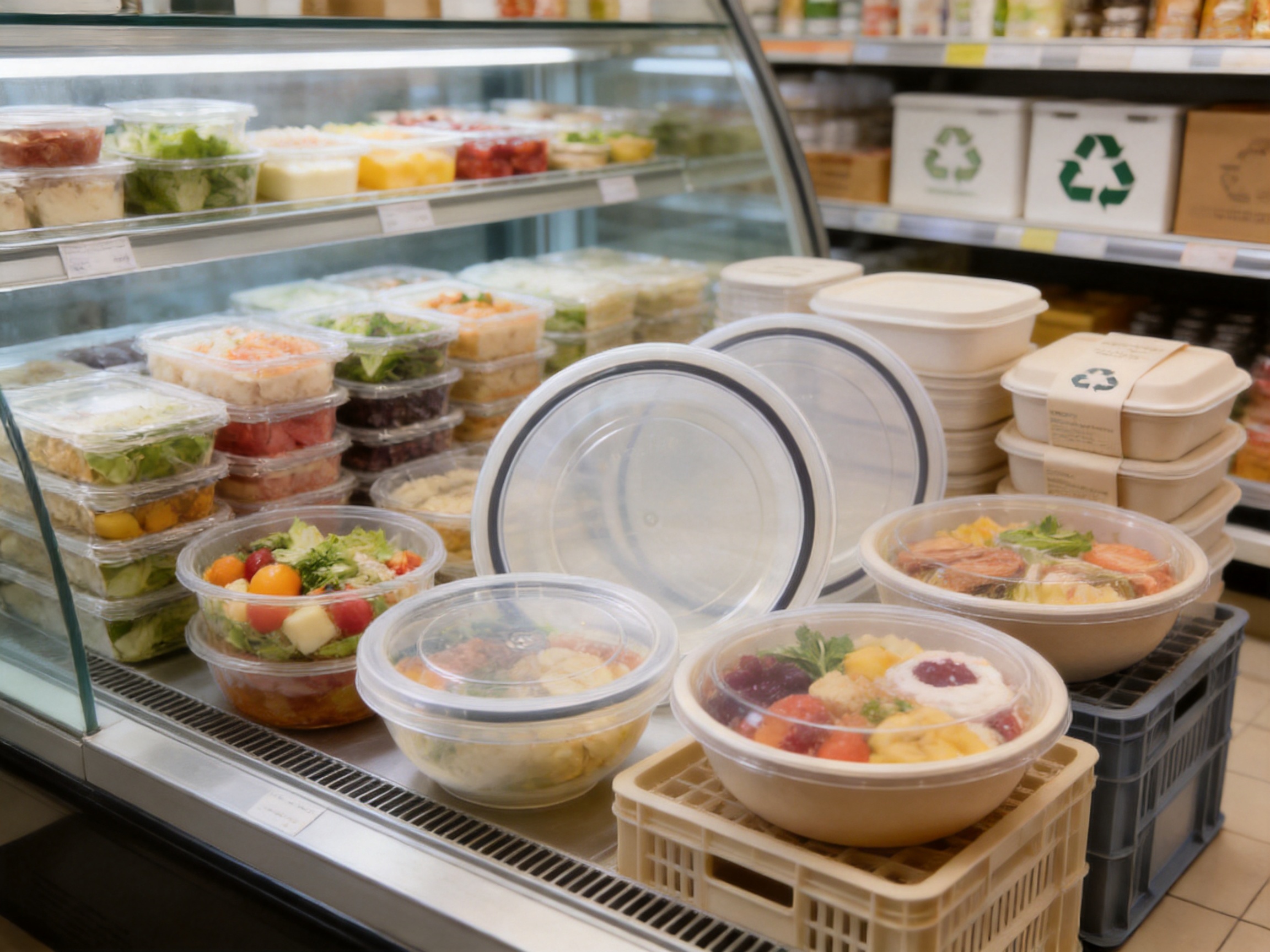
In supermarkets and convenience stores, transparent lids support product display. Prepared meals, chilled dishes, salads, cut fruit, desserts, and deli items benefit from visibility. Customers can inspect color, freshness, portion size, and arrangement before purchase. A clear lid also helps staff scan or check products without opening them, supporting hygiene and inventory efficiency.
In catering and institutional foodservice, thickened lids help manage large-volume meal distribution. Schools, offices, hospitals, factories, and events often require many packaged meals to be transported simultaneously. Stackability and structural strength become crucial. A weak lid may collapse when multiple containers are stacked, while a thickened PP lid offers better load support and handling confidence.
In food manufacturing, such lids can be used for prepared meals, meal kits, chilled foods, and refrigerated takeaway products. Compatibility with automated or semi-automated packing lines may be considered during customization. Consistent lid dimensions and stack release behavior help improve packing efficiency and reduce downtime.
9. Competitive Comparison: Why This Product Stands Out
In a crowded disposable packaging market, many lids appear similar at first. However, professional buyers know that small structural differences can create large performance differences. Transparent round PP plastic thickened lids stand out because they combine multiple advantages in one product: leak resistance, rigidity, clarity, heat tolerance, food-grade safety, stackability, customization, and certified manufacturing support.
Compared with thin PP lids, the thickened version generally offers better dimensional stability and strength. Thin lids may reduce material cost, but they are more likely to deform under heat, pressure, or transport vibration. When packaging hot or liquid-rich foods, the savings from a thin lid can be lost through leakage claims or customer dissatisfaction. A thickened lid provides a more dependable total value.
Compared with some PET lids, PP lids may offer better heat resistance for warm-food applications. PET can provide excellent clarity, but it is often less suitable for higher-temperature foods unless specifically engineered for that purpose. For hot takeaway bowls, PP is frequently preferred because it can better tolerate typical warm-food conditions. The choice depends on the application, but PP thickened lids are highly practical for many hot and warm meals.
Compared with paper lids or fiber-based alternatives, PP lids provide strong moisture resistance and transparent visibility. Paper-based lids may appeal in certain sustainability programs, but they can absorb moisture, soften, or limit product visibility unless coated or windowed. PP lids offer a reliable barrier against liquids and allow customers to view the contents. For soups, sauces, and oily foods, this can be a decisive advantage.
Compared with low-end generic lids, a professionally manufactured thickened PP lid offers more consistent fit. Generic lids may be produced with less precise molds or inconsistent process control, leading to batch variation. In foodservice, consistency is critical. A lid that fits one day and fails the next disrupts operations. Certified manufacturing systems, experienced process control, and quality inspection help ensure repeatable performance.
10. Design Details That Improve User Experience
10.1 Secure Rim Structure
The rim is the most important functional area of a lid. It determines how the lid engages with the container and whether the seal remains stable during transport. A secure rim structure should provide a clear closing feel, enough resistance to accidental opening, and compatibility with the container’s lip. Thickened PP lids can be designed with reinforced rims that improve lock strength and reduce leakage risk.
10.2 Balanced Flexibility
A lid should not be too rigid or too soft. If it is too rigid, it may be difficult to apply or remove. If it is too soft, it may leak or deform. PP offers a useful balance of flexibility and toughness. By adjusting wall thickness and structural geometry, manufacturers can create a lid that snaps on securely while remaining convenient for users.
10.3 Smooth Surface and Clean Appearance
Food packaging should look clean and professional. A smooth transparent lid enhances the visual appeal of the food and reflects positively on the brand. Surface defects, flow marks, black spots, burrs, and warping can reduce customer confidence. Advanced production control and inspection help maintain a consistent appearance.
10.4 Easy Stacking and Dispensing
In high-speed foodservice environments, staff must remove lids quickly from a stack. If lids stick together too tightly, packaging speed decreases. If they nest poorly, storage becomes inefficient. Proper stacking design ensures smooth dispensing while maintaining compact storage. This is a practical advantage that may not be obvious in product photos but matters greatly in daily operations.
11. Customization and Personalized Packaging Solutions
Customization is a major advantage for customers who want packaging that matches their container system, food type, and brand positioning. Transparent round PP plastic thickened lids can be customized by diameter, weight, color, rim structure, surface features, packaging quantity, carton design, and compatibility requirements. Customization enables a business to move beyond generic packaging and create a more reliable and recognizable customer experience.
For example, a soup restaurant may prioritize maximum leak resistance and heat tolerance. A salad brand may emphasize clarity and presentation. A meal-prep company may need stack strength for refrigerated storage and delivery. A distributor may require standardized carton dimensions and stable supply across multiple lid sizes. An OEM manufacturer can evaluate these needs and recommend suitable design adjustments.
Color customization can also support operational efficiency. Transparent lids are ideal for product display, while blue lids may be used for category identification, brand differentiation, or special product lines. Some customers may request other colors to match brand identity or market preferences. When adding colorants, the manufacturer must ensure that all materials remain suitable for food-contact use and meet relevant safety requirements.
Customized lid development typically includes requirement analysis, container sample evaluation, design proposal, mold development or modification, trial production, fit testing, performance testing, customer confirmation, and mass production. Professional project management reduces the risk of mismatch and helps customers launch packaging solutions faster.
12. Quality Certifications and Compliance Confidence
Quality certifications provide an important foundation for trust in the food packaging industry. Certifications do not replace product testing or buyer evaluation, but they demonstrate that the manufacturer follows recognized management principles and safety practices. Yuqian Packaging Technology (Jiangsu) Co., Ltd. has passed certifications and evaluations including QS national industrial product production license, ISO9001 Quality Management System certification, BRC certification, German DIN safety certification, and EU RoHS testing.
ISO9001 supports consistent quality management by requiring process control, documentation, corrective action, and continuous improvement. BRC certification is widely recognized in food-related supply chains and focuses on safety, quality, and operational standards. DIN-related safety recognition and RoHS testing further support market confidence, especially for customers concerned with European requirements and material restrictions.
For buyers, such certifications reduce procurement risk. They indicate that the supplier is not only producing items but managing systems. In large-scale purchasing, system reliability matters as much as product samples. A sample may look good, but ongoing shipments require stable management. Certifications help confirm that the manufacturer has processes to maintain quality over time.
13. Sustainability: Recyclability, Efficiency, and Responsible Innovation
Sustainability in disposable food packaging is complex. Consumers want convenience and hygiene, while society expects reduced environmental impact. Transparent round PP plastic thickened lids contribute to a more responsible packaging approach when they are designed for reliable use, material efficiency, and recyclability. PP is recyclable in many systems, and its lightweight nature can reduce transport energy compared with heavier alternatives.
The thickened design may use more material than an ultra-thin lid, but it can reduce failure-related waste. If a thin lid leaks and causes food to be discarded, the environmental cost may exceed the material savings. Reliable packaging helps protect food, and preventing food waste is an important sustainability goal. The best solution is not always the lightest lid; it is the lid that uses material intelligently to protect food effectively with minimal waste.
Manufacturing efficiency also matters. By optimizing production processes, reducing defective products, reusing qualified production scrap where appropriate, and improving energy efficiency, a manufacturer can reduce environmental burden. Yuqian Packaging Technology’s commitment to developing recyclable and degradable thickened lid products reflects market demand for improved environmental performance. Continuous research and development will remain important as regulations and consumer expectations evolve.
Customers can also support sustainability by selecting compatible container-lid systems, avoiding overpackaging, communicating recycling information clearly, and working with suppliers that prioritize quality and resource efficiency. Packaging sustainability is a shared responsibility among resin suppliers, manufacturers, food brands, distributors, consumers, and waste management systems.
14. Practical Purchasing Considerations
When purchasing transparent round PP plastic thickened lids, buyers should consider more than diameter and price. The first consideration is container compatibility. Even lids with the same nominal caliber may not fit every bowl because rim shapes, tolerances, and material stiffness vary. Buyers should provide container samples or drawings when possible and request fit testing before large orders.
The second consideration is food type. Liquid foods require stronger sealing performance than dry snacks. Hot foods require better heat resistance than chilled salads. Oily or sauced foods require stable material performance and reliable closure. Understanding the food application helps the manufacturer recommend the right lid structure and material specifications.
The third consideration is logistics. If containers will be stacked, transported long distances, or delivered by motorcycle or bicycle, the lid must resist vibration and pressure. Thickened lids are particularly valuable in these conditions. Buyers should test packaging under realistic transport conditions rather than only checking appearance on a table.
The fourth consideration is operational efficiency. Lids should be easy for staff to separate, apply, and confirm as closed. A lid that is technically strong but difficult to use may slow down service. The best lid provides both performance and convenience.
The fifth consideration is supplier capability. A reliable supplier should provide stable quality, customization support, documentation, timely communication, and production capacity. For brands planning long-term growth, supplier partnership is more important than one-time lowest price.
15. Storage and Handling Recommendations
Proper storage and handling help preserve lid quality before use. Lids should be stored in clean, dry, well-ventilated areas away from direct sunlight, high heat, chemicals, and dust. Cartons should remain sealed until use to protect hygiene. Staff should handle lids with clean hands or gloves according to foodservice hygiene policies.
During use, staff should match each lid with the correct container size and press evenly around the rim to ensure full closure. For liquid foods, it is good practice to check the seal before placing the item into a delivery bag. Overfilling containers should be avoided because food or liquid trapped at the rim can interfere with sealing. Hot foods may release steam, so packaging procedures should consider food temperature, venting requirements, and local safety guidelines.
If lids are intended for refrigerated or reheating applications, buyers should confirm suitability with the manufacturer. Not every lid is designed for every temperature condition. Clear communication about application requirements helps ensure safe and reliable use.
16. How Advanced OEM Manufacturing Creates Value for Food Brands
OEM manufacturing creates value by transforming packaging from a generic supply item into a strategic component of the food brand. With support from an experienced manufacturer, customers can design lids that fit their containers precisely, match their visual identity, and perform reliably in their actual service environment. This reduces operational problems and improves the final customer experience.
For a restaurant chain, OEM support can standardize packaging across locations. For a distributor, it can create a differentiated product line with dependable specifications. For a prepared-meal manufacturer, it can improve packing line efficiency and reduce product damage. For a new food brand, it can provide professional packaging without building in-house technical expertise.
Yuqian Packaging Technology (Jiangsu) Co., Ltd. combines R&D capability, manufacturing experience, certifications, and broad product categories to support such OEM projects. Its product range includes plastic cups, plastic cup lids, takeaway bowls, disposable straws, recycle bags, peripheral products, and injection film lining cup and bowl box solutions. This broad capability allows customers to source integrated food packaging systems rather than isolated components.
The company’s location in Jiangsu Province and its expanded service through a Shanghai branch also support business communication and supply chain coordination. For international customers, manufacturing depth and documentation are especially important because packaging must meet different market expectations. A supplier with export awareness, quality systems, and OEM experience can simplify procurement.
17. Market Trends Driving Demand for Thickened PP Lids
The market for transparent round PP plastic thickened lids is growing because consumer habits and foodservice models are changing. Food delivery continues to be a major driver. Customers now expect restaurant-quality meals to arrive at home or office without spills, deformation, or loss of presentation. Packaging is a key part of that promise.
Another trend is the rise of prepared meals and ready-to-eat retail foods. Supermarkets, convenience stores, and specialty food retailers use clear-lidded containers to display fresh meals while maintaining hygiene. Transparent lids help communicate freshness and quality, making them valuable for retail merchandising.
Brand differentiation is also driving demand. As competition increases, food businesses use packaging to stand out. A strong, clear, well-fitting lid can make a meal feel more premium. Customized colors or structures can reinforce brand recognition. Packaging has become part of marketing, not merely a protective shell.
Regulatory and consumer pressure around safety and sustainability also influence purchasing decisions. Buyers increasingly prefer suppliers with certifications, traceable materials, recyclable options, and efficient production processes. Thickened PP lids from a quality-focused manufacturer meet these expectations better than unverified low-cost alternatives.
18. Frequently Asked Questions
Q1: What material is used for transparent round PP plastic thickened lids?
The lids are made from food-grade polypropylene, commonly known as PP. This material is valued for its toughness, heat resistance within appropriate use conditions, chemical stability, low odor, and suitability for many food-contact packaging applications.
Q2: What sizes are commonly available?
Common sizes include 120 mm, 150 mm, and 179 mm calibers. These correspond to small, medium, and large round container applications. Customized sizes can also be developed according to customer container samples or technical drawings.
Q3: Are the lids leak-proof?
The lids are designed with leak-proof performance in mind, using a secure rim structure and thickened construction to improve sealing. Actual leak resistance depends on the matching container, food type, filling level, and correct application by staff. Compatibility testing is recommended before large-volume purchasing.
Q4: Can these lids be used for hot food?
High-quality PP lids generally provide good heat resistance for many warm and hot foodservice applications within their specified range. However, buyers should confirm exact temperature suitability with the manufacturer, especially for microwave, steam, or high-temperature uses.
Q5: Why choose thickened lids instead of thinner lids?
Thickened lids provide better rigidity, handling feel, sealing stability, stack strength, and resistance to deformation. Although thin lids may appear cheaper, thickened lids can reduce leakage, damage, complaints, and operational inconvenience, creating better total value.
Q6: Are transparent PP lids recyclable?
PP is recyclable in many recycling systems where collection and sorting infrastructure exists. Recycling availability depends on local waste management policies. Manufacturers can support sustainability by using suitable materials, reducing production waste, and designing products for practical recycling.
Q7: Can the color be customized?
Yes. Common colors include transparent and blue, and other colors may be customized according to customer requirements. All colorants used for food-contact packaging should meet relevant safety requirements.
Q8: What certifications support product quality?
The manufacturer has obtained certifications and qualifications such as QS national industrial product production license, ISO9001 Quality Management System certification, BRC certification, German DIN safety certification, and EU RoHS testing. These support confidence in quality management and safety control.
Q9: What information should buyers provide for customization?
Buyers should provide container size, rim design, food application, temperature requirements, desired color, order quantity, packaging requirements, and any regulatory or market-specific needs. Container samples are very helpful for fit testing.
Q10: What industries use these lids most often?
Typical users include restaurants, takeaway brands, delivery kitchens, supermarkets, convenience stores, catering companies, prepared-meal manufacturers, distributors, and institutional foodservice providers such as schools, offices, hospitals, and event caterers.
19. Conclusion
Transparent round PP plastic thickened lids provide a practical and high-performance solution for modern disposable food packaging. Their advantages include strong leak-proof design, thickened durability, food-grade safety, odorless material quality, good heat resistance within appropriate conditions, transparent presentation, stackable storage, and customization flexibility. These features make them especially suitable for takeaway bowls, soups, rice bowls, salads, prepared meals, retail food displays, and catering applications.
Compared with ordinary disposable lids, thickened PP lids offer better total value by reducing leakage risk, improving handling efficiency, protecting food quality, and strengthening brand presentation. In competitive foodservice markets, packaging reliability directly affects customer satisfaction. A strong transparent lid helps food arrive cleanly, safely, and attractively.
The manufacturer’s role is equally important. Advanced raw material control, precision mold engineering, stable production parameters, clean trimming, quality inspection, and certified management systems all contribute to product reliability. Yuqian Packaging Technology (Jiangsu) Co., Ltd. supports this product category with R&D capability, OEM customization, extensive manufacturing experience, quality certifications, and a broad food packaging product portfolio. For buyers seeking dependable disposable food packaging container solutions, transparent round PP plastic thickened lids represent a strong combination of performance, safety, customization, and market-ready value.
References
1. Robertson, G. L. Food Packaging: Principles and Practice. CRC Press.
2. Coles, R., McDowell, D., and Kirwan, M. J. Food Packaging Technology. Blackwell Publishing.
3. Marsh, K., and Bugusu, B. Food Packaging: Roles, Materials, and Environmental Issues. Journal of Food Science.
4. ISO 9001 Quality Management Systems: Requirements. International Organization for Standardization.
5. BRCGS Packaging Materials Standard. Brand Reputation Compliance Global Standards.
6. Selke, S. E. M., and Culter, J. D. Plastics Packaging: Properties, Processing, Applications, and Regulations. Hanser Publications.