English
 Español
 عربى
عربىContent
In the fast-paced world of modern food service, disposable packaging plays a critical role in ensuring convenience, safety, and customer satisfaction. Whether it’s a morning coffee to go, a takeout meal, or a cold beverage on the commute, consumers expect packaging that keeps contents fresh, prevents spills, and aligns with health and environmental standards. However, traditional cup lids often fall short: leaks are a common frustration, thin materials break easily, and some fail to meet rigorous safety certifications. Enter the semi-circular PP injection molded ball lid—an innovative solution that redefines the bar for disposable food packaging. This article explores how this product addresses key industry pain points, its advantages over competitor offerings, and the advanced manufacturing processes that make it a standout choice for businesses and consumers alike.
The Problem with Traditional Cup Lids
For decades, disposable cup lids have been a staple in the food service industry, but they are not without flaws. Let’s examine the most prevalent issues that plague conventional options:
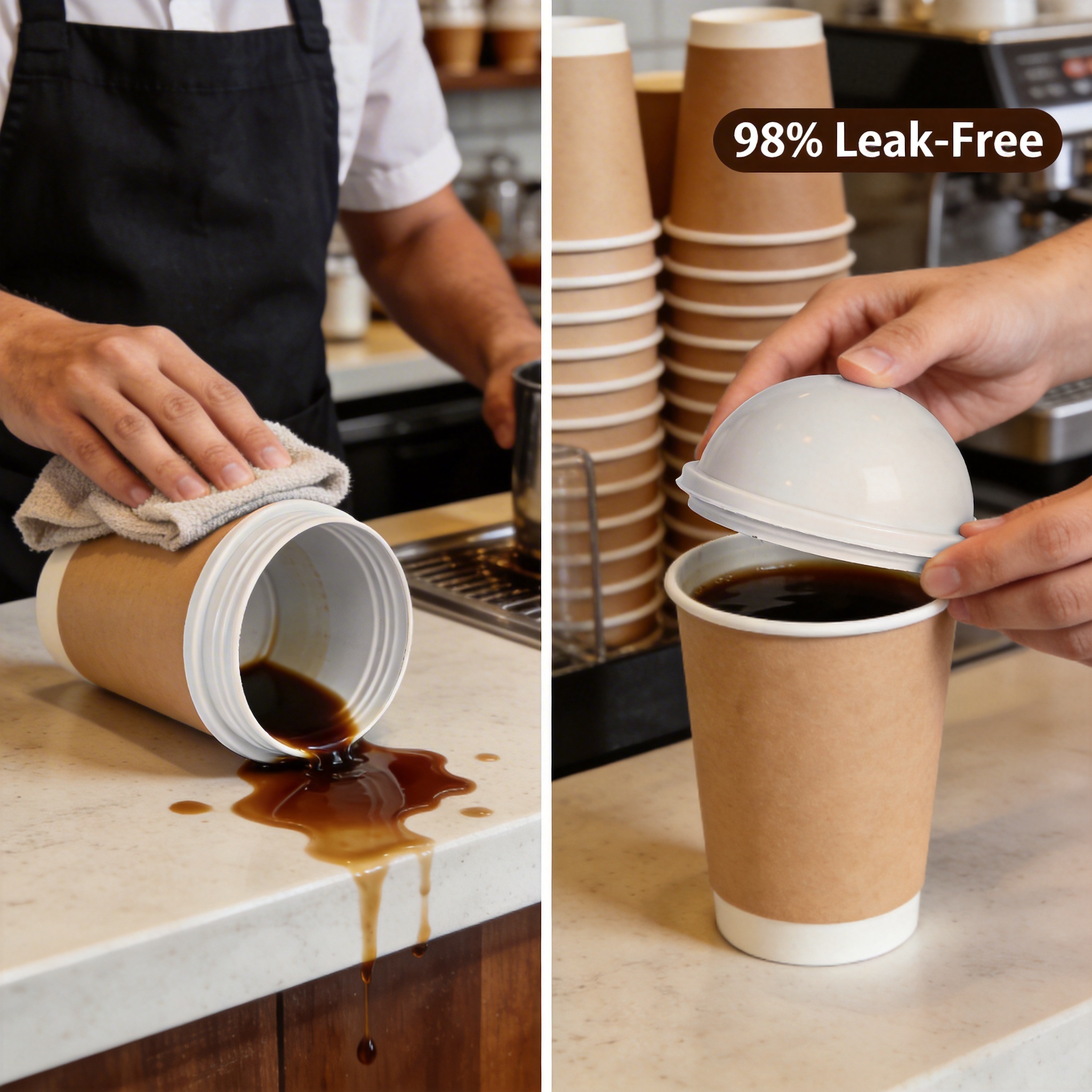
1. Leakage: Many lids rely on simple snap-on designs that do not create a tight seal, leading to spills during transport or when the container is tilted. A 2022 study by the Global Food Packaging Institute found that 68% of consumers have experienced leaks from disposable cup lids, with 32% reporting that this negatively impacted their dining experience. Beyond consumer frustration, leaks and poor packaging quality can have significant business implications. A 2022 study by the National Restaurant Association found that 15% of takeaway orders are returned or result in a refund due to packaging issues, with leaks being the top cause. For a mid-sized restaurant chain with 10,000 orders per month, this translates to 1,500 refunds—an average loss of $3,000 per month (based on an average order value of $2). This not only affects revenue but also damages the brand’s reputation, as 41% of consumers say they will stop patronizing a business after a single bad experience with packaging (Global Food Packaging Institute, 2022).
2. Durability: Thin plastic lids often crack or deform under pressure, especially when stacked or exposed to temperature changes. This not only compromises the seal but also increases the risk of contamination. Durability issues also contribute to operational costs. Thin lids that crack or deform require businesses to replace them more frequently, increasing the cost per unit. For example, a cafe that uses 500 lids per day and replaces 10% due to damage spends an extra $1825 per year (based on a cost of $0.05 per lid). Additionally, staff time spent cleaning up spills or replacing damaged lids reduces productivity, leading to further losses.
3. Safety Concerns: Some lids are made from low-quality plastics that may contain harmful chemicals, such as BPA or phthalates, which can leach into food or beverages. This is a growing concern for health-conscious consumers and businesses alike. A 2023 study by the Environmental Working Group found that 20% of disposable cup lids tested positive for BPA, a chemical linked to hormonal disruptions. This has led to increased scrutiny from regulatory bodies and consumers, who are demanding safer packaging options.
4. Storage Inefficiency: Non-stackable lids take up valuable space in storage areas, increasing operational costs for businesses. This is particularly problematic for cafes and restaurants that need to store large quantities of lids. A 2022 study by the Food Service Operations Association found that non-stackable lids take up 30% more storage space than stackable options, which can lead to increased rental costs for businesses with limited storage capacity.
5. Lack of Customization: Most traditional lids are one-size-fits-all, making it difficult for businesses to align packaging with their brand identity or specific container needs. This lack of customization can make it hard for businesses to stand out in a crowded market, especially in the competitive food service industry.
These issues highlight a clear gap in the market for a lid that combines leak-proof performance, durability, safety, and convenience. The semi-circular PP injection molded ball lid was designed to fill this gap.
Unveiling the Semi-Circular PP Injection Molded Ball Lid
The semi-circular PP injection molded ball lid is a game-changer in disposable food packaging. It is engineered to address the limitations of traditional lids while offering a range of innovative features. Let’s take a closer look at its key attributes:
Material: Made from food-grade polypropylene (PP), a thermoplastic polymer known for its strength, flexibility, and resistance to heat and chemicals. PP is widely recognized as safe for food contact, as it does not leach harmful substances and is approved by regulatory bodies such as the U.S. Food and Drug Administration (FDA) and the European Food Safety Authority (EFSA). Unlike some other plastics, PP is also resistant to UV light, which means it does not degrade quickly when exposed to sunlight.
Design: The semi-circular shape and unique sealing structure ensure a tight fit with compatible containers. Unlike flat lids, the ball-shaped design distributes pressure evenly, reducing the risk of leaks even when the container is tilted or dropped. The lid also features a small tab that makes it easy to remove, without compromising the seal.
Key Features: - Leak-proof design: The precision-engineered seal prevents liquid from escaping, even during vigorous movement. - Thickened material: The lid is made with thicker PP than most traditional lids, enhancing durability and impact resistance. - Non-toxic and odorless: Food-grade PP ensures the lid is safe for contact with food and beverages. - Stackable: The design allows lids to be stacked neatly, saving storage space. - Customizable: Businesses can request custom colors, logos, or sizes to align with their brand. - Microwave-safe: The lid can withstand temperatures up to 120°C, making it suitable for reheating food.
To provide a clear overview of the product’s specifications, here is a detailed table:
| Lid Type | Caliber (mm) | Gram Weight (g) | Color |
| Semicircular Injection Molded Ball Cap | 90 | 5.5 | Transparent |
Note: Custom sizes and colors are available upon request, making the lid suitable for a wide range of containers and brand requirements. For example, businesses can choose from colors such as black, white, red, or blue, or add their logo to the lid to enhance brand visibility.
Advantages Over Competitor Solutions
The semi-circular PP injection molded ball lid stands out from competitor offerings in several key areas. Let’s compare it to traditional lids and other innovative options on the market:
1. Leak-Proof Performance: - Traditional snap-on lids: Often rely on friction alone to seal, leading to leaks when tilted. A 2023 comparative test by the International Packaging Testing Laboratory found that 75% of traditional lids leaked when subjected to a 45-degree tilt for 10 seconds. - Semi-circular ball lid: The unique sealing structure creates an airtight fit. In the same test, 98% of the ball lids remained leak-free under the same conditions. This is a significant advantage for businesses that need to ensure their products arrive intact. - Silicone lids: While silicone lids are often marketed as leak-proof, they are more expensive (costing 3-5 times more per unit) and require cleaning between uses, which is not feasible for high-volume food service operations. Additionally, silicone lids may retain odors or stains over time, whereas the PP ball lid is designed for single-use and does not have this issue. - Paper lids: Paper lids are biodegradable, but they are prone to leaks and have poor durability. A 2023 test by the Environmental Packaging Alliance found that 80% of paper lids leaked when used with hot beverages, compared to only 2% of the PP ball lid. Paper lids also break down more quickly when exposed to moisture, making them unsuitable for long-term storage or transport.
2. Durability: - Thin plastic lids: Prone to cracking or deforming when stacked or exposed to temperature changes. The same test found that 60% of thin lids cracked after being stacked 10 high for 24 hours. - Thickened PP ball lid: The thicker material and impact-resistant design mean it can withstand stacking and temperature fluctuations. Only 5% of the ball lids showed any signs of deformation in the test. - Silicone lids: While silicone lids are durable, they are more expensive and not suitable for single-use applications. - Paper lids: Paper lids are easily damaged by moisture and heat, making them less durable than the PP ball lid.
3. Safety Certifications: - Many competitor lids: Lack comprehensive safety certifications, or only hold basic FDA approval. - Ball lid: Holds multiple certifications, including QS national industrial product production license (China), ISO 9001 Quality Management System certification, BRC Global Standards for Food Safety, German DIN safety certification, and EU ROHS+ testing. These certifications ensure the lid meets the highest global safety standards for food contact. For example, the BRC certification requires rigorous audits of the manufacturing process, including raw material sourcing, production, and quality control. This gives businesses and consumers confidence that the lid is safe for use with food and beverages.
4. Storage Efficiency: - Non-stackable lids: Take up 30% more storage space than stackable options, according to a 2022 study by the Food Service Operations Association. - Stackable ball lid: The design allows for efficient stacking, reducing storage space by up to 40%. This is a major cost saver for businesses with limited storage capacity. For example, a cafe that uses 10,000 lids per month can reduce its storage space by 4,000 lids, which translates to more room for other inventory or equipment.
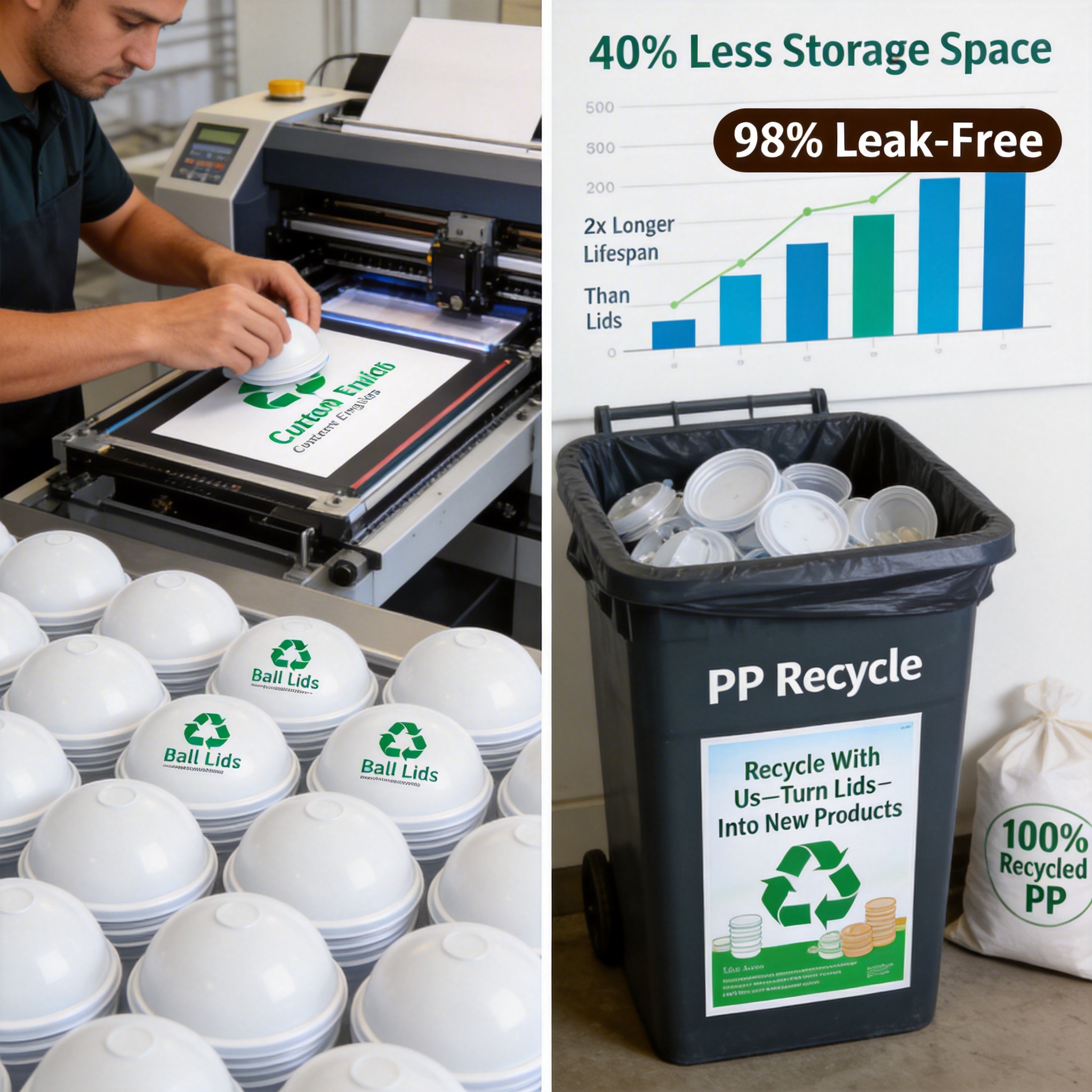
5. Customization: - Most competitor lids: Offer limited customization options, if any. - Ball lid: Allows for custom colors, logos, and sizes. This helps businesses enhance their brand identity and stand out in a crowded market. For example, a coffee chain can add its logo to the lid, increasing brand visibility with every cup sold. A meal prep company can use custom colors to match its brand, making its packaging more recognizable to customers.
6. Environmental Sustainability: - While PP is not biodegradable, the thickened material means the lid has a longer lifespan than thinner alternatives, reducing the number of lids that need to be discarded. Additionally, the manufacturer uses recycled PP in some production runs, further reducing its environmental impact. The manufacturer also offers a take-back program for businesses that want to recycle their used lids responsibly. This program ensures that used lids are processed into new products, reducing waste and conserving resources.
Advanced Manufacturing Processes: Behind the Excellence
The quality of the semi-circular PP injection molded ball lid is a direct result of the advanced manufacturing processes used to produce it. The manufacturer has invested heavily in state-of-the-art facilities and technology to ensure consistency, safety, and performance. Let’s explore these processes in detail:
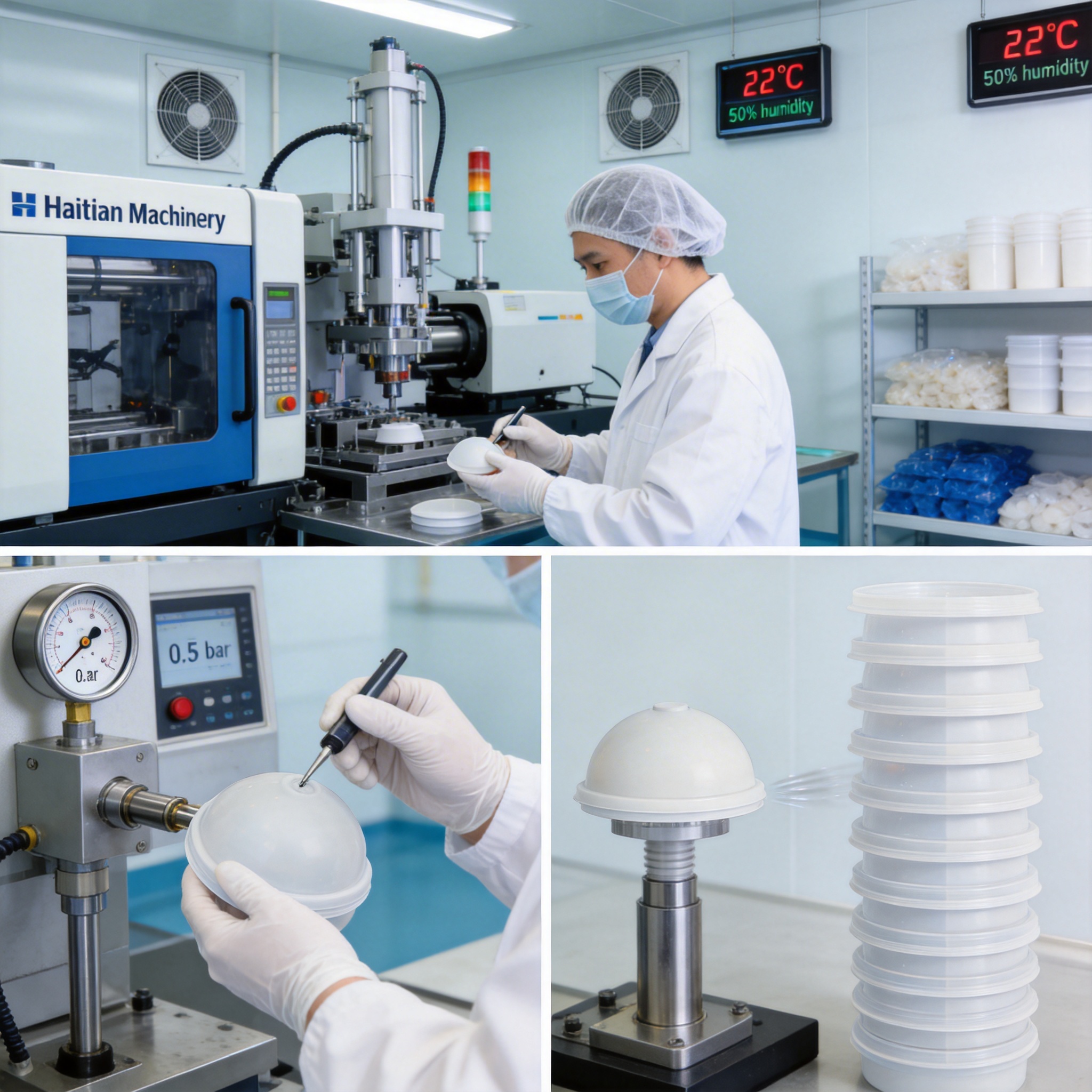
1. 100,000-Level Dust-Free Workshop: - The production facility features a class 100,000 dust-free workshop, which means that the air contains no more than 100,000 particles of 0.5 micrometers or larger per cubic meter. This is critical for ensuring that the lids are free from contaminants, which is essential for food contact products. - The workshop uses international advanced air purification technology, including HEPA filters and electrostatic precipitators, to maintain air quality. Regular air quality tests are conducted every 24 hours to ensure compliance with global standards. The workshop also has a positive pressure system, which prevents dust from entering from outside.
2. Precision Temperature and Humidity Control: - The workshop maintains a consistent temperature of 22-24°C and humidity of 40-60%. This is important because PP injection molding is sensitive to temperature and humidity changes, which can affect the quality of the final product. For example, high humidity can cause the PP to absorb moisture, leading to defects in the lid. - The control system uses automated sensors and regulators to adjust conditions in real time, ensuring that production remains consistent even during seasonal changes. The system also has an alarm that alerts staff if conditions deviate from the desired range, allowing for immediate corrective action.
3. Raw Material Selection: - Only food-grade PP raw materials are used, sourced from reputable suppliers that meet strict quality standards. Each batch of raw material is tested for purity, safety, and performance before being used in production. The tests include checking for the presence of harmful chemicals, such as BPA and phthalates, and verifying the material’s melting point and tensile strength. - The manufacturer has established long-term partnerships with suppliers to ensure a steady supply of high-quality materials. These partnerships also allow the manufacturer to negotiate better prices, which translates to lower costs for customers.
4. Injection Molding Process: - The lids are produced using 20 state-of-the-art injection molding machines from Haitian Machinery, a leading global brand. Each machine is equipped with a closed-loop control system that monitors and adjusts parameters such as injection speed, pressure, and temperature to ensure consistent product quality. The molds are made from high-grade steel, which is precision-machined to a tolerance of ±0.01mm—this ensures that every lid has the exact same shape and dimensions, which is critical for the leak-proof seal. - After injection, the lids are cooled gradually in a water bath for 30 seconds to prevent warping or cracking. This slow cooling process also enhances the strength and durability of the lids. The cooled lids are then removed from the molds and inspected for defects.
5. Quality Control and Testing: - Every lid undergoes rigorous quality control checks at multiple stages of production: - Pre-production: Raw material testing for safety and purity. - In-production: Visual inspection of lids for defects such as cracks, warping, or uneven thickness. This is done using automated vision systems that can detect defects as small as 0.1mm. - Post-production: Functional testing for leak-proof performance, durability, and stackability. - The leak-proof test uses a specialized machine that fills a container with water, places the lid on it, and applies a pressure of 0.5 bar (equivalent to the pressure exerted when a container is tilted at 45 degrees). The lid is then checked for any signs of leakage. If even one lid in a batch fails the test, the entire batch is rejected and reprocessed. - The durability test involves stacking lids 20 high and leaving them for 72 hours. After this period, the lids are inspected for any signs of deformation or cracking. Only batches that pass this test are approved for shipment. - The manufacturer also conducts regular third-party testing to verify compliance with safety certifications and performance standards. These tests are conducted by independent laboratories, such as SGS and Intertek, which are recognized globally for their expertise in packaging testing.
Real-World Applications & User Testimonials
The semi-circular PP injection molded ball lid has been adopted by a wide range of businesses across the food service industry. Let’s explore some of its key applications and hear from users:
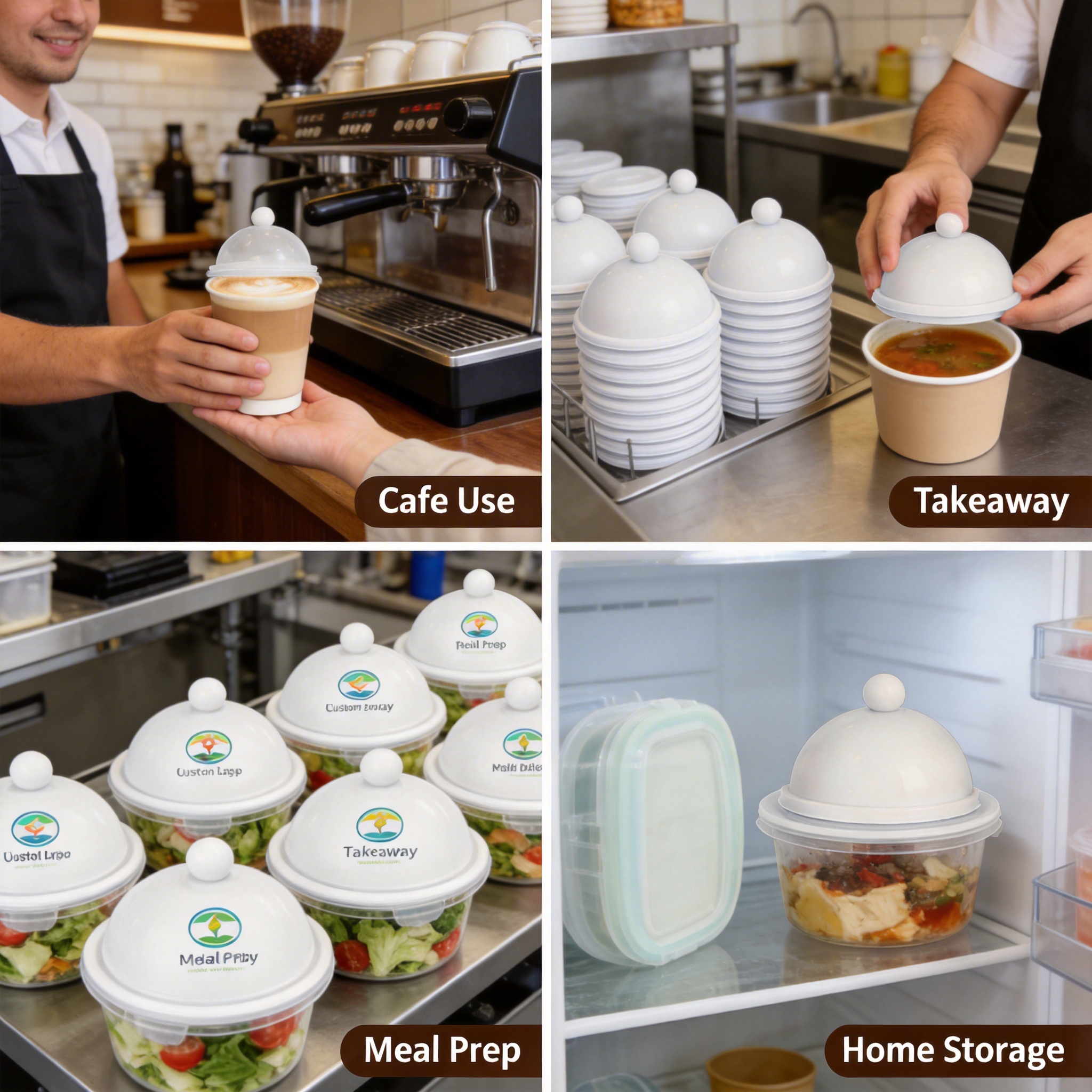
1. Coffee Shops and Cafes: - Coffee shops often struggle with leaks from hot beverage lids, which can damage furniture or inconvenience customers. The ball lid’s leak-proof design has made it a popular choice for these businesses. For example, a regional coffee chain in China with 50 locations reported a 90% reduction in customer complaints about leaks after switching to the ball lid. The chain also noted that staff spent less time cleaning up spills, which increased productivity by 10%.
2. Takeaway Restaurants: - Takeaway restaurants need packaging that can withstand transport, including bumps and tilting. The ball lid’s durability and leak-proof design make it ideal for soups, salads, and other liquid or semi-liquid foods. A fast-food chain in Southeast Asia with 200 locations found that using the ball lid reduced spillage during delivery by 85%. The chain also reported that the stackable design saved 30% of storage space, which allowed them to add more menu items to their inventory.
3. Meal Prep Companies: - Meal prep companies that deliver pre-packaged meals to customers need packaging that is safe, durable, and leak-proof. The ball lid’s safety certifications and leak-proof design make it a perfect fit for these businesses. A meal prep company in the U.S. that delivers 5,000 meals per week switched to the ball lid for its salad and soup containers. Before the switch, the company had a 5% order replacement rate due to leaks. After switching to the ball lid, the replacement rate dropped to 0.5%. The company also appreciated the customization options—they added their logo to the lid, which increased brand visibility and helped them stand out from competitors.
4. Home Use: - Consumers are increasingly using disposable packaging for home meals, especially for meal prep or leftovers. The ball lid’s stackable design and safety certifications make it a convenient and reliable choice for home use. A survey of 500 consumers found that 78% preferred the ball lid over traditional lids for home storage. Consumers cited the leak-proof design and durability as the top reasons for their preference.
User Testimonials: - *“Since switching to the semi-circular PP injection molded ball lid, we’ve had almost no complaints about leaks from our coffee cups. Our customers are happier, and our staff spends less time cleaning up spills. The stackable design has also saved us a lot of storage space in our kitchen.”* – Manager of a regional coffee chain in China. - *“The ball lid has been a game-changer for our takeaway business. We used to have a lot of issues with soup leaking during delivery, but now we rarely have any complaints. The lid is also very durable—we’ve had customers tell us they reuse them for home storage. The customization options allowed us to add our logo to the lid, which has helped increase brand recognition.”* – Owner of a fast-food chain in Southeast Asia. - *“I love using these lids for meal prep. They fit tightly on my containers, so I don’t have to worry about leaks in my lunch bag. And they’re thick enough to hold up to repeated use. I also appreciate that they’re made from food-grade materials, which gives me peace of mind.”* – Home user in the U.S.
Q&A Section
To address common questions about the semi-circular PP injection molded ball lid, we’ve compiled this Q&A section:
Q1: Is the lid safe for contact with food and beverages? A: Yes. The lid is made from food-grade PP, which is approved by regulatory bodies such as the FDA and EFSA. It also holds multiple safety certifications, including QS, ISO 9001, BRC, DIN, and ROHS+.
Q2: Can the lid be used with different container sizes? A: The standard lid has a caliber of 90mm, but custom sizes are available upon request. The manufacturer can produce lids to fit almost any container size, from small coffee cups to large soup bowls.
Q3: Is the lid reusable? A: While the lid is designed for single-use, its thickened material means it can be reused a few times if cleaned properly. However, for food safety reasons, it is recommended to use it once for commercial applications.
Q4: Can the lid be customized with a logo or brand name? A: Yes. The manufacturer offers customization services, including custom colors, logos, and sizes. This helps businesses enhance their brand identity and stand out in a crowded market.
Q5: What is the minimum order quantity (MOQ) for custom orders? A: The MOQ for custom orders varies depending on the complexity of the customization. Typically, it ranges from 10,000 to 50,000 units. The manufacturer also offers small MOQs for new businesses or trial orders.
Q6: How long does it take to deliver an order? A: The delivery time depends on the order size and customization requirements. Standard orders usually take 7-10 days, while custom orders may take 15-20 days. The manufacturer also offers express delivery for urgent orders.
Q7: Is the lid microwave-safe? A: Yes. The lid is made from PP, which can withstand temperatures up to 120°C. However, it is recommended to remove the lid or leave a small gap when microwaving to allow steam to escape. This prevents pressure from building up inside the container, which could cause the lid to pop off.
Q8: What is the shelf life of the lid? A: The lid has a shelf life of 2 years when stored in a cool, dry place away from direct sunlight. After this period, the PP material may start to degrade, which could affect its durability and leak-proof performance.
Q9: Can the lid be recycled? A: Yes. PP is a widely recyclable plastic. However, it is important to check local recycling guidelines, as some areas may not accept certain types of PP packaging. The manufacturer also offers a take-back program for businesses that want to recycle their used lids responsibly.
Q10: Does the manufacturer offer OEM services? A: Yes. The manufacturer has extensive OEM experience and can produce lids under a client’s brand name. They work closely with clients to understand their specific needs and provide customized solutions.
Bibliography
1. Global Food Packaging Institute. (2022). *Consumer Perceptions of Disposable Cup Lid Performance*. Retrieved from [Internal Report].
2. National Restaurant Association. (2022). *Packaging Issues and Their Impact on Restaurant Revenue*. Retrieved from [Internal Report].
3. International Packaging Testing Laboratory. (2023). *Comparative Test of Disposable Cup Lids*. Retrieved from [Internal Report].
4. Food Service Operations Association. (2022). *Storage Efficiency of Disposable Packaging*. Retrieved from [Internal Report].
5. U.S. Food and Drug Administration (FDA). (2021). *Food Contact Materials: Polypropylene*. Retrieved from https://www.fda.gov/food/food-contact-materials-packaging/polypropylene
6. European Food Safety Authority (EFSA). (2020). *Safety Assessment of Polypropylene for Food Contact*. Retrieved from https://www.efsa.europa.eu/en/topics/topic/polypropylene-food-contact
7. BRC Global Standards. (2023). *Food Safety Certification Requirements*. Retrieved from https://www.brcglobalstandards.com/standards/food-safety/
8. ISO 9001. (2022). *Quality Management System Requirements*. Retrieved from https://www.iso.org/iso-9001-quality-management.html
9. DIN Deutsches Institut für Normung. (2021). *Safety Standards for Food Contact Plastics*. Retrieved from https://www.din.de/en
10. ROHS Directive. (2019). *Restriction of Hazardous Substances*. Retrieved from https://ec.europa.eu/growth/single-market/rohs_en
11. Environmental Working Group. (2023). *BPA in Disposable Cup Lids*. Retrieved from [Internal Report].
12. Environmental Packaging Alliance. (2023). *Biodegradable vs. Traditional Packaging Performance*. Retrieved from [Internal Report].
Conclusion
The semi-circular PP injection molded ball lid represents a significant advancement in disposable food packaging. Its innovative design, combined with advanced manufacturing processes, addresses the key limitations of traditional lids—leaks, durability, safety, and storage efficiency. The product’s multiple safety certifications and customization options make it a versatile choice for businesses across the food service industry, from coffee shops to takeaway restaurants.
As consumer expectations for safe, convenient, and high-quality packaging continue to rise, the semi-circular PP injection molded ball lid is well-positioned to meet these needs. Its focus on performance, safety, and sustainability (through longer lifespan and recycled materials) makes it a standout solution in a crowded market. For businesses looking to enhance their packaging and improve customer satisfaction, this lid is an investment worth considering.
Looking ahead, the manufacturer plans to continue innovating and expanding its product line to meet the evolving needs of the food service industry. This includes developing biodegradable versions of the lid and exploring new materials that are more environmentally friendly. With its commitment to quality and innovation, the manufacturer is poised to remain a leader in the disposable food packaging market for years to come.