English
 Español
 عربى
عربىContent
- 1 Product Overview
- 2 Why Lid Performance Matters in Disposable Food Packaging
- 3 Core Advantage One: Leak-Resistant Design
- 4 Core Advantage Two: Thickened and Durable PP Material
- 5 Core Advantage Three: Food-Grade, Non-Toxic, and Odorless Raw Materials
- 6 Core Advantage Four: Transparent Appearance and Product Visibility
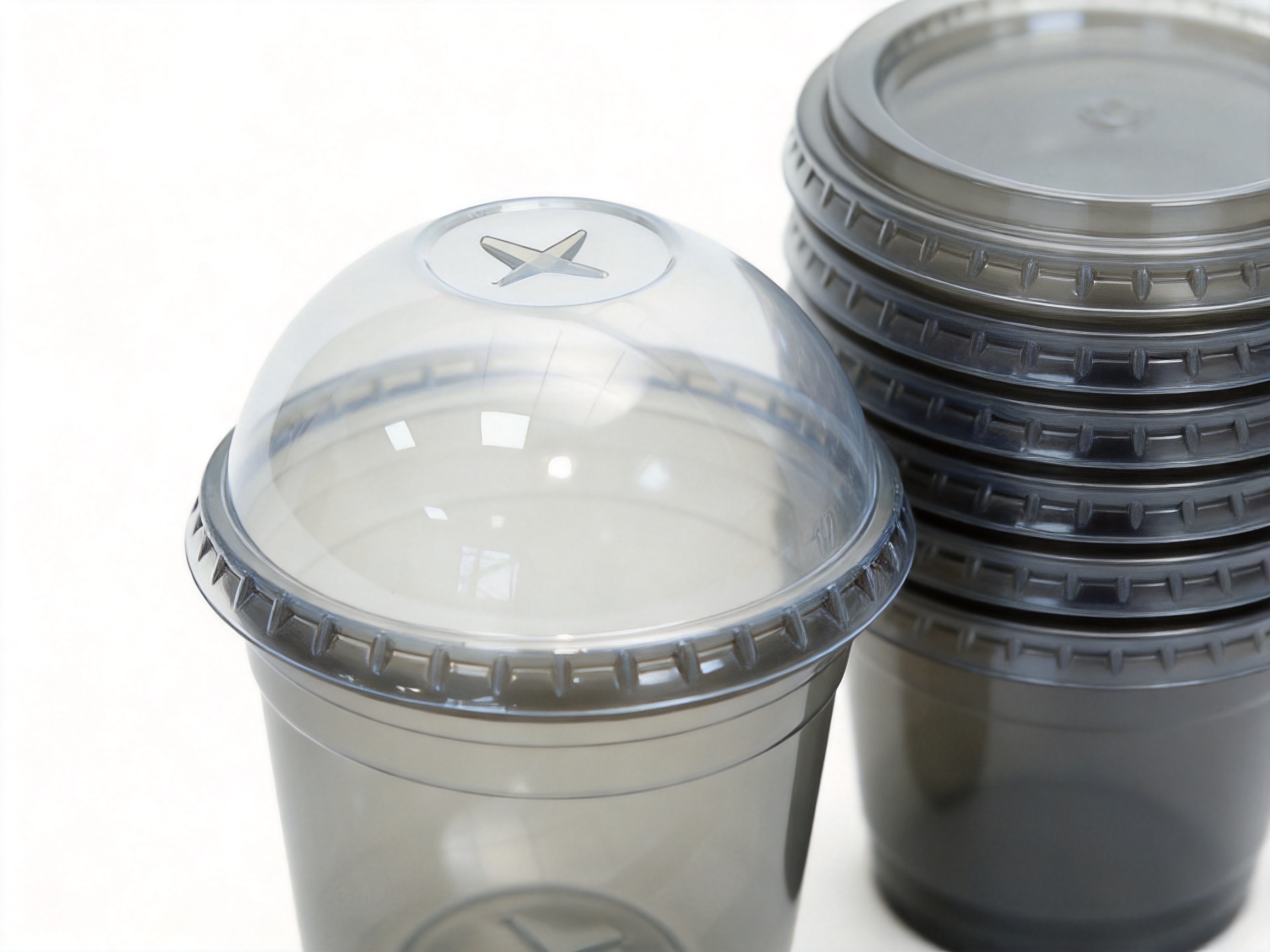
- 7 Core Advantage Five: Stackable Design for Space Savings
- 8 Advanced Manufacturing: Precision Injection Molding
- 9 Class 100,000 Dust-Free Workshop and Clean Production Environment
- 10 Quality Certifications and Management Strength
- 11 OEM Customization and Design Capability
- 12 Advantages Over Common Competitor Products
- 13 Applications in Food and Beverage Service
- 14 Environmental and Health Considerations
- 15 Manufacturing Strength of the Company
- 16 How the Lid Supports Brand Value
- 17 Practical Purchasing Considerations
- 18 Q&A Section
- 18.1 What is the main material of the semi-circular injection molded ball lid?
- 18.2 What is the caliber of this lid?
- 18.3 Why is injection molding important for this product?
- 18.4 How does the lid help prevent leakage?
- 18.5 Is the lid safe for food contact?
- 18.6 What makes this lid different from ordinary competitor lids?
- 18.7 Can this lid be customized?
- 18.8 What types of products can use this lid?
- 18.9 Why is a class 100,000 dust-free workshop beneficial?
- 18.10 How does the stackable design help businesses?
- 19 Conclusion
- 20 References
- 21 Product: Semi-circular PP injection molded ball lid
In modern food and beverage service, a lid is no longer a simple accessory. It is a functional component that affects leakage control, consumer confidence, stacking efficiency, hygiene, transportation safety, and overall brand presentation. The semi-circular PP injection molded ball lid is designed for businesses that need a dependable cover for food and beverage containers while maintaining a clean appearance, stable performance, and practical handling in daily operations. Made from food-grade polypropylene, this lid combines a transparent look, a durable molded structure, and a carefully engineered sealing design to support takeaway shops, beverage brands, catering suppliers, supermarkets, dessert stores, and disposable food packaging container distributors.
The product is a 90 mm transparent semi-circular injection molded ball cap with a gram weight of approximately 5.5 g. Although compact and lightweight, it is designed to deliver a strong balance of protection and usability. Its leak-resistant structure helps the lid fit closely with compatible containers, reducing the risk of liquid seepage during storage, movement, or short-distance delivery. Its thickened PP construction improves resistance to impact, deformation, and cracking, making it suitable for repeated handling across production lines, warehouses, retail counters, and customer use. For buyers seeking a practical disposable food packaging solution, this lid offers reliable performance without unnecessary complexity.
Yuqian Packaging Technology (Jiangsu) Co., Ltd. manufactures this product with professional OEM capability, advanced clean workshop management, and a strong quality certification foundation. Established in 2010 and located in Taizhou City, Jiangsu Province, China, the company focuses on research, development, production, and sales of new food packaging materials and products. Its plant area of about 30,000 square meters supports large-scale manufacturing, customized production, and stable supply. With certifications including QS national industrial product production license, ISO9001 Quality Management System certification, BRC certification, German DIN safety certification, and EU ROHS+ testing, the company provides a manufacturing base that is suitable for demanding food contact packaging applications.
Semi-circular PP injection molded ball lid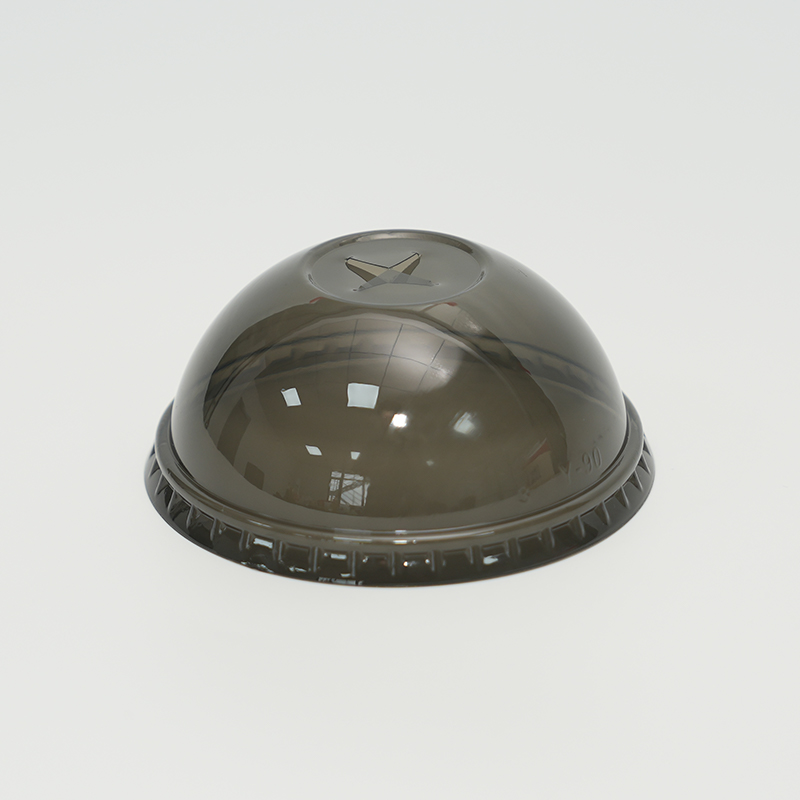
Product Overview
The semi-circular PP injection molded ball lid is a transparent lid made by injection molding, a production process known for dimensional accuracy, repeatability, and structural consistency. The lid’s semi-circular ball profile gives it a distinctive shape that can improve the visual appeal of packaged drinks, desserts, snacks, or specialty food products. Because the lid is transparent, consumers can easily see the contents or presentation inside the container. This is especially valuable for products where appearance plays a major role in purchasing decisions, such as fruit tea, yogurt bowls, desserts, pudding, layered beverages, mousse cups, salads, and creative takeaway food items.
Polypropylene, commonly known as PP, is widely used in food packaging because it is lightweight, relatively strong, resistant to many common food substances, and suitable for food contact when produced from appropriate raw materials. In this product, food-grade PP raw materials are selected to help ensure that the lid is non-toxic, odorless, and safe for contact with food and beverages under suitable usage conditions. For brand owners and packaging buyers, the material choice is important because it directly affects product safety, consumer experience, regulatory confidence, and brand reputation.
The lid is designed to fit compatible containers with a 90 mm caliber. Its gram weight of 5.5 g reflects a practical design balance: it is not excessively heavy, which helps control logistics cost and material use, yet it is thickened enough to provide improved durability compared with thinner, weaker alternatives. For high-volume operators, this balance is important because a lid must be economical, but it must also perform consistently. If a lid cracks, loosens, deforms, or leaks, the cost is not only the price of the lid; it may also include product loss, refund costs, customer complaints, delivery problems, and damage to brand trust.
| Product Item | Specification | Practical Meaning |
| Lid Type | Semi-circular injection molded ball cap | Distinctive rounded shape for functional coverage and attractive presentation |
| Material | Food-grade PP | Non-toxic, odorless, and suitable for food contact applications |
| Caliber | 90 mm | Designed for compatible 90 mm food and beverage containers |
| Gram Weight | Approximately 5.5 g | Lightweight while maintaining practical thickness and durability |
| Color | Transparent | Allows product visibility and supports clean shelf presentation |
| Key Feature | Leak-resistant sealing structure | Helps reduce liquid leakage during storage, handling, and takeaway use |
| Storage Design | Stackable | Saves space in warehouses, kitchens, counters, and transport cartons |
| Customization | OEM customization available | Can support specific buyer requirements and packaging programs |
Why Lid Performance Matters in Disposable Food Packaging
Disposable food packaging containers must do more than hold food. They must protect food quality, reduce contamination risk, support efficient operations, improve portability, and help brands deliver a consistent customer experience. A container without a reliable lid is incomplete. In takeaway and delivery scenarios, the lid becomes the primary barrier between the product and the outside environment. It must resist accidental opening, reduce spillage, keep the product visually presentable, and withstand stacking or movement. For beverage and dessert businesses, the lid is particularly important because liquids, sauces, toppings, and layered ingredients can shift during transport.
Many packaging problems begin with poor lid performance. A loose lid may cause drinks to leak into delivery bags. A brittle lid may crack when stacked or pressed. A poorly molded lid may have inconsistent dimensions, leading to fit problems. A lid made from lower-quality material may have an unpleasant odor, affecting the customer’s impression of the food inside. A lid without sufficient clarity may reduce the visual attractiveness of the product. The semi-circular PP injection molded ball lid is developed to address these issues through material selection, structural design, accurate molding, and quality control.
Compared with generic low-cost lids, a carefully engineered injection molded PP lid offers stronger dimensional control. Injection molding allows molten PP to be shaped inside a precision mold, forming consistent details such as sealing rims, curved surfaces, and stacking features. This consistency is essential when thousands or millions of lids must match containers reliably. Even a small dimensional variation can cause a lid to be too loose or too tight. A lid that is too loose risks leakage, while a lid that is too tight may be difficult for staff or consumers to use. A stable manufacturing process helps keep the lid within the desired performance range.
The semi-circular ball shape also supports product differentiation. In a competitive food and beverage market, packaging can influence consumer perception before the first bite or sip. Transparent curved lids create a more premium, modern, and hygienic appearance than flat, cloudy, or unstable covers. They can help highlight colorful beverages, toppings, fruits, cream, or desserts, turning packaging into part of the product display. For brands that sell visually attractive food, this transparency and shape can improve shelf appeal and social media presentation.
Core Advantage One: Leak-Resistant Design
Leak control is one of the most important advantages of the semi-circular PP injection molded ball lid. The product uses a unique sealing structure that allows the lid to fit tightly when closed on a compatible container. This structure is designed to reduce gaps between the lid and container rim, helping prevent liquid from escaping. For takeaway beverages, sauces, desserts, and semi-liquid foods, leak resistance can make the difference between a positive customer experience and a complaint.
In daily foodservice operations, leakage can occur during filling, handover, bagging, delivery, or consumer transport. A customer may carry a cup in a bag, a delivery driver may place several items together, or a store employee may stack products while preparing orders. During these moments, vibration, tilting, and pressure may challenge the lid. A lid with poor sealing performance may shift or loosen. The semi-circular PP injection molded ball lid is intended to provide a stable closure and help protect the product throughout these common handling situations.
The leak-resistant design also supports operational efficiency. Staff members can close containers with greater confidence, reducing the time spent checking and rechecking lids. Businesses can reduce the need for excessive secondary packaging such as extra plastic bags, tape, or wrapping. This can improve workflow speed during peak hours and help reduce avoidable packaging waste. For large-volume stores, small improvements in sealing reliability can create meaningful savings over time.
Compared with many competitor products that rely only on thin edges or loose snap-fit structures, this injection molded lid benefits from a more controlled forming process and a thicker PP structure. A stable rim and precise fit are essential to sealing. The product’s design is not based on appearance alone; it is engineered to meet the practical demands of real takeaway packaging environments.
Core Advantage Two: Thickened and Durable PP Material
Durability is another key strength. The lid is made from thickened PP material that has undergone strict quality control and testing. Thickened PP helps improve resistance to impact, bending, and deformation. This is valuable because lids are often exposed to pressure during stacking, shipping, and handling. A weak lid may deform in a carton or crack when pressed onto a container. A durable lid maintains its shape better and provides more reliable closure.
In packaging supply chains, products may pass through multiple stages before reaching the final consumer. Lids are produced, stacked, packed, stored, transported, unloaded, distributed, and finally used in shops or factories. During each stage, they may experience compression, vibration, temperature changes, or manual handling. A lid that looks acceptable immediately after production may fail later if its material is too thin or brittle. The semi-circular PP injection molded ball lid addresses this risk by combining a suitable material choice with controlled production.
PP offers a good combination of light weight and toughness. It is widely preferred for disposable food packaging because it can provide useful strength without making the product unnecessarily heavy. The 5.5 g gram weight of this lid supports economical use while still providing a reinforced feel. For buyers comparing multiple suppliers, this balance matters. A very thin lid may appear cheaper at first but can create hidden costs through breakage, leakage, customer dissatisfaction, and product waste. A slightly stronger lid can provide better total value.
Durability also affects the consumer’s perception of quality. When a customer touches a lid that feels flimsy, unstable, or easily crushed, the entire food product may seem lower in value. A thicker, cleaner, well-shaped lid gives a stronger impression of safety and professionalism. For premium beverages, desserts, or branded takeaway foods, this tactile quality can support a better customer experience.
Core Advantage Three: Food-Grade, Non-Toxic, and Odorless Raw Materials
Food contact packaging must prioritize safety. The semi-circular PP injection molded ball lid uses food-grade PP raw materials selected to be non-toxic and odorless. This means the lid is designed not to release harmful substances under appropriate usage conditions and not to interfere with the natural aroma of the food or beverage. Odor control is particularly important for products such as milk tea, coffee, fruit tea, desserts, yogurt, and fresh prepared foods. If packaging has a plastic smell, customers may question product freshness or safety even when the food itself is high quality.
Food-grade material selection also supports regulatory confidence. Packaging buyers often need documentation and assurance that products are manufactured with suitable materials. The manufacturer’s certifications and quality management systems strengthen this confidence. When packaging is used by chain stores, exporters, wholesalers, or food factories, material traceability and safety compliance become essential parts of purchasing decisions.
Compared with lower-grade alternatives, food-grade PP provides a more dependable foundation for safe packaging. Some low-cost products in the market may use inconsistent raw materials or recycled content that is not appropriate for direct food contact. Such materials may vary in odor, clarity, strength, or safety. By selecting food-grade PP, the semi-circular injection molded ball lid offers a more stable and responsible choice for professional buyers.
The product also reflects increasing market attention to health and environmental responsibility. Consumers are more aware of packaging safety than ever before. They want containers and lids that do not compromise food quality. Businesses that choose safer, cleaner, and better-controlled packaging can strengthen customer trust. In this sense, the lid is not only a protective part; it is a statement about the brand’s commitment to responsible foodservice.
Core Advantage Four: Transparent Appearance and Product Visibility
Transparency is a practical and marketing advantage. The lid’s transparent color allows customers and staff to see the contents inside the container. For visually attractive food and beverage items, clear packaging helps display color, layers, toppings, freshness, and portion quality. A transparent semi-circular lid can make the product look more appealing on a counter, in a refrigerator display, or in a delivery photo.
Food businesses increasingly compete not only through taste but also through presentation. A fruit dessert with colorful toppings, a layered drink, or a carefully arranged salad can attract attention when the packaging allows visibility. If the lid is cloudy, distorted, or unattractive, the visual impact is reduced. The semi-circular PP injection molded ball lid helps preserve a clean and modern appearance while still providing protective coverage.
Transparent lids also support operational checking. Staff can confirm whether an order is correct without opening the lid. Customers can see whether toppings, sauces, or ingredients are included. This reduces unnecessary handling and helps maintain hygiene. In busy environments, visibility can reduce mistakes and improve service speed.
Compared with opaque or poorly finished competitor lids, a clear molded lid gives a better impression of cleanliness. It allows the packaged product to be the visual focus. For businesses that invest in colorful food preparation, the packaging should not hide the product. It should protect it while letting it shine.
Core Advantage Five: Stackable Design for Space Savings
The lid’s stackable design improves storage efficiency. In foodservice operations, storage space is often limited. Lids must be kept near counters, filling stations, sealing areas, or packing lines. A product that stacks neatly can reduce clutter and save valuable space. It also supports easier counting, handling, and inventory management.
Stackability is important throughout the supply chain. Manufacturers can pack lids more efficiently. Distributors can store more units in a smaller area. Food shops can keep sufficient stock without occupying excessive shelf or counter space. In high-volume operations, stackable packaging components reduce handling difficulty and support smoother workflow.
Good stackability requires consistent shape and dimensions. If lids are warped, uneven, or poorly molded, they may jam together or stack unstably. Injection molding helps create repeatable geometry, supporting stable stacking performance. The semi-circular PP injection molded ball lid is designed to be easy to store and space-saving, offering an advantage over lids that are difficult to separate, collapse easily, or require bulky storage arrangements.
The storage advantage may seem simple, but it has real operational value. A restaurant or beverage shop may use hundreds or thousands of lids per day. If employees struggle to separate lids or if stacks fall over during busy periods, service efficiency suffers. A well-designed stackable lid contributes to better organization and faster order preparation.
Advanced Manufacturing: Precision Injection Molding
Injection molding is central to the product’s performance. In this process, PP material is heated until it reaches a molten state and is then injected into a precision mold. After cooling and solidifying, the part is released with its final shape. This method is widely used for food packaging components because it can produce complex shapes with strong repeatability and accurate dimensions. For a lid that must seal properly, precision is essential.
The semi-circular ball lid requires a well-developed mold to achieve its curved profile, sealing rim, thickness distribution, and stackable structure. Mold quality influences the lid’s fit, appearance, surface smoothness, and consistency. A professional manufacturer must control mold design, material flow, cooling behavior, shrinkage, and demolding. Small errors can result in warping, weak points, uneven edges, or poor sealing. Yuqian Packaging Technology (Jiangsu) Co., Ltd. uses professional production capability to support stable output and reliable lid performance.
Compared with less controlled manufacturing methods, injection molding provides stronger structural consistency. Thermoformed lids, for example, can be suitable for some applications, but they may be thinner and more vulnerable to deformation depending on design and material thickness. Injection molded lids generally allow a more robust structure and more defined sealing features. For customers who prioritize leak resistance and durability, injection molding can offer clear advantages.
Precision injection molding also supports OEM customization. When buyers require specific design adjustments, dimensions, colors, or functional details, mold development and process control become important. A manufacturer with strong injection molding experience can work with clients to develop packaging components that fit their containers, brand requirements, and usage scenarios. This is valuable for businesses looking to build differentiated disposable food packaging container systems rather than relying only on standard market options.
Class 100,000 Dust-Free Workshop and Clean Production Environment
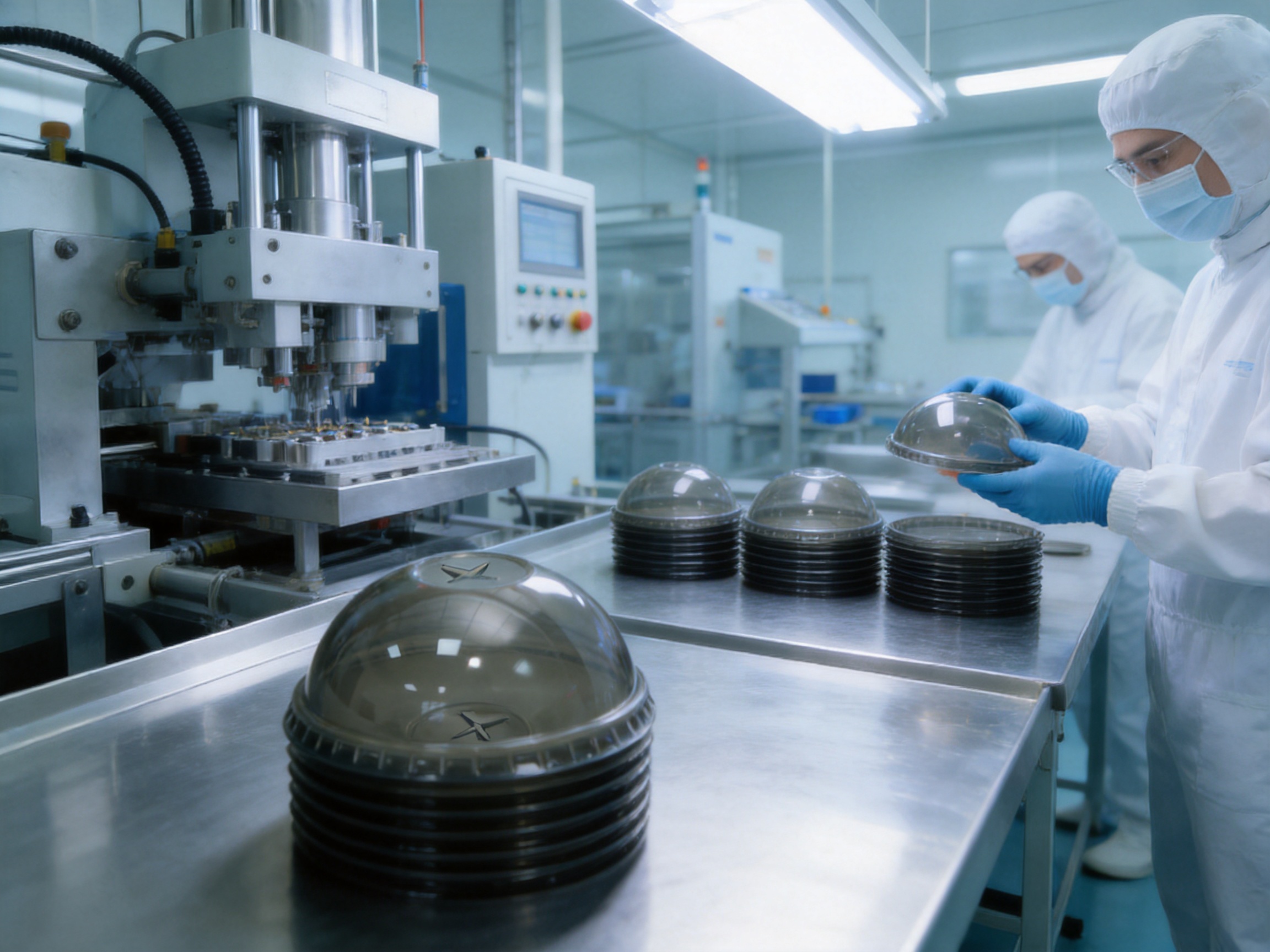
Hygiene is critical in food packaging manufacturing. Yuqian Packaging Technology (Jiangsu) Co., Ltd. has created a class 100,000 dust-free workshop and uses internationally advanced air purification technology to ensure that air cleanliness in the workshop meets high standards. This production environment helps reduce airborne particles and supports cleaner manufacturing of food contact products.
A clean workshop is especially important for transparent packaging. Dust, particles, or contamination can be more visible on clear lids and may affect customer confidence. A controlled environment helps maintain a cleaner appearance and reduces the risk of foreign matter entering the production process. For food packaging buyers, this is a significant advantage over suppliers operating in less controlled workshops.
The company also uses precision temperature and humidity control systems to ensure environmental stability. Temperature and humidity can affect material behavior, molding consistency, static electricity, product cleanliness, and worker comfort. A stable workshop environment supports consistent production quality. In injection molding, environmental control can help reduce defects associated with material handling, cooling, and product storage.
Clean manufacturing is not only about equipment. It also reflects management discipline. Maintaining a dust-free workshop requires procedures for personnel entry, clothing, cleaning, air filtration, production layout, inspection, and maintenance. A company that invests in such systems demonstrates a long-term commitment to food packaging quality. This commitment is particularly important for buyers serving chain restaurants, beverage brands, supermarkets, and export markets.
Quality Certifications and Management Strength
Certifications provide structured evidence of manufacturing competence and compliance awareness. Yuqian Packaging Technology (Jiangsu) Co., Ltd. has passed the QS national industrial product production license, ISO9001 Quality Management System certification, BRC certification, German authoritative safety DIN certification, and EU ROHS+ testing. These certifications support the company’s credibility as a professional food packaging manufacturer.
ISO9001 certification indicates that the company has established a quality management system focused on consistent processes, customer requirements, corrective actions, and continuous improvement. In packaging manufacturing, this helps ensure that product specifications, inspection standards, production records, and quality responsibilities are managed systematically. For buyers, ISO9001 reduces uncertainty and supports long-term cooperation.
BRC certification is widely recognized in food-related industries and places emphasis on safety, quality, legality, and operational control. For food packaging suppliers, BRC-related systems can help demonstrate that manufacturing practices are aligned with the expectations of food supply chains. This can be particularly valuable for international customers or customers supplying large food brands.
EU ROHS+ testing reflects attention to restricted substances and material safety. German DIN safety certification adds another layer of confidence for buyers concerned about product standards. Together, these certifications show that the manufacturer is not only producing lids but also operating within a disciplined framework of safety and quality evaluation.
Compared with suppliers that cannot provide clear certification support, a certified manufacturer offers stronger assurance. Packaging buyers often need to satisfy internal audits, customer audits, or regulatory expectations. Working with a manufacturer that already maintains recognized certifications can reduce purchasing risk and simplify supplier evaluation.
OEM Customization and Design Capability
One of the important advantages of this product and its manufacturer is customization capability. The semi-circular PP injection molded ball lid can be customized according to buyer requirements. OEM customization may include dimensional adaptation, packaging method, color preferences, functional details, carton requirements, or compatibility with specific container systems. This flexibility is valuable for brands that want packaging aligned with their product identity and operational needs.
In the disposable food packaging container market, standard products are useful, but they do not always meet every brand’s requirements. A beverage chain may need a lid that fits a particular cup line. A dessert brand may want a transparent lid that highlights toppings while maintaining a specific height. A catering supplier may require packaging that stacks efficiently for bulk service. A distributor may need private-label cartons or special packing quantities. OEM manufacturing helps address these needs.
Customization also supports brand differentiation. Packaging is often one of the first physical touchpoints between a consumer and a food brand. A lid that looks clean, fits well, and supports product presentation can strengthen the brand image. When packaging feels generic or poorly matched, the customer may perceive the product as less professional. Through customized design and manufacturing, food businesses can create a more coherent and memorable customer experience.
Yuqian Packaging Technology (Jiangsu) Co., Ltd. has a research and development background in new food packaging materials and products. This supports ongoing innovation and adaptation. As consumer preferences, environmental expectations, and foodservice models change, packaging suppliers must be able to respond. Customization capability is therefore not only a service feature; it is a strategic advantage for long-term cooperation.
Advantages Over Common Competitor Products
The semi-circular PP injection molded ball lid offers several advantages when compared with ordinary lids in the market. First, its leak-resistant structure provides better protection than loose-fitting lids that may separate during delivery. Second, its thickened PP material improves durability compared with thin lids that crack or deform easily. Third, its food-grade raw material selection helps ensure a safer and odorless user experience compared with products made from inconsistent or lower-grade materials. Fourth, its transparent semi-circular shape improves presentation compared with dull, cloudy, or flat designs. Fifth, its stackable structure supports better storage and handling efficiency.
Many low-cost competitors focus mainly on reducing material weight. While this can reduce the unit price, it may compromise performance. A lid that is too light may not maintain its shape, may not seal well, and may feel cheap to consumers. The semi-circular PP injection molded ball lid takes a more balanced approach, using a practical 5.5 g design to maintain convenience while supporting strength. This is especially important for businesses that care about total cost, not only purchase price.
Another competitive advantage is manufacturing environment. Some suppliers may produce packaging in ordinary workshops without advanced air purification or strict environmental control. For food contact transparent packaging, this can lead to higher risk of dust, inconsistent appearance, or quality variation. The class 100,000 dust-free workshop and temperature-humidity control system provide a stronger production foundation.
Certification support is also a major differentiator. Buyers increasingly require proof that suppliers meet recognized standards. A manufacturer with QS, ISO9001, BRC, DIN, and EU ROHS+ testing can offer stronger documentation and quality assurance than smaller or less structured factories. This is particularly important for wholesalers, exporters, chain foodservice companies, and buyers serving regulated markets.
Finally, customization ability separates the product from mass-market generic lids. A professional OEM manufacturer can support buyers in building complete packaging systems. This makes the semi-circular PP injection molded ball lid not only a product but also part of a broader packaging solution.
Applications in Food and Beverage Service
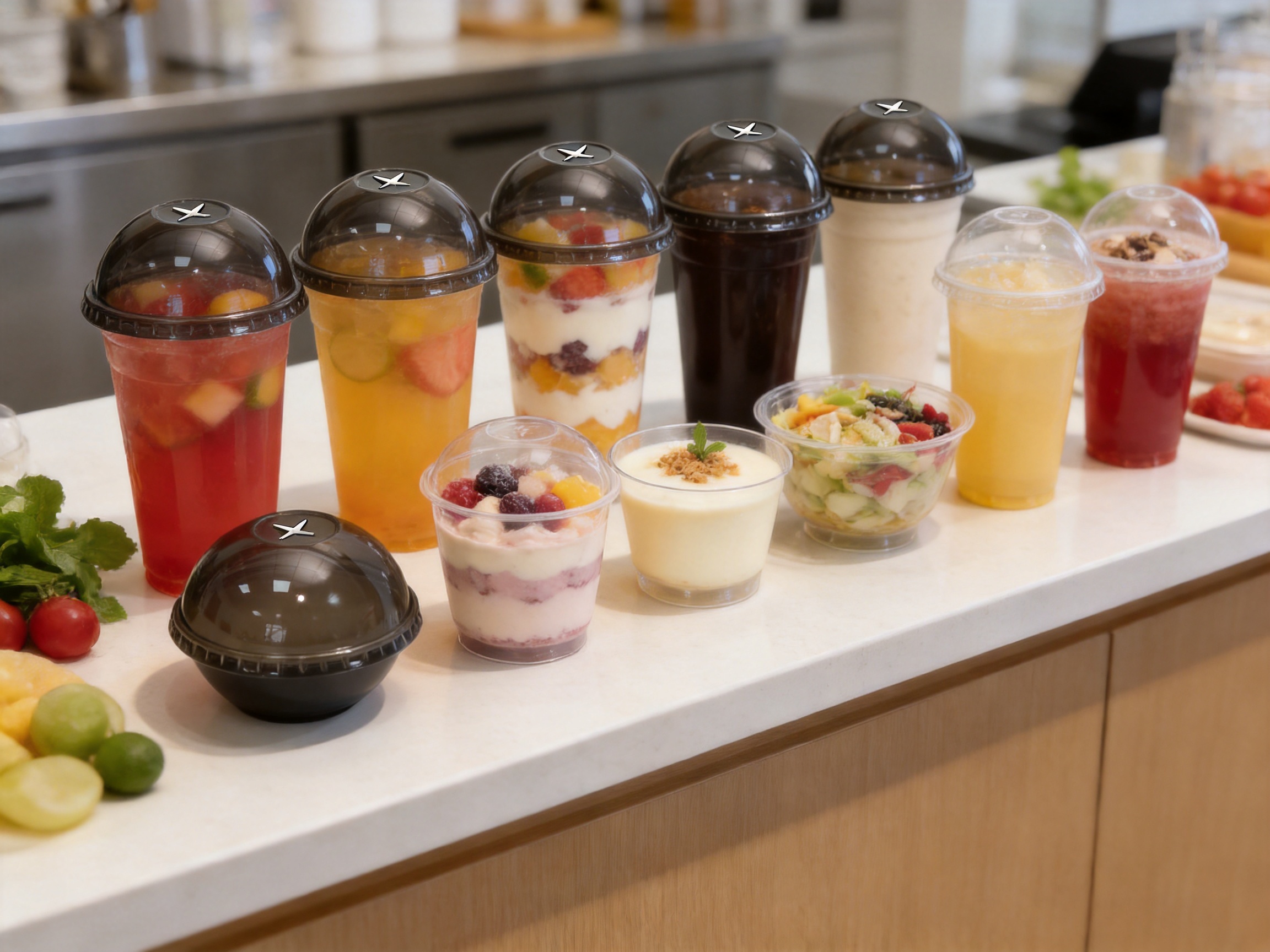
The semi-circular PP injection molded ball lid is suitable for various containers and occasions. Its 90 mm caliber makes it appropriate for compatible cups, bowls, or food packaging containers used in takeaway and retail environments. Its transparent curved design is especially useful where product visibility and presentation matter. Beverage shops can use it for drinks with toppings, foam, fruit, jelly, or cream. Dessert stores can use it for pudding, mousse, yogurt, parfaits, and layered sweets. Foodservice operators can use it for small bowls containing sauces, snacks, salads, or prepared foods.
In takeaway beverage operations, the lid helps prevent spillage while maintaining attractive presentation. Many modern drinks are designed with visual layers, fruit pieces, or toppings. A transparent semi-circular lid gives these products space and visibility while providing coverage. It can support a premium look for milk tea, fruit tea, smoothies, iced coffee, and specialty drinks.
In dessert and snack packaging, the rounded profile can protect toppings from being crushed while improving the appearance of the product. For example, whipped cream, fruit cubes, chocolate decorations, or layered ingredients may need extra headspace. A flat lid may press against the food, damaging presentation. A semi-circular ball lid can offer more room depending on the container and product design.
In commercial catering and prepared food environments, reliable lids help maintain organization and reduce contamination risk. Transparent lids allow quick identification of contents, which is helpful during meal preparation, display, and delivery. Stackability supports efficient storage before use and can improve workflow in busy kitchens.
Environmental and Health Considerations
Modern packaging decisions must consider both performance and responsibility. PP is valued for its durability, light weight, and potential recyclability in appropriate recycling systems. While disposable packaging must always be managed responsibly after use, selecting a durable and fit-for-purpose material can reduce waste caused by product failure. A lid that leaks or cracks may cause food waste, require replacement packaging, or lead to additional protective materials. Therefore, performance itself can contribute to more responsible packaging use.
The product’s food-grade, non-toxic, and odorless properties support health-conscious consumption. Consumers are increasingly aware of what touches their food. Packaging that is clean, safe, and well-made helps reassure customers. For brands, this can be a competitive advantage in a market where trust is essential.
Yuqian Packaging Technology (Jiangsu) Co., Ltd. is also engaged in biodegradable new materials and food packaging products, reflecting broader attention to sustainable development within the packaging industry. While this specific lid is made from PP, the company’s experience in new materials and food packaging innovation supports its ability to respond to changing market demands and environmental expectations.
Environmental responsibility also includes efficient production and storage. Stackable lids reduce transportation and storage space, which can support logistics efficiency. Consistent quality reduces rejects and waste during manufacturing and use. Clean production management helps avoid contamination-related losses. These practical details contribute to a more responsible packaging supply chain.
Manufacturing Strength of the Company
Yuqian Packaging Technology (Jiangsu) Co., Ltd. was established in 2010 and has developed into a high-tech enterprise integrating research and development, production, and sales of new food packaging materials and products. Its location in Taizhou City, Jiangsu Province, China, and plant area of approximately 30,000 square meters provide a solid foundation for large-scale production. The company’s Shanghai branch, established in January 2019, further supports service expansion and business development.
The company’s strength lies not only in equipment but also in its integrated approach. Product development, mold precision, raw material selection, clean workshop management, quality certification, and OEM service all work together to create reliable packaging solutions. For buyers, this integrated capability is important because packaging quality depends on many connected factors. A good design cannot perform well if material quality is poor. Good material cannot compensate for inaccurate molding. Clean production cannot replace proper quality inspection. A strong manufacturer manages all these aspects together.
The company has taken the lead in the packaging industry by passing multiple certifications and developing advanced production conditions. This demonstrates a commitment to long-term reliability rather than short-term output. For customers purchasing semi-circular PP injection molded ball lids, this means they can expect consistent quality, professional communication, and support for customized requirements.
In competitive food packaging markets, supplier stability is as important as product design. Businesses need suppliers who can deliver on time, maintain specifications, provide documentation, and respond to changing needs. With its production scale, certification background, and OEM experience, the company is positioned to serve both domestic and international packaging buyers.
How the Lid Supports Brand Value
Packaging communicates brand value silently but powerfully. When a customer receives a product with a clean, transparent, well-fitted lid, the product appears safer and more professional. When the lid leaks, cracks, smells, or looks cloudy, the brand may suffer even if the food tastes good. The semi-circular PP injection molded ball lid supports brand value by improving presentation, protection, and user confidence.
The transparent curved design can enhance the visual appeal of premium drinks and desserts. The leak-resistant fit helps reduce negative delivery experiences. The thickened material provides a more dependable touch. The food-grade PP construction supports safety expectations. The stackable structure helps staff work efficiently, indirectly improving service speed and order accuracy. These benefits combine to support a stronger brand experience.
For catering brands with multiple outlets, consistency is especially important. Customers expect the same quality from every store. Packaging variation can create inconsistency in appearance and performance. A professionally manufactured injection molded lid helps standardize packaging quality across locations. This is valuable for franchise systems, chain beverage shops, and distributors supplying multiple customers.
Packaging can also support marketing. A visually attractive product inside a clear lid is more likely to be photographed, shared, or recommended. In the age of social media, food presentation has commercial value. A lid that allows product visibility without sacrificing protection helps brands benefit from this trend.
Practical Purchasing Considerations
When selecting a semi-circular PP injection molded ball lid, buyers should consider compatibility, sealing performance, material safety, appearance, stacking behavior, certification support, and supplier capability. The lid is designed for a 90 mm caliber, so compatibility testing with the intended container is important. Even high-quality lids must be matched with suitable cups or bowls to achieve the intended fit.
Buyers should also evaluate the type of food or beverage being packaged. Products with high liquid content require stronger attention to leakage. Products with toppings or raised decorations benefit from the semi-circular profile. Products sold in displays benefit from transparency. High-volume operators benefit from stackability and stable supply.
Material documentation is another important factor. Food businesses should select packaging made from food-grade raw materials and supported by relevant certifications. This helps reduce risk and supports customer confidence. Working with a certified manufacturer can also simplify procurement audits and long-term quality management.
Finally, buyers should consider whether customization is needed. If standard specifications are sufficient, the lid can serve as a practical ready-to-use solution. If special requirements exist, OEM customization can help align the product with brand and operational needs. Early communication with the manufacturer about container dimensions, usage conditions, packing quantity, color, and design expectations can improve the final result.
Q&A Section
What is the main material of the semi-circular injection molded ball lid?
The lid is made from food-grade polypropylene, commonly known as PP. This material is selected because it is lightweight, durable, non-toxic, odorless, and suitable for food contact applications when properly manufactured.
What is the caliber of this lid?
The lid has a 90 mm caliber and is designed for compatible 90 mm food and beverage containers. Buyers should test compatibility with their specific cups or bowls before large-scale use.
Why is injection molding important for this product?
Injection molding provides precise shape control, consistent dimensions, and strong structural definition. These qualities help improve sealing performance, durability, appearance, and stackability compared with less controlled production methods.
How does the lid help prevent leakage?
The lid uses a unique sealing structure that helps it fit tightly when closed on a compatible container. This reduces gaps and helps prevent liquid from leaking during handling, storage, and takeaway use.
Is the lid safe for food contact?
Yes, the lid is made from food-grade PP raw materials that are non-toxic and odorless. The manufacturer also operates with quality certifications and food packaging production controls that support safety and reliability.
What makes this lid different from ordinary competitor lids?
Its advantages include a leak-resistant sealing design, thickened PP material, transparent appearance, stackable structure, food-grade raw material selection, precision injection molding, clean workshop production, and strong certification support from the manufacturer.
Can this lid be customized?
Yes, OEM customization is available according to buyer requirements. Customization may involve design details, compatibility needs, color preferences, packaging methods, and other project-specific requirements.
What types of products can use this lid?
The lid is suitable for various food and beverage applications, including drinks, desserts, yogurt bowls, fruit cups, snacks, sauces, prepared foods, and other compatible disposable food packaging containers.
Why is a class 100,000 dust-free workshop beneficial?
A class 100,000 dust-free workshop helps reduce airborne particles and supports cleaner production of food contact packaging. This is especially important for transparent lids, where cleanliness and appearance are highly visible.
How does the stackable design help businesses?
The stackable design saves storage space, improves inventory organization, supports easier handling, and helps staff work more efficiently during busy foodservice operations.
Conclusion
The semi-circular PP injection molded ball lid is a practical and reliable packaging component designed for modern food and beverage service. With its 90 mm caliber, transparent appearance, approximately 5.5 g gram weight, food-grade PP material, leak-resistant sealing structure, thickened durability, and stackable design, it provides a strong balance of safety, function, presentation, and efficiency. It is suitable for businesses that require dependable disposable food packaging container solutions and want packaging that supports both operational performance and customer satisfaction.
Its advantages over common competitor products are clear. It is stronger than many thin lids, cleaner and safer than products made from inconsistent raw materials, more visually appealing than opaque or cloudy lids, more practical than non-stackable alternatives, and more reliable than loose-fitting covers. Its injection molded structure supports precision and repeatability, while the manufacturer’s clean workshop and quality systems strengthen production consistency.
Yuqian Packaging Technology (Jiangsu) Co., Ltd. provides the manufacturing foundation behind this product. With a large production base, high-tech enterprise background, OEM customization capability, class 100,000 dust-free workshop, precise temperature and humidity control, and certifications including QS, ISO9001, BRC, DIN, and EU ROHS+ testing, the company offers more than a standard lid. It offers a professional food packaging solution supported by advanced processes and long-term quality commitment.
For beverage chains, dessert brands, catering suppliers, supermarkets, distributors, and food packaging buyers, the semi-circular PP injection molded ball lid can help improve product protection, reduce leakage risk, enhance presentation, support efficient storage, and strengthen customer trust. In a market where packaging quality directly affects brand experience, choosing a well-designed and professionally manufactured lid is a practical investment in safety, performance, and value.
References
International Organization for Standardization. ISO 9001 Quality Management Systems: Requirements.
British Retail Consortium. Global Standard for Packaging Materials.
European Union. Restriction of Hazardous Substances Compliance Guidance for Materials and Products.
German Institute for Standardization. DIN Standards for Product Safety and Material Evaluation.
Robertson, G. L. Food Packaging: Principles and Practice. CRC Press.
Marsh, K., and Bugusu, B. Food Packaging: Roles, Materials, and Environmental Issues. Journal of Food Science.
Selke, S. E. M., Culter, J. D., and Hernandez, R. J. Plastics Packaging: Properties, Processing, Applications, and Regulations.