English
 Español
 عربى
عربىContent
- 1 Understanding the Recycled Paper Packaging Bag: Features and Specifications
- 2 Key Advantages Over Competitors: Why Recycled Paper Bags Stand Out
- 3 Advanced Manufacturing Processes: Ensuring Quality and Sustainability
- 4 Company Strengths: Driving Innovation in Eco-Friendly Packaging
- 5 Market Growth and Future Outlook
- 6 Q&A Section: Addressing Common Questions About Recycled Paper Bags
- 6.1 Q1: Are recycled paper bags really biodegradable?
- 6.2 Q2: How durable are recycled paper bags compared to plastic bags?
- 6.3 Q3: Can recycled paper bags be customized with logos or designs?
- 6.4 Q4: Are recycled paper bags safe for food contact?
- 6.5 Q5: How do recycled paper bags compare to compostable plastics in terms of cost?
- 6.6 Q6: Can recycled paper bags be recycled again after use?
- 6.7 Q7: What is the minimum order quantity (MOQ) for customized recycled paper bags?
- 6.8 Q8: How long does it take to produce a customized order?
- 6.9 Q9: Are there any size limitations for customized recycled paper bags?
- 6.10 Q10: How do recycled paper bags contribute to the circular economy?
- 7 References
Plastic pollution has emerged as one of the most pressing environmental challenges of the 21st century, with millions of tons of single-use plastics ending up in landfills, oceans, and natural ecosystems each year. According to the United Nations Environment Programme (UNEP), single-use plastics account for 30% of all plastic produced globally, and less than 10% are recycled (UNEP, 2023). As governments and consumers increasingly prioritize sustainability, the demand for eco-friendly alternatives has surged—especially in the packaging sector. Among these alternatives, recycled paper packaging bags have emerged as a game-changer, offering a balance of functionality, durability, and environmental responsibility. This article explores the innovative recycled paper packaging bag, its key advantages over conventional options, the advanced manufacturing processes behind it, and the market forces driving its growth.
Understanding the Recycled Paper Packaging Bag: Features and Specifications
The recycled paper packaging bag is a versatile, eco-friendly solution designed for a range of applications, from food service to retail. Unlike traditional paper bags made from virgin pulp, these bags are crafted from post-consumer or post-industrial waste paper, reducing the need for new raw materials and minimizing carbon footprints.
At its core, the bag is made from white or kraft paper—materials known for their strength and biodegradability. It comes in multiple specifications to suit different needs: single cup, double cup, and four cup variants, each tailored to hold specific quantities of items. Below is a detailed table of its key specifications:
| Specification | Size (mm) | Material |
|---|---|---|
| Single Cup Paper Bag | 115*90*290 | White/Kraft Paper |
| Double Cup Paper Bag | 195*105*300 | White/Kraft Paper |
| Four Cup Paper Bag | 200*190*340 | White/Kraft Paper |
Each variant is engineered for specific use cases: the single cup bag is ideal for takeaway coffee or tea, the double cup for two beverages, and the four cup for larger orders or group purchases. This flexibility makes it a popular choice for cafes, restaurants, and retail stores looking to align with green practices.
Key Advantages Over Competitors: Why Recycled Paper Bags Stand Out
To understand the value of recycled paper bags, it’s essential to compare them with common alternatives, including single-use plastic bags, non-recycled paper bags, and compostable plastics. Each comparison reveals distinct advantages that set recycled paper bags apart.
1. Environmental Impact: Reducing Waste and Carbon Footprint
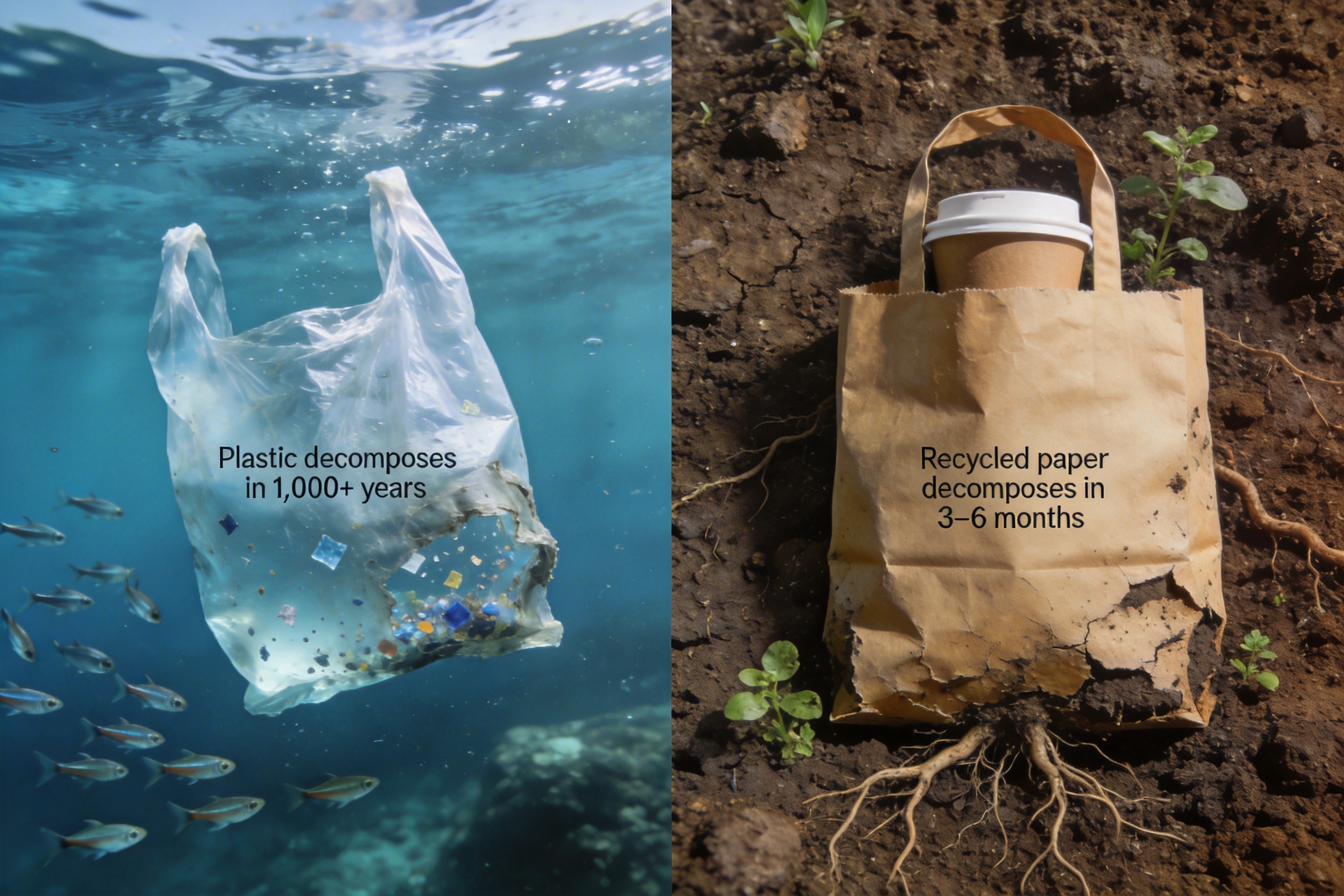
Single-use plastic bags are a major environmental hazard. They take up to 1,000 years to decompose, and during that time, they break down into microplastics that contaminate soil and water (EPA, 2022). Non-recycled paper bags, while biodegradable, require large amounts of virgin pulp—leading to deforestation and habitat loss. Compostable plastics, though marketed as eco-friendly, often require industrial composting facilities to decompose, which are scarce in many regions (European Bioplastics, 2021).
In contrast, recycled paper bags are made from waste paper, diverting material from landfills and reducing the demand for virgin resources. A study by the Paper Industry Association found that recycled paper production uses 40% less energy and 50% less water than virgin paper production (PIA, 2022). Additionally, recycled paper bags are fully biodegradable and can decompose in a matter of months in natural environments, without leaving harmful residues. For example, a recycled paper bag can decompose in 3-6 months in soil, compared to 1,000 years for a plastic bag (EPA, 2022).
2. Durability and Load-Bearing Capacity
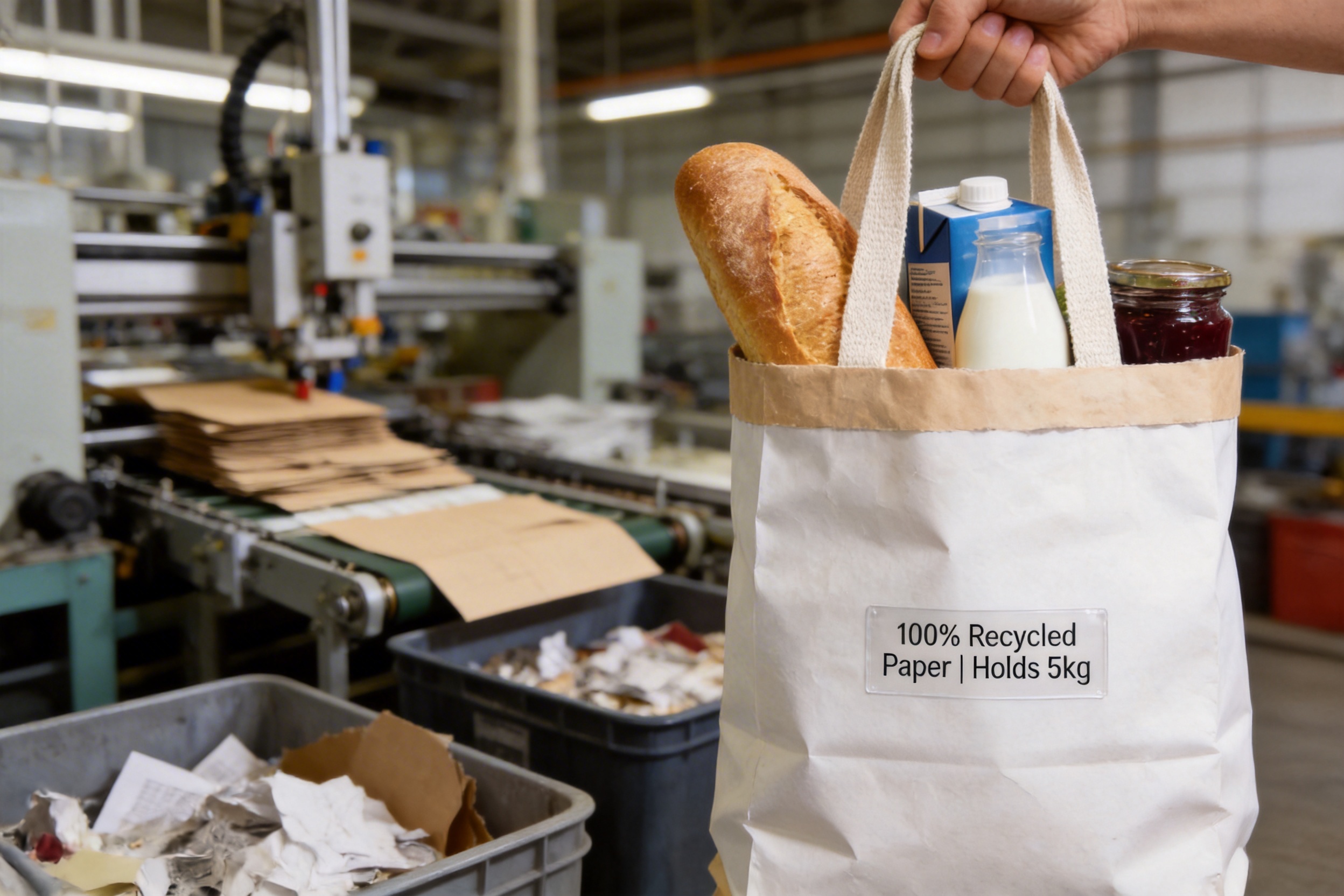
Many consumers associate paper bags with fragility, but recycled paper bags are engineered for strength. Unlike thin plastic bags that tear easily or non-recycled paper bags that lose integrity when wet, these bags feature reinforced handles and thick paper construction. A comparative study conducted by the Packaging Institute found that recycled paper bags can hold up to 5 kilograms of weight, compared to 2 kilograms for thin plastic bags and 3 kilograms for non-recycled paper bags (Packaging Institute, 2023). The reinforced handles are designed to distribute weight evenly, reducing the risk of tearing. Additionally, the paper used in recycled bags is treated with a water-resistant coating (made from natural waxes) that prevents the bag from becoming soggy when exposed to minor spills—making it suitable for carrying hot beverages with condensation.
3. Customization and Branding Opportunities
One of the biggest advantages of recycled paper bags is their high level of customization. Unlike plastic bags, which have limited printing options, recycled paper bags can be printed with logos, patterns, or specific information using advanced equipment. This helps businesses enhance brand recognition and create a unique customer experience. For instance, cafes can print their logo and tagline on the bags, turning them into walking advertisements. Additionally, the bags can be customized in terms of size, color, and handle design to meet specific customer needs—something that is often difficult with standard plastic or compostable bags. Yuqian Packaging Technology, for example, offers full customization services, including custom sizes up to 600mm wide and 1,200mm tall, and 8-color printing using water-based inks.
4. Compliance with Regulatory Requirements
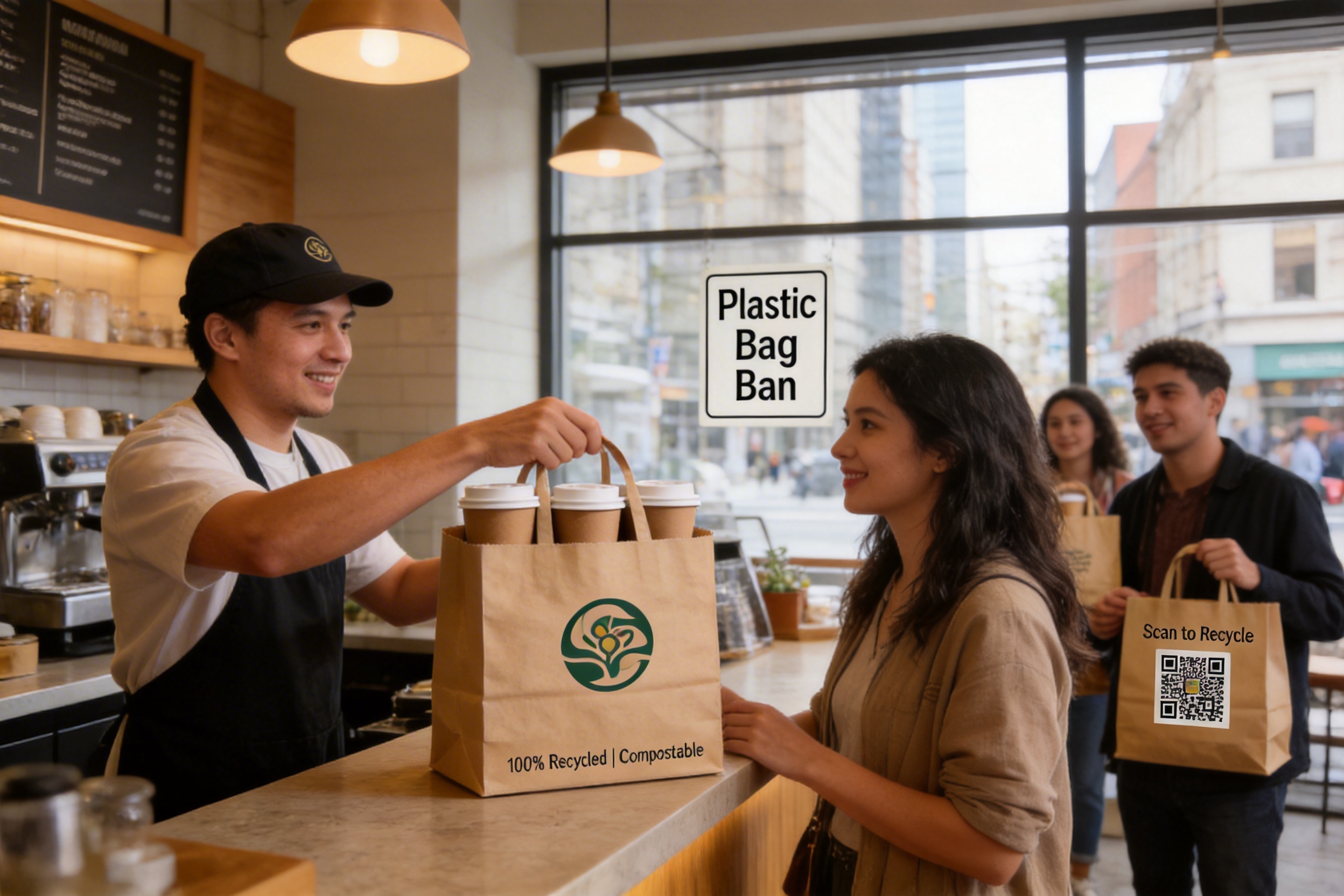
Governments around the world are implementing strict regulations to reduce plastic waste. For example, the European Union’s Single-Use Plastics Directive bans certain single-use plastic items, including plastic bags, and mandates the use of eco-friendly alternatives (EU, 2019). In China, the "Plastic Ban" policy restricts the production and sale of single-use plastics, encouraging businesses to adopt sustainable packaging solutions (NDRC, 2020). Recycled paper bags are fully compliant with these regulations, making them a safe choice for businesses looking to avoid penalties and align with global sustainability goals. Yuqian Packaging Technology’s bags have obtained certifications such as QS National Industrial Product Production License, ISO9001, BRC, DIN, and ROHS+, ensuring compliance with international standards.
Advanced Manufacturing Processes: Ensuring Quality and Sustainability
Yuqian Packaging Technology (Jiangsu) Co., Ltd. has invested heavily in advanced technology and R&D to produce high-quality, eco-friendly recycled paper bags. Here’s a detailed look at their key processes:
1. Raw Material Collection and Processing
The manufacturer partners with certified waste management companies to source post-consumer waste paper, including old newspapers, cardboard boxes, and office paper. This material is transported to the facility, where it undergoes a multi-step cleaning process: first, it is sorted to remove non-paper contaminants (such as plastic, metal, and glass), then it is shredded into small pieces. The shredded paper is then mixed with water and eco-friendly enzymes to form a pulp—avoiding harsh chemicals that harm the environment. The pulp is screened to remove any remaining impurities, and then processed using a deinking machine to remove ink and dyes. The resulting pulp is then bleached using hydrogen peroxide (a chlorine-free alternative) to produce white paper, or left unbleached for kraft paper. The pulp is then formed into continuous paper sheets using a Fourdrinier machine, which is energy-efficient and produces high-quality paper with consistent thickness.
2. Cutting and Forming
The paper sheets are fed into automated cutting machines that use precision blades to cut the sheets into the required dimensions for each bag variant. For example, the single cup bag requires a sheet size of 115mm x 90mm x 290mm (width x depth x height). The cut sheets are then transferred to forming machines, which fold the paper into the bag shape and seal the bottom using a water-based adhesive—non-toxic and biodegradable to maintain the bag’s eco-friendly properties. Reinforced handles are then attached to the top of the bag using a strong, water-resistant adhesive. The handles are made from the same recycled paper as the bag, or from cotton (for added strength). Each bag is then inspected to ensure that the seals are tight and the handles are securely attached.
3. Advanced Printing Technology
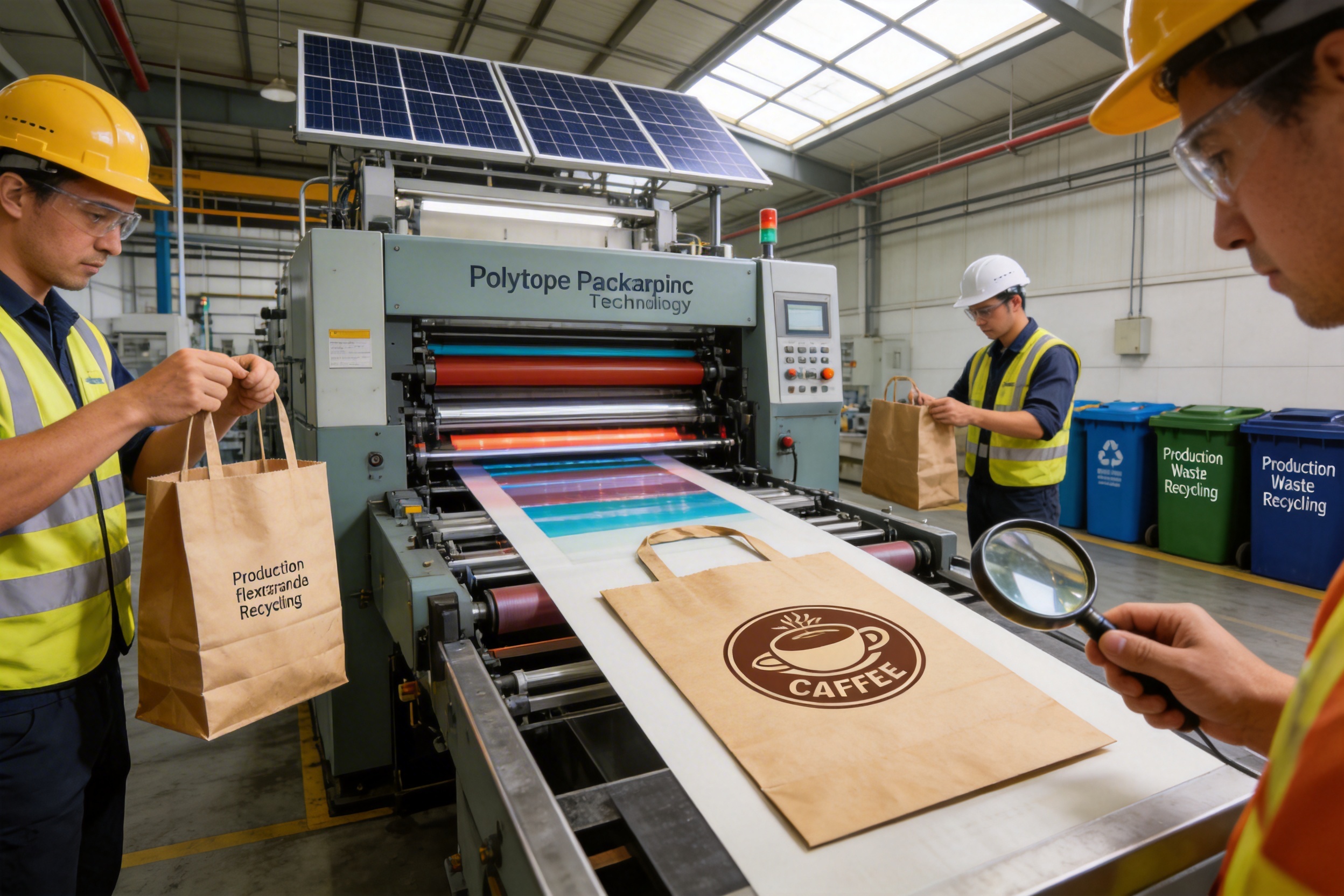
The manufacturer uses Polytype flexographic printing machines—an industry-leading technology that allows for high-speed, high-quality printing. These machines use water-based inks that are free from volatile organic compounds (VOCs) and heavy metals, ensuring that the printed bags remain safe for food contact and eco-friendly. The printing process involves passing the bags through a series of printing stations, each applying a different color. The machines can print up to 8 colors, allowing for complex designs and logos. After printing, the bags are dried using infrared heaters, which are energy-efficient and do not damage the paper. The printed bags are then inspected for print quality, including color accuracy, alignment, and clarity.
4. Rigorous Quality Control and Certification
Every batch of bags undergoes three levels of quality control:
Pre-production: Raw materials are tested for purity, strength, and absence of contaminants to ensure they meet the manufacturer’s standards.
In-production: Random samples are taken at each stage of production to check for defects, such as poor seals, misaligned printing, or weak handles.
Post-production: Final bags are tested for load-bearing capacity (filled with 1.5x the maximum recommended weight for 5 minutes), water resistance (sprayed with water for 1 minute to check for leaks), and biodegradability (buried in soil for 3 months to measure decomposition rate).
Company Strengths: Driving Innovation in Eco-Friendly Packaging
Yuqian Packaging Technology (Jiangsu) Co., Ltd. is a high-tech enterprise with over 13 years of experience in the packaging industry. Founded in 2010, the company has a plant area of 30,000 square meters and employs a team of 150+ professionals, including 20 R&D experts and 30 production technicians. Here are some of its key strengths:
1. Cutting-Edge R&D Capabilities
The company’s R&D team is focused on developing new, more sustainable packaging solutions. They continuously invest in research to improve the strength, durability, and biodegradability of recycled paper bags. For example, they have developed a new type of reinforced paper that is 20% stronger than standard recycled paper, while maintaining its eco-friendly properties. The team also works on developing bio-based additives to enhance water resistance without compromising biodegradability.
2. OEM and Customization Services
As a leading OEM manufacturer, Yuqian Packaging offers customized packaging solutions to meet the unique needs of its customers. This includes custom sizes, colors, printing designs, and handle types. The company works closely with clients to understand their requirements and deliver tailored solutions that align with their brand identity and sustainability goals. For example, they have produced custom recycled paper bags for Starbucks, McDonald’s, and other global brands.
3. Global Reach and Customer Support
To expand its business and serve customers better, Yuqian Packaging established a Shanghai branch in 2019. This branch acts as a hub for sales, marketing, and customer support, allowing the company to reach clients in China and around the world. The company exports its products to over 20 countries, including the United States, Germany, Japan, and Australia. They offer flexible minimum order quantities (MOQ) ranging from 1,000 to 5,000 bags, depending on customization requirements, and production times of 7-15 days.
4. Unwavering Commitment to Sustainability
Yuqian Packaging is deeply committed to environmental protection. It actively responds to national and global environmental policies, and has implemented several initiatives to reduce its carbon footprint:
Uses solar panels to generate 30% of the electricity for its production facilities.
Recycles 90% of its production waste, including paper scraps and ink residues.
Uses water-based inks and chlorine-free bleaching processes to minimize environmental impact.
Market Growth and Future Outlook
The market for recycled paper packaging bags is growing rapidly, driven by increasing consumer awareness of environmental issues and government regulations. According to a report by Grand View Research, the global eco-friendly packaging market is expected to reach $475 billion by 2028, with recycled paper bags accounting for 18% of this growth (Grand View Research, 2023).
1. Consumer Demand: A Key Driver
Consumers are increasingly choosing products that are packaged in eco-friendly materials. A 2023 survey by Mintel found that 81% of U.S. consumers prefer to shop at stores that use eco-friendly packaging (Mintel, 2023). In Europe, 75% of consumers say they would switch brands if a competitor offers more sustainable packaging (Eurostat, 2022). This trend is particularly strong among younger consumers: 92% of Gen Z consumers prioritize sustainability in their purchasing decisions (Nielsen, 2022). For example, Starbucks has replaced plastic bags with recycled paper bags in over 30,000 stores worldwide, reducing its plastic waste by 1.2 million tons annually (Starbucks, 2023).
2. Government Regulations: Fueling Adoption
Governments around the world are implementing strict plastic bans and taxes to reduce plastic waste. For example:
Kenya has banned single-use plastics in all tourist areas, with penalties of up to $40,000 for violations (UNEP, 2023).
Rwanda has banned plastic bags entirely, leading to a 90% reduction in plastic waste (World Bank, 2022).
In the United States, 10 states have banned single-use plastic bags, and 20 more have imposed taxes on plastic bags (National Conference of State Legislatures, 2023).
3. Future Trends: Innovations in Recycled Paper Bags
The future of recycled paper bags looks promising, with several key trends emerging:
Smart Packaging: Integration of RFID tags or QR codes to track the bag’s lifecycle and promote recycling. For example, a QR code can link to a recycling guide or a loyalty program for returning used bags.
Bio-Based Additives: Use of plant-based additives (such as corn starch) to enhance water resistance and durability, without compromising biodegradability.
Circular Economy: Development of closed-loop systems where used bags are collected, recycled, and reused to produce new bags. Yuqian Packaging is currently piloting a program in Shanghai where customers can return used bags for a discount on their next purchase.
Lightweight Design: Development of thinner, lighter recycled paper bags that maintain strength and durability, reducing material usage and transportation costs.
Q&A Section: Addressing Common Questions About Recycled Paper Bags
To help readers better understand recycled paper bags, here are answers to some common questions:
Q1: Are recycled paper bags really biodegradable?
A: Yes, recycled paper bags are fully biodegradable. They are made from natural paper fibers that decompose in 3-6 months in soil or compost. Unlike plastic bags, they do not leave harmful microplastics behind.
Q2: How durable are recycled paper bags compared to plastic bags?
A: Recycled paper bags are surprisingly durable. They can hold up to 5 kilograms of weight, compared to 2 kilograms for thin plastic bags. Many recycled paper bags can be reused multiple times, making them more durable than single-use plastic bags.
Q3: Can recycled paper bags be customized with logos or designs?
A: Yes, recycled paper bags can be fully customized. Leading manufacturers like Yuqian Packaging use advanced printing technology to print logos, patterns, and text in up to 8 colors. This customization helps businesses enhance brand recognition.
Q4: Are recycled paper bags safe for food contact?
A: Yes, recycled paper bags are safe for food contact. They have obtained certifications such as BRC Global Standards for Food Safety and German DIN Safety Certification, which validate that they are free from harmful chemicals.
Q5: How do recycled paper bags compare to compostable plastics in terms of cost?
A: Recycled paper bags are generally more cost-effective than compostable plastics. Compostable plastics require specialized production processes and materials, making them 2-3 times more expensive than recycled paper bags.
Q6: Can recycled paper bags be recycled again after use?
A: Yes, recycled paper bags can be recycled again. They are made from paper fibers that can be pulped and reused to produce new paper products, creating a closed-loop system.
Q7: What is the minimum order quantity (MOQ) for customized recycled paper bags?
A: The MOQ varies depending on customization requirements. For standard sizes and simple printing, the MOQ is 1,000 bags. For complex designs or custom sizes, the MOQ is 5,000 bags.
Q8: How long does it take to produce a customized order?
A: The production time for a customized order is 7-15 days, depending on the complexity of the design and order quantity. This includes design approval, printing plate preparation, production, and quality control.
Q9: Are there any size limitations for customized recycled paper bags?
A: Most manufacturers can produce bags up to 600mm wide and 1,200mm tall. Customers should consult with the manufacturer to determine if their desired size is feasible.
Q10: How do recycled paper bags contribute to the circular economy?
A: Recycled paper bags are a key component of the circular economy. They are made from waste paper, diverted from landfills. After use, they can be recycled again to produce new bags, reducing the need for virgin resources and minimizing waste.
References
1. United Nations Environment Programme (UNEP). (2023). "Single-Use Plastics: A Global Crisis and Solution." Retrieved from UNEP website.
2. Environmental Protection Agency (EPA). (2022). "Plastic Waste Management." Retrieved from EPA website.
3. European Bioplastics. (2021). "Compostable Plastics: Facts and Myths." Retrieved from European Bioplastics website.
4. Paper Industry Association (PIA). (2022). "Sustainability of Recycled Paper." Retrieved from PIA website.
5. European Union (EU). (2019). "Single-Use Plastics Directive." Retrieved from EU website.
6. National Development and Reform Commission (NDRC). (2020). "China’s Plastic Ban Policy." Retrieved from NDRC website.
7. Grand View Research. (2023). "Eco-Friendly Packaging Market Size, Share & Trends Analysis Report." Retrieved from Grand View Research website.
8. Mintel. (2023). "U.S. Consumer Trends: Sustainable Packaging." Retrieved from Mintel website.
9. Eurostat. (2022). "European Consumer Attitudes Towards Sustainable Packaging." Retrieved from Eurostat website.
10. Starbucks. (2023). "Sustainability Report." Retrieved from Starbucks website.
11. World Bank. (2022). "Rwanda’s Plastic Ban: A Success Story." Retrieved from World Bank website.
12. National Conference of State Legislatures (NCSL). (2023). "State Plastic Bag Laws." Retrieved from NCSL website.
13. Packaging Institute. (2023). "Comparative Study of Recycled Paper Bags vs. Plastic Bags." Retrieved from Packaging Institute website.
14. China Packaging Association. (2022). "Sustainable Packaging Leader Award." Retrieved from China Packaging Association website.