English
 Español
 عربى
عربىContent
- 1 Product Overview: What Is a PP Plastic Takeaway Container Liner?
- 2 Core Product Specifications
- 3 Why Polypropylene Is an Ideal Material for Takeaway Liners
- 4 Advantages Over Ordinary Takeaway Liners
- 5 Manufacturing Strength: From Raw Material Selection to Finished Product
- 6 Quality Management and Certification Support
- 7 OEM Customization: A Complete Service for Food Packaging Brands
- 8 Food Safety and Consumer Experience
- 9 Environmental Responsibility and Practical Sustainability
- 10 Applications in the Foodservice Industry
- 11 Comparison With Common Alternative Packaging Components
- 12 How the Product Supports Brand Differentiation
- 13 Company Strength Behind the Product
- 14 After-Sales Service and Customer Support
- 15 Purchasing Considerations for PP Plastic Takeaway Container Liners
- 16 Q&A Section
- 16.1 Q1: What is the main purpose of a PP plastic takeaway container liner?
- 16.2 Q2: Why is PP material used for this liner?
- 16.3 Q3: What sizes are available?
- 16.4 Q4: Can the liner be customized?
- 16.5 Q5: Can a logo or pattern be printed on the packaging?
- 16.6 Q6: Is the liner suitable for hot food?
- 16.7 Q7: What makes this liner different from low-cost alternatives?
- 16.8 Q8: Is the product environmentally friendly?
- 16.9 Q9: What certifications support the company’s production strength?
- 16.10 Q10: Who can benefit from using PP plastic takeaway container liners?
- 17 Conclusion
- 18 References
In modern foodservice, packaging is no longer a simple carrier for meals. It is part of food safety management, brand presentation, delivery performance, customer experience, operational efficiency, and sustainability planning. A PP plastic takeaway container liner is a practical packaging component designed to separate food from the outer container, improve hygiene, preserve food quality, and create a cleaner, more convenient takeaway experience. For restaurants, catering chains, cloud kitchens, supermarkets, meal-preparation suppliers, and food packaging distributors, a well-manufactured liner can reduce leakage risk, support neat food presentation, simplify serving, and help maintain consumer confidence.
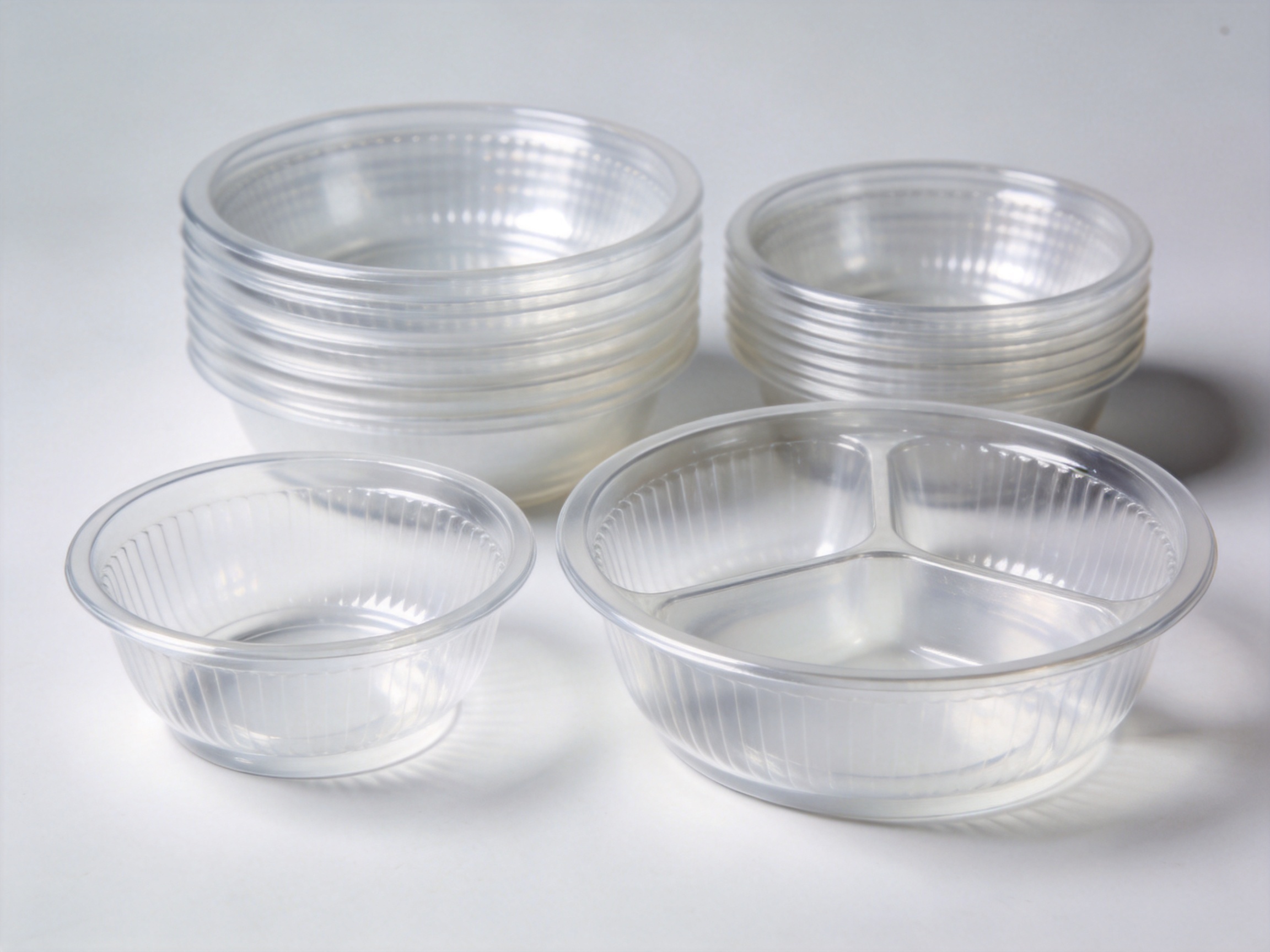
The PP plastic takeaway container liner discussed in this article is made from polypropylene, a widely used food-contact plastic known for being non-toxic, odorless, heat resistant, impact resistant, lightweight, and suitable for stable forming. It is designed with a single compartment, transparent appearance, stackable structure, and practical calibers of 150 mm and 179 mm. The liner is available in standard transparent color and can support customization according to customer needs. With advanced production capabilities, strict quality systems, and professional OEM service, Yuqian Packaging Technology (Jiangsu) Co., Ltd. provides a dependable solution for disposable food packaging container applications where safety, consistency, and brand value matter.
Product Overview: What Is a PP Plastic Takeaway Container Liner?
A PP plastic takeaway container liner is an internal food-contact component placed inside a takeaway bowl, lunch box, or compatible container. Its purpose is to create a clean contact surface between the meal and the outer packaging. This is especially useful when food businesses need to protect food quality, reduce contamination concerns, control portion presentation, or provide an additional barrier between sauces, oils, moisture, and the container structure.
The product is designed with a single compartment. This simple structure is one of its key advantages. A single-compartment liner is easy to use, easy to stack, convenient for fast food preparation, and suitable for a wide range of meals, including rice dishes, noodles, salads, snacks, cooked vegetables, meat dishes, and ready-to-eat foods. Because it does not divide the meal into multiple sections, it provides a flexible internal space and allows businesses to use it for different menu categories without needing too many different packaging molds.
The transparent appearance is another important feature. Transparency allows staff and consumers to see the food clearly, supporting visual freshness and product appeal. In takeaway and delivery service, the first impression often comes from the way food looks when the customer opens the package. A clean, transparent liner helps present the meal in an orderly, hygienic, and professional manner.
Polypropylene is selected because it is suitable for demanding foodservice environments. Compared with many lower-grade plastics, quality PP offers better heat resistance, stable structure, and reduced odor transfer. It is also easy to mold into precise shapes, making it suitable for mass production with consistent dimensions. For takeaway packaging, dimensional consistency is essential because a liner must fit closely with the matching bowl or container. A loose liner may move during transport, while an overly tight liner may be difficult to assemble. Proper forming technology helps achieve a closer, more reliable fit.
Core Product Specifications
The product is supplied in two practical liner types. These sizes are selected to match common takeaway container requirements while supporting efficient packing and storage. The following table summarizes the available specifications.
| Lid Type | Caliber | Gram Weight | Color |
| 150 Lined | 150 mm | 9 g | Transparent |
| 179 Liner | 179 mm | 10 g | Transparent |
The 150 mm and 179 mm calibers allow customers to select according to the diameter of the matching takeaway container. The gram weights of 9 g and 10 g reflect a lightweight yet functional design. In disposable food packaging, weight control matters because excessive material increases cost and storage burden, while insufficient material may reduce strength and performance. A balanced gram weight helps maintain product usability while supporting economic efficiency.
The transparent standard color is suitable for most foodservice brands. It does not compete visually with the food, and it gives the liner a clean and neutral appearance. For customers with special requirements, color and design customization may be discussed according to production feasibility and order planning.
Why Polypropylene Is an Ideal Material for Takeaway Liners
Polypropylene, commonly abbreviated as PP, is one of the most important materials in food packaging. It is valued for its combination of safety, processing performance, and practical resistance properties. In a takeaway liner, the material must contact food directly, withstand filling and handling, tolerate temperature changes, and maintain shape during transport. PP is well suited for these requirements.
First, quality PP is non-toxic and odorless when produced under proper food-contact standards. This is essential for food packaging because consumers do not want packaging odor to affect the flavor of their meals. Odor neutrality is particularly important for hot foods, oily dishes, soups, seasoned meals, and delicately flavored products. A liner made from carefully selected PP raw material helps keep the original taste and smell of food.
Second, PP has good heat resistance compared with many common packaging plastics. Takeaway meals are often packed while warm or hot. A liner that softens too easily may deform, lose shape, or affect user experience. PP provides better thermal stability, making it suitable for many hot-food packaging situations. Actual use conditions should always be confirmed according to the complete container system and customer requirements, but PP remains a preferred option for numerous foodservice applications.
Third, PP has strong impact resistance and flexibility. Delivery packaging may experience shaking, stacking, movement, and pressure during transportation. A brittle material may crack or break, but PP offers better toughness. This helps the liner maintain its form and continue protecting the food during handling.
Fourth, PP is easy to process and mold. For manufacturers, this means it can be formed into stable, repeatable shapes with smooth edges and accurate dimensions. A well-made liner must be consistent across large batches. Stable processing performance supports efficient mass production, lower defect rates, and reliable compatibility with customer containers.
Finally, PP is recyclable in many waste management systems where appropriate collection and sorting are available. While recycling systems vary by region, designing packaging from recognized recyclable materials is part of broader sustainability progress. Yuqian Packaging Technology (Jiangsu) Co., Ltd. also continues to explore recyclable and environmentally responsible food packaging solutions to support customer needs and industry development.
Advantages Over Ordinary Takeaway Liners
Not all takeaway liners are equal. In competitive food packaging markets, some products appear similar at first glance but differ significantly in raw material quality, forming precision, fit, hygiene control, stackability, printing capability, and certification support. The PP plastic takeaway container liner described here offers several advantages over many ordinary or low-cost alternatives.
Better Food Safety Through High-Quality Raw Materials
The product is made with carefully selected PP raw materials. Raw material control is the foundation of safe food packaging. Lower-quality materials may produce unwanted odors, inconsistent color, poor transparency, weak mechanical properties, or uncertain food-contact performance. By focusing on high-quality PP, the liner supports non-toxic, odorless, and hygienic food-contact use.
For foodservice businesses, safety is not just a legal requirement; it is a trust issue. Customers expect disposable food packaging containers and related components to be clean, reliable, and suitable for the food they carry. A liner made from dependable PP helps protect brand reputation and reduce complaints related to packaging odor or contamination concerns.
Single-Compartment Design for Practical Capacity
The single-compartment design provides a simple and reasonable internal space. Some multi-compartment packaging products are useful for separating side dishes, but they can reduce usable volume and limit flexibility. A single liner allows operators to fill meals efficiently and use the liner for different food categories.
This design also supports fast packing in high-volume kitchens. Staff can place the liner, add food, close the package, and prepare orders quickly. In peak hours, every second matters. Packaging that is easy to handle improves workflow and helps maintain service speed.
Close Fit and Stable Compatibility
A liner must match the container properly. If the shape is inaccurate, the food may shift, the liner may lift, or the customer may experience difficulty using the package. Precision forming and dimensional control help ensure a closer fit between liner and container. This is especially important for OEM customers who need packaging components to integrate with existing bowls, lids, or takeaway systems.
Compared with generic liners, a professionally produced liner can be adjusted and customized based on customer samples or dimensional requirements. This reduces the risk of mismatch and supports smoother market introduction.
Stackable Structure for Space Saving
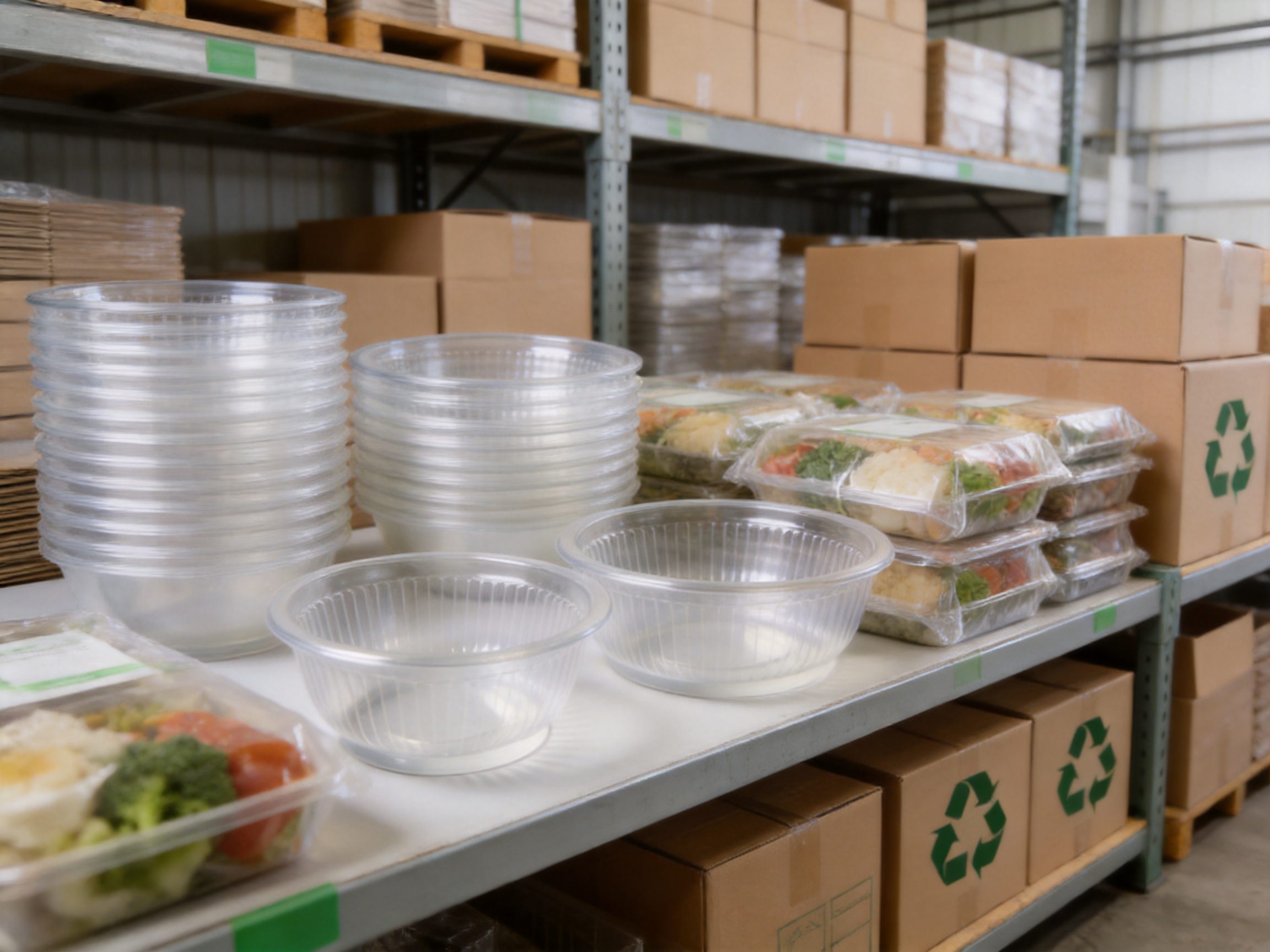
The liner is stackable, which is a major advantage for restaurants, warehouses, distributors, and packaging users. Disposable packaging is often purchased in bulk, so storage efficiency directly affects operating cost. Stackable liners take up less space, are easier to count, and can be loaded more efficiently into cartons.
In foodservice operations, storage rooms are often limited. A compact packaging product helps reduce clutter and improves inventory management. During transportation, stackability also supports better carton utilization and may reduce logistics waste.
Transparent Appearance for Clean Presentation
Transparency creates a cleaner visual effect. It allows the food to remain the center of attention while giving the packaging a hygienic and modern appearance. For catering brands, presentation influences perceived quality. A transparent liner can make the meal look more organized and fresh, especially when used with clear lids or matching takeaway containers.
Customization and Branding Support
One of the strongest advantages of this product is customization. Many competitors provide only standard products, while professional OEM manufacturing can support customized solutions, including size matching, packaging structure consultation, and brand-related printing options. Yuqian Packaging Technology (Jiangsu) Co., Ltd. is equipped with advanced printing equipment, including Polytype printing capabilities, which can print customer logos, patterns, or specific information on packaging components where suitable.
Brand printing helps restaurants and food companies improve recognition. In the delivery era, packaging often travels through cities, offices, residential buildings, and social media images. A customized package can become a mobile brand display. It can communicate professionalism, hygiene, and uniqueness even before the customer tastes the food.
Manufacturing Strength: From Raw Material Selection to Finished Product
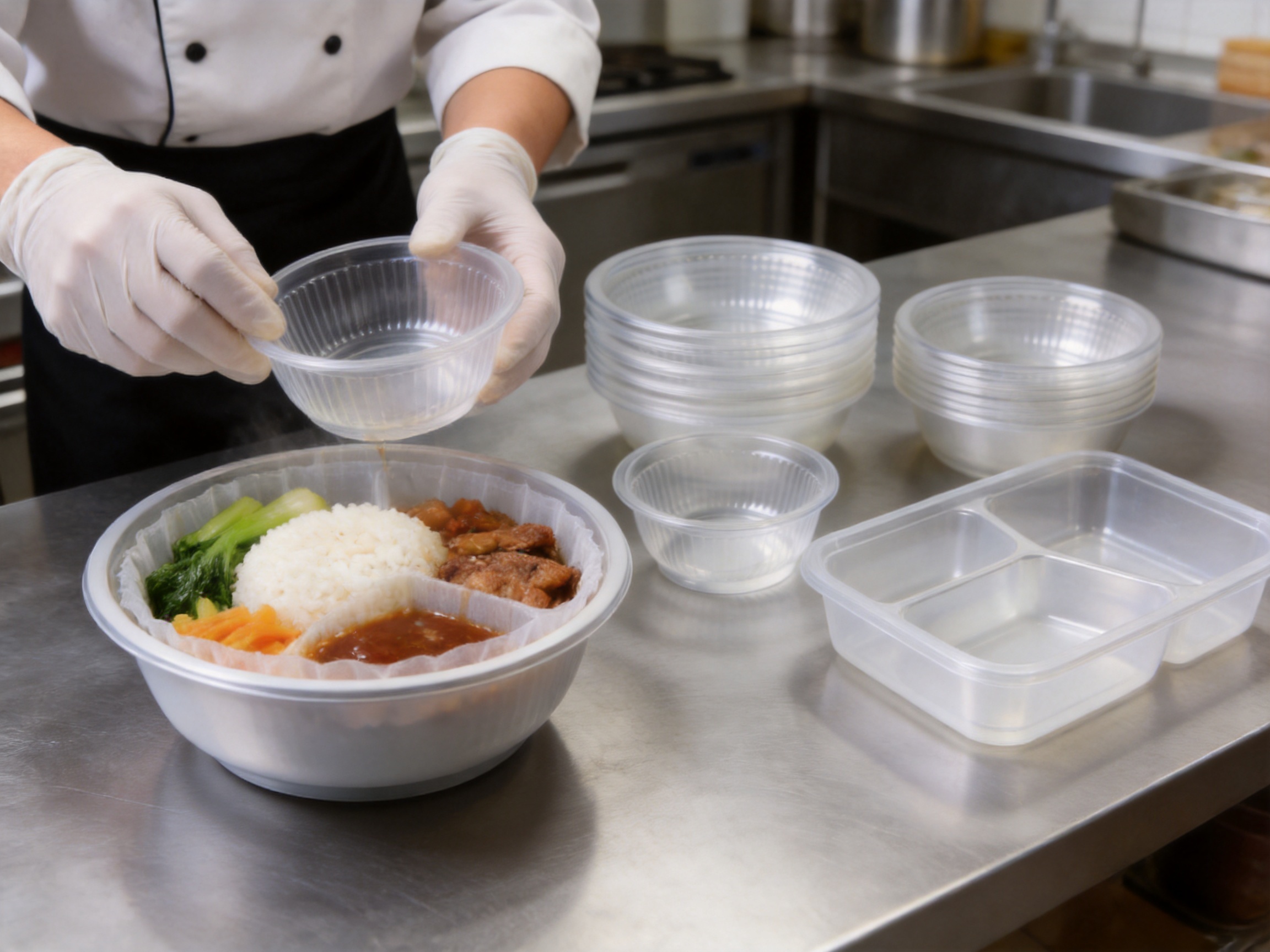
Advanced manufacturing is the reason a disposable liner becomes reliable at scale. A product may look simple, but consistent food packaging production requires precise material management, mold accuracy, forming control, inspection systems, hygiene procedures, and efficient logistics. Yuqian Packaging Technology (Jiangsu) Co., Ltd. has developed a strong production foundation since its establishment in 2010 and operates as a research, development, production, and sales enterprise for new food packaging materials and products.
Raw Material Control
The production process begins with raw material selection. Food-contact PP must be chosen carefully according to performance, clarity, safety, and processing requirements. Material batches should be managed to support traceability and consistency. Good raw material management reduces variation during forming and helps ensure that finished liners have stable transparency, thickness, weight, and strength.
Precision Forming and Mold Management
The shape of a takeaway liner depends on accurate forming technology and mold control. The caliber, rim profile, depth, and wall distribution must match the intended container. Even small dimensional errors can affect fit. Professional manufacturers use controlled processes to maintain repeatability from sample production to mass production.
Mold management is also important for OEM projects. Customers may require different dimensions or product features based on their own takeaway bowls or container systems. A capable factory can review customer requirements, support sample production, adjust technical details, and prepare production for bulk orders. This reduces development time and helps customers bring packaging solutions to market faster.
Weight and Thickness Balance
For the 150 mm liner, the gram weight is approximately 9 g, and for the 179 mm liner, it is approximately 10 g. Maintaining this weight range requires careful control. If material distribution is uneven, some areas may be too thin and weak while others may be unnecessarily thick. Balanced forming improves both performance and cost efficiency.
This balance is especially important for large foodservice chains and distributors. When millions of pieces are purchased, small changes in unit weight can significantly affect cost, transportation, and sustainability metrics. A manufacturer that controls gram weight accurately gives customers greater confidence in procurement planning.
Hygienic Production Environment
Food packaging production must focus on cleanliness. Since the liner contacts food, hygienic manufacturing conditions help reduce contamination risk. This includes proper handling procedures, clean equipment, organized production areas, and inspection before packing. Professional food packaging factories follow strict quality and hygiene management rules to maintain product safety.
Efficient Supply Chain Management
Food packaging customers often need quick response and stable delivery. Restaurants, distributors, and retailers cannot afford frequent packaging shortages. Yuqian Packaging Technology (Jiangsu) Co., Ltd. has flexible production lines and efficient supply chain management capabilities, allowing it to respond quickly to customer needs and support services from sample production to mass production.
Efficient supply chain management also helps customers manage seasonal demand, promotional campaigns, new product launches, and urgent replenishment. In the foodservice industry, packaging availability can directly affect sales. A dependable OEM partner reduces risk and supports business continuity.
Quality Management and Certification Support
Quality certification is a key advantage in global food packaging markets. Customers increasingly require proof that a manufacturer operates under recognized management systems and product safety standards. Yuqian Packaging Technology (Jiangsu) Co., Ltd. has passed the QS national industrial product production license, ISO9001 quality management system certification, BRC certification, German authoritative safety DIN certification, and EU RoHS testing-related requirements.
These certifications and testing systems demonstrate the company’s commitment to regulated production, quality control, and responsible manufacturing. For buyers, they reduce supplier evaluation burden and provide greater confidence when selecting packaging for food-contact applications.
ISO9001 Quality Management
ISO9001 focuses on quality management systems. It helps ensure that a company has standardized processes, documented responsibilities, improvement mechanisms, and customer-focused quality control. For packaging customers, this means the manufacturer is not relying only on visual inspection but operates with a structured approach to quality.
BRC Certification
BRC certification is widely recognized in food and packaging supply chains. It supports safety, hygiene, and quality expectations for products related to food use. For international customers and brand owners, BRC certification can be an important factor when approving suppliers.
DIN and RoHS-Related Safety Testing
DIN-related safety recognition and EU RoHS testing help demonstrate attention to product safety and restricted substance control. Although RoHS is often associated with electrical and electronic products, testing for hazardous substances reflects broader concern for material safety and regulatory awareness.
QS Production License
The QS national industrial product production license reflects compliance with relevant Chinese industrial production requirements. For a Chinese PP plastic takeaway container liner factory, this license is an important foundation for standardized production and domestic market credibility.
OEM Customization: A Complete Service for Food Packaging Brands
OEM service is more than producing a standard liner. It involves understanding the customer’s container system, food type, market positioning, brand identity, storage conditions, logistics requirements, and budget. Yuqian Packaging Technology (Jiangsu) Co., Ltd. provides a full range of services from sample production to mass production, helping customers develop packaging that fits their actual business needs.
Size and Fit Customization
The company provides standard 150 mm and 179 mm caliber liners, but it also supports customized services. For customers with existing bowls or takeaway boxes, fit is critical. A customized liner can be adjusted according to diameter, rim design, depth, stacking height, and user experience requirements.
A professional OEM process may begin with customer drawings, samples, or functional descriptions. The technical team can evaluate feasibility, propose improvements, produce samples, test fit, and refine specifications before mass production. This reduces waste and improves launch success.
Logo and Pattern Printing
Advanced printing equipment allows customers to apply logos, patterns, or specific information to packaging. Printing can improve brand recognition and support marketing. For example, a restaurant chain may print its logo and service message, while a food delivery brand may print instructions, product category marks, or promotional elements.
Customization also helps prevent packaging from looking generic. In competitive markets, distinctive packaging can influence repeat purchase behavior. Customers may remember a brand more easily when the packaging is consistent, clean, and visually recognizable.
Material and Performance Consultation
Different foods have different packaging needs. Oily foods, hot rice dishes, sauces, salads, and cold desserts may require different liner properties. A manufacturer with strong R&D experience can help customers choose suitable material thickness, liner structure, and container compatibility. This consultative approach is an important advantage over suppliers that only sell ready-made products without technical support.
Scalable Production for Growth
Small food businesses may begin with limited orders, while large chains may require high-volume stable supply. A strong OEM manufacturer can support both development and scaling. Flexible production lines allow the company to respond to changing order quantities and delivery schedules. This is particularly valuable for customers expanding from local to regional or international markets.
Food Safety and Consumer Experience
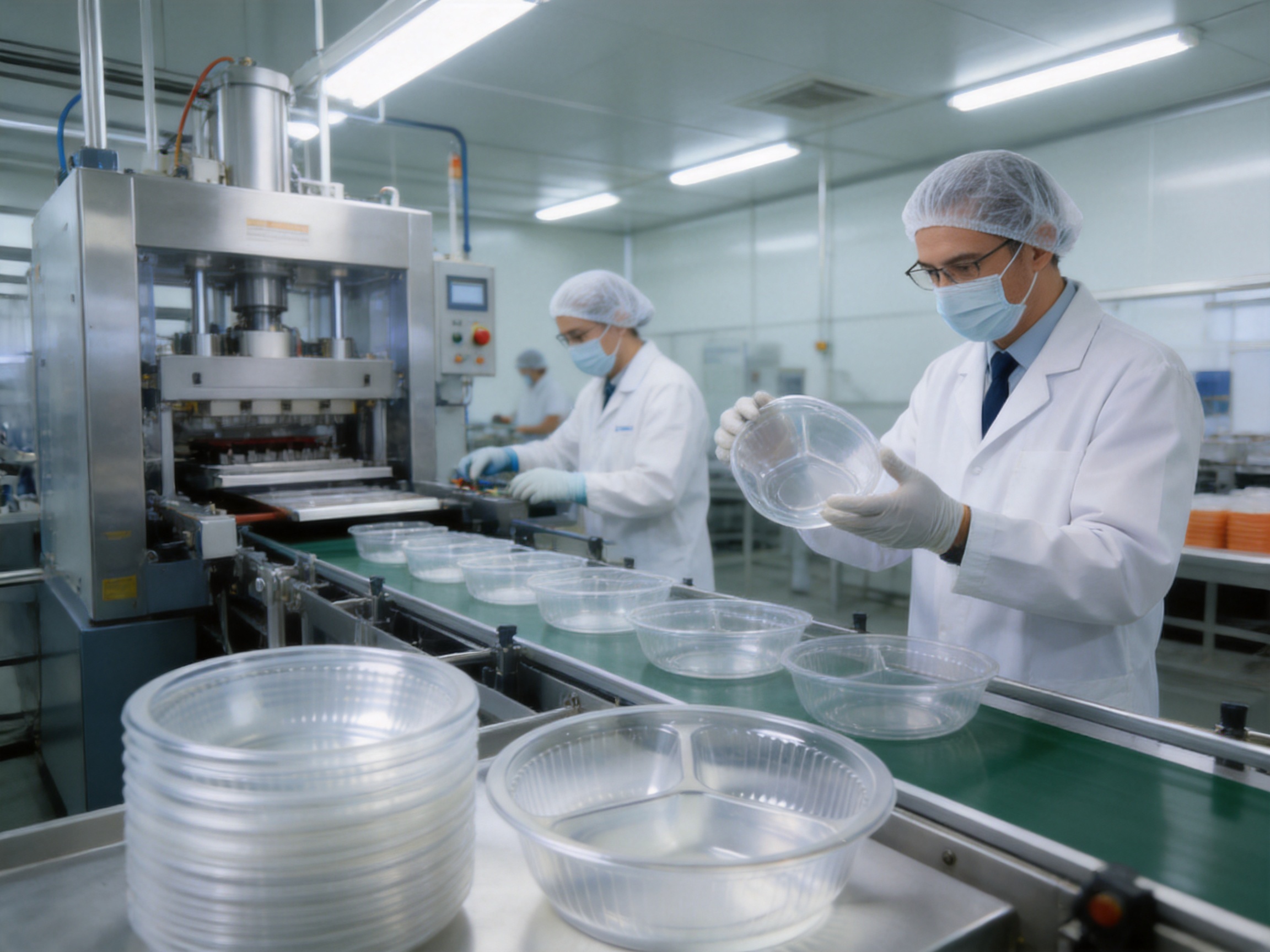
The ultimate purpose of a takeaway liner is to improve the consumer’s dining experience while protecting food safety. Food delivery often involves time, distance, movement, and temperature change. Packaging must help the meal arrive in good condition and make the consumer feel that the food has been handled properly.
Reducing Direct Contact With the Outer Container
A liner creates a separate internal surface for food. This can reduce direct contact between the meal and the outer container, especially when the container is used for structural support, insulation, or brand presentation. The liner helps maintain hygiene and can make disposal easier after eating.
Preserving Original Flavor
Because quality PP is odorless, it helps avoid unwanted packaging smell. This is especially valuable for hot meals. Some low-grade plastics may release noticeable odors, which can harm customer perception even if the food itself is well prepared. A clean, neutral liner helps preserve the original flavor and aroma of the meal.
Improving Cleanliness During Eating
A liner can make the eating process cleaner. Consumers may remove, lift, or handle the liner more easily depending on the container design. It can also help contain sauces and food residue, reducing mess inside the outer packaging.
Supporting Professional Meal Presentation
Food presentation matters in takeaway service. When a customer opens a package and sees a clean transparent liner holding the food neatly, the meal appears more carefully prepared. This can increase satisfaction and support positive reviews.
Environmental Responsibility and Practical Sustainability
Sustainability in disposable food packaging requires practical and realistic solutions. A responsible manufacturer must consider material selection, production efficiency, resource utilization, waste reduction, recyclability, and future material innovation. PP plastic is not generally classified as biodegradable in ordinary conditions, but it can contribute to sustainability goals when designed for material efficiency, recyclability, durability during use, and reduced food waste risk.
Yuqian Packaging Technology (Jiangsu) Co., Ltd. actively adopts environmentally responsible PP materials and works to reduce energy consumption and waste emissions during production. The company also continues to research degradable and recyclable packaging solutions as part of long-term sustainable development. This approach is important because different markets have different waste management systems, regulations, and consumer expectations.
Lightweight Design
The 9 g and 10 g product weights support material efficiency. Lightweight packaging uses less material per piece compared with heavier alternatives, helping reduce resource consumption and logistics burden. However, lightweight design must not sacrifice function. The liner must remain strong enough for use, which is why precise material distribution and process control are essential.
Stackability and Logistics Efficiency
Stackable packaging reduces shipping volume and storage space. This improves transportation efficiency and can lower the environmental impact associated with logistics. In warehouses and restaurants, better stacking also reduces damage and waste caused by poor storage.
Waste Reduction Through Reliable Performance
If packaging fails, food may spill, become contaminated, or be rejected by customers. This creates waste beyond the packaging itself, including wasted food, labor, delivery cost, and replacement orders. A reliable liner helps protect meals during transport and can reduce avoidable losses.
Development of Recyclable and Future-Oriented Solutions
The company’s ongoing focus on recyclable and environmentally responsible PP packaging aligns with industry trends. As recycling infrastructure improves and customers demand clearer sustainability strategies, manufacturers that invest in material research and process optimization will be better positioned to serve global markets.
Applications in the Foodservice Industry
The PP plastic takeaway container liner can be used in many food packaging scenarios. Its transparent, single-compartment, food-contact design gives it broad applicability.
Restaurants and Takeaway Shops
Restaurants can use the liner for rice bowls, noodles, cooked dishes, salads, and snacks. It helps maintain cleanliness and provides a consistent packaging experience for customers.
Cloud Kitchens and Delivery-Only Brands
Cloud kitchens depend heavily on packaging because customers interact with the brand mainly through delivery. A reliable liner helps protect food during transport and supports a professional unboxing experience.
Catering Services
Catering businesses often prepare large quantities of meals in advance. Stackable liners support efficient assembly and storage, while transparent design helps staff inspect contents quickly.
Supermarkets and Convenience Stores
Prepared foods sold in retail environments need clean presentation and practical packaging. Transparent liners help customers see the product clearly and support visual appeal.
Food Packaging Distributors
Distributors benefit from standardized sizes, stable supply, and OEM options. The 150 mm and 179 mm calibers cover common market needs, while customization can support specific customer projects.
Comparison With Common Alternative Packaging Components
Food packaging buyers often compare PP liners with paper liners, low-grade plastic inserts, or containers without liners. Each option has its place, but PP liners offer a useful balance of safety, performance, and cost.
Compared With Paper Liners
Paper liners may be suitable for dry foods, but they can absorb oil and moisture. For saucy, hot, or wet meals, paper may become weak or affect food presentation. PP liners provide better moisture resistance and maintain shape more effectively in many takeaway applications.
Compared With Low-Grade Plastic Liners
Low-grade plastic liners may look similar but can have weaker heat resistance, poor transparency, unpleasant odor, or inconsistent dimensions. A professionally manufactured PP liner offers better material reliability, cleaner appearance, and stronger quality assurance.
Compared With No Liner
Using no liner may reduce immediate packaging cost, but it can expose the outer container directly to food oils, sauces, and residue. This may reduce cleanliness, affect presentation, or limit container design options. A liner creates a dedicated food-contact layer and can improve the overall dining experience.
How the Product Supports Brand Differentiation
Packaging is a silent salesperson. It communicates whether a food business is professional, clean, modern, and attentive to detail. A PP plastic takeaway container liner supports brand differentiation in several ways.
First, it improves perceived hygiene. Customers are more likely to trust food that arrives in clean and carefully selected packaging. Second, it improves presentation. Transparent liners make meals look neat and fresh. Third, it supports customization. Logos, patterns, and brand information can turn ordinary packaging into a recognizable brand asset. Fourth, it provides consistency. When every order uses reliable packaging, customers learn what to expect, and consistency builds trust.
For catering brands, unique packaging can create emotional value. Customers may share attractive meal packaging on social media, especially when the food and container look clean and coordinated. Customized liners and matching packaging systems help brands create a more memorable experience.
Company Strength Behind the Product
Yuqian Packaging Technology (Jiangsu) Co., Ltd. was established in 2010 and is located in Taizhou City, Jiangsu Province, China. The company operates a plant area of approximately 30,000 square meters and focuses on research, development, production, and sales of new food packaging materials and products. With years of experience in the packaging industry, the company has built capabilities that support both standard product supply and customized OEM manufacturing.
The company has taken the lead in obtaining important production and quality certifications, including the QS national industrial product production license, ISO9001 quality management system certification, BRC certification, German DIN safety certification, and EU RoHS testing-related certification. These qualifications show that the company values standardized management and international market requirements.
To improve service quality and expand business channels, the company established a Shanghai branch in January 2019. This expansion supports better customer communication, market development, and service efficiency. For customers seeking disposable food packaging container solutions, the company offers not only products but also technical support, sample development, customization, printing, quality control, and after-sales service.
After-Sales Service and Customer Support
Reliable after-sales service is important in packaging procurement. Customers may need help with product selection, fit testing, storage recommendations, delivery coordination, or quality feedback. Yuqian Packaging Technology (Jiangsu) Co., Ltd. has established a complete after-sales service system to ensure that problems encountered during use can be solved in a timely manner.
This service approach is especially important for OEM customers. When packaging is customized, communication does not end after production. Customers may need adjustments for future orders, technical improvements, or support for new food lines. A responsive manufacturer can become a long-term packaging partner rather than only a supplier.
Purchasing Considerations for PP Plastic Takeaway Container Liners
When selecting a PP plastic takeaway container liner, buyers should evaluate several factors. The first is material safety. The liner should be made from food-contact suitable PP and produced under reliable quality control. The second is fit. The caliber, rim, and shape must match the intended container. The third is temperature suitability. Buyers should confirm the food temperature and use conditions with the supplier. The fourth is strength. The liner should resist cracking, deformation, and handling damage. The fifth is stackability and packing efficiency. The sixth is customization potential. If brand identity matters, printing and design support should be considered. The seventh is certification and supplier reliability. A supplier with recognized quality systems and stable production capacity reduces procurement risk.
For distributors, it is also important to evaluate carton packing, delivery lead time, inventory stability, and market demand. For restaurant chains, product consistency across batches is critical. For retailers, appearance and clarity may be especially important. A professional OEM factory can help each customer balance these factors.
Q&A Section
Q1: What is the main purpose of a PP plastic takeaway container liner?
A PP plastic takeaway container liner creates a clean food-contact layer inside a takeaway container. It helps separate food from the outer container, supports hygiene, preserves food flavor, improves presentation, and makes takeaway meals more convenient for consumers.
Q2: Why is PP material used for this liner?
PP, or polypropylene, is used because it is non-toxic, odorless, heat resistant, impact resistant, lightweight, and easy to mold. These properties make it suitable for many disposable food packaging container applications, especially takeaway meals that require cleanliness and stable performance.
Q3: What sizes are available?
The standard options include a 150 mm caliber liner with a gram weight of approximately 9 g and a 179 mm caliber liner with a gram weight of approximately 10 g. Both are normally supplied in transparent color.
Q4: Can the liner be customized?
Yes. Customization can include size matching, product structure adjustment, color discussion, and printing options depending on order requirements and production feasibility. The company supports OEM service from sample development to mass production.
Q5: Can a logo or pattern be printed on the packaging?
Yes. With advanced printing equipment, including Polytype printing capabilities, customer logos, patterns, or specific information can be printed on suitable packaging components. This helps increase brand recognition and product uniqueness.
Q6: Is the liner suitable for hot food?
PP has good heat resistance compared with many common plastics, making it suitable for many hot-food packaging applications. However, exact use conditions should be confirmed according to food temperature, container design, transport time, and customer requirements.
Q7: What makes this liner different from low-cost alternatives?
The main differences include carefully selected PP raw materials, better odor control, stable transparency, precise forming, close fit with containers, stackable design, certification-backed quality management, customization options, and professional OEM support.
Q8: Is the product environmentally friendly?
The liner uses PP material, which can be recyclable in suitable collection and recycling systems. The product also supports material efficiency through lightweight design and stackability. The company continues to research recyclable and environmentally responsible packaging solutions while reducing energy consumption and waste in production.
Q9: What certifications support the company’s production strength?
The company has passed the QS national industrial product production license, ISO9001 quality management system certification, BRC certification, German DIN safety certification, and EU RoHS testing-related requirements. These certifications support standardized production and quality control.
Q10: Who can benefit from using PP plastic takeaway container liners?
Restaurants, takeaway shops, catering companies, cloud kitchens, supermarkets, convenience stores, meal-preparation suppliers, and food packaging distributors can all benefit from using PP plastic takeaway container liners. The product supports clean packaging, efficient operations, and improved customer experience.
Conclusion
A PP plastic takeaway container liner is a small packaging component with significant value. It improves food safety, presentation, convenience, and brand experience while supporting efficient foodservice operations. The single-compartment design provides practical capacity, the transparent appearance enhances visual cleanliness, and the PP material offers non-toxic, odorless, heat-resistant, and impact-resistant performance. With 150 mm and 179 mm standard calibers, lightweight gram weights, stackable structure, and customization possibilities, the liner is suitable for many disposable food packaging container applications.
Compared with ordinary liners or low-cost alternatives, this product stands out through material quality, forming precision, fit reliability, hygiene control, certification support, and OEM service. Yuqian Packaging Technology (Jiangsu) Co., Ltd. strengthens the product with advanced manufacturing processes, flexible production lines, efficient supply chain management, printing capabilities, R&D experience, and complete after-sales service. For foodservice brands and packaging distributors seeking safe, clean, customizable, and professionally manufactured takeaway liner solutions, this PP plastic takeaway container liner offers a dependable and competitive choice.
References
1. International Organization for Standardization. ISO 9001 Quality Management Systems: Requirements.
2. British Retail Consortium. Global Standard for Packaging Materials.
3. European Commission. Guidance on Plastic Materials and Articles Intended to Come into Contact with Food.
4. Plastics Industry Association. Polypropylene Material Properties and Processing Overview.
5. Food and Agriculture Organization. Food Packaging and Food Safety Principles.
6. ASTM International. Standard Practices Related to Plastic Food Packaging Performance and Testing.