English
 Español
 عربى
عربىContent
- 1 1. The Role of a High-Quality Cup Lid in Foodservice Packaging
- 2 2. Product Overview and Technical Characteristics
- 3 3. Why Polypropylene Is Suitable for Disposable Cup Lids
- 4 4. Leak-Resistant Design and Secure Fit
- 5 5. Thickened and Durable Construction
- 6 6. Glossy and Frosted Finishes for Different Brand Styles
- 7 7. Color Options and Packaging Coordination
- 8 8. Injection Molding as an Advanced Manufacturing Process
- 9 9. Manufacturing Strengths and Quality Management
- 10 10. Advantages Compared with Common Alternative Lids
- 11 11. Environmental and Responsible Packaging Considerations
- 12 12. Applications in Beverage and Foodservice Operations
- 13 13. Practical Purchasing and Quality Evaluation Guide
- 14 14. Customization and Design Support
- 15 15. Production, Inspection, and Order Reliability
- 16 16. Why the Product Is a Practical Choice for Professional Buyers
- 17 17. Recommended Use and Handling Practices
- 18 18. Sustainability within a Broader Packaging Program
- 19 19. Supplier Partnership and Communication
- 20 20. Frequently Asked Questions
- 20.1 Q1: What type of product is this?
- 20.2 Q2: What is the lid caliber?
- 20.3 Q3: How much does each lid weigh?
- 20.4 Q4: What colors are available?
- 20.5 Q5: What is the difference between the glossy and frosted versions?
- 20.6 Q6: Is the lid designed to prevent leaks?
- 20.7 Q7: Is the lid durable?
- 20.8 Q8: Is the material suitable for food packaging?
- 20.9 Q9: Can the lid be used for hot beverages?
- 20.10 Q10: Why is injection molding beneficial for cup lids?
- 20.11 Q11: Can businesses request customized packaging?
- 20.12 Q12: What certifications and testing references are associated with the manufacturer?
- 20.13 Q13: Does the manufacturer offer other packaging products?
- 20.14 Q14: How should buyers test the product?
- 20.15 Q15: Is PP recyclable?
- 21 21. Conclusion
- 22 References
- 23 Product: PP plastic frosted/glossy injection cup lid
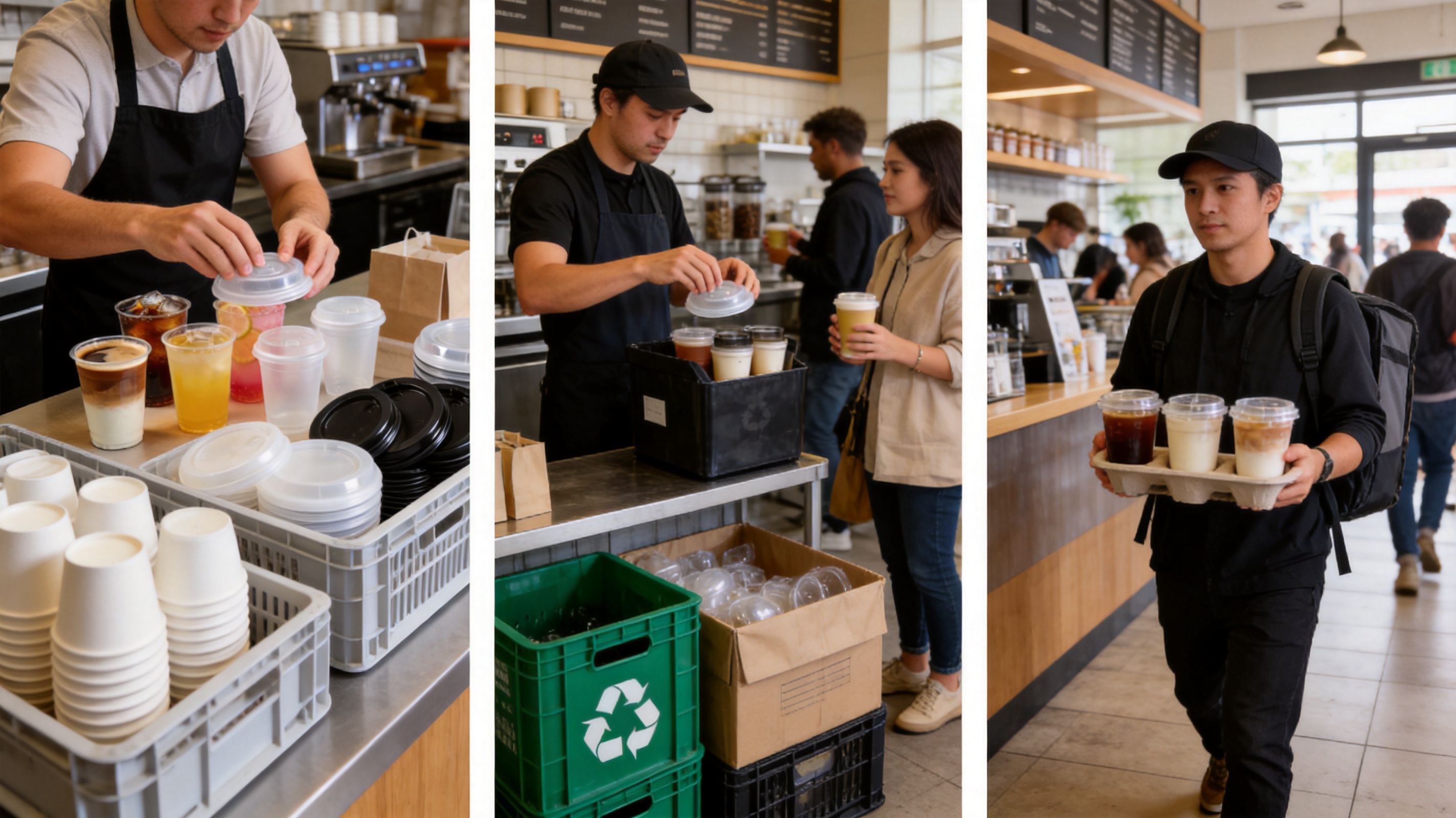
In modern foodservice, the lid is more than a simple accessory for a beverage cup. It is an important part of the customer experience, a practical barrier against spills, and a visible representation of packaging quality. A well-designed lid must fit securely, protect the contents, support convenient handling, and remain consistent throughout large-scale production. For cafés, takeaway restaurants, beverage chains, catering businesses, and food manufacturers, selecting the right lid can directly influence operational efficiency, customer satisfaction, and brand perception.
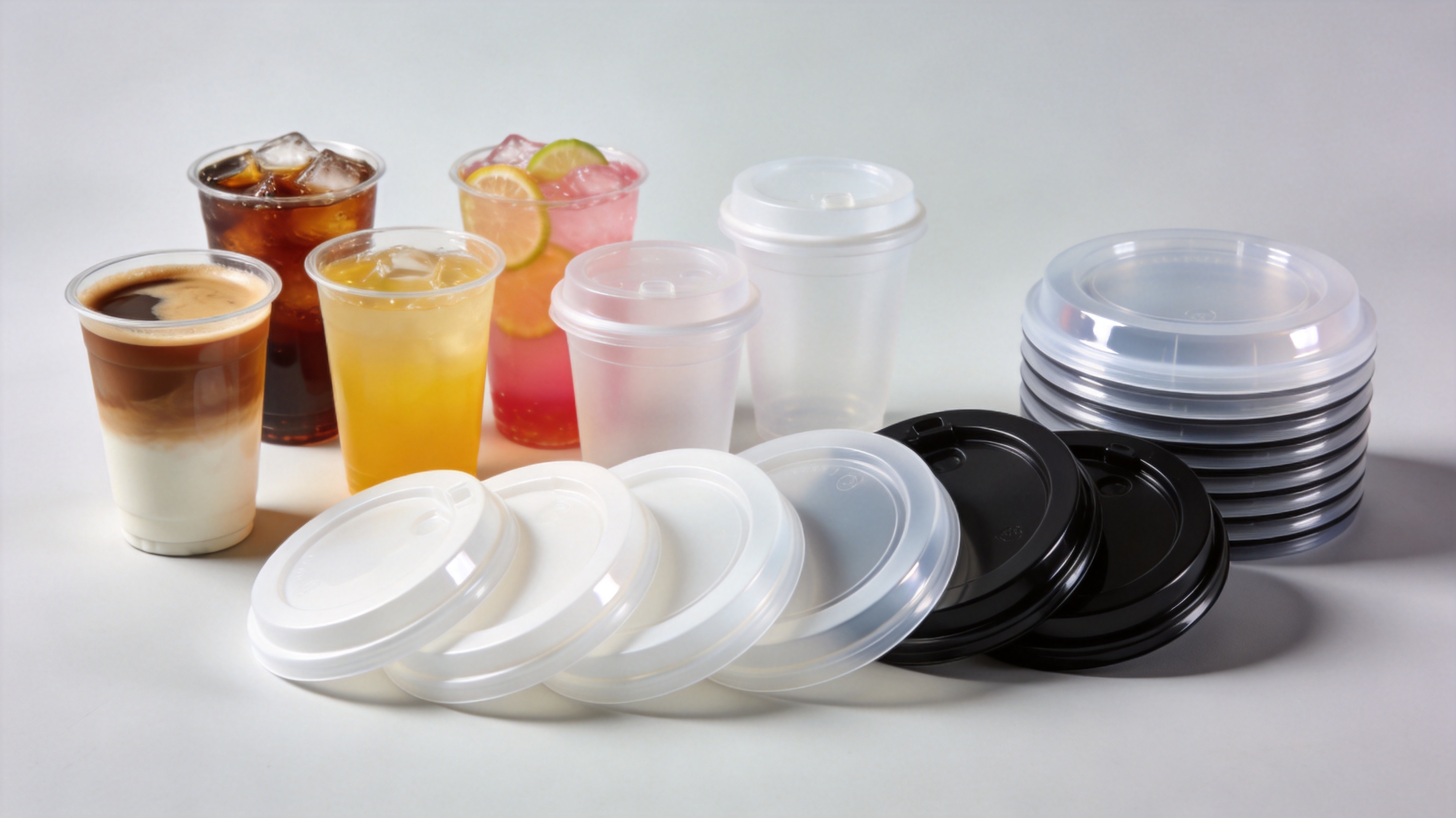
PP plastic frosted and glossy injection cup lids are designed to meet these requirements through a combination of durable polypropylene material, precision injection molding, and a leak-resistant structural design. With a 90 mm caliber and an approximate gram weight of 4.5 g, these lids provide a practical balance between strength, lightness, and material efficiency. They are available in transparent, white, and black, giving foodservice operators flexibility when matching cups, beverages, and brand styles.
The product belongs to the category of PP injection molded cup lids and is suitable for use with compatible disposable beverage cups. Its main advantages include a thickened structure, reliable fitting performance, a clean appearance, and a choice between glossy and frosted surface finishes. The lid is intended for food packaging applications where hygiene, durability, and ease of use are essential.
Manufactured by Yuqian Packaging Technology (Jiangsu) Co., Ltd., the product benefits from an established production system, specialized packaging expertise, and a broad understanding of disposable food packaging requirements. The company has operated since 2010 and focuses on the research, development, production, and sales of new food packaging materials and products. Its manufacturing capabilities and quality certifications support consistent production for domestic and international customers.
1. The Role of a High-Quality Cup Lid in Foodservice Packaging
A disposable cup is only as effective as the lid fitted to it. Even when the cup itself is strong, an inaccurate or poorly formed lid may create leakage, deformation, poor ventilation, or an uncomfortable drinking experience. For takeaway beverages, the lid must withstand movement during carrying, delivery, and storage. It should remain attached to the cup while allowing the customer to drink easily and safely.
For businesses serving coffee, tea, juice, milk-based drinks, fruit beverages, soft drinks, and other takeaway products, cup lids are used in high volumes every day. Small differences in lid quality can therefore create significant operational consequences. A lid that does not fit correctly may lead to spilled drinks, damaged packaging, customer complaints, and increased replacement costs. By contrast, a well-engineered lid can support smoother packing and more dependable service.
PP plastic injection cup lids are designed to address these everyday demands. Polypropylene is widely used in food packaging because it offers a useful combination of light weight, toughness, chemical resistance, and processing flexibility. Through injection molding, molten material is shaped inside a precision mold, allowing the manufacturer to create consistent dimensions and functional details across large production runs.
The 90 mm caliber specification provides a clear reference for matching the lid with a compatible cup. Consistent caliber control is especially important for beverage companies that require repeatable sealing performance across multiple batches. A stable dimensional standard also supports automated or semi-automated filling and packing operations, reducing the need for manual adjustments.
The lid’s function is not limited to preventing leaks. It also helps preserve the cleanliness of the beverage during transportation. Once fitted to a filled cup, the lid can reduce exposure to dust, accidental contact, and external contamination. For takeaway and delivery applications, this protective role is a central part of food packaging performance.
2. Product Overview and Technical Characteristics
The PP plastic frosted/glossy injection cup lid is available in two principal surface styles: glossy injection molded cover and frosted injection molded cover. Both versions use the same general caliber and approximate gram weight, allowing customers to choose a visual finish without changing the basic packaging format.
| Lid Type | Caliber | Approximate Gram Weight | Available Colors |
|---|---|---|---|
| Glossy injection molded cover | 90 mm | 4.5 g | Transparent, white, black |
| Frosted injection molded cover | 90 mm | 4.5 g | Transparent, white, black |
The glossy version has a smooth, reflective surface that creates a clean and polished appearance. It is suitable for brands that prefer a bright, modern, and highly visible packaging style. Transparent glossy lids can help customers view the beverage and its surface, while white and black versions can create a stronger contrast with colorful drinks or printed cups.
The frosted version has a softer, less reflective appearance. Its subdued texture can provide a more refined or contemporary visual impression. Frosted surfaces are often selected by beverage brands seeking a premium, understated, or minimalist packaging identity. The finish can also make minor surface marks less visually prominent during routine handling.
Both styles are produced as injection molded covers. This process supports repeatable shape formation, controlled wall thickness, and accurate integration of functional features. The approximate 4.5 g weight indicates a lightweight design that can help reduce the amount of material used per unit while retaining a thickened and durable structure.
The product description emphasizes a leak-proof design, thickened construction, durability, non-toxicity, odorlessness, environmental responsibility, and suitability for healthy food packaging applications. These qualities are particularly relevant for beverage businesses that need dependable lids for fast-paced retail and delivery environments.
3. Why Polypropylene Is Suitable for Disposable Cup Lids
Polypropylene, commonly identified as PP, is a thermoplastic polymer used in many food packaging applications. It can be melted and shaped repeatedly during manufacturing, making it well suited to injection molding. For cup lids, the material offers several practical benefits that support both production and end use.
3.1 Lightweight but Functional
PP is naturally lightweight, which helps reduce the total weight of a disposable packaging unit. This can be beneficial for transportation, storage, and handling. Although a lid is light, it still needs to resist routine pressure and movement. The thickened design of this product is intended to provide a stronger feel than very thin, easily deformable covers.
Material efficiency is also important when packaging is purchased in large quantities. A well-designed lid uses a controlled quantity of polymer to create a functional product rather than relying on unnecessary bulk. The approximate 4.5 g weight provides a practical balance for a 90 mm injection molded lid.
3.2 Toughness and Resistance to Everyday Handling
Takeaway lids may be pressed during stacking, handled during filling, moved in bags, and exposed to vibration during delivery. Polypropylene has useful toughness for these ordinary packaging conditions. Its resistance to cracking and deformation helps the lid remain serviceable during the journey from production line to customer.
A lid does not need to be rigid in every direction. It needs the right level of controlled flexibility so that it can be fitted to the cup while maintaining its shape afterward. Injection molding allows the design and material distribution to be adjusted to support this balance.
3.3 Food Packaging Suitability
The product is described as non-toxic and odorless, qualities that are important for food and beverage contact applications. A packaging material should not introduce an unwanted smell into the beverage or distract from the product’s taste and aroma. An odorless lid is especially valuable for coffee, tea, fruit drinks, and other products in which consumers notice the sensory characteristics of the beverage.
Foodservice buyers should always select packaging according to the relevant application, local regulations, and compatibility requirements. Within those conditions, PP injection molded lids offer a practical material option for disposable beverage packaging.
3.4 Processing Flexibility
Polypropylene can be formed into complex shapes with functional contours, rims, openings, and reinforcing structures. This processing flexibility supports the development of a lid that fits the cup and performs its intended role. It also allows manufacturers to provide different finishes and colors while retaining a consistent basic design.
4. Leak-Resistant Design and Secure Fit
Leak prevention is one of the most important performance requirements for a disposable cup lid. A beverage container may be carried at an angle, placed in a vehicle, or moved through a busy service counter. The lid must remain properly attached and help prevent liquid from escaping around the rim.
The leak-proof design of this injection cup lid is based on the relationship between the lid geometry and the compatible cup opening. A properly molded rim can create a secure engagement around the cup. Dimensional consistency is essential because even a small variation in diameter or shape may affect the fit. Injection molding provides a repeatable manufacturing method for maintaining these important dimensions.
The thickened construction contributes to the lid’s overall stability. Very thin covers may bend during fitting or become distorted when handled. A more substantial structure can make installation easier for staff and provide a stronger tactile impression for customers. It may also help the lid resist accidental pressure during transport.
Leak resistance depends on using the correct lid with the correct cup. The stated 90 mm caliber should be matched with a compatible 90 mm cup specification. Beverage temperature, filling level, cup shape, transport conditions, and how the lid is pressed into place can also influence performance. For commercial operations, testing the complete cup-and-lid combination under real use conditions is recommended.
When the lid is fitted correctly, it can support cleaner takeaway service and reduce the risk of spills. This is valuable not only for the customer but also for delivery staff, retail employees, and foodservice operators. Fewer spills can mean less cleaning, fewer remakes, and a more dependable purchasing experience.
5. Thickened and Durable Construction
Durability is an important point of difference between a well-engineered injection lid and a low-quality disposable cover. Customers expect a takeaway cup to feel secure in their hands. Staff members also need a lid that can be applied quickly without collapsing or losing its shape.
The product is described as thickened and durable, indicating a design intended to provide a stronger physical structure. A thickened lid can offer improved resistance to routine bending, pressing, and handling. It can also contribute to a more stable fit around the cup opening.
Durability should not be understood as unlimited resistance to damage. Disposable packaging is designed for normal use, not for repeated washing or long-term reuse. However, the lid should perform reliably during filling, storage, transport, and consumption. The product’s material and molded structure are intended to support this use cycle.
For businesses, a durable lid may improve packing efficiency. Employees can handle the product with greater confidence, and fewer damaged lids may be rejected during service. When thousands of units are used each day, even a small improvement in handling reliability can produce meaningful savings in time and material.
The lid’s light weight also helps maintain a sensible packaging balance. It is possible to create a product that feels robust without making it excessively heavy. This combination of strength and material efficiency is one of the key advantages of injection molded PP packaging.
6. Glossy and Frosted Finishes for Different Brand Styles
Packaging appearance can influence how customers perceive a beverage. While performance remains the primary requirement, the lid is visible at the point of purchase, during transport, and in photographs shared on social media. The choice between a glossy and frosted finish allows foodservice brands to select a visual style that complements their product identity.
6.1 Glossy Injection Molded Cover
A glossy lid has a smooth, bright surface. The reflective finish can create a neat and clean appearance, particularly when paired with clear cups or colorful beverages. Transparent glossy lids are useful when visibility of the drink is important. They allow customers to see the color, foam, ice, fruit pieces, or other visual features of the beverage.
White glossy lids can support a fresh and simple design, while black glossy lids can create a bold contrast and a more dramatic presentation. The smooth surface may also be suitable for packaging systems that use printed cups, labels, sleeves, or branded stickers.
6.2 Frosted Injection Molded Cover
A frosted lid provides a softer visual effect than a reflective glossy surface. It may be selected by cafés, restaurants, and beverage brands that prefer a contemporary, natural, or premium appearance. Frosted plastic can create a tactile difference that helps the packaging stand out from standard smooth covers.
Transparent frosted lids allow some visibility while reducing the intensity of reflections. White frosted lids can create a clean and understated impression, and black frosted lids may be suitable for modern or luxury-oriented product lines. The availability of three colors gives buyers additional flexibility when coordinating lids with cups and branding materials.
6.3 Consistency Across Multiple Locations
For businesses operating several stores, visual consistency is important. Using the same lid style across locations can help reinforce recognition and simplify procurement. A standardized 90 mm lid can also make inventory management easier when multiple branches share the same cup format.
At the same time, the two surface options allow a business to create different product lines. For example, a glossy transparent lid may be used for fruit drinks, while a frosted black lid may be chosen for specialty coffee or premium beverages. The underlying product category remains consistent while the outward appearance changes.
7. Color Options and Packaging Coordination
The product is available in transparent, white, and black. These three options cover many common foodservice design requirements and provide a practical foundation for packaging coordination.
Transparent lids are useful when product visibility is a priority. Customers can see the beverage without removing the cover, which may be valuable for drinks with attractive colors, layers, toppings, or foam. Transparency can also support a clean and functional appearance for high-volume takeaway service.
White lids create a neutral background that works with many cup designs. They can be combined with colorful printed branding, simple logos, or minimalist packaging. White may also provide a hygienic and bright visual impression.
Black lids create a stronger visual contrast and can support a more distinctive presentation. They may be suitable for dark-colored cups, premium beverage lines, or brands using black as a primary identity color. Both glossy and frosted black options allow the brand to choose between a reflective and a muted finish.
Color selection should be considered alongside the cup material, beverage color, printed graphics, and service environment. A lid that looks attractive in a catalog should also be evaluated under store lighting, delivery conditions, and customer handling. The availability of several color choices makes it easier to develop a coordinated packaging system.
8. Injection Molding as an Advanced Manufacturing Process
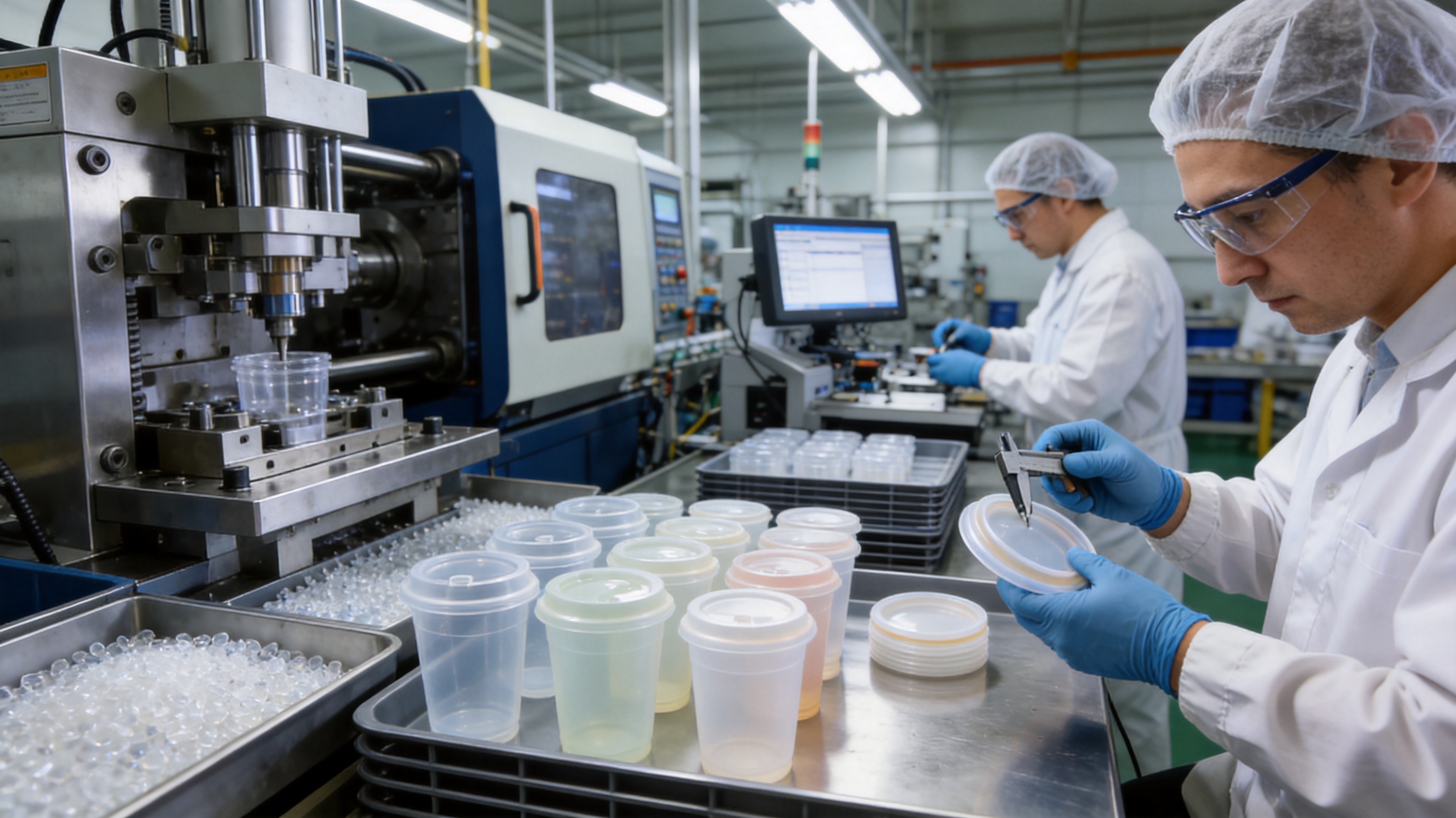
Injection molding is one of the most effective manufacturing processes for producing large quantities of consistent plastic packaging components. The process begins with plastic resin being heated until it reaches a flowable state. The molten material is then injected into a mold cavity under controlled pressure. Once the material cools and solidifies, the molded lid is removed and prepared for inspection and packing.
For cup lids, the quality of the mold and the control of processing conditions are essential. The mold must form the caliber, rim, surface, and other functional features accurately. Temperature, pressure, injection speed, cooling time, and material flow all influence the final product. Stable process control helps reduce variation between individual lids.
Injection molding offers several advantages over less precise forming methods. It can produce detailed shapes, repeatable dimensions, clean surfaces, and high output rates. It is also suitable for producing both glossy and frosted surface effects according to the mold and finishing requirements.
The process supports efficient production for customers who purchase packaging in substantial quantities. Once the tooling and process parameters are established, large volumes can be manufactured with consistent quality. This is especially important for beverage chains and distributors that need reliable replenishment.
Injection molding can also help integrate strength into the design. Reinforcing contours, controlled rim geometry, and carefully distributed material can improve the lid’s functional performance without requiring excessive weight. This contributes to the product’s stated combination of thickened construction and lightweight handling.
8.1 Process Control and Dimensional Accuracy
A 90 mm lid must maintain a stable opening diameter and rim profile to fit its intended cup. Process control helps ensure that changes in temperature, pressure, or cooling do not create excessive shrinkage or distortion. Dimensional inspection can be used to verify that production remains within the required range.
Consistent dimensions are also important when lids are stacked and packed. Lids that vary significantly may nest poorly, occupy more storage space, or become difficult to separate during use. A stable injection molded design supports orderly packaging and more efficient handling.
8.2 Surface Quality
Surface appearance is another area in which injection molding can provide strong repeatability. A glossy cover should have a smooth and uniform finish, while a frosted cover should present a consistent matte texture. Surface defects such as excessive flow marks, discoloration, flash, or incomplete filling can affect both appearance and function.
Appropriate mold maintenance, clean production conditions, and quality inspection are important for maintaining the desired finish. These measures help ensure that the lid looks professional when used in front of customers.
8.3 Production Efficiency
Injection molding is well suited to high-volume packaging production because many units can be produced in a structured, repeatable cycle. Efficient production helps support stable delivery schedules and competitive purchasing costs. It also enables the manufacturer to serve different customer requirements through changes in color, finish, packaging quantity, or compatible product combinations.
9. Manufacturing Strengths and Quality Management
Yuqian Packaging Technology (Jiangsu) Co., Ltd. was established in 2010 and is located in Taizhou City, Jiangsu Province, China. The company has a plant area of approximately 30,000 square meters and focuses on the research and development, production, and sales of new food packaging materials and products.
This combination of research, production, and sales provides a foundation for integrated packaging service. Instead of treating the lid as an isolated commodity, an integrated manufacturer can consider material selection, structural design, molding, quality inspection, packing, and customer requirements as connected parts of one process.
The company reports that it has taken a leading role in the packaging industry in passing the QS national industrial product production license requirements. It has also obtained ISO9001 Quality Management System certification, BRC certification, German authoritative safety DIN certification, and EU RoHS testing. These certifications and testing references demonstrate an emphasis on production control, safety, quality management, and compliance awareness.
Certification does not eliminate the need for customers to confirm application-specific requirements. However, a documented quality system can provide buyers with greater confidence in the manufacturer’s organization and production discipline. For food packaging customers, this is particularly important because packaging quality affects hygiene, safety, and customer trust.
9.1 Research and Development Capability
Food packaging requirements continue to change. Customers may request different sizes, surface finishes, colors, materials, or structural features. A manufacturer with research and development capability is better positioned to evaluate new materials and improve existing products.
Development work may include adjusting the rim design for a better fit, refining the molding process to improve surface quality, reducing unnecessary material use, or developing packaging combinations for specific foodservice applications. The company’s focus on new food packaging materials and products supports this type of ongoing improvement.
9.2 Integrated Production and Sales
An integrated business structure can simplify communication between the customer and the factory. Product specifications, sample feedback, production arrangements, quality requirements, and shipping plans can be managed through a more direct process. This can be valuable for importers, distributors, restaurant groups, and beverage chains that need clear coordination.
Customers may also benefit from discussing related disposable packaging products with one supplier. The company’s product range includes plastic cups, plastic cup lids, takeaway bowls, disposable straws, recycle bags, peripheral products, and injection film lining cup and bowl boxes. This broader category coverage may support the development of a more unified packaging program.
10. Advantages Compared with Common Alternative Lids
When evaluating cup lids, buyers commonly compare injection molded PP products with thin thermoformed plastic covers, poorly matched generic lids, paper-based covers, or lids made from materials that do not provide the desired combination of flexibility and strength. Each material and process has a place in packaging, but the PP injection molded design offers several practical advantages for suitable applications.
10.1 More Consistent Fit than Poorly Matched Generic Covers
A lid with a defined 90 mm caliber can be selected for a compatible cup specification. This is preferable to using a generic cover whose dimensions are uncertain or whose rim profile does not match the cup. Consistent fit supports leak resistance and helps staff apply the lid more efficiently.
10.2 Greater Structural Confidence than Extremely Thin Covers
Very thin lids may be lightweight, but they can be more vulnerable to bending, tearing, or deformation during handling. The thickened construction of this product is intended to provide a stronger structure while retaining a practical weight. This can improve the user’s perception of quality and reduce handling problems.
10.3 Better Design Flexibility through Injection Molding
Injection molding supports accurate shaping and allows the manufacturer to create both glossy and frosted versions. It also provides opportunities to refine the fit, surface, and functional structure. This level of design control may be difficult to achieve consistently with less precise production methods.
10.4 Broad Visual Compatibility
Transparent, white, and black color options provide more choice than a single standard lid. Customers can coordinate the lid with the cup, beverage, logo, sleeve, label, or retail environment. The two surface finishes further expand the range of possible packaging styles.
10.5 Efficient Large-Volume Supply
Injection molding is appropriate for high-volume production. Once the process is established, the manufacturer can produce repeated batches with consistent specifications. This is useful for foodservice businesses that require dependable supply and standardized packaging across multiple locations.
These advantages should be considered together with the customer’s sustainability objectives, local regulations, beverage requirements, and disposal infrastructure. The best packaging choice is always the one that matches the complete application rather than relying on a single material characteristic.
11. Environmental and Responsible Packaging Considerations
The product is described as environmentally friendly and healthy, reflecting the growing importance of responsible food packaging. Environmental performance involves more than the material alone. It includes material efficiency, manufacturing efficiency, transport weight, product durability during intended use, and the availability of appropriate collection or recycling systems after use.
The approximate 4.5 g weight helps keep the lid lightweight. Lower packaging weight can reduce the amount of material used per unit and may also reduce transport loads. At the same time, a lid must be strong enough to perform properly. A lid that fails during use may create waste through spilled beverages, replacement packaging, or discarded products. The objective is therefore to achieve an appropriate balance between lightweight design and functional reliability.
Polypropylene may be recyclable in areas with suitable collection, sorting, and processing systems. Recycling instructions should follow local regulations and the capabilities of the relevant waste management network. Food contamination, mixed materials, and limited collection infrastructure can affect whether a used lid is actually recycled.
Businesses can support responsible packaging use by choosing the correct lid size, avoiding unnecessary overpacking, storing products properly, and communicating disposal information where appropriate. They can also evaluate the complete packaging system, including the cup, lid, straw, sleeve, label, and delivery bag.
The manufacturer’s broader focus on new food packaging materials and products indicates an awareness of changing market expectations. Buyers seeking environmentally oriented packaging solutions can discuss material choices, product specifications, and relevant compliance documentation with the supplier before placing an order.
12. Applications in Beverage and Foodservice Operations
The 90 mm PP injection molded lid can be suitable for a range of compatible disposable beverage cups. Potential applications include cafés, coffee shops, tea stores, juice bars, quick-service restaurants, dessert shops, catering companies, convenience stores, and beverage delivery services.
12.1 Coffee and Hot Drinks
For coffee and other hot beverages, the lid must be selected and tested according to the cup material, beverage temperature, filling level, and drinking opening requirements. A secure lid can help reduce accidental splashes during carrying. The odorless characteristic described for the product is also desirable for drinks with pronounced aromas.
12.2 Cold Drinks and Iced Beverages
Cold drinks, iced tea, fruit beverages, and soft drinks often benefit from a transparent lid that allows the customer to see the beverage. A stable lid can help protect the drink while it is carried with ice, toppings, or other contents. The glossy or frosted finish can be selected according to the desired visual style.
12.3 Takeaway and Delivery
Delivery places additional demands on packaging because cups may be packed together, moved across roads, and handled by several people. Leak-resistant lids can help protect the order and reduce the risk of liquid entering the delivery bag. Businesses should test the complete packaging configuration, including cup size, lid fit, transport carrier, and sealing procedure.
12.4 Chain Stores and Centralized Procurement
Multi-location businesses need products with consistent dimensions, appearance, and performance. A standardized 90 mm lid can simplify procurement and reduce the number of packaging items that stores must keep in stock. The availability of multiple colors and finishes allows one company to maintain a common specification while creating variations for different menus or seasons.
13. Practical Purchasing and Quality Evaluation Guide
Before ordering PP injection molded cup lids, buyers should confirm the complete technical and commercial requirements. A thoughtful purchasing process helps avoid incompatibility and ensures that the selected product meets the intended operating conditions.
13.1 Confirm the Cup Opening
The lid is specified with a 90 mm caliber. Buyers should measure or verify the cup opening and rim profile of the intended cup. Nominal diameter alone may not be sufficient if the cup has a unique rim, wall thickness, or taper. Samples should be tested before approving a large production order.
13.2 Select the Surface Finish
Glossy and frosted finishes provide different visual effects. Buyers should compare them under actual store lighting and alongside the selected cup. The finish should support the brand’s appearance without creating unwanted reflections or reducing beverage visibility.
13.3 Select the Color
Transparent, white, and black offer different packaging impressions. Color should be evaluated for consistency, opacity, compatibility with printed graphics, and suitability for the beverage being served.
13.4 Evaluate Fit and Leakage
Testing should include filling cups to the normal service level, applying the lids using the intended staff procedure, and moving the cups in conditions similar to real delivery or takeaway use. Buyers can check for leakage around the rim, lid detachment, deformation, and ease of opening or drinking.
13.5 Review Material and Compliance Information
Foodservice customers should request relevant material information and compliance documentation for their market. The reported ISO9001, BRC, DIN, QS, and EU RoHS-related certifications and testing references may be useful during supplier evaluation. The exact applicability of each document should be confirmed according to the product, order, destination, and regulatory requirement.
13.6 Consider Storage and Packing
Lids should be stored in a clean, dry environment away from strong odors, chemicals, direct contamination, and excessive heat. Proper packing helps prevent dust accumulation, deformation, and damage before use. Buyers should also confirm carton quantities, unit packing, pallet requirements, and shipping conditions.
14. Customization and Design Support
Disposable food packaging is increasingly used as part of a brand’s visual identity. Although the standard product is available in defined specifications, packaging customers may have additional requirements related to color, surface, compatibility, packing, or coordinated products.
A manufacturer involved in research and development can help evaluate whether a requested change is technically practical. Possible discussions may include alternative dimensions, adjusted structural details, special colors, different packaging quantities, or the coordination of lids with cups and other disposable food containers.
Customization should begin with a clear product brief. The buyer should identify the intended beverage, cup material, opening diameter, temperature range, service method, expected order volume, appearance requirements, and destination market. This information allows the manufacturer to recommend an appropriate production approach.
Samples are an important part of the development process. A sample can be checked for fit, stacking, surface finish, color, handling, and leak resistance. For a foodservice chain, it may also be useful to conduct a trial in several stores to evaluate staff speed and customer experience.
Design support can also help businesses develop a unified disposable packaging system. The supplier’s product categories include plastic cups, cup lids, takeaway bowls, straws, recycle bags, peripheral products, and injection film lining cup and bowl boxes. Coordinating these items may improve purchasing efficiency and create a more consistent appearance across the customer’s order.
15. Production, Inspection, and Order Reliability
Reliable packaging supply depends on more than manufacturing equipment. It requires planning, material control, process management, inspection, packing, and communication. A supplier with established production experience can help customers manage these stages more effectively.
During production, molded lids can be evaluated for visual defects, dimensional consistency, color uniformity, surface finish, and structural integrity. Special attention should be given to the rim because it directly affects the fit with the cup. The lid should also be checked for flash, incomplete molding, distortion, and damage from removal or packing.
Quality management systems provide a framework for documenting procedures and improving consistency. The company’s ISO9001 certification reflects the presence of a quality management approach. BRC certification and other reported safety and testing credentials further indicate attention to controlled production and product responsibility.
For customers placing regular orders, communication about forecast volumes and delivery schedules can support smoother planning. Beverage demand may change by season, promotion, location, or holiday period. Advance planning helps the supplier prepare materials and production capacity while helping the buyer avoid stock shortages.
Order reliability is especially important for businesses that use a standardized lid across many stores. A sudden change in caliber, color, or surface finish can disrupt operations. Clear specifications and sample approval help establish a reference for repeat orders.
16. Why the Product Is a Practical Choice for Professional Buyers
Professional buyers typically look for more than a low unit price. They need a product that performs consistently, arrives in usable condition, fits existing cups, and supports customer satisfaction. The PP plastic frosted/glossy injection cup lid addresses these needs through its defined specification, material choice, surface options, and injection molded construction.
The 90 mm caliber offers a clear starting point for compatibility evaluation. The 4.5 g approximate weight supports lightweight logistics. The thickened structure provides a stronger feel than fragile thin covers, while the leak-resistant design is intended to protect the beverage during normal takeaway use.
The two finish options and three colors allow the product to serve different brand styles. A business can choose transparent glossy for high visibility, white frosted for a clean understated appearance, black glossy for a bold presentation, or another combination that fits its packaging program.
The manufacturer’s experience since 2010, approximately 30,000-square-meter plant area, research and development focus, and reported certifications provide additional reasons for professional buyers to consider the product. These capabilities can be valuable when a customer needs a stable supplier rather than a one-time source of generic packaging.
Most importantly, the lid is designed around practical foodservice use. It is intended to be easy to handle, secure when fitted, visually adaptable, and suitable for large-scale disposable packaging operations. These characteristics make it a useful component for businesses seeking to improve the quality and consistency of takeaway beverage service.
17. Recommended Use and Handling Practices
To obtain the best performance, the lid should be used with the compatible 90 mm cup and applied evenly around the full rim. Staff should check that the lid is fully engaged before handing the beverage to the customer. If the cup is filled too close to the top, the lid may be more difficult to apply and the risk of leakage may increase.
Lids should be kept in their original protective packaging until needed. Operators should avoid placing them on dirty surfaces or handling them with contaminated hands. Although the product is designed for disposable food packaging, cleanliness during storage and use remains important.
For hot beverages, operators should confirm that the complete cup-and-lid system is suitable for the intended temperature. For cold drinks, the business should evaluate the lid with ice, toppings, condensation, and the selected beverage volume. For delivery, practical testing should include movement, stacking, and the type of carrier used by the business.
These practices do not replace product quality. Instead, they help ensure that a well-manufactured lid is used under appropriate conditions. Packaging performance is strongest when product design, cup compatibility, staff procedure, and storage management work together.
18. Sustainability within a Broader Packaging Program
Many foodservice businesses are reviewing their packaging portfolios rather than evaluating one product in isolation. A lid is part of a larger system that may include the cup, bowl, straw, bag, sleeve, label, and transport container. The environmental impact of the complete system depends on material selection, product weight, manufacturing efficiency, logistics, consumer behavior, and waste management.
The lightweight PP lid can contribute to material efficiency when its 4.5 g approximate weight is sufficient for the intended application. Its durability during use may also help reduce waste caused by damaged packaging or spilled beverages. However, responsible use requires buyers to select only the necessary packaging features and avoid excessive layers or unnecessary components.
Recycling possibilities vary by location. Businesses should understand the collection systems available to their customers and provide accurate disposal guidance when appropriate. If a lid is collected for recycling, it may need to be emptied or separated from other materials according to local instructions.
The company’s experience with biodegradable new materials and food packaging products may also be relevant to customers exploring future packaging strategies. Buyers can discuss alternative materials, product life-cycle priorities, and local compliance requirements with the manufacturer as their sustainability plans develop.
19. Supplier Partnership and Communication
A successful packaging project depends on clear communication between the buyer and supplier. Product information should include the lid type, caliber, approximate weight, color, finish, cup compatibility, application, order quantity, and destination market. Sharing photographs or physical samples of the intended cup can make technical evaluation more accurate.
Customers may also need information about production lead time, minimum order quantity, sample availability, packing method, shipping arrangements, and documentation. These details are particularly important for importers and distributors planning inventory months in advance.
Yuqian Packaging Technology (Jiangsu) Co., Ltd. provides a direct business contact structure for product consultation and order communication. Its listed telephone number is 0086 15252423007, its fax number is +0523 8608 3698, and its email address is [email protected]. The company address is No. 8 Tongyang Road, Suchen Town, Taizhou City, Jiangsu Province, China.
When communicating with the supplier, buyers should identify the exact product as the PP plastic frosted/glossy injection cup lid or the PP injection molded cup lid with a 90 mm caliber. This helps avoid confusion with other cup lid models or sizes. A clear specification is especially important when a company purchases several disposable packaging products.
20. Frequently Asked Questions
Q1: What type of product is this?
This is a PP plastic injection molded cup lid designed for compatible disposable beverage cups. It is available in glossy and frosted surface finishes.
Q2: What is the lid caliber?
The stated caliber is 90 mm. Buyers should confirm that their cup has a compatible 90 mm opening and rim design before ordering.
Q3: How much does each lid weigh?
The approximate gram weight is 4.5 g per lid. Actual production weight may be subject to normal manufacturing tolerances.
Q4: What colors are available?
The available colors are transparent, white, and black. These colors can be supplied in both the glossy and frosted versions, subject to order confirmation.
Q5: What is the difference between the glossy and frosted versions?
The glossy version has a smooth, reflective appearance, while the frosted version has a softer, less reflective surface. Both versions share the stated 90 mm caliber and approximate 4.5 g weight.
Q6: Is the lid designed to prevent leaks?
The product features a leak-proof design intended to provide secure coverage when properly fitted to a compatible cup. Leak performance also depends on cup compatibility, filling level, beverage temperature, and handling conditions.
Q7: Is the lid durable?
The lid is described as thickened and durable. Its injection molded PP structure is intended to resist ordinary handling during filling, takeaway, storage, and delivery.
Q8: Is the material suitable for food packaging?
The product is described as non-toxic, odorless, environmentally friendly, and healthy for food packaging applications. Buyers should confirm the required compliance documentation for their specific market and use conditions.
Q9: Can the lid be used for hot beverages?
It may be considered for compatible hot beverage applications, but the complete cup-and-lid system should be tested at the intended temperature and filling level before commercial use. Customers should confirm application suitability with the supplier.
Q10: Why is injection molding beneficial for cup lids?
Injection molding supports repeatable dimensions, consistent surface quality, efficient high-volume production, and the formation of functional rim and structural details. These qualities are important for fit, appearance, and production consistency.
Q11: Can businesses request customized packaging?
The manufacturer provides disposable food packaging design and production services and may be able to discuss customized requirements. Customers should provide details about size, color, finish, cup compatibility, order volume, and intended application.
Q12: What certifications and testing references are associated with the manufacturer?
The company reports QS national industrial product production license approval, ISO9001 Quality Management System certification, BRC certification, German DIN certification, and EU RoHS testing. The applicability of each document should be confirmed for the specific product and destination market.
Q13: Does the manufacturer offer other packaging products?
Yes. The company’s product categories include plastic cups, plastic cup lids, takeaway bowls, disposable straws, recycle bags, peripheral products, and injection film lining cup and bowl boxes.
Q14: How should buyers test the product?
Buyers should test the lid with the intended cup, beverage volume, temperature, and handling procedure. They should evaluate fit, leakage, stacking, appearance, ease of application, and performance during simulated takeaway or delivery conditions.
Q15: Is PP recyclable?
Polypropylene may be recyclable where suitable collection and processing systems are available. Actual recycling depends on local infrastructure, contamination levels, sorting rules, and applicable regulations.
21. Conclusion
PP plastic frosted and glossy injection cup lids provide a practical packaging solution for businesses that need reliable coverage, consistent fit, attractive appearance, and efficient high-volume supply. The 90 mm caliber, approximate 4.5 g weight, thickened structure, and PP injection molded construction are designed to support everyday foodservice requirements.
The choice of glossy or frosted finish allows packaging to match different brand identities, while transparent, white, and black color options provide additional flexibility. The leak-resistant design and durable structure can help protect beverages during filling, takeaway, and delivery when the lid is used with a compatible cup.
From a manufacturing perspective, injection molding supports dimensional consistency, surface quality, process efficiency, and repeatable production. Yuqian Packaging Technology (Jiangsu) Co., Ltd. adds value through its experience since 2010, approximately 30,000-square-meter plant, research and development focus, integrated production capability, and reported quality and safety certifications.
For cafés, beverage chains, restaurants, distributors, and food packaging buyers, the product offers a balanced combination of performance and presentation. By confirming cup compatibility, testing actual use conditions, selecting the appropriate surface and color, and discussing documentation with the supplier, customers can build a dependable disposable beverage packaging program.
References
1. Product specification information for PP plastic frosted and glossy injection cup lids, including caliber, approximate gram weight, finishes, and color options.
2. General principles of polypropylene processing and injection molding for disposable food packaging components.
3. ISO 9001 quality management system principles and their application to manufacturing process control.
4. BRC packaging and product safety principles for food-related packaging supply chains.
5. General guidance on food-contact packaging evaluation, material suitability, hygiene, and application testing.
6. General recycling and responsible disposal principles for polypropylene packaging products.
7. Manufacturer information regarding research and development, production capacity, certifications, and disposable food packaging categories.