English
 Español
 عربى
عربىContent
- 1 1. The Role of a High-Quality Cup Lid in Foodservice Packaging
- 2 2. Product Overview
- 3 3. PP Material and Its Packaging Advantages
- 4 4. Glossy and Frosted Surface Options
- 5 5. Leak-Proof Design and Secure Fit
- 6 6. Thickened and Durable Construction
- 7 7. Advantages Compared with Common Competing Options
- 7.1 7.1 More Controlled Geometry Than Basic Thin-Formed Alternatives
- 7.2 7.2 A Better Balance Between Weight and Strength
- 7.3 7.3 Multiple Visual Finishes
- 7.4 7.4 Suitable for High-Volume Foodservice Operations
- 7.5 7.5 Integration with a Broader Packaging Portfolio
- 7.6 7.6 Professional Appearance for Different Brand Positions
- 8 8. Injection Molding Manufacturing Process
- 9 9. Manufacturing Strengths of the Supplier
- 10 10. Quality Management and Certifications
- 11 11. Applications in Food and Beverage Service
- 12 12. Color Selection and Branding Possibilities
- 13 13. Purchasing and Customization Considerations
- 14 14. Sustainability and Responsible Packaging Use
- 15 15. Storage, Handling, and Operational Guidance
- 16 16. Quality Inspection for Commercial Orders
- 17 17. Why Choose an Experienced Packaging Manufacturer
- 18 18. Frequently Asked Questions
- 18.1 Q1: What material is used for the cup lid?
- 18.2 Q2: What is the standard size of the lid?
- 18.3 Q3: What finishes are available?
- 18.4 Q4: What colors can customers choose?
- 18.5 Q5: How much does one lid weigh?
- 18.6 Q6: Is the lid leak-proof?
- 18.7 Q7: Is the lid suitable for hot beverages?
- 18.8 Q8: Can the lid be used for delivery orders?
- 18.9 Q9: Can the manufacturer provide other packaging products?
- 18.10 Q10: Does the company support customization?
- 18.11 Q11: What certifications and testing does the company report?
- 18.12 Q12: How should buyers confirm product compatibility?
- 19 19. Conclusion
- 20 References
- 21 Product: PP plastic frosted/glossy injection cup lid
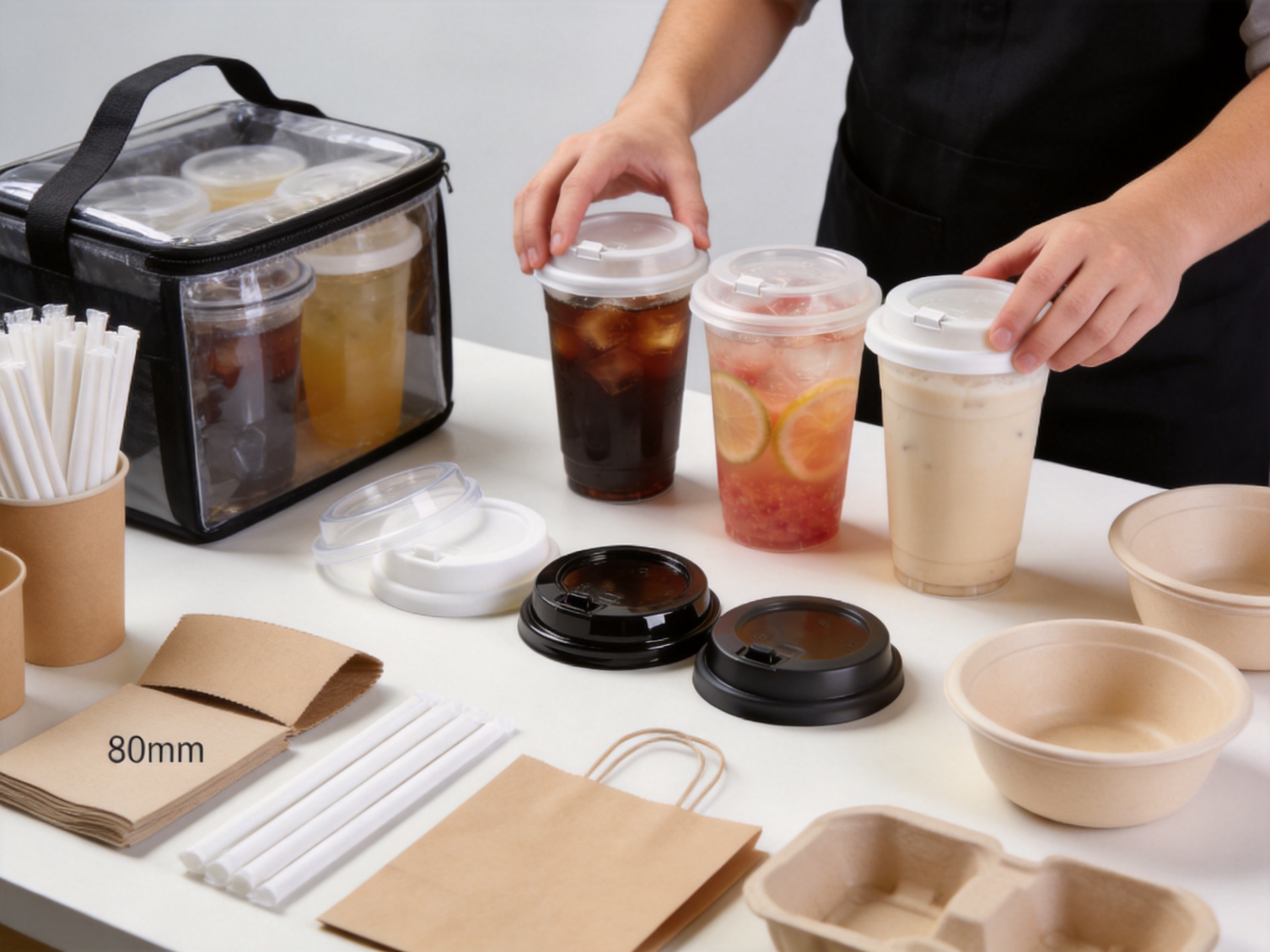
In modern foodservice, the lid is far more than a simple accessory. It is an essential part of the container system, influencing leak resistance, customer convenience, product presentation, transport safety, and overall brand perception. A well-designed lid helps protect beverages and foods from contamination while supporting efficient service in cafés, restaurants, takeaway shops, catering operations, and delivery businesses.
The PP plastic frosted/glossy injection cup lid is designed to meet these practical and commercial requirements. Manufactured as a PP injection molded cup lid, it combines a secure fit, durable structure, smooth appearance, and material characteristics suitable for disposable food packaging applications. With a standard 90 mm caliber and a gram weight of approximately 4.5 g, the lid offers a practical balance between lightweight handling and dependable performance.
Available in glossy and frosted finishes, as well as transparent, white, and black color options, this lid can support different packaging styles and beverage presentation needs. Its leak-proof design helps reduce spills during handling and transportation, while its thickened construction provides additional resistance to deformation and everyday use.
Yuqian Packaging Technology (Jiangsu) Co., Ltd. develops and manufactures disposable food packaging products, including plastic cups, cup lids, takeaway bowls, disposable straws, recycle bags, peripheral packaging products, and injection film lining cups and bowl boxes. The company’s experience in food packaging materials, quality management, product development, and customized production gives buyers access to a more coordinated packaging supply solution.
1. The Role of a High-Quality Cup Lid in Foodservice Packaging
Food and beverage packaging must perform under demanding conditions. A drink may be filled, sealed, stacked, carried across a store, placed in a delivery bag, transported by vehicle, and opened by the consumer. At every stage, the lid must remain securely connected to the cup and maintain its functional shape.
A poorly designed lid can create several problems. It may fit loosely, allowing liquid to escape. It may deform when pressed, making it difficult to stack or transport. It may have an uneven rim that interferes with sealing. It may also fail to match the appearance or size of the cup, reducing the professional presentation of the finished product.
The PP injection molded cup lid addresses these concerns through controlled molding and a structured design. The molding process allows the lid’s rim, opening area, and locking profile to be produced consistently. This helps create a stable fit between the lid and a compatible 90 mm cup or container.
For foodservice operators, consistency is especially important. A lid that performs reliably across large production batches can reduce packaging interruptions, minimize leakage complaints, and simplify stock management. For distributors and wholesalers, consistent dimensions and appearance make it easier to present a dependable product line to restaurants, cafés, food manufacturers, and catering companies.
The lid also contributes to the customer experience. Transparent or glossy surfaces can highlight the color and texture of beverages, while white and black options can create a clean or premium visual effect. Frosted surfaces offer a softer appearance and can help distinguish a product line from standard clear packaging.
2. Product Overview
The product is a PP plastic frosted/glossy injection cup lid intended for use with compatible disposable cups and foodservice containers. It is categorized as a PP injection molded cup lid and is designed for practical beverage and takeaway packaging requirements.
| Product Attribute | Specification |
| Product Type | PP plastic injection molded cup lid |
| Available Lid Finishes | Glossy injection molded cover and frosted injection molded cover |
| Caliber | 90 mm |
| Approximate Gram Weight | 4.5 g |
| Color Options | Transparent, white, and black |
| Primary Design Features | Leak-proof design, thickened structure, durable construction |
| Material Category | PP plastic |
| Product Alias | PP plastic frosted/glossy injection cup lid |
The 90 mm caliber is a practical size for many standard takeaway beverage applications. However, buyers should confirm the dimensional compatibility of the lid with their selected cup before placing a production order. Cup rim geometry, wall thickness, sealing profile, and design tolerances can differ among suppliers, even when nominal diameters are similar.
The approximate 4.5 g weight reflects a lightweight product design. Lower weight can support efficient transportation and handling, while the thickened structure helps maintain strength and rigidity. The objective is not simply to reduce material usage, but to create a lid that performs reliably within its intended application.
3. PP Material and Its Packaging Advantages
Polypropylene, commonly identified as PP, is widely used in food packaging because of its practical balance of low weight, strength, processability, and chemical resistance. In injection molding, PP can be formed into precise shapes with integrated rims, openings, reinforcing sections, and locking features.
For disposable cup lids, the material must be sufficiently rigid to retain its shape while also allowing controlled flexibility during fitting. A lid that is too brittle may crack or break during handling. A lid that is too soft may deform, lose its seal, or become difficult to stack. PP provides a useful material platform for achieving this balance when the formulation and molding parameters are properly controlled.
PP also supports efficient high-volume production. Injection molding can produce repeated parts with consistent geometry, making it suitable for large foodservice orders. When the mold, machine settings, cooling conditions, and inspection procedures are managed correctly, each production batch can maintain a stable appearance and dimensional profile.
The product is described as non-toxic, odorless, environmentally friendly, and healthy for its intended food packaging application. Buyers should always select products according to the relevant food-contact regulations and market requirements in the destination country. Documentation, testing, and compliance verification should be reviewed as part of the purchasing process.
Another advantage of PP is its relatively light weight. A 4.5 g lid can be handled efficiently in cafés, factories, and distribution centers. Lightweight packaging can help reduce the physical burden of storage and movement, although overall sustainability must be assessed across the complete product life cycle, including raw materials, manufacturing, logistics, use, and disposal.
4. Glossy and Frosted Surface Options
4.1 Glossy Injection Molded Cover
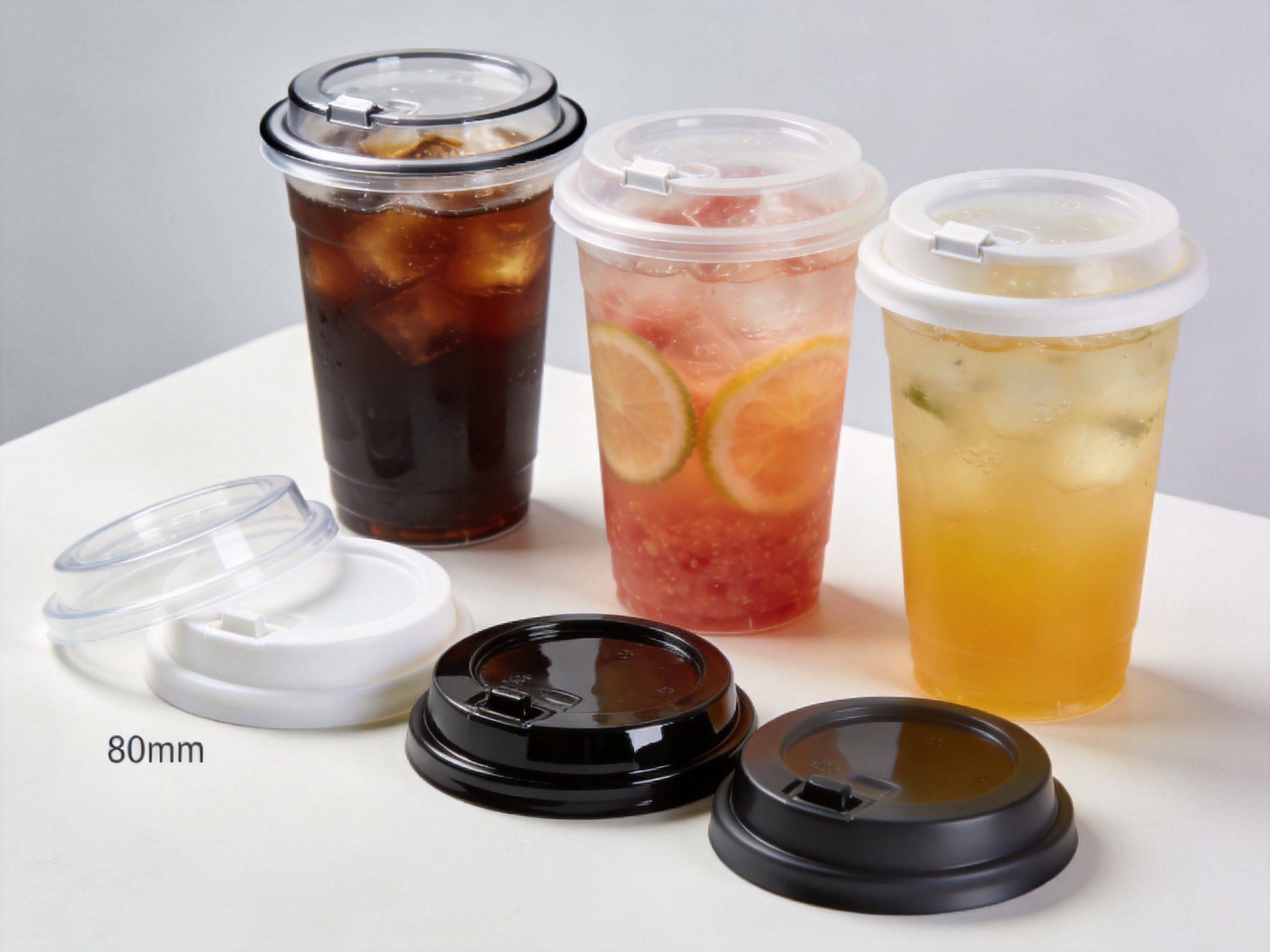
The glossy version has a smooth, reflective appearance that can support a clean and bright packaging presentation. A glossy transparent lid allows customers to see the beverage and can make the product look fresh and visually appealing. This can be useful for iced coffee, milk tea, fruit drinks, smoothies, juices, and other takeaway beverages where appearance plays an important role in purchase decisions.
White glossy lids can create a simple and hygienic visual style, while black glossy lids can offer a stronger contrast and a more premium presentation. The glossy finish can also work well with printed cups, colored labels, and branded sleeves.
4.2 Frosted Injection Molded Cover
The frosted version provides a softer, less reflective surface. This finish can give a packaging range a distinctive visual identity and may be selected by brands seeking a modern, understated, or natural appearance. Frosted plastic can create a subtle texture that differs from conventional clear or polished surfaces.
Transparent frosted lids can preserve visibility while reducing the highly reflective look of a glossy lid. White frosted lids can provide a soft, neutral appearance, while black frosted lids can support a bold and contemporary packaging style.
Offering both finishes gives buyers greater flexibility when designing a product line. A beverage business may use glossy lids for standard drinks and frosted lids for premium or seasonal products. A distributor may also stock several options to serve different customer preferences without changing the basic lid size.
5. Leak-Proof Design and Secure Fit
Leak prevention is one of the most important performance requirements for a disposable cup lid. A leak can damage delivery bags, affect other products, create inconvenience for consumers, and increase the likelihood of complaints. For foodservice businesses, leakage may also lead to product waste and additional replacement costs.
The PP injection molded cup lid features a leak-proof design intended to improve the connection between the lid and a compatible cup. The lid’s rim and fitting profile are produced through injection molding, allowing the structure to be formed with controlled dimensions. When paired with the correct cup, the lid can help provide a secure closure for ordinary handling and transport conditions.
Leak resistance depends on more than the lid alone. The cup and lid must be properly matched, and the cup rim must be free from damage, contamination, or deformation. Filling levels, beverage temperature, carbonation, movement during delivery, and the method used to apply the lid can also affect performance.
For this reason, commercial buyers should conduct practical compatibility tests before launching a packaging system. Recommended tests may include upright storage, manual carrying, stacking, vibration, transport simulation, and short-term inversion testing where appropriate. These tests help confirm that the chosen cup and lid combination performs under actual operating conditions.
A secure lid also supports efficient workflow. Staff can apply a properly fitting lid quickly and with greater confidence. In high-volume beverage operations, small improvements in application consistency can contribute to smoother service during busy periods.
6. Thickened and Durable Construction
The product is designed with a thickened structure to improve durability. A thicker lid can provide better resistance to pressure during stacking and handling, provided that the design remains compatible with the intended cup and molding process.
Durability is valuable throughout the packaging chain. During production, lids may be counted, bagged, boxed, and moved between storage areas. During distribution, cartons may be stacked or exposed to vibration. At the point of sale, lids may be handled quickly by employees. During delivery, completed drinks may shift inside a bag or container. A durable lid helps maintain its shape across these stages.
The purpose of durability is not to make a disposable lid unnecessarily heavy. Instead, the goal is to use an appropriate material distribution and structural design. Injection molding allows manufacturers to control the shape of the rim, center panel, opening area, and supporting sections so that the product can deliver useful strength without excessive material.
Compared with very thin or poorly formed alternatives, a thickened injection molded lid may offer a more dependable user experience. It can feel more stable when pressed onto a cup, resist casual deformation, and maintain a more professional appearance after packaging and transport.
Performance should nevertheless be judged according to the intended application. A lid designed for cold drinks may not be suitable for every hot beverage or high-temperature process. Buyers should confirm temperature requirements, storage conditions, and use limitations with the supplier before adopting the product for specialized applications.
7. Advantages Compared with Common Competing Options
Food packaging buyers typically compare lids according to fit, cost, weight, appearance, durability, production consistency, and supply capability. The PP injection molded cup lid offers several advantages within these comparison categories.
7.1 More Controlled Geometry Than Basic Thin-Formed Alternatives
Injection molding enables the lid to be produced with a defined three-dimensional profile. This can support more consistent rim dimensions and fitting features than less precisely formed products. Consistent geometry is important for sealing reliability and efficient application.
7.2 A Better Balance Between Weight and Strength
At approximately 4.5 g, the lid is lightweight, but its thickened design is intended to provide useful rigidity. Some low-cost alternatives may reduce weight by using extremely thin sections, which can make them more vulnerable to distortion during handling. The present product aims to balance material efficiency with practical durability.
7.3 Multiple Visual Finishes
Many standard lids are available only in one basic surface style. The availability of both glossy and frosted finishes provides additional options for product differentiation. Transparent, white, and black colors further expand the possibilities for coordinated packaging design.
7.4 Suitable for High-Volume Foodservice Operations
The injection molding process is appropriate for repeated production and large orders. Once the mold and process parameters have been established, manufacturers can produce a high number of similar parts with stable specifications. This is useful for chain restaurants, beverage brands, distributors, and food packaging wholesalers.
7.5 Integration with a Broader Packaging Portfolio
A supplier that offers cups, lids, bowls, straws, recycle bags, and other peripheral products can help buyers coordinate packaging procurement. This may simplify communication, order management, packaging matching, and quality follow-up compared with sourcing each item from unrelated suppliers.
7.6 Professional Appearance for Different Brand Positions
Glossy, frosted, transparent, white, and black options can support a range of branding strategies. Whether a customer wants a bright everyday appearance, a clean minimalist style, or a premium dark presentation, the available surface and color choices can help create a consistent product image.
8. Injection Molding Manufacturing Process
The performance of an injection molded lid depends heavily on the manufacturing process. Product design, mold engineering, material preparation, machine settings, cooling, trimming, inspection, and packing all contribute to the final result.
8.1 Product and Mold Design
The process begins with the design of the lid and its mold. Engineers must consider the target caliber, rim profile, wall thickness, opening geometry, draft angles, material flow, cooling requirements, and ejection method. A well-designed mold helps the molten PP fill the cavity evenly and form the intended features.
For a cup lid, the rim is especially important because it influences how the lid connects with the cup. The design must balance secure retention with practical application. If the fit is excessively tight, staff may find the lid difficult to apply. If the fit is too loose, leak resistance may be reduced. Controlled tolerances are therefore essential.
8.2 Material Preparation
PP resin must be prepared and managed according to the requirements of the molding process. Proper material handling supports stable feeding and helps maintain consistent production conditions. Color production also requires careful control to achieve a uniform appearance across the batch.
Transparent products require particular attention to cleanliness and visual quality. Dust, contamination, flow marks, or uneven cooling can be more visible in transparent parts. White and black products also require color consistency so that cartons and deliveries maintain a professional appearance.
8.3 Injection and Filling
During injection, heated PP is pushed into the mold cavity under controlled pressure and speed. The material must flow into the rim and central sections without creating unacceptable short shots, weld marks, burn marks, flash, or distortion.
Machine parameters may include melt temperature, injection pressure, injection speed, holding pressure, screw speed, and cycle time. These settings must be adjusted according to the mold design, resin characteristics, product thickness, and production environment.
8.4 Holding, Cooling, and Ejection
After the cavity is filled, holding pressure helps compensate for material shrinkage and supports dimensional stability. The part then cools inside the mold until it is sufficiently rigid for ejection. Cooling must be controlled carefully because uneven cooling can cause warpage or changes in the lid’s fit.
Once cooled, the lid is ejected from the mold. The ejection process should avoid marks, scratches, deformation, or damage to the sealing rim. A stable and repeatable cycle helps maintain product consistency during continuous production.
8.5 Inspection and Packing
Finished lids can be inspected for appearance, dimensions, weight, rim integrity, flash, deformation, color, and fit. Sampling plans may be used for routine production, while additional inspections may be performed during mold trials, process adjustments, or customer-specific orders.
After inspection, lids are counted or packed according to the order requirements. Clean and organized packing helps protect the parts during storage and transportation. Clear identification of product type, color, finish, quantity, and batch information can also support warehouse management.

9. Manufacturing Strengths of the Supplier
Yuqian Packaging Technology (Jiangsu) Co., Ltd. was established in 2010 and is located in Taizhou City, Jiangsu Province, China. The company is described as a high-tech enterprise engaged in the research and development, production, and sales of new food packaging materials and products.
The company reports a plant area of approximately 30,000 square meters. This scale provides a foundation for organized production, equipment deployment, raw material management, product inspection, warehousing, and order coordination. For buyers, a dedicated manufacturing facility can offer greater visibility and control than a purely trading-oriented supply model.
Experience accumulated since 2010 can support practical knowledge of packaging design, material selection, molding processes, product quality, and customer requirements. Long-term participation in the food packaging sector also helps a manufacturer understand the operational challenges faced by beverage shops, restaurants, caterers, distributors, and food manufacturers.
The supplier’s product portfolio includes plastic cups, plastic cup lids, takeaway bowls, disposable straws, recycle bags, peripheral products, and injection film lining cups and bowl boxes. This range allows the company to address multiple parts of the disposable food packaging system.
A broad portfolio can create several advantages for customers. Packaging components may be coordinated by size, color, material, and application. Buyers can communicate with one supplier about several products rather than managing separate technical discussions with multiple factories. Consolidated purchasing may also simplify production planning and shipment arrangements.
The company has established a Shanghai branch to improve service quality and expand business channels. A presence in an important commercial and logistics center can support communication with domestic and international customers, as well as coordination of business development and customer service activities.
10. Quality Management and Certifications
Quality management is a key consideration when purchasing food packaging products. Consistent dimensions, clean surfaces, stable materials, and reliable packaging processes are necessary for commercial use. Yuqian Packaging Technology reports having obtained or passed several certifications and testing programs associated with manufacturing and product quality.
The company took the lead in its packaging sector in passing the QS national industrial product production license, according to the supplied company information. It also reports ISO9001 Quality Management System certification, BRC certification, German authoritative safety DIN certification, and European Union RoHS testing.
These certifications and testing references indicate an effort to establish structured management and compliance practices. ISO9001 is associated with quality management processes, documentation, corrective actions, and continual improvement. BRC certification is widely recognized in areas connected with food safety and packaging-related supply chains. DIN standards and RoHS testing may address safety or restricted-substance requirements depending on the specific scope of certification and test report.
Buyers should request current certificates, test reports, product declarations, and applicable food-contact documentation for the exact product and material being ordered. Certification scope, validity period, production site, and product category should be checked carefully. Compliance requirements can differ between countries and between food, beverage, hot-fill, cold-fill, and specialized applications.
Quality systems are most valuable when they are integrated into daily operations. Incoming material checks, production monitoring, first-piece approval, in-process inspection, final sampling, and traceable records can help reduce variation and improve accountability. These practices support the consistent production expected by professional packaging buyers.
11. Applications in Food and Beverage Service
The 90 mm PP cup lid can be used in many takeaway beverage settings when matched with a compatible cup. Typical applications may include cold coffee, iced tea, fruit drinks, milk-based beverages, juice, smoothies, flavored water, and other takeaway refreshments.
Cafés can use transparent lids to display beverage color and toppings. Beverage chains may select white or black lids to coordinate with their brand colors. Dessert and drink shops can use frosted lids to create a more distinctive appearance for specialty products.
Restaurants and catering businesses may use compatible cup-and-lid combinations for drinks served with takeaway meals. Delivery kitchens can benefit from lids that provide a secure closure during movement, although practical testing should always be performed with the complete delivery packaging system.
Distributors and wholesalers can stock the lids for independent foodservice businesses. Because the lid is offered in several colors and two surface finishes, distributors may be able to serve customers with different packaging preferences while maintaining a common caliber.
Food manufacturers and private-label beverage companies may also consider the product as part of a broader packaging program. Where custom requirements exist, discussions may include color matching, packaging quantities, product combinations, labeling, carton configuration, and other supply details.
12. Color Selection and Branding Possibilities
Packaging color affects how customers perceive a product. Transparent lids emphasize visibility and are often suitable when the drink’s appearance is part of the selling experience. They allow customers to see ice, foam, fruit pieces, layered colors, and other visual features.
White lids create a clean and neutral appearance. They can work with bright printed cups, pastel color schemes, natural food brands, and simple minimalist designs. White may also be selected when a business wants a consistent appearance across different beverage categories.
Black lids provide contrast and can create a stronger premium or contemporary impression. They may be paired with dark printed cups, metallic graphics, or bold logo designs. Black packaging can also help conceal minor visual variations associated with certain beverage applications, although all products must still meet quality requirements.
Glossy and frosted finishes add another layer of design choice. A brand may use the same cup size with different lid finishes for different product tiers. For example, a standard beverage range could use glossy transparent lids, while a premium seasonal range could use frosted black lids.
When selecting colors, buyers should consider the complete package, including the cup, sleeve, straw, label, carrier, and delivery bag. Coordinated components can create a more recognizable and professional customer experience.
13. Purchasing and Customization Considerations
Before purchasing, buyers should define the intended application and confirm the required specifications. Important questions include the compatible cup diameter, beverage type, filling temperature, expected transport conditions, lid finish, color, order quantity, packing format, and destination-market compliance requirements.
The nominal 90 mm caliber should be verified against physical cup samples. A sample fitting test can confirm whether the lid applies smoothly, remains secure, and provides the desired leak resistance. Buyers should also check the opening size and shape if the beverage will be consumed through a straw or directly from the lid.
For businesses that use automated filling or sealing equipment, the lid’s dimensions and handling characteristics should be reviewed with the equipment supplier. Stackability, feeding performance, and application force can affect production efficiency.
Color requirements should be discussed clearly. Transparent, white, and black are listed options, but buyers may need to confirm whether a particular color is available for both glossy and frosted finishes. Color samples should be approved before mass production if appearance is important to the brand.
Packaging quantities and carton arrangements should also be confirmed. Efficient packing can help protect the lids, reduce warehouse space, and simplify counting. Batch identification is useful for inventory control and quality follow-up.
For larger customers, customization discussions may include product design, coordinated cup and lid systems, packaging artwork, private labeling, and production scheduling. Custom development should begin with technical specifications and sample approval to reduce the risk of mismatch during mass production.
14. Sustainability and Responsible Packaging Use
Environmental performance is an increasingly important consideration in disposable food packaging. PP is a widely used thermoplastic, and its recyclability depends on local collection systems, sorting infrastructure, contamination levels, and the availability of suitable recycling facilities.
A responsible packaging decision should consider the entire system rather than focusing only on one material characteristic. Appropriate product weight, efficient manufacturing, reduced transport volume, correct portioning, and responsible end-of-life management can all contribute to better resource efficiency.
The lightweight 4.5 g design can help reduce material use and transportation weight compared with heavier alternatives, while the thickened construction is intended to maintain practical durability. The best balance depends on the application and the performance required by the customer.
Businesses can support more responsible use by ordering appropriate quantities, avoiding unnecessary overpackaging, educating staff about correct storage and use, and communicating disposal guidance where local systems allow. Consumers should follow the waste-sorting rules available in their area.
The company also supplies recycle bags and biodegradable new materials among its broader product offerings, according to the provided company information. Buyers interested in sustainability-focused packaging should discuss the exact material composition, certification, disposal conditions, and environmental claims for each product rather than assuming that all products have identical end-of-life characteristics.
15. Storage, Handling, and Operational Guidance
Proper storage helps preserve the quality of plastic cup lids before use. Lids should generally be kept in a clean, dry, and well-ventilated area away from direct sunlight, excessive heat, chemicals, dust, and strong odors. Cartons should be protected from crushing and excessive stacking pressure.
Warehouse staff should use a first-in, first-out or otherwise controlled inventory system where appropriate. Product type, finish, color, caliber, and batch information should remain clear throughout storage and distribution.
During handling, employees should avoid dragging open bags or placing lids on unclean surfaces. If a lid becomes visibly damaged, contaminated, or deformed, it should not be used for food packaging. Clean handling is especially important for transparent products, where dust and marks may be easily noticed.
Before service, staff should confirm that the lid is correctly seated around the cup rim. The lid should not be forced onto an incompatible cup. If the cup is overfilled or the rim is damaged, the closure may not perform as intended.
Businesses should establish internal procedures for checking lid application, especially during high-volume periods. Simple checks can include visual confirmation of rim engagement, gentle movement testing, and inspection of completed orders before dispatch.
16. Quality Inspection for Commercial Orders
Professional buyers may establish acceptance criteria for incoming cup lids. These criteria can include caliber, weight, color, surface finish, cleanliness, flash level, deformation, cracks, scratches, rim integrity, packaging condition, and quantity accuracy.
Dimensional inspection can confirm whether the product remains within the agreed specification. Weight sampling can help identify significant variation in material distribution. Visual inspection can detect surface defects, discoloration, contamination, and molding marks.
Fit testing is particularly important for lids. Samples should be tested with the actual cup model to confirm ease of application, retention, and leak resistance. Where the packaging will be used for delivery, filled containers should be tested in realistic transport conditions.
Quality expectations should be agreed before production. A clear product specification can reduce misunderstandings between the buyer and supplier. It may include drawings, approved samples, color references, packaging details, inspection methods, and documentation requirements.
Yuqian Packaging Technology’s reported quality management certifications and food packaging experience provide a foundation for structured production. Nevertheless, each order should be controlled according to its specific requirements, especially when a customer needs customized colors, packaging, or coordinated cup-and-lid dimensions.
17. Why Choose an Experienced Packaging Manufacturer
Choosing a manufacturer rather than a purely intermediary supplier can provide advantages in technical communication, production visibility, product development, and quality follow-up. A manufacturer with in-house or closely managed production capabilities can address questions about materials, molds, cycle conditions, inspection, and packaging more directly.
Yuqian Packaging Technology combines research and development, production, and sales activities. This integrated structure can support communication from initial product selection through sampling, order confirmation, manufacturing, inspection, and shipment.
The company’s experience with multiple disposable food packaging categories may also help customers develop a more complete packaging solution. Instead of selecting a lid in isolation, buyers can discuss compatible cups, bowls, straws, bags, and other components with a supplier familiar with foodservice applications.
The reported plant area, certifications, product range, and market experience indicate a manufacturing platform designed to serve both standard and customized packaging requirements. For customers seeking stable supply, coordinated products, and long-term cooperation, these factors may be more valuable than comparing unit price alone.
Product value should be assessed through total cost and operational performance. A lid that reduces leakage, improves presentation, minimizes handling problems, and arrives with stable quality may provide greater commercial value than a lower-priced product with inconsistent dimensions or higher defect rates.
18. Frequently Asked Questions
Q1: What material is used for the cup lid?
The lid is made from PP plastic and produced through an injection molding process. Polypropylene provides a practical balance of light weight, rigidity, processability, and durability for disposable food packaging applications.
Q2: What is the standard size of the lid?
The listed caliber is 90 mm. Buyers should confirm the fit with their specific cup model because nominal diameter alone does not guarantee compatibility.
Q3: What finishes are available?
The product is available in glossy and frosted injection molded finishes. The choice depends on the desired appearance, product positioning, and visual coordination with the cup and other packaging components.
Q4: What colors can customers choose?
The listed color options are transparent, white, and black. Buyers should confirm availability for the selected finish, order quantity, and production specification.
Q5: How much does one lid weigh?
The listed gram weight is approximately 4.5 g. Actual production tolerance should be confirmed in the final product specification or approved sample.
Q6: Is the lid leak-proof?
The lid features a leak-proof design intended to provide secure closure with a compatible cup. Actual performance also depends on the cup rim, filling level, application method, beverage conditions, and transport environment. Practical testing is recommended before commercial use.
Q7: Is the lid suitable for hot beverages?
The available information identifies the product as a PP injection molded cup lid but does not specify a universal hot-beverage temperature rating. Customers should consult the manufacturer and conduct suitable tests before using it with hot drinks or high-temperature filling processes.
Q8: Can the lid be used for delivery orders?
It can be considered for takeaway and delivery applications when paired with a compatible cup and properly applied. Delivery testing should include movement, stacking, vibration, and realistic filling conditions.
Q9: Can the manufacturer provide other packaging products?
Yes. The company’s product categories include plastic cups, plastic cup lids, takeaway bowls, disposable straws, recycle bags, peripheral products, and injection film lining cups and bowl boxes.
Q10: Does the company support customization?
The company presents itself as a custom disposable food packaging container manufacturer and factory. Custom discussions may involve product design, color, packaging, coordinated components, and other requirements. Specific customization options, minimum order quantities, tooling, and lead times should be confirmed directly.
Q11: What certifications and testing does the company report?
The supplied company information refers to QS national industrial product production licensing, ISO9001 Quality Management System certification, BRC certification, German DIN certification, and European Union RoHS testing. Buyers should request current documentation applicable to the specific product and destination market.
Q12: How should buyers confirm product compatibility?
Buyers should provide the cup diameter, rim design, product drawings, usage conditions, and any available samples. A physical fit test using the actual cup and lid combination is the most reliable way to confirm compatibility.
19. Conclusion
The PP plastic frosted/glossy injection cup lid is a practical solution for businesses that need dependable, attractive, and lightweight disposable food packaging. Its 90 mm caliber, approximate 4.5 g weight, thickened structure, and leak-proof design make it suitable for a wide range of compatible takeaway beverage applications.
The product offers useful differentiation through its two surface finishes and three listed color choices. Glossy transparent, white, or black lids can support bright and visible beverage presentation, while frosted versions can create a softer and more distinctive appearance.
Compared with basic thin or inconsistently formed alternatives, an injection molded lid can provide more controlled geometry, improved production consistency, and a better balance between weight and durability. Its commercial value is strengthened when it is supplied as part of a coordinated packaging program that includes cups, bowls, straws, recycle bags, and related products.
Yuqian Packaging Technology (Jiangsu) Co., Ltd. brings manufacturing experience dating from 2010, a reported 30,000-square-meter plant area, research and development capability, a broad food packaging portfolio, and several reported quality and safety certifications. These strengths position the company to support standard supply, coordinated product sourcing, and customized packaging projects.
Before ordering, buyers should confirm cup compatibility, application temperature, color and finish availability, packaging quantities, compliance documentation, and delivery requirements. With appropriate testing and specification control, this PP injection molded cup lid can help foodservice businesses improve leakage protection, operational efficiency, and the visual quality of takeaway products.
References
1. Product specification information supplied for the PP plastic frosted/glossy injection cup lid, including caliber, weight, color, finish, and design features.
2. Company information supplied for Yuqian Packaging Technology (Jiangsu) Co., Ltd., including establishment date, location, plant area, product categories, and manufacturing activities.
3. ISO 9001 quality management principles and guidance for consistent manufacturing processes and continual improvement.
4. General technical literature on polypropylene materials and injection molding for food packaging applications.
5. General packaging quality-control practices for dimensional inspection, appearance inspection, fit testing, and transport simulation.
6. General food-contact packaging compliance principles for disposable plastic products used in food and beverage service.