English
 Español
 عربى
عربىContent
- 1 Product Overview
- 2 Why a No-Hole Flat Lid Matters
- 3 Material Advantage: Food-Grade PP
- 4 Leak-Proof Performance and Sealing Reliability
- 5 Thickened Design for Durability
- 6 Transparency and Food Presentation
- 7 Stackable Structure and Space Efficiency
- 8 Heat Resistance in Practical Foodservice Conditions
- 9 Advantages Over Competing Lid Products
- 10 Company Manufacturing Strengths
- 11 Advanced Manufacturing Processes
- 12 Quality Certifications and Food Packaging Assurance
- 13 Customization and OEM Support
- 14 Applications in Foodservice and Retail
- 15 Environmental and Health Considerations
- 16 How the Product Supports Brand Value
- 17 Procurement Considerations for Buyers
- 18 Q&A Section
- 18.1 What is the PP plastic flat lid with no hole used for?
- 18.2 Why choose a no-hole lid instead of a perforated lid?
- 18.3 Is the lid safe for food contact?
- 18.4 What is the standard size available?
- 18.5 Can the lid be used with hot food?
- 18.6 What makes this lid more durable than ordinary alternatives?
- 18.7 Is the product customizable?
- 18.8 What certifications support the company’s manufacturing quality?
- 18.9 Why is transparency important?
- 18.10 How does stackability benefit foodservice businesses?
- 19 Conclusion
- 20 References
- 21 Product: PP plastic flat lid with no hole
In modern disposable food packaging, a lid is not a minor accessory; it is a critical part of the entire container system. A well-designed lid protects food, reduces leakage, supports hygiene, improves delivery performance, and helps foodservice operators create a more reliable customer experience. The PP plastic flat lid with no hole is designed for exactly this purpose. Made from food-grade polypropylene, it offers a clean, transparent, durable, and leak-resistant covering solution for takeaway bowls, cups, containers, and compatible food packaging formats.
This product is especially suitable for applications where sealing performance matters more than ventilation. Unlike perforated lids, which are designed for steam release or straw access, the no-hole flat lid helps prevent liquid, sauce, soup, dressing, grains, powders, and fine food particles from escaping. For restaurants, cafés, catering companies, food processors, supermarkets, and takeaway brands, this feature provides practical value in daily operations.
The PP plastic flat lid with no hole also reflects the growing expectations of the food packaging market. Buyers today look for products that are not only functional but also hygienic, safe, space-saving, customizable, and manufactured under controlled quality systems. Yuqian Packaging Technology (Jiangsu) Co., Ltd. supports these requirements through experienced manufacturing, food packaging specialization, strict material selection, and recognized certifications such as QS, ISO9001, BRC, DIN safety certification, and EU ROHS+ testing.
As a professional OEM manufacturer and factory for disposable food packaging containers and related products, the company provides customers with practical product design, stable production capacity, and customization support. The PP plastic flat lid with no hole is an example of how a simple packaging component can be engineered to deliver dependable performance in demanding foodservice environments.
PP plastic flat lid with no hole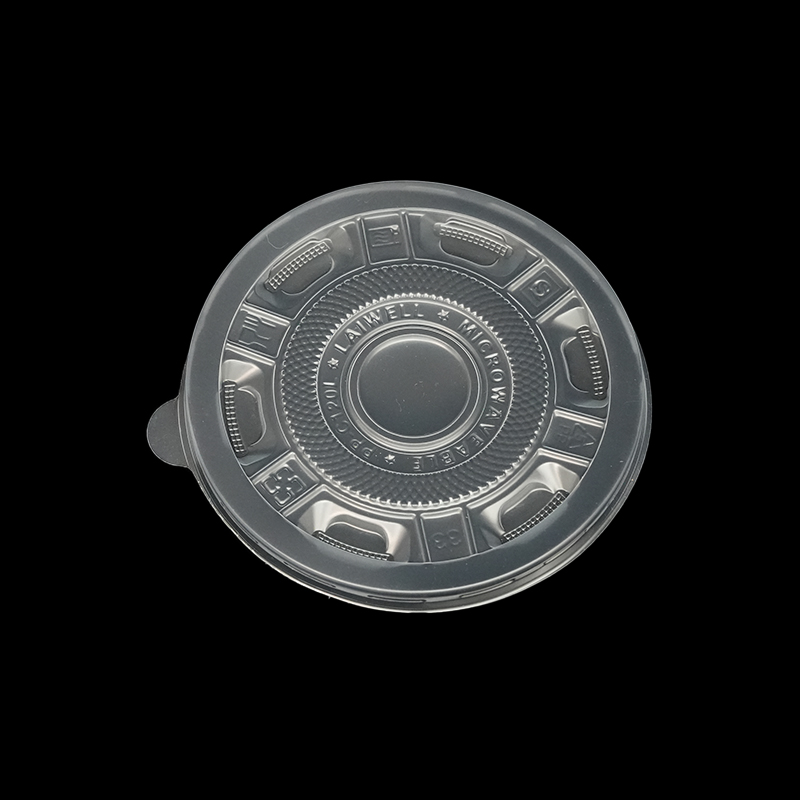
Product Overview
The PP plastic flat lid with no hole is a transparent disposable lid made from polypropylene, commonly known as PP. Polypropylene is widely used in food packaging because it is lightweight, non-toxic, odorless, heat-resistant, and suitable for contact with food when produced using proper food-grade raw materials. For a flat lid product, these qualities are essential because the lid may come into direct contact with hot food, sauces, soups, or prepared meals during storage, takeaway, or delivery.
The product is categorized as a PP takeaway lid or liner. Its flat, non-perforated structure provides a tight and clean covering surface. The absence of holes helps reduce leakage risk and improves the protection of packed food during movement. For takeaway operations, this is particularly important because containers are frequently stacked, transported, tilted, and handled by several people before reaching the final customer.
The current specification includes a 120 mm non-perforated lid with a gram weight of approximately 3.6 g and a transparent color. The transparent design allows foodservice staff and end users to see the content inside the container without opening it. This can improve service efficiency, reduce mistakes, and maintain food hygiene by limiting unnecessary lid removal.
The product also supports customization. Different food containers and market applications often require different calibers, materials, colors, rim structures, or sealing details. Yuqian Packaging Technology (Jiangsu) Co., Ltd. can provide OEM support according to customer needs, helping brands match lids to their existing bowls, cups, takeaway boxes, and container systems.
| Product Item | Specification | Practical Value |
| Product Name | PP Plastic Flat Lid with No Hole | Designed for reliable sealing and hygienic takeaway packaging |
| Lid Type | 120 mm Non-Perforated Flat Lid | Suitable for compatible bowls, cups, and takeaway containers |
| Material | Food-Grade PP | Non-toxic, odorless, heat-resistant, and suitable for food contact |
| Caliber | 120 mm | Standard size available, with customization support |
| Gram Weight | Approximately 3.6 g | Lightweight while maintaining practical durability |
| Color | Transparent | Allows easy content identification without opening the package |
| Design | Flat and No-Hole Structure | Helps prevent leakage of liquid and fine particles |
| Key Advantages | Leak-proof, thickened, stackable, heat-resistant | Improves transport performance and operational convenience |
Why a No-Hole Flat Lid Matters
Food packaging performance often depends on small details. A hole in a lid may be useful for straws, steam ventilation, or specific drink applications, but it is not ideal for every product. When the packaging contains liquid, sauce, soup, salad dressing, porridge, rice, noodles, diced ingredients, or powdered food, a hole can become a leakage point. For this reason, no-hole lids are preferred in many takeaway and prepared food applications.
The no-hole design creates a more complete barrier. It reduces the chance of splashing during delivery and helps preserve the appearance of the packaged food. This is especially valuable for platforms and restaurants where customers judge service quality partly by the condition in which food arrives. A container that leaks inside a delivery bag can damage the meal, stain packaging, affect other items in the order, and create customer dissatisfaction.
A flat lid also has operational advantages. Compared with domed or complex lid shapes, a flat lid can be easier to stack and store. This helps restaurants, central kitchens, and distributors save warehouse space. In high-volume foodservice settings, packaging must be easy to access, easy to count, and easy to use during peak hours. A flat, stackable lid supports these needs.
The PP plastic flat lid with no hole is also convenient for manual opening and closing. Its structure is designed to provide sealing performance while remaining practical for employees and consumers. A lid that is too loose may leak; a lid that is too hard to open may frustrate customers or cause spills. The goal is a balanced fit that protects contents and supports daily usability.
Material Advantage: Food-Grade PP
Polypropylene is one of the most important materials in disposable food packaging. It is known for its balance of strength, flexibility, heat resistance, chemical resistance, and light weight. For a flat lid without a hole, these properties help ensure that the product remains stable during common foodservice scenarios.
Food-grade PP is selected to help ensure the product is non-toxic and odorless. This is important because packaging should not negatively affect the flavor or smell of food. In markets where consumers are increasingly aware of food safety, the choice of material can influence trust. A lid made from qualified raw materials supports hygienic packaging and helps food brands protect their reputation.
PP also has good heat resistance compared with many common disposable plastic materials. Hot soups, warm rice dishes, steamed meals, and freshly prepared takeaway foods can expose lids to elevated temperatures. A lid with poor heat resistance may warp, soften, loosen, or deform, reducing its sealing effect. The PP plastic flat lid with no hole is designed to maintain stable performance in high-temperature conditions commonly encountered in takeaway food packaging.
Another advantage of PP is durability. Although lightweight, PP can resist cracking and maintain structural integrity under normal handling. The thickened design of this lid further improves strength. During food delivery and storage, lids may be pressed, stacked, or handled repeatedly. Better material resilience reduces the risk of lid failure and helps maintain a secure package.
PP is also widely accepted in food packaging supply chains because it is compatible with efficient mass production. It can be molded into precise shapes, allowing manufacturers to create consistent rim dimensions, smooth surfaces, and reliable closure features. This supports production stability and helps ensure that each lid fits its matching container properly.
Leak-Proof Performance and Sealing Reliability
Leakage is one of the biggest challenges in takeaway food packaging. It may occur when a lid does not match the container, when the rim structure is weak, when the material deforms under heat, or when the lid design includes unnecessary openings. The PP plastic flat lid with no hole addresses this challenge through a closed, non-perforated design and a strengthened structure.
The no-hole surface helps prevent liquids and fine particles from escaping through the top of the lid. This is important for sauces, soups, semi-liquid foods, and foods that release moisture during transport. Even when the container is moved or slightly tilted, a complete lid surface provides more protection than a perforated design.
The sealing performance is also supported by the lid’s shape and fit. A well-made lid should connect securely with the matching container rim. Precision in caliber size and rim design matters because even small dimensional variations can affect closure quality. Yuqian Packaging Technology (Jiangsu) Co., Ltd. uses production experience and quality control systems to support stable dimensions and consistent product performance.
The thickened design also contributes to leak resistance. A thin lid may bend too easily, causing the rim to loosen or lose contact with the container. A strengthened lid has better shape retention, allowing it to maintain pressure and contact around the rim. This is particularly useful when lids are opened and closed frequently or when packed containers are stacked during storage and delivery.
For foodservice buyers, leak-proof performance directly affects cost. Poor lids may lead to refunds, complaints, wasted food, dirty delivery bags, and damaged brand image. A dependable lid reduces these risks. It may appear to be a small part of the packaging budget, but its impact on customer satisfaction and operational stability can be significant.
Thickened Design for Durability
Durability is essential for disposable packaging, even when the product is intended for single use. A disposable lid must still survive production, packing, shipping, storage, restaurant handling, food filling, customer transport, and final use. If a lid cracks, deforms, or loses its fit before the food reaches the consumer, the entire packaging system fails.
The PP plastic flat lid with no hole uses a thickened design to improve strength. The 3.6 g gram weight for the 120 mm lid reflects a practical balance between material efficiency and functional performance. The lid remains lightweight enough for economical disposable use while being strong enough for common takeaway and food storage applications.
Thickened lids are especially valuable for delivery scenarios. Delivery bags may contain several meals stacked together. During transport, packages may be compressed by other containers or affected by movement. A stronger lid helps resist pressure and preserve the shape of the package. This can reduce accidental opening and improve the final presentation of the meal.
Frequent opening and closing is another challenge. In some environments, staff may temporarily cover food, reopen the container for checking, and close it again before serving or delivery. Consumers may also open and reclose the lid while eating. A weak lid can lose its sealing ability after repeated handling. The thickened PP structure helps the lid maintain better performance during these repeated actions.
Compared with lower-cost, thinner alternatives, the thickened PP flat lid provides a more secure and professional feel. Buyers often evaluate packaging not only by price but also by customer perception. A lid that feels firm and reliable can help a brand communicate care, hygiene, and quality.
Transparency and Food Presentation
Transparent packaging components are widely appreciated in foodservice because they make contents visible. The transparent PP plastic flat lid with no hole allows employees and customers to identify food without opening the container. This can reduce errors in busy kitchens, takeaway counters, supermarkets, and delivery operations.
For restaurants handling multiple orders, visibility helps staff confirm items quickly. A transparent lid allows workers to distinguish between dishes, check portion appearance, and verify packaging before dispatch. This saves time and reduces the risk of sending the wrong meal to a customer.
For retailers and prepared food counters, visibility supports merchandising. Customers often prefer to see what they are buying, especially when selecting salads, snacks, desserts, cold dishes, or ready-to-eat meals. A transparent lid can improve product appeal while still protecting the food from dust, handling, and external contamination.
Transparency also supports hygiene. Every time a package is opened, there is a chance of contamination, spillage, or temperature loss. If food can be checked without removing the lid, the package remains closed for longer. This is beneficial for both safety and presentation.
Stackable Structure and Space Efficiency
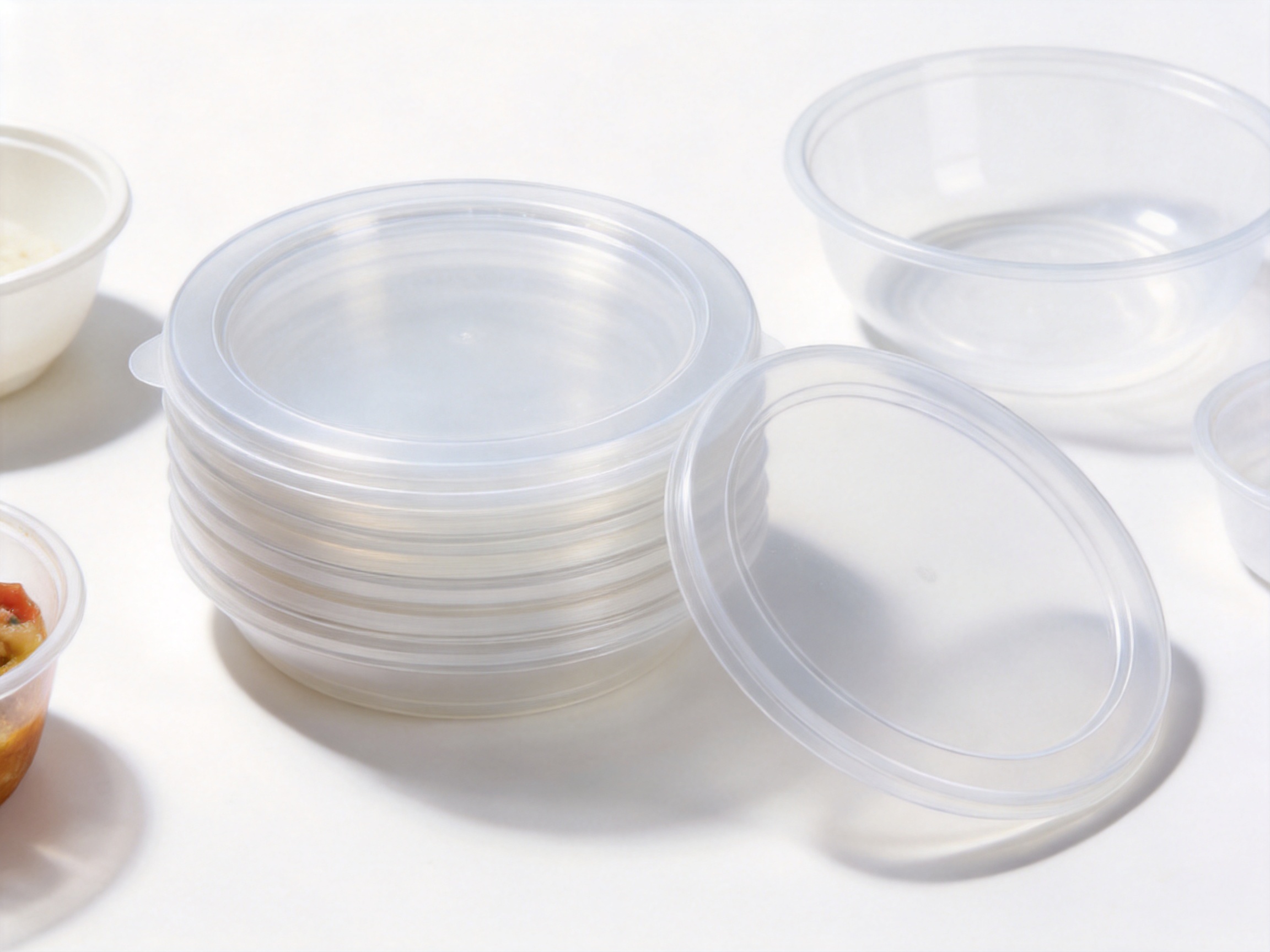
Space is valuable in foodservice operations. Restaurants, cafés, catering kitchens, distributors, and supermarkets often store large volumes of disposable packaging. Packaging that stacks neatly helps reduce storage pressure and improves inventory organization. The flat structure of the PP plastic lid with no hole supports efficient stacking.
Stackable lids are easier to pack in cartons, store on shelves, and place near food preparation stations. During peak service periods, workers need quick access to packaging. A stable stack reduces clutter and helps staff work faster. This is particularly important in takeaway restaurants where packaging speed directly affects order completion time.
Space efficiency also benefits transportation. More lids can be packed and shipped efficiently when they nest and stack properly. This can reduce logistics pressure and improve supply chain convenience. For large buyers and distributors, such advantages can make daily operations smoother.
Compared with bulky lid designs, a flat stackable lid is practical and economical. It does not waste unnecessary vertical space, and it can be integrated into standardized packaging storage systems. In a competitive market, these operational advantages can matter as much as the physical properties of the material.
Heat Resistance in Practical Foodservice Conditions
Heat resistance is a major reason why PP is selected for takeaway lids. Many disposable food packages are used with warm or hot foods. If a lid deforms under heat, it may lose its seal, create gaps, or become difficult to remove. The PP plastic flat lid with no hole is designed to maintain shape and performance under common high-temperature foodservice conditions.
Hot foods generate steam and heat inside the container. Although this particular lid has no hole, its material stability helps the lid resist softening and deformation. The correct application depends on the food type, temperature, and container compatibility, but PP provides a strong foundation for reliable performance.
For foodservice operators, heat resistance means fewer packaging failures. Hot soup, porridge, noodles, rice bowls, and steamed dishes require packaging that can handle warmth. A lid that remains stable helps prevent leaks and protects the customer experience. It also allows kitchens to package food more confidently immediately after preparation.
Competitor products made from less heat-resistant materials may deform more easily. Thin or poorly molded lids may become loose when exposed to hot contents. In comparison, a food-grade PP lid with a thickened structure provides more dependable performance for a wider range of food packaging applications.

Advantages Over Competing Lid Products
The PP plastic flat lid with no hole offers several advantages over competing lid options in the disposable packaging market. These advantages come from its material, structure, manufacturing consistency, customization potential, and quality system support.
First, the no-hole design provides better leakage protection than perforated lids when packaging liquid or semi-liquid foods. Perforated lids serve certain purposes, but they are not suitable for every application. When sealing is the priority, a no-hole lid is the better choice.
Second, the thickened PP construction provides stronger durability than lightweight, thin lids that may bend or crack easily. A durable lid improves confidence during delivery and reduces the likelihood of customer complaints caused by damaged packaging.
Third, food-grade PP offers better heat resistance than some alternative plastic materials used in low-cost disposable packaging. This is important for hot takeaway foods, where temperature exposure may be unavoidable. A lid that maintains its shape is more likely to maintain its seal.
Fourth, the transparent appearance improves usability and presentation. Some competing lids may be opaque or less clear, making it harder to identify contents. Transparent lids improve efficiency in food preparation, retail display, and order checking.
Fifth, the stackable flat structure saves space. Packaging buyers often focus on unit cost, but storage and handling efficiency also affect total operating cost. A lid that stacks cleanly is easier to manage in high-volume environments.
Sixth, the product is supported by a manufacturer with long-term industry experience and multiple certifications. This is an important distinction. Packaging quality depends not only on design but also on manufacturing discipline. A product made under strict quality management is more likely to deliver consistent results than a product sourced from uncontrolled or inconsistent production lines.
Company Manufacturing Strengths
Yuqian Packaging Technology (Jiangsu) Co., Ltd. was established in 2010 and is located in Taizhou City, Jiangsu Province, China. The company operates as a high-tech enterprise focused on research, development, production, and sales of new food packaging materials and products. With a plant area of approximately 30,000 square meters, it has the space and production foundation needed to support large-scale packaging manufacturing.
The company’s product categories include plastic cups, plastic cup lids, takeaway bowls, disposable straws, recycle bags, peripheral products, and injection film lining cup and bowl box products. This broad product portfolio gives the company a strong understanding of complete food packaging systems. A lid is not produced in isolation; it must work with containers, bowls, cups, and customer-specific packaging requirements. Experience across multiple packaging categories helps the company design and manufacture lids that are practical in real use.
As a professional OEM PP plastic non-hole flat lid manufacturer and factory, the company supports customers that need customized sizes, private-label packaging solutions, and product development assistance. OEM capability is important for food brands, distributors, and packaging companies that require specific dimensions, performance requirements, or market positioning.
The company has also expanded its business channels by establishing a Shanghai branch in January 2019. This helps improve service quality, communication efficiency, and market support. For international and domestic buyers, responsive service can be as important as production capacity.
Advanced Manufacturing Processes
Manufacturing a reliable PP plastic flat lid requires more than simply shaping plastic. It involves raw material management, precise molding, dimensional control, surface quality inspection, stacking performance checks, packaging, and final quality assurance. Each step affects the lid’s sealing ability, appearance, durability, and customer satisfaction.
The process begins with food-grade PP raw material selection. Qualified raw materials help ensure that the final product is non-toxic, odorless, and suitable for food packaging. Material consistency is also important for production stability. Variations in raw material quality can affect flow, shrinkage, flexibility, transparency, and heat resistance.
During molding, the lid must be formed with accurate dimensions. The caliber, rim geometry, thickness distribution, and flatness must be controlled so the lid can fit the matching container properly. Precision tooling and stable production parameters help reduce defects such as warping, uneven edges, weak rims, or inconsistent stacking.
The thickened structure requires careful design. Adding material without engineering control can increase cost or create uneven cooling. A good lid design places material where strength is needed while maintaining efficient weight. The 120 mm lid at approximately 3.6 g demonstrates this balance between durability and material efficiency.
After forming, quality checks are needed to evaluate appearance, size, sealing performance, and physical integrity. Transparent lids must be clean, smooth, and visually acceptable. Edges should be safe for handling and suitable for closure. Lids should stack well and separate smoothly during use.
Packaging and storage also matter. Disposable food packaging products should be protected from dust, contamination, deformation, and improper handling before reaching customers. Controlled packing helps ensure that lids arrive in usable condition and maintain their shape throughout distribution.
Quality Certifications and Food Packaging Assurance
Food packaging buyers need confidence that products are manufactured under reliable systems. Yuqian Packaging Technology (Jiangsu) Co., Ltd. has passed important certifications and tests, including the QS national industrial product production license, ISO9001 Quality Management System certification, BRC certification, German authoritative safety DIN certification, and EU ROHS+ testing.
ISO9001 certification indicates that the company operates under a recognized quality management system. For customers, this suggests that production, inspection, documentation, and continuous improvement processes are managed systematically. Consistency is especially important in packaging because customers may order large quantities and expect the same fit and performance across batches.
BRC certification is highly relevant to packaging used in food-related industries. It reflects attention to safety, hygiene, manufacturing control, and risk management. For buyers supplying foodservice, retail, or export markets, such certification can support procurement confidence.
DIN safety certification and EU ROHS+ testing further demonstrate attention to safety and regulatory expectations. As packaging markets become more global, buyers often need products that can meet different market requirements. A manufacturer with certification experience can better support customers with documentation and compliance-related needs.
Quality assurance is not only about certificates. It is also about daily manufacturing discipline. A reliable factory must control raw materials, equipment, molds, production conditions, inspection standards, employee training, and packaging. The PP plastic flat lid with no hole benefits from this systematic approach.
Customization and OEM Support
Food packaging is rarely one-size-fits-all. Different markets require different container shapes, rim structures, sizes, colors, thicknesses, and packaging formats. The PP plastic flat lid with no hole is available in a standard 120 mm caliber, but customization services can adjust caliber size and related details according to customer needs.
Customization is valuable for restaurants and food brands that want packaging to match their product identity. A lid must fit the container securely, but it may also need to support branding, logistics, shelf display, or user convenience. OEM manufacturing allows customers to create packaging systems that fit their operational requirements rather than forcing them to adapt to generic products.
For distributors, customization can help build differentiated product lines. Instead of selling the same standard products as every competitor, distributors can work with a manufacturer to develop sizes or specifications suited to local demand. This can improve market competitiveness.
For food processors and central kitchens, customized packaging can improve production efficiency. If a lid is designed to fit filling lines, stacking systems, sealing needs, or storage requirements, it can reduce waste and improve workflow. Even small adjustments in lid design may have significant operational effects at scale.
Yuqian Packaging Technology (Jiangsu) Co., Ltd. supports personalized design for disposable food packaging containers. This service helps catering brands and packaging buyers build solutions with practical performance and a distinctive market presence.
Applications in Foodservice and Retail
The PP plastic flat lid with no hole can be used across many food packaging scenarios where a secure, transparent, heat-resistant, and non-perforated lid is needed. Its main applications include takeaway bowls, food cups, meal containers, supermarket prepared food packaging, catering packaging, and compatible disposable food containers.
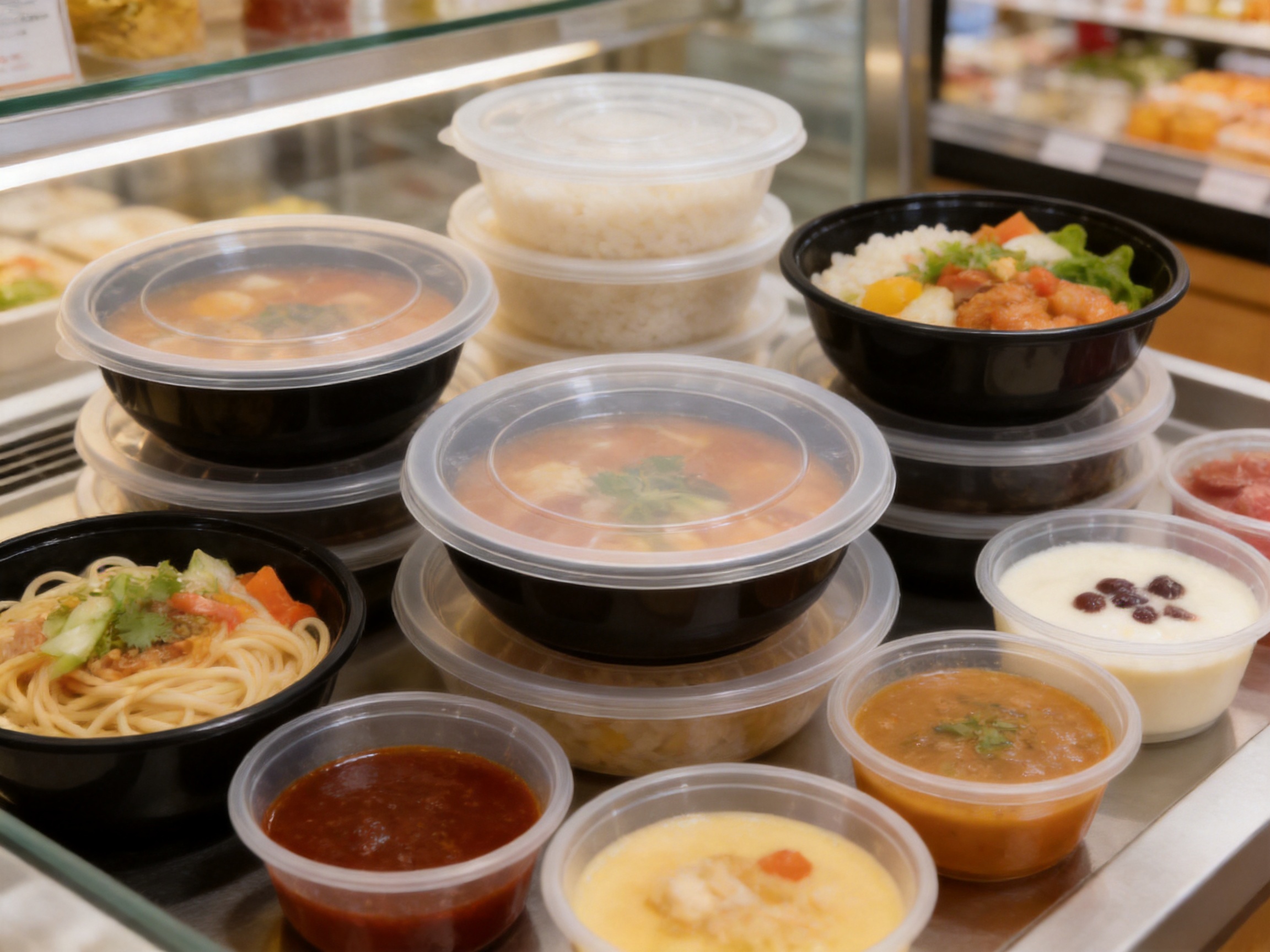
In takeaway restaurants, the lid helps protect food during delivery. Rice bowls, noodles, soups, sauces, salads, and side dishes can all benefit from a secure cover. The no-hole design is especially useful when foods contain liquid components or small particles that could escape through openings.
In cafés and snack shops, the transparent lid supports quick identification of desserts, fruit cups, yogurt bowls, cold dishes, and prepared snacks. Customers can view the product while it remains protected. This supports both hygiene and presentation.
In supermarkets and convenience stores, prepared foods often need packaging that looks clean and practical on the shelf. Transparent flat lids help customers see the product while protecting it from handling. Stackability also helps retailers arrange products neatly.
In catering operations, large numbers of meals may be prepared, covered, stacked, transported, and distributed. The lid’s durability and stackable structure are useful in this environment. A stronger lid helps reduce damage during movement and handling.
In food processing and central kitchens, packaging consistency is essential. Operators may need thousands of lids that fit accurately with selected containers. A manufacturer with OEM capability and quality systems can support this requirement better than a supplier offering only generic low-control products.
Environmental and Health Considerations
The product is described as environmentally friendly and healthy because it uses food-grade PP raw materials that are non-toxic and odorless, and because it is manufactured according to relevant safety and quality standards. In disposable packaging, environmental responsibility includes material selection, efficient product design, quality consistency, waste reduction, and compliance with applicable regulations.
PP is a widely used plastic in food packaging, and its lightweight nature helps reduce material use compared with heavier packaging formats. The thickened design of this lid is not about unnecessary material consumption; it is about creating enough strength to prevent failure. Packaging that leaks, breaks, or fails may cause food waste and customer complaints. A properly designed lid can reduce waste by helping food arrive safely.
Health considerations are equally important. Food packaging should not introduce odor, harmful substances, or contamination risks. The use of food-grade PP helps address these concerns. Certifications and testing further support customer confidence.
Environmental expectations vary by market, and customers may have specific requirements regarding recycling systems, labeling, or material documentation. A professional manufacturer can help provide relevant product information and support customized solutions where needed.
How the Product Supports Brand Value
Packaging is part of a food brand’s customer experience. Even before tasting the food, customers see and handle the package. A clean, transparent, firm, and leak-resistant lid creates a sense of reliability. A poor lid, on the other hand, can make even good food seem careless or low quality.
The PP plastic flat lid with no hole supports brand value by improving food protection, presentation, and delivery reliability. For takeaway and delivery businesses, packaging is often the only physical connection between the brand and the customer outside the restaurant. A better lid can contribute to a better impression.
For premium foodservice operators, packaging consistency is especially important. Customers paying for quality meals expect neat presentation and secure delivery. A strong transparent lid helps show that the brand cares about details. For large chains, packaging reliability also supports standardization across many outlets.
The ability to customize packaging further supports branding. Although the standard lid is transparent and functional, OEM services can help customers develop packaging systems aligned with their visual identity, container range, and market positioning.
Procurement Considerations for Buyers
When selecting a PP plastic flat lid with no hole, buyers should consider several factors. The first is container compatibility. The lid caliber, rim structure, and sealing style must match the container. A 120 mm lid should be tested with the intended bowl, cup, or container before large-scale purchasing.
The second factor is food type. For liquid and semi-liquid foods, leak resistance is critical. For hot foods, heat resistance is important. For retail display, transparency and appearance matter. Buyers should evaluate the lid according to actual use conditions rather than only looking at price.
The third factor is thickness and strength. A very thin lid may appear cheaper at first, but it may create hidden costs through leakage, deformation, or customer complaints. A thickened PP lid provides better durability and can reduce operational risk.
The fourth factor is manufacturer reliability. Certifications, production capacity, quality systems, and OEM experience all matter. A professional factory can provide more stable supply and better technical support than a supplier without strong manufacturing control.
The fifth factor is customization potential. Buyers planning long-term product lines may need different calibers, colors, structures, or packaging formats. Working with a manufacturer capable of customization can simplify future development.
Q&A Section
What is the PP plastic flat lid with no hole used for?
It is used as a secure cover for compatible disposable food containers such as takeaway bowls, cups, and packaging boxes. Its no-hole design is suitable for foods that require better leakage protection, including sauces, soups, rice bowls, noodles, salads, and prepared meals.
Why choose a no-hole lid instead of a perforated lid?
A no-hole lid provides a more complete covering surface and helps prevent liquids or fine food particles from leaking through the top. Perforated lids are useful for specific applications, but when sealing and spill prevention are priorities, a no-hole design is more suitable.
Is the lid safe for food contact?
The lid is made from food-grade PP raw materials. PP is widely used in food packaging because it is non-toxic, odorless, and heat-resistant when properly manufactured for food-contact applications.
What is the standard size available?
The listed specification is a 120 mm non-perforated flat lid with an approximate gram weight of 3.6 g and a transparent color. Custom caliber sizes can also be provided according to customer requirements.
Can the lid be used with hot food?
Yes, PP has good heat resistance compared with many common disposable plastic materials. The lid is designed to maintain stable shape and performance under common foodservice heat conditions, although buyers should test compatibility with their specific food temperature and container system.
What makes this lid more durable than ordinary alternatives?
The lid uses a thickened design that improves strength and helps maintain sealing performance even after handling, stacking, or repeated opening and closing. This reduces the risk of deformation and leakage.
Is the product customizable?
Yes. Yuqian Packaging Technology (Jiangsu) Co., Ltd. provides OEM customization services. Customers can request adjusted caliber sizes and related product specifications according to actual packaging needs.
What certifications support the company’s manufacturing quality?
The company has passed QS national industrial product production licensing, ISO9001 Quality Management System certification, BRC certification, German authoritative DIN safety certification, and EU ROHS+ testing. These certifications support confidence in manufacturing control and product safety.
Why is transparency important?
A transparent lid allows staff and customers to see the food inside without opening the package. This improves order checking, retail display, hygiene, and overall customer convenience.
How does stackability benefit foodservice businesses?
Stackable lids save storage space, simplify inventory handling, and improve work efficiency during busy service periods. They are easier to store, transport, and access than bulky or irregular lid designs.
Conclusion
The PP plastic flat lid with no hole is a practical and reliable packaging component designed for modern disposable food packaging needs. Its food-grade PP material, leak-proof no-hole design, thickened structure, transparent appearance, heat resistance, and stackable form make it suitable for takeaway, delivery, catering, retail, and food processing applications.
Compared with ordinary or low-cost competing lids, it offers stronger sealing protection, better durability, improved heat resistance, and more professional usability. These advantages help food businesses reduce leakage risk, protect presentation, improve hygiene, and create a better customer experience.
The product is further strengthened by the manufacturing capabilities of Yuqian Packaging Technology (Jiangsu) Co., Ltd. With long-term food packaging experience, a 30,000-square-meter production base, OEM customization services, a broad product portfolio, and recognized certifications, the company can support customers seeking dependable disposable food packaging container solutions.
For buyers who need a transparent, durable, non-perforated PP lid with stable quality and customization potential, the PP plastic flat lid with no hole is a strong choice. It combines simple design with meaningful technical value, proving that even a flat lid can play a major role in food safety, delivery reliability, and brand satisfaction.
References
Yuqian Packaging Technology (Jiangsu) Co., Ltd. Product Materials: PP Plastic Flat Lid with No Hole.
International Organization for Standardization. ISO9001 Quality Management Systems: Requirements and Application Principles.
BRCGS. Packaging Materials Global Standard: Safety, Quality, and Operational Criteria for Packaging Manufacturers.
European Union. ROHS Compliance Principles for Restricted Substances in Relevant Products.
DIN Standards. General Safety and Quality Considerations for Industrial and Consumer Product Testing.
Food Packaging Forum. Polypropylene Use in Food Contact Materials and Packaging Applications.