English
 Español
 عربى
Content
- 1 Why the Lid Is Critical in Disposable Food Packaging
- 2 Product Overview
- 3 Food-Grade Polypropylene Material
- 4 Non-Perforated Design for Leak Protection
- 5 Thickened Construction for Strength and Durability
- 6 Heat Resistance and Shape Stability
- 7 Stackability and Space Efficiency
- 8 Transparent Appearance and Professional Presentation
- 9 Advantages Over Generic or Poorly Matched Lids
- 10 Manufacturing Capabilities and Production Strengths
- 11 Quality Management and Certifications
- 12 Customization for Different Packaging Requirements
- 13 Applications in Food Service and Packaging
- 14 Performance Considerations for Buyers
- 15 Responsible Use and Environmental Considerations
- 16 Why Choose an Experienced OEM Factory
- 17 Recommended Ordering Process
- 18 Care, Storage, and Handling Guidelines
- 19 Frequently Asked Questions
- 19.1 What is a PP plastic flat lid with no hole?
- 19.2 What size is currently listed?
- 19.3 Is the lid suitable for liquid food?
- 19.4 Can the lid be used with hot food?
- 19.5 Is the product reusable?
- 19.6 Can the caliber be customized?
- 19.7 What color is available?
- 19.8 What certifications does the company report?
- 19.9 How should buyers confirm compatibility?
- 19.10 What company information is available for inquiries?
- 20 Conclusion
- 21 References
- 22 Product: PP plastic flat lid with no hole

In modern food service, packaging must do much more than contain a product. It must protect food during storage and transportation, support efficient handling, preserve hygiene, and communicate quality to customers. The lid is one of the most important components in this system because it forms the primary barrier between the packaged product and the outside environment. A weak, poorly fitted, or easily deformed lid can result in leakage, contamination, product waste, and damage to a food service brand’s reputation.
The PP plastic flat lid with no hole is designed to address these challenges. Made from food-grade polypropylene, this flat lid combines a non-perforated structure, thickened construction, dependable sealing performance, heat resistance, and efficient storage characteristics. It is suitable for takeaway bowls, food containers, dessert packaging, prepared meals, sauces, fine particles, and other applications where a secure closure is required.
Unlike vented lids, which are designed to release steam or allow drinking through an opening, a no-hole flat lid creates a continuous protective surface. This makes it especially useful when the primary requirements are leak prevention, cleanliness, product protection, and safe transportation. Its simple appearance conceals a carefully considered structure that supports reliable performance in busy catering, takeaway, delivery, and food processing environments.
Manufactured by Yuqian Packaging Technology (Jiangsu) Co., Ltd., the product reflects the company’s experience in disposable food packaging, its investment in production capabilities, and its commitment to quality management and certification. The company operates a large production site in Taizhou, Jiangsu Province, and provides product development, manufacturing, customization, and packaging solutions for customers in different markets.
Why the Lid Is Critical in Disposable Food Packaging
Many packaging problems begin at the closure. Even when a bowl or cup has sufficient strength, an unsuitable lid can cause spills, loss of freshness, exposure to dust, or difficulty during handling. For food service operators, these problems can increase operating costs and create negative customer experiences.
A properly designed lid must meet several requirements at the same time. It should fit the container securely without requiring excessive force. It should maintain its shape during normal use. It should resist the movement of liquids and small food particles. It should be safe for contact with food. It should also be economical to produce, easy to stack, and convenient for staff to use.
The PP plastic flat lid with no hole is developed around these practical requirements. Its flat, closed structure provides a broad sealing surface, while the thickened design contributes to rigidity and durability. The lid is intended to offer a dependable closure for compatible containers, helping food businesses reduce leakage and improve the overall presentation of packaged products.
For takeaway operators, delivery kitchens, cafés, catering companies, institutional food services, and food manufacturers, a consistent lid can improve workflow. Staff can place and close lids efficiently, packed containers can be stacked more easily, and customers receive food in packaging that appears clean, stable, and professionally prepared.
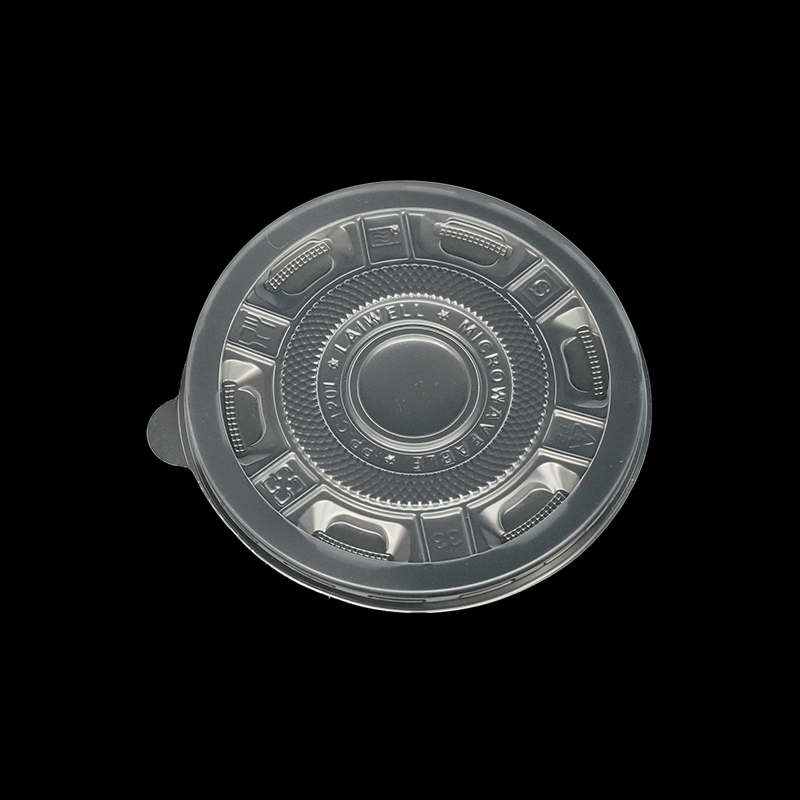
PP plastic flat lid with no hole
Product Overview
The product is a transparent PP plastic flat lid with no hole. The listed model is a 120 mm non-perforated lid with an approximate gram weight of 3.6 g. The transparent color allows customers and food service staff to identify the container or observe the condition of the closure while maintaining a clean and neutral appearance.
| Product Attribute | Specification |
| Product type | PP plastic flat lid with no hole |
| Application category | PP takeaway lid or liner |
| Listed model | 120 mm non-perforated lid |
| Caliber | 120 mm |
| Approximate gram weight | 3.6 g |
| Color | Transparent |
| Primary material | Food-grade polypropylene |
| Design | Flat, closed, non-perforated structure |
| Customization | Caliber adjustment and related OEM services according to requirements |
The 120 mm format provides a useful option for compatible takeaway bowls and food containers. Because container dimensions and rim structures can vary, customers should confirm the required caliber, rim profile, fit, and application conditions before placing an order. Yuqian Packaging Technology also provides customization services, enabling the product dimensions to be adjusted according to actual packaging requirements.
Food-Grade Polypropylene Material
Polypropylene, commonly abbreviated as PP, is widely used in food packaging because it offers a practical balance of light weight, rigidity, chemical resistance, and heat performance. For a disposable lid, the material must be sufficiently stable to retain its shape while remaining economical and suitable for high-volume production.
The product uses food-grade PP raw materials. This material selection supports the requirements of food-contact packaging when the product is manufactured, handled, and used according to applicable regulations and customer specifications. The material is described as non-toxic and odorless, helping to avoid unwanted smells that could affect the user’s perception of the packaged food.
Material choice also affects the sensory quality of food packaging. A lid with a strong plastic odor may create doubt about hygiene or product quality, even when the food itself is safe. By using suitable food-grade PP, the manufacturer aims to provide a cleaner and more acceptable packaging experience for food service businesses and end consumers.
Polypropylene is also valued for its relatively good resistance to moisture and many common food substances. This is beneficial for containers holding soups, sauces, prepared meals, desserts, grains, snacks, and other foods. The lid’s performance will always depend on the container design, food temperature, filling level, transportation conditions, and correct application, but the selected material provides a strong foundation for these uses.
Non-Perforated Design for Leak Protection
The most distinctive feature of this product is its no-hole design. The lid has no drinking opening, ventilation hole, or other intentional perforation. This creates a continuous surface across the top of the container and helps limit the paths through which liquids or fine food particles may escape.
For liquid and semi-liquid foods, an opening in the lid can become a direct route for leakage when the container is tilted, moved, or stacked. A closed lid reduces this risk by maintaining a more complete barrier. It is therefore suitable for products that need protection during delivery, storage, and customer handling.
The no-hole configuration is particularly useful for soups, sauces, porridge, noodles with liquid components, desserts, prepared foods, grains, powdered ingredients, and other products where a drinking or ventilation opening is not required. It can also help keep dust and external contaminants away from the packaged contents during ordinary handling.
Leak prevention is not determined by the lid alone. The container rim, lid dimensions, sealing profile, filling level, closing method, and transportation conditions all contribute to final performance. For this reason, the lid should be matched with the appropriate bowl or container. A correctly matched product can provide a more secure closure than a generic lid that does not fit the container rim precisely.
Compared with lids that contain holes, the non-perforated structure offers a clear advantage when containment is more important than steam release or drinking access. It simplifies the top surface and focuses the design on closure security. This makes the product a practical choice for food businesses that want to reduce spill risk during delivery and takeaway service.
Thickened Construction for Strength and Durability
Disposable packaging is often exposed to repeated handling before it reaches the customer. It may be filled, closed, moved through a production line, placed in a delivery bag, stacked with other containers, transported by vehicle, and opened by the final user. A lid that is too thin or flexible may bend, crack, detach, or lose its sealing performance during this process.
The thickened design of this PP flat lid is intended to improve strength and durability. Increased material thickness can contribute to greater structural stability, helping the lid resist ordinary pressure and handling. It can also support a more reliable fit on the container rim, particularly when the lid is opened and closed during normal use.
Durability is valuable even for disposable products. A durable lid is less likely to become damaged during packing and distribution. It can help maintain the appearance of the package and reduce the possibility of food contamination caused by a cracked or distorted closure. For businesses, this may also reduce the number of rejected or wasted packages.
The lid is designed to maintain good sealing performance after long-term storage or frequent opening and closing under appropriate conditions. This makes it useful not only for single-use takeaway packaging but also for applications in which food may be stored temporarily before consumption. As with all plastic packaging, users should observe the recommended temperature range and avoid conditions outside the product’s intended application.
Heat Resistance and Shape Stability
Food packaging may encounter heat during filling, storage, reheating, or transport. If a plastic lid softens excessively or deforms, it may no longer fit correctly. Deformation can weaken the seal and create opportunities for leakage or contamination.
PP is known for its comparatively good heat resistance among commonly used packaging plastics. The PP plastic flat lid with no hole is designed to maintain a stable shape in high-temperature food packaging environments within suitable operating conditions. This supports its use with many warm foods and prepared meals.
Heat resistance does not mean that the lid is suitable for every heating method or unlimited temperature exposure. Customers should evaluate whether the product is intended for hot filling, microwave use, oven use, sterilization, or other specialized applications. The actual performance depends on the material grade, lid geometry, food temperature, exposure time, and container combination.
For normal takeaway applications, the material’s heat performance provides an important advantage. It helps the lid remain functional after contact with warm food and reduces the likelihood of immediate distortion. This is especially relevant to restaurants, central kitchens, meal delivery services, and catering operations that package food shortly after cooking.
Stackability and Space Efficiency
Storage space is an important cost factor in food service. Packaging components are often stored in kitchens, warehouses, distribution centers, and production areas where every cubic meter must be used efficiently. Lids that are difficult to organize may slow down operations and increase the risk of damage.
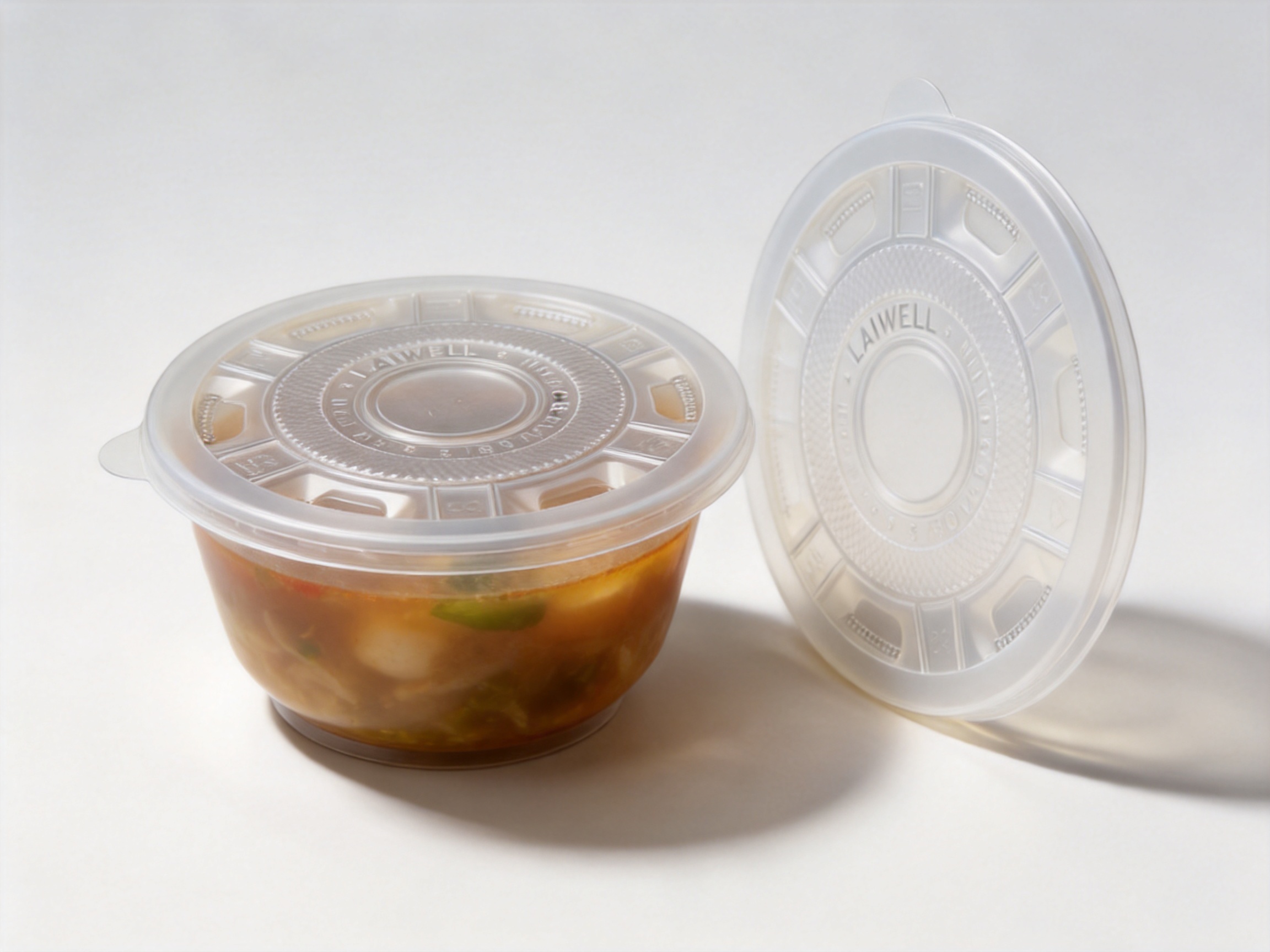
The flat profile of this product supports stacking. Multiple lids can be arranged together in a compact form, helping save storage space before use. Stackability also makes it easier for staff to count, transport, and replenish lids during daily operations.
A compact stack can improve warehouse organization and reduce unnecessary packaging volume. It may also make the product more suitable for larger-volume procurement, where many units must be stored and distributed. For food service companies with multiple locations, standardized stacks can simplify inventory management and make packaging consumption easier to estimate.
Stackability should be supported by careful handling. Lids should be stored in a clean, dry environment and protected from excessive pressure, contamination, direct heat, and sharp objects. Proper storage helps preserve transparency, shape, cleanliness, and sealing performance until the product is used.
Transparent Appearance and Professional Presentation
The transparent color provides a simple and versatile appearance. It allows the packaging design, bowl color, and food presentation to remain visible without introducing an additional color that may conflict with a brand’s visual identity.
Transparency can also support inspection during preparation and distribution. Staff may be able to see whether the lid is correctly positioned and whether the container is filled appropriately. Customers may appreciate the ability to identify the packaged item without opening the container, particularly when several dishes are delivered together.
A clean transparent lid contributes to a professional presentation. In takeaway and delivery markets, packaging is part of the customer experience. A lid that appears clear, smooth, and properly fitted can reinforce perceptions of cleanliness and organization.
For companies that apply labels, stickers, sleeves, or printed packaging, a transparent lid can offer design flexibility. It can be used with different container colors and food types without requiring a separate lid color for each application. Custom packaging programs can also combine the lid with customized bowls, labels, or outer packaging.
Advantages Over Generic or Poorly Matched Lids
One advantage of a purpose-designed lid is that its performance is considered as part of a packaging system rather than as an isolated plastic component. Generic lids may appear inexpensive, but they can create problems when their dimensions, rim structure, or material properties do not match the container.
A poorly matched lid may require excessive force to close, detach during transport, or leave gaps around the rim. It may also be too flexible to maintain its shape when stacked. These issues can cause leakage, slow down packing, and increase the number of damaged packages.
The PP plastic flat lid with no hole offers several functional advantages over basic alternatives:
First, the continuous, non-perforated surface provides a stronger barrier against leakage than an open or vented structure when no opening is needed.
Second, the thickened construction is intended to provide better rigidity than an ultra-thin lid, supporting more dependable handling and stacking.
Third, the use of food-grade PP supports a non-toxic, odorless, and food-contact-oriented packaging solution when produced and used under appropriate standards.
Fourth, the material offers good heat resistance and is less likely to deform under suitable high-temperature conditions than plastics with lower heat tolerance.
Fifth, the flat, stackable structure improves storage efficiency and can simplify warehouse and kitchen organization.
Sixth, the manufacturer provides customization services, allowing customers to discuss caliber dimensions and related requirements instead of relying only on a fixed universal size.
These advantages are particularly important for high-volume operators. Even a small reduction in leakage, breakage, packing time, or storage inefficiency can produce meaningful savings when thousands of units are used every day.
Manufacturing Capabilities and Production Strengths
Yuqian Packaging Technology (Jiangsu) Co., Ltd. was established in 2010 and is located in Taizhou City, Jiangsu Province, China. The company operates a production area of approximately 30,000 square meters and focuses on the research, development, production, and sales of new food packaging materials and products.
The company’s experience in food packaging provides an important foundation for the manufacture of PP flat lids. Producing a reliable lid requires more than selecting a suitable plastic resin. It requires control over tooling, material handling, forming conditions, dimensional consistency, trimming, inspection, packaging, and delivery.
For an injection-molded or formed plastic lid, production consistency is essential. The material must be distributed evenly so that the lid has adequate strength without unnecessary weight. The shape must remain stable after cooling. The sealing area must be produced accurately so that the finished lid can work with the intended container. Surface quality must also be controlled to maintain a clean appearance.
Advanced manufacturing processes can support repeatable product dimensions and stable output. Production teams may evaluate raw materials, monitor processing conditions, inspect finished parts, and manage packaging procedures according to internal quality requirements. These activities help reduce variations between production batches.
Yuqian Packaging Technology serves as an OEM manufacturer and factory, allowing customers to discuss product specifications directly with the source. This can simplify communication for importers, distributors, food service companies, and packaging brands that require stable supply or customized dimensions.
The company also develops biodegradable new materials and food packaging products. This broader product experience indicates an understanding of changing market expectations, including the demand for improved material selection, responsible packaging development, and product customization.
Quality Management and Certifications
Quality management is particularly important for food-contact packaging. Customers need confidence that products are manufactured under controlled conditions and that the supplier has established systems for managing production and quality requirements.
The company reports having passed the QS national industrial product production license, ISO 9001 quality management system certification, BRC certification, German DIN safety certification, and EU RoHS+ testing. These credentials and assessments represent different aspects of production, management, safety, and restricted-substance control.
ISO 9001 is associated with quality management systems. It emphasizes controlled processes, customer requirements, continual improvement, documentation, and organizational responsibility. For a packaging customer, a quality management system can provide reassurance that production is supported by defined procedures rather than relying entirely on individual operator experience.
BRC certification is widely recognized in sectors connected with food safety and packaging. It can support confidence in hygiene management, product control, traceability, and risk-based procedures, depending on the specific certification scope.
DIN-related testing or certification can indicate compliance with relevant German standards or safety requirements, subject to the exact certificate and product scope. EU RoHS-related testing addresses restrictions on certain hazardous substances in applicable products and materials. Customers should request current documentation when specific regulatory compliance is necessary for a target market.
Certifications do not replace correct product selection or application testing. Buyers should confirm the validity, scope, testing methods, and applicable product models of all certificates. Nevertheless, a documented quality system and recognized certifications can provide an important advantage over suppliers that cannot demonstrate structured quality management.
Customization for Different Packaging Requirements
Food packaging applications are rarely identical. A restaurant may use a 120 mm bowl, while another customer may require a different caliber. A food factory may need a lid designed for a particular rim profile, stacking system, filling line, or transportation method.
Yuqian Packaging Technology provides customization services for caliber size and related requirements. This gives customers the opportunity to discuss the actual packaging system rather than selecting a lid based only on a nominal diameter.
During a customization project, customers should provide as much technical information as possible. Useful information may include the container drawing, outside diameter, inside diameter, rim thickness, rim shape, container material, filling temperature, intended food type, sealing method, stacking requirements, and transportation conditions.
Samples are also valuable. A sample bowl and lid can allow the manufacturer to examine fit, closure force, dimensional compatibility, leakage resistance, appearance, and stacking behavior. Practical testing helps identify issues before large-scale production begins.
Customization may be useful for private-label packaging programs. A food brand can combine a customized lid with a matching bowl, printed outer packaging, labels, or other disposable products. Although the listed product is transparent, customers can discuss available color, packaging, and production options according to order requirements.
Customization should always balance performance and cost. A thicker lid may provide more rigidity but may increase material consumption. A special profile may improve fit but require new tooling. A good manufacturer can help customers evaluate the relationship between function, production volume, tooling investment, and unit price.
Applications in Food Service and Packaging
The PP plastic flat lid with no hole is suitable for a broad range of food packaging situations in which a secure closed top is required.
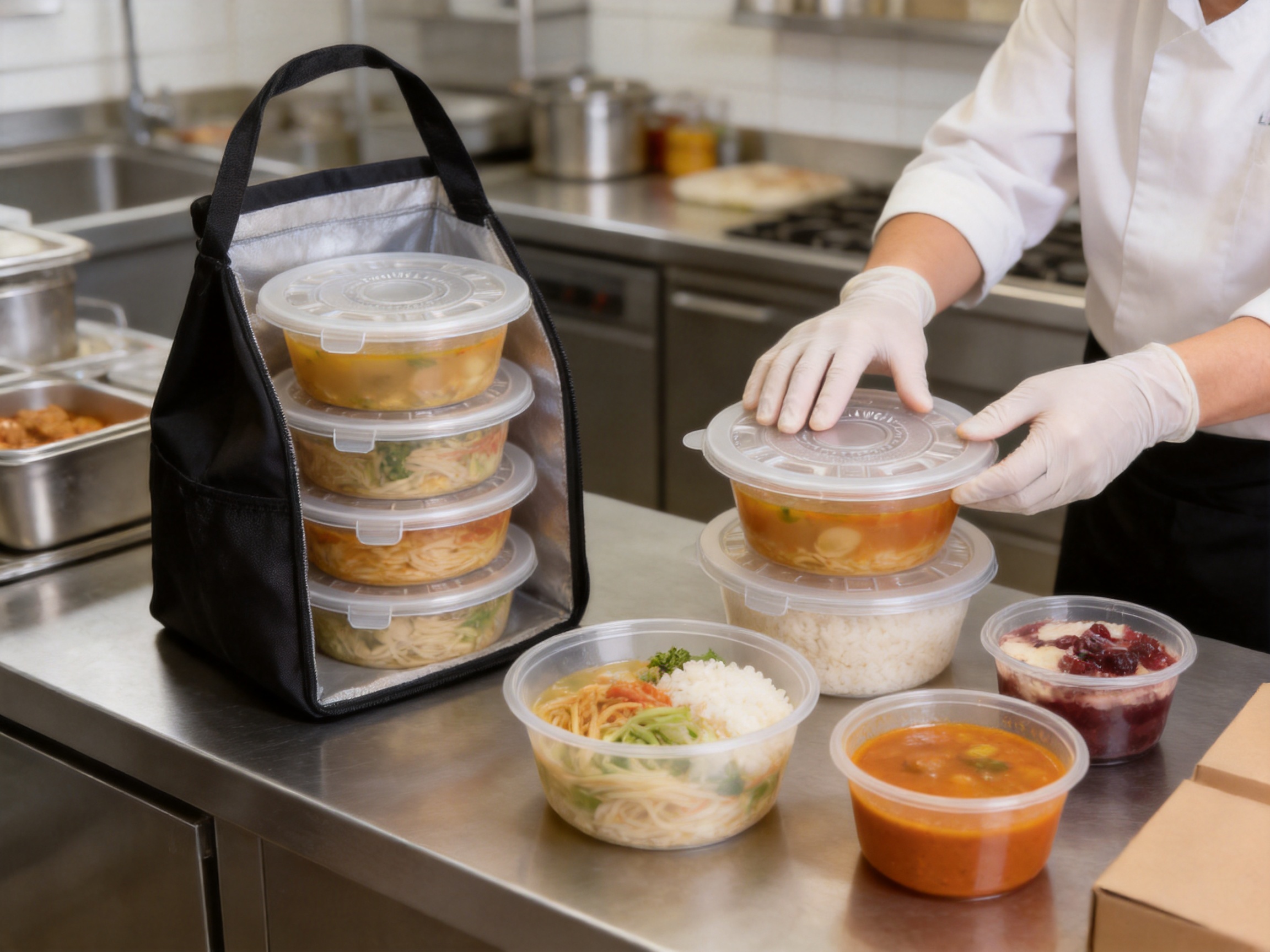
Takeaway restaurants can use the lid with compatible bowls for soups, noodles, rice dishes, vegetables, curries, and other prepared meals. The no-hole design helps support spill-resistant transportation when the container is correctly closed and kept in an appropriate position.
Central kitchens and meal delivery companies can use the lid for portioned meals prepared in advance. The transparent surface helps identify products, while the flat profile supports efficient storage and stacking during packing.
Catering companies can benefit from a lid that is easy to organize and suitable for large-volume packaging. Clear lids can help staff identify different dishes while maintaining a consistent presentation across events.
Food manufacturers may consider the lid for sauces, ingredients, desserts, snacks, and other products packed into compatible containers. The appropriate use depends on the container, filling process, storage conditions, and regulatory requirements.
Cafés and dessert shops can use non-perforated lids for chilled desserts, fruit products, pudding, porridge, or other foods that should remain enclosed. The transparent appearance can allow the product presentation to remain visible.
Institutional kitchens, schools, hospitals, and workplace canteens may also require standardized disposable packaging. In these environments, reliable dimensions and consistent supply are important for daily operations.
| Application | Relevant Product Benefit |
| Takeaway meals | Closed surface and leak-resistant design for transport |
| Soups and sauces | Non-perforated structure helps contain liquids |
| Prepared meal delivery | Thickened construction supports handling and stacking |
| Desserts and chilled foods | Transparent appearance supports product visibility |
| Catering operations | Stackability and consistent format support high-volume use |
| Food processing | Food-grade PP and customizable caliber options |
Performance Considerations for Buyers
Before purchasing, buyers should evaluate the lid together with the intended container. Nominal diameter alone does not guarantee compatibility. The lid must match the container’s rim design and sealing area.
Leakage testing should be carried out using the actual food or liquid, fill level, closure method, and transportation conditions. A lid may perform differently with thin liquids, thick sauces, oily foods, hot meals, or foods containing fine particles.
Temperature testing is also recommended. Customers should define whether the lid will be used with room-temperature food, chilled products, warm food, hot filling, reheating, or other conditions. The manufacturer can then advise on suitable material and application parameters.
For automated packing lines, buyers should test feeding, placement, pressure, and removal. The lid should be compatible with the speed and configuration of the equipment. For manual packing, the required closing force and opening convenience should be assessed by actual staff.
Customers should also consider logistics. The number of lids per carton, carton dimensions, pallet configuration, storage environment, and delivery schedule can influence the overall cost of the packaging program.
Responsible Use and Environmental Considerations
The product is made from PP, a commonly used thermoplastic material. Its suitability for a specific environmental program depends on local recycling systems, collection practices, contamination levels, and applicable regulations. Customers should not assume that a plastic item will be recycled in every location.
The manufacturer describes its food packaging activities as environmentally conscious and also develops biodegradable new materials. For customers with specific sustainability targets, it is advisable to discuss material alternatives, recycled-content options, biodegradable products, end-of-life requirements, and relevant testing documentation directly with the supplier.
Responsible packaging management begins with using the correct amount of material. A durable lid that protects food and reduces leakage can help prevent food waste, which is an important part of the environmental impact of food service. Packaging should also be stored and transported efficiently to reduce unnecessary damage and waste.
After use, consumers and businesses should follow local waste-sorting and recycling rules. Food residue can affect recycling quality, so suitable disposal preparation may be required. Environmental claims should always be assessed according to recognized standards and the conditions of the target market.
Why Choose an Experienced OEM Factory
Working with an experienced OEM factory can offer advantages beyond the purchase of a standard product. Direct communication with the manufacturer may make it easier to discuss size, material, tooling, packaging, documentation, and production scheduling.
Yuqian Packaging Technology combines product development, manufacturing, sales, and customer service. Its experience in food packaging allows it to support customers that need more than a simple catalog transaction. The company can provide guidance on product specifications and customization according to actual packaging requirements.
A factory relationship may also improve supply continuity. Once the product specification, tooling, quality requirements, and packaging format are approved, the supplier can work toward maintaining consistency across repeat orders. This is valuable for brands that depend on a uniform appearance and predictable performance.
Large production capacity can be important when customers operate several restaurants, distribute packaging to multiple regions, or serve seasonal demand. A sizable production base and established management processes can help support larger orders, although capacity and lead times should always be confirmed for each project.
The company’s certifications, food packaging experience, and research and development capabilities provide additional support for customers seeking a qualified packaging partner. Buyers should review current certificates, product samples, technical data, and quality agreements before finalizing a supply relationship.
Recommended Ordering Process
A structured ordering process helps ensure that the final lid is appropriate for the customer’s packaging system.
Step One: Define the Application
Identify the food type, container material, filling temperature, storage conditions, transportation method, expected shelf life, and whether the product will be opened and closed more than once.
Step Two: Confirm Dimensions
Provide the container diameter, rim dimensions, profile drawings, and samples if available. Confirm whether the required caliber is the listed 120 mm format or another customized size.
Step Three: Review Material and Compliance Needs
Discuss food-contact requirements, target-market regulations, testing documentation, heat conditions, and any sustainability objectives. Request the relevant material and certification information.
Step Four: Evaluate Samples
Test the lid with the actual container and food application. Examine fit, sealing, leakage resistance, stacking, transparency, opening force, and behavior after exposure to intended temperatures.
Step Five: Approve Production Details
Confirm the product specification, color, packaging quantity, carton markings, inspection requirements, delivery terms, and any tooling or customization charges before mass production.
Step Six: Establish Ongoing Quality Control
For repeat orders, define acceptable dimensional tolerances, appearance standards, packaging requirements, sampling plans, and procedures for handling nonconforming products. Clear requirements help both the buyer and manufacturer maintain consistent quality.
Care, Storage, and Handling Guidelines
Store the lids in a clean, dry area away from direct sunlight, excessive heat, chemicals, dust, and sharp objects. Keep cartons closed until the product is needed. Avoid placing heavy objects on top of lid cartons because excessive pressure may deform stacked products.
Employees should handle lids with clean hands or appropriate gloves, especially when the lids are used in direct food-contact applications. The lids should remain inside their protective packaging for as long as possible before use.
During packing, verify that the lid is correctly aligned with the container rim. Press or apply closure force evenly rather than pushing only on one side. A tilted or partially closed lid may not provide the intended sealing performance.
Do not use a lid that is visibly cracked, heavily scratched, distorted, contaminated, or otherwise damaged. When the product is used with hot food, follow the agreed temperature conditions and avoid unapproved heating methods.
Frequently Asked Questions
What is a PP plastic flat lid with no hole?
It is a flat, closed plastic lid made from polypropylene. Unlike a vented lid or drinking lid, it has no hole or opening. Its primary purpose is to provide a secure cover for compatible bowls or food containers.
What size is currently listed?
The listed model is a 120 mm non-perforated lid with an approximate weight of 3.6 g and a transparent color. Other calibers may be available through customization, subject to technical evaluation and production requirements.
Is the lid suitable for liquid food?
Its non-perforated design is intended to help prevent liquids or fine particles from escaping. However, final leak performance depends on the container, lid fit, filling level, food temperature, and transportation conditions. Testing with the actual application is recommended.
Can the lid be used with hot food?
Polypropylene provides good heat resistance, and the lid is designed to maintain stable performance under suitable high-temperature conditions. Customers should confirm the intended temperature range and use conditions before applying it to hot filling, reheating, or other specialized processes.
Is the product reusable?
The product is designed primarily for disposable food packaging. If a customer intends to open and close it repeatedly, the lid and container combination should be tested for sealing, hygiene, mechanical performance, and regulatory suitability.
Can the caliber be customized?
Yes. The manufacturer provides customization services to adjust the caliber size according to actual packaging needs. Customers should provide drawings, samples, or detailed dimensions for evaluation.
What color is available?
The listed specification is transparent. Other colors or appearance options may be discussed according to production capability, order quantity, material requirements, and customization details.
What certifications does the company report?
The company reports QS national industrial product production licensing, ISO 9001 quality management system certification, BRC certification, German DIN safety certification, and EU RoHS+ testing. Buyers should request current documents and confirm the exact scope for the product and destination market.
How should buyers confirm compatibility?
Buyers should compare the lid with the container rim, diameter, profile, filling condition, and closure method. The best approach is to test production samples using the actual container and food application before placing a large order.
What company information is available for inquiries?
Yuqian Packaging Technology (Jiangsu) Co., Ltd. is located at No. 8 Tongyang Road, Suchen Town, Taizhou City, Jiangsu Province, China. The company can be contacted by phone at 0086 15252423007, by fax at +0523 8608 3698, or by email at [email protected].
Conclusion
The PP plastic flat lid with no hole is a practical packaging component for businesses that prioritize secure closure, leak protection, durability, heat resistance, and efficient storage. Its continuous non-perforated surface is particularly valuable for liquids, fine particles, prepared meals, sauces, desserts, and other products that should remain enclosed during handling and delivery.
The thickened construction supports strength and repeated handling, while food-grade PP provides a suitable material foundation for food-contact packaging when used under proper conditions. The transparent color supports product visibility and a clean professional presentation. Its stackable flat design can help reduce storage requirements and simplify daily operations.
Beyond the product itself, the manufacturer provides OEM support, caliber customization, production experience, quality management, and certification-based assurance. With a large production facility and a focus on food packaging research, development, and manufacturing, Yuqian Packaging Technology can support customers seeking both standard and customized packaging solutions.
For the best results, buyers should evaluate the lid as part of a complete packaging system. Confirming the container dimensions, testing leakage and temperature performance, reviewing regulatory documents, and establishing clear quality requirements will help ensure that the final product meets operational and market expectations.
References
1. Product specification information for PP plastic flat lid with no hole, including 120 mm caliber, transparent color, and approximate 3.6 g weight.
2. Manufacturer-provided information concerning food-grade polypropylene material, thickened construction, non-perforated design, stackability, heat resistance, and customization services.
3. ISO 9001 quality management system principles and process-control concepts.
4. General food-contact packaging guidance concerning material suitability, hygiene, traceability, and application testing.
5. General polypropylene material references concerning heat resistance, rigidity, chemical resistance, and use in food packaging.
6. Manufacturer-provided company information concerning production capabilities, research and development, certifications, and food packaging experience.
7. General packaging quality-control practices for dimensional inspection, leak testing, storage, handling, and production-batch consistency.