English
 Español
 عربى
عربىContent
- 1 Product Overview and Core Application
- 2 Why Polypropylene Is Suitable for Flat Food Packaging Lids
- 3 Advantages of the No-Hole Design
- 4 Product Features and Functional Benefits
- 5 Manufacturing Capabilities and Quality Strengths
- 6 Quality Control from Raw Material to Finished Lid
- 7 Advantages over Ordinary or Poorly Matched Competitor Lids
- 8 Environmental and Operational Considerations
- 9 How to Select the Correct Lid for a Packaging Project
- 10 Packaging, Storage, and Handling Recommendations
- 11 OEM Service and Support for Food Packaging Brands
- 12 Company Manufacturing Strengths
- 13 Recommended Commercial Applications
- 14 Q&A
- 14.1 What is a PP plastic flat lid with no hole?
- 14.2 What size is available?
- 14.3 Is the lid suitable for liquid foods?
- 14.4 Is the lid made from food-grade material?
- 14.5 Can the lid be used with hot food?
- 14.6 Is the transparent lid recyclable?
- 14.7 Does the product have quality certifications?
- 14.8 Can the caliber be customized?
- 14.9 What information should be provided for a customized lid?
- 14.10 How does the lid compare with a lid that has a hole?
- 14.11 Where is the manufacturer located?
- 14.12 How can buyers contact the company?
- 15 Conclusion
- 16 References
- 17 Product: PP plastic flat lid with no hole
In modern foodservice, the lid is not a secondary accessory. It is an essential part of the packaging system, responsible for protecting food and beverages during filling, stacking, transport, display, and consumption. A well-designed lid must fit consistently, remain stable during handling, resist deformation, and help prevent spills or contamination. For takeaway operators, catering businesses, food manufacturers, distributors, and packaging wholesalers, the performance of the lid can directly influence customer satisfaction and operational efficiency.
The PP plastic flat lid with no hole is designed to meet these practical requirements. Manufactured from food-grade polypropylene, this transparent lid combines a flat profile, a non-perforated structure, reinforced durability, and reliable sealing performance. Its no-hole design is especially suitable for packaging applications in which leakage prevention and product protection are more important than direct access through a drinking opening or ventilation hole.
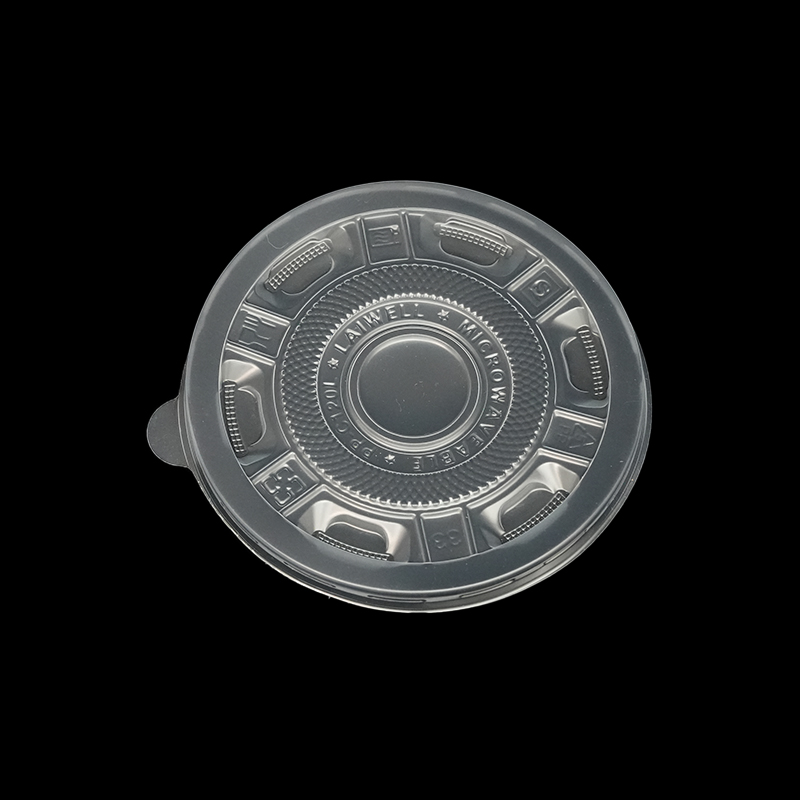
Available in a 120 mm caliber and supported by customization services, the lid can be adapted to different packaging requirements. It is suitable for use with compatible takeaway bowls, cups, containers, and other food packaging formats that require a flat, sealed top. Its stackable structure helps reduce storage volume, while its heat resistance supports use in a variety of foodservice environments.
Yuqian Packaging Technology (Jiangsu) Co., Ltd. manufactures this product as part of its wider range of plastic cups, plastic cup lids, takeaway bowls, disposable straws, recycling bags, peripheral products, and injection film lining cups and bowl boxes. With a production facility in Taizhou, Jiangsu Province, a dedicated research and development capability, and experience in food packaging materials, the company provides both standard products and OEM-oriented services.
PP plastic flat lid with no hole
Product Overview and Core Application
A flat lid with no hole is a closure component designed to cover a container completely without providing an opening in the top surface. Unlike a sipping lid or vented lid, it is intended to create a more enclosed packaging environment. This makes it a useful choice for foods, sauces, desserts, ingredients, snacks, and other products that need to remain inside the container during movement.
The product is made from PP, or polypropylene, a thermoplastic material widely used in food packaging. Polypropylene is valued for its balance of low weight, rigidity, heat resistance, chemical stability, and processing efficiency. When properly selected and processed for food-contact applications, PP can provide a dependable material base for disposable packaging components.
The transparent appearance allows users, retailers, and foodservice staff to see the general condition of the package without removing the lid. This can improve product presentation and simplify identification during order preparation. Transparency is also practical for takeaway services because staff can check whether a container has been filled correctly and customers can recognize the packaged product more easily.
The 120 mm non-perforated lid listed in the product information has a gram weight of approximately 3.6 g and is supplied in transparent color. The lightweight construction helps control packaging costs and transportation weight while the thickened design supports improved strength. Actual performance depends on correct matching between the lid and the container rim, so buyers should confirm dimensions, tolerances, and application conditions before placing a large order.
Typical Uses
The lid can be used for compatible takeaway bowls, food containers, dessert packaging, ingredient containers, and other disposable or semi-disposable packaging systems. It is particularly appropriate where the contents must remain enclosed, where spillage must be minimized, or where the package may be stacked during storage and transportation.
Potential applications include prepared foods, cold dishes, cut fruit, snacks, sauces, toppings, bakery items, ready-to-eat meals, and catering portions. For liquid or semi-liquid foods, sealing performance should be evaluated together with the container design, filling level, temperature, transportation conditions, and closing method. A lid cannot compensate for an incompatible rim or an overfilled container, but a well-matched lid can significantly improve the integrity of the complete package.
Why Polypropylene Is Suitable for Flat Food Packaging Lids
Material selection is one of the most important decisions in disposable packaging design. Polypropylene offers several properties that make it suitable for a no-hole flat lid. It is relatively lightweight, has useful rigidity, and can be formed into precise shapes through injection molding. This helps manufacturers produce consistent dimensions and repeatable structural details.
PP also offers good heat resistance compared with many other commonly used packaging plastics. The lid is less likely to soften or deform under moderate heat exposure when used within appropriate processing and service conditions. This is valuable for foodservice operations that handle warm foods or packages that may be exposed to elevated temperatures for a limited period.
Heat resistance does not mean that the lid is suitable for every high-temperature application. Users should not assume that a disposable PP lid can be used in an oven, sterilizer, pressure vessel, or microwave without specific confirmation. Temperature, duration, food composition, and container design all affect performance. However, for ordinary takeaway and food packaging environments, the material provides a practical combination of stability and convenience.
Polypropylene is also odorless and does not normally introduce a strong material smell into the package when produced from suitable raw materials and processed under controlled conditions. This is important for food packaging, because unwanted odors can negatively affect the perceived quality of the food. The use of food-grade PP supports the company’s focus on non-toxic, hygienic, and environmentally responsible packaging products.
Lightweight Construction with Useful Strength
The low weight of PP helps reduce the amount of material used in each lid. For high-volume foodservice operations, even a small difference in unit weight can influence shipping, warehouse handling, and total packaging cost. At the same time, a lid must not be so thin that it collapses during stacking or becomes difficult to apply.
The thickened design of this flat lid is intended to improve strength and durability. A reinforced structure can help the lid maintain its shape during repeated handling, order preparation, and distribution. It can also provide a more stable feel when staff press the lid onto a container or remove it during service.
Durability is especially important when packaged products are stacked. A lid that bends excessively may lose contact with the container rim or create an unstable stack. The flat profile and reinforced construction support organized placement and can help packaging remain more orderly in storage, refrigerators, delivery boxes, or catering transport containers.
Advantages of the No-Hole Design
The defining feature of this product is its non-perforated top. A no-hole design creates a continuous surface across the lid rather than a drinking opening, straw opening, or ventilation perforation. This structure is useful when the primary objective is to retain contents and provide a more enclosed package.
Improved Leakage Protection
Liquids, sauces, small food particles, and fine ingredients can escape through even a small opening. By eliminating holes in the lid surface, the design reduces one potential path for leakage. The result is a cleaner and more secure packaging solution when the lid is correctly matched with the container.
Leak prevention is valuable throughout the supply chain. During filling, lids may be placed on containers before the products are moved to a service counter. During delivery, packages may be tilted, vibrated, or stacked. During retail display, containers may be moved several times before purchase. A reliable no-hole closure helps protect the contents and reduce the risk of contamination caused by exposure.
It is important to distinguish between a no-hole lid and a guaranteed liquid-tight system. The final sealing performance is influenced by the container rim, lid geometry, pressure applied during closing, product temperature, fill level, and handling conditions. The best results are achieved when the lid is developed and tested as part of a complete container system.
Protection from External Contamination
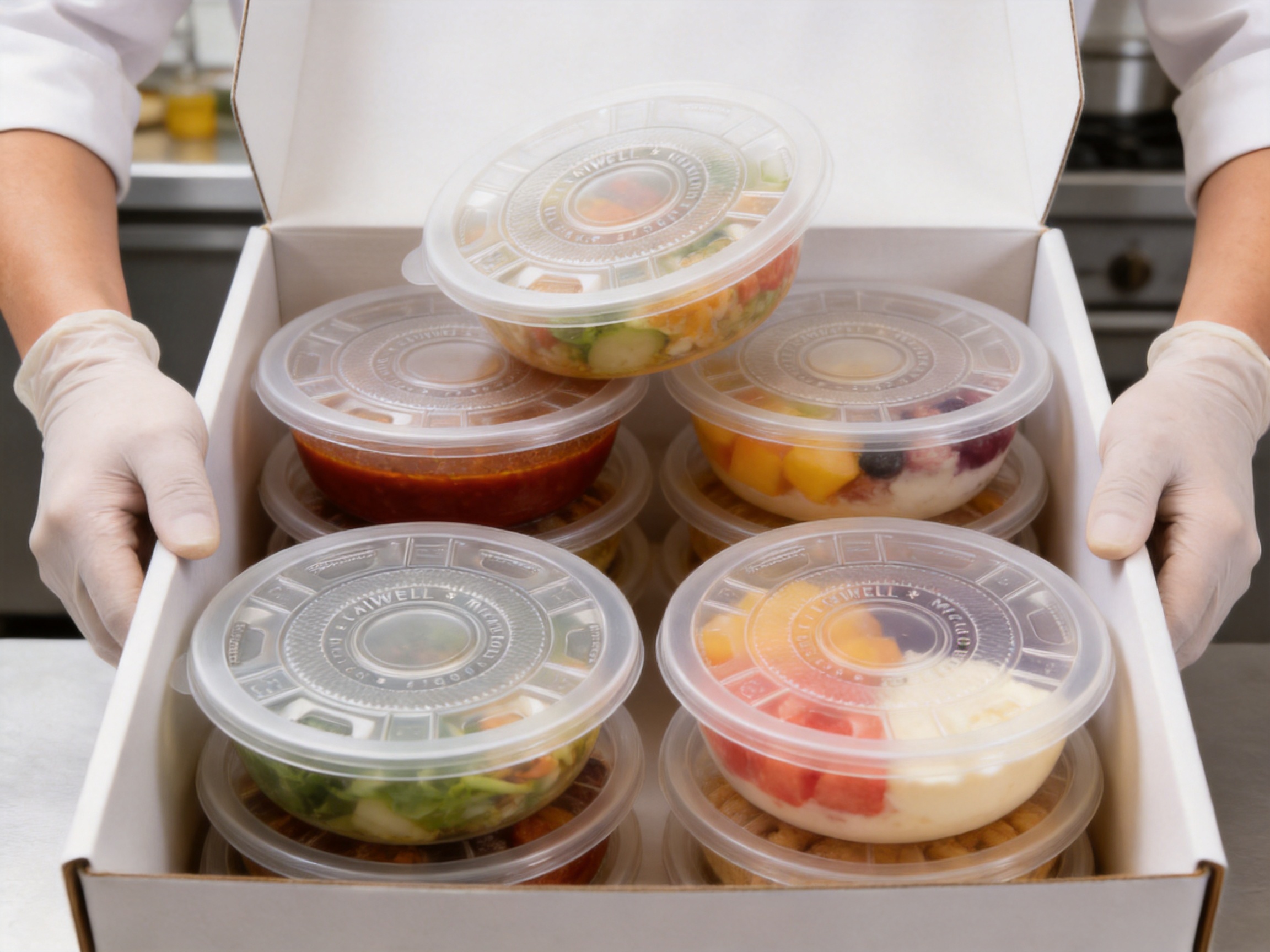
An enclosed top can help reduce exposure to dust, splashes, handling contact, and airborne particles. This is valuable for prepared foods and ingredients that may be stored or transported before consumption. The transparent surface also allows visual inspection while keeping the package closed.
For foodservice staff, the no-hole structure can simplify the packing process. A container can be filled, covered, and moved without needing to select a straw, plug, vent sticker, or secondary closure. This may reduce the number of components required for particular packaging formats and help create a more consistent appearance across orders.
Neat Appearance and Efficient Stacking
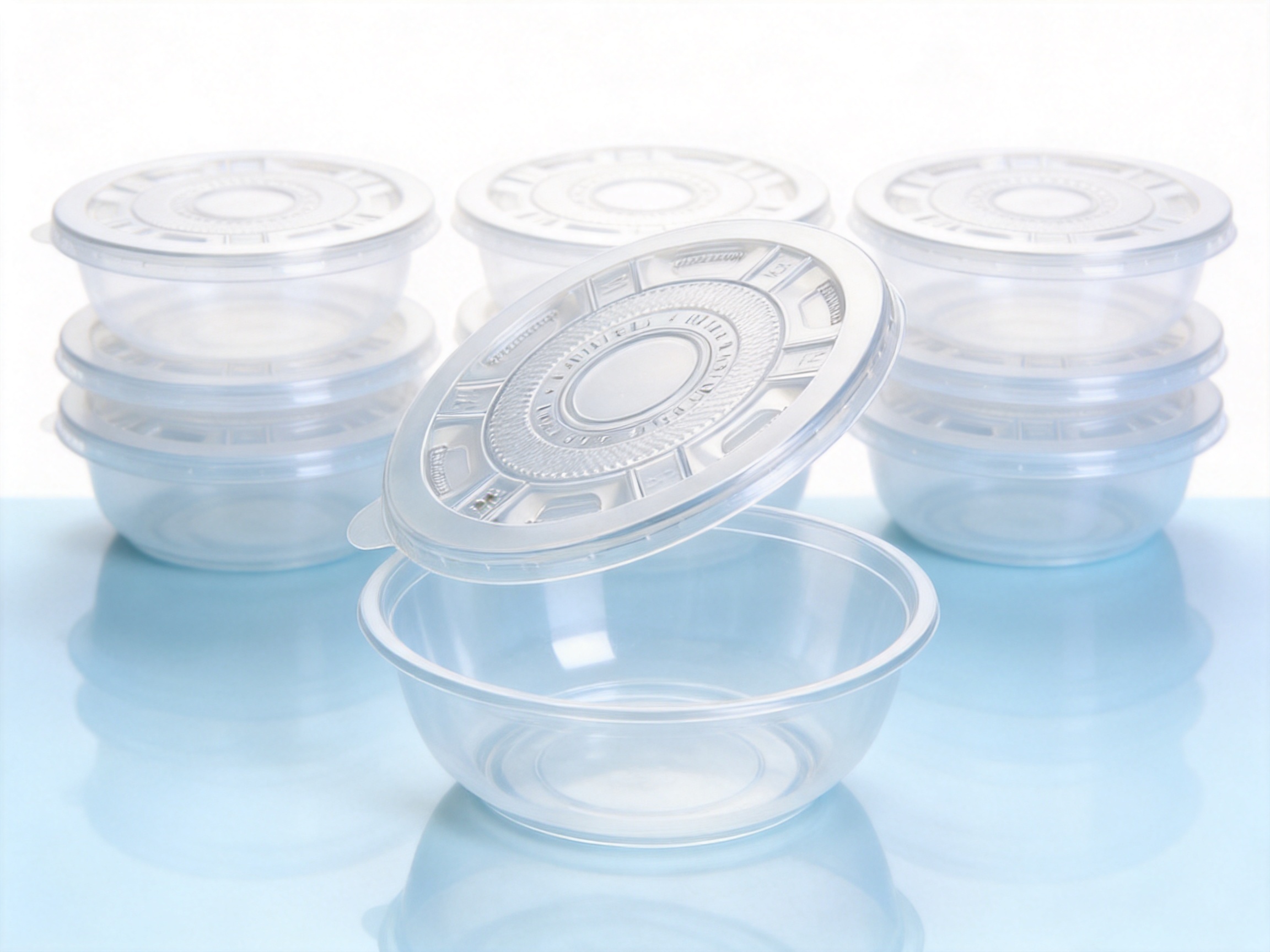
The flat profile gives the lid a clean and orderly appearance. It can support a uniform presentation for takeaway products, especially when several containers are arranged together. The lid’s stackable characteristics also help save space before use and during certain stages of packaging preparation.
Stackability has practical value in warehouses, kitchens, distribution centers, and retail environments. Efficiently nested or stacked lids can reduce shelf volume and simplify inventory management. The flat design is also compatible with automated or semi-automated handling systems when the dimensions and production specifications are properly controlled.
Product Features and Functional Benefits
Food-Grade PP Raw Material
The use of food-grade PP is a central product advantage. Food packaging components must be produced from materials selected for their intended application, and raw material quality can affect odor, appearance, strength, and regulatory suitability. By using food-grade polypropylene, the manufacturer aims to provide a lid that is non-toxic, odorless, and appropriate for food packaging applications when used under suitable conditions.
Food-grade material selection should be supported by documented supply-chain controls, production procedures, and relevant testing. Buyers serving international markets may also require additional documentation concerning food-contact compliance, migration testing, recycled content, colorants, or regional regulations. Yuqian Packaging Technology can discuss applicable documentation and requirements with customers during product selection and customization.
Thickened and Durable Structure
A reinforced lid structure can offer better resistance to bending and handling stress than an excessively thin alternative. The thickened design is intended to help the lid retain its shape during long-term storage, frequent opening and closing, and normal foodservice transportation.
Durability also contributes to user confidence. A lid that feels stable when pressed onto a container can communicate quality to catering staff and end users. For brands that sell prepared food, packaging quality forms part of the overall customer experience. A lid that remains attached and presents the product neatly can support a more professional brand image.
Reliable Sealing Performance
The lid is designed to work with a compatible container rim to create a secure closure. Its geometry, thickness, and material properties are intended to support consistent contact around the opening. When the container and lid are correctly matched, the continuous top and reinforced edge can help minimize the movement of liquids and fine particles.
For commercial buyers, reliable sealing is also connected to waste reduction. Leakage can result in rejected orders, damaged delivery bags, customer complaints, cleaning costs, and lost product. Although packaging cannot eliminate every risk, a well-designed closure can reduce preventable failures and improve operational consistency.
Heat Resistance and Shape Stability
Polypropylene provides useful heat resistance for many ordinary food packaging conditions. The product is designed to remain stable and resist deformation when exposed to moderate heat within the appropriate use range. This characteristic can be relevant for warm takeaway foods, short-term holding, and packaging operations in which containers are handled soon after filling.
Users should evaluate the complete system before applying the lid to very hot foods. The container material, food temperature, holding duration, and sealing method all matter. A packaging supplier can provide more specific guidance when customers share their actual use conditions.
Transparent Color
The transparent lid allows the contents to remain visible. This can support product recognition, quality inspection, and attractive presentation. Customers can often identify the food without opening the package, while workers can check the condition of the contents during order assembly.
Transparency is also helpful for businesses that offer several product variations. When containers are labeled, stacked, or arranged for delivery, a clear lid can provide an additional visual reference. It may reduce the need to open packages for inspection and help preserve hygiene during preparation.
Manufacturing Capabilities and Quality Strengths
Yuqian Packaging Technology (Jiangsu) Co., Ltd. was established in 2010 and is located in Taizhou City, Jiangsu Province, China. The company operates a plant area of approximately 30,000 square meters and focuses on the research and development, production, and sales of new food packaging materials and products.
This combination of research, manufacturing, and sales allows the company to participate in the complete product cycle. Customer requirements can be communicated to technical and production teams, product specifications can be reviewed before manufacturing, and feedback from the market can support future improvements. For OEM customers, this integrated capability is useful because packaging projects often involve more than simply purchasing an existing item.
Injection Molding as a Controlled Production Method
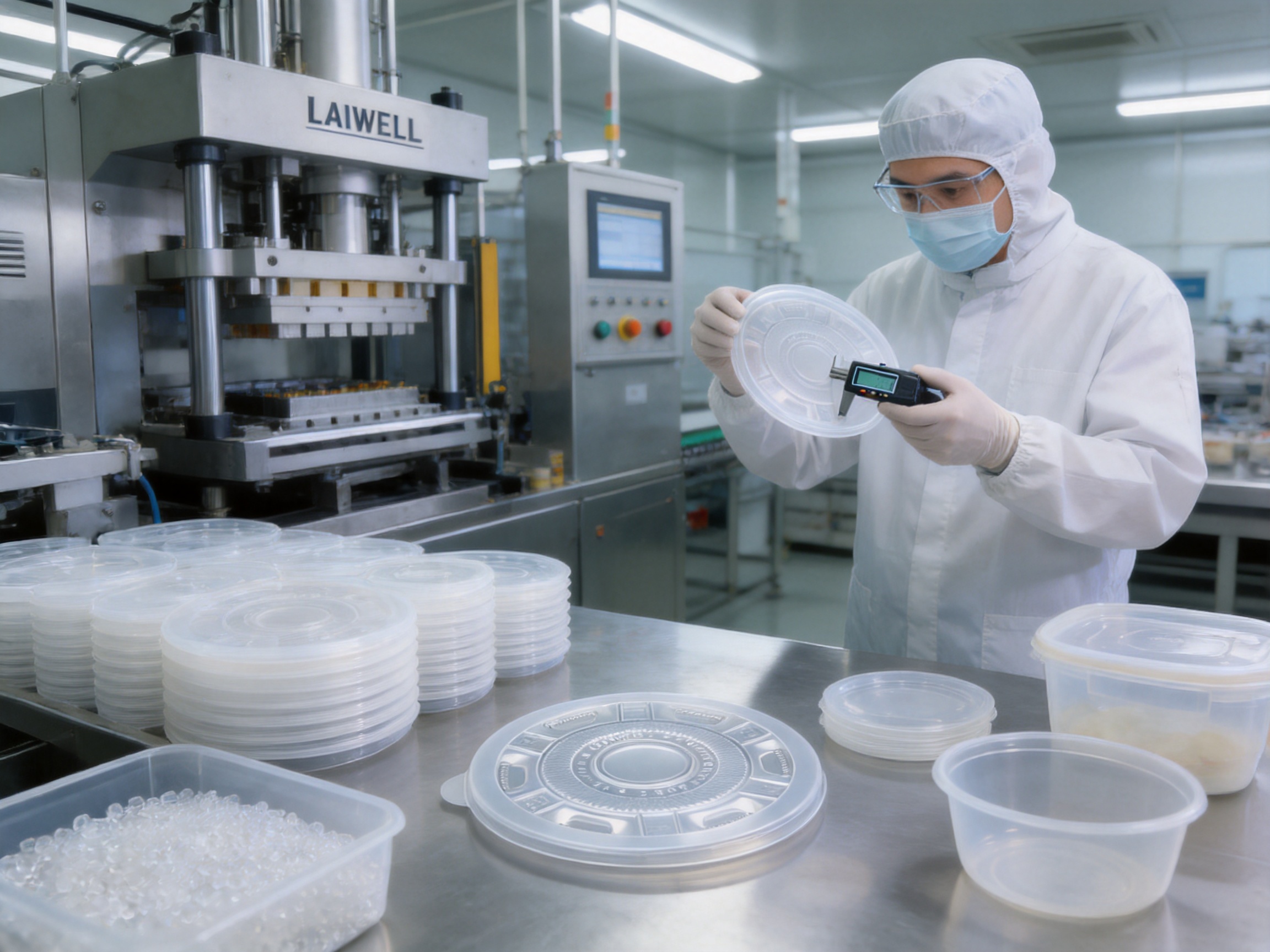
PP flat lids are commonly produced through injection molding, a process that can create repeated parts with defined dimensions and integrated structural features. In a typical production sequence, polypropylene pellets are prepared, heated, and injected into a mold cavity. After cooling, the formed lid is removed, inspected, and prepared for packing.
For a no-hole flat lid, mold design is particularly important. The mold must support the flat top, the surrounding edge, the sealing geometry, and any stacking details. Dimensional accuracy around the rim is essential because the lid must engage correctly with the container. Even a small inconsistency can affect fit, user experience, and leakage performance.
Process control can include monitoring material preparation, molding temperature, injection pressure, cooling conditions, cycle stability, and part appearance. Consistent processing helps control warpage, flash, incomplete filling, surface defects, and dimensional variation. The exact production parameters depend on the mold, equipment, raw material, lid geometry, and customer requirements.
Tooling and Customization Support
The company offers a variety of calibers, including a 120 mm option, and provides customized services to adjust the caliber size according to actual packaging needs. Customization may involve the diameter, fit, thickness, color, surface requirements, packing method, and other specifications that influence compatibility with the customer’s container system.
Customization should begin with accurate technical information. Customers should provide container drawings, rim dimensions, sample units, intended food type, temperature conditions, filling process, expected storage period, and transportation requirements whenever possible. These details help the supplier evaluate whether an existing lid can be used or whether a modified design is necessary.
OEM and customized production can be especially valuable for food brands seeking a distinctive packaging system. A lid designed for a specific container can improve fit and visual consistency. It can also help businesses avoid relying on multiple loosely matched packaging components from different suppliers.
Quality Management and Certification Background
The company states that its operations have passed the QS national industrial product production license and ISO 9001 quality management system certification. It also identifies BRC certification, German DIN safety certification, and EU RoHS+ testing among its quality and compliance credentials.
These certifications and testing references demonstrate an emphasis on formal production management, product safety, and process control. ISO 9001, for example, is associated with a structured quality management system covering areas such as documented procedures, responsibilities, corrective actions, and continual improvement. BRC-related standards are widely recognized in food and packaging supply chains and place emphasis on product safety, hygiene, traceability, and operational controls.
Certification status and scope can change over time, so buyers should request current certificates, applicable product scopes, test reports, and expiration details when compliance documentation is required. Different countries and end uses may also require different evidence. A responsible procurement process should verify that the documentation corresponds to the specific product and intended market.
Quality Control from Raw Material to Finished Lid
Quality control for a plastic lid begins before molding. Raw materials should be identified, stored, and managed according to established procedures. Food-grade PP must be protected from contamination and correctly handled so that production materials remain consistent. If colorants, additives, or masterbatch are used, they should also be selected for the intended food packaging application.
During molding, production teams can monitor the stability of the process and inspect samples at defined intervals. Visual checks may identify black spots, bubbles, scratches, flash, deformation, incomplete molding, or inconsistent transparency. Dimensional checks can confirm the caliber, edge geometry, flatness, and other critical measurements.
Finished lids should also be evaluated for fit with the intended container. A lid may appear acceptable by itself but fail to perform properly when combined with a particular bowl or cup. Fit tests, stacking checks, closure checks, and simulated handling tests can provide more meaningful information about the complete packaging system.
For customers using the lid with warm foods or liquid contents, application-specific testing is recommended. Test conditions may include temperature exposure, tilt testing, vibration, stacking pressure, drop handling, repeated opening and closing, and short-term storage. The most appropriate test plan depends on the product and distribution route.
Traceability and Production Consistency
For large-volume packaging buyers, consistency from one production batch to another is essential. Differences in material, molding conditions, or packing can affect lid fit and appearance. A quality management system can help organize production records, inspection results, corrective actions, and customer feedback.
Traceability is also important when a technical question arises. If a customer reports a dimensional or performance concern, production information can help identify the relevant batch and investigate possible causes. This supports more efficient communication between the supplier and the buyer.
Advantages over Ordinary or Poorly Matched Competitor Lids
The market includes many disposable lids with different materials, thicknesses, opening designs, and quality levels. The PP plastic flat lid with no hole competes by focusing on practical performance rather than unnecessary complexity. Its main advantages are the combination of a continuous top, reinforced construction, food-grade material, transparent appearance, heat resistance, and customization support.
More Enclosed than Perforated Alternatives
Lids with holes are useful for drinking, straw insertion, steam release, or ventilation, but they are not suitable for every product. A hole can create an escape route for liquids, sauces, powders, or small particles. The no-hole design is more appropriate when a business wants to retain the contents and limit external exposure.
More Stable than Extremely Thin Lids
Low-cost lids may be produced with minimal material to reduce the unit price. However, an overly thin lid can be more prone to bending, deformation, poor stacking, and difficult application. The thickened design of this product seeks to balance lightweight packaging with improved structural stability.
Better Compatibility through Customization
Generic lids can create problems when the container rim is not precisely matched. A lid that is too loose may leak or detach, while one that is too tight may be difficult to apply or remove. The availability of caliber customization gives buyers an opportunity to develop a closer fit for their packaging system.
Suitable for Professional Foodservice Presentation
The transparent, flat appearance creates a clean and organized presentation. For catering brands, restaurants, central kitchens, and prepared-food manufacturers, packaging appearance can be an important part of product positioning. A consistent lid can support a more uniform presentation across multiple orders and sales channels.
Environmental and Operational Considerations
Environmental responsibility in packaging involves material selection, product design, manufacturing efficiency, transportation, use, and end-of-life management. The PP lid is lightweight, which can reduce the amount of material and energy associated with transportation compared with heavier alternatives. Its stackability can also improve warehouse efficiency.
At the same time, plastic packaging should be managed responsibly after use. Recycling availability depends on local collection systems, sorting infrastructure, contamination levels, and regional regulations. Users should follow local waste instructions and avoid assuming that every plastic item is accepted in every recycling program.
The company identifies environmental and health considerations as part of its product advantages and reports EU RoHS+ testing among its compliance activities. RoHS-related testing generally concerns restrictions on certain hazardous substances in applicable products and markets. Buyers should confirm the precise scope of any test report and determine whether additional food-contact, recycling, or extended producer responsibility requirements apply to their destination market.
Packaging efficiency can also contribute to sustainability. A lid that seals effectively may help reduce food waste caused by spills or contamination. A durable design may lower the frequency of damaged packages during distribution. These benefits should be assessed together with material use, recycling pathways, and the actual life cycle of the packaged product.
How to Select the Correct Lid for a Packaging Project
Choosing the correct lid requires more than comparing the nominal diameter. The first step is to confirm the container’s outside rim diameter, inside diameter, rim profile, wall thickness, and sealing structure. A nominal size such as 120 mm may not be identical across all manufacturers, so samples or technical drawings should be reviewed.
The second step is to identify the product being packaged. Dry foods, thick sauces, watery liquids, hot meals, chilled desserts, and granular ingredients may place different demands on the closure. Businesses should describe the product accurately, including viscosity, particle size, temperature at filling, and expected holding time.
The third step is to define the handling environment. A package intended for counter service may require less resistance than one shipped by courier or transported over long distances. Buyers should consider stacking height, vibration, tilt, drop risk, delivery duration, storage temperature, and whether the package will be opened and closed more than once.
The fourth step is to review production and compliance requirements. Buyers may need food-contact declarations, migration test results, quality certificates, packaging specifications, batch records, inspection reports, or custom labeling. These requirements should be discussed before mass production rather than after the goods have been manufactured.
Questions to Discuss with the Manufacturer
Important technical questions include whether the 120 mm lid fits a particular container, whether samples are available, what customization options are possible, what the minimum order quantity is, how the lids are packed, and what the expected production lead time will be.
Customers should also ask about material specifications, color options, sealing performance, heat-use recommendations, storage conditions, and available compliance documents. If the lid will be used with liquid or hot food, the customer should request guidance on test conditions and perform its own validation before commercial launch.
Packaging, Storage, and Handling Recommendations
Plastic lids should be stored in a clean, dry environment away from direct sunlight, excessive heat, chemicals, and sources of contamination. Packaging should remain closed until the lids are needed for production or food preparation. Proper storage helps protect appearance, cleanliness, and dimensional stability.
During handling, staff should avoid dragging lids across dirty surfaces or placing them on unclean worktops. Although the lid is designed for food packaging, hygiene depends on the entire handling process. Lids should be applied with clean hands or suitable equipment, and damaged or visibly contaminated components should be removed from use.
Stacking should be organized so that excessive pressure is not placed on the lower units. The product is designed to be stackable, but storage conditions should still account for height, temperature, packaging weight, and warehouse movement. Proper inventory rotation can help ensure that older stock is used first.
Before large-scale use, businesses should conduct a practical trial. The trial should include filling, closing, stacking, transport, storage, opening, and customer handling. This process can reveal issues related to container compatibility or operating procedures that may not be visible from a product specification sheet alone.
OEM Service and Support for Food Packaging Brands
Many food brands need packaging that fits a specific product line rather than a completely generic item. Yuqian Packaging Technology provides OEM and customized manufacturing support for PP plastic flat lids and related food packaging products. The company’s broader product range includes plastic cups, cup lids, takeaway bowls, disposable straws, recycling bags, peripheral packaging products, and injection film lining cup and bowl boxes.
A customized project may begin with a sample evaluation and technical discussion. The manufacturer can review the intended container, assess the required caliber, and determine whether an existing mold or a modified tooling solution is suitable. The process may also include discussions about color, transparency, packaging quantity, printing or labeling needs, and shipping arrangements where applicable.
For a brand, customization can help create consistency across packaging components. A lid that fits a specific bowl or cup can improve the user experience and reduce the need for improvised combinations. It can also support product differentiation in foodservice markets where packaging is part of the brand’s visual identity.
Yuqian Packaging Technology’s location in Jiangsu Province provides access to established industrial and logistics networks. The company also established a Shanghai branch in January 2019 to improve service quality and expand business channels. This structure supports communication with domestic and overseas customers seeking food packaging products and personalized design services.
Company Manufacturing Strengths
Since its establishment in 2010, Yuqian Packaging Technology has developed experience in food packaging materials and products. Its stated focus on research and development, production, and sales provides a foundation for serving customers with both standard packaging items and customized solutions.
The approximately 30,000-square-meter plant area supports the company’s role as a production-oriented supplier rather than a simple trading intermediary. A manufacturing base of this scale can support organized raw material management, production planning, inspection, storage, and order fulfillment. Specific capabilities should still be confirmed for each project, but the company’s infrastructure is positioned to support commercial packaging supply.
The company’s certification and testing background further demonstrates its attention to formal quality systems and safety requirements. For international customers, documentation and communication are important parts of the purchasing relationship. A supplier capable of discussing material specifications, manufacturing processes, testing, and customization can reduce uncertainty during product development.
Its product portfolio also creates opportunities for coordinated sourcing. A customer purchasing cups, bowls, lids, straws, bags, or related packaging may benefit from communicating with one supplier about compatibility and packaging presentation. Consolidated sourcing can simplify procurement, although each product should still be evaluated according to its own specifications and compliance requirements.
Recommended Commercial Applications
The PP plastic flat lid with no hole is well suited to businesses that require a clean, enclosed, and stackable closure. Takeaway restaurants can use compatible lids for prepared food orders and side dishes. Catering companies can use them for portioned foods and event service. Central kitchens can apply them to containers prepared for delivery to retail stores, offices, schools, or hospitality venues.
Food manufacturers and wholesalers may use the lid as part of a private-label packaging system. The transparent surface can support product visibility, while the flat shape can simplify storage and pallet arrangement. Dessert and snack businesses may also value the no-hole structure when presentation and containment are priorities.
For all applications, the most important consideration is system compatibility. A buyer should evaluate the lid and container together, rather than treating them as completely independent products. The supplier can assist with caliber selection and customization, while the buyer remains responsible for validating the final package for its intended product and market.
Q&A
What is a PP plastic flat lid with no hole?
It is a flat polypropylene lid with a continuous top surface and no drinking, straw, or ventilation opening. It is designed to cover compatible food containers and help protect the contents from leakage, contamination, and accidental spillage.
What size is available?
The listed product is a 120 mm non-perforated lid with an approximate gram weight of 3.6 g. Other sizes may be available through customization, subject to technical evaluation, tooling, and order requirements.
Is the lid suitable for liquid foods?
It can be suitable for compatible liquid or semi-liquid food containers because the no-hole structure reduces one possible leakage path. However, the complete container system must be tested. The rim design, filling level, temperature, sealing method, and transportation conditions all affect final performance.
Is the lid made from food-grade material?
The product is manufactured from food-grade PP raw material. Customers requiring formal compliance documentation should request the relevant declarations, test reports, and certificates for their intended market and application.
Can the lid be used with hot food?
PP provides good heat resistance for many ordinary foodservice conditions, and the lid is designed to resist deformation under suitable temperatures. It should not automatically be used in ovens, pressure equipment, or other extreme-temperature environments. Buyers should confirm the application conditions and conduct testing before commercial use.
Is the transparent lid recyclable?
Polypropylene is widely recognized as a recyclable plastic material, but actual recycling depends on local collection and sorting systems. Users should follow local waste-management requirements and confirm the applicable recycling pathway in the destination market.
Does the product have quality certifications?
The company identifies QS national industrial product production licensing, ISO 9001 quality management system certification, BRC certification, German DIN safety certification, and EU RoHS+ testing among its quality and compliance credentials. Buyers should request current documentation and verify the scope applicable to the specific lid.
Can the caliber be customized?
Yes. Yuqian Packaging Technology provides customization services and can discuss caliber adjustments according to the customer’s container and packaging requirements. Technical drawings, samples, rim measurements, and application details are helpful during the evaluation process.
What information should be provided for a customized lid?
Customers should provide the container dimensions, rim profile, intended food product, filling temperature, storage conditions, transportation method, required color, estimated order volume, and target market. Samples and drawings can help the manufacturer recommend a suitable design.
How does the lid compare with a lid that has a hole?
A lid with a hole may be convenient for drinking, straw use, or ventilation. The no-hole lid is better suited to applications that prioritize enclosure, containment, and protection from leakage through the lid surface. The correct choice depends on the product and the intended user experience.
Where is the manufacturer located?
Yuqian Packaging Technology (Jiangsu) Co., Ltd. is located at No. 8 Tongyang Road, Suchen Town, Taizhou City, Jiangsu Province, China. The company also operates a Shanghai branch established in January 2019.
How can buyers contact the company?
Buyers can contact the company through its sales channels for product samples, quotations, customization discussions, technical specifications, compliance documents, and order arrangements. The listed telephone number is 0086 15252423007, and the listed email address is [email protected].
Conclusion
The PP plastic flat lid with no hole is a practical closure solution for food packaging applications that require containment, clean presentation, and reliable handling. Its food-grade polypropylene construction, reinforced design, transparent appearance, heat resistance, stackability, and no-hole structure provide a balanced combination of functional benefits.
Compared with poorly matched or excessively thin alternatives, the product is positioned to offer improved stability, more dependable sealing support, and better compatibility through caliber customization. Its performance is strengthened by the manufacturing capabilities of Yuqian Packaging Technology, including a substantial production base, research and development focus, OEM services, and a quality management and certification background.
For the best results, the lid should be selected as part of a complete packaging system. Container compatibility, temperature, filling level, transport conditions, storage, hygiene, and regional compliance requirements should all be evaluated before mass adoption. With appropriate testing and technical communication, this flat no-hole PP lid can support takeaway food brands, catering operations, food manufacturers, wholesalers, and other businesses seeking efficient and dependable disposable food packaging.
References
1. Product specification information for the PP plastic flat lid with no hole, including the 120 mm caliber, transparent color, and approximate 3.6 g gram weight.
2. Yuqian Packaging Technology (Jiangsu) Co., Ltd. company information and product portfolio materials.
3. General technical literature on polypropylene properties in food packaging and injection-molded packaging components.
4. ISO 9001 quality management system principles and guidance.
5. BRC packaging and packaging materials safety principles.
6. General guidance concerning food-contact plastic materials, migration testing, and packaging hygiene.
7. General information concerning polypropylene identification, recycling systems, and responsible packaging disposal.