English
 Español
 عربى
Content
- 1 1. Product Overview and Main Application Value
- 2 2. Why Polypropylene Is Suitable for Large Disposable Cups
- 3 3. Key Product Specifications
- 4 4. Advantages Over Less Suitable Disposable Cup Options
- 5 5. Manufacturing Quality and Process Strengths
- 6 6. Quality Management and Certification Background
- 7 7. Product Design Considerations for Beverage Businesses
- 8 8. The Importance of the Matching 120 Caliber Lid
- 9 9. Manufacturing Process from Material to Finished Cup
- 10 10. Factory Capabilities and Customer Support
- 11 11. Customization and Design Possibilities
- 12 12. Sustainability and Responsible Packaging Planning
- 13 13. Procurement Guide for Wholesale Buyers
- 14 14. Storage, Handling and Use Recommendations
- 15 15. Competitive Value for Different Customer Groups
- 16 16. Frequently Asked Questions
- 16.1 Q1: What is the capacity of the PP extra-large plastic cup?
- 16.2 Q2: What are the cup’s main dimensions?
- 16.3 Q3: Is a compatible lid available?
- 16.4 Q4: What material is used for the cup?
- 16.5 Q5: What temperature range is stated for the product?
- 16.6 Q6: Is the cup transparent?
- 16.7 Q7: Is the cup resistant to deformation?
- 16.8 Q8: Can the cup be used for beverages with toppings?
- 16.9 Q9: Can the product be customized?
- 16.10 Q10: What quality certifications does the manufacturer report?
- 16.11 Q11: Where is the manufacturer located?
- 16.12 Q12: What should buyers check before placing a bulk order?
- 17 17. Conclusion
- 18 References
- 19 Product: PP extra large plastic cup
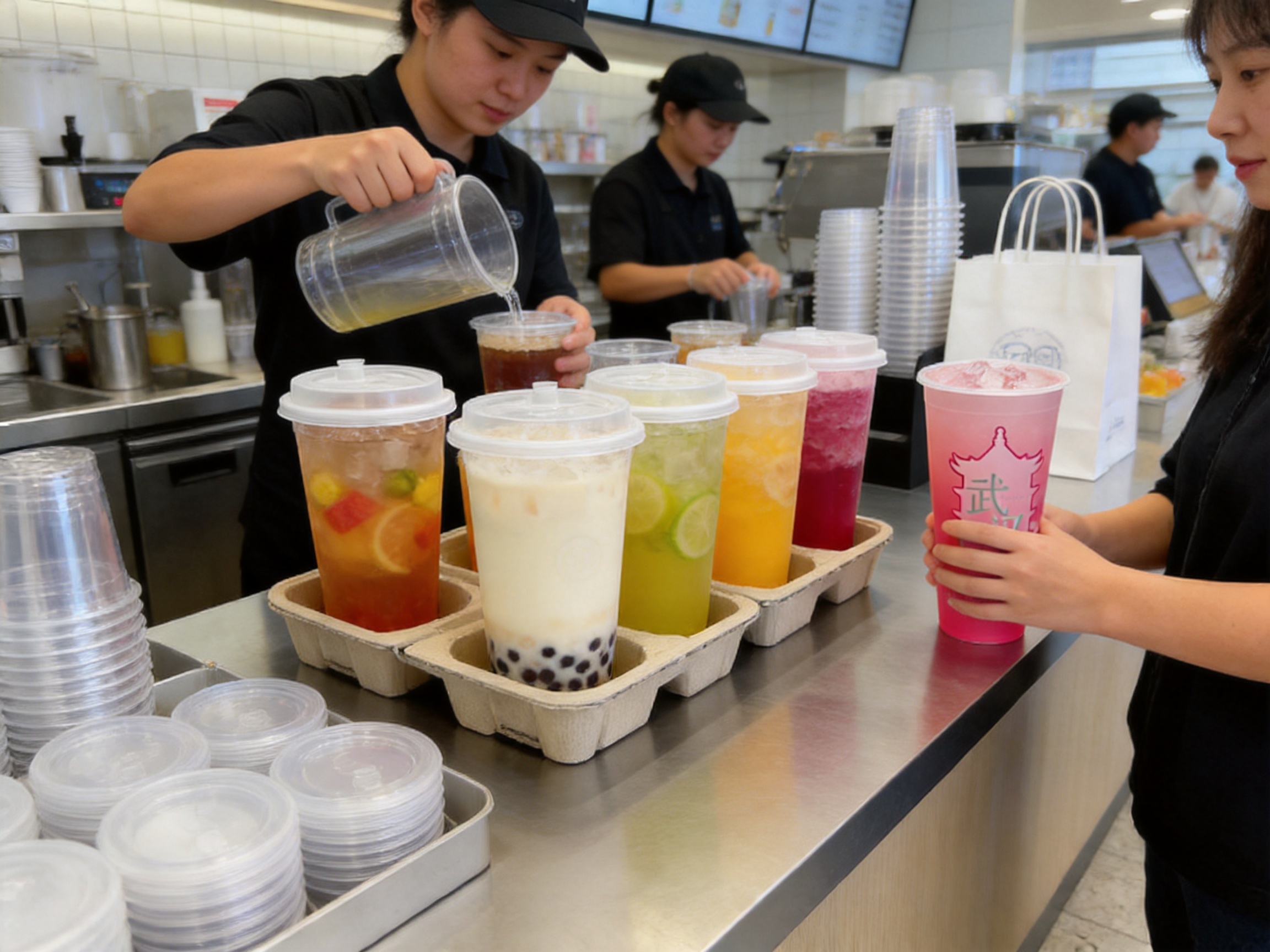
In modern foodservice, beverage retail and takeaway operations, packaging is no longer a minor accessory. The cup is part of the customer experience, part of the product’s protection system and part of the operating efficiency of a business. A suitable disposable cup must hold the required volume, maintain its shape during handling, present the beverage attractively and work reliably with compatible lids and service equipment. For businesses serving large beverages, milk tea, fruit drinks, iced coffee, smoothies, juices and other refreshments, an extra-large polypropylene cup can provide a practical balance of capacity, clarity, toughness and cost control.
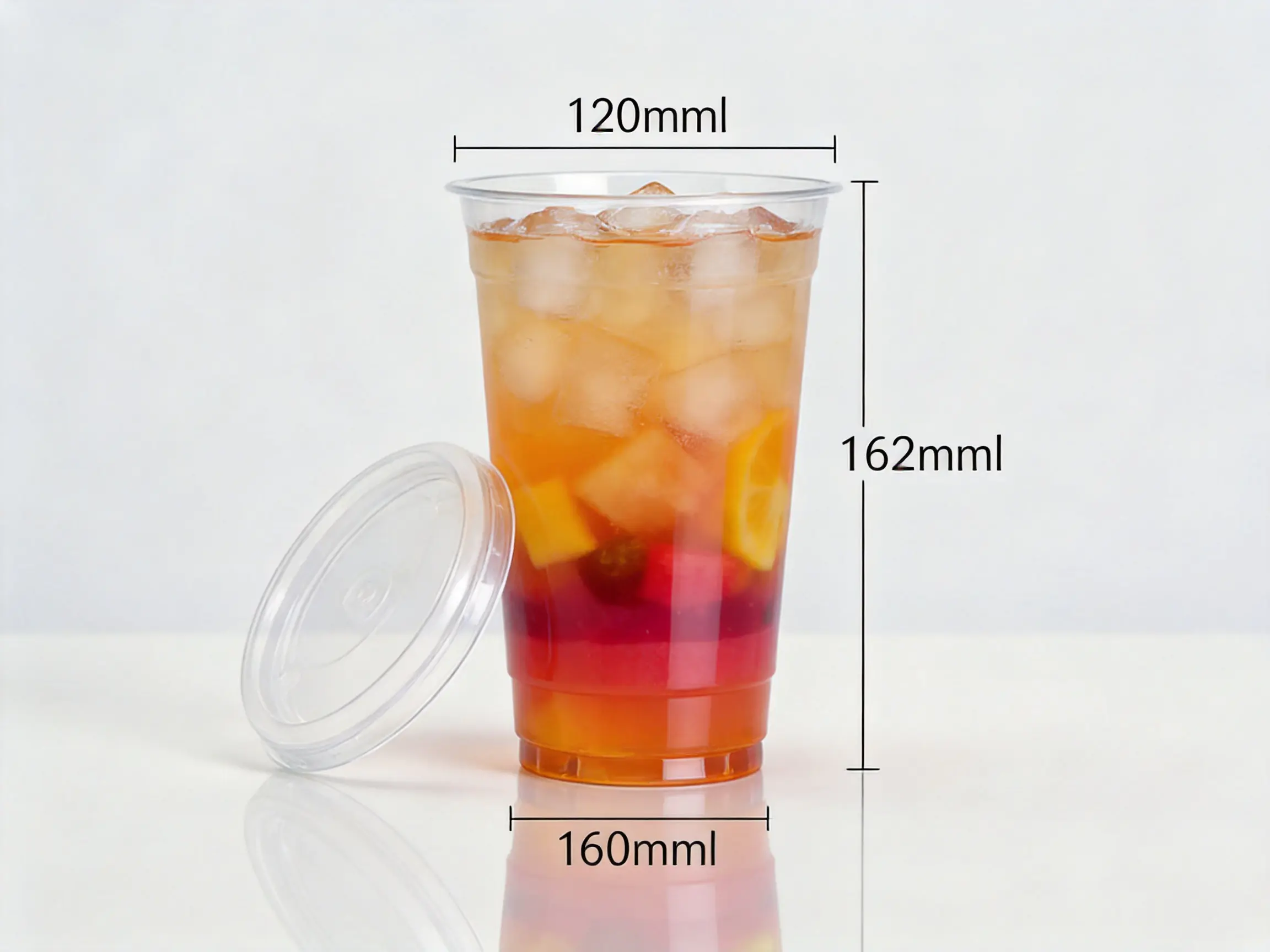
The PP extra-large plastic cup described in this article is designed around a 1,000 ml capacity and a 120 mm mouth diameter. Its 162 mm height, 72 mm base diameter and approximately 33 g cup weight create a large-format container for applications where standard beverage cups are not sufficient. A matching 120 mm caliber lid is also available, with a listed weight of approximately 7.3 g. This combination allows foodservice companies to plan a complete cup-and-lid system rather than sourcing separate components with uncertain compatibility.
Manufactured by Yuqian Packaging Technology (Jiangsu) Co., Ltd., the product is supported by a company established in 2010 and based in Taizhou City, Jiangsu Province, China. The company operates a plant area of approximately 30,000 square meters and focuses on the research, development, production and sale of new food packaging materials and products. Its stated certifications and testing background include QS national industrial product production licensing, ISO9001 quality management system certification, BRC certification, German DIN safety certification and EU RoHS testing.
This article examines the cup’s structure, material characteristics, dimensional specifications, manufacturing strengths, suitability for different markets, purchasing considerations and quality advantages. It also explains why a large-format PP cup can be more competitive than less suitable alternatives when businesses need transparent presentation, dependable performance and scalable disposable food packaging production.
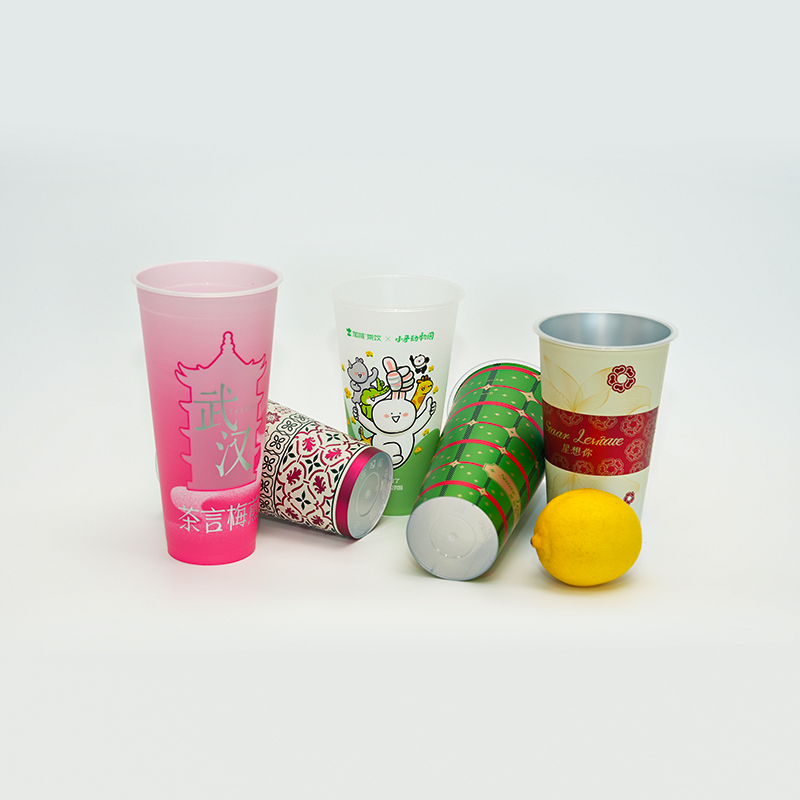
PP extra large plastic cup
1. Product Overview and Main Application Value
The PP extra-large plastic cup is a disposable food packaging container made from polypropylene, commonly abbreviated as PP. It is intended for high-volume beverage service and related food applications that require a large opening, generous internal volume and a secure compatible lid. With a nominal capacity of 1,000 ml, the cup is positioned for customers who want larger servings or businesses that offer premium, shareable or highly customized drinks.
A 1,000 ml capacity is useful for more than simply increasing beverage size. It can reduce the need for repeated refills, help retailers create distinctive large-format menu items and provide space for ice, fruit pieces, toppings or layered ingredients. For cafés, beverage chains, dessert shops, event caterers and takeaway operators, this capacity can support a broader product range without requiring several different large-cup formats.
The 120 mm mouth is another important design feature. A wide opening allows the cup to accommodate large-diameter lids and can make filling, topping and cleaning of production equipment more convenient. It is also visually effective for beverages containing ice cubes, fruit slices, tapioca pearls, jelly, whipped toppings or other inclusions. When paired with the corresponding 120 caliber lid, the opening creates a packaging system suitable for transport, display and takeaway service.
The cup is described as highly transparent, smooth and round at the mouth. These features contribute to both appearance and usability. High transparency helps the customer see the beverage’s color, layers and ingredients, while a smooth mouth can improve drinking comfort and support more consistent lid fitting. A round rim also helps create a clean visual presentation, which is particularly important for drinks marketed through photographs, delivery platforms and social media.
Although disposable, the cup is designed with good toughness and resistance to easy deformation. This is valuable in practical service conditions. A cup may be filled, sealed, stacked, transported, placed into a carrier and handled by several people before it reaches the final consumer. A container that loses its shape too easily can create leakage risks, poor shelf presentation and customer dissatisfaction. The stated toughness of this PP design is therefore a central part of its commercial value.
2. Why Polypropylene Is Suitable for Large Disposable Cups
Polypropylene is widely used in food packaging because it offers a useful combination of light weight, toughness, processability and temperature adaptability. Compared with some more brittle plastics, PP can withstand routine handling with less risk of cracking or splitting. This makes it suitable for cups that must remain stable when filled with beverages, ice and toppings.
The product information states that the cup is adaptable to temperatures from -10°C to 120°C. This stated range gives the product flexibility across cold and warm service scenarios, subject to the actual beverage, filling method, lid type and application requirements. For cold drinks, the cup can support refrigerated contents and iced beverages. For suitable warm applications, the stated upper temperature range provides additional versatility compared with products intended only for cold service.
Temperature performance should always be considered as part of a complete packaging system. The cup, lid, beverage, filling equipment and transportation conditions should be evaluated together. A business serving hot liquids should confirm that its particular formulation and operating process are compatible with the cup and lid. Nevertheless, the broad stated temperature adaptability is a meaningful advantage for operators seeking one material platform for multiple product categories.
PP is also advantageous for high-volume manufacturing. It can be formed through industrial processes that produce consistent shapes at scale. For a disposable cup manufacturer, stable material behavior supports repeatable wall formation, consistent rim geometry and efficient production planning. These characteristics are important when customers need large quantities with uniform appearance and dependable dimensional compatibility.
Another advantage is the balance between physical performance and material efficiency. The listed cup weight is approximately 33 g for a 1,000 ml container. This indicates a design intended to provide substantial capacity without relying on an excessively heavy structure. Material efficiency can help reduce shipping weight, simplify warehouse handling and support cost management while retaining the toughness required for practical use.
3. Key Product Specifications
Clear and accurate specifications help buyers compare disposable cups and determine whether a product matches their filling lines, lids, carriers and menu requirements. The principal dimensions of this extra-large cup and its compatible lid are presented below.
| Item | Capacity or Size | Mouth Diameter | Height | Bottom Diameter | Approximate Weight |
|---|---|---|---|---|---|
| PP extra-large plastic cup | 1,000 ml | 120 mm | 162 mm | 72 mm | 33 g |
| 120 caliber cup lid | Compatible large-format lid | 120 mm | Not specified | Not specified | 7.3 g |
The cup’s dimensional relationship is suitable for large-volume beverage packaging. A 120 mm top opening combined with a 72 mm base creates a visibly tapered profile. This shape can provide a broad presentation area while retaining a comparatively stable bottom footprint. The 162 mm height gives the container a substantial appearance without making it excessively tall for ordinary takeaway handling.
The dimensions also help buyers plan secondary packaging. Cup carriers, delivery bags, vending systems, sealing equipment and storage cartons should be selected according to the cup’s actual outer dimensions, filled weight and lid configuration. Because the product is a large-format container, businesses should conduct physical compatibility tests before placing a major production order.
The listed 33 g gram weight provides a useful reference for material planning, but the final weight may depend on production tolerances, design adjustments and customer-specific requirements. The lid’s listed 7.3 g weight can also help estimate total packaging weight when calculating transportation, delivery and inventory costs.
4. Advantages Over Less Suitable Disposable Cup Options
4.1 Larger Capacity for Premium and High-Volume Beverages
Many standard disposable cups are designed for small or medium servings. When a business wants to promote a large drink, those formats may require multiple packaging sizes, more complex inventory management or compromises in product presentation. The 1,000 ml PP cup gives operators a dedicated extra-large option that can support larger recipes and more visible toppings.
A large cup can also support menu differentiation. A beverage retailer may offer a signature one-liter fruit tea, a family-size iced drink, a large smoothie, a party beverage or a promotional seasonal product. The packaging itself communicates size and value. When the cup is transparent, the visual volume of the drink becomes part of the product’s appeal.
4.2 Better Visual Presentation Than Opaque Packaging
High transparency is especially valuable for beverages whose appearance influences purchasing decisions. Fruit layers, colorful syrups, ice, milk gradients, tea clarity and toppings can be seen immediately. Transparent packaging may reduce the distance between the product and the customer because it allows the contents to function as a visual display.
Compared with opaque cups, a clear PP cup can help customers verify fill level and product composition. It can also support branded labels, printed sleeves and decorative seals without completely hiding the beverage. For retailers using delivery photographs or counter displays, the container can contribute to a more consistent and recognizable presentation.
4.3 Toughness for Everyday Handling
Large cups are exposed to higher handling demands because they may contain more liquid and therefore become heavier when full. A fragile container can buckle under pressure, especially when lifted with one hand or placed into a tight carrier. The product’s stated good toughness and resistance to easy deformation address this practical challenge.
Toughness is also valuable during stacking and transportation. Empty cups must be stored efficiently, while filled cups may be grouped in delivery bags or event trays. A stable cup profile can help reduce appearance problems and make the overall service process more orderly.
4.4 Wide Opening for Toppings and Convenient Drinking
The 120 mm mouth provides space for ingredients and toppings that may be difficult to serve through a narrow opening. This is useful for bubble tea, fruit beverages, dessert drinks, smoothies and products with large ice pieces. A wide mouth can also be paired with a large-format lid designed for straw insertion or direct drinking, depending on the lid style selected.
A smooth, round rim can improve the customer’s drinking experience. It may also support more consistent sealing when matched with the correct lid. For manufacturers and distributors, a standardized rim diameter simplifies product identification and reduces the chance of mixing incompatible lids.
4.5 Broad Temperature Adaptability
The stated -10°C to 120°C adaptability gives the cup a wider operating range than packaging designed only for chilled beverages. It can help businesses evaluate a single PP platform for cold drinks, refrigerated products and suitable warm applications. This may simplify procurement and reduce the number of materials needed in stock.
Temperature suitability does not eliminate the need for application testing. Hot liquids, rapid temperature changes, microwave use, sealing conditions and transportation time can all affect packaging performance. Buyers should define their exact process and request confirmation for any application that approaches the upper or lower limits.
5. Manufacturing Quality and Process Strengths
The value of a disposable cup depends not only on its material but also on how consistently that material is transformed into a finished product. A high-quality manufacturing process must control raw materials, forming conditions, dimensional accuracy, surface appearance, rim quality, stacking behavior and final inspection. For large-volume customers, consistency is often as important as the initial product specification.
Yuqian Packaging Technology (Jiangsu) Co., Ltd. describes itself as a high-tech enterprise engaged in the research and development, production and sales of new food packaging materials and products. This positioning indicates an emphasis on more than simple product assembly. Research and development can support material selection, structural optimization, production improvement and the adaptation of packaging to changing foodservice requirements.
The company was established in 2010, giving it a substantial operating history in the packaging field. Experience accumulated over many years can strengthen manufacturing management, supplier coordination, quality control and customer service. It can also help a producer understand the practical differences between laboratory specifications and real-world use in cafés, restaurants, factories, catering operations and delivery networks.
The company reports a plant area of approximately 30,000 square meters in Taizhou City, Jiangsu Province. A dedicated production site of this scale can support organized raw-material storage, production areas, inspection stations, packaging operations and finished-goods warehousing. It may also provide room for production expansion and the separation of different product categories.
Production scale is particularly relevant to disposable food packaging because buyers often need regular supply rather than isolated orders. A cup can be technically excellent but commercially unsuitable if the supplier cannot maintain continuity, coordinate shipment schedules or support large repeat volumes. A stable factory structure helps reduce supply risk for customers building long-term packaging programs.
The manufacturer also identifies biodegradable new materials and food packaging products among its areas of focus. This broader material capability is relevant to buyers who may eventually need several packaging solutions, including conventional PP products, recyclable options or other developing material technologies. A supplier with multiple product and material capabilities may be better positioned to support packaging transitions over time.
6. Quality Management and Certification Background
Food packaging buyers increasingly evaluate suppliers through documented management systems and third-party testing. Product appearance alone cannot demonstrate whether a supplier controls production consistently. Certifications and testing provide additional evidence that the manufacturer has established procedures for quality management, safety and regulatory evaluation.
The company reports ISO9001 quality management system certification. ISO9001 is associated with systematic quality management, documented processes, corrective action and continual improvement. In a disposable cup factory, a quality management framework can support the control of incoming materials, production records, inspection procedures, nonconforming product handling and customer feedback.
The reported BRC certification is also relevant to food-related packaging supply chains. BRC standards are widely recognized in food safety and packaging environments. For buyers serving major retailers, food manufacturers or international customers, a recognized certification background can support supplier qualification and internal compliance reviews.
The company further reports German authoritative safety DIN certification and EU RoHS testing. These references indicate attention to recognized safety and restricted-substance requirements. The specific scope, certificate version and product coverage should be confirmed during procurement, because certifications may apply to particular facilities, product groups, materials or production periods.
The company also states that it took the lead in its industry in passing the QS national industrial product production license. Regardless of the exact compliance scope required by a buyer, a documented production licensing background can be an important part of supplier assessment. Businesses should request current certificates, test reports and declarations applicable to the exact cup, lid, resin and intended market.
Quality assurance for a PP cup should cover several practical checkpoints. These may include resin identification, color and transparency, wall consistency, rim dimensions, cup height, bottom stability, weight, surface cleanliness, odor, lid fit and resistance to ordinary handling. Depending on the application, buyers may also request migration testing, temperature testing, stacking tests and transport simulations.
Consistency in transparency is particularly important for a product marketed as highly clear. Uneven haze, flow marks, black specks or surface defects can reduce the perceived quality of the beverage. Likewise, inconsistent rims may create problems with automated sealing or lid attachment. A disciplined inspection process helps ensure that the cup’s visual and functional advantages are maintained from batch to batch.
7. Product Design Considerations for Beverage Businesses
The extra-large cup can be integrated into a beverage business in several ways. The most direct application is the sale of one-liter drinks. However, it can also be used for large iced teas, fruit punches, blended beverages, cold coffees, flavored waters, milk-based drinks and specialty beverages containing multiple ingredients.
For drinks with visible layers, the transparent wall can support presentation from every angle. Staff can build the beverage in a way that makes its ingredients visible, while customers can see the color and texture before opening the lid. This may be particularly effective for products that use fresh fruit, colorful jellies or contrasting milk and tea layers.
The large mouth can make topping operations more flexible. Ingredients such as fruit cubes, tapioca pearls, pudding, coconut jelly and large ice pieces require adequate space during filling. A 120 mm opening can reduce the need for narrow funnels or repeated adjustments, although the exact filling method should be tested with the business’s equipment.
The cup can also support custom branding. A business may apply adhesive labels, shrink sleeves, printed films, paper bands or other decorative elements, depending on its marketing strategy and local requirements. A clear body allows the beverage to remain visible while the brand identity is placed around the upper, middle or lower section of the container.
For delivery businesses, the lid and cup should be tested together under realistic conditions. The filled cup should be inverted or tilted according to the delivery environment, placed inside the intended bag and transported over the expected time period. Large beverages can generate more pressure on the lid, particularly when ice or toppings move during transport. Correct lid matching and proper filling levels are therefore essential.
8. The Importance of the Matching 120 Caliber Lid
A cup cannot perform as a complete takeaway package without a suitable lid. The matching 120 caliber lid is designed around the cup’s 120 mm mouth diameter. This common dimensional reference helps buyers identify the correct accessory and supports more efficient inventory management.
The listed lid weight is approximately 7.3 g. While this is a small component, its shape and fit have a major effect on user experience. A lid should attach securely, remain stable during ordinary movement and provide the opening style required by the beverage. Depending on the selected lid design, the package may be used with a straw, direct drinking opening or another service configuration.
When ordering, buyers should confirm whether the lid is supplied in the same material as the cup, whether it is intended for cold or warm use and whether it is suitable for manual or automated application. The fit should be tested with the actual cup batch because dimensional tolerances can influence sealing performance.
A well-matched lid can also improve operational speed. Staff can apply a standardized accessory without searching among different diameters. In high-volume stores, small reductions in handling time can become meaningful across hundreds or thousands of drinks per day. Standardization also reduces the possibility of sending a customer a cup with the wrong lid.
9. Manufacturing Process from Material to Finished Cup
9.1 Material Preparation
The first stage in a reliable PP cup manufacturing process is the controlled preparation of polypropylene resin. Material selection should reflect the intended food-contact application, required transparency, toughness, temperature performance and processing conditions. Proper storage protects resin from contamination and helps maintain stable production behavior.
Where colorants, additives or recycled content are considered, their suitability must be evaluated carefully. Food packaging requirements, customer specifications and applicable regulations should guide material decisions. For a highly transparent cup, the material formulation and processing conditions must be managed to minimize haze and visible defects.
9.2 Sheet or Preform Formation
Depending on the selected production technology, PP may be converted into a sheet or another intermediate form before the cup is shaped. Uniform thickness at this stage is important because it influences the final wall structure. The manufacturer must control temperature, output stability, cooling and material distribution to support consistent forming.
Large cups require particular attention to material distribution. The broad mouth and tall sidewall must be formed without creating weak areas, excessive thinning or unnecessary material concentration. Process development and machine parameter control can help balance strength, clarity and weight.
9.3 Thermoforming or Related Shaping
Thermoforming is commonly used for shaped disposable packaging. In this type of process, a heated PP sheet is formed against a mold to create the cup profile. Mold accuracy influences the mouth diameter, sidewall shape, base diameter, stacking behavior and surface appearance.
For this extra-large design, the forming process must reproduce a 120 mm mouth and a stable 72 mm bottom while maintaining the intended 162 mm height. Controlled heating and forming pressure help ensure that the cup reaches the required geometry. Cooling must also be managed so that the finished part retains its shape after demolding.
The rim is a critical forming area. It must be round, smooth and dimensionally consistent because it interacts directly with the lid and the customer’s mouth. A poorly formed rim may cause leakage, discomfort or a loose lid. Careful mold maintenance and inspection are therefore essential to the product’s performance.
9.4 Trimming and Edge Finishing
After forming, the cup may require trimming to separate it from the surrounding material and create a precise rim. Clean trimming improves appearance and reduces sharp or irregular edges. It also supports more reliable lid fitting and more comfortable use.
Trimming equipment should be maintained to prevent burrs, deformation or uneven edges. Inspection can include visual examination and dimensional measurement around the circumference. Since the product emphasizes a round and smooth mouth, this stage has a direct relationship with the advertised product characteristics.
9.5 Inspection and Packing
Finished cups should be inspected before packing. Typical checks may include dimensions, weight, transparency, surface finish, odor, deformation, contamination, stacking behavior and compatibility with the designated lid. Sampling plans can be established according to order size, customer requirements and risk level.
Packing must protect the cups from dust, crushing and moisture during storage and transportation. Large cups occupy more volume than small cups, so efficient nesting and carton design are important. Correct packing can reduce warehouse space, improve pallet utilization and protect the product until it reaches the customer.
The lid should be packed and identified in a way that prevents mixing with other diameters. Clear labeling of product specifications, production batches and quantities supports inventory control. For international orders, outer packaging should also provide the information required by the buyer and destination market.
10. Factory Capabilities and Customer Support
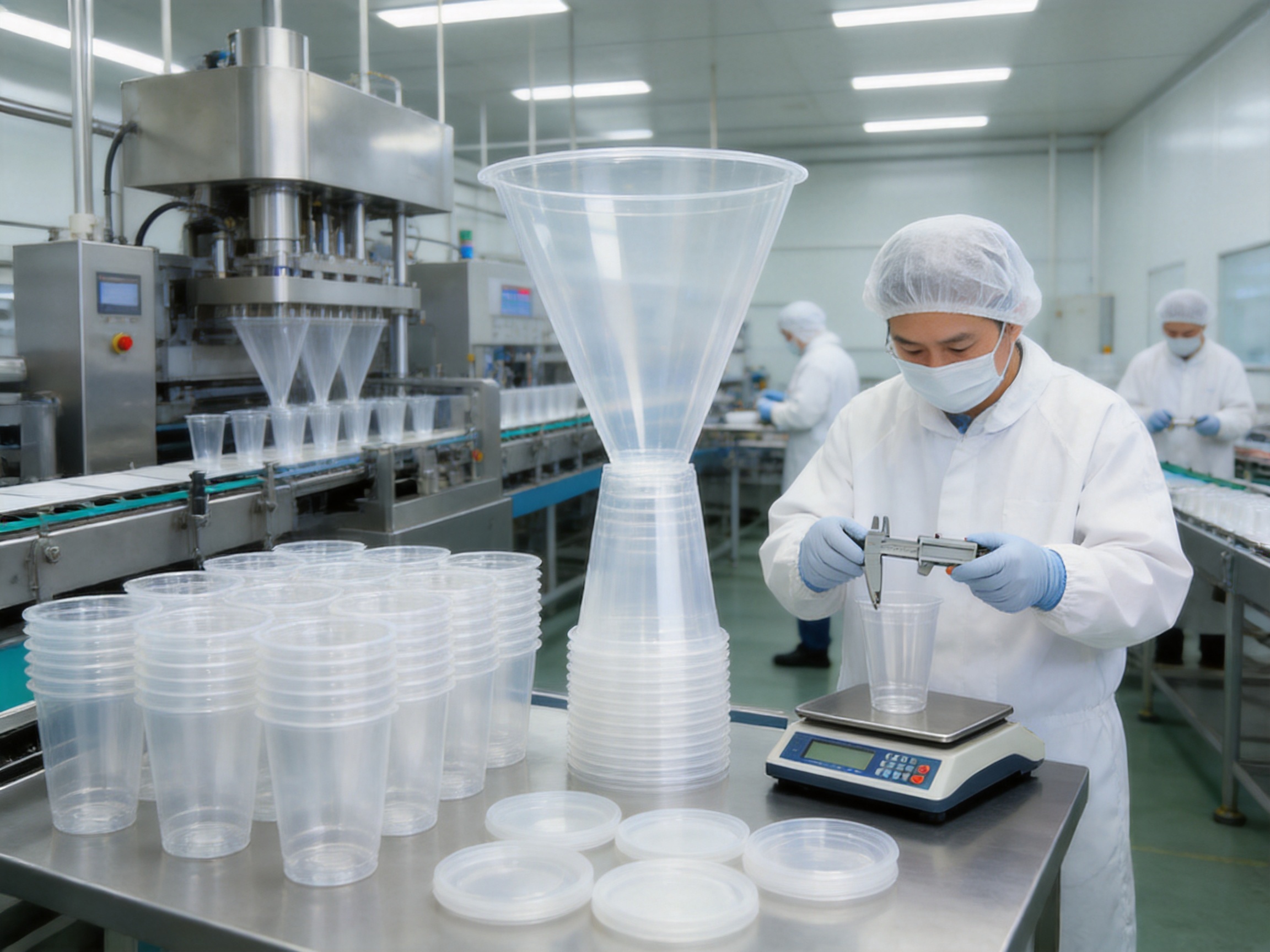
A packaging factory’s competitiveness is measured by more than its machines. Customers also need responsive communication, accurate documentation, dependable production scheduling and practical support during product selection. Yuqian Packaging Technology (Jiangsu) Co., Ltd. presents itself as a manufacturer capable of research and development, production and sales, which suggests an integrated approach to customer cooperation.
An integrated supplier can help customers select an appropriate cup size, lid format and material based on beverage type and service conditions. It may also assist with packaging customization, design development and production planning. This is useful for businesses that want to move from a general packaging concept to a repeatable commercial product.
The company’s product categories include plastic cups, plastic cup lids, takeaway bowls, disposable straws, recycle bags, peripheral products and injection film lining cup and bowl boxes. This broader range can provide purchasing convenience for customers that need several types of foodservice packaging. Instead of coordinating every item with a different supplier, a buyer may be able to consolidate part of its packaging program through one experienced manufacturer.
Product-category breadth can also support coordinated design. A beverage business may require cups, lids, straws, labels and delivery accessories that share a common visual identity and operating specification. A supplier familiar with several related products may better understand how these components function together.
The company also established a Shanghai branch in January 2019 to improve service quality and expand business channels. A branch presence in an important commercial center can support communication, customer development and logistics coordination. International buyers should still confirm the precise service responsibilities of each office and the contact point for technical, commercial and after-sales matters.
For business customers, the availability of direct communication is important. The supplied contact details include a telephone number, fax number and email address. Buyers can use these channels to request samples, specifications, certificates, packaging information, quotation details and production lead-time guidance.
11. Customization and Design Possibilities
The standard specification of the cup is a strong starting point, but many businesses require packaging that reflects a particular beverage concept or brand system. Customization may involve printing, color, surface treatment, sleeve design, label application, lid selection, carton configuration or matching accessories.
When discussing customization, buyers should distinguish between changes that can be made within the existing mold and changes that require new tooling. Adjustments to decoration or packing may be relatively straightforward, while changes to diameter, height, bottom structure or rim geometry can require engineering review and tooling investment.
A custom design should preserve the functional advantages of the cup. The mouth must remain compatible with the intended lid, the base must remain stable and the wall must retain sufficient toughness for the filled product. A visually attractive design that weakens the container or makes it difficult to seal may not be commercially successful.
Transparency can be used creatively in customized packaging. A label may occupy only part of the surface, leaving the beverage visible. A printed measurement scale can help customers understand serving size. A translucent color effect may create a special appearance, although the impact on clarity and material performance should be tested.
Businesses should also consider how the cup will be photographed, stacked and displayed. Large packaging creates a significant visual presence, so the relationship between the cup, lid, straw and beverage color should be evaluated as a complete presentation. Samples should be filled with the actual product recipe and viewed under store lighting and delivery conditions.
12. Sustainability and Responsible Packaging Planning
Environmental responsibility is an important part of disposable food packaging decisions. A responsible purchasing strategy should consider material selection, product weight, transport efficiency, waste collection, local recycling infrastructure and customer communication. No single package characteristic can answer every sustainability question.
Polypropylene may be recyclable in regions that accept PP through established collection and processing systems. However, actual recycling depends on local infrastructure, contamination levels, labeling, sorting practices and the presence of suitable facilities. Buyers should review the rules in their target market rather than assuming that every PP item will be recycled.
The listed approximate weight of 33 g for a 1,000 ml cup may support material-efficiency discussions. A lighter package can reduce the amount of resin used per unit and lower transportation weight, provided that the product remains strong enough for its intended application. Lightweighting should always be validated through drop testing, stacking tests, lid-fit testing and transport trials.
Yuqian Packaging Technology (Jiangsu) Co., Ltd. also identifies biodegradable new materials among its product and research areas. This may be relevant to customers comparing different sustainability strategies. The environmental suitability of any alternative material should be assessed according to its complete life cycle, including production, storage, use, disposal and the waste-management system available in the destination market.
Businesses can improve packaging responsibility through practical measures. They can avoid overfilling, select an appropriately sized cup, provide clear disposal instructions, minimize unnecessary secondary packaging and work with suppliers to optimize carton and pallet design. They can also evaluate whether a large cup genuinely adds value to the beverage or whether a smaller format is more resource-efficient for a particular menu item.
13. Procurement Guide for Wholesale Buyers
Before ordering the PP extra-large plastic cup, a buyer should define the intended application clearly. Important questions include whether the cup will contain cold or warm beverages, whether it will be used with ice and toppings, how long the product will remain filled, whether it will be delivered, and whether automatic filling or sealing equipment will be used.
Sample evaluation should be performed with the actual beverage. Water alone may not reveal all practical issues. A buyer should test the cup with the intended drink, ice level, toppings, straw, lid and carrier. The filled package should be handled, stacked, transported and stored under conditions that resemble normal operations.
Dimensional verification is also recommended. Measure the cup mouth, height and bottom diameter, then compare the results with the requirements of the lid, carrier and machine. Check whether nested cups separate easily and whether they remain stable when stacked. Large cups may require more space between storage shelves and should be considered in warehouse planning.
Buyers should request documentation relevant to their market. This may include material declarations, food-contact statements, quality certificates, test reports, production licenses, inspection records and packaging specifications. If the product will be sold in a regulated market, the importer or brand owner should confirm that all required documentation is current and applicable to the exact product.
Order planning should include both cup and lid quantities. A mismatch between cup supply and lid supply can interrupt beverage sales. It is also advisable to discuss carton dimensions, units per carton, pallet configuration, minimum order quantity, lead time and acceptable product tolerances before confirming a purchase.
For customized products, approve a pre-production sample or production sample before mass manufacturing. The approved sample should record the dimensions, color, transparency, decoration, material, lid fit and packing method. This provides a reference for later quality comparison and reduces misunderstandings between the buyer and manufacturer.
14. Storage, Handling and Use Recommendations
Empty cups should be stored in a clean, dry and well-ventilated area. They should be protected from direct sunlight, excessive heat, chemicals, dust and crushing pressure. The packaging cartons should not be overloaded, and heavy items should not be placed on top of cup cartons unless the carton design allows it.
Stock rotation can help maintain packaging quality. Businesses should use older approved inventory before newer stock, while still following the manufacturer’s recommended storage period and conditions. If cups develop unusual odor, discoloration, deformation or contamination, they should be isolated and evaluated before use.
During filling, staff should avoid striking the rim or pressing the sidewall unnecessarily. The cup should be placed on a stable surface or used with equipment designed for its dimensions. Filling volume should leave enough headspace for the lid and should account for ice, foam and toppings.
The lid should be applied evenly around the entire rim. If a lid does not fit smoothly, staff should not force it with excessive pressure. The cup and lid should be checked for matching specifications, and any repeated fitting problem should be reported to the supplier for investigation.
For hot applications, the business should verify the beverage temperature, filling procedure and handling method before regular service. A cup that performs well with warm contents may still require suitable sleeves, carriers or warning labels to protect customers from heat. The stated temperature range should be treated as a technical reference, not as a substitute for application-specific validation.
15. Competitive Value for Different Customer Groups
15.1 Beverage Chains
Multi-location beverage chains need consistent packaging across stores. The standardized 1,000 ml capacity and 120 mm lid diameter can simplify menu development and staff training. A transparent cup can also create a unified visual identity across different beverages and locations.
15.2 Independent Cafés and Drink Shops
Independent operators may use the cup to introduce a signature large serving without investing in several packaging formats. Its wide mouth and clear body are suitable for creative presentations, while the PP material provides practical toughness for everyday takeaway use.
15.3 Catering and Events
Caterers and event organizers often need packaging that is easy to transport, quick to distribute and visually attractive. The large capacity can serve high-volume refreshments, and the matching lid can reduce the risk of spills during movement between preparation areas and service locations.
15.4 Food Manufacturers and Distributors
Food manufacturers and distributors may require consistent dimensions, repeat supply and documentation. A factory with a substantial production site, quality-management background and product-development capability can be evaluated as a long-term packaging partner rather than only as a spot supplier.
15.5 Export-Oriented Buyers
Export customers must consider destination-market requirements, shipping efficiency and documentation. The manufacturer’s reported certification and testing background can support initial supplier evaluation, while the buyer remains responsible for confirming the exact compliance requirements of the destination country and application.
16. Frequently Asked Questions
Q1: What is the capacity of the PP extra-large plastic cup?
The listed capacity is 1,000 ml. This makes it suitable for large-format beverages, shareable drinks, promotional servings and products containing substantial quantities of ice or toppings.
Q2: What are the cup’s main dimensions?
The cup has a listed mouth diameter of 120 mm, height of 162 mm and bottom diameter of 72 mm. Its approximate weight is 33 g.
Q3: Is a compatible lid available?
Yes. A 120 caliber cup lid is listed with a 120 mm diameter and an approximate weight of 7.3 g. Buyers should confirm the exact lid style and application before ordering.
Q4: What material is used for the cup?
The cup is made from polypropylene, or PP. PP is widely used for disposable food packaging because it offers light weight, toughness, processability and broad temperature adaptability.
Q5: What temperature range is stated for the product?
The product information states adaptability to temperatures from -10°C to 120°C. Customers should conduct application-specific testing, particularly for hot liquids, rapid temperature changes and specialized equipment.
Q6: Is the cup transparent?
Yes. The product is described as highly transparent, smooth and round at the mouth. Transparency helps display beverage colors, layers, ice and toppings.
Q7: Is the cup resistant to deformation?
The product description states that it has good toughness and is not easily deformed. Proper storage, filling, lid application and transport testing are still recommended for each use case.
Q8: Can the cup be used for beverages with toppings?
Its 120 mm mouth provides a wide opening that can be useful for drinks containing fruit pieces, pearls, jelly, large ice cubes and other toppings. The actual filling method should be tested with the customer’s equipment and recipe.
Q9: Can the product be customized?
Customization and design support can be discussed with the manufacturer. Possible areas may include decoration, labeling, sleeves, packaging configuration and related accessories. Changes to the cup’s basic dimensions may require tooling evaluation.
Q10: What quality certifications does the manufacturer report?
The company reports QS national industrial product production licensing, ISO9001 quality management system certification, BRC certification, German DIN safety certification and EU RoHS testing. Buyers should request current documents and confirm their exact scope.
Q11: Where is the manufacturer located?
Yuqian Packaging Technology (Jiangsu) Co., Ltd. is located at No. 8 Tongyang Road, Suchen Town, Taizhou City, Jiangsu Province, China. The company also reports a Shanghai branch established in January 2019.
Q12: What should buyers check before placing a bulk order?
Buyers should verify the actual sample, dimensions, weight, transparency, rim finish, lid fit, temperature use, packaging method, certificates, minimum order quantity, lead time and shipping configuration. Testing the filled cup under real operating conditions is strongly recommended.
17. Conclusion
The PP extra-large plastic cup is a practical solution for businesses that need a high-capacity disposable beverage container with strong visual appeal and dependable handling characteristics. Its 1,000 ml volume supports large servings, while the 120 mm mouth creates space for toppings, ice and easy lid matching. The 162 mm height and 72 mm bottom diameter provide a substantial but manageable format, and the listed 33 g weight reflects an effort to balance capacity with material efficiency.
Its highly transparent appearance helps beverages become part of the presentation. The smooth, round mouth supports customer comfort and lid compatibility. The stated toughness and resistance to deformation are valuable for filled-cup handling, delivery and event service. The reported temperature adaptability from -10°C to 120°C further broadens its possible applications, provided that the complete packaging system is tested for the specific beverage and operating conditions.
The manufacturer adds value through experience, research and development capability, a reported 30,000-square-meter plant area, broad food-packaging product categories and a documented quality and certification background. Its ability to produce cups, lids and related packaging can help customers simplify sourcing and develop coordinated packaging programs.
For beverage chains, cafés, caterers, food manufacturers and distributors, the product offers a combination of capacity, clarity, toughness and procurement flexibility. The best purchasing decision will come from combining the product’s stated specifications with sample testing, regulatory verification, lid compatibility checks and realistic transport trials. When these steps are completed, the PP extra-large plastic cup can become a reliable part of a scalable disposable food packaging system.
References
1. Product specification information for the PP extra-large plastic cup and 120 caliber cup lid, including capacity, dimensions and gram weight.
2. Manufacturer-provided company profile for Yuqian Packaging Technology (Jiangsu) Co., Ltd., including establishment date, location, plant area and business scope.
3. Manufacturer-provided certification and testing information concerning QS production licensing, ISO9001, BRC, DIN safety certification and EU RoHS testing.
4. General technical principles for polypropylene food packaging, including material toughness, temperature adaptability, forming behavior and recycling considerations.
5. General quality-management principles for disposable food packaging production, including incoming-material control, process inspection, dimensional verification and finished-product assessment.