English
 Español
 عربى
عربىContent
- 1 Why Leak-Proof Cup Lids Matter in Modern Beverage Packaging
- 2 Integrated One-Piece Construction
- 3 Material, Safety, and Environmental Considerations
- 4 Available Sizes, Colors, and Product Specifications
- 5 Advanced Manufacturing Process
- 6 Advantages Compared with Conventional Cup Lids
- 7 Applications Across Foodservice and Retail
- 8 Customization and OEM Manufacturing Strengths
- 9 Quality Management and Certification Framework
- 10 How to Select the Correct Lid for a Beverage Program
- 11 Recommended Handling and Storage Practices
- 12 Commercial Value for Beverage Brands
- 13 Frequently Asked Questions
- 13.1 What is a patented one-piece leak-proof plastic cup lid?
- 13.2 Which cup sizes are available?
- 13.3 What colors can be selected?
- 13.4 How much does one lid weigh?
- 13.5 Is the lid suitable for food and beverage packaging?
- 13.6 Can the lid be used for hot drinks?
- 13.7 Does the lid work with disposable straws?
- 13.8 What makes the one-piece design different from a conventional lid?
- 13.9 Can the product be customized?
- 13.10 How should buyers test the lid before mass production?
- 13.11 Are the products recyclable?
- 13.12 What certifications are associated with the manufacturer?
- 13.13 Where is the manufacturer located?
- 13.14 How can customers request product information?
- 14 Conclusion
- 15 References
- 16 Product: Patented one-piece leak-proof plastic cup lid
Reliable beverage packaging begins with a dependable lid. A cup can be well designed, correctly filled, and carefully transported, yet a weak or poorly fitted lid can still cause leakage, contamination, customer complaints, and unnecessary product loss. The patented one-piece leak-proof plastic cup lid has been developed to address these challenges through an integrated structure, precise fitting, durable materials, and practical details designed for modern foodservice operations.
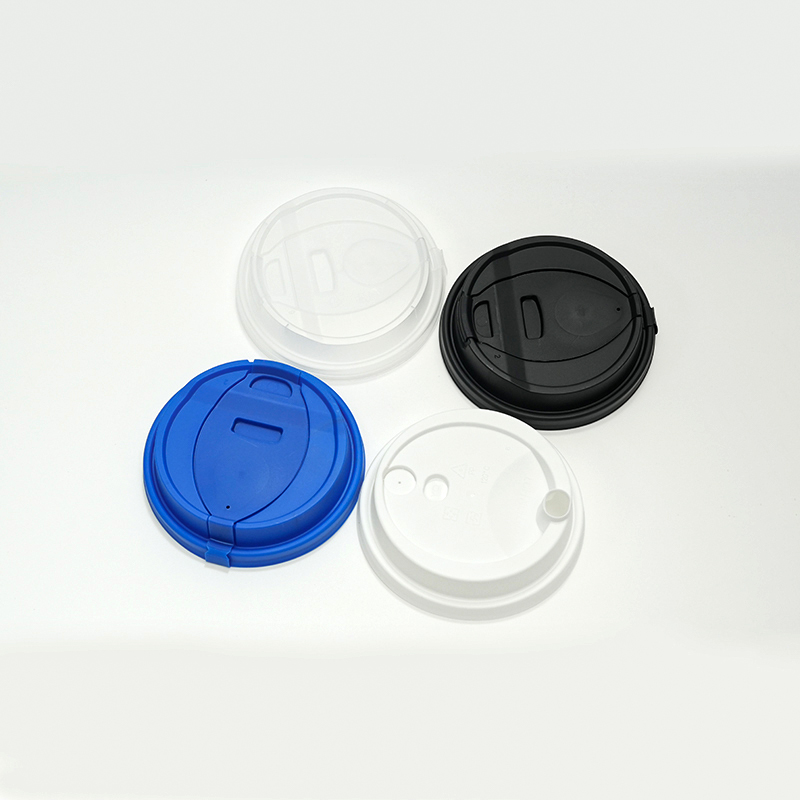
This type of lid is suitable for beverage shops, cafés, restaurants, takeaway counters, catering businesses, convenience stores, delivery platforms, vending operations, and food packaging distributors. It is available in common 80 mm and 90 mm calibers, with transparent, white, black, red, and gold color options. The structure is designed to fit securely on compatible cups while providing a convenient drinking experience and improved protection during handling, transport, and storage.
Unlike conventional lids that may use multiple pieces, detachable plugs, or complicated sealing components, the one-piece leak-proof design integrates the main functional elements into a unified molded structure. This helps simplify use, reduce the risk of missing parts, support efficient stacking, and create a clean appearance that can be matched to different beverage brands and service environments.
Why Leak-Proof Cup Lids Matter in Modern Beverage Packaging
Takeaway beverages are exposed to many situations that do not occur in a stationary café environment. A filled cup may be placed in a delivery bag, carried in a vehicle, handed to a customer, stored in a refrigerator, or moved from one counter to another. During these activities, the container may tilt, shake, or experience pressure from adjacent products. If the lid does not maintain a consistent seal, liquid can escape through the rim, drinking opening, or connection points.
Leakage is more than a minor inconvenience. It can damage packaging bags, stain vehicles, affect other food products, and reduce a consumer’s confidence in the beverage brand. For commercial operators, leakage can also increase replacement costs, create labor-intensive cleaning work, and cause negative reviews. A properly engineered leak-proof lid therefore supports both product protection and customer satisfaction.
The patented one-piece leak-proof plastic cup lid responds to these requirements with a thickened structure, a carefully formed sealing area, and a close fit around the cup rim. Its design is intended to reduce the number of possible leakage paths while maintaining convenient access for drinking. The result is packaging that balances safety, functionality, appearance, and production efficiency.
The lid is also relevant to the growing takeaway and delivery market. As more beverages are consumed outside traditional dining spaces, food packaging must perform reliably over longer handling cycles. A high-quality lid can help businesses deliver cold drinks, milk tea, fruit beverages, coffee, juice, and other drinks in a more secure and professional format.
Patented one-piece leak-proof plastic cup lid
Integrated One-Piece Construction
The most distinctive feature of the product is its patented one-piece construction. In a conventional multi-component lid, separate elements may need to be assembled, aligned, or retained during use. Every additional component can introduce another tolerance requirement or another potential point of failure. It may also create difficulties for operators who need to prepare large quantities of drinks quickly.
An integrated lid is molded as a unified product. This design can simplify the user experience because there are fewer loose elements to handle. It can also support a more consistent appearance across production batches. For beverage businesses, the one-piece structure helps streamline lid application and reduces the possibility that a separate plug or accessory will be misplaced before the drink reaches the customer.
The integrated structure is especially valuable in high-volume environments. A worker serving hundreds of drinks per day needs packaging that can be picked up, positioned, and pressed into place efficiently. The lid’s unified format supports this workflow while maintaining a clean and organized storage arrangement.
From a manufacturing perspective, one-piece molding also allows the engineering team to control the relationship between the sealing ring, drinking area, top surface, and side wall within a single mold system. This can improve structural consistency and reduce variation that might occur when separate parts are manufactured independently.
Leak-Resistant Sealing Performance
The lid is engineered to fit compatible cups around the rim and create a close sealing connection. The sealing performance depends on several factors, including the cup caliber, rim geometry, material behavior, molding precision, and application pressure. When the correct lid is matched with the correct cup, the combined packaging system can provide improved protection against spills during ordinary handling and transport.
The 80 mm and 90 mm caliber options allow buyers to select a suitable size for different cup specifications. Accurate matching is important because a lid that is too small may not engage properly, while a lid that is too large may not maintain sufficient contact around the rim. By offering multiple calibers, the product can serve a wider range of beverage packaging requirements.
The drinking area is designed to support controlled access to the beverage while helping limit accidental liquid movement. Depending on the selected configuration and application, the lid can be used for drinks that are consumed directly from the opening or with compatible drinking accessories. The smooth upper surface also contributes to easy cleaning and a more hygienic visual presentation before use.
Thickened and Durable Structure
A thin lid may be economical, but insufficient rigidity can make it difficult to apply and more vulnerable to deformation. The patented lid adopts a thickened design intended to improve durability, resistance to everyday impact, and overall handling performance. A stronger structure can help the lid remain more stable when the cup is carried, packed, stacked, or placed inside a delivery container.
Durability is particularly important for beverages that are transported over uneven roads or handled repeatedly. The lid must resist flexing and maintain its connection with the cup without becoming unnecessarily heavy. The product’s listed gram weight is approximately 6 grams, providing a practical balance between material use and structural support.
Improved rigidity can also benefit the filling and sealing process. When a worker or automated system applies the lid, a stable surface is easier to position correctly. A lid that retains its shape may help reduce incomplete applications, crooked placement, and accidental damage during packing.
Material, Safety, and Environmental Considerations
The product is described as non-toxic, odorless, environmentally considerate, and suitable for food packaging applications when used with appropriate food-contact materials and production controls. Material selection is an essential part of disposable packaging because the lid must protect the beverage without creating unwanted odor, taste, or contamination risks.
Raw materials are selected according to the intended packaging application, processing requirements, and customer specifications. The manufacturing team evaluates material consistency, appearance, molding behavior, and compatibility with the lid design. Proper material control supports reliable production and helps ensure that finished products maintain consistent dimensions and performance.
The company also emphasizes recyclable and reusable material concepts. Recycling suitability depends on the specific resin, local recycling infrastructure, labeling requirements, and the way the used product is collected and sorted. Buyers should confirm the exact material grade and end-of-life handling requirements for their market before making environmental claims on consumer packaging.
Environmental responsibility extends beyond the material itself. A well-designed lid can contribute to resource efficiency by reducing leakage-related waste, limiting product replacement, supporting compact storage, and improving transport efficiency. Stackable packaging uses warehouse and delivery space more effectively, potentially reducing the number of storage units required for the same quantity of products.
The company’s stated certifications and testing include the QS national industrial product production license, ISO9001 Quality Management System certification, BRC certification, German DIN safety certification, and EU RoHS+ testing. These credentials and assessments are part of the company’s broader effort to support quality, safety, and responsible manufacturing. Buyers should request current certificates and confirm their applicability to the specific product, production batch, destination market, and material configuration.
Available Sizes, Colors, and Product Specifications
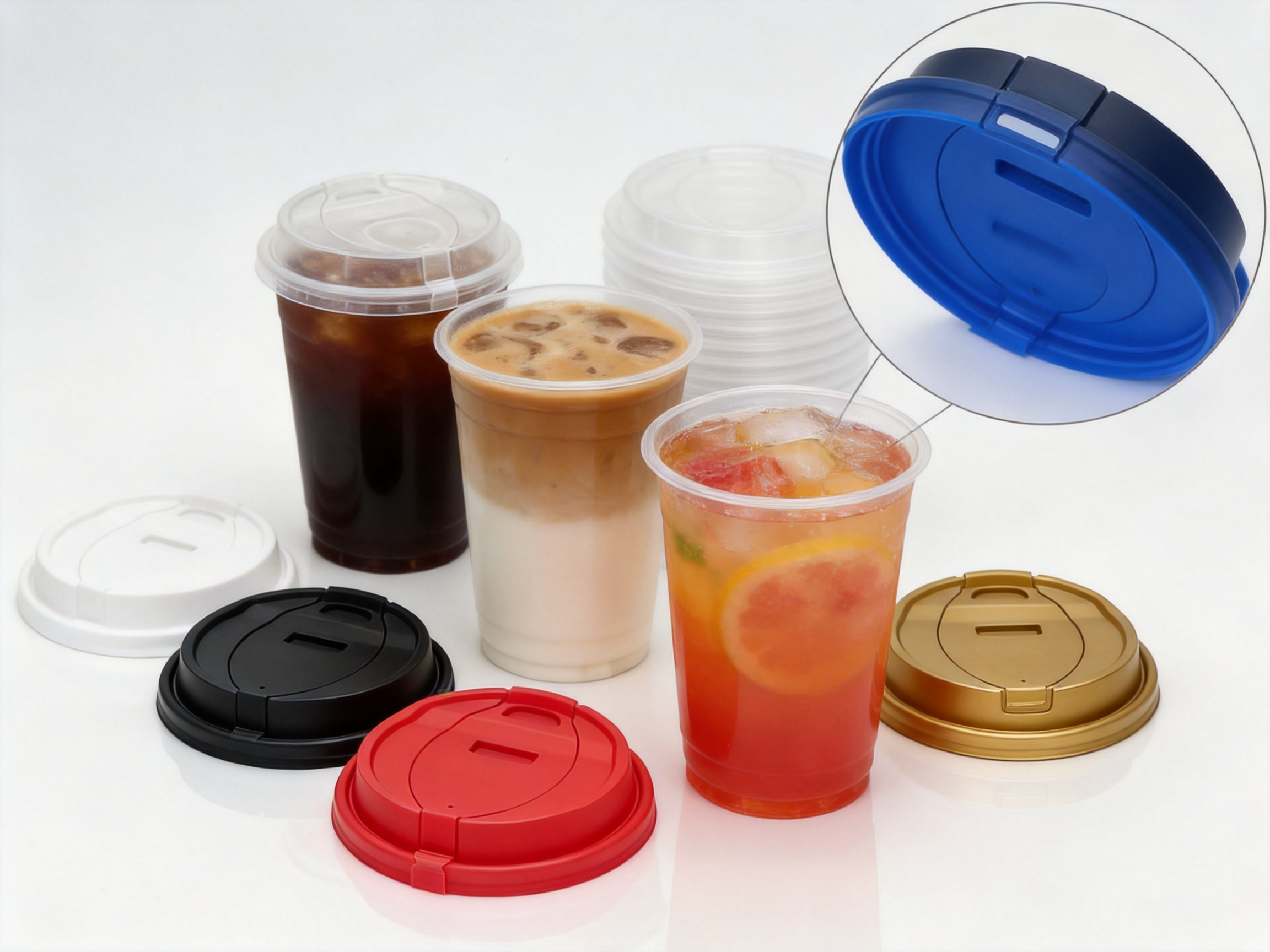
The product line is designed to support both standard purchasing and customized packaging programs. The available 80 mm and 90 mm calibers cover common cup formats, while color options allow customers to coordinate lids with beverage categories, seasonal campaigns, or brand identity systems.
| Lid Type | Available Caliber | Approximate Gram Weight | Color Options | Primary Design Purpose |
|---|---|---|---|---|
| Patented Leak-Proof Lid | 80 mm / 90 mm | Approximately 6 g | Transparent, white, black, red, gold | Secure beverage covering with integrated leak-resistant design |
| Patented One-Piece Leak-Proof Cover | 80 mm / 90 mm | Approximately 6 g | Transparent, white, black, red, gold | Unified molded cover for takeaway and beverage packaging |
Transparent lids are useful when businesses want customers to see the drink, toppings, foam, ice, or beverage color. White lids create a clean and neutral appearance and can be coordinated with paper cups or printed packaging. Black lids often support premium, modern, or minimalist visual styles. Red and gold options can help beverage brands create stronger seasonal, festive, or promotional presentations.
Color customization can also improve internal organization. A business may use different colors for hot and cold beverages, different cup sizes, specific product categories, or separate service locations. Such visual systems can help staff identify packaging quickly during busy operating periods.
The listed gram weight is an approximate reference rather than a substitute for a confirmed technical specification. Actual weight can vary according to material selection, product tolerance, colorant, mold configuration, and customer-approved design. Before mass production, buyers should request samples and a formal specification sheet that defines dimensions, weight tolerance, material, color standard, packaging method, and inspection criteria.
Advanced Manufacturing Process
The performance of a leak-proof lid depends on more than its visible shape. It is the result of product development, mold engineering, material preparation, injection molding, trimming or finishing where applicable, quality inspection, and packaging control. Yuqian Packaging Technology has developed manufacturing capabilities around food packaging materials and products, combining research and development, production, and sales within one operating system.
Product Development and Mold Design
The process begins with the functional requirements of the lid. Engineers evaluate the target cup caliber, rim profile, sealing area, drinking opening, wall thickness, stacking geometry, appearance, and expected use conditions. These factors are considered together because a change in one area can affect the others.
Precise mold design is particularly important for a one-piece product. The mold must form the sealing ring and the upper geometry accurately while allowing the lid to be released without distortion. The design also needs to manage cooling, filling, shrinkage, and dimensional stability. Proper mold balance helps reduce variation between cavities and supports consistent output during long production runs.
For customized projects, the company can adjust elements such as size, shape, color, material selection, surface treatment, and packaging format according to the customer’s requirements. The development process may include drawing review, sample production, fit testing, leak testing, appearance approval, and final confirmation before mass production.
Injection Molding Technology
Injection molding is used to transform prepared plastic material into the finished lid. The material is heated to an appropriate processing temperature and injected into the mold under controlled conditions. After filling and cooling, the molded part is ejected and prepared for inspection and packing.
Important process variables include material drying where required, melt temperature, injection pressure, injection speed, holding pressure, cooling time, mold temperature, and ejection timing. Maintaining stable parameters helps control part dimensions and reduce defects such as short shots, flash, warping, sink marks, flow lines, discoloration, and incomplete formation of the sealing area.
For leak-proof products, dimensional accuracy around the cup-contacting area is especially important. Even a small deviation can affect the fit between the lid and cup. Production personnel therefore need to monitor both the visual quality of the lid and its functional compatibility with the specified cup.
Modern injection molding also supports efficient high-volume production. Once the mold and process have been validated, a repeatable cycle can produce large quantities with consistent geometry. This is valuable for beverage companies that need stable supply across multiple stores, distribution centers, or seasonal demand periods.
Process Monitoring and Inspection
Quality control begins with incoming material inspection and continues through every major production stage. Raw materials may be checked for identity, appearance, packaging integrity, and documentation. During molding, operators and quality personnel monitor machine conditions, product appearance, dimensions, weight, and other defined process indicators.
Finished lids can be inspected for cracks, deformation, burrs, black spots, oil contamination, color inconsistency, incomplete molding, and other defects. Functional testing may include fit checks, sealing checks, stacking checks, and handling simulations. The exact inspection plan can be adapted to the customer’s application and quality agreement.
Statistical process control and documented inspection records can help identify trends before they become large-scale problems. If a product dimension gradually moves toward the edge of its tolerance, corrective action can be taken before the output falls outside the approved range. This approach supports stable production rather than relying only on final inspection.
The ISO9001 quality management framework provides a structured basis for process documentation, corrective action, customer feedback, and continual improvement. Certification alone does not replace product-specific testing, but it demonstrates the company’s commitment to maintaining an organized quality system.
Clean Production and Packaging
Food packaging components require careful handling after molding. Products should be protected from dust, moisture, oils, foreign matter, and unnecessary contact. Packaging procedures are organized to maintain product cleanliness and support accurate counting, storage, and shipping.
Stackability is an important feature of the lid. Properly designed lids can be nested or stacked to save space in cartons, warehouses, production areas, and delivery vehicles. Compact packaging can simplify inventory management and help lower the volume required for transportation. It may also reduce the time needed for workers to replenish production lines or service counters.
Packaging labels can be customized to identify product type, caliber, color, quantity, batch information, production date, and customer order details. Clear identification reduces the chance of mixing similar products and supports traceability throughout the supply chain.
Advantages Compared with Conventional Cup Lids
The patented one-piece leak-proof plastic cup lid offers several practical advantages compared with basic flat lids, loosely fitting covers, or multi-piece designs. These advantages are most meaningful when considered in relation to real operating conditions rather than only the appearance of the product.
Reduced Risk of Leakage
A conventional lid may have a simple snap-on structure that offers limited protection when the cup is tilted or shaken. The integrated leak-resistant design is developed to create a more dependable connection with the compatible cup. This can help reduce spills during ordinary takeaway handling and delivery.
No disposable lid can guarantee protection under every condition. Excessive pressure, incorrect cup matching, overfilling, severe impact, or improper application can still cause leakage. However, a well-designed one-piece lid can provide a stronger starting point for reliable packaging performance than a weak or poorly fitted alternative.
Fewer Loose Components
Multi-piece lids may require separate plugs, caps, or inserts. These components can be lost, incorrectly attached, or separated during use. A one-piece solution simplifies the packaging system and reduces the number of individual parts that staff must manage.
This is especially helpful for large beverage chains and busy takeaway counters, where speed and consistency are essential. Staff can apply the lid without searching for an additional accessory, while customers receive a cleaner and more integrated product.
Improved Durability
The thickened structure is intended to provide better resistance to everyday deformation and handling damage. This can be an advantage over ultra-thin lids that bend easily during application or transport. Improved rigidity also supports a more secure feeling in the customer’s hand.
Better Storage Efficiency
Stackable lids occupy less space than randomly arranged or irregularly shaped components. Efficient stacking can improve warehouse organization and reduce the amount of secondary packaging needed to keep the product orderly. It can also simplify automated or semi-automated feeding systems where consistent orientation is important.
Broader Visual Customization
Clear, white, black, red, and gold color options provide more flexibility than a single standard color. Custom colors may also be considered for suitable programs, subject to material availability, order volume, and production approval. This makes the lid useful not only as a functional component but also as part of a complete beverage presentation.
Ease of Cleaning and Hygienic Appearance
The smooth surface is easy to wipe or clean before use and gives the product a neat appearance. A smooth molded surface also has fewer visible recesses where dust or residue might accumulate during storage. Appropriate storage and handling remain essential, but the surface design supports a practical hygiene routine.

Applications Across Foodservice and Retail
The lid can be used with a variety of compatible beverage cups and foodservice operations. Its leak-resistant design is particularly suitable for products that are carried away from the point of sale.
Cafés and Coffee Shops
Coffee shops require lids that can be applied quickly and remain secure when customers carry drinks to offices, cars, public transport, or outdoor locations. A durable lid can support hot and cold beverage service when the cup, lid, and operating conditions are properly matched. For hot beverages, operators should verify temperature resistance, steam behavior, and safe drinking performance before commercial use.
Milk Tea and Specialty Beverage Stores
Milk tea, fruit tea, flavored drinks, smoothies, and other specialty beverages often include ice, toppings, foam, or decorative layers. A transparent lid can display the product while a colored lid can strengthen brand presentation. Secure sealing is important because these drinks are frequently ordered for delivery or group pickup.
Restaurants and Takeaway Counters
Restaurants increasingly offer beverages as part of takeaway meals. A reliable lid can help protect drinks inside a food bag and reduce contact between liquid and other packaged items. The lid can be stocked alongside cups and applied during peak service without requiring a complex assembly process.
Catering and Events
Caterers need packaging that is simple to transport and quick to distribute. Stackable lids can be stored efficiently before an event, while color selection can help coordinate packaging with event themes or beverage categories. The one-piece structure is also convenient when large numbers of drinks are prepared in a short period.
Delivery and Vending Operations
Delivery and vending systems place additional demands on packaging. Drinks may be moved through several stages before reaching the consumer, making secure lid application essential. A leak-resistant lid can support better order presentation and reduce the likelihood of liquid entering delivery bags or equipment.
Customization and OEM Manufacturing Strengths
Yuqian Packaging Technology (Jiangsu) Co., Ltd. operates as an OEM manufacturer with experience in the development and production of food packaging materials and products. The company was established in 2010 and is located in Taizhou City, Jiangsu Province, China. Its reported plant area is approximately 30,000 square meters, supporting research and development, manufacturing, quality control, warehousing, and sales activities.
An OEM relationship is valuable when a buyer needs more than an off-the-shelf product. Beverage brands may require a particular cup caliber, lid shape, color, material, packing quantity, or inspection standard. The manufacturer’s flexible production lines are intended to support these requirements from sample development through mass production.
Design and Specification Support
Customers can provide existing drawings, physical samples, cup samples, brand guidelines, or performance targets. The technical team can review the connection between the cup and lid, identify critical dimensions, and recommend changes where necessary. This collaborative process helps reduce the risk of ordering a lid that appears suitable but does not perform correctly with the customer’s cup.
Customization may include the overall diameter, drinking opening, surface details, color, material option, packaging method, and labeling. Any modification to the sealing area should be carefully validated because decorative changes can affect fit or leak resistance. A responsible development process therefore includes testing and approval rather than relying only on visual confirmation.
Fast Response from Sampling to Production
Efficient project coordination is an important advantage for packaging buyers. Clear communication about drawings, samples, testing, order quantities, lead times, and shipping requirements can help shorten the path to mass production. The company states that it can provide customized services ranging from sample development to large-scale manufacturing.
Before a purchase order is finalized, buyers should confirm the complete commercial and technical scope. This includes minimum order quantity, sample policy, mold ownership, tooling costs, production lead time, packaging details, quality tolerances, inspection procedures, payment terms, and delivery arrangements. Written confirmation helps both parties maintain consistent expectations.
Supply Chain and Production Coordination
A manufacturer with integrated production and supply chain management can coordinate raw material procurement, molding schedules, color changes, inspection, packing, and shipment planning. This is particularly important for customers operating multiple stores or distributing products across different regions.
Stable supply is not only about production capacity. It also depends on material availability, mold maintenance, preventive equipment management, qualified personnel, inventory planning, and accurate order forecasting. A long-term OEM partner can work with customers to establish repeat-order procedures and maintain consistency from one production batch to the next.
Quality Management and Certification Framework
Food packaging buyers often require evidence that a supplier maintains appropriate management systems and product controls. The company reports certification or testing associated with QS, ISO9001, BRC, DIN safety requirements, and EU RoHS+. These programs address different aspects of production, safety, quality, or restricted substances, and their relevance should be confirmed according to the target market.
ISO9001 focuses on the organization’s quality management system. It encourages documented processes, defined responsibilities, customer focus, risk-based thinking, corrective action, and continual improvement. For a lid manufacturer, this framework can support controls covering raw materials, mold maintenance, production parameters, inspections, nonconforming products, and customer complaints.
BRC-related certification is commonly associated with product safety and quality systems in the food and packaging supply chain. A buyer should review the certificate scope to determine whether it covers the relevant site, product category, and current certification period.
DIN safety certification and EU RoHS+ testing may be relevant to specific safety or restricted-substance requirements. Since regulations differ by country and by product application, importers should identify the exact compliance documents needed for their market. They should also verify that the documentation applies to the selected lid material and color rather than assuming that one certificate covers every configuration.
In addition to external certifications, product-specific tests remain important. A buyer may request dimensional inspection, weight measurement, fit testing, leak testing, odor evaluation, appearance inspection, material documentation, migration testing where applicable, and packaging cleanliness verification. These tests create a more complete picture of the product’s suitability.
How to Select the Correct Lid for a Beverage Program
Selecting the right lid requires more than choosing a diameter. The lid should be evaluated as part of a complete cup and beverage system.
First, measure the cup rim accurately. The nominal diameter should be confirmed using the actual cup specification, not only the product name or volume. Rim thickness, rim shape, flange design, and cup material can all affect fit.
Second, consider the beverage temperature. Hot drinks may require materials and designs with suitable thermal performance. Cold beverages may create condensation on the outside of the cup, which can affect handling even if the lid itself remains sealed. Buyers should conduct tests using the actual beverage temperature, fill level, ice quantity, and transport conditions.
Third, evaluate the intended method of consumption. A lid for direct drinking may require different opening geometry from a lid used with a straw. If disposable straws are part of the packaging system, the compatibility of the straw opening and straw diameter should be confirmed.
Fourth, test the lid under realistic transport conditions. A useful evaluation may include upright storage, moderate tilting, vibration, stacking, bag transport, and repeated handling. The testing should reflect the way customers and delivery personnel actually use the product.
Fifth, consider the brand presentation. Transparent, white, black, red, and gold options can create different visual impressions. The correct color should complement the cup, label, beverage, and overall retail environment.
Finally, confirm the environmental and regulatory requirements of the destination market. Material declarations, recycling marks, food-contact documentation, packaging waste obligations, and restricted-substance requirements may vary by jurisdiction.
Recommended Handling and Storage Practices
Even a high-quality lid can be damaged by poor storage or incorrect application. Lids should be stored in clean, dry conditions away from direct sunlight, excessive heat, chemicals, dust, and strong odors. Cartons should not be crushed or stacked beyond the recommended limit because deformation can affect the shape of the product.
Staff should handle lids with clean hands or appropriate foodservice gloves where required by the operating procedure. Before application, the cup rim should be free of beverage residue, toppings, ice, or other material that could interfere with the seal. The lid should be positioned evenly and pressed down according to the approved application method.
Overfilling should be avoided. Liquid, foam, ice, or toppings that extend into the sealing area can prevent proper contact between the lid and cup. Operators should also avoid using a lid with a cup of a different caliber, even if the products appear visually similar.
For delivery, cups should be placed upright in a suitable carrier or bag. The lid should not be treated as a substitute for correct packaging support. Excessive movement, heavy objects placed on top of cups, or prolonged storage at unsuitable temperatures can increase the risk of failure.
Commercial Value for Beverage Brands
Packaging is part of the customer experience. A beverage delivered with a secure, clean, attractive lid communicates attention to detail. When the product is protected from leakage, customers can enjoy the drink more conveniently and are more likely to view the service positively.
The one-piece leak-proof lid can also help standardize operations. A common lid specification across multiple branches can simplify purchasing, staff training, inventory management, and quality monitoring. Color-coded options may support product differentiation while maintaining a consistent structural design.
For distributors, the availability of several calibers and colors creates opportunities to serve different customer segments. A distributor can provide standard products for smaller buyers while also coordinating OEM projects for larger beverage chains. The manufacturer’s experience with customized production can support both approaches.
Operational efficiency is another potential benefit. Stackable lids require less storage space, and a one-piece design can reduce assembly steps. These improvements may appear small on an individual cup, but they can become significant when multiplied across thousands or millions of units.
Leak prevention also has a financial dimension. Preventing even a small percentage of failed packages can reduce refunds, replacements, cleaning, damaged goods, and customer service work. The most economical lid is not always the one with the lowest purchase price; it is often the one that provides the best balance of unit cost, reliability, labor efficiency, and brand protection.

Frequently Asked Questions
What is a patented one-piece leak-proof plastic cup lid?
It is a molded plastic cup cover that uses an integrated structure rather than multiple separate components. Its design is intended to create a secure connection with a compatible cup and reduce leakage during ordinary handling, takeaway, and transport.
Which cup sizes are available?
The stated standard calibers are 80 mm and 90 mm. Buyers should confirm the exact cup rim dimensions and fit before ordering because nominal diameter alone does not define compatibility.
What colors can be selected?
The listed options are transparent, white, black, red, and gold. Other colors may be considered for customized projects, subject to material availability, order quantity, color approval, and production feasibility.
How much does one lid weigh?
The listed approximate gram weight is 6 grams. The final weight may vary according to material, color, mold configuration, product tolerance, and approved customization.
Is the lid suitable for food and beverage packaging?
The product is developed for food packaging applications and is described as non-toxic and odorless. Buyers should request current food-contact documentation and verify that the selected material and color meet the requirements of the intended destination market.
Can the lid be used for hot drinks?
Potential use with hot beverages should be confirmed through application-specific testing. Temperature, beverage type, filling level, cup material, drinking opening, and transport conditions can all affect performance and safety.
Does the lid work with disposable straws?
Compatibility depends on the specific drinking or straw opening and the straw diameter. Customers should provide the intended straw specification or request a sample test before placing a large order.
What makes the one-piece design different from a conventional lid?
The one-piece structure integrates the main functional elements into one molded component. This can reduce loose parts, simplify application, improve stacking, and support a cleaner appearance while maintaining the intended leak-resistant function.
Can the product be customized?
Yes. Customization may include caliber, shape, color, material selection, surface details, packaging, and other approved design features. The manufacturer can support projects from sample development to mass production.
How should buyers test the lid before mass production?
Buyers should test the lid with the actual cup and beverage system. Recommended checks include dimensional fit, filling and application, upright storage, tilting, vibration, delivery-bag handling, temperature exposure, direct drinking, straw compatibility, appearance, odor, and stacking.
Are the products recyclable?
The materials are described as recyclable and reusable within appropriate systems. Actual recyclability depends on the selected resin, local collection facilities, sorting rules, contamination level, and market regulations. Customers should obtain the exact material information before making recycling claims.
What certifications are associated with the manufacturer?
The company reports QS national industrial product production licensing, ISO9001 Quality Management System certification, BRC certification, German DIN safety certification, and EU RoHS+ testing. Current certificates and their scopes should be reviewed for each purchasing project.
Where is the manufacturer located?
Yuqian Packaging Technology (Jiangsu) Co., Ltd. is located at No. 8 Tongyang Road, Suchen Town, Taizhou City, Jiangsu Province, China. The company also established a Shanghai branch in January 2019 to support service and business development.
How can customers request product information?
Customers can contact the company to discuss specifications, samples, customization, quality requirements, order quantities, packaging, and delivery. The listed contact information includes telephone number 0086 15252423007, fax number +0523 8608 3698, and email address [email protected].
Conclusion
The patented one-piece leak-proof plastic cup lid combines a unified molded structure with a thickened, durable design intended for modern takeaway beverage service. Its principal benefits include improved sealing, fewer loose components, a smooth surface, stackability, several standard calibers, and multiple color choices. These features make it suitable for beverage brands that need packaging capable of supporting both operational efficiency and a positive customer experience.
The product’s value is strengthened by the manufacturing capabilities behind it. Yuqian Packaging Technology (Jiangsu) Co., Ltd. brings together product research and development, precision mold design, injection molding, quality management, customized OEM production, and supply chain coordination. Its reported certifications and testing programs provide an additional framework for quality and compliance evaluation.
For buyers, the most effective approach is to assess the lid as part of a complete packaging system. Confirm the cup caliber, test the actual beverage application, review food-contact and environmental documentation, and establish clear production and inspection requirements. With correct matching and handling, the one-piece leak-proof lid can help beverage businesses reduce packaging problems, improve service consistency, and present drinks in a safer and more professional format.
References
1. Product information supplied for the patented one-piece leak-proof plastic cup lid, including dimensions, approximate weight, colors, design features, and application details.
2. Company information supplied for Yuqian Packaging Technology (Jiangsu) Co., Ltd., including its establishment date, location, production area, OEM capabilities, certifications, and service structure.
3. ISO 9001, Quality Management Systems—Requirements, International Organization for Standardization.
4. BRC Global Standard materials relating to packaging safety, quality management, and food packaging supply-chain controls.
5. General technical principles of plastic injection molding, including mold design, melt processing, cooling, dimensional control, and finished-product inspection.
6. General food packaging guidance concerning material selection, food-contact suitability, hygiene, storage, traceability, and market-specific compliance requirements.