English
 Español
 عربى
Content
- 1 Why Low-Temperature Resistance Matters in Disposable Cups
- 2 Product Overview
- 3 Core Advantages of Low-Temperature Resistant PET Cups
- 4 Available Specifications
- 5 Choosing the Right Cup Format
- 6 Applications Across the Food and Beverage Industry
- 7 Customization and OEM Manufacturing
- 8 Manufacturing Capabilities and Production Strengths
- 9 Advantages Compared with Standard Disposable Cup Options
- 10 Quality Evaluation Before Bulk Purchase
- 11 Storage, Handling, and Use Recommendations
- 12 Sustainability in Practical Packaging Decisions
- 13 How the Product Supports Beverage Brand Development
- 14 Purchasing Considerations for Distributors and Importers
- 15 Company Manufacturing Background
- 16 Frequently Asked Questions
- 16.1 What temperature range is suitable for these PET cups?
- 16.2 Are the cups suitable for refrigerated drinks?
- 16.3 Are these cups transparent?
- 16.4 What material are the cups made from?
- 16.5 What capacities are available?
- 16.6 What mouth diameters are available?
- 16.7 Can the cups be customized?
- 16.8 Can these cups be used for brand promotion?
- 16.9 Are the cups recyclable?
- 16.10 How should buyers confirm the correct cup model?
- 16.11 Does the company support large orders?
- 16.12 What quality certifications are associated with the company?
- 17 Conclusion
- 18 References
- 19 Product: Low-Temperature Resistant PET plastic cup
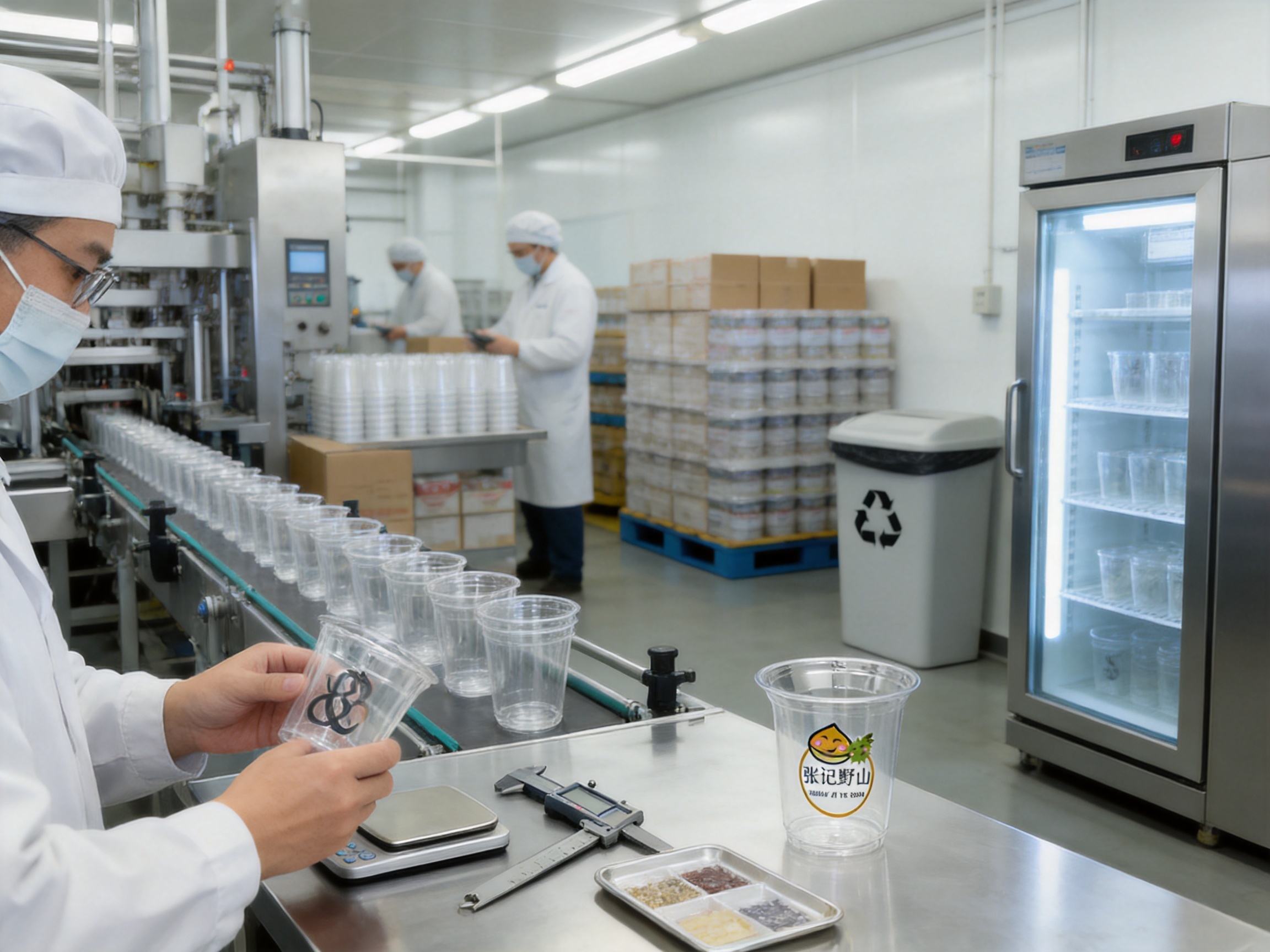
Low-temperature resistant PET plastic cups are designed for beverage businesses that require dependable performance in refrigerated, chilled, and cold-serving environments. Unlike ordinary disposable cups that may become brittle, lose their shape, or crack when exposed to low temperatures, this product is formulated to maintain toughness and dimensional stability from -20°C to 55°C. It combines transparent appearance, lightweight construction, practical customization options, and food-contact suitability in one versatile packaging solution.
For cafés, juice bars, bubble tea shops, restaurants, convenience stores, catering companies, beverage brands, and event organizers, the cup is more than a simple container. It protects the beverage, supports efficient service, contributes to brand presentation, and influences the customer’s overall impression. A high-quality PET cup must therefore deliver a balance of clarity, strength, safety, convenience, and production consistency.
These low-temperature resistant PET plastic cups are manufactured for that purpose. They are suitable for cold drinks, fruit beverages, milk tea, iced coffee, smoothies, juices, soft drinks, desserts, and other applications where a clear and durable disposable container is required. The product range includes multiple mouth diameters, capacities, heights, bottom diameters, and grammage options, allowing buyers to select a format that matches their filling volume, lid requirements, product appearance, and logistics needs.
Why Low-Temperature Resistance Matters in Disposable Cups
Cold beverages are often stored, transported, and served under changing temperature conditions. A drink may be filled at room temperature, placed in a refrigerator, transported in a chilled vehicle, displayed in an ice-filled container, and finally served to a consumer. During this process, the cup is exposed to temperature variation, mechanical handling, pressure from stacking, condensation, and occasional impact.
Some conventional plastic cups perform adequately in mild conditions but become less flexible when exposed to cold temperatures. Reduced flexibility can increase the risk of cracking around the rim, sidewall, or bottom. A deformed cup may also fit poorly with its lid, appear less attractive, or become difficult to stack and transport. For foodservice operators, these problems may result in product leakage, customer complaints, wasted ingredients, and additional packaging costs.
The low-temperature resistant PET plastic cup is designed to address these challenges. Within the stated operating range of -20°C to 55°C, the cup can maintain its toughness and shape stability. This performance is particularly useful for cold-chain beverage distribution, refrigerated retail displays, outdoor winter events, frozen drink service, and businesses that store pre-filled drinks before delivery or sale.
Temperature resistance does not mean that the cup is intended for every hot-food or high-temperature application. PET packaging should be selected according to the specific beverage temperature, filling process, storage conditions, and intended use. The product’s principal strength is its ability to remain reliable in chilled and low-temperature environments while offering the clarity and appearance expected from premium beverage packaging.
Product Overview
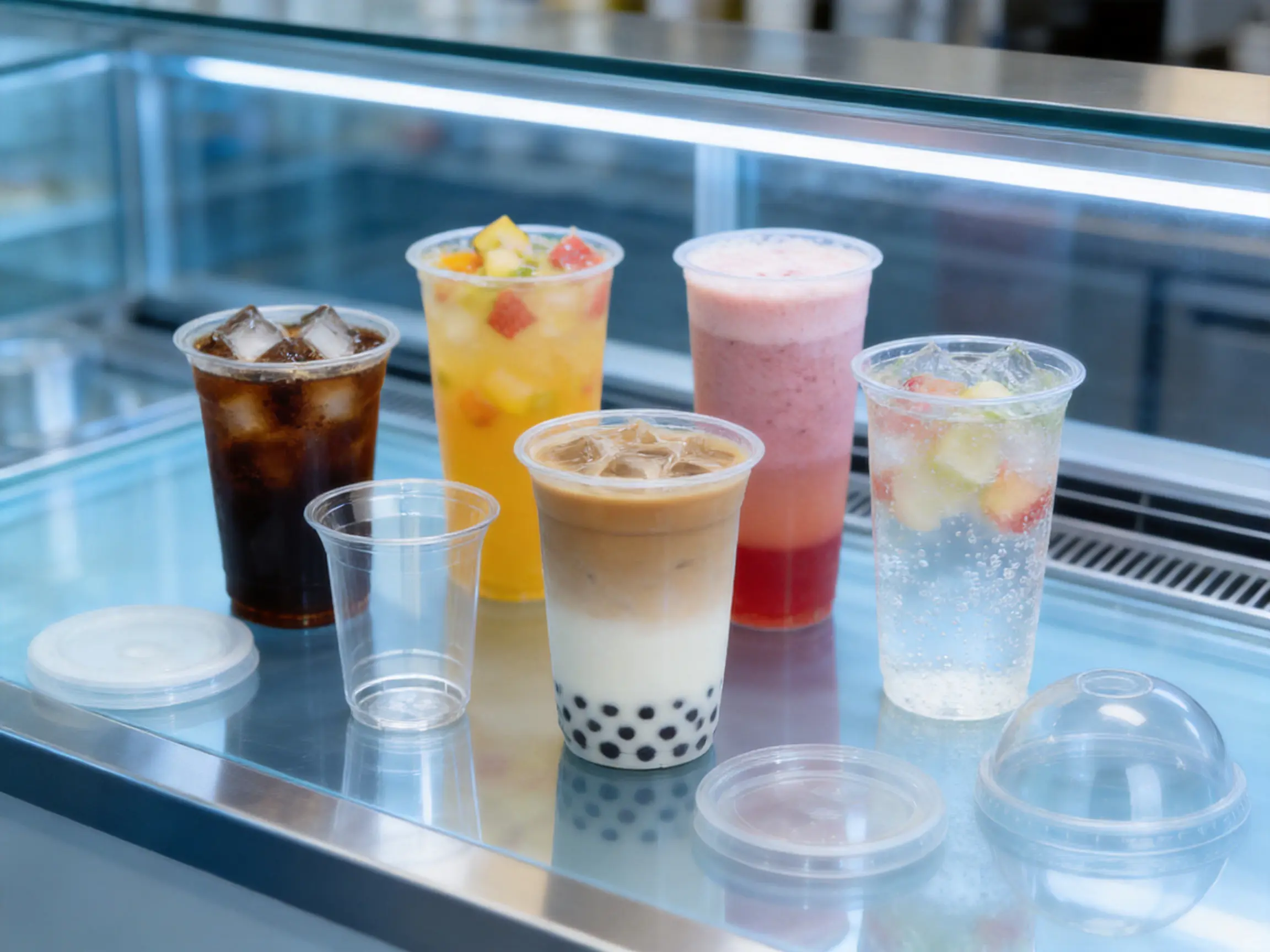
The cup is produced from food-grade PET material selected for transparency, toughness, lightweight performance, and recyclability. Its smooth surface provides a clean visual presentation, allowing the color, layers, fruit pieces, ice, pearls, toppings, or other beverage features to remain visible. This is valuable for brands that use the appearance of the drink as part of their marketing strategy.
The cup mouth is designed with a rounded edge. A well-formed rim improves the drinking experience, supports lid compatibility, and reduces the sharp or uneven edge sensation sometimes associated with poorly manufactured disposable cups. The inner wall is smooth, which makes the container easier to rinse, clean, or sanitize when applicable to the intended use. As a single-use food packaging product, it should always be handled according to local food safety requirements and disposal regulations.
Different mouth diameters are available, including approximately 90 mm, 93 mm, 98 mm, and 117 mm options. These formats can support different lid systems and beverage styles. Smaller diameters may suit standard cold drinks, while wider mouths can accommodate larger toppings, fruit pieces, desserts, smoothies, or specialty beverages.
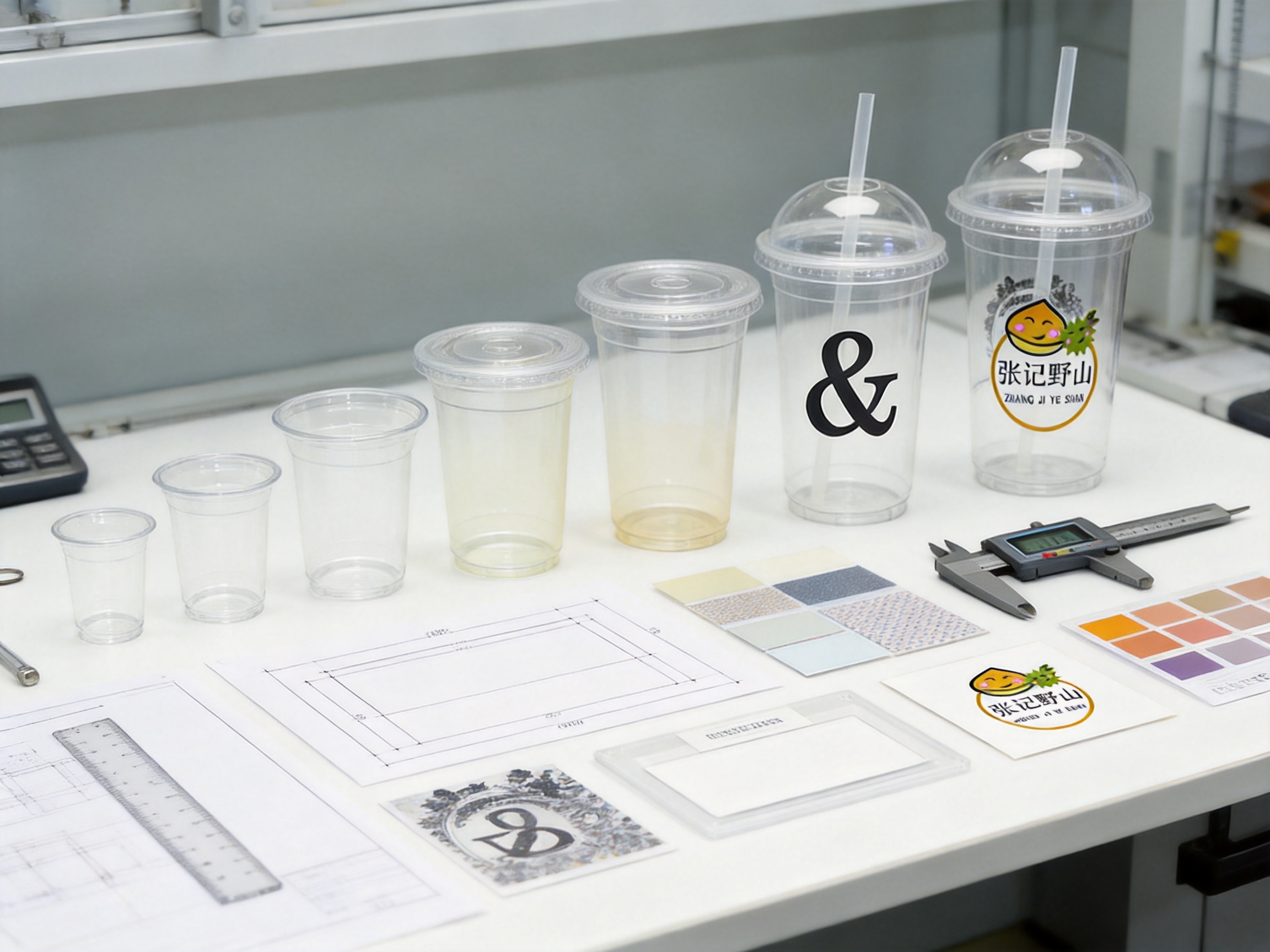
Capacity options range from approximately 400 ml to 1,000 ml in the listed specifications. This range allows businesses to offer multiple serving sizes without changing to a completely different packaging system. A coordinated series of cup sizes can also help a brand maintain consistent visual identity across small, medium, large, and extra-large products.
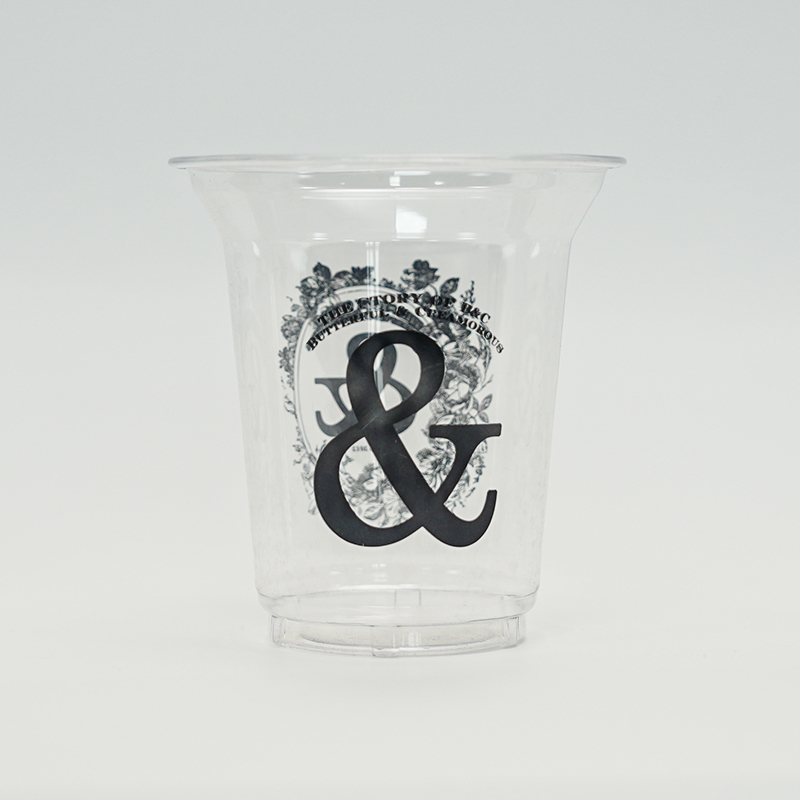
Low-Temperature Resistant PET plastic cup
Core Advantages of Low-Temperature Resistant PET Cups
Stable Performance from -20°C to 55°C
The defining feature of the product is its adaptability to a temperature range of -20°C to 55°C. The cup body is engineered to retain toughness and shape stability in low-temperature conditions, helping to reduce cracking and deformation during storage and service.
For beverage companies, this means greater flexibility in handling. A cup can be used for refrigerated beverages, iced drinks, cold juices, smoothies, and other chilled products without the same level of concern associated with less suitable plastic formats. When drinks are stored in a cold environment, the cup remains more dependable during stacking, transport, lid application, and customer handling.
Temperature stability can also support more efficient inventory management. Operators may prepare drinks ahead of peak service periods or keep filled products chilled for delivery, provided that the full packaging system and food safety procedures are appropriate for the application. A cup that retains its shape under these conditions can help reduce packaging failures and improve workflow.
High Transparency and Attractive Presentation
PET is widely valued for its clear appearance. A transparent cup gives consumers a direct view of the beverage and its ingredients. This is especially useful for colorful juices, layered drinks, milk teas, iced coffees, smoothies, fruit teas, sparkling beverages, and drinks containing ice or decorative toppings.
Clarity also helps retailers display products in a visually appealing way. Customers can quickly identify the contents, compare flavors, and recognize the brand’s serving style. In competitive foodservice markets, packaging visibility can influence impulse purchases and encourage customers to share photographs of attractive beverages.
The smooth external surface is suitable for printed graphics, labels, sleeves, and other branding approaches. Custom colors, patterns, and in-mold labeling can be discussed according to the customer’s design, quantity, and production requirements.
Toughness and Resistance to Deformation
A disposable cup needs to be lightweight, but it must also withstand normal handling. The PET material used for this product provides a useful combination of toughness and structural stability. The cup is designed to resist deformation during filling, stacking, transport, and consumption.
Improved resistance to deformation can help the cup maintain a consistent appearance from the factory to the customer. It may also improve compatibility with lids, sealing equipment, cup holders, cartons, and automated or semi-automated packaging processes. Consistent dimensions are particularly important for beverage chains and distributors that use standardized equipment across multiple locations.
Compared with fragile or poorly formed alternatives, a stronger cup can help reduce the number of damaged units in a shipment. Lower breakage and deformation rates may contribute to more predictable packaging consumption, although actual results depend on the beverage, transport method, stacking configuration, and handling conditions.
Food-Grade Material Selection
The cups are made from food-grade PET material intended for food and beverage packaging applications. The material is described as non-toxic and odorless, helping to preserve the normal sensory characteristics of the packaged drink when used under suitable conditions.
Material selection is only one part of packaging safety. Safe production also depends on hygienic manufacturing, suitable storage, correct use, and compliance with the regulations applicable in the destination market. For professional buyers, documentation, testing, production controls, and product specifications should be reviewed before commercial approval.
The absence of an unwanted plastic odor is important for beverages because consumers are sensitive to smell and taste. A clean, neutral packaging material helps the drink remain the focus of the customer experience.
Recyclability and Environmental Considerations
PET is a recyclable plastic material in many waste management systems. After use, PET cups may be collected, sorted, processed, and converted into recycled material where appropriate recycling infrastructure exists. This provides an opportunity to reduce reliance on virgin resources and support more circular packaging practices.
Recyclability does not mean that every cup will automatically be recycled. Collection systems, contamination, local rules, sorting capacity, labels, inks, lids, and consumer behavior all influence the final result. Businesses should communicate disposal instructions responsibly and consider the requirements of their target market.
The product’s lightweight design may also help reduce material consumption and transportation weight compared with heavier packaging formats. However, environmental performance should be evaluated across the complete life cycle, including raw materials, manufacturing, distribution, use, collection, recycling, and end-of-life treatment.
Available Specifications
The following specifications are provided for the listed product range. The specification names are reproduced according to the supplied product information. Buyers should confirm final drawings, tolerances, lid compatibility, packing details, and production samples before placing a bulk order.
| Specification | Volume (ml) | Mouth (mm) | Height (mm) | Bottom (mm) | Grammage (g) |
|---|---|---|---|---|---|
| 12 oz | 400 | 90 | 108 | 56 | 11 |
| 16 oz | 500 | 90 | 135 | 56 | 13.5 |
| 20 oz | 600 | 90 | 158 | 54 | 14.3 |
| 12 oz | 400 | 93 | 106 | 57 | 12 |
| 12 oz | 400 | 98 | 109 | 55 | 11.6 |
| 14 oz-A | 420 | 98 | 105 | 56 | 11 |
| 14 oz-B | 420 | 98 | 106 | 62 | 14 |
| 16 oz-Y | 500 | 98 | 120 | 62 | 14.3 |
| 16 oz-B | 540 | 98 | 120 | 65 | 13.5 |
| 20 oz | 600 | 98 | 143 | 62 | 15.5 |
| 24 oz | 700 | 98 | 155 | 60 | 16.5 |
| 16 oz | 600 | 117 | 82 | 90 | 16 |
| 24 oz | 1,000 | 117 | 107 | 90 | 21 |
The table demonstrates the breadth of the available range. Similar nominal capacities may have different mouth diameters, heights, bottom dimensions, or grammage values. This allows buyers to select the physical shape that best matches the beverage, lid, filling process, display shelf, delivery system, and customer preference.
Choosing the Right Cup Format
Capacity and Beverage Portion
Capacity should be selected according to the standard serving size rather than the maximum volume alone. A beverage that includes ice, fruit, tapioca pearls, whipped cream, or other additions may require more internal space than a liquid-only drink. Buyers should test the actual product in the proposed cup and evaluate fill level, headspace, sealing performance, and appearance.
The 400 ml formats may be suitable for regular cold drinks, juices, teas, and smaller specialty servings. The 500 ml and 540 ml options can support medium or larger drinks. The 600 ml, 700 ml, and 1,000 ml formats may suit large beverages, shareable drinks, oversized smoothies, desserts, or products designed for high-visibility presentation.
Mouth Diameter and Lid Compatibility
The mouth diameter is a critical purchasing factor. A cup should be matched with the correct lid design and sealing system. Even a small dimensional difference can affect fit, leakage resistance, stacking, and customer convenience.
A 90 mm or 93 mm mouth may be appropriate for a particular lid family, while 98 mm and 117 mm formats provide wider openings for larger drinks and toppings. Before mass production, buyers should test the cup with the intended flat lid, dome lid, straw slot lid, sealing film, or other closure system.
Testing should include filling, sealing, shaking, inversion, stacking, refrigeration, transport simulation, and customer-style drinking. If the beverage contains carbonation, foam, pulp, ice, or large ingredients, the closure system should be evaluated under realistic conditions.
Height, Bottom Diameter, and Stability
Cup height and bottom diameter influence stability, storage, display, and transport. Taller cups may create a strong visual effect and provide greater capacity, but they may require suitable cup holders or cartons. Wider-bottom designs can offer a more stable base for large or heavy drinks.
The bottom dimensions listed in the specifications range from approximately 54 mm to 90 mm. This variety allows businesses to select a shape that fits their equipment and service environment. A café using narrow cup dispensers may prefer one format, while a dessert shop or delivery business may require a wider base.
Grammage and Structural Requirements
Grammage is an important indicator of the amount of material used in a cup, although it should not be considered the only measure of performance. Shape design, wall distribution, rim structure, bottom geometry, material formulation, and forming accuracy also influence strength.
Lower-grammage cups can support lightweight packaging goals and may be suitable for standard beverages. Higher-grammage options may be preferred for larger capacities, heavier contents, premium presentation, or more demanding transport conditions. The best choice should be confirmed through product testing rather than based only on weight.
Applications Across the Food and Beverage Industry
Cafés and Coffee Shops
Cold brew, iced coffee, iced tea, flavored lattes, and fruit-based drinks require packaging that remains attractive and stable during refrigeration and takeaway service. Transparent PET cups allow the drink’s color, ice structure, foam, and toppings to remain visible.
For café chains, standardized cup dimensions can simplify procurement and support consistent serving sizes across locations. Custom printing or in-mold labeling can further strengthen brand recognition, especially when customers carry beverages in public spaces.
Juice Bars and Smoothie Shops
Fresh juices and smoothies often depend on visual appeal. A clear container allows consumers to see natural colors, fruit pieces, layered ingredients, and the freshness-oriented appearance of the drink.
Because smoothies may be relatively heavy and may contain ice or fruit solids, cup toughness and bottom stability are important. A suitable wide-mouth design can also make filling easier and provide room for toppings or garnishes.
Bubble Tea and Specialty Tea Businesses
Bubble tea and specialty drinks commonly include pearls, jellies, fruit pieces, herbs, foam, or other ingredients. These products benefit from a clear cup that showcases the contents while supporting a compatible wide-opening lid or sealing film.
The 98 mm and 117 mm mouth options may be considered for beverages that require a wider opening or larger straw. Buyers should confirm the diameter needed for their specific sealing machine, lid supplier, straw size, and filling process.
Restaurants and Takeaway Services
Restaurants increasingly offer cold drinks with takeaway meals, delivery orders, and catering packages. A dependable PET cup can support beverages such as iced tea, lemonade, soda, fruit punch, and cold desserts.
For delivery, the cup should be tested with the restaurant’s packaging system. Important factors include lid security, condensation, bag arrangement, cup-holder fit, stacking pressure, and the time between filling and consumption. The cup can contribute to a stronger delivery experience when combined with a well-designed lid and outer transport package.
Retail, Events, and Promotional Campaigns
Retailers and event organizers may need large quantities of cups with consistent appearance and delivery schedules. Custom colors, patterns, printed graphics, and in-mold labeling can turn a standard beverage cup into a promotional tool.
Customized cups are suitable for product launches, festivals, sporting events, exhibitions, weddings, corporate campaigns, seasonal promotions, and restaurant openings. A company logo, campaign message, brand color, or themed design can improve visibility while the cup is being used by customers.
Customization and OEM Manufacturing
OEM production allows buyers to develop packaging that reflects their own product requirements rather than selecting only from an off-the-shelf catalog. The available PET cup formats can be customized in several ways, subject to technical feasibility, order quantity, artwork approval, and production scheduling.
Customized Dimensions
Customers may request a suitable caliber, capacity, height, bottom shape, or overall profile. Dimensional changes require engineering review because they may affect mold design, material distribution, forming conditions, lid fit, stacking, and shipping efficiency.
When requesting a custom size, buyers should provide the intended beverage volume, target fill level, lid type, straw diameter, sealing method, packaging arrangement, and delivery environment. This information helps the manufacturer recommend a practical solution rather than focusing on a single dimension in isolation.
Color and Surface Appearance
Although transparent PET is a major advantage for beverage display, some brands may require color effects, translucent finishes, or other visual treatments. Custom color development should be reviewed for consistency, appearance under different lighting, and compatibility with the selected production process.
Design teams should consider how the cup will look when filled with different drinks. A color that appears attractive when empty may reduce beverage visibility when the cup contains dark tea, brightly colored juice, ice, or layered ingredients.
Patterns, Graphics, and In-Mold Labeling
Custom patterns and graphics can help a beverage brand create a distinctive identity. In-mold labeling is one available approach for integrating a label or decorative element during the forming process. It may provide a clean, durable appearance and help maintain consistent positioning across production batches.
Artwork preparation should include clear specifications for color references, logo proportions, text legibility, print area, barcode requirements, regulatory information, and recycling marks. A pre-production sample or digital proof should be approved before mass manufacturing.
Private-Label and Large-Volume Support
Large-volume customers often need more than a product. They need reliable scheduling, consistent quality, packaging coordination, documentation, and responsive communication. The company provides OEM support for customers seeking customized disposable food packaging and beverage containers.
Mass production capability helps support larger orders while maintaining a planned delivery schedule. The precise minimum order quantity, lead time, packing method, and customization conditions should be confirmed for each project. Buyers should also allow time for mold development, artwork approval, sample testing, and production inspection when required.
Manufacturing Capabilities and Production Strengths
Yuqian Packaging Technology (Jiangsu) Co., Ltd. was established in 2010 and operates in Taizhou City, Jiangsu Province, China. The company has a plant area of approximately 30,000 square meters and focuses on the research, development, production, and sales of new food packaging materials and products.
The company’s manufacturing profile combines product development with industrial-scale production. This combination is important for buyers who need both standard PET cups and customized packaging solutions. A supplier with research and development capability can help translate a packaging concept into a feasible product, while established production resources can support repeat orders and commercial volumes.
Production Equipment and Process Control
Advanced production equipment and dedicated production lines support the manufacture of consistent PET cups. Although individual process parameters may vary according to the cup design and material, professional production generally involves controlled material preparation, forming, trimming or finishing, inspection, packing, and shipment.
Material preparation is important because the quality and cleanliness of the PET feedstock influence transparency, strength, appearance, and processing stability. Production teams must control material handling and storage to reduce contamination and maintain consistent processing conditions.
Forming accuracy is essential for achieving the specified mouth diameter, height, bottom diameter, wall profile, and weight. Consistent heating and forming conditions help distribute material throughout the cup body and reduce visible defects. A properly formed rim and bottom improve usability, stacking, lid compatibility, and structural performance.
Inspection procedures may include visual checks, dimensional measurement, weight verification, leakage or sealing tests when applicable, and packaging inspection. The specific inspection plan should be agreed upon according to the customer’s quality requirements and application.
Quality Management and Certifications
The company’s supplied qualifications include a QS national industrial product production license, ISO 9001 quality management system certification, BRC certification, German DIN safety certification, and EU RoHS+ testing. These credentials demonstrate the company’s focus on structured production management, product safety, and compliance-related evaluation.
Certification names, scopes, validity periods, and applicable product categories should always be verified through current documentation. Different markets may also require additional food-contact declarations, migration testing, packaging regulations, labeling requirements, or local conformity documents.
ISO 9001 principles support systematic management of processes, responsibilities, documentation, corrective actions, and continual improvement. BRC-related certification is associated with recognized approaches to product safety and quality in the supply chain. DIN and RoHS-related evaluations may address specific safety or restricted-substance requirements depending on the relevant product scope.
For importers and brand owners, certifications are valuable because they provide a starting point for supplier evaluation. They should be combined with factory audits, sample approval, batch records, inspection reports, and ongoing communication about any changes to material, design, or production location.
Production Capacity and Delivery Coordination
Strong production capacity is particularly important for chain stores, distributors, wholesalers, and seasonal campaigns. A supplier must be able to coordinate raw materials, molds, production schedules, quality checks, packing, and shipment without compromising consistency.
The company states that it can support mass production and help ensure delivery schedules. In practice, delivery time depends on order quantity, product type, customization, artwork, mold requirements, raw material availability, inspection arrangements, and shipping conditions. An accurate production plan should be confirmed before an order is finalized.
For customers with recurring demand, a forecast-based purchasing plan can help improve supply stability. It may be useful to discuss annual volume, monthly call-off quantities, safety stock, carton configuration, and peak-season requirements in advance.
Advantages Compared with Standard Disposable Cup Options
Many disposable cups are designed for general-purpose use, but not all provide the same balance of low-temperature stability, transparency, customization, and production support. The low-temperature resistant PET cup offers several practical advantages for businesses that serve chilled beverages.
Better Suitability for Cold Environments
The stated -20°C to 55°C range gives the product a clear positioning advantage for low-temperature applications. Businesses that refrigerate pre-filled drinks, use ice storage, or operate in cold climates can select a cup specifically designed for these conditions instead of relying on a generic format.
Stronger Visual Merchandising
Clear PET provides a premium visual effect that opaque packaging cannot offer in the same way. Customers can see the actual beverage, making the product more attractive on shelves, counters, delivery menus, and social media.
More Flexible Product Development
The availability of multiple mouth diameters and capacities reduces the need to compromise between beverage volume and cup shape. OEM customization further allows a brand to develop packaging that aligns with its product positioning and service method.
More Consistent Supply for Commercial Operations
Manufacturing experience, production lines, quality systems, and mass-production support can provide advantages over suppliers that only trade standard packaging. A production-oriented supplier is better positioned to discuss technical feasibility, samples, quality control, customization, and repeat-order management.
Balanced Lightweight Performance
The listed grammage range allows customers to select lightweight options while still considering the strength required by the application. This balance can help optimize shipping, storage, and material use without treating low weight as the only purchasing criterion.
Quality Evaluation Before Bulk Purchase
Professional buyers should conduct a structured evaluation before approving a large order. The first step is to confirm the intended beverage and the operating conditions. The test should use the actual drink, ice, toppings, storage temperature, lid, straw, sealing equipment, and delivery packaging.
Dimensional Testing
Measure mouth diameter, height, bottom diameter, wall thickness where relevant, and overall weight. Confirm that the dimensions match the approved drawing and the selected lid. Repeated measurements from different samples can help identify production consistency.
Cold-Temperature Testing
Place filled and empty cups in the intended refrigerated or frozen environment. Inspect them after exposure for cracks, whitening, distortion, rim damage, bottom deformation, or loss of lid fit. The test temperature and exposure time should reflect the real application.
Leakage and Closure Testing
Fill the cup to the intended level and apply the actual lid or sealing film. Test upright storage, stacking, movement, inversion, and delivery-style handling. Evaluate whether the closure remains secure and whether condensation affects grip or labeling.
Stacking and Transport Testing
Stack cups and cartons according to the planned warehouse and shipping arrangement. Check for sticking, deformation, scratching, collapse, or difficulty separating individual cups. A transport simulation can reveal problems that are not visible during a simple bench test.
Appearance and Branding Testing
Review transparency, gloss, surface uniformity, label positioning, color accuracy, print quality, and logo visibility. Examine the cup under counter lighting, daylight, refrigerated display lighting, and common indoor lighting conditions.
Storage, Handling, and Use Recommendations
Disposable PET cups should be stored in a clean, dry, and well-ventilated area away from dust, chemicals, direct sunlight, excessive heat, and strong odors. Cartons should remain protected until the cups are needed for production or service.
Do not place heavy objects on cartons unless the packaging configuration has been designed for that load. Excessive pressure may deform cups even when the material itself has good toughness. Use first-in, first-out inventory practices and follow the storage period recommended by the supplier or the customer’s quality system.
During service, employees should handle cups with clean hands or suitable foodservice equipment. Avoid touching the inner surface or rim unnecessarily. If cups are used with automatic filling, sealing, or dispensing equipment, the machine should be adjusted to the selected cup dimensions.
The temperature range provided for the product should be treated as a technical guideline, not a substitute for application testing. A beverage’s temperature, acidity, alcohol content, fat content, carbonation, storage time, and additives may influence packaging performance. Buyers should obtain application-specific confirmation when the product is used under unusual conditions.
Sustainability in Practical Packaging Decisions
Environmental responsibility in disposable food packaging involves several decisions rather than one material claim. PET’s recyclability is an important benefit, but businesses should also consider material efficiency, product durability, transport efficiency, correct disposal communication, and the compatibility of lids and labels with local recycling systems.
A cup that resists deformation may reduce product loss during transport and service. Preventing beverage waste is relevant to sustainability because the environmental impact of a packaged drink includes not only the cup but also the ingredients, water, energy, labor, and distribution used to produce it.
Lightweight cups may reduce the amount of material per serving and lower the weight of transported goods. At the same time, the cup must remain strong enough for its application. Excessive material reduction can increase the risk of failure, which may create more waste instead of less. The most responsible design is usually the one that achieves the required performance with an efficient amount of material.
Brands can also support better end-of-life outcomes by providing clear disposal guidance, separating incompatible components where appropriate, and avoiding unnecessary decoration that interferes with recycling. Local regulations should be consulted before making environmental claims on packaging or marketing materials.
How the Product Supports Beverage Brand Development
Packaging is a communication tool. A transparent PET cup can make the beverage itself part of the brand identity. Distinctive colors, fruit pieces, ice patterns, cream layers, pearls, and toppings become visible to the customer.
Customized graphics can reinforce recognition across physical stores, delivery orders, events, and promotional campaigns. When a cup is carried through a shopping district or photographed online, its appearance can extend brand exposure beyond the original point of purchase.
Consistency is equally important. A brand that uses the same cup proportions, rim style, label position, and visual language across different products can create a more professional customer experience. Multiple capacities and mouth sizes make it possible to develop a coordinated packaging family while adapting each format to a specific drink.
For new beverage companies, OEM support can reduce the gap between an initial concept and a commercial package. For established chains, it can provide a route to redesign existing packaging, improve cold-temperature performance, or create a special edition for a campaign.
Purchasing Considerations for Distributors and Importers
Distributors should evaluate both product suitability and supply-chain efficiency. Important questions include the available specifications, lid compatibility, carton quantity, pallet arrangement, container loading, lead time, customization process, quality documents, and replacement policy for confirmed production defects.
Importers should also review the food-contact requirements of the destination market. A product that meets one country’s requirements may need additional testing or declarations elsewhere. The buyer should identify the required documents before production begins so that compliance does not delay shipment.
For repeat orders, maintain an approved reference sample and specification sheet. Any change to material source, cup design, mold, printing, label, packing, or production site should be communicated and evaluated. Change control helps ensure that a product continues to meet the expectations established during initial approval.
Packaging logistics should be planned carefully because empty cups occupy significant volume. Efficient nesting, carton design, warehouse layout, and shipping configuration can influence the total delivered cost. A slightly different cup height or carton arrangement may have a meaningful effect on container utilization and storage space.
Company Manufacturing Background
Yuqian Packaging Technology (Jiangsu) Co., Ltd. is a Chinese manufacturer and supplier of disposable food packaging materials and products. Established in 2010, the company is located in Taizhou City, Jiangsu Province, and operates a production facility of approximately 30,000 square meters.
The company’s business covers research and development, manufacturing, and sales. Its product scope includes plastic cups, plastic cup lids, takeaway bowls, disposable straws, recycling bags, peripheral products, and injection film lining cup and bowl boxes. This broader product portfolio can be useful for customers seeking coordinated foodservice packaging rather than a single standalone item.
To expand service capabilities and business channels, a Shanghai branch was established in January 2019. The company states that it serves customers through professional production resources, customized design, mass-production support, and quality-focused management.
The company’s stated certifications and testing history include QS national industrial product production licensing, ISO 9001 quality management system certification, BRC certification, German DIN safety certification, and EU RoHS+ testing. These qualifications are part of the company’s approach to structured manufacturing and product quality management.
Frequently Asked Questions
What temperature range is suitable for these PET cups?
The stated adaptable temperature range is -20°C to 55°C. The cups are especially designed for cold and refrigerated beverage applications. Buyers should conduct application testing when using them with unusual beverages, extended storage times, freezing conditions, or specialized equipment.
Are the cups suitable for refrigerated drinks?
Yes. Their low-temperature resistance makes them suitable for many refrigerated and chilled beverages. The cup can help maintain toughness and shape stability in cold environments, reducing the likelihood of cracking or deformation during normal handling.
Are these cups transparent?
Yes. The cups are described as highly transparent and smooth. Their clear appearance allows customers to see the color, ingredients, layers, ice, and toppings of the beverage.
What material are the cups made from?
The cups are made from food-grade PET material. The product is described as non-toxic, odorless, durable, and recyclable when processed through suitable recycling systems.
What capacities are available?
The listed capacities range from approximately 400 ml to 1,000 ml. Available formats include 400 ml, 420 ml, 500 ml, 540 ml, 600 ml, 700 ml, and 1,000 ml options, depending on the selected mouth diameter and cup design.
What mouth diameters are available?
The listed mouth diameters include approximately 90 mm, 93 mm, 98 mm, and 117 mm. The correct diameter should be selected according to the intended lid, sealing film, straw, beverage ingredients, and filling equipment.
Can the cups be customized?
Yes. The company provides OEM customization options, including different calibers, colors, patterns, and in-mold labeling. Custom projects should be reviewed for technical feasibility, artwork, mold requirements, minimum order quantity, lead time, and sample approval.
Can these cups be used for brand promotion?
Yes. Transparent surfaces, custom graphics, colors, patterns, and in-mold labels can support brand promotion. Customized cups may be used for cafés, restaurant chains, events, seasonal campaigns, product launches, and corporate activities.
Are the cups recyclable?
PET is a recyclable material in many regions. Actual recycling depends on local collection, sorting, processing, contamination, and regulations. The cup should be disposed of according to the requirements of the local waste management system.
How should buyers confirm the correct cup model?
Buyers should compare the beverage volume, fill level, mouth diameter, lid type, cup height, bottom diameter, grammage, packaging arrangement, storage temperature, and delivery conditions. A sample test using the actual beverage and closure system is recommended before bulk production.
Does the company support large orders?
The company states that it has strong production capacity for mass production and can support large-volume orders. Actual capacity and delivery time depend on the product specification, customization requirements, order quantity, raw materials, production schedule, and shipping plan.
What quality certifications are associated with the company?
The supplied company information lists QS national industrial product production licensing, ISO 9001 quality management system certification, BRC certification, German DIN safety certification, and EU RoHS+ testing. Buyers should request current documents and verify their scope for the specific product and market.
Conclusion
Low-temperature resistant PET plastic cups provide a practical packaging solution for businesses that need clarity, toughness, customization, and reliable performance in chilled environments. Their ability to adapt to temperatures from -20°C to 55°C makes them particularly suitable for refrigerated beverages, iced drinks, smoothies, juices, milk tea, cold coffee, desserts, and other takeaway products.
The combination of a rounded cup mouth, smooth inner wall, high transparency, food-grade PET material, resistance to deformation, lightweight construction, and recyclable material gives the product a balanced performance profile. Multiple capacities and mouth diameters allow buyers to select a format that matches their beverage and lid system, while OEM services support customized colors, patterns, graphics, and in-mold labeling.
Manufactured by a company with research and development, production, sales, certification, and mass-order capabilities, the cups are positioned for both standard purchasing and customized commercial projects. For the best results, customers should confirm technical specifications, conduct application testing, review current compliance documents, and establish a clear quality and delivery plan before placing a large order.
For inquiries about low-temperature resistant PET cups, OEM design, specifications, and bulk supply, buyers may contact the manufacturer through the following business details: phone 0086 15252423007, fax +0523 8608 3698, or email [email protected].
Company address: No. 8 Tongyang Road, Suchen Town, Taizhou City, Jiangsu Province, China.
References
1. Product specification and technical information supplied for the low-temperature resistant PET plastic cup.
2. Company profile and manufacturing information supplied by Yuqian Packaging Technology (Jiangsu) Co., Ltd.
3. ISO 9001 quality management system principles and supplier quality-control practices.
4. General technical guidance for PET food and beverage packaging applications.
5. General recycling and material-management principles for polyethylene terephthalate packaging.
6. General food-contact packaging evaluation practices, including material suitability, migration considerations, storage, and application testing.