English
 Español
 عربى
عربىContent
- 1 Why Low-Temperature Performance Matters in Disposable Cups
- 2 Core Product Features
- 3 Product Specifications and Available Sizes
- 4 Advantages Compared with Ordinary Disposable Plastic Cups
- 5 Manufacturing Process and Production Strengths
- 6 Certifications and Quality Management
- 7 Environmental Considerations and PET Recyclability
- 8 Applications Across Foodservice and Beverage Markets
- 9 Customization and OEM Development
- 10 Factory Capabilities and Company Strengths
- 11 How to Select the Right Low-Temperature Resistant PET Cup
- 12 Recommended Testing Before Commercial Launch
- 13 Operational Benefits for Beverage Brands
- 14 Responsible Use and Storage
- 15 Why Work with an OEM PET Cup Manufacturer?
- 16 Q&A About Low-Temperature Resistant PET Plastic Cups
- 16.1 What is a low-temperature resistant PET plastic cup?
- 16.2 Can the cup be used for refrigerated beverages?
- 16.3 Will the cup crack in a cold environment?
- 16.4 Is PET suitable for food and beverage packaging?
- 16.5 Are the cups transparent?
- 16.6 What sizes are available?
- 16.7 Can the cups be customized?
- 16.8 Can the supplier handle large orders?
- 16.9 Are the cups recyclable?
- 16.10 Can these cups be used with lids and straws?
- 16.11 What should be checked before ordering?
- 16.12 Where is the manufacturer located?
- 16.13 How can buyers contact the company?
- 17 Conclusion
- 18 References
- 19 Product: Low-Temperature Resistant PET plastic cup
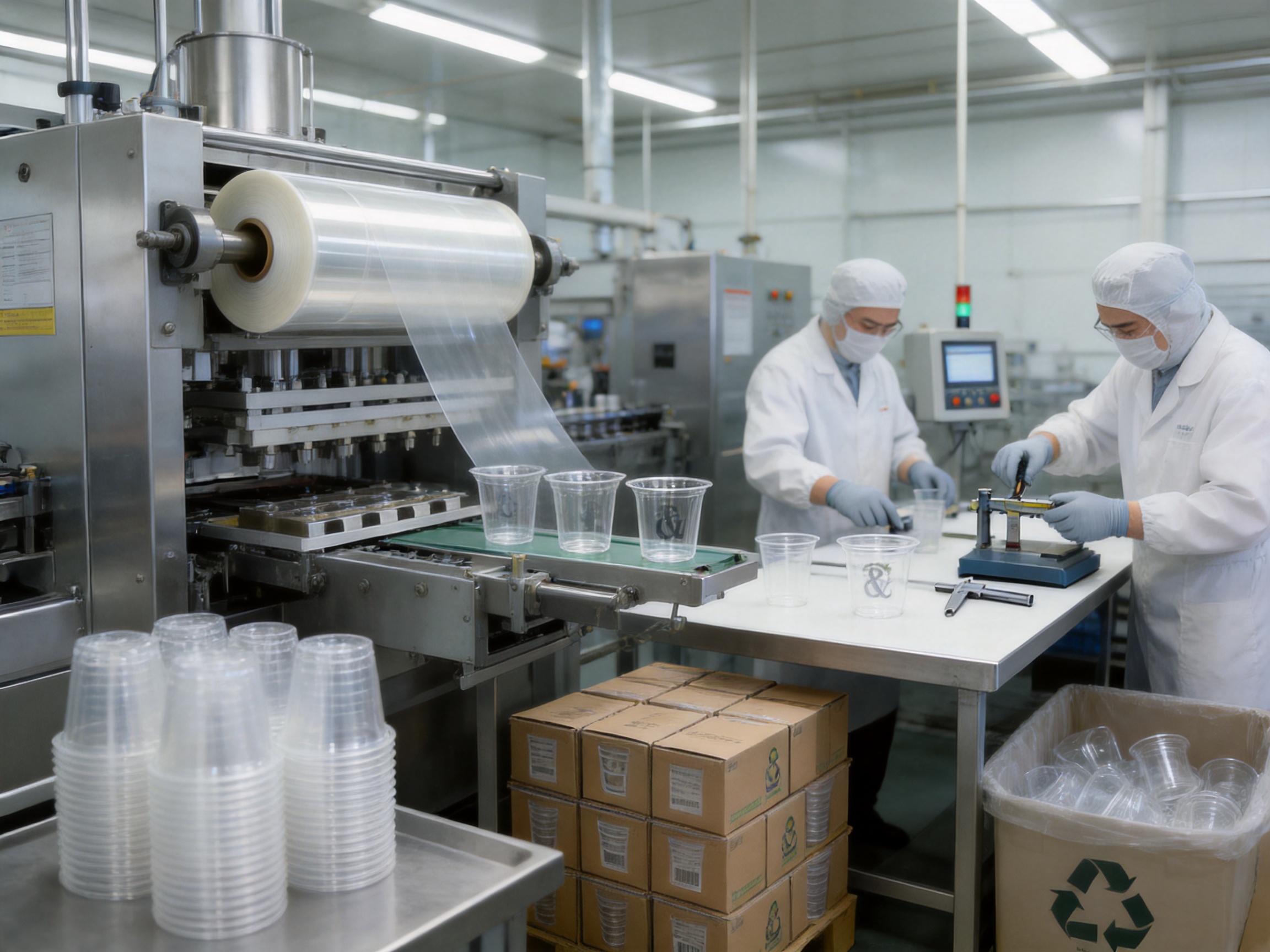
Low-temperature resistant PET plastic cups are designed for beverage businesses that need dependable packaging across changing storage, transport, and serving conditions. Unlike ordinary disposable cups that may become brittle, lose their shape, or crack when exposed to cold environments, these cups are formulated to maintain toughness and dimensional stability from -20°C to 55°C. This performance makes them suitable for chilled drinks, refrigerated products, frozen beverage applications, takeaway service, catering, foodservice, retail promotions, and customized brand packaging.
Yuqian Packaging Technology (Jiangsu) Co., Ltd. manufactures low-temperature resistant PET plastic cups for customers seeking a combination of transparency, safety, durability, production consistency, and customization capability. The cups are made from food-grade PET and are designed with a smooth inner wall, a rounded rim, practical capacities, and multiple mouth diameters. Customers can also request customized colors, patterns, printing effects, and in-mold labeling solutions according to their product positioning and marketing requirements.
In a competitive disposable packaging market, the material and manufacturing process are just as important as the appearance of the finished cup. A cup may look attractive, but it must also resist cracking, preserve its form, protect the beverage, support efficient filling and sealing, and remain consistent during large-volume production. This article examines the features, advantages, applications, specifications, manufacturing strengths, quality systems, and customization options associated with low-temperature resistant PET plastic cups.
Why Low-Temperature Performance Matters in Disposable Cups
Many beverages are stored, transported, or served at low temperatures. Fresh juices may be refrigerated before delivery. Milk tea, fruit tea, smoothies, soft drinks, and cold brew coffee are often filled into cups and placed in chilled environments. Frozen desserts and ice-based drinks can expose packaging to particularly demanding conditions. During winter transportation, products may also experience low ambient temperatures before reaching the customer.
Conventional plastic cups can respond poorly to sudden temperature changes. Certain materials become more rigid as temperatures fall, reducing their impact resistance. If the cup is squeezed, dropped, stacked under pressure, or exposed to uneven stress, the sidewall or bottom may crack. A deformed cup may also fit poorly with a lid, making it more difficult to prevent leakage.
Low-temperature resistant PET plastic cups are developed to address these concerns. Their specially formulated PET material is intended to retain useful toughness and shape stability within a working temperature range of -20°C to 55°C. This does not mean that every beverage or process should automatically be used at any temperature without testing. Instead, it provides a broader operating range than many standard disposable cup options and gives beverage manufacturers additional protection against cold-related brittleness and deformation.
Maintaining the shape of the cup is important for more than appearance. A stable cup helps preserve the intended internal volume, supports lid compatibility, improves stacking, and reduces the possibility of spillage. For branded beverage outlets, a structurally stable cup also contributes to a more consistent customer experience. The product looks cleaner, feels more secure in the hand, and is less likely to collapse during normal use.
Core Product Features
Temperature Adaptability from -20°C to 55°C
The defining feature of this PET cup range is its adaptability to temperatures between -20°C and 55°C. Cold resistance helps the cup maintain toughness in refrigerated and low-temperature environments, while the upper end of the stated range supports many ordinary cold beverage filling and serving conditions.
This broad temperature range can benefit businesses with complicated distribution systems. A cup may be produced in one region, stored in a warehouse, transported by road, held in a refrigerated display, and finally used at a beverage counter. Each stage can involve different temperatures. Packaging that maintains its shape during these transitions can reduce handling problems and help protect the finished product.
For best results, customers should evaluate the complete packaging system, including the beverage temperature, filling procedure, sealing equipment, storage period, transportation conditions, and lid design. Yuqian Packaging Technology can support product selection and customization according to the customer’s intended application.
Food-Grade PET Material
The cups are produced with food-grade PET material. PET, or polyethylene terephthalate, is widely used for food and beverage packaging because it offers clarity, toughness, relatively low weight, and good processability. When suitable food-contact materials and controlled production methods are used, PET can provide a practical balance between presentation and performance.
The material used for these cups is described as non-toxic and odorless for intended food and beverage applications. This is important because packaging should not introduce unwanted odors that affect the drinking experience. A neutral material also helps preserve the expected sensory qualities of beverages such as tea, juice, coffee, carbonated drinks, and flavored water.
Food packaging safety depends on more than the name of a resin. It also depends on raw material control, processing temperatures, equipment hygiene, storage conditions, and compliance testing. For that reason, a professional supplier should manage the entire production process rather than simply purchase finished sheets or components from unknown sources. Yuqian Packaging Technology combines material selection, forming, quality management, and finished-product inspection to support stable product performance.
High Transparency and Smooth Appearance
Transparent PET allows the color, texture, and ingredients of a beverage to remain visible. This is especially valuable for layered drinks, fruit beverages, bubble tea, smoothies, iced coffee, and products containing fruit pieces or decorative toppings. Clear packaging can turn the product itself into part of the visual marketing strategy.
The smooth surface of the cup also supports a clean and modern appearance. A smooth inner wall is easier to rinse and clean when the product is used in settings that require reusable handling before final disposal, although these cups are primarily designed as disposable food packaging. The outer surface can provide a suitable base for branding treatments, labels, printed graphics, or other decorative solutions selected for the customer’s packaging program.
Rounded Cup Mouth and Smooth Inner Wall
The cup mouth is designed to be round, and the inner wall is smooth. A well-formed rim can improve the interaction between the cup and a compatible lid. It can also provide a more comfortable drinking experience when the cup is used without a straw or lid.
A smooth inner wall may reduce the accumulation of beverage residue and make the cup easier to handle during filling. The rounded mouth and consistent geometry are also important for automated or semi-automated operations, where irregular edges can interfere with lid placement, stacking, or sealing.
Good Toughness and Resistance to Deformation
Good toughness helps a cup withstand ordinary handling during production, packing, transport, and service. The cup must be able to move through supply chains without becoming excessively distorted. It should also remain sufficiently rigid when held by a consumer, filled with liquid, or combined with ice and a lid.
Resistance to deformation is particularly valuable for takeaway businesses. A beverage cup may be placed in a carrier, held in a vehicle, stored in a delivery bag, or packed with other products. A cup that maintains its shape is less likely to tilt or lose contact with its lid. This can contribute to fewer leaks, fewer customer complaints, and less product waste.
Lightweight Construction with Practical Strength
Disposable packaging must balance strength and material efficiency. Excessively heavy cups raise material consumption, shipping weight, and storage costs. Cups that are too light may feel unstable or fail under normal handling. The PET cup specifications include grammage options ranging from approximately 11 to 21 grams across the listed sizes, allowing customers to select a design appropriate for the capacity and application.
Lightweight construction can improve logistics efficiency. More cups may fit into a shipment or warehouse area, while lower unit weight can reduce transportation impact. At the same time, appropriate forming technology helps distribute the material across the cup wall, rim, and base so that the cup delivers practical performance rather than simply minimizing weight.
Product Specifications and Available Sizes
The product range includes multiple capacities and mouth diameters. This allows beverage brands to select a cup that matches their menu structure, portion sizes, lid system, filling equipment, and visual identity. The supplied specifications use labels such as “120z,” “160z,” and “200z.” These labels are reproduced as manufacturer specification names; customers should confirm the intended ounce designation and final dimensions before placing a production order.
| Specification | Volume (ml) | Mouth (mm) | Height (mm) | Bottom (mm) | Grammage (g) |
|---|---|---|---|---|---|
| 120z | 400 | 90 | 108 | 56 | 11 |
| 160z | 500 | 90 | 135 | 56 | 13.5 |
| 200z | 600 | 90 | 158 | 54 | 14.3 |
| 120z | 400 | 93 | 106 | 57 | 12 |
The 90 mm mouth options provide a compact format for medium-volume beverages. The 400 ml, 500 ml, and 600 ml capacities can support a variety of menu items, including iced tea, juice, soft drinks, and specialty beverages. The 93 mm mouth design provides a slightly different dimensional option for customers whose lids, filling equipment, or branding requirements call for a specific geometry.
| Specification | Volume (ml) | Mouth (mm) | Height (mm) | Bottom (mm) | Grammage (g) |
|---|---|---|---|---|---|
| 120z | 400 | 98 | 109 | 55 | 11.6 |
| 140z-A | 420 | 98 | 105 | 56 | 11 |
| 140z-B | 420 | 98 | 106 | 62 | 14 |
| 160z-Y | 500 | 98 | 120 | 62 | 14.3 |
| 160z-B | 540 | 98 | 120 | 65 | 13.5 |
| 200z | 600 | 98 | 143 | 62 | 15.5 |
| 240z | 700 | 98 | 155 | 60 | 16.5 |
The 98 mm mouth series offers a broad range of capacities, from 400 ml to 700 ml. This makes it suitable for beverage menus with several serving sizes. The 420 ml alternatives demonstrate how different bottom and height dimensions can create variations in stability, appearance, and internal volume while maintaining the same mouth diameter.
Customers should select the cup and lid as a matched system. Even a small difference in rim dimensions may influence lid retention and sealing performance. Before mass production, it is recommended to conduct a fit test using the actual beverage, ice quantity, sealing method, transport container, and anticipated storage conditions.
| Specification | Volume (ml) | Mouth (mm) | Height (mm) | Bottom (mm) | Grammage (g) |
|---|---|---|---|---|---|
| 160z | 600 | 117 | 82 | 90 | 16 |
| 240z | 1000 | 117 | 107 | 90 | 21 |
The 117 mm mouth models are wider formats for products that require a large opening. The 600 ml and 1,000 ml capacities may be appropriate for large cold drinks, sharing beverages, fruit preparations, dessert products, or applications involving larger toppings and ingredients. The lower height and broad base can also create a different visual presentation from tall, narrow cups.
Advantages Compared with Ordinary Disposable Plastic Cups
Better Cold-Environment Reliability
The principal advantage over many ordinary plastic cup designs is improved performance in low-temperature conditions. Standard cups may be adequate for short-term room-temperature service but become more vulnerable when placed in a refrigerator, cold-chain shipment, or winter delivery environment. Low-temperature resistant PET is intended to preserve its toughness and shape stability at temperatures as low as -20°C.
This advantage can reduce the operational risk associated with cracking and distortion. It is especially relevant to companies that prepare beverages in advance, sell chilled products through retail channels, or distribute products across regions with seasonal temperature changes.
Improved Product Presentation
High transparency allows a beverage to remain visible, helping companies present color, layering, fruit pieces, ice, foam, and toppings. Compared with opaque or cloudy packaging, clear PET can provide stronger shelf appeal and make the product easier for customers to identify.
For a beverage brand, packaging is often part of the purchasing decision. A clear, smooth, well-formed cup can communicate freshness and quality before the customer takes the first sip. It can also support social media visibility when consumers photograph or share the product.
Flexible Capacity Selection
A narrow product range can force a foodservice operator to use the same cup for multiple products, even when the portions or presentation requirements differ. The listed low-temperature resistant PET cups include several capacities, mouth sizes, heights, and bottom diameters. This gives buyers more flexibility when developing a complete cup program.
Different sizes can be used for regular drinks, premium drinks, family portions, promotional products, and special seasonal menus. The availability of varied specifications also helps businesses standardize packaging across different outlets while still offering multiple serving volumes.
Strong Balance Between Weight and Durability
Some competitive cups achieve a low purchase price by reducing material to the point where the product feels weak or collapses easily. Other cups are unnecessarily heavy, increasing cost and transport load. The PET cup range is designed to provide a practical balance between lightweight construction, toughness, and shape stability.
The grammage options indicate that the supplier can adjust the product according to the required performance. A heavier design may be selected for large capacities, premium presentation, or more demanding transport. A lighter design may be suitable for high-volume service where material efficiency is a priority.
More Opportunities for Brand Customization
Customization can distinguish one beverage business from another. Yuqian Packaging Technology provides options for customized colors, patterns, and in-mold labeling. These solutions can be used for logos, product names, seasonal artwork, event graphics, promotional messages, or coordinated visual identity systems.
In-mold labeling can integrate a label or decorative element into the forming process, creating a durable and professional appearance. The exact method depends on the design, production volume, material requirements, and intended visual effect. Customers can discuss artwork format, color matching, surface coverage, sample approval, and minimum order requirements with the manufacturer before production.
Manufacturing Process and Production Strengths
Material Preparation and Control
The manufacturing process begins with the selection and preparation of PET material suitable for food packaging. Raw materials should be handled under controlled conditions to minimize contamination and maintain consistent processing properties. Material quality influences transparency, toughness, forming behavior, wall thickness, and finished-cup appearance.
For low-temperature resistant products, formulation and material behavior are particularly important. The material must be processed in a way that supports the required balance between clarity and impact resistance. Process parameters such as heating profile, forming pressure, cooling, and cycle time can affect the final structure of the cup.
Precision Thermoforming and Shape Formation
PET cups are commonly formed from heated plastic sheet or preprocessed material using dedicated forming equipment. The sheet is heated to a controlled forming condition and shaped over or into molds. Vacuum, pressure, mechanical assistance, or a combination of these methods may be used depending on the equipment and design.
Precision forming is essential because the cup must meet dimensional requirements for mouth diameter, height, bottom diameter, wall profile, and capacity. Consistent forming also helps ensure that cups can be stacked, packed, filled, and matched with compatible lids. Small deviations across a large production run can create significant problems, so stable equipment and process monitoring are important.
Rim and Bottom Formation
The rim is one of the most critical areas of a disposable cup. It must be smooth, round, and consistent enough to support drinking comfort and lid compatibility. A poorly formed rim may have sharp edges, uneven thickness, or dimensional variation. Yuqian Packaging Technology emphasizes a round cup mouth and smooth inner wall as part of the product design.
The bottom also contributes to stability. A properly formed base helps the cup stand upright on counters, trays, filling lines, and delivery surfaces. Bottom diameter and geometry may vary between models to achieve different capacity, height, and stability characteristics. Customers can select a suitable design according to the beverage and handling environment.
Trimming and Edge Finishing
After forming, the cup may require trimming to remove excess material and create a clean, uniform rim. Edge finishing affects both user comfort and product appearance. It also influences the way a lid fits over the cup. Controlled trimming helps maintain consistent dimensions across the production batch.
Finished cups are inspected for visible defects such as cracks, deformation, uneven edges, poor transparency, contamination, and forming marks. Depending on the order requirements, additional checks may be performed for weight, dimensions, stacking behavior, and packaging cleanliness.
Printing and In-Mold Labeling Options
Brand customization may be integrated into the production workflow. Customers can submit artwork for technical review before manufacturing. The supplier can evaluate the available print area, design resolution, color requirements, label position, and relationship between artwork and cup geometry.
In-mold labeling is useful for businesses that want a more integrated decorative effect. The label is positioned within the mold before or during forming so that it becomes part of the finished packaging structure. This can support durable graphics and broad-area decoration, although the design must be prepared carefully to suit the selected cup shape and production process.
Quality Inspection and Batch Consistency
Large-volume buyers require more than attractive samples. They need repeatable performance from batch to batch. A professional manufacturing system therefore includes inspection procedures for raw materials, production conditions, dimensions, appearance, weight, packaging, and shipment readiness.
Quality control helps identify problems before products leave the factory. It can also support traceability when a customer needs to review a particular order, specification, or production date. Consistency is especially important when cups are used with automated filling, sealing, labeling, or packing equipment.
Certifications and Quality Management
Yuqian Packaging Technology reports that its operations have passed or obtained several quality, safety, and compliance-related certifications and tests. These include a QS national industrial product production license, ISO 9001 quality management system certification, BRC certification, German DIN safety certification, and EU RoHS+ testing.
Each certification or testing framework addresses different aspects of organizational control, product safety, or restricted substances. ISO 9001 is associated with quality management processes and continual improvement. BRC certification is widely recognized in food-related supply chains and focuses on product safety, quality, and operational control. DIN-related testing can support conformity with relevant German standards or safety expectations. RoHS-related testing addresses restrictions on certain hazardous substances in applicable products and materials.
Certifications should always be reviewed according to their current validity, exact scope, issuing body, and applicability to the specific product being purchased. Buyers may request relevant documentation during supplier qualification. They may also require additional food-contact declarations, migration testing, material certificates, or destination-market documentation depending on local regulations.
The value of a quality management system is not limited to a certificate on paper. Its practical benefit comes from documented procedures, employee training, equipment maintenance, inspection records, corrective actions, and a commitment to continual improvement. These systems help a manufacturer move from one-time production to stable, repeatable supply.
Environmental Considerations and PET Recyclability
PET is a recyclable material, and the cups can be collected and processed through suitable recycling systems after use. Recyclability can help reduce the environmental burden associated with packaging when collection, sorting, and reprocessing infrastructure is available.
However, recyclability depends on actual waste-management conditions. A cup is more likely to be recycled when it is correctly collected, sorted, and delivered to an appropriate recycling facility. Businesses can support better outcomes through clear disposal guidance, responsible packaging design, efficient material use, and cooperation with local waste-management programs.
The lightweight nature of the cup range may also support material and logistics efficiency. Using an appropriate grammage for the product can reduce unnecessary material consumption while maintaining functional performance. At the same time, packaging should not be made so light that it fails during use, because leakage, damaged goods, and product waste can offset material savings.
Environmental performance should therefore be evaluated across the complete life cycle. Relevant factors include raw material sourcing, production energy, transportation, packaging density, product durability during use, collection rates, and recycling technology. A recyclable PET cup can be one part of a broader responsible packaging strategy.
Applications Across Foodservice and Beverage Markets
Tea, Milk Tea, and Fruit Tea
Tea and milk tea products often benefit from transparent packaging because customers want to see the beverage color, ice level, toppings, or layered ingredients. The 90 mm and 98 mm mouth options can support different drink formats, while the larger mouth sizes may be useful for products containing pearls, fruit pieces, jelly, or other inclusions.
Cold storage and delivery are common in this market. Low-temperature resistance can help the cup retain its form when drinks are prepared in advance or transported in chilled conditions. A compatible lid and suitable straw can complete the packaging system.
Juice and Smoothies
Juices and smoothies are often sold as fresh, chilled products. Clear PET packaging allows the natural color and texture of the beverage to remain visible. Larger capacities can be selected for meal combinations, fitness drinks, family portions, or premium fruit beverages.
The smooth internal surface and stable shape can support efficient filling and handling. For products with pulp or particulate ingredients, customers should confirm that the selected mouth diameter is compatible with the intended straw, spoon, or drinking method.
Iced Coffee and Cold Brew
Coffee brands frequently use transparent cups for iced coffee and cold brew because the contrast between coffee, milk, foam, syrup, and ice creates an attractive presentation. The cup’s toughness and transparency can support takeaway use in cafés, restaurants, kiosks, and delivery services.
For coffee applications, buyers should evaluate the beverage temperature and filling process carefully. Although the cup is designed for a stated range up to 55°C, the complete system should be validated with the actual beverage recipe, filling equipment, lid, and handling procedure.
Soft Drinks and Carbonated Beverages
Carbonated beverages require packaging that can be handled securely and paired with a well-fitting lid. The cup should not be regarded as a pressure vessel, and it must be used within the limits of the intended application. For ordinary takeaway service, a stable PET cup with a compatible lid can provide a clear and practical presentation.
Businesses should conduct transport testing when beverages are delivered over long distances or placed in bags with other products. The tests should consider vibration, tilting, stacking, temperature changes, and the pressure created by ice or other contents.
Frozen and Chilled Desserts
Frozen desserts, shaved ice, chilled fruit, and similar products can place greater demands on plastic packaging. The low-temperature performance of these cups may help reduce brittleness during storage and handling. Wide-mouth models can be suitable when customers need to add toppings or use a spoon.
The final design should be chosen according to product density, filling level, topping weight, stacking method, and service temperature. A sample trial is recommended before a large order.
Catering, Events, and Promotional Campaigns
Customized PET cups can be used at exhibitions, festivals, sports events, company functions, weddings, restaurants, and seasonal marketing campaigns. Printed graphics or in-mold labels can communicate an event theme, sponsor message, campaign slogan, or corporate identity.
Mass production capability is particularly important for events because delivery must normally be completed before a fixed date. A supplier with organized production planning, adequate equipment, and quality control can help customers manage high-volume orders more reliably.
Customization and OEM Development
OEM packaging allows a customer to develop a product that reflects its own brand rather than using a generic cup. Customization may involve dimensions, capacity, color, surface graphics, logo placement, pattern design, label technology, packaging quantity, or special functional requirements.
Design Development
The development process should begin with a clear product brief. Customers should identify the beverage type, target capacity, mouth diameter, lid style, straw size, filling process, storage temperature, distribution method, expected order quantity, and desired appearance.
Artwork should be prepared in a format suitable for production. The manufacturer may need to adjust the design to account for cup curvature, taper, trimming, label overlap, print registration, and visible areas. Early technical communication reduces the risk of color differences, distorted logos, or unsuitable artwork placement.
Sample Approval
Before mass production, a sample or pre-production approval is recommended. The sample should be examined for dimensions, transparency, wall strength, appearance, logo position, lid fit, stacking behavior, and overall usability.
Functional testing should use the actual beverage whenever possible. A cup that performs well with water may behave differently with a heavier smoothie, a carbonated drink, fruit pieces, or a beverage containing ice. Testing should also include the intended storage and transport conditions.
Mass Production Planning
Once the specification and sample are approved, the supplier can prepare production scheduling and material planning. Yuqian Packaging Technology states that it has strong production capacity for large-volume orders and works to ensure delivery timelines while maintaining quality.
Large orders benefit from clear purchase specifications. The order should identify the approved sample, cup model, material requirements, dimensional tolerances, decoration details, packing method, inspection standard, delivery schedule, and documentation requirements. This creates a common reference for the buyer and manufacturer.
Factory Capabilities and Company Strengths
Yuqian Packaging Technology (Jiangsu) Co., Ltd. was established in 2010 and is located in Taizhou City, Jiangsu Province, China. The company reports a plant area of approximately 30,000 square meters and operates as a high-technology enterprise engaged in the research, development, production, and sales of new food packaging materials and products.
The company’s manufacturing scope includes disposable food packaging products and biodegradable new materials. Its product categories include plastic cups, plastic cup lids, takeaway bowls, disposable straws, recycling bags, peripheral products, and injection film lining cup and bowl boxes. This broader product portfolio can be useful to buyers that want to coordinate several packaging components through one supplier.
A supplier with multiple packaging categories may help customers simplify procurement, improve visual consistency, and coordinate product development. For example, a beverage brand may require cups, lids, straws, and printed packaging for one campaign. Centralized communication can reduce the number of separate vendors involved in the project.
The company also established a Shanghai branch in January 2019 to improve service quality and expand business channels. Together with its Jiangsu manufacturing base, this structure supports communication with domestic and international customers.
Manufacturing strength is not only determined by factory size. It also involves research and development capability, equipment condition, production planning, skilled personnel, quality systems, raw material control, customization experience, and after-sales communication. These capabilities are important when a buyer needs a product that is both technically reliable and commercially distinctive.
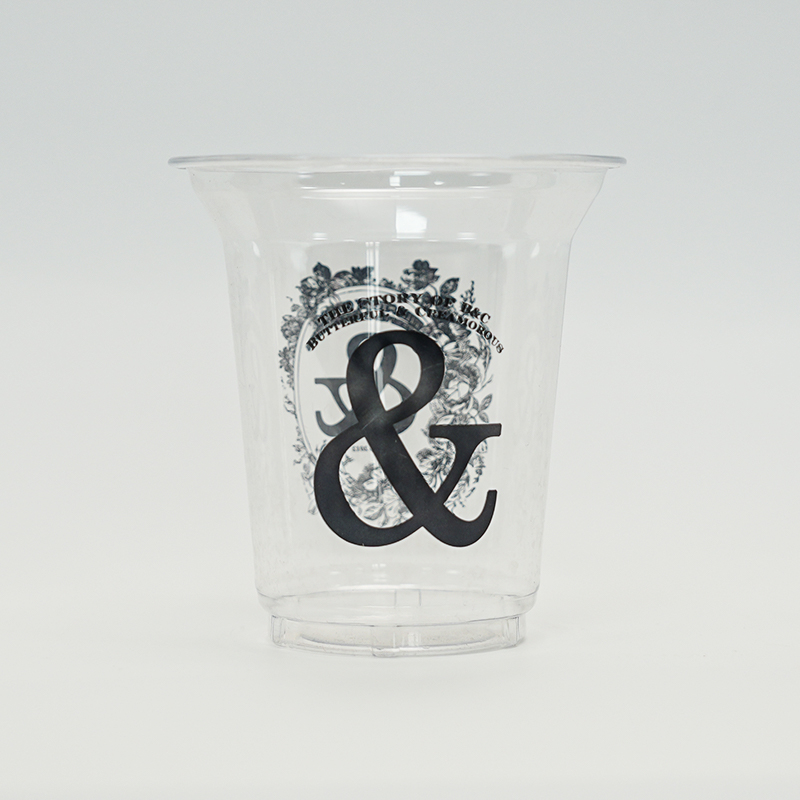
Low-Temperature Resistant PET plastic cup
How to Select the Right Low-Temperature Resistant PET Cup
Choosing the right cup requires more than selecting the largest or lowest-cost model. Buyers should begin by identifying the actual usage conditions. Important factors include the beverage volume, filling temperature, storage temperature, delivery distance, cup holder or carrier, lid type, straw diameter, topping size, and required appearance.
Capacity
The stated capacities range from 400 ml to 1,000 ml. A smaller cup may suit regular drinks or controlled portions, while a larger cup may be appropriate for smoothies, oversized cold drinks, dessert products, or sharing formats. The nominal volume should be confirmed with the intended fill line and ice quantity.
Mouth Diameter
The listed mouth diameters include 90 mm, 93 mm, 98 mm, and 117 mm. A wider mouth can make it easier to add toppings, fruit pieces, ice, or desserts. A smaller mouth may create a taller, more traditional beverage profile. The mouth diameter must match the lid and any automated sealing equipment.
Height and Bottom Diameter
Height influences appearance, storage, stacking, and compatibility with cup holders. Bottom diameter affects stability and the footprint occupied by the cup. A tall cup may offer a visually attractive presentation but require a suitable carrier. A wider base may provide greater stability during transport.
Grammage
Grammage provides an indication of material weight, but it should not be considered the only measure of quality. Wall distribution, forming accuracy, rim strength, material properties, and bottom structure all influence performance. Customers should compare practical handling results and conduct testing with the actual application.
Decoration Method
Customers can select from plain transparent cups, customized colors, printed patterns, or in-mold labeling according to their brand strategy and budget. The best option depends on production quantity, artwork complexity, durability expectations, and desired visual effect.
Recommended Testing Before Commercial Launch
Testing helps confirm that the selected cup is suitable for the customer’s complete packaging system. The following evaluations may be considered during product approval.
First, conduct a dimensional inspection. Measure the mouth diameter, height, bottom diameter, weight, and usable capacity. Compare the results with the approved specification and agreed tolerances.
Second, perform a lid-fit test. Fill the cup with the intended beverage and apply the actual lid using the planned method. Check for secure retention, leakage, uneven seating, and difficulty during application.
Third, conduct temperature testing. Expose filled cups to the expected cold environment, such as refrigerated storage or low-temperature transport. Observe changes in clarity, shape, rim condition, bottom stability, and resistance to ordinary handling.
Fourth, perform a transport simulation. Place the cups in the intended carrier or delivery bag and evaluate them under vibration, tilting, stacking, and repeated movement. This is particularly important for takeaway and delivery products.
Fifth, evaluate decoration quality. Check color consistency, logo clarity, print position, label adhesion or integration, and resistance to normal handling. If the cup is stored in a cold or damp environment, decoration should also be assessed after exposure to those conditions.
Finally, conduct a user trial. Staff members or selected customers can evaluate the cup’s grip, drinking comfort, appearance, lid performance, straw compatibility, and overall convenience. Practical feedback may reveal issues that are not visible during laboratory inspection.
Operational Benefits for Beverage Brands
Reliable packaging can influence many areas of a beverage business. A stable cup may reduce the number of damaged units during delivery. A smooth and transparent appearance can improve product presentation. Multiple sizes can support menu development. Custom printing can increase brand recognition. Consistent dimensions can simplify the use of lids, sealers, carriers, and automated equipment.
These advantages can contribute to more efficient store operations. Employees spend less time dealing with unsuitable lids, unstable cups, damaged stock, or inconsistent packaging. Customers receive a product that looks more professional and is easier to carry. Brand owners can also create packaging programs that align with seasonal launches, promotional events, or regional marketing campaigns.
Packaging quality is especially important in delivery commerce. The customer may not see the product being prepared. The cup must therefore preserve its appearance and protect the beverage during the journey. A low-temperature resistant PET cup can be a useful choice when the delivery process involves chilled storage, ice, or exposure to cold outdoor conditions.
Responsible Use and Storage
To preserve product quality, unused cups should be stored in a clean, dry location away from direct sunlight, excessive heat, chemicals, dust, and strong odors. Packaging cartons should be protected from crushing and moisture. Proper stock rotation can help ensure that older shipments are used in accordance with the buyer’s internal procedures.
Users should avoid applying conditions outside the agreed specification without testing. The stated temperature range is a product performance guideline, not a substitute for application-specific validation. Hot filling, pressure, sharp frozen contents, aggressive chemicals, and unusual mechanical loads may require separate assessment.
Customers should also follow applicable food-contact and waste-disposal regulations in the destination market. If the cup is used for a particular beverage or food product, the buyer should confirm that all packaging components, including lids, labels, inks, adhesives, and straws, meet the relevant requirements.
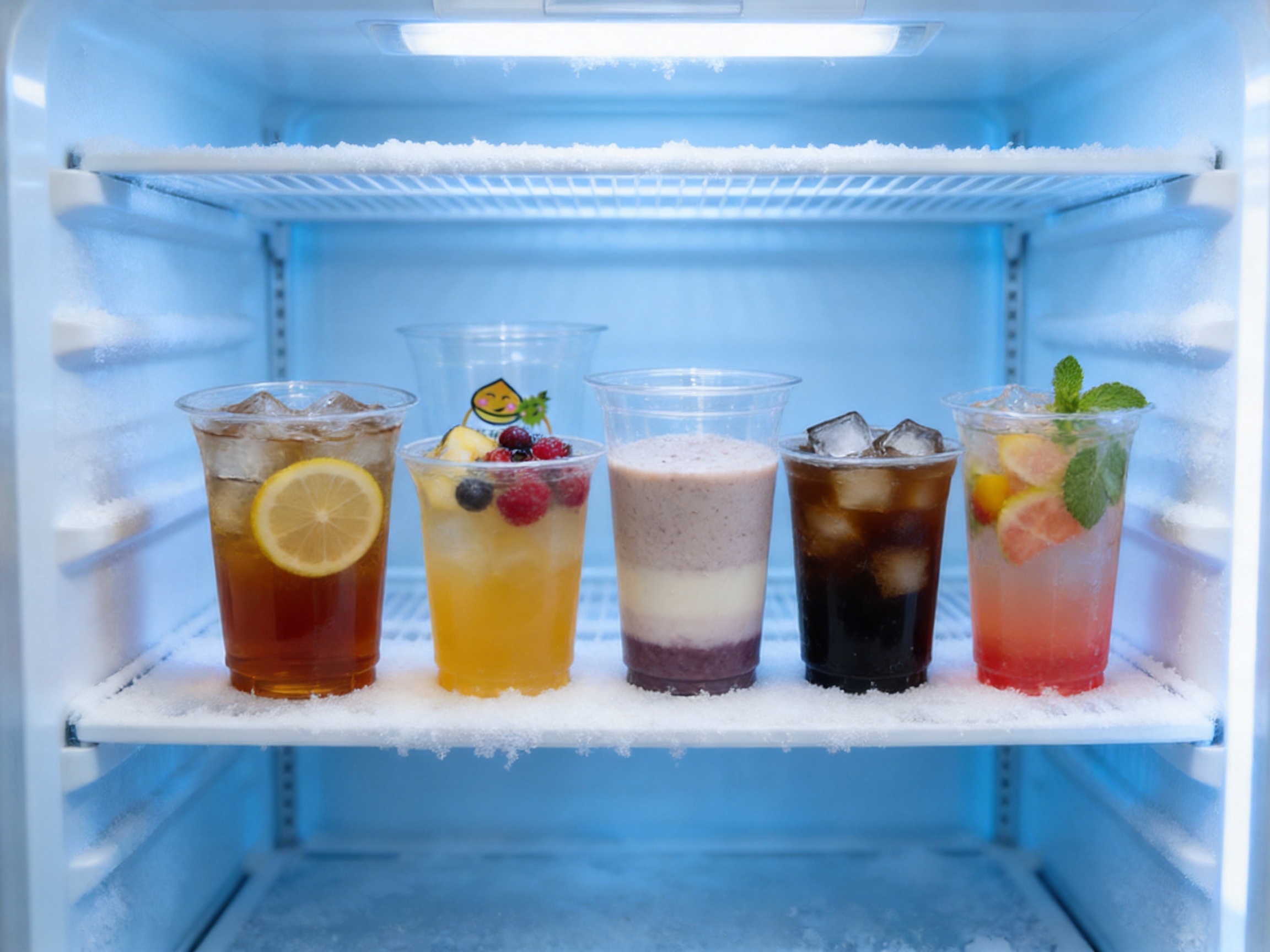
Why Work with an OEM PET Cup Manufacturer?
An OEM manufacturer can provide more than a standard catalog item. It can help adapt dimensions, material weight, decoration, and packaging details to the customer’s commercial needs. This is valuable for businesses that want a recognizable product format, a coordinated packaging system, or a solution that is not available from ordinary distributors.
Direct cooperation with a factory may also improve communication about technical details. Instead of passing requests through multiple intermediaries, buyers can discuss material, mold, sample, print, inspection, and delivery requirements with the organization responsible for production.
Yuqian Packaging Technology combines product development, manufacturing, customization, and quality management. Its production capacity is intended to support both standard products and large-volume customer orders. The company’s experience in food packaging materials can help buyers evaluate the relationship between design, function, and manufacturing feasibility.
For international purchasers, supplier evaluation should include factory capability, certification documentation, sample quality, response time, production lead time, packaging method, export experience, and after-sales support. A strong supplier should be willing to clarify specifications rather than rely on vague descriptions.
Q&A About Low-Temperature Resistant PET Plastic Cups
What is a low-temperature resistant PET plastic cup?
It is a disposable cup made from specially formulated PET material that is designed to maintain useful toughness and shape stability in low-temperature environments. The stated working range for this product is -20°C to 55°C.
Can the cup be used for refrigerated beverages?
Yes. The cup is intended to support chilled and refrigerated beverage applications. Buyers should still test the complete cup, lid, beverage, and transportation system under actual conditions before commercial use.
Will the cup crack in a cold environment?
The product is designed to reduce the risk of cracking and deformation in temperatures down to -20°C. Actual performance depends on the beverage, handling force, storage time, cup specification, and other environmental conditions.
Is PET suitable for food and beverage packaging?
Food-grade PET is widely used for food and beverage packaging. The supplier describes these cups as non-toxic and odorless for their intended use. Buyers should request the documentation required by their market and application.
Are the cups transparent?
Yes. High transparency is one of the product’s main features. It allows customers to see the beverage color, layers, ice, fruit, toppings, and other visual elements.
What sizes are available?
The listed capacities include 400 ml, 420 ml, 500 ml, 540 ml, 600 ml, 700 ml, and 1,000 ml. Mouth diameters include 90 mm, 93 mm, 98 mm, and 117 mm. Exact dimensions and model availability should be confirmed with the manufacturer.
Can the cups be customized?
Yes. Customization options include colors, patterns, and in-mold labeling. Customers can discuss logo printing, artwork, special designs, and other requirements with the supplier.
Can the supplier handle large orders?
Yuqian Packaging Technology states that it has strong production capacity for mass production and works to meet large-volume order requirements and delivery schedules. Production timing should be confirmed according to the model, quantity, decoration, and order season.
Are the cups recyclable?
PET is recyclable, and the cups can be recycled where suitable collection, sorting, and reprocessing systems are available. Recycling results depend on local infrastructure and correct disposal practices.
Can these cups be used with lids and straws?
Yes, they can be developed as part of a beverage packaging system that includes compatible lids and disposable straws. The lid diameter and straw opening should be matched to the selected cup model and tested before mass production.
What should be checked before ordering?
Buyers should confirm capacity, mouth diameter, height, bottom diameter, grammage, material requirements, decoration, lid compatibility, packaging quantity, inspection standards, delivery schedule, certifications, and destination-market documentation.
Where is the manufacturer located?
Yuqian Packaging Technology (Jiangsu) Co., Ltd. is located at No. 8 Tongyang Road, Suchen Town, Taizhou City, Jiangsu Province, China.
How can buyers contact the company?
For product inquiries, OEM development, samples, specifications, and quotations, buyers can contact the company by phone at 0086 15252423007, by fax at +0523 8608 3698, or by email at [email protected].
Conclusion
Low-temperature resistant PET plastic cups offer a practical packaging solution for beverage brands that require clarity, toughness, dimensional stability, food-contact suitability, and flexible customization. Their stated temperature adaptability from -20°C to 55°C helps address the challenges of refrigerated storage, cold-chain transportation, winter delivery, and chilled service.
The product range includes several capacities, mouth diameters, heights, bottom dimensions, and grammage options. This enables customers to choose a design suited to regular drinks, premium beverages, smoothies, desserts, large-format products, catering, and promotional events. Transparent PET supports attractive product presentation, while the rounded mouth and smooth inner wall contribute to usability and clean appearance.
Compared with ordinary disposable cups, the key advantages include improved low-temperature reliability, better resistance to cracking and deformation, broad size selection, lightweight construction, and opportunities for OEM decoration. These benefits are supported by the manufacturer’s reported production facilities, research and development capabilities, quality management systems, certifications, and experience in food packaging.
Successful packaging selection should always include sample approval and application testing. By confirming the beverage, temperature, lid, transport, filling, decoration, and disposal requirements in advance, buyers can develop a more reliable and efficient packaging system. With suitable technical communication and production planning, low-temperature resistant PET cups can help beverage companies protect product quality while presenting a consistent and recognizable brand image.
References
1. Product specification and technical information supplied for the low-temperature resistant PET plastic cup range.
2. Yuqian Packaging Technology (Jiangsu) Co., Ltd. company information and manufacturing profile.
3. General food-packaging principles for polyethylene terephthalate materials and disposable beverage containers.
4. ISO 9001 quality management system principles and supplier quality-control practices.
5. BRC principles for food safety, product quality, and packaging supply-chain management.
6. General PET recycling and post-consumer packaging management guidance.
7. General dimensional and functional testing practices for disposable beverage cups and compatible lids.