English
 Español
 عربى
Content
- 1 1. The Role of a High-Quality Cup Lid in Beverage Packaging
- 2 2. Product Overview and Main Specifications
- 3 3. PET Material: Transparency, Lightness, and Practical Performance
- 4 4. Spherical Design and Beverage Presentation
- 5 5. Advantages Compared with Ordinary Disposable Lids
- 6 6. Product Safety and Quality Considerations
- 7 7. Advanced Injection Molding Manufacturing Process
- 8 8. Quality Control from Raw Material to Finished Product
- 9 9. Customization and OEM Development Capability
- 10 10. Applications across Foodservice and Beverage Markets
- 11 11. Storage, Handling, and Operational Efficiency
- 12 12. Environmental and Responsible Manufacturing Considerations
- 13 13. Why Manufacturer Experience Matters
- 14 14. Comparing the PET Ball Lid with Alternative Designs
- 15 15. Selecting the Correct Caliber
- 16 16. Recommended Procurement Process for Wholesale Buyers
- 17 17. Brand Presentation and Customer Experience
- 18 18. Practical Limitations and Proper Use
- 19 19. Frequently Asked Questions
- 19.1 What is a PET ball plastic cup lid?
- 19.2 What calibers are available?
- 19.3 What color is the standard product?
- 19.4 How much does each lid weigh?
- 19.5 Why choose a spherical lid instead of a flat lid?
- 19.6 Is the lid easy to carry?
- 19.7 Is the product stackable?
- 19.8 Can the lid be customized?
- 19.9 Is the lid suitable for hot beverages?
- 19.10 How can buyers confirm compatibility?
- 19.11 What manufacturing technology is used?
- 19.12 What certifications or tests are associated with the manufacturer?
- 19.13 Who can use this product?
- 19.14 How should the lids be stored?
- 19.15 Where is the manufacturer located?
- 20 20. Why Choose This PET Cup Lid for a Packaging Program?
- 21 Conclusion
- 22 References
- 23 Product: PET ball plastic cup lid
Disposable beverage packaging plays an important role in takeaway service, cafés, restaurants, beverage chains, catering operations, and food delivery. While the cup body receives much of the attention, the lid is equally important. A well-designed lid must protect the beverage, fit securely, preserve product presentation, support convenient transport, and help create a positive customer experience. The PET ball plastic cup lid is developed to meet these practical and commercial requirements through a combination of transparent PET material, lightweight construction, spherical styling, standardized calibers, and professional manufacturing technology.
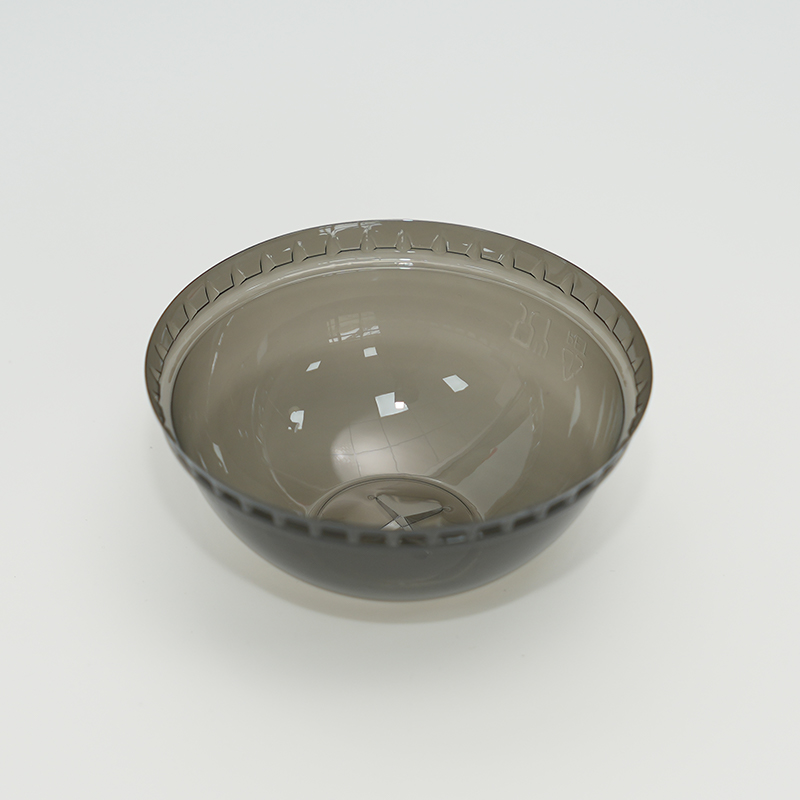
This type of lid is designed for beverage cups that require a clear, raised top. Its ball-shaped profile provides additional visual space above the drink while helping accommodate beverages with toppings, foam, fruit pieces, ice, or decorative presentation. The transparent structure allows the contents to remain visible, which can be especially valuable for colorful drinks, specialty teas, fruit beverages, smoothies, and promotional products.
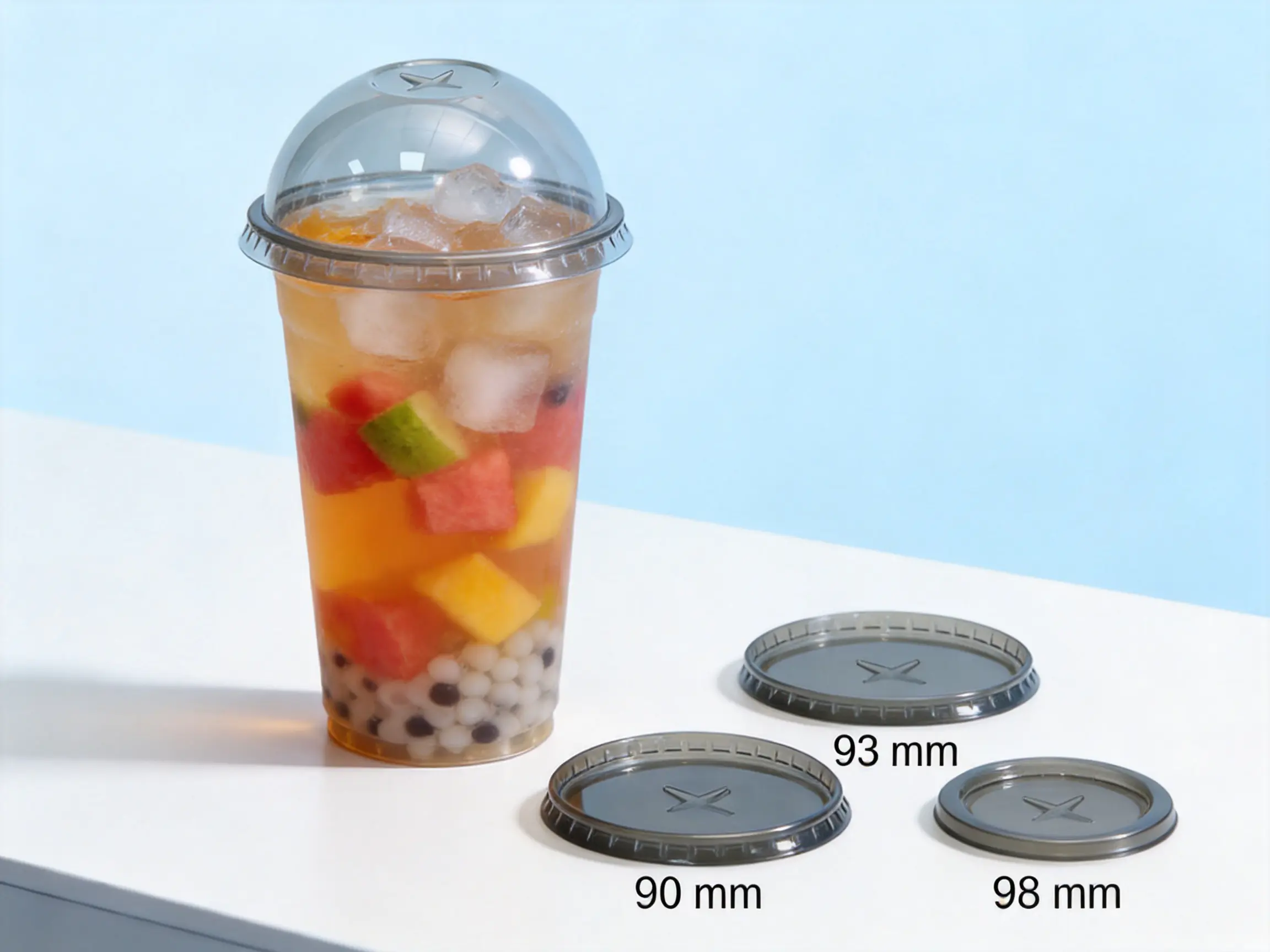
Available in 90 mm, 93 mm, and 98 mm calibers, the PET ball plastic cup lid can match a broad range of mainstream cup specifications. Each standard model has an approximate gram weight of 4 g and is supplied in transparent PET. In addition to standard production, personalized customization is available for customers seeking a particular appearance, fit, or functional design.
Produced by Yuqian Packaging Technology (Jiangsu) Co., Ltd., the lid benefits from the experience of a professional food packaging manufacturer with research and development, production, and sales capabilities. The company combines advanced equipment, injection molding technology, quality management systems, certification experience, and a strong focus on customer-specific packaging solutions.
1. The Role of a High-Quality Cup Lid in Beverage Packaging
A disposable cup lid is more than a simple cover. It is a functional packaging component that influences safety, convenience, branding, logistics, and consumer perception. When a lid is poorly designed, it may loosen during transportation, create sharp edges, restrict the drinking experience, or reduce the visual appeal of the beverage. When it is correctly designed and manufactured, it supports the entire packaging system.
The PET ball plastic cup lid provides a raised, rounded structure that can enhance the appearance of a beverage. Compared with a flat cover, a spherical lid creates more headroom and can offer a more distinctive silhouette. This can be useful for drinks that contain ice, whipped toppings, pearls, fruit pieces, jelly, or other ingredients that benefit from additional space.
Transparency is another essential feature. A clear lid allows customers to see the beverage and its toppings without opening the package. For beverage businesses, this visual access can help communicate freshness, color, texture, and product quality. It can also support attractive product photography and improve the appearance of takeaway orders.
The lid must also balance lightness with practical strength. Excessive material can increase packaging cost, storage requirements, and transportation weight. Insufficient material can make a lid fragile or difficult to install. The PET ball plastic cup lid is designed as a lightweight product with an approximate weight of 4 g per piece, helping businesses manage packaging efficiency while retaining a durable structure for normal use.
2. Product Overview and Main Specifications
The PET ball plastic cup lid is made from PET, a transparent material widely used in food and beverage packaging. The product is designed for compatibility with cups using 90 mm, 93 mm, or 98 mm rim diameters. It has a transparent appearance, a spherical upper profile, and a lightweight structure suitable for takeaway packaging systems.
| Product Attribute | Specification | Practical Benefit |
| Product type | PET ball plastic cup lid | Suitable for beverage takeaway and foodservice packaging |
| Primary material | PET | High transparency, light weight, and practical toughness |
| Available caliber | 90 mm, 93 mm, and 98 mm | Supports multiple mainstream cup sizes |
| Approximate gram weight | 4 g | Helps reduce packaging weight and material consumption |
| Color | Transparent | Maintains clear visibility of the beverage |
| Profile | Spherical or ball-shaped | Creates additional visual and functional space above the drink |
| Customization | Available according to customer requirements | Supports special designs, colors, patterns, and functions |
The three caliber options give buyers greater flexibility when developing or replenishing cup packaging. A correct caliber is important because the lid must correspond with the cup rim. The appropriate combination can help create a secure fit, reduce leakage risk, and maintain a neat presentation during transport.
Although the standard product is transparent, customized versions may be discussed according to the intended application and production requirements. Possible areas of customization can include visual treatment, pattern development, functional design, and compatibility with specific cup bodies. Final specifications should be confirmed through technical communication, sample evaluation, and production approval.
3. PET Material: Transparency, Lightness, and Practical Performance
One of the core advantages of this product is its PET material. PET offers a clear appearance that allows the contents of the cup to remain visible. This clarity is particularly suitable for beverage products where color and presentation are important parts of the customer experience.
For tea drinks, fruit beverages, coffee-based products, sparkling drinks, smoothies, and other takeaway beverages, a transparent lid can make the complete package appear cleaner and more appealing. The customer can identify the contents more easily, while the operator can present the drink without removing the cover.
PET is also valued for its relatively low weight. A lightweight lid can reduce the overall weight of each packaged beverage and support more efficient storage and distribution. For foodservice companies handling hundreds or thousands of cups each day, even small differences in component weight may influence warehouse organization, shipping expenses, and operational efficiency.
At the same time, PET provides a useful balance between lightness and toughness. The material is designed to withstand ordinary handling and is not easily broken under normal packaging conditions. This characteristic is important during lid installation, cup stacking, order assembly, and takeaway transportation.
PET also has useful chemical stability and weather resistance for common packaging applications. These properties help the lid maintain its practical function when exposed to everyday environmental conditions. As with all disposable food packaging, the product should be matched with the intended beverage temperature, filling process, storage conditions, and applicable regulations. Customers should confirm exact application requirements with the manufacturer before placing a large production order.
4. Spherical Design and Beverage Presentation
The ball-shaped form distinguishes this lid from conventional flat or low-profile covers. A spherical profile can provide more space over the cup opening, making it suitable for products with toppings or a fuller visual presentation. It may also make the finished beverage more recognizable on a menu or display shelf.
For beverage brands, packaging shape can become an important part of product identity. A rounded lid can create a modern, playful, or premium appearance depending on the cup, label, color scheme, and beverage type. The transparent surface allows the drink to remain visible while the profile gives the package a more memorable outline.
The raised structure can also help accommodate certain ingredients. Drinks containing ice, foam, fruit slices, tapioca pearls, jelly, cream, or decorative toppings may require more upper clearance than a flat lid provides. The exact available space depends on the cup design, filling level, and product formula, but the spherical format offers a useful starting point for these applications.
In addition to appearance, the rounded design may support convenient stacking before use. The product information identifies the lids as stackable, helping save space in storage and making them easier to organize in busy foodservice environments. Efficient stacking can reduce clutter at filling stations and improve the speed of packaging operations.
5. Advantages Compared with Ordinary Disposable Lids
5.1 Improved visual clarity
Many ordinary disposable lids are opaque, semi-transparent, or visually dull. A high-transparency PET lid can provide a clearer view of the beverage. This is valuable when the product’s color, texture, toppings, or layered appearance contributes to its appeal.
5.2 More distinctive profile
A standard flat lid may provide basic closure but offer limited visual differentiation. The ball-shaped profile gives the finished cup a more distinctive appearance. Businesses can use this design to create a stronger presentation for specialty drinks and takeaway products.
5.3 Multiple standard calibers
Rather than relying on only one size, the product is available in 90 mm, 93 mm, and 98 mm calibers. This range supports different cup bodies and reduces the need for businesses to redesign their entire packaging system around a single lid size.
5.4 Lightweight construction
With an approximate gram weight of 4 g, the lid is designed to be light and portable. Lightweight packaging can simplify handling and help reduce the amount of material transported with each order while still providing a functional protective cover.
5.5 Practical toughness
A disposable lid must withstand installation and routine handling. The PET structure is described as tough and not easy to break, providing a practical advantage over more fragile alternatives. This can help reduce damage during packing, although the actual performance depends on cup compatibility, storage, transportation, and handling conditions.
5.6 Easy cleaning and hygiene maintenance
The smooth surface of the lid is easy to clean during manufacturing and suitable for hygienic packaging operations. In disposable applications, cleanliness is essential from raw material handling through final packing. A well-formed, smooth lid can also be easier for operators to inspect visually.
5.7 Efficient storage
Stackable lids occupy less space than loose, irregularly shaped packaging components. This can improve warehouse organization and support efficient storage at beverage preparation counters. Space savings are especially important for cafés, restaurants, food trucks, catering services, and distribution centers with limited storage capacity.
6. Product Safety and Quality Considerations
Food-contact packaging must be manufactured with careful attention to material selection, production hygiene, dimensional accuracy, and quality inspection. A lid is in close proximity to the beverage, so its material and manufacturing conditions are important to the overall packaging system.
The product is made from food-grade PET and is described as non-toxic and odorless. These properties support its use in appropriate food and beverage packaging applications. The company also identifies several quality and safety credentials, including a QS national industrial product production license, ISO9001 Quality Management System certification, BRC certification, German DIN safety certification, and EU RoHS+ testing.
Certifications and testing provide useful evidence of a manufacturer’s quality-management approach, but customers should always verify the current validity, scope, and applicability of specific certificates for their intended market. Requirements can differ according to country, beverage type, temperature, packaging process, and food-contact regulations.
Dimensional precision is another important safety and performance factor. A lid that does not match the cup rim may loosen, leak, or become difficult to apply. Advanced injection molding technology helps support high-precision production and the creation of smooth, burr-free edges. These details contribute to better usability and a more professional final package.
For commercial buyers, quality assurance should include incoming material control, mold inspection, dimensional checks, visual inspection, weight verification, packaging review, and sample testing. A reliable manufacturer should be able to communicate the applicable inspection procedures and help customers confirm the product before mass production.
7. Advanced Injection Molding Manufacturing Process
The manufacturing process is a major factor in the performance of a disposable plastic lid. A product can have a good design, but without precise tooling and stable production control, the final result may show variations in thickness, deformation, burrs, poor transparency, or inconsistent fit.
Yuqian Packaging Technology uses advanced injection molding technology for cup lid production. Injection molding allows molten plastic to be introduced into a prepared mold under controlled conditions. The material then forms the required spherical shape and cools into a finished component. Consistent control of temperature, pressure, cycle time, cooling, and mold condition is essential to producing repeatable parts.
The first stage is material preparation. PET resin must be handled according to appropriate processing requirements. Moisture control is particularly important for PET because excessive moisture during processing can affect material performance and appearance. A professional production system therefore requires suitable storage, preparation, and process management before molding begins.
The next stage is mold design and preparation. The mold must accurately define the spherical profile, rim connection, wall structure, stacking features, and other functional details. The three caliber options require corresponding tooling or carefully managed mold configurations. Mold precision directly affects the consistency of the lid’s dimensions and its compatibility with the cup.
During injection molding, the process parameters must be controlled to support even filling and consistent forming. Poor control may result in short shots, warping, uneven surfaces, visible marks, or dimensional instability. Stable equipment and trained technicians help reduce these problems and support reliable mass production.
After molding, each lid should be cooled and removed from the mold without damage. The product then passes through trimming, inspection, counting, and packing operations as required. The company emphasizes high-precision, burr-free quality standards, which are important because rough edges can affect operator handling, customer comfort, and overall packaging quality.
Production control does not end with the molding cycle. Equipment maintenance, mold cleaning, environmental management, process documentation, and worker training all influence the consistency of the final product. A manufacturer with integrated research, production, and sales capabilities is better positioned to coordinate these activities and respond to customer feedback.
8. Quality Control from Raw Material to Finished Product
A dependable lid requires a complete quality-control system rather than a single final inspection. Quality begins with the selection and verification of raw materials. PET resin should be checked against the required grade, appearance, documentation, and application conditions.
During production, operators and quality personnel can monitor key indicators such as molding temperature, pressure, cooling performance, cycle stability, product weight, and visual appearance. Monitoring these factors helps identify process variation before it affects a large quantity of products.
Dimensional inspection is especially important for cup lids. The caliber must remain within the agreed specification, and the rim area should maintain a consistent shape. The spherical portion should be free from excessive deformation. The lid should also be checked for cracks, bubbles, black spots, contamination, incomplete molding, sharp edges, and other visible defects.
Functional testing can include fitting samples onto the customer’s cup body, checking retention, observing the lid during normal handling, and evaluating stacking performance. For customers using automated filling or sealing equipment, machine compatibility may also need to be assessed.
Packaging inspection is another important step. Finished lids should be packed in a way that protects transparency, cleanliness, and shape during storage and transport. Correct counting and labeling help customers manage inventory and trace different sizes or production batches.
| Quality-Control Stage | Typical Focus | Importance to Customers |
| Raw material verification | PET grade, documentation, appearance, and handling | Supports material safety and consistent processing |
| Mold preparation | Tool cleanliness, dimensions, and condition | Helps maintain accurate shape and caliber |
| Injection molding | Temperature, pressure, cooling, and cycle stability | Reduces variation and molding defects |
| Visual inspection | Transparency, burrs, cracks, contamination, and deformation | Protects appearance and handling quality |
| Dimensional inspection | Rim diameter, profile, and fit | Supports compatibility with the selected cup |
| Functional sampling | Application, retention, stacking, and transport simulation | Helps confirm performance in real use |
| Final packing review | Quantity, cleanliness, labeling, and protection | Improves warehouse management and delivery reliability |
9. Customization and OEM Development Capability
Different beverage businesses often require different packaging solutions. A regional tea chain may want a lid that matches a particular cup body, while a foodservice distributor may need multiple sizes for different customers. A brand may also require a special visual appearance or a functional feature that is not included in a standard model.
As a professional OEM manufacturer, Yuqian Packaging Technology provides personalized cup lid solutions. Customization can be discussed in relation to color, pattern, appearance, functional design, and cup compatibility. The final scope depends on tooling feasibility, material requirements, production volume, regulatory conditions, and customer approval.
The development process generally begins with a discussion of the intended product. Customers should provide the cup rim dimensions, beverage type, filling level, desired lid profile, application temperature, packaging equipment information, and expected order volume. Drawings, physical cup samples, or reference lids can help the manufacturer evaluate the project more efficiently.
After technical review, the manufacturer may recommend a suitable caliber, wall structure, mold solution, and production method. Samples can then be evaluated for fit, appearance, handling, stacking, and compatibility with the customer’s operating process. Any necessary modifications should be completed before mass production.
Customization can provide a competitive advantage for beverage brands. A distinctive lid profile or coordinated packaging design can help a product stand out in a crowded market. It may also create a more consistent brand experience across storefront service, delivery orders, events, and retail channels.
OEM cooperation can also simplify procurement. Instead of coordinating separate companies for design support, mold development, production, inspection, and delivery, customers can work with one packaging partner. This integrated approach may reduce communication delays and improve control over product consistency.
10. Applications across Foodservice and Beverage Markets
The PET ball plastic cup lid is suitable for a variety of disposable beverage packaging applications. Its transparent, raised structure can be used with products where visual presentation and convenient transport are important.
10.1 Bubble tea and specialty tea
Bubble tea and specialty tea drinks often contain tapioca pearls, fruit pieces, jelly, foam, or other toppings. The spherical lid can provide additional space while preserving visibility of the drink. The available calibers allow businesses to select a lid that corresponds with different cup sizes.
10.2 Fruit beverages and fresh drinks
Fruit beverages benefit from a clear cover because color and ingredients are part of the product appeal. A transparent PET lid allows customers to see the drink while helping protect it during takeaway transportation.
10.3 Smoothies and blended drinks
Smoothies and blended beverages may be served with foam, cream, fruit, or decorative toppings. A raised lid can support a fuller presentation, subject to the exact cup and filling configuration.
10.4 Coffee and cold beverage service
Cafés and foodservice operators can use compatible PET lids for takeaway beverages where a clear cover is preferred. The lid can help protect the beverage during movement from the store to the customer’s destination.
10.5 Catering and events
Catering companies and event organizers often require lightweight, stackable packaging that can be transported and distributed efficiently. Transparent lids can also help staff identify beverages quickly during large-scale service.
10.6 Delivery and takeaway orders
Delivery packaging must withstand multiple handling stages, including preparation, order assembly, courier transportation, and customer collection. A correctly fitted lid helps protect the beverage and maintains a neat presentation throughout the process.
11. Storage, Handling, and Operational Efficiency
Packaging efficiency is influenced not only by the product itself but also by how it is stored and used. Stackable lids can help make better use of vertical storage space. Operators can organize different calibers separately and position frequently used sizes close to the filling station.
The lightweight structure makes the lids easy to transfer between storage areas and production counters. Workers can handle multiple units at a time, helping improve service speed during busy periods. Clear product identification and orderly carton packing can further reduce picking errors.
Before use, lids should be stored in a clean, dry environment away from contamination, excessive heat, sharp objects, and conditions that could cause deformation. Packaging should remain closed until the product is required. Customers should also follow their own food-safety procedures for storage and handling.
During installation, the lid should be aligned with the cup rim and pressed evenly into position. If a customer uses a sealing machine or automated packaging line, compatibility should be verified in advance. The correct combination of cup, lid, filling volume, and application method is essential for reliable performance.
Efficient operations also depend on standardized purchasing. Businesses using several cup sizes can order the 90 mm, 93 mm, and 98 mm variants according to actual demand. A clear inventory plan can reduce shortages, excess stock, and confusion between different lid types.
12. Environmental and Responsible Manufacturing Considerations
Modern packaging buyers increasingly evaluate both product performance and manufacturing responsibility. Lightweight packaging can help reduce the amount of material used per unit, while efficient production can help control energy consumption and production waste.
Yuqian Packaging Technology states that it actively promotes green production and seeks to reduce energy consumption and emissions during manufacturing. Responsible production may include process optimization, equipment efficiency, material-use control, defect reduction, waste management, and careful planning of production batches.
PET packaging should be managed according to local waste and recycling systems. The practical environmental outcome depends on collection infrastructure, sorting quality, recycling capacity, consumer behavior, and applicable regulations. Customers should communicate accurate disposal guidance in the markets where the product is sold.
Material reduction should not compromise function. A lid that is too thin may create higher breakage or rejection rates, which can offset the benefits of lower material use. The most effective approach is to combine suitable product design, accurate molding, stable quality control, and responsible end-of-life management.
Environmental performance can also be improved by reducing production defects. Every rejected lid represents wasted raw material, energy, labor, packaging, and transportation. Advanced process control and high-precision injection molding can therefore support both quality and resource efficiency.
13. Why Manufacturer Experience Matters
Disposable food packaging is a high-volume industry in which small dimensional or quality variations can create significant operational problems. An experienced manufacturer understands the relationship between material properties, mold design, processing conditions, product geometry, and customer use.
Yuqian Packaging Technology (Jiangsu) Co., Ltd. was established in 2010 and is located in Taizhou City, Jiangsu Province, China. The company has a plant area of approximately 30,000 square meters and operates as a high-tech enterprise involved in the research and development, production, and sales of new food packaging materials and products.
The company’s production background supports more than standard manufacturing. It can assist customers with product selection, specification confirmation, customized development, sample evaluation, production coordination, and packaging supply. This is particularly useful for overseas buyers and foodservice groups that require consistent communication across several stages of a project.
The company also established a Shanghai branch in January 2019 to improve service quality and expand business channels. A broader service structure can help support customer communication, market development, and coordination for domestic and international projects.
Certification experience is another strength. The company identifies QS, ISO9001, BRC, German DIN, and EU RoHS+ credentials or testing. These systems and assessments indicate attention to production management, product safety, quality control, and compliance-related requirements. Buyers should request current documentation and confirm the relevant scope for their products and target markets.
14. Comparing the PET Ball Lid with Alternative Designs
Different lid styles serve different purposes, so comparison should focus on the intended application rather than on one universal solution. A flat lid may be efficient for basic beverages with little headspace, while a straw-slot lid may be suitable for drinks consumed through a straw. A dome or ball-shaped lid is more appropriate when additional upper clearance and visual presentation are important.
| Comparison Factor | PET Ball Plastic Cup Lid | Basic Flat Lid | Typical Opaque Lid |
| Transparency | High and clear | May vary by material and design | Limited visibility |
| Upper clearance | Raised spherical profile | Generally limited | Depends on structure |
| Product presentation | Distinctive and suitable for visible toppings | Simple and functional | Less emphasis on beverage visibility |
| Available sizes | 90 mm, 93 mm, and 98 mm | Depends on supplier | Depends on supplier |
| Weight | Approximately 4 g | Varies by material and design | Varies by material and design |
| Customization potential | Color, pattern, function, and design options | Usually dependent on tooling | Usually dependent on tooling |
| Storage | Stackable | Often stackable | Depends on design |
The main competitive advantage of the PET ball lid is the combination of clarity, raised shape, lightness, multiple calibers, and customization support. Businesses do not need to choose between presentation and practical handling. The lid is designed to provide both, while professional molding supports a consistent fit and clean finish.
15. Selecting the Correct Caliber
Choosing the correct caliber is essential for a successful packaging system. The nominal lid diameter should correspond to the outside diameter and rim structure of the cup. Small differences in rim design can influence how the lid fits, so buyers should not rely solely on nominal measurements.
The 90 mm version may be suitable for cups using a smaller standard rim, while the 93 mm and 98 mm versions can support other mainstream cup formats. The actual selection should be based on the cup manufacturer’s specifications and a physical fit test.
Customers should evaluate the lid with the intended cup, filling level, beverage temperature, toppings, and transportation method. A sample test can identify whether the lid is easy to apply, remains secure, provides sufficient clearance, and maintains a professional appearance.
For businesses introducing a new beverage line, it is useful to confirm the cup and lid combination before finalizing artwork, equipment settings, carton dimensions, and purchasing quantities. Early technical coordination can prevent later changes and reduce development costs.
16. Recommended Procurement Process for Wholesale Buyers
Wholesale buyers can improve project efficiency by preparing complete technical information before requesting a quotation. Useful information includes the cup rim diameter, cup material, cup capacity, beverage type, filling temperature, desired lid shape, expected monthly volume, packaging method, destination market, and required certifications.
The manufacturer can then recommend the closest standard model or evaluate whether a customized solution is needed. Standard 90 mm, 93 mm, and 98 mm lids may offer a faster route to production, while customized tooling may be appropriate for larger projects or special brand requirements.
Sample approval should cover appearance, transparency, dimensions, weight, fit, stacking, and handling. If the lids will be used in automated equipment, buyers should conduct line trials to confirm that feeding, positioning, and application are stable.
A commercial agreement should clearly define material, caliber, color, acceptable tolerances, packing method, inspection requirements, production lead time, delivery terms, and documentation. Clear specifications help both parties maintain consistent expectations over repeated orders.
For long-term cooperation, buyers should establish a repeat-order process that includes retained samples, batch records, quality feedback, and periodic performance review. This approach can help maintain consistency as order volume increases.
17. Brand Presentation and Customer Experience
Packaging is one of the few parts of a beverage product that customers physically see and handle before consuming the drink. A clean, transparent lid can influence their first impression of freshness and quality. The spherical shape can further distinguish the product from standard takeaway beverages.
For brands with strong visual identities, the lid can be coordinated with the cup, printed sleeve, sticker, straw, and carrier. Even when the lid itself remains transparent, its shape can become part of the brand’s recognizable packaging language.
In delivery settings, transparency can also support order identification. Staff may be able to distinguish beverages by color or topping without opening the packaging. This can help reduce unnecessary handling and improve order organization, especially when several similar drinks are prepared at the same time.
A well-fitted lid contributes to customer confidence. Customers expect a takeaway beverage to arrive clean, secure, and easy to carry. Although no lid can eliminate every risk associated with transport, accurate fit, suitable design, and careful packing can support a better experience.
18. Practical Limitations and Proper Use
The PET ball plastic cup lid is designed for appropriate disposable food and beverage packaging applications, but product performance always depends on the complete packaging system. The cup, lid, beverage, filling level, temperature, sealing method, transport conditions, and storage environment should be evaluated together.
Customers should confirm the suitability of PET for their exact beverage and temperature requirements. The product information describes the lid as temperature resistant and suitable for a variety of hot drinks; however, temperature limits and food-contact conditions should be verified through technical documentation and application testing before use with hot beverages.
The lid should not be forced onto an incompatible cup. Excessive pressure may deform the rim or damage the cup. Similarly, an undersized lid may not secure properly. Correct caliber selection and sample testing are therefore essential.
Customers should also follow local requirements for food-contact materials, labeling, recycling, and disposal. The manufacturer can provide available product information and documentation, while the importer or brand owner remains responsible for confirming compliance in the target market.
19. Frequently Asked Questions
What is a PET ball plastic cup lid?
A PET ball plastic cup lid is a transparent disposable cup cover made from PET material. It has a raised spherical profile and is designed for compatible beverage cups used in takeaway, foodservice, catering, and delivery applications.
What calibers are available?
The standard calibers are 90 mm, 93 mm, and 98 mm. The correct option should be selected according to the cup rim dimensions and confirmed through sample fitting.
What color is the standard product?
The standard product is transparent. Customized appearance options may be discussed depending on the project requirements, tooling, material, and production conditions.
How much does each lid weigh?
The product information lists an approximate weight of 4 g per lid. Actual production weight may be subject to agreed specifications and normal manufacturing tolerances.
Why choose a spherical lid instead of a flat lid?
The spherical lid offers a more distinctive appearance and creates additional upper clearance. It can be useful for beverages containing toppings, foam, fruit, ice, or decorative ingredients. A flat lid may remain suitable for products that do not require additional space.
Is the lid easy to carry?
Yes. Its lightweight PET structure is designed to be convenient for handling and transport. The low approximate unit weight can also help reduce the overall weight of packaged beverages.
Is the product stackable?
Yes. The product is described as stackable, which can help save storage space and improve organization at beverage preparation stations and in warehouses.
Can the lid be customized?
Yes. The manufacturer supports personalized customization. Depending on the project, customization may involve color, pattern, functional design, appearance, or compatibility with a specific cup body.
Is the lid suitable for hot beverages?
The product information describes the lid as temperature resistant and suitable for a variety of hot drinks. Buyers should still confirm the precise temperature range, beverage conditions, and regulatory requirements through technical documentation and application testing before commercial use.
How can buyers confirm compatibility?
Buyers should provide the cup sample or detailed rim dimensions and request samples for testing. The complete cup-and-lid combination should be evaluated for fit, retention, clearance, handling, and transport performance.
What manufacturing technology is used?
The manufacturer uses advanced injection molding technology. The process is intended to support high-precision dimensions, consistent forming, and burr-free product quality.
What certifications or tests are associated with the manufacturer?
The company identifies QS national industrial product production license, ISO9001 Quality Management System certification, BRC certification, German DIN safety certification, and EU RoHS+ testing. Customers should request current documents and verify their scope for the intended application and destination market.
Who can use this product?
Potential users include beverage brands, cafés, tea shops, restaurants, catering companies, foodservice distributors, event organizers, takeaway operators, and businesses that need customized disposable beverage packaging.
How should the lids be stored?
The lids should remain in clean, dry, protective packaging and be stored away from excessive heat, contamination, sharp objects, and conditions that may deform the product. Businesses should also follow their internal hygiene and inventory procedures.
Where is the manufacturer located?
Yuqian Packaging Technology (Jiangsu) Co., Ltd. is located at No. 8 Tongyang Road, Suchen Town, Taizhou City, Jiangsu Province, China.
20. Why Choose This PET Cup Lid for a Packaging Program?
The PET ball plastic cup lid combines several features that are valuable in modern beverage packaging. Its transparent appearance supports product visibility. Its spherical structure creates a distinctive presentation and useful headspace. Its approximate 4 g weight supports lightweight packaging. Its 90 mm, 93 mm, and 98 mm caliber options provide flexibility for different cup bodies. Its stackable design supports efficient storage.
These product advantages are strengthened by the manufacturer’s production capabilities. The company has experience in food packaging materials, advanced injection molding equipment, OEM development, quality management, and certification-related requirements. Its ability to provide standard products and customized solutions makes it suitable for both regular purchasing and new packaging development.
For businesses comparing suppliers, the most important evaluation should include more than price. Buyers should consider material quality, transparency, dimensional consistency, mold capability, quality inspection, sample support, production capacity, documentation, communication, and long-term supply stability. A supplier that can address these areas may provide better total value than a supplier offering only a low initial unit price.
The PET ball plastic cup lid is therefore a practical option for beverage companies seeking a balance of appearance, functionality, lightness, and customization. With correct caliber selection and application testing, it can support attractive and efficient takeaway packaging across a wide range of foodservice environments.
Conclusion
The PET ball plastic cup lid is designed for businesses that want more than a basic disposable cover. Made from transparent PET, it offers a clear view of the beverage, a lightweight structure, practical toughness, easy handling, stackable storage, and a distinctive spherical profile. The three standard calibers—90 mm, 93 mm, and 98 mm—make it adaptable to many cup specifications.
Its advantages over ordinary disposable lids include stronger visual presentation, greater upper clearance, multiple size options, and support for personalized development. These features can help beverage brands improve packaging consistency, customer convenience, and product recognition.
Behind the product is a manufacturing system based on advanced injection molding, mold precision, production control, quality inspection, and certification experience. Yuqian Packaging Technology (Jiangsu) Co., Ltd. provides standard and OEM packaging solutions from its manufacturing base in Jiangsu, China, supporting customers that require dependable disposable food and beverage packaging.
For product selection, buyers should confirm cup compatibility, intended beverage conditions, temperature requirements, regulatory documentation, packaging method, and delivery expectations. When these factors are properly evaluated, the PET ball plastic cup lid can become a reliable component of a professional, attractive, and efficient beverage packaging program.
References
1. Product specification information for PET ball plastic cup lids, including 90 mm, 93 mm, and 98 mm calibers, transparent PET material, and approximate 4 g unit weight.
2. Manufacturer-provided information concerning PET material characteristics, product customization, stackability, handling, and injection molding production.
3. Quality and certification information supplied for QS national industrial product production licensing, ISO9001 Quality Management System certification, BRC certification, German DIN safety certification, and EU RoHS+ testing.
4. General technical principles of injection molding, including mold design, material preparation, temperature control, cooling, dimensional inspection, and finished-product quality management.
5. General food packaging considerations relating to material suitability, food-contact compliance, storage hygiene, transportation, and end-of-life management.
PET ball plastic cup lid
For product inquiries, specification confirmation, OEM development, or sample evaluation, buyers may contact the manufacturer through the available business channels.
Company: Yuqian Packaging Technology (Jiangsu) Co., Ltd.
Telephone: 0086 15252423007
Fax: +0523 8608 3698
Email: [email protected]
Address: No. 8 Tongyang Road, Suchen Town, Taizhou City, Jiangsu Province, China.

The manufacturer can assist with standard PET ball lids, cup caliber selection, personalized design, sample development, and disposable food packaging solutions for beverage and foodservice applications.