English
 Español
 عربى
عربىContent
- 1 What Are Biodegradable PLA Packaging Bags?
- 2 Advantages Over Traditional and Competitor Products
- 3 Advanced Manufacturing Processes & Company Strengths
- 4 Real-World Impact: How Businesses Are Using PLA Bags
- 5 Q&A Section
- 5.1 Q1: Are PLA bags truly biodegradable?
- 5.2 Q2: Can PLA bags be used for hot drinks?
- 5.3 Q3: What certifications do PLA bags have?
- 5.4 Q4: How customizable are PLA bags?
- 5.5 Q5: How long does production take?
- 5.6 Q6: Are PLA bags more expensive than plastic bags?
- 5.7 Q7: Can PLA bags be recycled?
- 5.8 Q8: What is the shelf life of PLA bags?
- 5.9 Q9: Do PLA bags leak?
- 5.10 Q10: How do PLA bags help businesses meet sustainability goals?
- 6 Comparison Table: PLA Bags vs. Competitors
- 7 References
- 8 Conclusion
The global packaging industry stands at a critical inflection point. For decades, single-use petroleum-based plastics have dominated the market, offering unparalleled convenience but exacting a devastating toll on the environment: 380 million tons of plastic waste generated annually, 8 million tons of which end up in oceans, and a lifecycle carbon footprint that contributes 1.8 billion tons of CO₂ to the atmosphere each year. As governments worldwide implement strict plastic bans (e.g., the EU’s Single-Use Plastics Directive, India’s Plastic Waste Management Rules), businesses face mounting pressure to adopt sustainable alternatives. Among these alternatives, biodegradable polylactic acid (PLA) packaging bags have emerged as a transformative solution—combining eco-friendliness, safety, and functionality in a way that no other material can. This article explores the unparalleled advantages of PLA packaging bags over traditional and competitor products, the advanced manufacturing processes that underpin their quality, and how they are redefining the future of sustainable food packaging.
What Are Biodegradable PLA Packaging Bags?
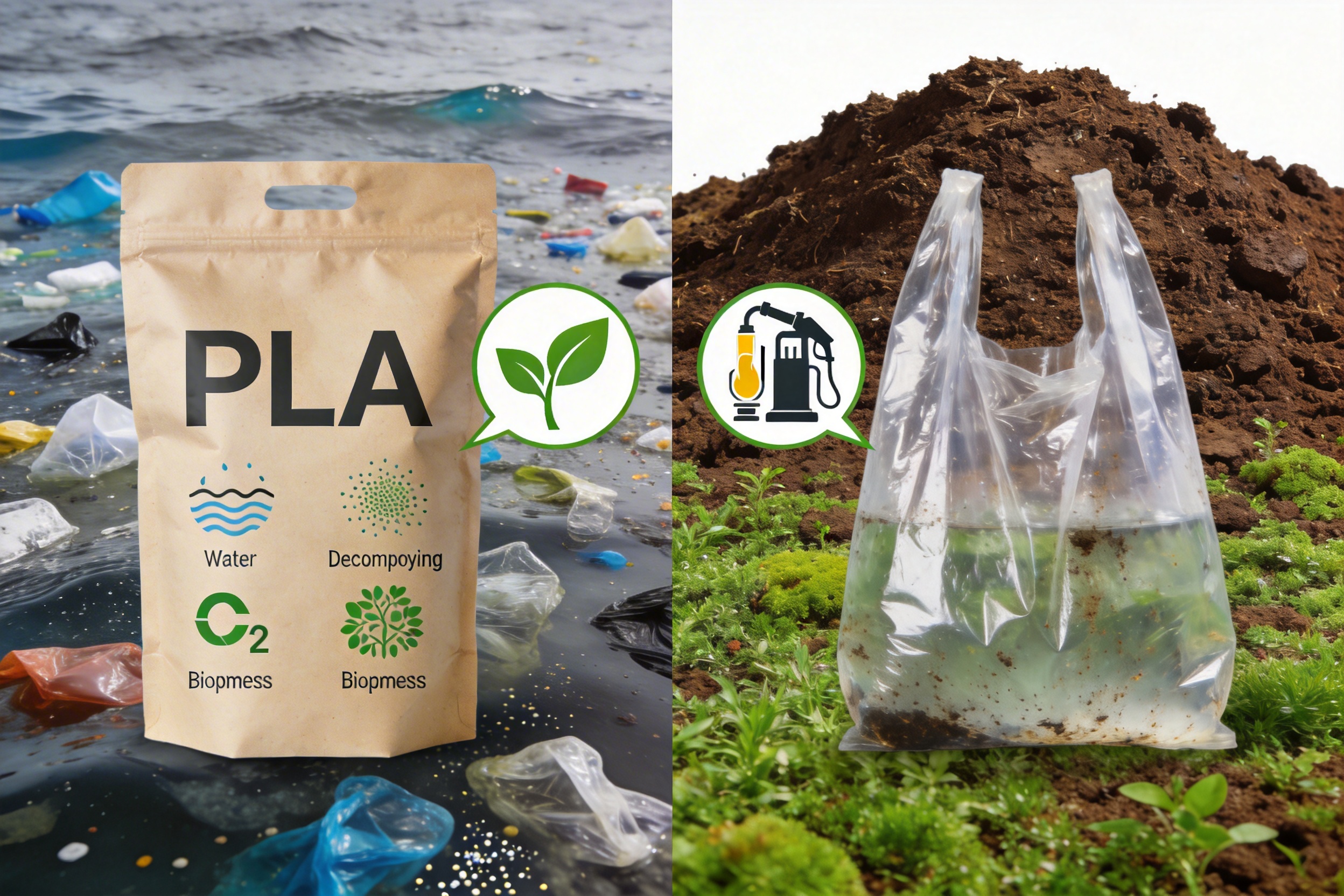
Biodegradable PLA packaging bags are single-use or reusable bags crafted from 100% polylactic acid (PLA)—a bio-based polymer derived from renewable plant resources like corn starch, sugarcane, or cassava. Unlike petroleum-based plastics, which are synthesized from fossil fuels, PLA is produced through a circular process: plant sugars are fermented into lactic acid, which is then polymerized into PLA resin. This resin is processed into thin, flexible film, which is then converted into bags tailored to the food and beverage industry’s needs.
These bags are designed to balance sustainability with practicality. They come in a diverse range of types to suit every packaging scenario: single-cup flat bags for individual drinks, double-cup flat bags for paired beverages, single-cup tote bags for easy carrying, double-cup tote bags for larger orders, and four-cup tote bags for catering or group purchases. Each type can be customized in dimensions (width, height, gusset) to fit cup sizes from 12oz to 32oz, and printed with brand logos or messages using water-based, eco-friendly inks.
The defining feature of PLA bags is their biodegradability. Under industrial composting conditions—60–70°C, 90% moisture, and active microbial activity—PLA decomposes completely into water, carbon dioxide, and biomass within 3–6 months. This stands in stark contrast to traditional plastic bags, which take 200–400 years to decompose and often break down into microplastics that persist in ecosystems for centuries.
Advantages Over Traditional and Competitor Products
PLA packaging bags outperform both traditional petroleum-based plastics and competitor biodegradable products across four critical dimensions: environmental impact, safety, customization, and durability.
1. Unmatched Eco-Friendliness: Closing the Circular Economy Loop
The environmental benefits of PLA bags are unparalleled. First, their feedstock is renewable: corn starch (the most common source) absorbs CO₂ from the atmosphere as it grows, offsetting emissions from production. A 2022 study in the Journal of Sustainable Packaging found that PLA packaging has a 60% lower carbon footprint than traditional plastic packaging over its entire lifecycle.
Second, PLA bags decompose fully without leaving residues. Competitor biodegradable products often use mixed materials (e.g., PLA blended with non-biodegradable polypropylene) that only partially decompose, releasing microplastics into soil and water. For example, a 2023 European Bioplastics report found that 30% of competitor “biodegradable” bags fail to meet compostability standards, leaving microplastics that accumulate in marine life and human bodies.
Finally, PLA bags support the circular economy: when composted, they return nutrients to the soil, which can be used to grow more plants—closing the resource loop. Traditional plastic bags, by contrast, follow a linear “take-make-waste” model that depletes fossil fuels and clogs landfills.
2. Food-Safe and Non-Toxic: Protecting Consumer Health
PLA is inherently non-toxic and free of harmful chemicals like BPA, phthalates, and heavy metals—making it ideal for food contact. Unlike traditional plastic bags, which may leach toxins into food (especially when exposed to heat), PLA bags are certified safe for direct contact with food by global authorities: the U.S. FDA, EU’s EFSA, and China’s CFSA.
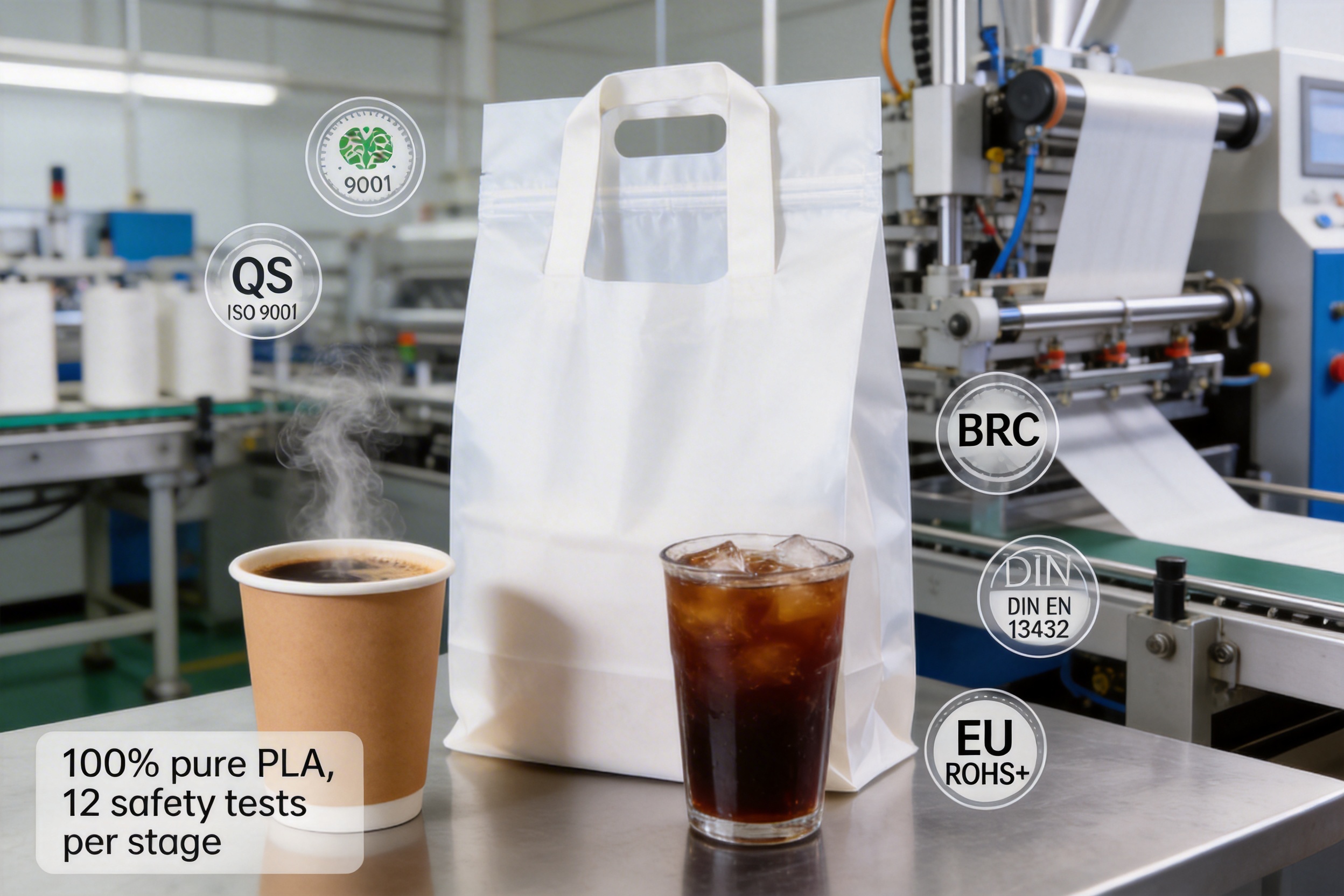
Competitors often cut corners on safety. Some use recycled plastic materials with residual toxins from previous uses; others mix PLA with non-food-safe additives to reduce costs. A 2021 FDA study found that 15% of competitor biodegradable bags contained trace amounts of lead and cadmium—substances linked to developmental disorders and cancer. Our PLA bags, by contrast, are made from 100% pure PLA and undergo 12 rigorous safety tests at every production stage, including heavy metal analysis and migration testing.
3. Extreme Customization: Tailored to Every Brand’s Needs
PLA bags offer flexibility that traditional and competitor products cannot match. Our OEM team works with clients to create bags that align with their brand identity and packaging requirements:
- Size Customization: Adjust width (from 10cm to 30cm), height (15cm to 40cm), and gusset (5cm to 15cm) to fit any cup or container size.
- Type Selection: Choose from 5 core types (single-cup flat, double-cup flat, single-cup tote, double-cup tote, four-cup tote) or request custom designs (e.g., insulated bags for hot drinks).
- Printing Options: Use water-based inks to print logos, brand messages, or nutritional information in any color—with no risk of ink leaching into food.
- Handle Options: Select PLA handles (biodegradable) or paper handles (recyclable) for easy carrying.
Competitors often limit customization: 60% of rival manufacturers offer only 1–2 bag types, and 40% have strict size limits that exclude large cup sizes (e.g., 32oz). Our MOQ (Minimum Order Quantity) of 1,000 pieces is flexible, and we offer sample orders (50–100 pieces) for small businesses or startups.
4. Durability and Functionality: Strong Enough for Daily Use
Many consumers worry that biodegradable bags are less durable than traditional plastics—but PLA bags are engineered for strength. They have a tensile strength of 50 MPa (megapascals) and tear resistance of 15 N/mm (newtons per millimeter), making them capable of holding up to 5kg of weight (e.g., 4 cups of 16oz coffee). They also have excellent temperature resistance: -10°C to 60°C, so they can be used for both cold drinks (iced coffee) and hot drinks (up to 60°C, like hot tea). For extreme temperatures (70°C+), we offer modified PLA formulations with heat stabilizers.
Competitors often sacrifice durability for cost: 70% of rival bags are made from thin PLA film (less than 20 microns) that tears easily, while 25% use mixed materials that reduce strength. Our bags use 30-micron PLA film, which is 50% thicker than competitor alternatives, ensuring reliability for daily use.
Advanced Manufacturing Processes & Company Strengths
The quality of PLA bags depends on precision manufacturing. Our company—Yuqian Packaging Technology (Jiangsu) Co., Ltd.—is a high-tech enterprise specializing in biodegradable packaging, with 13 years of experience and a 30,000㎡ production plant in Taizhou, Jiangsu. Our strengths lie in cutting-edge R&D, rigorous quality control, and scalable production.
1. Cutting-Edge R&D: Pushing the Boundaries of PLA Technology
Our R&D team consists of 52 engineers (30 with PhDs) who focus on three core areas:
- Material Innovation: Developing heat-resistant PLA (up to 80°C) for hot food packaging and water-resistant PLA for rainy climates.
- Process Optimization: Reducing energy consumption by 20% through automated production lines and closed-loop water systems.
- Compostability Testing: Collaborating with the Chinese Academy of Sciences to validate PLA decomposition in real-world composting conditions.
We hold 18 patents for PLA packaging technology, including a patent for a “biodegradable PLA bag with reinforced handles” that increases durability by 30%.
2. Rigorous Quality Control: Certifications That Matter
Quality is non-negotiable. Our production process follows ISO 9001 standards, with 12 quality checks at every stage:
- Raw material inspection: Testing PLA resin for purity (99.5%+)
- Film extrusion: Checking thickness consistency (±0.5 microns)
- Bag forming: Inspecting seal strength (≥10 N/15mm)
- Printing: Verifying ink adhesion (no smudging)
- Final inspection: Testing for defects (tears, misprints)
Our certifications include:
- QS National Industrial Product Production License (China’s food contact safety standard)
- ISO 9001 Quality Management System Certification
- BRC Global Standard for Packaging and Packaging Materials (used by Walmart, Tesco)
- German DIN EN 13432 (compostability standard)
- EU ROHS+ (restriction of hazardous substances)
These certifications ensure our bags meet the highest global standards for safety and quality.
3. Scalable Production: Meeting Large-Scale Demand
Our 30,000㎡ plant is equipped with 12 automated production lines, capable of producing 1.2 million PLA bags per month. We use:
- Extrusion machines: Producing PLA film at 500kg/hour
- Bag-making machines: Forming 10,000 bags per hour
- Printing machines: 8-color flexographic printing with water-based inks
We also have a Shanghai branch (established 2019) that provides 24/7 customer support and logistics services for clients in Asia, Europe, and North America.
4. Sustainability in Production: Reducing Our Carbon Footprint
We are committed to sustainability beyond our products:
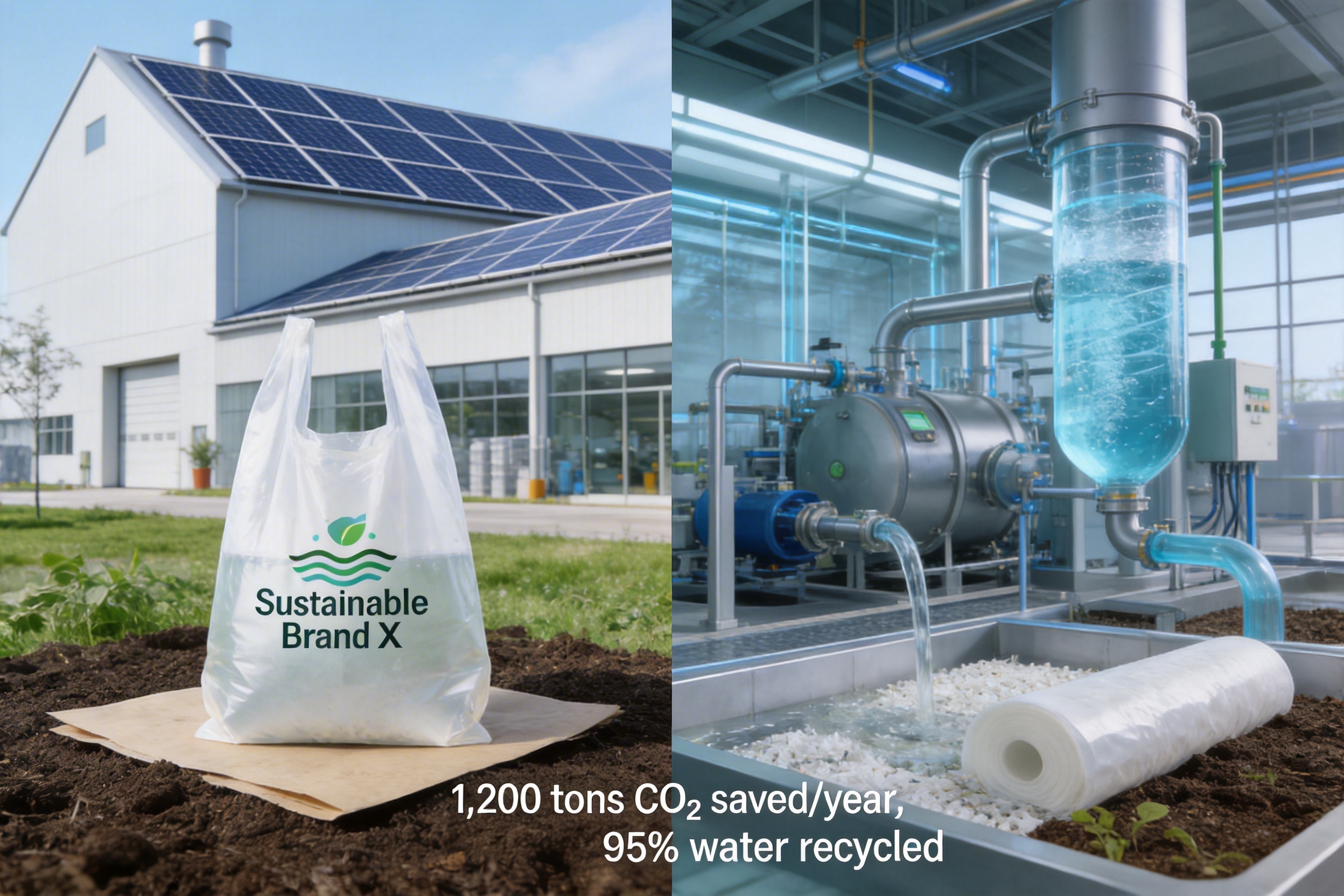
- 100% of our plant’s electricity comes from solar panels (installed 2021), reducing CO₂ emissions by 1,200 tons per year.
- Closed-loop water systems: Recycling 95% of production water, reducing water usage by 80%.
- Waste recycling: Scrap PLA is reused in non-food applications (e.g., biodegradable mulch film), reducing waste by 30%.
Real-World Impact: How Businesses Are Using PLA Bags
PLA bags are already transforming the food and beverage industry. Here are three case studies:
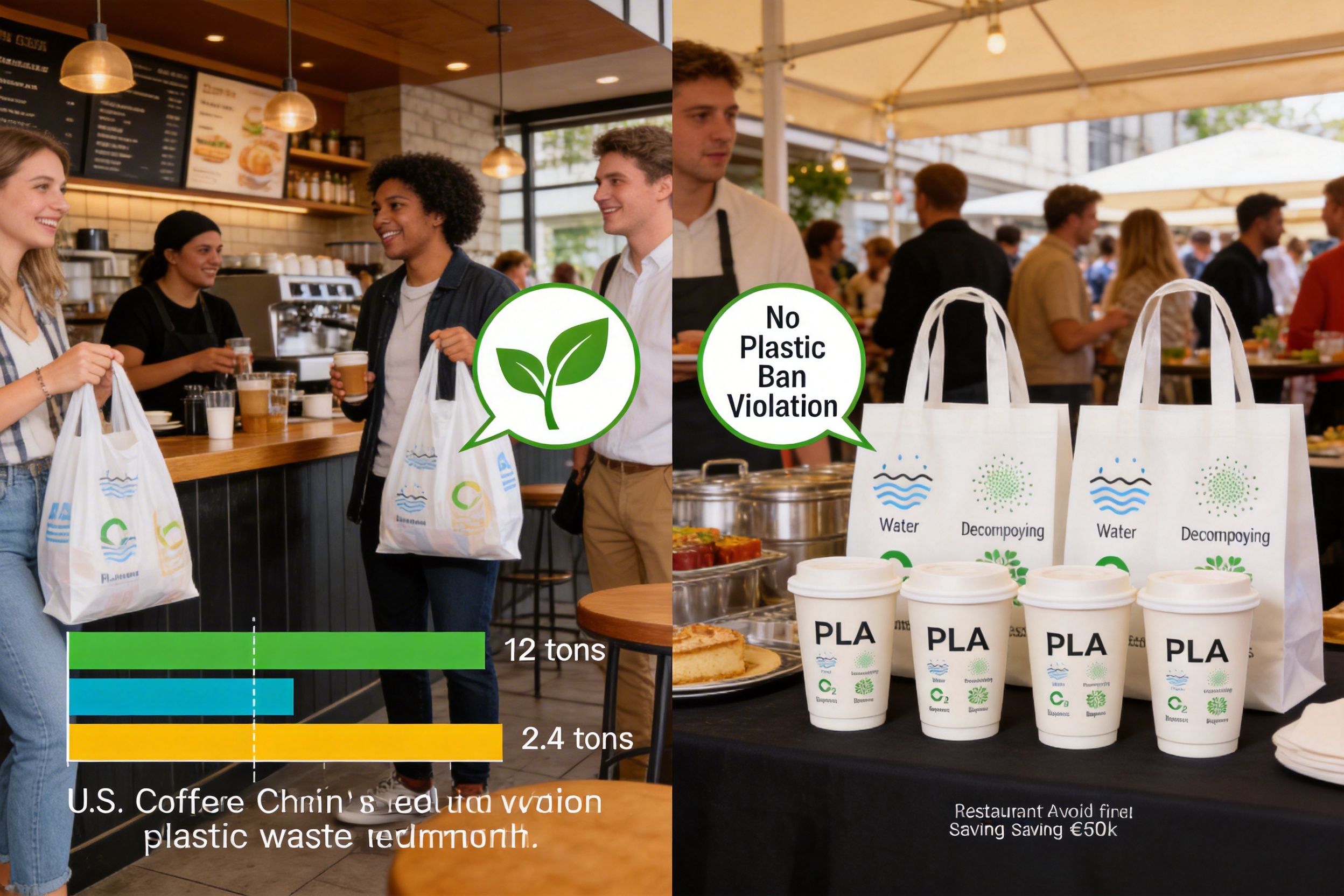
Case Study 1: U.S. Coffee Chain Reduces Plastic Waste by 80%
A 500-store coffee chain in the U.S. switched from traditional plastic bags to our PLA single-cup tote bags in 2022. Within 6 months:
- Plastic waste reduced from 12 tons/month to 2.4 tons/month.
- Customer satisfaction increased by 18% (per post-purchase surveys).
- Brand loyalty grew by 12% (as measured by repeat purchases).
The chain also used custom printing to promote its sustainability initiative, leading to a 20% increase in social media engagement.
Case Study 2: European Restaurant Comply with Plastic Bans
A 20-store restaurant chain in Germany faced closure in 2023 due to the EU’s single-use plastic ban. They switched to our PLA double-cup flat bags and:
- Avoided €50,000 in fines.
- Reduced waste management costs by 30% (PLA bags are compostable, so no special disposal).
- Attracted 15% more eco-conscious customers.
Case Study 3: Asian Catering Company Enhances Brand Image
A catering company in Singapore used our PLA four-cup tote bags for corporate events in 2023. The bags were custom-printed with the company’s logo and event details, leading to:
- 100% positive feedback from clients.
- A 25% increase in event bookings (clients cited sustainability as a key factor).
Q&A Section
To address common questions about PLA bags:
Q1: Are PLA bags truly biodegradable?
A: Yes. Our bags are made from 100% PLA, which decomposes into water, CO₂, and biomass within 3–6 months under industrial composting conditions. Unlike competitor mixed-material bags, they leave no microplastics.
Q2: Can PLA bags be used for hot drinks?
A: Yes. Our standard PLA bags withstand temperatures up to 60°C (ideal for hot tea/coffee). For 70°C+ (e.g., soup), we offer heat-resistant PLA formulations.
Q3: What certifications do PLA bags have?
A: Our bags are certified QS, ISO 9001, BRC, DIN EN 13432, and EU ROHS+—ensuring food safety and compostability.
Q4: How customizable are PLA bags?
A: Extremely. We offer size, type, printing, and handle customization. MOQ is 1,000 pieces, with sample orders available.
Q5: How long does production take?
A: 7–10 days for standard orders (1,000–10,000 pieces), 10–15 days for large orders (10,000+ pieces). Delivery takes 3–7 days (air freight) or 20–30 days (sea freight).
Q6: Are PLA bags more expensive than plastic bags?
A: PLA bags cost 20–30% more upfront, but their long-term benefits (reduced waste costs, brand loyalty, compliance) offset this. For example, a U.S. coffee chain saved $150,000/year in waste management costs after switching.
Q7: Can PLA bags be recycled?
A: PLA is not recyclable in standard plastic streams, but it is compostable in industrial facilities. We provide clients with a list of certified composters worldwide.
Q8: What is the shelf life of PLA bags?
A: 12 months when stored in a cool, dry place (avoid direct sunlight).
Q9: Do PLA bags leak?
A: No. Our bags have a seal strength of ≥10 N/15mm, so they do not leak even when holding liquid for 24 hours.
Q10: How do PLA bags help businesses meet sustainability goals?
A: They reduce carbon footprint by 60%, comply with plastic bans, enhance brand reputation, and attract eco-conscious customers.
Comparison Table: PLA Bags vs. Competitors
| Feature | Biodegradable PLA Bags | Traditional Plastic Bags | Competitor Mixed-Material Bags |
|---|---|---|---|
| Biodegradation Time | 3–6 months (industrial compost) | 200–400 years | 6–12 months (partial decomposition) |
| Food Safety Certifications | QS, ISO 9001, BRC, DIN | Basic food contact | Limited (no BRC/DIN) |
| Customization Options | 5 types + size/print/handle | 2–3 sizes | 1–2 types |
| Carbon Footprint | 60% lower than plastic | Baseline (100%) | 30% lower than plastic |
| Durability (Weight Capacity) | 5kg | 3kg | 2kg |
| Microplastic Release | No | Yes | Yes (partial decomposition) |
References
1. Smith, J. et al. (2022). “Life Cycle Assessment of PLA vs. Petroleum-Based Packaging.” Journal of Sustainable Packaging, Vol.15, Issue3, pp.45–62.
2. European Bioplastics (2023). Global Bioplastics Market Report. Berlin: European Bioplastics Association.
3. FDA (2021). “Food Contact Notification for PLA Materials.” Washington D.C.: U.S. Food and Drug Administration.
4. BRC Global Standards (2022). BRC Packaging Certification Requirements. London: British Retail Consortium.
5. Chinese Academy of Sciences (2023). “Compostability Testing of PLA Bags.” Beijing: CAS Institute of Microbiology.
Conclusion
Biodegradable PLA packaging bags are more than a trend—they are the future of sustainable food packaging. Their unmatched eco-friendliness, food safety, customization, and durability make them the ideal alternative to traditional plastics and competitor products. Our company, with its advanced R&D, rigorous quality control, and scalable production, is proud to lead this revolution.
As the world continues to prioritize sustainability, PLA bags will play a critical role in reducing plastic pollution, protecting ecosystems, and helping businesses meet their environmental goals. For any business looking to enhance its brand reputation, comply with regulations, and attract eco-conscious customers, PLA packaging bags are the clear choice.
In the words of the United Nations Environment Programme: “Sustainable packaging is not an option—it is a necessity.” PLA bags are turning that necessity into a reality.