English
 Español
 عربى
عربىContent
- 1 Understanding PLA as a Packaging Material
- 2 Product Overview: Biodegradable PLA Packaging Bags
- 3 Why Biodegradable PLA Packaging Bags Are Better Than Conventional Plastic Bags
- 4 Competitive Advantages of High-Quality PLA Packaging Bags
- 5 Advanced Manufacturing Processes Behind PLA Packaging Bags
- 6 Manufacturing Strengths of Yuqian Packaging Technology (Jiangsu) Co., Ltd.
- 7 Customization and Design Capabilities
- 8 Product Types and Typical Uses
- 9 Food Safety and Consumer Health
- 10 Environmental Value and Circular Economy Contribution
- 11 Performance Considerations for Real Foodservice Use
- 12 Advantages for Different Buyers
- 13 OEM Service and Supply Reliability
- 14 How PLA Packaging Bags Support Brand Differentiation
- 15 Comparison with Other Packaging Options
- 16 Quality Control Standards for PLA Packaging Bags
- 17 Practical Selection Guide for Buyers
- 18 Q&A Section
- 18.1 What is a biodegradable PLA packaging bag?
- 18.2 Is PLA safe for food packaging?
- 18.3 Can the size of the bag be customized?
- 18.4 How do PLA packaging bags compare with traditional plastic bags?
- 18.5 Are PLA bags suitable for hot food?
- 18.6 Why choose an OEM manufacturer for PLA packaging bags?
- 18.7 What makes Yuqian Packaging Technology (Jiangsu) Co., Ltd. a strong supplier?
- 18.8 Can PLA packaging bags help improve brand image?
- 19 Future Outlook for Biodegradable Food Packaging
- 20 Conclusion
- 21 References
- 22 Product: Biodegradable PLA packaging bag
Biodegradable PLA packaging bags are becoming an important solution for foodservice operators, beverage brands, takeaway chains, supermarkets, catering suppliers, and environmentally responsible distributors that want to reduce reliance on conventional petroleum-based plastic packaging. Made from polylactic acid, commonly known as PLA, these bags are designed to offer practical packaging performance while supporting a more sustainable approach to resource use and waste reduction.
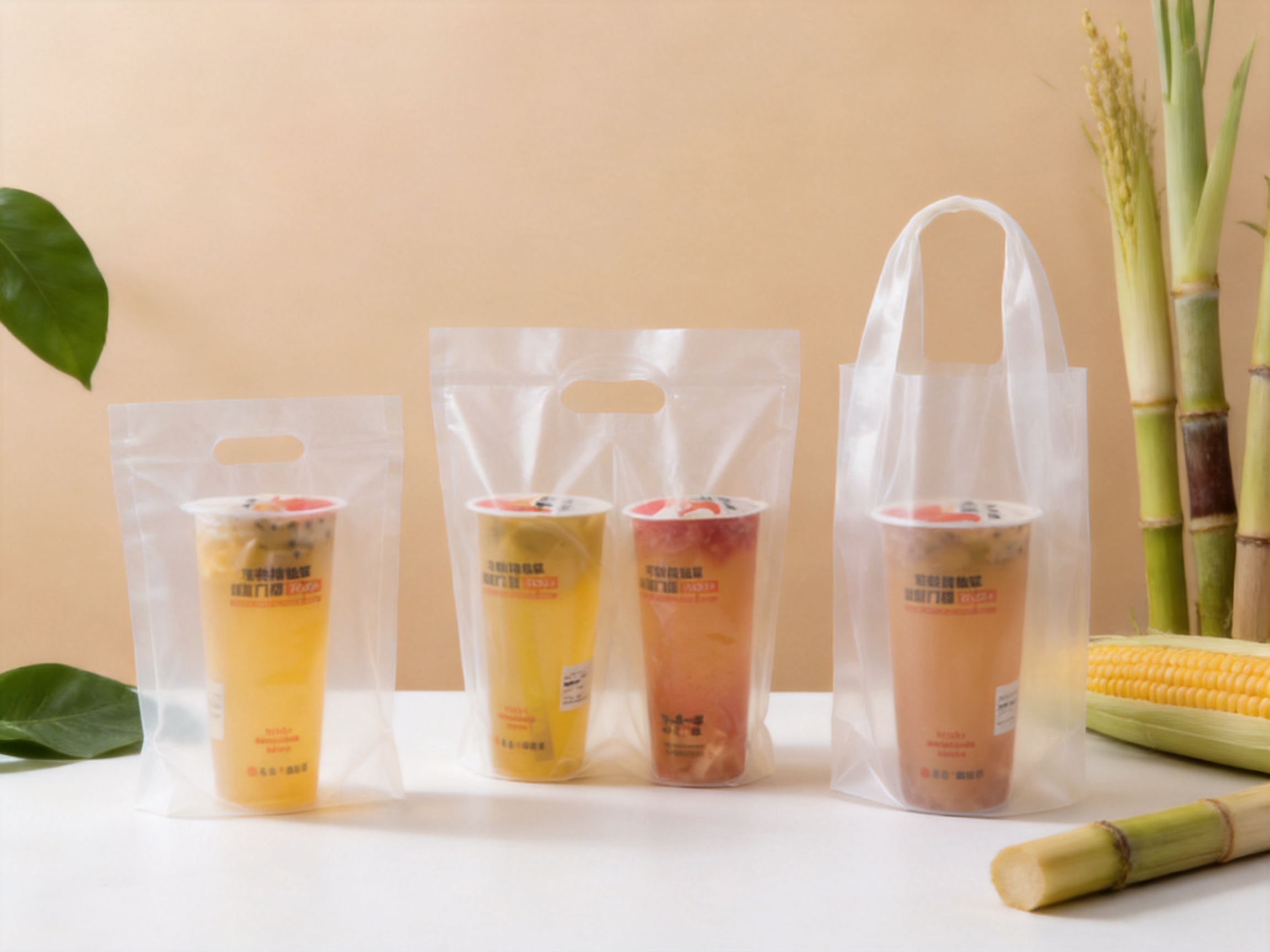
Unlike traditional plastic bags that may persist in the environment for a very long time, PLA packaging bags are produced from renewable bio-based resources such as corn starch, sugarcane, or other plant-derived feedstocks. Under suitable industrial composting conditions, PLA can biodegrade into carbon dioxide, water, and biomass, helping reduce long-term plastic pollution. This makes biodegradable PLA packaging bags especially relevant for food and beverage packaging applications where hygiene, convenience, safety, and sustainability must work together.
Yuqian Packaging Technology (Jiangsu) Co., Ltd. provides biodegradable PLA packaging bags in multiple formats, including single-cup flat bags, double-cup flat bags, single-cup tote bags, double-cup tote bags, four-cup tote bags, and customized bag structures for different takeaway and retail needs. The bags are designed to hold beverages, cups, bowls, packaged foods, and other disposable food packaging containers while maintaining safety, reliability, and a clean presentation.
For food packaging buyers, choosing the right bag is not simply a matter of material. It involves product structure, load-bearing design, sealing quality, transparency, touch feel, hygiene control, customization capability, printing consistency, production stability, and compliance with food-contact expectations. A high-quality biodegradable PLA packaging bag must satisfy all these requirements while also demonstrating environmental value. This is where professional manufacturing experience becomes essential.
Yuqian Packaging Technology (Jiangsu) Co., Ltd. was established in 2010 and is located in Taizhou City, Jiangsu Province, China. With a plant area of approximately 30,000 square meters, the company focuses on research, development, production, and sales of new food packaging materials and products. Its manufacturing background includes biodegradable materials and disposable food packaging products, supported by quality and safety certifications such as QS national industrial product production license, ISO9001 Quality Management System certification, BRC certification, German DIN safety certification, and EU RoHS-related testing.
In the competitive packaging market, a product must do more than appear eco-friendly. It must perform reliably during packing, storage, transportation, and customer use. Biodegradable PLA packaging bags from a professional manufacturer offer a balance of environmental responsibility, food-contact safety, customization flexibility, and manufacturing consistency. This article explores the product’s material advantages, structural designs, production strengths, quality controls, commercial applications, and competitive benefits.
Biodegradable PLA packaging bag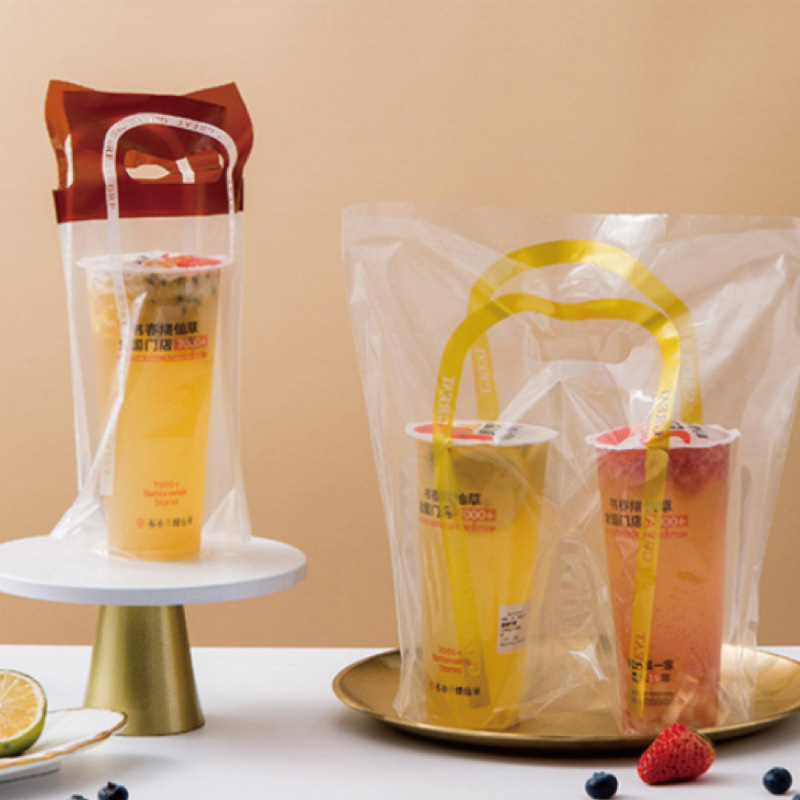
Understanding PLA as a Packaging Material
PLA, or polylactic acid, is a bio-based polymer produced from renewable plant resources. The basic production pathway typically begins with starch or sugar extraction from crops such as corn or sugarcane. Through fermentation, sugars are converted into lactic acid, which is then polymerized into PLA resin. This resin can be processed into films, sheets, molded products, and other packaging forms.
For packaging applications, PLA is valued because it combines several important characteristics. It can provide good transparency, a clean and glossy appearance, adequate stiffness, suitable printability, and a safer profile for many food-related uses. It is also free from many harmful chemical concerns associated with poorly controlled plastic packaging. When produced and tested correctly, PLA packaging can be suitable for direct or indirect food packaging applications.
The environmental appeal of PLA comes from two main features: renewable raw material origin and biodegradability under proper conditions. Petroleum-based plastics are derived from fossil resources, while PLA is derived from biomass. This shift helps reduce dependence on non-renewable resources. In addition, industrial composting systems can break down PLA more effectively than conventional plastics, helping support circular economy models where materials are recovered, treated, and returned to natural cycles in controlled ways.
It is important to understand that biodegradability depends on the correct environment. PLA is not meant to be littered in nature. Instead, it is designed for responsible collection and treatment in appropriate composting or waste-management systems. When paired with clear labeling, responsible disposal education, and suitable regional infrastructure, PLA packaging bags can play a meaningful role in reducing plastic waste pressure.
Product Overview: Biodegradable PLA Packaging Bags
The biodegradable PLA packaging bag is a flexible packaging product designed for foodservice and takeaway scenarios. It can be used for holding cups, bowls, containers, packaged snacks, beverages, desserts, light meal sets, and related disposable food packaging containers. The product emphasizes food safety, material sustainability, customization, and practical carrying convenience.
The main product features include biodegradable PLA material, non-toxic and harmless composition, no intentionally added harmful chemicals, customizable sizes, multiple bag types, and suitability for food packaging. The available styles include single-cup flat bags, double-cup flat bags, single-cup tote bags, double-cup tote bags, four-cup tote bags, and other customized forms according to customer requirements.
A single-cup flat bag is often used for individual beverages or small packaged food items. It is simple, lightweight, and cost-effective. A double-cup flat bag supports paired beverages and is suitable for cafés, bubble tea shops, juice bars, and takeaway counters. Single-cup and double-cup tote bags provide handles for easier carrying. Four-cup tote bags are designed for larger takeaway orders, family sets, office drinks, or multi-item beverage delivery.
Customization is a major advantage. Buyers can request different dimensions, thicknesses, carrying structures, opening styles, handle shapes, and packaging formats. For businesses with branded service requirements, customized PLA bags can improve product presentation and help strengthen an environmentally responsible brand image. Even when plain transparent bags are selected, the material itself communicates cleanliness, safety, and modern sustainability.
Why Biodegradable PLA Packaging Bags Are Better Than Conventional Plastic Bags
Traditional plastic bags have long been used because they are inexpensive, lightweight, and easy to mass-produce. However, their environmental disadvantages are now widely recognized. Many petroleum-based plastic bags are difficult to degrade, may contribute to land and marine pollution, and can create long-term waste-management burdens. Customers, regulators, and retailers increasingly expect better alternatives.
Biodegradable PLA packaging bags address these concerns by offering a more sustainable material pathway. Because PLA is derived from renewable resources, it reduces dependence on fossil-based plastics. Because it can biodegrade under suitable industrial composting conditions, it supports improved end-of-life management compared with persistent plastics. Because it is suitable for food packaging, it can replace many conventional plastic bag applications without sacrificing essential functionality.
Another advantage is consumer perception. When customers receive beverages or takeaway meals in biodegradable PLA packaging bags, they immediately recognize a commitment to environmental responsibility. This can enhance the reputation of cafés, restaurants, dessert shops, catering companies, supermarkets, and food delivery brands. Sustainable packaging is no longer only a technical decision; it is also part of brand communication.
From a regulatory perspective, many regions are strengthening restrictions on single-use plastics. Businesses that adopt biodegradable and compostable alternatives early may be better prepared for future market rules. While requirements vary by country and region, choosing PLA packaging can help businesses move toward more responsible packaging portfolios.
Competitive Advantages of High-Quality PLA Packaging Bags
Not all biodegradable bags are equal. Some products in the market may use unclear material blends, inconsistent film thickness, weak seals, poor load-bearing performance, or unstable quality. These issues can cause tearing, leakage, deformation, odor, poor transparency, or customer complaints. Professional manufacturing helps prevent these risks.
The biodegradable PLA packaging bags produced by Yuqian Packaging Technology (Jiangsu) Co., Ltd. are positioned around stable quality, safety, customization, and practical usability. The company’s experience in disposable food packaging containers gives it a deeper understanding of how bags interact with cups, lids, bowls, straws, takeaway containers, and foodservice operations.
One competitive advantage is diversified sizing. Instead of forcing customers to use a standard bag that may not fit their containers, the company provides multiple size options and can customize according to customer needs. This helps reduce material waste, improve packing efficiency, and create a more secure fit for different food packaging items.
A second advantage is product-type flexibility. The availability of single-cup, double-cup, and four-cup structures allows foodservice brands to match bags to actual order patterns. A beverage shop, for example, may require both single-cup bags for individual customers and four-cup tote bags for delivery orders. A restaurant may need bags that accommodate bowls or mixed meal sets. Flexible manufacturing makes these solutions easier to develop.
A third advantage is safety. Food packaging must be non-toxic, harmless, and free from unsafe chemicals. The company emphasizes material selection and product testing to ensure that its PLA packaging bags are suitable for food-related uses. This matters especially when packaging comes into contact with cups, bowls, or containers used for beverages and ready-to-eat foods.
A fourth advantage is environmental credibility. A packaging product cannot rely only on green marketing language. It must be supported by material integrity, proper production control, and a manufacturer with a long-term focus on degradable materials. Yuqian Packaging Technology (Jiangsu) Co., Ltd. has been committed to the research and application of degradable food packaging materials, making sustainability part of its production direction rather than a temporary market response.
Advanced Manufacturing Processes Behind PLA Packaging Bags
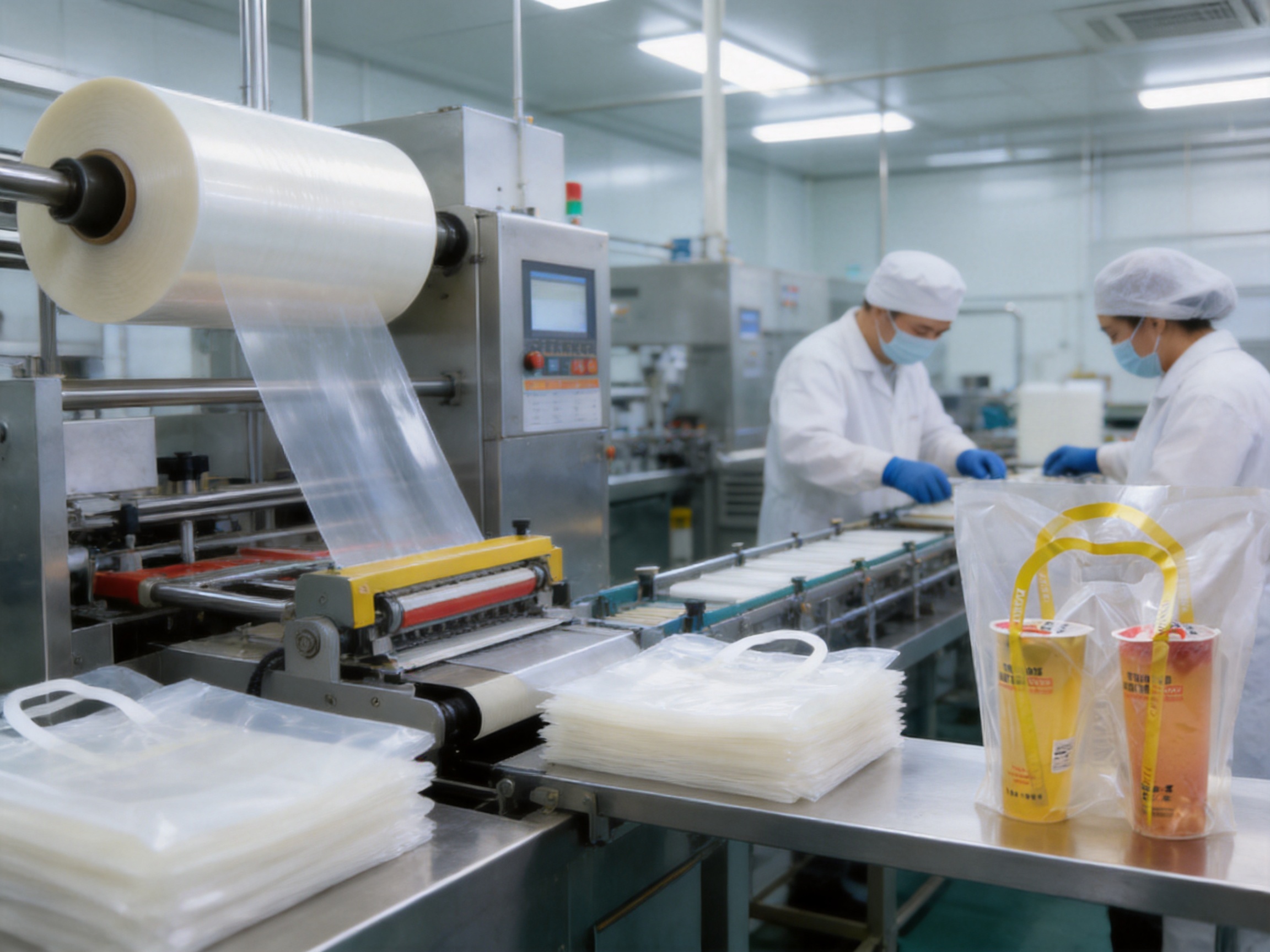
The performance of a biodegradable PLA packaging bag depends on the entire manufacturing process, from raw material selection to film production, forming, cutting, sealing, inspection, packaging, and shipment. Advanced manufacturing is not only about equipment. It also includes process discipline, technical knowledge, quality management, and continuous improvement.
The first stage is raw material selection. PLA resin must be chosen according to intended performance requirements, such as flexibility, transparency, tensile strength, sealing behavior, and food-contact expectations. High-quality resin helps create stable film and reduces production defects. The manufacturer must also manage storage conditions because biodegradable materials can be sensitive to moisture and temperature.
The second stage is material preparation. Depending on the product specification, PLA resin may be dried and prepared before processing. Proper drying helps reduce moisture-related defects such as bubbles, brittleness, inconsistent extrusion, and surface imperfections. In professional production, temperature, residence time, and processing parameters are carefully controlled to protect material performance.
The third stage is film extrusion or film forming. PLA must be processed under suitable temperature and mechanical conditions. Excessive heat may affect polymer quality, while insufficient heat may result in poor film formation. A stable extrusion system helps produce uniform thickness, consistent transparency, and reliable mechanical properties. Thickness control is especially important because bags must be strong enough to carry items while avoiding unnecessary material consumption.
The fourth stage is film inspection and treatment. Film rolls may be inspected for clarity, thickness uniformity, surface quality, wrinkles, contamination, and mechanical stability. When printing is required, the film surface may need suitable treatment to improve ink adhesion. Good surface treatment ensures that printed logos, instructions, or environmental messages remain clear and durable.
The fifth stage is bag making. Film is cut, folded, sealed, and shaped into specific bag structures. Heat sealing parameters must be controlled carefully because PLA has different thermal behavior from conventional polyethylene. Proper sealing creates strong edges and prevents opening failure during use. Handle structures, bottom folds, and side seals must be designed according to load requirements.
The sixth stage is finished product inspection. Bags are checked for dimensions, seal strength, appearance, handle integrity, cleanliness, quantity, and packaging. Quality inspection reduces the risk of defective batches reaching customers. For food packaging, hygiene control is also critical, including clean production environments, controlled handling, and protective packing.
The seventh stage is packing and logistics. Finished bags are packed to protect them from moisture, pressure, dust, and deformation during storage and transportation. Because biodegradable materials can be affected by storage conditions, responsible packaging and shipment procedures help maintain performance until the product reaches the customer.
Manufacturing Strengths of Yuqian Packaging Technology (Jiangsu) Co., Ltd.
Yuqian Packaging Technology (Jiangsu) Co., Ltd. has built its strength around new food packaging materials and disposable food packaging products. With more than a decade of industry development since its establishment in 2010, the company has accumulated production experience in biodegradable materials, food packaging containers, and customized packaging solutions.
The company’s plant area of approximately 30,000 square meters supports integrated production capacity. A larger production base allows better organization of raw material storage, processing workshops, quality-control areas, product warehousing, and delivery management. For customers, this translates into stronger order-handling capability, more stable supply, and greater confidence in long-term cooperation.
Certification is another important strength. The company has passed the QS national industrial product production license, ISO9001 Quality Management System certification, BRC certification, German DIN safety certification, and EU RoHS-related testing. These certifications indicate that the company has invested in quality systems, production control, safety requirements, and international compliance expectations.
Research and development capability is essential in biodegradable packaging because PLA behaves differently from conventional plastics. Film flexibility, sealing temperature, carrying strength, compostability expectations, and product storage stability all require technical adjustment. A manufacturer experienced in degradable materials can solve these issues more effectively than a general plastic bag supplier.
The company’s product portfolio also strengthens its PLA packaging bag capability. Since it produces or supplies related disposable food packaging products such as plastic cups, plastic cup lids, takeaway bowls, disposable straws, recycle bags, peripheral products, and injection film lining cups and bowl boxes, it understands the full packaging ecosystem. This allows bag designs to be matched with real container dimensions and foodservice usage habits.
For example, a bag designed for beverage cups must consider cup height, lid diameter, condensation, hand-carrying angle, and stability during movement. A bag designed for takeaway bowls must consider bowl width, stacking height, and load distribution. A manufacturer that understands both containers and bags can create more practical solutions than a supplier that only makes generic bags.
Customization and Design Capabilities
Customization is one of the most important commercial advantages of biodegradable PLA packaging bags. Different foodservice brands use different cup sizes, bowl sizes, ordering patterns, and delivery methods. A standardized bag may be acceptable for basic use, but a customized bag can improve operational efficiency and customer experience.
Yuqian Packaging Technology (Jiangsu) Co., Ltd. provides diversified sizes and can customize according to customer needs. Customization may include bag width, height, side gusset, bottom structure, film thickness, handle shape, opening style, quantity per pack, and outer carton packing. For customers with brand requirements, customization may also include printed graphics, logos, product labels, environmental statements, and usage instructions.
Size customization helps reduce over-packaging. If a bag is too large, it wastes material and may allow cups or containers to move excessively. If it is too small, packing becomes difficult and may damage the bag. The correct size improves stability, lowers material usage, and creates a neater presentation.
Thickness customization helps balance strength and cost. Heavier items require stronger film, while lightweight single-cup applications may use a thinner structure. The goal is not simply to make the thickest bag, but to create the most efficient bag for the intended purpose. Professional manufacturers can recommend practical specifications based on product weight and usage scenario.
Handle customization is especially important for tote bag styles. A handle must be comfortable to grip, strong enough for the expected load, and positioned for stable carrying. For multi-cup tote bags, handle design affects balance and spill prevention. Good handle engineering reduces customer inconvenience and improves perceived quality.
Printing customization allows packaging to become a communication tool. A biodegradable PLA bag can display a restaurant logo, café name, product message, recycling or composting guidance, and sustainability claims. However, printing must be handled responsibly. Inks and printing processes should be selected with food packaging and environmental expectations in mind.
Product Types and Typical Uses
The following table summarizes common biodegradable PLA packaging bag types and their practical applications.
| Bag Type | Typical Use | Main Advantage | Suitable Customers |
|---|---|---|---|
| Single-cup flat bag | One beverage cup, small dessert cup, or light takeaway item | Lightweight, simple, economical, and convenient | Cafés, tea shops, juice bars, dessert shops |
| Double-cup flat bag | Two beverage cups or paired small food containers | Improves carrying convenience for paired orders | Bubble tea shops, beverage chains, takeaway counters |
| Single-cup tote bag | One cup or container requiring easy hand carrying | Handle design improves customer experience | Coffee shops, food stalls, event vendors |
| Double-cup tote bag | Two cups or mixed beverage and snack combinations | Better load balance and easier transport | Food delivery brands, restaurants, beverage retailers |
| Four-cup tote bag | Multiple drinks, office orders, family sets, delivery bundles | Supports larger orders and improves order organization | Chain beverage stores, catering suppliers, delivery platforms |
| Customized PLA bag | Special cup, bowl, container, or promotional packaging | Tailored dimensions, thickness, structure, and branding | Private-label buyers, distributors, food packaging brands |
This product range allows customers to choose packaging based on real operating needs. A single beverage store may need several bag types at the same time. For example, a small order can use a single-cup bag, while delivery or group orders can use a four-cup tote bag. This flexibility improves service speed and reduces mismatched packaging.
Food Safety and Consumer Health
Food packaging must protect consumer health. Even when a bag does not directly touch food, it may contact cups, lids, bowls, utensils, or other food-contact packaging. Therefore, non-toxic and harmless material selection is essential. Biodegradable PLA packaging bags are designed to avoid harmful chemical concerns and provide a safer option for foodservice packaging.
PLA itself is widely recognized as a material suitable for many food packaging applications when properly processed and tested. It is derived from lactic acid, a compound also found naturally in biological systems. This does not mean every PLA product is automatically safe; safety still depends on resin quality, additives, production hygiene, printing materials, and compliance testing. Professional manufacturing is necessary to ensure product reliability.
Yuqian Packaging Technology (Jiangsu) Co., Ltd. emphasizes strict safety testing and production control. Its background in food packaging helps ensure that biodegradable PLA packaging bags are developed with foodservice requirements in mind. The company’s certifications and quality-management systems further support product consistency and safety assurance.
For restaurants and beverage brands, safe packaging reduces risk. A bag that smells unusual, breaks easily, or contains questionable additives can damage customer trust. A well-made PLA bag offers a clean appearance, stable structure, and safer material profile, helping maintain brand reputation.
Environmental Value and Circular Economy Contribution
Biodegradable PLA packaging bags support environmental goals in several ways. First, they use renewable biological resources instead of fully depending on fossil resources. Second, they can be processed in suitable composting environments, reducing the long-term persistence associated with many conventional plastics. Third, they encourage businesses and consumers to think more carefully about responsible packaging use and disposal.
The circular economy aims to move away from the linear model of “take, make, use, and discard.” In packaging, circular economy thinking encourages renewable materials, design for recovery, responsible waste treatment, and reduced pollution. PLA packaging bags fit into this direction by offering a bio-based and biodegradable material option for disposable food packaging applications.
Carbon emissions are another important consideration. While exact carbon performance depends on feedstock, production energy, transportation, and end-of-life handling, PLA generally has the potential to reduce life-cycle fossil carbon reliance compared with traditional petroleum-based plastics. For businesses pursuing sustainability targets, replacing conventional bags with PLA alternatives can become part of a broader packaging improvement strategy.
However, environmental responsibility also requires honest communication. PLA bags should not be described as a reason to litter. They should be collected and treated properly according to local waste-management systems. Clear customer education can improve disposal behavior. Packaging can include instructions such as “industrially compostable where facilities exist” if supported by relevant certification and regional compliance.
Performance Considerations for Real Foodservice Use
A packaging bag must work in real conditions. Foodservice environments are fast-paced. Employees need to pack orders quickly. Customers need to carry products safely. Delivery personnel need packaging that withstands movement. Therefore, the performance of PLA bags must be evaluated through practical factors.
Load-bearing strength is one of the most important factors. A bag for one cup has different strength requirements from a bag for four cups. Seal quality, handle shape, film thickness, and bag geometry all influence carrying performance. Professional manufacturers can test and adjust these details to improve reliability.
Moisture exposure is another consideration. Cold drinks may create condensation. Takeaway bowls may be warm and may generate humidity. PLA bags should be designed to tolerate normal usage conditions. While they should not be exposed to extreme heat or improper storage, properly manufactured bags can perform well for typical takeaway and packaging needs.
Temperature resistance should also be considered. PLA has different thermal properties from some conventional plastics. It is generally more suitable for room-temperature and cold packaging applications than high-temperature direct contact. For hot-food takeaway, the bag’s role is usually outer carrying packaging rather than direct hot-food contact. Customers should select bag specifications according to actual use conditions.
Storage conditions matter. Like many biodegradable materials, PLA products should be stored in a dry, cool, and clean environment away from direct sunlight and excessive heat. Proper storage helps preserve film strength and appearance. A professional supplier can provide storage recommendations to protect product quality.
Appearance is also a performance factor. Clear, smooth, and clean packaging improves customer perception. A bag with uneven thickness, wrinkles, odor, or dull appearance may reduce brand value. High-quality PLA film can provide a modern and hygienic look suitable for premium beverage and foodservice brands.
Advantages for Different Buyers
For beverage shops, biodegradable PLA packaging bags provide an eco-friendly carrying option for cups and drinks. Single-cup and double-cup bag designs match common order sizes, while four-cup tote bags support delivery and group orders. A customized printed bag can also strengthen brand recognition.
For restaurants and takeaway brands, PLA bags can be used for packaged bowls, meal sets, desserts, and side dishes. They help present takeaway orders in a cleaner and more responsible manner. Restaurants that promote natural ingredients, health-conscious menus, or low-waste practices can align their packaging with their brand values.
For supermarkets and retail food counters, PLA bags can package prepared foods, snacks, drinks, or small container combinations. The transparent and clean appearance can improve shelf presentation. The biodegradable material also supports supermarket sustainability programs.
For distributors and wholesalers, biodegradable PLA packaging bags represent a growing product category with strong market demand. Offering multiple bag styles and customization options helps distributors serve cafés, restaurants, catering companies, and food packaging retailers more effectively.
For private-label brands, working with an OEM manufacturer provides flexibility. Buyers can develop packaging specifications, branding elements, carton packing, and product positioning according to their market requirements. Yuqian Packaging Technology (Jiangsu) Co., Ltd. operates as a professional OEM degradable PLA packaging bag manufacturer, supporting customized development for different commercial needs.
OEM Service and Supply Reliability
OEM service is valuable for customers who want packaging that reflects their own brand identity or market strategy. A professional OEM supplier does more than produce a generic bag. It helps translate customer requirements into feasible manufacturing specifications, including material selection, size, thickness, structure, printing, packing, and delivery planning.
Yuqian Packaging Technology (Jiangsu) Co., Ltd. provides OEM services for biodegradable PLA packaging bags. This means customers can request customized products that fit their containers, brand positioning, and sales channels. The company’s production experience in food packaging materials allows it to guide customers through practical decisions.
Supply reliability is another key issue. Foodservice packaging buyers need stable availability because packaging shortages can disrupt daily operations. A manufacturer with a larger production base, quality systems, and experience in export or distribution markets can provide more dependable supply than small or inconsistent suppliers.
Consistent batch quality is especially important for chain stores and distributors. If one batch performs well and the next batch tears easily, the buyer’s reputation suffers. Quality management systems such as ISO9001 help establish standardized processes for production control, inspection, corrective action, and continuous improvement.
How PLA Packaging Bags Support Brand Differentiation
In a crowded foodservice market, packaging has become part of the customer experience. Customers notice whether a bag is strong, clean, attractive, easy to carry, and environmentally responsible. A biodegradable PLA packaging bag can help a business stand out from competitors still using conventional plastic bags.
Sustainable packaging communicates care. It tells customers that the business is paying attention not only to taste and convenience but also to environmental impact. This message can be especially powerful for younger consumers, urban professionals, health-conscious buyers, and customers who prefer brands with visible sustainability commitments.
Customized printing can strengthen this message. A bag can include a brand logo, product slogan, composting guidance, or a simple environmental statement. The combination of practical function and responsible material turns packaging into a marketing asset.
Premium presentation is also important. PLA packaging bags can offer clarity and a clean appearance, making them suitable for modern cafés, dessert brands, specialty beverage shops, and boutique food retailers. The packaging can help elevate a simple takeaway item into a more thoughtful customer experience.
Comparison with Other Packaging Options
Biodegradable PLA packaging bags are one option among many. Buyers may also consider conventional polyethylene bags, paper bags, reusable fabric bags, or other compostable materials. Each option has advantages and limitations. The right choice depends on product use, cost target, environmental goals, strength requirements, and disposal infrastructure.
Compared with conventional polyethylene bags, PLA bags offer stronger environmental positioning and renewable material origin. Compared with paper bags, PLA bags may provide better visibility, lighter weight, and moisture resistance for certain beverage and container applications. Compared with reusable bags, PLA bags are more suitable for disposable foodservice use where customers may not return packaging. Compared with some unknown biodegradable blends, high-quality PLA offers clearer material identity and more established processing knowledge.
Cost is always a consideration. PLA packaging may cost more than basic petroleum-based plastic bags. However, the value includes environmental responsibility, brand image, regulatory readiness, and customer trust. For many businesses, this added value justifies the investment, especially when packaging is part of the brand experience.
The most effective approach is often targeted replacement. Businesses can begin by using PLA bags for visible customer-facing applications such as beverage takeaway, premium meal sets, or eco-themed product lines. Over time, they can expand sustainable packaging across more categories.
Quality Control Standards for PLA Packaging Bags
Quality control should cover the complete production chain. Raw materials should be checked for identity, quality, and suitability. Film should be inspected for thickness, transparency, surface cleanliness, and defects. Bag-making processes should be controlled for accurate dimensions, cutting precision, seal strength, and handle quality.
Finished products should be inspected according to customer specifications. Important inspection items may include length, width, thickness, seal integrity, load-bearing performance, appearance, odor, print clarity, packing quantity, and carton condition. For food packaging applications, cleanliness and hygiene are also important.
Traceability is another element of quality control. A professional manufacturer should be able to track batches, production dates, materials, and inspection results. This helps quickly identify and solve issues if a customer reports a problem.
Continuous improvement is essential because biodegradable packaging technology is evolving. Manufacturers must refine processing temperatures, sealing methods, film recipes, and structural designs to improve performance and cost efficiency. A company focused on research and development can respond better to market changes and customer feedback.
Practical Selection Guide for Buyers
When selecting biodegradable PLA packaging bags, buyers should first define the application. Will the bag hold one cup, two cups, four cups, bowls, containers, or mixed food items? The expected load determines size, thickness, structure, and handle requirements.
Second, buyers should consider the temperature and moisture conditions. Cold beverages, room-temperature packaged foods, and warm takeaway items may require different specifications. If the bag will be used mainly for cold drinks with condensation, the design should consider moisture exposure and carrying stability.
Third, buyers should decide whether branding is needed. Plain PLA bags may be suitable for basic use, while printed bags are better for brand promotion. If printing is required, artwork, colors, ink suitability, and minimum order quantity should be discussed early.
Fourth, buyers should check compliance needs. Different markets may require different labeling, food-contact documentation, compostability claims, or material testing. A professional manufacturer can help provide relevant information according to the buyer’s target market.
Fifth, buyers should evaluate supplier capability. A reliable supplier should have experience with food packaging, quality certifications, customization capability, stable production capacity, and responsive communication. Yuqian Packaging Technology (Jiangsu) Co., Ltd. offers these strengths through its manufacturing background, certifications, and focus on biodegradable food packaging materials.
Q&A Section
What is a biodegradable PLA packaging bag?
A biodegradable PLA packaging bag is a flexible packaging bag made mainly from polylactic acid, a bio-based polymer derived from renewable plant resources. It is designed for applications such as beverage cups, takeaway bowls, food containers, and other disposable food packaging containers. Under suitable industrial composting conditions, PLA can biodegrade more effectively than conventional petroleum-based plastics.
Is PLA safe for food packaging?
PLA can be suitable for many food packaging applications when produced with appropriate raw materials, controlled manufacturing processes, and proper testing. The biodegradable PLA packaging bags discussed here are designed to be non-toxic, harmless, and free from harmful chemicals, making them appropriate for foodservice packaging uses.
Can the size of the bag be customized?
Yes. Sizes can be customized according to customer needs. Available formats include single-cup flat bags, double-cup flat bags, single-cup tote bags, double-cup tote bags, four-cup tote bags, and customized structures for special containers or brand requirements.
How do PLA packaging bags compare with traditional plastic bags?
Traditional plastic bags are usually made from petroleum-based materials and may persist in the environment for a long time. PLA packaging bags are made from renewable bio-based resources and can biodegrade under suitable composting conditions. They also provide a stronger sustainability message for foodservice brands.
Are PLA bags suitable for hot food?
PLA has different heat-resistance characteristics from some conventional plastics. PLA bags are commonly used as outer carrying bags for packaged food and beverages rather than direct high-temperature food contact. Buyers should confirm the intended application and choose specifications according to use conditions.
Why choose an OEM manufacturer for PLA packaging bags?
An OEM manufacturer can customize dimensions, structure, thickness, printing, packing, and other specifications according to customer needs. This helps create bags that fit specific cups, bowls, takeaway containers, and brand requirements more accurately than generic packaging.
What makes Yuqian Packaging Technology (Jiangsu) Co., Ltd. a strong supplier?
The company has been active in food packaging materials and products since 2010, with a plant area of about 30,000 square meters. It has experience in biodegradable materials, disposable food packaging containers, and customized manufacturing. Its certifications include QS, ISO9001, BRC, German DIN safety certification, and EU RoHS-related testing.
Can PLA packaging bags help improve brand image?
Yes. Sustainable packaging shows customers that a business values environmental responsibility. Customized PLA bags can also display logos, environmental messages, and brand designs, turning packaging into a visible part of the customer experience.
Future Outlook for Biodegradable Food Packaging
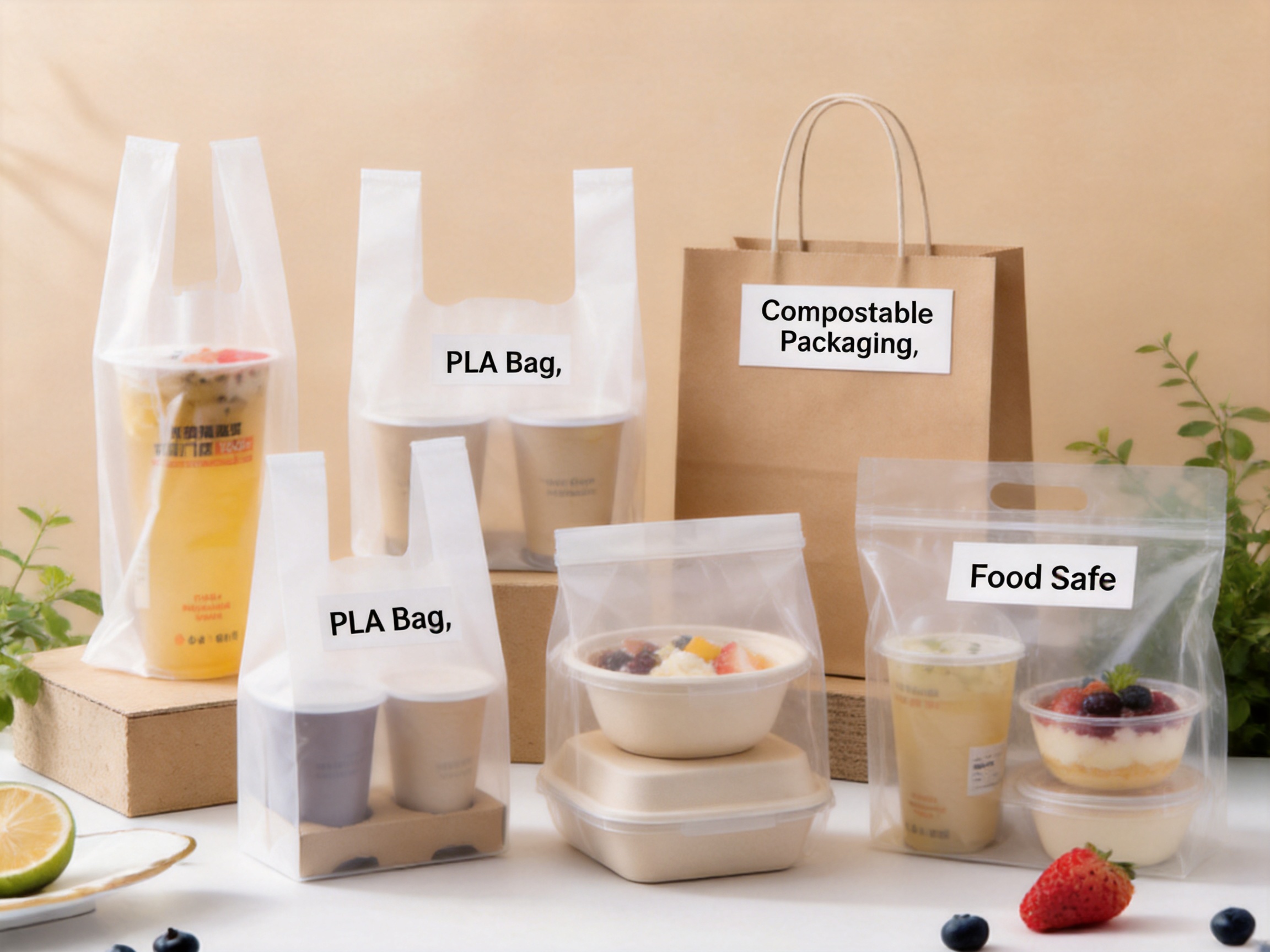
The demand for biodegradable food packaging is expected to continue growing as consumers, governments, and businesses focus more strongly on plastic reduction and sustainable development. PLA packaging bags are part of this broader transition. They provide a practical bridge between the convenience of disposable packaging and the need for improved environmental responsibility.
Future innovation may focus on improved heat resistance, stronger film performance, faster composting behavior, better printing compatibility, and more efficient production methods. Manufacturers with research and development capabilities will be better positioned to support these improvements.
Foodservice packaging will likely become more integrated. Instead of selecting cups, lids, bowls, straws, and bags separately, brands may increasingly seek complete packaging systems that work together. A manufacturer with experience across multiple packaging categories can provide better compatibility and design support.
Yuqian Packaging Technology (Jiangsu) Co., Ltd. is well positioned in this direction because its product scope includes plastic cups, cup lids, takeaway bowls, disposable straws, recycle bags, peripheral products, and injection film lining cups and bowl boxes. Its biodegradable PLA packaging bags can therefore be developed as part of a broader disposable food packaging solution.
Conclusion
Biodegradable PLA packaging bags offer a valuable combination of sustainability, food safety, customization, and practical convenience. Made from renewable bio-based PLA material, they provide an environmentally responsible alternative to conventional plastic bags while supporting the packaging needs of beverage shops, restaurants, supermarkets, distributors, and private-label brands.
The product’s advantages include biodegradable material, non-toxic and harmless composition, multiple bag types, customizable sizes, improved brand presentation, and support for circular economy goals. When manufactured professionally, PLA packaging bags can deliver stable strength, clean appearance, reliable sealing, and suitable performance for real foodservice operations.
Yuqian Packaging Technology (Jiangsu) Co., Ltd. brings important manufacturing strengths to this product category. Its 30,000-square-meter production base, experience since 2010, certifications, research and development focus, OEM service capability, and understanding of disposable food packaging containers allow it to provide more than a simple bag. It provides a practical, customizable, and quality-controlled packaging solution for businesses seeking safer and more sustainable food packaging.
For companies looking to reduce plastic pollution, improve customer perception, prepare for changing regulations, and build a more responsible packaging system, biodegradable PLA packaging bags are a strong choice. With the right supplier and proper product design, they can help transform everyday takeaway packaging into a meaningful step toward sustainable development.
References
European Bioplastics. Bioplastics Market Data and Material Information.
Gross, R. A., and Kalra, B. Biodegradable Polymers for the Environment. Science.
Auras, R., Lim, L. T., Selke, S. E. M., and Tsuji, H. Poly(lactic acid): Synthesis, Structures, Properties, Processing, and Applications.
ISO 9001 Quality Management Systems: Requirements.
British Retail Consortium Global Standard for Packaging Materials.
United Nations Environment Programme. Reports on Single-Use Plastics and Sustainable Packaging.
Siracusa, V., Rocculi, P., Romani, S., and Rosa, M. D. Biodegradable Polymers for Food Packaging: A Review.