English
 Español
 عربى
عربىContent
- 1 Why Disposable Takeaway Containers Matter in Modern Catering
- 2 Core Product Advantages
- 3 Product Specifications and Available Models
- 4 Food-Grade Material Selection
- 5 Advanced Manufacturing Process
- 6 Customization and Design Services
- 7 Advantages Compared with Competing Packaging Formats
- 8 Environmental and Resource-Efficiency Considerations
- 9 Applications Across Food-Service Industries
- 10 How to Select the Correct Container
- 11 Order Development and Quality Assurance
- 12 Manufacturer Strengths and Production Capability
- 13 Brand Presentation Through Packaging
- 14 Recommended Best Practices for Commercial Use
- 15 Q&A: Plastic Takeaway Bowl and Box Containers
- 15.1 What is the available capacity range?
- 15.2 Can these containers be refrigerated?
- 15.3 Can the containers be heated in a microwave?
- 15.4 What materials are used?
- 15.5 Are the containers suitable for liquid foods?
- 15.6 Are custom sizes available?
- 15.7 Can a company print its logo on the container?
- 15.8 Are the containers stackable?
- 15.9 Which model is best for a standard individual meal?
- 15.10 Which models are suitable for family portions or catering?
- 15.11 What certifications and tests are reported?
- 15.12 How should buyers begin a customized project?
- 16 Conclusion
- 17 References
- 18 Product: Plastic Takeaway bowl/box container
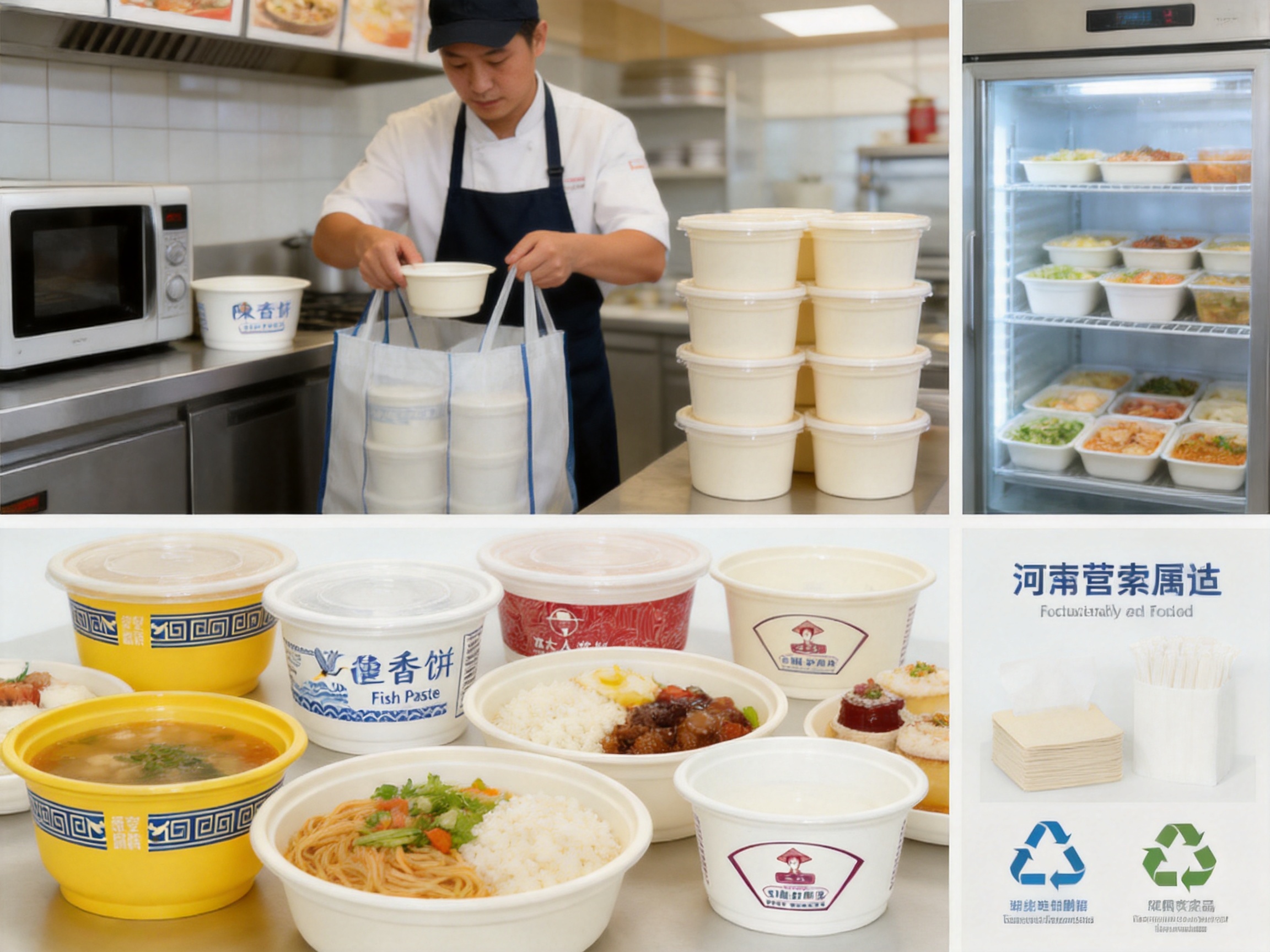
Reliable food packaging is an essential part of successful takeaway, delivery, catering, and prepared-food operations. A container must protect food, preserve presentation, support safe handling, withstand temperature changes, and remain economical at large production volumes. The plastic takeaway bowl and box container described in this article is designed to meet these practical requirements through a combination of functional construction, food-contact materials, flexible capacity options, secure lid compatibility, and controlled manufacturing.
Available in a broad range of sizes from 360 ml to 1,750 ml, this container series is suitable for many food-service applications. Smaller models can be used for side dishes, desserts, sauces, rice, fruit, and individual portions, while larger models are suitable for noodles, soups, salads, complete meals, family portions, and catering orders. The design supports both refrigerated storage and microwave heating within a stated working temperature range of -10°C to 120°C, giving food operators more flexibility from preparation through delivery and final consumption.
Unlike packaging designed for only one stage of the food-service process, these containers are developed for a complete usage cycle. They can be filled, covered, transported, stored, reheated when appropriate, and served with minimal handling. Their toughness helps reduce deformation during ordinary use, while their stackable structure helps restaurants, wholesalers, food factories, and catering companies conserve storage space.
Why Disposable Takeaway Containers Matter in Modern Catering
The growth of takeaway meals, online ordering, food delivery, convenience meals, and institutional catering has increased the need for packaging that is both efficient and dependable. Food packaging is no longer simply a protective shell. It is part of the customer experience, the restaurant’s operating system, and the brand’s presentation.
A well-designed takeaway container helps maintain food quality during transportation. It can reduce accidental spills, prevent unnecessary exposure to dust and handling, support portion control, and make meals easier to carry. For the operator, a standardized container can simplify purchasing, filling, stacking, dispatch, and inventory management. For the customer, it can make opening, reheating, serving, and disposal more convenient.
Plastic remains widely used for takeaway bowls and food boxes because it offers a practical balance of low weight, strength, moldability, cost efficiency, and design flexibility. Compared with heavier packaging materials, plastic containers can reduce the burden of carrying large orders. Compared with some paper-based formats, suitable plastic structures can provide stronger resistance to moisture, sauces, oils, and food-contact conditions. The right material and production controls are essential, however, because food packaging must be manufactured consistently and handled according to applicable food-contact requirements.
The product range discussed here is intended to address these needs with a selection of bowl and box formats. The available models vary in volume, mouth diameter, height, bottom diameter, and grammage. This allows buyers to select packaging according to meal size, food type, filling equipment, storage requirements, and the desired appearance of the finished order.
Core Product Advantages
Wide Operating Temperature Range
The containers are designed for use from -10°C to 120°C, subject to the suitability of the specific model, lid, food, and operating conditions. This range supports common food-service situations such as refrigerated storage, chilled preparation, and microwave heating. The ability to move between different temperature environments can reduce the need for multiple packaging formats and simplify kitchen workflows.
For refrigerated applications, the container can hold prepared food before dispatch or consumption. This is useful for salads, cold dishes, fruit portions, desserts, meal kits, and ready-to-eat products. For reheating, the microwaveable design can provide convenience when the container and its lid are used according to appropriate instructions. In practical use, operators should always verify microwave compatibility for the exact container-lid combination, remove or loosen lids when required, and avoid using packaging in conventional ovens, grills, or other equipment outside the stated conditions.
Good Toughness and Resistance to Deformation
Takeaway packaging is exposed to pressure at many points in the supply chain. Containers may be stacked in a kitchen, placed inside delivery bags, handled by drivers, loaded into cartons, and carried by consumers. Poorly formed packaging can collapse, crack, distort, or lose its lid fit. A tough container helps preserve the shape of the package and supports a more professional presentation when it reaches the customer.
The product’s high-quality plastic construction is intended to provide durability without adding unnecessary weight. This balance is important for commercial users because excessive material can increase cost and shipping weight, while insufficient material can result in poor rigidity. Consistent wall formation, stable bottom geometry, and controlled molding parameters help create packaging that is practical for daily use.
Convenient Lift-and-Cover Design
The lid design is developed to make covering and lifting easier. A practical lid must engage with the container securely while remaining manageable for production workers and consumers. The easy-lift structure can assist with opening, carrying, pouring, and serving. At the same time, a suitable fit helps support containment during normal transport.
For restaurants and food factories, closure efficiency directly affects productivity. A lid that is difficult to align or press into place can slow down packing and increase labor requirements. A lid that fits too loosely can cause leakage, contamination risk, and customer dissatisfaction. The container series is intended to provide an efficient balance between secure closure and ease of use.
Stackable Construction
Storage space is a major operating cost in food-service environments. Kitchens, warehouses, distribution centers, and delivery preparation areas often have limited room. Stackable containers help operators organize inventory vertically and reduce the amount of shelf or counter space required.
Stackability also supports transport efficiency. Empty containers can be packed into cartons in a more orderly way, while filled containers can be arranged for delivery with less movement. Proper stacking can help reduce tipping, improve order organization, and make stock counting easier. The geometry of the bowl and box formats is therefore relevant not only to appearance but also to logistics and daily workflow.
Multiple Capacities for Different Food Portions
The series provides capacities from 360 ml to 1,750 ml. This range allows food businesses to standardize packaging across several product categories without relying on a single oversized or undersized format. Portion-specific packaging can improve presentation and help prevent excessive empty space around the food.
Small containers are suitable for individual portions, toppings, side dishes, desserts, and snacks. Medium capacities can accommodate rice meals, pasta, noodles, salads, soups, and mixed dishes. Larger formats are suitable for family meals, bulk portions, catering, party food, and foods that require additional room for mixing or topping. Buyers can select the capacity and dimensions that best match their menu and filling process.
Product Specifications and Available Models
The product family is divided into M-series and P-series models. The M-series includes capacities from 360 ml to 1,100 ml, while the P-series includes capacities from 500 ml to 1,750 ml. Differences in mouth diameter, height, bottom diameter, and grammage give buyers additional options when matching the package to a particular food application.
| Specification | Volume | Mouth Diameter | Height | Bottom Diameter | Grammage |
|---|---|---|---|---|---|
| M-360 | 360 ml | 120 mm | 52 mm | 75 mm | 9/10 g |
| M-400 | 400 ml | 120 mm | 58 mm | 78 mm | 10 g |
| M-500 | 500 ml | 120 mm | 70 mm | 73 mm | 10/13 g |
| M-700 | 700 ml | 142 mm | 69 mm | 91 mm | 13 g |
| M-850 | 850 ml | 142 mm | 81 mm | 91 mm | 16 g |
| M-999 | 999 ml | 142 mm | 95 mm | 95 mm | 19 g |
| M-1100 | 1,100 ml | 179 mm | 82 mm | 120 mm | 21/26 g |
The M-series provides a balanced selection for common takeaway portions. The M-360 and M-400 models can be used when compact packaging is preferred. The M-500 is suitable for a standard individual meal or side dish. The M-700, M-850, and M-999 models provide progressively greater capacity for larger meals, while the M-1100 offers a wide opening for foods that require additional filling space or easier access.
| Specification | Volume | Mouth Diameter | Height | Bottom Diameter | Grammage |
|---|---|---|---|---|---|
| P-500 | 500 ml | 120 mm | 72 mm | 85 mm | 11 g |
| P-600 | 600 ml | 150 mm | 57 mm | 124 mm | 15 g |
| P-800 | 800 ml | 150 mm | 79 mm | 118 mm | 18 g |
| P-1000 | 1,000 ml | 150 mm | 98 mm | 118 mm | 23 g |
| P-1250 | 1,250 ml | 179 mm | 79.5 mm | 145 mm | 28/35 g |
| P-1500A | 1,500 ml | 179 mm | 98 mm | 128 mm | 30/35 g |
| P-1750 | 1,750 ml | 179 mm | 118 mm | 128 mm | 39 g |
The P-series is suited to applications requiring a wider mouth, larger base, or greater overall volume. The P-600, P-800, and P-1000 models can support medium and large individual meals. The P-1250, P-1500A, and P-1750 formats are appropriate for family portions, catering orders, large salads, shared dishes, and food products that benefit from a broad opening.
Specifications should be confirmed before ordering because dimensions, grammage, lid compatibility, material selection, and production tolerances may vary according to the selected model and customization requirements. Buyers should also conduct product testing with their actual food, filling temperature, storage conditions, delivery method, and reheating equipment.
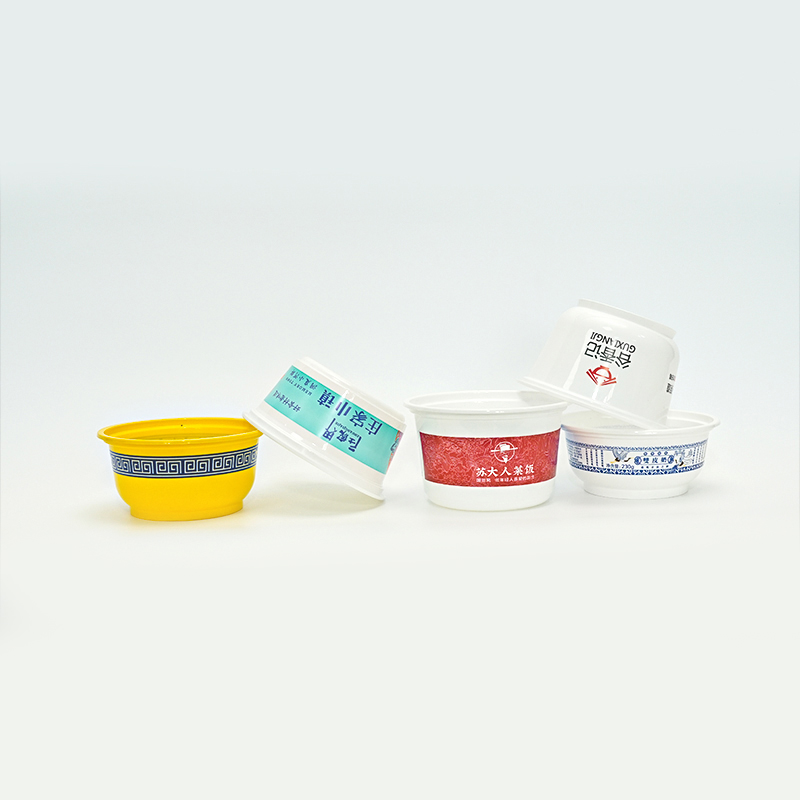
Plastic Takeaway bowl/box container
Food-Grade Material Selection
Material selection is a central factor in disposable food packaging. The container must maintain its structural properties during contact with food and under the intended temperature conditions. It should also resist ordinary moisture, oils, sauces, and handling stresses without introducing undesirable effects into the food.
Plastic takeaway containers commonly use food-grade polypropylene or polyethylene, depending on the intended performance and product structure. Polypropylene is often selected for applications that require useful heat resistance, toughness, and suitability for microwave-related food service. Polyethylene may be selected for other packaging requirements where flexibility, impact resistance, or specific processing characteristics are important. The exact resin and formulation should be confirmed for the selected product and intended market.
High-quality food-contact materials can help protect the original flavor and nutritional characteristics of food by reducing unwanted interaction between the packaging and its contents. Material quality alone is not enough; the entire production system must control contamination, storage, handling, and processing conditions. This is why a professional manufacturer requires controlled raw-material procurement, production monitoring, and finished-product inspection.
The company also describes research and development involving environmentally friendly materials, including biodegradable plastics. The use of alternative materials should be evaluated according to the required application, local regulations, composting or recycling infrastructure, mechanical performance, shelf life, and customer expectations. Sustainable packaging is most effective when the material choice is matched to a realistic end-of-life system.
Advanced Manufacturing Process
Product Development and Mold Engineering
Manufacturing begins with product design and mold development. The geometry of a takeaway bowl or box affects capacity, stability, lid fit, stackability, material distribution, appearance, and production efficiency. A professional design team can assess these factors before mass production and adjust the container according to the customer’s filling process and brand requirements.
Mold engineering is especially important for containers with multiple capacities. Each size must maintain a consistent shape and reliable dimensional relationship with its matching lid. The mouth, rim, side wall, bottom, and stacking features require careful design so the container can be produced repeatedly and used efficiently.
Advanced mold design can also help reduce unnecessary material use. By distributing material where strength is most needed, the manufacturer can seek a practical relationship between light weight and rigidity. The result is not merely a lower-weight package; it is a package designed for the actual stresses encountered during filling, stacking, transportation, and consumption.
Controlled Plastic Processing
Plastic forming requires stable control of temperature, pressure, timing, cooling, and material flow. Variations in these parameters can affect wall thickness, transparency, stiffness, surface finish, and dimensional accuracy. Consistent processing is therefore essential for containers that must fit standardized lids and stack correctly.
Modern production lines use controlled equipment and documented operating procedures to reduce variation between batches. Operators and quality personnel monitor the process and make adjustments when necessary. Proper cooling and forming conditions help the finished container retain its intended shape, especially around the rim and bottom where dimensional stability is important.
For commercial buyers, process stability provides several benefits. Containers from different production batches are more likely to perform consistently, filling operations can run with fewer interruptions, and lid matching is easier to maintain. Consistency also improves the appearance of packaged food and supports the customer’s confidence in the product.
Quality Control from Raw Materials to Finished Goods
A strong quality system covers every stage of production. Raw materials should be checked before entering the manufacturing process. Production parameters should be monitored during forming. Finished containers should be inspected for appearance, dimensions, weight, deformation, contamination, and other characteristics relevant to the agreed specification.
Quality control may include visual inspection, dimensional measurement, weight verification, stacking evaluation, lid-fit testing, leakage checks, and temperature-related performance testing. The exact inspection program should reflect the product design and customer requirements. For high-volume orders, batch records and traceability procedures can support more effective investigation if a quality issue occurs.
The manufacturer reports passing the QS national industrial product production license, ISO 9001 quality management system certification, BRC certification, German DIN safety certification, and EU RoHS+ testing. These credentials and tests demonstrate a commitment to structured management, product safety, and compliance-oriented production. Buyers should request current documentation and verify the applicability of each certification to the specific product, material, facility, and destination market.
Clean and Organized Production Management
Food packaging production requires attention to cleanliness and operational discipline. The manufacturing environment, equipment, storage areas, and packaging procedures must be managed to reduce contamination risks. Personnel training, material identification, production scheduling, and finished-goods handling all contribute to product reliability.
A manufacturer with an established quality management system can create written procedures for production, inspection, corrective action, customer communication, and continuous improvement. This structured approach is particularly valuable for overseas buyers, restaurant chains, distributors, and food manufacturers that require predictable quality over repeated orders.
Customization and Design Services
Disposable packaging can be a valuable branding tool. When a container carries a clear logo, color scheme, or printed message, it can help create a consistent identity across takeaway orders. Packaging is often seen by the customer before the food is opened and remains visible during transport, at work, at home, or at social events.
Capacity and Caliber Customization
Although standard sizes offer efficient purchasing and faster production, some food brands require a particular capacity or mouth diameter. The manufacturer can discuss adjustments according to the customer’s food portion, filling line, lid requirements, and storage system. A customized opening may make it easier to fill thick sauces, noodles, salads, or products containing large pieces of food.
Capacity customization should be considered together with wall strength, stacking, transport, and cost. Increasing volume may change the center of gravity and require a different bottom structure. A wider opening may improve access but require a matching lid and revised carton configuration. Professional design support helps ensure that customization produces a usable package rather than an isolated dimensional change.
Color and Shape Options
Color can be adjusted to support a brand’s visual identity or distinguish different menu categories. For example, a food-service operator may use different colors for vegetarian meals, spicy products, desserts, children’s portions, or premium lines. Color consistency is important, especially when a brand uses packaging across several locations.
Shape customization can influence product recognition and functionality. A rounded bowl may be suitable for soups and mixed dishes, while a box-style form may be preferred for rice meals, noodles, or compact stacking. The shape should always be evaluated for filling efficiency, food presentation, lid closure, storage, and transportation.
Logo and Information Printing
Advanced printing technology can place logos, product information, promotional messages, or handling instructions on the packaging. Clear and durable printing improves visual presentation and can help communicate important information to the customer.
Before printing, customers should prepare suitable artwork files, confirm colors, define the printing area, and review a production sample or proof. The print design must account for the container’s curves, rim, lid, and stacking arrangement. A well-positioned logo can remain visible without interfering with food visibility or required labeling information.
OEM and Personalized Solutions
As an OEM manufacturer, the company can support customers that need packaging developed for their own brand or distribution program. OEM cooperation may include product selection, mold discussion, material confirmation, color matching, logo printing, packaging cartons, quality requirements, and shipment planning.
Personalized service is particularly useful for restaurant chains, private-label food producers, wholesalers, supermarket suppliers, meal-preparation companies, and catering organizations. Instead of selecting a package that only partially fits the operation, the buyer can work with the manufacturer to define a more suitable specification.
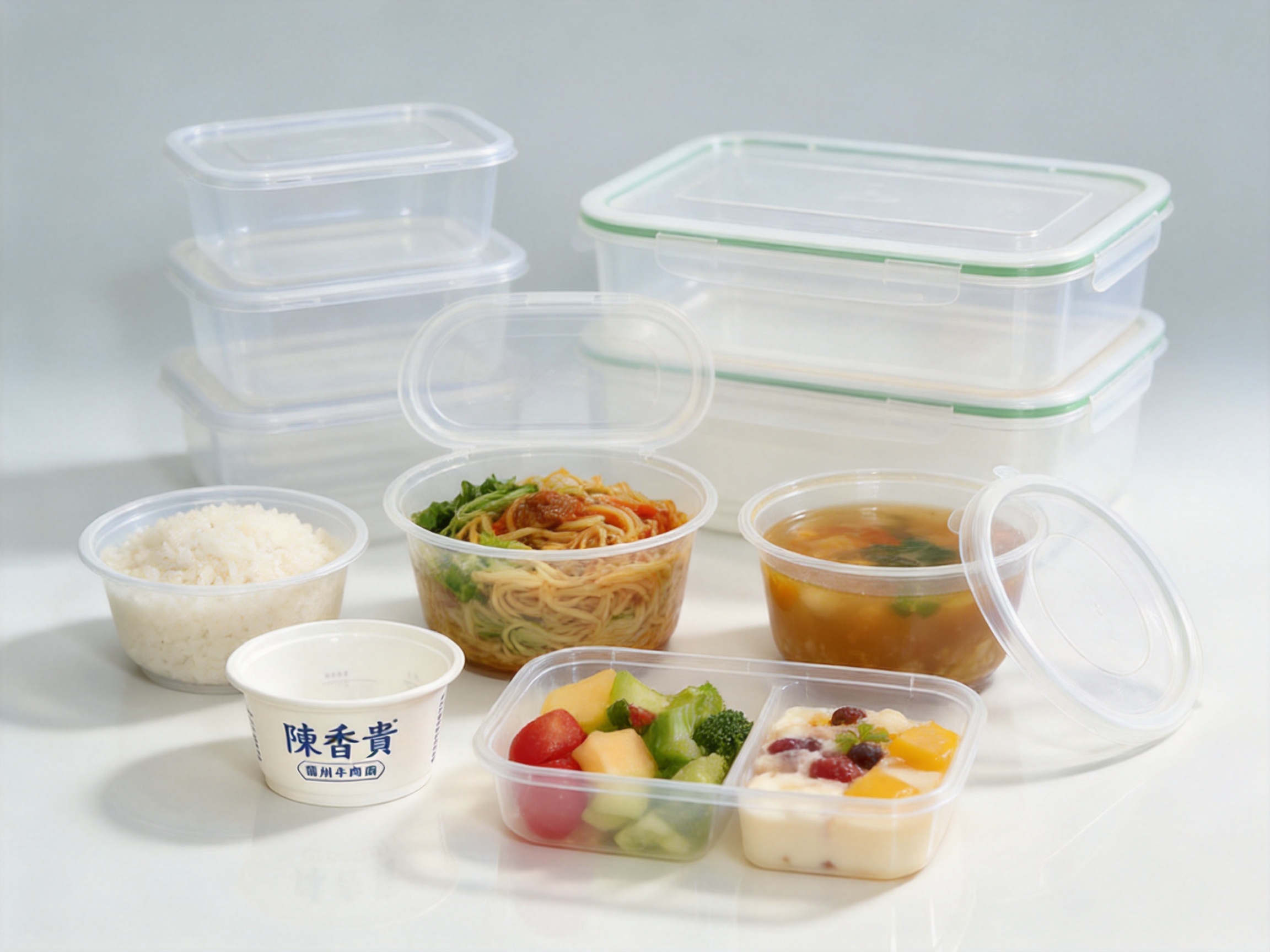
Advantages Compared with Competing Packaging Formats
Compared with Lightweight but Fragile Containers
Some low-cost containers are produced with minimal material and may lose their shape under pressure or when filled with hot food. Deformation can affect the lid fit and make the package appear unattractive. A container with better toughness and controlled structure can offer more dependable performance during normal handling.
The objective is not simply to make the container heavier. Excessive weight may increase shipping costs and material consumption. A better approach is to use appropriate geometry, processing control, and material distribution to achieve useful rigidity at a commercially reasonable weight.
Compared with Non-Stackable Packaging
Packaging that cannot stack efficiently consumes more storage space and may be more difficult to organize during dispatch. Stackable takeaway bowls and boxes can improve inventory management and help kitchens prepare larger numbers of orders in a limited area.
For distributors, stackability can also support more efficient carton packing. For restaurants, it can simplify shelf arrangement. For delivery operations, stable stacking can reduce movement and help maintain order separation.
Compared with Single-Temperature Packaging
Some food containers are designed only for cold foods or only for moderate-temperature service. A container capable of supporting both refrigeration and microwave-related use provides greater operational flexibility. It can be used for food that is prepared in advance, stored under refrigeration, and later reheated according to the applicable instructions.
This flexibility may reduce the number of packaging types a business needs to purchase. Standardization can simplify stock control, staff training, and procurement. Nevertheless, the exact use should always be confirmed for each model, lid, food, and heating method.
Compared with Generic Unbranded Packaging
Generic packaging can meet basic containment needs but may provide little opportunity for brand differentiation. Custom color, shape, capacity, and printing allow a food company to create packaging that is more closely aligned with its menu and marketing strategy.
Customized packaging can also improve internal organization. Different sizes can be assigned to specific menu items, helping staff identify the correct container quickly. Printed information may support portion identification, reheating guidance, or promotional campaigns.
Environmental and Resource-Efficiency Considerations
Environmental performance should be considered across the complete packaging life cycle. Important factors include material selection, production energy, product weight, transport efficiency, food waste prevention, reuse limitations, and end-of-life management. A container that protects food effectively may help reduce food waste, but its environmental value also depends on responsible disposal and appropriate material recovery systems.
The company states that it actively responds to environmental concerns through research into green production and environmentally friendly plastic takeaway products. It also describes the development and use of biodegradable materials. These efforts can support customers that are seeking alternatives to conventional packaging, provided the selected material meets the required mechanical, thermal, food-contact, and regulatory conditions.
Resource efficiency can also be improved through optimized production processes. Better material utilization, reduced production waste, efficient mold design, and stable manufacturing can lower the amount of rejected product. Lightweight but functional designs may reduce transportation emissions because more units can be shipped at a similar weight or volume.
Customers should distinguish between biodegradable, compostable, recyclable, and reusable claims. These terms describe different environmental pathways and may be subject to different legal definitions. Before selecting a sustainable material, buyers should identify the collection and treatment infrastructure available in their target market. Clear disposal instructions can help prevent contamination of recycling streams and improve the actual environmental outcome.
Food safety remains the first requirement. An environmentally preferred material is not suitable if it cannot safely contain the intended food or tolerate the required temperature. The best solution is one that combines safety, functional performance, appropriate production quality, and a realistic end-of-life plan.
Applications Across Food-Service Industries
Restaurant Chains
Restaurant groups need consistent packaging across multiple branches. A standardized container series can support uniform portion presentation, simplify purchasing, and reduce the number of packaging items in stock. Custom printing can reinforce the identity of the chain, while multiple capacities can accommodate different menu categories.
The containers can be used for rice dishes, noodles, pasta, curries, soups, salads, side dishes, and desserts. Restaurants can select a model according to the food’s volume, moisture level, serving temperature, and required lid configuration.
Takeaway and Delivery Kitchens
Delivery kitchens depend on packaging that can be closed quickly and transported safely. The lift-and-cover design can assist workers during busy order periods. Stackable containers can help organize multiple orders, and strong construction can reduce the likelihood of deformation in delivery bags.
For delivery businesses, testing should include realistic transport conditions. Operators can evaluate whether the selected container remains stable when placed beside other packages, whether the lid remains secure during movement, and whether the food maintains its expected presentation after the delivery period.
Meal Preparation and Ready-to-Eat Foods
Meal-preparation companies often require containers that support portion control and refrigerated storage. The broad capacity range allows different meal sizes to be packaged in a consistent format. If reheating is part of the customer experience, microwave compatibility may offer additional convenience.
Meal-preparation operators should confirm the required shelf-life conditions, stacking load, labeling area, and compatibility with sealing or labeling equipment. A container selected for chilled meals may have different requirements from one used for hot meals dispatched immediately after cooking.
Catering and Large Events
Catering operations and large events require fast packing, reliable transportation, and easy distribution. Larger P-series models can be used for shared dishes, family portions, salads, noodles, desserts, and other foods served to groups. The lightweight structure can help staff carry large quantities without the burden of heavy packaging.
For events, color customization may help distinguish menu categories or service stations. Printed logos can provide sponsorship visibility or reinforce the identity of the catering provider. Stackable empty containers can also reduce the amount of space required before service begins.
Family Gatherings and Household Use
Consumers increasingly purchase prepared foods for family meals, celebrations, and informal gatherings. Larger takeaway containers can help preserve food during transport and simplify storage after the meal. Smaller sizes can hold side dishes, snacks, sauces, and desserts.
The easy-lift lid structure supports convenient carrying and opening. When used appropriately, the container can also be placed in a refrigerator or used for microwave heating, giving households more flexibility in managing leftovers and prepared meals.
Food Manufacturing and Wholesale Distribution
Food manufacturers and wholesalers may use the containers for prepared meals, chilled foods, deli products, salads, and bulk portions. Consistent dimensions support automated or semi-automated filling systems, while clear specifications help with carton planning and distribution.
Bulk buyers can discuss customized packaging quantities, private-label printing, carton marks, quality standards, inspection procedures, and shipment schedules. A long-term supply relationship can make it easier to maintain consistent materials, colors, dimensions, and print quality across repeated orders.
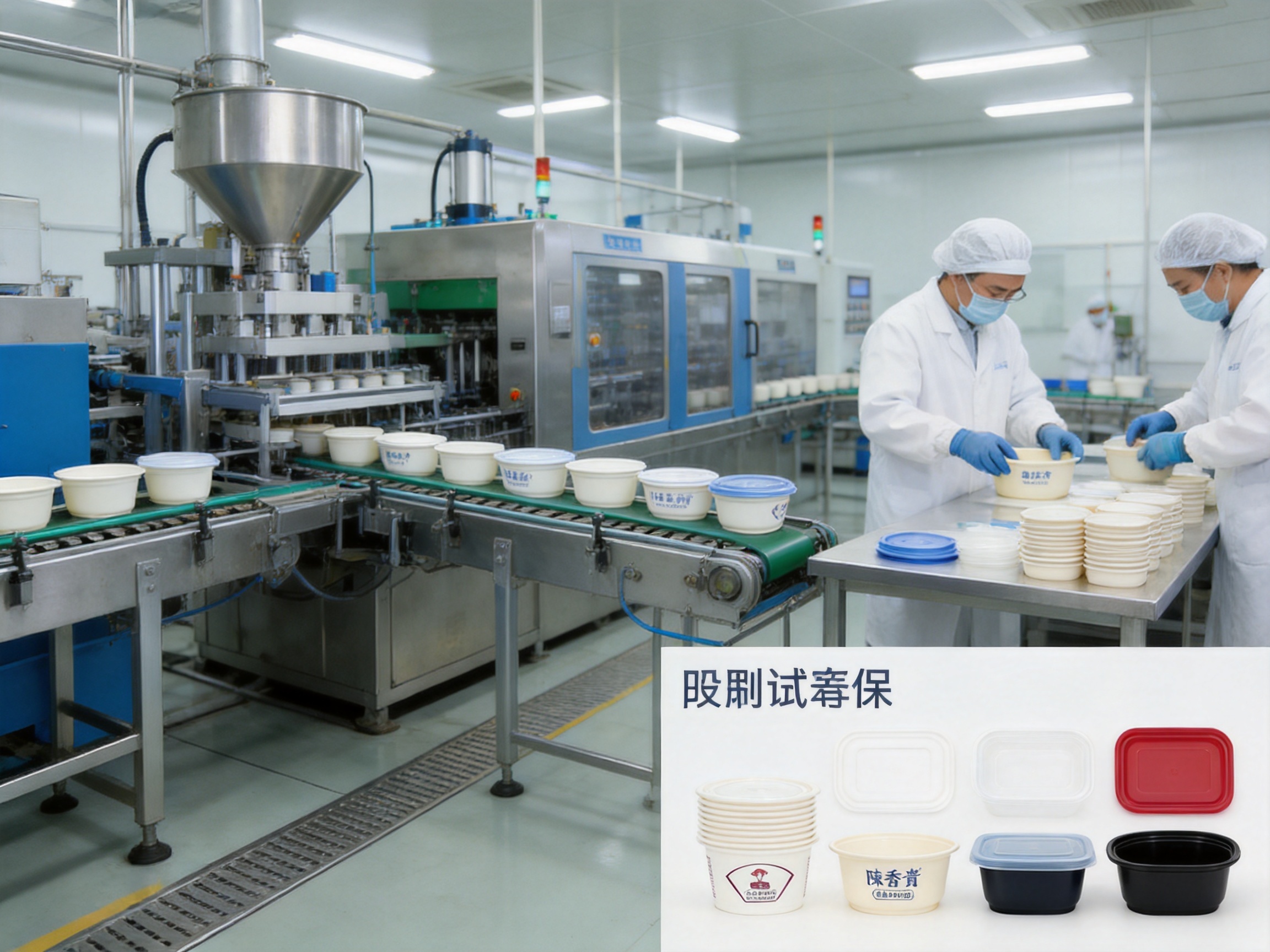
How to Select the Correct Container
Evaluate Food Volume
The first selection factor is the actual portion volume. Buyers should avoid filling containers completely to the rim because food may expand, move during transport, or require room for toppings and mixing. A container with suitable headspace can provide a better appearance and reduce the risk of contact with the lid.
Small portions may be matched with the 360 ml, 400 ml, or 500 ml models. Medium meals may require 600 ml to 1,000 ml. Larger meals, family portions, and catering products may be better suited to 1,100 ml through 1,750 ml. The best choice depends on the food density and presentation, not volume alone.
Consider Food Type
Liquid foods require a secure lid and a stable base. Foods with sauces may need a wider opening for filling and eating. Salads and mixed dishes may benefit from extra headspace. Dry or solid foods may be packed efficiently in a box-style format. Thick foods, noodles, and products containing large pieces may be easier to fill into a wider-mouth container.
Buyers should test the container with the actual food recipe. Different oils, sauces, spices, and temperatures can affect packaging performance. A product that works well for a dry rice dish may not be the best choice for hot soup or a highly oily meal.
Review Temperature Requirements
Confirm whether the product will be used for hot filling, refrigeration, microwave heating, or a combination of these conditions. The stated range is -10°C to 120°C, but the exact usage should be evaluated with the selected model and lid. Heating instructions must be communicated clearly to consumers where necessary.
Testing should consider the duration of exposure, the amount of food, whether the lid is vented or loosened, and the type of microwave equipment used. Packaging should not be used in applications that exceed its approved conditions.
Check Lid and Sealing Requirements
A container and lid should be treated as a complete system. Confirm the matching lid, closure method, stacking behavior, and resistance to leakage. If the food will be transported over long distances or in a tilted position, more extensive testing may be appropriate.
Restaurants should train staff to close the package correctly. Even a well-designed lid can fail if it is misaligned, incompletely pressed, or paired with the wrong container size.
Plan Storage and Logistics
Measure available shelves, cartons, delivery bags, and storage racks before finalizing the model. The mouth and bottom dimensions affect how many containers can fit in a carton and how filled packages can be arranged. Stackability can provide important savings, but the actual stacking height and load should be tested under operating conditions.
Order Development and Quality Assurance
A successful packaging project begins with a clear specification. The buyer should provide the intended food type, portion size, temperature range, filling method, lid preference, printing requirements, quantity, destination market, and expected delivery schedule. This information allows the manufacturer to recommend a suitable model or develop a customized solution.
Samples should be evaluated before mass production. Testing may include dimensional checks, lid closure, food filling, leakage, stacking, transportation simulation, refrigeration, microwave heating, and visual inspection. If printing is required, the buyer should approve artwork and color samples before production begins.
For repeat orders, both parties should maintain an agreed specification covering material, color, dimensions, grammage, printing, packaging method, and inspection criteria. This helps prevent unexpected changes and makes future purchasing more predictable.
Quality assurance is especially important for international supply. Export packaging should protect products during loading, sea or air transport, unloading, and warehouse storage. Carton labeling and documentation should be prepared according to the buyer’s logistics requirements.
Manufacturer Strengths and Production Capability
Yuqian Packaging Technology (Jiangsu) Co., Ltd. was established in 2010 and is located in Taizhou City, Jiangsu Province, China. The company operates a plant area of approximately 30,000 square meters and focuses on the research and development, production, and sales of new food packaging materials and products.
The company’s experience in plastic food packaging supports its ability to serve different customer types, from food-service operators to distributors and private-label buyers. Its stated capabilities include product development, customized design, advanced printing, material research, production management, and quality control.
A professional design team can help customers transform a general packaging requirement into a practical product specification. This is valuable when a customer needs a particular capacity, mouth diameter, shape, color, print position, or stacking arrangement. The design process can also identify potential production or logistics issues before tooling and mass production.
The company’s reported certifications and testing credentials include QS national industrial product production licensing, ISO 9001 quality management system certification, BRC certification, German DIN safety certification, and EU RoHS+ testing. These credentials indicate that the company has invested in formal management and compliance systems. Current certificates and their scope should be confirmed during the purchasing process.
The company also established a Shanghai branch in January 2019 to improve service quality and expand business channels. Combined with its production base in Jiangsu, this structure may support customer communication, commercial development, and coordination of packaging projects.
Brand Presentation Through Packaging
Packaging is a physical point of contact between a food business and its customer. A clean, well-proportioned container can make the food appear more professional and organized. Custom printing can transform a standard container into a recognizable part of the brand experience.
Branding should be consistent across the container, lid, outer carton, delivery bag, and menu materials. The design should remain clear at the size available on the package. Simple logos, strong contrast, and carefully selected colors often produce better results than overly complex artwork.
Printed packaging can also provide useful information. Operators may include product names, storage instructions, reheating guidance, allergen reminders, promotional messages, or recycling information where appropriate. Any required legal labeling should be reviewed according to the destination market’s regulations.
Recommended Best Practices for Commercial Use
Store empty containers in a clean, dry area away from chemicals, strong odors, direct sunlight, and sources of contamination. Keep cartons closed until the containers are needed. Use stock rotation procedures so older inventory is consumed first.
Train employees to select the correct container and matching lid. Staff should inspect containers for visible damage before filling. Containers with cracks, distortion, contamination, or incorrect lids should not be used.
Do not overfill the container. Leave enough space for the lid, food movement, expansion, and presentation. Close the lid evenly and check the rim after sealing. For liquid or sauce-heavy products, conduct a tilt and transport test before introducing the package into regular service.
Communicate microwave and refrigeration instructions clearly. Consumers should know whether the lid must be loosened or removed during reheating. Packaging should not be placed in equipment or conditions beyond the specified temperature range.
Review customer feedback regularly. Complaints about leakage, deformation, difficult opening, poor printing, or inadequate capacity can reveal opportunities to adjust the model or process. Continuous improvement is more effective when feedback is connected to a specific batch, food type, transport condition, and usage pattern.
Q&A: Plastic Takeaway Bowl and Box Containers
What is the available capacity range?
The listed product range extends from 360 ml to 1,750 ml. It includes M-series and P-series models with different mouth diameters, heights, bottom diameters, and grammage values.
Can these containers be refrigerated?
They are designed for use within a stated temperature range beginning at -10°C, which supports refrigerated storage when the selected model and food application are suitable. Buyers should confirm the exact specification and test the container with their intended food.
Can the containers be heated in a microwave?
The product information states that the containers are microwaveable and suitable for temperatures up to 120°C. Microwave use should follow the instructions for the exact container and lid combination. Conventional ovens, grills, and other high-temperature equipment should not be used unless specifically approved.
What materials are used?
Plastic takeaway containers commonly use food-grade polypropylene or polyethylene. The exact material should be confirmed for the selected model. The company also describes research and development involving environmentally friendly and biodegradable plastic materials.
Are the containers suitable for liquid foods?
They can be considered for soups, sauces, stews, and other liquid or semi-liquid foods when paired with a suitable lid and tested under actual transport conditions. Buyers should verify closure, leakage resistance, filling level, and stability before commercial use.
Are custom sizes available?
The company provides customization services for capacity and caliber, as well as adjustments to color, shape, and other design elements. Custom development should be reviewed for tooling, minimum order quantity, lead time, lid compatibility, and testing requirements.
Can a company print its logo on the container?
Yes. The company describes advanced printing technology for logos and other packaging information. Customers should provide artwork and approve print samples, colors, positioning, and production details before mass production.
Are the containers stackable?
Stackability is one of the stated product advantages. The exact stacking performance depends on the model, lid, filled weight, and storage conditions. Commercial users should conduct their own stacking and transport tests.
Which model is best for a standard individual meal?
There is no single best model for every meal. The M-500, M-700, M-850, P-600, P-800, and P-1000 models may be considered depending on portion size, food type, mouth diameter, and desired appearance. Sampling with the actual meal is recommended.
Which models are suitable for family portions or catering?
The larger M-1100, P-1250, P-1500A, and P-1750 models provide higher capacities and wider openings. They may be suitable for family meals, shared dishes, catering portions, and large salads, subject to testing and lid selection.
What certifications and tests are reported?
The company reports QS national industrial product production licensing, ISO 9001 quality management system certification, BRC certification, German DIN safety certification, and EU RoHS+ testing. Buyers should request current documentation and confirm its scope for the intended product and market.
How should buyers begin a customized project?
Buyers should provide the intended food, portion volume, temperature conditions, lid requirements, quantity, dimensions, color, printing artwork, destination market, and delivery schedule. The manufacturer can then recommend an existing model or discuss a customized design.
Conclusion
The plastic takeaway bowl and box container series offers a practical solution for restaurants, delivery kitchens, caterers, food manufacturers, wholesalers, and household users. Its key strengths include a broad capacity range, a stated operating temperature range of -10°C to 120°C, microwave and refrigeration suitability, good toughness, stackable construction, convenient lift-and-cover functionality, and options for customized design.
Compared with basic disposable packaging, the product is positioned as a more adaptable and professionally engineered solution. It can support multiple food categories, simplify storage, improve carrying convenience, and provide opportunities for branded presentation. The range of M-series and P-series sizes helps buyers match packaging more closely to portion volume and food style.
The manufacturer adds value through product design, mold development, controlled plastic processing, quality management, printing, OEM service, and research into environmentally friendly materials. Its reported certifications and testing programs further demonstrate an emphasis on structured production and compliance.
For the best result, buyers should select a model according to actual food volume, temperature, filling method, transportation conditions, lid requirements, and storage system. Sample testing and specification confirmation are essential before large-scale purchasing. When these steps are followed, the container can become more than a disposable package: it can serve as a reliable part of a food business’s quality, efficiency, logistics, and brand strategy.
References
1. Product specification information for M-series and P-series plastic takeaway bowl and box containers, supplied in the project materials.
2. ISO 9001, Quality Management Systems: Requirements.
3. BRC Global Standard for Packaging Materials, applicable edition and product scope.
4. General principles for food-contact material selection and manufacturing hygiene.
5. Technical guidance for microwave use, refrigerated storage, and temperature testing of plastic food containers.
6. German DIN standards and safety-related testing principles for packaging products, where applicable.
7. EU RoHS-related requirements and restricted-substance testing principles, where applicable.
8. Sustainable packaging principles covering material efficiency, biodegradable plastics, recycling systems, compostability, and end-of-life management.