English
 Español
 عربى
Content
- 1 1. Product Overview
- 2 2. The Integrated Design and Its Practical Advantages
- 3 3. Food-Grade PP Material and Environmental Characteristics
- 4 4. Why Injection Molding Is Suitable for This Product
- 5 5. Manufacturing Strengths of Yuqian Packaging Technology
- 6 6. Competitive Advantages Compared with Conventional Alternatives
- 7 7. Customization and OEM Development
- 8 8. Applications Across the Foodservice Industry
- 9 9. Quality Inspection Considerations
- 10 10. Ordering and Project Development Process
- 11 11. Storage, Handling, and Use Recommendations
- 12 12. Sustainability and Long-Term Packaging Strategy
- 13 13. Why Choose a Specialized Manufacturer
- 14 14. Frequently Asked Questions
- 14.1 What material is used for the one-piece cup lid?
- 14.2 What is the standard lid diameter?
- 14.3 How much does one lid weigh?
- 14.4 Can the color be customized?
- 14.5 Can the plug or drinking opening be customized?
- 14.6 Does the lid prevent leakage completely?
- 14.7 Is the lid suitable for straw use?
- 14.8 Is the lid stackable?
- 14.9 What surface finishes are available?
- 14.10 What types of beverages can use this lid?
- 14.11 Can the manufacturer provide customized packaging?
- 14.12 What certifications and quality credentials are associated with the manufacturer?
- 14.13 How should customers begin a customized project?
- 15 15. Conclusion
- 16 References
- 17 Product: PP plastic one-piece cup lid
In modern foodservice, beverage packaging must do more than simply cover a cup. A successful lid needs to protect the drink, support convenient consumption, prevent leakage, maintain product presentation, and satisfy increasingly demanding environmental and food-safety expectations. For cafés, takeaway beverage chains, restaurants, catering suppliers, convenience stores, and packaging distributors, the lid is an important part of the complete customer experience.
The PP plastic one-piece cup lid is designed to meet these requirements through a practical combination of secure sealing, integrated structure, convenient drinking access, material safety, stackability, and customization potential. Manufactured from food-grade polypropylene, this injection-molded lid is suitable for a wide range of cold beverages and takeaway applications. Its one-piece construction reduces the number of separate components while providing a clean, functional appearance that can be adapted to different brand and operational needs.
Yuqian Packaging Technology (Jiangsu) Co., Ltd. manufactures PP injection-molded cup lids for customers seeking dependable disposable food packaging and professional OEM support. With dedicated production capabilities, experience in food packaging materials, and an emphasis on quality management, the company can provide standardized products as well as customized solutions involving colors, plug designs, sealing performance, packaging, and product presentation.
This article examines the construction, benefits, applications, manufacturing process, quality considerations, environmental characteristics, customization options, and purchasing value of the PP plastic one-piece cup lid. It also explains why the product can provide advantages over conventional multi-piece lids and less specialized alternatives.
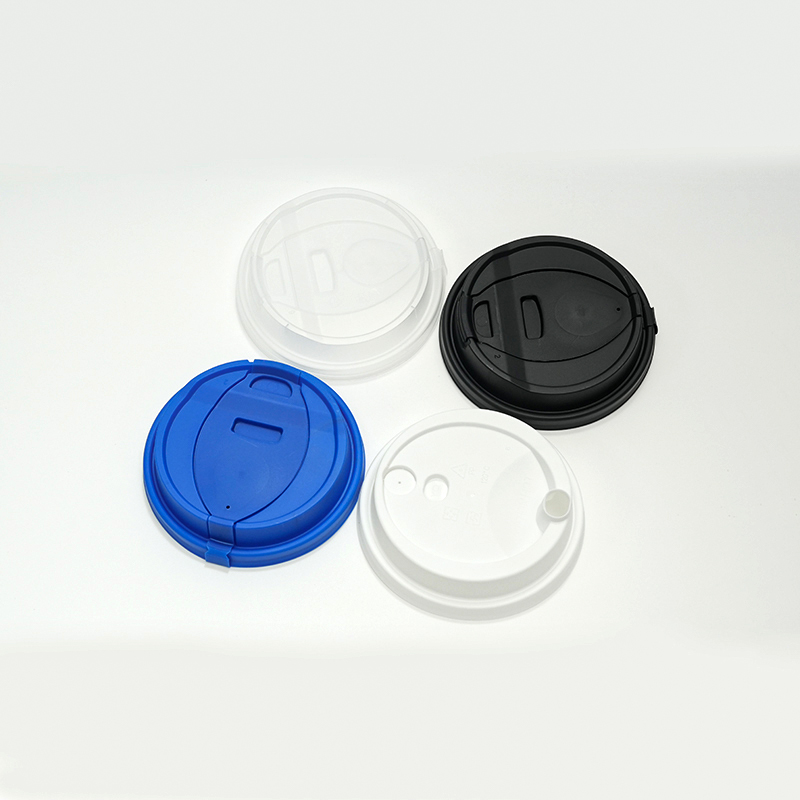
PP plastic one-piece cup lid
1. Product Overview
A PP plastic one-piece cup lid is an injection-molded lid manufactured as an integrated component. It is designed to fit a compatible beverage cup and create a practical barrier between the liquid inside the cup and the outside environment. The lid incorporates a drinking opening and a dual-purpose plug-hole design, allowing consumers to drink directly from the cup or use a straw according to the selected configuration.
The integrated design is one of the most important features of this product. Rather than relying on multiple loose pieces, the one-piece structure combines the main lid body and functional drinking area into one molded product. This reduces component complexity during production, packaging, transportation, and use. It also creates a neat visual appearance that is appropriate for cafés, beverage brands, catering businesses, and takeaway service providers.
The lid is produced from polypropylene, commonly known as PP. PP is widely used in food packaging because it offers a useful balance of light weight, chemical resistance, stiffness, toughness, and processability. When appropriate food-grade raw materials and controlled manufacturing conditions are used, PP can support safe contact with many beverage and food applications. It is also recyclable in suitable waste-management systems, helping packaging users move toward more responsible material choices.
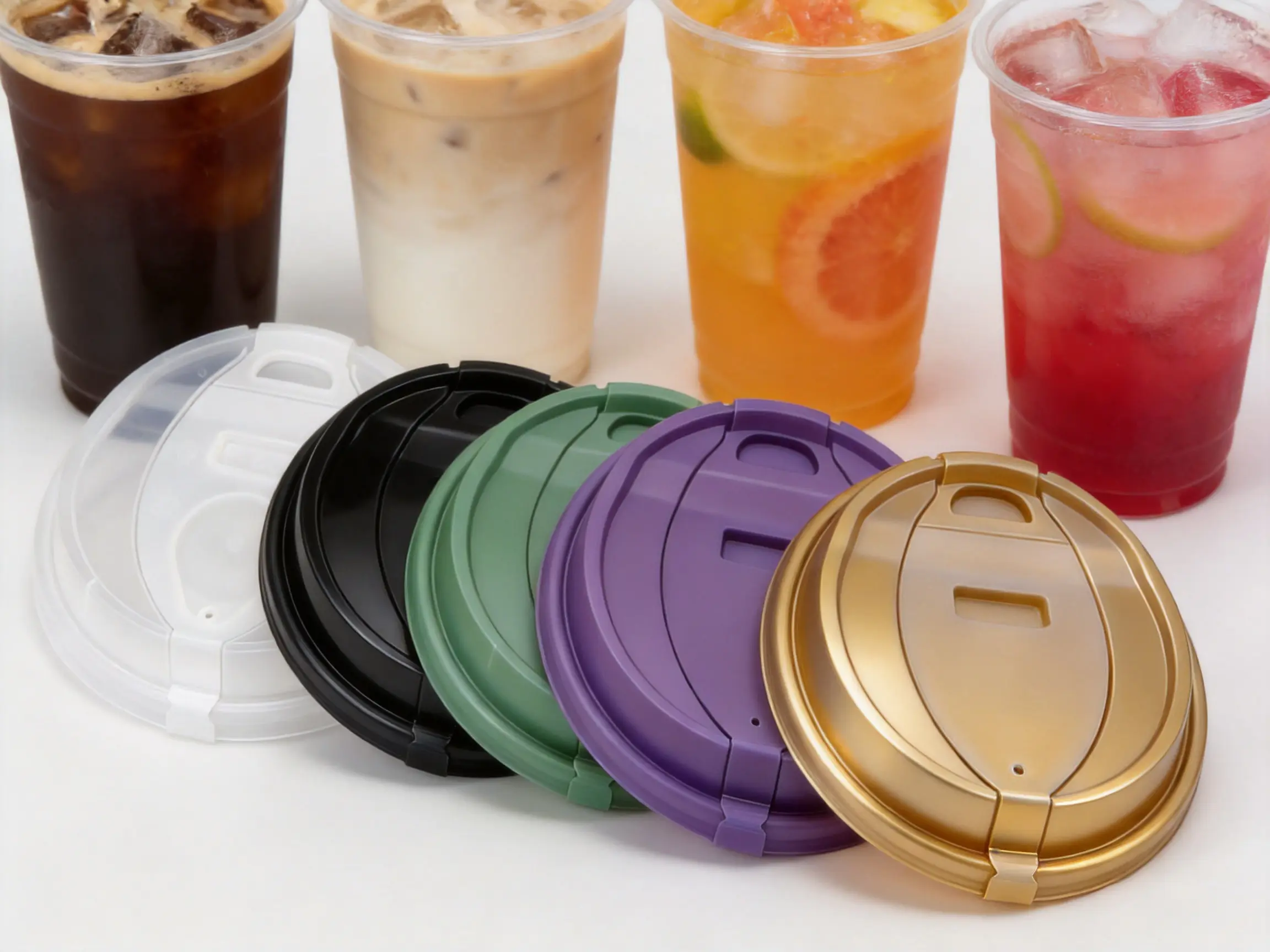
The standard product is available in a 90-millimeter caliber. Different surface finishes and color options are available, including glossy, frosted, transparent, white, black, green, purple, and gold versions depending on the lid type. The standard gram weight listed for the available models is approximately 5 grams. These specifications make the lid lightweight while maintaining the structural form required for daily takeaway use.
Standard Product Specifications
| Lid Type | Caliber | Approximate Weight | Available Colors |
|---|---|---|---|
| Glossy one-piece lid | 90 mm | 5 g | Transparent or white |
| Frosted one-piece lid | 90 mm | 5 g | White or transparent |
| Large-opening one-piece lid | 90 mm | 5 g | Transparent, white, black, green, purple, or gold |
The dimensions, weight, and colors shown above represent the supplied standard information. Final specifications should be confirmed against the selected cup body, beverage application, production requirements, and customer quality standards before mass production.
2. The Integrated Design and Its Practical Advantages
One of the main competitive advantages of the PP plastic one-piece cup lid is its integrated sealing structure. The lid is designed to fit tightly onto the cup body, helping reduce the possibility of splashing or leakage during carrying, storage, and delivery. A properly matched lid and cup combination can improve the perceived quality of a beverage and reduce the risk of customer dissatisfaction caused by spilled drinks.
In comparison with lids that require separate plugs, inserts, or additional accessories, an integrated lid can simplify handling. Staff members do not need to assemble several components before handing the beverage to a customer. This can be especially valuable during busy service periods, where speed, consistency, and ease of use are essential. Fewer separate components may also reduce the possibility of missing parts or incorrectly installed drinking accessories.
The one-piece structure also provides a cleaner appearance. A smooth, well-formed lid can make a beverage look more professional, particularly when paired with a printed cup, branded sleeve, or coordinated color scheme. The lid can function as part of the product’s visual identity instead of being treated as a purely utilitarian component.
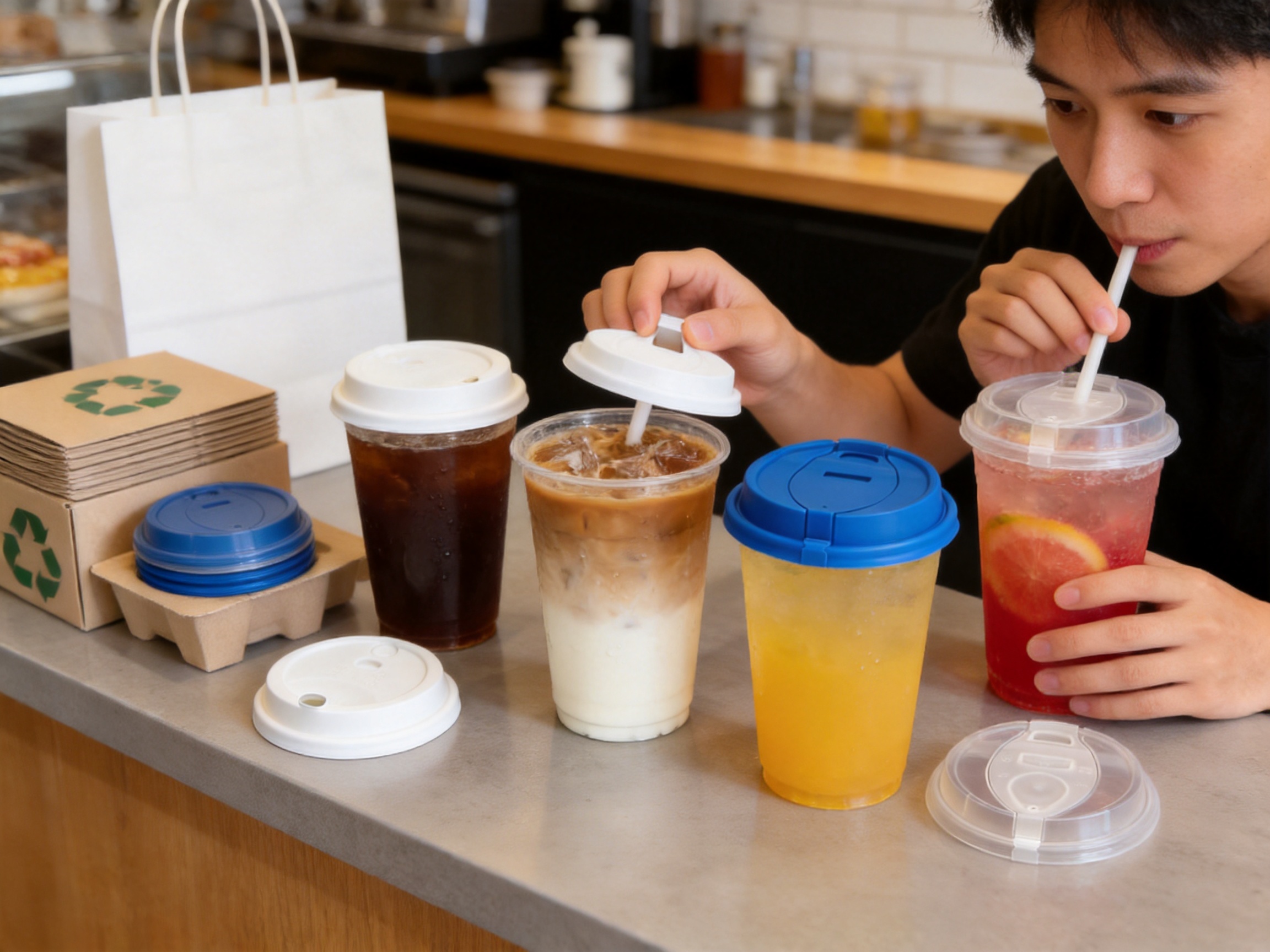
The dual-purpose plug hole provides additional flexibility. Depending on the beverage and service method, the consumer may drink directly through the opening or insert a suitable straw. This makes the lid appropriate for different consumption habits and beverage formats. It can support cafés serving iced coffee, milk tea, juice, soft drinks, smoothies, flavored water, and other takeaway beverages.
The plug is available in different colors and shapes. This allows brands and distributors to select a standard configuration or request a more personalized appearance. Color coordination can help distinguish beverage categories, identify different sizes or flavors, and reinforce a company’s packaging identity.
Improved Leak-Resistance
Leak prevention is a central performance requirement for any takeaway cup lid. A lid that does not maintain a stable fit may allow liquid to escape through the rim, drinking opening, or straw area. The PP plastic one-piece cup lid addresses this concern through a closely fitted structure and a design that can be customized according to the user’s requirements.
Leak-proof performance depends on several factors, including the cup’s outer diameter, rim profile, lid dimensions, molding accuracy, material behavior, beverage temperature, filling level, and transportation conditions. For this reason, the lid should always be tested together with the intended cup. Yuqian Packaging Technology can work with customers to adjust the sealing solution according to the actual application rather than treating every beverage package as identical.
For delivery services and takeaway businesses, reliable sealing can provide an important commercial benefit. It can help protect beverages during movement in bags, vehicles, and delivery boxes. It may also reduce cleaning problems caused by spills and improve customer confidence when carrying drinks from a store to an office, home, vehicle, or public location.
Convenient Drinking Experience
The opening arrangement is designed to make drinking more convenient. Consumers can drink directly from the lid without removing it, which is useful when commuting, walking, working, or traveling. The same lid can support straw use when customers prefer a different drinking method.
A convenient drinking opening should be easy to locate and comfortable to use. It should also be positioned in a way that supports the normal drinking angle of the cup. A well-designed opening can make the packaging feel more intuitive and reduce the need for customers to manipulate the lid before consumption.
The plug-hole design also helps retain a clean appearance when the cup is not being actively used. The appropriate configuration can provide a practical balance between access and protection, particularly for beverages that are carried over a period of time before drinking.
3. Food-Grade PP Material and Environmental Characteristics
Material selection directly affects the safety, durability, weight, and environmental profile of a cup lid. Polypropylene is a widely used thermoplastic polymer for food packaging applications. Its low density helps create lightweight products, while its mechanical properties support the production of thin but functional injection-molded components.
According to the supplied product information, food-grade PP raw materials are used for the one-piece lid. The material is described as non-toxic and odorless, making it suitable for packaging applications where contact with beverages is expected. Customers should select the appropriate material grade and confirm compliance with the regulations applicable in their intended market and application.
PP offers good chemical resistance against many common beverage ingredients. It can maintain useful performance when exposed to water-based drinks, soft drinks, juices, teas, and coffee beverages within suitable service conditions. Its resistance to moisture also helps the lid remain practical in environments where condensation and liquid contact are unavoidable.
Another important characteristic is recyclability. PP products can be collected and processed through appropriate recycling systems. The actual environmental benefit depends on local collection infrastructure, sorting practices, contamination levels, and recycling capacity. Nevertheless, choosing a recyclable material gives packaging users an opportunity to support more responsible material management compared with solutions that are difficult to recover.
The light weight of a 5-gram lid can also help reduce material consumption and transportation weight when compared with heavier alternatives. Lower package weight may contribute to more efficient logistics, although the final environmental impact should be evaluated across the entire product life cycle, including raw material production, molding, distribution, use, collection, and end-of-life treatment.
Responsible Packaging Beyond the Lid
Environmental performance is not limited to the product itself. Secondary packaging also affects the overall sustainability of a supply chain. Yuqian Packaging Technology provides packaging designs intended to attract consumers while supporting the use of recyclable or biodegradable packaging materials where suitable.
Protective packaging remains important because damaged products create waste and may cause delivery delays. Packaging should therefore provide a suitable balance between material reduction and product protection. Strong but efficient cartons, organized stacking, and appropriate internal protection can help reduce breakage, deformation, contamination, and unnecessary replacement shipments.
Customers seeking a complete sustainable packaging solution can discuss material selection, carton configuration, packing density, labeling, and recycling considerations with the manufacturer. A responsible approach should focus on realistic improvements that preserve product safety and transportation reliability.
4. Why Injection Molding Is Suitable for This Product
Injection molding is well suited to the production of cup lids because it can form complex details with a high level of repeatability. The process allows the manufacturer to create the lid body, sealing edge, drinking opening, plug area, surface finish, and other structural features in a controlled mold cavity.
During production, PP resin is prepared and fed into an injection molding machine. The material is heated until it reaches a flowable state and is then injected into a precisely engineered mold. After the cavity is filled, the material is cooled and solidified. The molded lid is then ejected, inspected, and transferred for packing or further quality-control operations.
Accurate mold design is essential. The mold must account for material flow, cooling behavior, shrinkage, wall thickness, opening geometry, parting lines, ejection, and dimensional stability. Small variations in the sealing edge or diameter can influence the fit between the lid and the cup. Professional tooling and process control are therefore important competitive factors.
Injection molding also supports efficient large-volume production. Once the mold and process parameters have been validated, the manufacturer can produce consistent components at a scale suitable for foodservice supply chains. This is especially valuable for beverage brands and distributors that require regular deliveries and predictable product quality.
Process Control and Consistency
Production consistency depends on more than the injection machine alone. Important variables include resin quality, material drying or preparation requirements, barrel temperature, injection pressure, injection speed, holding pressure, cooling time, mold temperature, cycle time, and ejection conditions.
When these variables are controlled carefully, the resulting lids can maintain consistent dimensions, weight, opening geometry, surface appearance, and sealing characteristics. Consistency helps the customer use the lids efficiently because staff members can fit them to cups without repeatedly adjusting or rejecting individual pieces.
Process control is also important for color management. Transparent, white, black, green, purple, and gold products may require different masterbatch or colorant formulations. The manufacturer must manage mixing, dosing, material compatibility, and cleaning between production runs to reduce color variation and contamination risks.
Surface finish is another area where injection molding provides flexibility. Glossy and frosted effects can be achieved through appropriate mold-surface treatment and process settings. A glossy finish can create a bright and polished appearance, while a frosted finish can provide a softer visual effect and help distinguish one product line from another.
5. Manufacturing Strengths of Yuqian Packaging Technology
Yuqian Packaging Technology (Jiangsu) Co., Ltd. was established in 2010 and is located in Taizhou City, Jiangsu Province, China. The company operates a plant area of approximately 30,000 square meters and focuses on the research and development, production, and sales of new food packaging materials and products.
The company’s experience in food packaging gives it a practical understanding of the requirements faced by beverage manufacturers, catering businesses, packaging wholesalers, and brand owners. These requirements include stable supply, dimensional accuracy, safe materials, efficient packing, visual consistency, and the ability to respond to changing market demands.
As an OEM manufacturer, the company can support customers that require more than an off-the-shelf lid. OEM cooperation may involve color selection, plug shape, opening design, sealing requirements, packaging format, and other product details. This provides a useful option for brands that want packaging adapted to their beverages rather than a generic component selected solely on price.
The company also emphasizes product development and innovation. Consumer preferences in beverage packaging continue to change, with increasing demand for convenience, visual differentiation, easy transport, and environmental responsibility. A manufacturer that monitors these trends can adjust product strategies and production capabilities more effectively.
Quality and Certification Background
The supplied company information states that the division has passed the QS national industrial product production license, ISO 9001 Quality Management System certification, BRC certification, German authoritative safety DIN certification, and EU RoHS+ testing. These credentials and evaluations reflect the company’s focus on structured management, product safety, and manufacturing controls.
Certification does not replace application-specific testing. Customers should still confirm the exact certification scope, current validity, material grade, intended use, and regulatory requirements for their destination market. However, a documented quality-management background can provide a stronger foundation for supplier evaluation than an unverified production source.
ISO 9001-based management practices can support the control of documents, production procedures, inspection records, corrective actions, customer feedback, and continuous improvement. In a packaging production environment, these systems can help reduce variation and make it easier to trace quality issues when they occur.
BRC-related food-safety requirements are relevant to companies involved in packaging for food and beverages. Good manufacturing practices, hygiene controls, material management, environmental monitoring, and traceability are all important considerations when producing components intended for contact with food or beverages.
6. Competitive Advantages Compared with Conventional Alternatives
Purchasing decisions for cup lids are often influenced by unit price, but the lowest initial price does not always represent the lowest total cost. A lid that leaks, breaks, fits inconsistently, or requires complicated assembly may create labor costs, product waste, customer complaints, and brand damage. The PP plastic one-piece cup lid offers several advantages that can be evaluated beyond its purchase price.
Reduced Component Complexity
The integrated structure can reduce the need for separate plugs or accessories. This simplifies inventory management and may reduce the number of items that staff members must store and handle. It also limits the risk that an accessory will be lost, incorrectly matched, or omitted during beverage preparation.
Efficient Storage and Stacking
The lids are stackable, which helps save storage space in restaurants, cafés, warehouses, and distribution centers. Efficient stacking can increase the number of lids stored in a given area and simplify stock counting. It can also support more organized packing and transportation.
Storage efficiency is particularly important for businesses operating in locations with limited back-of-house space. A lid that stacks reliably can help staff maintain cleaner work areas and replenish service stations more quickly.
Lightweight Construction
With a listed weight of approximately 5 grams, the lid provides a lightweight packaging component. Lower weight can help reduce handling effort and shipping mass. At the same time, the injection-molded design provides the rigidity needed for normal fitting, carrying, and drinking applications.
Multiple Visual Options
Many generic lids are available in only one standard color or finish. The PP plastic one-piece cup lid offers transparent, white, black, green, purple, and gold options for selected configurations, as well as glossy and frosted surface effects. This gives brands more opportunities to coordinate their packaging with logos, cup colors, seasonal campaigns, beverage categories, or retail positioning.
Customization Capability
The manufacturer can customize the plug’s colors and shapes and can develop a leak-proof solution according to user requirements. This is a significant advantage for businesses that need packaging to support a particular beverage, cup profile, customer group, or brand identity.
Customization may also help companies address practical differences between beverage categories. A thick smoothie, a carbonated drink, an iced coffee, and a tea beverage may have different requirements for drinking openings, straw compatibility, and spill resistance. Instead of selecting one universal lid for all products, a brand can work with the manufacturer to develop a more suitable configuration.
Support for Brand Presentation
The lid is one of the most visible parts of a takeaway beverage package. Its finish and color can influence how consumers perceive the product. A clean transparent lid can highlight the beverage and toppings, while a colored or frosted lid can create a distinctive appearance.
When the lid is coordinated with the cup, sleeve, straw, and outer packaging, the result can create a more recognizable brand presentation. This is especially useful for businesses competing in crowded beverage markets where customers make quick visual judgments at the point of purchase.

7. Customization and OEM Development
OEM development allows the customer to participate in decisions that affect the product’s appearance and performance. Yuqian Packaging Technology can discuss requirements before production and evaluate whether the proposed design is compatible with the intended cup, material, tooling, and production volume.
Color Customization
Color can be selected for practical or marketing purposes. A brand may choose a neutral transparent or white lid for a clean and versatile appearance, or use black, green, purple, gold, or another color to create stronger shelf and delivery visibility. Color coding can also help staff distinguish between beverage lines or packaging sizes.
For customized colors, the customer should define an approved color standard and request a physical sample before mass production. Lighting conditions, surface finish, material thickness, and the transparent or opaque nature of the product can all influence visual color perception.
Plug Shape and Opening Design
The plug shape can influence appearance, usability, and perceived sealing quality. Customers may seek a simple functional opening, a more distinctive shape, or an opening designed for a particular straw diameter. The final design should be assessed for comfort, cleanliness, production feasibility, and compatibility with the cup body.
Opening dimensions also need to be considered in relation to the beverage. Thin drinks may be easy to consume through a small opening, while beverages containing ice, fruit pieces, pearls, jelly, or thicker ingredients may require a different design. The manufacturer can help evaluate these requirements during product development.
Leak-Proof Solutions
Leak-proof customization may involve changes to the lid’s sealing edge, fit tolerance, plug configuration, opening geometry, or interaction with the cup rim. Customers should provide detailed information about the cup dimensions, beverage type, filling temperature, filling level, storage time, delivery conditions, and expected handling.
Testing should include static leakage, movement, stacking, pressure, temperature exposure where relevant, and practical delivery simulation. These tests can help identify whether the design performs adequately under the customer’s real operating conditions.
Packaging Customization
Packaging design can be adapted to the customer’s logistics and sales model. Options may include bulk packing, inner bags, cartons, protective separators, quantity labeling, and external identification. Packaging should protect the lids from dust, deformation, moisture, and damage while keeping the product easy to count and access.
For brands that value sustainability, the packaging design can prioritize recyclable or biodegradable materials where technically and commercially appropriate. For export orders, packaging should also be evaluated for container loading, pallet stability, warehouse stacking, and long-distance transportation.
8. Applications Across the Foodservice Industry
The PP plastic one-piece cup lid can be used in a variety of beverage service environments. Its 90-millimeter caliber makes it suitable for compatible cups, but customers should verify dimensions before ordering because cup rim profiles and tolerances can vary between suppliers.
Cafés and Coffee Shops
Cafés can use the lid for iced coffee, cold brew, milk-based drinks, flavored coffee, tea, and other takeaway beverages. The direct-drinking opening supports customers who do not want to use a straw, while the straw-compatible feature provides flexibility for different drinks and preferences.
Milk Tea and Specialty Beverage Stores
Milk tea and specialty beverage brands often place strong emphasis on color, visual identity, and convenience. A customized lid can be coordinated with the brand’s cups and packaging. Different colors may be used for product categories, limited editions, or promotional campaigns.
Restaurants and Catering Services
Restaurants that provide takeaway beverages need lids that are easy for staff to apply quickly and reliable enough for delivery. The one-piece structure can simplify preparation during busy periods. Stackability can also support efficient storage in kitchens and service areas.
Convenience Stores and Ready-to-Drink Counters
Convenience stores and self-service beverage counters may benefit from standardized lids that can be stored in large quantities and supplied quickly. Transparent or frosted options can support different presentation requirements while maintaining a consistent package format.
Delivery and Takeaway Platforms
Delivery places additional demands on packaging because beverages may experience movement, tilting, vibration, and changes in temperature. A tightly fitted lid, suitable plug configuration, and compatible cup can help improve delivery performance. Businesses should conduct practical testing with their own delivery bags and transport conditions.
9. Quality Inspection Considerations
Quality inspection should begin with incoming raw materials. The manufacturer should verify the material type, colorant or masterbatch information, supplier documentation, and batch traceability. The use of the correct PP grade is important for achieving consistent molding and supporting food-contact requirements.
During production, operators and quality personnel can inspect appearance, dimensions, weight, opening geometry, surface finish, flash, deformation, short shots, black spots, color variation, and other visible defects. The sealing edge deserves particular attention because small irregularities may affect cup compatibility.
Finished-product testing can include dimensional measurement, fit testing, leakage testing, stacking evaluation, and packaging inspection. For customized orders, the approved sample should be used as a reference for color, shape, finish, and functional performance.
Quality documentation may include production records, inspection records, material certificates, test results, corrective-action reports, and packing records. Traceability is valuable for both supplier management and customer service because it helps identify the relevant production batch if a problem is reported.
Fit Testing with the Cup Body
A lid cannot be evaluated independently from the cup it is designed to cover. The cup’s rim diameter, flange shape, wall thickness, material flexibility, and forming accuracy all influence the final fit. A lid that performs well on one cup may not seal correctly on another cup with the same nominal diameter but a different rim structure.
Customers should therefore submit representative cup samples or detailed technical drawings during development. Fit testing should be completed using production-equivalent cups and lids rather than only early laboratory prototypes.
Appearance and Hygiene
Because the lid is used in food and beverage packaging, cleanliness and appearance are important. The product should be protected from contamination throughout production, inspection, packing, storage, and delivery. Packaging should remain closed and intact until the lids are ready for use.
Visual inspection can help identify defects that affect customer perception, such as scratches, discoloration, burrs, excessive flash, incomplete molding, or deformed openings. A consistent appearance contributes to the professional presentation of the beverage brand.
10. Ordering and Project Development Process
A successful custom lid project usually begins with a clear description of the intended application. The customer should identify the cup type, nominal caliber, beverage category, required quantity, color preference, surface finish, drinking method, straw requirements, packaging method, and destination market.
The next step is technical evaluation. The manufacturer reviews the cup dimensions and determines whether an existing mold or a new mold is more appropriate. If a standard lid meets the requirements, the project may proceed more quickly. If the customer needs a special opening, plug, color, or sealing structure, tooling development may be required.
Samples should be evaluated before mass production. The customer can assess the lid’s appearance, fit, drinking comfort, opening size, sealing performance, and compatibility with existing operations. It is useful to test the product under actual conditions, including filling, stacking, delivery, and customer use.
After sample approval, the manufacturer confirms production specifications, material requirements, inspection standards, packing details, and delivery arrangements. Clear approval records help prevent misunderstandings regarding color, dimensions, tolerances, and packaging quantities.
For repeat orders, production history can support greater efficiency. The manufacturer can maintain approved specifications and use previous quality records to improve consistency. Customers may also discuss forecast planning and scheduled production to support stable supply during seasonal demand.
11. Storage, Handling, and Use Recommendations
PP plastic one-piece cup lids should be stored in a clean, dry, and well-ventilated environment. Direct sunlight, excessive heat, moisture, dust, and chemical contamination should be avoided. Cartons should not be stacked beyond their safe load capacity, and products should remain in their original protective packaging until use.
Before use, staff members should inspect the packaging and confirm that the lids are clean and undamaged. A lid that is cracked, deformed, contaminated, or visibly defective should not be used. Operators should also confirm that the selected lid matches the cup size and rim profile.
The lid should be applied evenly around the entire cup rim. Pressing only one side or forcing an incompatible cup and lid combination may create an incomplete seal. For beverages that are filled at elevated temperatures or contain pressure-producing ingredients, customers should conduct specific suitability testing before adopting the product.
After use, disposal should follow local waste-management instructions. Where PP collection and recycling systems are available, users can separate the lid from other materials as required by local practice. Recycling performance depends on regional infrastructure and the condition of the used packaging.
12. Sustainability and Long-Term Packaging Strategy
Sustainable packaging decisions should consider function, material efficiency, product protection, and end-of-life options together. A lid that prevents leakage and protects the beverage can reduce product waste. A lightweight design can reduce material use and shipping weight. A recyclable PP material can provide a recovery option where suitable collection systems exist.
The one-piece structure may also support more efficient resource use by reducing the number of components needed to complete the lid system. Fewer components can mean simpler packing, less accessory packaging, and fewer opportunities for individual parts to be lost during preparation.
However, sustainability should not be reduced to a single claim. Customers should evaluate the product’s full use cycle, including the energy required for injection molding, transportation distances, packaging materials, cleaning or sorting requirements, and local recycling availability. The most appropriate solution is often the one that achieves reliable performance with the least unnecessary material and operational complexity.
Yuqian Packaging Technology’s focus on recyclable or biodegradable packaging options, protective packaging design, and new food packaging materials provides customers with a basis for discussing broader sustainability objectives. The company can help customers consider how the lid, cup, outer packaging, and logistics system work together as one package.
13. Why Choose a Specialized Manufacturer
Working with a specialized food packaging manufacturer can provide advantages over purchasing from a general plastic-product supplier. A specialized manufacturer is more likely to understand food-contact expectations, cup compatibility, beverage service workflows, packaging hygiene, and the importance of consistent high-volume delivery.
Technical experience is particularly valuable when the customer needs customization. A manufacturer with knowledge of injection molding can evaluate whether a proposed design will fill correctly, release from the mold, maintain dimensional stability, and perform consistently after production. This can reduce development risks and help avoid costly tooling changes.
Manufacturing scale is another consideration. A company with a substantial plant area and established production organization may be better prepared to manage larger orders, multiple colors, repeat shipments, inspection requirements, and export packaging. Customers should still confirm current capacity, lead times, minimum order quantities, and quality procedures for each project.
Supplier communication also affects project success. Clear communication regarding drawings, samples, testing, approvals, packaging, and delivery helps align expectations. Yuqian Packaging Technology’s OEM approach allows customers to discuss their specific needs rather than being limited to a fixed standard product.
Finally, a supplier’s certification and quality-management background can contribute to purchasing confidence. The stated QS, ISO 9001, BRC, DIN, and EU RoHS+ credentials and testing provide useful points for supplier assessment, subject to verification and confirmation of the applicable scope.
14. Frequently Asked Questions
What material is used for the one-piece cup lid?
The lid is made from food-grade polypropylene, commonly abbreviated as PP. PP is lightweight, odorless, chemically resistant, and recyclable through appropriate systems. The specific material grade should be confirmed according to the intended beverage application and destination-market requirements.
What is the standard lid diameter?
The supplied standard specifications list a 90-millimeter caliber. Because cup designs can differ even when they have the same nominal diameter, customers should verify the exact cup rim profile and complete fit testing before placing a production order.
How much does one lid weigh?
The listed gram weight is approximately 5 grams for the standard models. Actual weight may vary according to design, tolerance, color, mold configuration, and customization requirements.
Can the color be customized?
Yes. Standard options include transparent and white, while selected large-opening versions are listed in transparent, white, black, green, purple, and gold. Custom color discussions can be arranged according to the customer’s brand requirements and approved color sample.
Can the plug or drinking opening be customized?
Yes. The plug is available in different colors and shapes, and the drinking configuration can be discussed according to the user’s requirements. Customization should consider the beverage type, straw size, cup structure, consumer comfort, and production feasibility.
Does the lid prevent leakage completely?
The lid is designed to fit tightly with the cup body and reduce splashing or leakage. Actual leak-proof performance depends on the compatibility of the lid and cup, filling conditions, beverage properties, transportation, and handling. Customers should conduct application-specific testing before mass use.
Is the lid suitable for straw use?
The product includes a dual-purpose plug-hole concept that supports convenient drinking and straw use, depending on the selected configuration. Customers should confirm the required straw diameter and opening dimensions during technical development.
Is the lid stackable?
Yes. Stackability is one of the listed product advantages. Proper stacking can save storage space, improve inventory organization, and support more efficient packing and transportation.
What surface finishes are available?
Glossy and frosted one-piece lid options are listed. The selected finish can influence the product’s appearance and should be approved through samples before mass production.
What types of beverages can use this lid?
The lid can be considered for compatible takeaway beverages such as iced coffee, tea, milk tea, juice, soft drinks, smoothies, flavored water, and similar drinks. The customer should evaluate the opening and sealing requirements for beverages containing ice, toppings, fruit pieces, pearls, or thick ingredients.
Can the manufacturer provide customized packaging?
Yes. The supplied information states that product packaging designs can be provided to attract consumers and that recyclable or biodegradable packaging materials may be considered. Protective packaging can also be selected to help maintain product safety during transportation.
What certifications and quality credentials are associated with the manufacturer?
The supplied company information refers to the QS national industrial product production license, ISO 9001 Quality Management System certification, BRC certification, German authoritative safety DIN certification, and EU RoHS+ testing. Customers should request current documentation and confirm the relevant scope before procurement.
How should customers begin a customized project?
Customers should provide the cup dimensions, required caliber, beverage type, opening preference, color, finish, estimated order quantity, packaging requirements, destination market, and expected delivery conditions. The manufacturer can then review compatibility, recommend a standard or customized solution, arrange samples, and define testing requirements.
15. Conclusion
The PP plastic one-piece cup lid is a practical solution for beverage businesses that require secure fitting, convenient consumption, attractive presentation, and efficient handling. Its integrated structure reduces component complexity, while the dual-purpose plug hole supports both direct drinking and straw use. The tight-fitting design helps reduce splashing and leakage when the lid is matched correctly with the cup body.
Food-grade PP provides a useful combination of lightweight construction, chemical resistance, durability, and recyclability. The listed 90-millimeter caliber and approximately 5-gram weight make the standard versions suitable for many compatible takeaway beverage applications. Glossy, frosted, transparent, white, black, green, purple, and gold options create flexibility for different product lines and brand styles.
Compared with less specialized alternatives, the product offers meaningful advantages in stackability, customization, visual consistency, and production support. Color, plug shape, opening design, sealing performance, and packaging can be discussed according to customer requirements. These options enable beverage brands to move beyond a generic lid and develop packaging that better reflects their products and service model.
Yuqian Packaging Technology (Jiangsu) Co., Ltd. combines food packaging experience, injection-molding capability, OEM support, product development, and stated quality certifications to serve customers in China and international markets. Its approximately 30,000-square-meter plant, established operating history, and focus on new food packaging materials provide a foundation for supplying standardized and customized disposable packaging products.
For the best result, buyers should evaluate the lid together with the intended cup, beverage, straw, filling process, delivery conditions, and local recycling system. Through correct technical matching, sample approval, process control, and suitable packaging, the PP plastic one-piece cup lid can support a more reliable, efficient, and professional takeaway beverage experience.
References
1. Product specification information for PP plastic one-piece cup lids supplied by Yuqian Packaging Technology (Jiangsu) Co., Ltd.
2. Company profile and manufacturing information for Yuqian Packaging Technology (Jiangsu) Co., Ltd., including plant area, establishment year, product scope, and OEM capabilities.
3. General technical principles of polypropylene processing and injection molding for food packaging components.
4. General quality-management principles associated with ISO 9001 manufacturing systems.
5. General food-packaging hygiene, traceability, and supplier-control principles applicable to beverage packaging products.
6. General recycling and material-management guidance for polypropylene packaging products.