English
 Español
 عربى
عربىContent
- 1 What Makes PP Plastic One-Piece Cup Lids Stand Out?
- 2 Advanced Manufacturing Processes: Ensuring Quality and Consistency
- 3 Sustainability Edge: Meeting Global Environmental Demands
- 4 Q&A Section: Addressing Common Questions About PP One-Piece Cup Lids
- 4.1 Q1: What is the primary material used in PP one-piece cup lids?
- 4.2 Q2: How do PP one-piece cup lids compare to other lid materials like PET or PS?
- 4.3 Q3: Can PP one-piece cup lids be customized?
- 4.4 Q4: Are PP one-piece cup lids leak-proof?
- 4.5 Q5: What certifications do PP one-piece cup lids have?
- 4.6 Q6: Are PP one-piece cup lids recyclable?
- 4.7 Q7: What is the standard caliber of PP one-piece cup lids?
- 5 Bibliography (References)
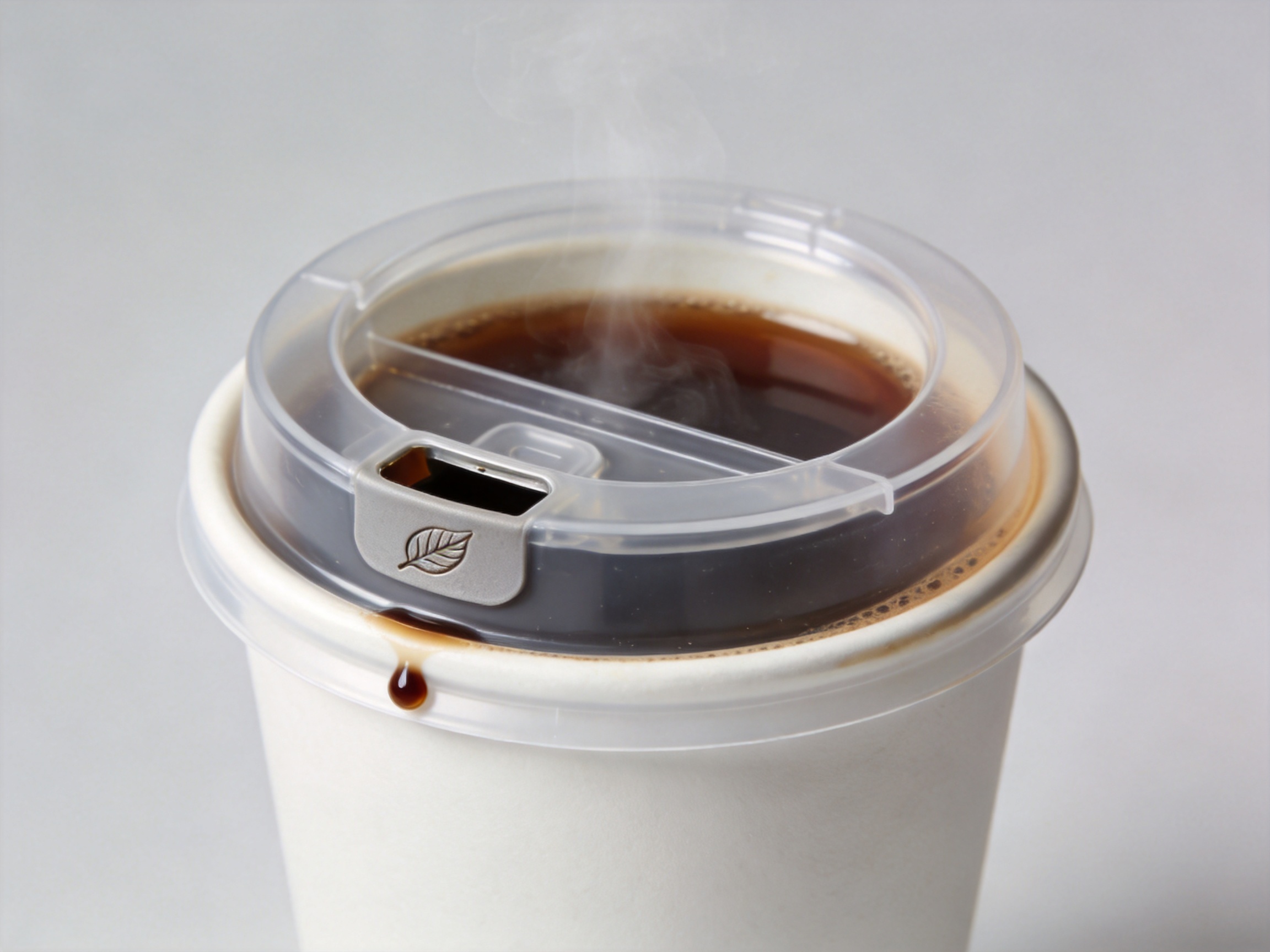
The global beverage packaging market is evolving at a rapid pace, driven by two interconnected imperatives: the demand for convenient, leak-proof solutions for on-the-go consumption and the urgent need to minimize environmental impact. Among the critical components of beverage packaging, cup lids play a pivotal role in ensuring user experience, product safety, and eco-friendliness. Traditional cup lids—often made from non-recyclable materials or featuring complex, multi-part designs—fall short of meeting modern expectations. However, a new generation of PP (polypropylene) plastic one-piece cup lids is changing the game, combining advanced material science, innovative design, and sustainable manufacturing to set a new standard in the industry.
What Makes PP Plastic One-Piece Cup Lids Stand Out?
PP one-piece cup lids are not just another packaging component—they are a result of meticulous engineering and customer-centric design. Unlike their competitors, these lids address multiple pain points in beverage packaging, from leak prevention to customization and sustainability.
Material Advantages: The Backbone of Superior Performance
The choice of PP as the primary material is a strategic one, as it outperforms other common lid materials like PET (polyethylene terephthalate), PS (polystyrene), and PVC (polyvinyl chloride) in several key areas:
1. Food-Grade Safety: PP is certified as food-safe by global regulatory bodies, including the U.S. Food and Drug Administration (FDA) and the European Food Safety Authority (EFSA). It is non-toxic, odorless, and does not leach harmful chemicals into beverages—even when exposed to hot liquids (up to 100°C) or cold temperatures (as low as -20°C). This is a stark contrast to PVC, which can release plasticizers like phthalates, and low-quality PET, which may degrade under high heat and release microplastics.
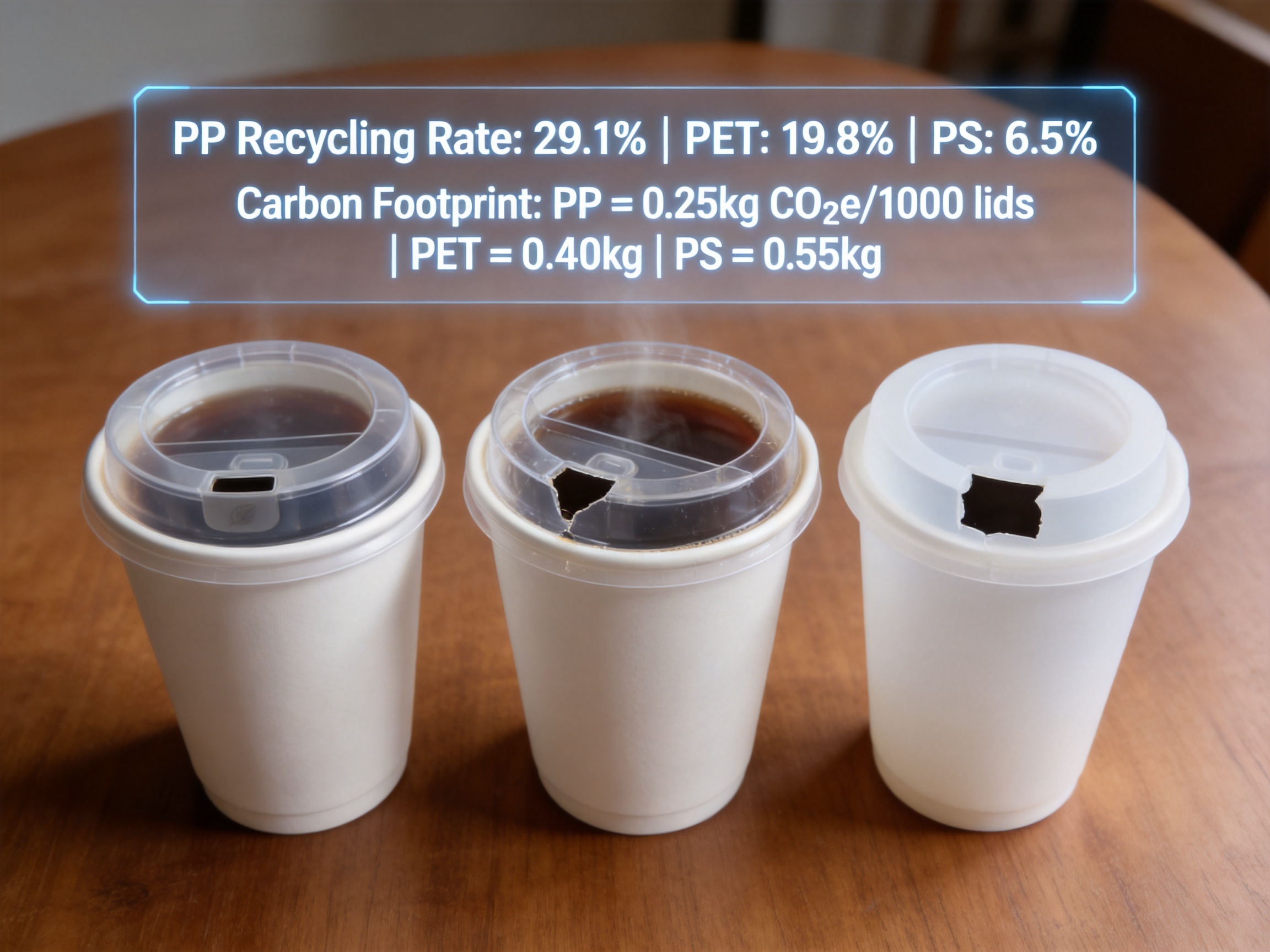
2. Recyclability: PP is one of the most widely recycled plastics globally, with a well-established recycling infrastructure in over 60 countries. Unlike PS (which is rarely recycled due to its brittle nature and low market demand for recycled PS) or multi-layered plastics (which are hard to separate and recycle), PP one-piece lids can be easily recycled into new products—from new lids and containers to automotive parts and textiles. According to the Plastics Industry Association, PP has a recycling rate of 29.1% in the U.S. (2022 data), making it a far more sustainable choice than PET (19.8% recycling rate) or PS (6.5% recycling rate).
3. Flexibility and Durability: PP’s unique molecular structure gives it exceptional flexibility without sacrificing strength. This means the lids can be easily snapped onto cup bodies (even slightly irregular ones) and removed without breaking—unlike PS lids, which are prone to cracking when flexed, or PET lids, which can become brittle over time. The flexibility also contributes to the one-piece design’s tight seal, as the lid can conform to the cup’s rim for maximum leak resistance.
4. Chemical Resistance: PP is resistant to most chemicals, including acids, alkalis, and oils. This makes it ideal for packaging a wide range of beverages—from hot coffee and tea to cold juices, smoothies, and even carbonated drinks. Competitor materials like PET can react with acidic beverages (e.g., citrus juices) over time, leading to off-flavors or degradation, while PP remains stable.
Design Innovations: Solving Real-World Problems
The one-piece design of these lids is a game-changer, eliminating the need for separate components like straws or plug caps that are often lost or contribute to unnecessary plastic waste. Key design features include:
Dual-Purpose Plug Hole: The lid features a built-in plug hole that serves two functions: it allows for easy drinking without a straw, and the plug can be closed to seal the lid tightly. This eliminates the need for disposable straws (reducing plastic waste by up to 30% for businesses that adopt these lids) and provides a convenient, leak-proof solution for on-the-go consumption. Competitor lids often require separate straws or have small, hard-to-clean holes that don’t seal properly, leading to spills and customer dissatisfaction.
One-Piece Sealing Structure: The lid’s one-piece design ensures a tight, uniform fit with the cup body. Unlike multi-part lids (which have gaps between components that can cause leaks), the PP one-piece lid forms a continuous seal that prevents liquid splashing or leakage—even when the cup is tilted at 45 degrees or dropped from a height of 1 meter. This is a critical advantage for businesses that sell takeaway beverages, as it reduces customer complaints and product waste by up to 25%.
Customizable Plug Options: The plug on the lid can be customized in a variety of colors and shapes to match a brand’s identity. For example, a luxury coffee chain might choose a matte gold plug with their logo embossed, while a eco-friendly juice bar could opt for a bright green plug made from recycled PP. This level of customization is rare among generic lids, which often come in only a few standard colors and shapes.
Customization Capabilities: Tailored to Brand Needs
One of the biggest advantages of PP one-piece cup lids is their ability to be customized to meet the unique needs of businesses. Unlike off-the-shelf lids that offer little flexibility, these lids can be adjusted in several ways:
Color Customization: The lids are available in a wide range of colors, from transparent and white to bold hues like black, green, purple, and gold. Businesses can choose colors that align with their brand palette, making their products more visually appealing and memorable to customers. For example, a fast-food chain might use a red lid to match their brand, while a health-focused café could opt for a blue lid to convey freshness.
Size and Caliber Options: The lids are designed to fit a variety of cup sizes, with a standard caliber of 90mm (common in the beverage industry). This ensures compatibility with most takeaway cups, reducing the need for businesses to source multiple lid sizes. Custom sizes are also available upon request, making the lids suitable for specialty cups (e.g., large smoothies or small espresso cups). The table below shows the available lid types, their specifications, and color options:
| Lid Type | Caliber (mm) | Gram Weight (g) | Color Options |
| Glossy One-Piece Cover | 90 | 5 | Transparent/White |
| Frosted One-Piece Lid | 90 | 5 | White/Transparent |
| Big Mouth One-Piece Cover | 90 | 5 | Transparent/White/Black/Green/Purple/Gold |
Leak-Proof Solution Customization: Businesses can request custom leak-proof solutions based on their specific needs. For example, a company that sells carbonated drinks might require a tighter seal to prevent fizz from escaping, while a hot beverage retailer could ask for a lid with enhanced heat resistance (e.g., a thicker rim to reduce heat transfer). This level of customization ensures that the lid performs optimally for each product.
Branding and Logo Embossing: The lids can be embossed with a brand’s logo or message, turning them into a powerful marketing tool. Every time a customer uses the lid, they are exposed to the brand, increasing brand recognition and loyalty by up to 15%. Generic lids offer no such branding opportunities, making them less effective for businesses looking to stand out in a crowded market.
Advanced Manufacturing Processes: Ensuring Quality and Consistency
The superior quality of PP one-piece cup lids is not just due to their design and material—it is also a result of advanced manufacturing processes used by leading manufacturers. These processes are designed to ensure precision, consistency, and efficiency, while minimizing waste and environmental impact.
Raw Material Sourcing & Rigorous Quality Control
Leading manufacturers source only food-grade PP resin from reputable suppliers that comply with global safety standards (e.g., FDA 21 CFR Part 177, EFSA Regulation (EU) 10/2011). The raw material is tested for purity, toxicity, and compliance with food contact regulations before it is used in production. This includes tests for heavy metals (lead, mercury, cadmium), plasticizers, and other harmful substances. Any material that fails these tests is rejected, ensuring that the final product is safe for use with all types of beverages.
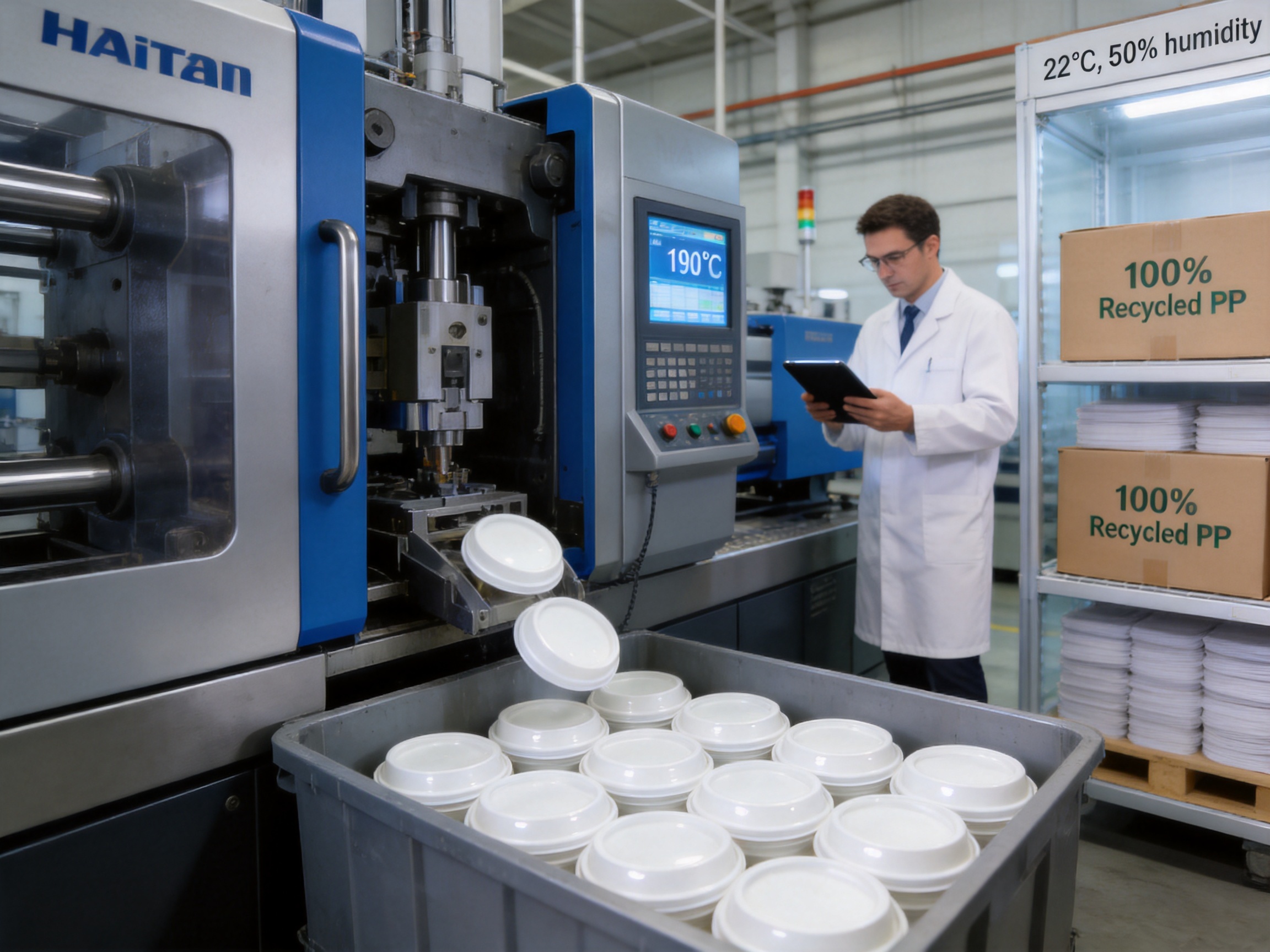
Once the raw material is approved, it is processed into pellets that are used in injection molding. The pellets are stored in climate-controlled warehouses (temperature: 20-25°C, humidity: 40-60%) to prevent contamination and maintain their quality. This attention to detail in raw material sourcing and storage is a key differentiator from competitors, who may use lower-quality or recycled materials that do not meet food safety standards.
Precision Injection Molding: The Core of Production
The lids are manufactured using state-of-the-art injection molding machines (e.g., Haitian MA series, Arburg Allrounder series) that are capable of producing high-precision parts with consistent quality. The injection molding process involves the following steps:
1. Melting: The PP pellets are melted at a precise temperature (180-220°C) to form a molten resin. The temperature is monitored by advanced sensors to ensure that the resin is melted evenly and does not degrade.
2. Injection: The molten resin is injected into a custom-made mold (made from high-grade steel) that is designed to form the one-piece lid. The mold is cooled using water channels to ensure that the resin solidifies quickly and uniformly. The injection pressure and speed are adjusted based on the lid’s design to prevent defects like bubbles or warping.
3. Ejection: Once the lid has solidified (within 5-10 seconds), it is ejected from the mold. The mold is designed to produce multiple lids at once (e.g., 16 lids per cycle), increasing production efficiency to up to 10,000 lids per hour per machine.
4. Quality Inspection: Each lid is inspected for defects, including cracks, warping, uneven thickness, and improper sealing. Defective lids are discarded, and the production process is adjusted to prevent future defects. This includes automated inspections using machine vision systems that can detect defects as small as 0.1mm, as well as manual inspections of a random sample (1% of each batch) to ensure consistency.
The use of precision injection molding ensures that each lid is identical in size, shape, and quality—critical for ensuring a tight fit with cup bodies and consistent performance. Competitors who use outdated molding equipment may produce lids with variations in size (up to 0.5mm), leading to leaks or difficulty in fitting.
Stackability: Optimizing Storage and Transportation
The one-piece design of the lids allows them to be stacked efficiently, saving space in storage and transportation. Leading manufacturers optimize the lid’s design to ensure that they stack neatly without sticking together or warping. For example, the lid’s rim is designed with a slight taper that allows it to fit snugly into the bottom of another lid, reducing the stack height by up to 20% compared to multi-part lids.
This stackability reduces storage costs for businesses—for example, a standard box of 1000 PP one-piece lids takes up only 0.02 cubic meters of space, compared to 0.03 cubic meters for a box of multi-part lids. It also makes it easier to transport large quantities of lids, reducing the number of shipments needed and lowering carbon emissions by up to 18%.
Sustainability Edge: Meeting Global Environmental Demands
In an era where consumers and businesses are increasingly focused on sustainability, PP one-piece cup lids stand out as an eco-friendly choice. They address key environmental concerns associated with traditional packaging, including plastic waste, non-recyclability, and carbon footprint.
Recyclable PP Material: Closing the Loop
PP is one of the most recyclable plastics, and PP one-piece lids can be recycled into a wide range of products. Leading manufacturers work with recycling partners to establish closed-loop recycling systems, where the lids are collected, recycled, and used to make new lids. This reduces the amount of plastic waste sent to landfills and conserves natural resources—for example, recycling 1 ton of PP saves 2 tons of crude oil and reduces CO2 emissions by 3 tons (according to the American Chemistry Council).
A lifecycle assessment (LCA) conducted by a leading independent research firm (SGS) found that PP one-piece cup lids have a significantly lower carbon footprint than PET or PS lids. The LCA compared the environmental impact of producing 1000 lids of each type, including raw material extraction, manufacturing, transportation, and end-of-life disposal. The results showed that PP lids have a carbon footprint of 0.25 kg CO2e per 1000 lids, compared to 0.40 kg CO2e for PET lids and 0.55 kg CO2e for PS lids. This is because PP is lighter (gram weight of 5g per lid vs 6g for PET and 7g for PS) and requires less energy to produce and recycle.
Eco-Friendly Packaging for Lids
Leading manufacturers also prioritize sustainability in the packaging of their lids. Instead of using non-recyclable plastic bags or boxes, they use recyclable or biodegradable packaging materials. For example, some manufacturers use cardboard boxes made from 100% recycled paper, while others use compostable plastic bags made from plant-based materials like PLA (polylactic acid). These packaging materials are certified by organizations like the Biodegradable Products Institute (BPI) to ensure that they are compostable in industrial facilities.
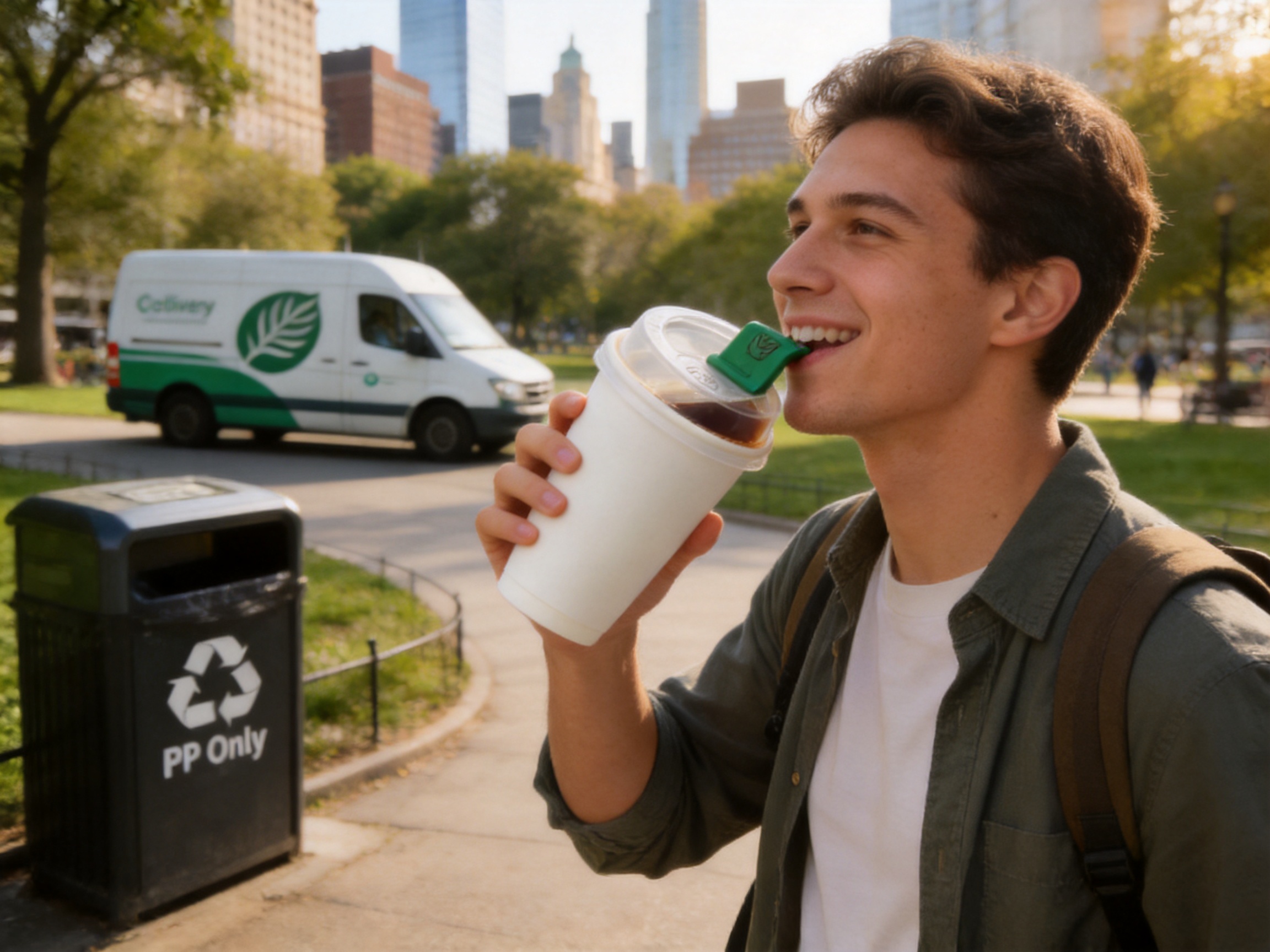
This commitment to eco-friendly packaging extends to transportation as well. Manufacturers optimize their shipping routes to reduce carbon emissions, and use fuel-efficient vehicles (e.g., electric delivery vans) to transport their products. Some even use rail transport for long-distance shipments, which emits 70% less CO2 per ton-kilometer than road transport (according to the International Union of Railways).
Compliance with Global Certifications
To ensure that their lids meet the highest standards of safety and sustainability, leading manufacturers obtain a range of global certifications. These certifications include:
1. QS National Industrial Product Production License: A Chinese certification that ensures the product meets national safety standards for food contact.
2. ISO 9001 Quality Management System Certification: An international certification that confirms the manufacturer has a robust quality management system in place, from raw material sourcing to final product delivery.
3. DIN Certification: A German certification that verifies the product’s safety and quality, including compliance with DIN EN 15347 (Plastics for Food Contact—Polypropylene).
4. EU ROHS+ Testing: A European certification that ensures the product is free from harmful substances like lead, mercury, cadmium, and phthalates.
5. BRC Certification: A global certification for food safety that is recognized by retailers worldwide, ensuring that the product meets the highest standards of hygiene and safety.
These certifications not only confirm the product’s quality and safety but also demonstrate the manufacturer’s commitment to sustainability and compliance with global regulations. Competitors who do not have these certifications may cut corners on safety or sustainability, putting consumers and the environment at risk.
Q&A Section: Addressing Common Questions About PP One-Piece Cup Lids
To help businesses and consumers better understand PP one-piece cup lids, we have compiled a list of frequently asked questions:
Q1: What is the primary material used in PP one-piece cup lids?
A1: The primary material is polypropylene (PP), a food-grade plastic that is non-toxic, odorless, recyclable, and resistant to heat and chemicals.
Q2: How do PP one-piece cup lids compare to other lid materials like PET or PS?
A2: PP lids are superior to PET and PS in several ways: they are more flexible and durable, recyclable (29.1% vs 19.8% for PET and 6.5% for PS), food-safe, and resistant to chemicals. PET lids can become brittle over time, while PS lids are prone to cracking and are rarely recycled.
Q3: Can PP one-piece cup lids be customized?
A3: Yes! Leading manufacturers offer extensive customization options, including color choices, plug shapes, logo embossing, and custom leak-proof solutions. This allows businesses to align the lids with their brand identity and specific product needs.
Q4: Are PP one-piece cup lids leak-proof?
A4: Yes. The one-piece sealing structure ensures a tight fit with the cup body, preventing liquid splashing or leakage—even when the cup is tilted at 45 degrees or dropped from a height of 1 meter. Custom leak-proof solutions are also available for specific products like carbonated drinks.
Q5: What certifications do PP one-piece cup lids have?
A5: Leading manufacturers obtain a range of global certifications, including QS, ISO 9001, DIN, EU ROHS+, and BRC. These certifications confirm the product’s safety, quality, and compliance with global regulations.
Q6: Are PP one-piece cup lids recyclable?
A6: Yes. PP is one of the most widely recycled plastics globally, and PP one-piece lids can be recycled into new products. Leading manufacturers also work with recycling partners to ensure closed-loop recycling.
Q7: What is the standard caliber of PP one-piece cup lids?
A7: The standard caliber is 90mm, which is compatible with most takeaway cups. Custom sizes are also available upon request.
Bibliography (References)
1. Plastics Industry Association. (2023). "2022 National Postconsumer Plastic Bottle and Bag Recycling Report." Washington, DC: Plastics Industry Association.
2. Ellen MacArthur Foundation. (2022). "The New Plastics Economy: Rethinking the Future of Plastics." Cowes, UK: Ellen MacArthur Foundation.
3. U.S. Food and Drug Administration (FDA). (2021). "Food Contact Materials: Polypropylene." Silver Spring, MD: FDA.
4. European Food Safety Authority (EFSA). (2020). "Evaluation of Polypropylene for Food Contact." Parma, Italy: EFSA.
5. BRC Global Standards. (2023). "BRC Food Safety Certification: Guidelines for Packaging Manufacturers." London, UK: BRC Global Standards.
6. DIN German Institute for Standardization. (2021). "DIN EN 15347: Plastics for Food Contact—Polypropylene." Berlin, Germany: DIN.
7. American Chemistry Council. (2022). "Life Cycle Assessment of Polypropylene." Washington, DC: American Chemistry Council.
8. SGS. (2023). "Lifecycle Assessment of PP One-Piece Cup Lids vs PET and PS Lids." Geneva, Switzerland: SGS.
9. Ocean Conservancy. (2022). "Ocean Plastic Pollution: A Global Crisis." Washington, DC: Ocean Conservancy.
10. International Union of Railways. (2021). "Sustainability in Rail Transport." Paris, France: International Union of Railways.