English
 Español
 عربى
عربىContent
- 1 1. The Role of Paper Straws in Sustainable Foodservice Packaging
- 2 2. Product Overview: Disposable Environmentally Friendly Paper Straw
- 3 3. Specification Table
- 4 4. Key Product Advantages
- 5 5. Advantages Over Ordinary Competitor Products
- 6 6. Advanced Manufacturing Process
- 7 7. Manufacturing Strengths and Company Capabilities
- 8 8. Quality Control from Raw Material to Finished Product
- 9 9. Customization and Design Support
- 10 10. Application Scenarios
- 11 11. Environmental Value and Responsible Use
- 12 12. Why OEM Partnership Matters
- 13 13. Practical Selection Guide for Buyers
- 14 14. Storage, Handling, and Usage Recommendations
- 15 15. Market Trends Supporting Paper Straw Adoption
- 16 16. Frequently Asked Questions
- 16.1 Q1: What makes these paper straws environmentally friendly?
- 16.2 Q2: Will the paper straw become soft quickly in drinks?
- 16.3 Q3: What sizes are available?
- 16.4 Q4: Which diameter should I choose for my beverage?
- 16.5 Q5: Can the paper straws be customized with printing?
- 16.6 Q6: Are individually wrapped paper straws available?
- 16.7 Q7: Are paper straws suitable for hot drinks?
- 16.8 Q8: How does a professional manufacturer ensure consistent quality?
- 16.9 Q9: Why choose an OEM manufacturer instead of standard stock products?
- 16.10 Q10: How should paper straws be stored?
- 17 17. Conclusion
- 18 References
- 19 Product: Disposable Environmentally Paper straw
Disposable environmentally friendly paper straws have become one of the most practical and visible upgrades in the global transition away from conventional plastic drinkware accessories. For restaurants, beverage chains, catering companies, supermarkets, convenience stores, hotels, and event organizers, a straw is no longer a simple add-on. It is a small but highly noticeable part of the customer experience, brand image, and sustainability strategy. A well-made paper straw must be safe for food contact, comfortable to use, durable in beverages, suitable for hot and cold drinks, attractive in appearance, and compatible with efficient disposable food packaging systems.
This article focuses on high-quality disposable paper straws designed for modern foodservice use. It explains product features, common specifications, customization choices, manufacturing strengths, quality control methods, advantages over ordinary market alternatives, and the value of choosing an experienced OEM packaging partner. It also discusses how environmentally friendly paper straws support sustainable packaging goals while maintaining practical performance in real drinking scenarios.
Disposable Environmentally Paper straw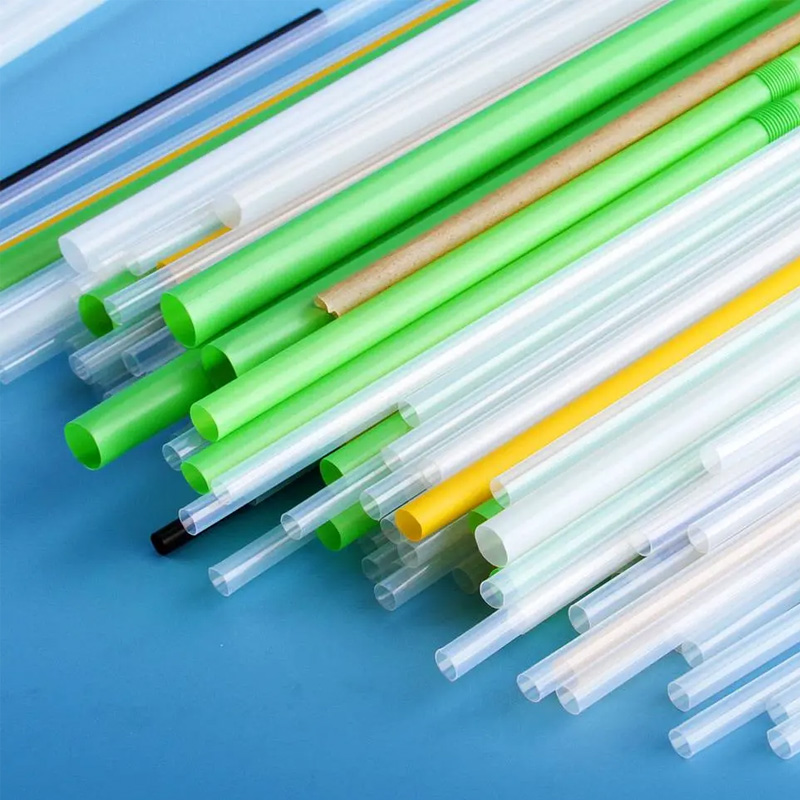
1. The Role of Paper Straws in Sustainable Foodservice Packaging
The foodservice industry is under increasing pressure to reduce plastic waste and adopt more responsible packaging materials. Disposable straws are one of the most recognizable symbols of single-use plastic pollution because they are lightweight, frequently used, and often discarded shortly after consumption. Although straws represent only one portion of the larger packaging system, replacing plastic straws with paper alternatives is a meaningful step toward greener operations.
Disposable environmentally friendly paper straws are made from paper-based materials that are designed to be recyclable, compostable under suitable conditions, and more easily degradable than traditional petroleum-based plastic straws. Their value is not limited to environmental messaging. Modern paper straw technology has improved significantly, making it possible to produce straws with better wet strength, smoother mouthfeel, stable shape retention, and customized visual effects.
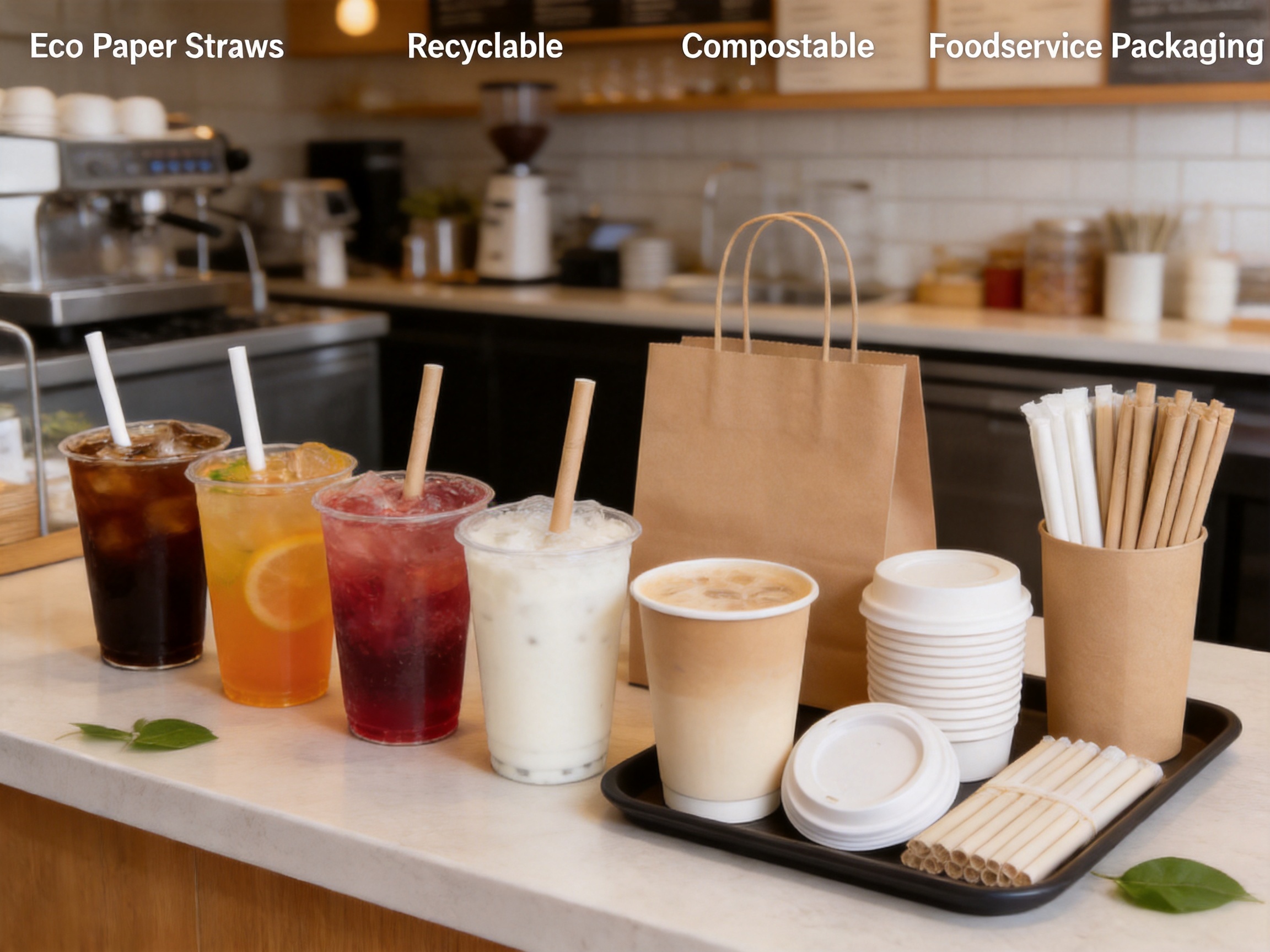
For beverage businesses, paper straws can help align packaging choices with customer expectations. Many consumers now look for signs that a brand is taking sustainability seriously. When a customer receives a drink with a clean, well-printed, individually wrapped paper straw, it communicates attention to hygiene, quality, and environmental responsibility. For brand owners, this small detail can reinforce a broader packaging identity that includes disposable cups, lids, takeaway bowls, recycle bags, and other peripheral food packaging products.
Paper straws are especially suitable for juice bars, coffee shops, milk tea stores, smoothie brands, fast-food restaurants, airlines, schools, offices, cinemas, dessert shops, outdoor events, and catering services. They can be used with cold beverages such as iced coffee, lemonade, soda, smoothies, bubble tea, milkshakes, and fruit tea. They can also be used with some warm beverages when matched with the right diameter, wall thickness, and material structure.
2. Product Overview: Disposable Environmentally Friendly Paper Straw
The disposable environmentally friendly paper straw is designed as a practical green replacement for conventional plastic straws. It uses high-quality paper material, offers a stiff and reliable structure, and provides a long soaking time in water compared with low-grade paper straw alternatives. Its purpose is to balance sustainability with user experience, because a straw that softens too quickly or collapses in a drink can harm customer satisfaction and weaken confidence in eco-friendly packaging.
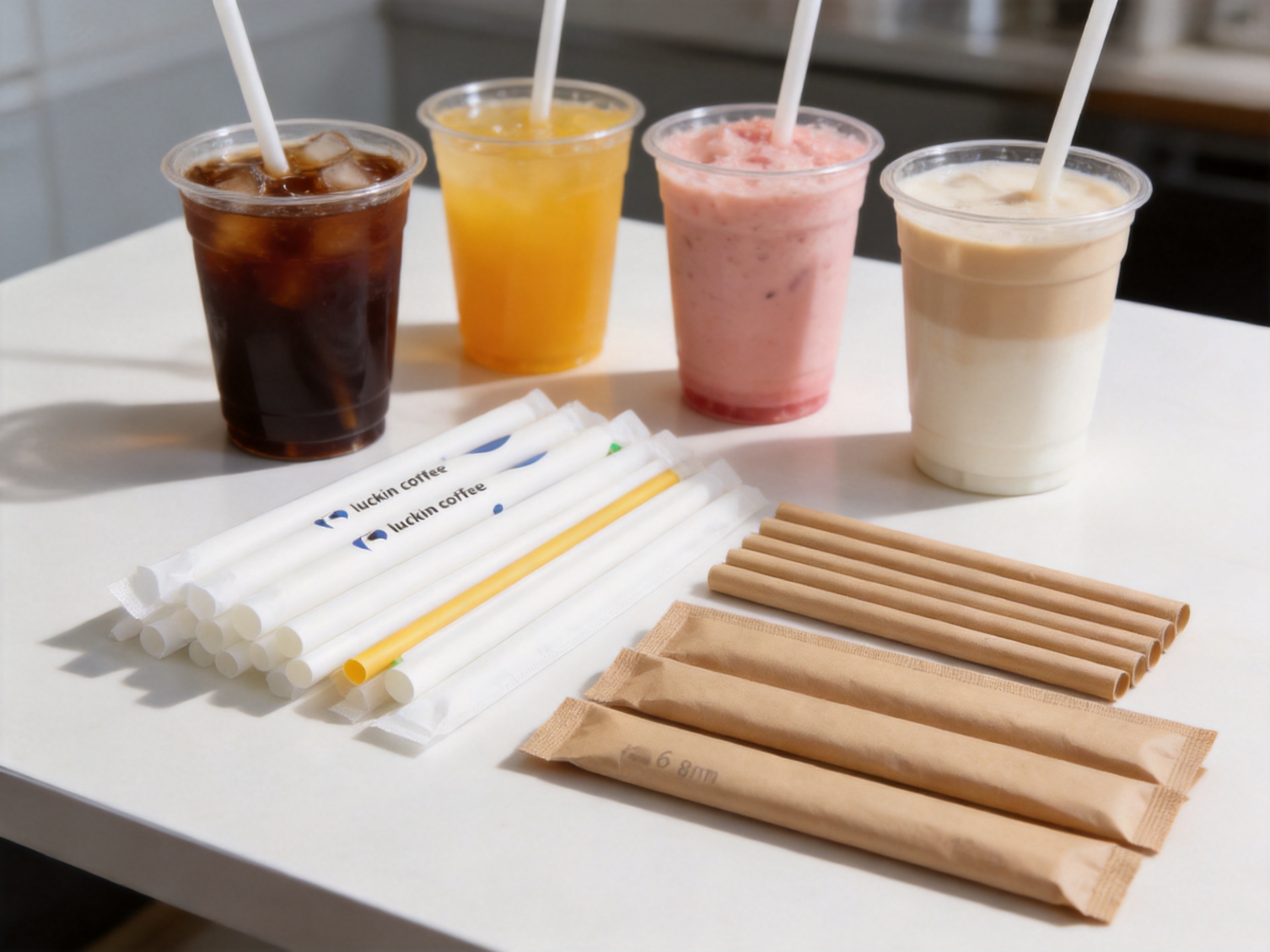
The product is available in white and kraft paper colors. White paper straws are clean, simple, and suitable for brands that prefer a bright, sanitary, modern appearance. Kraft paper straws offer a natural and eco-oriented visual style, which is particularly popular with organic beverage brands, cafés, bakeries, plant-based food businesses, and companies that want their packaging to look earthy and sustainable. Both options can be customized with multi-color printing, allowing the straw to become part of a unified brand system.
Packaging choices include independent paper packaging and customized packing quantities. Individually wrapped paper straws provide additional hygiene protection, making them suitable for takeaway orders, hotels, transport catering, retail multipacks, and public service environments. Bulk packing can be selected for high-volume beverage preparation areas where fast access and reduced secondary packaging are priorities. The availability of different packaging modes helps customers balance hygiene, cost, efficiency, and market expectations.
Another major advantage is specification flexibility. Common diameters include 6 mm, 8 mm, and 12 mm, with standard lengths such as 210 mm and 230 mm. A 6 mm paper straw is suitable for regular water, soda, juice, and coffee beverages. An 8 mm paper straw works well for thicker drinks such as smoothies, milk tea, yogurt drinks, and iced beverages with small pulp or foam. A 12 mm paper straw is useful for larger beverage formats, thick milkshakes, or drinks that require faster flow. Custom dimensions can also be developed according to customer needs.
3. Specification Table
| Specification | Diameter | Length | Color Options | Typical Application |
| 6*210 | 6 mm | 210 mm | White / Kraft Paper | Juice, soda, water, iced coffee |
| 8*210 | 8 mm | 210 mm | White / Kraft Paper | Milk tea, smoothies, fruit tea |
| 6*230 | 6 mm | 230 mm | White / Kraft Paper | Tall cups, takeaway beverages |
| 8*230 | 8 mm | 230 mm | White / Kraft Paper | Large cold drinks, thick beverages |
| 12*210 | 12 mm | 210 mm | White / Kraft Paper | Milkshakes, specialty drinks |
| 12*230 | 12 mm | 230 mm | White / Kraft Paper | Large cups, high-flow beverages |
The listed specifications cover many mainstream beverage applications, but customization remains an important feature. Customers can request changes in diameter, length, color, printed design, packing quantity, and packaging format. This flexibility is important because beverage cups vary widely in height, lid design, drink viscosity, and customer usage habits. A straw that is too short, too narrow, or visually inconsistent with the cup can reduce the overall quality impression. A customized straw improves the match between the drinking tool and the final packaged beverage.
4. Key Product Advantages
4.1 Compostable and Recyclable Material Concept
One of the core advantages of environmentally friendly paper straws is their reduced environmental burden compared with traditional plastic straws. Paper is derived from renewable plant fiber resources and can degrade more easily in natural environments when properly formulated and disposed of. In suitable waste management systems, paper straws may also support composting or recycling pathways, depending on local conditions, contamination level, and regulatory requirements.
This material concept helps foodservice operators respond to environmental policies, plastic reduction programs, and consumer demand for greener packaging. Many regions have introduced restrictions on single-use plastic items, including straws. Businesses that prepare early with high-quality paper alternatives are better positioned to comply with changing market requirements while maintaining stable product supply.
4.2 Strong Structure and Long Soaking Time
A frequent complaint about ordinary paper straws is that they become soft, swollen, or unpleasant after a short period in liquid. High-quality paper straws solve this problem through better raw material selection, optimized paper layering, controlled adhesive application, precision winding, and appropriate drying. The result is a stiff material that is not easy to deform and can maintain usability for a longer drinking period.
The straw’s strength is important in real service environments. Customers may stir drinks, leave straws in beverages while talking, transport drinks for several minutes, or use them in cold cups with ice. A straw must resist collapse under these conditions. Strong paper straws provide a more dependable experience and reduce the risk of negative feedback associated with cheap alternatives.
4.3 Safe and Food-Friendly Drinking Experience
Disposable paper straws for beverages must be designed with food contact safety in mind. The paper, ink, adhesive, and packaging materials should be selected according to food packaging requirements. A safe paper straw should not release unpleasant odor, should not transfer harmful substances under normal use, and should provide a smooth mouthfeel. Comfort is a key part of quality because the straw directly contacts the lips and beverage.
Compared with some low-cost products that may have rough edges, weak paper layers, or inconsistent winding, a professionally manufactured straw offers smoother edges, more consistent diameter, better roundness, and cleaner printing. These details make the product more suitable for brands that care about customer experience and food safety reputation.
4.4 Custom Printing for Brand Recognition
Paper straws can be printed with multi-color patterns, brand colors, simple logos, seasonal designs, or decorative stripes. Custom printing transforms a functional accessory into a brand communication tool. For chain beverage stores, consistent straw design can strengthen visual identity across locations. For promotional events, printed straws can match a campaign theme or limited-edition product launch.
White paper provides a clean base for bright colors and precise graphic expression. Kraft paper provides a natural texture and works well with dark, minimalist, or eco-themed printing. The ability to customize design allows foodservice businesses to differentiate themselves in a crowded market. While many competitors sell standard paper straws, a manufacturer with strong OEM capability can help customers develop packaging that fits their exact marketing goals.
4.5 Flexible Packaging Options
Independent paper packaging is an important feature for hygiene-sensitive channels. Individually wrapped straws are protected from dust, handling, and transport contamination before use. This is particularly useful for takeaway delivery, hotels, airlines, office pantries, vending systems, convenience stores, and restaurants where customers pick up straws themselves. Packaging can also be printed or customized to support branding.
For high-volume foodservice environments, bulk packaging may reduce unit packaging material and improve operational speed. The ability to offer different packing quantities and packaging formats gives buyers more control over cost, storage, distribution, and presentation. This flexibility is a competitive strength because packaging needs vary significantly between retail distribution and direct store operations.
5. Advantages Over Ordinary Competitor Products
Not all paper straws are equal. The rapid growth of the eco-packaging market has led to a wide range of quality levels. Some paper straws appear attractive at first but fail in liquid, become limp, split at the seam, generate paper taste, or use inconsistent printing. The difference between a high-quality paper straw and a low-cost alternative becomes obvious only when the product is used by customers in real beverages.
The first competitive advantage is structural reliability. Premium paper straws use carefully selected paper material and a stable winding process to maintain stiffness. This helps the straw resist bending, crushing, and delamination. Ordinary products may use thinner paper layers or insufficient bonding, resulting in shorter service life. In contrast, a well-engineered paper straw can remain comfortable during a normal drinking period, even in cold drinks with ice.
The second advantage is customization capability. Many low-end suppliers offer only fixed sizes and basic colors. A stronger manufacturer can customize diameter, length, color, printed pattern, packaging quantity, and wrapping style. This is especially valuable for beverage chains and international buyers that require consistent product identity across different markets. Customization also reduces mismatch between straw and cup, improving the final user experience.
The third advantage is quality consistency. A single good sample does not guarantee stable mass production. Professional manufacturing requires controlled raw material procurement, process monitoring, batch inspection, and finished product testing. Consistent diameter, length, cutting quality, color accuracy, and packaging integrity are essential for commercial use. A manufacturer with an established quality management system can deliver repeatable quality over large orders.
The fourth advantage is environmental credibility. Eco-friendly packaging must be more than a slogan. It requires material choices that reduce environmental impact, production methods that manage waste and energy use responsibly, and a commitment to continuous improvement. A manufacturer that understands green production can help customers choose paper materials, wrapping options, and packing formats that better support sustainability goals.
The fifth advantage is comprehensive disposable food packaging experience. Paper straws are often purchased together with cups, lids, bowls, bags, and related packaging products. A company with broader food packaging capability can better understand how straws fit into the complete service system. This reduces procurement complexity and allows customers to build a coordinated packaging solution rather than sourcing each item from unrelated suppliers.
6. Advanced Manufacturing Process
6.1 Raw Material Selection
The performance of a paper straw begins with the paper. High-quality paper should provide strength, food-contact suitability, stable thickness, and good compatibility with printing and forming processes. White paper and kraft paper each require careful selection to ensure appearance, texture, and mechanical performance. The paper must be strong enough to resist wetting while still allowing the straw to be disposable and environmentally responsible.
Raw material inspection is a critical step. Paper rolls should be checked for thickness, surface cleanliness, moisture level, color stability, and defects. Consistent raw material improves the precision of winding, cutting, and printing. It also reduces waste during production. In advanced manufacturing, material selection is not only about price; it is about balancing strength, safety, sustainability, and production efficiency.
6.2 Food-Safe Adhesive Application
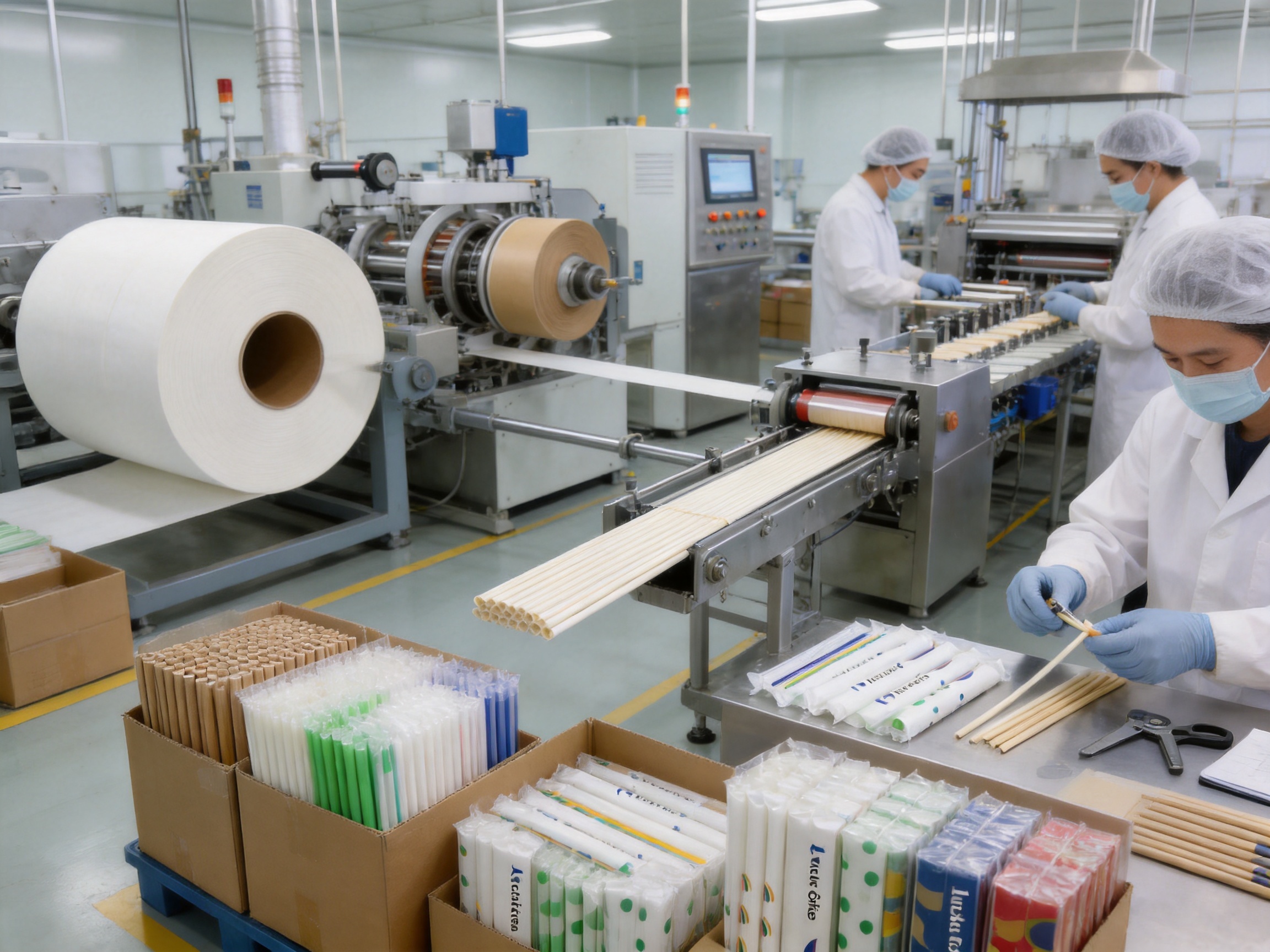
Paper straws are generally formed by winding paper layers around a mandrel and bonding them together. The adhesive must be suitable for food packaging applications and must support both dry strength and wet resistance. Too little adhesive may cause delamination, while too much adhesive may affect appearance, drying efficiency, or mouthfeel. Controlled adhesive application is therefore essential.
Advanced production lines apply adhesive evenly and consistently. This helps the paper layers bond properly and prevents weak seams. Proper bonding is one of the reasons a high-quality paper straw can remain stiff for a longer time in beverages. The adhesive system must also match the drying process so that the finished straw reaches the desired strength before cutting and packaging.
6.3 Precision Winding and Forming
Winding accuracy determines the roundness, diameter consistency, and surface quality of the straw. During forming, paper strips are wound at controlled angles around a forming mandrel. If the tension is unstable or the paper alignment is poor, the straw may become oval, uneven, or weak at the seam. Advanced forming equipment reduces these risks through stable tension control and precision mechanical guidance.
For a 6 mm straw, even small deviations can affect drinking comfort and lid compatibility. For 8 mm and 12 mm straws, structural stability becomes even more important because larger diameters require reliable wall strength. Precision forming ensures that every straw matches the required specification, fits beverage lids properly, and delivers a consistent customer experience.
6.4 Drying and Curing
After forming, the straw must be dried and cured to stabilize its structure. Drying removes excess moisture and helps the adhesive achieve strength. If drying is insufficient, the straw may remain weak or deform during cutting and packaging. If drying is too aggressive, the paper may become brittle or warped. Controlled drying is therefore a key part of manufacturing quality.
Advanced factories manage drying temperature, airflow, and production speed to achieve consistent results. This step contributes directly to long soaking time and stiffness. A properly dried paper straw maintains its shape better in storage and performs more reliably in beverages.
6.5 Cutting and Edge Finishing
Once the long paper tube is formed and stabilized, it is cut into the required lengths, such as 210 mm or 230 mm. Cutting quality affects mouthfeel and visual appearance. Rough edges, burrs, crushed ends, or uneven lengths can reduce perceived quality. Precision cutting equipment helps produce smooth, consistent ends and accurate lengths.
Finished straws must be comfortable for direct contact with the lips. Smooth edges are particularly important for children, school use, family restaurants, and premium beverage brands. Edge quality also influences how the straw pierces or fits through cup lids. A cleanly cut straw gives a better impression than one with ragged ends.
6.6 Printing and Visual Customization
Printing may be applied to the paper before forming or integrated according to the production design. Multi-color printing allows brands to create unique patterns and packaging identities. The printing process must control color consistency, registration, ink safety, and surface cleanliness. Food packaging applications require careful ink selection and quality monitoring.
Custom printed paper straws can use stripes, geometric patterns, brand colors, seasonal images, or simple text. For global customers, printed designs can also be adapted to different markets, languages, or event themes. Advanced printing capability is an important competitive advantage because it supports both functional production and brand marketing.
6.7 Individual Wrapping and Packing
Individual paper wrapping protects the straw before use and improves hygiene. During wrapping, the straw is inserted into paper packaging and sealed. The wrapping must be neat, secure, and easy for the customer to open. Poor wrapping can tear, wrinkle, or fail during transport. Professional packaging equipment improves speed and consistency while reducing manual contamination risk.
After wrapping or bulk packing, straws are counted and packed according to customer requirements. Packing quantity can be customized for retail, wholesale, foodservice, or distribution channels. Carton strength, labeling, batch identification, and storage protection are also considered to ensure safe delivery.
7. Manufacturing Strengths and Company Capabilities
Yuqian Packaging Technology (Jiangsu) Co., Ltd. is a specialized manufacturer of disposable food packaging materials and products. Established in 2010 and located in Taizhou City, Jiangsu Province, China, the company has developed into a high-tech enterprise integrating research and development, production, and sales. With a plant area of approximately 30,000 square meters, it has the scale required to support stable production and serve customers in domestic and international markets.
The company’s strength is not limited to paper straws. Its product category includes plastic cups, plastic cup lids, takeaway bowls, disposable straws, recycle bags, peripheral products, and injection film lining cup and bowl boxes. This broader packaging foundation is useful for customers who want a coordinated disposable food packaging container solution. A beverage or catering brand can source related packaging items from a supplier that understands the full foodservice packaging ecosystem.
The company has passed multiple certifications and evaluations relevant to industrial production and food packaging management, including QS national industrial product production license, ISO9001 Quality Management System certification, BRC certification, German DIN safety certification, and EU RoHS-related testing. These achievements reflect a focus on standardized production, safety, quality control, and international market expectations.
Research and development capability is a major advantage. The company has a team that explores new materials, improved processes, and optimized product structures. For paper straws, R&D work may include improving wet strength, refining paper layering, enhancing comfort, testing different diameters, developing custom printing methods, and optimizing packaging formats. Continuous development ensures that products remain competitive as customer requirements and environmental regulations evolve.
Flexible production capability is another important strength. OEM customers often need sample development, design adjustment, packaging trials, mass production, and repeat orders. A flexible manufacturer can respond quickly to specification changes, new artwork, seasonal demand, and urgent market opportunities. This helps customers reduce product development time and launch packaging upgrades more efficiently.
The company also emphasizes green production principles. By using environmentally friendly paper materials and working to reduce waste and energy consumption during production, it supports the broader goal of sustainable packaging. A paper straw should not only be environmentally friendly at the point of disposal; it should also be produced through responsible management practices. This approach helps customers build stronger sustainability claims and more credible brand stories.
8. Quality Control from Raw Material to Finished Product
Quality control is essential for disposable paper straws because the product is simple in appearance but demanding in performance. A buyer may order millions of straws, and each unit must meet consistent standards. The quality process should begin before production and continue through each stage until shipment.
Raw materials are checked for compliance with internal specifications. Paper color, thickness, surface quality, strength, and moisture content are monitored. Adhesive and ink materials are also selected according to safety and performance requirements. This helps prevent problems before production begins.
During manufacturing, operators and quality personnel monitor winding tension, diameter, bonding, drying, cutting length, and visual appearance. If parameters drift, corrective action can be taken early. Process control reduces defect rates and ensures that production remains stable across large batches.
Finished products are inspected for length accuracy, diameter accuracy, straightness, stiffness, seam quality, edge smoothness, printing clarity, color consistency, odor, wrapping quality, and carton packaging. For individually wrapped straws, sealing and wrapper cleanliness are also important. Batch records and packaging labels help support traceability.
Quality consistency is a major advantage for international buyers. A stable supplier reduces the risk of customer complaints, product returns, delayed shipments, and brand damage. For large beverage chains and distributors, consistency is often more valuable than simply finding the lowest price. A well-managed paper straw program supports reliable operations and long-term customer trust.
9. Customization and Design Support
Customization is one of the most important reasons to choose a professional paper straw manufacturer instead of buying generic stock products. The straw can be adjusted to match the cup, lid, beverage type, serving style, brand identity, and distribution channel.
Diameter customization affects drink flow. A narrow straw is suitable for light beverages, while a wider straw is better for thick drinks. Length customization ensures that the straw is comfortable for the cup height and lid design. A straw should extend enough above the lid for easy drinking but should not be excessively long, unstable, or wasteful.
Color customization allows businesses to choose between a clean white appearance and natural kraft paper style. Additional printing can incorporate brand colors, stripes, logos, promotional messages, or decorative patterns. For example, a coffee chain may choose kraft paper with dark brown printing, while a fruit tea brand may prefer white paper with bright colorful stripes.
Packaging customization includes individual paper wrapping, printed wrappers, bulk bags, inner boxes, carton configurations, and order quantities. Retail channels may require attractive small packs with clear labeling, while foodservice distributors may prefer large cartons for efficient storage. International customers may request specific carton marks, palletizing methods, or documentation support.
Design support can also help customers avoid common mistakes. A straw pattern should remain visually attractive after winding. Colors should match the base paper and printing process. The chosen diameter should suit the beverage viscosity. The wrapping format should match the intended use environment. A knowledgeable manufacturer can advise on these details and help turn an idea into a practical product.
10. Application Scenarios
10.1 Coffee Shops and Beverage Chains
Coffee shops and beverage chains are among the most important users of paper straws. Iced coffee, cold brew, fruit tea, milk tea, sparkling drinks, and seasonal beverages all require straws that match cup size and brand presentation. A customized paper straw can become part of the store’s visual identity, especially when combined with branded cups and lids.
For chain operations, consistency matters. Customers expect the same quality from one store to another. Stable straw specifications, color, packaging, and supply help maintain operational efficiency and brand reliability. A strong OEM manufacturer can support repeated orders and customized designs across seasons.
10.2 Fast-Food Restaurants and Takeaway Services
Fast-food restaurants require straws that are affordable, hygienic, and easy to distribute. Individually wrapped paper straws are useful for self-service counters, takeaway bags, and delivery orders. Paper wrapping keeps the straw clean until the customer opens it. Because fast-food volume is high, stable production capacity and competitive customization options are important.
Takeaway services also need packaging that remains presentable after transport. A straw that collapses before the customer receives the drink can damage the overall impression. High-quality paper straws with longer soaking time reduce this risk and improve delivery satisfaction.
10.3 Hotels, Airlines, and Public Venues
Hotels, airlines, event centers, cinemas, schools, offices, and public venues often prefer individually wrapped straws for hygiene and convenience. These environments involve many users and require products that are easy to store, distribute, and dispose of. Paper straws offer a more responsible alternative to plastic while maintaining convenience.
For premium hotels or airline catering, appearance is important. A neatly wrapped paper straw with custom printing can match the service level of the venue. It shows attention to detail and supports sustainability communication without requiring major operational changes.
10.4 Retail and Promotional Packs
Paper straws can also be sold in retail packs for household use, parties, holidays, birthdays, weddings, and promotional events. Custom colors and patterns are especially attractive in this market. Kraft paper straws may appeal to eco-conscious households, while printed designs may appeal to party suppliers and event planners.
Retail packaging requires consistent appearance and clean packing. The straw must look good on the shelf and perform well after purchase. A manufacturer with printing, packing, and quality control capabilities can support both foodservice and retail channels.
11. Environmental Value and Responsible Use
Environmentally friendly paper straws support plastic reduction, but responsible use still matters. No disposable product is impact-free. The best results come from combining better materials with thoughtful consumption, proper waste management, and efficient packaging design. Businesses should choose the correct straw size to avoid unnecessary material use and should educate customers about disposal practices when appropriate.
Paper straws help reduce reliance on petroleum-based plastics and can degrade more readily under suitable conditions. They also support brand participation in circular economy thinking. Packaging can be designed to minimize waste, use recyclable paper materials, and encourage responsible disposal. When paired with recyclable cups, compostable packaging, or other sustainable food packaging products, paper straws become part of a larger environmental strategy.
It is important to understand that compostability and recyclability may depend on local infrastructure. Some regions have industrial composting facilities, while others rely on landfill or incineration systems. Businesses should evaluate local regulations and waste systems when making environmental claims. A responsible manufacturer can provide product information and support customers in selecting materials that align with market expectations.
12. Why OEM Partnership Matters
For many brands, paper straws are not purchased as a one-time commodity. They are part of a long-term packaging system. OEM partnership matters because it provides customization, technical guidance, production stability, and continuous improvement. A good OEM supplier does more than produce according to a specification; it helps customers refine the specification so the product performs well in real use.
During sample development, customers can test different diameters, lengths, colors, and packaging options. Feedback from beverage trials can guide adjustments. For example, a milk tea brand may discover that an 8 mm straw provides better flow than a 6 mm straw. A smoothie brand may require a 12 mm straw. A delivery-focused restaurant may prefer individually wrapped straws, while a dine-in café may choose bulk packing.
Mass production requires accurate scheduling, material preparation, printing control, quality inspection, and logistics coordination. An experienced manufacturer can manage these steps efficiently. This reduces risk for customers and supports steady supply. After-sales support is also important because packaging needs may change over time. A responsive supplier can help solve problems quickly and support future product upgrades.
Yuqian Packaging Technology (Jiangsu) Co., Ltd. provides one-stop support from design and production to logistics. Its flexible production lines and supply chain management enable it to respond to different order requirements. The company’s experience in multiple disposable packaging categories makes it a practical partner for businesses that want both paper straws and broader disposable food packaging container solutions.
13. Practical Selection Guide for Buyers
When choosing disposable environmentally friendly paper straws, buyers should consider more than price. The right straw depends on beverage type, cup height, customer expectations, environmental goals, and storage conditions. A product that is too weak or poorly matched to the application can create service problems and increase hidden costs.
The first selection factor is diameter. Choose 6 mm for standard thin drinks such as water, soda, juice, or iced coffee. Choose 8 mm for thicker drinks such as smoothies, milk tea, yogurt beverages, or fruit tea with light pulp. Choose 12 mm for heavy drinks, milkshakes, or special applications requiring higher flow.
The second factor is length. A 210 mm straw works well for many standard cups, while 230 mm is better for taller cups. The straw should be long enough for comfortable use after passing through the lid. If the cup is tall or filled with ice, a longer straw may improve convenience.
The third factor is color and printing. White paper is suitable for clean, modern, and colorful designs. Kraft paper is suitable for natural, organic, and eco-style branding. Printing should be designed with production feasibility in mind. Simple and clear patterns often produce the best results.
The fourth factor is packaging. Choose individually wrapped straws for takeaway, delivery, hospitality, and public-use environments. Choose bulk packing for back-of-house beverage preparation where speed and reduced secondary packaging are priorities. Custom packing quantities can improve storage and distribution efficiency.
The fifth factor is supplier reliability. Buyers should evaluate production capacity, quality management, certification background, sample support, communication efficiency, and customization capability. A reliable supplier can help prevent stock shortages, inconsistent product quality, and delayed launches.
14. Storage, Handling, and Usage Recommendations
Paper straws should be stored in a clean, dry, and cool environment. Because paper materials can absorb moisture, storage conditions affect performance. Avoid placing cartons directly on wet floors or in high-humidity areas. Keep products away from strong odors, chemicals, and direct sunlight. Proper storage helps preserve stiffness, appearance, and hygiene.
During use, staff should avoid unnecessary handling of unwrapped straws. If straws are not individually wrapped, they should be stored in covered dispensers or clean containers. For self-service areas, individually wrapped products are often more suitable. Good handling practices reinforce the hygiene benefits of quality packaging.
Paper straws are designed for normal beverage consumption periods. Although high-quality products offer long soaking time, customers should still use them according to intended conditions. Extremely long soaking, very high temperatures, or unusual beverage ingredients may affect performance. Selecting the correct straw for the beverage helps ensure the best experience.
15. Market Trends Supporting Paper Straw Adoption
The shift toward paper straws is supported by several long-term trends. First, governments and municipalities continue to restrict or discourage single-use plastic products. Foodservice operators need alternatives that can meet new rules without disrupting customer service. Paper straws are one of the most widely accepted replacements.
Second, consumers increasingly prefer visible sustainability actions. A paper straw is easy to recognize and understand. It gives customers a direct signal that the business is reducing plastic use. When the product also performs well, it strengthens consumer trust in sustainable packaging.
Third, beverage culture continues to expand. Milk tea, specialty coffee, smoothies, juice bars, and takeaway drinks are popular in many markets. These drinks require suitable disposable accessories. Custom paper straws can match the creativity of beverage brands and support premium presentation.
Fourth, packaging is becoming more integrated. Businesses no longer evaluate cups, lids, straws, bags, and bowls separately. They want coordinated disposable food packaging container solutions that reflect brand identity and sustainability goals. A manufacturer with broad packaging capability can support this integrated approach.
16. Frequently Asked Questions
Q1: What makes these paper straws environmentally friendly?
They are made from paper-based materials designed to reduce dependence on conventional plastic. They are recyclable and compostable under suitable conditions and can degrade more easily than traditional plastic straws. They support plastic reduction efforts and help foodservice businesses adopt greener disposable packaging.
Q2: Will the paper straw become soft quickly in drinks?
High-quality paper straws are designed with stiff material, reliable bonding, and improved wet resistance. They offer a longer soaking time than ordinary low-grade paper straws. Actual performance depends on beverage type, temperature, soaking duration, and storage conditions, but premium manufacturing greatly improves usability.
Q3: What sizes are available?
Common sizes include 6*210, 8*210, 6*230, 8*230, 12*210, and 12*230. These represent diameters of 6 mm, 8 mm, or 12 mm and lengths of 210 mm or 230 mm. Custom specifications can also be developed according to customer requirements.
Q4: Which diameter should I choose for my beverage?
A 6 mm straw is suitable for water, soda, juice, and iced coffee. An 8 mm straw is better for milk tea, smoothies, yogurt drinks, and thicker beverages. A 12 mm straw is suitable for milkshakes, specialty drinks, and applications that require higher liquid flow.
Q5: Can the paper straws be customized with printing?
Yes. Multi-color printing and customized designs are available. Customers can choose brand colors, decorative patterns, simple logos, or seasonal designs. Both white paper and kraft paper can be used as base materials, depending on the desired visual style.
Q6: Are individually wrapped paper straws available?
Yes. Independent paper packaging is available and is recommended for takeaway, delivery, hospitality, retail, public venues, and hygiene-sensitive applications. Packing quantity and wrapper design can be customized according to customer needs.
Q7: Are paper straws suitable for hot drinks?
They can be used for a variety of beverages, including some warm drinks, depending on the formulation and application. However, customers should test the straw with their specific beverage temperature and service conditions before large-scale use.
Q8: How does a professional manufacturer ensure consistent quality?
Quality control includes raw material inspection, process monitoring, diameter and length checks, bonding evaluation, drying control, cutting inspection, printing review, packaging inspection, and finished product testing. A complete quality management system helps ensure stable performance across batches.
Q9: Why choose an OEM manufacturer instead of standard stock products?
An OEM manufacturer can customize size, printing, color, wrapping, packing quantity, and carton configuration. It can also provide sample development, technical advice, mass production support, and logistics coordination. This makes the final straw better suited to the customer’s brand and beverage application.
Q10: How should paper straws be stored?
They should be stored in a dry, clean, cool environment away from moisture, direct sunlight, strong odors, and chemicals. Proper storage helps maintain stiffness, appearance, and hygiene before use.
17. Conclusion
Disposable environmentally friendly paper straws are a practical and market-ready solution for businesses seeking to reduce plastic use while maintaining a satisfying beverage experience. Their advantages include compostable and recyclable material concepts, strong structure, long soaking time, safe food-contact design, customizable specifications, multi-color printing, and flexible packaging options. When properly manufactured, they provide a reliable alternative to plastic straws and overcome many weaknesses associated with low-grade paper products.
The strongest value comes from combining product quality with professional manufacturing capability. Advanced raw material selection, controlled adhesive application, precision winding, stable drying, accurate cutting, clean wrapping, and strict inspection all contribute to better performance. These process strengths help ensure that each straw is stiff, smooth, consistent, attractive, and ready for commercial use.
Yuqian Packaging Technology (Jiangsu) Co., Ltd. brings together research and development, large-scale production, quality management, customization service, and broad disposable food packaging experience. With flexible OEM support and a commitment to green production, the company can help beverage brands, restaurants, distributors, and retailers create paper straw solutions that match their functional needs and sustainability goals.
As the global foodservice industry continues to move toward cleaner and more responsible packaging, high-quality disposable paper straws will remain an important part of the transition. They are small products with significant influence: they affect customer comfort, brand presentation, regulatory readiness, and environmental image. Choosing a well-designed, professionally manufactured paper straw is therefore not only a packaging decision but also a strategic investment in better service and a more sustainable future.
References
1. Food and Agriculture Organization of the United Nations. Sustainable Packaging and Food Systems: Material Choices and Environmental Considerations.
2. International Organization for Standardization. ISO 9001 Quality Management Systems: Requirements and Implementation Guidance.
3. European Commission. Single-Use Plastics Policy and Circular Economy Packaging Guidelines.
4. ASTM International. Standards Relating to Compostable and Biodegradable Packaging Materials.
5. Smith, R. and Lee, J. Paper-Based Food Contact Materials: Performance, Safety, and Sustainability. Packaging Science Review.
6. Brown, T. Sustainable Foodservice Packaging: Trends, Consumer Expectations, and Material Innovation. Journal of Packaging Development.