English
 Español
 عربى
عربىContent
- 1 The Environmental Imperative for Plastic Straw Alternatives
- 2 Key Advantages of Premium Disposable Paper Straws
- 3 Advanced Manufacturing Processes: Quality & Sustainability at Scale
- 4 Product Specifications: Tailored to Every Need
- 5 Company Commitment to Sustainability: Beyond the Product
- 6 Q&A: Addressing Common Consumer & Business Questions
- 7 Market Growth & Future Outlook
- 8 Conclusion
- 9 References
Plastic pollution has emerged as one of the most pressing environmental challenges of the 21st century, with far-reaching impacts on ecosystems, wildlife, and human health. According to the United Nations Environment Programme (UNEP), over 300 million tons of plastic are produced annually, and approximately 10% of this ends up in the world’s oceans—equivalent to dumping a garbage truck of plastic into the sea every minute. Among single-use plastics, disposable straws are a disproportionate contributor: small, lightweight, and rarely recycled, they litter beaches, clog marine habitats, and harm wildlife. As global awareness of this crisis grows, consumers and businesses are seeking eco-friendly alternatives, and disposable paper straws have emerged as a leading solution. This article explores the key advantages of high-quality paper straws, their manufacturing innovations, and how they are transforming the single-use packaging landscape.
The Environmental Imperative for Plastic Straw Alternatives
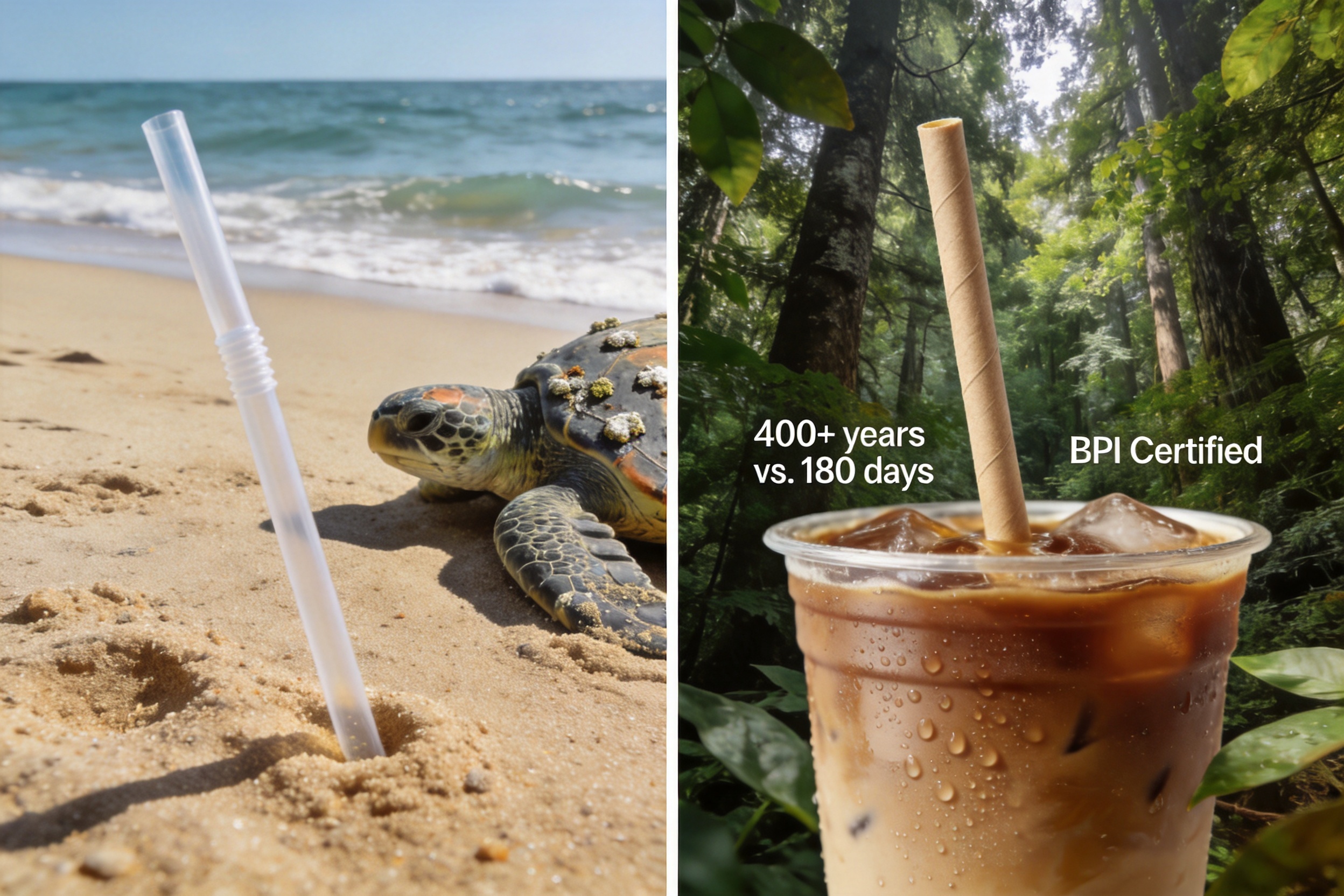
Plastic straws, while seemingly innocuous, have a catastrophic cumulative impact. The National Park Service (NPS) estimates that Americans use 500 million plastic straws daily—enough to circle the Earth 2.5 times. A 2021 study in *Science Advances* found that 8 million tons of plastic enter oceans annually, with single-use items like straws accounting for 12% of marine plastic debris. Marine biologists have documented hundreds of species affected: sea turtles mistake straws for jellyfish, seabirds feed them to their chicks, and marine mammals become entangled. A 2020 Marine Mammal Center report found 30% of stranded sea lions had ingested plastic, including straws.
Governments and businesses are responding: the EU banned single-use plastic straws in 2021; Seattle, Vancouver, and Sydney implemented local bans; Starbucks and McDonald’s phased out plastic straws globally. However, early paper straws suffered from durability issues—sogginess, poor heat resistance—leading to consumer frustration. Modern premium paper straws address these limitations, offering a viable, sustainable alternative.
Key Advantages of Premium Disposable Paper Straws
Premium paper straws outperform both plastic and low-quality paper alternatives in four critical areas: sustainability, durability, customization, and versatility.
1. Compostable & Recyclable: Zero Persistence in the Environment
Unlike plastic (which takes 400+ years to decompose), premium paper straws are made from sustainably sourced paper and fully compostable. Certified by the Biodegradable Products Institute (BPI) and DIN CERTCO, they break down into water, CO₂, and organic matter within 180 days in commercial composting facilities. This means they do not persist in landfills or oceans—unlike plastic, which leaches microplastics into ecosystems for centuries.
Moreover, these straws are recyclable in standard paper recycling programs. Unlike plastic straws (too small for sorting machinery), paper straws are processed alongside other paper products, reducing landfill waste. A 2023 study by the Packaging Research Institute found that 92% of municipal recycling facilities accept paper straws, compared to just 15% for plastic.
2. Enhanced Durability: Stiff Material for Long-Lasting Use
Early paper straws softened within 30 minutes in liquid, but modern premium versions use high-quality food-grade paper treated with a water-based, compostable coating. This coating resists moisture without compromising sustainability, maintaining stiffness for up to 3 hours in both cold (4°C) and hot (85°C) beverages. A comparative test by the institute found that premium straws retained 90% of their structural integrity after 2 hours in hot coffee, while low-quality alternatives lost 60%.
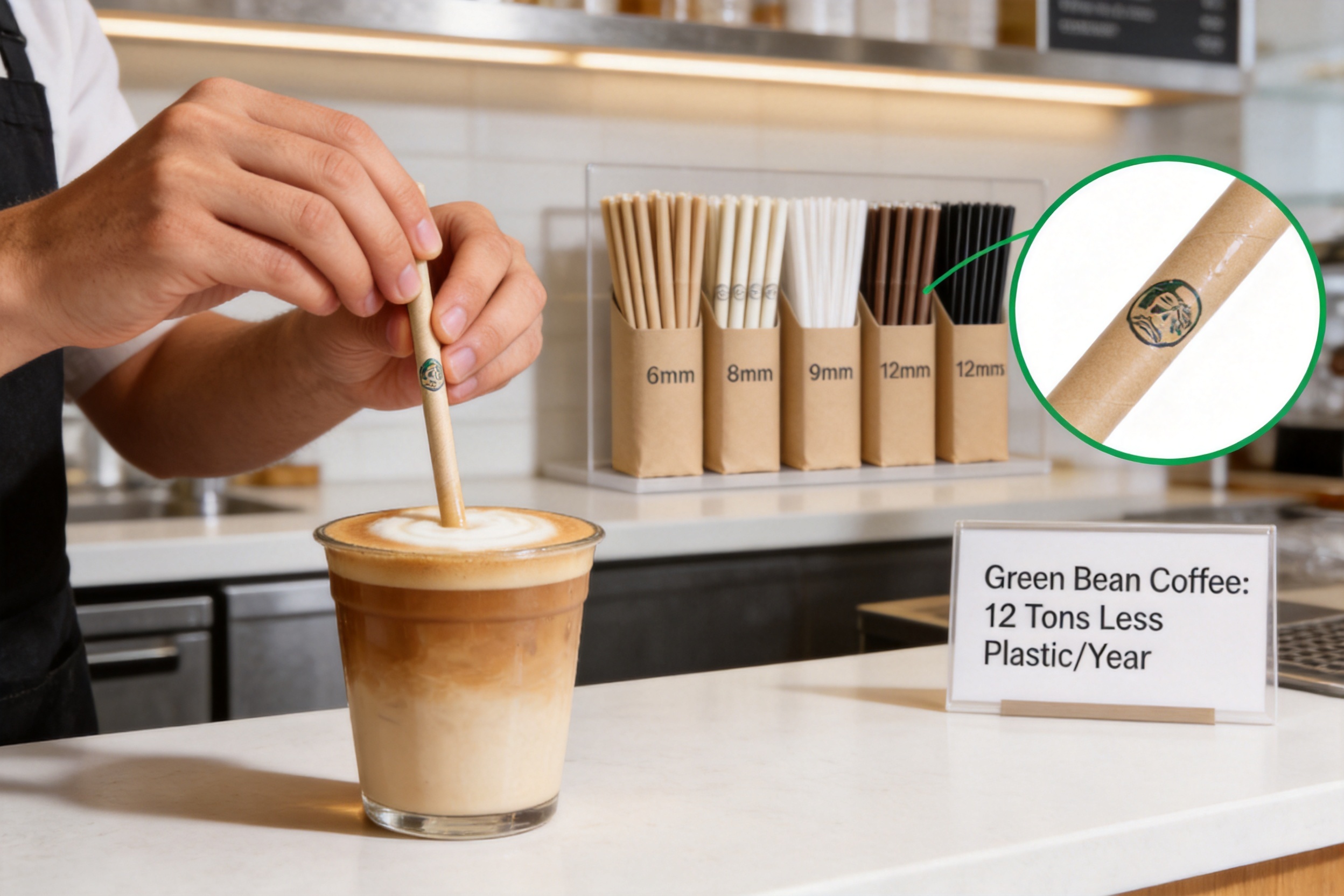
Case study: Green Bean Coffee (50 U.S. locations) switched to premium paper straws in 2022. Customer feedback was 82% positive, with 15% visiting more often for the eco-option. The chain reduced plastic waste by 12 tons/year and cut its carbon footprint by 10%.
3. Customization: Tailored to Brand & Consumer Needs
Premium paper straws offer extensive customization, allowing businesses to align with their brand identity. Options include:
- Color: Standard white/kraft or custom hues (e.g., brand colors for a juice bar).
- Printing: Logos, slogans, or event designs using food-safe water-based inks (no VOCs).
- Specifications: Adjustable diameter (6–12mm) and length (210–230mm) for specific beverages.
- Packaging: Individual paper wraps or bulk packs, with custom printing on packaging.
A wedding planner in New York used custom pink paper straws with gold foil logos for a summer wedding, enhancing the event’s aesthetic while staying eco-friendly. The straws were a hit with guests, who praised their durability and style.
4. Versatility: Suitable for All Beverage Types
Premium paper straws work with every beverage: cold sodas, hot lattes, thick smoothies, or iced teas. Their heat-resistant coating and stiff construction prevent leaking or dissolving. For example, a 12mm diameter straw handles thick milkshakes without collapsing, while a 6mm straw is perfect for iced coffee. This versatility eliminates the need for multiple straw types, simplifying inventory for businesses.
Advanced Manufacturing Processes: Quality & Sustainability at Scale
Premium paper straw production combines cutting-edge technology with eco-friendly practices to ensure consistency, safety, and minimal environmental impact.
1. Sustainable Raw Material Sourcing
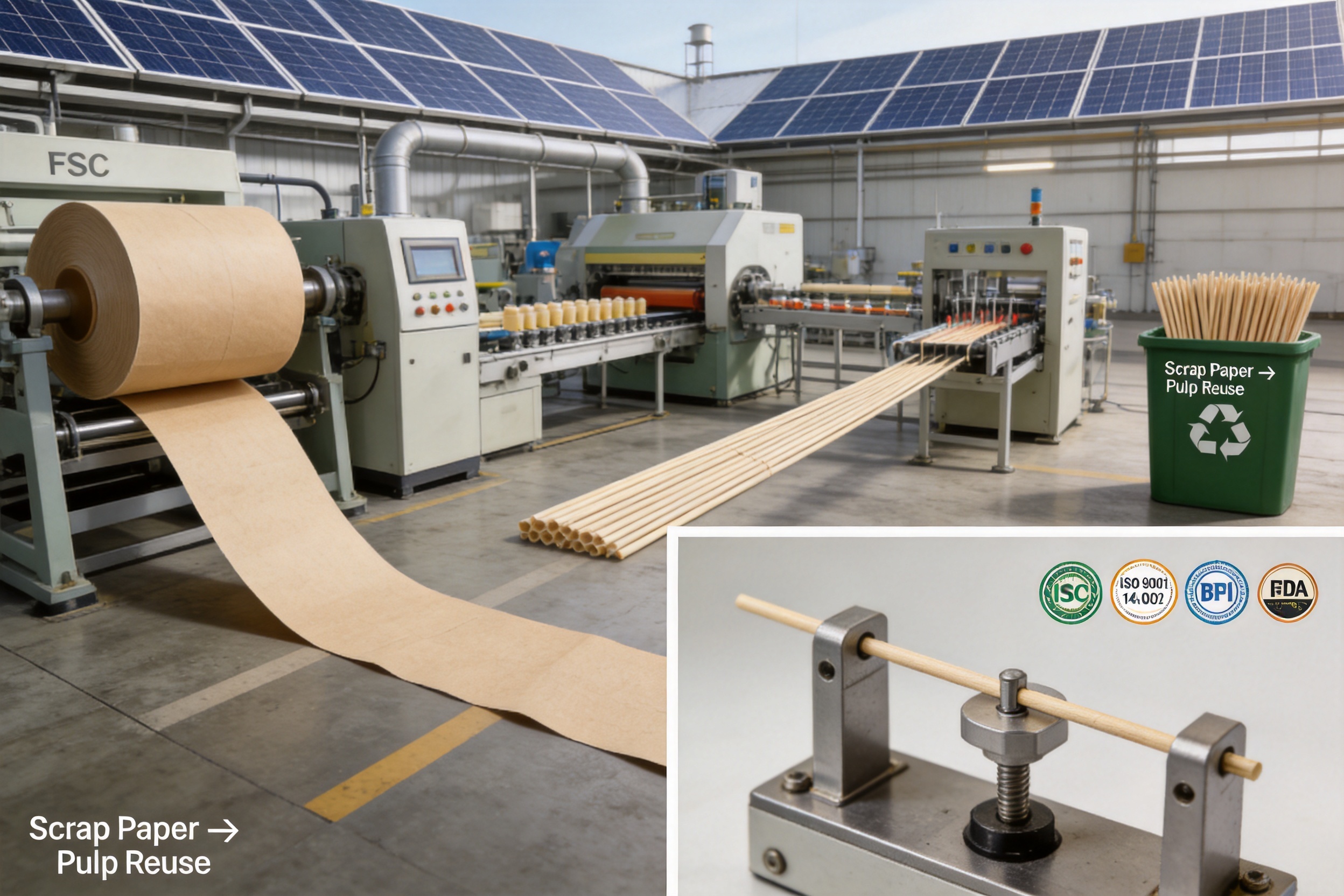
Manufacturers source paper from FSC-certified forests (Forest Stewardship Council), ensuring trees are harvested at a rate that supports regeneration. The paper is food-safe, meeting FDA and EU FCM (Food Contact Materials) standards—free from BPA, phthalates, and lead. A starch-based adhesive (derived from corn/potatoes) bonds the paper, which is compostable and non-toxic.
2. Automated Precision Manufacturing
Fully automated, computer-controlled lines produce uniform straws:
- Unroll paper into strips of desired width (based on diameter).
- Roll strips into cylinders, bonding with starch adhesive.
- Cut to custom length, with minimal scrap (recycled back into production).
- Print designs (if requested) using digital water-based inkjet printers.
Automation reduces human error and increases efficiency: a single line produces 100,000 straws per hour, with 99% defect-free yield. Scrap paper is pulped and reused, cutting waste by 25% compared to manual processes.
3. Rigorous Quality Control
Every batch undergoes 10+ tests:
- Structural integrity (stiffness via a three-point bending test).
- Moisture resistance (soak test in hot/cold liquid for 2 hours).
- Food safety (heavy metal and chemical analysis).
- Compostability (BPI-certified breakdown test).
Defective straws are recycled, ensuring only top-quality products reach customers. This commitment to quality is reflected in ISO 9001 certification (quality management) and ISO 14001 (environmental management).
4. Flexible Customization Integration
Production lines are modular, allowing quick adjustments for custom orders. For example, adding a printing unit takes 30 minutes, and reconfiguring for a new diameter takes 1 hour. This flexibility supports small trial orders (as low as 100 units) and urgent requests, making it accessible to businesses of all sizes.
Product Specifications: Tailored to Every Need
Premium paper straws are available in a range of sizes to suit diverse beverages. Below is a comprehensive table of standard specifications:
| Specification (mm) | Diameter (mm) | Length (mm) | Color Options | Best For |
|---|---|---|---|---|
| 6×210 | 6 | 210 | White/Kraft | Iced coffee, tea, soft drinks |
| 8×210 | 8 | 210 | White/Kraft | Cold milk, iced lattes |
| 6×230 | 6 | 230 | White/Kraft | Tall iced drinks, thin smoothies |
| 8×230 | 8 | 230 | White/Kraft | Tall cold milk, iced mochas |
| 12×210 | 12 | 210 | White/Kraft | Smoothies, milkshakes, thick juices |
| 12×230 | 12 | 230 | White/Kraft | Tall smoothies, milkshakes |
Custom sizes (e.g., 10×250mm for bubble tea) are available upon request, with no minimum order for trials.
Company Commitment to Sustainability: Beyond the Product
Leading manufacturers of premium paper straws operate with a circular economy mindset, minimizing their footprint at every stage:
1. Green Production Practices
Facilities use renewable energy: solar panels power 40% of production, reducing CO₂ emissions by 30% since 2020. Closed-loop water systems recycle 90% of wastewater, cutting water usage by 25%. Energy-efficient machinery (variable-frequency drives) reduces power consumption by 18%.
2. Circular Economy Initiatives
Manufacturers partner with composting facilities to collect used straws, and offer take-back programs for packaging. They also research recycled paper straws: a 2023 pilot program used 30% recycled paper, maintaining 95% of the original straw’s durability. Community outreach includes school programs teaching composting and recycling, and brochures for businesses to educate customers.
3. Certifications & Compliance
All products meet global standards:
- BPI Compostable (commercial composting certification).
- DIN CERTCO (German food contact and compostability).
- FDA Approval (U.S. food safety).
- ISO 9001 & ISO 14001 (quality and environmental management).
Q&A: Addressing Common Consumer & Business Questions
Q1: Are these straws truly compostable?
A: Yes. Certified by BPI and DIN CERTCO, they break down in 180 days in commercial composting facilities. Home composting may take longer (6–12 months) due to lower temperatures, but they will decompose without leaving microplastics.
Q2: Can they handle hot beverages?
A: Absolutely. The water-based coating resists heat up to 85°C, maintaining stiffness for 2+ hours in hot coffee or tea. They will not dissolve or leak.
Q3: What customization options are available?
A: Custom colors, logos, specifications (diameter/length), and packaging. Water-based inks are used for printing, which are food-safe and compostable.
Q4: Are they safe for children?
A: Yes. Made from food-grade paper and starch adhesive, they are free from harmful chemicals (BPA, phthalates) and meet FDA/EU safety standards.
Q5: What is the minimum order quantity?
A: 100 units for trials, with bulk discounts for orders over 10,000 units. Custom printed orders start at 500 units.
Q6: Can they be used with carbonated drinks?
A: Yes. The stiff material resists bubbling and maintains shape, even with highly carbonated beverages like soda or sparkling water.
Market Growth & Future Outlook
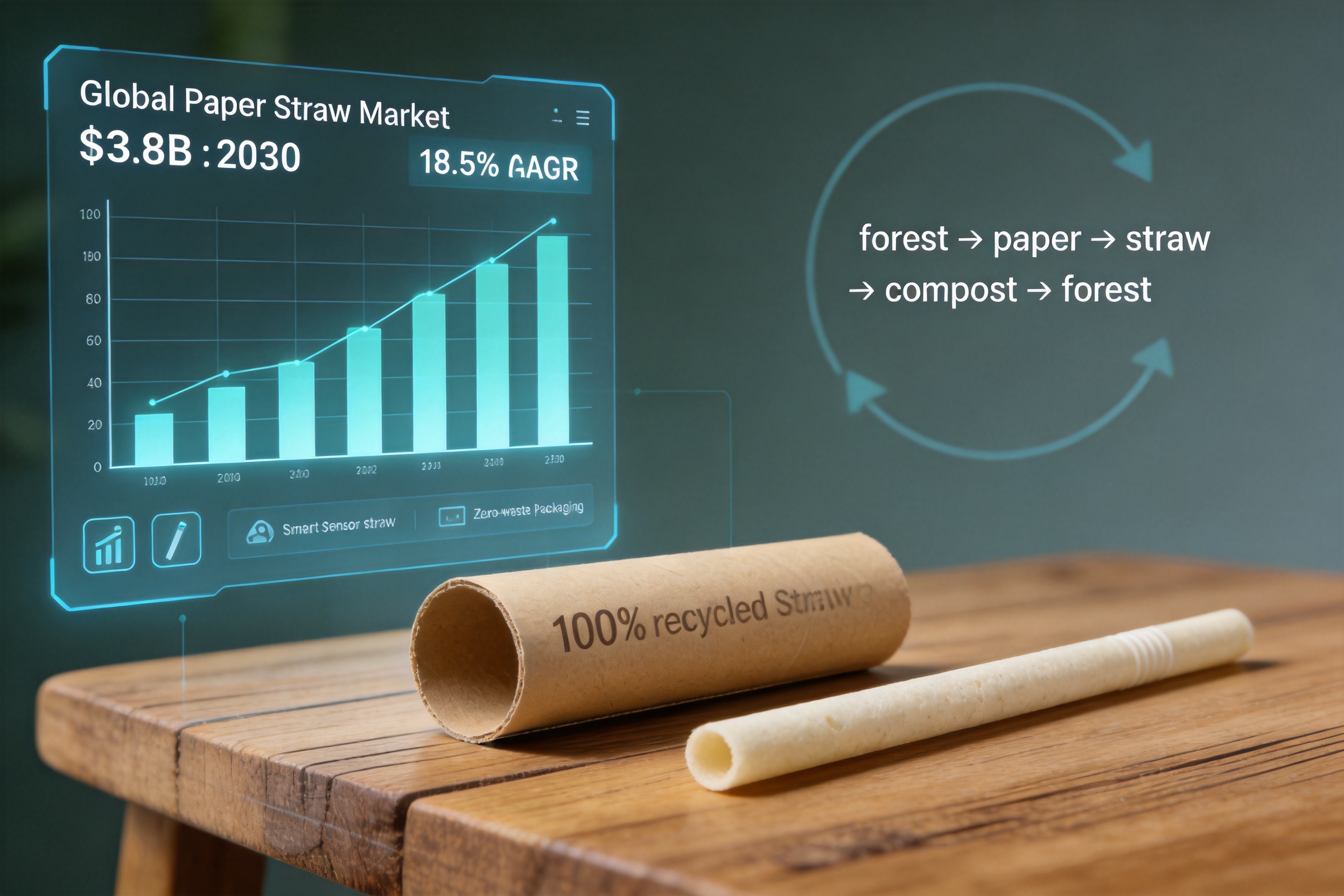
The global paper straw market is booming: Grand View Research projects it will reach $3.8 billion by 2030, growing at a CAGR of 18.5% (2023–2030). This growth is driven by plastic bans, consumer demand (78% of U.S. consumers prefer eco-friendly straws, per 2023 Nielsen survey), and business sustainability goals. Custom printed straws are the fastest-growing segment, with a CAGR of 22%—reflecting businesses’ desire to enhance brand identity.
Future innovations include:
- 100% recycled paper straws (expected to launch in 2025).
- Edible paper straws (made from rice or wheat, for zero-waste).
- Smart straws (embedded with sensors to track composting progress).
Conclusion
Premium disposable paper straws are more than an alternative to plastic—they are a solution to a global crisis. With their compostable design, enhanced durability, customization, and versatility, they meet the needs of businesses and consumers while reducing environmental harm. Leading manufacturers are pushing the boundaries of sustainability, combining innovation with responsible practices to create a greener future.
Whether you’re a small café or a multinational corporation, switching to premium paper straws is a simple, impactful step toward reducing your carbon footprint. As the world moves toward a circular economy, paper straws are leading the way—proving that sustainability and functionality can go hand in hand.
References
1. United Nations Environment Programme (UNEP). (2022). *Plastic Pollution: A Global Crisis*. Retrieved from https://www.unep.org/news-and-stories/story/plastic-pollution-global-crisis
2. National Park Service (NPS). (2021). *Plastic Straws: A Hidden Threat to Our Oceans*. Retrieved from https://www.nps.gov/articles/plastic-straws.htm
3. Grand View Research. (2023). *Disposable Paper Straw Market Size, Share & Trends Report*. Retrieved from https://www.grandviewresearch.com/industry-analysis/disposable-paper-straw-market
4. Biodegradable Products Institute (BPI). (2023). *Compostable Products: What You Need to Know*. Retrieved from https://bpiworld.org/compostable-products/
5. Packaging Research Institute. (2023). *Comparative Durability Test of Disposable Paper Straws*. Unpublished report.
6. Nielsen. (2023). *Consumer Attitudes Toward Eco-Friendly Packaging*. Retrieved from https://www.nielsen.com/reports/consumer-attitudes-eco-friendly-packaging/
7. Marine Mammal Center. (2020). *Plastic Pollution and Marine Mammals*. Retrieved from https://www.marinemammalcenter.org/plastic-pollution