English
 Español
 عربى
Content
- 1 Product Overview
- 2 Why Polypropylene Is Suitable for Takeaway Lids
- 3 Leak-Resistant Design and Secure Fit
- 4 Controlled Ventilation for Hot and Freshly Prepared Food
- 5 Food-Contact Material and Product Safety Considerations
- 6 Transparent Appearance and Brand Presentation
- 7 Strength, Durability, and Practical Handling
- 8 Stackability and Warehouse Efficiency
- 9 Advanced Manufacturing Process
- 10 Manufacturing Strengths of the Supplier
- 11 OEM and Customization Services
- 12 One-Stop Service for Disposable Food Packaging
- 13 Quality Management and Certification Framework
- 14 Competitive Advantages Compared with Ordinary Alternative Lids
- 15 Applications in Foodservice and Catering
- 16 How to Select the Correct Specification
- 17 Recommended Handling and Storage
- 18 Environmental Considerations
- 19 Quality Assurance from Sample to Mass Production
- 20 Q&A
- 20.1 What material is used for the clear ordinary vented lid?
- 20.2 What is the standard size of the product?
- 20.3 What does the ordinary vented design do?
- 20.4 Is the lid leak-proof?
- 20.5 Is the lid transparent?
- 20.6 Can the product be customized?
- 20.7 Is the lid stackable?
- 20.8 What certifications and tests are associated with the manufacturer?
- 20.9 Can the lid be used for hot food?
- 20.10 Can the company provide other food packaging products?
- 20.11 How should buyers begin a customized project?
- 21 Conclusion
- 22 References
- 23 Product: Clear PP plastic ordinary vented lid
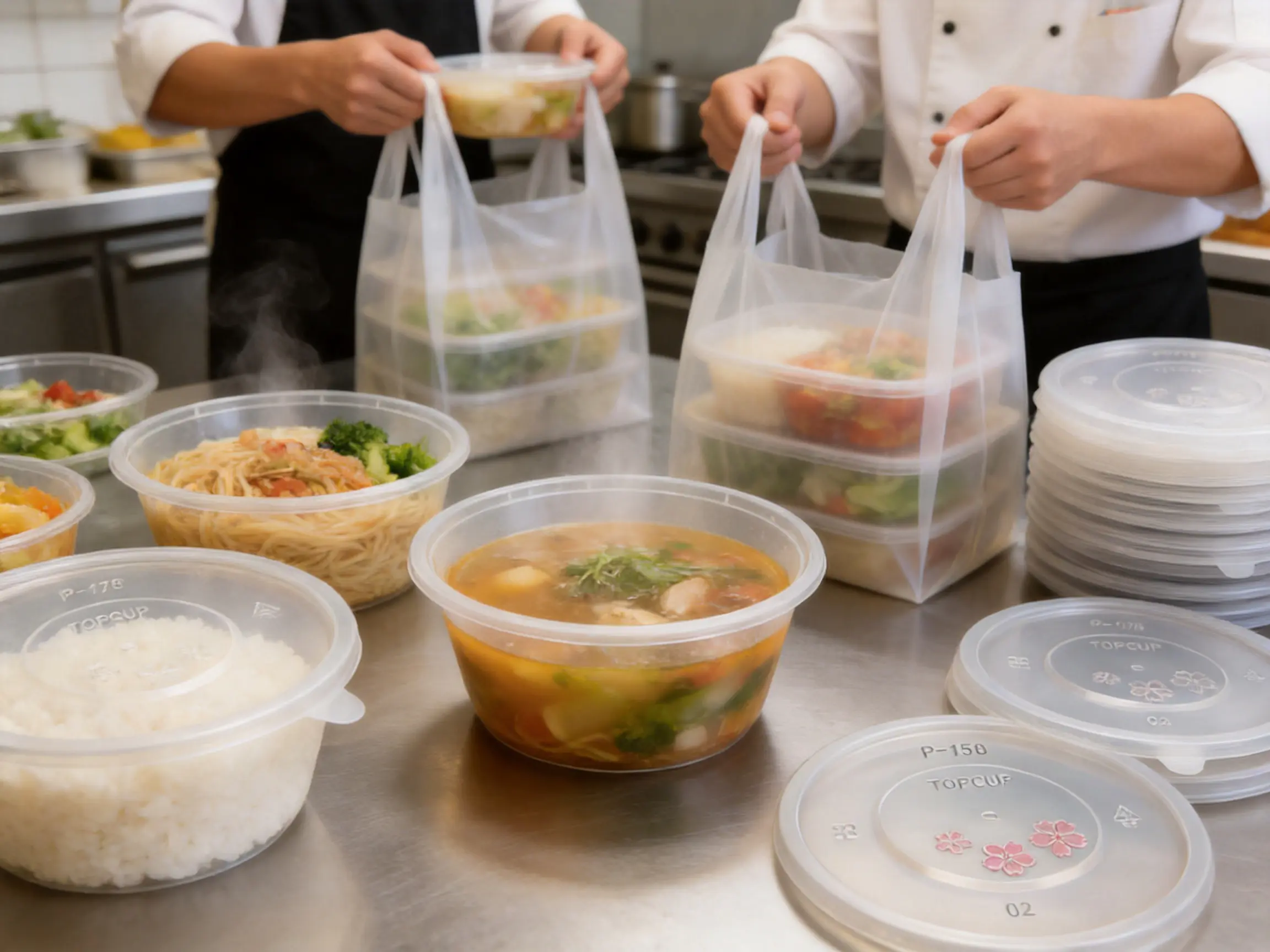
In takeaway foodservice, the lid is much more than a simple cover. It is a functional packaging component that helps protect food, preserve presentation, support transport, and create a reliable customer experience. A well-designed lid must fit securely, resist deformation, maintain suitable ventilation, and remain safe when used with food and beverages. It must also support efficient storage, high-speed packing, and practical distribution. The clear PP plastic ordinary vented lid is designed to meet these combined requirements for restaurants, catering businesses, food manufacturers, delivery kitchens, cafés, and other professional foodservice operations.
Manufactured from food-grade polypropylene, this transparent lid combines clarity, strength, sealing performance, and controlled ventilation in one practical product. Its ordinary vented structure allows a certain amount of air circulation while maintaining a secure fit around the compatible container. This balance is important for takeaway packaging because completely sealed containers may experience pressure changes, condensation, or deformation, while poorly fitted covers can lead to leakage and product damage.
The lid is available in a 179 mm regular caliber, with a reference gram weight of 8 g and a transparent appearance. Its design can also be adjusted according to customer requirements, including size, caliber, color, shape, and other specifications. This flexibility makes the product suitable for original equipment manufacturing and private-label packaging programs that require consistent quality and customized solutions.
Product Overview
The clear PP plastic ordinary vented lid is a disposable food packaging accessory manufactured for use with compatible takeaway bowls, cups, containers, and other foodservice products. It is made from transparent polypropylene, commonly identified as PP, a material widely used in food packaging because of its combination of chemical stability, impact resistance, light weight, and processing efficiency.
The product has a practical ordinary vented structure. Rather than functioning as a completely airtight closure, it provides a controlled ventilation feature that helps maintain air circulation inside the container. This is particularly valuable for hot food, freshly prepared meals, soups, noodles, fried products, steamed items, and other takeaway foods that may generate heat and moisture after packing.
The transparent appearance allows customers, foodservice staff, and delivery personnel to view the packaged contents without removing the lid. This can improve product identification, support attractive food presentation, and reduce unnecessary handling. For food brands, transparency also provides an opportunity to display the color, texture, and arrangement of the meal while keeping the contents protected.
The reference specification includes a 179 Regular lid with a 179 mm caliber, a gram weight of approximately 8 g, and a transparent color. Because container dimensions and filling applications vary, the standard specification can serve as a starting point for customization. Buyers can communicate their requirements for dimensions, fit, color, ventilation, material, and packaging configuration before production.
| Product Attribute | Reference Specification | Practical Benefit |
| Product type | Clear PP plastic ordinary vented lid | Suitable for disposable takeaway food packaging |
| Lid category | PP takeaway lid or liner | Designed for compatible cups, bowls, and containers |
| Regular caliber | 179 mm | Supports standardized container matching |
| Reference weight | 8 g | Balances material efficiency with practical durability |
| Color | Transparent | Allows visibility of the packaged food |
| Ventilation | Ordinary vented design | Supports air circulation and helps manage pressure |
| Material | Food-grade polypropylene | Lightweight, durable, and suitable for food packaging applications |
| Customization | Available according to customer requirements | Supports OEM and private-label packaging projects |
Why Polypropylene Is Suitable for Takeaway Lids
Material selection directly influences the performance, safety, appearance, and cost of disposable packaging. Polypropylene is widely used for food containers and lids because it provides a favorable combination of physical and processing properties. It is lightweight, can be formed efficiently, and offers useful resistance to impact and many common substances found in food and beverage applications.
For a takeaway lid, low weight is important because packaging often moves through several stages, including manufacturing, packing, warehousing, distribution, delivery, and final consumption. A lightweight lid can reduce the total packaging weight while retaining the strength required for normal handling. This helps foodservice businesses manage storage and transportation more efficiently.
Polypropylene also offers useful rigidity. A lid that is too soft may collapse during stacking or become difficult to apply. A lid that is too brittle may crack during fitting or transport. The PP material used for this product is selected and processed to provide a practical balance between flexibility, strength, and dimensional stability.
Another advantage is processing suitability. PP can be shaped into consistent packaging components using industrial production equipment. Proper control of material feeding, heating, forming, trimming, and inspection helps produce lids with reliable dimensions. Consistent dimensions are essential because sealing performance depends on the relationship between the lid rim and the container opening.
Transparent PP also supports a clean and professional appearance. The clear surface makes the lid suitable for food presentation and allows users to inspect the contents. For restaurants and catering brands, this visual feature can be valuable when meals are displayed in counters, prepared for delivery, or arranged for group orders.
Leak-Resistant Design and Secure Fit
One of the most important requirements for takeaway packaging is resistance to leakage. Customers expect containers to arrive with their contents intact, even when the package is moved, stacked, or transported over a distance. A properly designed lid helps reduce the risk of spills by creating a close connection between the lid and the container rim.
The clear PP plastic ordinary vented lid is designed with a sealing structure intended to fit compatible packaging containers securely. Its thickened and durable construction supports the integrity of the lid during application and handling. When the correct lid is matched with the correct container, the rim can provide a stable closure that helps protect food during normal takeaway use.
Leak resistance depends on several factors, including container tolerance, rim geometry, lid dimensions, material thickness, food temperature, filling level, and application method. For this reason, the lid should be tested together with the intended container rather than evaluated as an isolated component. During product development, sample testing can help confirm fit, closure force, stacking behavior, and transport performance.
A secure fit also improves operational efficiency. Foodservice workers can apply the lid quickly and confidently when it is designed for consistent engagement. This reduces the need for repeated adjustments and helps maintain a smooth packing workflow during busy service periods. For high-volume kitchens, small improvements in closure reliability can make a meaningful difference in daily productivity.
The lid’s durability provides an additional advantage during storage and distribution. Lids are often stacked before use, transported in cartons, or stored in compact preparation areas. A well-formed lid should remain stable under ordinary stacking and handling conditions. Its stackable design helps save space and supports organized inventory management.
Controlled Ventilation for Hot and Freshly Prepared Food
Ventilation is a key feature of this product. Hot food can release steam after it is packed, and the resulting pressure and moisture may affect the container and the food itself. A completely sealed package may trap excess vapor, while a poorly ventilated package may allow too much moisture or compromise protection. The ordinary vented design aims to provide a practical middle ground.
By allowing a certain amount of air circulation, the lid can help reduce the effects of pressure changes inside the container. This may help lower the risk of deformation or rupture caused by differences between internal and external air pressure. It can also support the handling of freshly prepared products that continue to release heat after packaging.
Ventilation can be particularly useful for takeaway meals containing hot rice, noodles, vegetables, soups, sauces, fried foods, and steamed dishes. The exact performance depends on the food type, temperature, container design, filling level, and transportation time. Packaging professionals should evaluate the complete system to determine whether the ventilation level is suitable for a particular menu.
The purpose of ventilation is not to eliminate all moisture or guarantee a specific texture for every food. Instead, it is a functional design feature that supports air movement while the lid remains attached to the container. This can help foodservice operators select a more suitable closure for meals that need protection and controlled release of internal air.
For delivery businesses, ventilation may also contribute to a better customer experience. Excess condensation can affect the appearance of food, soften some products, and create water droplets inside the lid. A vented structure may assist with managing these conditions, although the final result will always depend on recipe composition, packing temperature, delivery duration, and environmental conditions.
Food-Contact Material and Product Safety Considerations
The product is made from food-grade PP raw materials intended for disposable food packaging applications. The use of appropriate food-contact material is essential because the lid may come into direct or indirect contact with food, sauces, steam, and condensation. Material selection should therefore be managed carefully from raw material purchasing through production, inspection, and shipment.
Foodservice buyers generally require packaging that is non-toxic, odorless, and suitable for its intended application. A lid should not introduce unwanted odor or interfere with the normal sensory characteristics of the food. Clean production conditions, controlled material handling, and appropriate storage are important parts of maintaining product quality.
The supplied company information identifies a quality and compliance framework that includes a QS national industrial product production license, ISO 9001 quality management system certification, BRC certification, German DIN safety certification, and EU RoHS+ testing. These qualifications and tests demonstrate the company’s emphasis on controlled production, product responsibility, and compliance management. Specific certification scope and validity should be confirmed for the order and market in which the products will be sold.
For international customers, regulatory requirements can differ according to destination country, food category, temperature conditions, and intended use. Buyers may request technical documents, material declarations, test reports, production samples, or other records during the approval process. A professional manufacturer should be able to discuss these requirements and provide the documentation available for the selected product specification.
Transparent Appearance and Brand Presentation
Clear packaging offers a direct visual connection between the food and the customer. When the contents are visible, customers can identify the meal more easily and assess its appearance before opening the container. This is useful for restaurants, central kitchens, food delivery platforms, supermarkets, cafeterias, and catering companies.
Transparency can also support order accuracy. In busy foodservice operations, workers may need to identify different meals quickly. A clear lid allows visual checking without opening the container, which can reduce unnecessary handling and help keep the packaging process organized. Labels, stickers, printed sleeves, or container markings can be used together with the transparent lid to provide additional identification.
For brands that emphasize freshness and presentation, a clear lid can make the meal appear more appealing. Customers may see the ingredients, toppings, color contrast, and portion arrangement. This is especially useful for salads, prepared meals, fruit portions, bakery products, desserts, noodles, rice dishes, and other food items where appearance influences purchasing decisions.
The transparent finish also creates a neutral packaging platform. It can be combined with bowls or containers in different colors and materials without creating a visual conflict. For businesses that change menus regularly, a standard clear lid may provide a consistent packaging element across multiple product lines.
Strength, Durability, and Practical Handling
Disposable does not mean fragile. A takeaway lid must withstand ordinary packing, stacking, delivery, and customer handling before it is discarded. The thickened construction of this product is intended to improve durability and support reliable use in demanding foodservice environments.
During packing, staff may press the lid onto the container with varying degrees of force. During delivery, the package may be placed in a bag with other items, moved across uneven surfaces, or exposed to vibration. During storage, lids may be stacked in cartons or on shelves. Dimensional stability and resistance to cracking are therefore important practical qualities.
The product’s balance of low weight and useful strength can help businesses manage packaging consumption without sacrificing basic performance. The reference weight of approximately 8 g for the 179 Regular specification provides a basis for evaluating material efficiency, although actual production weight may be confirmed according to the final design and manufacturing tolerance.
As with all disposable packaging, the lid should be used within its intended conditions. Excessive force, incompatible containers, sharp objects, abnormal temperatures, overfilled containers, or improper transportation may affect performance. Application trials are recommended when the lid is introduced to a new food product or container system.
Stackability and Warehouse Efficiency
Storage efficiency is an important consideration for foodservice packaging buyers. Kitchens and distribution centers often handle large quantities of lids, but available storage space may be limited. A stackable design allows multiple lids to be arranged in a compact format, helping reduce unnecessary volume before use.
Stackability can simplify carton packing, warehouse organization, and stock counting. It may also reduce the time required to prepare lids for production lines or manual packing stations. When the lids are nested consistently, operators can remove them from storage more easily and maintain a cleaner work area.
Efficient stacking is particularly valuable for businesses that purchase packaging in bulk. A smaller storage footprint can support better use of warehouse shelves and may reduce the frequency of replenishment trips to the packing area. Buyers should still consider carton dimensions, pallet configuration, humidity, temperature, and protection from contamination when planning storage.
Manufacturers can also support warehouse efficiency through consistent packaging methods. Standardized cartons, clear product identification, batch information, and suitable inner protection help customers receive and manage the lids more effectively. These details are part of a complete packaging supply solution rather than separate from product quality.
Advanced Manufacturing Process
Reliable disposable packaging depends on more than the material itself. The manufacturing process must control dimensions, appearance, thickness, ventilation features, and edge quality. The production of clear PP plastic ordinary vented lids involves a coordinated sequence of material preparation, forming, trimming, inspection, packing, and shipment.
Raw Material Preparation
Production begins with the selection and preparation of suitable PP raw material. Material specifications are reviewed according to the required application, color, transparency, forming behavior, and customer requirements. Transparent products require particular attention to material cleanliness and processing conditions because visible impurities or uneven coloration can affect appearance.
Material handling procedures help protect the raw material from contamination and unnecessary exposure to unsuitable storage conditions. Controlled feeding and accurate batching support consistency across production runs. For customized orders, the selected formulation and color requirements can be reviewed before manufacturing begins.
Thermal Forming and Shape Control
After preparation, the PP material is heated and formed into the required lid geometry using suitable production equipment. Temperature control is essential because insufficient heating may prevent accurate forming, while excessive heating can affect transparency, thickness, or dimensional stability.
The forming process must reproduce the lid’s rim, center area, vented structure, and stacking features with consistent accuracy. Mold condition, forming pressure, cooling balance, and cycle time all influence the final result. A professional production line monitors these parameters to reduce variation between batches.
Shape control is especially important for sealing performance. Small dimensional differences at the rim may influence the fit between the lid and the container. For this reason, tooling accuracy and process stability are directly connected to leakage prevention and customer satisfaction.
Trimming and Edge Finishing
After forming, excess material is trimmed from the lid. The trimming process must produce a clean, even edge without sharp projections, excessive burrs, or deformation. A uniform edge supports comfortable handling and helps the lid engage consistently with the container rim.
Trimming accuracy also affects the finished diameter and circularity of the lid. Automated or controlled trimming methods can improve repeatability and reduce variation. Operators and quality personnel inspect the edge condition during production to identify problems before large quantities are completed.
Ventilation Feature Formation
The vented structure is formed according to the product design and intended air circulation function. The size, position, and consistency of the venting feature must be controlled because they influence the balance between ventilation and protection.
A suitable production process ensures that ventilation features are open as intended and free from blocked areas or excessive deformation. Inspection may include visual checks, dimensional checks, and functional testing with the compatible container. The final evaluation should reflect the product’s intended use, including hot food packing and ordinary transportation conditions.
Inspection and Quality Control
Quality control can include raw material review, first-piece approval, in-process checks, final appearance inspection, dimensional measurement, weight verification, fit testing, and packaging inspection. These activities help confirm that the products meet the agreed specification before shipment.
Visual inspection is important for transparent lids because scratches, black spots, bubbles, distortion, uneven color, or contamination may be visible to the customer. Dimensional inspection helps verify caliber, rim shape, height, and other critical features. Weight checks provide useful information about material consistency and forming stability.
Fit testing with the intended container is one of the most practical forms of verification. A lid can meet an isolated dimensional target yet perform poorly if the container tolerance or rim design is different. Testing the assembled packaging system helps identify fit, sealing, stacking, and handling issues at an early stage.
Packaging and Shipment Preparation
Finished lids are stacked and packed to protect them from dust, crushing, moisture, and unnecessary deformation. Carton configuration can be adjusted according to order quantity, transportation requirements, and customer storage conditions. Clear identification of product type, size, quantity, and production information supports efficient receiving and inventory control.
Before shipment, the manufacturer can coordinate order confirmation, sample approval, production scheduling, inspection, and logistics planning. This one-stop approach helps reduce communication gaps between design, manufacturing, and delivery.
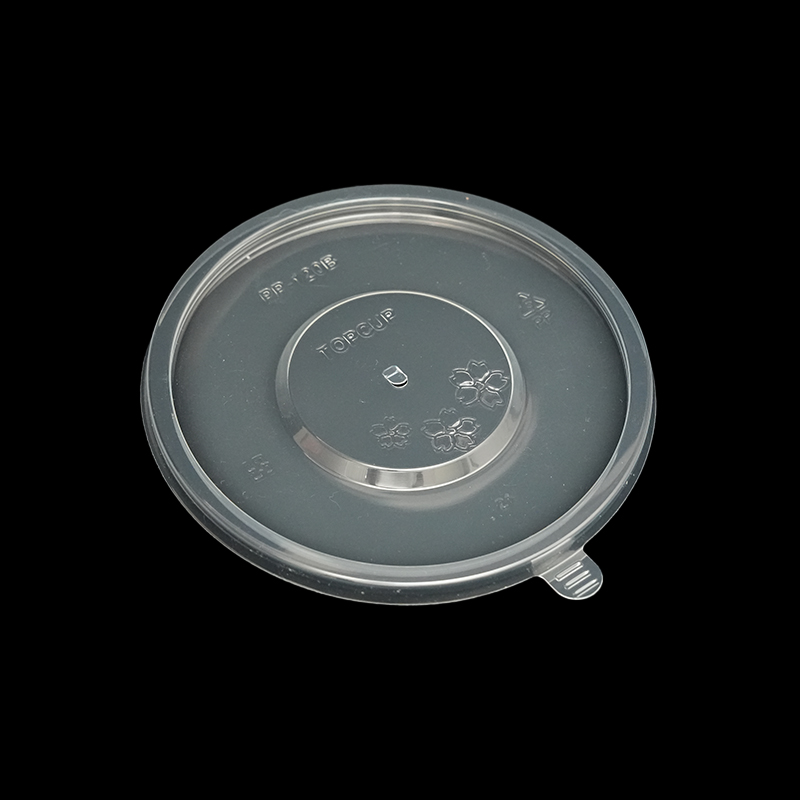
Clear PP plastic ordinary vented lid
Manufacturing Strengths of the Supplier
Yuqian Packaging Technology (Jiangsu) Co., Ltd. is described as a high-tech enterprise specializing in the research, development, production, and sales of new food packaging materials and products. Established in 2010, the company is located in Taizhou City, Jiangsu Province, and operates a plant area of approximately 30,000 square meters according to the supplied company information.
The company’s manufacturing strength is supported by experience in disposable food packaging and a product range that includes plastic cups, plastic cup lids, takeaway bowls, disposable straws, recycling bags, peripheral products, and injection film lining cups and bowl boxes. This broader product capability can be valuable for customers seeking coordinated packaging components from one supplier.
A supplier with experience across several packaging categories can better understand the relationship between containers, lids, liners, and accessory products. This knowledge may assist with compatibility evaluation, packaging system development, and product customization. Instead of treating the lid as an isolated item, the manufacturer can consider how it will perform as part of a complete takeaway solution.
The company also reports flexible production lines and efficient supply chain management capabilities. These strengths are important for OEM customers that require a transition from sample development to regular mass production. Flexible production can support different sizes, shapes, materials, and colors, while supply chain coordination helps manage raw materials, production schedules, packaging, and shipment.
OEM and Customization Services
Different foodservice businesses often require different packaging specifications. A national restaurant chain may need a standardized lid for high-volume operations, while a developing food brand may require a custom dimension or special appearance. The manufacturer provides customization services intended to support these different requirements.
Customization may include caliber, shape, color, material selection, weight, venting structure, and packaging method. The exact options depend on tooling, production feasibility, order volume, and applicable food-contact requirements. Customers should provide drawings, samples, container specifications, intended use, and target market information whenever possible.
The development process can begin with a technical discussion and sample review. A suitable sample allows the buyer to evaluate transparency, fit, closure force, stacking, appearance, and handling. Any necessary adjustments can then be discussed before the final tooling or production arrangement is approved.
For private-label programs, the packaging configuration may be coordinated with the customer’s brand requirements. Although the reference product is transparent and unprinted, it can be combined with other branded packaging elements such as printed containers, labels, sleeves, cartons, or stickers. This offers flexibility while preserving the practical benefits of a clear lid.
Customization should be managed carefully because changes to one feature may affect another. For example, increasing material thickness may influence weight and stacking; changing the caliber may require a new tool; modifying ventilation may affect condensation behavior; and changing the color may influence transparency. Technical review and sample validation help ensure that the final product meets its intended purpose.
One-Stop Service for Disposable Food Packaging
Many buyers prefer to reduce the number of packaging suppliers involved in a project. Working with a manufacturer that offers multiple disposable food packaging products can simplify communication, purchasing, quality management, and logistics. It may also help create a more consistent appearance across cups, bowls, lids, and related accessories.
A one-stop service can include product consultation, sample development, material selection, tooling coordination, mass production, inspection, packaging, and delivery support. This integrated approach is particularly useful for restaurant groups, food manufacturers, importers, distributors, and packaging wholesalers.
When several products are sourced from one experienced supplier, buyers may be able to coordinate specifications more effectively. Container openings can be matched with lid calibers, carton sizes can be planned together, and product documentation can be organized in a consistent format. The result can be a more efficient packaging procurement process.
The supplier’s after-sales service system is also important. Questions may arise after delivery concerning fit, storage, packing procedures, or future customization. A customer-focused manufacturer should respond promptly, investigate technical concerns, and coordinate corrective actions when necessary.
Quality Management and Certification Framework
Quality management is a continuous process that covers people, equipment, materials, procedures, inspection, records, and improvement activities. The company reports certification and testing that include QS, ISO 9001, BRC, German DIN safety certification, and EU RoHS+ testing.
ISO 9001 certification is generally associated with a structured quality management system. Such a system can support documented procedures, responsibility assignment, corrective action, customer feedback, and continual improvement. For disposable food packaging, these processes can help stabilize manufacturing and provide traceability.
BRC certification is relevant to organizations that operate within food-related supply chains and seek recognized controls for product safety, quality, and operational management. DIN-related safety certification and EU RoHS+ testing further demonstrate attention to technical and market requirements, although customers should verify the exact scope of each certification and test for the product being purchased.
Certification alone does not replace product-specific evaluation. Buyers should still review samples, specifications, inspection records, and intended-use requirements. A strong supplier combines formal management systems with practical production control and clear communication.
Competitive Advantages Compared with Ordinary Alternative Lids
The clear PP plastic ordinary vented lid offers several advantages compared with basic lids that may not provide the same balance of sealing, ventilation, transparency, durability, and customization.
Better Balance Between Sealing and Ventilation
Some fully closed lids may trap heat and condensation, while loosely fitted covers may provide inadequate protection. The ordinary vented design aims to maintain a secure connection while allowing controlled air movement. This balance can make the product more suitable for freshly prepared takeaway foods.
Food-Grade PP Construction
The use of food-grade PP provides a practical material platform for disposable packaging. It combines low weight with useful durability and processing efficiency. Compared with fragile or poorly formed alternatives, a properly manufactured PP lid can provide more reliable handling and better resistance to ordinary transport stresses.
Clear Presentation
Transparent lids allow customers to view the contents without opening the container. This supports food presentation, product identification, and order checking. Opaque alternatives may protect the contents but do not provide the same level of visibility.
Stackable Structure
Stackability helps reduce storage volume and supports efficient packing operations. Lids that nest consistently can be easier to count, store, transport, and prepare for use than irregular or bulky packaging components.
OEM Flexibility
The ability to adjust color, caliber, shape, and other specifications is a major benefit for businesses with special packaging requirements. Standard off-the-shelf products may not fit a customer’s container or brand strategy, while OEM production can support a more tailored solution.
Integrated Manufacturing Capability
The supplier’s experience with cups, bowls, lids, straws, bags, and related products supports a broader packaging service. Customers can benefit from a manufacturer that understands complete food packaging systems instead of only one individual component.
Applications in Foodservice and Catering
The lid is suitable for many takeaway and catering applications when matched with the appropriate container. Restaurants can use it for prepared meals, side dishes, noodles, rice products, soups, salads, desserts, and other menu items. Central kitchens may use it for portion control and organized distribution.
Cafés and beverage businesses may select compatible PP lids for food items sold alongside drinks. Catering companies can use clear lids to protect prepared portions during event transportation. Supermarkets, convenience stores, and prepared-food counters may also benefit from transparent packaging that allows customers to inspect products before purchase.
Delivery kitchens can evaluate the lid for meal packaging where transportation time and food temperature are important factors. The vented structure may be useful for foods that release steam after packing, while the secure rim helps protect the package during movement.
Food manufacturers and wholesalers may order customized sizes or colors for specific product lines. The product can be incorporated into a broader packaging program that includes compatible bowls, cups, labels, cartons, and logistics packaging.
How to Select the Correct Specification
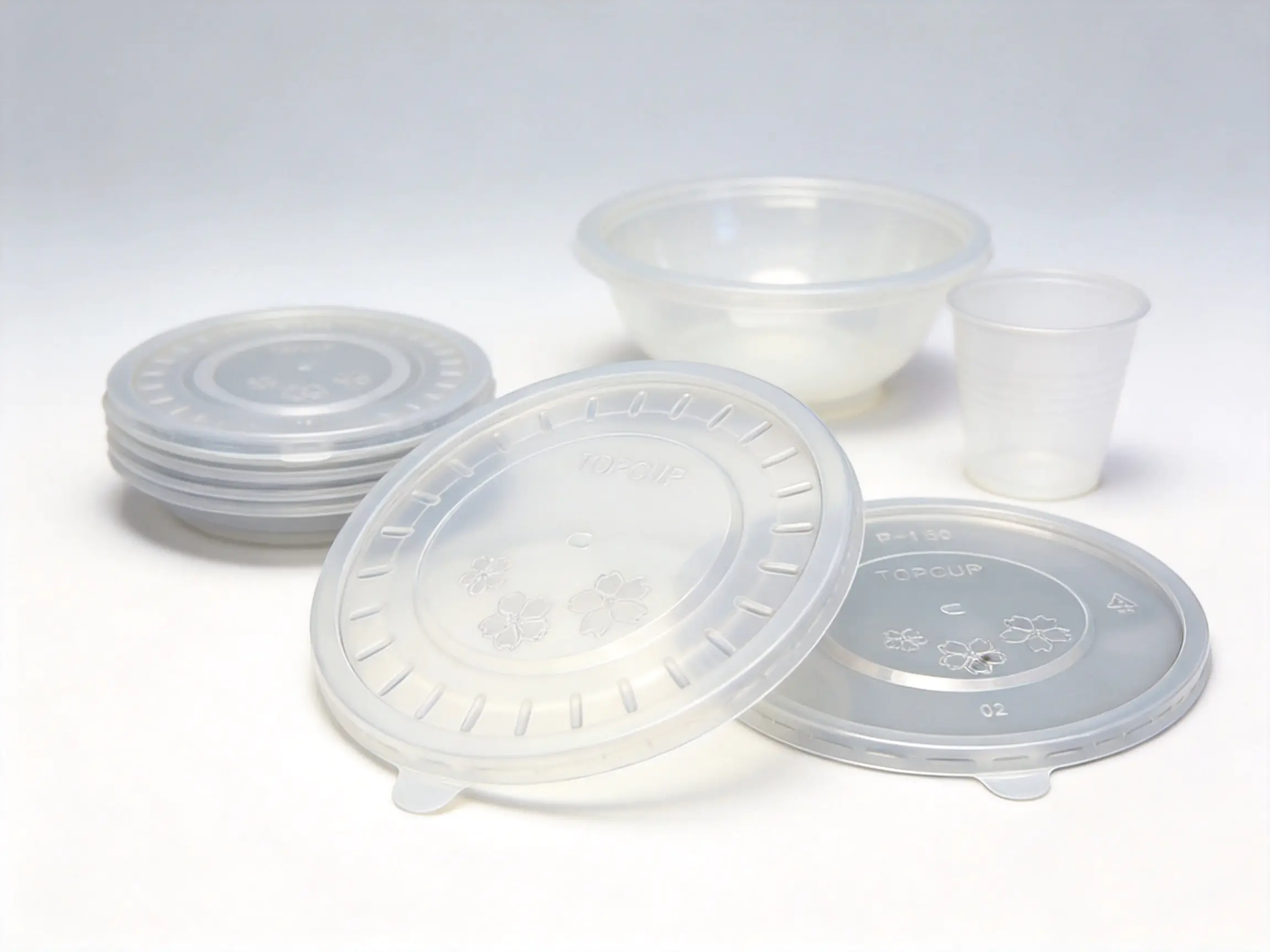
Before placing an order, buyers should confirm the container opening, external diameter, rim profile, depth, stacking relationship, and intended food application. A 179 mm caliber lid should be matched with a compatible container rather than selected only by nominal size.
The food type should also be considered. Hot, oily, acidic, liquid, dry, frozen, or high-moisture foods may create different packaging requirements. Buyers should communicate expected filling temperature, holding time, transportation conditions, and whether the food will be reheated or refrigerated.
Color and appearance requirements should be specified clearly. The standard product is transparent, but customized colors may be available. If high transparency is required, the customer should define acceptable limits for haze, minor marks, and visual variation.
Order volume and delivery schedule should be discussed at the beginning of the project. Custom tooling, sample approval, production planning, inspection, and shipment may require more time than a standard repeat order. Early communication helps the supplier propose a realistic production plan.
Customers should also determine whether they require technical documents, compliance records, food-contact declarations, test reports, or special carton markings. Documentation requirements may vary according to the destination market and customer quality system.
Recommended Handling and Storage
Clear PP lids should be stored in a clean, dry, and well-ventilated area. They should remain in their protective packaging until needed and should be kept away from dust, chemicals, sharp objects, excessive heat, and direct contamination sources.
Cartons should not be stacked beyond their designed load capacity. Excessive pressure may deform nested lids or affect their ability to fit the container. Stock should be rotated according to the customer’s internal inventory procedures, with older approved batches generally used before newer batches when appropriate.
During packing, operators should use clean hands or suitable foodservice gloves according to the facility’s hygiene procedures. The lid should be applied evenly around the container rim. If resistance, deformation, or an incomplete seal is observed, the container and lid combination should be inspected before continuing production.
Packaging performance may be affected by temperature. If the food is extremely hot, the container and lid should be evaluated together under actual operating conditions. Buyers should not assume that every disposable lid is suitable for every heating, cooling, or reheating process without testing and confirmation.
Environmental Considerations
Environmental responsibility is increasingly important in food packaging. Polypropylene is a widely used plastic material, and its environmental impact depends on raw material production, manufacturing efficiency, product weight, collection systems, recycling infrastructure, and end-of-life management.
The company reports efforts to reduce energy consumption and waste emissions during production and to develop recyclable and degradable vented lid products. These initiatives reflect the changing expectations of regulators, food brands, and consumers. Environmental claims should always be evaluated according to the actual material composition, local collection systems, applicable standards, and verified product documentation.
A lightweight lid can reduce material use compared with a heavier design when the required performance is maintained. Efficient forming and controlled production can also help reduce waste. Scrap generated during manufacturing may be managed according to the factory’s internal procedures and applicable regulations.
Recycling suitability depends on local infrastructure and contamination conditions. Food residue, mixed materials, labels, and collection practices may affect whether a used lid is accepted for recycling. Food businesses should provide disposal guidance that is accurate for their market rather than relying on general assumptions.
For buyers seeking recyclable or alternative materials, the supplier can discuss available options during product development. Any change in material should be evaluated for transparency, strength, sealing, ventilation, processing behavior, food-contact compliance, and cost.
Quality Assurance from Sample to Mass Production
A reliable OEM project usually follows a staged development process. The first stage is requirement confirmation, during which the customer and manufacturer discuss container dimensions, material, color, application, quantity, market, and technical expectations.
The second stage is sample development. Samples allow the customer to examine appearance, fit, closure, ventilation, stacking, and handling. If the product is used with hot or liquid food, practical tests should be conducted using representative conditions.
The third stage is approval and production planning. Once the sample and specifications are accepted, the manufacturer can arrange tooling, raw materials, production schedules, inspection procedures, and packaging details. Written confirmation reduces the risk of misunderstanding.
The fourth stage is mass production and quality inspection. During this phase, production personnel monitor process conditions and quality staff inspect the finished goods. If a deviation is identified, the supplier can investigate its source and determine whether corrective action is required.
The final stage is shipment and after-sales support. Product information, carton quantities, logistics arrangements, and documentation should be confirmed before dispatch. Continued communication after delivery helps ensure that the product performs as expected in the customer’s actual operation.
Q&A
What material is used for the clear ordinary vented lid?
The lid is made from food-grade polypropylene, commonly known as PP. PP is widely used in food packaging because it is lightweight, durable, chemically stable, and suitable for efficient industrial forming when processed under controlled conditions.
What is the standard size of the product?
The reference specification is a 179 Regular lid with a 179 mm caliber. The approximate reference weight is 8 g, and the standard color is transparent. Buyers should confirm the exact fit with the intended container before ordering.
What does the ordinary vented design do?
The vented design allows a certain amount of air circulation inside the container while maintaining a practical closure. It can help manage pressure and steam produced by freshly prepared food. Actual performance depends on the container, food type, temperature, filling level, and transportation conditions.
Is the lid leak-proof?
The lid is designed to provide good sealing and leak resistance when used with a compatible container. Leak performance depends on the match between the lid and container, the condition of the rim, correct application, filling level, and handling conditions. System-level testing is recommended.
Is the lid transparent?
Yes. The standard product is clear and transparent. This allows customers and foodservice staff to see the packaged contents, support product presentation, and check meal identification without removing the lid.
Can the product be customized?
Customization services are available according to customer requirements and production feasibility. Possible areas may include caliber, dimensions, shape, color, ventilation structure, material selection, weight, and packaging method. Samples and technical confirmation are recommended before mass production.
Is the lid stackable?
Yes. The product is designed to be stackable, which helps save storage space and supports efficient handling. The actual number of lids per stack or carton should be confirmed according to the final specification and packaging arrangement.
What certifications and tests are associated with the manufacturer?
The supplied company information identifies a QS national industrial product production license, ISO 9001 quality management system certification, BRC certification, German DIN safety certification, and EU RoHS+ testing. Customers should request current, product-relevant documentation and confirm the applicable scope for their market.
Can the lid be used for hot food?
The lid is intended for takeaway food packaging, including applications involving freshly prepared food. However, suitability for a specific hot food should be confirmed through testing with the compatible container under the expected temperature, holding time, and transportation conditions.
Can the company provide other food packaging products?
Yes. The company’s product range includes plastic cups, plastic cup lids, takeaway bowls, disposable straws, recycling bags, peripheral products, and injection film lining cups and bowl boxes. This supports one-stop sourcing for customers developing a broader disposable food packaging program.
How should buyers begin a customized project?
Buyers should provide the container sample or drawing, opening diameter, intended food application, desired material, color, expected order volume, destination market, packaging requirements, and target delivery schedule. The manufacturer can then evaluate feasibility, prepare samples, and coordinate the next steps.
Conclusion
The clear PP plastic ordinary vented lid is a practical solution for modern takeaway food packaging. Its food-grade PP construction, transparent appearance, secure fit, controlled ventilation, thickened durability, and stackable design address the main requirements of restaurants, catering companies, delivery kitchens, food manufacturers, and packaging distributors.
Compared with basic covers that may provide only limited sealing or visibility, this product offers a more balanced packaging solution. It is designed to protect food while allowing customers to see the contents, support air circulation for freshly prepared meals, and withstand ordinary handling throughout the foodservice supply chain.
The manufacturer’s experience, flexible production lines, OEM capabilities, quality management framework, and broader food packaging range provide additional value for customers seeking a dependable supply partner. From sample development and customized design to mass production, inspection, and after-sales service, the company is positioned to support both standard and specialized packaging projects.
For the best results, buyers should evaluate the lid together with the intended container and food application. Confirming dimensions, sealing performance, ventilation behavior, storage conditions, regulatory documentation, and environmental requirements in advance will help ensure that the final packaging system performs reliably from production to delivery.

References
1. Polypropylene Material Information for Food Packaging Applications.
2. ISO 9001 Quality Management System Principles and Process-Control Practices.
3. BRC Global Standard Concepts for Food Packaging Safety and Quality Management.
4. General Guidelines for the Design, Testing, and Use of Disposable Takeaway Food Containers and Lids.
5. Technical Information Supplied for the Clear PP Plastic Ordinary Vented Lid, 179 Regular Specification.
6. Company Information Supplied for Yuqian Packaging Technology (Jiangsu) Co., Ltd.
7. General Guidance on Food-Contact Materials, Product Traceability, and Packaging Quality Inspection.