English
 Español
 عربى
عربىContent
- 1 Understanding Biodegradable PLA Packaging Bags
- 2 Why PLA Matters in Sustainable Food Packaging
- 3 Product Features and Practical Advantages
- 4 Advantages Over Conventional Plastic Bags
- 5 Advantages Over Paper Bags
- 6 Advantages Over Low-Quality Compostable Alternatives
- 7 Manufacturing Strength Behind the Product
- 8 From Raw Material to Finished Bag
- 9 Customization for Different Takeaway Scenarios
- 10 Recommended Product Options
- 11 Food Safety and Consumer Confidence
- 12 Environmental Value and Responsible Communication
- 13 Performance in Beverage and Takeaway Operations
- 14 How Advanced Process Control Creates Better Bags
- 15 OEM Service and Personalized Design
- 16 Comparison With Competitor Solutions
- 17 Integration With Disposable Food Packaging Systems
- 18 Quality Management and Certification Support
- 19 Design Considerations for Better User Experience
- 20 Supply Chain Reliability and Production Capacity
- 21 Applications Across Foodservice and Retail
- 22 Economic Value for Businesses
- 23 Best Practices for Purchasing Biodegradable PLA Packaging Bags
- 24 Q&A Section
- 24.1 What is a biodegradable PLA packaging bag?
- 24.2 Is the bag suitable for food and beverage packaging?
- 24.3 What types of PLA packaging bags are available?
- 24.4 How does PLA compare with ordinary plastic?
- 24.5 Does PLA biodegrade anywhere?
- 24.6 Can the bag be customized with a logo?
- 24.7 Why choose a professional manufacturer instead of a low-cost supplier?
- 24.8 What certifications support manufacturing reliability?
- 24.9 What information should customers provide for customization?
- 24.10 Which businesses can use biodegradable PLA packaging bags?
- 25 Conclusion
- 26 References
- 27 Product: Biodegradable PLA packaging bag
Biodegradable PLA packaging bags are becoming a practical answer to one of the most urgent challenges in foodservice packaging: how to maintain convenience, hygiene, strength, and brand presentation while reducing dependence on traditional petroleum-based plastic bags. Designed for takeaway drinks, cups, bowls, and other disposable food packaging applications, these bags use polylactic acid, commonly known as PLA, a bio-based polymer derived from renewable resources such as corn starch or sugarcane. Compared with conventional plastic bags, biodegradable PLA packaging bags offer a more sustainable material pathway, a safer food-contact profile, and a better match with the environmental expectations of today’s consumers, restaurants, beverage shops, supermarkets, and catering brands.
In the global market for disposable food packaging containers and peripheral packaging products, packaging bags are sometimes treated as a small accessory. In reality, they are a critical part of the customer experience. A cup may be well sealed, a bowl may be strong, and a lid may fit tightly, but if the carrying bag is weak, unsafe, poorly sized, or environmentally controversial, the entire packaging system loses value. A biodegradable PLA packaging bag solves this problem by combining functional carrying performance with a responsible material choice. It can be produced as a single cup flat bag, double cup flat bag, single cup tote bag, double cup tote bag, four cup tote bag, and other customized structures, making it suitable for coffee shops, tea beverage chains, juice bars, bakeries, quick-service restaurants, dessert shops, and food delivery platforms.
As food packaging continues to move toward lower-carbon, resource-conscious, and circular economy-oriented solutions, the role of PLA packaging has expanded. PLA is not merely an alternative resin; it is part of a broader transformation in material sourcing, manufacturing technology, consumer education, and waste management. A well-manufactured biodegradable PLA packaging bag can help businesses reduce plastic pollution, improve brand image, comply with sustainability procurement requirements, and offer customers a packaging choice that feels aligned with modern values.
Biodegradable PLA packaging bag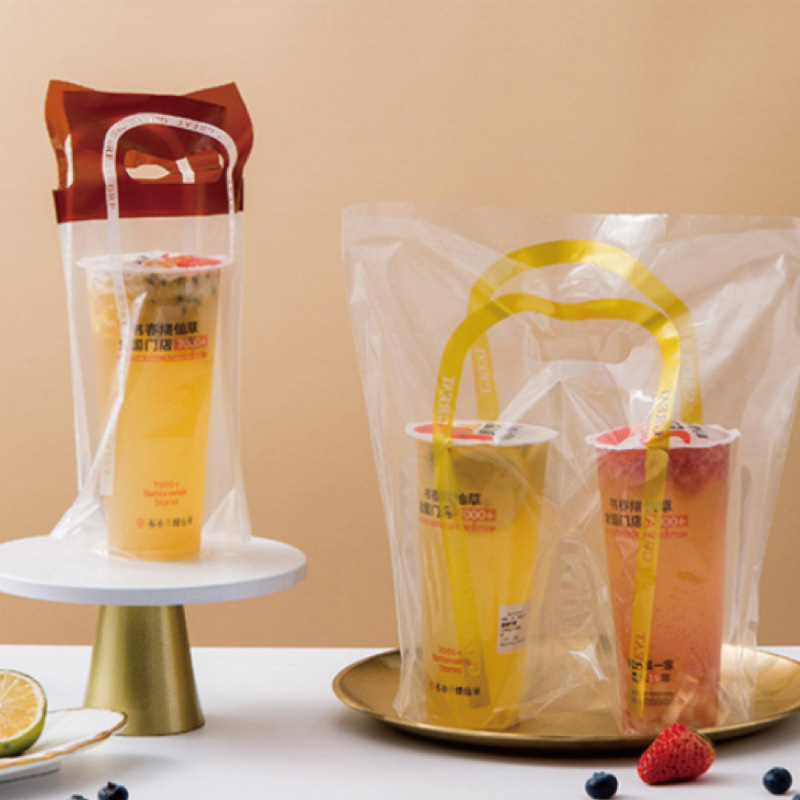
Understanding Biodegradable PLA Packaging Bags
A biodegradable PLA packaging bag is a bag made primarily from polylactic acid, a bio-based thermoplastic material produced through the fermentation of plant-derived sugars. After processing, PLA can be converted into films and bags that resemble traditional plastic products in appearance and usability, while offering a substantially different environmental profile. PLA materials are widely recognized for their renewability, food-contact suitability, and potential for biodegradation under appropriate composting conditions.
For takeaway and foodservice applications, PLA packaging bags are designed to hold cups, bowls, and small food containers securely during transport. The product can be made in flat bag or tote bag forms, with different opening widths, handle structures, sealing patterns, film thicknesses, and customized sizes. The major purpose is not only to carry items but also to protect the customer from spills, reduce direct hand contact with food packaging, improve delivery convenience, and provide a clean presentation for brands.
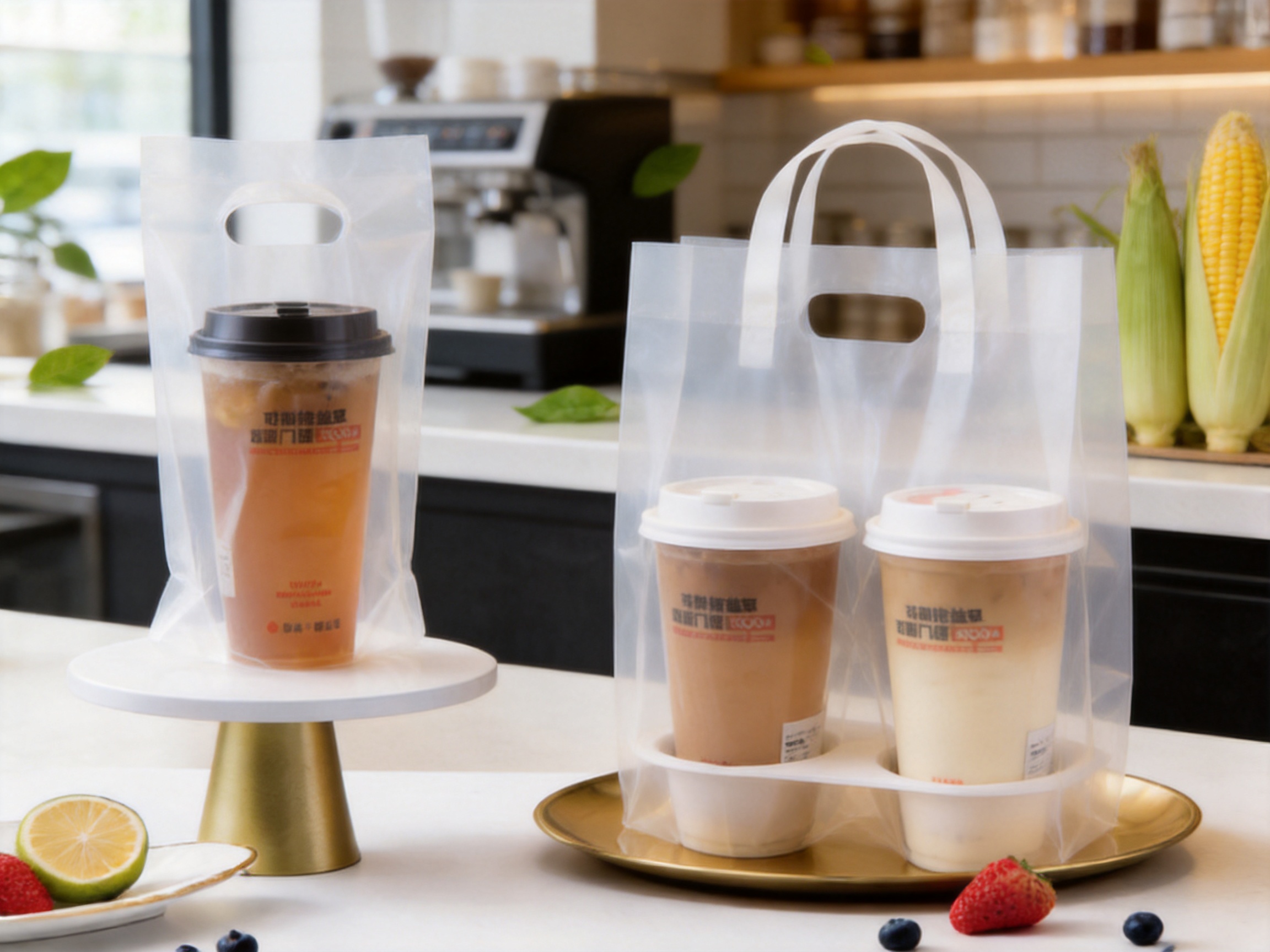
The available formats include single cup flat bags for individual beverages, double cup flat bags for paired drinks, single cup tote bags for easier hand carrying, double cup tote bags for multiple beverage orders, and four cup tote bags for group purchases. These structures are especially useful in beverage retail, where drinks are frequently purchased for takeaway or delivery. By selecting the correct structure and size, a shop can reduce movement inside the bag, improve carrying balance, and enhance customer satisfaction.
Unlike many generic packaging bags that are designed only around low cost, a well-engineered biodegradable PLA packaging bag is designed around material safety, environmental responsibility, mechanical performance, and customization flexibility. It is non-toxic and harmless when manufactured according to food packaging standards, and it does not need to contain harmful chemicals that may raise safety concerns. This feature is important for food and beverage applications because packaging may come into close contact with cups, lids, bowls, straws, napkins, and other items that customers handle directly.
Why PLA Matters in Sustainable Food Packaging
The packaging industry has long relied on petroleum-based plastics because they are inexpensive, lightweight, and easy to process. However, the environmental cost of conventional plastics has become increasingly difficult to ignore. Plastic waste can remain in the environment for long periods, contribute to marine pollution, generate microplastic concerns, and place pressure on waste management systems. Governments, brands, and consumers are therefore looking for alternatives that can reduce fossil resource dependence and improve end-of-life options.
PLA is significant because it is derived from renewable biomass rather than petroleum. The raw materials used to produce PLA, such as corn starch and sugarcane, can be replenished through agricultural cycles. This means PLA supports a different resource model from fossil plastics. While no packaging material is impact-free, PLA can reduce reliance on non-renewable resources and may have lower life-cycle greenhouse gas emissions compared with many traditional plastics when produced and managed properly.
Another important advantage is biodegradability. PLA is designed to break down under controlled composting conditions, particularly industrial composting environments that provide appropriate temperature, humidity, oxygen, and microbial activity. This does not mean PLA disappears instantly in every natural environment, and responsible communication is important. However, when integrated into proper composting or waste treatment systems, PLA can support more sustainable material cycles than ordinary plastic bags that persist for much longer.
For foodservice businesses, PLA also offers a communication advantage. Customers increasingly pay attention to visible packaging choices. A biodegradable PLA packaging bag gives restaurants and beverage brands a tangible way to show environmental commitment. When customers see a business using bio-based and biodegradable packaging, they often associate the brand with responsibility, care, and forward-looking values. This can strengthen customer loyalty and differentiate the business in competitive takeaway markets.
Product Features and Practical Advantages
The biodegradable PLA packaging bag combines several product features that matter in daily commercial use. First, it is made with biodegradable material, helping reduce long-term plastic pollution. Second, it is safe and environmentally friendly, making it suitable for food and beverage packaging applications. Third, it is non-toxic and harmless when produced with qualified raw materials and controlled manufacturing processes. Fourth, the size can be customized according to customer needs, allowing the packaging to match specific cup sizes, bowl dimensions, and brand requirements.
Customization is especially important because one standard bag cannot serve every business. A coffee shop may need single cup bags for hot drinks, while a bubble tea chain may need double cup tote bags for large cold beverages. A catering business may prefer four cup tote bags for multiple drinks, and a dessert shop may need bags that can hold bowls or cup-shaped containers without tipping. By offering multiple size options and custom development, biodegradable PLA packaging bags can become part of an optimized packaging system rather than a generic accessory.
The bag’s structure also affects performance. A flat bag is efficient, simple, and suitable for compact orders. A tote bag offers easier carrying and is preferred when customers need to walk longer distances or when delivery staff must handle multiple orders. Multi-cup bag structures help improve order organization and reduce the chance of customers dropping or mixing items. When carefully designed, even a small bag can improve efficiency at the service counter and reduce complaints caused by unstable packaging.
The material itself also contributes to the product’s appeal. PLA film can be manufactured with a clean appearance and pleasant tactile quality. For brands that want a modern and eco-conscious look, PLA bags can support printed logos, customized colors, or transparent presentations depending on technical and regulatory requirements. This makes the bag not only a carrier but also a brand communication surface. A thoughtfully designed biodegradable PLA packaging bag can reinforce the identity of a restaurant or beverage chain every time a customer carries it in public.
Advantages Over Conventional Plastic Bags
Compared with traditional polyethylene or other petroleum-based plastic bags, biodegradable PLA packaging bags offer several clear advantages. The most obvious is the renewable origin of the material. Petroleum-based plastics depend on fossil resources that require extraction, refining, and long-term environmental trade-offs. PLA, by contrast, starts from plant-based feedstocks. This supports a lower dependence on fossil resources and aligns with the purchasing standards of businesses that want greener supply chains.
A second advantage is consumer perception. Conventional plastic bags are widely associated with pollution and waste. Even when they are technically recyclable, many lightweight bags are not effectively recovered because of contamination, collection limitations, or low recycling value. Biodegradable PLA packaging bags present a more responsible alternative, especially when supported by proper disposal guidance and composting infrastructure. For foodservice brands, this can turn packaging from a source of criticism into a point of differentiation.
A third advantage is food packaging suitability. High-quality PLA bags manufactured under strict quality control can be safe for foodservice use and free from harmful chemicals that may be present in low-grade or poorly controlled packaging products. This is crucial because food packaging must protect not only the product but also consumer trust. A bag used around drinks and meals should be clean, stable, and produced with materials suitable for the intended application.
A fourth advantage is compatibility with circular economy concepts. Although PLA is not a universal solution to all waste problems, it can support systems that separate organic and compostable foodservice waste from persistent plastics. In restaurants, events, campuses, and closed-loop foodservice environments, biodegradable packaging can help simplify waste sorting when properly planned. This creates opportunities for businesses to participate in more responsible waste management programs.
Advantages Over Paper Bags
Paper bags are often viewed as a sustainable alternative, but they are not always the best solution for takeaway beverages and wet food packaging. Paper can absorb moisture, weaken under condensation, and tear when carrying cold drinks, hot cups, or bowls with sauces. For beverage delivery, condensation from cold drinks can quickly reduce the strength of paper packaging, leading to customer inconvenience and product loss.
Biodegradable PLA packaging bags offer better resistance to moisture compared with ordinary paper bags. They can maintain a cleaner appearance when used with cold beverages and help protect the surrounding environment from leaks or dampness. This is especially important for iced tea, fruit juice, coffee, smoothies, milk tea, and other beverages that create condensation during transport. A packaging bag that remains intact under these conditions reduces the risk of spills and improves customer satisfaction.
Another advantage is space efficiency. PLA film bags are lightweight and compact before use, allowing shops to store large quantities in limited space. Paper bags can occupy more storage volume and may require larger cartons, increasing warehouse pressure. For busy takeaway shops, compact packaging storage matters because counters and back rooms are often limited.
PLA bags can also offer better visibility and a cleaner modern look depending on the design. Transparent or semi-transparent film may allow customers and staff to see the packaged items, reducing order mistakes. While paper bags have their own advantages in some dry food applications, biodegradable PLA packaging bags are often more practical for beverage and cup-based takeaway systems where moisture resistance, compact storage, and carrying flexibility are important.
Advantages Over Low-Quality Compostable Alternatives
Not all compostable or biodegradable bags are equal. Some competitors may use unclear material blends, inconsistent film thickness, poor sealing, weak handles, or exaggerated environmental claims. These problems can lead to tearing, deformation, unpleasant odor, unreliable printing, and customer dissatisfaction. A biodegradable product must still perform well in real commercial conditions; otherwise, businesses may lose confidence in sustainable packaging.
A high-quality PLA packaging bag distinguishes itself through material purity, production control, and product consistency. Using qualified PLA material helps ensure stable film properties and avoids unnecessary additives that may compromise safety or performance. Strict manufacturing processes help maintain consistent thickness, sealing strength, bag dimensions, and appearance. This is particularly important for large restaurant chains and beverage brands, where every store needs uniform packaging quality.
Competitor products may also fail in customization. A standard compostable bag might technically carry a cup, but it may not fit well, causing drinks to tilt or move during transport. Customizable PLA packaging bags provide a better solution by matching bag width, height, handle design, and cup capacity to the customer’s actual packaging system. This reduces waste because businesses do not need to use oversized bags or double-bag products for safety.
Another key difference is professional manufacturing capability. A producer with experience in food packaging materials, quality systems, and OEM services can support customers from concept to final delivery. This includes material selection, sample testing, artwork preparation, production scheduling, quality inspection, and shipment coordination. Low-quality competitors may only provide commodity bags, while a specialized manufacturer can provide packaging solutions.
Manufacturing Strength Behind the Product
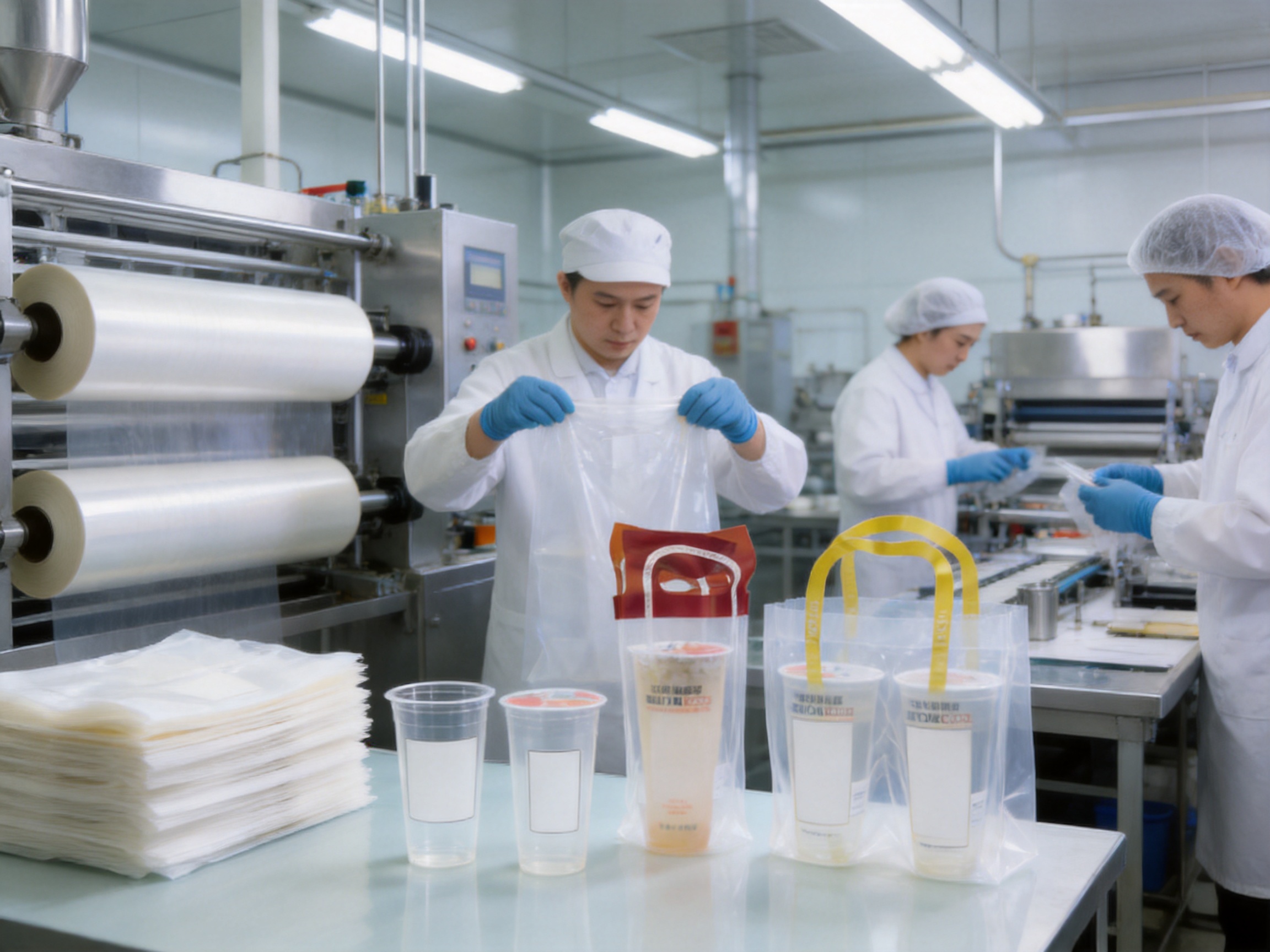
The performance of a biodegradable PLA packaging bag depends heavily on the manufacturer’s technical capability. Yuqian Packaging Technology (Jiangsu) Co., Ltd. was established in 2010 and is located in Taizhou City, Jiangsu Province, China. With a plant area of approximately 30,000 square meters, the company focuses on research, development, production, and sales of new food packaging materials and products. Its experience in biodegradable new materials and food packaging provides a strong foundation for producing reliable PLA packaging bags.
The company’s production strength is supported by an integrated approach to material control, processing technology, quality management, and customer service. As a professional OEM degradable PLA packaging bag manufacturer, it offers diversified product types and customized services. This is valuable for customers who need packaging that matches specific foodservice scenarios, brand identities, or market regulations.
The company has also obtained important certifications and qualifications, including the QS national industrial product production license, ISO9001 Quality Management System certification, BRC certification, German authoritative safety DIN certification, and EU ROHS testing. These certifications reflect a systematic commitment to quality, safety, and compliance. For international customers, certifications help reduce purchasing risk and provide confidence that products are manufactured under recognized management standards.
Advanced manufacturing is not only about machines; it is about process discipline. PLA film and bag production requires attention to resin handling, moisture control, extrusion parameters, cooling conditions, sealing temperature, cutting precision, and packaging hygiene. Because PLA has processing characteristics different from conventional petroleum-based plastics, manufacturers must understand the material deeply. Improper processing may lead to brittleness, uneven thickness, weak seals, or inconsistent appearance. A manufacturer with technical accumulation can better control these variables and produce stable commercial-grade bags.
From Raw Material to Finished Bag
The production of biodegradable PLA packaging bags begins with raw material selection. High-quality PLA resin must meet requirements for purity, safety, processability, and intended application. The manufacturer evaluates the resin’s melt characteristics, moisture sensitivity, mechanical properties, and compatibility with film production. Before processing, PLA material may require drying to reduce moisture content because excessive moisture can affect extrusion stability and final film quality.
After raw material preparation, the resin is processed into film through extrusion technology. In film production, temperature control is critical. PLA must be melted and shaped without degradation. The extrusion system must maintain stable flow, uniform film thickness, and suitable cooling conditions. Film thickness consistency affects bag strength, appearance, and cost efficiency. Too thin, and the bag may tear; too thick, and material use becomes inefficient. A professional manufacturer balances strength, flexibility, and sustainability through precise process control.
Once film is produced, it may be slit, printed, folded, heat-sealed, cut, punched, or formed according to the required bag type. For flat bags, dimensional accuracy and seal integrity are key. For tote bags, handle strength and shape consistency become especially important. For multi-cup bags, structure design must support weight distribution and user convenience. Every step requires accurate machinery and trained operators.
Quality inspection occurs throughout production. Raw materials are checked before use, process parameters are monitored during production, and finished bags are tested for dimensions, sealing strength, appearance, cleanliness, and packaging quantity. For food packaging, contamination control is essential. Clean production conditions, proper worker training, and controlled storage help protect product safety. The result is a finished biodegradable PLA packaging bag that is not only environmentally preferable but also commercially dependable.
Customization for Different Takeaway Scenarios
One of the strongest advantages of this product is customization. In foodservice, packaging must fit the operational reality of each customer. A standard bag may be acceptable for small orders, but optimized packaging can improve service speed, reduce material waste, and create a better customer experience. Biodegradable PLA packaging bags can be customized by size, thickness, structure, handle type, printing, packaging quantity, and functional design.
A single cup flat bag is suitable for one beverage order. It is often used by coffee shops, milk tea stores, juice bars, and takeaway counters. Its simple structure makes it efficient and economical. A double cup flat bag can hold two drinks and is useful when customers frequently purchase beverages in pairs. It can reduce the need for multiple separate bags and keep orders organized.
A single cup tote bag provides a carrying handle and may feel more premium or convenient for customers. It is useful when drinks are larger, heavier, or intended for longer walking distances. A double cup tote bag is ideal for two-drink takeaway orders and helps balance weight. A four cup tote bag can serve family orders, office orders, group purchases, and delivery applications. By selecting the correct bag type, businesses can improve operational efficiency and reduce packaging failures.
Customization also helps support branding. Bags can be designed to align with a company’s color system, logo placement, and visual style. For growing beverage chains, consistent packaging reinforces recognition. For independent stores, a customized biodegradable bag communicates professionalism and care. Even when the bag is simple, the use of environmentally responsible material becomes part of the brand story.
Recommended Product Options
| Bag Type | Typical Use | Main Advantage | Customization Focus |
|---|---|---|---|
| Single Cup Flat Bag | One takeaway drink or cup product | Simple, lightweight, efficient, and cost-conscious | Cup diameter, cup height, film thickness, opening size |
| Double Cup Flat Bag | Two beverage cups or paired takeaway items | Keeps paired orders together and reduces separate bag use | Width, load capacity, sealing strength, order stability |
| Single Cup Tote Bag | Premium single beverage takeaway | Easy carrying and improved customer convenience | Handle shape, grip comfort, cup fit, logo printing |
| Double Cup Tote Bag | Two drinks for takeaway or delivery | Balanced carrying and better presentation | Handle reinforcement, bag height, cup movement control |
| Four Cup Tote Bag | Group beverage orders, offices, events, delivery | High convenience for multiple drinks | Load distribution, film strength, structural stability |
Food Safety and Consumer Confidence
Food packaging must be safe before it can be sustainable. A packaging product that claims environmental benefits but fails safety expectations cannot meet the needs of professional foodservice customers. Biodegradable PLA packaging bags are designed to be non-toxic and harmless, using materials that do not contain harmful chemicals when produced according to proper standards. This is particularly important because bags used for foodservice often come into close contact with cups, lids, straws, bowls, napkins, and sometimes directly with packaged food containers.
Consumer confidence depends on visible and invisible quality. Visible quality includes clean appearance, smooth sealing, consistent shape, and lack of obvious defects. Invisible quality includes material safety, hygiene control, certification support, and traceability. A professional manufacturer controls both. This is why certifications such as ISO9001, BRC, DIN safety certification, and ROHS testing matter. They indicate that production is not random but governed by documented standards, inspections, and continuous improvement.
For restaurants and beverage brands, food safety is also a risk management issue. A low-grade bag may introduce odor, break during use, or create customer complaints. In contrast, a controlled PLA packaging bag supports the total quality of the takeaway experience. It helps customers trust that the business has considered not only the food and drink but also the packaging that surrounds them.
The non-toxic nature of PLA packaging also supports use in family-oriented and health-conscious markets. Parents, office workers, students, and environmentally aware consumers increasingly prefer packaging that feels safer and cleaner. While packaging alone cannot define a brand, it can strongly influence how customers perceive the brand’s responsibility and professionalism.
Environmental Value and Responsible Communication
Biodegradable PLA packaging bags help promote sustainable resource use because they are made from renewable bio-based materials. Their use supports the transition away from conventional petroleum-based plastics and contributes to the development of a circular economy. By choosing PLA bags, businesses can reduce the use of persistent plastic bags and show commitment to lower-impact packaging choices.
However, responsible environmental communication is important. PLA is biodegradable under suitable conditions, especially industrial composting environments. It should not be presented as a material that instantly disappears in all environments. The most accurate approach is to describe PLA packaging bags as bio-based, biodegradable under appropriate conditions, and beneficial when supported by responsible waste management. This honesty helps protect brand credibility and prevents greenwashing concerns.
Businesses using PLA packaging should also consider customer education. Simple disposal guidance can help users understand how to handle the bag after use. In locations with composting systems, the bag may be directed to appropriate compostable waste streams if accepted by local facilities. In locations without composting infrastructure, PLA still offers renewable resource advantages, but disposal must follow local rules. Clear communication improves the actual environmental outcome.
The greatest sustainability benefits arise when material selection, packaging design, manufacturing efficiency, logistics, and end-of-life management work together. A customized PLA bag that uses the correct amount of material, fits the product well, prevents spills, and reduces double-bagging can be more sustainable than a poorly designed alternative. This is why manufacturing expertise and product design are central to environmental performance.
Performance in Beverage and Takeaway Operations
Takeaway beverage operations are demanding. A bag may need to hold cold drinks covered with condensation, hot drinks in insulated cups, bowls with lids, or multiple items of different shapes. Customers may carry the bag while walking, cycling, driving, or waiting for delivery. The bag must perform reliably during these everyday conditions. Biodegradable PLA packaging bags are designed to provide the necessary carrying function while supporting environmental goals.
For beverage shops, speed matters. Staff need bags that open easily, fit cups quickly, and do not slow down service. If a bag is too tight, employees waste time inserting cups. If it is too large, cups may move and spill. Customized sizing solves this issue. A well-sized PLA bag improves service counter efficiency and reduces operational frustration.
For delivery platforms, stability matters. Delivery orders can experience movement, vibration, and handling changes. Multi-cup PLA tote bags can help keep drinks grouped and easier to manage. When combined with suitable cup lids and holders, the bag becomes part of a more reliable packaging system. This reduces complaints and improves the customer’s final impression.
For customers, convenience matters. Handles should feel comfortable, bags should not tear unexpectedly, and the packaging should look clean. Customers often judge the entire order by how it arrives. A biodegradable PLA packaging bag that is attractive, stable, and environmentally responsible can strengthen customer satisfaction even before they taste the product.
How Advanced Process Control Creates Better Bags
The difference between an average bag and a superior bag often comes from process control. PLA film production requires accurate temperature, pressure, speed, and cooling management. If the melt temperature is not controlled, the material may degrade or lose mechanical strength. If film thickness is inconsistent, some areas may tear more easily than others. If sealing temperature is incorrect, seals may be weak or brittle. These manufacturing details directly affect field performance.
An experienced manufacturer establishes standard operating procedures for every stage. Resin storage must prevent moisture absorption. Drying parameters must be suitable for PLA. Extrusion equipment must be adjusted to the required film grade. Operators must monitor film appearance, thickness, and stability. Bag-making machines must maintain cutting accuracy and sealing quality. Finished products must be packed to prevent contamination and deformation.
Testing is also essential. Samples may be checked for tensile strength, sealing strength, dimensional tolerance, visual defects, odor, and functional fit. For customized products, prototype testing can confirm whether the bag fits the customer’s cup or bowl system. This reduces the risk of mass production errors and ensures that the final product meets practical requirements.
Advanced process control also supports cost efficiency. By maintaining stable production, the manufacturer reduces waste, rejects, and rework. This allows sustainable packaging to remain commercially viable. Businesses often worry that environmentally friendly packaging will be too expensive, but efficient manufacturing and optimized design can help control costs while maintaining quality.
OEM Service and Personalized Design
OEM service is one of the product’s major strengths. Many foodservice businesses need packaging that matches their brand, market, and operational requirements. A professional OEM biodegradable PLA packaging bag manufacturer can provide product development support from initial concept to mass production. This includes recommending suitable bag structures, confirming dimensions, adjusting thickness, preparing samples, supporting printing requirements, and managing production schedules.
Personalized design helps catering brands build unique charm. Disposable food packaging is not only functional; it is part of the brand’s visual identity. A customized PLA bag can carry a logo, slogan, environmental message, or design pattern. It can be matched with plastic cups, PLA cups, cup lids, takeaway bowls, disposable straws, and other peripheral packaging products to create a coherent packaging family.
For chain stores, OEM service supports standardization. Every branch can use the same approved packaging design, helping the brand maintain a consistent customer experience. For distributors, OEM service allows product differentiation in local markets. For emerging brands, customization helps build recognition from the beginning. In all cases, a flexible manufacturer becomes a packaging partner rather than just a supplier.
Yuqian Packaging Technology (Jiangsu) Co., Ltd. provides customized packaging solutions and has experience in new food packaging materials and products. Its Shanghai branch, established to improve service quality and expand business channels, further supports customer communication and market response. This combination of production base and service capability helps customers receive both manufacturing reliability and responsive support.
Comparison With Competitor Solutions
In the biodegradable packaging market, competition is increasing. Many suppliers offer products that appear similar at first glance, but meaningful differences exist in material quality, production experience, certification, customization, and service. A customer choosing a PLA packaging bag should look beyond price and evaluate the total value of the product.
Some competitors focus only on low-cost production. Their bags may have inconsistent film thickness, weak handles, or unstable dimensions. These defects can increase actual costs because businesses may need to use extra bags, handle customer complaints, or replace failed packaging. A reliable PLA packaging bag reduces these hidden costs by performing consistently.
Other competitors may offer limited product types. If only one or two bag sizes are available, customers must adapt their products to the bag rather than the bag being designed around the products. This can lead to poor fit, wasted space, and reduced presentation quality. A manufacturer offering single cup, double cup, and four cup options, as well as flat and tote structures, provides a more complete solution.
Certification and quality management also separate professional suppliers from commodity sellers. Food packaging customers need assurance that products are manufactured under controlled standards. Certifications such as ISO9001 and BRC show that a company has established systems for quality and safety. This is particularly important for export customers, chain brands, and businesses with strict supplier approval procedures.
Integration With Disposable Food Packaging Systems
A biodegradable PLA packaging bag is most effective when integrated with the broader disposable food packaging system. Foodservice businesses often use plastic cups, plastic cup lids, takeaway bowls, disposable straws, recycle bags, peripheral products, and cup or bowl boxes. The carrying bag should match these components in size, material philosophy, and customer experience.
For example, a beverage shop using eco-friendly cups and lids should not complete the order with a conventional plastic bag that contradicts the sustainability message. A PLA bag creates consistency. It tells the customer that the business has considered the entire packaging chain, not just one visible item. This can improve the credibility of green branding.
Packaging integration also improves function. Cup diameter, lid height, straw placement, and bowl shape all affect bag design. A manufacturer familiar with food packaging containers can better design a bag that fits the actual items. This experience is valuable because it prevents simple but costly mistakes, such as bags that are too short for tall cups or handles that interfere with cup lids.
Integrated packaging also supports procurement efficiency. Customers can coordinate related packaging products with a supplier experienced in disposable food packaging containers and peripheral products. This may reduce communication time, simplify quality standards, and improve supply chain reliability.
Quality Management and Certification Support
Quality management is a major strength behind successful PLA packaging bag production. The packaging industry requires consistent performance because customers rely on the same product every day. A bag that works well in one batch but fails in the next is unacceptable for professional foodservice operations. ISO9001 certification indicates that the manufacturer follows a structured quality management system, including process control, documentation, corrective actions, and continuous improvement.
BRC certification is also meaningful in food packaging because it relates to safety and quality expectations in consumer product supply chains. The QS national industrial product production license reflects production qualification within the relevant regulatory context. German safety DIN certification and EU ROHS testing further demonstrate attention to product safety and restricted substance control. Together, these qualifications help customers assess supplier reliability.
Quality control should include incoming material inspection, in-process monitoring, finished product inspection, and final packaging verification. For PLA bags, key inspection points include film thickness, width, height, sealing line quality, handle strength, visual cleanliness, odor, packaging count, and carton labeling. For printed bags, color accuracy, print adhesion, and registration may also be checked.
Traceability is another important element. If a customer has a question about a specific batch, the manufacturer should be able to review production records, material information, and inspection results. This level of control is especially important for international trade and chain brand supply, where accountability and consistency are essential.
Design Considerations for Better User Experience
Good packaging design begins with understanding user behavior. Customers do not handle bags in laboratory conditions. They may carry a drink while holding a phone, walking in rain, entering public transportation, or receiving a delivery order at home. The packaging must account for real-life use. For PLA packaging bags, important design factors include grip comfort, opening convenience, cup stability, thickness, transparency, and visual appeal.
Handle design is particularly important for tote bags. A handle that is too narrow may feel uncomfortable when carrying multiple drinks. A handle that is poorly reinforced may tear. The manufacturer can adjust film thickness, handle shape, and sealing structure to improve carrying performance. For four cup tote bags, load distribution becomes even more important because the total weight can be significant.
Bag height and width should be matched to the cup or bowl. If a bag is too shallow, items may feel insecure. If it is too deep, staff may struggle to insert and remove products quickly. For cups with dome lids or straw holes, additional space may be required. For takeaway bowls, base width and lid diameter must be considered. Custom sampling helps confirm the best dimensions before mass production.
Visual design also affects the customer experience. A clean, well-made biodegradable PLA bag communicates quality. If printed, the artwork should be clear and suitable for the material. Environmental messaging should be accurate and concise. Instead of making exaggerated claims, brands can state that the bag is made from PLA, a bio-based biodegradable material, and should be disposed of according to local composting or waste management guidance.
Supply Chain Reliability and Production Capacity
For business customers, packaging is not an occasional purchase; it is a continuous operational necessity. Running out of bags can disrupt service, create customer dissatisfaction, and force emergency purchasing from unsuitable suppliers. Therefore, supplier reliability matters as much as product quality. A manufacturer with a large production site, established processes, and years of industry experience can better support stable supply.
Yuqian Packaging Technology (Jiangsu) Co., Ltd. operates from a 30,000 square meter plant and has been active in food packaging materials and products since 2010. This long-term experience provides the company with knowledge of production planning, quality assurance, raw material procurement, export requirements, and customer service. The establishment of a Shanghai branch also demonstrates commitment to improving service and expanding business channels.
Reliable supply chain support includes timely quotation, sample preparation, technical communication, production scheduling, inspection, packaging, and shipment. For customized PLA bags, early communication is important. Customers should provide cup dimensions, bag usage scenario, desired quantity, printing requirements, and any certification needs. The manufacturer can then recommend a suitable solution and avoid unnecessary redesign.
Production capacity also supports scalability. A small beverage brand may begin with modest orders, while a chain brand may need larger quantities across multiple locations. A manufacturer with strong capacity can support both growth stages. This makes the biodegradable PLA packaging bag suitable not only for small shops but also for large catering systems and distributors.
Applications Across Foodservice and Retail
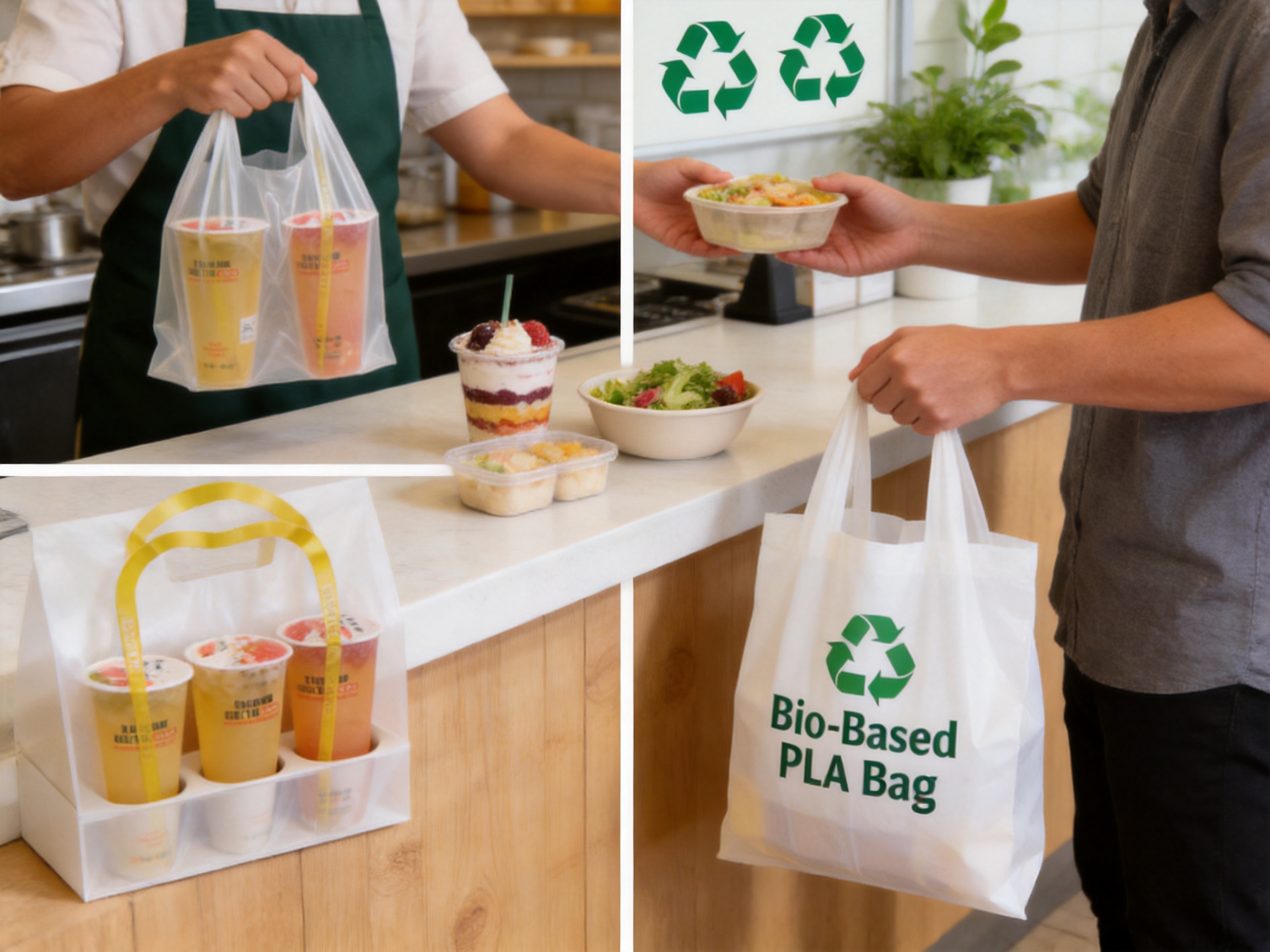
Biodegradable PLA packaging bags can be used in many commercial settings. Coffee shops can use single cup or double cup bags for hot and iced drinks. Milk tea stores can use tote bags for large cups and multi-cup orders. Juice bars can benefit from moisture-resistant biodegradable bags for cold beverages. Dessert shops can package cup desserts, yogurt, puddings, and small bowls. Bakeries can use customized bags for cup-shaped or containerized products.
Quick-service restaurants can use PLA packaging bags for drinks, side items, and takeaway combinations. Corporate cafeterias and campus dining services can adopt biodegradable bags as part of sustainability programs. Event organizers can use them for beverage distribution in controlled venues where compostable waste collection may be possible. Supermarkets and convenience stores can use them for ready-to-eat food, beverages, and small packaged meals.
Food delivery services are another important application. Delivery packaging must be functional, reliable, and presentable. PLA bags can help organize orders and support the environmental image of delivery brands. When paired with secure cup lids and stable containers, they contribute to a better delivery experience. As customers become more critical of packaging waste from delivery, biodegradable options may become increasingly valuable.
The product is also suitable for export markets where businesses are transitioning away from conventional plastic packaging. Many regions are introducing restrictions on single-use plastics or encouraging bio-based alternatives. A manufacturer with certification support and OEM capabilities can help customers respond to these market changes with customized biodegradable packaging solutions.
Economic Value for Businesses
Sustainable packaging is sometimes viewed only as a cost, but biodegradable PLA packaging bags can create economic value in several ways. First, they support brand differentiation. In crowded foodservice markets, customers often choose brands that align with their values. Environmentally responsible packaging can become part of the reason customers return.
Second, better packaging can reduce operational losses. Bags that fit correctly and resist tearing help prevent spills, refunds, complaints, and product replacement. The cost of one failed delivery can be higher than the difference between a low-grade bag and a high-quality customized PLA bag. Reliable packaging protects both products and reputation.
Third, customization can reduce material waste. A bag designed for the exact product size avoids excessive film use and reduces the need for double-bagging. This can help control packaging cost while improving sustainability. The right design is often more economical than using generic oversized bags.
Fourth, adopting biodegradable packaging may help businesses meet procurement requirements from partners, landlords, institutions, or markets with sustainability policies. For example, malls, campuses, event venues, and corporate foodservice programs may prefer or require environmentally improved packaging. A PLA packaging bag can help suppliers qualify for these opportunities.
Best Practices for Purchasing Biodegradable PLA Packaging Bags
Businesses planning to purchase biodegradable PLA packaging bags should begin by defining their application. What products will the bag carry? How many cups or bowls are typical per order? Are the drinks hot, cold, or both? Is the bag used for counter takeaway, delivery, or retail display? These questions determine the most suitable bag structure and specifications.
The next step is dimension confirmation. Customers should measure cup diameter, cup height, lid height, bowl diameter, and the number of items per bag. If possible, they should provide physical samples or technical drawings to the manufacturer. This allows the supplier to create a better fit and recommend film thickness or handle design.
Printing and branding should be planned early. PLA film may require suitable printing technology and ink selection. Artwork should be prepared in appropriate file formats, and environmental messages should be accurate. If the market requires specific labeling, the customer should discuss this with the manufacturer before production.
Customers should also ask about quality control, certifications, lead time, packaging method, minimum order quantity, and shipping options. A professional manufacturer can provide clear answers and help avoid misunderstandings. For large or customized orders, sample approval is strongly recommended before mass production.
Q&A Section
What is a biodegradable PLA packaging bag?
A biodegradable PLA packaging bag is a foodservice carrying bag made from polylactic acid, a bio-based polymer commonly derived from renewable resources such as corn starch or sugarcane. It is designed to carry takeaway cups, bowls, and related disposable food packaging products while reducing reliance on traditional petroleum-based plastic bags.
Is the bag suitable for food and beverage packaging?
Yes. When produced with qualified PLA material and controlled manufacturing processes, the bag is non-toxic, harmless, and suitable for foodservice applications. It can be used around cups, lids, bowls, straws, and other takeaway packaging components.
What types of PLA packaging bags are available?
Common types include single cup flat bags, double cup flat bags, single cup tote bags, double cup tote bags, and four cup tote bags. Sizes and structures can be customized according to customer needs.
How does PLA compare with ordinary plastic?
PLA is made from renewable bio-based resources, while ordinary plastic is usually made from petroleum. PLA can biodegrade under suitable composting conditions and supports a more sustainable material pathway. Traditional plastic bags may persist in the environment for much longer and are often associated with plastic pollution.
Does PLA biodegrade anywhere?
PLA biodegrades best under appropriate industrial composting conditions with controlled temperature, humidity, oxygen, and microbial activity. Disposal should follow local composting or waste management rules. Responsible communication is important because PLA should not be described as instantly disappearing in all environments.
Can the bag be customized with a logo?
Yes. OEM customization can include size, structure, thickness, handle design, printing, and packaging format. A customized bag can help foodservice brands improve recognition and present a more professional image.
Why choose a professional manufacturer instead of a low-cost supplier?
A professional manufacturer offers better material control, stable film thickness, stronger sealing, reliable dimensions, quality inspection, certification support, and customization service. Low-cost suppliers may offer inconsistent products that increase hidden costs through tearing, poor fit, customer complaints, or packaging waste.
What certifications support manufacturing reliability?
The company has passed certifications and tests such as QS national industrial product production license, ISO9001 Quality Management System certification, BRC certification, German authoritative safety DIN certification, and EU ROHS testing. These qualifications support product safety, quality control, and customer confidence.
What information should customers provide for customization?
Customers should provide cup or bowl dimensions, intended bag capacity, application scenario, desired thickness, printing requirements, order quantity, and any certification or market requirements. Physical samples or drawings are helpful for accurate design.
Which businesses can use biodegradable PLA packaging bags?
They are suitable for coffee shops, milk tea stores, juice bars, quick-service restaurants, dessert shops, bakeries, convenience stores, supermarkets, campus dining, corporate cafeterias, food delivery services, and event catering operations.
Conclusion
Biodegradable PLA packaging bags represent a practical and forward-looking solution for modern takeaway packaging. They combine renewable bio-based material, biodegradability under suitable conditions, foodservice safety, customization flexibility, and strong brand communication value. In a market where consumers increasingly care about packaging waste and environmental responsibility, these bags help businesses move beyond conventional plastic without sacrificing convenience or performance.
The product’s value is especially clear in beverage and takeaway operations. With options such as single cup flat bags, double cup flat bags, single cup tote bags, double cup tote bags, and four cup tote bags, customers can choose or customize a structure that fits their actual products. This improves carrying stability, service efficiency, and customer experience. Compared with ordinary plastic bags, paper bags, and low-quality compostable alternatives, a high-quality PLA packaging bag offers a balanced combination of sustainability, moisture resistance, appearance, safety, and practical usability.
Manufacturing strength is central to this value. With experience in new food packaging materials and products, a 30,000 square meter production base, OEM customization capability, and certifications including QS, ISO9001, BRC, DIN, and ROHS testing, Yuqian Packaging Technology (Jiangsu) Co., Ltd. provides a reliable foundation for customers seeking professional biodegradable packaging solutions. Its advanced process control, quality management, and service capability help ensure that every bag performs as intended.
For foodservice brands, packaging is more than a container. It is a touchpoint between business and customer, a signal of quality, and an expression of responsibility. A biodegradable PLA packaging bag supports all of these functions. It helps reduce the use of petroleum-based plastic, promotes sustainable resource use, improves takeaway convenience, and gives brands a credible way to participate in the green transformation of the packaging industry.
References
European Bioplastics. Bioplastics: Materials, Markets, and Environmental Benefits.
ISO 9001 Quality Management Systems: Requirements and Implementation Guidance.
British Retail Consortium. Global Standard for Packaging Materials.
Din Certco. Certification Programs for Compostable and Bio-Based Materials.
Association of Plastic Recyclers. Design and Material Considerations for Plastic Packaging.
Food and Agriculture Organization of the United Nations. Renewable Biomass Resources and Sustainable Material Development.
United Nations Environment Programme. Single-Use Plastics: A Roadmap for Sustainability.
Siracusa, V., Rocculi, P., Romani, S., and Rosa, M. D. Biodegradable Polymers for Food Packaging: A Review.
Auras, R., Lim, L. T., Selke, S. E. M., and Tsuji, H. Poly(Lactic Acid): Synthesis, Structures, Properties, Processing, and Applications.