English
 Español
 عربى
عربىContent
- 1 Product Overview and Core Application
- 2 Key Product Specifications
- 3 Leak-Resistant Design and Secure Sealing
- 4 Thickened Construction for Durability
- 5 Temperature Resistance and Material Performance
- 6 Transparency and Product Presentation
- 7 Stackability and Space Efficiency
- 8 Food-Grade PP and Health-Oriented Packaging
- 9 Manufacturing Process and Technical Control
- 10 Quality Management and Manufacturing Strengths
- 11 Advantages Compared with Common Competing Lids
- 12 Customization and OEM Development
- 13 Environmental Considerations and Material Efficiency
- 14 Applications Across Food-Service Operations
- 15 How to Select the Correct Lid
- 16 Recommended Evaluation and Testing Program
- 17 Procurement and Supply Advantages
- 18 Operational Benefits for Food Brands
- 19 Maintenance of Quality Through Continuous Improvement
- 20 Why This Product Is a Practical Packaging Choice
- 21 Frequently Asked Questions
- 21.1 What material is used for the transparent round thickened lid?
- 21.2 Which standard sizes are available?
- 21.3 Are the lids completely leak-proof?
- 21.4 Can the lids be used with hot food?
- 21.5 Can the lid color be customized?
- 21.6 Can a special diameter or shape be produced?
- 21.7 Are the lids stackable?
- 21.8 Are the lids recyclable?
- 21.9 What quality certifications are associated with the manufacturing facility?
- 21.10 How should buyers approve a new lid?
- 21.11 Who can purchase this product?
- 22 Conclusion
- 23 References
- 24 Product: Transparent Round PP plastic thickened lid
Food packaging is no longer judged only by appearance. Restaurants, cafés, takeaway businesses, catering companies, meal-preparation services, and food manufacturers all require packaging components that provide reliable protection, attractive presentation, efficient storage, and consistent performance. A lid must fit securely, resist leakage, maintain its shape during handling, and support food safety requirements. It must also be suitable for efficient mass production and adaptable enough to meet the different dimensions and branding needs of modern food businesses.
Transparent round PP plastic thickened lids are designed to answer these requirements. Manufactured from food-grade polypropylene, these lids combine clarity, strength, practical sealing performance, and efficient stackability. They are suitable for takeaway bowls, food containers, dessert packaging, catering containers, cold food packaging, and other disposable food packaging applications. The thickened structure improves durability compared with many lightweight lids, while the transparent surface allows customers and operators to view the contents without opening the container.
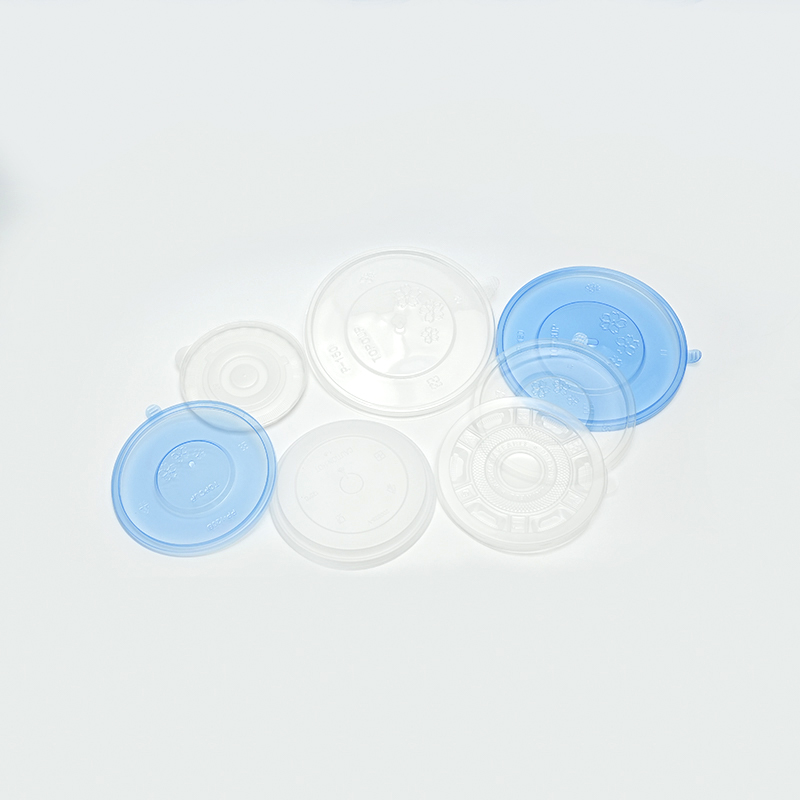
As part of a complete disposable food packaging container solution, these lids can be supplied in several standard calibers, including 120 mm, 150 mm, and 179 mm. Other dimensions, colors, and design details can be developed according to container specifications and customer requirements. This flexibility makes the product suitable for both standard packaging programs and customized food-service projects.
For purchasers, the value of a lid is determined by much more than its unit price. A poorly fitting lid can result in leakage, product waste, customer complaints, and unnecessary replacement costs. A lid that is too thin may deform during transportation or fail when stacked. A lid that is too opaque may reduce product visibility. By combining a reinforced design with food-grade PP material and controlled manufacturing processes, this product is positioned as a dependable option for businesses that need stable quality at commercial scale.
Transparent Round PP plastic thickened lid
Product Overview and Core Application
The transparent round PP plastic thickened lid is a circular cover designed for compatible food containers and takeaway bowls. Its primary function is to close the container opening and protect the contents during filling, storage, transportation, display, and consumption. The lid can be used with a range of food packaging formats, provided that the lid diameter and container rim are correctly matched.
Polypropylene, commonly identified as PP, is widely used in food packaging because it offers a useful combination of light weight, mechanical strength, chemical resistance, and processing flexibility. A PP lid can remain practical in demanding food-service environments where it may come into contact with sauces, oils, beverages, dairy products, prepared meals, or other common food contents. The material also provides a smooth surface that supports easy cleaning of production tooling and consistent molding results.
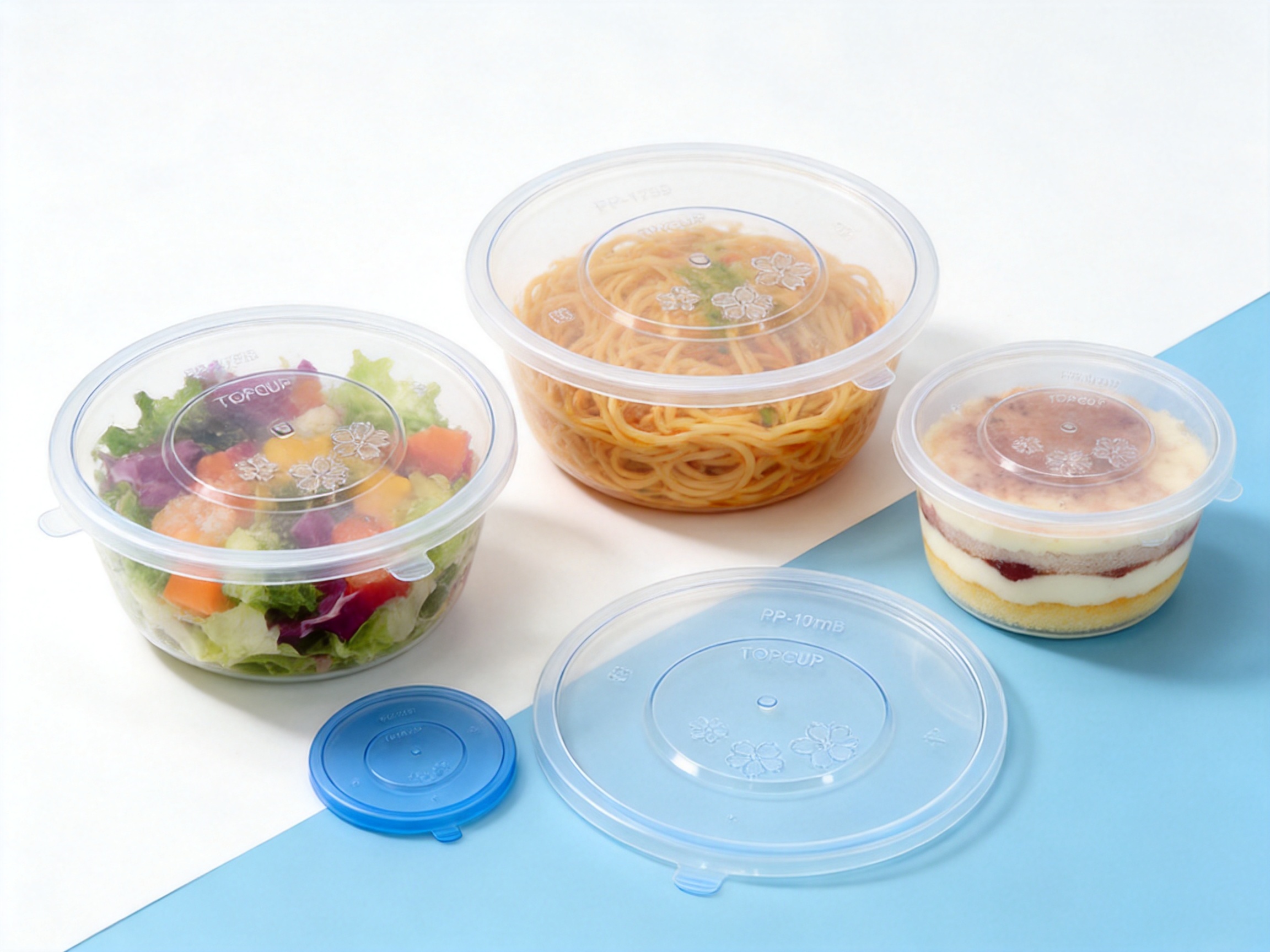
The transparent version is particularly useful when product visibility is important. Customers can see the food presentation, portion size, color, and arrangement before purchase. This feature is valuable for salads, fruit, desserts, noodles, rice dishes, pastries, snacks, and prepared meals. For retailers and food-service operators, visibility can also simplify stock identification and help staff distinguish different products without removing the lids.
The lid is described as thickened because its structure is reinforced in comparison with basic thin-wall disposable covers. The additional material and controlled forming process improve rigidity and reduce the risk of unwanted bending during normal handling. The result is a more stable cover that can support better stacking and transportation performance while maintaining a lightweight disposable format.
Although the product is designed primarily for takeaway and food packaging, the material and design concept may also support selected pharmaceutical packaging, daily-use product packaging, and other applications where transparent, impact-resistant, chemically resistant, and recyclable PP components are required. Application suitability should always be confirmed through container compatibility testing and the specific requirements of the intended market.
Key Product Specifications
The product range includes several standard sizes. The caliber refers to the approximate lid diameter and should be matched carefully with the outer dimension and sealing structure of the corresponding container. Gram weight may vary slightly according to production tolerances, order specifications, and customized design requirements.
| Lid Type | Caliber | Approximate Gram Weight | Available Color | Typical Positioning |
|---|---|---|---|---|
| 120 mm Thickened Lid | 120 mm | Approximately 5 g | Transparent or blue | Compact takeaway containers and bowls |
| 150 mm Thickened Lid | 150 mm | Approximately 9 g | Transparent or blue | Medium-size food containers |
| 179 mm Thickened Lid | 179 mm | Approximately 13 g | Transparent or blue | Larger takeaway bowls and meal containers |
| Customized Lid | According to requirement | Confirmed during development | According to requirement | Special container, color, or project needs |
The standard transparent and blue options provide a practical starting point for most packaging programs. Transparent lids support product visibility, while blue lids can assist with product differentiation, visual identity, or category organization. Custom colors may be evaluated according to the required appearance, material formulation, production volume, and applicable food-contact requirements.
Customers should provide the container rim diameter, wall profile, flange structure, intended food type, filling temperature, transportation conditions, and preferred color when requesting a customized lid. These details help the manufacturer determine the appropriate mold geometry, wall thickness, locking structure, and production parameters.
Leak-Resistant Design and Secure Sealing
Leak prevention is one of the most important performance requirements for takeaway packaging. During delivery, containers may be tilted, stacked, moved through busy kitchens, or placed in delivery bags with other products. If the lid does not seal properly, liquid or sauce can escape, damaging the food, packaging, and surrounding items.
The thickened PP lid uses a sealing structure designed to provide a close fit with the compatible container. The circular geometry supports even contact around the rim, while the reinforced edge helps the lid maintain its shape when pressed into position. A stable edge is important because deformation at one point of the circumference can create a path for leakage.
Good sealing performance depends on both the lid and the container. The container rim must be dimensionally consistent, the lid must be correctly matched to the opening, and the packaging line must apply suitable closing pressure. For this reason, product samples and compatibility tests are recommended before large-scale purchase. Testing can include inversion checks, vibration tests, stacking tests, and transport simulations using the intended food contents.
Compared with a very thin lid, a thickened design offers greater resistance to accidental flexing during closure and handling. This can help reduce the risk of partial engagement, especially when staff are working quickly in a commercial kitchen. The lid should still be applied according to the container supplier’s recommended method, and no disposable lid should be considered completely leak-proof under every condition.
For food-service businesses, dependable sealing can contribute to lower product loss and a better customer experience. A well-fitted cover helps preserve food presentation, supports cleaner delivery, and reduces the likelihood that the operator will need to use additional tape, film, or secondary packaging. This can simplify packing procedures and improve operational efficiency.
Thickened Construction for Durability
Durability is a major difference between a reinforced lid and an ultra-light cover. A lid must withstand normal pressure from filling, closing, stacking, transportation, and customer handling. It should not easily collapse, crack, or lose its fit when exposed to ordinary conditions.
The thickened structure increases rigidity while preserving the practical advantages of PP. The lid can be handled more confidently by kitchen staff, packed into delivery bags, and stacked with other containers. It also provides a more substantial feel to the customer, which can contribute to the perceived quality of the food package.
Mechanical strength is especially useful for foods that are heavier, contain liquid, or require transportation over longer distances. A rigid cover can help protect the top surface of the food and reduce contact between stacked containers. It may also provide improved resistance to incidental impact compared with a fragile thin-wall alternative.
The correct degree of thickness must be balanced against material efficiency. Excessive material can increase product weight, packaging cost, and resource consumption. The manufacturer’s engineering objective is therefore to develop a lid that provides practical strength without creating unnecessary material use. Controlled molding, appropriate mold design, and stable processing conditions are essential to achieving this balance.
Customers comparing competing products should examine more than nominal thickness. They should evaluate actual gram weight, edge strength, fit consistency, transparency, deformation after temperature exposure, stacking behavior, and performance during transportation. A lid with a low purchase price may create higher total costs if it causes leakage or breakage. A stable thickened lid can support a more predictable packaging process and reduce avoidable waste.
Temperature Resistance and Material Performance
PP is selected for this product because it offers useful temperature performance within an appropriate range. The product description specifies that the lid can withstand a high-temperature environment within a certain range without immediate deformation or melting. However, the exact temperature limit depends on the lid design, container material, food composition, exposure time, and heating method.
Customers should not assume that every PP lid is suitable for direct microwave use, oven use, sterilization, or high-temperature filling. Those applications require dedicated testing and clear technical confirmation. A lid may tolerate warm food during ordinary takeaway service while remaining unsuitable for direct heating. The correct use conditions should be established before commercialization.
When used within its intended conditions, PP can provide good dimensional stability and resistance to many common food substances. The material is also less likely than some alternative plastics to become brittle during ordinary handling. This makes it appropriate for a broad range of disposable food packaging programs.
Temperature testing may include exposure to warm or hot food, storage at different temperatures, repeated handling, and inspection for warping, cracking, discoloration, or loss of sealing performance. For customized projects, the testing plan can be adapted to the customer’s actual distribution environment.
Transparency and Product Presentation
Clear packaging has a direct effect on product presentation. Transparent round lids allow consumers to view the contents while keeping the container closed. This can be particularly important for foods where color, layering, freshness, or decoration influences purchasing decisions.
Restaurants can display salad toppings, desserts, fruit combinations, noodles, rice meals, and snacks more effectively when the lid is clear. Catering companies can organize prepared portions quickly, and retail operators can show the contents on refrigerated shelves or takeaway counters. The lid acts not only as a protective component but also as part of the product’s visual communication.
Transparency may also improve order accuracy. Staff can identify the contents of a sealed container more easily, particularly when multiple meals are prepared at the same time. Labels can still be applied to the lid or container when necessary, but visual identification provides an additional operational benefit.
Compared with opaque covers, a transparent lid can reduce the need for customers to open packaging before purchase. This helps maintain hygiene and protects the product from unnecessary exposure. It can also support a premium appearance when the food has been carefully arranged.
Clarity must be balanced with practical production requirements. A high-quality transparent lid should have a consistent appearance, limited visible defects, and a smooth surface. Stable raw materials, clean production conditions, well-maintained molds, and controlled processing temperatures all contribute to a more uniform visual result.
Stackability and Space Efficiency
Disposable food packaging is often stored and transported in large quantities. Space efficiency directly influences warehouse organization, delivery costs, and the speed of packaging operations. The round PP thickened lids are designed to be stackable, allowing multiple lids to be arranged in a compact vertical format.
Stackability can help businesses reduce storage space compared with irregular or unstable packaging components. It also makes it easier for workers to count, separate, and transfer lids to a filling station. Organized stacks can reduce handling time and improve inventory control.
The stackable structure must remain easy to separate. If lids nest too tightly, staff may struggle to remove individual pieces during high-volume operations. If they nest too loosely, the stack may become unstable. Mold design, rim geometry, and surface finish all influence this balance.
For distributors and importers, stackability can improve carton utilization. More organized units may be packed into a given shipping volume, although final carton capacity depends on the selected lid size, packaging method, protective materials, and order quantity. Buyers can request packing details and sample cartons when evaluating logistics performance.
In addition to storage efficiency, stackability supports cleaner production-line management. Lids can be delivered in controlled stacks, placed near filling equipment, and replenished without excessive manual sorting. This is an important advantage for cafés, central kitchens, catering operations, and food manufacturers with repetitive packaging tasks.
Food-Grade PP and Health-Oriented Packaging
The product is made from food-grade PP raw materials intended for food packaging applications. Food-contact packaging must be produced with appropriate raw materials, controlled processes, suitable storage conditions, and clear use limitations. The final suitability depends on the regulations and testing requirements of the destination market and the specific food application.
The product description states that the company has passed or obtained a range of quality and compliance-related qualifications, including a QS national industrial product production license, ISO 9001 quality management system certification, BRC certification, German DIN-related safety certification, and EU RoHS+ testing. Customers should request current certificates, scopes, test reports, and validity information for formal procurement and regulatory review.
Food-grade production is not limited to choosing an appropriate polymer. It also involves controlling incoming materials, preventing contamination, maintaining clean equipment, managing production personnel, and inspecting finished products. A strong quality system links each of these activities together.
The lid is described as non-toxic, odorless, environmentally conscious, and suitable for hygienic food packaging. Odor control is important because unwanted plastic odor can negatively affect the consumer’s perception of food quality. Stable material selection and appropriate processing conditions can help reduce odor-related concerns.
Buyers should also consider whether colorants, additives, printing inks, labels, or secondary packaging are included in the final product. These elements may affect food-contact compliance and should be assessed as part of the complete packaging system rather than evaluated separately.
Manufacturing Process and Technical Control
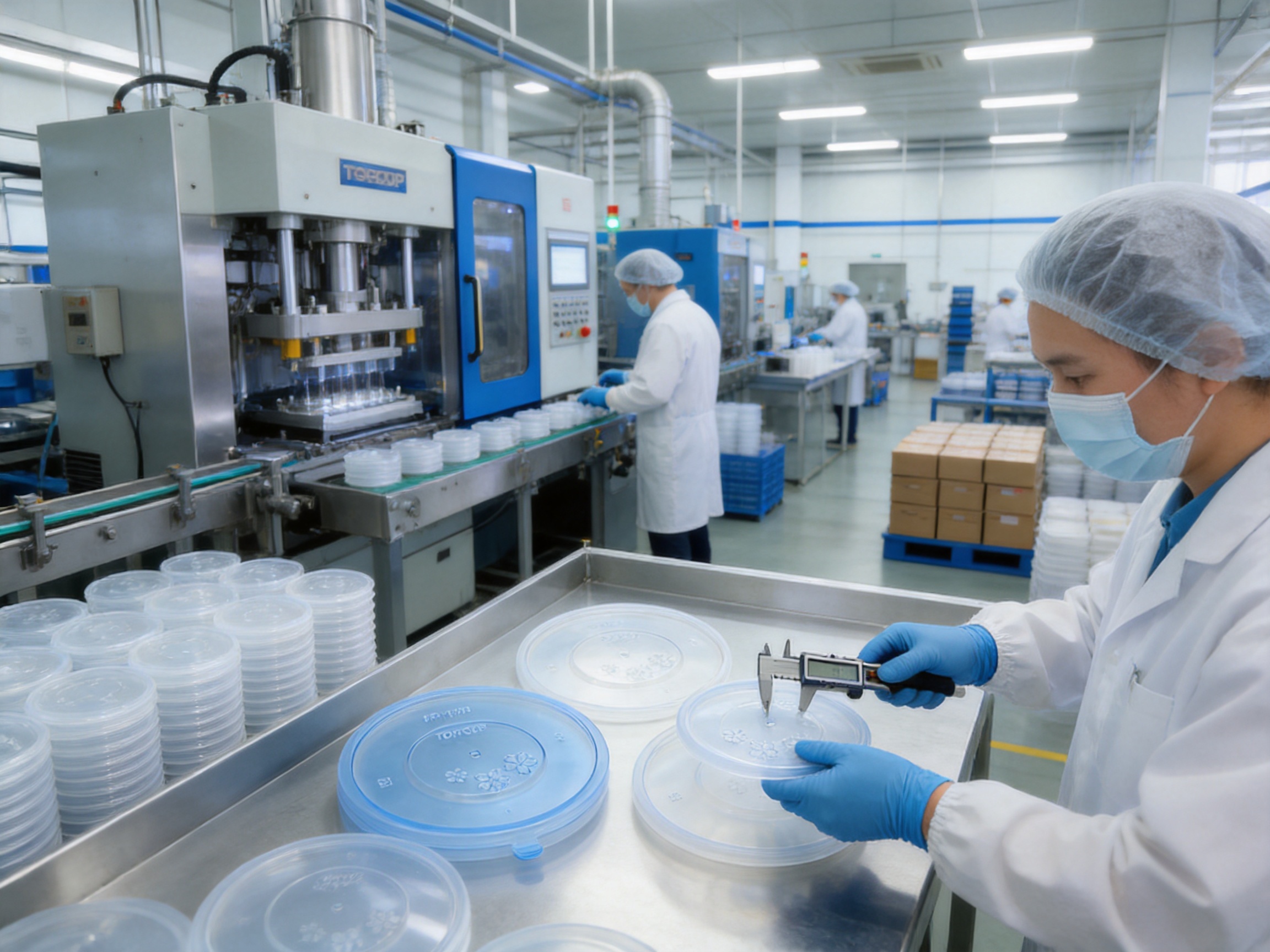
Consistent lid quality depends on the interaction of material preparation, mold design, injection molding, cooling, trimming, inspection, and packing. A manufacturer with experience in disposable food packaging can coordinate these stages to achieve repeatable dimensions and stable supply.
Raw Material Preparation
Production begins with the selection and preparation of PP raw materials. Material specifications are reviewed according to the intended product, color, transparency requirement, and processing conditions. Raw materials should be stored in a controlled environment that protects them from moisture, dust, contamination, and accidental mixing.
For transparent lids, material consistency is especially important because variation can affect clarity, surface appearance, and color. For blue or other customized colors, controlled masterbatch addition helps maintain a uniform visual result from batch to batch. Material identification and batch records support traceability throughout production.
Mold and Product Design
Mold design determines the final caliber, rim profile, wall distribution, stacking geometry, and surface appearance of the lid. Engineering teams evaluate the container opening and sealing requirements before finalizing the mold. If a customer requests customization, the lid and container should be considered together rather than treated as unrelated parts.
A well-designed mold supports balanced filling and consistent cooling. It can reduce variations in thickness and help limit warping. The mold surface also influences transparency, gloss, and the visibility of flow marks. Regular maintenance is necessary to preserve dimensional accuracy and product appearance over extended production periods.
Injection Molding
Injection molding involves melting PP pellets, injecting the material into a shaped mold cavity, allowing the part to cool, and ejecting the finished lid. Processing parameters such as melt temperature, injection pressure, injection speed, holding pressure, cooling time, and cycle time must be controlled according to the mold and material.
Stable injection conditions help achieve uniform filling and reduce the likelihood of short shots, excessive flash, sink marks, distortion, or inconsistent edges. The goal is not simply to produce a lid quickly but to maintain a repeatable balance of quality, productivity, and material efficiency.
For thickened lids, cooling control is particularly important. Uneven cooling can cause warpage or dimensional changes that affect container fit. Production technicians monitor the molding cycle and adjust process conditions when necessary to maintain the required geometry.
Inspection and Packing
After molding, lids are checked for appearance, dimensions, weight, edge integrity, transparency, color consistency, and obvious molding defects. Sampling plans may be used for routine production, while customized or newly developed products may receive additional inspection during trial runs.
Finished lids are packed in a manner that protects them from dust, deformation, and unnecessary contact during storage and transportation. Proper packing also supports counting and inventory management. Lot information can be retained to improve traceability and assist with quality investigations if a customer reports an issue.
Quality Management and Manufacturing Strengths
The company was established in 2010 and operates in Taizhou City, Jiangsu Province. Its reported plant area is approximately 30,000 square meters, and its activities include research and development, production, and sales of new food packaging materials and products. This combination of technical development and manufacturing capability can benefit customers that require both standard products and customized packaging solutions.
A broad manufacturing base can support more than production volume. It may also provide space for mold development, material management, quality inspection, finished-goods storage, and order coordination. These functions are important for maintaining supply continuity when customers operate across multiple locations or require scheduled deliveries.
The company reports a research and development team composed of experienced technical professionals. An active R&D function can help improve transparency, strength, sealing performance, material utilization, and production efficiency. It can also support customers during the transition from a packaging concept to a manufacturable product.
Quality management is described as covering raw material procurement, production and processing, and finished-product inspection. A process-based quality system is valuable because it prevents quality from depending only on final inspection. When critical conditions are controlled throughout production, defects can be identified earlier and corrective action can be implemented more efficiently.
The reported QS, ISO 9001, BRC, DIN-related, and EU RoHS+ credentials demonstrate the company’s focus on quality and compliance management. Since certifications may change over time and may apply to particular facilities or product categories, purchasers should verify the latest documentation before placing an order. This verification is a normal and important part of responsible packaging procurement.
The company also reports cooperation with research institutions and enterprises in China and overseas. Such cooperation can help broaden technical knowledge, improve material development, and accelerate the evaluation of new packaging concepts. A supplier that combines factory production with external technical cooperation may be better positioned to address specialized requirements.
Advantages Compared with Common Competing Lids
Many disposable lids compete primarily on low cost. However, a low-cost lid may not provide the best total value if it creates operational problems. The transparent round PP plastic thickened lid offers several practical advantages that buyers can evaluate against competing products.
More Stable Than Ultra-Thin Alternatives
Ultra-thin lids can reduce material weight, but they may be more susceptible to bending, cracking, or accidental separation from the container. The thickened construction provides greater rigidity and a more substantial edge, which can improve handling confidence and stacking performance.
Better Visibility Than Opaque Covers
Opaque lids conceal the food and may require labels or opening of the package for identification. The transparent design allows customers and staff to view the contents immediately. This supports product presentation, order checking, and retail display.
More Flexible Than Fixed-Size Supply
Some suppliers offer only one or two standard diameters. This product line includes 120 mm, 150 mm, and 179 mm options, with customized sizes available for suitable projects. A broader size range can help packaging buyers source multiple container formats from one experienced supplier.
More Efficient to Store Than Irregular Designs
The stackable structure supports compact storage and organized handling. This can be particularly helpful for high-volume users that need to maintain large quantities of lids near a production or packing line.
More Suitable for Integrated Packaging Development
Because the manufacturer works with disposable food packaging materials and products, customers can discuss lid fit together with container design, material selection, color, production volume, and packaging requirements. This integrated approach can reduce compatibility problems that sometimes occur when a container and lid are purchased from unrelated sources.
Stronger Support for OEM Projects
OEM capability allows the product to be adapted according to customer requirements. Potential customization areas include diameter, color, thickness, rim geometry, packaging method, and production volume. The feasibility of each request must be confirmed through engineering evaluation, sampling, and testing.
Customization and OEM Development
Customized disposable food packaging is increasingly important for food brands that want their packaging to match their product range and service model. A lid may need to fit a special bowl, accommodate a larger portion, support a particular stacking arrangement, or coordinate with a brand color.
The customization process normally begins with a technical information review. Customers can provide drawings, physical samples, container dimensions, photographs, or application details. Important measurements include the opening diameter, rim thickness, outer wall shape, sealing shoulder, lid clearance, and intended stacking height.
After the initial review, the engineering team can assess whether an existing mold can be adapted or whether new tooling is required. Existing sizes such as 120 mm, 150 mm, and 179 mm may provide a faster starting point, while unusual dimensions may require new mold development.
Sampling is a critical step. Trial lids should be tested with the actual container rather than evaluated by appearance alone. Tests may include manual closure, seal retention, liquid leakage, stacking, drop resistance, temperature exposure, and transportation simulation. If the lid is intended for hot food, the food temperature and holding time should be included in the evaluation.
Color customization should also be confirmed with physical samples because transparent, translucent, and opaque effects can vary according to material formulation and wall thickness. Customers may request color samples for approval before mass production.
OEM development can also include packing specifications. Lids may be sorted by size or color, packed in bags or cartons, and labeled according to the customer’s warehouse or distribution requirements. Clear packaging identification can reduce receiving errors and simplify stock management.
Environmental Considerations and Material Efficiency
Environmental performance is an important factor in the development of modern food packaging. PP is a recyclable plastic in appropriate waste-management systems, although actual recycling depends on local collection, sorting, cleaning, and processing infrastructure. Businesses should provide disposal guidance that reflects the regulations and capabilities of their target market.
The company reports efforts to reduce energy consumption and waste emissions during production. Process optimization can contribute to lower material waste, improved resource utilization, and more stable output. Reducing defective products is itself an important environmental measure because it prevents material, energy, labor, and transportation resources from being used for products that cannot be sold.
The company also reports ongoing development of recyclable and degradable thickened lid products. These initiatives should be evaluated through appropriate technical data and market-specific certification. The terms recyclable, compostable, biodegradable, and degradable have different meanings and should not be treated as interchangeable. Buyers should request relevant test reports and disposal instructions for any product marketed with a special environmental claim.
The thickened design must be considered within a complete life-cycle assessment. Additional strength may reduce breakage and food waste, while increased material content may influence the product’s resource footprint. The most suitable design is one that provides the required performance with an efficient amount of material and supports responsible end-of-life management.
Customers can improve the environmental performance of their packaging program by selecting the correct lid size, avoiding unnecessary overspecification, optimizing carton packing, reducing product leakage, and communicating disposal instructions clearly. Cooperation between the lid manufacturer, container supplier, food operator, and waste-management system is essential.
Applications Across Food-Service Operations
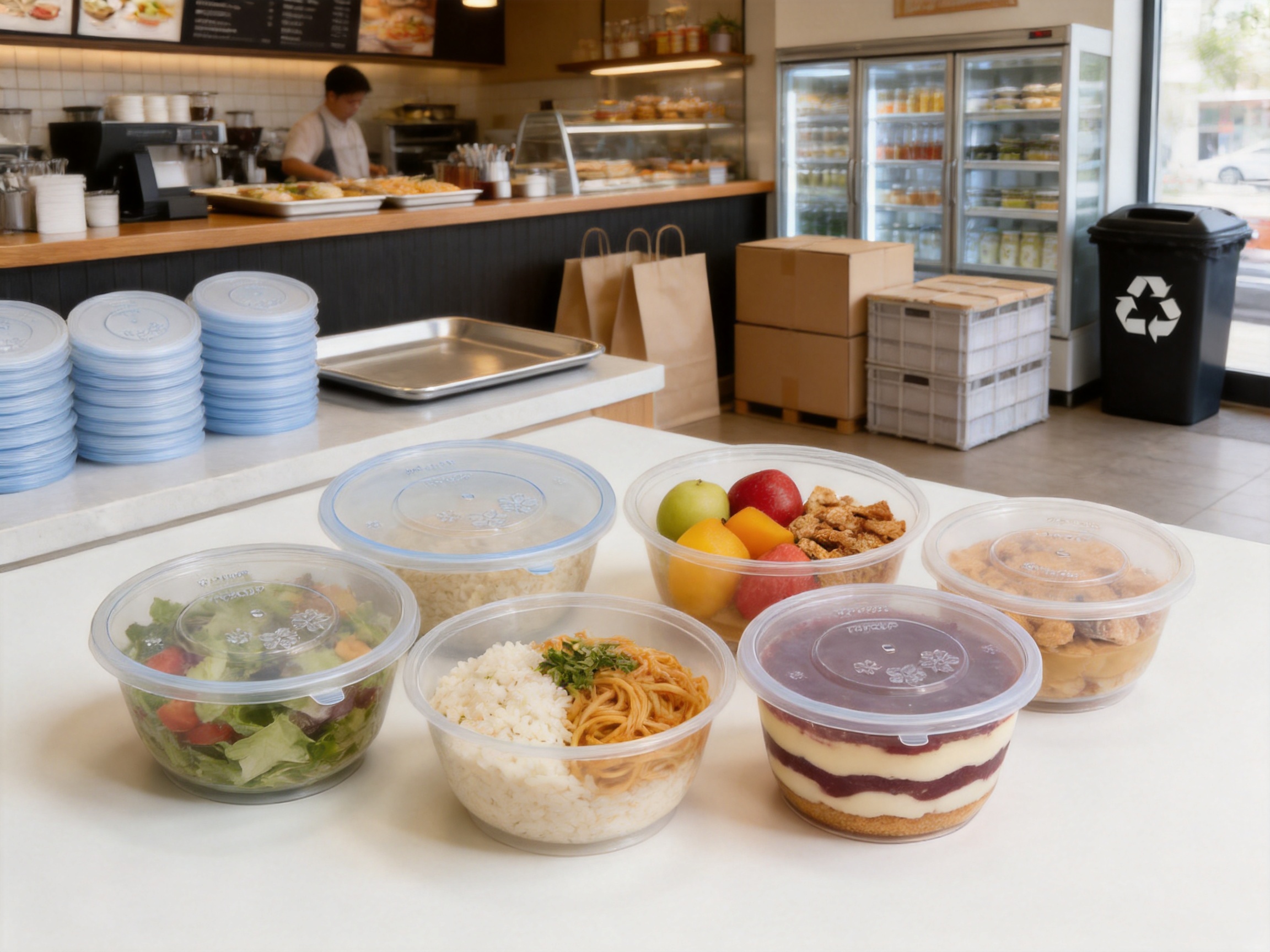
Transparent round PP thickened lids can be used in many commercial food-service settings. In cafés and beverage shops, compatible lids may protect prepared foods, desserts, toppings, and side dishes. In restaurants, they can support takeaway meals, salads, noodles, rice dishes, and combination portions.
Catering companies can benefit from transparent lids because the contents of individual portions remain visible during event preparation and distribution. This can help staff sort meals and assist guests in identifying different foods. The stronger construction can also help when containers are moved in larger groups.
Central kitchens and meal-preparation businesses often require repeatable packaging performance. A consistent lid diameter, reliable closure, and organized stack can help standardize operations across multiple packing stations. When the same lid format is used across a product family, staff training and inventory control may also become easier.
Retail food producers can use clear lids for chilled foods, prepared salads, desserts, snacks, and ready-to-eat portions. Product visibility can make the packaging more suitable for display cabinets and refrigerated shelves. The lid should be selected according to the food’s storage temperature, filling method, shelf-life requirements, and regulatory conditions.
Takeaway and delivery companies face additional transport challenges. Packaging may be exposed to vibration, tilting, compression, and changing temperatures. A thickened lid with a compatible sealing design can help provide the necessary protection, but the complete container system must be tested under realistic delivery conditions.
How to Select the Correct Lid
The first selection factor is diameter. A 120 mm lid should be used with a compatible 120 mm container opening, while 150 mm and 179 mm lids require their corresponding container formats. Nominal dimensions should be confirmed because different manufacturers may measure diameter at different points.
The second factor is the rim and locking structure. Two containers with similar opening diameters may not accept the same lid if their rims, shoulders, or locking channels differ. A physical fit test is strongly recommended.
The third factor is the food application. Buyers should identify whether the container will hold dry, oily, acidic, liquid, chilled, warm, or hot food. The food type and temperature can influence material performance and sealing requirements.
The fourth factor is logistics. If the packaging will be stacked, delivered over long distances, or stored in a hot warehouse, the lid should be tested under those conditions. The required strength may differ between counter-service packaging and national distribution.
The fifth factor is appearance. Transparent lids are suited to visual display, while blue or customized colors may be selected for differentiation. Customers should consider whether labels, printing, or tamper-evident features are needed in addition to the lid.
The sixth factor is compliance. Buyers should confirm the required food-contact documents, quality certificates, test reports, and market-specific declarations before purchase. Documentation should correspond to the actual material, production site, and product specification.
Recommended Evaluation and Testing Program
A professional packaging evaluation should begin with sample approval. The buyer should receive representative samples from the proposed production method and test them with the intended containers. Samples should be inspected for transparency, color, surface finish, odor, flash, cracks, deformation, and dimensional consistency.
Fit testing should confirm that the lid can be applied smoothly and remains attached during normal handling. Operators should test closure speed because a lid that performs well in a slow manual test may be inconvenient on a high-volume production line.
Leak testing can be performed using water and, where relevant, the actual food or a representative liquid. Containers may be inverted, tilted, gently shaken, and placed in delivery bags. The test should reflect expected use rather than relying only on a static upright inspection.
Stacking tests should examine both empty and filled containers. Buyers should check whether the lids remain flat, whether the stacks lean, and whether pressure from upper containers affects the seal or food presentation.
Temperature testing should use the actual expected filling and storage conditions. If hot food is placed in the container, the lid should be checked for deformation, loss of fit, condensation effects, and changes in appearance. If refrigeration or freezing is required, low-temperature handling should also be considered.
Transportation testing may include vibration, compression, drop, and repeated movement. These tests can reveal weaknesses that are not visible during simple handling. Test results should be documented and retained as part of the packaging approval record.
Procurement and Supply Advantages
A reliable packaging supplier should provide more than a product catalog. Buyers typically need technical communication, sample support, production planning, quality documentation, packing information, and responsive after-sales service. An OEM manufacturer with experience in food packaging can provide a more coordinated purchasing process.
The company’s combination of R&D, production, and sales functions supports communication from initial inquiry through mass production. Customers can discuss the required caliber, weight, color, sealing performance, application, and packaging method with a supplier familiar with manufacturing constraints.
Standard sizes can simplify initial sourcing, while customization provides a path for future product development. A buyer may begin with a 120 mm, 150 mm, or 179 mm lid and later request a tailored size for a new bowl or container series. This can reduce the need to change suppliers as the packaging portfolio expands.
Production scale and a reported 30,000-square-meter plant provide a foundation for managing larger projects, although capacity, lead time, minimum order quantity, and tooling schedules should be confirmed for each order. Clear production planning is particularly important for seasonal food products and promotional campaigns.
For international customers, export-oriented communication and documentation can help reduce ordering friction. Buyers should provide complete specifications at the inquiry stage, including destination market, annual demand, shipping preferences, required certificates, and packaging labels.
Operational Benefits for Food Brands
A dependable lid can improve more than package integrity. It can contribute to faster assembly, cleaner workstations, easier product identification, and a more professional presentation. When employees can apply lids quickly and consistently, the packaging line may achieve better throughput.
Transparent lids can help food brands communicate freshness and quality. Customers see the actual product rather than relying entirely on photographs or printed descriptions. This is especially useful for colorful salads, layered desserts, fruit portions, and carefully arranged meals.
The thickened construction may also reduce the frequency of damaged lids during ordinary packing and delivery. Fewer damaged components can mean less rework, fewer replacement packages, and lower risk of delayed orders. Actual savings should be measured through the customer’s own operating data.
Stackability supports back-of-house organization. Lids can be stored near containers without occupying excessive shelf space, and operators can maintain separate stacks for different sizes. Clear size identification and organized packing further support efficient inventory management.
Maintenance of Quality Through Continuous Improvement
Disposable products are manufactured for single use, but their quality must remain consistent across thousands or millions of units. Continuous improvement helps identify opportunities to reduce variation, improve mold life, optimize cycle time, and control material usage.
Production data can be reviewed to detect recurring defects, changes in weight, dimensional drift, or color variation. Corrective actions may involve mold maintenance, process adjustment, operator training, raw-material review, or improved inspection methods.
Customer feedback is also an important source of improvement. Reports concerning lid fit, transportation, temperature exposure, appearance, or packing can guide future product refinement. A manufacturer that treats feedback as technical information rather than simply a complaint is better equipped to develop long-term supply relationships.
Research into recyclable materials, improved material efficiency, and alternative packaging solutions can help the company respond to changing market expectations. At the same time, new materials must be assessed carefully for strength, transparency, food-contact safety, processability, cost, and end-of-life requirements.
Why This Product Is a Practical Packaging Choice
The transparent round PP plastic thickened lid combines several features that are important to commercial food packaging: a clear appearance, reinforced construction, leak-resistant fitting, food-grade PP material, temperature performance within an appropriate range, stackability, and customization potential.
Its main advantage over a basic low-cost lid is the balance between protection and practicality. The lid is not designed merely to cover a container. It is intended to support the full packaging process, from production and storage to filling, transportation, presentation, and consumption.
The available 120 mm, 150 mm, and 179 mm sizes cover common container formats, while OEM development allows customers to request other dimensions or colors. A manufacturer with R&D capability, quality management systems, production experience, and certification awareness can help turn these options into a packaging program tailored to a specific food business.
For companies seeking a disposable food packaging container supplier, the product provides a useful combination of manufacturing support and application flexibility. Buyers should confirm the final technical specification through samples, fit checks, leakage testing, temperature evaluation, and certification review. When correctly matched with its container, the lid can help protect food, improve product presentation, and support more efficient packaging operations.
Frequently Asked Questions
What material is used for the transparent round thickened lid?
The lid is manufactured from food-grade polypropylene, commonly known as PP. PP is widely used in food packaging because it provides low weight, useful strength, chemical resistance, and good processing flexibility. The exact suitability of the finished product depends on the intended food, temperature, and destination-market requirements.
Which standard sizes are available?
The listed standard sizes are 120 mm, 150 mm, and 179 mm. The approximate gram weights are 5 g, 9 g, and 13 g respectively. Customized calibers may also be developed after reviewing the customer’s container design and order requirements.
Are the lids completely leak-proof?
The lids use a leak-resistant sealing design intended to provide a close fit with compatible containers. Actual performance depends on accurate container and lid matching, correct closure, food characteristics, filling level, and transportation conditions. Buyers should conduct application-specific leakage tests before mass production.
Can the lids be used with hot food?
The product is designed to provide high-temperature resistance within an appropriate range. The exact limits should be confirmed for the selected size and application. Direct microwave, oven, sterilization, or very high-temperature applications require separate technical approval and testing.
Can the lid color be customized?
Transparent and blue are listed as available colors, and customized colors may be considered. Color development normally requires sample approval because the final appearance can be influenced by material formulation, wall thickness, processing conditions, and transparency requirements.
Can a special diameter or shape be produced?
Customized calibers and design details may be developed according to customer requirements. The buyer should provide container drawings, samples, dimensions, intended use, and forecast quantity. New tooling may be required for unusual shapes or dimensions.
Are the lids stackable?
Yes. The design is intended to support stacking, which can help save storage space and improve handling efficiency. The actual stacking quantity and carton capacity depend on the size, packing method, and customer requirements.
Are the lids recyclable?
PP is recyclable in waste-management systems that accept and process polypropylene. Actual recycling depends on local collection and sorting infrastructure. The company also reports ongoing development of recyclable and degradable products, but buyers should request specific technical documentation for any environmental claim.
What quality certifications are associated with the manufacturing facility?
The supplied company information identifies QS, ISO 9001, BRC, German DIN-related safety certification, and EU RoHS+ testing among its quality and compliance credentials. Customers should request current copies, scopes, and validity details to confirm that the documentation applies to the intended product and production site.
How should buyers approve a new lid?
Buyers should test samples with the actual container. Recommended checks include dimensions, closure, leakage, stacking, appearance, odor, temperature resistance, transportation performance, and food-contact documentation. A written sample approval should be completed before mass production.
Who can purchase this product?
The product may be suitable for restaurants, cafés, catering businesses, food manufacturers, distributors, retailers, central kitchens, and packaging importers. It can be supplied as a standard lid or evaluated as part of an OEM disposable food packaging project.
Conclusion
Transparent round PP plastic thickened lids provide a practical solution for businesses that need reliable, attractive, and adaptable food packaging. Their clear appearance supports product visibility, while the reinforced PP construction improves handling confidence, stacking stability, and general durability. The available 120 mm, 150 mm, and 179 mm sizes provide a useful standard range, and customization can extend the product to specialized container programs.
The manufacturing approach combines food-grade material selection, mold engineering, injection molding, controlled cooling, quality inspection, organized packing, and continuous product development. Supported by reported R&D resources, quality management systems, certifications, and OEM experience, the supplier can assist customers from initial design review through commercial production.
For the best result, the lid should be selected as part of a complete container system. Correct diameter, rim compatibility, food type, temperature, filling level, transportation method, and regulatory requirements should all be evaluated. With appropriate testing and specification control, this thickened transparent lid can help food brands protect their products, improve customer presentation, streamline operations, and build a more consistent disposable food packaging program.
References
1. Product specification and technical information supplied for the transparent round PP plastic thickened lid.
2. Polypropylene material characteristics commonly applied in food packaging design and injection molding.
3. ISO 9001 quality management system principles for controlled manufacturing processes.
4. BRC packaging and product-safety principles relevant to food packaging production.
5. General food-contact packaging evaluation practices, including material traceability, fit testing, leakage testing, and temperature testing.
6. General principles of plastic recycling, material efficiency, and responsible packaging design.