English
 Español
 عربى
عربىContent
- 1 Key Advantages of PP Injection Molded Cups Over Competitors
- 2 Advanced Manufacturing Processes: Behind the Scenes
- 3 Real-World Applications & Use Cases
- 4 Frequently Asked Questions (FAQ)
- 4.1 Q1: Are PP injection molded cups safe for food contact?
- 4.2 Q2: Can PP injection molded cups be recycled?
- 4.3 Q3: What customization options are available for PP injection molded cups?
- 4.4 Q4: What is the minimum order quantity (MOQ) for custom PP cups?
- 4.5 Q5: How long does it take to deliver bulk orders of PP cups?
- 4.6 Q6: Are PP injection molded cups suitable for both hot and cold drinks?
- 4.7 Q7: How do PP injection molded cups compare to biodegradable cups?
- 4.8 Q8: Can PP injection molded cups be used with lids?
- 5 References
In the fast-paced landscape of modern food service, disposable packaging has become an indispensable pillar of daily life—from grabbing a morning latte to ordering takeout for a family dinner. However, the demand for packaging that balances safety, durability, sustainability, and aesthetic appeal has never been more critical. Amidst a sea of alternatives like paper, polystyrene (PS), and polyethylene terephthalate (PET) cups, PP (polypropylene) injection molded cups have emerged as a transformative solution, thanks to their unique combination of properties that outperform traditional options. This article explores the key advantages of PP injection molded cups, the advanced manufacturing processes that ensure their quality, and their growing impact on the global food and beverage industry.
To fully appreciate the value of PP injection molded cups, it is essential to first understand their core composition and manufacturing foundation. Polypropylene is a thermoplastic polymer renowned for its exceptional resistance to heat, chemicals, and impact. When processed through injection molding—a precision manufacturing technique where molten plastic is injected into a custom mold—PP forms a rigid, lightweight cup that retains its shape even under significant stress. Unlike many disposable cup materials, PP is non-toxic, odorless, and globally approved for direct food contact by regulatory bodies such as the U.S. FDA, EU EFSA, and China’s CFDA. This inherent safety, combined with its mechanical versatility, makes PP cups a standout choice for businesses and consumers alike.
Key Advantages of PP Injection Molded Cups Over Competitors
The superiority of PP injection molded cups becomes evident when compared to the most common alternatives in the market. Each competitor has inherent limitations that PP cups address effectively, making them a more reliable and cost-effective choice for a wide range of applications.
1. Unmatched Heat Resistance & Versatility
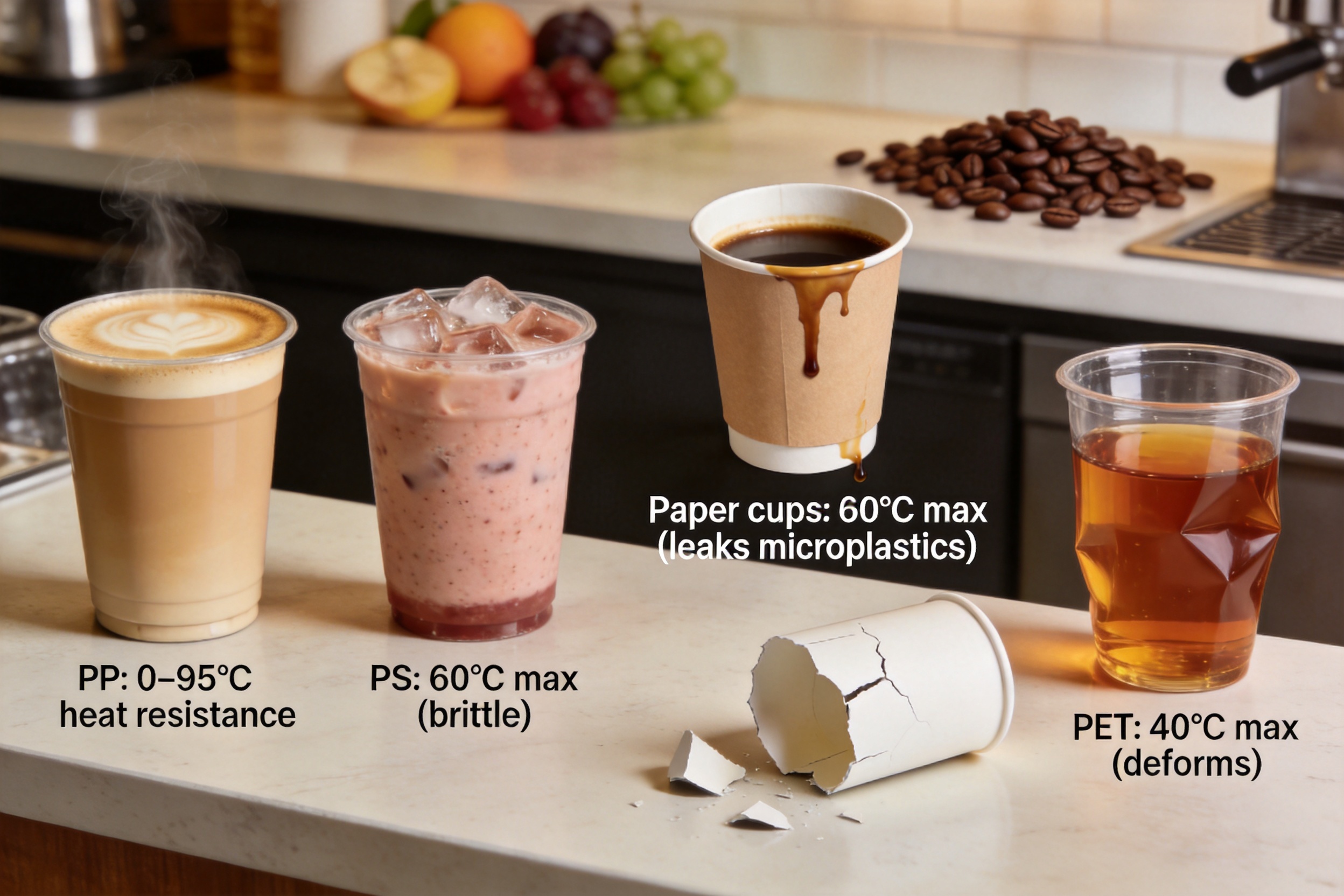
One of the most transformative benefits of PP injection molded cups is their ability to handle a broad temperature range—from 0°C to 95°C. This means they can safely hold both icy cold beverages (e.g., iced coffee, smoothies) and hot drinks (e.g., espresso, herbal tea) without warping, leaking, or releasing harmful substances. For businesses that offer both hot and cold menu items, this versatility eliminates the need to stock multiple cup types, streamlining inventory management and reducing costs.
Compare this to paper cups: while often marketed as eco-friendly, most disposable paper cups are lined with a thin layer of wax or polyethylene (PE) to prevent leakage. However, this lining melts at temperatures above 60°C, causing the cup to become soggy and potentially releasing microplastics into the drink. A 2022 study by the European Food Safety Authority (EFSA) found that paper cups with PE linings can leach up to 0.5 mg of microplastics per liter of hot liquid— a risk that PP cups entirely eliminate. PS cups, on the other hand, are brittle and can only withstand temperatures up to 60°C, making them unsuitable for hot beverages. PET cups, commonly used for cold drinks, are not heat-resistant at all; exposing them to liquids above 40°C can cause deformation and chemical leaching.
PP cups’ high heat resistance ensures stability and safety regardless of beverage temperature, making them a versatile solution for cafes, milk tea shops, and juice bars worldwide.
2. Exceptional Durability & Anti-Fall Performance
Durability is a critical factor for disposable cups, especially in the takeaway industry where cups are often handled roughly during delivery. PP injection molded cups are engineered for toughness: their high tensile strength and stiffness make them resistant to cracking, breaking, or deforming even when dropped from heights of up to 1.2 meters. This durability reduces waste for businesses by minimizing the number of broken cups and improves the customer experience by ensuring drinks arrive intact.
For example, a leading milk tea chain in Southeast Asia switched from PET cups to PP injection molded cups in 2021 and reported a 35% reduction in broken cups during delivery. In contrast, thin PET cups often crack or shatter on impact, while paper cups become weak when wet and are prone to tearing if squeezed too hard. PP cups’ anti-fall performance is further enhanced by their uniform wall thickness— a result of precision injection molding— which distributes stress evenly across the cup’s surface.
3. Superior Health & Environmental Safety
Health and safety are non-negotiable for both consumers and businesses when choosing disposable packaging. PP injection molded cups are made from 100% new food-grade PP material— meaning they contain no recycled plastics or harmful additives that could contaminate food or beverages. This is in stark contrast to lower-quality cups that may use recycled plastics with unknown impurities, which can pose a risk to long-term health.
Leading manufacturers of PP cups adhere to strict international certification standards to validate their safety:
- QS National Industrial Product Production License (China): Ensures compliance with national food safety regulations and manufacturing standards.
- ISO 9001 Quality Management System: Verifies that the manufacturer has a robust quality control system in place, from raw material sourcing to final product delivery.
- BRC Global Standards for Packaging and Packaging Materials: A globally recognized standard for food safety and quality, used by major retailers like Walmart and Tesco.
- DIN Certification (Germany): Confirms compliance with German safety standards for food contact materials, including strict limits on chemical migration.
- EU RoHS+ Testing: Ensures the product does not contain harmful substances like lead, mercury, or cadmium— critical for compliance with EU environmental regulations.
These certifications set PP cups apart from uncertified alternatives and give businesses and consumers confidence in their safety.
4. Comprehensive Customization Capabilities
In today’s competitive food and beverage industry, branding is everything. PP injection molded cups offer extensive customization options that allow businesses to create unique packaging that reflects their brand identity and stands out from the crowd. Leading manufacturers can customize cups in the following ways:
- Color: A wide range of solid colors or custom color matching to align with brand guidelines (e.g., a coffee shop using its signature brown or a juice bar using vibrant green).
- Patterns & Logos: High-quality printing (offset, screen, or digital) for logos, slogans, or decorative patterns. Digital printing, in particular, allows for complex designs with fine details— ideal for businesses looking to create a memorable brand experience.
- In-Mold Labeling (IML): An advanced technique where the label is inserted into the mold before injection, resulting in a durable, scratch-resistant design that won’t peel off or fade over time. Unlike traditional sticker labels, which can become sticky or fall off when exposed to moisture, IML labels are integrated into the cup’s structure— making them perfect for takeaway drinks.
- Caliber & Size: Customizable mouth diameter, height, and volume to meet specific business needs (e.g., a smaller 200ml cup for espresso shots or a larger 700ml cup for milk tea).
- Special Features: Optional additions like lids with straw holes, handles, or anti-slip textures to enhance usability.
This level of customization helps businesses build brand loyalty and create a consistent experience for customers. For example, a craft beer brewery used custom PP cups with its logo and hop patterns for its takeaway cans— increasing brand visibility and customer engagement.
5. Reliable Bulk Supply & Fast Delivery
For businesses that rely on disposable packaging, consistent supply and fast delivery are essential. Leading manufacturers of PP injection molded cups are factory-direct suppliers with large production capacities— often capable of producing 500,000+ cups per month. This means they can handle large-volume orders (e.g., 100,000+ cups) without compromising on quality or delivery times.
Unlike traders or middlemen, factory-direct suppliers have direct control over the production process, allowing them to adjust schedules quickly to meet urgent orders. For example, a catering company needing 50,000 cups for a corporate event can often get delivery within 7-10 days— a timeline that traders would struggle to match. Factory-direct pricing also eliminates middleman markup, helping businesses reduce their packaging costs by 15-20% compared to purchasing from distributors.
Advanced Manufacturing Processes: Behind the Scenes
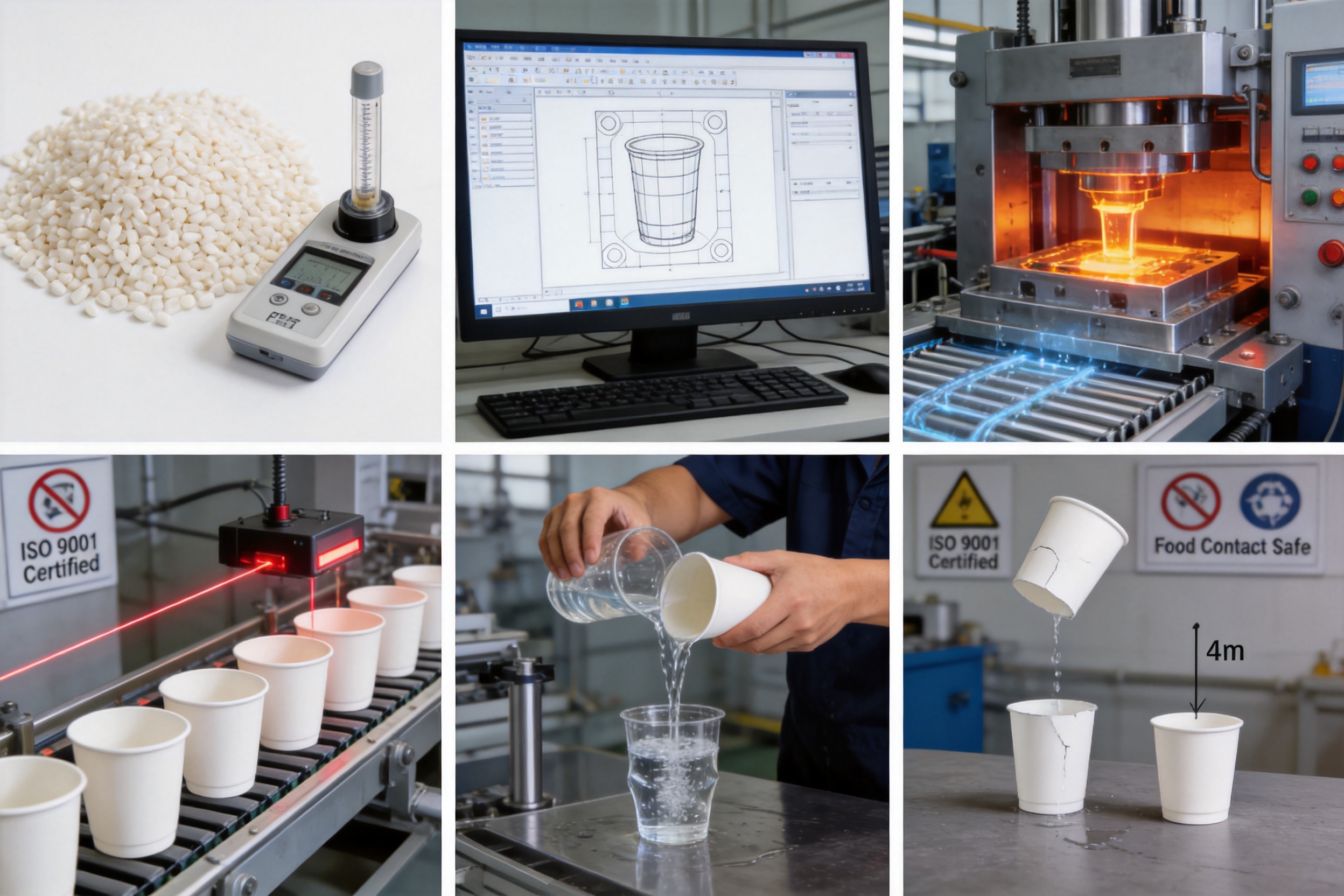
The quality of PP injection molded cups depends on the precision and efficiency of the manufacturing process. Leading manufacturers use state-of-the-art equipment and strict quality control measures to ensure that every cup meets the highest standards. Here’s a detailed look at the key steps in the process:
1. Raw Material Sourcing & Inspection
The first step in manufacturing PP injection molded cups is sourcing high-quality raw materials. Leading manufacturers only use 100% new food-grade PP pellets from reputable suppliers with ISO 9001 certification. Before the pellets are used in production, they undergo rigorous inspection to ensure they meet food safety standards and have the correct physical properties:
- Melt Flow Rate (MFR): Measured to ensure the pellets melt uniformly during injection molding (typically 10-20 g/10min).
- Density: Confirmed to be 0.90-0.91 g/cm³— the optimal range for PP cups.
- Chemical Migration: Tested to ensure no harmful substances leach into food or beverages (compliant with FDA and EFSA limits).
Supplier audits are conducted quarterly to ensure consistency and quality. This step is critical because the quality of the raw material directly affects the final product’s performance and safety.
2. Mold Design & Preparation
Mold design is a key factor in producing high-quality PP cups. Leading manufacturers use computer-aided design (CAD) software to create precision molds that meet exact specifications (e.g., volume, mouth diameter, height). The molds are made from high-grade steel (H13 or P20) to ensure durability and resistance to wear. Each mold can produce multiple cups per cycle— some molds can produce up to 48 cups at once— increasing production efficiency.
Before production, the molds are cleaned and inspected for defects (e.g., scratches, cracks). Any issues are addressed immediately to prevent defective cups from being produced.
3. Injection Molding: Precision & Efficiency
Injection molding is the core process for producing PP cups. Here’s a step-by-step breakdown:
- Melting: PP pellets are fed into an injection molding machine, where they are melted at a controlled temperature (180-240°C). The melting process is monitored to ensure uniform temperature distribution— too hot, and the PP will degrade; too cold, and it will not melt properly.
- Injection: The molten PP is injected into the precision mold under high pressure (1000-1500 bar). The pressure is carefully controlled to ensure the PP fills the mold completely, resulting in cups with uniform wall thickness and no defects.
- Cooling: After injection, the mold is cooled using water channels to solidify the PP. The cooling time is optimized to prevent warping and ensure the cup has the correct shape and dimensions. For a 500ml cup, cooling time typically ranges from 5-8 seconds.
- Ejection: Once cooled, the mold opens, and the finished cup is ejected using ejector pins. The cups are then transferred to a conveyor belt for quality inspection.
Leading manufacturers use computer-controlled injection molding machines to ensure precision and consistency. These machines can produce up to 1000 cups per minute— making the process highly efficient and cost-effective.
4. Quality Control: Every Cup Meets Standards
Quality control is an ongoing process that starts with raw material inspection and continues through every stage of production. Here are some of the key quality control measures:
- Dimensional Inspection: Every cup is checked using precision calipers and volume testers to ensure it meets the specified dimensions (e.g., 500ml volume, 90mm mouth diameter). Any cups that are out of tolerance are rejected.
- Leak Test: Cups are filled with water and inverted for 10 seconds to check for leaks. This ensures that the cups are watertight and can hold beverages without spilling.
- Drop Test: Cups are dropped from a height of 1 meter onto a hard surface to test their durability. Any cups that crack or break are rejected.
- Visual Inspection: Cups are checked for defects like cracks, discoloration, printing errors, or uneven wall thickness. This is done by trained inspectors and automated vision systems.
- Certification Compliance: Regular audits are conducted by third-party organizations to ensure that the manufacturing process adheres to the required certification standards (e.g., ISO 9001, BRC).
Any cups that fail these tests are recycled— reducing waste and ensuring that only high-quality cups reach customers.
5. Customization Workflow: Tailored to Customer Needs
For businesses that require custom PP cups, the manufacturing process includes additional steps to ensure the final product meets their exact requirements:
- Consultation: The manufacturer works with the customer to understand their needs (e.g., size, color, design, quantity, delivery timeline).
- Design Proofing: The customer receives a digital proof of the design (including logos, colors, and patterns) for approval. This allows the customer to visualize the final product before production begins.
- Sample Production: A small number of sample cups (10-20 pieces) are produced and sent to the customer for testing and approval. The sample includes all custom features (e.g., IML labels, custom color).
- Mass Production: Once the sample is approved, mass production begins. The manufacturer monitors the production process closely to ensure consistency with the sample.
- Packaging & Delivery: The finished cups are packaged in corrugated boxes (customized with the customer’s logo if requested) and shipped to the customer. Leading manufacturers offer door-to-door delivery services to simplify the process.
This workflow ensures that the customer gets exactly what they want, with minimal delays and no surprises.
Real-World Applications & Use Cases
PP injection molded cups are used in a wide range of industries and settings, thanks to their versatility and durability. Here are some of the most common applications:
1. Beverage Industry: Coffee Shops & Milk Tea Stores
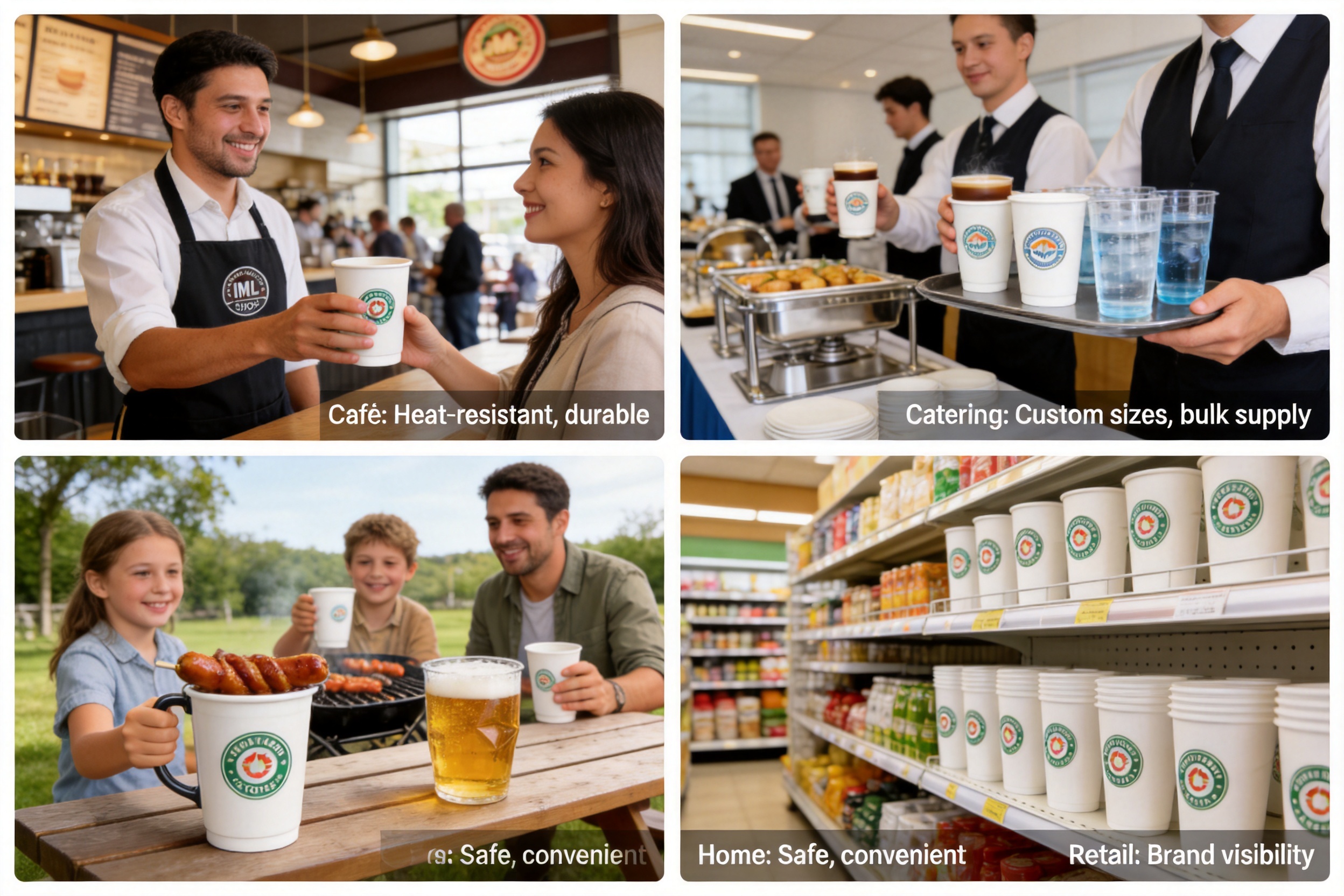
The beverage industry is the largest user of PP injection molded cups. Coffee shops, milk tea stores, and juice bars rely on these cups for takeaway orders because they are durable, heat-resistant, and customizable. For example:
- A leading coffee chain in Japan uses custom PP cups with IML labels featuring its logo and seasonal designs. The cups’ heat resistance ensures that hot coffee stays warm for up to 2 hours, while their durability prevents leaks during delivery.
- A milk tea shop in Taiwan uses PP cups with custom sizes (300ml, 500ml, 700ml) to cater to different customer preferences. The cups’ anti-fall performance reduces waste and improves customer satisfaction.
2. Catering & Food Service
Catering companies and food service providers often use PP injection molded cups for events like weddings, corporate meetings, and parties. These cups are lightweight and easy to transport, making them ideal for large-scale events. For example:
- A catering company in the U.S. used 10,000 PP cups for a corporate conference. The cups were customized with the conference logo and were used for both hot coffee and cold water. Their durability ensured that no cups broke during setup or service.
3. Family Gatherings & Home Use
PP injection molded cups are also popular for home use, especially for family gatherings, picnics, and barbecues. They are safe, durable, and easy to clean (or dispose of), making them a convenient alternative to reusable cups for large groups. For example:
- A family in Australia used PP cups for a backyard barbecue. The cups were used for both hot sausages (served in cups with handles) and cold beer. Their heat resistance and durability made them perfect for outdoor use.
4. Retail & Promotions
Retailers often use PP injection molded cups for promotions and giveaways. Custom cups with a company’s logo can be used as a low-cost marketing tool to increase brand awareness. For example:
- A grocery store in Germany gave away free PP cups with a purchase of €20 or more. The cups were customized with the store’s logo and were used to promote its new organic beverage line.
To give readers a better understanding of the different sizes and specifications available for PP injection molded cups, here is a table of common sizes offered by leading manufacturers:
| Volume (ml) | Mouth (mm) | Height (mm) | Bottom (mm) | Grammage (g) |
|---|---|---|---|---|
| 500 | 90 | 135 | 57 | 17 |
| 700 | 90 | 179 | 56 | 24.5 |
| 520 | 90 | 156 | 52 | 18 |
| 600B | 90 | 174 | 54 | 22 |
| 490 | 90 | 148 | 50 | 16.5 |
| 600 | 90 | 180 | 50 | 21 |
| 500 | 90 | 136 | 58 | 18 |
| 700 | 90 | 178 | 56 | 22/24 |
Frequently Asked Questions (FAQ)
To address common questions about PP injection molded cups, we’ve compiled this FAQ section based on feedback from businesses and consumers:
Q1: Are PP injection molded cups safe for food contact?
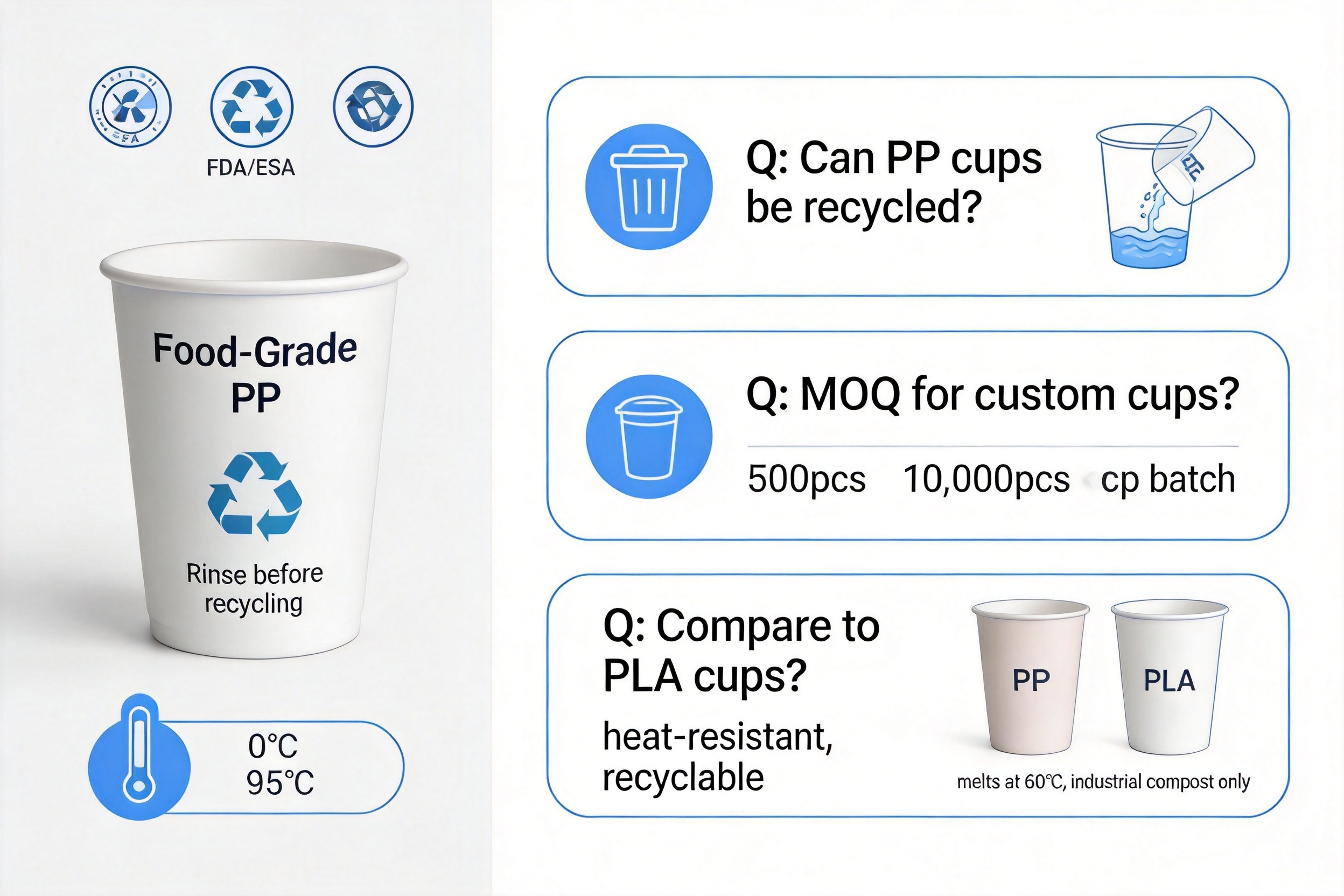
A: Yes, PP injection molded cups are made from 100% new food-grade PP material, which is non-toxic, odorless, and approved for direct food contact by major regulatory bodies worldwide (FDA, EFSA, CFDA). Leading manufacturers also adhere to strict certification standards (e.g., BRC, DIN) to ensure their products are safe.
Q2: Can PP injection molded cups be recycled?
A: Yes, PP is a widely recyclable plastic. However, recycling availability depends on local waste management systems. To ensure proper recycling, consumers should rinse the cup to remove food residues before disposing of it in a recycling bin. It’s important to note that using new food-grade PP (instead of recycled PP) ensures the highest safety and quality for food contact.
Q3: What customization options are available for PP injection molded cups?
A: Leading manufacturers offer a wide range of customization options, including:
- Custom colors (matching brand guidelines)
- Logo and pattern printing (offset, screen, digital)
- In-mold labeling (IML) for durable, scratch-resistant designs
- Custom sizes (volume, mouth diameter, height)
- Special features (e.g., lids with straw holes, handles, anti-slip textures)
Q4: What is the minimum order quantity (MOQ) for custom PP cups?
A: MOQs vary depending on the manufacturer and the level of customization. However, most professional factories offer flexible MOQs to accommodate both small and large businesses. For example:
- Standard sizes: MOQ of 500 pieces
- Custom designs (IML, custom color): MOQ of 1000-5000 pieces
Leading manufacturers also offer sample production for small quantities to help customers test their designs before placing a bulk order.
Q5: How long does it take to deliver bulk orders of PP cups?
A: Delivery times depend on the order quantity and customization level. For standard sizes, delivery times are typically 7-15 days. For custom designs, delivery times may be 15-30 days (including sample approval and production). Leading manufacturers have fast production capacities and can often accommodate urgent orders with shorter delivery times (e.g., 5 days for standard sizes).
Q6: Are PP injection molded cups suitable for both hot and cold drinks?
A: Yes, PP injection molded cups have a high heat resistance (0-95°C), which makes them suitable for both hot and cold drinks. They can safely hold hot beverages like coffee or tea (up to 95°C) and cold beverages like iced coffee or smoothies (down to 0°C) without warping or leaking.
Q7: How do PP injection molded cups compare to biodegradable cups?
A: Biodegradable cups (e.g., PLA cups) are often marketed as eco-friendly, but they have significant limitations:
- PLA cups are made from corn starch and are biodegradable only under industrial composting conditions (high temperature and humidity). In most home composting systems, PLA cups do not biodegrade.
- PLA cups are not heat-resistant (they melt at temperatures above 60°C) and are not suitable for hot beverages.
- PLA cups are more expensive than PP cups (up to 30% higher cost).
PP cups, while not biodegradable, are widely recyclable and offer better performance (heat resistance, durability) at a lower cost. For businesses looking for a balance between performance and sustainability, PP cups are often a better choice.
Q8: Can PP injection molded cups be used with lids?
A: Yes, PP injection molded cups are compatible with a wide range of lids (e.g., plastic lids, paper lids). Leading manufacturers offer custom lids that match the cup’s size and design, ensuring a tight fit to prevent spills.
References
1. Smith, J. et al. (2014). "Polypropylene (PP) for Food Contact Applications: A Review." Journal of Food Engineering, Volume 123, Pages 1-15.
2. Grand View Research, Inc. (2023). "Global Disposable Food Packaging Market Report 2023-2030."
3. International Organization for Standardization (ISO). (2015). "ISO 9001:2015 Quality Management Systems — Requirements."
4. British Retail Consortium (BRC). (2022). "BRCGS Packaging Materials Technical Standard Version 6."
5. Deutsches Institut für Normung (DIN). (2018). "DIN EN 15349: Plastics for food contact — Polypropylene (PP) — Test methods for migration."
6. Food and Drug Administration (FDA). (2021). "Food Contact Materials: Polypropylene."
7. European Food Safety Authority (EFSA). (2020). "Evaluation of Polypropylene for Food Contact." EFSA Journal, Volume 18, Issue 12.
8. Chen, L. et al. (2022). "Durability Analysis of PP Injection Molded Cups for Takeaway Beverages." International Journal of Packaging Science, Volume 15, Pages 45-52.