English
 Español
 عربى
Content
- 1 Product Overview
- 2 Why the Lid Design Matters
- 3 Leak-Resistant Sealing Structure
- 4 Thickened Polypropylene Construction
- 5 Food-Grade Material Selection
- 6 Transparent Appearance and Product Presentation
- 7 Stackable Design and Storage Efficiency
- 8 Injection Molding Technology
- 9 Controlled Manufacturing Environment
- 10 Quality Management and Certifications
- 11 OEM Manufacturing and Customization
- 12 Advantages Compared with Generic Alternatives
- 13 Applications for Food and Beverage Packaging
- 14 Production and Inspection Workflow
- 15 How Buyers Can Evaluate the Product
- 16 Environmental and Resource Considerations
- 17 Benefits for Different Customer Groups
- 18 Company Manufacturing Strengths
- 19 Ordering and Custom Project Considerations
- 20 Frequently Asked Questions
- 20.1 What is the main material used for the lid?
- 20.2 What is the standard caliber?
- 20.3 What is the approximate unit weight?
- 20.4 Is the lid transparent?
- 20.5 Is the lid designed to prevent leakage?
- 20.6 Can the lid be stacked?
- 20.7 Can the product be customized?
- 20.8 What manufacturing method is used?
- 20.9 Is the product suitable for hot food or hot beverages?
- 20.10 What certifications or quality credentials are identified?
- 20.11 How should buyers confirm compatibility?
- 20.12 Who may benefit most from this product?
- 21 Conclusion
- 22 References
- 23 Product: Semi-circular PP injection molded ball lid
Food packaging performs a role far beyond simply covering a container. A well-designed lid protects the contents, supports safe handling, improves transport reliability, contributes to presentation, and influences the overall user experience. For beverage shops, takeaway restaurants, catering businesses, food manufacturers, and packaging distributors, the lid must combine secure sealing performance with practical production quality. The semi-circular PP injection-molded ball lid is designed to meet these requirements through a functional structure, food-grade material selection, controlled manufacturing, and flexible customization.
This lid is developed for containers that require a distinctive semi-circular or ball-shaped cover. Its 90 mm caliber is suitable for compatible cups and containers, while its transparent appearance allows customers to view the packaged product. The lid is manufactured from polypropylene, commonly known as PP, a material widely used in food-contact packaging because of its useful balance of light weight, durability, chemical stability, and processability.
The product combines a leak-resistant closure with a thickened structure that helps the lid withstand regular handling. It is also designed to be stackable, making it easier for packaging operators to store, count, transport, and prepare lids before filling operations. These practical features make the product suitable for many food and beverage applications where appearance, hygiene, sealing, and operational efficiency must work together.
Manufactured by Yuqian Packaging Technology (Jiangsu) Co., Ltd., the semi-circular PP injection-molded ball lid benefits from professional OEM manufacturing capabilities and a production system focused on quality control. The company operates a large manufacturing facility in Taizhou, Jiangsu Province, and has developed capabilities covering research and development, mold production, injection molding, inspection, packaging, and sales support.
The purpose of this article is to examine the product in detail, explain its advantages over ordinary or poorly matched alternatives, and show how modern manufacturing processes contribute to reliable performance. It also discusses material safety, structural design, customization, storage, quality management, and the considerations that buyers should evaluate before placing an order.
Product Overview
The semi-circular PP injection-molded ball lid is a transparent cover designed for compatible food and beverage containers. Its visual form is different from a conventional flat lid. The raised, curved profile creates a distinctive appearance while providing additional internal clearance for products that may extend above the flat rim of a container.
The product information supplied for this model identifies the lid type as a semi-circular injection-molded ball cap. The nominal caliber is 90 mm, and the approximate unit weight is 5.5 grams. The standard color is transparent. These specifications provide a useful reference for buyers evaluating compatibility, shipping volume, inventory requirements, and filling-line operation.
| Product Attribute | Specification |
|---|---|
| Product type | Semi-circular PP injection-molded ball lid |
| Material | Food-grade polypropylene |
| Nominal caliber | 90 mm |
| Approximate gram weight | 5.5 g |
| Standard color | Transparent |
| Manufacturing method | Injection molding |
| Primary design features | Leak-resistant sealing, thickened structure, stackable form |
| Typical use | Compatible takeaway cups, food containers, and beverage packaging |
The 90 mm caliber should be treated as a key compatibility reference rather than a universal fit specification. The correct performance depends on the rim geometry, wall thickness, sealing bead, and dimensional tolerances of the matching container. Buyers should confirm the complete cup-and-lid combination through samples or technical drawings before beginning mass production.
Why the Lid Design Matters
A lid may appear to be a simple packaging accessory, but its geometry determines how effectively it performs. The lid must engage with the container rim evenly, resist accidental removal, accommodate expected contents, and maintain its shape during storage and use. Small variations in the sealing region can affect leakage, fit, and customer satisfaction.
The semi-circular shape creates a raised profile that can support products with visible toppings, foam, fruit pieces, desserts, or other ingredients requiring more headspace. Compared with a very low-profile flat cover, the curved form can offer a more suitable presentation for products where the appearance of the contents is part of the purchasing experience.
Transparency adds another practical benefit. Customers can see the beverage or food product without opening the package. For retailers, this helps display the product’s color, texture, toppings, and portion. For food-service operators, the transparent surface can also make it easier to identify the contents during preparation and delivery.
The lid’s shape is supported by injection molding, a process capable of producing repeatable details at commercial volume. Proper mold development helps control the sealing area, wall profile, curved top, stacking features, and overall appearance. When process conditions are kept stable, injection molding can produce a consistent flow of lids that are easier to use in high-volume packaging operations.
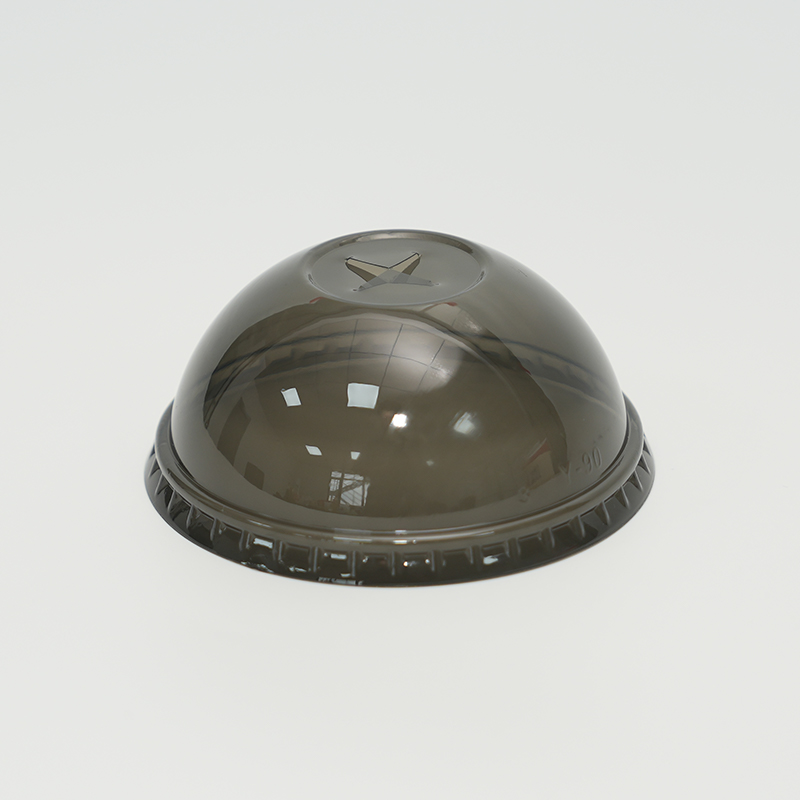
Semi-circular PP injection molded ball lid
Leak-Resistant Sealing Structure
Leak prevention is one of the most important performance requirements for takeaway packaging. Liquid leakage can damage labels, bags, vehicles, counters, and customer property. It can also reduce confidence in the packaging brand. For this reason, the semi-circular PP injection-molded ball lid uses a dedicated sealing structure intended to help the cover fit tightly against the compatible container.
The leak-resistant function is based on the relationship between the lid’s sealing region and the container rim. When the components are correctly matched, the lid engages with the rim and creates a close-fitting closure. The design helps reduce the possibility of liquid escaping during normal handling, transport, and storage.
It is important to understand that no lid can guarantee leak-free performance when it is used with an incompatible container, filled beyond the recommended level, improperly installed, or exposed to unusual pressure and movement. The best results come from pairing the lid with the correct 90 mm container and verifying the combination through practical testing.
Compared with generic covers that rely on a loose fit, a purpose-developed sealing structure offers several advantages. It can provide a more predictable closing action, reduce accidental lid displacement, and create a more professional user experience. A consistent closure also helps operators work more efficiently because staff do not need to repeatedly check whether each cover is seated correctly.
The sealing design is particularly valuable in delivery and takeaway applications. Packaged drinks and foods may be carried by hand, placed in bags, moved through vehicles, or stored temporarily before consumption. A properly fitted lid helps support the integrity of the package throughout these stages.
Thickened Polypropylene Construction
The lid is made from thickened PP material selected to provide a useful balance between light weight and structural durability. Polypropylene is widely used in food packaging because it can be formed into precise shapes, has relatively low density, and offers good resistance to everyday handling conditions.
A thickened structure can help reduce the risk of deformation, cracking, or breakage during normal use. This is especially important for lids that are repeatedly handled during production, stacking, order assembly, transport, and customer use. A lid that feels too thin may bend easily during installation or fail to maintain its intended shape when exposed to pressure.
Material thickness must be controlled carefully. Excessive material can raise unit cost, shipping weight, and resource consumption, while insufficient material may compromise rigidity. Injection molding allows manufacturers to develop a balanced structure by positioning material where it contributes most to strength and sealing performance.
The stated product advantages include resistance to deformation and breakage after long-term use under suitable conditions. Actual service performance depends on factors such as temperature, container compatibility, loading, impact, storage conditions, and handling practices. Buyers can evaluate these variables through sample testing and application-specific trials.
Compared with some low-cost alternatives, a well-controlled thickened PP lid may offer better dimensional stability and a more secure feeling during closure. For food-service businesses, this can reduce the number of damaged or rejected lids and help maintain a consistent presentation across customer orders.
Food-Grade Material Selection
Food-contact packaging must be manufactured from materials selected with safety and hygiene in mind. This product uses food-grade PP raw materials described as non-toxic and odorless. The material selection is intended to prevent the lid from introducing unwanted odor or harmful substances into the packaged product when used under appropriate conditions.
An odorless lid is particularly important for beverages, dairy products, desserts, fruit-based foods, and other products whose sensory qualities can be affected by packaging. A strong plastic odor may negatively influence customer perception even when the package remains physically intact. Food-grade material selection helps support a cleaner and more neutral packaging experience.
Polypropylene is also useful because it can be processed into transparent packaging components with a smooth, clean appearance. The clarity of the finished lid depends on material quality, mold condition, processing temperature, cooling, and handling after molding. Stable production conditions help reduce visible defects and maintain a consistent appearance.
Buyers should select packaging according to the intended application. The lid should be evaluated for contact with the specific foods or beverages, expected temperatures, storage period, and distribution environment. Where regulatory documentation is required, purchasers should request the relevant material and compliance documents for their market and application.
The company’s stated certifications and testing background include a QS national industrial product production license, ISO 9001 quality management system certification, BRC certification, German DIN safety certification, and EU RoHS testing. These credentials demonstrate a structured approach to quality and safety management. Customers should confirm the current validity and scope of any certification documents relevant to their order.
Transparent Appearance and Product Presentation
Packaging is part of a product’s visual identity. A transparent ball lid enables the contents to remain visible while adding a distinctive shape to the package. This can be valuable for beverage shops, dessert brands, catering companies, convenience stores, and food-service operators seeking a recognizable presentation.
The curved cover can draw attention to the top of the package and create a more dimensional appearance than a flat cover. When used with colorful beverages, layered drinks, whipped toppings, fruit pieces, or desserts, the profile can support a more attractive display. The package may become easier to identify in a refrigerated case, on a service counter, or inside a takeaway bag.
Transparency also assists internal operations. Staff can check the fill level and appearance of the product without removing the lid. This may help identify incorrect orders, damaged toppings, or abnormal filling before the package leaves the preparation area.
For brand owners, the lid can be combined with printed cups, labels, sleeves, stickers, or other accessories. Although the standard version is transparent, customized production may allow buyers to discuss material, color, fit, or structural requirements according to the intended packaging system.
Stackable Design and Storage Efficiency
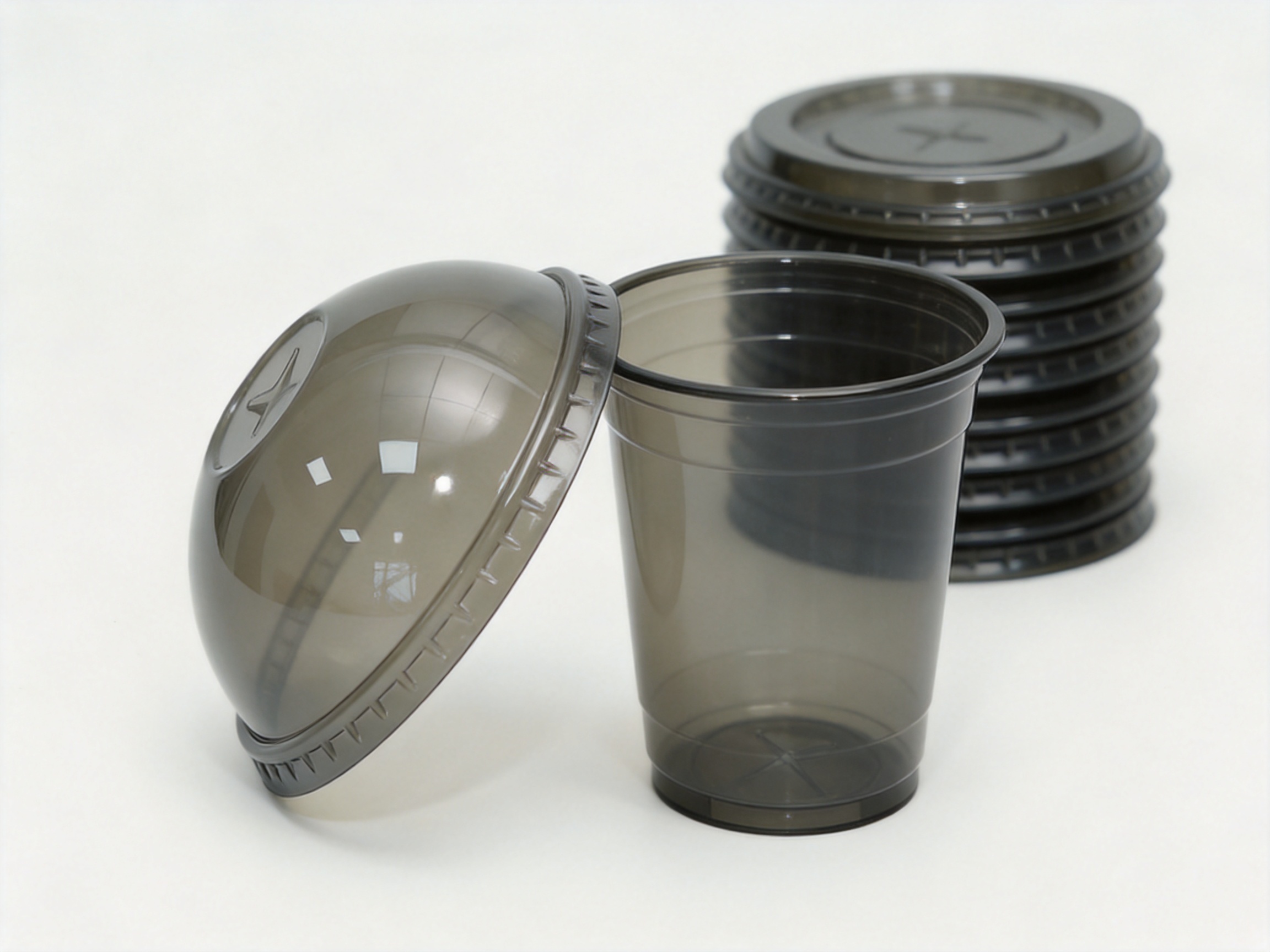
Packaging components are often stored in large quantities, so the ability to use warehouse and preparation space efficiently is important. The semi-circular PP injection-molded ball lid is designed to be stackable, allowing multiple units to be organized in a compact arrangement.
Stackability can improve several parts of the supply chain. During manufacturing, it supports more orderly inspection and packing. During shipping, it may help reduce unnecessary movement inside cartons. In warehouses, it can make inventory easier to count and retrieve. At the point of use, staff can place a stack near the filling station and access lids quickly during busy periods.
A well-designed stack should separate lids without excessive sticking or deformation. The stacking geometry must therefore be balanced with the curved profile and sealing structure. If lids are difficult to separate, operators may lose time or accidentally damage the rim. If they stack too loosely, storage and transportation become less efficient.
Space savings can be particularly valuable for businesses with limited back-of-house storage. Restaurants, beverage shops, kiosks, and catering operations may need to hold several packaging formats in a small area. Stackable lids help make the available space more manageable without sacrificing the desired product shape.
For distributors, efficient stacking can also contribute to better carton organization. The exact carton quantity and packing method should be confirmed with the manufacturer because they depend on order specifications, protective packaging, and shipping requirements.
Injection Molding Technology
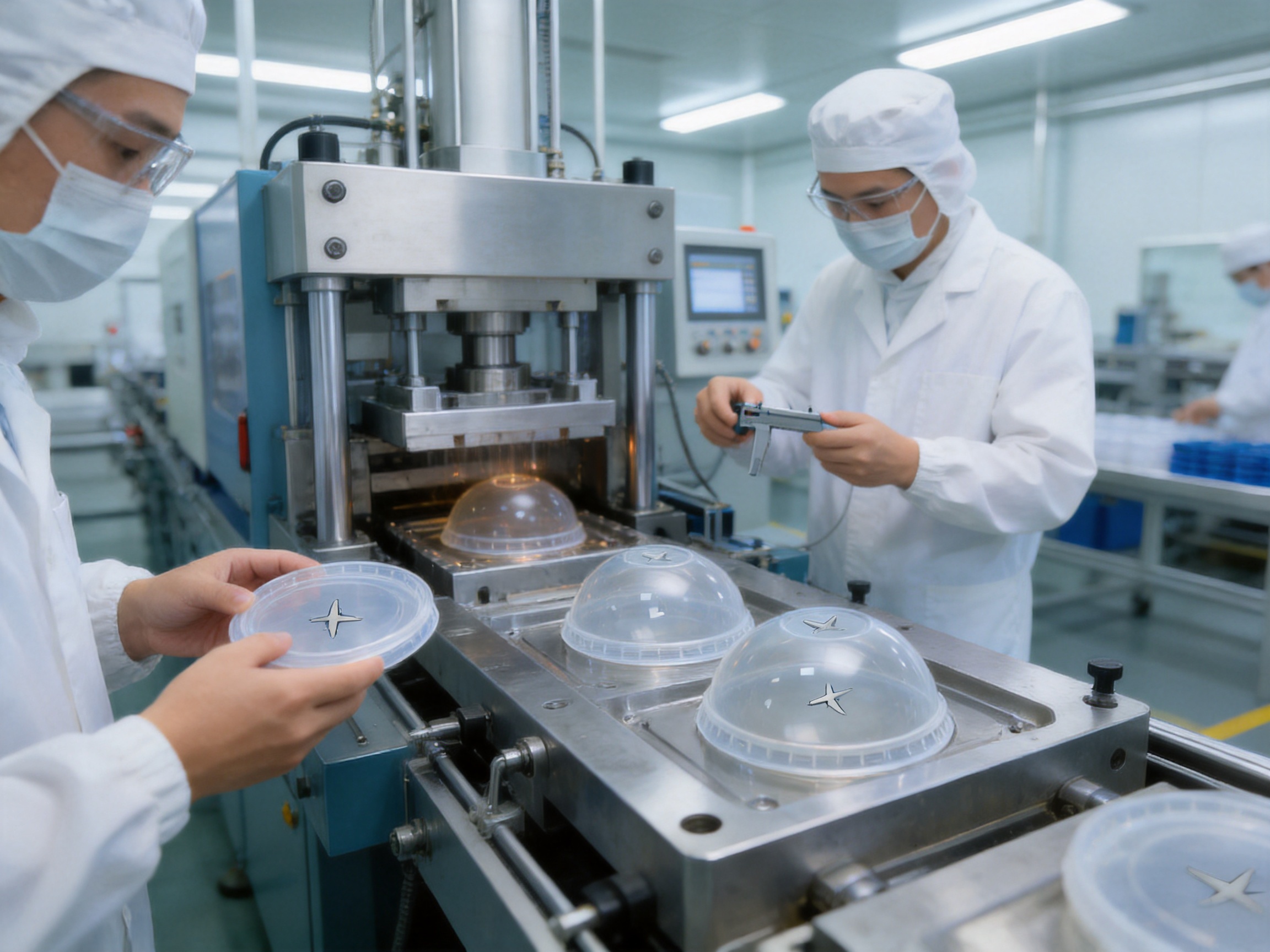
Injection molding is a high-efficiency manufacturing method in which heated plastic material is injected into a precisely engineered mold cavity. After the material fills the cavity, it cools and solidifies into the required form. The mold is then opened, and the finished part is removed or released for the next cycle.
For a semi-circular lid, the mold must reproduce multiple functional details, including the curved top, sealing area, rim profile, wall thickness, and stacking features. Mold accuracy has a direct influence on the lid’s dimensions and its compatibility with the matching container.
Process control is equally important. Injection pressure, temperature, cooling time, cycle timing, material drying where applicable, and machine condition can all affect the finished product. Unstable conditions may lead to warping, incomplete filling, flash, sink marks, discoloration, or dimensional variation.
A professional injection-molding operation uses production standards and inspection procedures to reduce these risks. Mold maintenance helps preserve cavity accuracy and surface quality. Machine maintenance supports stable operation. Raw material management helps ensure that approved PP material is used consistently. Operators and quality personnel monitor the process and identify abnormal conditions before they affect a large quantity of products.
Injection molding also supports repeatable production for OEM orders. Once the mold and process have been validated, the manufacturer can produce large volumes with consistent basic dimensions and appearance. This is important for brands that need packaging to look and function the same across different production batches.
Controlled Manufacturing Environment
The company states that it operates a Class 100,000 dust-free workshop supported by advanced air purification technology. The purpose of such an environment is to control airborne particles and maintain a cleaner production area for food packaging components.
A controlled workshop can be particularly valuable for transparent lids because visible particles, dust, and surface contamination are easier to notice on clear materials. Clean production conditions also support better hygiene management during molding, inspection, and packing.
The facility is also described as using a precise temperature and humidity control system. Environmental stability can help support consistent production by reducing fluctuations that might influence material behavior, cooling, dimensional stability, and packaging conditions.
Temperature and humidity control do not replace proper cleaning, employee hygiene, equipment maintenance, or inspection. Instead, they form part of a broader manufacturing system. A reliable packaging supplier combines environmental management with documented procedures, trained personnel, equipment control, raw material verification, and finished-product inspection.
For buyers, the value of a controlled production environment extends beyond one product. It can indicate that the supplier has invested in the infrastructure required for repeatable food-packaging manufacturing rather than relying only on basic processing equipment.
Quality Management and Certifications
Quality management is essential when packaging is used in direct or indirect contact with food. The company identifies several certifications, licenses, and testing credentials connected with its manufacturing operations. These include the QS national industrial product production license, ISO 9001 quality management system certification, BRC certification, German DIN safety certification, and EU RoHS testing.
ISO 9001 is associated with a documented quality management approach. In practical manufacturing terms, this may include procedures for order review, production planning, inspection, nonconformity control, corrective action, and continual improvement. A structured system helps the manufacturer manage consistency as production volume and customer requirements increase.
BRC certification is widely recognized in food-related supply chains and can support customer confidence in hygiene, product safety, and operational controls, depending on the certification scope. DIN-related safety certification and RoHS testing may provide additional information for customers whose procurement systems require recognized technical or environmental documentation.
Certifications should always be reviewed in context. Buyers should verify the issuing organization, validity period, covered facility, applicable product category, and specific requirements of the destination market. Documentation is most valuable when combined with product samples, technical data, quality agreements, and application testing.
A capable supplier should also be able to discuss inspection points such as material appearance, lid weight, critical dimensions, sealing fit, transparency, flash, deformation, contamination, and packing condition. Establishing these criteria before mass production helps align expectations between the buyer and manufacturer.
OEM Manufacturing and Customization
Different food and beverage businesses often require different packaging details. A standard transparent 90 mm lid may meet many applications, but some customers may need adjustments to color, material specification, sealing profile, height, opening features, branding integration, or container compatibility.
The company provides customized production according to customer requirements. OEM manufacturing can include technical communication, product development, mold adjustment, sample approval, mass production, inspection, and shipment coordination. The exact scope depends on the design and order quantity.
Customization should begin with a clear technical brief. The buyer should provide the container drawing or physical sample, required caliber, product dimensions, filling temperature, intended contents, expected storage conditions, packaging quantity, visual requirements, and target market. If the lid will be used for hot, cold, acidic, oily, carbonated, or frozen products, those conditions should be identified early.
Sample approval is an important stage. Before mass production, the buyer can check the fit between the lid and container, sealing performance, appearance, stacking behavior, opening force, and suitability for the filling process. Transport simulation or practical takeaway testing may also be appropriate.
Customized mold development can require additional time and investment. However, a purpose-developed mold may provide better compatibility and a more distinctive package than an off-the-shelf component. For brands with a long-term packaging program, the initial development work may support better consistency and stronger product differentiation.
Advantages Compared with Generic Alternatives
The semi-circular PP injection-molded ball lid offers several advantages when compared with basic lids that have not been developed for a specific container system.
Improved Fit Potential
A lid designed around a defined caliber and sealing structure is more likely to provide predictable compatibility than a generic cover selected only by approximate diameter. Correct matching can support better closure, reduced movement, and improved resistance to leakage.
Distinctive Product Appearance
The semi-circular profile creates a recognizable shape that can help a food or beverage package stand out. This is useful for businesses that want packaging to contribute to product presentation rather than remain an invisible utility component.
Better Structural Confidence
The thickened PP construction is intended to provide greater resistance to deformation and breakage than very thin alternatives. A stronger lid can be easier to install and less likely to fail during ordinary handling.
Transparent Product Visibility
The transparent design allows the contents to remain visible. This supports merchandising, order verification, and customer confidence, particularly when the appearance of the food or beverage is important.
Storage Convenience
The stackable form helps users organize packaging stock and save space. This advantage can benefit both large distribution centers and small food-service locations with limited storage capacity.
Manufacturing Consistency
Injection molding, supported by controlled environmental conditions and quality procedures, can provide better repeatability than manually formed or poorly controlled components. Consistency is important when packaging must operate on a busy filling line or support a standardized brand presentation.
OEM Support
The ability to discuss customized production gives buyers more flexibility. Instead of adapting an existing package to a poorly matched lid, customers can work with the manufacturer to develop a component around their container and application.
Applications for Food and Beverage Packaging
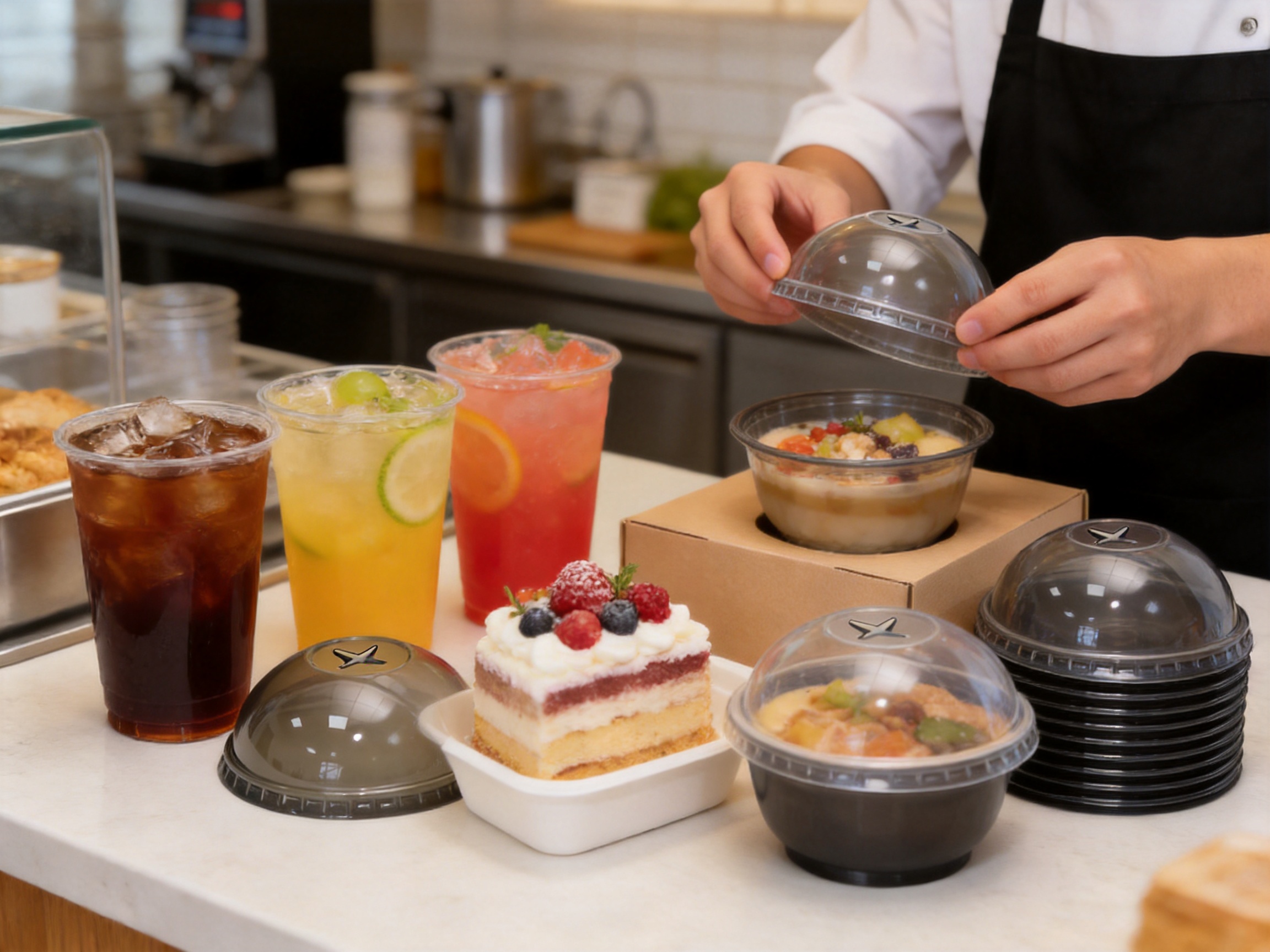
The lid is suitable for a range of compatible food and beverage containers. Potential applications include cold drinks, takeaway beverages, specialty drinks, desserts, fruit products, prepared foods, catering portions, and retail food packaging. The exact suitability should be confirmed through compatibility and material testing.
For beverage shops, the raised profile may accommodate toppings, foam, fruit, or decorative ingredients. The transparent surface helps the drink remain visible, while the sealing structure supports takeaway and delivery use.
For dessert packaging, the curved lid can provide additional clearance for cream, fruit, layered products, or other toppings. The visual presentation may help the product appear more attractive in refrigerated displays or delivery orders.
For catering and events, stackability and lightweight construction can simplify storage and service preparation. Staff can organize large numbers of lids and install them efficiently when filling portions in advance.
For food manufacturers and distributors, the product can serve as one component in a broader disposable food packaging system. It may be combined with PP cups, takeaway bowls, printed containers, labels, sleeves, bags, and other peripheral packaging products.
Businesses should select the lid according to the specific product. A cover suitable for cold drinks may not be suitable for hot liquids, high-temperature filling, pressure-generating products, or demanding thermal processing. Application conditions should be included in the technical evaluation before purchase.
Production and Inspection Workflow
A dependable production workflow begins with order confirmation and technical review. The manufacturer and buyer should agree on the product dimensions, material, color, packaging method, quantity, delivery schedule, and quality requirements.
For standard products, the existing mold and specifications can be reviewed against the customer’s container. For customized projects, engineering personnel may evaluate the drawing, sample, or design concept and determine whether mold modification or new mold development is necessary.
Approved food-grade PP material is then prepared for production. Material identification and storage are important because the wrong resin, contamination, or poor storage conditions can affect product quality.
During molding, operators monitor the machine and process conditions. The finished lids may be checked for appearance, dimensional accuracy, weight, transparency, flash, deformation, and other customer-defined criteria. Particular attention should be paid to the sealing rim because small defects in this area can affect the fit.
Inspection may be conducted at several stages rather than only at the end. In-process checks can identify trends early, while final inspection confirms that the packed goods meet the agreed requirements. Defective or nonconforming products should be segregated according to the supplier’s quality procedures.
After inspection, the lids are packed to protect them from dust, compression, and unnecessary handling. Packing quantities, carton labeling, palletization, and shipping documentation should be confirmed with the buyer before dispatch.
How Buyers Can Evaluate the Product
Buyers should begin by confirming container compatibility. The 90 mm caliber provides a starting point, but the complete rim profile must also match. A sample fit test should check whether the lid seats evenly around the entire circumference without excessive force or looseness.
Leak testing should reflect actual use. Fill the container with the intended product or a suitable test liquid, close the lid correctly, and observe the package under normal handling conditions. The test may include upright storage, tilting, gentle movement, bag transport, and delivery simulation.
Visual inspection should cover transparency, surface cleanliness, uniformity, color, flash, scratches, black spots, deformation, and other visible defects. Clear products can reveal imperfections more readily, so appearance standards should be defined in advance.
Dimensional checks should focus on the lid diameter, sealing region, height, wall thickness where specified, and critical features related to stacking. Weight checks can also help identify significant production variation, although weight alone does not prove functional performance.
Opening and closing force should be evaluated by the intended users. A lid that is too difficult to install can slow production and frustrate staff, while one that is too loose may compromise security. The ideal result depends on the container design and the application.
Storage and transport testing may be appropriate for large orders. Buyers can review how the lids perform after being stacked, packed, shipped, and stored for a defined period. This helps identify problems that may not appear during immediate sample inspection.
Environmental and Resource Considerations
Food packaging decisions increasingly include environmental considerations. Polypropylene is a lightweight plastic that can reduce transport weight compared with heavier materials. Its durability may also help reduce damage-related waste when the package is correctly designed and used.
At the same time, responsible packaging selection requires attention to material use, product lifespan, recycling systems, and local waste-management conditions. The lid should be used only where its performance is needed, and purchasers should avoid unnecessary over-specification that increases material consumption.
The company describes its broader business as including biodegradable new materials and food packaging products. Customers seeking lower-impact options can discuss available materials and product structures with the manufacturer. Any environmental claim should be supported by specific material data, certification, and disposal guidance relevant to the destination market.
Recycling availability varies by region. Buyers should consider whether PP packaging is collected and processed in their market and should provide clear disposal instructions when appropriate. The use of a recyclable material does not by itself guarantee that the product will be recycled after use.
Environmental performance can also be improved through efficient mold design, optimized wall thickness, reduced production scrap, responsible packaging, and accurate order planning. A supplier with controlled manufacturing processes is better positioned to evaluate these factors systematically.
Benefits for Different Customer Groups
Food-Service Operators
Restaurants, beverage shops, dessert stores, and catering companies can benefit from a lid that is easy to stack, visually attractive, and designed for secure closure. Consistent fit can support faster order preparation and reduce packaging-related complaints.
Food Packaging Distributors
Distributors can add a distinctive semi-circular lid to their product portfolio. The clear standard specification, approximate unit weight, and defined caliber make it easier to plan inventory and present the product to compatible customers.
Brand Owners
Brands can use the lid’s appearance to support product differentiation. The transparent curved form may enhance the display of drinks and desserts while providing opportunities to coordinate the lid with printed cups, labels, and other packaging elements.
Contract Manufacturers
Contract food producers can use a reliable lid component in standardized packaging programs. OEM support may also help them serve multiple customers with adjusted dimensions, materials, or appearance requirements.
Importers and Purchasing Teams
Importers can benefit from working with a supplier that offers manufacturing, quality management, certifications, and technical communication in one production system. Clear specifications and sample approval help reduce purchasing risk and support more predictable delivery planning.
Company Manufacturing Strengths
Yuqian Packaging Technology (Jiangsu) Co., Ltd. was established in 2010 and is located in Taizhou City, Jiangsu Province. The company reports a plant area of approximately 30,000 square meters and focuses on the research, development, production, and sales of new food packaging materials and products.
The company’s manufacturing strengths include injection-molding capability, OEM production, controlled workshop conditions, quality-system management, and a product range covering food packaging containers, lids, takeaway bowls, disposable straws, recycle bags, and related products. This wider product structure can help customers source multiple packaging components from one supplier.
The company also established a Shanghai branch in January 2019 to improve service quality and expand business channels. A regional service presence can support communication, customer development, and coordination for domestic and international business.
For international buyers, supplier capability should be evaluated through direct communication, product samples, certification review, factory information, quality agreements, and order references where available. The company’s stated experience and infrastructure provide a foundation for such evaluation.
Ordering and Custom Project Considerations
Before requesting a quotation, buyers should prepare as much technical information as possible. Useful information includes the matching container model, rim diameter, drawing, physical sample, required material, color, expected order quantity, annual demand, packing method, destination, and delivery schedule.
The intended contents should also be disclosed. Product type, temperature, acidity, oil content, carbonation, storage time, and transport conditions may influence the appropriate material and design. Early disclosure helps the manufacturer recommend a more suitable specification.
Buyers should ask whether the quoted price includes mold costs, sample development, inspection, packing, documentation, and shipping preparation. For customized products, they should clarify mold ownership, revision procedures, maintenance responsibility, and tooling storage arrangements.
A written quality standard is recommended. It may define acceptable dimensions, weight tolerance, appearance requirements, sealing performance, contamination limits, packing quantity, and sampling procedures. Clear standards reduce ambiguity during mass production and final inspection.
Lead time should be divided into design, mold development, sampling, approval, production, inspection, packing, and shipment. Standard products may move more quickly, while customized designs require additional engineering and validation time.
Finally, buyers should confirm the required regulatory documentation for the destination market. Food-contact rules differ among countries and regions, so the supplier and importer should cooperate to ensure that the selected material and documentation meet the applicable requirements.
Frequently Asked Questions
What is the main material used for the lid?
The lid is made from food-grade polypropylene, or PP. The material is selected for its light weight, durability, processability, and suitability for many food packaging applications when used under appropriate conditions.
What is the standard caliber?
The listed caliber is 90 mm. The buyer should confirm the exact rim geometry of the matching container because diameter alone does not determine whether a lid will seal correctly.
What is the approximate unit weight?
The listed approximate gram weight is 5.5 grams per lid. Actual production weight may be subject to normal manufacturing tolerances and should be confirmed in the approved technical specification.
Is the lid transparent?
Yes. The standard product is transparent, allowing users to see the packaged beverage or food product. Customized colors or other specifications may be discussed according to the project requirements.
Is the lid designed to prevent leakage?
The lid uses a leak-resistant sealing structure intended to fit tightly with a compatible container. Performance depends on correct container matching, proper installation, filling level, handling, and application conditions.
Can the lid be stacked?
Yes. The product is designed with a stackable form to support more efficient storage, transport, counting, and preparation at the point of use.
Can the product be customized?
Customized production is available according to customer requirements. Buyers can discuss dimensions, material specifications, color, sealing structure, mold development, and compatibility with a particular container.
What manufacturing method is used?
The lid is manufactured through plastic injection molding. This process uses a precision mold to form the curved profile, sealing region, and other structural details in a repeatable production cycle.
Is the product suitable for hot food or hot beverages?
Suitability depends on the specific temperature, filling method, container design, and storage conditions. Buyers should provide the intended temperature range and conduct application testing before using the lid for hot products.
What certifications or quality credentials are identified?
The company identifies a QS national industrial product production license, ISO 9001 quality management system certification, BRC certification, German DIN safety certification, and EU RoHS testing. Customers should request current documents and verify their scope for the intended order.
How should buyers confirm compatibility?
Buyers should provide a container sample or technical drawing and request samples of the lid. They should check the fit, sealing performance, installation force, appearance, stacking, transport behavior, and compatibility with the actual food or beverage.
Who may benefit most from this product?
Beverage shops, takeaway restaurants, dessert brands, catering businesses, food manufacturers, distributors, importers, and packaging wholesalers may benefit from the lid when it matches their container and application requirements.
Conclusion
The semi-circular PP injection-molded ball lid is designed as a practical and visually distinctive solution for compatible food and beverage containers. Its principal strengths include a leak-resistant sealing structure, thickened PP construction, transparent appearance, stackable form, and suitability for OEM customization.
Compared with basic generic lids, the product offers a more deliberate combination of fit, appearance, durability, storage convenience, and manufacturing consistency. Its curved profile can improve product presentation, while its transparent material allows the contents to remain visible. The thickened structure supports everyday handling, and the stackable design helps reduce storage difficulties.
These product advantages are supported by a manufacturing system that includes injection-molding technology, a controlled dust-free workshop, temperature and humidity management, quality inspection, and documented certifications and testing credentials. The company’s broader food-packaging capabilities and OEM experience provide additional support for customers seeking standard or customized solutions.
Successful use depends on correct compatibility and application testing. Buyers should confirm the 90 mm caliber against the actual container, evaluate sealing performance, review material and compliance documentation, and approve samples before mass production. When these steps are completed carefully, the semi-circular PP injection-molded ball lid can contribute to safer handling, better presentation, efficient storage, and more consistent food packaging operations.
References
1. Product specification information supplied for the semi-circular PP injection-molded ball lid, including caliber, approximate gram weight, color, material, and structural features.
2. Company-provided information regarding injection molding, OEM manufacturing, dust-free workshop conditions, air purification, and temperature and humidity control.
3. Company-provided information regarding QS licensing, ISO 9001 quality management certification, BRC certification, German DIN safety certification, and EU RoHS testing.
4. General technical principles of polypropylene processing and injection molding for food packaging applications.
5. General packaging quality-control practices covering dimensional inspection, material verification, sealing tests, appearance inspection, and transport evaluation.