English
 Español
 عربى
Content
- 1 What Are PP Thermoforming Cups?
- 2 Key Material Advantages of Polypropylene
- 3 Product Specifications and Available Sizes
- 4 Design Features That Improve Daily Use
- 5 Manufacturing Process and Technical Strengths
- 6 Advantages Over Less Specialized Disposable Cups
- 7 Customization Options for Food and Beverage Brands
- 8 Applications Across Multiple Industries
- 9 Operational Benefits for Buyers
- 10 Quality Considerations Before Ordering
- 11 Environmental Responsibility and End-of-Life Management
- 12 Why Manufacturing Experience Matters
- 13 Supply Capacity and Custom OEM Support
- 14 How to Select the Right PP Cup Model
- 15 Frequently Asked Questions
- 15.1 What are PP thermoforming cups made from?
- 15.2 Are these cups suitable for both cold and hot products?
- 15.3 Are PP thermoforming cups transparent?
- 15.4 Can the cups be customized?
- 15.5 What is the difference between a rolled rim and a flat rim?
- 15.6 Are the cups stackable?
- 15.7 Can PP cups be recycled?
- 15.8 What sizes are available?
- 15.9 Can these cups be used with lids or sealing films?
- 15.10 What certifications and testing are associated with the manufacturer?
- 15.11 How should buyers test samples?
- 15.12 Who may benefit from customized PP thermoforming cups?
- 16 Conclusion
- 17 References
- 18 Product: PP thermoforming cup
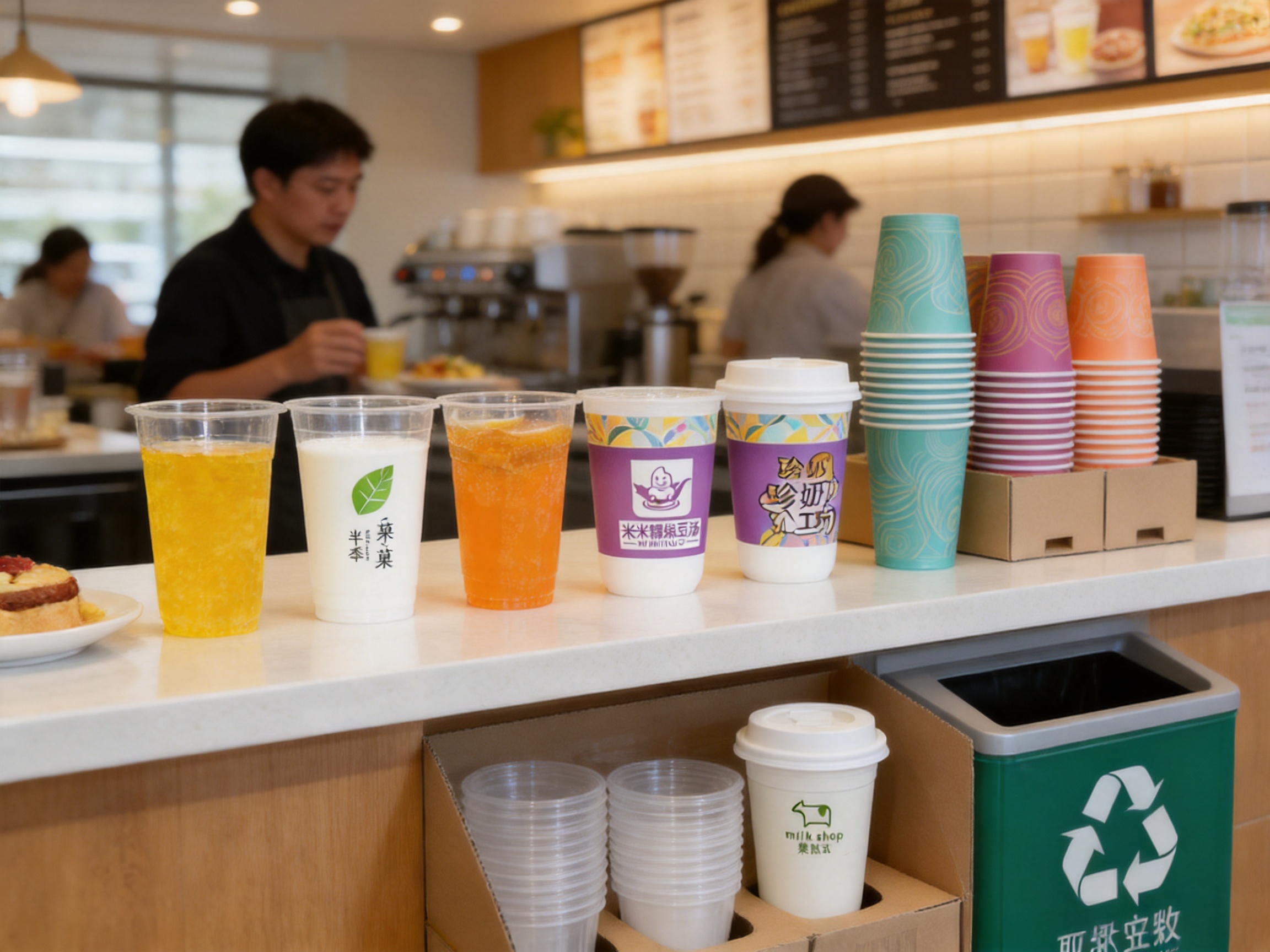
Food and beverage packaging must satisfy several demands at the same time. It must protect the contents, remain convenient during transportation and consumption, present a clean and attractive appearance, and meet increasingly strict expectations for food safety and environmental responsibility. For manufacturers, retailers, restaurants, catering companies and beverage brands, the choice of cup material can directly influence product quality, customer satisfaction, operating efficiency and brand image.
PP thermoforming cups, also known as PP blister cups, offer a practical solution for a wide range of cold beverage, hot food and takeaway applications. Produced from polypropylene, these cups combine transparency, toughness, temperature resistance, light weight and recyclability. Their smooth surfaces and rounded mouths support comfortable use, while their stackable structure helps reduce storage requirements and transportation inefficiencies.
Yuqian Packaging Technology (Jiangsu) Co., Ltd. manufactures PP thermoforming cups using high-quality polypropylene raw materials and advanced production equipment imported from Germany. The company combines large-scale manufacturing capabilities, strict quality management and flexible customization services to supply disposable food packaging containers for domestic and international customers.
This article examines the material characteristics, technical advantages, production process, available specifications, customization options and practical applications of PP thermoforming cups. It also explains why a professionally manufactured polypropylene cup can provide advantages over less consistent disposable packaging alternatives.
What Are PP Thermoforming Cups?
PP thermoforming cups are disposable or semi-disposable containers made from polypropylene sheets or films that are heated and shaped over a forming mold. The process produces a cup with a defined rim, sidewall, base and internal volume. Depending on the design, the rim can be manufactured in a rolled or flat style to match the requirements of the filling, sealing and serving process.
The term “blister cup” refers to the forming method and appearance of the product. Unlike injection-molded containers, which are created by injecting molten plastic into a mold, thermoformed cups are shaped from a heated plastic sheet. This can support efficient high-volume production and provide flexibility in wall thickness, geometry and product appearance.
Polypropylene is particularly suitable for this type of container because it offers a favorable balance between light weight and mechanical performance. It is naturally resistant to many everyday food and beverage conditions, and it can maintain its structure across a useful temperature range. For the PP thermoforming cups described in this product range, the applicable temperature range is approximately -10°C to 120°C.
The cups are designed with a round mouth and a smooth, highly transparent body. These features support convenient drinking, easier filling and improved product visibility. A transparent container allows consumers to see the color, texture and quantity of the beverage or food inside, which can be especially valuable for juices, milk-based beverages, desserts, fruit products and ready-to-eat items.
Key Material Advantages of Polypropylene
Food-contact suitability
High-quality PP raw material is widely used in food and beverage packaging because it can be manufactured without unwanted odor and is suitable for many food-contact applications when produced according to applicable requirements. The use of carefully selected raw material helps ensure that the finished cup has a clean appearance, consistent performance and dependable contact characteristics.
For packaging buyers, material selection is not simply a question of cost. An inconsistent resin or poorly controlled production process can result in odor, discoloration, brittleness or dimensional instability. A professional PP cup manufacturer must therefore control raw material sourcing, forming conditions, trimming, inspection and packing as part of an integrated quality system.
Temperature adaptability
The PP thermoforming cups can be used across a temperature range of approximately -10°C to 120°C. This makes them suitable for refrigerated beverages, chilled desserts, room-temperature drinks and selected hot food applications. A packaging material with this degree of temperature adaptability gives food service operators more flexibility when developing menus and selecting containers.
For chilled products, the cup should remain sufficiently stable during refrigeration and normal handling. For hot food applications, polypropylene’s higher temperature tolerance can provide a practical advantage over materials that soften or deform more easily when exposed to heat. The specific suitability of a cup should always be evaluated according to the product temperature, filling method, storage conditions and applicable food-contact requirements.
High transparency
Transparency is an important commercial feature. Consumers often make purchasing decisions based on visual information, and clear packaging can display the color and condition of a product without requiring additional labeling or opening. A transparent cup can also help service staff identify the contents quickly, which is useful in restaurants, canteens, cafés, convenience stores and catering operations.
The high-transparency appearance of these PP cups is supported by uniform material distribution and controlled forming conditions. A well-formed cup should have a clean surface, consistent wall appearance and minimal visual defects. Uniformity is particularly important when cups are used as part of a branded beverage presentation or placed in retail display refrigerators.
Good toughness and resistance to deformation
Polypropylene provides a useful level of toughness for disposable food packaging. The cup can withstand ordinary handling, stacking and transportation without becoming excessively fragile. Good toughness also helps reduce the risk of cracking during filling, sealing, packing and consumption.
Resistance to deformation is another significant advantage. When a container loses its shape, it may become difficult to fill, seal, stack or serve. A stable cup maintains its designed opening and base, supporting more reliable use throughout the supply chain. The balance between material thickness, cup geometry and forming conditions determines the final performance, which is why manufacturing control is essential.
Light weight and efficient logistics
Disposable packaging must be light enough to transport economically while still providing the required strength. PP thermoforming cups can achieve this balance through efficient material distribution and optimized cup design. Reduced weight can lower packaging consumption per unit, decrease transportation load and make the product easier for consumers and food service employees to handle.
Light weight does not mean that structural requirements are ignored. The cup must still provide an adequate base, stable sidewalls and a functional rim. Through different grammage options, buyers can select a product that is appropriate for the intended beverage or food application.
Recyclability
Polypropylene is a recyclable plastic material. After collection and appropriate sorting, PP packaging can enter recycling systems and be processed for reuse in suitable applications. This gives PP cups an environmental advantage over packaging formats that have limited recovery options in a particular market.
Recyclability depends on local collection infrastructure, sorting practices, contamination levels and end-market demand. Therefore, responsible packaging use requires more than selecting a recyclable material. Businesses should also consider correct disposal instructions, collection systems, material separation and the reduction of unnecessary packaging. Within a suitable recycling system, PP cups can contribute to a more circular material cycle and help reduce the demand for virgin resources.
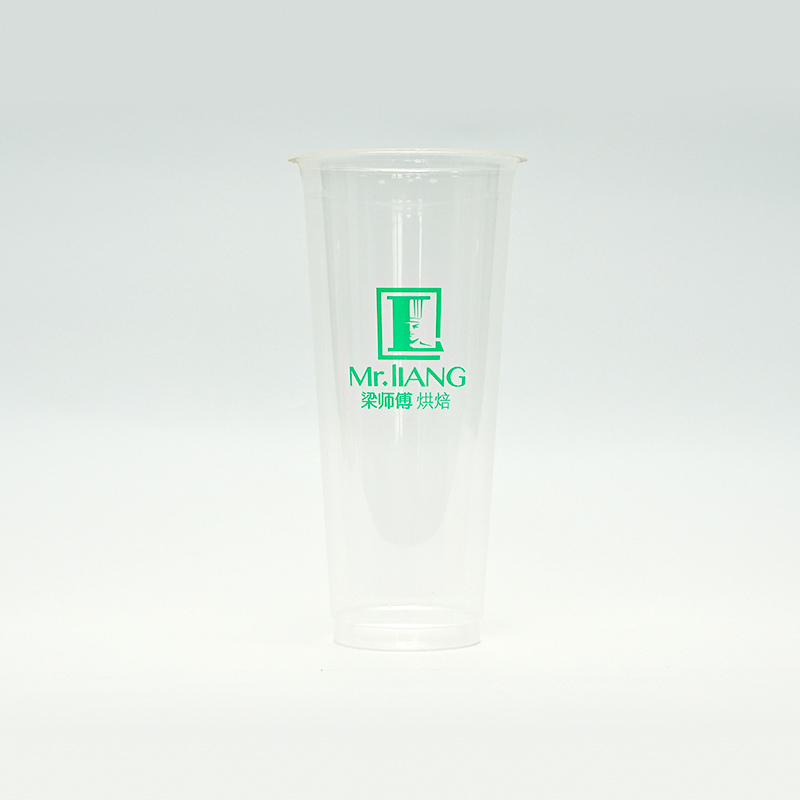
PP thermoforming cup
Product Specifications and Available Sizes
The product range includes several volume and dimensional options. The specifications allow customers to match the cup to different beverage portions, food servings, filling lines and service environments. The following table summarizes the stated models and their main dimensions.
| Volume | Mouth Diameter | Height | Bottom Diameter | Grammage |
|---|---|---|---|---|
| 360 ml | 95 mm | 105 mm | 55 mm | 6/7 g |
| 520 ml | 90 mm | 133 mm | 59 mm | 10/12 g |
| 700 ml | 90 mm | 180 mm | 55 mm | 11/12/13 g |
| 1,000 ml | 120 mm | 153 mm | 80 mm | 16/18 g |
The 360 ml model is suitable for standard beverage servings, small desserts and portion-controlled food products. Its relatively compact size can be useful for cafés, quick-service restaurants and takeaway counters that offer moderate portions.
The 520 ml model provides additional capacity for milk tea, fruit drinks, iced beverages, smoothies and other products where a larger serving is preferred. Its taller profile can provide a distinctive visual presentation while maintaining a practical footprint for cup holders and display areas.
The 700 ml model is designed for generous beverage portions and larger takeaway servings. It can be considered for large cold drinks, mixed beverages and food products that require additional volume. The available grammage options allow buyers to evaluate the required balance between weight, stiffness and cost.
The 1,000 ml model offers substantial capacity for family-size beverages, large food portions, mixed fruit products and catering applications. Its wider mouth and larger bottom diameter can support convenient filling and improved stability when used with compatible lids or secondary packaging.
Dimensions and grammage should be confirmed before ordering because the final specification may depend on the application, tooling, sealing method and customization requirements. Customers should assess the cup together with the intended lid, filling machine, storage carton and transportation conditions.
Design Features That Improve Daily Use
Round cup mouth
A round mouth supports comfortable drinking and helps create a consistent sealing surface. It also makes the cup easier to fill with liquid beverages, prepared foods and semi-liquid products. For food service operators, a well-defined rim can improve compatibility with lids and reduce inconvenience during high-speed service.
The cup rim can be customized in rolled or flat styles. A rolled rim may provide a particular tactile feel and appearance, while a flat rim may be selected for specific lid, sealing or stacking requirements. The best option depends on the customer’s packaging line and the required end-user experience.
Smooth inner wall
A smooth inner wall reduces the amount of product that remains attached to the container after pouring or consumption. It can also support easier cleaning in reusable or semi-reusable situations, although the product is primarily designed as disposable food packaging. Smooth surfaces contribute to a clean appearance and help reduce the visual accumulation of stains or residues.
Stackable structure
Stackability is a practical advantage for both manufacturers and end users. Cups that nest efficiently occupy less warehouse space, require fewer cartons and can be handled more efficiently at restaurants, canteens, cafés and homes. Improved stacking can also reduce the risk of scattered inventory and simplify the preparation of large numbers of servings.
Efficient nesting must be carefully controlled. If cups fit too tightly, employees may have difficulty separating them. If they fit too loosely, stacks may become unstable during transportation or storage. Proper cup geometry and consistent dimensional control help create a usable balance between compact storage and easy dispensing.
Clear product presentation
The transparent cup body allows a beverage or food product to remain visible from multiple angles. This can improve the presentation of layered desserts, colorful juices, fruit teas, iced coffee, yogurt products and other visually appealing foods. Clear packaging can also support portion recognition and allow service staff to check the product before it reaches the customer.
Manufacturing Process and Technical Strengths
High-quality raw material selection
Manufacturing quality begins with the raw material. The use of high-quality polypropylene helps provide the required transparency, toughness, temperature resistance and dimensional stability. Material selection also influences the cup’s surface finish, color consistency and ability to perform during forming.
Raw material control should include supplier evaluation, incoming inspection and the management of storage conditions. Resin must be protected from contamination and handled in a way that preserves its intended properties. A disciplined material management system helps prevent avoidable differences between production batches.
Thermoforming with imported equipment
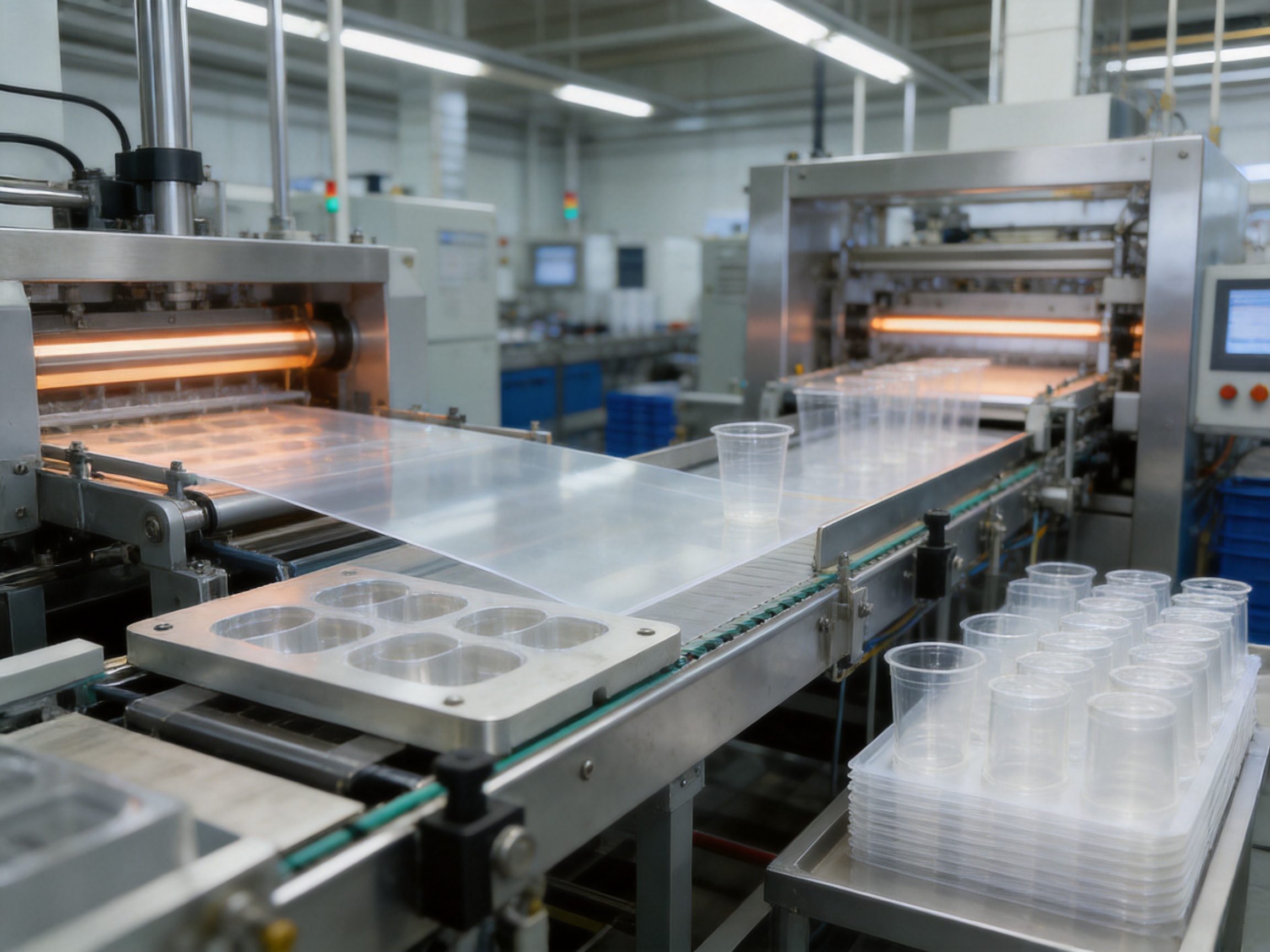
Yuqian Packaging Technology uses production equipment imported from Germany. Advanced thermoforming equipment can provide more precise control over heating, forming, cooling and trimming. These controls are important because polypropylene must be heated within an appropriate processing window to achieve reliable forming without sacrificing clarity or strength.
Equipment capability can influence production speed, consistency and repeatability. In large-volume orders, a stable machine platform helps reduce variation among individual cups. It also supports the manufacture of multiple sizes and designs while maintaining efficient production planning.
Thermoforming generally involves several coordinated stages. First, a PP sheet or film is prepared at a controlled thickness. The material is then heated until it reaches a suitable forming condition. A mold shapes the softened sheet into the cup geometry, after which cooling stabilizes the shape. The formed cups are trimmed, inspected and packed for shipment.
Controlled material distribution
One of the key challenges in thermoforming is achieving appropriate wall thickness throughout the cup. The rim, sidewall, shoulder and base may experience different levels of stretching during forming. If material distribution is not controlled, some areas may become too thin while others use unnecessary material.
Advanced forming equipment and suitable tooling help distribute material more evenly. This supports a better combination of transparency, strength, weight and dimensional accuracy. Uniform material distribution is also important for the visual appearance of clear cups because significant thickness variation may affect clarity and create inconsistent light reflection.
Tooling and dimensional control
The cup mold determines important characteristics such as mouth diameter, height, bottom diameter, wall profile and nesting behavior. Tooling must be designed for repeatable production and maintained to prevent dimensional drift. Accurate tooling helps ensure compatibility with lids, filling equipment, sealing machines and packing cartons.
Dimensional inspection can include measurements of mouth diameter, height, base diameter, wall condition and overall appearance. For customers using automated production lines, even small dimensional differences may affect feeding, filling or sealing performance. Consistent manufacturing therefore reduces the risk of interruptions and rejected units.
Trimming and rim finishing
After forming, the cup must be trimmed accurately to remove excess sheet material and create a functional rim. The finishing quality of the rim affects drinking comfort, lid fit, sealing performance and appearance. A cleanly trimmed edge is particularly important for cups used without lids or for products consumed directly from the container.
Different rim styles can be produced according to customer requirements. The rolled and flat options provide flexibility for different applications and packaging systems. The selected style should be evaluated with the compatible lid, sealing film and intended use conditions.
Quality management systems
Yuqian Packaging Technology reports that it has passed QS national industrial product production license requirements, ISO 9001 quality management system certification, BRC certification, German DIN safety certification and EU RoHS+ testing. These certifications and assessments demonstrate the company’s focus on structured quality management, product safety and compliance-related controls.
Certification does not replace application-specific evaluation, but it provides customers with useful evidence that manufacturing processes are organized and subject to defined requirements. Quality management involves documentation, process control, corrective action, traceability and continuous improvement. These activities are particularly important when supplying customized products or fulfilling large, repeated orders.
Advantages Over Less Specialized Disposable Cups
More reliable temperature performance
Some disposable cups are intended primarily for cold drinks and may soften or lose shape when exposed to hot contents. PP thermoforming cups provide a broader temperature range, making them more versatile for operators that serve both refrigerated beverages and hot food. This can simplify purchasing and reduce the need to maintain several different packaging materials.
Temperature performance should be considered together with the product’s heating method, contact duration and filling temperature. Nevertheless, the stated -10°C to 120°C range provides a useful basis for evaluating applications that require greater thermal adaptability than ordinary cold-use packaging.
Better balance between clarity and toughness
Very rigid packaging may be difficult to use, while very flexible packaging may collapse during filling or transportation. PP cups offer a balanced profile: they are light and flexible enough for disposable use, but tough enough to resist ordinary deformation. Their transparency adds visual value without requiring a separate display window or secondary transparent sleeve.
Greater customization flexibility
Standard disposable cups may be available only in limited sizes, colors or shapes. The PP thermoforming cup range supports customization of colors, patterns, calibers and in-mold labeling according to customer needs. This allows food and beverage brands to create packaging that is more closely aligned with their market positioning.
Customization can be used for many purposes. A beverage company may require a specific cup diameter to match a lid and filling machine. A restaurant chain may request a printed pattern that supports brand recognition. A catering supplier may need different capacities for separate menu categories. In-mold labeling can integrate graphics into the product structure and may provide a clean, durable appearance.
Improved storage efficiency
Stackable cups can provide a direct operational advantage over packaging that is difficult to nest or organize. More efficient stacking allows businesses to store a larger number of cups in the same area. It can also simplify stock counting, preparation and distribution across multiple service locations.
More suitable for large-volume supply
Professional food packaging buyers often require reliable delivery schedules, not merely a technically acceptable sample. A manufacturer with strong production capacity can organize large-volume orders, repeat production and customized projects more effectively. Yuqian Packaging Technology emphasizes mass production capability and delivery-time management, which are important considerations for wholesalers, distributors and branded food service companies.
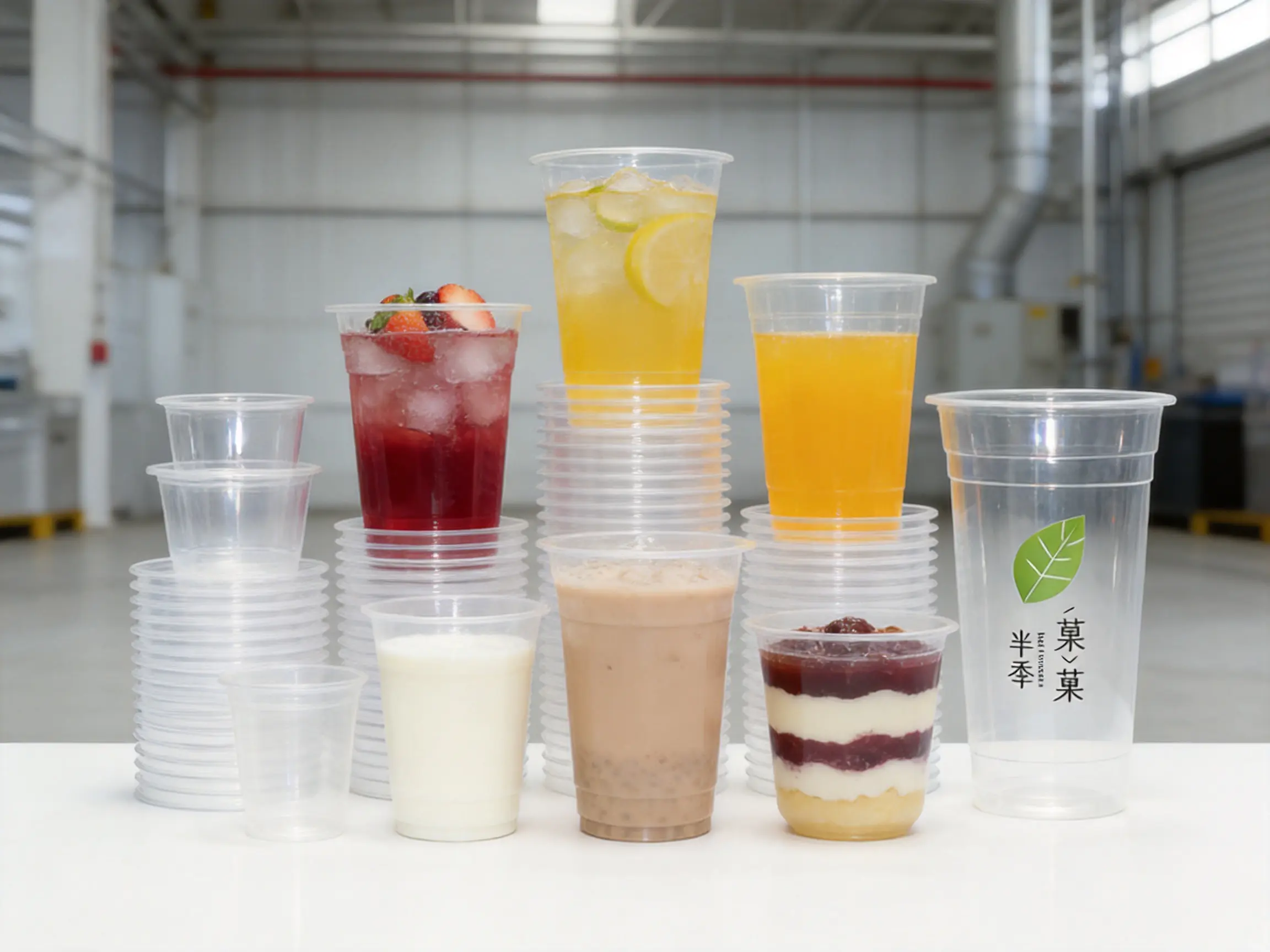
Customization Options for Food and Beverage Brands
Capacity and caliber selection
Capacity is one of the most visible ways to customize a cup range. Different product categories require different serving sizes, from small dessert portions to large takeaway beverages. The mouth diameter, height and base diameter also affect the visual proportion of the cup and its compatibility with lids, sealing equipment and cup holders.
Customers should provide detailed information about the intended contents, fill volume, headspace, lid structure, stacking method and transportation environment. This enables the manufacturer to recommend a suitable size rather than selecting a cup based only on nominal volume.
Color customization
Although transparent PP is useful for product visibility, color customization can support brand identity and product differentiation. Colored or partially colored packaging may be suitable for seasonal campaigns, special product lines or businesses that want a distinct visual style.
Color selection should consider the product inside the cup, printing requirements, recycling objectives and the desired level of transparency. A professional manufacturer can help assess whether a clear, translucent or opaque appearance is most suitable for the application.
Pattern and graphic customization
Printed patterns can transform a plain disposable container into a communication tool. Graphics may include brand colors, product names, preparation instructions, promotional messages or decorative elements. Consistent packaging design helps consumers recognize a product across different sales channels.
Artwork should be prepared according to the manufacturer’s printing and forming requirements. Important considerations may include print area, image resolution, color matching, text size, barcode readability and the effect of cup curvature on the final appearance.
In-mold labeling
In-mold labeling is another option for integrating graphics with a formed plastic product. The label is positioned in the mold during production so that it becomes part of the finished container structure. This approach can provide a neat appearance and strong graphic impact when properly designed.
In-mold labeling may be useful for brands that require durable decoration, consistent repeat production and a more integrated appearance than a simple external sticker. The feasibility of a particular label design depends on the cup geometry, artwork, material combination and production requirements.
Rolled or flat rim design
The rim style can be selected according to the customer’s use scenario. A rolled rim may be preferred for a particular drinking feel or visual profile. A flat rim may be more appropriate for certain sealing films, lid designs or automated filling systems. Evaluating the complete packaging system is essential because a cup and lid should function together rather than as separate components.
Applications Across Multiple Industries
Cold beverages
PP thermoforming cups are suitable for juices, fruit drinks, iced tea, milk tea, smoothies, soft drinks, flavored water and other chilled beverages. Their transparency allows the drink color and ingredients to remain visible, while the available capacities provide options for standard and large servings.
For takeaway beverage service, the cup may be combined with a compatible lid, straw or sealing film. The mouth diameter and rim design should be checked to ensure a secure fit. The cup’s toughness also supports normal handling during order preparation, delivery and consumption.
Hot food
The stated temperature range allows the cups to be considered for selected hot food applications. These may include prepared snacks, soup-like products, hot desserts or other foods that are compatible with the cup’s shape and capacity. Operators should verify the product temperature and handling conditions before adopting a specific model.
Hot food packaging requires attention to more than temperature. The container must be easy to hold, stable on a counter, compatible with a lid and resistant to leakage when moved. A suitable design can help reduce spills and support efficient takeaway service.
Desserts and chilled foods
Clear PP cups are effective for desserts because they display multiple layers, colors and textures. They can be used for pudding, yogurt, fruit salads, jelly products, mousse, ice cream toppings and other portioned foods. The smooth internal surface supports a clean presentation and helps consumers see the contents clearly.
Restaurants and cafés
Restaurants and cafés need packaging that can be stored efficiently and issued quickly during busy periods. Stackable cups help conserve storage space, while multiple size options allow businesses to organize their menu by serving volume. Custom printing can also extend the restaurant’s visual identity beyond its physical location.
Canteens and institutional catering
Canteens, schools, offices, hospitals and other institutional food service environments often require large quantities of standardized packaging. A consistent supply of cups with reliable dimensions can help simplify daily operations. The transparent body makes it easier to identify contents, while stackability supports organized storage in restricted spaces.
Home use and gatherings
At home, PP cups can be used for family gatherings, parties, picnics and informal events. Their light weight makes transportation convenient, and their disposable format can reduce cleanup requirements after large gatherings. Where local recycling facilities are available, used cups can be sorted and sent into an appropriate recycling stream.
Food distribution and takeaway delivery
Takeaway and delivery businesses require packaging that can withstand movement from the filling station to the customer. A cup with a stable base, consistent rim and suitable lid can help reduce product loss during transportation. Businesses should conduct practical tests that simulate delivery vibration, stacking, temperature exposure and handling before finalizing a packaging specification.
Operational Benefits for Buyers
Reduced storage pressure
Warehousing costs can be significant for food service businesses, particularly in urban locations. Nestable cups help reduce the volume required for unused packaging inventory. This can free space for ingredients, equipment and finished products while making stock management easier.
Faster service preparation
Consistently formed cups can be dispensed, filled and closed more efficiently. When cup dimensions are stable, employees can establish repeatable workflows and reduce the time spent adjusting equipment or separating irregular stacks. This is especially valuable during peak service periods.
Brand consistency
Customized cups provide a consistent visual touchpoint across stores, events and delivery orders. Even when a beverage is consumed away from the original point of sale, printed graphics or in-mold labeling can keep the brand visible. This supports recognition and can create additional opportunities for product messaging.
Product flexibility
A supplier capable of producing multiple sizes, rim styles and decorative formats can support new product launches more effectively. Instead of changing to an entirely different packaging system, a buyer may be able to adjust capacity or graphics while maintaining a familiar material and supply relationship.
Quality Considerations Before Ordering
Buyers should define the intended application as precisely as possible. Important information includes the food or beverage type, filling temperature, storage temperature, target volume, actual fill level, lid type, sealing method, expected shelf life and transportation conditions.
Samples should be tested under realistic conditions. A beverage cup should be checked for clarity, rim comfort, lid fit, leakage resistance, stack separation and deformation after filling. A hot food container should be evaluated for heat handling, stability, surface temperature and resistance to movement. A customized cup should also be reviewed for color accuracy, pattern alignment, print durability and overall appearance.
Grammage is another important consideration. A lighter cup may reduce material consumption and shipping weight, but a heavier cup may be appropriate for larger volumes or more demanding handling conditions. The correct selection is the one that achieves the required performance without unnecessary material use.
Packaging buyers should also review applicable regulations in the destination market. Food-contact rules, labeling requirements, recycling symbols, printing inks and documentation may differ by country or region. Certificates and test reports should be assessed in relation to the specific product, material and intended application.
Environmental Responsibility and End-of-Life Management
PP thermoforming cups support environmental goals through material efficiency and recyclability. Their light weight can reduce the amount of plastic used per serving, while their stackable form can improve transport and storage efficiency. At the end of service life, polypropylene may be recovered where appropriate collection and recycling systems exist.
Businesses can improve the environmental performance of disposable cups by selecting the correct cup weight, avoiding unnecessary secondary packaging, communicating disposal guidance and working with waste-management partners. Consumers should empty and separate used packaging according to local instructions because food residue and mixed materials can interfere with recycling.
It is also important to present recyclability accurately. A recyclable product is not automatically recycled in every location. Collection infrastructure, sorting capacity and local market conditions determine whether recovery is practical. Responsible manufacturers and buyers should therefore combine recyclable material selection with realistic end-of-life planning.
Polypropylene can also support a more resource-efficient packaging strategy when its properties allow a lighter design without reducing functional performance. The goal is not simply to use more material, but to use the appropriate amount of material to protect the product and deliver a reliable user experience.
Why Manufacturing Experience Matters
Food packaging production requires coordination among material science, tooling, equipment operation, quality control, logistics and customer service. A supplier may offer a low unit price, but inconsistent dimensions, delayed delivery or poor customization support can create higher costs for the buyer.
Yuqian Packaging Technology (Jiangsu) Co., Ltd. was established in 2010 and operates in Taizhou City, Jiangsu Province. The company reports a plant area of approximately 30,000 square meters and focuses on research and development, production and sales of new food packaging materials and products.
The company’s experience supports the development of packaging solutions for different food service environments. Its production capabilities include disposable food packaging products and customized PP thermoforming cups. The organization also established a Shanghai branch in 2019 to improve service quality and expand business channels.
Advanced equipment, raw material control and certification-based management form the foundation of the company’s manufacturing approach. Strong production capacity is particularly relevant to customers that need mass production, repeat orders or customized packaging for a growing food and beverage brand.
A capable factory should be able to move from product discussion to sample development, testing, tooling confirmation, production scheduling, quality inspection and shipment in a coordinated manner. This reduces communication gaps and allows technical issues to be identified before mass production begins.
Supply Capacity and Custom OEM Support
OEM support allows customers to purchase cups designed around their own requirements rather than selecting only from a fixed catalog. The customer may specify capacity, mouth diameter, height, bottom diameter, grammage, rim style, color, pattern and labeling method.
Customization is most successful when both parties establish clear technical documentation. Drawings, approved samples, artwork files, tolerance requirements, packing details and inspection standards should be confirmed before production. This helps ensure that the final product matches the intended application and reduces the risk of disagreement during delivery.
For large orders, production planning is essential. A manufacturer must reserve equipment time, prepare the required raw materials, organize tooling and estimate output according to the customer’s delivery schedule. Yuqian Packaging Technology emphasizes mass production and delivery-time support, making the company suitable for customers seeking a long-term packaging supply relationship.
OEM cooperation can also support gradual product development. A business may begin with a standard transparent cup, then introduce customized graphics, a new capacity or an alternative rim style after market testing. This approach allows packaging development to follow actual consumer response and operational experience.
How to Select the Right PP Cup Model
Match volume to serving size
Start by identifying the desired finished serving volume rather than relying only on the product name. Consider the amount of liquid, ice, fruit, toppings or headspace required. A cup that is too small may cause overflow, while an oversized cup may increase cost and create an unattractive presentation.
Check the mouth and lid combination
The mouth diameter must correspond to the intended lid or sealing film. Buyers should test the complete combination for fit, leakage resistance and ease of application. A lid that is too loose may leak, while one that is too tight may slow production or damage the cup rim.
Evaluate temperature conditions
Record the lowest and highest temperatures the cup will encounter, including filling, storage, transport and consumption. Refrigerated beverages may experience cold storage, while hot food may be filled immediately after cooking. The selected model should be tested under the most demanding expected conditions.
Consider handling and transport
Assess how the cup will be carried, stacked and delivered. Products sold through delivery services may require stronger packaging or a more secure lid system than products consumed immediately at a counter. The cup base, wall structure and grammage should be matched to these conditions.
Define branding requirements
Decide whether transparency, color, printed patterns or in-mold labeling best supports the brand. Artwork should be prepared early because it may influence tooling, print registration, minimum order quantities and production lead time.
Plan for disposal
Review the recycling facilities available in the target market and determine how used PP cups will be collected. If the product is sold at events or institutions, the business may be able to provide dedicated collection points and clear sorting instructions.
Frequently Asked Questions
What are PP thermoforming cups made from?
They are made from polypropylene, commonly abbreviated as PP. The material is formed into cups through a thermoforming process in which a heated sheet or film is shaped over a mold.
Are these cups suitable for both cold and hot products?
The stated usable temperature range is approximately -10°C to 120°C. This makes the cups suitable for refrigerated beverages and selected hot food applications. The exact suitability should be confirmed through testing based on the product, filling temperature and duration of contact.
Are PP thermoforming cups transparent?
Yes. The product is designed with a highly transparent cup body that allows consumers and service staff to see the contents. Color and graphic customization may also be available when a different appearance is required.
Can the cups be customized?
Yes. Available customization may include caliber, capacity, color, patterns, rim style and in-mold labeling. Customers should provide their technical requirements and artwork for feasibility review before production.
What is the difference between a rolled rim and a flat rim?
A rolled rim has a curved or folded edge, while a flat rim has a flatter top profile. The choice can affect drinking comfort, appearance, lid compatibility and sealing performance. The correct option depends on the complete packaging system.
Are the cups stackable?
Yes. The cups are designed to be stackable, helping reduce storage space and making them convenient for homes, restaurants, canteens and other food service locations.
Can PP cups be recycled?
Polypropylene is a recyclable material. However, actual recycling depends on local collection, sorting and processing infrastructure. Users should follow local disposal instructions and keep the cups as free from food residue as possible.
What sizes are available?
The listed options include 360 ml, 520 ml, 700 ml and 1,000 ml. The corresponding mouth, height, bottom diameter and grammage specifications vary by model. Customized sizes may also be discussed according to order requirements.
Can these cups be used with lids or sealing films?
They can be designed for use with compatible lids or sealing systems. Because compatibility depends on the mouth diameter and rim design, buyers should identify the required lid or film before confirming the cup specification.
What certifications and testing are associated with the manufacturer?
The company reports QS national industrial product production license approval, ISO 9001 quality management system certification, BRC certification, German DIN safety certification and EU RoHS+ testing. Customers should request current documentation relevant to their destination market and application.
How should buyers test samples?
Samples should be filled with the intended product and evaluated for leakage, deformation, clarity, lid fit, stacking, handling comfort and temperature performance. Customized samples should also be checked for print quality, color consistency and artwork alignment.
Who may benefit from customized PP thermoforming cups?
Cafés, beverage chains, restaurants, food manufacturers, catering companies, wholesalers, distributors, canteens and event organizers may benefit from customized PP cups. They are especially useful for businesses that need a combination of visual presentation, multiple serving sizes and high-volume supply.
Conclusion
PP thermoforming cups provide a versatile packaging solution for modern food and beverage businesses. Their combination of transparency, toughness, temperature adaptability, smooth surfaces, stackability and recyclability makes them suitable for refrigerated drinks, hot food, desserts, takeaway service, institutional catering and household gatherings.
The product range offers several volume options, including 360 ml, 520 ml, 700 ml and 1,000 ml models. Buyers can also discuss mouth diameter, height, bottom diameter, grammage, rolled or flat rims, color, printed patterns and in-mold labeling. This flexibility allows the cup to be adapted to different products, equipment systems and brand identities.
The manufacturing process is equally important. High-quality PP raw materials, German-imported production equipment, controlled thermoforming, accurate trimming, dimensional inspection and certification-based quality management help create a more consistent product than poorly controlled disposable packaging. For customers placing large or customized orders, production capacity and delivery coordination are additional advantages.
Yuqian Packaging Technology (Jiangsu) Co., Ltd. combines product development, manufacturing and OEM service to support food packaging buyers seeking dependable polypropylene cups. By evaluating the intended product, temperature, capacity, lid system, branding requirements and end-of-life pathway, customers can select a PP thermoforming cup that delivers practical performance and a professional presentation.
For product inquiries, customization discussions and order coordination, the company can be contacted through its sales team at [email protected] or by phone at 0086 15252423007.
References
1. Company-provided product specifications for PP thermoforming cups, including volume, mouth diameter, height, bottom diameter and grammage data.
2. Company-provided technical description of PP polypropylene material, temperature adaptability, transparency, toughness and recyclability.
3. Company-provided information regarding thermoforming production equipment imported from Germany and OEM customization capabilities.
4. Company-provided certification information concerning QS national industrial product production license, ISO 9001, BRC, DIN safety certification and EU RoHS+ testing.
5. General principles of polypropylene packaging design, thermoforming, dimensional control, food service logistics and recyclable material management.