English
 Español
 عربى
عربىContent
- 1 Product Overview
- 2 Why the Lid Design Matters
- 3 Advantages of Polypropylene Injection Molding
- 4 Leak-Resistant Performance for Takeaway Applications
- 5 Frosted and Glossy Surface Options
- 6 Manufacturing Strengths and Process Capability
- 7 Research, Development, and Customer-Oriented Production
- 8 Environmental and Material Considerations
- 9 Quality Control Priorities for Injection Molded Lids
- 10 Operational Benefits for Bulk Buyers
- 11 Applications Across Food and Beverage Businesses
- 12 Packaging Design and Brand Presentation
- 13 Supply Partnership with Yuqian Packaging Technology
- 14 Ordering and Customization Considerations
- 15 Cleaning, Storage, and Handling Guidance
- 16 Safety and Compliance Responsibilities
- 17 Frequently Asked Questions
- 17.1 What material is used for the cup lid?
- 17.2 What is the caliber of the lid?
- 17.3 How much does each lid weigh?
- 17.4 Which colors are available?
- 17.5 What is the difference between the glossy and frosted versions?
- 17.6 Is the lid suitable for takeaway beverages?
- 17.7 Can the lid be used with hot drinks?
- 17.8 Can the company provide customized packaging?
- 17.9 What certifications and testing does the company report?
- 17.10 How should customers confirm compatibility?
- 17.11 What information should be included in a quotation request?
- 18 Conclusion
- 19 References
- 20 Product: PP plastic frosted/glossy injection cup lid
Food and beverage packaging must perform several important functions at the same time. It must protect the product, support convenient serving, preserve presentation quality, and help businesses operate efficiently during busy service periods. A cup lid may appear to be a small component, but its design has a direct effect on customer satisfaction, transport safety, product appearance, and the overall performance of a takeaway beverage system.
PP plastic frosted and glossy injection cup lids are designed to provide a practical closure solution for compatible beverage cups. Manufactured from polypropylene through an injection molding process, these lids combine a lightweight structure with a durable profile, a clean appearance, and a leak-resistant design. The available 90 mm caliber supports use with suitable cups in beverage shops, restaurants, cafés, catering operations, food delivery services, and other takeaway applications.
Yuqian Packaging Technology (Jiangsu) Co., Ltd. develops and manufactures food packaging materials and products for professional customers. Since its establishment in 2010, the company has focused on research and development, production, and sales in the food packaging sector. Its product range includes plastic cups, cup lids, takeaway bowls, disposable straws, recycle bags, peripheral products, and injection film lining cups and bowl boxes.
The PP injection molded cup lid is one of the company’s practical solutions for businesses that require dependable packaging components in consistent quantities. Customers can select between a glossy injection molded cover and a frosted injection molded cover. Both versions are listed with a 90 mm caliber and an approximate gram weight of 4.5 g. Transparent, white, and black color options provide flexibility for different beverage presentations and brand styles.
Product Overview
The PP plastic frosted and glossy injection cup lid is a molded polypropylene closure intended for compatible disposable beverage cups. It is designed to sit securely over the cup opening and help reduce the possibility of spills during carrying, delivery, and short-distance transport. Its structure is thickened for improved durability while remaining lightweight enough for economical packaging use.
Polypropylene, commonly identified as PP, is widely used in food packaging because it offers a useful balance of rigidity, toughness, low density, and processing performance. When properly manufactured for the intended application, PP can provide a dependable material platform for disposable lids. The material also supports efficient injection molding, allowing manufacturers to form repeatable shapes and produce large quantities with consistent dimensions.
The product content emphasizes a leak-proof design, a thickened and durable structure, and characteristics described as non-toxic, odorless, environmentally friendly, and healthy. These qualities are important in foodservice packaging because a lid should not introduce unwanted odor into the beverage, should remain stable during normal use, and should help protect the product from external contamination.
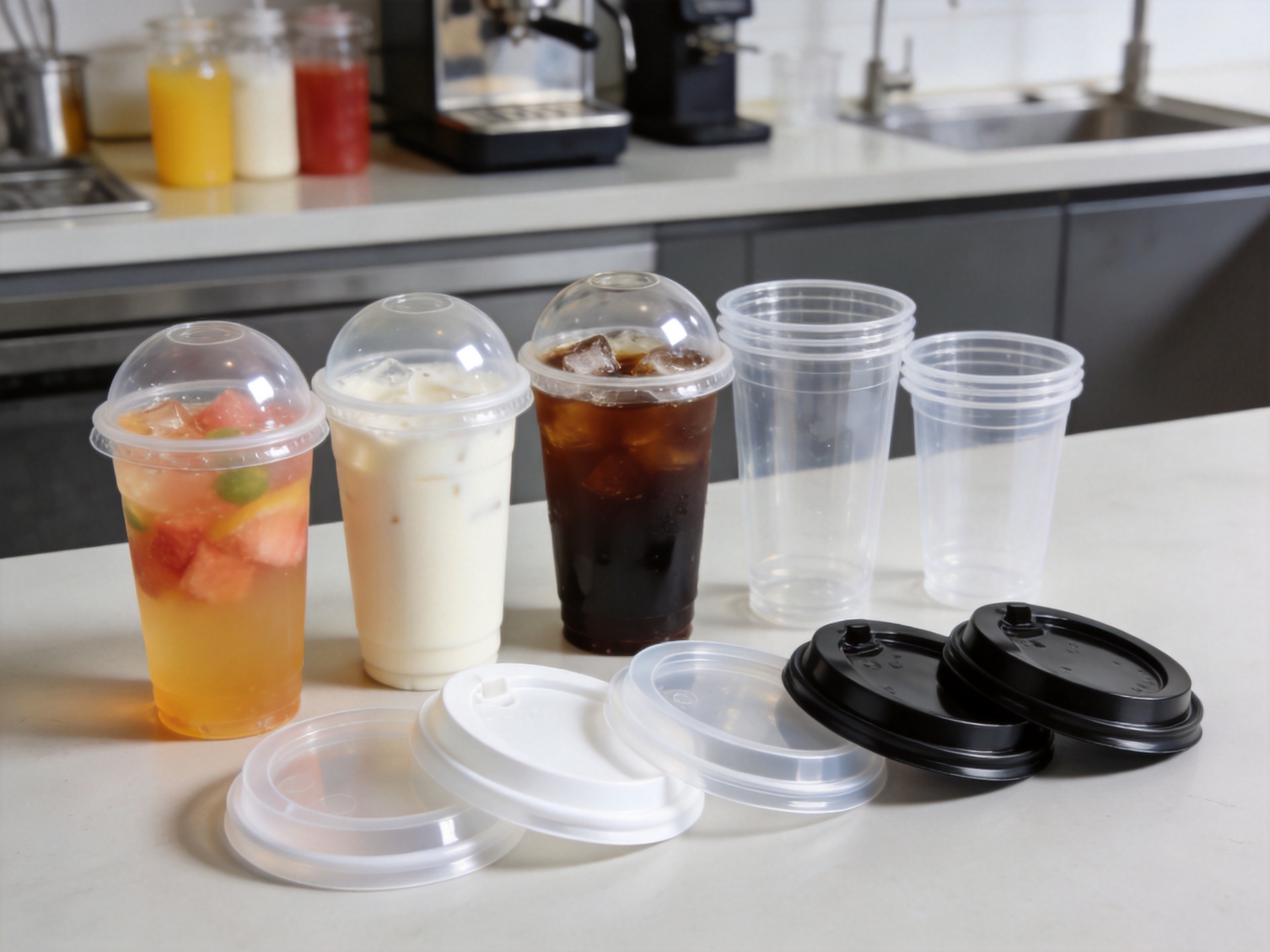
The lid is offered in two surface styles. The glossy injection molded cover has a smooth and bright appearance that can complement clear cups, colorful drinks, milk teas, juices, coffees, and other visually attractive beverages. The frosted injection molded cover has a softer, less reflective visual effect. This appearance can be useful for brands seeking a more understated, modern, or tactile presentation.
Core Product Specifications
| Product category | PP injection molded cup lid |
| Lid type | Glossy injection molded cover |
| Caliber | 90 mm |
| Approximate gram weight | 4.5 g |
| Available colors | Transparent, white, black |
| Alternative lid type | Frosted injection molded cover |
| Alternative lid caliber | 90 mm |
| Alternative lid weight | 4.5 g |
| Alternative lid colors | Transparent, white, black |
| Primary material | Polypropylene, or PP |
The listed specifications make the lid straightforward for purchasing teams to evaluate. The consistent caliber provides a clear starting point for cup compatibility checks, while the stated gram weight assists businesses with packaging calculations, logistics planning, and product cost analysis. Before placing a production order, customers should confirm the exact fit between the lid and their selected cup, especially when using cups from a different supplier.
Why the Lid Design Matters
In takeaway beverage packaging, a lid is more than a simple cover. It is part of the customer experience. A lid that fits securely can help staff hand over drinks with greater confidence. It can also reduce the risk of liquid escaping while the beverage is being carried from a store to a vehicle, office, home, or event location.
A well-designed lid contributes to operational efficiency. Staff members can close cups quickly without using additional sealing materials for every order. A consistent molded shape makes the product easier to handle during packing, stocking, and service. When the lid is produced with stable dimensions, operators can develop a repeatable closing procedure and reduce unnecessary adjustments at the counter.
The thickened structure is another practical advantage. Extremely light packaging can sometimes feel fragile or difficult to position. A lid with a more substantial profile may provide improved tactile confidence during application and use. Durability is particularly important for delivery orders, where the beverage may be moved several times before reaching the customer.
The lid’s design also supports visual presentation. Transparent lids can allow customers to see the drink surface, toppings, foam, fruit pieces, or other visual features. White lids can provide a clean and neutral appearance, while black lids may create a more premium or contrasting look. Frosted and glossy surfaces provide further opportunities to coordinate the lid with the cup, beverage category, seasonal menu, or brand identity.
Advantages of Polypropylene Injection Molding
Injection molding is a manufacturing method in which a prepared plastic material is heated and injected into a shaped mold. After the material fills the mold and cools, the formed component is removed for inspection and subsequent packing. For cup lids, this process is well suited to producing repeated shapes with defined edges, openings, and fitting surfaces.
Compared with less controlled forming methods, injection molding can support stable product geometry when the tooling, material conditions, and process parameters are properly managed. This is important for a lid because small dimensional variations may affect the way it fits onto a cup. A controlled molding process helps the manufacturer pursue uniformity across production batches.
PP is also suitable for efficient high-volume manufacturing. Its relatively low density can help reduce the material weight of each unit while retaining the functional characteristics required for normal foodservice use. The listed weight of approximately 4.5 g reflects a lightweight packaging component that can be supplied in quantities appropriate for cafés, restaurants, beverage chains, wholesalers, and distributors.
Another advantage of PP is its versatility in appearance. The material can be processed into transparent, white, or black products, subject to the customer’s selected specification and manufacturing requirements. It can also be molded with different surface effects, including a glossy finish and a frosted finish. This allows one basic product category to serve multiple packaging concepts.
Comparison with Less Specialized Alternatives
Some packaging alternatives may rely on thinner structures, less consistent forming, or a limited range of visual options. A thin or poorly matched lid may be more difficult to apply and may provide less confidence during transport. A lid without a clearly specified caliber may create compatibility problems when purchasing teams try to match it with existing cups.
The PP injection molded lid offers a more clearly defined solution. Its 90 mm caliber, approximate 4.5 g weight, specified material, surface choices, and color options give buyers useful information before procurement. The thickened structure and leak-resistant design are intended to support more dependable everyday performance than a weak or loosely fitted cover.
Compared with packaging that offers only one appearance, the frosted and glossy options allow businesses to make a more deliberate presentation choice. A glossy lid may emphasize clarity and brightness, while a frosted lid can reduce visual reflections and create a softer finish. The ability to select transparent, white, or black further expands the range of possible combinations.
These advantages do not eliminate the need for proper compatibility testing. A lid’s performance depends on the cup rim, cup diameter, material, filling level, beverage temperature, transport conditions, and handling method. The strongest purchasing decision is therefore based on a sample evaluation and a clear review of the intended application.
Leak-Resistant Performance for Takeaway Applications
Leak resistance is one of the most important requirements for a disposable cup lid. A beverage package may be placed in a carrier, carried by hand, set on a counter, or moved in a delivery vehicle. During these steps, the lid should remain seated on the cup and help limit the movement of liquid toward the rim.
The PP injection molded lid is described as having a leak-proof design. In practical use, the effectiveness of this design depends on correct matching between the lid and cup. The cup rim must be compatible with the lid’s internal fitting area, and the lid must be pressed evenly into position. Staff training and correct filling levels also contribute to successful performance.
A secure closure can help foodservice operators reduce avoidable complaints caused by spilled beverages. It may also help protect delivery bags, vehicle interiors, tables, documents, and customer belongings. While no disposable lid can compensate for careless handling or unsuitable cup combinations, a well-formed lid provides an important layer of protection.
The lid is suitable for a wide range of takeaway beverage concepts, including iced drinks, milk tea, fruit drinks, soft drinks, coffee beverages, flavored water, smoothies, and other compatible products. For hot beverages, buyers should verify the temperature limits and complete application-specific testing before use. Packaging selection should always reflect the actual conditions under which the finished drink will be filled, closed, stored, and transported.
Benefits for Beverage Shops and Restaurants
For beverage shops, speed and consistency are essential. A lid that is easy to identify, stack, apply, and store can support a smoother service workflow. The standard 90 mm specification may also simplify inventory management for businesses using multiple compatible cup styles.
Restaurants and cafés can use the lid as part of a broader takeaway packaging system. Transparent lids may support products where the visual surface is important, while black or white versions can be coordinated with printed cups, paper bags, sleeves, labels, and other peripheral products. The frosted option can help create visual differentiation without requiring a completely different closure structure.
For delivery-focused businesses, a durable lid may help maintain product presentation from the point of packing to the point of consumption. Customers often form an opinion about a food or beverage brand before opening the package. A clean, well-fitted lid communicates attention to detail and can reinforce confidence in the overall order.
Frosted and Glossy Surface Options
The choice between frosted and glossy finishes is not only a technical decision. It is also a design decision. Packaging surfaces affect how customers perceive a product, especially when the cup is photographed, displayed in a refrigerator, handed across a counter, or presented in social media content.
A glossy injection molded cover has a smooth, reflective finish. It can create a bright and polished appearance, particularly when paired with transparent cups or colorful beverages. The glossy finish may be appropriate for brands that want their drinks to look fresh, vivid, and highly visible.
A frosted injection molded cover offers a more subdued visual effect. Its surface can appear softer and more refined than a highly reflective finish. It may be selected for minimalist packaging, premium beverage concepts, muted color palettes, or businesses that want a tactile difference between their packaging components.
Both versions have the same listed 90 mm caliber and approximately 4.5 g gram weight. This allows customers to evaluate surface appearance separately from basic dimensional and weight considerations. A business may use one finish for a specific menu category or select different colors and finishes for different product lines.
Color Selection
Transparent lids are useful when visibility is a priority. They allow customers to see the top of the beverage and can help showcase ice, foam, fruit, pearls, cream, or other ingredients. A transparent lid can also preserve a clean and neutral appearance when paired with printed or colored cups.
White lids provide a bright and adaptable appearance. They may coordinate with light-colored cups, simple restaurant packaging, or a clean visual identity. White can also create a clear contrast against dark beverages and printed logos.
Black lids offer a bold appearance and may support a premium, modern, or high-contrast packaging concept. They can work well with white lettering, metallic graphics, brightly colored cups, or dark beverage themes. Color availability should be confirmed during the ordering process, particularly for large-volume or customized production.
Manufacturing Strengths and Process Capability
Yuqian Packaging Technology (Jiangsu) Co., Ltd. was established in 2010 and is located in Taizhou City, Jiangsu Province, China. The company operates a plant area of approximately 30,000 square meters and is described as a high-tech enterprise engaged in the research and development, production, and sales of new food packaging materials and products.
The company’s experience in food packaging provides a foundation for manufacturing products that must meet practical requirements related to appearance, dimensions, durability, and handling. The PP injection molded cup lid is produced within this broader packaging specialization rather than as an isolated general-purpose plastic component.
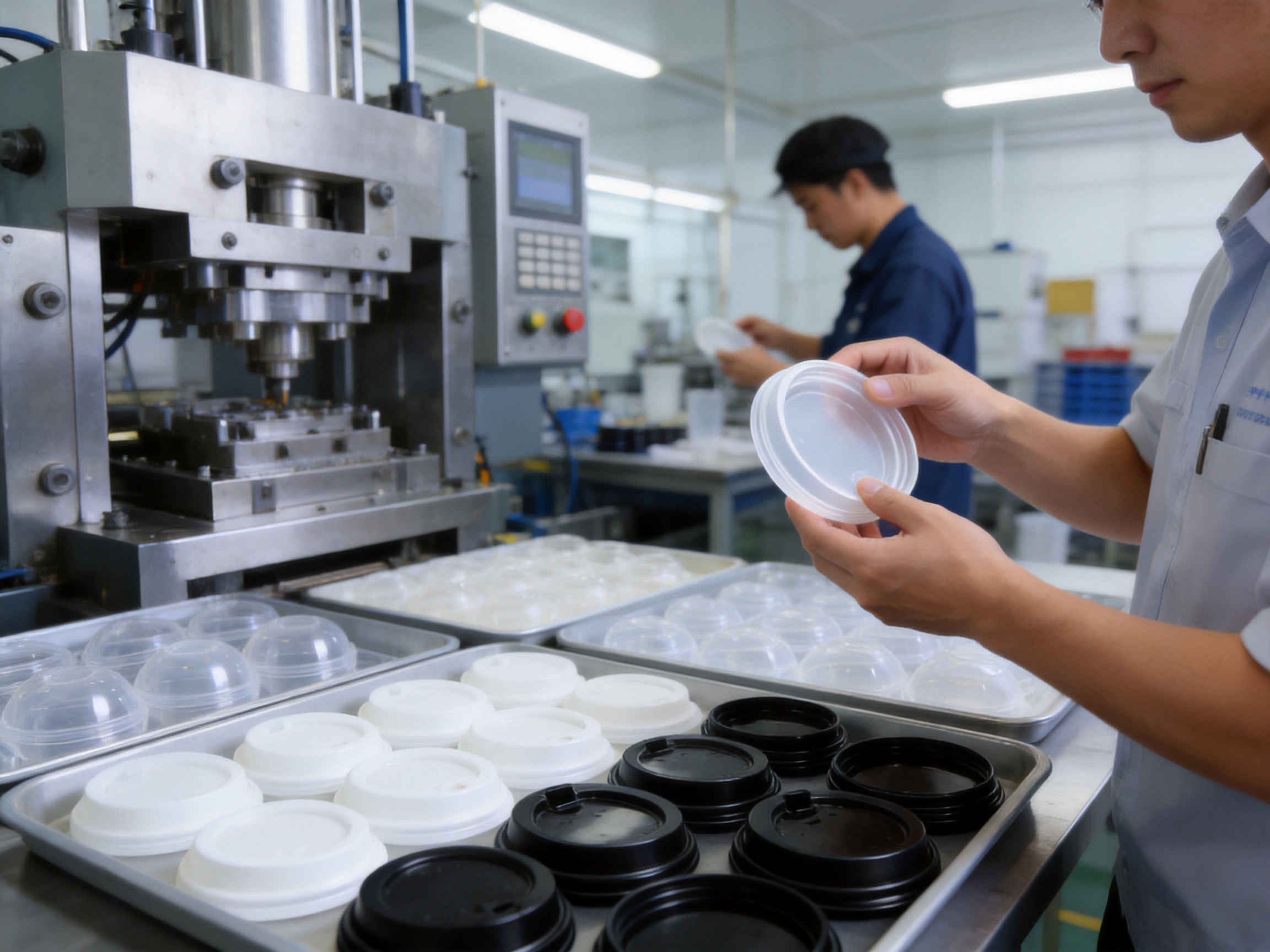
Injection molding requires coordination between material selection, mold design, machine operation, cooling, demolding, inspection, and packing. Each stage influences the final lid. The mold must create the intended caliber, fitting structure, opening profile, and surface appearance. The material must be processed under suitable conditions. The molded units must then be checked for visible defects, dimensional consistency, and general usability.
A professional production system is especially valuable for buyers who need repeat orders. Foodservice customers often require packaging that looks and performs the same from one shipment to the next. Process discipline helps reduce variation and supports more predictable procurement planning.
The company’s product portfolio includes multiple categories of disposable food packaging. This wider capability may help customers coordinate related products through one supplier, including cups, lids, takeaway bowls, disposable straws, recycle bags, peripheral products, and injection film lining cup and bowl boxes. Consolidated sourcing can reduce communication complexity and make it easier to align color, material, packaging style, and delivery requirements.
Quality and Certification Background
The company reports that its division took the lead in the packaging industry in passing the QS national industrial product production license. It also reports ISO9001 Quality Management System certification, BRC certification, German authoritative safety DIN certification, and EU ROHS+ testing. These credentials and testing references indicate a focus on formal management, product safety, and compliance-oriented production.
ISO9001 is associated with quality management systems and process control. For a packaging manufacturer, a quality management framework can support documented procedures, internal responsibilities, corrective actions, customer communication, and continuous improvement. These practices are relevant when producing large quantities of molded components with repeat-order requirements.
BRC certification is widely recognized in food-related supply chains and reflects attention to product safety and manufacturing control. DIN-related safety certification and EU ROHS+ testing provide additional compliance references for customers evaluating suppliers for domestic or international business. The precise scope and validity of each certification should be confirmed with the manufacturer for the specific product and current order.
Certifications do not replace product-specific testing. Buyers should still request technical documents, samples, declarations, and applicable compliance information for their intended market. Nevertheless, a documented certification background can provide a stronger starting point than purchasing from a supplier without an established quality system.
Research, Development, and Customer-Oriented Production
Food packaging markets change quickly. Beverage shops introduce new products, delivery channels expand, regulations develop, and customers become more attentive to packaging appearance and material choices. A manufacturer with research and development capability is better positioned to respond to changing product requirements than a supplier focused only on basic commodity production.
Yuqian Packaging Technology (Jiangsu) Co., Ltd. describes itself as a research and development, production, and sales enterprise. This combination supports communication between technical teams, manufacturing personnel, and commercial customers. Such coordination can be useful when a buyer needs a specific color, finish, dimensional adjustment, packaging method, or coordinated product set.
The company also provides personalized design services according to its corporate description. Customization may involve packaging appearance, product structure, branding elements, or coordinated solutions. The exact scope should be discussed before production, because changes to dimensions, materials, tooling, printing, or color may influence minimum order quantities, lead times, testing requirements, and costs.
For customers purchasing the standard PP injection cup lid, the defined 90 mm specification can simplify the initial evaluation process. For customers seeking a customized version, the existing injection molding capability provides a basis for discussing design requirements. A responsible development process should begin with drawings, samples, cup compatibility checks, performance requirements, and approval procedures.
Environmental and Material Considerations
The product description identifies the lid as environmentally friendly and healthy. PP is a commonly used packaging plastic, and its relatively low unit weight can contribute to material efficiency when the product is designed to meet functional requirements without unnecessary mass. The approximate 4.5 g weight is relevant for businesses that monitor packaging consumption and shipping volume.
However, environmental performance depends on the full life cycle of the product. It includes material sourcing, manufacturing energy, transportation, use, collection, sorting, recycling infrastructure, and disposal practices. A PP lid should not be described as automatically sustainable in every market or circumstance. Its environmental value depends partly on whether suitable collection and recycling systems are available.
Businesses can support more responsible packaging practices by using lids that match the product requirements, avoiding unnecessary overpackaging, educating customers about local disposal rules, and coordinating packaging choices with the recycling systems available in their service area. If recycled content, biodegradability, compostability, or specific environmental claims are required, those claims must be confirmed through relevant documentation rather than assumed from the material name alone.
The company’s product range includes recycle bags and other peripheral packaging products, indicating an interest in broader packaging solutions. Customers seeking to improve their packaging system may discuss how cups, lids, bags, bowls, straws, and outer packaging can be selected together for operational and environmental goals.
Quality Control Priorities for Injection Molded Lids
Quality control for a cup lid should cover both visual and functional characteristics. The lid should have a clean molded appearance, with no unacceptable cracks, sharp defects, severe deformation, contamination, or excessive flash. The fitting area should be formed consistently so that the lid can be applied to the corresponding cup.
Dimensional control is particularly important. The 90 mm caliber is a key specification, but other dimensions may also affect fit and performance. These can include the inner fitting diameter, rim engagement area, thickness distribution, opening geometry, and overall height. A manufacturer and buyer should agree on the tolerances relevant to the product before mass production.
Material control is also essential. The selected PP resin and any permitted additives or colorants should be suitable for the intended food packaging application. Odor, color stability, surface appearance, and resistance to normal handling should be evaluated during quality checks.
Functional testing may include fitting the lid onto the specified cup, checking retention after application, observing the package under normal carrying conditions, and evaluating resistance to reasonable movement. If the lid is intended for a particular beverage temperature, the test should reflect that temperature. If the product will be used for delivery, testing should include realistic packing and transport simulation.
Recommended Buyer Evaluation Procedure
Customers can begin by confirming the cup rim diameter and profile. A nominal measurement alone may not be enough, because two cups with similar top diameters can have different rim shapes. The buyer should send a cup sample or an accurate technical drawing to the supplier when possible.
The next step is to review samples of both the lid and the cup combination. Check whether the lid applies evenly, remains secure, and can be removed without excessive force. Inspect the surface finish, transparency, color, edge quality, and opening position. If the product will be used with toppings or sealing films, evaluate the entire closing system rather than the lid alone.
After sample approval, the buyer should confirm the product specification, material, color, weight tolerance, packaging method, inspection standard, order quantity, delivery schedule, and documentation requirements. A written specification reduces the risk of differences between the approved sample and later production.
Operational Benefits for Bulk Buyers
Wholesale buyers and distributors need products that can be stored, transported, and resold efficiently. A lightweight injection molded lid can support economical carton planning, although the exact carton quantity and shipping dimensions must be confirmed with the supplier. Consistent product identification and organized packing also help reduce warehouse errors.
For chain beverage stores, repeatability is important across multiple locations. A standardized lid can help create a uniform service process, especially when staff members are trained to use the same cup and lid combinations. The availability of transparent, white, and black versions allows a business to maintain a consistent specification while adapting appearance for different menu lines.
Foodservice distributors may benefit from the lid’s broad application range. A 90 mm lid can serve a variety of compatible beverage cups, making it easier to present a focused product offering to cafés, restaurants, catering companies, and delivery businesses. The distributor should clearly communicate the required cup compatibility to end customers.
Large buyers may also discuss custom packaging programs with the manufacturer. A coordinated order involving cups, lids, bowls, bags, straws, and related products can help align supply schedules and visual presentation. Custom programs should be planned carefully, with sufficient time for design confirmation, tooling where applicable, sample approval, compliance review, and production scheduling.
Applications Across Food and Beverage Businesses
The product can be considered for beverage shops serving cold drinks and takeaway refreshments. Its transparent option is useful for beverages where presentation is central to the sale. The white and black options can support more deliberate branding and category separation.
Cafés may use compatible lids for iced coffee, cold brew, tea, juice, and other takeaway beverages. Restaurants can include them in meal delivery packages when drinks are sold alongside food. Catering companies may use them for events where drinks must be distributed efficiently and carried by guests.
Convenience stores and food retailers can also evaluate the lids for pre-packed beverages, provided that the cup and closure system meet the applicable requirements. The lid’s visual choices may help distinguish house drinks, seasonal beverages, and promotional items.
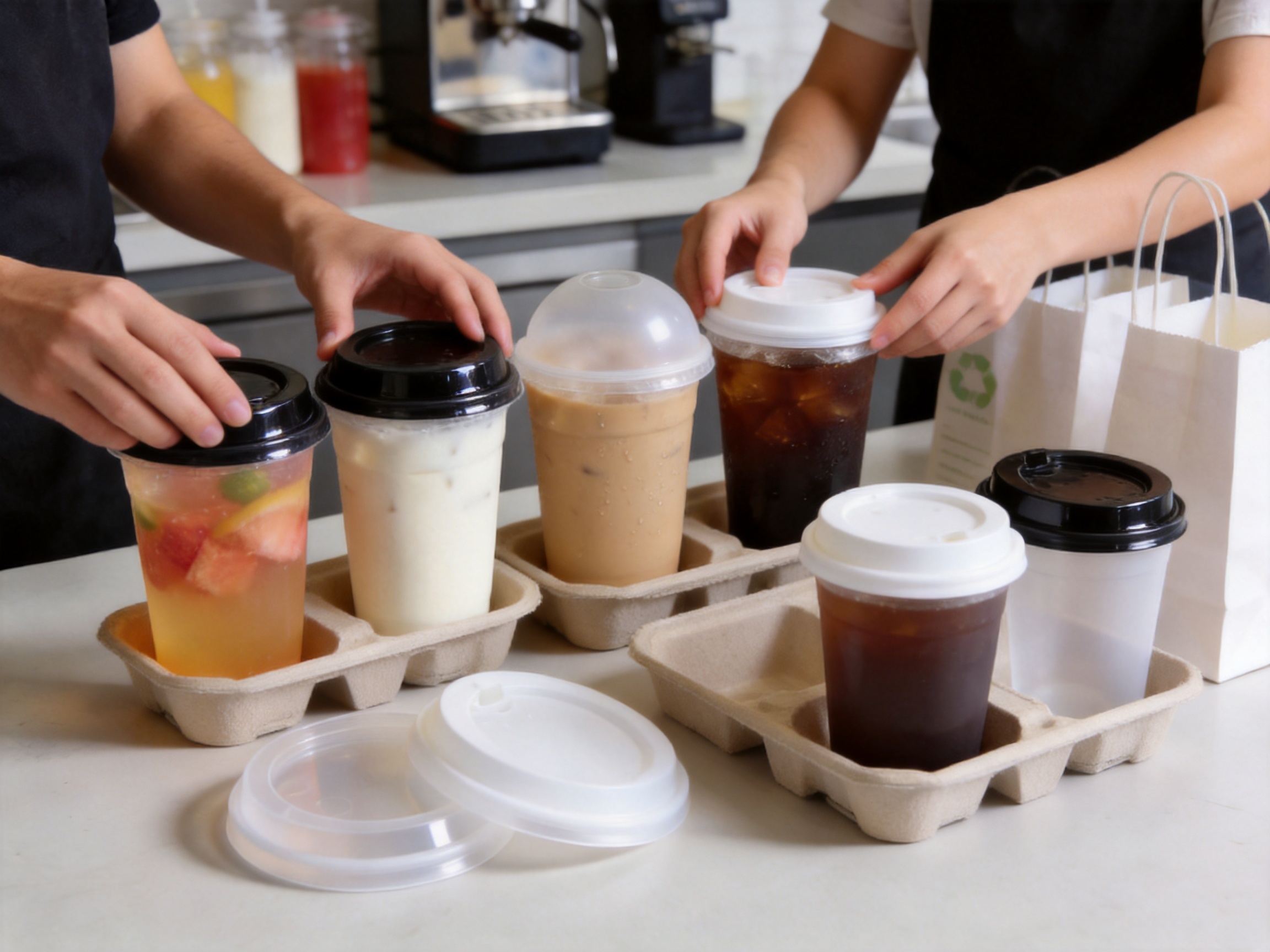
For online beverage delivery, packaging performance becomes even more important because the product travels outside the controlled environment of the store. A secure lid can support better order presentation and reduce the chance of leakage. Businesses should combine the lid with suitable cup carriers, bags, seals, and transport procedures.
Packaging Design and Brand Presentation
Although the lid is a functional component, it contributes to brand recognition. Customers see the cup and lid before they taste the beverage. A coherent combination of cup color, lid finish, logo placement, label design, and outer packaging can make a product appear more professional and memorable.
A transparent glossy lid can emphasize the drink itself. This may be effective for fruit beverages, layered drinks, colorful teas, and products with attractive toppings. A white glossy lid can create a bright and clean visual style. A black glossy lid may produce a stronger contrast and a premium impression.
Frosted lids can support minimalist design systems. Their softer surface may pair well with neutral cups, restrained typography, natural color palettes, or premium product categories. Because both the frosted and glossy versions share the listed 90 mm caliber and approximately 4.5 g weight, a brand can potentially vary appearance while maintaining a familiar operational format.
Customers interested in custom design should discuss whether logos, special colors, surface treatments, packaging labels, or coordinated components are required. Any custom feature should be checked for production feasibility, durability, food packaging suitability, and cost before approval.
Supply Partnership with Yuqian Packaging Technology
Yuqian Packaging Technology (Jiangsu) Co., Ltd. is located at No. 8 Tongyang Road, Suchen Town, Taizhou City, Jiangsu Province, China. Its location in an established manufacturing region supports access to industrial resources, production services, and logistics networks, although delivery arrangements should be evaluated for each customer’s destination.
The company established a Shanghai branch in January 2019 to improve service quality and expand business channels. This additional presence reflects an effort to support customers beyond the primary manufacturing location. Buyers can discuss commercial coordination, product development, documentation, and logistics planning with the company’s sales representatives.
The company’s broad product categories can be useful for businesses seeking a packaging supplier capable of handling more than one item. A customer may begin with the PP cup lid and later evaluate matching cups, takeaway bowls, disposable straws, recycle bags, or peripheral products. Working with a supplier familiar with multiple food packaging formats may simplify communication and product coordination.
When requesting a quotation, buyers should provide the lid type, caliber, color, estimated order quantity, delivery destination, packaging requirements, intended application, and any compliance documents needed. If the lid must fit an existing cup, supplying a sample or technical drawing will make the evaluation more accurate.
Ordering and Customization Considerations
The standard product information identifies two lid types: glossy injection molded cover and frosted injection molded cover. Both are specified with a 90 mm caliber and approximately 4.5 g gram weight. Available colors are transparent, white, and black. These details should be used as the foundation for a purchase discussion.
Customization may be possible depending on the required design and production conditions. Buyers should clarify whether they need a modified diameter, a different opening, a special color, an alternative surface effect, packaging changes, or coordinated products. Customization can affect mold requirements, development time, sampling, minimum order quantity, quality standards, and unit price.
Before mass production, a sample approval process is recommended. The sample should be tested with the actual cup, beverage type, filling method, and transport packaging. Approval should cover both functional performance and appearance. If several colors or finishes are ordered, each version should be reviewed.
Packaging for shipment should also be discussed. Lids need protection against dust, crushing, moisture, and deformation during storage and transportation. The supplier and buyer should agree on inner packing, outer cartons, labeling, carton quantities, and pallet or container requirements when applicable.
Cleaning, Storage, and Handling Guidance
Disposable lids should be kept in clean, dry, and well-ventilated storage conditions. They should remain in their protective packaging until needed for production or service. Storage areas should be separated from chemicals, strong odors, excessive dust, direct sunlight, and sources of heat that could affect the packaging.
Warehouse teams should avoid placing excessive weight on cartons if this could deform the lids. Cartons should be stacked according to the supplier’s instructions, and stock should be rotated using an appropriate inventory system. Staff should handle the lids with clean hands or suitable foodservice procedures before they are applied to filled cups.
At the service counter, lids should be selected according to the correct cup size and placed evenly over the rim. Staff should check that the lid is fully seated before handing the drink to a customer or placing it into a delivery bag. These simple procedures help the molded design perform as intended.
Safety and Compliance Responsibilities
Food packaging requirements vary according to the destination market, food type, temperature, contact time, and applicable regulations. The manufacturer reports quality and safety certifications and testing references, but buyers remain responsible for confirming that the specific product meets the rules of the market where it will be sold.
Customers should request relevant technical information, including material identification, food contact documentation, test reports, and declarations where required. If the lid will be used with hot beverages, acidic beverages, oily products, or unusual ingredients, application-specific evaluation may be necessary.
The terms non-toxic, odorless, environmentally friendly, and healthy should be understood within the context of compliant food packaging production and proper use. The product must be used as intended, and any claims used in marketing should be supported by appropriate documentation.
Frequently Asked Questions
What material is used for the cup lid?
The lid is made from polypropylene, commonly known as PP. It is produced through an injection molding process and is intended for compatible disposable food and beverage packaging applications.
What is the caliber of the lid?
The listed caliber is 90 mm for both the glossy injection molded cover and the frosted injection molded cover. Customers should still verify the fit with the exact cup being used.
How much does each lid weigh?
The listed gram weight is approximately 4.5 g for both lid types. Actual production tolerances should be confirmed in the product specification or quotation.
Which colors are available?
The listed colors are transparent, white, and black. Additional colors or customized appearances may be discussed with the manufacturer, subject to production requirements.
What is the difference between the glossy and frosted versions?
The main difference is the surface appearance. The glossy cover has a smooth, reflective finish, while the frosted cover has a softer, less reflective appearance. Both versions share the listed 90 mm caliber and approximate 4.5 g gram weight.
Is the lid suitable for takeaway beverages?
Yes. The lid is designed for compatible takeaway beverage cups and features a leak-resistant design intended to support carrying and delivery. The actual performance depends on correct cup compatibility, application, filling level, and handling.
Can the lid be used with hot drinks?
Buyers should confirm the appropriate temperature range and conduct application-specific testing before using the lid with hot beverages. The supplied product information does not state a specific temperature limit.
Can the company provide customized packaging?
The company describes its services as including personalized design for disposable food packaging. Customers should discuss the precise customization requirements, tooling, colors, dimensions, minimum order quantity, testing, and lead time before ordering.
What certifications and testing does the company report?
The company reports QS national industrial product production license, ISO9001 Quality Management System certification, BRC certification, German authoritative safety DIN certification, and EU ROHS+ testing. Buyers should request current documents and confirm their scope for the specific product and market.
How should customers confirm compatibility?
Customers should compare the lid with the cup rim diameter and profile, then test samples by applying the lid to filled cups. A cup sample or accurate drawing can help the manufacturer evaluate the required fit more reliably.
What information should be included in a quotation request?
A quotation request should include the lid type, caliber, color, estimated quantity, destination, packaging requirements, intended beverage application, sample requirements, and any compliance documentation needed. It is also helpful to specify whether a glossy or frosted surface is required.
Conclusion
PP plastic frosted and glossy injection cup lids provide a practical closure option for businesses that need reliable, lightweight, and visually adaptable beverage packaging. Their injection molded construction supports repeatable production, while the thickened structure is intended to improve durability during normal foodservice handling. The leak-resistant design can help reduce spills when the lid is correctly matched with a compatible cup.
The 90 mm caliber and approximate 4.5 g gram weight give purchasing teams a clear starting specification. Transparent, white, and black color choices support different visual strategies, while the frosted and glossy surface options allow businesses to select an appearance that fits their beverage concept.
Yuqian Packaging Technology (Jiangsu) Co., Ltd. brings experience in food packaging research, development, manufacturing, and sales. Its approximately 30,000-square-meter plant, broad disposable packaging portfolio, quality management background, reported certifications, and customization services provide a strong foundation for customers seeking a long-term packaging supplier.
For the best result, buyers should evaluate the lid with their actual cup, beverage, filling process, and delivery conditions. They should also confirm current compliance documentation, production tolerances, packaging details, and customization terms. With appropriate specification and testing, this PP injection molded cup lid can support efficient service, attractive presentation, and more dependable takeaway beverage operations.
References
1. Product specification information for PP plastic frosted and glossy injection cup lids, including caliber, gram weight, colors, lid types, and product features.
2. Company information provided by Yuqian Packaging Technology (Jiangsu) Co., Ltd., including establishment date, location, plant area, product categories, research and development activities, and branch information.
3. ISO 9001 quality management system principles and process-control guidance for manufacturing organizations.
4. General technical literature on polypropylene materials and injection molding for disposable food packaging components.
5. General food packaging quality-control practices for dimensional inspection, material verification, visual inspection, and application testing.
6. General guidance on responsible plastic packaging use, collection, recycling, and life-cycle considerations.