English
 Español
 عربى
Content
- 1 Why Extra-Large Capacity Matters in Foodservice
- 2 Product Specifications at a Glance
- 3 Material Advantages of Polypropylene
- 4 Clarity, Smoothness, and Consumer Appeal
- 5 Structural Design for Large-Volume Applications
- 6 Advantages Compared with Common Alternative Packaging
- 7 Manufacturing Strengths and Process Control
- 8 Quality Systems and Certification Experience
- 9 Foodservice Applications
- 10 Operational Efficiency for Commercial Buyers
- 11 Customization and Packaging Development
- 12 Sustainability Considerations
- 13 Purchasing Guidance for Importers and Distributors
- 14 Company Capabilities Supporting the Product
- 15 Recommended Validation Program
- 16 Frequently Asked Questions
- 16.1 What is the capacity of the PP extra large plastic cup?
- 16.2 What are the main dimensions of the cup?
- 16.3 What is the approximate weight of the cup?
- 16.4 What material is used?
- 16.5 What temperature range is stated for the product?
- 16.6 Is the cup transparent?
- 16.7 Can the cup be used for delivery?
- 16.8 Does the product include a lid?
- 16.9 What types of beverages can use this cup?
- 16.10 How does the cup compare with glass?
- 16.11 How does transparency benefit a beverage brand?
- 16.12 What quality documents should a buyer request?
- 16.13 Can the cup be customized?
- 16.14 Is PP recyclable?
- 16.15 Where is the manufacturer located?
- 16.16 How can buyers contact the supplier?
- 17 Conclusion
- 18 References
- 19 Product: PP extra large plastic cup
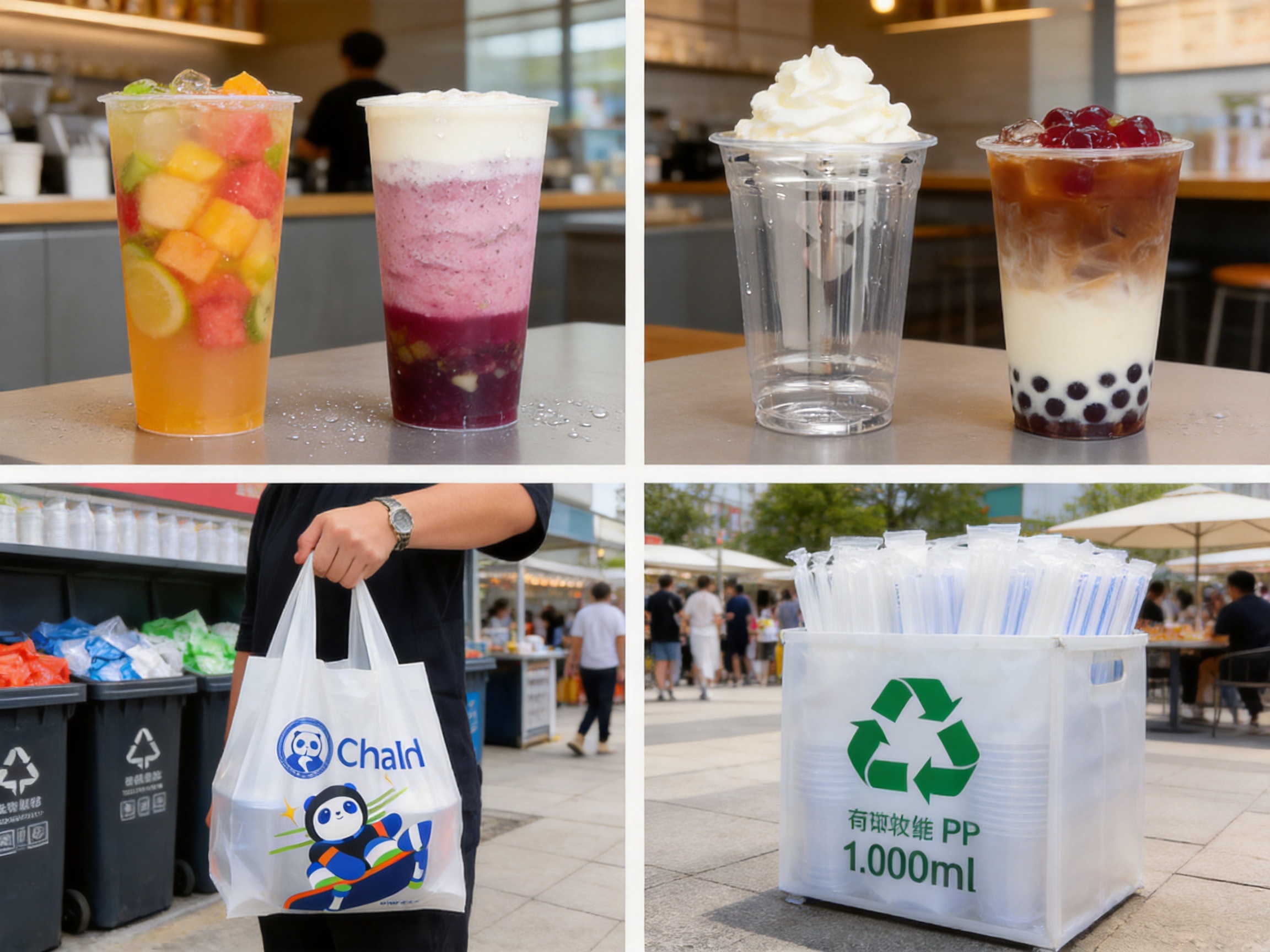
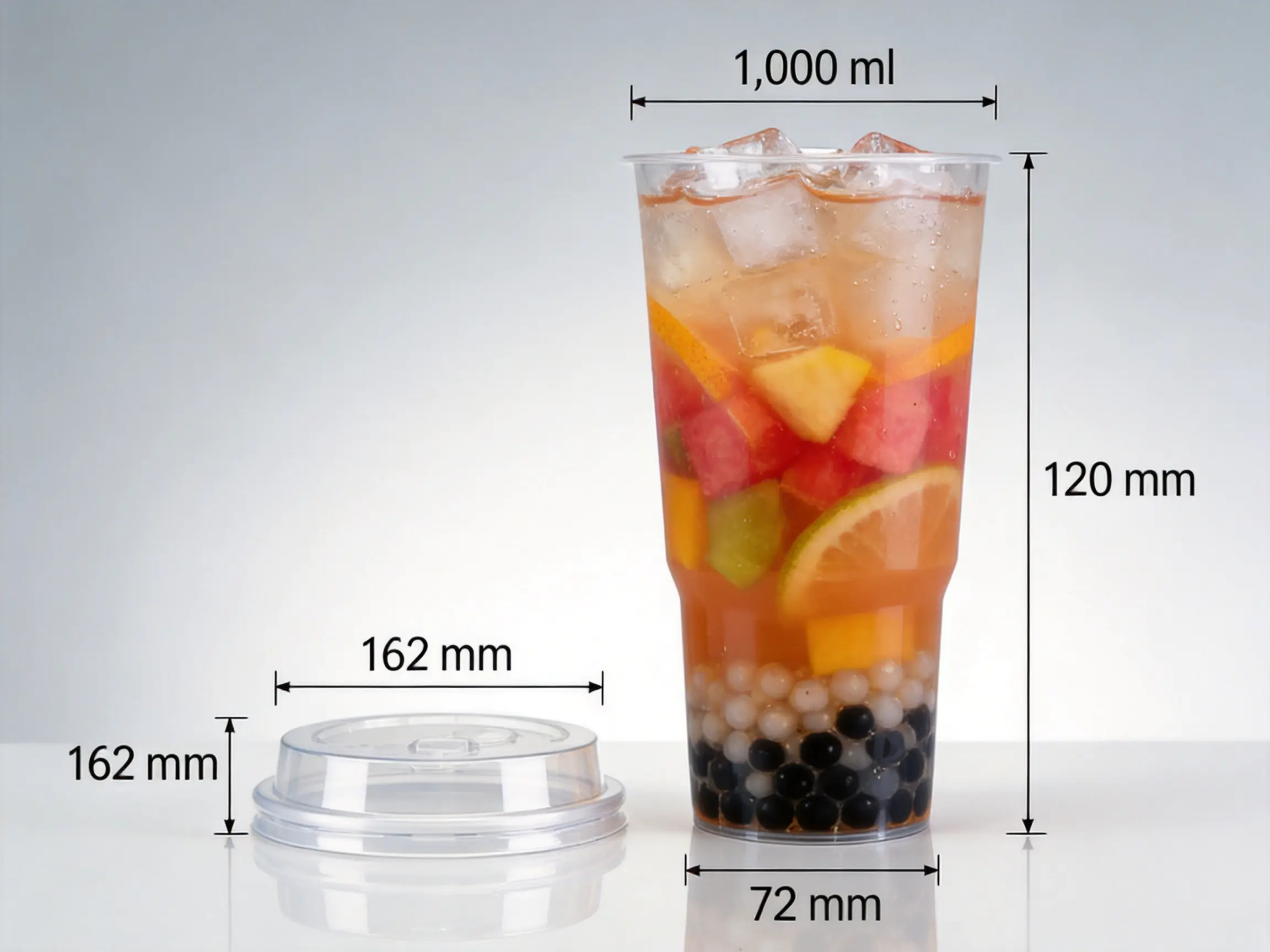
Large-format beverage service requires packaging that combines capacity, strength, clarity, safety, and operational efficiency. The PP extra large plastic cup is designed for applications where a standard takeaway cup is not large enough. With a stated volume of 1,000 ml, a 120 mm mouth, a 162 mm height, and a 72 mm bottom diameter, this cup provides a practical solution for oversized cold drinks, fruit beverages, milk-based drinks, iced teas, smoothies, desserts, and other foodservice products.
Made from polypropylene, commonly identified as PP, the cup is intended to deliver a balanced combination of light weight and structural toughness. Its broad opening supports generous portions and convenient filling, while its round rim is suitable for use with a matching 120-caliber cup lid. The transparent appearance helps customers see the beverage, toppings, layers, and ingredients inside the container, which can be especially valuable for cafés, beverage chains, catering businesses, convenience stores, and delivery services.
The cup is more than a high-volume disposable container. It represents an integrated packaging solution that links product performance with manufacturing control, customization potential, quality management, and supply capability. Yuqian Packaging Technology (Jiangsu) Co., Ltd. develops and manufactures food packaging materials and products, with experience in research and development, production, and sales. Its manufacturing base in Taizhou, Jiangsu Province, together with its quality certifications and packaging expertise, supports the production of foodservice containers for demanding commercial applications.
Why Extra-Large Capacity Matters in Foodservice
Consumer expectations have changed significantly in the beverage and takeaway food markets. Customers increasingly want larger portions, visually attractive drinks, layered desserts, and products that are convenient to carry. Beverage operators also seek packaging that can simplify their product range. Instead of using several different containers for different drink sizes, a 1,000 ml cup can provide a flexible high-capacity format for signature drinks, family-sized refreshments, promotional products, and premium menu items.
The PP extra large plastic cup offers a nominal capacity of 1,000 ml. This capacity can help foodservice operators create a clear distinction between regular, large, and shareable products. It is suitable for businesses that sell large iced beverages, fruit teas, lemonades, cold coffees, blended drinks, and similar products. The generous interior volume also allows space for ice, fruit pieces, jelly, tapioca pearls, whipped toppings, or other additions, depending on the recipe and filling method.
A large cup must be designed carefully. Increasing the capacity without improving wall strength can create a container that flexes excessively during filling, sealing, transport, or consumption. The listed PP cup is described as having good toughness and resistance to deformation. These characteristics are important because an extra-large container is often exposed to greater handling forces than a smaller cup. It may be filled with a heavier beverage, placed into a delivery bag, carried over a longer distance, or stacked with other items.
Capacity also affects presentation. A large transparent cup gives the beverage a strong visual presence. Color contrast, fruit slices, ice, foam, cream, and layered ingredients can become part of the product experience. For businesses that depend on visual merchandising and social media presentation, transparent packaging can support brand communication without requiring customers to open the container.
Product Specifications at a Glance
| Specification | Product Detail |
| Product type | PP extra large plastic cup |
| Primary category | Plastic Cup |
| Nominal volume | 1,000 ml |
| Cup mouth diameter | 120 mm |
| Cup height | 162 mm |
| Cup bottom diameter | 72 mm |
| Approximate cup grammage | 33 g |
| Compatible lid reference | 120-caliber cup lid |
| Approximate lid grammage | 7.3 g |
| Stated temperature adaptability | -10°C to 120°C |
| Material | Polypropylene, commonly known as PP |
| Visual characteristics | Highly transparent, smooth, and round-mouthed |
The dimensions and grammage provide useful information for purchasing managers and packaging engineers. A 120 mm mouth gives the cup a broad opening, while the 72 mm bottom helps create a stable footprint. The 162 mm height supports the 1,000 ml format without making the container excessively wide at its base. At approximately 33 g per cup, the packaging is designed to remain relatively lightweight for its capacity, which can contribute to efficient handling, storage, and distribution.
The listed 120-caliber lid is an important part of the packaging system. A cup and lid should be considered together because compatibility influences spill resistance, filling speed, sealing performance, and customer convenience. Matching the opening diameter with a corresponding lid can help operators standardize their workflow and reduce the risk of using unsuitable closures.
Material Advantages of Polypropylene
Polypropylene is widely used in food packaging because it offers a practical balance of durability, weight, chemical resistance, and temperature performance. For a large disposable cup, these properties are particularly valuable. The packaging must retain its shape while holding liquid, remain comfortable to handle, and resist ordinary contact with beverage ingredients.
The product information states that the cup is adaptable to temperatures from -10°C to 120°C. This stated range gives buyers an important reference when evaluating intended applications. It indicates that the material is designed to accommodate a broad range of service conditions, from chilled products to higher-temperature handling environments. However, actual use should always be evaluated according to the beverage, filling procedure, lid type, transportation conditions, and applicable food-contact requirements.
PP is also valued for its toughness. Compared with more brittle packaging materials, a well-designed PP cup can tolerate ordinary squeezing, transportation, and handling with a lower risk of cracking. This is beneficial for delivery operations, where containers may be placed into bags, moved between vehicles, and handled by multiple people before reaching the consumer.
Another advantage is the material’s low weight relative to its volume. The cup provides a 1,000 ml capacity while the stated cup grammage is approximately 33 g. Lightweight packaging can reduce the quantity of material used per unit compared with heavier alternatives, although sustainability assessments should consider the full product life cycle, including production, transport, use, collection, and end-of-life management.
The cup is described as non-toxic, odorless, environmentally friendly, and healthy. These product characteristics are important for food packaging because unwanted odor or material interaction can affect the customer’s perception of the beverage. A neutral packaging material helps preserve the intended aroma and taste of the contents when the product is manufactured, stored, and used under appropriate conditions.
Clarity, Smoothness, and Consumer Appeal
Visual presentation is one of the strongest advantages of transparent beverage packaging. The PP extra large plastic cup is described as highly transparent and smooth. This allows the contents to remain visible from different angles, helping customers identify the beverage and appreciate its appearance.
For drinks containing multiple ingredients, transparency can make the packaging part of the product design. A fruit tea can display colorful fruit pieces and ice. A smoothie can show its texture and layers. A dessert beverage can reveal cream, sauce, pearls, jelly, or other inclusions. In each case, the cup can support a more informative and attractive presentation than an opaque container.
The smooth surface can also assist with printing, labeling, and visual consistency, subject to the selected decoration method and the requirements of the production line. Foodservice businesses can use labels, sleeves, printed graphics, stickers, or other approved decoration systems to identify flavors, communicate product information, and strengthen recognition at the point of sale.
A smooth, round mouth is equally important. The rim is the primary contact area for the lid, straw, and consumer. A well-formed rim can contribute to a more consistent fit and a more comfortable drinking experience. It can also support efficient filling and closing in high-volume operations where employees repeat the same steps throughout the day.
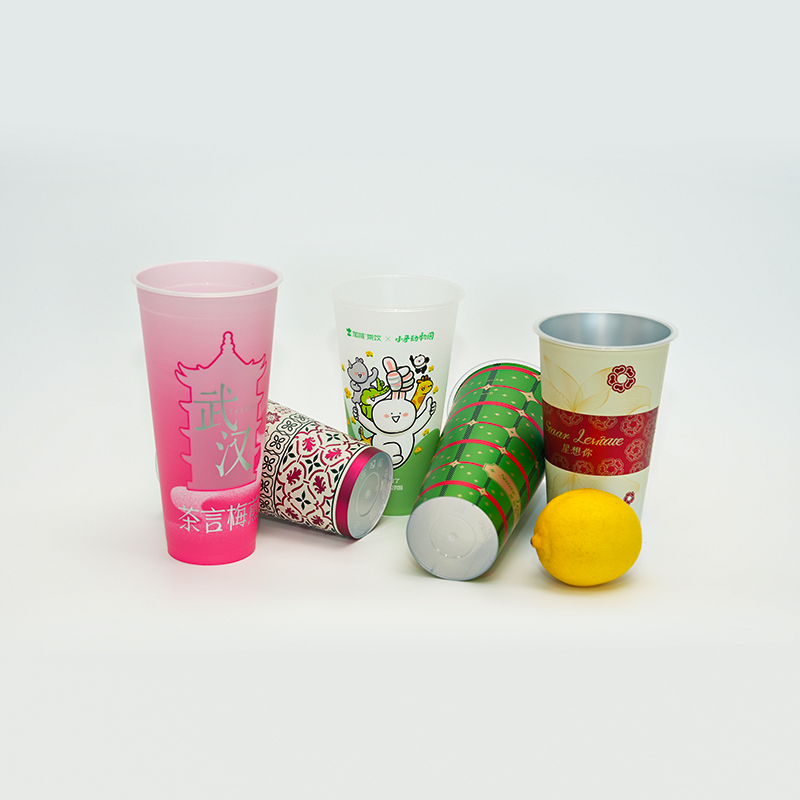
PP extra large plastic cup
Structural Design for Large-Volume Applications
Large cups face different performance requirements from small and medium formats. A 1,000 ml container holds more liquid, and the weight of the filled product increases the demands placed on the side wall, base, rim, and lid connection. A suitable large-format cup must balance flexibility with rigidity. If it is too soft, it may collapse during handling. If it is too rigid or heavy, it may increase material consumption and reduce cost efficiency.
The listed dimensions suggest a tall, tapered format with a broad top opening and a narrower bottom. This geometry can support a large internal volume while preserving a manageable footprint. The 72 mm bottom diameter can help the cup sit securely on counters, trays, shelves, and vehicle surfaces. The 120 mm top diameter provides a wide opening for filling and topping, while also corresponding to the specified lid size.
The stated resistance to deformation is valuable during several stages of the supply chain. Empty cups may be packed in stacks or cartons. Filled cups may be moved from a preparation station to a pickup counter. Delivery bags may apply pressure from the sides. Customers may hold the cup with one hand while walking. In each situation, dimensional stability can help maintain the appearance and function of the package.
For beverages containing ice, the cup must also accommodate movement inside the container. Ice cubes can place localized pressure on the wall, especially when the cup is shaken or transported. Tough PP construction can help the cup withstand ordinary use, although operators should still validate performance with their specific recipes and handling procedures.
The compatible lid adds another structural element. A large lid should remain securely attached while the cup is carried, tilted, or placed in a delivery bag. The correct lid selection, closing pressure, and filling level all influence final performance. Buyers should conduct practical testing with the cup, lid, straw, sealing equipment, and beverage formula used in their own operation.
Advantages Compared with Common Alternative Packaging
Compared with Smaller Disposable Cups
The most direct advantage is capacity. A 1,000 ml cup enables larger servings without requiring customers to purchase two separate containers. This can simplify menu planning and create opportunities for premium or promotional products. A large cup may also be more suitable for beverages with substantial toppings or ingredients that need extra internal space.
The broad top opening can improve preparation efficiency for products that require ice, fruit, powders, sauces, or other additions. Employees may have more room to fill and decorate the beverage, reducing the need for complicated tools or multiple transfer steps.
Compared with Paper-Based Cups
PP provides full visibility of the beverage, whereas many paper-based cups are opaque unless they include a transparent window. This difference matters for products whose appearance influences purchasing decisions. PP also avoids the possibility of paper softening due to prolonged contact with liquid, although all containers must be selected according to the intended beverage temperature, duration, and use conditions.
The smooth plastic surface can be easier to wipe clean during preparation, and the material’s toughness may be useful in delivery settings. Paper cups can remain excellent choices for some hot beverage applications, but a transparent PP cup is often more suitable when product visibility and cold beverage presentation are central to the sales experience.
Compared with Glass Containers
Glass provides a premium appearance, but it is heavier and more fragile than a lightweight PP disposable cup. For takeaway and delivery businesses, the lower weight of PP can simplify transportation and reduce the risk associated with breakage. A disposable PP container can also reduce the operational burden of collection, washing, inspection, and return logistics.
Glass may be preferred for dine-in service or reusable packaging programs, but for high-volume takeaway operations, PP offers a practical combination of visual appeal, ease of handling, and disposable convenience.
Compared with Less Tough Plastic Containers
Not all plastics provide the same balance of toughness, clarity, and temperature adaptability. A cup that is too brittle may crack during filling or transportation. A cup that is too soft may deform when held. The stated toughness and deformation resistance of this PP cup are therefore meaningful differentiators for buyers looking for reliable large-format packaging.
Material selection should not be based on price alone. A lower unit cost can be offset by leakage, damaged products, customer complaints, slower preparation, or excessive waste caused by poor performance. Consistent dimensions and reliable molding quality are essential for commercial users who need repeatable results across thousands or millions of units.
Manufacturing Strengths and Process Control
Yuqian Packaging Technology (Jiangsu) Co., Ltd. was established in 2010 and focuses on the research and development, production, and sales of new food packaging materials and products. This combination of technical development and manufacturing experience is relevant to the PP extra large plastic cup because large-format packaging requires more than a suitable raw material. It requires dimensional design, tooling control, production consistency, inspection, packing, and supply coordination.
The company’s stated plant area is approximately 30,000 square meters in Taizhou City, Jiangsu Province. A dedicated manufacturing base of this scale can support organized production zones, raw material management, forming or molding equipment, quality inspection, storage, and dispatch operations. Facility scale alone does not guarantee product quality, but it can provide the physical foundation for systematic production and capacity planning.
Advanced packaging manufacturing begins with product design. Engineers must consider the cup’s volume, mouth diameter, height, bottom diameter, wall structure, stacking behavior, lid compatibility, and appearance. These elements interact with one another. For example, changing the rim geometry may affect lid fit, while changing the wall profile may affect cup strength, nesting, and material distribution.
Material preparation is another important control point. PP resin and any approved additives must be managed according to the intended food-contact application and the manufacturer’s specifications. Proper storage helps protect raw materials from contamination, moisture, and mix-ups. Batch identification and traceability support more effective investigation if a quality issue occurs.
During forming or molding, process parameters influence transparency, thickness distribution, dimensional accuracy, and surface quality. Temperature, pressure, cooling, cycle time, and tooling condition must be controlled consistently. For an extra-large cup, uniform material distribution is particularly important because the container has a tall side wall and a relatively large opening. Uneven thickness could create weak areas or affect the visual quality of the finished product.
Tooling maintenance also contributes to long-term consistency. Clean and well-maintained molds or forming tools can help preserve rim accuracy, bottom stability, surface smoothness, and overall appearance. Preventive maintenance can reduce unexpected production interruptions and help maintain stable output over extended manufacturing runs.
Inspection may include checks for dimensions, weight, appearance, transparency, rim condition, bottom stability, deformation, and compatibility with the matching lid. Depending on the buyer’s requirements, additional tests may be performed for leakage, stacking, compression, drop resistance, temperature exposure, and transportation simulation. These tests should be defined according to the actual use environment rather than relying only on general assumptions.
Packaging and warehouse handling are also part of the manufacturing process. Even a well-formed cup can be damaged by poor packing, excessive compression, dust exposure, or unsuitable storage conditions. Organized carton packing, product identification, batch control, and protected storage help preserve quality until the goods are delivered to the customer.
Quality Systems and Certification Experience
The company reports that it has passed the QS national industrial product production license, ISO9001 Quality Management System certification, BRC certification, German authoritative safety DIN certification, and European Union RoHS testing. These credentials and testing references indicate experience with formal quality systems and external compliance expectations.
ISO9001 is associated with structured quality management processes, including documented procedures, responsibility assignment, corrective action, and continual improvement. For packaging buyers, a quality management system can provide confidence that production is managed through repeatable processes rather than informal inspection alone.
BRC certification is relevant to organizations involved in food-related packaging and supply chains, subject to the specific scope and current certification status. Buyers should request applicable certificates and confirm that the product, production site, and intended market are covered by the relevant documentation.
References to DIN safety certification and RoHS testing demonstrate attention to recognized technical and material requirements. However, certification is always scope-specific. Importers and brand owners should verify current documents, test reports, declarations of compliance, migration data, and market-specific requirements before placing an order.
Quality assurance should be viewed as a complete system. It includes supplier evaluation, raw material control, process management, in-process inspection, finished-product testing, traceability, complaint handling, and corrective action. This approach is especially important for high-volume disposable products because even a small defect rate can affect a large shipment.
Foodservice Applications
Cold Beverage Chains
Tea shops, juice bars, coffee shops, smoothie stores, and beverage chains can use the cup for large cold drinks. Its transparent appearance supports product visibility, while the 120 mm mouth accommodates a matching lid and may provide convenient room for ice and toppings.
Fruit Tea and Fresh Juice
Fresh fruit beverages often benefit from clear packaging because customers can see the color, pulp, fruit pieces, and ice. The 1,000 ml format can support shareable servings, promotional sizes, or menu items designed for longer consumption periods.
Milk-Based and Dessert Drinks
Milk teas, specialty coffees, shakes, and dessert beverages may include pearls, jelly, cream, or layered ingredients. The large opening can simplify assembly, while the smooth, transparent walls display the finished product.
Catering and Events
Large cups can help catering businesses serve drinks efficiently at outdoor events, company functions, celebrations, and promotional activities. Disposable packaging can reduce the need for collection and washing infrastructure, provided the product is used and disposed of according to local requirements.
Delivery and Takeaway
Delivery operators need containers that can tolerate routine movement. The cup’s stated toughness and resistance to deformation can support takeaway use, while the matching lid provides a coordinated closure option. Businesses should test filled cups in their own bags and delivery routes because leakage performance depends on the complete packaging system.
Operational Efficiency for Commercial Buyers
Packaging affects labor efficiency from the moment a cup is removed from storage until the finished beverage reaches the customer. A consistent cup can help employees follow a repeatable filling sequence. Standardized dimensions can also simplify lid storage, straw selection, sealing equipment settings, and portion control.
The 120 mm mouth provides a clear reference for purchasing related accessories. Operators can select 120-caliber lids and evaluate suitable straws, sealing films, carriers, and cup holders. A standardized system reduces the risk of mismatched components and may help simplify inventory management.
The approximate 33 g cup weight and 7.3 g lid weight can assist with logistics calculations. Buyers can estimate carton weight, pallet loading, freight cost, and warehouse requirements more accurately when unit weights are known. Actual shipping figures depend on packing configuration, carton dimensions, order quantity, and transport conditions.
Large cups can also support menu engineering. A business may use the same cup for several products, including iced tea, fruit juice, lemonade, smoothies, and specialty drinks. Greater product flexibility can reduce the number of packaging formats held in stock. Before standardizing, operators should confirm that the cup works with their filling equipment, recipes, sealing process, and customer serving expectations.
Customization and Packaging Development
Food and beverage companies increasingly want packaging that reflects their own product identity. Customization may involve dimensions, wall structure, color, printing, labels, sleeves, lid styles, sealing formats, or packing methods. The appropriate option depends on order volume, lead time, budget, production equipment, and market requirements.
The cup’s transparent base provides a useful starting point for customization. Businesses can preserve visibility while adding a logo, product name, flavor information, promotional message, or regulatory label. Decoration should be evaluated for adhesion, abrasion resistance, ink suitability, food-contact separation, and appearance after refrigeration or condensation exposure.
Custom development should begin with a clear technical brief. The buyer should define capacity, fill level, beverage type, temperature, topping requirements, lid style, straw diameter, transport conditions, decoration requirements, carton quantity, and target market. Early clarification reduces the risk of designing a cup that looks attractive but does not perform effectively in actual operations.
Sampling is an essential stage. A sample should be tested with the intended liquid, ice quantity, toppings, lid, straw, sealing equipment, and delivery packaging. Dimensional checks should confirm the mouth diameter, height, bottom diameter, and overall stability. Visual checks should evaluate transparency, surface smoothness, color, printing, and consistency between samples.
For larger projects, pilot production can provide additional information. A pilot run may reveal whether employees can fill the cup efficiently, whether the lid is easy to apply, whether the cup stacks and dispenses properly, and whether the packaging remains stable during transportation. This practical feedback can be used before full-scale production.
Sustainability Considerations
Disposable packaging decisions should consider the complete life cycle of the product. PP can be recyclable in many waste management systems, but actual recycling depends on local collection, sorting, processing infrastructure, contamination levels, and market demand for recovered material. Businesses should communicate disposal guidance responsibly and avoid making recycling claims that are not supported in the target market.
Material efficiency is another consideration. A lightweight cup that provides adequate strength may reduce material use per serving compared with heavier alternatives. Nevertheless, lightweighting should never compromise safety, leak resistance, stackability, or customer usability. The correct objective is to achieve the necessary performance with an efficient material and design structure.
Packaging manufacturers can support sustainability by improving process yield, reducing defective products, optimizing carton packing, limiting unnecessary secondary packaging, and improving production energy management. Buyers can contribute by selecting suitable quantities, avoiding excessive over-packaging, and planning inventory to reduce obsolete stock.
End users also influence environmental performance. Clean and correctly sorted packaging has a greater chance of entering a recycling stream where such systems exist. Foodservice businesses may provide clear disposal information, while consumers can follow local waste instructions. Sustainability claims should be based on documented material information and local infrastructure rather than general assumptions.
Purchasing Guidance for Importers and Distributors
Importers and distributors should evaluate the product from both technical and commercial perspectives. The key technical questions include the exact PP grade, food-contact compliance, temperature limitations, cup and lid tolerances, packaging configuration, and applicable test reports. Buyers should request current documents and ensure that they match the ordered product.
Commercial evaluation should include minimum order quantity, sample policy, production lead time, payment terms, packing details, shipping marks, inspection arrangements, and after-sales procedures. Because cup dimensions affect lid and straw compatibility, buyers should purchase or test the complete system rather than evaluating the cup in isolation.
Quality agreements can define acceptable limits for appearance, weight, dimensions, defects, and packaging damage. A clear specification helps both parties understand what constitutes an acceptable product. For recurring orders, approved samples and retained reference samples can support consistency from one production batch to the next.
Warehouse conditions should also be considered. Cups should be stored in clean, dry areas protected from excessive heat, direct sunlight, dust, chemicals, and crushing loads. Stock rotation can help prevent long periods of storage. The distributor should maintain product identification and batch information so that shipments can be traced efficiently.
Company Capabilities Supporting the Product
Yuqian Packaging Technology (Jiangsu) Co., Ltd. combines product development, manufacturing, and sales activities within the food packaging field. Its location in Taizhou, Jiangsu Province, places the production operation within a major Chinese manufacturing region with access to industrial suppliers, transportation networks, technical labor, and export logistics.
The company reports that it established a Shanghai branch in January 2019 to improve service quality and expand business channels. A branch structure can help support communication, customer coordination, order management, and market development, although customers should confirm the specific responsibilities of each operating entity during commercial discussions.
The company’s product scope includes food packaging materials and products, biodegradable new materials, plastic cups, cup lids, takeaway bowls, disposable straws, recycle bags, peripheral products, and injection film lining cup and bowl boxes. This broader product range can be useful for buyers seeking coordinated packaging solutions rather than a single isolated item.
For customers purchasing the PP extra large plastic cup, a broader packaging portfolio may simplify supplier management. Related products can be evaluated for compatibility, appearance, packing, and delivery. A coordinated supplier may also help foodservice brands develop a more consistent packaging system across cups, lids, bowls, straws, and supporting products.
The company’s stated certifications and experience with formal testing provide a foundation for serving domestic and international customers. As with every packaging project, buyers should confirm the current status and scope of certificates, but the reported quality-system background demonstrates an orientation toward controlled manufacturing and compliance management.
Recommended Validation Program
Before approving the cup for commercial use, a buyer can follow a structured validation program. First, inspect the samples visually for clarity, smoothness, rim uniformity, deformation, contamination, and surface defects. The cup should be examined under consistent lighting so that differences between samples can be identified.
Second, verify critical dimensions. Measure the mouth diameter, height, bottom diameter, wall profile where relevant, and weight. Dimensional tolerances should be agreed with the manufacturer because measurement methods and allowable variation can affect lid fit and filling performance.
Third, conduct a filled-cup test. Use the actual beverage or a representative liquid at the intended temperature. Fill the cup to the planned level, add ice or toppings if applicable, apply the selected lid, and observe the container while it is carried, tilted, placed in a bag, and stored for the expected service period.
Fourth, perform a transportation simulation. Pack the filled cup with the intended carrier or delivery bag and recreate normal movement as closely as practical. Check for leakage, lid release, wall deformation, condensation-related handling problems, and damage caused by contact with other items.
Fifth, assess the customer experience. Confirm that the cup is comfortable to hold, that the selected straw reaches the beverage effectively, that the lid opening is convenient, and that the transparent appearance supports the intended presentation. A technically sound package must also be practical for employees and appealing to consumers.
Finally, review the compliance documents and production information. Confirm the material specification, food-contact documents, quality certificates, packing details, production lead time, and traceability method. This final review helps align the physical product with the commercial and regulatory expectations of the target market.

Frequently Asked Questions
What is the capacity of the PP extra large plastic cup?
The stated capacity is 1,000 ml. The actual working fill level may vary according to the beverage, ice, toppings, lid design, and operating procedure. Buyers should establish a practical fill line during product testing.
What are the main dimensions of the cup?
The listed dimensions are a 120 mm mouth diameter, 162 mm height, and 72 mm bottom diameter. The corresponding lid reference is a 120-caliber cup lid.
What is the approximate weight of the cup?
The stated cup grammage is approximately 33 g. The matching lid is listed at approximately 7.3 g. Actual production tolerances and packing configuration should be confirmed with the manufacturer.
What material is used?
The product is made from polypropylene, commonly abbreviated as PP. PP is widely used for food packaging because of its light weight, toughness, and practical temperature performance.
What temperature range is stated for the product?
The product information states adaptability to temperatures from -10°C to 120°C. Users should confirm the suitability of their specific beverage, filling process, storage conditions, and lid system before commercial use.
Is the cup transparent?
Yes. It is described as highly transparent and smooth. This makes it suitable for beverages and desserts where visibility of the contents is part of the product presentation.
Can the cup be used for delivery?
It is suitable for consideration in takeaway and delivery applications because it is designed with good toughness and resistance to deformation. A complete delivery test should be performed with the selected lid, beverage, ice level, carrier, and transport route.
Does the product include a lid?
The listed product information includes a reference to a 120-caliber cup lid with an approximate weight of 7.3 g. Buyers should confirm whether cups and lids are supplied together or ordered separately.
What types of beverages can use this cup?
Potential applications include iced tea, fruit tea, juice, lemonade, cold coffee, smoothies, milk-based drinks, specialty beverages, and dessert drinks. The final application should be validated according to temperature, ingredients, filling method, and required service period.
How does the cup compare with glass?
Compared with glass, a PP disposable cup is generally lighter and less vulnerable to breakage during takeaway and delivery. Glass may provide a different premium experience, but PP can offer greater convenience for high-volume disposable service.
How does transparency benefit a beverage brand?
Transparency allows customers to see colors, layers, fruit, ice, toppings, and textures. This can improve product presentation and help make the beverage visually recognizable before the container is opened.
What quality documents should a buyer request?
Buyers should request current material specifications, food-contact compliance documents, relevant test reports, quality certificates, packing information, and product inspection records. The documents should match the product, production site, and intended destination market.
Can the cup be customized?
Customization may be possible through printing, labels, sleeves, dimensions, packaging, or related components, depending on order quantity and technical requirements. A buyer should provide a detailed specification and approve samples before mass production.
Is PP recyclable?
PP is recyclable in many systems, but recycling availability depends on local infrastructure, collection rules, sorting, contamination, and market conditions. Disposal instructions should follow the requirements of the destination market.
Where is the manufacturer located?
The manufacturing company is located in Taizhou City, Jiangsu Province, China, with its stated address at No. 8 Tongyang Road, Suchen Town, Taizhou City, Jiangsu Province.
How can buyers contact the supplier?
Business inquiries can be directed to the supplied company contact information, including the telephone number 0086 15252423007, fax number +0523 8608 3698, and email address [email protected].
Conclusion
The PP extra large plastic cup is a practical high-capacity solution for modern beverage and takeaway operations. Its 1,000 ml volume, 120 mm mouth, 162 mm height, and 72 mm bottom diameter create a format suited to large servings, visually presented drinks, toppings, and delivery-oriented products. The stated 33 g cup weight supports a lightweight packaging profile, while the matching 120-caliber lid provides a coordinated closure option.
Its key product advantages include polypropylene toughness, resistance to deformation, high transparency, smoothness, a round mouth, broad temperature adaptability, and compatibility with a large-format foodservice model. Compared with smaller cups, it provides greater serving flexibility. Compared with opaque or heavier alternatives, it can offer better product visibility and easier handling.
The product is supported by a manufacturer with experience in food packaging research and development, production, and sales. The company’s reported 30,000-square-meter manufacturing base, quality management background, certification experience, and broader packaging portfolio create a useful foundation for domestic and international supply. Buyers should still complete product-specific testing and document verification before approval.
For cafés, beverage chains, catering companies, distributors, importers, and foodservice brands, the cup can serve as both a functional container and a presentation tool. With appropriate validation, coordinated lids and accessories, controlled manufacturing, and responsible end-of-life planning, it can help businesses deliver large, attractive, and convenient beverages to customers at scale.
References
1. Product specification information supplied for the PP extra large plastic cup, including capacity, dimensions, grammage, material characteristics, and temperature adaptability.
2. Company information supplied for Yuqian Packaging Technology (Jiangsu) Co., Ltd., including establishment date, manufacturing location, business scope, certifications, and packaging capabilities.
3. ISO 9001 quality management system principles and quality assurance practices for manufacturing organizations.
4. General technical guidance for food-contact packaging material evaluation, migration testing, traceability, and compliance documentation.
5. General packaging engineering principles covering container design, dimensional control, lid compatibility, transportation testing, and material efficiency.
6. General recycling and life-cycle considerations for polypropylene packaging, subject to local collection and processing infrastructure.