English
 Español
 عربى
Content
- 1 What Is a PET Direct Drinking Plastic Cup Lid?
- 2 Product Specification Overview
- 3 Key Advantages of the PET Direct Drinking Design
- 4 Why PET Can Be a Practical Material for Beverage Lids
- 5 Comparison with Common Alternative Lid Solutions
- 6 Manufacturing Capabilities and Process Control
- 7 Quality Management and Certifications
- 8 Customization and Design Services
- 9 Applications Across the Food and Beverage Industry
- 10 Operational Benefits for Beverage Businesses
- 11 Environmental Considerations and Responsible Packaging
- 12 Company Manufacturing Strengths
- 13 How to Select the Correct Lid for Your Application
- 14 Recommended Testing Before Mass Production
- 15 Packaging, Storage, and Handling Recommendations
- 16 Why Supplier Experience Matters
- 17 Frequently Asked Questions
- 17.1 What material is used for the direct drinking cup lid?
- 17.2 What standard sizes are available?
- 17.3 How much does one lid weigh?
- 17.4 Is the lid transparent?
- 17.5 Can consumers drink directly from the lid?
- 17.6 Does the lid prevent all leakage?
- 17.7 Can the lid be customized?
- 17.8 Is the PET lid suitable for hot beverages?
- 17.9 Can the lids be stacked?
- 17.10 What certifications does the manufacturer report?
- 17.11 How should the lids be tested before purchase?
- 17.12 Can the company supply other packaging products?
- 18 Conclusion
- 19 References
- 20 Product: PET direct drinking plastic cup lid
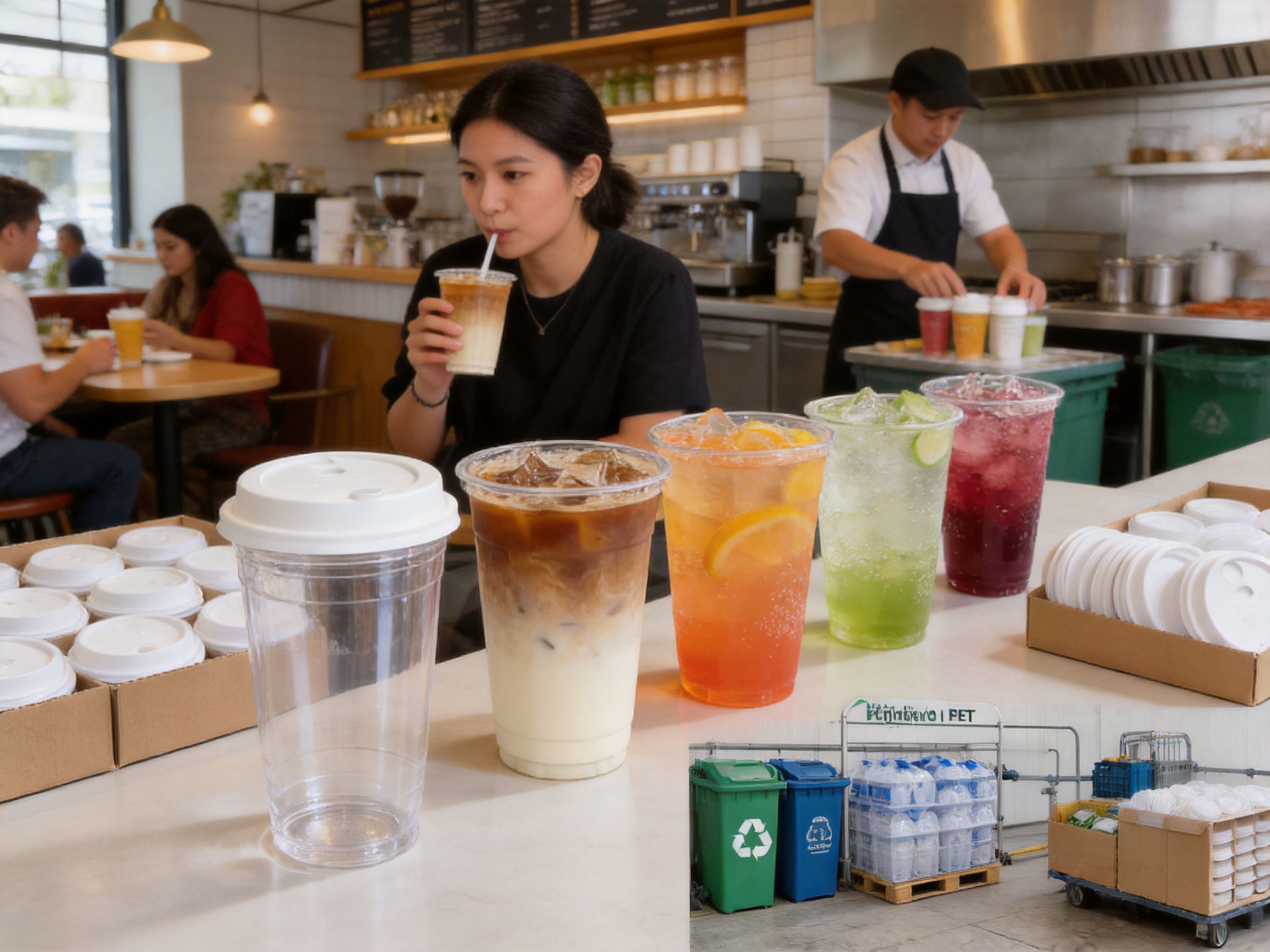
In the beverage and foodservice industries, packaging is no longer a secondary consideration. A cup and lid must protect the product, support efficient operations, create a convenient consumer experience, and communicate the quality of the brand. For cafés, beverage chains, restaurants, takeout operators, catering companies, and ready-to-drink manufacturers, the right lid can influence customer satisfaction just as strongly as the drink itself.
The PET direct drinking plastic cup lid is designed to answer these requirements with a practical combination of safety, clarity, durability, convenience, and production flexibility. Made from PET material and available in standard 90 mm and 98 mm calibers, this transparent lid allows consumers to drink directly from the cup without using an additional straw. Its lightweight construction, approximately 4 grams per lid, helps reduce handling effort, storage volume, and transportation weight while maintaining the structural performance required for everyday beverage service.
Yuqian Packaging Technology (Jiangsu) Co., Ltd. develops and manufactures food packaging materials and products for customers seeking dependable disposable packaging solutions. With research and development, production, sales, quality management, and customization capabilities, the company provides PET cup lids intended for a broad range of beverage applications. Its production experience, certification portfolio, and focus on process control help distinguish its products in a competitive disposable food packaging market.
What Is a PET Direct Drinking Plastic Cup Lid?
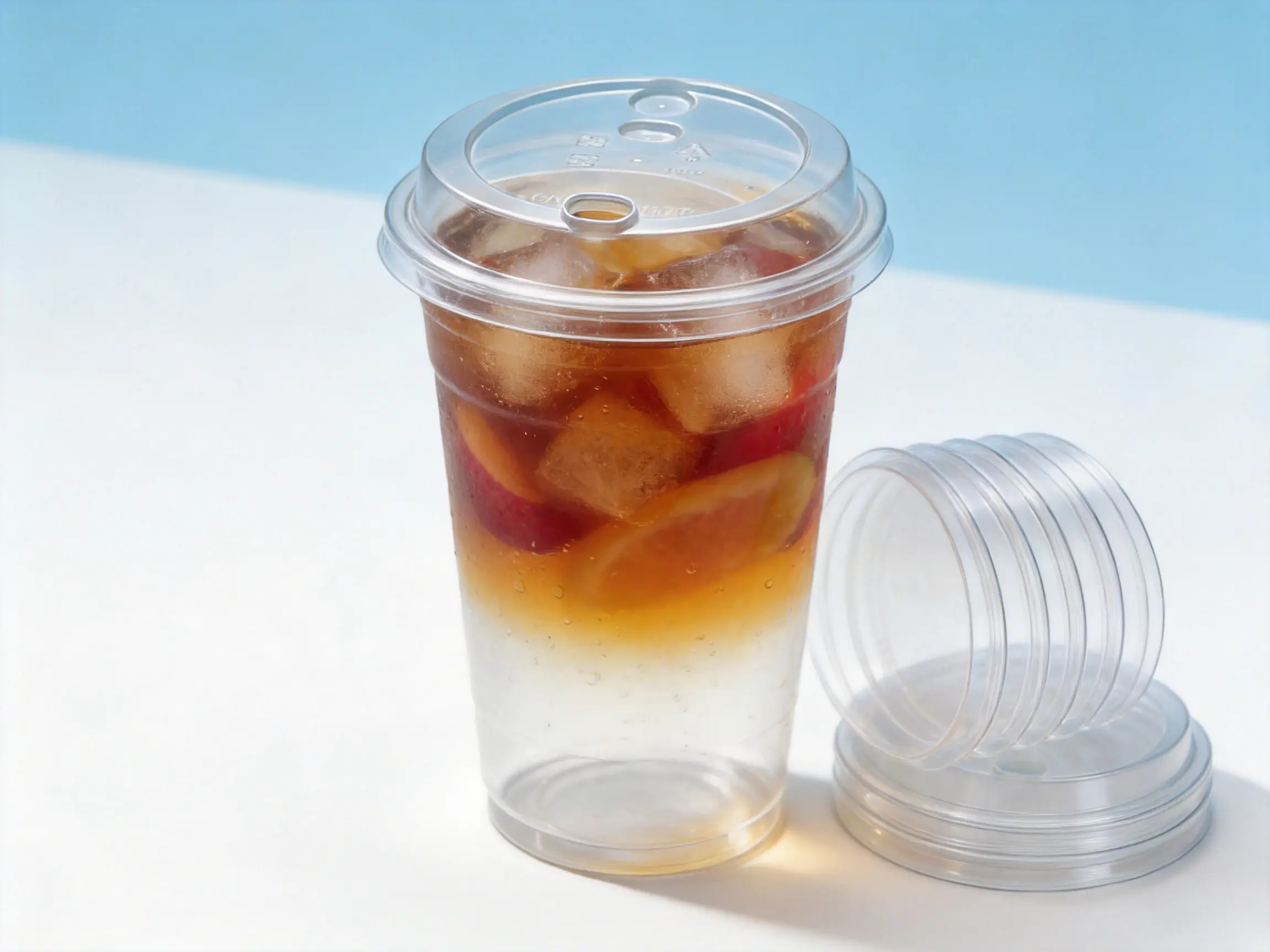
A PET direct drinking plastic cup lid is a transparent, formed lid designed to fit compatible beverage cups and provide a direct drinking opening. Unlike a flat sealing film that generally requires a straw or puncturing action, a direct drinking lid gives the consumer an opening through which the beverage can be consumed conveniently. This makes it particularly suitable for cold drinks, milk tea, juice, coffee beverages, soft drinks, flavored water, smoothies, and other takeaway products.
PET, or polyethylene terephthalate, is widely used in food and beverage packaging because it offers a useful balance of clarity, toughness, dimensional stability, and lightweight performance. The material can be formed into a lid with a smooth appearance and a precise edge profile. When the lid is matched with the correct cup diameter and sealing method, it helps protect the beverage during storage, transportation, and consumption.
The product is available in standard 90 mm and 98 mm versions. These dimensions support compatibility with different cup sizes and beverage packaging programs. Because cup and lid compatibility depends on the exact cup design, rim structure, filling volume, and sealing process, buyers should confirm samples and technical specifications before placing a production order.
The transparent appearance has several practical benefits. It allows the beverage surface and color to remain visible, supports attractive product presentation, and helps staff identify the contents of a cup quickly. For brands that invest in colorful drinks, toppings, fruit pieces, foam, ice, or layered beverages, a clear lid can preserve the visual appeal of the finished product.
Product Specification Overview
The following table summarizes the standard information available for the PET direct drinking cup lid.
| Lid Type | Caliber | Approximate Weight | Color |
|---|---|---|---|
| PET direct drinking cup lid | 90 mm | 4 g | Transparent |
| PET direct drinking cup lid | 98 mm | 4 g | Transparent |
The listed weight is approximately 4 grams per lid. Actual weight may vary according to production tolerance, customized design, material thickness, structure, and order requirements. Customers requiring a precise weight range, stacking height, sealing performance, or dimensional tolerance should request a formal technical data sheet and pre-production sample.

PET direct drinking plastic cup lid
Key Advantages of the PET Direct Drinking Design
1. Convenient Consumption Without an Additional Straw
The most visible feature of this lid is its direct drinking opening. Consumers can lift the cup and drink directly, reducing the number of separate components required for the beverage service process. This is especially useful for takeaway beverages consumed while walking, commuting, working, traveling, or attending events.
Direct drinking can also simplify order fulfillment. Staff do not need to provide a straw for every drink, and customers do not need to unwrap or position one before drinking. For beverage operators, this may reduce accessory management and create a faster serving routine during busy periods. The suitability of a straw-free format depends on the beverage type, topping size, viscosity, consumer preference, and local packaging policies, but the direct drinking structure provides an efficient option for many drinks.
2. Lightweight Construction
At approximately 4 grams per lid, the product is lightweight compared with many heavier or more complex beverage closure designs. A lower unit weight can provide operational benefits throughout the supply chain. More lids can be stored in a given area, carton handling may be easier, and transportation weight can be reduced. For businesses purchasing large quantities, even a small reduction in the weight of every component may contribute to more efficient logistics.
Lightweight construction must not mean weak performance. The design objective is to use material efficiently while retaining enough rigidity for stacking, fitting, handling, and normal beverage service. PET is suitable for this balance because it combines low weight with useful toughness and resistance to ordinary handling stress.
3. Clear and Professional Appearance
Transparent PET gives the lid a clean and professional appearance. Customers can see the beverage beneath the lid, while the lid itself does not obscure the branding, color, or visual details of the drink. Clear packaging is especially valuable for products that depend on appearance, including fruit tea, iced coffee, sparkling beverages, milk tea, fresh juice, and drinks with decorative toppings.
A consistent transparent finish can also support a standardized appearance across a product range. A beverage company may use one lid format for several flavors, allowing the drink color, printed cup, sleeve, sticker, or other visual feature to provide differentiation. This reduces the need to manage many lid colors while preserving a modern packaging style.
4. Improved Portability
Takeaway beverages are frequently exposed to movement, vibration, and changes in orientation. A properly fitted lid helps reduce the possibility of spills during ordinary carrying and transportation. The product uses a sealing structure intended to support secure closure when paired with a compatible cup.
No disposable lid can guarantee leak-free performance in every situation. Overfilling, an incompatible cup, incorrect application, rough handling, extreme temperature conditions, or excessive pressure can affect the result. For this reason, beverage producers and foodservice operators should conduct application testing using their actual cups, beverages, filling equipment, and delivery conditions.
5. Anti-Slip Surface Design
The lid surface is designed to offer a more stable grip during handling. A smooth but controlled surface can help reduce the likelihood that the cup will slip easily from the hand. This feature is useful in takeaway environments where the customer may carry several items, move through a crowded area, or drink while standing.
Surface design also influences the appearance and tactile impression of packaging. A lid that feels stable and well-finished can contribute to the consumer’s perception of product quality. Small details such as rim precision, surface uniformity, and edge smoothness can make a meaningful difference in daily use.
6. Toughness and Resistance to Breakage
PET is known for its combination of toughness and clarity. A PET lid can withstand common handling conditions better than a fragile material that cracks or breaks easily. During production, packing, shipment, and service, lids may be exposed to stacking pressure, contact with other packaging components, and repeated manual handling. Material selection and forming control are therefore important to maintain dependable performance.
The final strength of a lid depends on more than the resin itself. Thickness distribution, forming temperature, mold design, cooling conditions, rim structure, and quality inspection all affect performance. Yuqian Packaging Technology emphasizes controlled production processes to help achieve consistent results across large-volume orders.
7. Stackability and Space Efficiency
The lids can be stacked to save space before use. Stackable packaging components are easier to organize in warehouses, production areas, beverage shops, and distribution centers. Efficient stacking can help operators use shelf space more effectively and simplify counting, replenishment, and inventory rotation.
Stackability is also relevant to transportation. When the lid structure is designed for stable nesting, cartons can be packed more efficiently and the risk of disorder during shipment may be reduced. Buyers should nevertheless evaluate carton dimensions, stack height, compression conditions, and loading methods for their specific logistics system.
Why PET Can Be a Practical Material for Beverage Lids
Material selection determines much of a lid’s appearance, performance, and production behavior. PET is commonly selected for food packaging because it can provide transparency, a clean surface, useful mechanical strength, and a relatively low component weight. These characteristics make it suitable for a direct drinking lid that must be visible, portable, and convenient.
Food-contact packaging must be manufactured from appropriately selected materials and handled under controlled conditions. The resin, additives, processing environment, production equipment, and packaging method must be managed according to the intended application. Yuqian Packaging Technology states that its PET materials are screened and tested to support food safety and environmental requirements. Customers should always confirm the precise compliance documentation needed for their destination market and product category.
PET also supports a modern packaging appearance. Its transparency allows the beverage to remain part of the visual experience, while the material can be shaped into a functional profile with a direct drinking opening. The result is a component that combines practical use with a clean presentation.
Environmental performance should be considered across the complete product life cycle. Lightweighting can reduce material use and transportation weight, while responsible disposal, collection, sorting, and recycling systems are essential for realizing the potential value of recyclable PET. The product should be managed according to local waste rules and the requirements of the relevant market. A packaging material should not be described as environmentally beneficial solely because it is lightweight; responsible sourcing, efficient manufacturing, appropriate use, and end-of-life management all matter.
Comparison with Common Alternative Lid Solutions
Different beverage businesses use different closure formats, and no single lid is ideal for every drink. The PET direct drinking lid has several advantages when compared with common alternatives, although the final choice should be based on beverage characteristics and operating conditions.
Direct Drinking PET Lid Compared with Flat Film Seals
Flat sealing films can provide a strong closure and are widely used for drinks that require tamper evidence or transportation security. However, consumers generally need a straw or another opening method to drink from a film-sealed cup. The PET direct drinking lid provides a ready-made drinking opening, which can make consumption more immediate and reduce the need for an additional accessory.
Film sealing also requires compatible sealing equipment and may create a different service workflow. A direct drinking lid can be more convenient for businesses that need quick manual application or flexible cup-by-cup service. On the other hand, operators seeking a high level of tamper evidence may prefer film sealing or a combined solution. Product testing should determine which format is most suitable for the application.
Direct Drinking PET Lid Compared with Heavier Rigid Lids
Some rigid lids use thicker material or more elaborate structures. They may provide a strong tactile impression, but they can also increase material use, storage requirements, and shipping weight. The approximately 4-gram PET lid is designed to deliver practical functionality with a lightweight profile.
For high-volume beverage companies, the difference between a lightweight and heavy lid can affect procurement, warehouse handling, and transportation planning. A lightweight option may be especially attractive when the packaging system already provides adequate cup rigidity and the product does not require a highly specialized closure.
Direct Drinking PET Lid Compared with Non-Transparent Lids
Opaque lids can provide color differentiation and may support certain branding programs. However, they hide the beverage surface and can make it more difficult for customers or staff to identify the drink visually. Transparent PET preserves visibility and can enhance the presentation of drinks with distinctive colors, layers, foam, fruit, or toppings.
Direct Drinking PET Lid Compared with Fragile Clear Materials
Some clear materials can offer good appearance but may be more vulnerable to cracking, shattering, or stress damage depending on their formulation and design. PET is valued for its toughness, making it a practical choice for disposable foodservice packaging that must be transported and handled efficiently. The final performance still depends on correct design, processing, and application conditions.
Manufacturing Capabilities and Process Control
A high-quality cup lid begins with more than a suitable material. The manufacturing process must maintain control over dimensions, forming conditions, surface quality, stacking behavior, and cleanliness. Inconsistent production can lead to poor fit, leakage, deformation, rough edges, or unstable stacking. For this reason, advanced process management is a central strength of a reliable packaging manufacturer.
Material Selection and Incoming Inspection
The first stage involves the selection and inspection of PET raw materials. Material quality can influence transparency, toughness, forming behavior, and consistency. A disciplined incoming inspection process helps verify that materials meet the required specifications before they enter production.
Raw materials should be stored in an organized environment that supports traceability and protects them from contamination or improper handling. Batch information is important because it allows production teams to connect finished products with the materials and process conditions used to manufacture them.
Product and Mold Development
The direct drinking opening, outer rim, nesting profile, surface structure, and sealing area must work together. During product development, engineers consider the cup diameter, lid fit, material distribution, consumer drinking comfort, and production efficiency. Mold design is particularly important because it affects the repeatability of the finished shape.
Yuqian Packaging Technology maintains a research and development team focused on material research and product design. This capability supports the development of PET cup lids with different dimensions, shapes, colors, and functional characteristics. A manufacturer with internal development resources can respond more efficiently when customers require modifications rather than offering only fixed, standard products.
Thermoforming and Shape Consistency
PET lids are formed through a controlled heating and shaping process. The sheet or material must reach appropriate forming conditions before being shaped by the mold. Temperature balance, forming pressure, cycle timing, and cooling all influence dimensional accuracy and material distribution.
If the material becomes too thin in critical areas, the lid may lose rigidity or sealing performance. If it is too thick, the product may become unnecessarily heavy and less efficient. Consistent process parameters help the manufacturer produce lids with a stable structure while maintaining the targeted lightweight profile.
Edge and Opening Quality
The drinking opening and outer edge must be smooth, clean, and comfortable for the user. Sharp edges, burrs, deformation, or uneven trimming can negatively affect both safety and consumer perception. Inspection procedures should therefore include visual checks and dimensional verification of the opening, rim, and contact area.
A precise rim is also essential for compatibility with the cup. Even a small dimensional deviation can influence closure fit, sealing pressure, and resistance to leakage. Quality control at this stage protects the performance of the entire cup-and-lid system.
Stacking and Packing
After forming and inspection, lids are stacked and packed for storage and delivery. Correct nesting helps maximize carton capacity and makes the product easier for customers to use. Packing methods should protect the lids from dust, deformation, and damage during transportation.
For large orders, packaging traceability and batch identification allow customers to manage stock more effectively. Clear labeling can help warehouse teams identify the lid caliber, production batch, quantity, and order information before the products enter service.
Quality Management and Certifications
Yuqian Packaging Technology (Jiangsu) Co., Ltd. reports that its operations have obtained or passed a range of quality, safety, and environmental-related certifications and tests. These include the QS national industrial product production license, ISO 9001 quality management system certification, BRC certification, German DIN safety certification, and EU RoHS-related testing.
Certifications and test reports are valuable because they demonstrate that a company has established documented systems or completed evaluations against particular requirements. However, the scope and validity of each certificate must be reviewed for the relevant facility, product, material, and market. Buyers should request current copies of applicable documents and confirm whether additional food-contact declarations, migration testing, labeling, or regulatory documentation is required in the destination country.
ISO 9001 Quality Management Approach
An ISO 9001-based quality management system emphasizes documented processes, customer requirements, corrective actions, continuous improvement, and management responsibility. For a cup lid manufacturer, this approach can support more consistent order execution from design and raw material procurement through production, inspection, packing, and after-sales service.
Quality management is especially important for customized products. When a customer orders a special size, shape, or functional design, written specifications and approval procedures help prevent misunderstandings. Sample confirmation, production records, inspection standards, and change control all contribute to reliable results.
Food Packaging Safety
Food packaging must be produced with attention to hygiene, material suitability, contamination prevention, and traceability. A cup lid may come into contact with the beverage or with the area around the consumer’s mouth, so the production environment and material controls are important.
Yuqian Packaging Technology describes a quality system that covers raw material procurement, processing, and finished product inspection. This full-process approach is more dependable than checking only the finished goods. Preventive control at each stage can identify potential problems before they become large-scale production issues.
Inspection Points for Customers
When evaluating PET direct drinking lids, buyers may wish to review several performance indicators. These include lid diameter, opening dimensions, weight tolerance, transparency, edge smoothness, stacking stability, cup fit, leakage resistance, and appearance consistency.
Application testing should use the actual cup, beverage, filling level, temperature, transport method, and sealing procedure. Testing only an empty lid may not reveal performance issues that occur when a filled cup is carried in a delivery bag or stored under refrigeration.
Customization and Design Services
Different beverage brands often require different packaging specifications. A local café may need a standard transparent lid for several cup sizes, while a national beverage chain may require a customized opening, special fit, branded appearance, or integration with automated filling and sealing equipment.
Yuqian Packaging Technology provides customization from design through production. Customizable factors may include caliber, shape, color, opening configuration, functional details, and compatibility requirements. The exact feasibility of a design depends on tooling, material, order volume, equipment, regulatory requirements, and testing results.
Customized Dimensions
Although 90 mm and 98 mm are standard options, some customers may require different dimensions. A customized diameter must be developed together with the matching cup rim. The relationship between cup wall thickness, rim shape, lid profile, and closure force should be evaluated as a complete system.
Customized Appearance
The standard product is transparent, which supports broad beverage applications. Depending on the production process and requirements, customers may discuss alternative colors, surface effects, or other appearance features. Any colored or modified product should be evaluated for food-contact suitability and visual consistency.
Customized Function
Functional customization may involve the drinking opening, anti-splash features, stacking profile, locking structure, or compatibility with specific equipment. A functional change should be tested for user comfort, leakage resistance, manufacturing stability, and cleaning or hygiene requirements.
Development Procedure
A practical customization program normally begins with a customer specification. The manufacturer reviews the target dimensions, cup type, beverage, annual demand, packaging method, compliance requirements, and desired delivery schedule. Engineers then prepare a design or sample for evaluation.
After sample approval, the final product specification should be documented clearly. This may include drawings, tolerances, material requirements, weight range, color standard, packing method, and inspection criteria. Formal approval helps ensure that mass production matches the customer’s expectations.
Applications Across the Food and Beverage Industry
The PET direct drinking plastic cup lid can support a broad variety of disposable beverage packaging programs.
Milk Tea and Tea-Based Drinks
Milk tea, fruit tea, iced tea, and other tea-based drinks are commonly served in transparent cups. A direct drinking lid allows the consumer to enjoy the beverage without automatically requiring a straw. Operators should confirm that the opening is appropriate for the drink’s viscosity and any ingredients or toppings.
Iced Coffee and Cold Coffee Beverages
Cold coffee beverages benefit from packaging that displays the drink while helping maintain portability. The transparent lid allows customers to see ice, foam, or layered ingredients. A secure fit can support takeaway service from cafés, restaurants, and delivery platforms.
Juice and Fresh Beverage Products
Juices, fruit drinks, flavored water, and smoothies can be presented attractively beneath a clear lid. For products containing pulp, seeds, or larger inclusions, the drinking opening should be evaluated to ensure comfortable consumption.
Events and Catering
Large events, conferences, festivals, and catering operations often require lightweight components that are easy to store and distribute. The stackable format can help event teams organize a high volume of lids in limited service areas. Transparent packaging also makes it easier to identify beverages quickly.
Restaurants and Takeaway Counters
Restaurants and quick-service businesses need packaging that supports fast order assembly. A standard 90 mm or 98 mm lid may simplify inventory management when it is compatible with multiple cup formats. Direct drinking functionality can reduce the number of loose accessories included with each order.
Operational Benefits for Beverage Businesses
A well-designed lid can improve more than the consumer drinking experience. It can also affect inventory, staff workflow, logistics, and brand presentation.
Faster Service
Direct drinking lids can be applied quickly during order preparation. If the beverage does not require a straw, the operator may reduce the number of steps involved in completing the order. This can be useful during peak periods when speed and consistency are important.
Simplified Inventory
Standardized lid sizes help businesses organize purchasing and stock control. A company that uses several compatible cup sizes may select the most suitable lid formats based on its product range. Stackable products can simplify storage and make inventory quantities easier to monitor.
Reduced Accessory Handling
Straws require separate procurement, storage, dispensing, and disposal. A direct drinking lid may reduce dependence on straws for appropriate beverages. This does not eliminate the need for straws in every application, but it gives businesses another packaging option and allows them to provide accessories according to actual customer needs.
Consistent Customer Experience
Packaging consistency matters for multi-location brands. A uniform lid appearance, stable fit, and predictable drinking experience can help customers recognize the product and trust the service. Consistent manufacturing and quality inspection support this objective.

Environmental Considerations and Responsible Packaging
Environmental performance is now a major factor in packaging decisions. The PET direct drinking lid offers a lightweight format, and lower component weight may help reduce material consumption and transportation load compared with heavier alternatives. PET is also a material that may be collected and recycled in systems equipped to process it.
However, recycling depends on local infrastructure, collection rates, sorting technology, contamination levels, and applicable regulations. Customers should follow the waste-management guidance of their market and communicate accurate disposal information to consumers. Packaging should not be promoted with generalized environmental claims that cannot be supported by local conditions.
Yuqian Packaging Technology states that it follows a green production concept, controls waste emissions during manufacturing, and develops or promotes recyclable and degradable environmentally friendly materials. These efforts reflect the company’s stated objective of supporting a more sustainable packaging industry.
Environmental improvement can also come from design efficiency. A lid that uses material effectively, stacks efficiently, and reduces unnecessary shipping volume may contribute to a more efficient supply chain. Process optimization, scrap control, responsible energy use, and improved packaging cartons can further support sustainability goals.
For buyers with formal sustainability requirements, a complete evaluation may include material origin, recycled content, recyclability, production waste, energy consumption, transport distance, packaging configuration, and end-of-life conditions. The manufacturer and buyer can work together to identify the most relevant documentation and improvement opportunities.
Company Manufacturing Strengths
Yuqian Packaging Technology (Jiangsu) Co., Ltd. was established in 2010 and is located in Taizhou City, Jiangsu Province, China. The company reports a plant area of approximately 30,000 square meters and operates as a high-tech enterprise integrating research and development, manufacturing, and sales of new food packaging materials and products.
The combination of development and production is important for customers who need more than a standard catalog item. A manufacturer with product engineering capability can analyze application requirements, recommend a suitable structure, create samples, and move the approved design into production. This can shorten communication cycles and improve the alignment between design intent and mass-manufactured results.
The company’s stated certification and testing experience includes QS, ISO 9001, BRC, DIN safety certification, and EU RoHS-related testing. Its Shanghai branch, established in January 2019, supports the company’s efforts to improve service quality and expand business channels.
Its broader product portfolio includes disposable food packaging products and biodegradable new materials. This wider experience can help customers source multiple packaging components from one supplier, including plastic cups, cup lids, takeaway bowls, disposable straws, recycling bags, peripheral products, and injection film lining cup and bowl boxes.
A supplier with a broad product range may be able to help customers coordinate sizes, materials, packaging styles, and delivery schedules across several product categories. Buyers should still assess each item individually and confirm that the specific product meets the technical and regulatory requirements of the intended use.
How to Select the Correct Lid for Your Application
Choosing a lid should begin with the cup and beverage rather than the lid alone. The following considerations can help buyers prepare a complete inquiry.
Cup Diameter and Rim Profile
Confirm whether the cup uses a 90 mm, 98 mm, or another rim diameter. Diameter alone may not be sufficient because cup rims can vary in thickness, shape, and sealing profile. A physical sample or detailed drawing is recommended for compatibility evaluation.
Beverage Type
Identify whether the product is water-like, carbonated, viscous, foamy, hot, cold, or filled with particles. The direct drinking opening should match the beverage’s flow characteristics. Temperature and pressure conditions may affect material performance and sealing behavior.
Consumption Method
Determine whether customers will drink directly, use a straw, or use both options. If the product includes large toppings, jelly, pearls, fruit pieces, or ice, the opening size and shape should be tested for convenience and safety.
Delivery and Transport Conditions
Consider how long the beverage will be transported, whether it will be carried by hand or by vehicle, whether it will be placed in a delivery bag, and whether it will be exposed to vibration or tilting. These factors influence the required fit and sealing performance.
Order Quantity and Customization
Standard products may provide a faster and more economical solution for many businesses. Customized designs can offer a closer fit to a specific cup or brand identity but may require mold development, sampling, approval, and a larger minimum order quantity.
Regulatory Documentation
Specify the destination market and request relevant food-contact, safety, quality, and environmental documentation. Requirements vary by country and application. A professional supplier should be able to explain which documents are available and which additional tests may be necessary.
Recommended Testing Before Mass Production
Testing is an essential step before large-scale purchasing. A sample evaluation should include both the lid and the actual cup that will be used in production.
First, inspect the lid visually for transparency, deformation, scratches, contamination, edge quality, and opening consistency. Next, check the fit on the cup at multiple points around the rim. The lid should be secure without excessive force that could damage the cup or make service impractical.
Fill the cup with the intended beverage to the planned level and apply the lid using the actual service procedure. Turn the cup carefully, shake it under controlled conditions, and place it in the intended delivery packaging. Observe whether leakage, lifting, deformation, or splashing occurs.
Conduct tests at the temperatures expected during service. Cold beverages, refrigerated drinks, warm beverages, and carbonated products may behave differently. If the lid is intended only for cold drinks, the product should not automatically be used for hot beverages without confirmation from the manufacturer and appropriate testing.
Finally, evaluate the consumer experience. Test whether the opening is comfortable to drink from, whether the flow is smooth, whether the surface is easy to hold, and whether the lid remains stable throughout use. Technical performance and user convenience should be considered together.
Packaging, Storage, and Handling Recommendations
Disposable lids should be stored in a clean, dry area away from excessive heat, direct sunlight, moisture, chemicals, and strong odors. Keeping cartons closed until use helps protect the products from dust and handling contamination.
Cartons should not be stacked beyond the recommended limit. Excessive compression may deform nested lids or make them difficult to separate. Warehouse teams should use first-in, first-out inventory practices where appropriate and retain batch information for traceability.
During service, staff should handle lids with clean hands or suitable foodservice procedures. Lids should be applied only to cups that are clean and compatible. If a lid becomes visibly damaged, contaminated, or deformed, it should not be used.
For international shipments, buyers should review carton protection, pallet configuration, container loading, moisture prevention, and labeling requirements. Efficient packing helps preserve the product’s shape and supports predictable logistics costs.
Why Supplier Experience Matters
Disposable food packaging may appear simple, but consistent large-scale production requires specialized knowledge. A supplier must understand material behavior, forming conditions, mold design, quality systems, packing, regulatory documentation, and customer service.
Yuqian Packaging Technology’s operating history since 2010 provides experience in the development and production of food packaging materials. Its integration of research and development, manufacturing, and sales allows the company to manage projects from initial product discussion through delivery.
The company’s focus on customized service is also important for brands that want packaging matched to a particular cup, beverage, or market. A standard product can solve many needs, but customized engineering may be necessary when the application requires a specialized opening, unique fit, particular appearance, or integration with a production line.
In addition, the company’s broader disposable packaging portfolio may help customers consolidate sourcing. One supplier relationship can simplify communication, sample management, quality coordination, and shipment planning when multiple related food packaging products are required.
Frequently Asked Questions
What material is used for the direct drinking cup lid?
The lid is made from PET, or polyethylene terephthalate. PET is selected for its transparency, toughness, lightweight performance, and suitability for many food and beverage packaging applications. The precise material compliance requirements should be confirmed for the target market.
What standard sizes are available?
The listed standard calibers are 90 mm and 98 mm. Customers should confirm the diameter and rim profile of their cups before ordering because nominal diameter alone does not guarantee compatibility.
How much does one lid weigh?
The listed weight is approximately 4 grams per lid. Weight may vary within an agreed production tolerance and may change for customized designs, different material thicknesses, or special structures.
Is the lid transparent?
Yes. The standard product is transparent. This allows consumers to see the beverage and supports attractive presentation for colorful, layered, foamy, or topping-based drinks.
Can consumers drink directly from the lid?
Yes. The product includes a direct drinking design intended to allow users to drink without automatically needing a straw. Beverage operators should confirm that the opening suits the viscosity, temperature, and ingredients of the drink.
Does the lid prevent all leakage?
The lid is designed with sealing performance intended to help prevent liquid leakage when used with a compatible cup. Actual results depend on the cup, filling level, application method, beverage, temperature, transportation, and handling conditions. Testing with the final packaging system is recommended.
Can the lid be customized?
Customization services are available for design and production. Possible areas may include size, shape, color, and functional design. Feasibility, tooling, minimum order quantity, cost, and lead time depend on the specific project.
Is the PET lid suitable for hot beverages?
The supplied product information describes a PET direct drinking cup lid but does not establish universal suitability for hot beverages. Customers should request technical confirmation and conduct appropriate temperature testing before using it with hot drinks.
Can the lids be stacked?
Yes. The lids are designed to be stackable, helping save storage space and supporting more efficient packing and handling. Buyers should follow recommended stacking and storage conditions to avoid deformation.
What certifications does the manufacturer report?
The company reports QS national industrial product production licensing, ISO 9001 quality management system certification, BRC certification, German DIN safety certification, and EU RoHS-related testing. Buyers should request current documents and verify their scope and applicability to the specific product and destination market.
How should the lids be tested before purchase?
Test the lids on the actual cups using the intended beverage, filling level, temperature, application process, delivery packaging, and transport conditions. Check dimensions, fit, leakage resistance, opening comfort, appearance, stacking, and handling performance.
Can the company supply other packaging products?
Yuqian Packaging Technology’s product categories include plastic cups, plastic cup lids, takeaway bowls, disposable straws, recycling bags, peripheral products, and injection film lining cup and bowl boxes. Customers should confirm the specifications, materials, certifications, and availability of each additional product separately.
Conclusion
The PET direct drinking plastic cup lid is a practical packaging component for beverage businesses seeking convenience, lightweight performance, transparency, durability, stackability, and design flexibility. Its direct drinking opening can simplify consumption and may reduce dependence on separate straws for suitable beverages. Its transparent PET construction supports strong product visibility, while the approximately 4-gram weight helps improve handling and logistics efficiency.
The product’s performance depends on the complete packaging system. Correct cup compatibility, accurate application, suitable beverage selection, proper storage, and real-world testing are essential. Buyers should also confirm all regulatory documents, certification scope, environmental claims, and technical tolerances before mass production.
Yuqian Packaging Technology (Jiangsu) Co., Ltd. combines product development, manufacturing, quality management, customization, and sales support. Its reported certifications, production experience since 2010, research and development resources, and broad disposable food packaging portfolio make it a potential partner for beverage brands, foodservice companies, distributors, and packaging importers.
For businesses searching for a dependable disposable food packaging container manufacturer, the PET direct drinking plastic cup lid offers a balanced solution that connects consumer convenience with efficient manufacturing. With suitable customization and careful application testing, it can support modern takeaway beverage programs while helping brands deliver a cleaner, more consistent, and more user-friendly drinking experience.
References
1. Yuqian Packaging Technology (Jiangsu) Co., Ltd., product information for PET direct drinking plastic cup lids.
2. International Organization for Standardization, ISO 9001 quality management system principles.
3. British Retail Consortium, Global Standard principles for packaging and packaging materials.
4. General technical guidance for food-contact plastic packaging materials and articles.
5. General guidance on polyethylene terephthalate packaging, recycling systems, and responsible end-of-life management.