English
 Español
 عربى
Content
- 1 The Role of Direct Drinking Lids in Beverage Packaging
- 2 Product Overview and Main Specifications
- 3 Material Advantages of PET
- 4 Direct Drinking Design for Consumer Convenience
- 5 Sealing Performance and Leak-Reduction Features
- 6 Anti-Slip Surface and Handling Stability
- 7 Lightweight, Stackable, and Space-Saving Construction
- 8 Manufacturing Expertise and Process Control
- 9 Quality Certifications and Compliance Orientation
- 10 Advantages Compared with Conventional Lid Options
- 11 Customization for Different Beverage Brands
- 12 Applications Across the Foodservice Industry
- 13 Environmental Considerations and Responsible Use
- 14 Research and Development Capabilities
- 15 Order Development and Customer Cooperation
- 16 Quality Management from Raw Material to Finished Product
- 17 Storage, Handling, and Use Recommendations
- 18 Why Manufacturer Direct Cooperation Matters
- 19 Frequently Asked Questions
- 19.1 What is a PET direct drinking cup lid?
- 19.2 What standard sizes are available?
- 19.3 How much does one lid weigh?
- 19.4 What color is the standard product?
- 19.5 Can the lid be customized?
- 19.6 Is the lid suitable for hot beverages?
- 19.7 Does the lid prevent all leakage?
- 19.8 Can the lids be stacked?
- 19.9 What certifications and quality credentials are associated with the manufacturer?
- 19.10 What beverages can use this type of lid?
- 19.11 How should the lids be stored?
- 19.12 Why is PET suitable for this product?
- 19.13 Can the company help develop a completely new lid design?
- 20 Conclusion
- 21 References
- 22 Product: PET direct drinking plastic cup lid
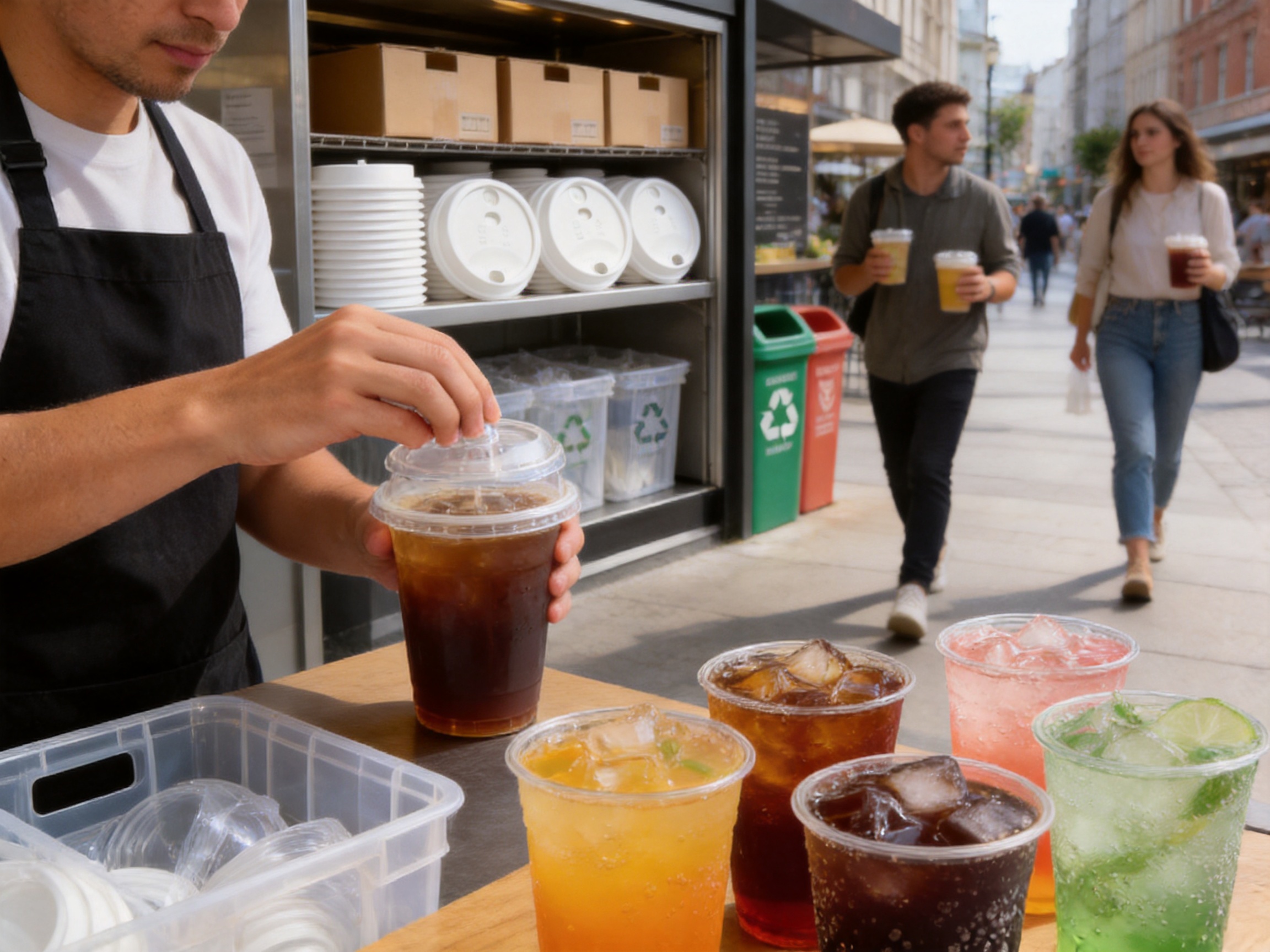
In the modern beverage market, packaging is no longer a simple covering placed on top of a cup. It is an essential part of the consumer experience, influencing convenience, safety, portability, brand presentation, and environmental responsibility. A well-designed lid must protect the beverage, prevent leakage, support efficient transportation, and provide an enjoyable way for consumers to drink. The PET direct drinking plastic cup lid has been developed to meet these requirements while offering a practical solution for beverage shops, cafés, restaurants, takeaway businesses, catering companies, and foodservice distributors.
Designed for direct drinking, this lid allows consumers to drink directly from the cup without using an additional straw. Its lightweight structure, transparent appearance, strong PET material, stable fit, and stackable design make it suitable for a wide variety of cold beverages. The standard sizes include 90 mm and 98 mm calibers, while customized options can be developed according to the cup design, beverage type, and brand requirements.
Produced by Yuqian Packaging Technology (Jiangsu) Co., Ltd., the PET direct drinking plastic cup lid combines material selection, precision forming, quality inspection, and customization capabilities. The company is a high-tech enterprise engaged in the research, development, production, and sales of new food packaging materials and products. With a manufacturing plant in Taizhou, Jiangsu Province, and a broad food packaging product portfolio, the company is positioned to support customers that need dependable packaging at commercial scale.
The Role of Direct Drinking Lids in Beverage Packaging
Consumers increasingly expect their drinks to be easy to carry, easy to open, and easy to enjoy. Whether the beverage is purchased from a coffee shop, juice bar, milk tea store, convenience store, foodservice counter, or takeaway restaurant, the lid is responsible for protecting the contents while supporting convenient consumption. A poorly designed lid may leak, loosen during delivery, feel uncomfortable to use, or fail to match the cup properly. These problems can affect customer satisfaction and create unnecessary waste for beverage operators.
A direct drinking lid addresses these concerns through a dedicated drinking opening. Instead of requiring a separate straw, the user can place the rim of the cup against the mouth and drink directly. This design simplifies the packaging system and can reduce the number of separate accessories needed for each order. For businesses, fewer components may make packing and inventory management easier. For consumers, the product provides a more immediate and natural drinking experience.
The PET direct drinking plastic cup lid is especially suitable for cold drinks, including water, tea, fruit beverages, carbonated drinks, iced coffee, smoothies, and other takeaway refreshments. The transparent structure allows the consumer to see the beverage and confirm that the lid is properly positioned. It also preserves a clean, modern appearance that works with many cup styles and brand identities.
Beyond convenience, the lid contributes to the overall functionality of the beverage container. A suitable lid helps protect the liquid from dust and external contact during storage and transportation. It also helps reduce accidental splashing when the beverage is moved from a store to a vehicle, office, school, event venue, or home.
Product Overview and Main Specifications
The product is manufactured from PET, a material widely used in food and beverage packaging because of its clarity, toughness, light weight, and ability to be formed into precise shapes. The lid is designed for direct drinking and is supplied in a transparent color. Standard calibers are available in 90 mm and 98 mm, making the product compatible with a range of commonly used beverage cups.
| Product Type | Caliber | Approximate Weight | Color | Primary Function |
|---|---|---|---|---|
| PET direct drinking cup lid | 90 mm | 4 g | Transparent | Direct drinking and beverage protection |
| PET direct drinking cup lid | 98 mm | 4 g | Transparent | Direct drinking and beverage protection |
The approximate single-lid weight is only 4 grams. This low weight supports economical storage and transportation while keeping the packaging easy for employees to handle. The lids can be stacked to save space in warehouses, packaging stations, cafés, and distribution centers. Their transparent finish also makes it easier to identify the lid type and inspect its condition before use.
Although the standard products are transparent, customized services are available. Customers may discuss variations involving dimensions, shape, color, functional structure, or other design details. Customization enables beverage companies to select a lid that fits their existing cup system and supports the visual identity of their product line.
Material Advantages of PET
PET is selected for this direct drinking lid because it offers a useful balance of clarity, durability, processability, and light weight. A packaging component must be sufficiently rigid to maintain its shape, yet it should not add unnecessary weight to the finished product. PET can support this balance when it is properly formulated, processed, and inspected.
One of the most noticeable advantages of PET is its transparent appearance. Clear packaging allows users to view the lid and beverage interface. For beverage brands, transparency can create a clean and hygienic visual impression. It also allows staff to quickly identify whether the lid is correctly seated on the cup. In high-volume environments, visual inspection can help improve packaging efficiency.
PET is also known for its toughness. Compared with more fragile plastic structures, a properly manufactured PET lid is less likely to crack or break during ordinary handling. This is important during production, stacking, packing, distribution, and customer use. A durable lid can help reduce the risk of product loss and improve the consistency of the takeaway experience.
The material’s relatively low weight is another important benefit. At approximately 4 grams per lid, the product can help reduce the total packaging weight for large orders. Lower weight can support more efficient storage and transportation, although actual logistics performance will depend on carton design, order volume, shipping distance, and distribution conditions.
PET can also be shaped with precision through modern forming processes. This allows the manufacturer to develop functional features such as the drinking opening, sealing area, edge profile, stacking structure, and anti-slip surface. Precision forming is particularly important because even small dimensional differences can influence how securely a lid fits a cup.
Direct Drinking Design for Consumer Convenience
The central feature of this product is its direct drinking structure. Consumers do not need to insert a straw before enjoying their beverage. They can drink through the designated opening while the lid remains attached to the cup. This supports faster service, easier preparation, and a simplified user experience.
For beverage operators, direct drinking lids can help reduce the number of separate packaging accessories required for each order. A straw may still be selected for certain beverages or consumer preferences, but it is not necessarily required for every drink. This can make the packing process more efficient and reduce the need to store multiple straw types at the point of sale.
The direct drinking structure is also suitable for situations in which customers are moving between locations. A consumer may purchase a drink while commuting, walking, shopping, attending an event, or working in an office. The lid provides a convenient drinking method without requiring additional preparation.
For brands that want a simple and modern presentation, a direct drinking lid can support a clean packaging design. The transparent lid keeps attention on the beverage while providing a clear functional opening. When paired with a printed cup, sleeve, label, or customized color system, the lid can form part of a consistent product presentation.
Sealing Performance and Leak-Reduction Features
A lid must do more than cover a cup. It must maintain a secure connection with the cup rim during normal handling and movement. The PET direct drinking cup lid uses a carefully formed sealing structure intended to improve the connection between the lid and the compatible cup. Advanced sealing technology helps reduce the risk of leakage when the beverage is carried or transported.
No disposable lid can eliminate every possible spill under all conditions. Cup compatibility, filling level, liquid temperature, stacking pressure, transport movement, and the way the lid is applied all influence performance. For this reason, the lid should be used with compatible cups and applied according to the supplier’s recommended process. Nevertheless, accurate forming and controlled dimensions are essential foundations for reliable sealing.
The lid’s edge and sealing area are manufactured to support a stable fit. A consistent rim profile allows the lid to engage with the cup more evenly. This is one area in which manufacturing control provides a meaningful advantage over low-quality alternatives. Products with inconsistent dimensions may fit some cups tightly and others loosely, resulting in uneven performance.
For takeaway businesses, improved sealing can help protect workers, customers, vehicles, furniture, and surrounding surfaces from accidental spills. It can also reduce the likelihood of complaints caused by leakage during delivery. When the lid is combined with an appropriate cup, carrier, and transport procedure, it becomes part of a complete spill-management solution.
Anti-Slip Surface and Handling Stability
The surface of the PET direct drinking lid is designed to provide a more stable hand feel. An anti-slip surface can help users hold the cup with greater confidence, particularly when the beverage is cold and condensation forms on the outside of the cup. Improved grip is beneficial for customers who carry drinks while walking or multitasking.
Surface texture also contributes to the practical character of the product. A completely smooth lid may feel less secure in the hand, while a carefully designed surface can provide tactile feedback. The anti-slip feature does not replace careful handling, but it can support a more comfortable and controlled user experience.
For service staff, a lid with a stable surface is also easier to handle during the packing process. When multiple drinks are prepared quickly, employees need packaging that can be picked up, positioned, and checked efficiently. Clear visual design combined with a practical surface can support a smoother workflow.
Lightweight, Stackable, and Space-Saving Construction
The 4-gram approximate weight of each lid is one of its most practical commercial advantages. Large beverage operations may consume thousands of lids each day, so small differences in unit weight can affect storage, shipment, and handling requirements. A lightweight lid helps control the total weight of packaging without compromising the essential function of covering the beverage.
Stackability is another important feature. Lids that can be nested or stacked neatly occupy less space than irregular or poorly designed alternatives. Efficient stacking helps businesses organize packaging supplies in storage rooms, production areas, restaurant counters, and distribution warehouses.
Space efficiency can be especially valuable for small beverage shops with limited storage. Staff can keep more units available without occupying excessive shelf or counter area. For distributors and central purchasing departments, stackable packaging can contribute to more orderly cartons and easier inventory planning.
Stacking also supports better handling during production and packing. When lids are arranged consistently, operators can retrieve them quickly and reduce the time required to prepare each beverage. The actual number of lids per carton or stack should be determined according to product dimensions, packaging requirements, and transport testing.

PET direct drinking plastic cup lid
Manufacturing Expertise and Process Control
The performance of a PET direct drinking cup lid depends not only on the selected material but also on the manufacturing process. A high-quality lid requires controlled raw materials, accurate tooling, stable forming conditions, careful trimming, and inspection of the finished product. Each stage contributes to the final fit, appearance, durability, and safety of the lid.
Yuqian Packaging Technology (Jiangsu) Co., Ltd. integrates research and development, production, and sales of new food packaging materials and products. This integrated structure allows the company to coordinate product design with manufacturing requirements. Instead of treating design, production, and customer service as isolated activities, the company can use feedback from different stages to improve packaging solutions.
The company was established in 2010 and operates a plant of approximately 30,000 square meters in Taizhou City, Jiangsu Province. The facility provides a base for product development, production management, quality control, warehousing, and order fulfillment. A dedicated manufacturing environment is important for customers that require consistent supply and repeatable product quality.
At the beginning of production, raw materials are selected and evaluated according to product requirements. For food packaging, material selection must consider clarity, toughness, forming performance, and applicable safety expectations. Strict screening of PET materials helps support a stable production process and a consistent finished appearance.
The next stage involves forming the material into the required lid geometry. Tooling and process parameters must be coordinated so that the 90 mm and 98 mm products maintain their intended dimensions. The direct drinking opening, sealing edge, anti-slip areas, and stacking structure must be produced with sufficient consistency to support practical use.
After forming, finished parts can be checked for visual defects, dimensional accuracy, structural integrity, and surface condition. Depending on the production specification, inspection may include checking for cracks, deformation, incomplete forming, sharp edges, contamination, and other irregularities. Consistent inspection helps identify problems before products are packed and shipped.
Quality control continues through packaging and delivery. Finished lids must be protected from contamination and physical damage during storage. Proper packing also helps preserve the organized stacked structure that makes the product convenient for customers to use. A controlled process from raw material procurement to finished-product inspection helps improve reliability across large orders.
Quality Certifications and Compliance Orientation
Food packaging customers need confidence that a supplier takes quality and safety seriously. Yuqian Packaging Technology has passed or obtained certifications and testing credentials including the QS national industrial product production license, ISO 9001 quality management system certification, BRC certification, German DIN safety certification, and EU RoHS-related testing, according to the supplied company information.
These certifications and tests represent different aspects of business and product management. ISO 9001 focuses on the quality management system and the company’s ability to control processes, document procedures, monitor performance, and pursue continual improvement. BRC certification is associated with recognized standards for food safety and packaging-related manufacturing practices. Product and material testing can provide additional information about safety, restricted substances, and applicable technical requirements.
Certification should always be evaluated according to the exact certificate scope, issuing organization, validity period, product category, and destination-market requirements. Customers may request current documentation and confirm whether a specific PET lid is covered by the relevant certification. Even so, a supplier’s investment in formal quality systems demonstrates a structured approach to manufacturing and customer service.
For international customers, compliance support can be particularly important. Different countries and regions may apply different requirements to food-contact materials, labeling, recycling symbols, testing, and packaging composition. A supplier with experience in quality documentation can make the communication and approval process more efficient.
Advantages Compared with Conventional Lid Options
The PET direct drinking lid offers several advantages when compared with ordinary flat lids, poorly matched generic lids, or packaging systems that always require a separate straw. Its direct drinking opening simplifies consumption, while its transparent construction supports product visibility and inspection.
Compared with a basic flat cover, a direct drinking design gives the user a clearly defined drinking point. This can improve convenience and reduce the need to pierce or modify the lid. The user can drink from the cup as soon as the lid is correctly applied.
Compared with fragile or low-grade plastic lids, a properly manufactured PET lid offers a stronger balance of toughness and light weight. Its resistance to ordinary handling can help reduce breakage during stacking and transportation. The exact performance depends on the design and application, but material quality and process control are important differentiators.
Compared with opaque lids, transparent PET allows the user and service staff to see the beverage area more easily. This visual transparency supports a clean appearance and makes it easier to check whether the lid has been placed correctly. It can also complement colorful or visually attractive drinks.
Compared with products that are difficult to store, the stackable design helps improve space utilization. This can reduce clutter in beverage shops and support more efficient warehouse management. Lightweight construction also helps reduce handling effort and may contribute to lower packaging weight per order.
Compared with suppliers that only offer fixed catalog products, a manufacturer with design and development capabilities can provide greater flexibility. Customized dimensions, shapes, colors, and functional features allow the packaging to be adapted to the customer’s cup system and commercial objectives.
Customization for Different Beverage Brands
Every beverage business has different requirements. A café may need a lid for iced coffee, a juice brand may require a lid for fruit drinks, and a catering company may prioritize high-speed packing and transport stability. The same standard product may not be ideal for every application. Customization enables the supplier and customer to develop a more suitable solution.
Size is one of the most important customization factors. The lid must correspond to the cup’s mouth diameter and rim profile. The standard 90 mm and 98 mm calibers cover common applications, but other dimensions may be discussed for specialized cup designs. Accurate measurement and sample testing are recommended before mass production.
Shape can also be adjusted. A customer may require a different drinking opening, a modified edge, a special stacking profile, or a design compatible with an existing cup line. Functional details should be assessed together because changing one part of the lid can influence sealing, rigidity, nesting, and user comfort.
Color is another tool for visual differentiation. Transparent lids provide a clean and versatile appearance, but customized colors may help a beverage brand coordinate the lid with its logo, cup printing, seasonal campaign, or product category. Color consistency should be verified through approved samples and production standards.
Customization may also support different operating environments. A delivery-oriented beverage business may prioritize sealing and transport stability. A premium café may focus on appearance and tactile quality. A high-volume chain may need optimized stacking, rapid application, and consistent supply. The design process should begin with the customer’s actual usage conditions rather than relying only on visual preferences.
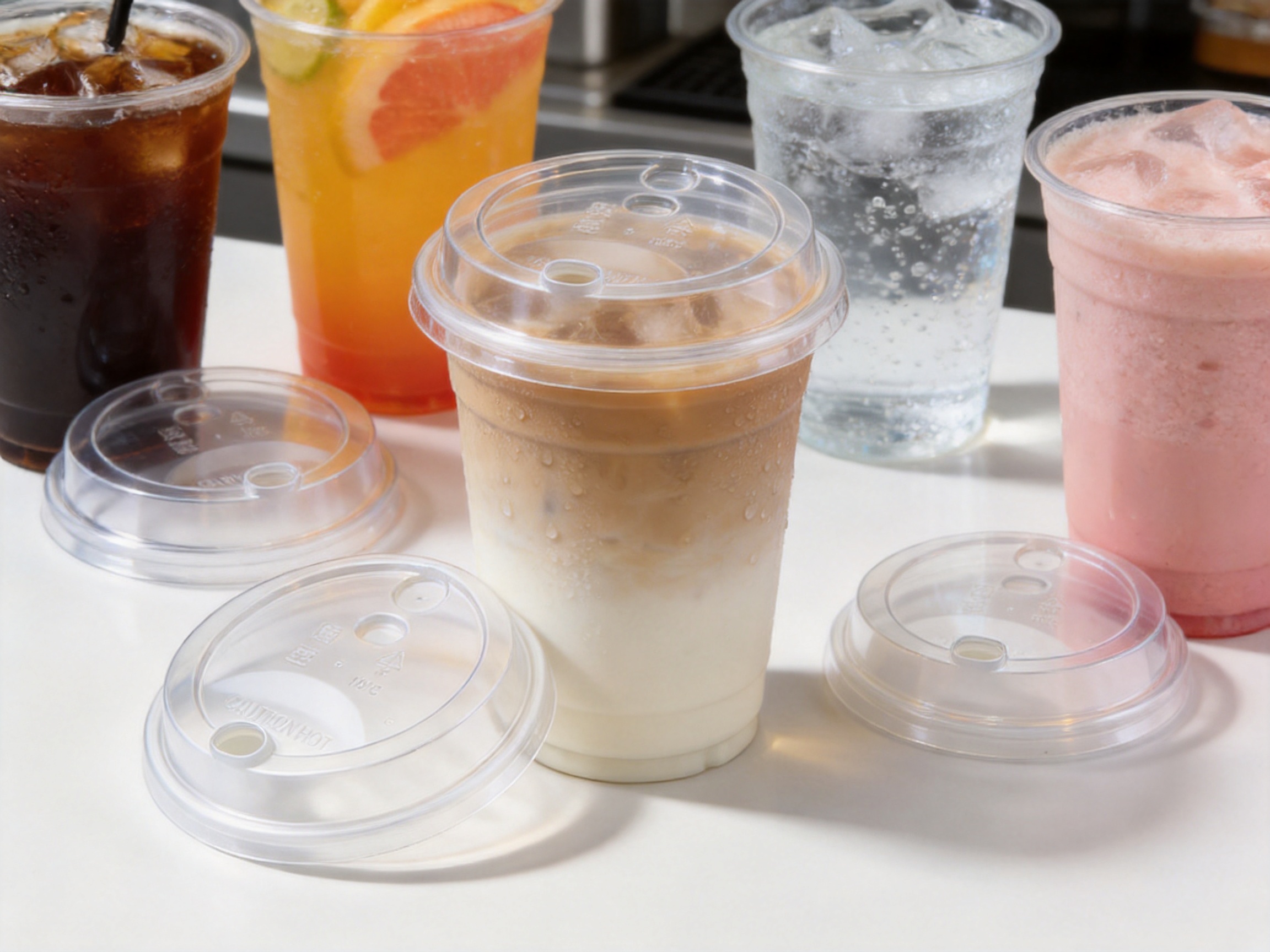
Applications Across the Foodservice Industry
The PET direct drinking cup lid can be used in many commercial beverage scenarios. Coffee shops and cafés can use it for iced coffee, cold brew, milk-based drinks, and flavored beverages. Juice bars can pair it with fruit juices, smoothies, and blended drinks. Tea and milk tea businesses can use compatible versions for cold tea products and takeaway refreshments.
Restaurants and fast-food operators may use the lids for soft drinks, iced tea, lemonade, and other beverage items included with takeaway meals. Convenience stores can use them for ready-to-drink beverages prepared on-site. Catering companies and event organizers may benefit from a lightweight and stackable solution that can be transported and distributed efficiently.
Office beverage services, school canteens, food courts, amusement venues, and transportation hubs may also require large quantities of disposable lids. In each application, the correct cup compatibility, filling method, storage condition, and transport procedure should be confirmed before regular use.
The lid may be particularly valuable for businesses that want to streamline the customer journey. A drink can be filled, sealed, handed to the customer, and consumed without an additional straw. This supports fast service during busy periods and can reduce the number of small accessories that employees need to manage.
Environmental Considerations and Responsible Use
Environmental responsibility has become an important consideration in food packaging. PET is a material that can be collected and recycled in appropriate systems, although actual recycling depends on local infrastructure, sorting practices, contamination levels, regulations, and consumer behavior. The use of a recyclable material does not automatically guarantee that every discarded lid will be recycled.
The lightweight structure of this lid can support material efficiency by reducing the amount of plastic used per unit compared with heavier alternatives. Its stackable shape may also improve packing efficiency and help reduce unnecessary storage volume. These benefits should be considered together with responsible disposal and recycling guidance.
The company states that it is committed to green production and is actively developing and promoting recyclable and degradable environmentally friendly materials. This approach reflects the changing expectations of the foodservice industry, where customers increasingly seek packaging solutions that balance performance with environmental considerations.
Businesses using the lid can support responsible packaging management by providing clear disposal instructions, separating recyclable materials where local systems allow, reducing unnecessary accessories, and selecting the correct lid size for each beverage. Customers should follow the waste-sorting rules that apply in their area.
Environmental performance should be assessed across the full packaging lifecycle. Important factors include raw material consumption, production efficiency, transportation weight, service life, reuse limitations, collection systems, and end-of-life treatment. A lightweight PET lid can contribute to a more efficient packaging system, but it should form part of a broader sustainability strategy.
Research and Development Capabilities
Product innovation is important in a competitive packaging market. Beverage companies increasingly request lids that are more convenient, more attractive, easier to manufacture, and more compatible with environmental goals. A supplier must therefore be capable of responding to new requirements rather than simply repeating existing designs.
Yuqian Packaging Technology has established a research and development team composed of industry professionals. The team focuses on design innovation and material research related to PET direct drinking plastic cup lids and other food packaging products. This capability supports the development of packaging structures with different functional, visual, and operational characteristics.
Research and development may involve studying new material combinations, improving forming processes, refining sealing structures, optimizing lid weight, and testing alternative designs. It may also involve converting customer feedback into practical product modifications. A successful development process must consider both the consumer’s experience and the manufacturer’s ability to produce the design consistently.
Independent intellectual property and proprietary product development can give a manufacturer greater control over its product portfolio. It may also allow the company to provide solutions that are not limited to standard products available from general packaging distributors. For customers seeking differentiation, direct communication with a manufacturer can be more useful than purchasing an unchangeable generic item.
Order Development and Customer Cooperation
Successful packaging development begins with clear communication. Customers should provide information about the intended cup, beverage type, filling temperature, expected storage period, delivery conditions, required quantity, target market, and applicable compliance requirements. This information helps the manufacturer recommend a suitable lid structure.
Samples are an important part of the approval process. A customer should test the lid with the actual cup, beverage, filling level, sealing equipment, and transport conditions whenever possible. Testing can identify issues involving fit, leakage, drinking comfort, stacking, and compatibility with existing workflows.
For customized projects, the normal development process may include design discussion, technical drawing review, sample production, functional testing, modification, final approval, and mass production. The exact schedule depends on the complexity of the project and the customer’s requirements. Clear approval procedures help avoid misunderstandings regarding dimensions, colors, packaging quantities, and quality standards.
Long-term supply relationships also benefit from consistent communication. Forecasts, order schedules, packaging instructions, inspection standards, and delivery requirements should be documented. A manufacturer with integrated production and sales teams can help coordinate these details from the initial inquiry through repeat orders.
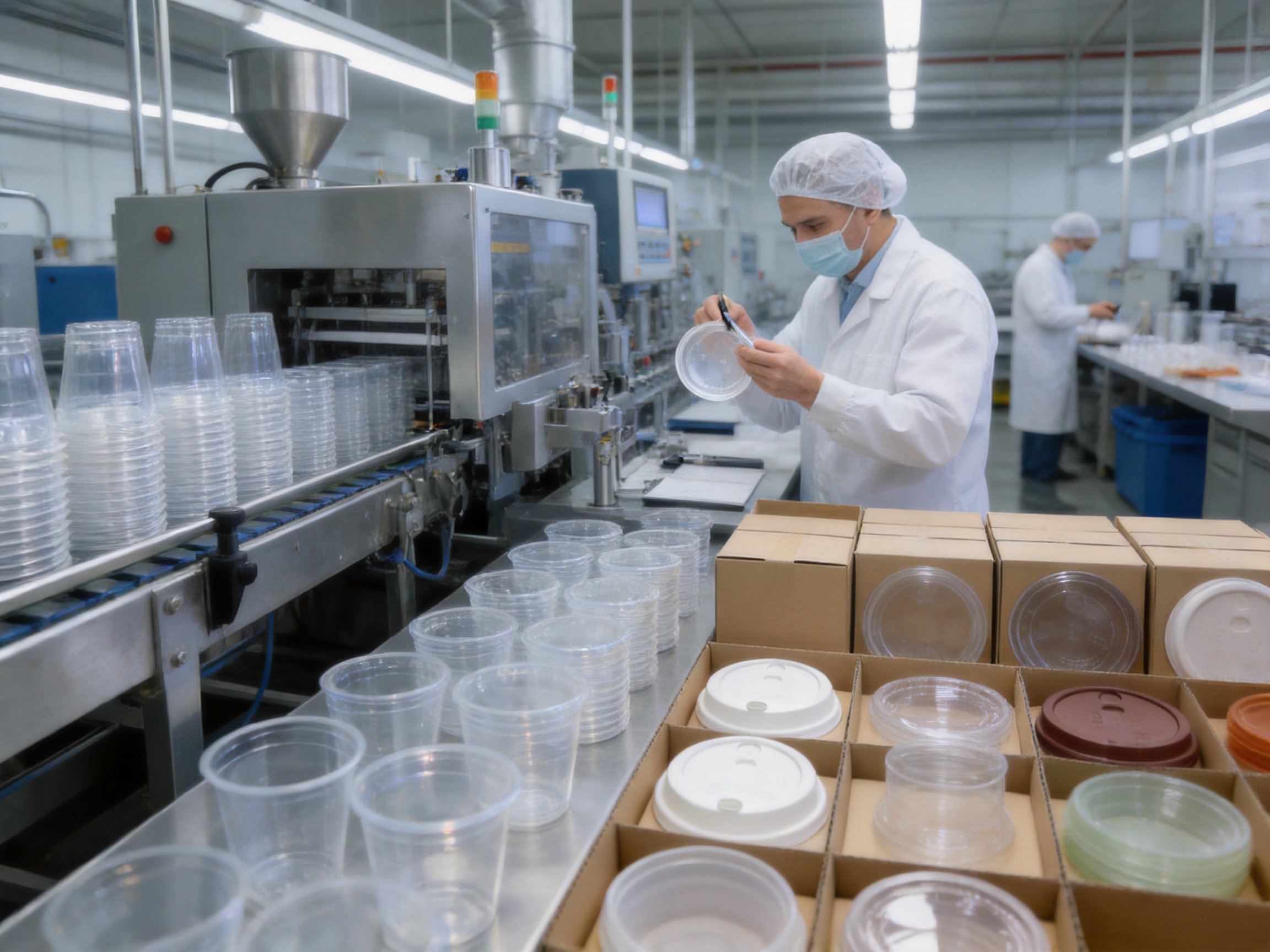
Quality Management from Raw Material to Finished Product
Quality is not created at the final inspection stage alone. It begins with selecting suitable raw materials and continues through storage, production, forming, trimming, inspection, packaging, and shipping. A defect introduced during one stage may affect the performance of the final lid, so a systematic approach is necessary.
Raw material control helps support consistent color, clarity, toughness, and forming behavior. Production parameter control helps maintain stable dimensions and avoid deformation. Tooling maintenance helps preserve the accuracy of the lid profile. In-process inspection provides opportunities to identify deviations before a large batch is completed.
Finished-product inspection may address appearance, dimensions, weight, opening structure, rim condition, surface quality, and stacking performance. Depending on customer requirements, additional tests may be performed for fit, sealing, drop resistance, transport simulation, or food-contact compliance. The specific inspection plan should be agreed upon according to the application and market.
Documentation is also a key part of quality management. Production records, inspection results, material information, and corrective actions create traceability and support continuous improvement. When a customer raises a concern, accurate records help the manufacturer investigate the issue and identify appropriate corrective measures.
Storage, Handling, and Use Recommendations
To preserve product quality, PET direct drinking cup lids should be stored in a clean, dry, and well-organized environment. They should be protected from excessive heat, direct sunlight, dust, moisture, chemicals, and physical pressure that could deform the product. Cartons should be handled carefully and stacked according to the supplier’s recommendations.
Before use, operators should check that the lids are clean, intact, and suitable for the selected cup. A lid with visible cracks, deformation, contamination, or other damage should not be used. Staff should apply the lid evenly and verify that it is fully engaged with the cup rim.
Compatibility testing is particularly important when a business changes cup suppliers or introduces a new beverage container. Even if two cups have the same nominal diameter, their rim designs may differ. A sample test can help confirm that the lid provides the expected fit and drinking experience.
Businesses should also consider the beverage temperature and filling conditions. The product is primarily presented as a cup lid for cold beverages. Customers should confirm the intended temperature range and use conditions with the manufacturer before applying it to hot or unusual liquids.
Why Manufacturer Direct Cooperation Matters
Buying directly from a manufacturer can provide advantages in communication, customization, technical support, and supply planning. Customers can discuss their needs with a team that understands the production process rather than relying solely on a reseller’s catalog description.
Direct cooperation may also make it easier to request samples, review drawings, confirm material information, negotiate packaging details, and develop new specifications. When a customer needs a lid that differs from a standard product, communication with the manufacturer can shorten the path from concept to production.
Yuqian Packaging Technology combines research and development with manufacturing and sales. This integrated model enables the company to support standard orders as well as customized projects. Its experience with food packaging materials and products provides a foundation for serving beverage businesses with different volumes and operating models.
The company’s location in Jiangsu Province provides access to an established industrial and logistics network. Its Shanghai branch, established in January 2019 according to the supplied information, further supports business development and customer service. For international customers, a supplier with experience in export-oriented packaging communication can be valuable when discussing documentation, delivery, and product specifications.
Frequently Asked Questions
What is a PET direct drinking cup lid?
A PET direct drinking cup lid is a transparent plastic lid made from PET and designed with a drinking opening. It is applied to a compatible beverage cup and allows the consumer to drink directly without necessarily using a straw.
What standard sizes are available?
The standard calibers described for this product are 90 mm and 98 mm. Customers should confirm the actual cup rim dimensions before ordering because nominal diameter alone may not guarantee compatibility.
How much does one lid weigh?
The approximate weight of one lid is 4 grams. The actual weight may vary slightly according to production tolerance, customization, and final design specifications.
What color is the standard product?
The standard product is transparent. Customized colors may be discussed for projects that require a specific brand appearance or product differentiation.
Can the lid be customized?
Yes. Customization may include size, shape, color, drinking-opening design, functional structure, and other details. Customers should provide the cup specifications and usage requirements so that the manufacturer can evaluate the project accurately.
Is the lid suitable for hot beverages?
The product information presents the lid primarily as a beverage packaging accessory for direct drinking, especially in takeaway applications. Customers should confirm temperature resistance and hot-drink suitability with the manufacturer before use with hot liquids.
Does the lid prevent all leakage?
No packaging lid can guarantee complete protection under every condition. Leakage performance depends on the lid design, cup compatibility, application method, beverage level, transport movement, and storage conditions. Proper fitting and product testing are essential.
Can the lids be stacked?
Yes. The product is designed to be stackable, which helps save storage space and supports efficient handling in beverage shops, warehouses, and packing stations.
What certifications and quality credentials are associated with the manufacturer?
The supplied company information refers to a QS national industrial product production license, ISO 9001 quality management system certification, BRC certification, German DIN safety certification, and EU RoHS-related testing. Customers should request current documentation and verify the applicable scope for their order and destination market.
What beverages can use this type of lid?
Potential applications include water, iced tea, fruit drinks, juice, iced coffee, cold brew, milk tea, smoothies, soft drinks, and other compatible cold beverages. The final application should be confirmed through cup, beverage, and transport testing.
How should the lids be stored?
They should be kept in a clean, dry, organized environment away from excessive heat, direct sunlight, dust, moisture, chemicals, and strong physical pressure. Cartons should be handled carefully to avoid deformation or contamination.
Why is PET suitable for this product?
PET offers transparency, toughness, light weight, and good forming characteristics. These properties support a lid that is easy to handle, visually clean, durable during ordinary use, and suitable for precision manufacturing.
Can the company help develop a completely new lid design?
The company provides research and development and customized services for size, shape, color, and functional design. Customers with a new concept should submit drawings or samples, cup details, performance targets, and expected order quantities for technical evaluation.
Conclusion
The PET direct drinking plastic cup lid is a practical packaging solution for businesses seeking a combination of convenience, durability, lightweight construction, sealing support, and visual clarity. Its direct drinking opening simplifies beverage consumption, while its transparent PET structure gives the product a clean appearance and dependable handling characteristics. The approximate 4-gram weight and stackable design support efficient storage, transportation, and high-volume service.
Compared with basic or poorly matched lid options, this product offers a more complete approach to beverage packaging. It is designed not only to cover a cup but also to support the entire user experience, from preparation and transportation to direct drinking. Its anti-slip surface, tough material, customized options, and compatibility with common 90 mm and 98 mm cup sizes make it suitable for a broad range of foodservice applications.
The strength of the product is further supported by the manufacturer’s integrated capabilities. Yuqian Packaging Technology (Jiangsu) Co., Ltd. combines research and development, material investigation, production, quality management, and customer service. Its manufacturing experience, certification-oriented quality system, customization capacity, and commitment to recyclable and environmentally responsible packaging provide a foundation for long-term cooperation.
For beverage brands, selecting the right lid is an investment in reliability and customer satisfaction. A successful packaging program should evaluate cup compatibility, beverage type, sealing performance, transport conditions, storage requirements, regulatory expectations, and environmental objectives. With appropriate testing and technical communication, the PET direct drinking cup lid can become an efficient and attractive component of a modern takeaway beverage system.
References
1. Product specification information for PET direct drinking plastic cup lids, including caliber, approximate weight, color, and functional features.
2. Internal company information regarding Yuqian Packaging Technology (Jiangsu) Co., Ltd., its manufacturing operations, research and development capabilities, and food packaging product portfolio.
3. ISO 9001 quality management system principles and process-control practices.
4. General technical guidance concerning PET material properties, food packaging applications, and recyclable plastic packaging.
5. General principles for packaging quality inspection, dimensional verification, sealing evaluation, storage, and transport testing.