English
 Español
 عربى
عربىContent
- 1 Why the Right Cup Lid Matters
- 2 Product Overview
- 3 Material Advantages of PET
- 4 Functional Design of the Spherical Lid
- 5 Available Calibers and Cup Compatibility
- 6 Advantages Over Conventional Packaging Alternatives
- 7 Manufacturing Technology and Quality Control
- 8 Certification and Compliance Strengths
- 9 Customization and OEM Development
- 10 Applications in Food and Beverage Service
- 11 Storage, Handling, and Operational Recommendations
- 12 Environmental Considerations and Responsible Production
- 13 Why Work with an Experienced Manufacturer?
- 14 Quality Evaluation Checklist for Buyers
- 15 Q&A About PET Ball Plastic Cup Lids
- 15.1 What is a PET ball plastic cup lid?
- 15.2 What colors are available?
- 15.3 How much does each lid weigh?
- 15.4 Can the lid be used with any cup?
- 15.5 Is the PET ball lid suitable for hot beverages?
- 15.6 Is the lid easy to store?
- 15.7 Can the product be customized?
- 15.8 Does the spherical shape provide extra space?
- 15.9 What certifications are associated with the manufacturer?
- 15.10 How can buyers confirm the correct size?
- 15.11 Can the manufacturer supply other packaging products?
- 16 Conclusion
- 17 References
- 18 Supplier Contact Information
- 19 Product: PET ball plastic cup lid
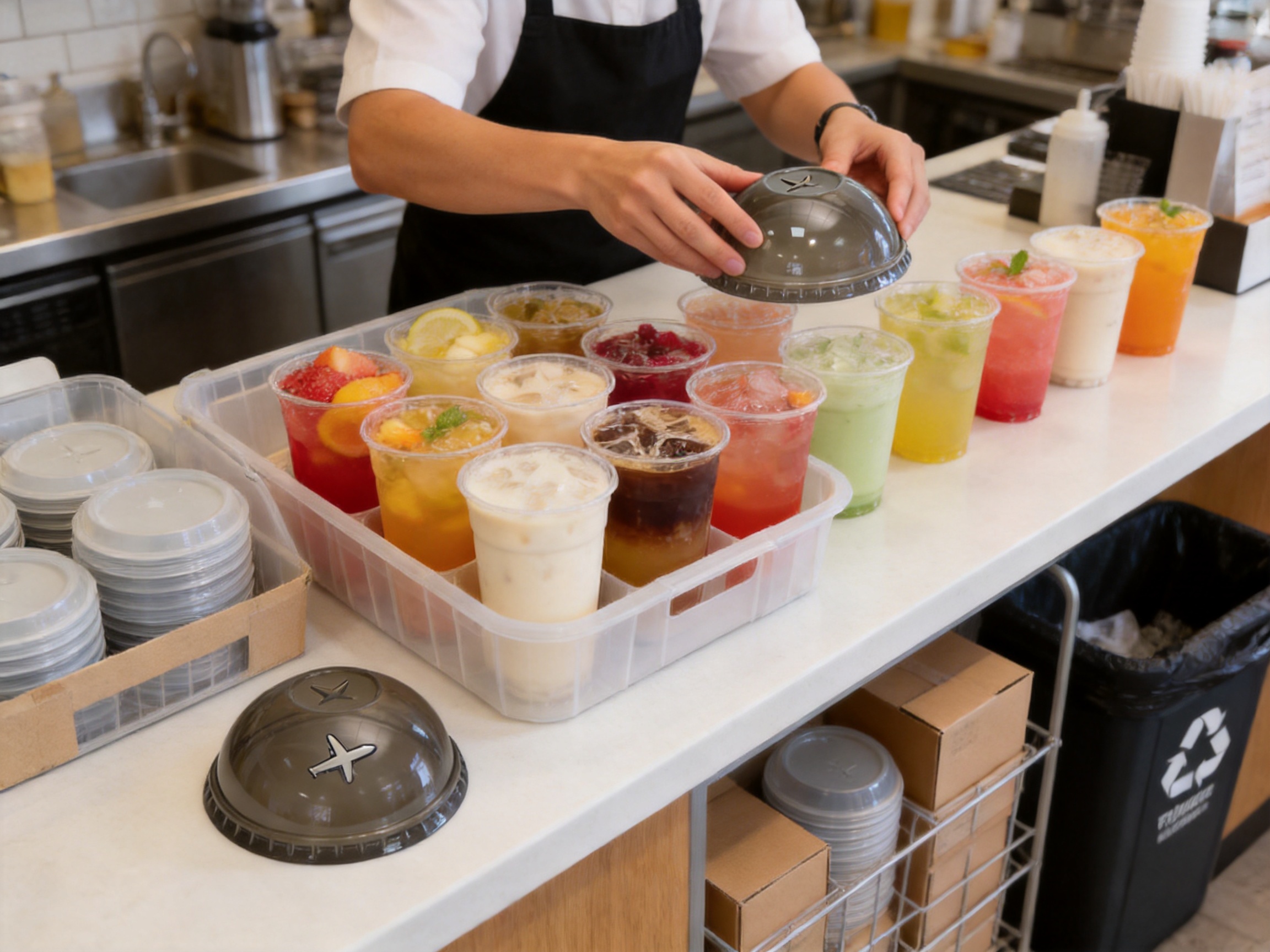
In the fast-moving food and beverage industry, packaging is no longer a minor accessory. It plays an important role in product protection, consumer convenience, visual presentation, transport efficiency, hygiene, and brand recognition. A well-designed lid can prevent spills, improve the drinking experience, and help a beverage business present its products more professionally. For cafés, tea shops, juice bars, restaurants, catering companies, takeaway businesses, and large-scale beverage producers, choosing the right cup lid is therefore an essential part of packaging strategy.
The PET ball plastic cup lid is designed to meet these practical and commercial requirements. Made from transparent PET material, this spherical cup cover combines a clear appearance with low weight, reliable toughness, easy handling, and compatibility with several mainstream cup sizes. It is available in 90 mm, 93 mm, and 98 mm calibers, with a standard listed weight of approximately 4 grams. These options allow businesses to match the lid with different cup bodies while maintaining a consistent packaging appearance across product lines.
Beyond its basic function, the PET ball plastic cup lid reflects a broader approach to modern disposable food packaging. Its transparent structure helps showcase the beverage, its stackable design supports efficient storage, and its smooth surface is easy to clean and maintain before use. At the manufacturing level, advanced injection molding technology supports dimensional accuracy and a burr-free finish. Personalized services also allow buyers to explore different colors, patterns, and functional designs according to their packaging requirements.
Why the Right Cup Lid Matters
A takeaway cup is only as effective as the complete packaging system around it. The cup body holds the beverage, but the lid determines how securely the product can be carried, displayed, and consumed. An unsuitable lid may loosen during transport, distort the appearance of the drink, create a poor customer experience, or increase packaging waste caused by leakage and damage.
For beverage operators, a reliable lid should provide a secure fit, consistent quality, convenient storage, and broad application flexibility. It should also be visually attractive enough to support the presentation of the drink. Transparent lids are especially useful because they preserve visibility. Customers can see the color, toppings, foam, ice, fruit pieces, or other visual features of the beverage without removing the cover.
The spherical profile of a ball-style lid offers an additional visual distinction compared with a completely flat cover. It creates extra space above the cup opening and can provide a more recognizable silhouette for specialty drinks. This type of shape is particularly suitable for beverages that benefit from an attractive presentation, including milk tea, fruit tea, iced coffee, smoothies, cold drinks, and other takeaway products.
From a business perspective, a standardized lid can simplify purchasing and inventory planning. The three available calibers—90 mm, 93 mm, and 98 mm—cover a range of common cup-opening dimensions. By selecting the correct size, buyers can reduce compatibility problems and maintain consistency among different beverage products.
Product Overview
The PET ball plastic cup lid is a transparent spherical cover manufactured for disposable beverage packaging. It is produced from PET material and is available in three standard calibers: 90 mm, 93 mm, and 98 mm. Each listed specification has a gram weight of approximately 4 grams, while the standard color is transparent.
| Lid Type | Caliber | Approximate Weight | Standard Color |
|---|---|---|---|
| PET ball cap | 90 mm | 4 g | Transparent |
| PET ball cap | 93 mm | 4 g | Transparent |
| PET ball cap | 98 mm | 4 g | Transparent |
The product is designed to combine lightness and structural performance. Its low weight can help reduce material consumption per unit and makes the lid easy for staff to handle during high-volume service. At the same time, the toughness of PET helps the lid resist ordinary handling stresses better than many fragile alternatives.
The transparent appearance is one of its most important selling points. A clear lid allows the beverage to remain visible, which is valuable for businesses that use colorful drinks, decorative toppings, layered recipes, or branded serving presentations. It also helps customers identify the product more easily when several drinks are being prepared for the same order.
The lid can be used as part of a broader disposable food packaging system. It may be supplied alongside plastic cups, takeaway bowls, straws, and other peripheral packaging products. This makes it possible for professional buyers to coordinate their packaging materials through one manufacturing partner rather than managing many separate suppliers.
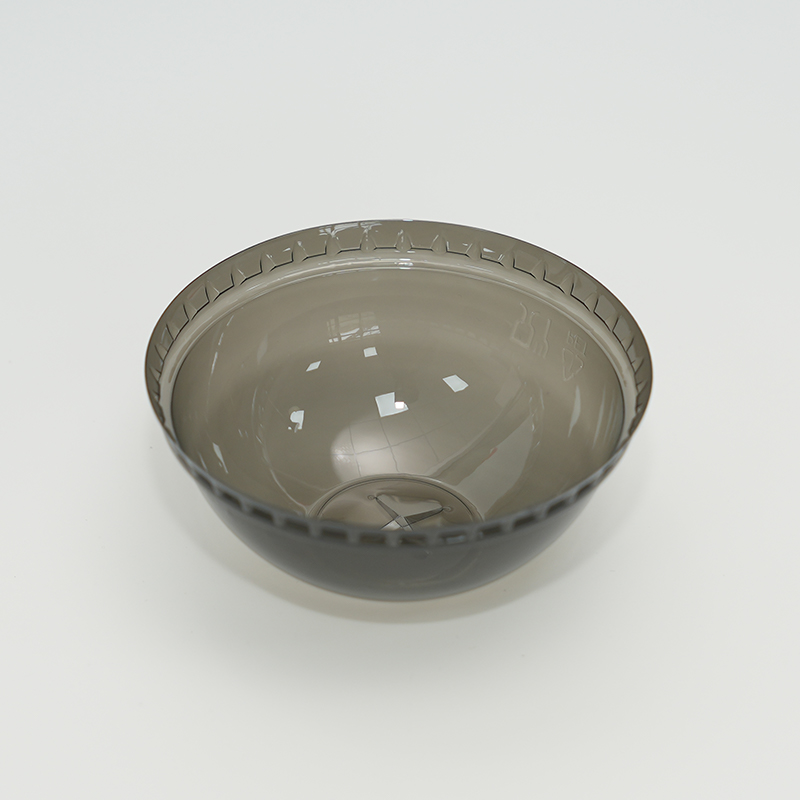
PET ball plastic cup lid
Material Advantages of PET
High Transparency
PET is widely valued for its clear appearance. In a beverage lid, transparency has both aesthetic and practical benefits. It allows the contents of the cup to remain visible and helps the product look fresh, clean, and appealing. For beverages with distinctive colors or visible ingredients, this can contribute directly to the perceived value of the product.
Clear packaging is also useful for quality checking. Staff can inspect the lid before use and identify visible defects, contamination, or deformation more easily. Customers can see whether the lid is properly positioned and whether the beverage has been prepared as expected.
Lightweight Construction
With an approximate weight of 4 grams in the listed specifications, the PET ball lid is designed to be light and easy to manage. Lightweight packaging reduces the handling burden for employees who assemble hundreds or thousands of drinks each day. It can also improve convenience for consumers who carry beverages in bags, trays, or vehicles.
Lower unit weight may also support more efficient logistics. When packaging components weigh less, the total shipment weight can be reduced, subject to the final carton configuration and order volume. This can benefit warehousing, transportation, and inventory movement.
Toughness and Durability
PET provides a combination of clarity and toughness that is useful in disposable food packaging. The material is described as non-toxic and odorless for the intended food-contact application, while its strength helps the lid resist ordinary cracking and breakage during handling.
Durability is important throughout the packaging chain. The lid may be transported from the factory to a warehouse, stored in cartons, handled by beverage staff, fitted onto a cup, carried by a customer, and disposed of after use. A lid that maintains its shape during these stages can help reduce leakage risk and unnecessary product loss.
Chemical Stability and Weather Resistance
PET has good chemical stability and weather resistance for many everyday packaging applications. These properties help the material maintain its functional characteristics under normal storage and service conditions. The lid can therefore support a wide variety of beverage packaging requirements without easily absorbing odors or losing its transparent appearance.
Application conditions should always be evaluated by the buyer. Beverage temperature, filling process, storage duration, transport conditions, and cup-lid compatibility can vary significantly. For specialized applications, product testing and technical confirmation are recommended before large-scale production.
Functional Design of the Spherical Lid
The ball-shaped profile gives the lid a distinctive appearance and separates it from conventional flat covers. This design can create more visual volume above the beverage while providing a recognizable package format. For specialty drink retailers, a distinctive lid may help make takeaway products more memorable.
The curved surface also contributes to the product’s overall smooth appearance. When produced with accurate tooling and controlled molding conditions, the spherical shape can remain consistent from piece to piece. Consistency is important because uneven lids may be difficult to stack, fit, or present professionally.
The surface is described as non-slip, which can help improve handling during the packaging process and ordinary consumer use. Although the lid is lightweight, a carefully formed surface can make it easier to grip and less likely to slide when handled with dry hands or placed with other packaging components.
Another practical feature is stackability. Empty lids can be arranged in stacks before use, helping food-service operators save counter space and organize their workstations. Stackable packaging is especially useful in compact beverage shops, busy takeaway counters, catering operations, and central kitchens where storage efficiency directly affects workflow.
Easy cleaning and hygiene maintenance are also important design considerations. The smooth PET surface can be kept clean before the lid is applied to a cup. In actual commercial operations, lids should be stored in a clean, dry, and suitably protected environment, and operators should follow their own food-safety procedures.
Available Calibers and Cup Compatibility
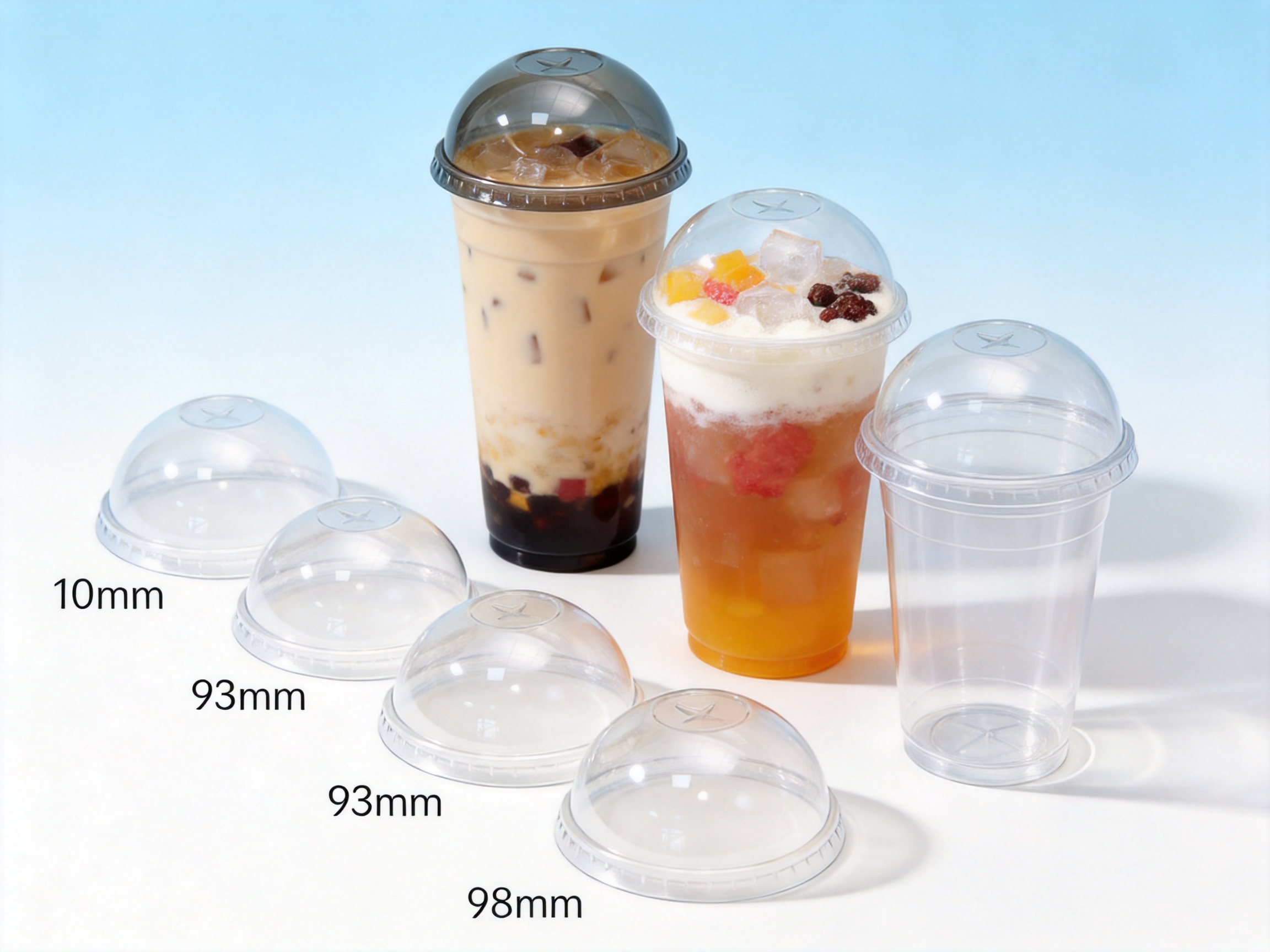
The product is offered in 90 mm, 93 mm, and 98 mm calibers. This range provides flexibility for businesses using different cup diameters. However, caliber selection should be based on the actual rim dimensions and sealing structure of the cup body rather than on nominal size alone.
A proper fit depends on several factors, including cup-rim thickness, rim profile, sealing tolerance, lid geometry, material flexibility, and the production mold. Buyers should provide cup samples, technical drawings, or precise measurements when requesting confirmation. If a customer uses an existing cup from another supplier, compatibility testing is strongly recommended.
The 90 mm option can be suitable for smaller or medium-sized cup formats, depending on the cup design. The 93 mm size provides an intermediate solution for businesses whose cup openings do not match the smaller or larger standard. The 98 mm caliber can serve larger cup formats and may be appropriate for beverages requiring a wider opening.
Using the correct lid size helps support a stable fit and a more professional appearance. It can also reduce the chance of accidental detachment during carrying. For businesses with several drink sizes, the three-caliber range may make it easier to create a coordinated packaging program while maintaining different cup volumes.
For high-volume orders, the manufacturer can discuss customized dimensions or other design adjustments where technically feasible. Customization should be reviewed together with mold requirements, minimum order quantity, production schedule, and testing procedures.
Advantages Over Conventional Packaging Alternatives
Compared with Flat Plastic Lids
Flat lids are common because they are simple and economical, but they may provide less visual distinction. A spherical PET lid creates a more prominent package profile and can make a beverage look more substantial. This may be valuable for premium drinks, promotional products, and beverages with decorative toppings.
The ball-shaped cover can also create additional headspace above the cup opening. Depending on the beverage recipe and cup design, this may help accommodate foam, ice, whipped toppings, fruit pieces, or other ingredients. The actual usable space depends on the final cup-and-lid combination and should be verified during product testing.
Compared with Fragile Clear Materials
Some transparent packaging materials can offer attractive clarity but may be more vulnerable to cracking or impact during ordinary handling. PET is valued for combining high transparency with toughness. This balance can help businesses reduce the inconvenience associated with damaged lids and inconsistent appearance.
The lighter construction of PET may also simplify storage and handling compared with heavier packaging materials. For large takeaway operations, even small differences in unit weight and handling efficiency can become meaningful across daily production volumes.
Compared with Opaque Covers
Opaque covers conceal the beverage and limit visual product communication. Transparent PET allows the drink itself to become part of the presentation. Customers can see color, ingredients, and fill level, while staff can identify drinks more easily during order assembly.
Visibility is particularly valuable for products that rely on appearance to attract attention. A clear lid can support the presentation of fruit tea, layered beverages, colorful juices, iced coffee, and milk-based drinks. It can also help businesses display consistent product quality.
Compared with Poorly Finished Lids
Low-quality molding may leave sharp edges, excess plastic, uneven walls, deformation, or inconsistent dimensions. These defects can affect fit, safety, appearance, and customer satisfaction. The use of advanced injection molding technology and quality control helps target a high-precision, burr-free finish.
Consistent production is especially important for buyers who use automatic or semi-automatic cup-sealing equipment. Even small dimensional variations can create operational problems when packaging is processed at high speed. Stable tooling and inspection procedures can help improve production reliability.
Manufacturing Technology and Quality Control
The production of a reliable plastic lid requires more than simply forming a piece of material. It involves material selection, mold design, injection parameters, cooling control, demolding, trimming, inspection, packaging, and shipment management. Each stage can influence the final lid’s transparency, dimensions, surface quality, and fit.
Advanced Injection Molding
Advanced injection molding technology is used to support accurate forming of the spherical structure. The process begins with suitable PET material being prepared for molding. The material is then processed under controlled conditions and injected into a precision mold. The mold defines the lid’s caliber, profile, wall structure, stacking features, and other details.
Precise injection control helps distribute the material more evenly throughout the mold cavity. This is important for transparent products because uneven filling, excessive stress, or poor cooling may affect appearance and dimensional stability. Controlled production can help reduce defects such as warping, short shots, visible flow marks, and inconsistent edges.
Precision Tooling
The mold is one of the most important assets in cup-lid manufacturing. Its geometry must correspond closely to the required caliber and final product design. For a spherical lid, the mold must also maintain the correct curvature and connection between the upper profile and the cup-fitting section.
Well-maintained tooling supports repeatable production. It can help ensure that lids from different batches maintain similar dimensions and appearance. Mold maintenance, cleaning, and periodic inspection are therefore essential parts of a dependable manufacturing program.
Burr-Free Finishing
A burr-free edge is important for both appearance and user comfort. Excess plastic around the rim can affect the fit, create an untidy appearance, and become a potential handling concern. A controlled molding and finishing process helps reduce these issues.
Inspection may include visual checks, dimensional checks, sampling tests, and compatibility evaluation with the intended cup body. Depending on the customer’s requirements, additional packaging and quality documentation may also be discussed.
Production Management
Yuqian Packaging Technology (Jiangsu) Co., Ltd. was established in 2010 and operates a plant area of approximately 30,000 square meters in Taizhou City, Jiangsu Province. The company integrates research and development, production, and sales of food packaging materials and products.
This integrated structure can support communication between product development and manufacturing teams. When a customer requests a custom lid, the project may involve design discussion, material selection, mold development, sample confirmation, production planning, and quality review. Managing these activities through an experienced packaging manufacturer can simplify the procurement process.
The company also describes itself as a professional OEM manufacturer. OEM capability is valuable for customers that need packaging designed around a particular cup, beverage format, brand identity, or market requirement. Instead of selecting only from an existing catalog, buyers may discuss customized colors, patterns, dimensions, and functional features.
Certification and Compliance Strengths
Food packaging must be produced with careful attention to material safety, hygiene, consistency, and traceability. The supplied company information states that the production division has passed the QS national industrial product production license, ISO9001 Quality Management System certification, BRC certification, German authoritative safety DIN certification, and EU RoHS+ testing, among other certifications and evaluations.
These certifications and tests reflect the company’s emphasis on structured quality management and product safety. Buyers should request current certificates, test reports, scope information, and product-specific documentation when evaluating a supplier for a particular market or application. Certification requirements can vary according to country, beverage type, contact conditions, and distribution channel.
ISO9001 certification is associated with a systematic approach to quality management. For packaging buyers, this may indicate that the manufacturer uses defined procedures for production control, inspection, corrective action, and continual improvement. BRC-related certification is also relevant to companies that require structured standards for food-related packaging production and supplier management.
Compliance documentation is particularly important for international trade. Importers, distributors, food-service groups, and brand owners may need to demonstrate that packaging materials meet applicable regulatory requirements. Early communication with the supplier can help clarify which documents are available for the selected material and product specification.
Customization and OEM Development
Standard 90 mm, 93 mm, and 98 mm lids are useful for many applications, but some businesses require a more specialized solution. Customization can help align the lid with a unique cup body, a special beverage recipe, or a brand’s visual identity.
Size Customization
Customers may request a different caliber or a modified fitting structure when their cup is not compatible with the standard sizes. Technical feasibility depends on the cup dimensions, sealing method, product geometry, mold requirements, and projected order volume.
Color Customization
Although the standard PET ball lid is transparent, customers may discuss customized colors where appropriate. Clear lids are often preferred for beverage visibility, while tinted or colored lids may be useful for product differentiation, seasonal campaigns, or coordinated brand packaging.
Pattern and Branding Options
Customized patterns or visual details can help businesses create a stronger packaging identity. The exact decoration method depends on the desired effect, material, production process, and food-contact requirements. Buyers should provide artwork files and discuss print coverage, color expectations, durability, and minimum order quantities.
Functional Design Adjustments
Some customers may require adjustments to the drinking opening, straw compatibility, stacking structure, sealing area, or other functional details. Any modification should be tested with the intended cup and beverage. A design that works well for a cold drink may require different evaluation for a warm beverage or a product with toppings.
OEM development is most successful when customers provide complete project information. Useful details include cup drawings, samples, beverage type, temperature range, filling process, sealing equipment, packaging quantity, transport conditions, target market, and expected annual demand.

Applications in Food and Beverage Service
The PET ball plastic cup lid can be used in a broad range of takeaway beverage applications. Its transparent appearance and spherical structure make it suitable for products where visibility and presentation are important.
Milk Tea and Bubble Tea
Milk tea shops often use cups with colorful liquids, ice, tapioca pearls, fruit pieces, or other toppings. A transparent ball lid can help preserve the visual appeal of these products while providing space above the cup opening. The correct caliber should be selected according to the cup body and sealing method.
Fruit Tea and Juice
Fruit-based drinks often rely on natural color and visible ingredients to communicate freshness. A clear lid allows customers to see the beverage and can make takeaway products more attractive in retail displays, delivery orders, and social media photographs.
Iced Coffee and Specialty Drinks
Cafés can use clear spherical lids for iced coffee, cold brew, flavored coffee, smoothies, and specialty beverages. The lid may complement transparent cups and help create a coordinated presentation for premium menu items.
Catering and Events
Catering companies and event organizers require packaging that is lightweight, easy to store, and suitable for efficient service. Stackable lids can help organize preparation areas, while multiple caliber options allow the same supplier to support different cup formats.
Delivery and Takeaway Service
Delivery orders place greater demands on packaging because drinks may be moved through several stages before reaching the customer. A properly matched lid can help maintain the product’s integrity during handling. Businesses should test the complete cup, lid, straw, and carrier combination under realistic transport conditions.
Storage, Handling, and Operational Recommendations
Proper storage is essential for maintaining the quality of disposable lids. Lids should remain in their original protective packaging until they are needed. They should be stored in a clean, dry area away from dust, chemicals, excessive heat, and direct environmental exposure.
Because the lids are lightweight and stackable, operators should avoid placing excessive weight on long stacks. Storage racks, cartons, and dispensing systems should be arranged to prevent deformation. Staff should handle the lids with clean hands or suitable food-service gloves according to the company’s hygiene procedures.
Before large-scale use, the lid should be tested with the actual cup. The test should confirm fit, sealing performance, straw compatibility, resistance to ordinary handling, and appearance after filling. If hot or warm beverages are involved, temperature-related testing should be performed under the specific conditions of the intended application.
Businesses should also evaluate the lid with their complete delivery system. A lid may fit securely on a stationary cup but experience different stresses when placed in a carrier, stacked with other products, or transported over uneven roads. Practical testing helps identify issues before commercial launch.
Environmental Considerations and Responsible Production
Modern packaging decisions increasingly consider material efficiency, production energy use, recycling systems, and end-of-life management. The PET ball plastic cup lid is designed with a lightweight material structure, which can help limit material use per unit when compared with heavier alternatives. The actual environmental impact depends on the complete product design, production conditions, transportation distance, consumer behavior, and local waste-management system.
The company states that it actively promotes green production and works to reduce energy consumption and emissions during manufacturing. Responsible production may include process optimization, equipment efficiency, material control, waste reduction, and continuous improvement of factory operations.
Buyers should communicate their sustainability goals at the beginning of a project. Depending on the application and market, relevant topics may include material identification, recyclability, recycled content, packaging reduction, carton optimization, and documentation for environmental claims. Any recycling or sustainability statement should be supported by applicable local regulations and evidence.
Responsible disposal also depends on consumers and waste-management infrastructure. A PET lid should be disposed of according to local waste-sorting rules. Businesses can support better outcomes by providing clear disposal guidance where appropriate and by avoiding unnecessary material combinations that complicate recycling.
Why Work with an Experienced Manufacturer?
Purchasing cup lids from an experienced manufacturer offers advantages beyond the product itself. A specialized supplier can help buyers select the correct caliber, review cup compatibility, develop customized tooling, coordinate samples, and manage production quantities.
Yuqian Packaging Technology has been involved in food packaging materials and products since 2010. Its product range includes plastic cups, plastic cup lids, takeaway bowls, disposable straws, recycle bags, peripheral products, and injection film lining cup and bowl boxes. This broader product portfolio may help customers coordinate several packaging categories through one source.
The company’s manufacturing base in Jiangsu, together with its research and development, production, and sales capabilities, supports a complete project workflow. The company also established a Shanghai branch in January 2019 to improve service quality and expand business channels.
For international customers, one-stop communication can reduce the time spent coordinating different suppliers. It may also help businesses achieve a more consistent visual style across cups, lids, bowls, straws, and other disposable packaging components.
Quality Evaluation Checklist for Buyers
Before placing a large order, buyers should evaluate the product and supplier systematically. The following points can help guide a purchasing decision:
First, confirm the exact caliber required by measuring the cup opening and reviewing the cup supplier’s technical information. Nominal measurements should not replace a physical fit test.
Second, inspect transparency, surface smoothness, edge quality, and overall shape. A professional lid should have a clean appearance and consistent molding.
Third, verify the approximate unit weight and allowable production tolerance. Stable weight can support more predictable purchasing and quality control.
Fourth, test the lid with the intended beverage, including any ice, foam, toppings, or fruit pieces. This confirms whether the spherical profile provides sufficient space and whether the package remains stable.
Fifth, check compatibility with sealing machines, straw openings, carriers, and delivery packaging. A complete packaging system should be tested rather than evaluating the lid alone.
Sixth, request current certificates and product-specific compliance documents for the intended market. Certification names and legal requirements should be confirmed with the manufacturer and the buyer’s regulatory team.
Seventh, clarify customization options, mold charges, minimum order quantities, sample procedures, lead times, color specifications, artwork requirements, and packaging methods.
Finally, evaluate communication, production capacity, quality response, and after-sales support. A reliable supplier should be able to explain technical details clearly and respond efficiently when adjustments are necessary.
Q&A About PET Ball Plastic Cup Lids
What is a PET ball plastic cup lid?
It is a transparent spherical beverage lid made from PET material. It is designed to cover compatible takeaway cups and is available in 90 mm, 93 mm, and 98 mm calibers.
What colors are available?
The standard listed color is transparent. Customized colors may be discussed according to the customer’s design requirements, production quantity, and technical feasibility.
How much does each lid weigh?
The listed specifications show an approximate weight of 4 grams for each of the three standard calibers. Actual production weight may be subject to manufacturing tolerance and should be confirmed in the formal product specification.
Can the lid be used with any cup?
No. The lid must match the cup’s rim diameter, rim profile, and sealing structure. Buyers should test the lid with the actual cup or provide technical drawings before ordering.
Is the PET ball lid suitable for hot beverages?
The supplied product information describes the lid as high-temperature resistant and suitable for a variety of hot drinks. However, the actual temperature range and use conditions should be confirmed with the manufacturer. Testing should consider beverage temperature, contact time, cup material, sealing method, and transport conditions.
Is the lid easy to store?
Yes. The lid is lightweight and stackable, which can help save space and organize service areas. It should be stored in a clean, dry, protected environment and should not be compressed under excessive weight.
Can the product be customized?
Yes. The manufacturer supports personalized customization, which may include caliber, color, pattern, and functional design. Customized projects require technical review and may involve tooling development, sampling, minimum order quantities, and longer preparation time.
Does the spherical shape provide extra space?
The curved profile creates additional space above the cup opening compared with many flat lids. This can be useful for drinks containing ice, foam, toppings, or decorative ingredients. The final result depends on the cup and lid combination.
What certifications are associated with the manufacturer?
The supplied company information lists the QS national industrial product production license, ISO9001 Quality Management System certification, BRC certification, German DIN safety certification, EU RoHS+ testing, and other certifications or evaluations. Buyers should request current and product-specific documentation for their application.
How can buyers confirm the correct size?
Measure the actual cup opening and compare it with the manufacturer’s technical information. The most reliable method is to test samples on the intended cup, including filling, sealing, straw insertion, carrying, and delivery simulation.
Can the manufacturer supply other packaging products?
Yes. The company’s product categories include plastic cups, plastic cup lids, takeaway bowls, disposable straws, recycle bags, peripheral products, and injection film lining cup and bowl boxes. This may allow customers to coordinate multiple disposable food packaging products through one supplier.
Conclusion
The PET ball plastic cup lid offers a practical combination of transparency, low weight, toughness, stackability, easy handling, and distinctive spherical design. With standard calibers of 90 mm, 93 mm, and 98 mm, it provides a flexible solution for a variety of takeaway beverage formats. Its clear appearance helps showcase drinks, while its lightweight structure supports efficient service and storage.
Compared with basic flat, opaque, or poorly finished alternatives, the product can provide stronger visual presentation and a more recognizable packaging profile. Its PET material supports the balance of clarity and durability required for everyday food-service operations. The non-slip surface, cleanable structure, and stackable format further improve operational convenience.
The manufacturing process is another important advantage. Advanced injection molding, precision tooling, quality inspection, and burr-free finishing are intended to produce consistent lids with accurate dimensions and a professional appearance. The manufacturer’s OEM capabilities allow customers to explore customized sizes, colors, patterns, and functional features.
For companies seeking a dependable disposable food packaging partner, product quality should be considered together with manufacturing capacity, certification management, customization support, environmental responsibility, and customer service. Yuqian Packaging Technology (Jiangsu) Co., Ltd. combines these capabilities with a broad packaging product range and experience in food packaging production.
Before ordering, buyers should confirm cup compatibility, application temperature, compliance documents, customization requirements, production tolerances, and logistics conditions. With suitable technical evaluation and clear communication, the PET ball plastic cup lid can become an effective packaging component for beverage brands, catering companies, takeaway businesses, and food-service distributors.
References
1. Product specification information for PET ball plastic cup lids, including 90 mm, 93 mm, and 98 mm caliber options.
2. Manufacturer-provided information regarding PET material properties, product features, OEM services, and injection molding production.
3. Company information concerning Yuqian Packaging Technology (Jiangsu) Co., Ltd., its establishment in 2010, production facilities, product categories, and Shanghai branch.
4. ISO 9001 quality management principles and supplier quality-control practices for manufactured packaging products.
5. General food-packaging guidance concerning material selection, hygiene, storage, compatibility testing, and application validation.
6. General recycling and responsible packaging principles for PET-based disposable products.
Supplier Contact Information
Company: Yuqian Packaging Technology (Jiangsu) Co., Ltd.
Telephone: 0086 15252423007
Fax: +0523 8608 3698
Email: [email protected]
Address: No. 8 Tongyang Road, Suchen Town, Taizhou City, Jiangsu Province, China