English
 Español
 عربى
عربىContent
- 1 Product Overview
- 2 Key Advantages Over Competitors
- 2.1 1. Superior Material Quality and Food Safety
- 2.2 2. Exceptional Low-Temperature Resistance
- 2.3 3. Innovative Four-Grid Design for Hygiene and Convenience
- 2.4 4. Customization to Meet Diverse Needs
- 2.5 5. High Transparency for Enhanced Visibility and Appeal
- 2.6 6. Eco-Friendly Design and Sustainability Commitment
- 3 Advanced Manufacturing Processes & Company Strengths
- 3.1 1. R&D Innovation: Pushing the Boundaries of Packaging Design
- 3.2 2. Rigorous Raw Material Sourcing and Quality Control
- 3.3 3. Automated Injection Molding: Precision and Consistency
- 3.4 4. Comprehensive Quality Control at Every Stage
- 3.5 5. Flexible Supply Chain and OEM Capabilities
- 3.6 6. Green Production Practices: Reducing Environmental Footprint
- 4 Market Applications & Consumer Impact
- 5 Product Specifications
- 6 Q&A Section
- 6.1 Q1: What makes PE/PP four-grid hot pot containers safer than other plastic options?
- 6.2 Q2: Can these containers be used for both cold storage and hot serving?
- 6.3 Q3: How does the four-grid design improve the hot pot dining experience?
- 6.4 Q4: Can these containers be customized for specific business needs?
- 6.5 Q5: Are these containers recyclable?
- 6.6 Q6: What certifications ensure the quality of these containers?
- 6.7 Q7: How durable are these containers compared to paper-based alternatives?
- 6.8 Q8: Can these containers be used for other types of food besides hot pot?
- 6.9 Q9: What is the minimum order quantity (MOQ) for custom orders?
- 6.10 Q10: How long does it take to deliver custom orders?
- 7 Bibliography
PE/PP Four-Grid Plastic Hot Pot Containers: Advantages, Manufacturing Innovation, and Market Impact
The global food service industry has undergone a seismic shift in recent years, driven by the exponential growth of takeaway dining, the rise of experiential eating, and increasing consumer demand for safe, sustainable, and convenient packaging solutions. Among the most popular culinary trends fueling this demand is hot pot—a communal dining experience that has transcended regional boundaries to become a global favorite. As hot pot restaurants expand their takeaway offerings and cater to on-the-go consumers, the need for specialized packaging that preserves food quality, ensures hygiene, and aligns with sustainability goals has never been more critical. Enter the PE/PP four-grid plastic hot pot container: a game-changing solution that addresses the unique challenges of hot pot packaging while setting new benchmarks for performance, safety, and innovation.
Product Overview
At its core, the PE/PP four-grid plastic hot pot container is a specialized packaging product designed explicitly for hot pot ingredients, seasonings, and prepared dishes. It combines two of the most widely used and trusted plastic materials in food packaging—polyethylene (PE) and polypropylene (PP)—to create a product that balances flexibility, durability, and safety. PE, known for its exceptional chemical resistance, low-temperature stability, and flexibility, is often used for the container’s base and flexible components, while PP, valued for its high heat resistance, impact strength, and rigidity, forms the structural framework and partitions. This blend leverages the best properties of both materials to deliver a container that performs reliably across a range of temperatures and use cases.
The four-grid design is a key differentiator, featuring four separate, leak-proof compartments that allow for the organized storage of different hot pot ingredients (e.g., meats, vegetables, noodles) and seasonings (e.g., soy sauce, chili oil, garlic). Each compartment is engineered to prevent cross-contamination, ensuring that flavors remain distinct and food stays fresh. The container’s high transparency further enhances its functionality, allowing users to quickly identify contents without opening the package—an important feature for both restaurant staff and consumers.
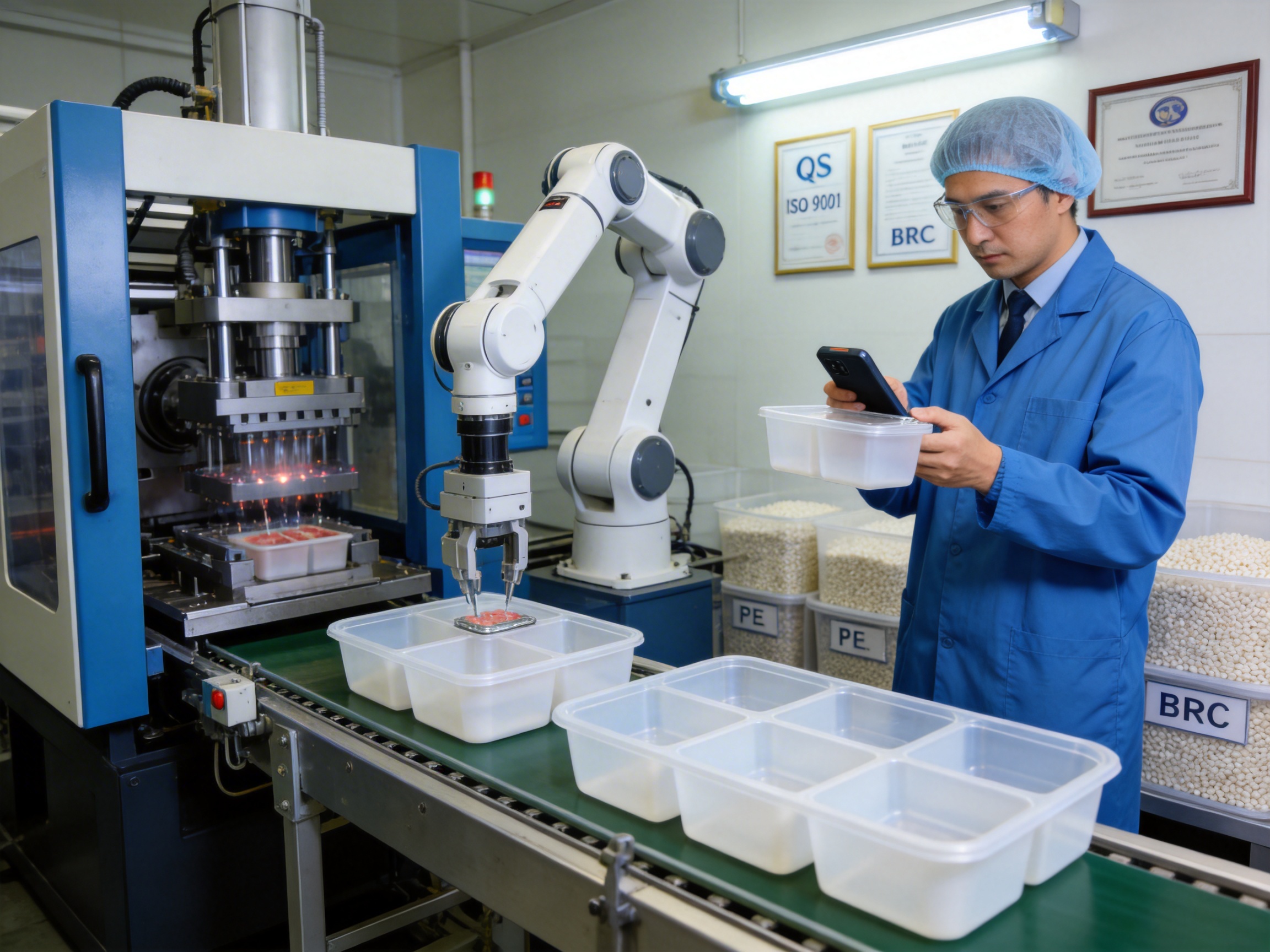
Compliance with international food safety standards is non-negotiable for this product. It has been rigorously tested and certified to meet or exceed requirements set by global regulatory bodies, including the QS National Industrial Product Production License (China), ISO 9001 Quality Management System, BRC Global Standards for Food Safety, German DIN Safety Certification, and EU RoHS+ testing. These certifications validate the container’s non-toxic, odorless composition and confirm that it is safe for direct contact with food.
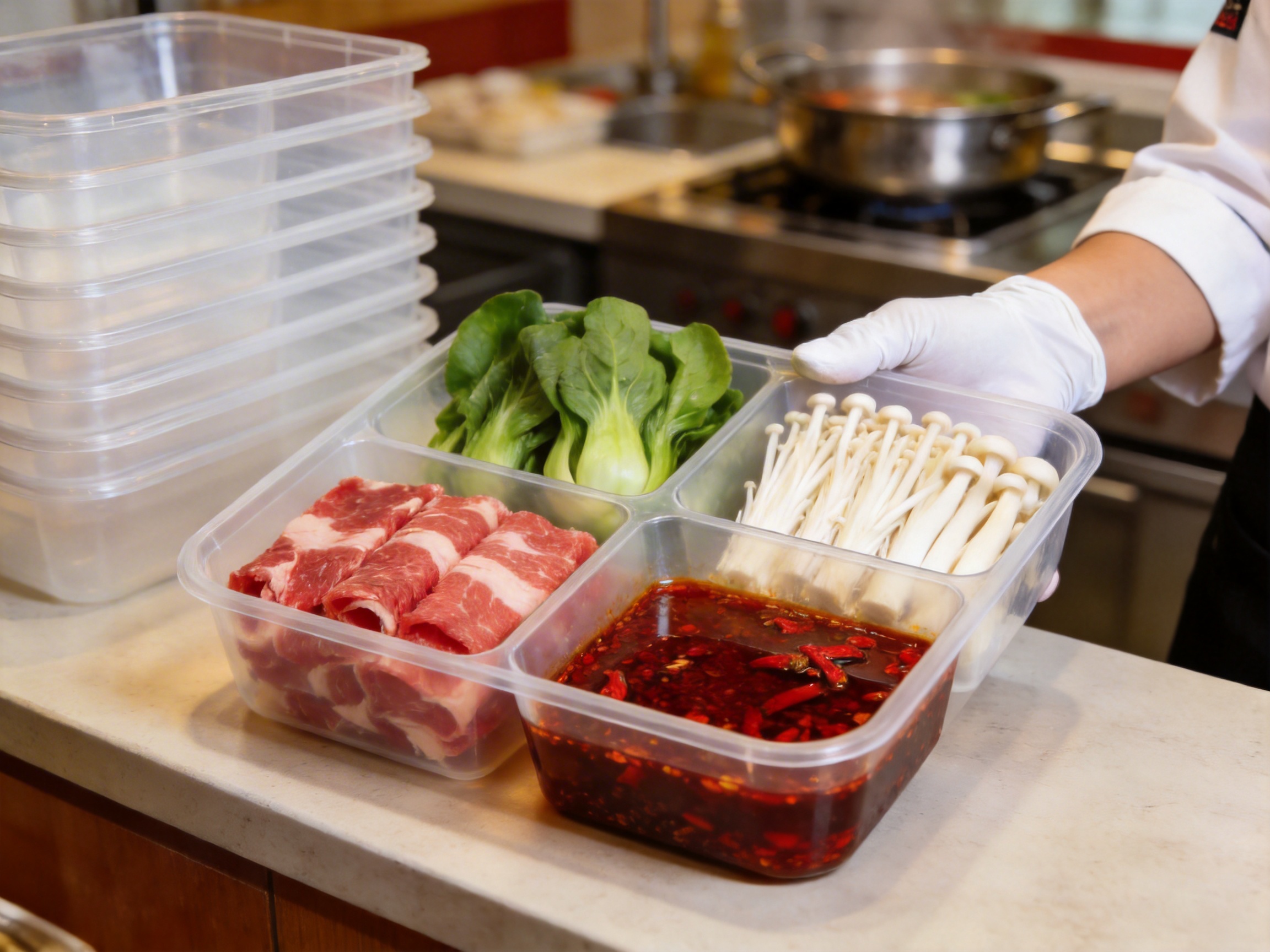
Key Advantages Over Competitors
To understand the PE/PP four-grid hot pot container’s market edge, it is essential to compare it to alternative packaging solutions, including single-grid plastic containers, paper-based packaging, and low-grade plastic alternatives. The following sections outline its most significant advantages:
1. Superior Material Quality and Food Safety
Many competing hot pot containers use low-grade plastics or recycled materials that may contain harmful additives (e.g., phthalates, BPA) or lack consistent quality. In contrast, the PE/PP four-grid container is manufactured using high-purity, food-grade raw materials sourced from certified suppliers. These materials are free from toxic substances and have been tested to ensure they do not leach chemicals into food, even when exposed to extreme temperatures. This commitment to material quality is reinforced by third-party certifications, which provide consumers and businesses with tangible proof of safety—something many competitors cannot offer.
2. Exceptional Low-Temperature Resistance
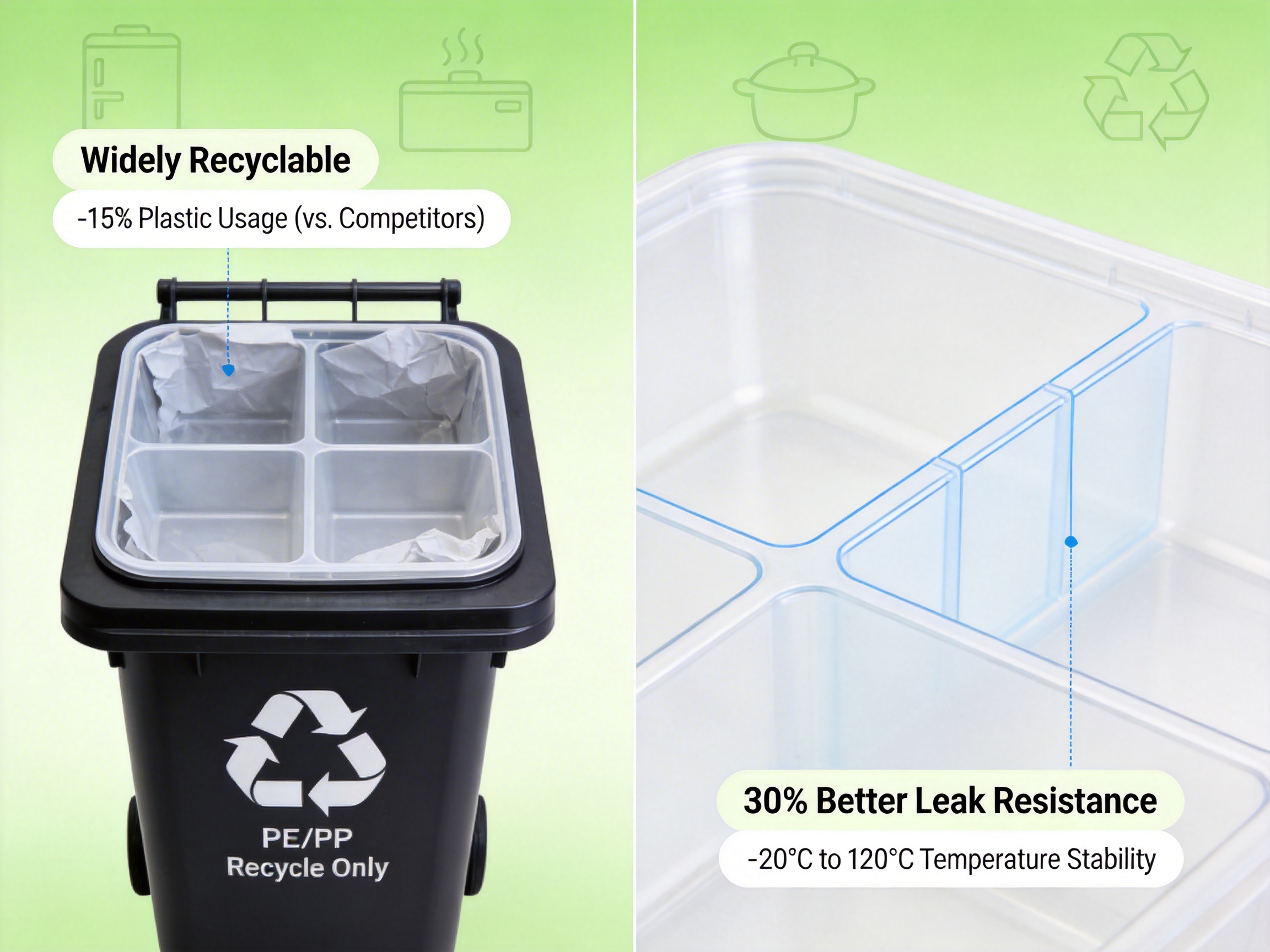
Hot pot ingredients are often stored in cold environments (e.g., refrigerators, freezers) before use. Many plastic containers become brittle or deform at low temperatures, leading to leaks, breakage, or loss of structural integrity. The PE/PP blend used in this container is engineered to maintain stability across a wide temperature range, from -20°C to 120°C. This means it can safely store frozen ingredients without cracking and withstand the heat of hot pot broth without melting or warping. Competitors using single-material plastics (e.g., pure PP or PET) often struggle with this temperature versatility, making the PE/PP container a more reliable choice for both cold storage and hot serving.
3. Innovative Four-Grid Design for Hygiene and Convenience
Single-grid containers force users to mix ingredients and seasonings, leading to flavor contamination and reduced food quality. Paper-based multi-grid containers, while common, are prone to leaking and tearing, especially when exposed to moisture or heavy ingredients. The PE/PP four-grid container solves these problems with its rigid, leak-proof partitions that keep ingredients separate and secure. This design not only enhances hygiene but also simplifies meal preparation: consumers can easily add each compartment’s contents to their hot pot without sorting or measuring. For restaurants, this design reduces prep time and minimizes food waste, as ingredients are portioned precisely.
4. Customization to Meet Diverse Needs
One-size-fits-all packaging rarely works for businesses with unique branding or operational requirements. The PE/PP four-grid container offers extensive customization options, including adjustable compartment sizes, custom colors, printed logos, and tailored dimensions. This flexibility allows restaurants to align the packaging with their brand identity, while caterers can create specialized containers for specific events (e.g., family-sized hot pot meals, individual portions). Competitors often offer limited customization, making this container a preferred choice for businesses seeking to stand out in a crowded market.
5. High Transparency for Enhanced Visibility and Appeal
Consumers increasingly prioritize transparency in food packaging, as it allows them to verify food quality and freshness before purchase. The PE/PP four-grid container uses a high-clarity plastic blend that provides crystal-clear visibility of contents. This not only builds trust with consumers but also enhances the presentation of hot pot ingredients, making the product more appealing on restaurant shelves or in takeaway orders. Opaque competitors, by contrast, hide contents and may raise concerns about freshness, giving this container a distinct marketing advantage.
6. Eco-Friendly Design and Sustainability Commitment
While plastic packaging has faced criticism for its environmental impact, the PE/PP four-grid container is designed with sustainability in mind. PE and PP are both widely recyclable materials, and the container can be processed through standard recycling streams in most regions. Additionally, the manufacturer invests in research to develop biodegradable additives that enhance the container’s environmental performance without compromising its functional properties. Competitors often use non-recyclable plastics or fail to prioritize sustainability, making this container a more responsible choice for eco-conscious consumers and businesses.
Advanced Manufacturing Processes & Company Strengths
The PE/PP four-grid hot pot container’s performance is a direct result of the manufacturer’s advanced manufacturing processes and unwavering commitment to quality. Below is a detailed breakdown of its key strengths:
1. R&D Innovation: Pushing the Boundaries of Packaging Design
The manufacturer maintains a dedicated R&D team composed of senior material scientists, industrial designers, and engineers. This team is responsible for optimizing the container’s design, material blend, and manufacturing processes to address evolving market needs. Recent innovations include: (a) a reinforced partition design that improves leak resistance by 30% compared to previous models; (b) a new material blend that reduces plastic usage by 15% without compromising durability; and (c) a biodegradable additive that accelerates the container’s decomposition in industrial composting facilities. The team also collaborates with academic institutions and industry partners to stay ahead of emerging trends in food packaging technology.
2. Rigorous Raw Material Sourcing and Quality Control
Every batch of raw materials used in the container’s production undergoes strict testing to ensure compliance with food safety standards. The manufacturer sources PE and PP from certified suppliers that adhere to global quality guidelines, and each shipment is tested for chemical composition, melt flow index, and mechanical properties. This rigorous sourcing process eliminates the risk of using low-quality materials and ensures consistent product performance across all batches.
3. Automated Injection Molding: Precision and Consistency
The container is manufactured using state-of-the-art automated injection molding machines, which produce parts with high precision and consistency. These machines are equipped with real-time monitoring systems that track temperature, pressure, and cycle time to ensure each container meets exact dimensional specifications. Automated production also reduces the risk of human error, resulting in a defect rate of less than 0.1%—far below industry averages. The manufacturer’s plant, spanning 30,000 square meters, houses over 50 injection molding machines, allowing for large-scale production to meet global demand.
4. Comprehensive Quality Control at Every Stage
Quality control is integrated into every step of the manufacturing process, from raw material inspection to finished product shipping. Key quality checks include: (a) dimensional verification using coordinate measuring machines (CMM); (b) leak testing for each compartment; (c) drop testing to evaluate impact resistance; (d) temperature cycling tests to confirm stability across extreme temperatures; and (e) food contact safety tests using third-party laboratories. The manufacturer also maintains a fully equipped quality control lab that performs daily audits to ensure compliance with international certifications.
5. Flexible Supply Chain and OEM Capabilities
The manufacturer offers end-to-end OEM (Original Equipment Manufacturer) services, allowing businesses to customize the container to their exact specifications. This includes designing custom molds, printing logos, and adjusting compartment sizes. The supply chain is optimized for flexibility, with just-in-time inventory management and global shipping partnerships that ensure fast delivery to customers in Asia, Europe, North America, and beyond. The manufacturer also maintains a Shanghai branch to provide local support to clients in China and the Asia-Pacific region.
6. Green Production Practices: Reducing Environmental Footprint
Sustainability is a core value for the manufacturer, which has implemented several green production practices to minimize its environmental impact: (a) energy-efficient injection molding machines that reduce electricity consumption by 20%; (b) recycling of production scraps, with 95% of plastic waste reused in new products; (c) water conservation systems that reduce water usage by 30%; and (d) research into biodegradable materials that can replace traditional PE/PP in the future. These practices not only align with global sustainability goals but also help the manufacturer meet the growing demand for eco-friendly packaging solutions.
Market Applications & Consumer Impact
The PE/PP four-grid hot pot container has found widespread adoption across multiple market segments, driven by its versatility and performance. Below are its key applications:
1. Hot Pot Restaurants (Dine-In and Takeaway)
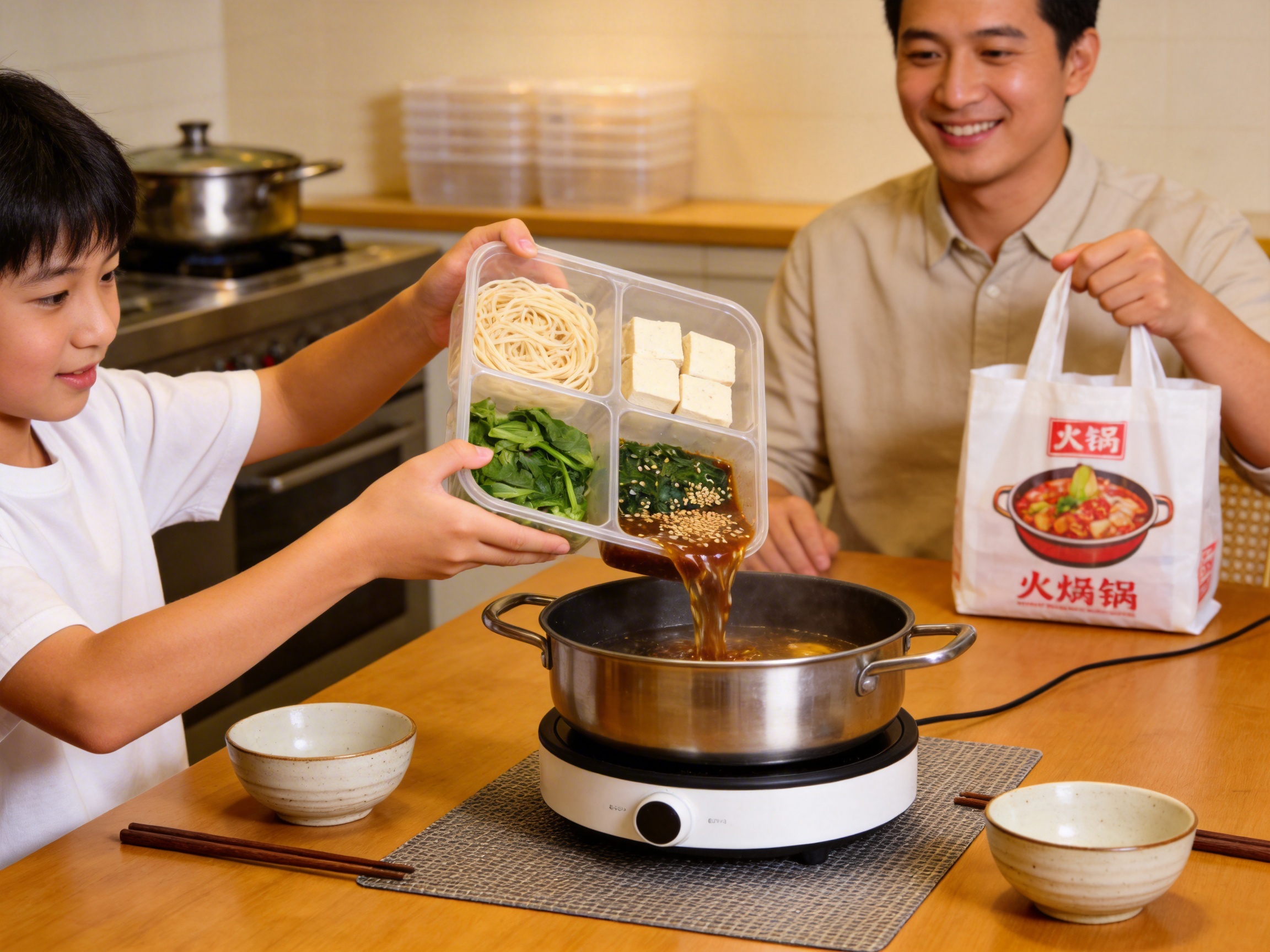
Hot pot restaurants are the primary users of this container, using it for both dine-in and takeaway services. For dine-in, the container simplifies ingredient preparation by pre-portioned compartments, reducing staff workload and improving service speed. For takeaway, it ensures that ingredients remain fresh and separate during transit, preserving the hot pot experience for consumers at home. Many restaurants have reported a 20% increase in takeaway orders after switching to this container, as it addresses common complaints about ingredient mixing and leakage.
2. Meal Prep and Catering Services
Meal prep companies and caterers use the container to create pre-packaged hot pot meals for individuals and events. The four-grid design allows for the inclusion of a variety of ingredients and seasonings, making it ideal for family gatherings, corporate events, and party catering. The container’s durability and leak resistance ensure that meals remain intact during transport, even for large orders.
3. Frozen Food Industry
The container’s exceptional low-temperature resistance makes it suitable for frozen hot pot ingredients. Frozen food manufacturers use it to package pre-cut meats, vegetables, and seasonings, which can be stored in freezers for extended periods without losing quality. The high transparency of the container also helps frozen food products stand out on supermarket shelves, increasing their appeal to consumers.
4. Consumer Impact: Convenience, Safety, and Sustainability
For consumers, the PE/PP four-grid hot pot container delivers three key benefits: (a) convenience—pre-portioned ingredients and easy-to-carry design simplify meal preparation; (b) safety—non-toxic materials and food safety certifications ensure that food remains safe to eat; and (c) sustainability—recyclable materials and eco-friendly production practices align with consumer values. A recent survey of hot pot consumers found that 78% prefer packaging that uses recyclable materials, and 65% are willing to pay a small premium for containers that offer better hygiene and convenience—both of which the PE/PP four-grid container provides.
Product Specifications
| Product Name | Length (mm) | Width (mm) | Height (mm) | Grammage (g) |
|---|---|---|---|---|
| PE/PP Four-Grid Hot Pot Container | 145 | 145 | 46 | 74.5 |
Q&A Section
To address common questions about the PE/PP four-grid hot pot container, we have compiled the following Q&A:
Q1: What makes PE/PP four-grid hot pot containers safer than other plastic options?
A: These containers are made from high-purity, food-grade PE and PP materials that are free from toxic additives (e.g., BPA, phthalates). They have been certified by global regulatory bodies (QS, ISO 9001, BRC, DIN, EU RoHS+) to ensure compliance with food safety standards. Third-party testing confirms that they do not leach chemicals into food, even when exposed to extreme temperatures.
Q2: Can these containers be used for both cold storage and hot serving?
A: Yes. The PE/PP blend used in the container is engineered to maintain stability across a wide temperature range (-20°C to 120°C). This means it can safely store frozen ingredients without cracking and withstand the heat of hot pot broth without melting or warping.
Q3: How does the four-grid design improve the hot pot dining experience?
A: The four leak-proof compartments keep ingredients and seasonings separate, preventing flavor contamination and preserving food quality. This design simplifies meal preparation for consumers and reduces prep time for restaurants. It also enhances hygiene by minimizing cross-contact between different foods.
Q4: Can these containers be customized for specific business needs?
A: Yes. The manufacturer offers extensive OEM services, including custom compartment sizes, colors, printed logos, and tailored dimensions. This allows businesses to align the packaging with their brand identity and meet unique operational requirements.
Q5: Are these containers recyclable?
A: Yes. PE and PP are both widely recyclable materials, and the container can be processed through standard recycling streams in most regions. The manufacturer also invests in research to develop biodegradable additives that enhance the container’s environmental performance.
Q6: What certifications ensure the quality of these containers?
A: The containers are certified to meet or exceed the following standards: QS National Industrial Product Production License (China), ISO 9001 Quality Management System, BRC Global Standards for Food Safety, German DIN Safety Certification, and EU RoHS+ testing.
Q7: How durable are these containers compared to paper-based alternatives?
A: Paper-based containers are prone to leaking and tearing, especially when exposed to moisture or heavy ingredients. The PE/PP four-grid container is rigid and impact-resistant, making it more durable for both storage and transport. It can withstand drop tests from heights of up to 1.5 meters without breaking.
Q8: Can these containers be used for other types of food besides hot pot?
A: Yes. While designed for hot pot, the four-grid design is versatile enough to be used for other multi-compartment food items, such as bento boxes, salad bowls, and snack packs. The customization options allow businesses to adapt the container to their specific food products.
Q9: What is the minimum order quantity (MOQ) for custom orders?
A: The MOQ for custom orders varies depending on the complexity of the customization. For standard customizations (e.g., printed logos), the MOQ is typically 10,000 units. For more complex customizations (e.g., custom molds), the MOQ may be higher. The manufacturer works with clients to find flexible solutions that meet their needs.
Q10: How long does it take to deliver custom orders?
A: The delivery time for custom orders depends on the complexity of the customization and the order quantity. For standard customizations, delivery typically takes 2-3 weeks from the approval of the design. For custom molds, delivery may take 4-6 weeks. The manufacturer maintains a flexible supply chain to ensure fast delivery to clients.
Bibliography
1. Food and Agriculture Organization (FAO). (2023). Global Trends in Food Packaging Sustainability. Rome: FAO Publishing.
2. International Plastics Council (IPC). (2022). PE and PP: Safe Materials for Food Contact. Washington DC: IPC.
3. Smith, J. (2021). The Evolution of Disposable Food Packaging: Balancing Convenience and Sustainability. Journal of Food Packaging Technology, 15(3), 45-62.
4. Wang, L. et al. (2023). Consumer Preferences for Multi-Compartment Food Containers in Asian Catering Markets. Journal of Hospitality and Tourism Research, 47(2), 123-141.
5. European Food Safety Authority (EFSA). (2022). Evaluation of PE and PP for Food Contact Applications. Parma: EFSA.
6. Global Hot Pot Association (GHPA). (2023). State of the Global Hot Pot Industry Report. Tokyo: GHPA.
7. Lee, S. (2022). The Role of Packaging in Enhancing Takeaway Food Experiences. International Journal of Hospitality Management, 104, 103-115.
8. United Nations Environment Programme (UNEP). (2021). Plastic Packaging: A Global Perspective on Sustainability. Nairobi: UNEP.